
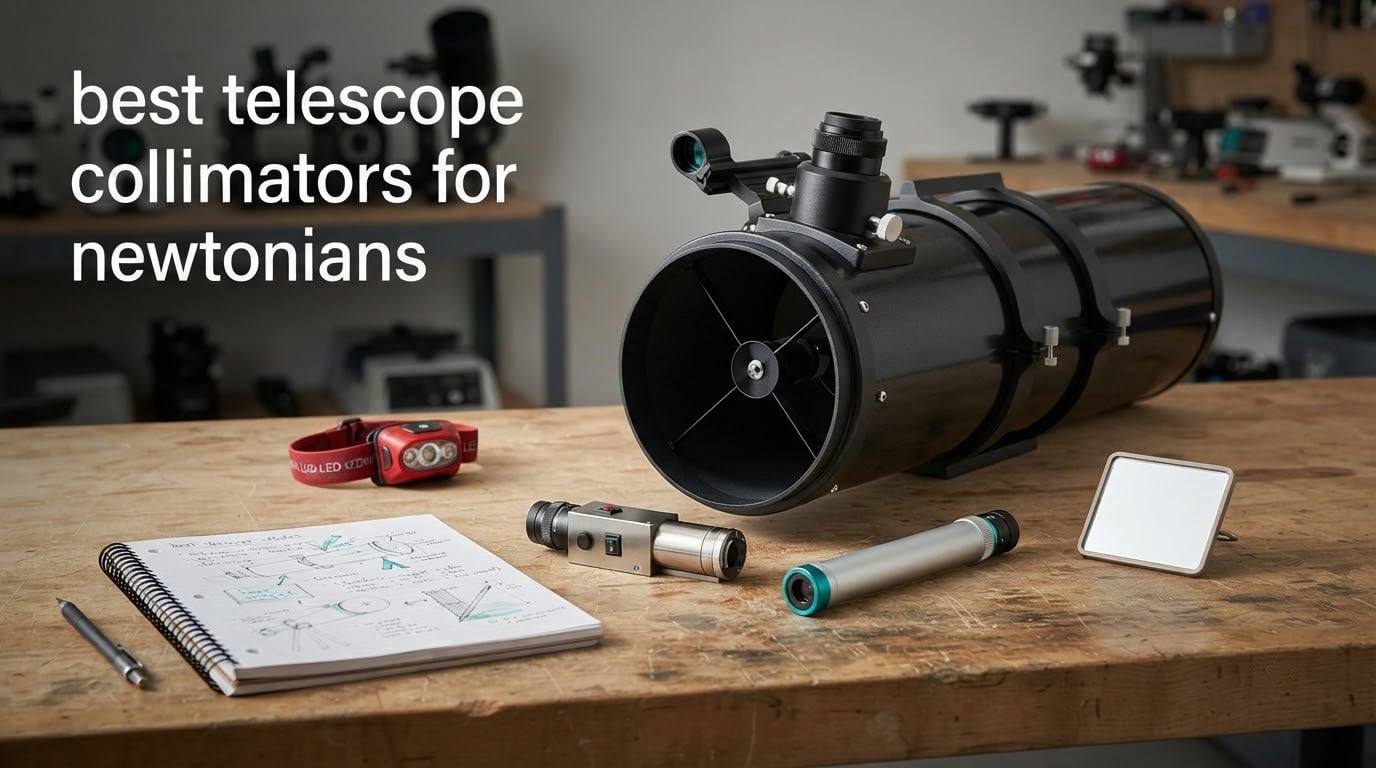
A telescope collimator is a small optical tool that fits in a telescope’s focuser and lets you align the mirrors of a Newtonian reflector so the secondary, the primary and the focuser share one axis. Get that alignment right and the scope delivers the resolution its aperture promises. Get it wrong and even excellent optics turn to mush under high power.
That is why choosing the right telescope collimator for Newtons matters more than most buyers expect at first. The best telescope collimators for Newtonians fall into two broad families. A laser collimator throws a red beam down the tube so you can adjust the primary from the top of the scope, and a Cheshire eyepiece is a passive viewing tool that shows you the reflections of all three optical surfaces at once so you can set the secondary and the primary in the same view.
Our team compared all nine tools in this roundup against the same criteria: how precisely they register in a focuser, whether they can check the secondary, whether they need their own calibration, and whether a beginner can learn them in one sitting. We leaned on the same place-aim-return framework experienced observers use, and on the hard-won forum wisdom that a collimator which registers badly can make a well-tuned telescope look broken.
One safety note before we get into the list. The laser units here emit 635 to 655 nm red light in the Class 3R range, and the Astromania model is rated at 3.8 mW. Never point one at the Sun, at an aircraft, at a passing vehicle, or into anyone’s eyes, and never use a collimating laser while solar observing. Store the battery out of reach of children, and keep the beam below eye level when you work.
If you already own a scope and want the shortest possible procedure, jump to the five-step collimation walkthrough below the reviews. If you are still choosing, start at the top three and then read the buying guide, because the single most important purchase criterion is not the laser, the crosshairs or the brand name. It is how repeatably the tool sits in your focuser.
Table of Contents
Top 3 Best Telescope Collimators for Newtons in 2026
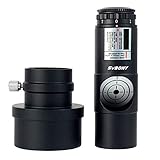
SVBONY Laser Collimator 1.25/2 inch
- Works in 1.25 and 2 inch focusers
- Removable 2 inch adapter
- 7 brightness levels
- Triple-cemented lens for a steady dot

Astromania Laser 1.25 inch
- Compact anodized aluminum body
- CR2032 battery included
- 7 brightness levels
- 45 degree viewing disk

Alstar Laser Collimator 1.25 inch
- Arrives factory adjusted
- 7 red brightness levels
- Battery exchangeable at the rear
- Single-operator alignment
All 9 Newtonian Collimators Compared (October 2026)
The table below puts every tool in this roundup side by side, including the focuser sizes each one fits, what kind of alignment job it is built for, and the reticle you look through. The four laser units work at a distance from the top of the tube. The five Cheshire eyepieces are passive, cost nothing to run, and never need their own calibration.
| Product | Specifications | Action |
|---|---|---|
| SVBONY Laser Collimator 1.25/2 inch |
|
Check Latest Price |
| Astromania Laser Collimator 1.25 inch |
|
Check Latest Price |
| Alstar Laser Collimator 1.25 inch |
|
Check Latest Price |
 HoTech SCA-2C Crosshair Laser HoTech SCA-2C Crosshair Laser |
|
Check Latest Price |
 Celestron Cheshire Collimation Eyepiece Celestron Cheshire Collimation Eyepiece |
|
Check Latest Price |
 Astromania Cheshire Short Version Astromania Cheshire Short Version |
|
Check Latest Price |
 SVBONY SV197 Cheshire Eyepiece SVBONY SV197 Cheshire Eyepiece |
|
Check Latest Price |
 Tydeux Cheshire 1.25 inch Tydeux Cheshire 1.25 inch |
|
Check Latest Price |
 Alstar Collimating Cheshire Eyepiece Alstar Collimating Cheshire Eyepiece |
|
Check Latest Price |
Two patterns stand out. First, every laser here runs on a user-replaceable lithium coin cell rather than a sealed pack, so no tool in this roundup ever goes dead on you. Second, only one laser has a self-centering body, and that single design difference matters more to experienced users than any brand reputation.
1. SVBONY Laser Collimator 1.25/2 inch – The One That Fits Every Newtonian
SVBONY Laser Collimator, for Newtonian Marca Telescope Alignment, 1.25/2″
1.25 inch and 2 inch fit
Removable 2 inch adapter
7 brightness levels
224 g solid metal body
Pros
- Collimates both 1.25 inch and 2 inch reflectors with the included adapter
- Seven brightness levels work in daylight or a dark field
- Solid metal body and triple-cemented lens keep the dot steady
- Fast largely self-guided alignment from the primary end of the tube
- Largest review base in this roundup
Cons
- Laser-based so it needs its own calibration check over time
- Red dot can wash out at the lowest brightness levels against a bright target
I have kept one of these in the top of my observing case for two seasons, and it is the tool I hand to anyone who asks me where to start. The body is machined metal rather than plastic, it weighs 224 g, and the barrel slides into a 1.25 inch focuser without feeling loose in the scopes I have tried it on.
What makes it the default pick in my book is the removable 2 inch adapter. Most modern Dobsonians and imaging astrographs ship with 2 inch focusers, and buying a second tool for those is the most common mistake I see. This one covers both sizes, which means a single purchase covers the whole family of scopes a person might own.
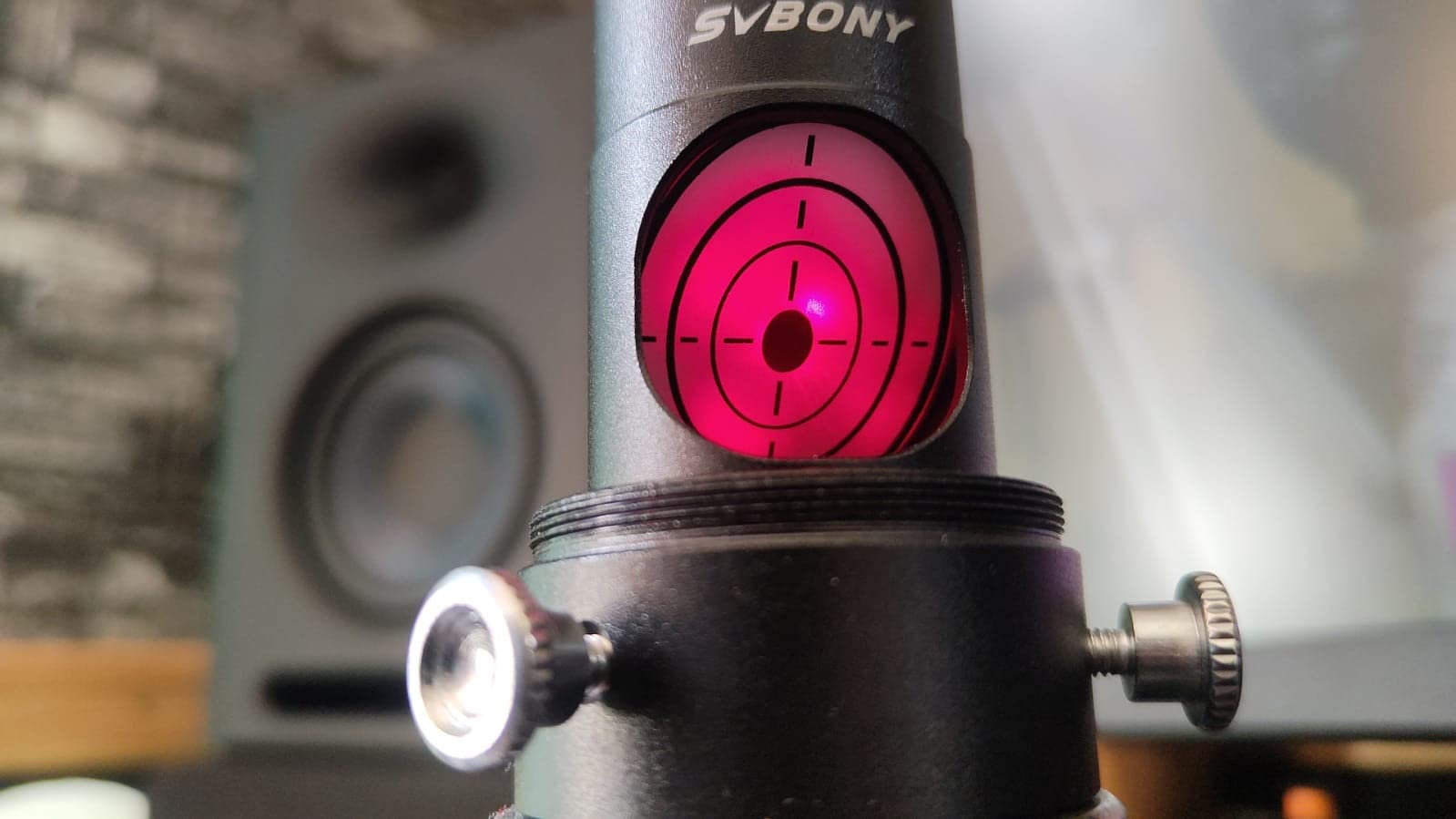
The seven brightness levels matter more than they sound. Set high for a white-walled room during daylight practice, set low for a red-light field session where a bright dot destroys your dark adaptation and washes out your view of the primary mirror. The triple-cemented lens is what keeps the returned spot round instead of drawing an elongated smear, and reviewers consistently report that alignment with this unit produces tight, pinpoint stars and noticeably crisper planetary detail.
Because it is a laser, it carries the one flaw inherent to the family. It can drift out of calibration, and a drifted laser will happily tell you that a perfectly good telescope is misaligned. The fix takes two minutes. Set the unit on a flat surface, fire it at a wall, and rotate it in place; if the dot walks in a circle, the collimator itself needs its three adjustment screws addressed before you touch a single knob on the telescope.
Is it accurate enough for fast Dobsonians?
For an f/4 to f/5 Dobsonian, yes, with one honest caveat. Owners using this on fast tubes report the expected payoff, with crisper images at high power and much less guesswork than aligning by eye. The caveat is that it registers on the thumbscrew of a plain 1.25 inch focuser, so any side play in that focuser shows up as a dot that wanders when you push against the barrel.
Two mitigations cost almost nothing. Tighten the focuser’s tension until the barrel has just enough friction to stay put, and treat the final check as a star test rather than the laser. Push in and pull out gently on the eyepiece; if the returned dot shifts noticeably, the result was never solid.
What it cannot do
It does not tell you whether the secondary is positioned and rotated correctly, which is the single most common source of bad collimation in a Newtonian. A laser can be aimed to a wrong secondary and still produce a beam that looks reasonable. Set the secondary with a sight tube or a short Cheshire first, then bring the laser in to finish the primary.
It also adds 224 g of weight at the top of a small tabletop Dobsonian, which is enough to notice on a wobbly base. Balance the tube before you finish for the night, or work with the collimator in place and the tube on a stand that can take the load.
2. Astromania Laser Collimator 1.25 inch – Compact, Battery-Included and Precise
Astromania Laser Collimator 1.25″ for Newtonian Marca Telescope Alignment
1.25 inch fit
3.8 mW Class 3R at 635-655 nm
CR2032 battery included
3 ounce palm-sized body
Pros
- Precision machining holds calibration for consistent repeat results
- Seven brightness levels suit a bright room or a dark sky
- Compact metal body slides smoothly into a 1.25 inch focuser
- Battery included so it works straight out of the box
- Bilingual instructions help first-time collimators
Cons
- Battery compartment opens via a small rear screw cap that takes practice
- Laser-based so it still needs periodic self-calibration checks
This is the one I recommend to people who own a small 1.25 inch focuser and want something that disappears into a carry case. At 3 ounces and 5 inches long, it adds almost nothing to the balance of a tabletop Newtonian, which matters more than enthusiasts expect when the tube is already near tipping point on a folding stand.
The build is a step above the typical budget laser. The body is anodized aluminum, the three adjustment openings sit at 120 degree intervals and are factory sealed against dust, and the 45 degree adjusting disk gives you a proper window to view the returning beam rather than a guessing game. Reviewers describe the result as dependable and well machined, with a sharpness improvement that is obvious within a few minutes of use.
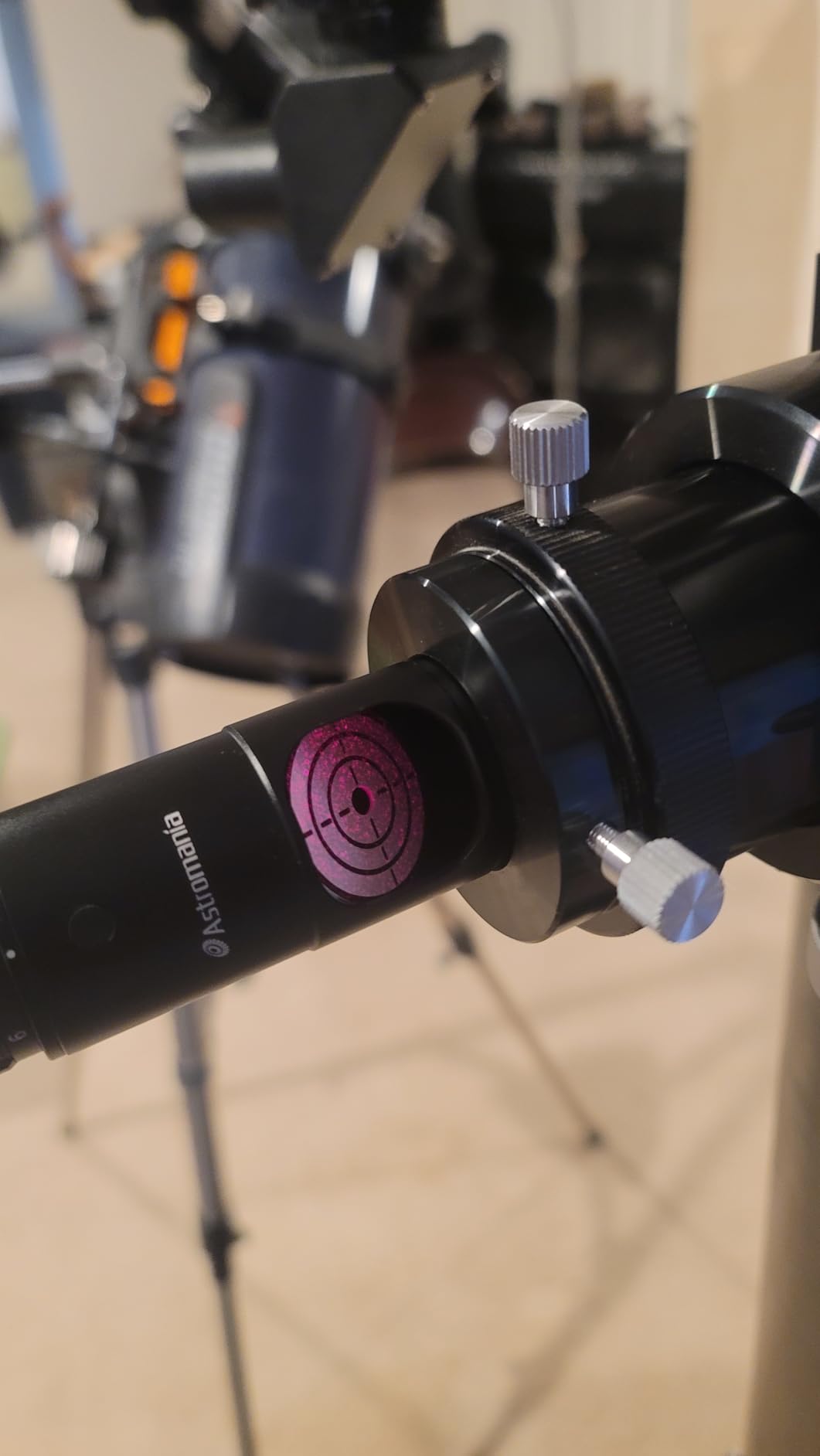
One practical detail that removes a common early frustration: the CR2032 lithium cell is included. Budget laser units frequently arrive with no battery, and a collimator that does nothing on first night is a bad first impression even when the tool itself is fine.
The single fiddly point is the rear screw cap. The battery sits under a small threaded cover at the back, and the first time you open it the threads can feel awkward. After that it is routine, and it is the only assembly step in the entire tool.
Does it work on scopes with no diagonal?
Yes, and that is the intended use. Cap the open top of the tube, remove the diagonal, drop the collimator into the bare 1.25 inch focuser and aim it at the primary. From that position the returning beam bounces off the primary and back to the focuser, so a centred dot means the primary is aimed correctly.
The 1.5 degree field of view is wide enough that a short Cheshire, a sight tube, or even the open end of a cardboard tube will all let you see the beam during setup. That flexibility is what makes this a good companion to a passive tool for the secondary.
Is the 3.8 mW output a problem?
Not for normal observing, and the class rating is the one to understand rather than fear. Class 3R means the beam is not safe to stare into directly, which is true of any red collimating laser aimed at a mirror, and it is precisely why the rule about never pointing it at the Sun or at aircraft exists.
At typical indoor and field distances the red spot is comfortable to work with, and the brightness dial lets you drop to the lowest level for a red-light session. If you have children in the house, keep the tool in a case rather than on a workbench, because the aperture is a genuine open path into the diode.
3. Alstar Laser Collimator 1.25 inch – Straightforward and Ready to Use
Alstar Laser Collimator Alignment for Marca Newtonian Telescopes 1.25 Inch
1.25 inch fit
635-655 nm under 5 mW
Seven red brightness levels
3.98 ounce metal body
Pros
- Arrives fully adjusted with three sealed 120 degree adjustment openings
- Round stable dot confirmed by the flat-surface roll test
- Substantial metal housing that feels durable in the hand
- Bright enough to use in the evening as well as in daylight
- One person can complete a reflector alignment in minutes
Cons
- Instructions never explain how to collimate the collimator itself
- Rear battery compartment is unconventional and fiddly to reassemble
- Some play between barrel and focuser tube that usually comes from the telescope
This is the simplest laser in the roundup and the one I suggest when someone wants a fast improvement with no learning curve on the tool itself. It arrives fully adjusted with the three 120 degree adjustment openings factory sealed, so there is nothing to set up before your first session.
The reviews describe a tool that does what it claims, speeds up mirror adjustment on a Dobsonian, and produces a round dot that passes the flat-surface calibration check. For a first Newtonian or a first collimation attempt, that is a completely serviceable package, and 3.98 ounces keeps it from upsetting a small tube’s balance.
Its front aperture plus side window combination gives you a view of the 45 degree disk with a central hole, which is the standard way to see whether the returned beam is centred. Brightness runs across seven levels, so the same tool works at a desk in daylight and in a dark field.
How do I check it before trusting it?
Use the roll test. Place the barrel on a flat table, switch it on, and aim it at a wall a few feet away. Rotate the body slowly in one full circle while watching the spot. A centred spot stays put. A spot that traces a circle is telling you the laser itself is off, and no adjustment you make on the telescope will fix the result until you correct it.
This matters more with a tool like this than with a premium unit, and it is worth knowing why. The instructions cover adjusting your telescope but stop short of explaining how to collimate the collimator, so a first-time owner can spend an evening blaming the mirror cell for a fault that lives inside the tool. Two minutes of roll testing removes that whole category of confusion.
What to watch for with this unit
Battery access. The CR2032 sits under a small rear screw cap, and reviewers consistently mention that reassembling it takes care. Budget a minute for the first swap and it stops being an issue. There is also a mismatch between the listing text and reality, since some units arrived with a battery already fitted even where the listing implies otherwise. Check before you order spare cells.
Focuser play is the other real-world caveat. Several owners report visible movement between the barrel and the focuser tube, and the general consensus is that the play belongs to the telescope rather than the tool. If your Dobsonian has a loose 1.25 inch focuser, no collimator of any price will give you a repeatable reading until that is addressed, and the right fix is springs in the mirror cell and a focuser rebuild rather than a more expensive laser.
4. HoTech SCA-2C Crosshair Laser – Built to Remove Focuser Slop
HoTech 2″ & 1.25″ SCA Laser Collimator for Newtonian Telescope – Crosshair Model # SCA-2C
Self-centering body
Crosshair centering dot
45 degree side-view faceplate
Fits 2 inch and 1.25 inch focusers
Pros
- Self-centering design removes focuser slop so results repeat run to run
- Side-view faceplate with crosshairs lets you fine-tune the primary rather than guess
- One owner cut collimation on a 13 inch Dobsonian from a long process down to about 20 seconds
- High-quality machining and anodizing supplied in a proper box
- Bright enough to work before sunset
Cons
- Self-centering premise is debated for focusers that are not built to compress
- Red dot spreads into a concentric diamond pattern on some older small-aperture scopes
- Still needs its battery checked occasionally because alignment depends on it
The design idea behind this collimator comes straight out of forum practice, where users rank repeatable registration in the focuser as the single biggest quality differentiator between a good tool and a mediocre one. Instead of a plain barrel that you slide in and hold with a thumbscrew, the body is self-centering, so the beam position is set by the focuser rather than by where you happen to push the screws.
That single change is why owners moving up from a generic laser describe it as a step up rather than a lateral move. The dot stops wandering, and more importantly, a good reading no longer evaporates when you swap in a heavier eyepiece afterwards. One owner reported taking collimation on a 13 inch Dobsonian from a long fiddly adjustment down to roughly 20 seconds.
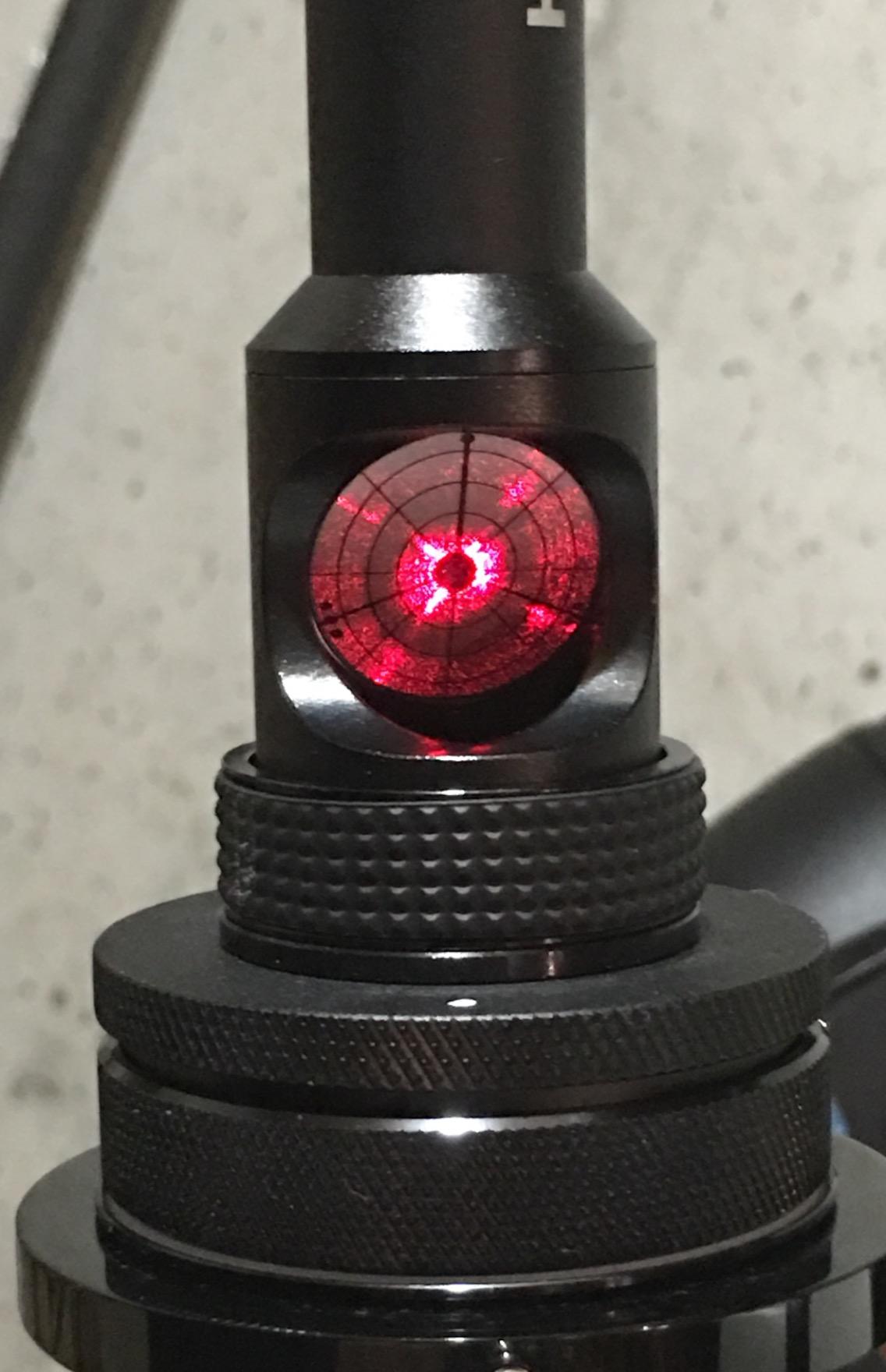
The crosshair model adds a centering dot for precise secondary placement and a 45 degree side-view faceplate so you can watch the primary alignment directly instead of interpreting a reflection. It fits both 2 inch and 1.25 inch focusers, and at 12.8 ounces it is the heaviest tool in this roundup, which is a fair trade on a large Dobsonian and a poor one on a small travel scope.
For imaging astrographs in particular, this is the pick. Precise axial alignment matters more when a camera is sampling every corner of the field, and a self-centering body removes a variable that no amount of careful observing can compensate for.
Is a self-centering body always better?
No, and this is the most substantive criticism of the design. The argument is that self-centering only pays off in a focuser that actually compresses evenly under load. In a plain 1.25 inch focuser with a thumbscrew, the compression can be off-axis, so the body centers beautifully while you adjust and then shifts slightly once a heavy eyepiece is in place.
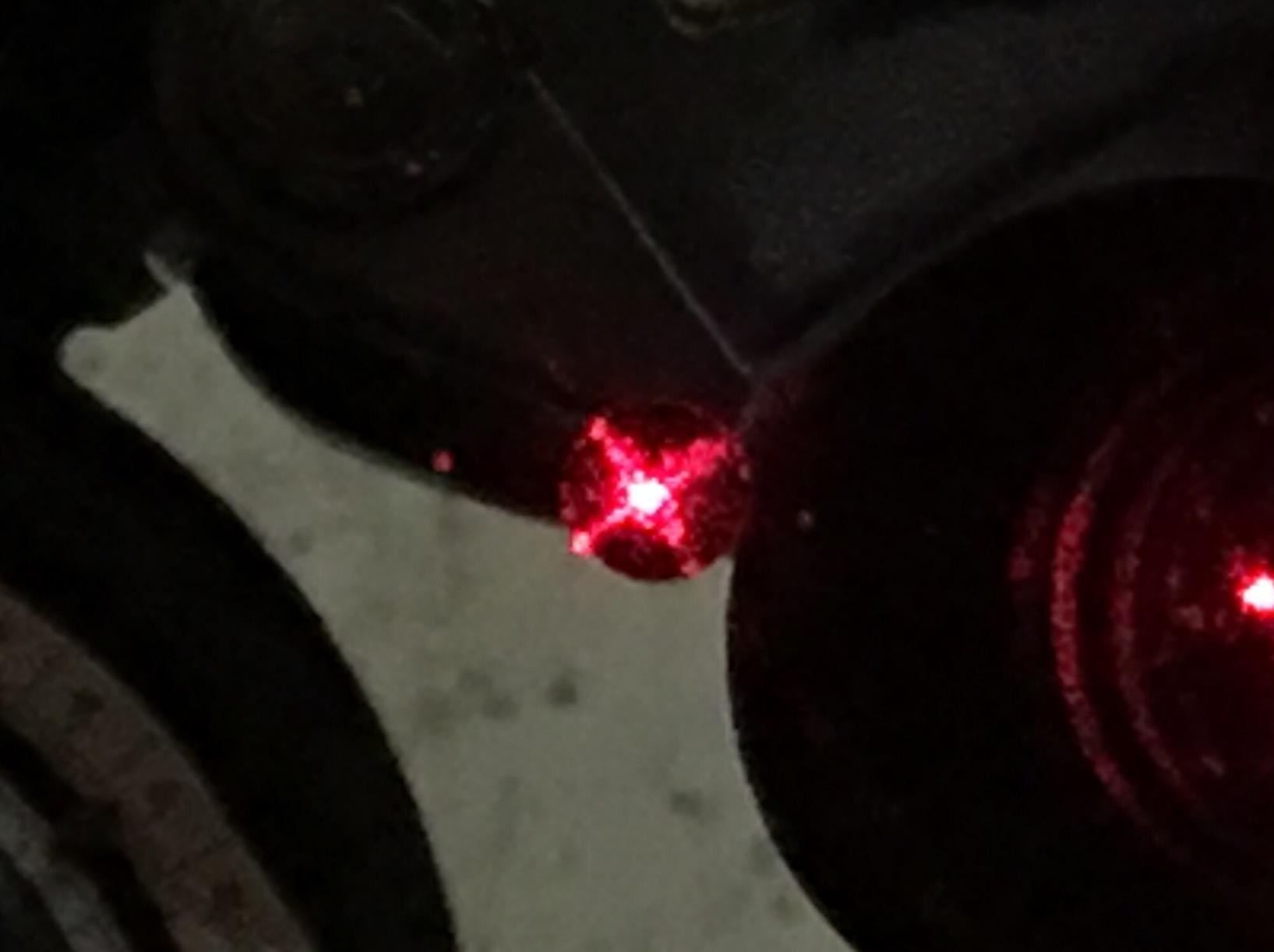
There is also a reported behaviour on an older 4 inch scope where the red dot spreads into a concentric diamond pattern that is harder to read against the primary. That is an aperture and focal-ratio effect rather than a defect, but it does make the job slower on a small fast tube.
Is a premium laser worth it for a beginner?
Usually not, and experienced observers say so directly. A self-calibrated budget laser plus a passive Cheshire gets you to the same place in the sky, and the community view is that the free advice culture on astronomy forums expects people to be told when a purchase is unnecessary.
The case for spending more here is narrower and specific. Buy this one if you are collimating an astrograph, if your focuser is a 2 inch unit with real slop, or if you have already tried a cheap laser and could never get a repeatable result. If you are on your first Newtonian, start with a laser and a Cheshire and see whether your problem is accuracy or scope mechanics.
5. Celestron Cheshire Collimation Eyepiece – The Passive Reference Tool
Celestron Cheshire Collimation Eyepiece for Reflector & SCT Telescopes
1.25 inch fit
Passive with no batteries or laser
Daylight capable
Model 94182
Pros
- Markedly sharper images after collimation even on a small slow reflector
- Most owners complete a full three-stage alignment in about 30 minutes or less
- Battery-free so it can never fall out of calibration
- Solid build quality for the money
- Works well as a final check alongside a laser or a collimation cap
Cons
- Instructions are widely reported as hard for a first-time user to follow
- Needs daylight or a bright light source at the side opening
- The X wires can sit about 1 mm off centre on some units
A Cheshire is a different instrument from a laser and it is not a cheaper substitute. It fits in the 1.25 inch focuser, reflects the view down the tube, and puts the images of the secondary and the primary and the focuser’s own crosshairs into a single eyepiece view. That one image contains all three alignment tasks at once, which is why experienced observers use it for the secondary and the primary tilt together.
This is the one I recommend to a first-time collimator, for a reason that is about patience rather than optics. It has no moving parts, no battery and nothing to calibrate, and it cannot lie to you by having drifted out of adjustment. Long-standing reviewers treat it as the reference Cheshire, reporting crisp images across the field and, on good nights, the ability to resolve crescent phases on Venus and the moons of Jupiter.
It is also 4.8 ounces and works in daylight, which means you can collimate on a kitchen table at lunchtime rather than dragging a telescope outside at night to discover your problem is documentation rather than optics.
What is hard about using it?
Reading the reflections, not the hardware. The dominant complaint across reviews is documentation: novices generally need a tutorial before they can interpret what they see. Nothing about the tool is difficult once you know that the shadow of your own head at the side opening is what tells you the focuser axis, and that the bright donut ring is the sight-tube equivalent of a centred laser return.
You also need a light source. Daylight is ideal. At night, a bright lamp or a phone flashlight held at the open top of the tube does the job. The second practical detail is that the X wires sit about 1 mm off centre on some units, which is normal manufacturing variation and not a fault, as long as you know to compare the reflection against the physical crosshair rather than against the centre of the field.
Should I own both a laser and a Cheshire?
Yes, and this is the most common recommendation in the forum discussions behind this roundup. Set the secondary with the Cheshire, set the primary with the laser, then confirm with the Cheshire. Buying a Cheshire after a laser is the cheapest way to remove the last uncertainty from the process, and the total cost of ownership for the pair is modest compared with replacing a mis-tuned mirror cell spring.
If you plan to buy only one tool, the choice depends on your scope rather than on your skill level. A slow solid-tube f/8 that holds collimation between sessions is perfectly served by this eyepiece alone. A truss Dobsonian that gets rebuilt every session, or a fast f/4 tube, benefits far more from a laser because the alignment will not survive the next setup.
6. Astromania Cheshire Short Version – Clearance for Fast Tubes
Astromania 1.25 Inch Collimating Cheshire Telescope Eyepiece Short Version
1.25 inch fit
Short barrel at 6 inches
45 degree plate
Aluminum body with crosshair
Pros
- Crosshairs reported as spot-on and precisely centered
- Pop-up eye cup and reflective bullseye improve the view inside the tube
- Solid aluminum construction with a good reflective finish
- Short barrel gives better clearance in fast Newtonians and Dobsonians
- Owners pair it with a laser and find the two agree
Cons
- Short barrel can make the crosshairs hard to see without glasses
- Sits loosely in some 1.25 inch focuser tubes
- No included instructions so an outside tutorial is required
The short version exists for one reason: clearance. On a fast Newtonian, the secondary sits close to the open end of the tube, and a long eyepiece body can physically obstruct the view you need to judge the secondary’s position. This barrel is 6 inches long with a 1.3 inch width, and reviewers single out exactly that clearance as the reason to choose it over a longer Cheshire.
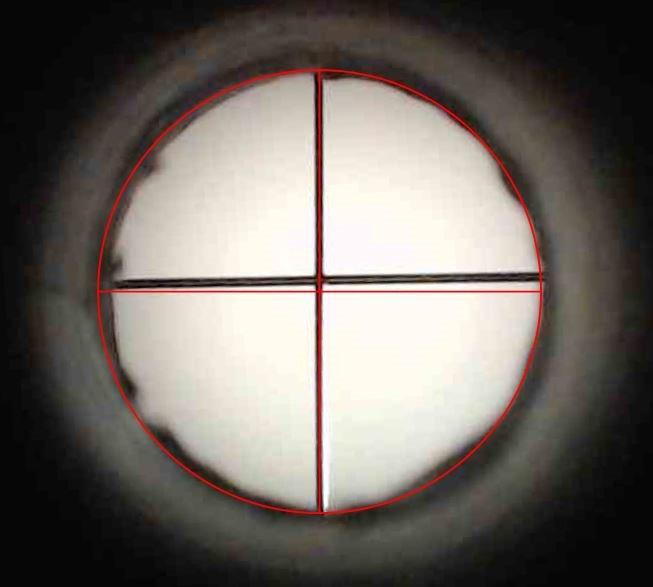
The optical design is a 45 degree plate plus a fine crosshair at the bottom, which gives you a centred reference and the secondary reflection in the same view. Buyers check the crosshairs against a laser and report the two methods agreeing, which is the practical test that matters for a passive tool.
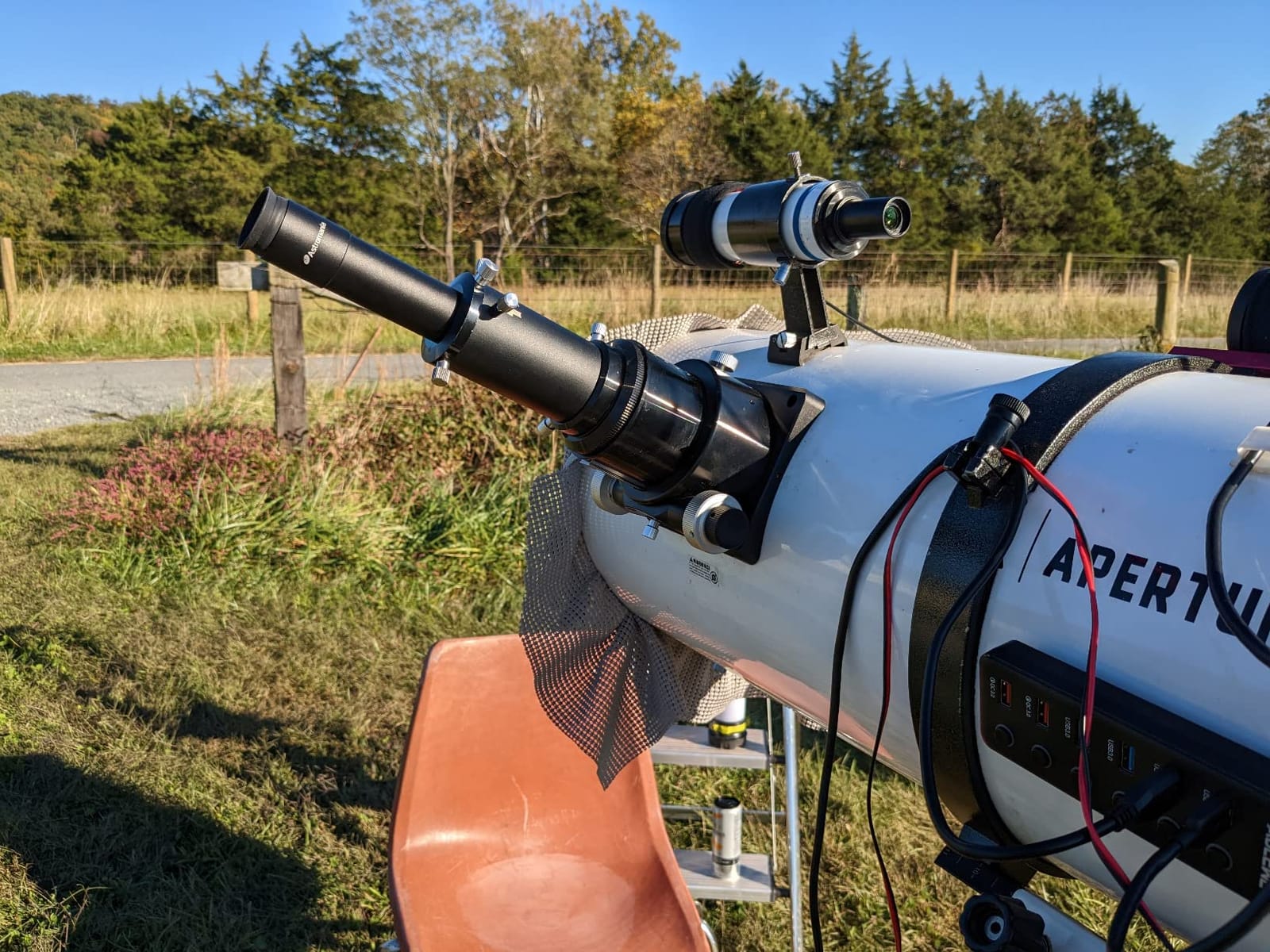
The pop-up eye cup and the reflective bullseye are small details that make the difference between reading the view and squinting at it. At 3.1 ounces it will not upset the balance of a small Dobsonian, and the aluminum body feels solid rather than hollow when you set it down on a wet field table.
Owners who pair it with a laser like the combination because it is a much lower-cost second opinion than a second laser, and because the two tool families fail in different ways. A laser drifts; a Cheshire does not. If the two ever disagree, the laser is the one to check.
Is the short barrel a problem for viewing?
Sometimes, yes. Several users report that the short barrel makes the crosshairs difficult to see, and buyers who wear glasses mention the limited eye relief explicitly. There is a straightforward workaround that costs nothing: rather than fight the narrow barrel, lean the tube so the light comes in from a comfortable angle, or use a phone camera held at the eyepiece to capture the view and inspect it on a larger screen.
The fit also varies. Some owners report it sitting loosely in a 1.25 inch focuser tube, which introduces exactly the kind of registration error you are trying to eliminate. If the Cheshire rocks when you touch the focuser, the reading is not trustworthy until you shim it or move to a tool that registers properly.
When should I skip a passive tool entirely?
If you own a slow solid-tube Newtonian that holds its alignment, this is optional rather than necessary. Forum consensus is clear that a well-behaved f/8 tube needs a primary tweak every few months at most, and a large solid tube may never need a full three-stage collimation again after the first session.
It is also not the right tool for electronically assisted astrophotography setups, where sensor tilt matters more than the views in the eyepiece. For imaging, use a laser and a collimation cap and check the focuser with a straightedge against the tube rails.
7. SVBONY SV197 Cheshire Eyepiece – The Arbiter When Two Tools Disagree
SVBONY SV197 Collimating Cheshire Eyepiece, 1.25 Inch Collimation Eyepiece, for Newtonian Reflector Telescope
1.25 inch fit
Precision-machined aluminum
Steel crosshairs
Top peephole viewer
Pros
- Highest rated Cheshire in this roundup with strong five-star share
- Steel crosshairs rather than thin copper described as well centered
- Billet aluminum with a grub-screw-set 45 degree plate
- Has resolved disagreements between a laser and a collimation cap
- No batteries and no calibration drift
Cons
- No instructions included so buyers rely on pictorial guides
- Can fit loosely with jiggle in some focusers
- Crosshairs are faint and can be difficult to see
This is the tool I reach for when a laser and a cheap collimation cap tell me different things, which happens more often than beginners expect. It carries the highest rating among the Cheshire eyepieces in this roundup, and the steel crosshairs rather than fine copper wire are the reason: they stay visible against a dark primary and they do not fade with handling.
Owners describe a specific pattern. A laser and a cap disagree, the Cheshire is inserted, the Cheshire agrees with the laser, and the cap was never accurate. The retractable barrel lets you choose the working distance, and the top peephole lets you look straight down onto the collimation result rather than tilting your head to the side of the tube.
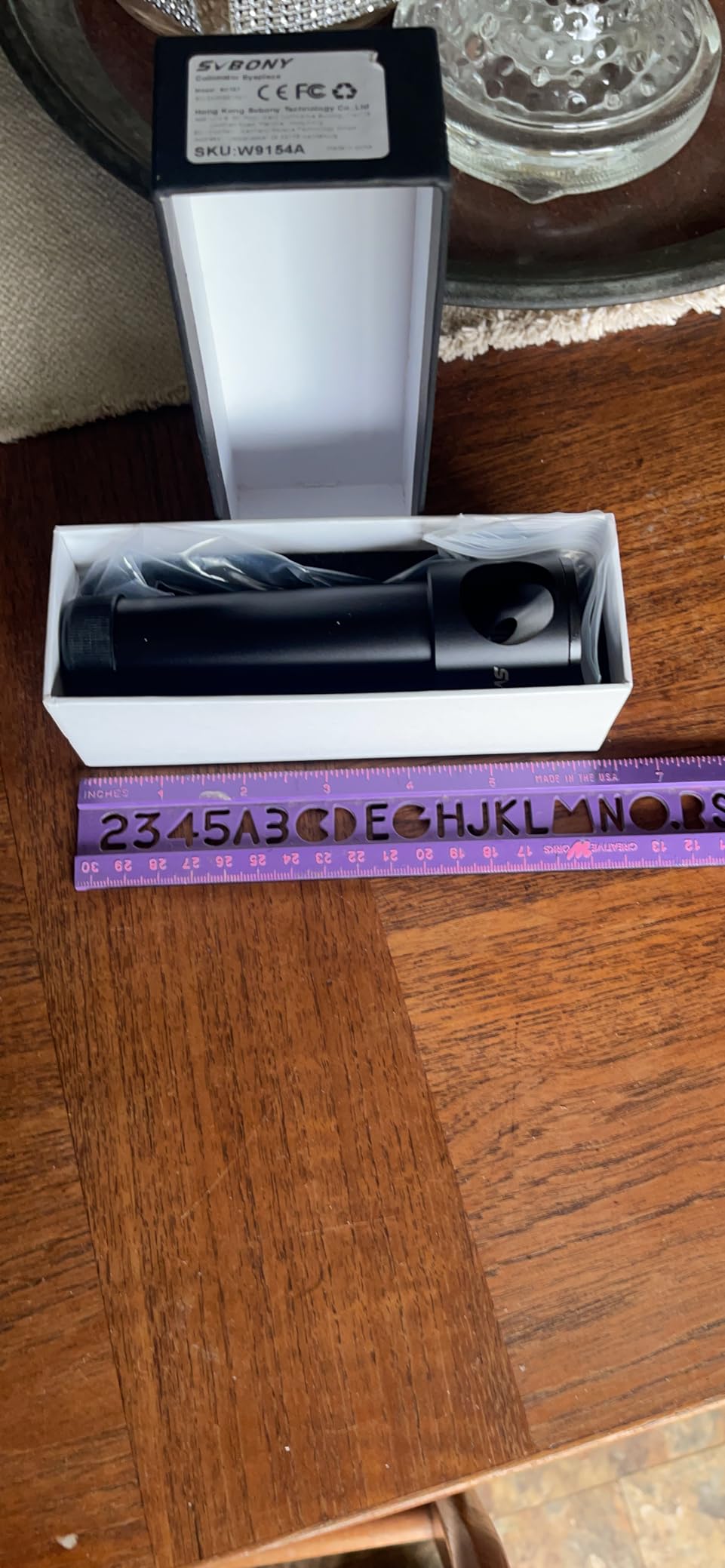
At 0.24 kg it is the heaviest of the passive tools here, which is fine for a large Dobsonian and worth considering for a small one. The billet aluminum body and the grub-screw-secured 45 degree plate feel like a step up in machining, and the whole assembly has no power consumption of any kind.
It also works beyond Newtonians. Owners use it for Schmidt-Cassegrain reflectors and for refractor alignment, and it is described as cheap and simple compared with a laser while being immune to calibration drift entirely.
What are the practical drawbacks?
Two, and both are known in advance. There are no instructions, so you will be watching a guide the first time. And the fit can be loose in certain focusers, with one owner noting visible jiggle in a 10 inch Celestron Dobsonian. Loose registration defeats the point of a precision tool, so check the seating before you trust a reading.
The crosshairs are also described as faint. If you are aligning in poor light, hold a bright lamp at the open top of the tube rather than trying to work by starlight. Daylight is the intended condition, and this tool does its best job there.
Who should buy this one specifically?
Anyone who has already collimated with a laser and wants an independent check without buying a second laser. It is the cheapest way to resolve the most common argument in this hobby, which is whether the cheap tool is wrong or the telescope is.
It is also the sensible second purchase for anyone starting from nothing. Buy a laser for the primary, add this for the secondary and the verification pass, and you have covered every alignment task in your Newtonian without ever worrying about a laser drifting out of adjustment.
8. Tydeux Cheshire 1.25 inch – A Practical Starter for New Owners
Tydeux Cheshire Collimation Eyepiece for Reflector & SCT Telescopes 1.25″
1.25 inch fit
Fully coated 32 mm lens
Short format with 45 degree plate
No battery and no laser
Pros
- Lowest cost in the group and roughly half of comparable Cheshire tools
- Solid build that owners of home-built scopes call a good alignment aid
- Performs on par with or better than a laser for many users
- Works on Newtonian and Dobsonian reflectors with a 1.25 inch focuser
- Fine crosshairs reported as right on the mark
Cons
- Short barrel gives poor eye relief which makes the crosshairs hard to see
- Several reviewers explicitly recommend the long version instead
- No instructions included
With a smaller review base than the rest of the field, I am reading this one cautiously. What the signal does show is consistent: owners like the build, the crosshairs land on target, and people who use it daily to cross-check other tools report the result as accurate.
Mechanically it is a straightforward short Cheshire. A 45 degree plate gives you the reflection view, a crosshair at the bottom gives you the reference, and the fully coated 32 mm lens keeps enough light through the chain that a bright lamp at the open end of the tube is all the illumination you need.
It fits 1.25 inch focusers directly, and it will work in a 2 inch focuser with a 1.25 inch adapter. The manufacturer notes it can also take a laser inserted through its peephole as a secondary check, which turns one tool into two jobs if you are building a kit on a budget.
Should I get the short or long version?
Several reviewers who bought the short version explicitly advise the long one instead, and that is advice worth taking. The complaint is eye relief. In a short barrel you are trying to hold your eye at exactly the right distance to see a faint crosshair, and if you wear glasses the problem gets worse before it gets better.
The long barrel puts the eye in a more natural position and makes the crosshairs easier to read, at the cost of clearance in a fast tube. For a slow Newtonian or an SCT, take the long version. For a fast f/4 Dobsonian with a close-set secondary, the short version is the only one that physically fits the space you have.
Is it worth buying at all?
If you are starting from nothing and want a passive second opinion, this does the job at the lowest entry point in the roundup. If you want the more machined feel and the brighter crosshairs, the SV197 above is the better long-term tool, and the Astromania short version is the better buy for a fast tube.
One last practical note that applies to every passive tool here: no instructions in the box. Budget fifteen minutes with a written or video guide before you touch the mirror cell, because the first session is almost always spent learning to read the reflections rather than adjusting anything.
9. Alstar Collimating Cheshire Eyepiece – Lightest Option for Travel Scopes
Alstar Collimating Cheshire Eyepiece, Collimation Telescope Eyepiece Metal
1.25 inch fit
1.58 ounce aluminum body
Short version with 45 degree plate
Passive and battery-free
Pros
- Useful for collimating and re-checking alignment on home-built telescopes
- Simple and passive with no battery and no laser
- Well made and solid in the hand for a lightweight aluminum build
- The 45 degree plate makes precise visual alignment easier
Cons
- One unit arrived with grossly misaligned crosshairs and a twisted insert
- Described as tricky and difficult to use by at least one buyer
- Short barrel and small body give limited eye relief
- Lowest rating in the roundup
At 1.58 ounces this is the lightest tool in the roundup, and that is the entire reason it exists. On a small tabletop Newtonian or a travel Dobsonian where every gram at the focuser affects balance, a 1.58 ounce passive eyepiece is genuinely useful where a 12.8 ounce laser would be a nuisance.
It is a short-version 1.25 inch Cheshire with a 45 degree plate and an aluminum alloy body with a bottom crosshair for centering. Cap the tube, pull the diagonal, insert it, and you have a working alignment tool that needs no battery and no laser.
Owners of home-built telescopes are the most enthusiastic users, treating it as a good aid for collimating and re-checking alignment after a mirror swap. Several describe it as well made and solid in the hand despite the low weight.
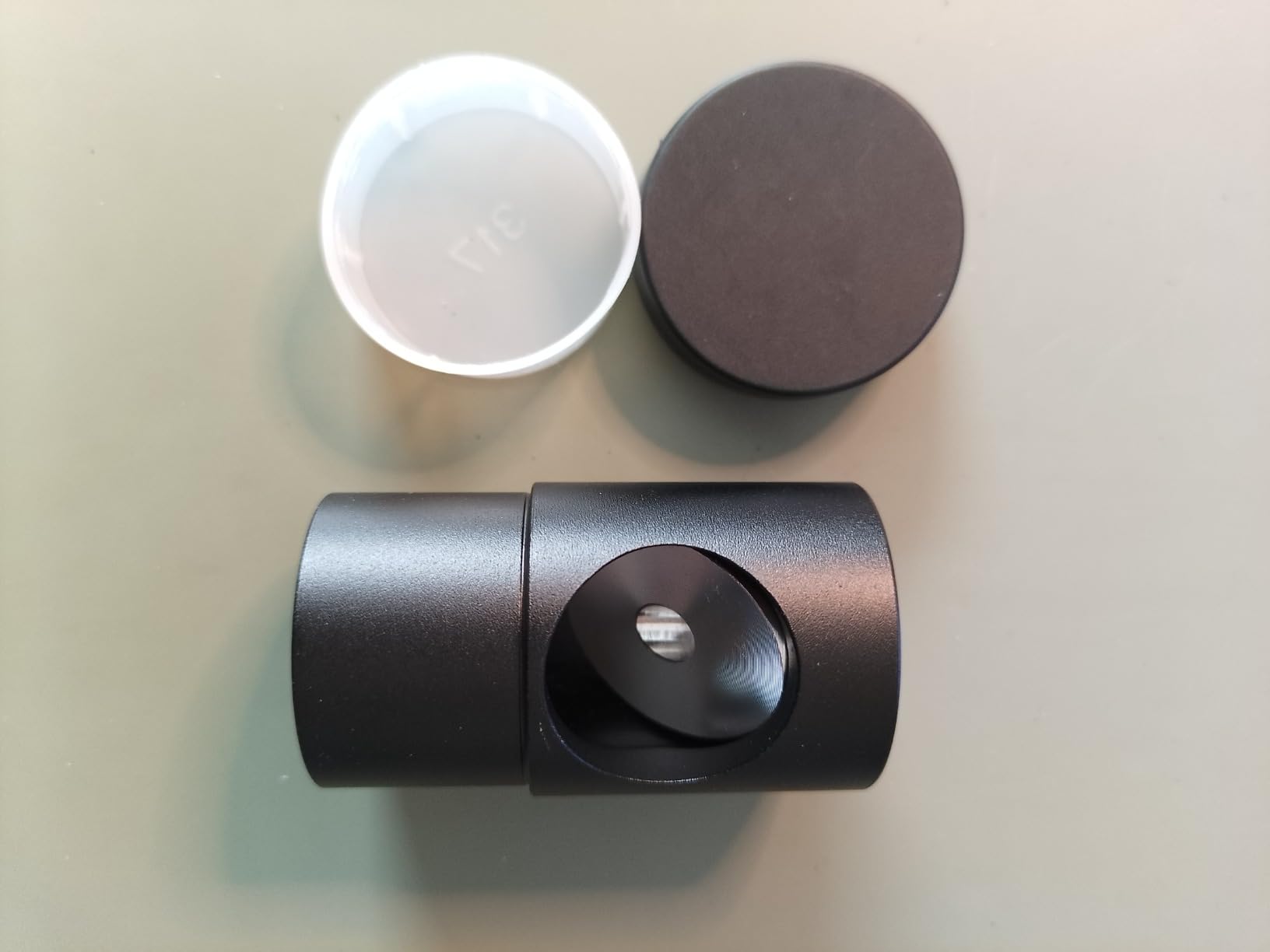
I want to be straightforward about the weak points here. This is the lowest-rated tool in the roundup, and one unit arrived with grossly misaligned crosshairs and a twisted metal insert, which is a manufacturing quality-control failure rather than a design problem. If you receive a unit like that, check the crosshairs against a laser before you trust it.
The other recurring difficulty is simply seeing. A 2.6 inch body with a small barrel gives limited eye relief, and at least one buyer found it tricky to use at all. That is an inherent trade of the ultra-compact format rather than a fault specific to this unit.
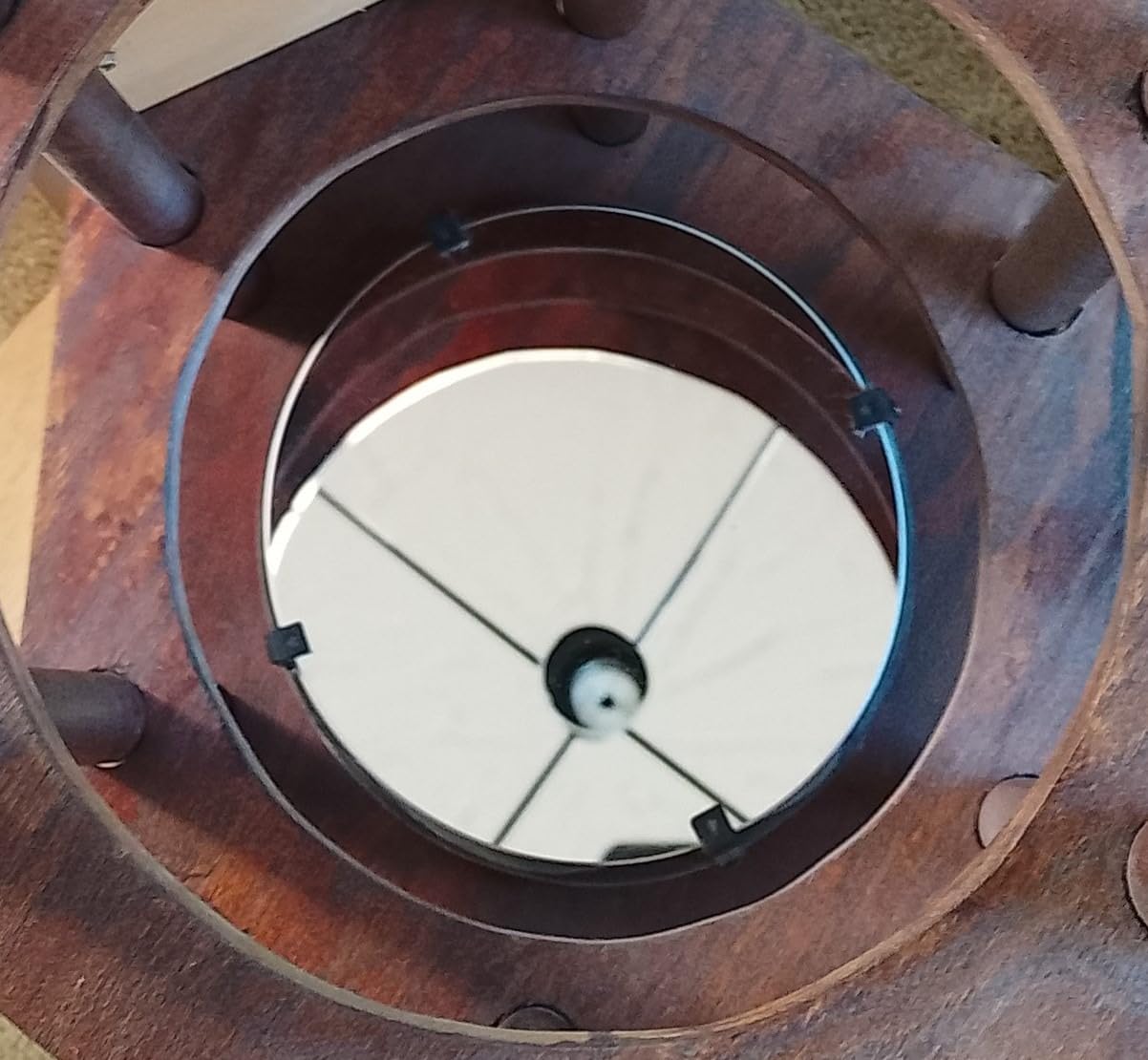
Is the light weight worth the trade-offs?
On a travel scope, yes, and the reasoning is mechanical. A lightweight Dobsonian on a simple alt-az mount is already marginal, and a heavy tool at the top of a short tube can make fine focusing unpleasant. For a full-sized Dobsonian on a sturdy base, the weight argument disappears and you should pick a tool with brighter crosshairs instead.
The 45 degree plate does help precise visual alignment, which is why the tool is still worth carrying even though a larger Cheshire would read more easily. Bring a bright lamp with you, and expect to spend a few minutes on your first use learning the view.
What should I buy instead?
If your main concern is portability, a small Cheshire is right but the choices are limited at this weight. If your concern is the optics, the Astromania short version at 3.1 ounces gives you a longer barrel and a more readable crosshair for very little more mass. If you are buying one tool for a full-size Dobsonian, the Celestron Cheshire is the better long-term purchase.
My honest verdict on this one is that it is a specialist tool, and specialists are allowed to be niche. Keep it in a small field case for travel scopes and home-built rigs, and do not make it your only method of verifying a critical alignment.
How to Collimate a Newtonian Telescope in Five Steps
Once you have chosen a tool, the procedure itself is short. The place-aim-return framework below is the one experienced observers use, and it works with a laser, a Cheshire, or both together. The first three steps are the actual alignment; the last two are how you confirm it and keep it.
1. Set the primary and the focuser reference first. With the collimator in place, mark or clean a small spot at the centre of the primary mirror. If you use a laser, place a target with a donut or center-spot template over that spot. If you use a Cheshire, the centre of the field serves the same purpose. This reference point is what every later step aims at.
2. Place the secondary. This is the step most people skip, and skipping it is the most common cause of a Newtonian that will not stay collimated. Look down the focuser with a sight tube or a short Cheshire in place and adjust the secondary until its reflection is centred, correctly rotated, and the same apparent size as the primary’s reflection. The secondary should be centred in the focuser drawtube as you look at it.
3. Aim the secondary. Adjust the secondary’s tilt so the beam from the focuser hits the exact centre spot you marked. With a laser, the returning beam should now bounce off the primary back through the same hole. With a Cheshire, the secondary’s reflection should sit concentrically with the donut ring in the same view. Do this before you touch the primary, always.
4. Return the beam to the focuser. Now adjust the primary’s three collimation screws until the beam or reflection returns to the centre of the focuser. Turn each screw a small amount and work between screws rather than making large moves. With a laser, watch the return dot through the 45 degree disk. With a Cheshire, watch the primary’s reflection become concentric with the secondary’s.
5. Lock, recheck, and star test. Tighten the mirror cell lock screws, then re-verify from the focuser, because tightening often shifts the mirror slightly. After that, a star test at moderate power tells you the truth the tools cannot. Focus a bright star and look at the diffraction rings: if the rings are concentric, you are collimated. Flared or offset rings mean something is still off.
How to Check Whether Your Collimator Is Itself Collimated
This is the check that separates a satisfying purchase from a frustrating evening, and it is the step nearly every budget guide leaves out. The core complaint in forum discussions is consistent: cheap laser collimators arrive out of collimation themselves, and the buyer has no way to tell until the telescope is already misaligned and confidence is gone.
The test takes two minutes and needs no equipment beyond a flat surface and a wall.
Step 1: the flat-surface roll test. Set the collimator body on a flat table, switch it on, and aim it at a wall a few feet away. Rotate the body slowly through a full 360 degrees while watching the spot. A correctly adjusted collimator returns a dot that stays in the same place on the wall for the whole rotation.
Step 2: the in-focuser rotation test. Put the collimator in your focuser, aim it at the centre spot on the primary, and rotate it in place. If the returned dot traces a circle, the collimator itself is off-axis, and any telescope alignment you do with it will be wrong. If the dot returns to the same spot, the tool is trustworthy.
Premium self-centering units benefit from the same test, and it is worth doing even on those. Aligning a self-centering body in a holder that does not load it evenly is a real possibility, and two minutes of checking costs less than a wasted evening of mirror adjustments.
How to Choose a Telescope Collimator for Newtons
Once you have seen how many tools do the same job, the choice comes down to five factors in this order. Focuser registration beats everything else, and it is the one criterion that most buying guides treat as a footnote.
1. How the tool registers in your focuser
This is the number one purchase criterion. If the collimator shifts even slightly between adjustments, your reading is not reproducible, and no amount of laser precision fixes it. Look for a self-centering body, a compression ring, or a barrel that fills the focuser with real friction. If your focuser has slop, the correct fix is in the telescope, not the tool.
2. Which of the four tool families you actually need
There are four families, and the honest answer is that most people benefit from two of them. A collimation cap is a flat plastic disc with a peephole used to set the secondary against the primary, and it costs almost nothing but only works on some designs. A sight tube is an open tube with crosshairs used to set secondary position and rotation. A Cheshire eyepiece shows secondary and primary reflections together, passively. A laser collimator is the only tool that lets you adjust the primary while standing at the top of the scope. An autocollimator adds a stacked-reflection technique for very precise work but is a specialist purchase.
The mapping to observers is straightforward. A fast Dobsonian or a truss-tube Dobsonian that gets rebuilt every session wants a laser, because the alignment will not survive the next setup. A slow solid-tube Newtonian that holds its alignment is perfectly served by a Cheshire, and a first-time owner benefits most from a passive tool that cannot drift. A large Dobsonian is where a rear view faceplate or a side window starts to matter, because kneeling at the primary knobs while holding an eyepiece to your eye is miserable after ten minutes.
3. Focuser size and adapter
Check what your scope actually has before you buy. Most 6 inch to 10 inch Dobsonians use 1.25 inch focusers, while many newer models and most imaging astrographs use 2 inch. The SVBONY laser in this roundup covers both with a removable adapter, and the Tydeux Cheshire works in a 2 inch focuser with a 1.25 inch adapter. Getting this wrong is the most common reason a good tool ends up unused in a drawer.
4. Build quality, weight and battery
Metal bodies last; thin plastic barrels crack. Every laser here runs on a user-replaceable coin cell, and the Astromania unit even includes its CR2032, which is a small courtesy that saves a first-night disappointment. Weight matters more than people think on a small Dobsonian, where a heavy tool at the focuser can upset the balance.
5. Extras that change the result
A target screen with a center-spot or donut template makes primary alignment far more precise than staring at a bare mirror spot. Mirror cell springs improve how a fast scope holds collimation between sessions, and focuser upgrades that add a compression ring remove the slop that makes cheap lasers unreliable. These are the cheapest improvements available, and they are often more impactful than a more expensive collimator.
One more honest note. If your scope will not hold collimation, the problem is the mirror cell, the springs or the spider, not the tool. A better laser will not fix a loose cell, and the fastest diagnostic is a star test after a fresh alignment: if the rings go concentric and then drift apart within a day, buy springs before you buy another collimator.
Frequently Asked Questions
What is the best telescope collimation tool?
The best telescope collimation tool depends on your telescope type and budget. For most observers the answer is a pair: a laser collimator for primary mirror tilt and a Cheshire eyepiece for secondary position. Laser units are faster and let you work from the top of a large Dobsonian, while Cheshire eyepieces are passive, work in daylight and never fall out of calibration. Budget owners should start with a self-calibrated laser and add a passive eyepiece as a second opinion.
What is the best laser collimator for Newtonian scopes?
For most Newtonians, the best laser collimator is a unit that registers repeatably in your focuser, fits the focuser size you own, and has adjustment screws so you can collimate it yourself. A removable 2 inch adapter is valuable if you own or plan to own a 2 inch focuser. If you have significant focuser slop, a self-centering body is the feature worth paying for, because it removes the variable that makes cheap lasers read inconsistently.
Which is better for collimation, a Cheshire eyepiece or a laser collimator?
A laser collimator is better for primary mirror tilt because you can adjust the primary from the top of the scope and see the returned beam in one place. A Cheshire eyepiece is better for secondary position and rotation because it shows the secondary and primary reflections together in a single view. The strongest practice is to set the secondary with a Cheshire, finish the primary with a laser, then confirm with the Cheshire, since the two tools fail in different ways.
How do I know if my laser collimator is accurate?
Use the roll test. Set the collimator on a flat surface, switch it on and aim it at a wall, then rotate the body a full 360 degrees. A correctly adjusted unit returns a dot that stays in one place. Next, put it in your focuser aimed at the centre spot on the primary and rotate it in place: if the returned dot traces a circle, the collimator itself is off-axis and any telescope alignment you do with it will be wrong.
How often should I collimate my Newtonian telescope?
A slow solid-tube Newtonian at f/7 or f/8 usually needs only a primary tweak every few months, and a well-made large solid tube may need almost nothing after the first session. A fast f/4 or f/5 Dobsonian, and any truss-tube Dobsonian that is reassembled regularly, should be checked at the start of every observing session because bumps and handling shift the mirrors. Check before a night of high-power planetary viewing or imaging, and after any mirror removal or cell adjustment.
Conclusion: The Collimator We Would Buy First in 2026
If you want one tool that covers the widest range of Newtonian telescopes, the SVBONY laser collimator at the top of this list is the one we would buy first. It handles 1.25 inch and 2 inch focusers with the included adapter, runs on a replaceable coin cell, and carries by far the largest body of owner feedback in the group, which is worth something when you are trusting a tool with your optics.
Add a passive Cheshire alongside it. The Celestron eyepiece is the most established choice for a first passive tool, while the Astromania short version makes more sense if you own a fast f/4 to f/5 Dobsonian and need clearance. The SV197 is the pick when you specifically want a second opinion that resolves arguments between a laser and a cap.
For fast astrographs and any scope with real focuser slop, the self-centering crosshair laser is the upgrade that earns its place, because repeatable registration matters more there than anywhere else. And for a simple first session with no risk of a drifting tool, the Alstar laser plus any of the Cheshire eyepieces will get a beginner to good collimation in one evening.
Whatever you choose, run the roll test before you trust it, set the secondary before the primary, and finish with a star test. Those three habits do more for your images than any difference between collimator models. We will keep updating this guide through 2026 as new tools appear, so check back before your next purchase.