
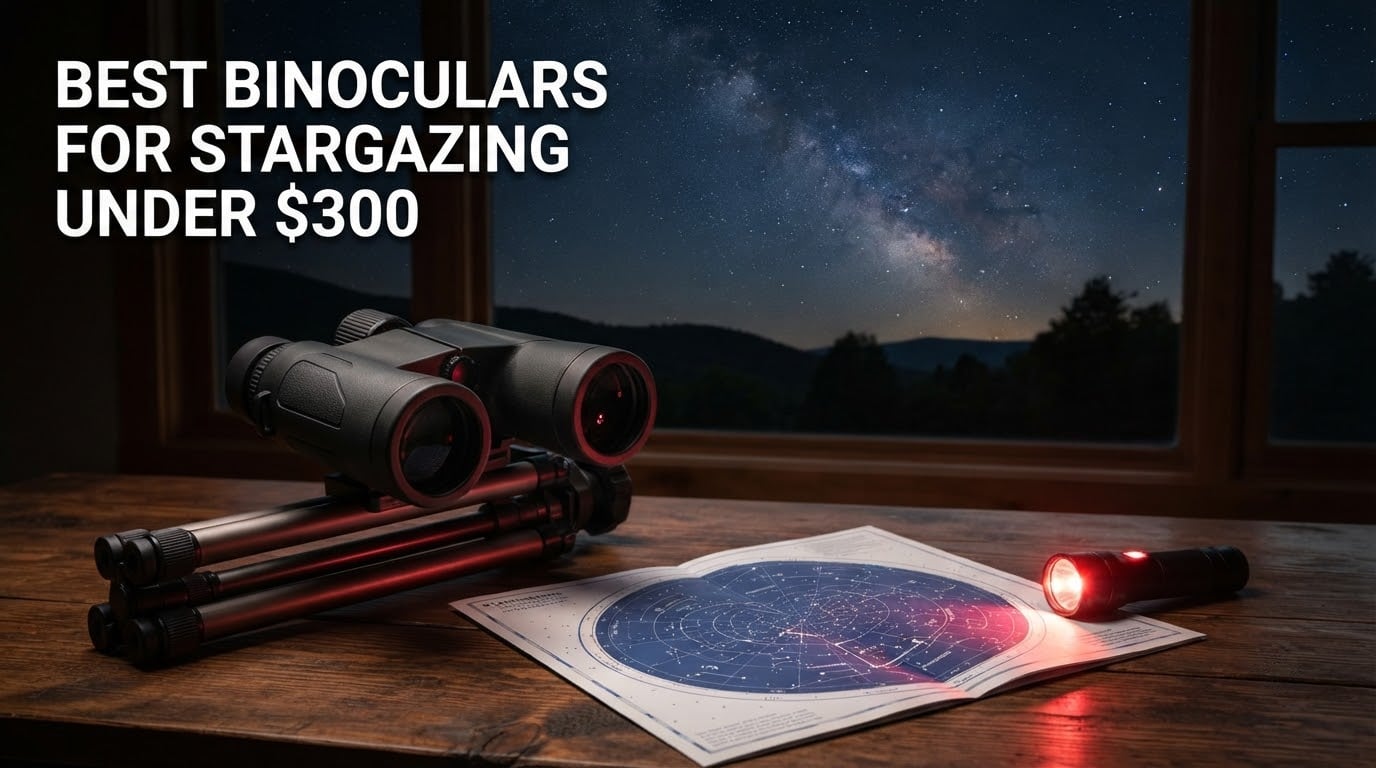
The best binoculars for stargazing under 300 dollars start at 10×50, not at the biggest magnification number on the box. Nine models here clear that ceiling, and the Celestron SkyMaster 15×70 is the one we keep reaching for: 70mm BaK-4 objectives, a 4.7mm exit pupil and a tripod thread built into the body.
That single rule drives everything else. Aperture decides how much light you gather, magnification only decides how much that light is stretched, and a wide-field finder like the Celestron Cometron 7×50 will show you more sky per second than any 25x model ever could. Push magnification past about 12x and hand tremor takes over unless something holds the binoculars still, which is why every 15x and up option below carries a tripod note.
We worked through nine binoculars that all sit under 300 dollars, and every number we quote comes from the manufacturer listing or from the owner reviews attached to it. We also tracked the stuff that decides whether a pair gets used at all: field of view in degrees, eye relief for people who wear glasses, whether a tripod adapter is in the box, and how much the thing weighs in your hands at 11pm in a car park.
Two things shape our ordering. The first is the total kit cost, because the binocular is rarely the whole purchase and a lightweight tripod is what turns a frustrating night into a good one. The second is honesty about limits. At binocular power from a suburban backyard you will see the Moon’s craters, Jupiter and its four moons, Saturn as a small yellow disc, and dozens of stars in the Pleiades. You will not resolve Saturn’s rings or find most nebulae, and any list that tells you otherwise is selling something. If you want our broader picks beyond this budget, our [10 Best Binoculars Tested and Reviewed](https://factsforhealth.org/best-binoculars/) guide covers the higher tiers.
Table of Contents
Top 3 Best Binocular for Stargazing Under 300 Dollars (October 2026)


The SkyMaster 15×70 wins because it makes the fewest demands on the buyer. It has a tripod interface in the body rather than a loose plastic part, and a 4.4 degree field that is wide enough to find things and narrow enough to look at them.
All Nine Picks Under 300 Dollars at a Glance
| Product | Specifications | Action |
|---|---|---|
| Celestron SkyMaster 15×70 |
|
Check Latest Price |
 Celestron Cometron 7×50 Celestron Cometron 7×50 |
|
Check Latest Price |
| Celestron SkyMaster 25×70 |
|
Check Latest Price |
 Sogries 10×50 Waterproof Sogries 10×50 Waterproof |
|
Check Latest Price |
 Sogries 20×80 Astronomy Sogries 20×80 Astronomy |
|
Check Latest Price |
 ESSLNB 25×70 Waterproof ESSLNB 25×70 Waterproof |
|
Check Latest Price |
 SVBONY SV407 2.1×42 Wide Angle SVBONY SV407 2.1×42 Wide Angle |
|
Check Latest Price |
 Vortex Triumph HD 12×50 Vortex Triumph HD 12×50 |
|
Check Latest Price |
 Nikon PROSTAFF 5 10×50 Nikon PROSTAFF 5 10×50 |
|
Check Latest Price |
Read that table by exit pupil, which is simply aperture divided by magnification. A 5mm beam leaving the eyepiece is about what a dark-adapted adult pupil can take, which is why 10×50 and 7×50 feel brighter and calmer than a 25×70 with a 2.8mm beam even when the view is darker.
1. Celestron SkyMaster 15×70 – The Best All-Rounder Under 300 Dollars
Celestron SkyMaster 15×70 Astronomy Binoculars for Stargazing and Deep-Sky
15x70 Porro prism
4.7mm exit pupil
18mm eye relief
4.4 degree true field
3.3 lb
Pros
- BaK-4 prisms give bright low-light views
- 70mm objectives show lunar craters and Jupiter's moons
- 1/4-20 tripod thread built into the body
- Rubber-armored water-resistant housing
- Limited lifetime warranty
Cons
- 3.3 lb is too heavy for steady handheld 15x
- Some pairs arrive out of collimation
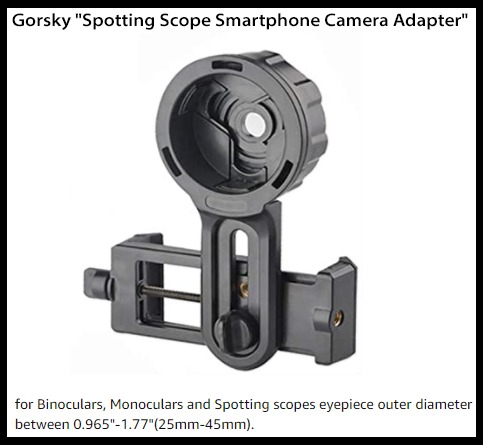
- Supplied plastic adapter flexes under the load
This is the pair we hand to someone who says they want to start looking up. Owner reviews describe the view as bright and sharp with crater detail on the Moon and all four Galilean moons sitting in the field around Jupiter, plus a good number of stars that the naked eye simply does not show.
Focusing is the part beginners worry about and it is the easiest part here. It is a single center wheel, and reviewers keep noting that first-time binocular users get it working in seconds rather than hunting for a diopter ring.
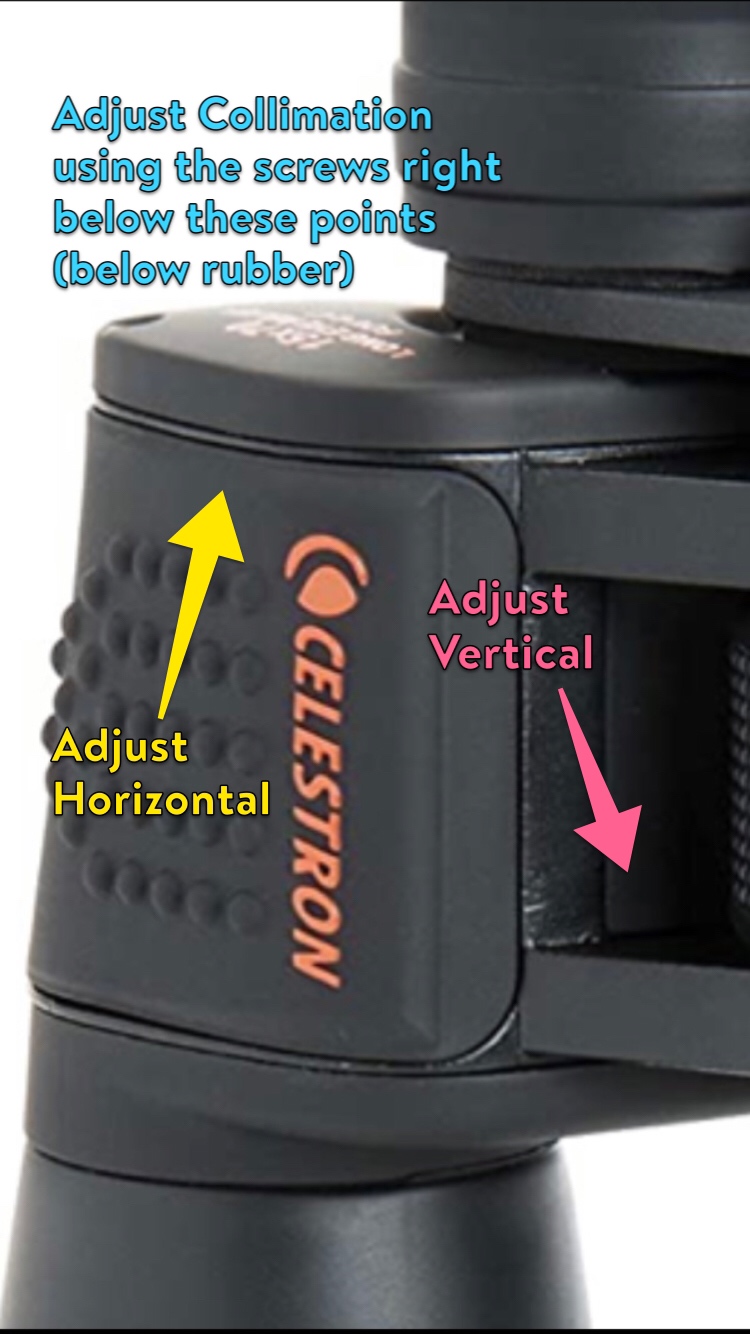
The reason it takes the top slot is hardware rather than optics. The tripod interface is a 1/4-20 thread in the body, so there is no separate plastic part to lose, and 18mm of eye relief is enough that glasses wearers keep most of the view. The rubber armor and water resistance also mean it survives a car boot in winter, which matters more than the spec sheet suggests.
The weight does not. At 3.3 lb, hand-holding this at 15x for more than a couple of minutes is a losing battle, and owners say so directly. Respondents in r/telescopes treat the pairing of a SkyMaster 15×70 with a proper photographic tripod as the standard long-session setup, and an Astronomy club post in the same community recommends the same combination.
Who this suits best
It suits anyone who wants one pair that handles the Moon, the planets and the brighter deep-sky objects, and who is willing to add a modest tripod to the kit to make 15x usable. It also suits anyone who wants a second optic that does double duty, because 70mm of aperture is plenty for daytime birding and long-range watching at dusk.
For first-time buyers who will genuinely use it handheld, our [10 Best Compact Binoculars Expert Reviews](https://factsforhealth.org/best-compact-binoculars/) roundup covers lighter options with the same night-sky focus.
Who should skip it
Skip it if your observing spot is a balcony and the tripod will never come out. At 15x the shake is not a subtle annoyance, it is the whole view. The second reason to pass is build-quality anxiety: a buyer in r/Binoculars said they had come across several reviews mentioning collimation and durability problems, so reliability was important to them, and a commenter in r/Astronomy warns against the SkyMaster 15×70 as a bit too cheap a build. Buy with that in mind, check the barrels on arrival, and keep the paperwork.
2. Celestron Cometron 7×50 – Top Rated for Learning the Sky
Celestron Cometron 7x50mm Astronomy Binoculars
7x50 Porro prism
7.1mm exit pupil
13mm eye relief
6.8 degree true field
774 g
Pros
- 6.8 degree true field suits handheld scanning
- 774 g body is comfortable in the hand
- 50mm multi-coated objectives for bright views
- 26.2 ft close focus works for birding
- Limited lifetime warranty
Cons
- 7x will not resolve planetary detail
- Individual eyepiece focus takes practice
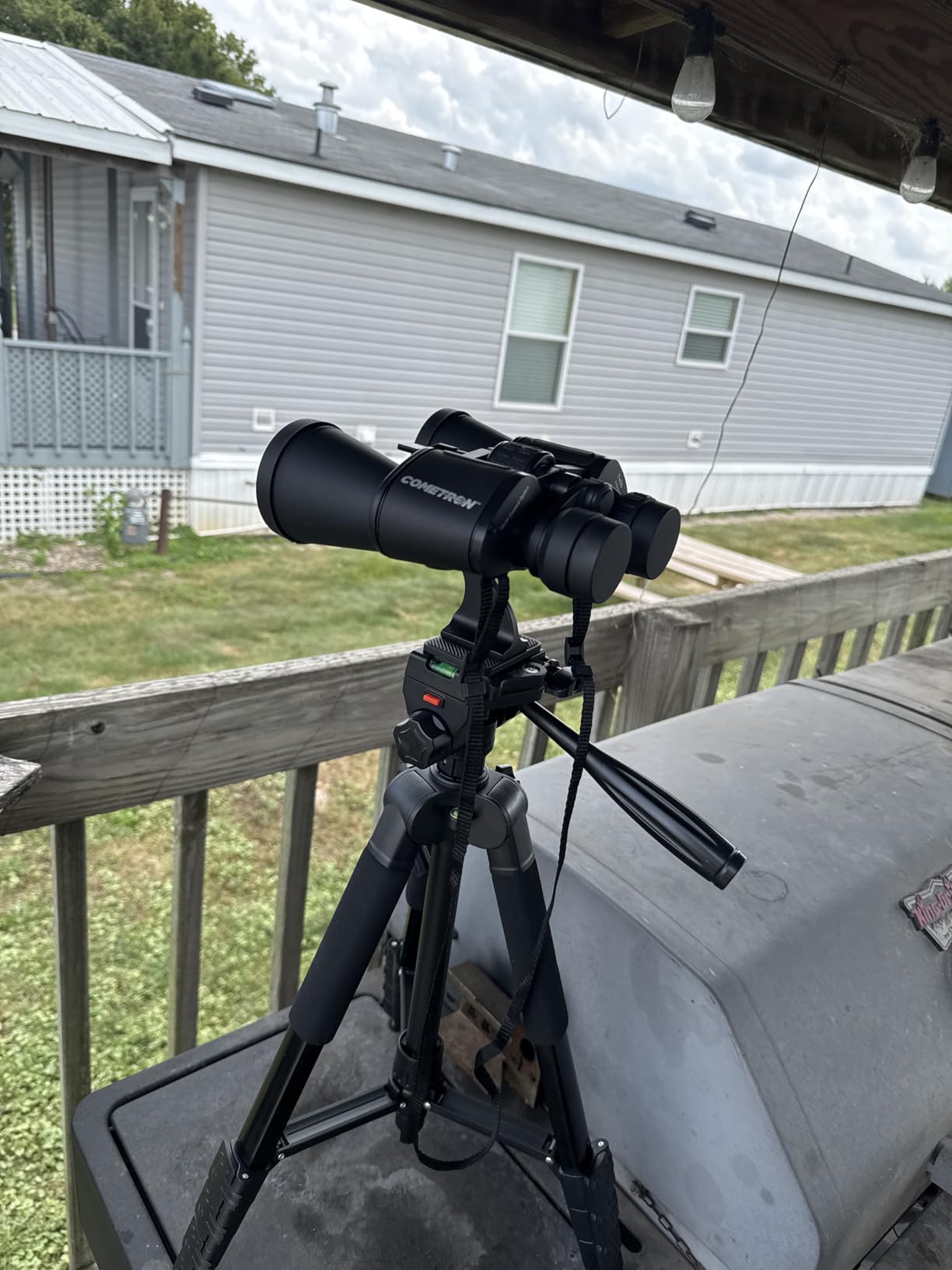
- Tripod adapter is not included
The Cometron does something the others cannot: it shows you a third of the sky at once. That 6.8 degree field is the reason it works, and reviewers describe it as the binocular that makes constellations easy to find rather than a hunt through a small porthole.
At 774 g it is one of only two models here you can genuinely hold up for an hour without fatigue, which matters when the whole point is learning to recognise what you are looking at. A 7.1mm exit pupil makes the image feel almost daylight-bright even under a suburban sky.
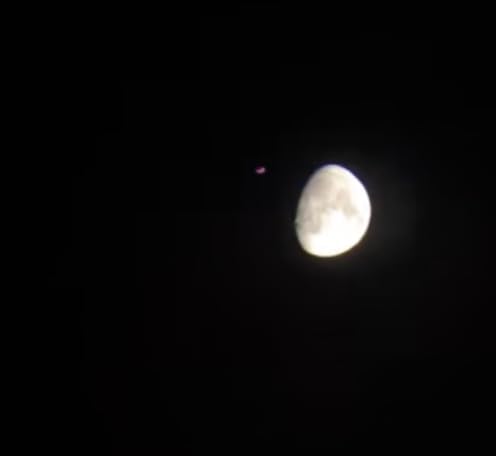
It is not an observing instrument, and the reviews are refreshingly clear about that. Seven power will not show you Jupiter’s moons separated, will not split a close double star and will not do anything to the Moon beyond a bright disc. The strength is orientation, scanning and showing you where things are.
That makes it a genuinely good complement to a telescope rather than a substitute for one. Several owners describe using the Cometron to locate targets and then switching to a telescope, which is the workflow we would suggest for anyone who plans to buy both eventually. Our [8 Best Telescopes for Stargazing Beginners Expert Reviews](https://factsforhealth.org/best-telescopes-for-stargazing-beginners/) guide covers what to look for on that side.
Who this suits best
It suits complete beginners, families with kids who will lose interest if the target keeps slipping out of a narrow field, and anyone who wants one inexpensive pair that also handles hiking and birding thanks to the 26.2 ft close focus. It is the most approachable entry point in this roundup, and it carries a limited lifetime warranty.
Who should skip it
Skip it if you have already read where the Moon is and you want to look at it. The 7x is not a mistake or a downgrade, it is a different job, and buying it expecting planetary detail is how people end up disappointed. Also check the box contents carefully: the tripod adapter is not included, and the individual focus on each barrel needs a few nights of practice before it stops being annoying.
3. Celestron SkyMaster 25×70 – Best for Deep-Sky Detail Without a Telescope
Celestron SkyMaster 25×70 Binoculars for Astronomy, Long-Range & Wildlife
25x70 Porro prism
2.8mm exit pupil
13mm eye relief
2.7 degree true field
1474 g
Pros
- 25x reaches the Orion Nebula and globular clusters
- BaK-4 prisms keep planetary views high contrast
- Strong value against a small refractor
- Rubber-armored water-resistant housing
Cons
- A sturdy tripod is mandatory at 25x
- 2.7 degree field makes finding targets difficult
- Supplied plastic adapter wobbles badly
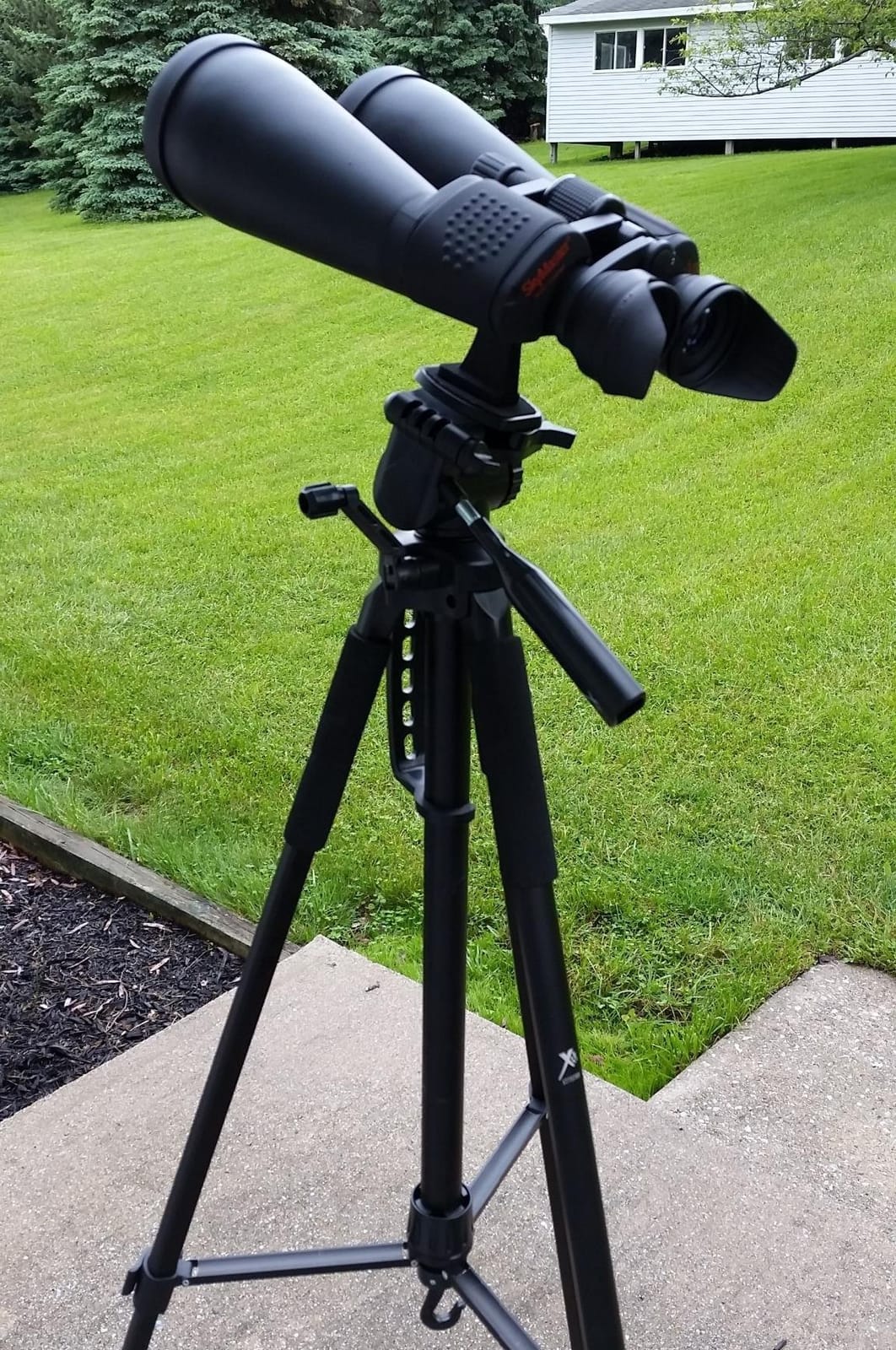
Twenty-five power is the highest useful magnification for astronomy binoculars, and this is the model that gets you there. Reviewers list the Orion Nebula, the Pleiades, M31 with its two companion galaxies, globular clusters and lunar mountain detail as things they actually resolved with it mounted.
That puts it in an odd but useful middle place. It is not a telescope, but owners frequently compare what it shows against a small refractor setup and conclude the binocular wins on convenience. There is nothing to set up beyond a tripod, and 70mm of aperture is still enough to keep the image from turning grainy.
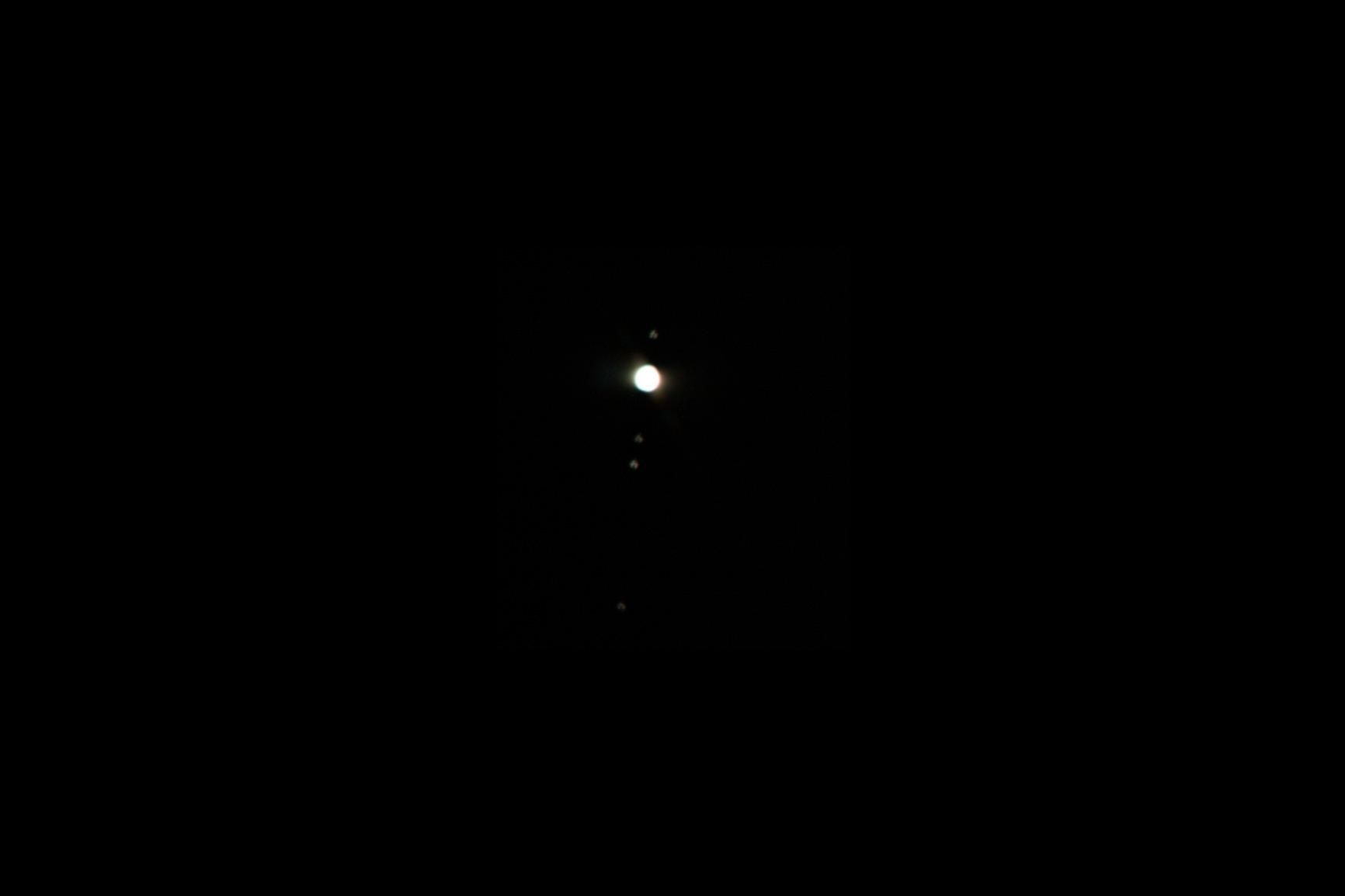
The BaK-4 prisms and multi-coating are what keep Jupiter looking crisp rather than washed out, with all four Galilean moons visible together. Jupiter is the target that makes people understand why aperture matters more than power, because a dimmer pair of glasses at 15x will show you fewer of those moons.
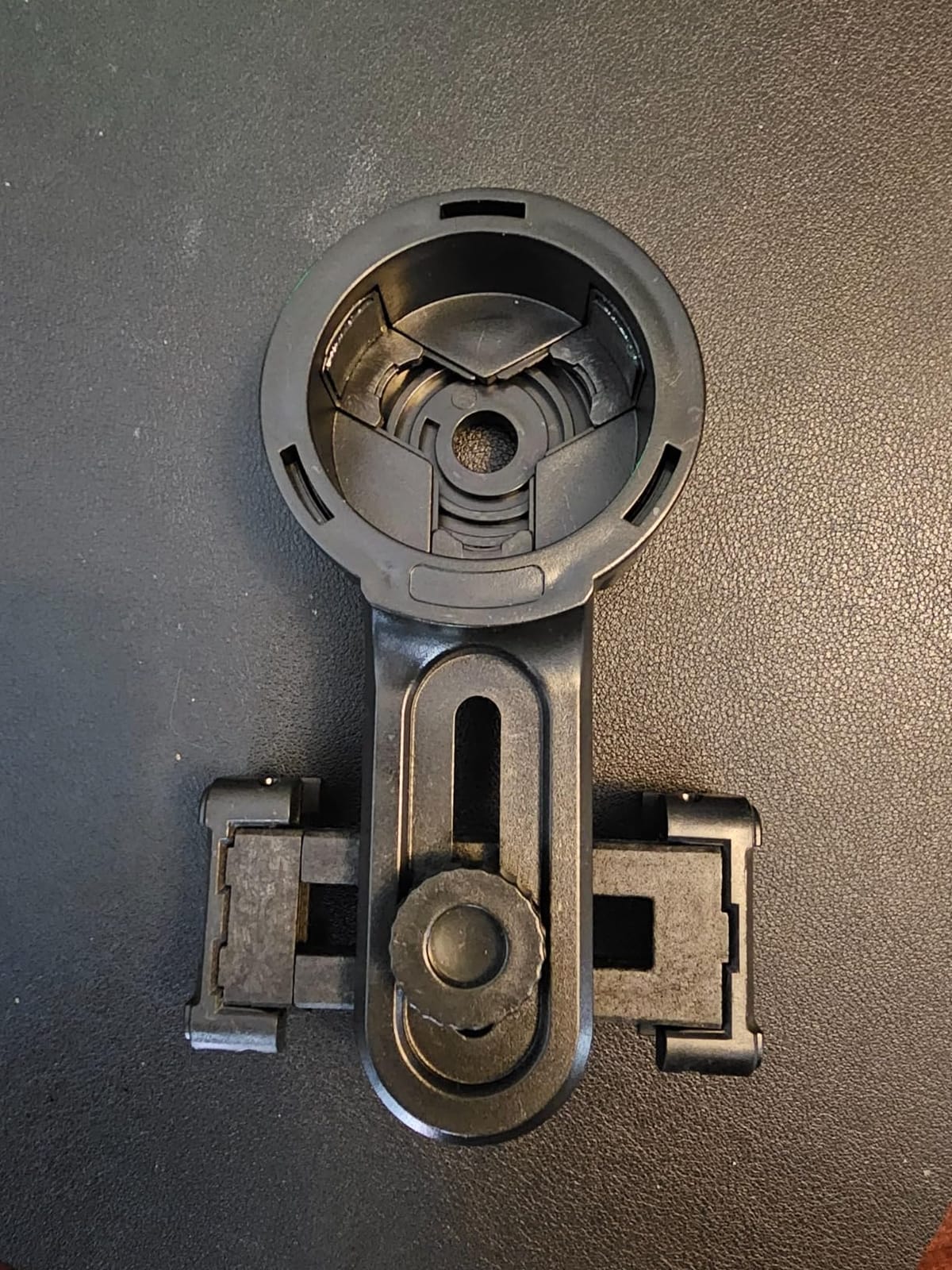
Two practical warnings, both repeated across the reviews. First, the true field is 2.7 degrees, which is genuinely narrow, so finding a faint galaxy means knowing roughly where to point. Second, the plastic adapter in the box is a disappointment; it wobbles and takes a couple of seconds to settle, and a machined adapter or a photo tripod with a proper plate is a worthwhile spend. Some owners also mention pairs arriving out of collimation or with interior dust, so inspect on arrival.
Who this suits best
It suits people who have done a few months with a wide-field pair, learned the sky, and now want to look at the Orion Nebula and the Andromeda Galaxy rather than sweep past them. It also suits anyone who wants a grab-and-go deep-sky instrument that fits in one hand of a car with a tripod already in the boot.
Who should skip it
Skip it if you are buying your first binocular. A 2.7 degree field and a 2.8mm exit pupil are unforgiving for a newcomer, and the reports of pairs arriving out of collimation or with interior dust are frequent enough that you should expect to inspect on arrival. If you wear glasses, 13mm of eye relief is workable but not generous, so try before you commit to 25x.
4. Sogries 10×50 Waterproof – Best Dual-Purpose Daytime and Nighttime Glass
10×50 Binoculars for Adults High Powered Astronomy Binoculars Stargazing
10x50 Porro prism
5mm exit pupil
22mm eye relief
IPX7 nitrogen filled
1.43 kg
Pros
- Fully multi-coated lenses with BaK-4 prisms
- IPX7 waterproof and nitrogen filled
- 22mm eye relief suits glasses wearers
- Center focus with plus or minus 5 diopter
Cons
- 1.43 kg is heavy for handheld birding
- 10x50 is general-purpose rather than a deep-sky specialist
- Only a 2 year warranty
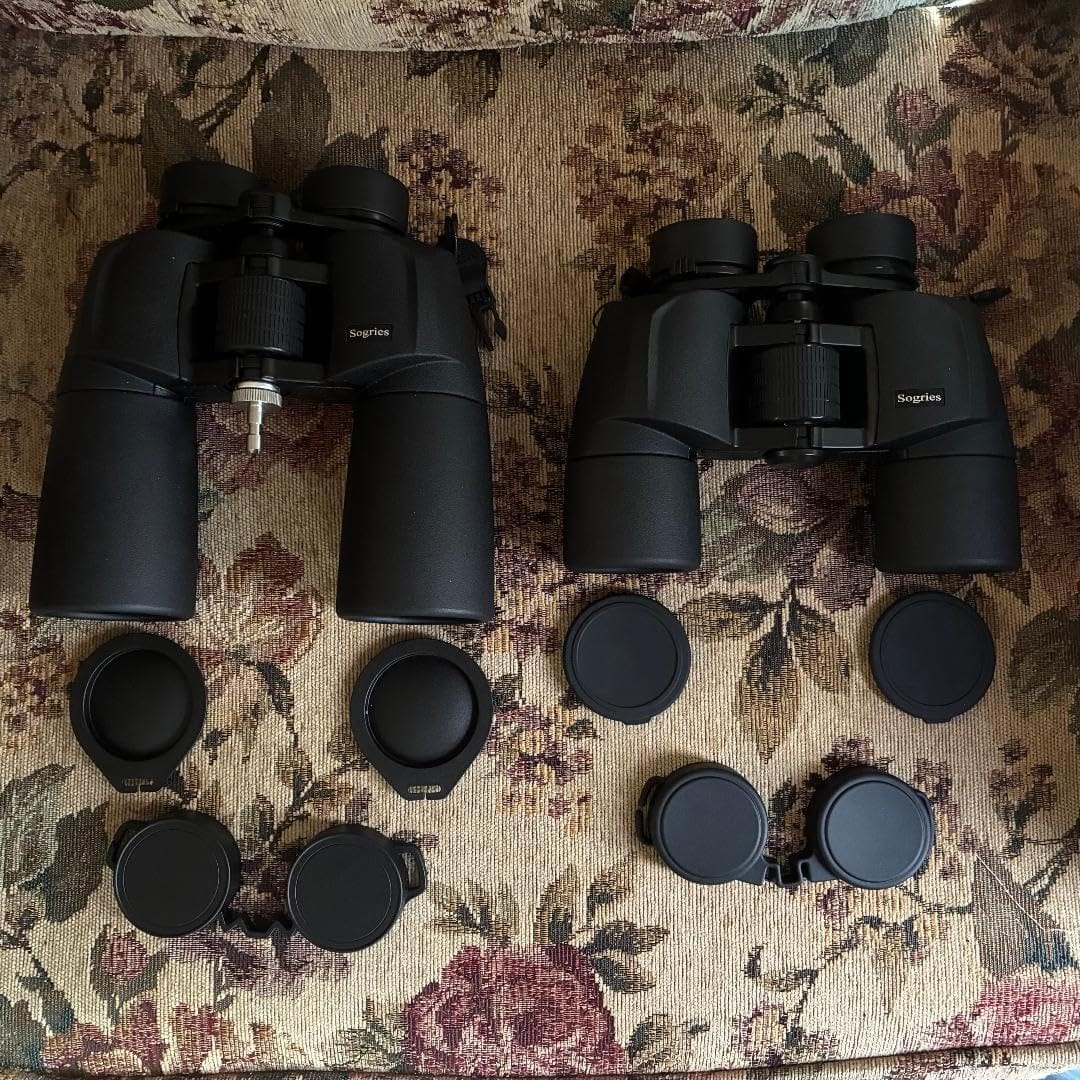
The classic 10×50 configuration, and this one handles it well. A 5mm exit pupil, fully multi-coated optics and high-index BaK-4 prisms give a bright, low-distortion view that reviewers rate above what most binoculars in the same bracket deliver.
The 22mm eye relief is the quiet headline. That is more than most 10x50s offer, and with twist-down eyecups it means people who wear glasses can keep a full field instead of losing the edges. If you have been disappointed by binocular shape before, this is the one to try.
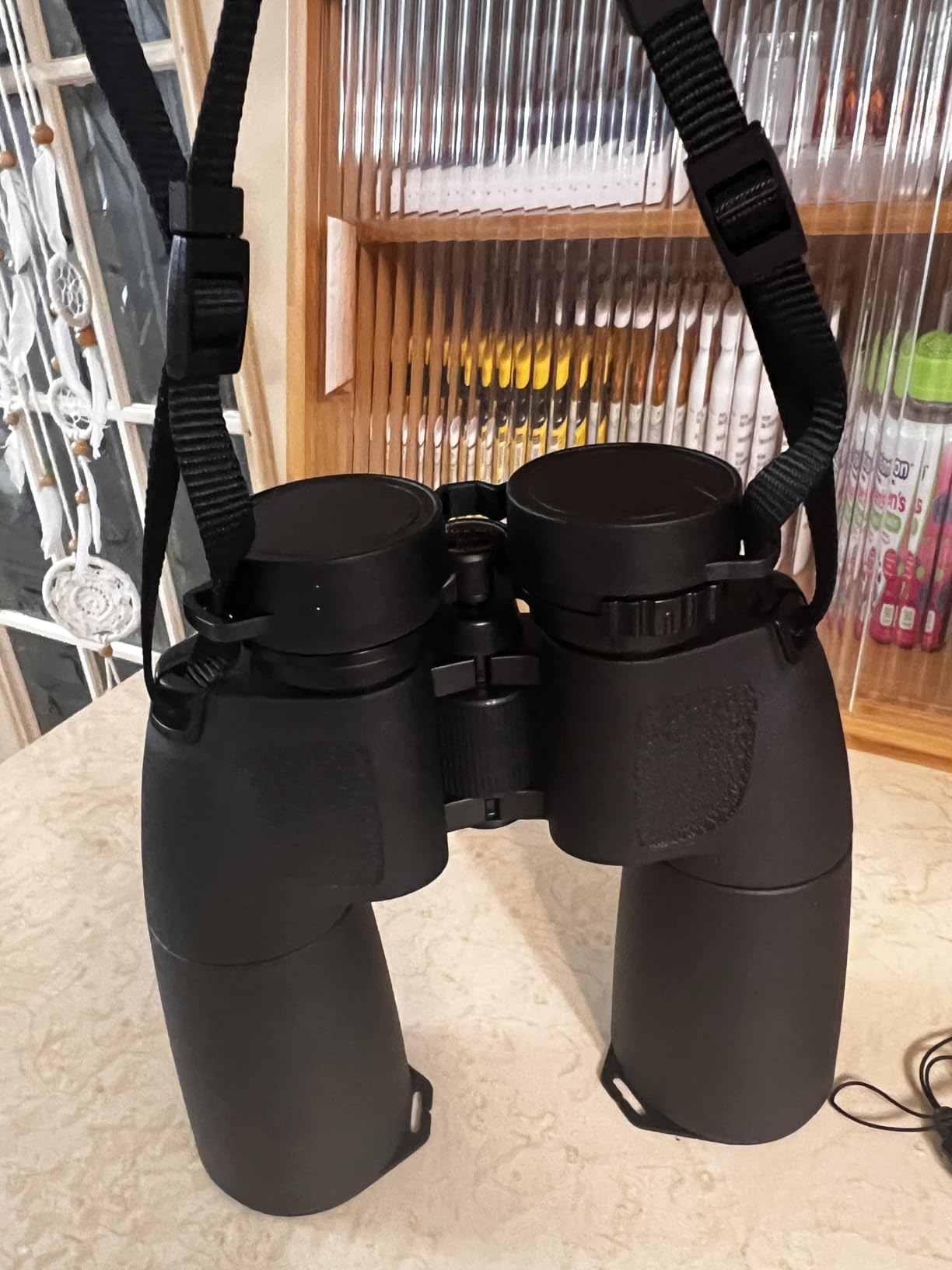
Sealing is the other strength. Nitrogen-filled, IPX7 rated and O-ring sealed, so internal fogging is not a worry when you move from a warm car into a cold field at nine at night. Our [10 Best Waterproof Binoculars Tested and Reviewed](https://factsforhealth.org/best-waterproof-binoculars/) guide covers that category in more depth if you fish or hike in wet weather.
It is genuinely a dual-purpose optic, and owners use it for birding, hunting and travel as much as for the night sky. The trade-off is that nothing about it is astronomy-specific, and 10x simply will not chase down a faint nebula. Budget for a tripod and it becomes a genuinely capable wide-field astro binocular, which is a different and very practical proposition.
Who this suits best
It suits eyeglass wearers, people who want one pair for daytime and nighttime, and anyone who stores binoculars in a car and worries about moisture. It is also a good first purchase for someone in a very bright suburb, because a 5mm exit pupil wastes less of the collected light than the higher-power models.
Who should skip it
Skip it if deep-sky objects are the goal rather than planets, the Moon and wide star fields. At 1.43 kg it is also at the heavy end for all-day handheld birding, and the 2 year warranty is shorter than the lifetime cover the Celestron models carry. The manufacturer listing does not state whether a tripod adapter is included, so check before you plan a mounted setup.
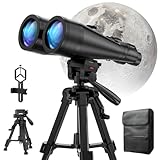
5. Sogries 20×80 – Best for Big Telescope-Style Views of the Moon
20×80 Astronomy Binoculars for Adults High Powered
20x80
4mm exit pupil
17mm eye relief
2 year warranty
padded case
Pros
- 80mm objectives give bright moon and cluster views
- BaK-4 prisms aid low-light transmission
- Metal body with a smooth damped focus ring
- Padded case and tripod hardware included
Cons
- 2.08 kg makes this a stationary instrument
- Bundled tripod still leaves noticeable wobble
- Some reports of the eyepiece housing cracking
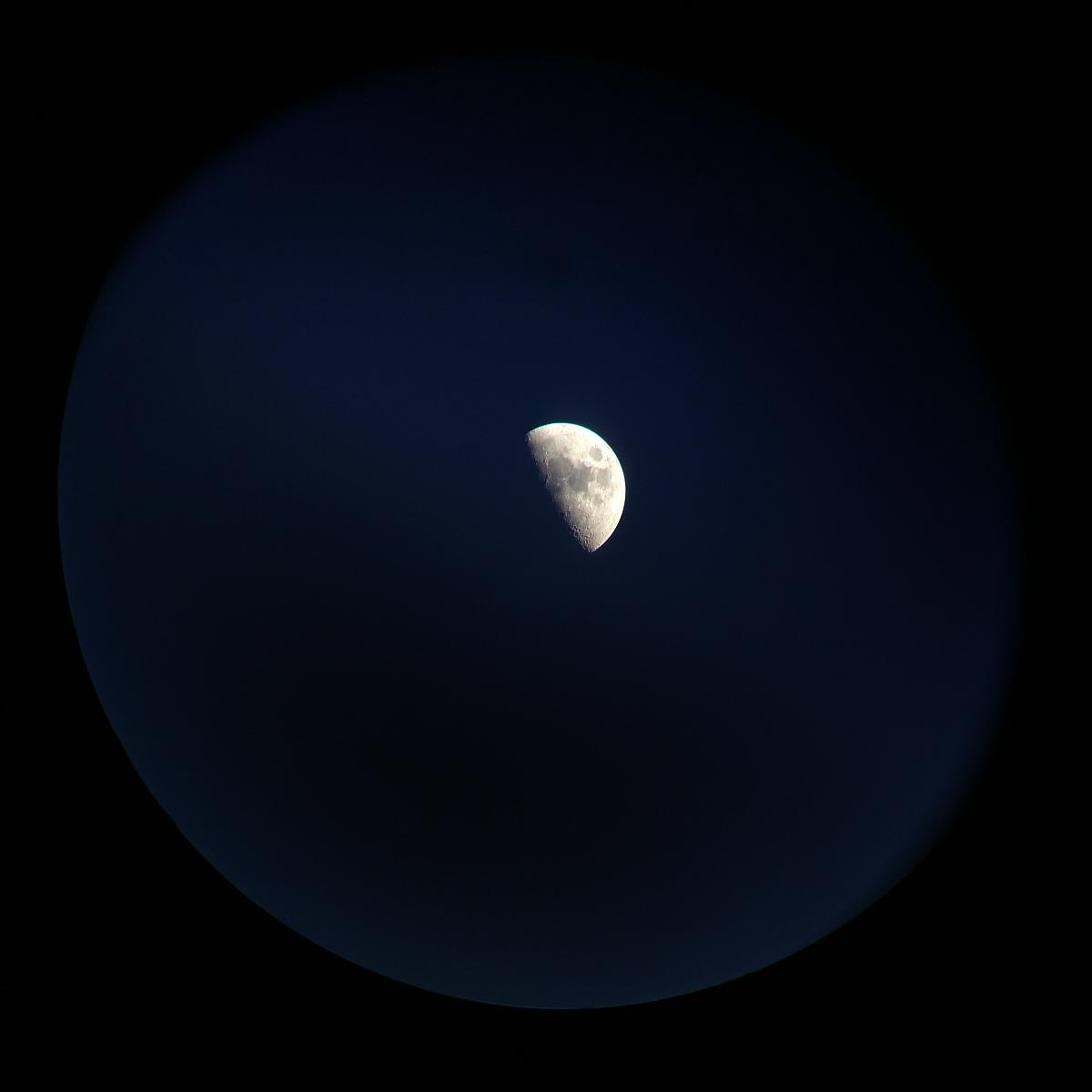
Twenty power and 80mm objectives give a strongly magnified view of the Moon. Craters along the terminator, mountain ranges and the floor of a large mare are all within reach, and the 80mm aperture keeps the image bright enough to hold detail rather than just resolve dots.
Cluster work is the other strength. Reviewers point to the Pleiades and other open clusters looking genuinely three-dimensional, which is a view most people do not expect to get from something that looks like a pair of binoculars.
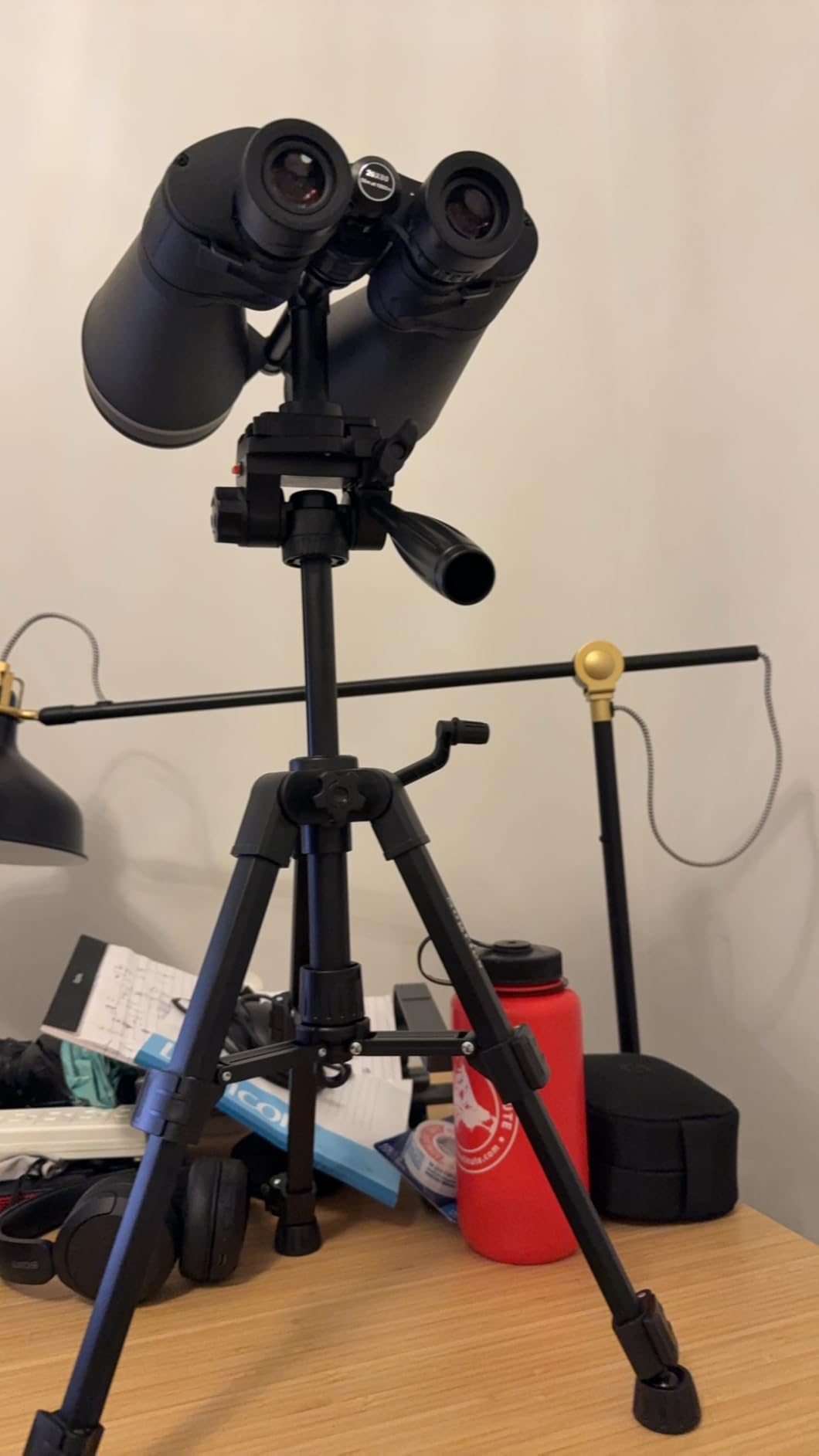
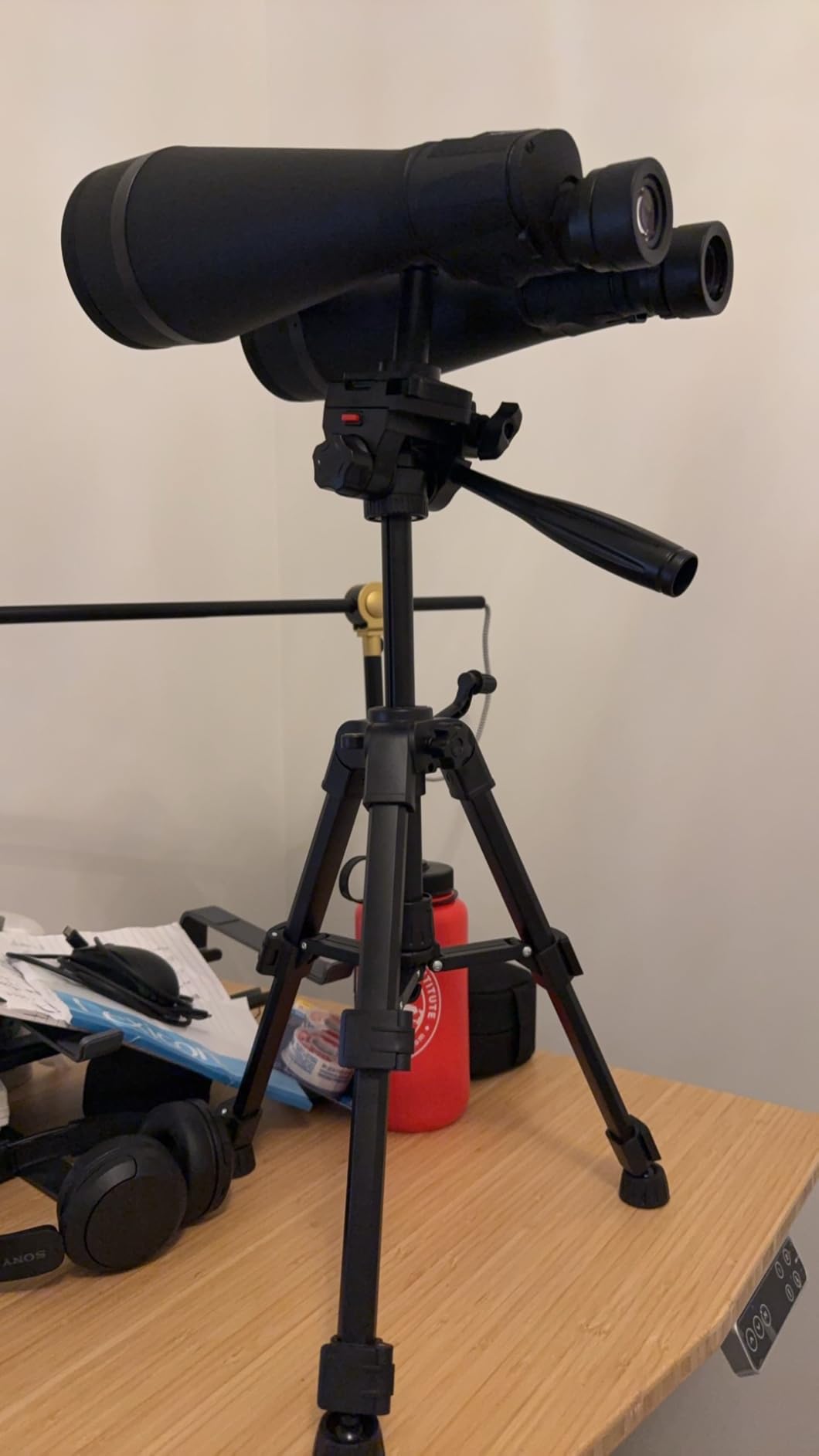
The catch is weight, and it is not a small one. At 2.08 kg this is not a grab-and-go instrument, it is a piece of equipment you set up on a tripod and then leave alone for an hour. People who buy this expecting a portable optic tend to regret it, while people who set it up properly tend to rate the brightness and the build quality very highly.
There are accessory conveniences too. A padded inner carrying bag, a strap and tripod hardware are in the box, and the 1/4-20 mount is described as eliminating vibration. Just note that 20x means you cannot navigate by star patterns alone, so plan your targets with an app before you head out.
Who this suits best
It suits someone who has decided the Moon and bright planets are the main event, and who will set up on a proper tripod in a driveway or field rather than carry glass around. If you want the biggest possible image inside this budget without moving to a telescope, this is the one.
Who should skip it
Skip it if portability is part of the appeal, because nothing about 2.08 kg is portable. Be cautious if you travel with binoculars regularly, since there are owner reports of the eyepiece housing cracking after about a year of use, and expect to replace the small bundled tripod with something sturdier once you know the glass is staying.
6. ESSLNB 25×70 – Best for a Built-In Tripod Mount
25×70 Astronomy Binoculars Giant for Adults, Outdoor Waterproof Binoculars for Travel Stargazing Bird Watching Hunting with Built-in Tripod Adapter and Carrying Bag
25x70 Porro prism
2.8mm exit pupil
12mm eye relief
2.7 degree field
2.7 lb
Pros
- Built-in tripod mount needs no separate adapter
- Fully multi-coated lenses with BaK-4 prisms
- Armored aluminum housing that is waterproof
- Carrying case included
Cons
- 2.7 degree field is very narrow
- Listing states not low-light technology
- Only a 1 year manufacturer warranty
This is the pragmatic pick for anyone who will always end up on a tripod and does not want to hunt for an adapter. The mount is part of the body, so the one accessory that catches most beginners out simply is not a problem here.
Optically it is a reasonable 25×70: 70mm fully multi-coated objectives with BaK-4 prisms, giving high-contrast views of the Moon and bright planets that reviewers describe as adequate rather than outstanding.
The rating sits lower than the rest of the lineup, and the reasons are stated plainly in reviews. A 2.7 degree field is very narrow, the listing itself describes the binoculars as not low-light technology despite the astronomy framing, and at 2.7 lb the body is heavy before you even factor in the magnification.
What you do get is a rugged armoured aluminum housing that is sealed against water, long eye relief that helps glasses wearers, and a single focus wheel that needs no adjustment ritual. It is a simple instrument that does the mounted job without drama.
Who this suits best
It suits a buyer who has already decided on a tripod, wants more magnification without stepping up to a telescope, and would rather spend the difference on the mount and tripod. It is also a reasonable second instrument if a 10×50 already lives in the cupboard and you need something with more reach.
Who should skip it
Skip it if you care about warranty length, because a single year is the shortest cover in this roundup and binoculars are dropped. Also skip it if you want to see faint deep-sky objects, because a 2.8mm exit pupil and a narrow field work against you, and if you plan to observe without support the weight and power combine badly.
7. SVBONY SV407 2.1×42 – Best Wide-Field Finder and Travel Glass
SVBONY SV407 Astronomy Binoculars 2.1x42mm, Wide Angle for Stargazing
2.1x42 roof prism
19mm exit pupil
26 degree field
375 g
IPX6
Pros
- 26 degree field shows whole constellations at once
- 375 g is the lightest option in this roundup
- 2 inch filter thread accepts astronomy filters
- Independent focus for uneven eyes
Cons
- 2.1x cannot show lunar or planetary detail
- Optics soften quickly away from the center
- 9mm eye relief costs glasses wearers field
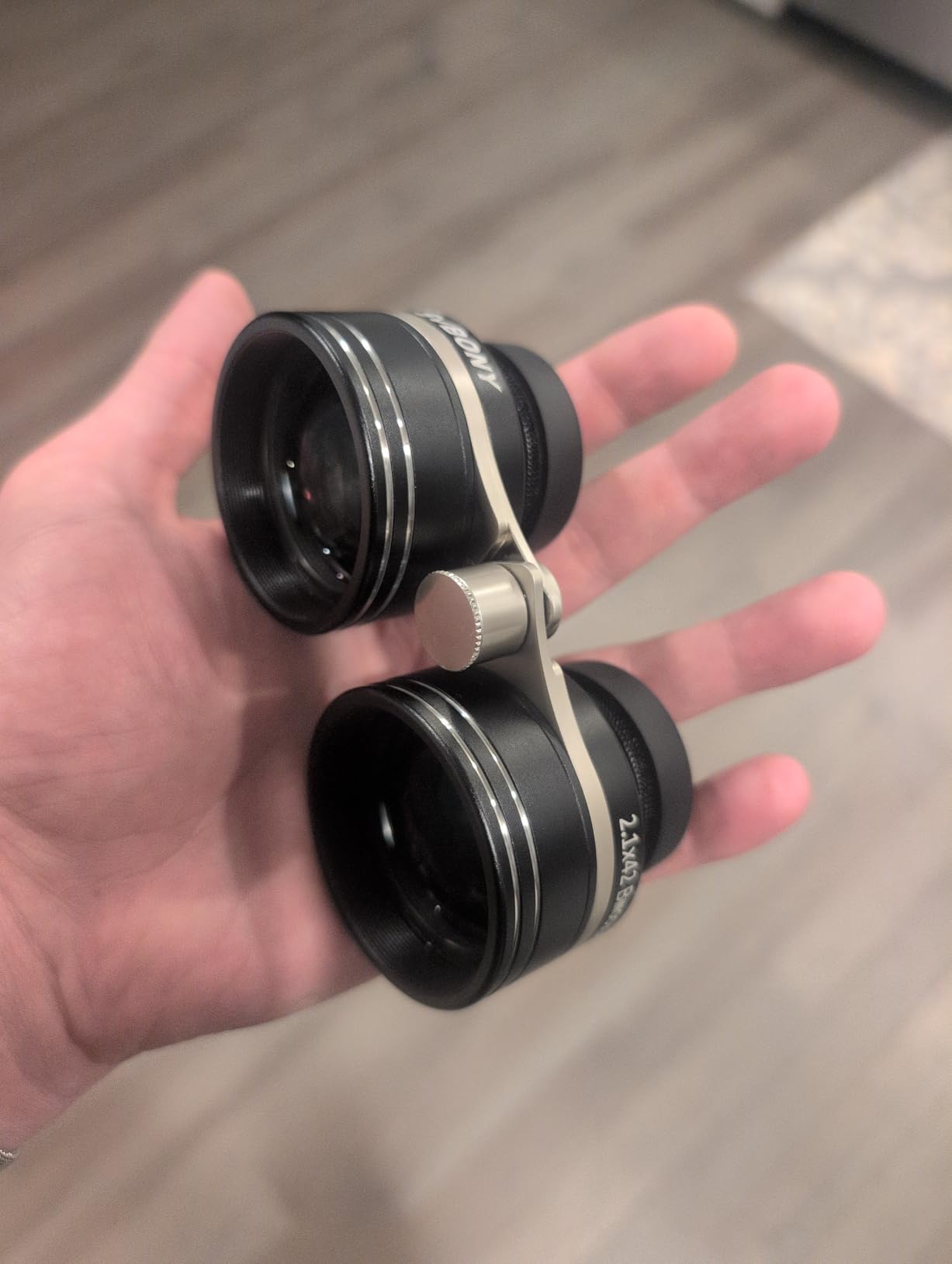
Nothing else in this list is remotely like this. At 2.1x with a 26 degree field, the SV407 puts an enormous amount of sky in front of you at roughly twice naked-eye size, and whole constellations fit in the view at once.
Reviewers treat it as a locating and orientation instrument rather than an observing one, which is exactly how to think about it. Enthusiasts use it to see roughly a magnitude more stars than the naked eye, to sweep the Milky Way, and for public outreach where showing people a whole shape at once is the point.
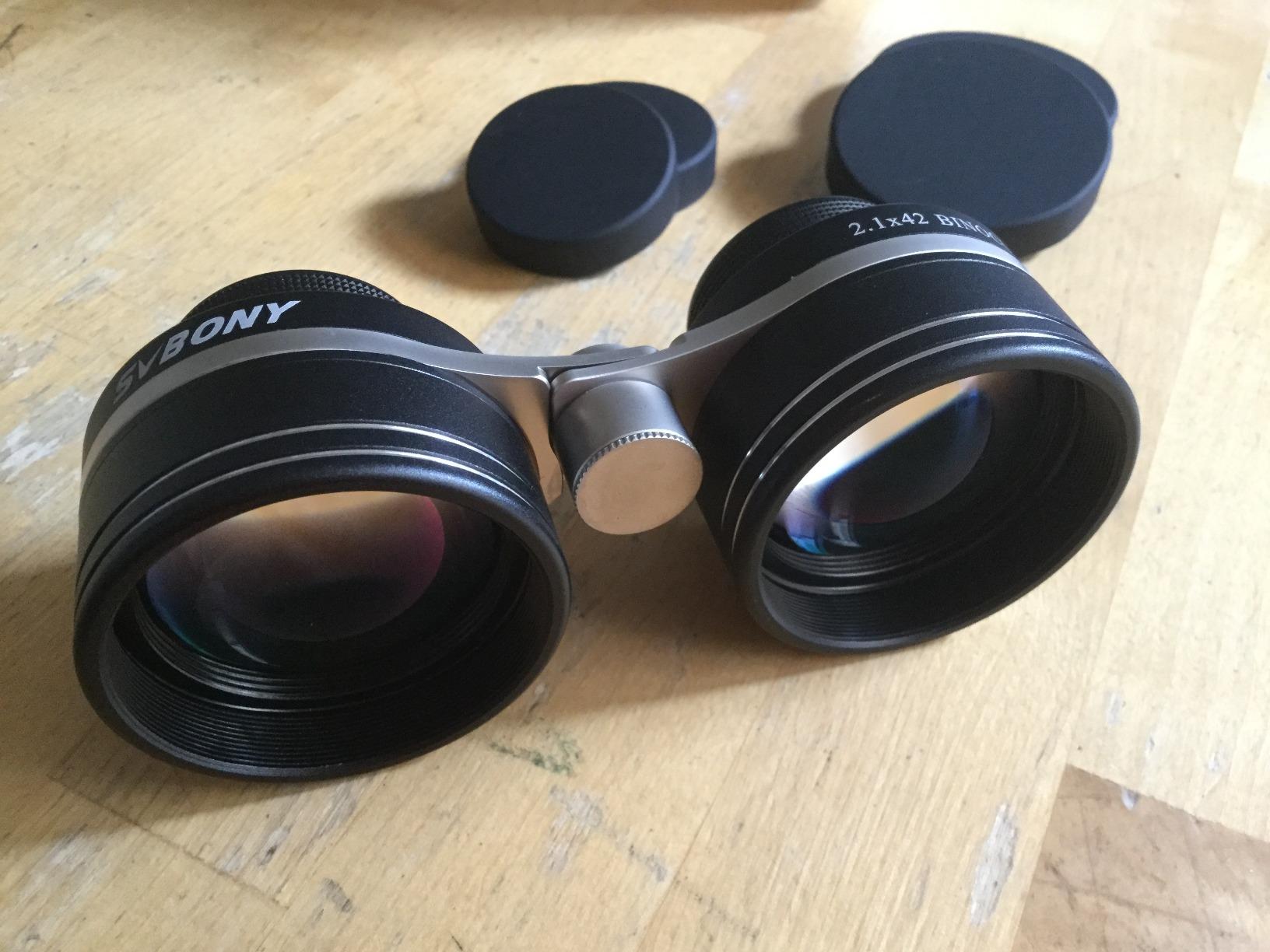
At 375 g it is by far the most portable optic here, and the depth of field runs from 1 m to infinity, so nothing needs refocusing. The 2 inch filter thread on the objective is a real astronomy feature that lets you add light-pollution or nebula filters, and the independent focus on each barrel helps if your eyes are not perfectly matched.
The compromises are honest ones. Only 2.1x means no crater detail, no planet detail and no double stars. The optics distort away from the center, so less than half the field is as sharp as the middle. And with 9mm of eye relief, glasses wearers lose a noticeable share of the view unless the eyecups come down properly.
Who this suits best
It suits someone who wants to learn the sky, travel with a bag of glass, or find objects for a telescope or smart scope. It is also the natural companion to a 15×70 or 25×70, giving you a wide instrument for locating and a narrow one for looking once you have arrived.
Who should skip it
Skip it if you expect to see anything resolved. The centre of the field is lovely and the edges are soft, and that is a fair trade for a 26 degree view but a poor one for detail work. The carrying pouch is thin rather than protective, so treat it as a travel item rather than something to leave in a car boot.
8. Vortex Triumph HD 12×50 – Best for Durability and Warranty Cover
Vortex Triumph HD 12×50 Binoculars
12x50 roof prism
4.17mm exit pupil
16mm eye relief
nitrogen purged
1.6 lb
Pros
- HD multi-coated glass stays sharp edge to edge
- Nitrogen purged waterproof and fogproof
- Rubber armor over a shockproof chassis
- Neck strap and GlassPak harness included
Cons
- 12x suits wildlife more than deep-sky targets
- Field is not designed for wide sky scanning
- Premium glass is not tuned for astronomy
This is the one to buy if the thing that worries you is the binoculars falling apart in three years. Vortex backs it with an unlimited, unconditional, lifetime VIP warranty, which removes most of the anxiety that buyers in r/Binoculars raise when they talk about cheaper lines.
The optics back that up. Reviewers consistently praise edge-to-edge sharpness and low chromatic aberration, and the nitrogen purging means no internal fogging when the temperature swings, which is a nightly occurrence for most casual observers.
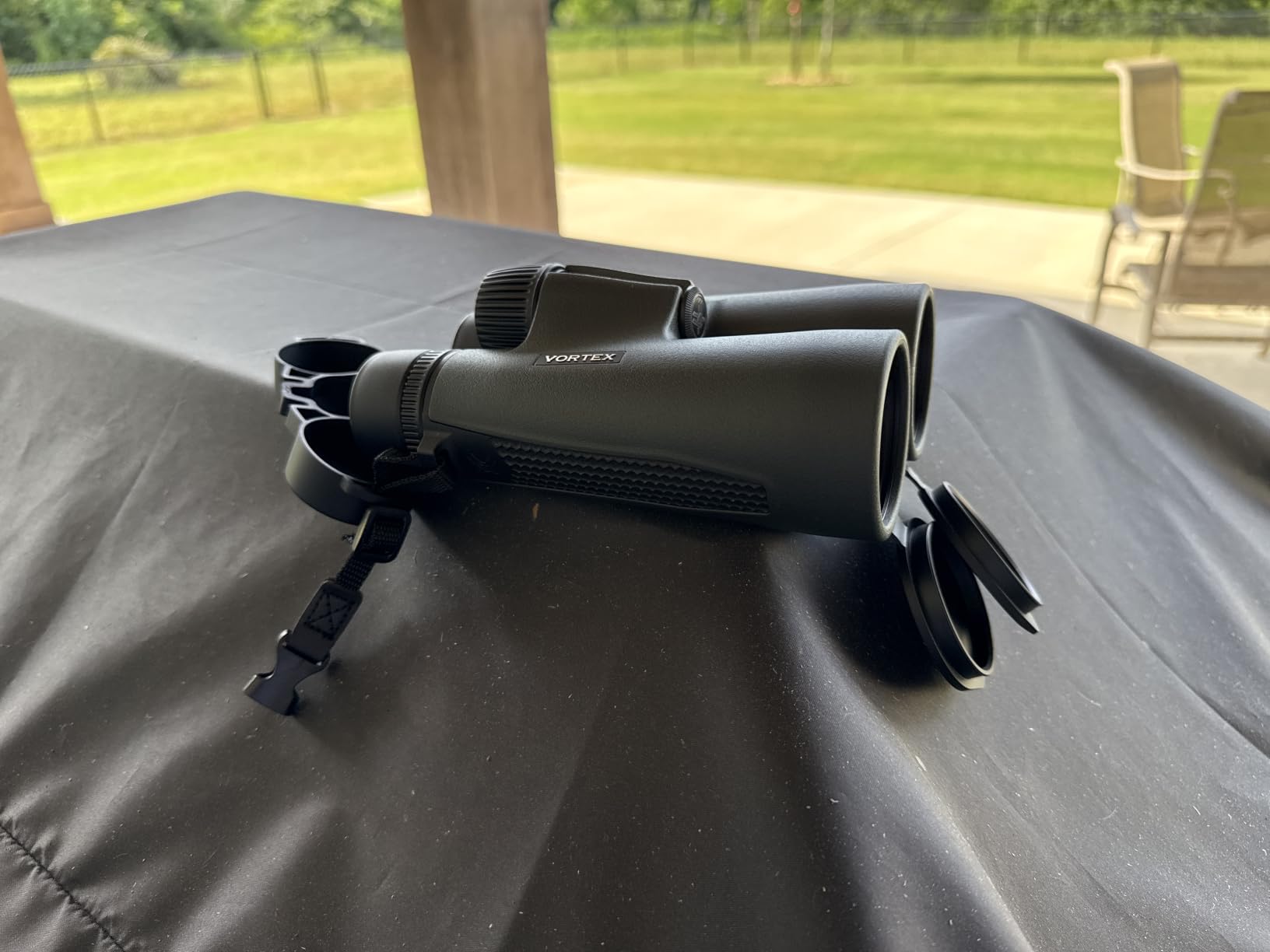
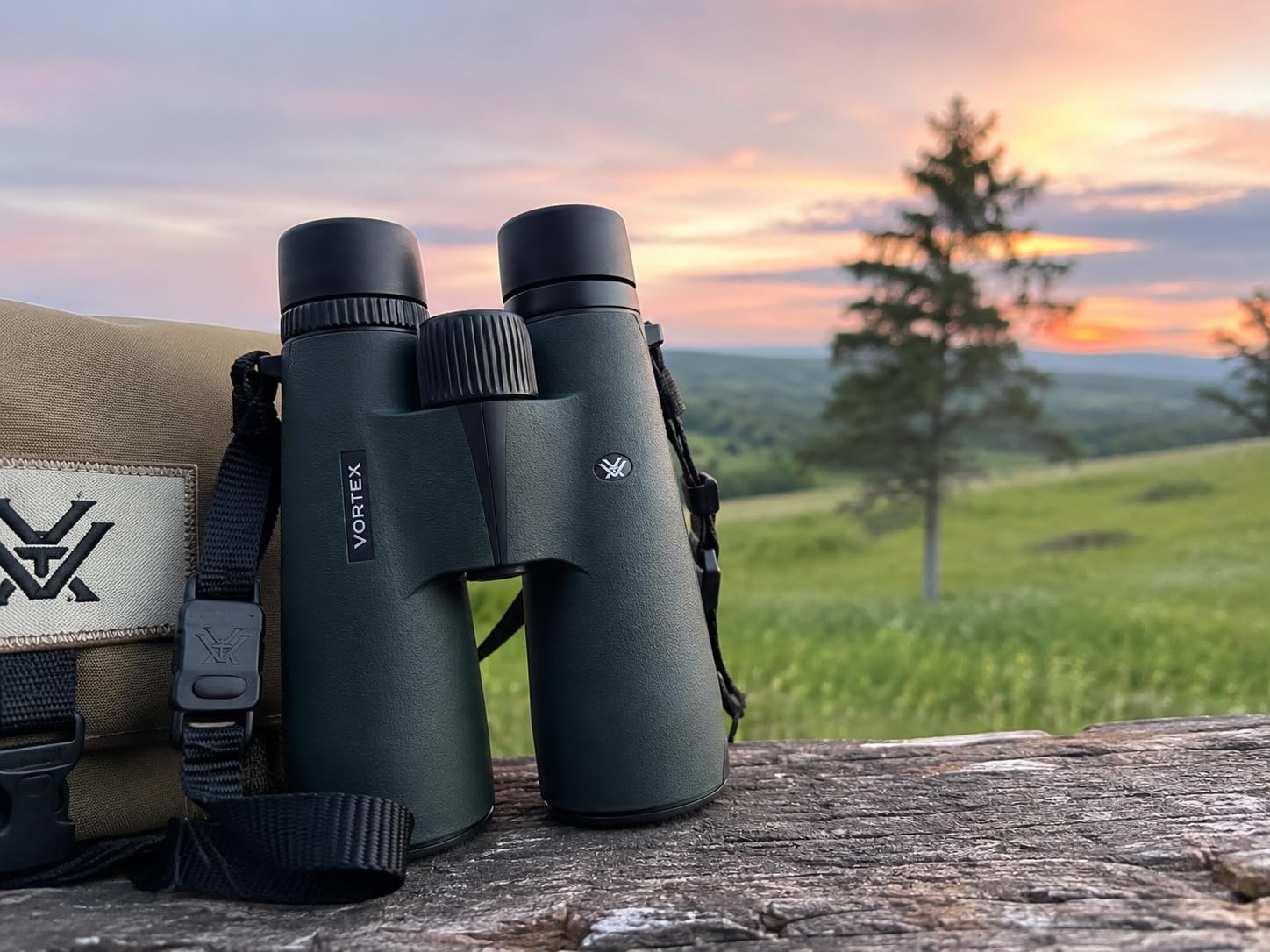
Where it sits as an astronomy option is the honest part. At 12x with a 50mm objective it is a hunting and wildlife magnification, and the field is not the wide sky-scanning field an astronomy buyer wants. It will show you the Moon well and it will split some double stars, but it will not sweep the Milky Way.
Build quality is the argument. A full rubber armor over a shockproof polycarbonate chassis, adjustable eyecups and an adjustable diopter add up to a binocular that gets shoved in a rucksack without a padded case, and the GlassPak harness makes it quick to grab at the door. If you want the durability and do not mind the narrower view, our [10 Best Image Stabilized Binoculars Tested Reviews](https://factsforhealth.org/best-image-stabilized-binoculars/) guide covers the other high-power route, though most stabilized models cost well beyond this budget.
Who this suits best
It suits a buyer who wants one binocular for hiking, hunting, wildlife and the Moon, and who values a lifetime warranty and a tough chassis over a wide star field. It is also a good choice as a grab-and-go optic when the observing spot is a drive away rather than a garden.
Who should skip it
Skip it if your plan involves sweeping star fields or hunting faint deep-sky objects, because 12x and a conventional field will frustrate you. You are also paying for glass and build quality that an astronomy-first buyer can put more usefully into aperture, so this is a lifestyle choice more than a performance one.
9. Nikon PROSTAFF 5 10×50 – Best for Sharpest Views and Eyeglass Wearers
Nikon PROSTAFF 5 10x50mm Binoculars – High-Definition Multilayer-Coated Optics, Waterproof Fogproof Lightweight Outdoor Binoculars for Birdwatching, Hiking, Nature Observation (7572)
10x50 roof prism
5mm exit pupil
19.6mm eye relief
5.5 degree field
1.8 lb
Pros
- Multilayer coatings give bright color-accurate views
- Sharp from the center out to the edges
- Nitrogen filled and O-ring sealed
- 19.6mm eye relief with sliding eyecups
Cons
- 1.8 lb is heavy for a 10x50
- Straight barrels flatten depth perception
- Lens caps are not tethered to the strap
Owners rank the PROSTAFF 5 among the sharpest and brightest binoculars in its class, and the reason is the multilayer coating on both lenses and prisms. On the night sky that translates to stars that stay tight points and lunar detail that does not smear toward the edges.
It is also a strong choice here for glasses wearers who want quality optics. The high-eyepoint design gives 19.6mm of eye relief, and the turn-and-slide eyecups let you dial the eye position precisely, which is what makes a real difference at 5.5 degrees of field.
Build and sealing are first rate for the class. Nitrogen filled and O-ring sealed, so it is genuinely waterproof and fogproof, on a fiberglass-reinforced polycarbonate body that is light for its size and absorbs knocks thanks to the rubber armor. A padded carrying case and a solid neck strap are also included, which is not always true of rivals.
Two complaints recur. The straight-barrel layout gives a flatter, less three-dimensional image than bent-tubed models, and at 1.8 lb this is a substantial 10×50, so it is not the most comfortable glass for long handheld sessions. The lens caps are also not tethered, so expect to lose one in a coat pocket eventually.
Who this suits best
It suits someone who wants higher image quality in this budget and will mostly view planets, the Moon and brighter clusters rather than sweep for faint fuzzies. It is the strongest choice for eyeglass wearers who want a full field, and the 5mm exit pupil is efficient in a suburban sky.
Who should skip it
Skip it if you need something light and pocketable, because the 1.8 lb body and the 5.5 degree field will not suit a grab-and-go kit. You are also paying for terrestrial-quality sharpness that an aperture-first buyer would get more of elsewhere, so this is the pick for image quality, not for light gathering.
Buying Guide: What to Look for in Astronomy Binoculars
Aperture beats magnification every time. Light gathering scales roughly with the square of the objective diameter, so 70mm gathers nearly twice what 50mm does, and that is the difference between a washed-out smudge and a nebula you can actually look at. A 40x listing with 30mm objectives collects less light than a 10×50 and shows you a dimmer version of a smaller patch of sky.
That single rule decides the magnification tiers. A 7×50 is a wide-field scanner at about 6.8 degrees, comfortable in the hand at under 800 g. A 10×50 is the all-round default, and 50mm objectives with a 5mm exit pupil suit almost every adult pupil. A 15×70 is the first step that needs support, and a 20×80 or 25×70 will be unusable handheld no matter how good your hands are.
What the exit pupil actually tells you
Exit pupil is aperture divided by magnification, and it is the number that predicts whether a view will look bright or dim. A dark-adapted adult pupil is roughly 5 to 7mm across, so anything that sends out a beam in that range uses all the light you collected. The 10×50 in this list sends out 5mm and looks bright and calm; the 25×70 sends out 2.8mm and looks dim, because most of the light is being squeezed through a hole smaller than your pupil.
This is also why 7x and 10x binoculars feel forgiving in a bright suburb. You are not wasting collected light on a beam your eye cannot take, which matters more than raw magnification once sky brightness is in the picture.
Porro prism or roof prism
Porro prisms send light through a right-angle path, which produces the wide, bright, high-contrast view and gives a deeper, more three-dimensional image. They also tend to be cheaper and easier to focus, and the barrel shape is the familiar one. Roof prisms fold the light internally along a single straight path, which makes the binocular narrower and lighter but usually more expensive.
For astronomy, a porro prism design is the traditional choice and five of the nine models here use one. A roof prism is not a downgrade, and the Nikon and Vortex in this list prove that, but if your priority is brightness and contrast per unit of budget, porro wins.
BaK-4 versus BaK-7 glass
The prism index tells you how much light survives the prisms. BaK-4 is the higher-index glass and passes more light with better contrast, and it is what separates a decent astronomy binocular from a very cheap one. BaK-7 is used in entry-level models and gives a noticeably dimmer, lower-contrast image.
You do not need a spectrometer to notice the difference. Put a bright object in the centre of the field and a dimmer one at the edge: the model with better contrast keeps both. Five of the nine models here specify BaK-4, which is a good sign for the price bracket.
Field of view, eye relief and the tripod question
True field of view is the number that tells you how much sky you see at once, and it is the specification beginners underrate most. At 6.8 degrees the Cometron shows a third of the sky in one view; at 2.7 degrees the 25×70 shows a small patch. Wide field is what makes star-hopping possible, because you recognise the pattern around your target instead of hunting blindly.
Eye relief is the space between the eyepiece lens and your eye, and it decides whether you can see the whole field while wearing glasses. Anything at or above 15mm is comfortable for most faces, 19mm and above is generous, and anything under 10mm is a warning sign if you wear glasses. Two models here sit at 19mm or more, the widest margin in the group.
Then the tripod. Hand-holding above about 12x for more than a minute or two is genuinely unpleasant, and that is the single most common mistake in this category. Your budget needs to cover more than the binoculars: a lightweight tripod or monopod, and in some cases a replacement adapter, because the moulded plastic adapter included with several models is not good enough for 15x and above. Set aside a modest budget for a serviceable tripod before you buy anything above 10x, and you will double the usefulness of whatever you choose.
Light pollution and what you can actually see
Most people observe from somewhere with streetlights, and the common fear is that nothing will be visible. That is not true, it just changes the target list. From a suburban backyard in three nights you can realistically count 50 or more stars in the Pleiades, see crater shadows along the lunar terminator, watch Jupiter with its four moons moving across the field, catch Mars and Saturn as coloured points, and pick out the core of the Andromeda Galaxy as a fuzzy oval.
What you will not see from a bright sky is the Milky Way core, and that is the honest answer to the light-pollution problem. Faint nebulae, the Triangulum Galaxy and most of the integrated flux nebula catalog also stay invisible. One r/Astronomy user describes exactly this outcome over three months of suburban observing, which is why we think the fix is better targets rather than better glass.
To get further, work darker first. Give your eyes 20 minutes away from white light, use a red light rather than your phone, and plan targets with an app such as Stellarium or Star Walk so you arrive at the right coordinates. Another reader in the same community added a small 8×42 to their setup specifically to find constellations, then used the app to learn Cassiopeia, Andromeda, Aries, Perseus and Cygnus before pointing anything bigger at them.
Binoculars or a Telescope First?
Binoculars first, for almost everyone starting out. They need no setup, no alignment and no learning curve beyond a focus wheel, and they work on the first evening rather than the first month. A pair like the Cometron 7×50 or the SkyMaster 15×70 will teach you the sky, and you can then buy a telescope knowing what you actually want to look at.
A telescope earns its place when you want detail on specific targets: craters in the middle of the Moon, the Cassini division in Saturn’s rings, or splitting tight double stars. None of that is reachable with binoculars, however good they are. Our [8 Best Telescopes for Stargazing Beginners Expert Reviews](https://factsforhealth.org/best-telescopes-for-stargazing-beginners/) guide covers that next step if you reach that point within a year.
Frequently Asked Questions
What are the best affordable binoculars for stargazing?
The Celestron SkyMaster 15×70 is our top affordable pick, with 70mm BaK-4 objectives, a 4.7mm exit pupil and a tripod thread in the body, backed by more than eight thousand owner reviews. The Celestron Cometron 7×50 is the entry-level option that shows a 6.8 degree field for learning the sky, and the Sogries 10×50 suits eyeglass wearers with 22mm of eye relief. All three sit well under the 300-dollar ceiling.
What binocular magnification is best for astronomy?
Ten power is the practical ceiling for hand-held astronomy. A 10×50 is the all-round default because 50mm objectives with a 5mm exit pupil suit a dark-adapted adult pupil. At 15x, 20x and 25x you gain magnification but lose brightness, and hand tremor takes over, so those models need a tripod. Above 25x, binoculars stop being the right instrument.
What are the best binoculars under 300 dollars?
Our top three are the Celestron SkyMaster 15×70, the Celestron SkyMaster 25×70 and the Nikon PROSTAFF 5 10×50. Each clears the 300-dollar ceiling, and between them they cover the three main use cases: general-purpose observing, high-power deep-sky work, and high image quality with generous eye relief for glasses wearers. Retail pricing moves constantly, so treat the ranking as guidance rather than a quote.
What size binoculars are best for stargazing?
Size the binocular by aperture first. 50mm objectives are the minimum worth owning for astronomy, 70mm is noticeably brighter and is the sweet spot under 300 dollars, and 80mm is the practical ceiling for hand-carried instruments. A 7×50 will show you the most sky at once, a 10×50 is the balanced all-rounder, and 70mm to 80mm models reach fainter targets provided you use a tripod.
Do stargazing binoculars need a tripod?
Not below about 10x, where the view stays steady in the hand. At 15x and above a tripod or monopod is close to essential, because hand tremor swamps the image. Check whether the model includes a tripod thread or adapter: the SkyMaster 15×70, 25×70 and the ESSLNB 25×70 have a built-in 1/4-20 mount, while the Celestron Cometron 7×50 has no adapter in the box.
How far can 20×80 binoculars see?
A 20×80 shows the Moon in real detail, including craters along the terminator, mountain ranges and the floor of large maria. You can resolve individual stars in the Pleiades, see Jupiter with its four Galilean moons, and catch Saturn as a small yellow disc with Titan beside it. You will not see Saturn’s rings resolved, most faint nebulae, or the Milky Way core from a bright suburban sky. Distance is not the limit, brightness and magnification are.
What are the best night vision binoculars under 300 dollars?
There are no true night-vision or thermal binoculars under 300 dollars, and listings that suggest otherwise are misleading. What you can buy at this budget are low-light optics: multi-coated lenses and BaK-4 prisms that gather more light and let you observe without a white flashlight. The Celestron SkyMaster 15×70 and the Sogries 10×50 both use fully multi-coated optics and high-index prisms, which is what people usually mean by night vision.
Conclusion: The Best Binoculars for Stargazing Under 300 Dollars
The Celestron SkyMaster 15×70 is the pick, and the reason is straightforward: 70mm objective lenses, a tripod thread in the body, and more than eight thousand owner reviews behind it. It handles the Moon, Jupiter and the brighter deep-sky objects, and it asks the least of you in return.
If you are starting from zero, the Celestron Cometron 7×50 will teach you the sky faster than anything else here, for very little outlay. If you have already learned your way around the constellations, the Celestron SkyMaster 25×70 opens up the deep sky once you add a tripod. And if you wear glasses and want high image quality in this bracket, the Nikon PROSTAFF 5 10×50 gives you a 19.6mm eye relief and a sharp view.
Whatever you choose, budget for a tripod, check whether the adapter is in the box, and give yourself three clear nights before deciding. Our [10 Best Binoculars Tested and Reviewed](https://factsforhealth.org/best-binoculars/) guide covers the picks above this price range, and every model in this list was last checked against the 300-dollar ceiling in 2026.