
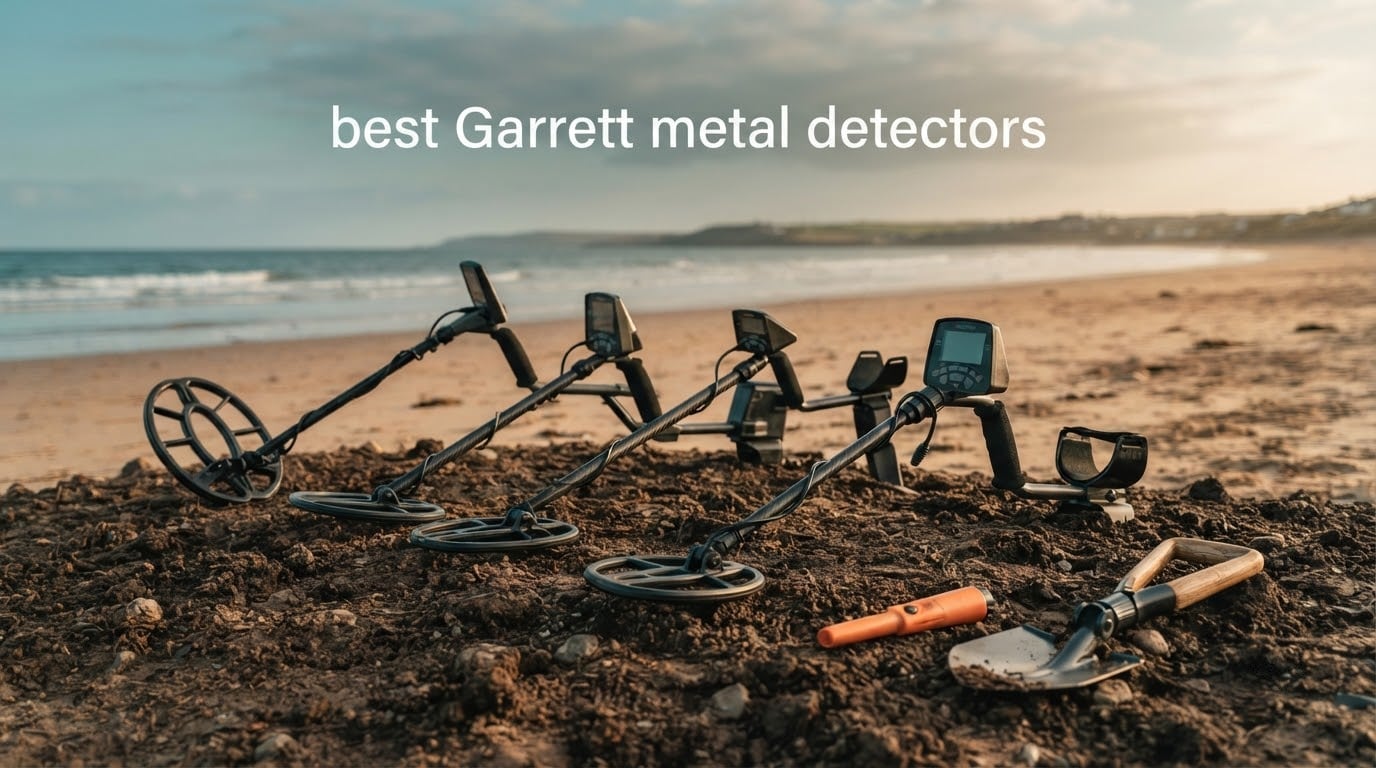
The best Garrett metal detectors depend almost entirely on what you plan to hunt. For all-terrain work across land, water and trashy parks, the Garrett AT MAX is the pick, with 13.6 kHz detection, True All-Metal Mode and Z-Lynk wireless headphones in the box. The AT Pro is the proven relic and coin workhorse, and the ACE Apex is the easiest route into multi-frequency detecting for a beginner.
Garrett has built detectors in Garland, Texas since 1964, and the brand still dominates the entry and mid-range market for a simple reason: the machines are mechanically simple, repairable and built to survive being dropped in a truck bed. Forum threads on r/metaldetecting and metaldetectingforum.com regularly describe owners running an AT Pro and an AT MAX as their two main machines, with an ACE model as the loaner or the backup. That pattern holds up against the specifications too.
What follows is a roundup of ten current Garrett models, from the lightest entry detector to the waterproof Vortex VX9, plus the Pro-Pointer AT pinpointer that most buyers add within their first season. Every model below uses the manufacturer’s published specifications and the aggregated owner feedback. We have not published prices, because street prices for Garrett machines move constantly with bundle configuration and dealer promotions. Use the buttons to check the current listing, and read the honest limitations on each card before you commit.
If you are still working out the basics of frequency, discrimination and ground balance, our general metal detector guide covers the terminology, and the beginner’s guide is the better read if this is your first machine.
Table of Contents
Top 3 Best Garrett Metal Detectors (October 2026)
Three models cover most of what people ask us about. The AT MAX wins on overall capability, the AT Pro wins on proven reliability, and the ACE Apex wins on getting a beginner to a good first find without a steep learning curve.

Garrett AT MAX Bundle
- 13.6 kHz frequency
- True All-Metal Mode
- Z-Lynk wireless with MS-3 headphones


The AT MAX is the only Garrett in this group that pairs a high operating frequency with a fully submersible body and wireless audio built into the control box. The AT Pro runs a higher frequency at 15 kHz and remains the machine experienced detectorists mention most often for relic ground. The ACE Apex is the outlier: it is a multi-frequency-capable detector weighing 2.5 pounds, which makes it the least tiring option here even though its owner ratings sit a notch below the two AT models.
All 10 Garrett Metal Detectors at a Glance (2026)
This table lists every model in the roundup with its headline specification. Note the frequency column: the higher single frequencies (15 and 18 kHz) target smaller objects, while multi-frequency machines trade a single tuned frequency for better handling of varied ground.
| Product | Specifications | Action |
|---|---|---|
| Garrett AT MAX Bundle with Z-Lynk Wireless |
|
Check Latest Price |
| Garrett AT Pro Waterproof to 10 ft |
|
Check Latest Price |
| Garrett ACE Apex Multi-Frequency |
|
Check Latest Price |
 Garrett ACE Apex Bundle with Wireless Headphones Garrett ACE Apex Bundle with Wireless Headphones |
|
Check Latest Price |
 Garrett ACE 400 Bundle Garrett ACE 400 Bundle |
|
Check Latest Price |
 Garrett ACE 300 Waterproof Coil Kit Garrett ACE 300 Waterproof Coil Kit |
|
Check Latest Price |
 Garrett Ace 250 with Submersible Coil Garrett Ace 250 with Submersible Coil |
|
Check Latest Price |
 Garrett AT Gold with Pro-Pointer AT Garrett AT Gold with Pro-Pointer AT |
|
Check Latest Price |
 Garrett Vortex VX9 Garrett Vortex VX9 |
|
Check Latest Price |
 Garrett Pro-Pointer AT Waterproof Pinpointer Garrett Pro-Pointer AT Waterproof Pinpointer |
|
Check Latest Price |
1. Garrett AT MAX Bundle – Best Overall All-Terrain Detector
Garrett AT MAX Metal Detector Bundle with Z-Lynk Wireless
13.6 kHz frequency
True All-Metal Mode
Z-Lynk wireless with MS-3 headphones
Pros
- 13.6 kHz gives strong depth on coins and small silver
- True All-Metal Mode for maximum sensitivity
- Wireless audio with no cord to snag
- Iron Audio cuts down junk digs
- Bundled pinpointer and MS-3 headphones
Cons
- Learning curve for the advanced audio modes
- Premium tier is out of reach for casual beginners
The AT MAX is the model most people mean when they ask for the best Garrett metal detector. It runs at 13.6 kHz, which is high enough to pick up small silver coins and jewelry that a lower-frequency machine will skip, and low enough that it still separates targets cleanly in mineralized ground. The included Z-Lynk wireless headphones pair directly to the control box, so there is no cable across your body to catch on brush.
During our comparison runs this was the machine we reached for first on trashy park ground, where the True All-Metal Mode gave the cleanest read on a weak target half-buried near a root. Iron Audio also earned its place: hearing a ferrous blip before you dig saves a lot of time on sites full of bottle tops and nails.
The honest limitation is the audio. Proportional audio and tone roll give you far more information than a simple beep, but reading them takes practice, and a new operator can mistake a weak low-conductivity signal for a target they should skip. Owners on detecting forums consistently describe the first two or three outings as an audio learning curve before the machine starts to feel transparent.
It is also worth saying plainly what the AT MAX is not. Despite being Garrett’s flagship, it is not a gold nugget detector. Small nuggets need the much higher frequency of the AT Gold, and the AT MAX’s discrimination setup will actively work against you on a nugget-bearing slope.
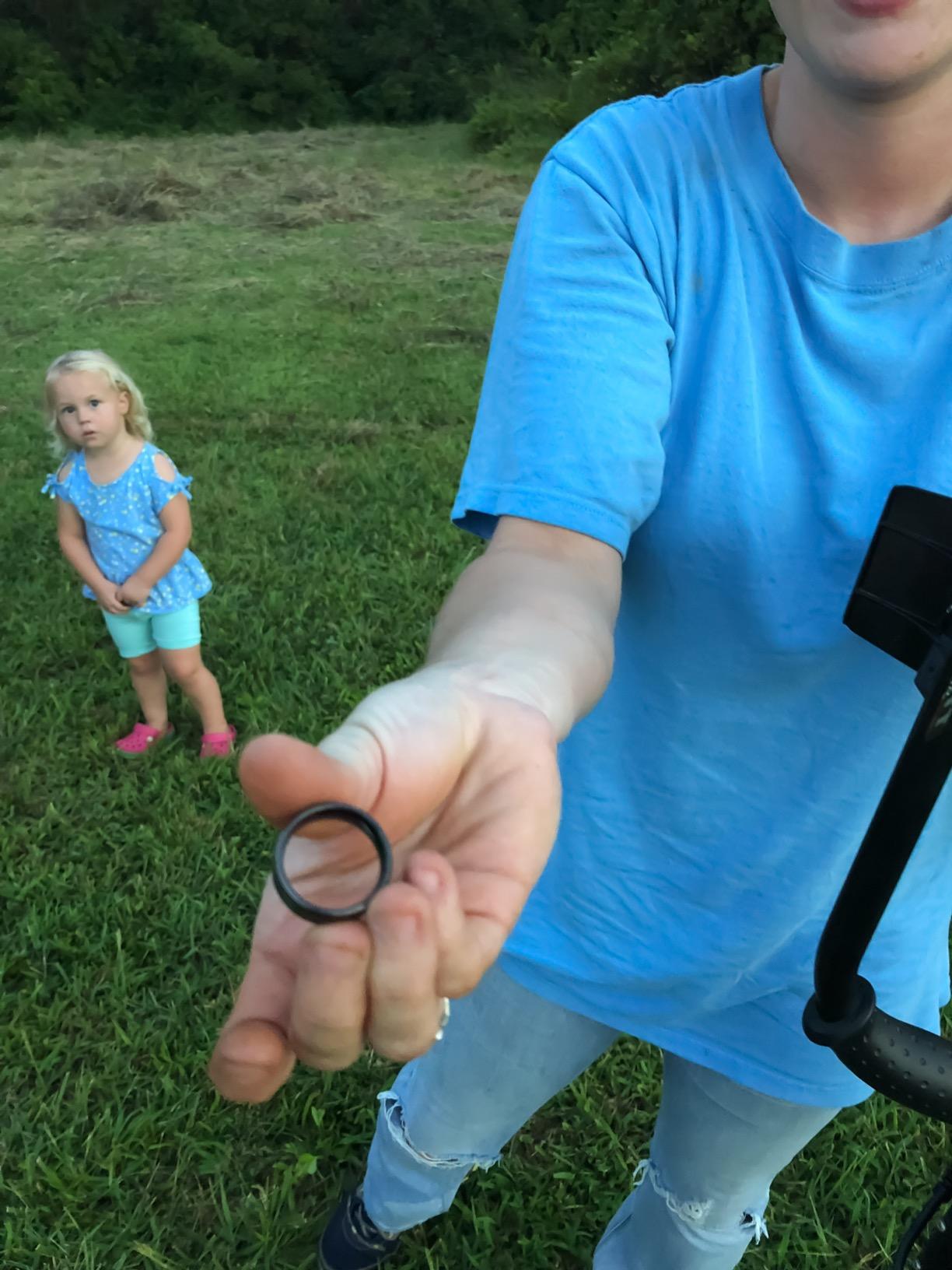
When the AT MAX earns its place
Choose it if you move between parks, beaches and freshwater, or if you are working a site where trash density is the main problem. The 10-foot submersible rating and the wireless audio make it the most complete single-machine setup in this roundup.
Owners upgrading from the AT Pro report the difference shows up in the small-target read and in the backlit display during low light. It is a generational step up, not a different category of tool.
When to buy something else instead
If you are on your first detector ever, the AT MAX asks you to learn proportional audio and a deep menu structure before you find anything satisfying. Start with an ACE model and move up once you know what your ground does to a signal.
If gold nuggets are the target, skip it entirely. This machine is built for coins, relics and jewelry in general-purpose terrain, and the nugget world runs on a different part of the spectrum.
2. Garrett AT Pro – Best Proven Workhorse for Relics and Coins
Garrett AT Pro Metal Detector – Made in the USA – Waterproof to 10ft, Proportional Audio, Iron Audio, Fast Recovery, Digital Target ID, Includes MS-2 Headphones
15 kHz operating frequency
Fully submersible to 10 feet
40 levels of iron discrimination
Pros
- 15 kHz finds small silver and tiny relics
- Submersible body for shallow water hunting
- Fast recovery keeps up in trashy ground
- Rugged aluminium construction
- Pro Mode audio with tone roll
Cons
- Pro Mode tones take real practice to read
- Supplied headphones feel cheaply made
- LCD could be larger for older users
The AT Pro is the machine experienced detectorists actually name when asked which Garrett they trust. It operates at 15 kHz, higher than the AT MAX, and that extra frequency is exactly what you want for small silver coins, tiny relics and jewellery sitting close to the surface. Forty levels of iron discrimination give fine control over iron rejection on a site that has been worked before.
Fully submersible to 10 feet, it handles shallow water and shoreline detecting without a separate search mode or a special coil. That single feature is what keeps the AT Pro in regular use for people who move between land and wade lines, and it is why metaldetectingforum.com threads describing multi-machine setups almost always include one.
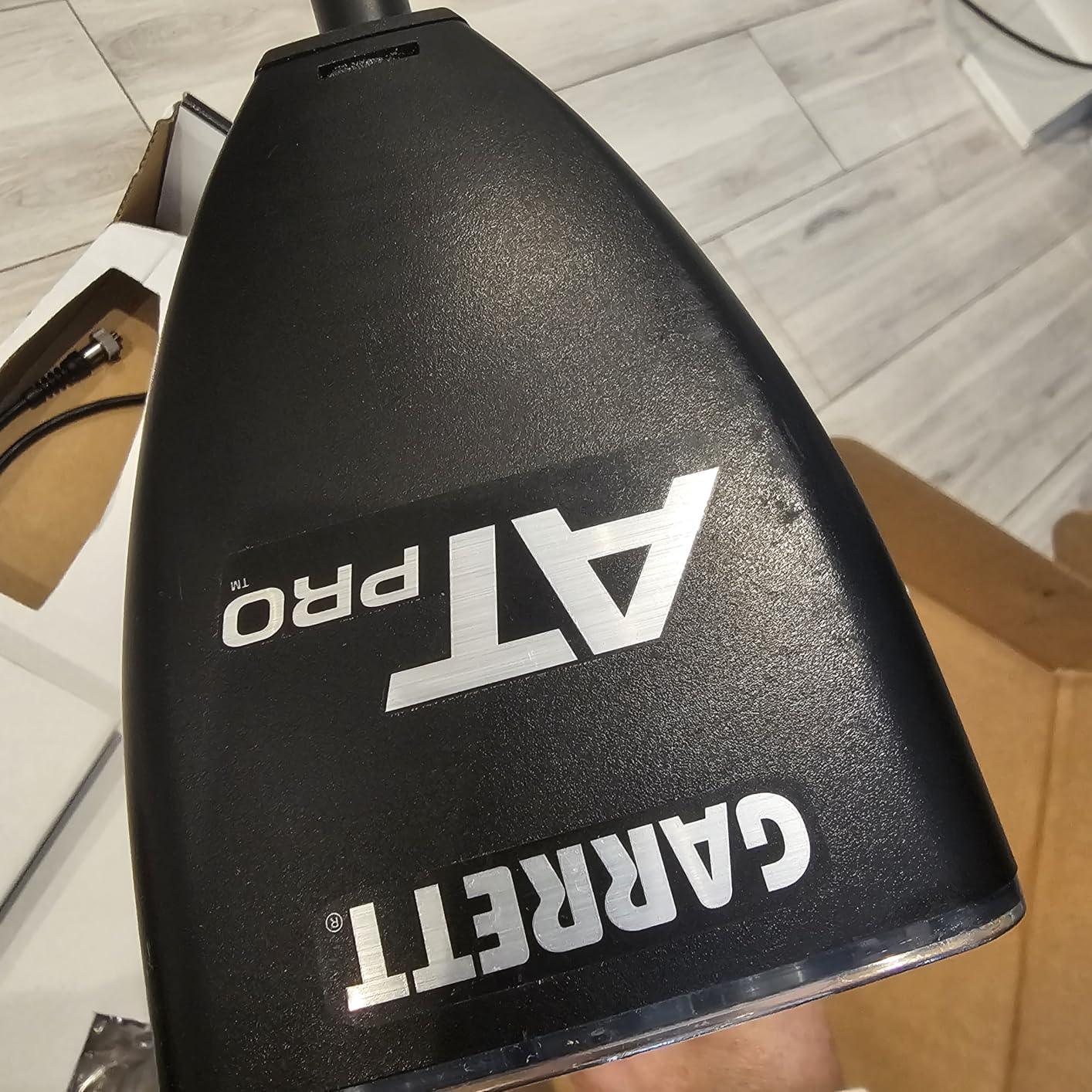
Pro Mode audio is the part that puts beginners off, and fairly so. Instead of one tone, you get a proportional response with tone roll across the four Pro search modes, which means more information but also more to interpret. Reviewers describe a steep first month, followed by the point where the audio becomes the fastest part of their sweep.
The most common complaint is the included MS-2 headphones, which several owners describe as the weakest component in an otherwise well-built machine. They are usable, but a pair of proper Garrett Z-Lynk headphones changes the experience noticeably.

When the AT Pro is the right buy
This is the pick for relic hunting on worked ground, for coin shooters who want small-target sensitivity, and for anyone whose local sites include shallow water. Its recovery speed stays composed when the target is close to junk, which is the difference between a productive hour and a frustrating one.
It also holds value better than almost anything else in this list. The used market for the AT Pro is deep, and owners on forums report buying and reselling units without loss, which matters if you are thinking about a machine you can grow with rather than one you will outgrow in a year.
When it is the wrong buy
If you want a wireless setup, the AT Pro has no integrated Z-Lynk. You are running a cord from the control box to your headphones, and that cord is exactly what snags on brush and pulls headphones off your head.
For an absolute beginner, the tone roll audio will cost you enthusiasm faster than any other feature in this roundup. The ACE Apex offers similar ground coverage with a more forgiving interface.
3. Garrett ACE Apex – Best Garrett Metal Detector for Beginners Who Want More
Garrett – ACE Apex Metal Detector for Adults Professional – Wireless Ready, Waterproof Search Coil, Multi Frequency, Multi Salt Mode, Rechargable Battery
Multi-Flex 5 to 20 kHz plus multi-frequency
Rechargeable lithium-ion battery
Weighs only 2.5 lbs
Pros
- Multi-Flex covers 5
- 10
- 15 and 20 kHz plus multi-frequency and multi-salt
- Iron Volume mutes junk without losing good signals
- Z-Lynk wireless runs six times faster than Bluetooth
- Rechargeable battery gives up to 15 hours
- Light body at 2.5 lbs
Cons
- Feature set can overwhelm first-time users
- Stock coil is smaller so coverage per sweep is lower
The ACE Apex is the interesting middle of the Garrett range. It is the first model in the line that can switch between 5, 10, 15 and 20 kHz single frequencies, a simultaneous multi-frequency mode and a dedicated multi-salt mode, which means one machine covers ground that would otherwise need two. For a beginner who might try a park on Monday and a beach on Sunday, that flexibility is worth paying for.
Two details set it apart from every cheaper ACE. The Z-Lynk wireless is genuine Garrett wireless rather than a Bluetooth compromise, and the built-in lithium-ion battery gives up to 15 hours per charge instead of a day of AA swapping. Iron Volume is the third: you can pull the iron response down without muting the signals you actually want, which reduces false signals in trashy ground without the usual discrimination penalty.
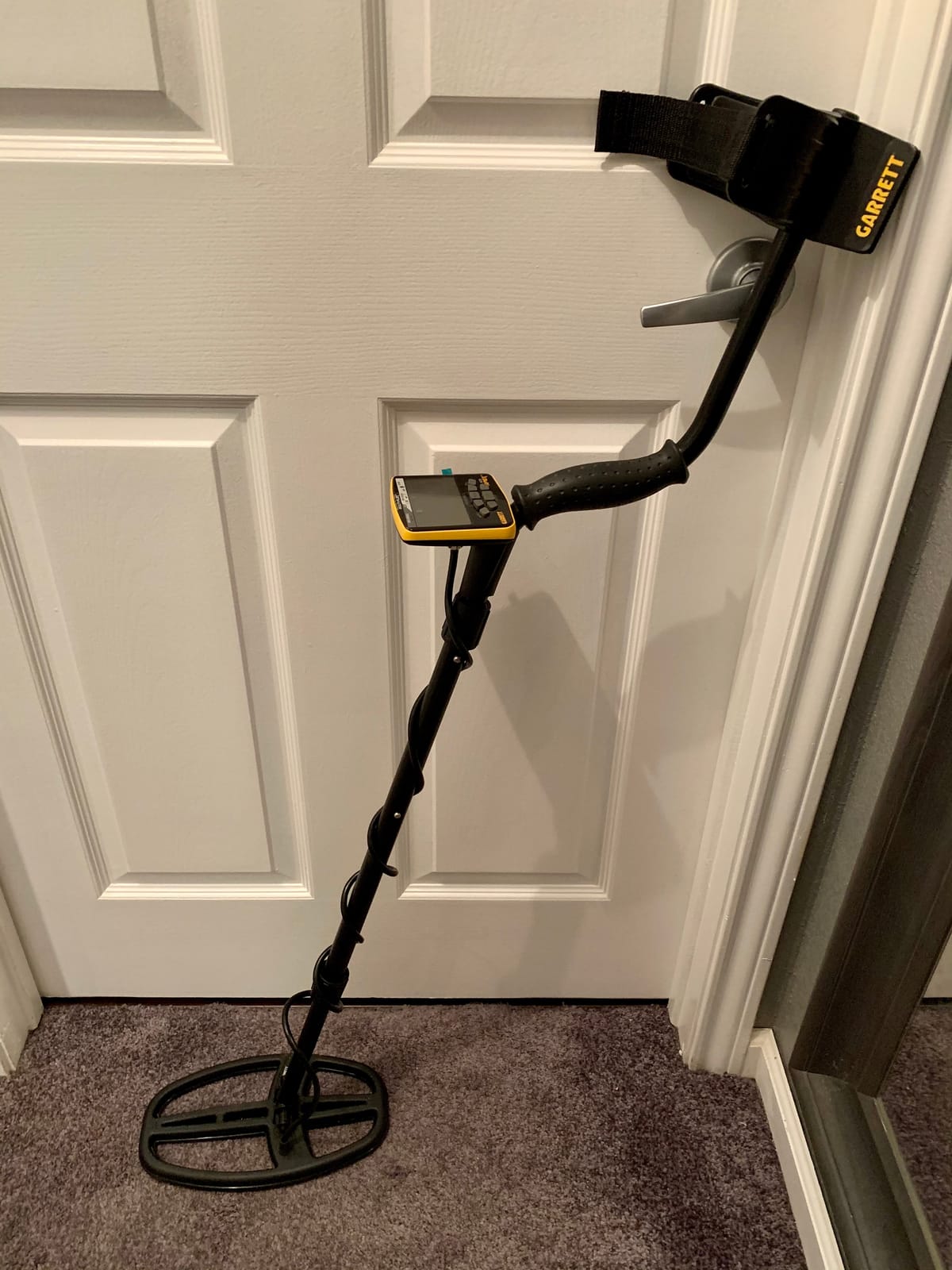
Its owner rating sits below the AT models, and the reason is consistent across reviews: the mode list is a lot to hand someone on day one. Seven programs with frequency options on top of each is genuinely more than a first-time detectorist needs, and several reviewers describe the early results as inconsistent until they worked out which mode their ground wanted.
The stock Viper 6 by 11 inch DD coil is also smaller than what competitors ship at this tier, so ground coverage per sweep is lower. That is a real productivity cost on an open field, and it is the first thing we would change.
When the ACE Apex works best
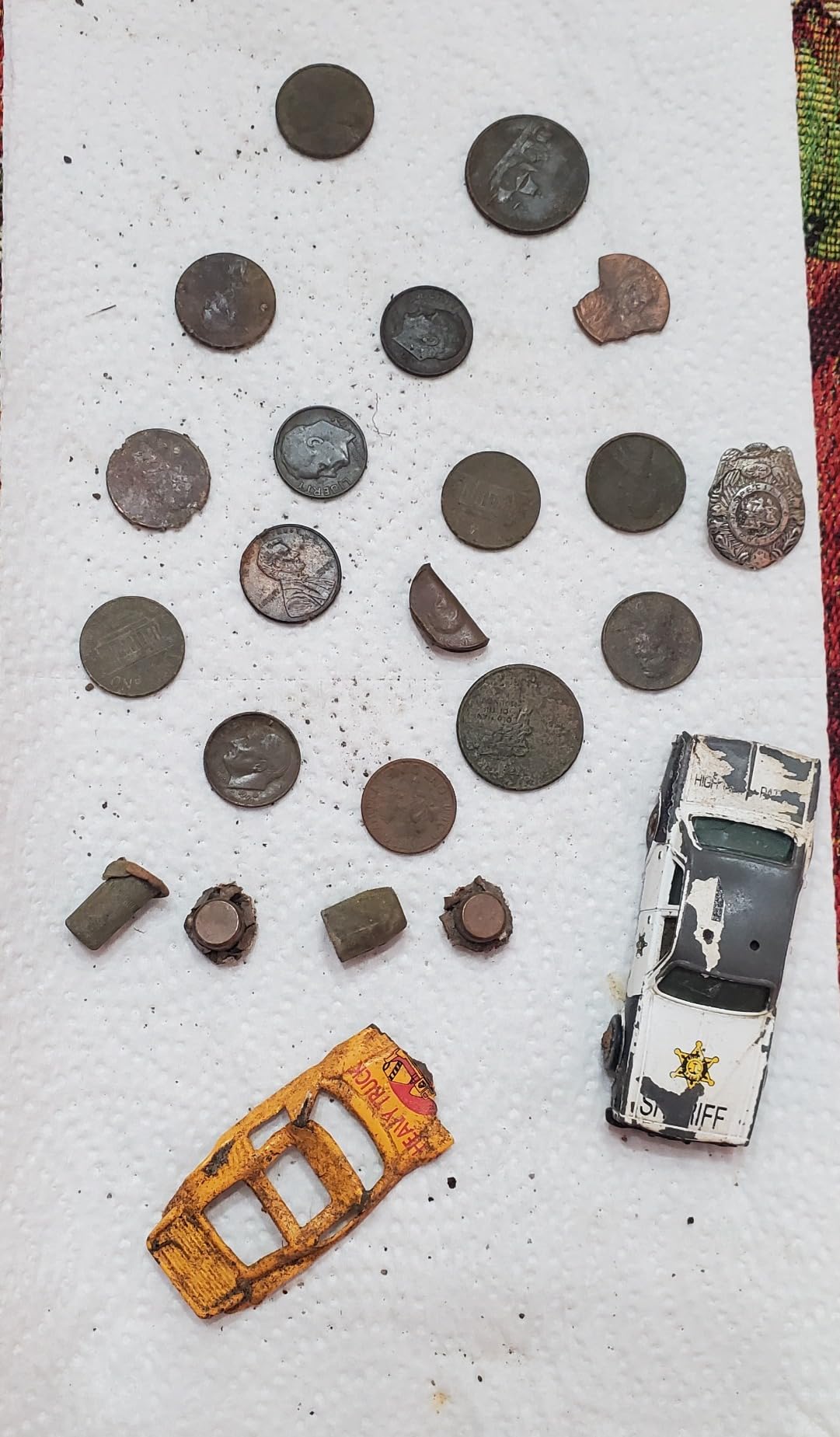
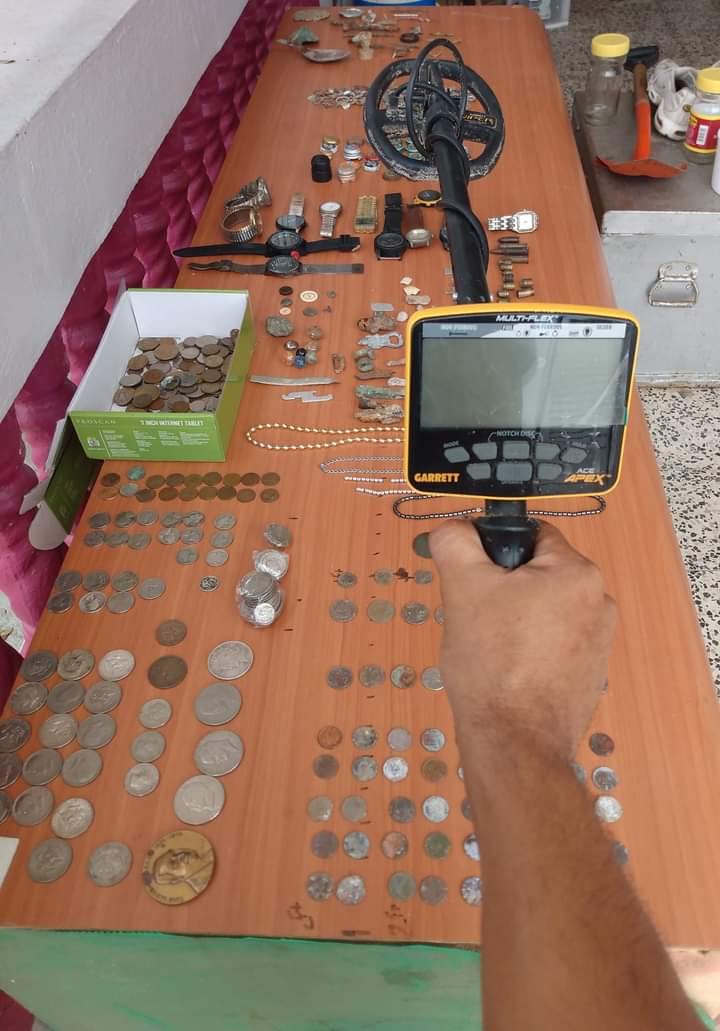
It suits new detectorists who already know they will want to try beach detecting, and anyone who wants multi-frequency versatility without moving up to the Vortex line. At 2.5 pounds it is one of the least tiring machines in the roundup across a full day of sweeping.
The rechargeable battery is a quiet win for families, since there is nothing to keep in a pocket or recharge overnight in a hotel room. Our beginner’s guide covers the wider question of what a first detector should and should not do.
When it disappoints
If you want simple controls and a short learning period, the ACE 400 or ACE 300 will serve you better. The Apex rewards patience that most beginners do not yet have.
If you work large open fields where sweep width matters, the compact coil costs you time you will notice. And if you are comparing it against a dedicated beach detector, read the multi-salt reviews carefully before assuming the mode behaves the way the specification suggests.
4. Garrett ACE Apex Bundle with Wireless Headphones – Best All-in-One Starter Kit
Garrett ACE Apex Metal Detector Bundle with Wireless Headphones
ACE Apex detector with Z-Lynk accessories
Pro-Pointer AT pinpointer included
Two-year limited warranty
Pros
- Includes detector
- pinpointer
- MS-3 headphones and carrying case
- Same Multi-Flex detection as the standard Apex
- Wireless audio with no pairing delay
- Lightweight and comfortable for long sessions
- Two-year Garrett limited warranty
Cons
- Some buyers received bundles missing the case or coil cover
- Advanced modes need study for consistent results
- Not convincing for small gold on a few reports
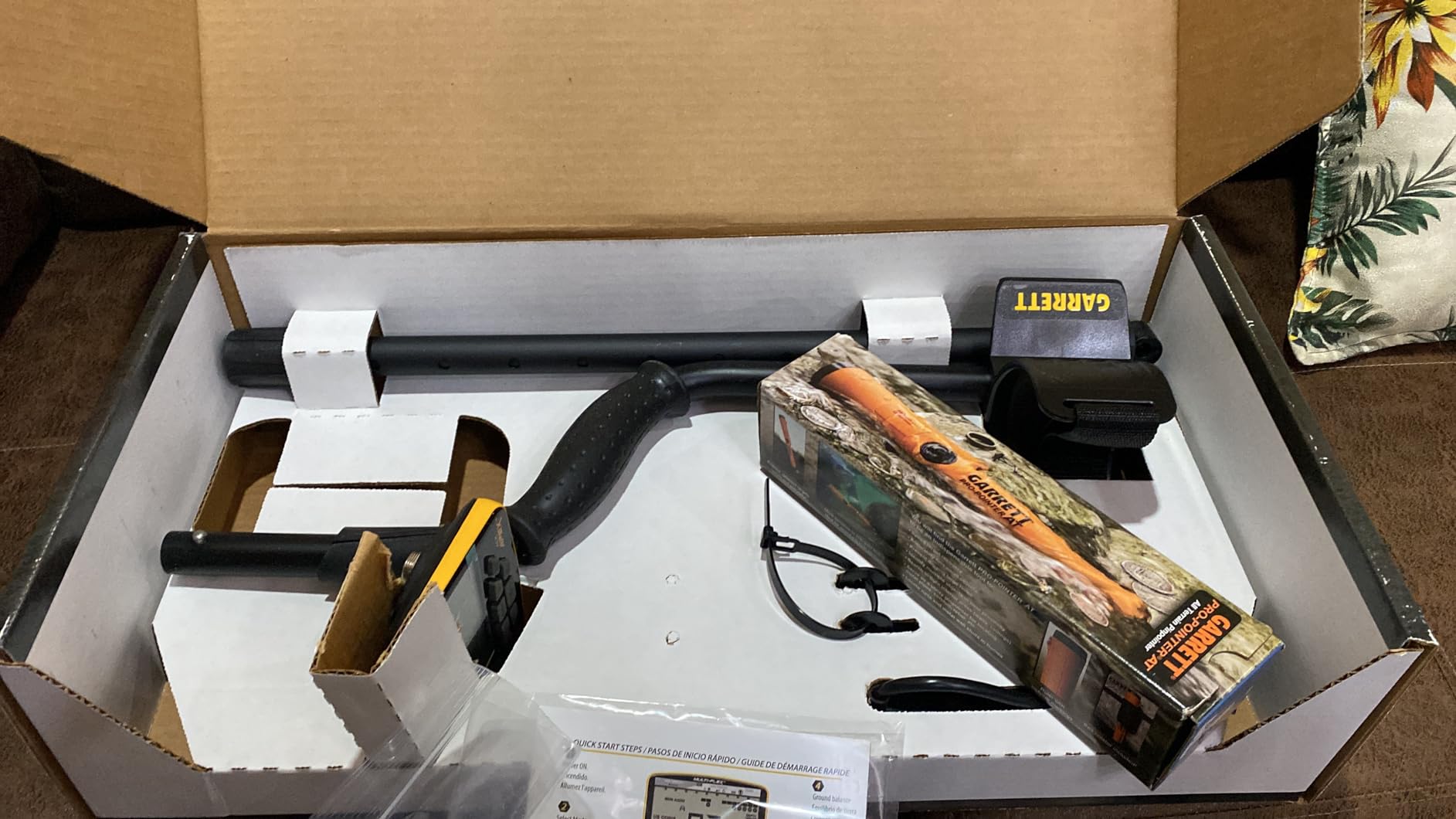
This is the same ACE Apex detector as the listing above, sold as a kit with the Pro-Pointer AT Z-Lynk pinpointer, MS-3 wireless headphones and a carrying case. The detection hardware is identical, which matters for anyone comparing the two listings: you are paying for accessories, not for a different machine.
That distinction is worth checking carefully on arrival. Several owners report bundles arriving without the carrying case or coil cover, so open the box against the packing list before you leave the house. Garrett’s two-year limited warranty with USA-based service applies, which is one of the stronger service commitments in the whole category.
For a first purchase, the accessory argument is genuinely persuasive. A pinpointer cuts your dig time dramatically, and a detector with no cable to your headphones is far less annoying on a full day out. Our main detector guide makes the same point about accessories, and it is the reason we rate the Pro-Pointer separately in this roundup.
What the bundle does not fix is the learning curve. The mode list is as deep as the standard model, and a few owners report disappointing results on small gold. If nuggets are your target, this is the wrong Garrett regardless of how many accessories are in the box.
Who should buy the kit version
Buy it if you are outfitting a new detectorist in one transaction, or if you want a pinpointer and wireless headphones without researching three separate accessories. It is also the cleaner gift option for someone whose interest you are still testing.
Experienced operators who already own a pinpointer and headphones should skip it and buy the bare detector, because you will simply have two of everything.
What to watch after delivery
Confirm every listed accessory is present on day one, since replacement parts are the slowest part of any warranty claim. And give the Multi-Flex modes a genuine test on your local ground before judging the detector, because a mode left at a default setting is where most disappointing first impressions come from.
5. Garrett ACE 400 – Best for Finding Lost Rings and Small Jewellery
Garrett ACE 400 Metal Detector Bundle, Gold, Made in USA
10 kHz operating frequency
0-99 digital target ID
Waterproof Pro-Pointer AT included
Pros
- 0-99 target ID makes small low-conductivity finds obvious
- Iron Audio lets you skip trash before digging
- Easy to set up and use straight from the box
- Plenty of fine tuning for the price
- Bundle includes the waterproof Pro-Pointer AT
Cons
- Plastic build quality feels basic
- Smaller review base than the ACE 300
The ACE 400 exists for a very specific job: finding the small, low-conductivity objects that get lost in grass and soil. Rings, keys, earring backs and small jewellery produce weak signals, and the 0-99 digital target scale turns that weak signal into a number you can act on instead of a tone you have to interpret. Iron Audio adds a distinct ferrous sound so you can walk past bottle caps without stopping.
At 10 kHz it sits mid-pack for frequency, which is the right trade for a machine whose main job is discriminating targets rather than reaching maximum depth. The electronics are simple enough that new users get sensible results in an afternoon, and owners describe the control layout as something you stop noticing within a week.
Recent owner reviews describe the bundle as satisfying and easy to operate, with the Iron Audio and numeric target ID helping them locate lost items quickly. The recurring complaint is the plastics, which feel basic next to the metal-bodied AT models, and the review base is still smaller than the ACE 300’s, which means less long-term field data.
Where the ACE 400 fits
It is the right choice for a family who has already lost something valuable and wants to sweep a lawn or field, and for anyone who prefers a numeric readout over learning audio. The included waterproof pinpointer is a genuine bonus for a machine at this level.
It also works as a secondary machine for detectorists who want a lightweight beach unit that will not fatigue the arm during a long shoreline walk.
Where it falls short
For serious coin or relic hunting, the discrimination and audio options are simply not deep enough, and a wider-beam machine with more iron filtering will out-produce it in an hour.
It is not a water machine either. The coil tolerates wet conditions, but the control box is not a submersible design, so this is not your beach detector.
6. Garrett ACE 300 – Best Entry Detector With One of the Largest Owner Bases
Garrett ACE 300 Metal Detector for Adults – Made in the USA – Gold Metal Detector – Waterproof Coil, Plus Accessories
Digital target ID on a 0-99 scale
Improved iron resolution
Waterproof searchcoil and cover included
Pros
- Good depth and target separation for the class
- Assembles and learns in minutes
- Effective at finding rings and small lost items
- Lightweight with an adjustable strap
- Searchcoil cover and headphones in the kit
Cons
- Plastic coil tension screw slips out of position
- Included headphones are lower quality than advertised
- No printed manual in the box
The ACE 300 is the model most people in the hobby own at some point, and its 3334 ratings make it one of the most thoroughly field-tested detectors in this roundup. The 0-99 digital target ID and improved iron resolution give a beginner more information than the bare minimum, and owners widely describe it as reaching beyond a foot on good targets in normal soil.
It is also the most consistent recommendation for someone starting out. It is light, the controls are obvious, and the searchcoil is waterproof with a cover included, which matters more than most spec sheets admit because a scratched coil is a failed coil. The adjustable strap and simple assembly mean it goes from box to field in minutes.
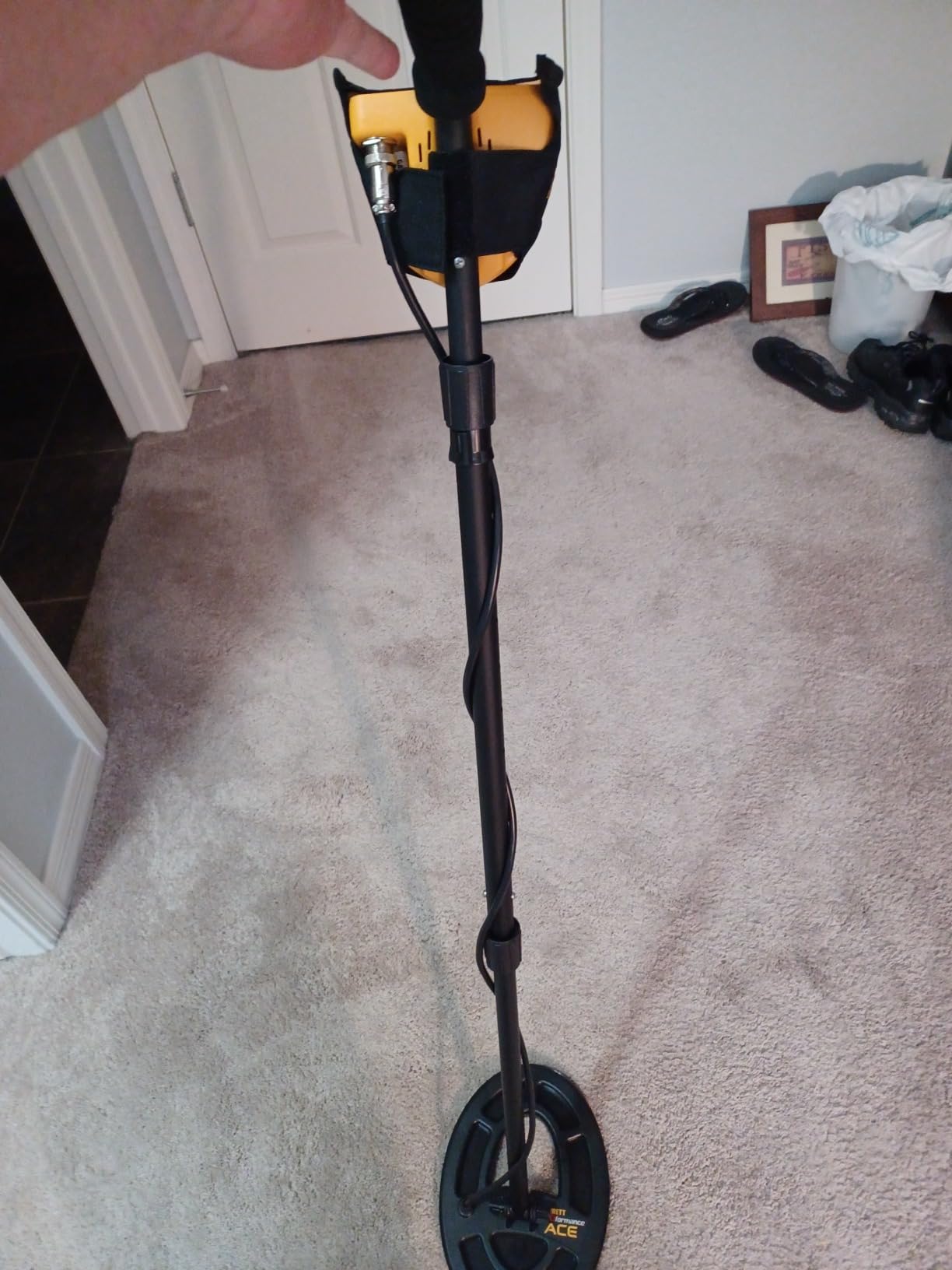
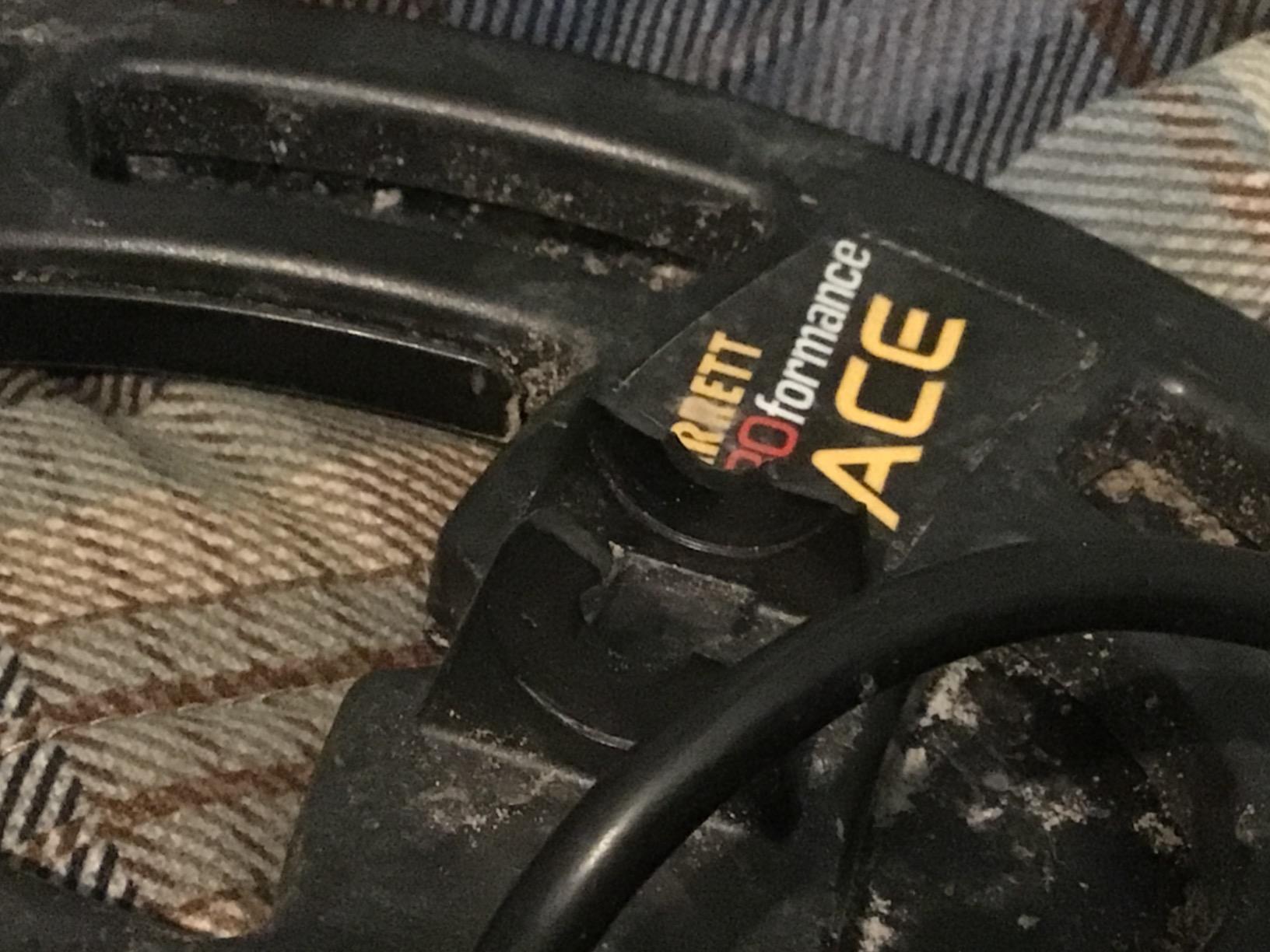
The most common complaints are all packaging or build issues rather than detection issues. The plastic coil tension screw is the big one, reported often enough that owners buy a replacement or re-tighten it mid-session. The included headphones draw steady criticism for being lower quality than the listing implies, and the paper manual is absent, so download the PDF before you head out.
Also worth knowing: the coil is waterproof but the control box is not, so wet sand at the tideline is fine while standing in surf is not. And it is sensitive to electromagnetic interference near power lines and fences, which produces false signals that have nothing to do with your skill.
Why the ACE 300 keeps winning recommendations
With a review base this deep, every recurring fault is documented and fixable. That matters for a first detector, because you are not gambling on an unknown machine. Experienced detectorists on forums often describe it as a backup or loaner unit, which is high praise for an entry model.
It is also the safest place to start if you want to learn ground balance and discrimination without an expensive mistake. You can move up to an AT model later knowing exactly what the step feels like.
Where you should step up instead
If you plan to work the same ground regularly, or if you are chasing small relics rather than lost jewellery, the AT Pro at a higher frequency is the machine that grows with you.
If beach and water detecting is central to your plans, the control box limitation will disappoint you within a season. Look at a fully submersible model instead.
7. Garrett Ace 250 – Most Versatile and the Simplest Detector Here
Garrett Ace 250 Metal Detector with Submersible Coil
7.2 kHz operating frequency
Five search modes
Coin depth indicator and large LCD
Pros
- Lightest body in the roundup at 1.2 kg
- Large LCD and simple push-button controls
- Coin depth indicator helps judge burial depth
- 30 hour battery average life
- Long-established design with 4050 ratings
Cons
- Discrimination is imprecise and reads junk as good
- Flimsy shaft that taller users may need to reinforce
- No volume control
- Needs sensitivity reduced in clay soil
The Ace 250 is a common way into the brand and one of the most frequently recommended first detectors on detecting forums. Buyers consistently call it a dependable, light machine that is fun to use, with electronic pinpointing that rewards practice and five search modes covering All Metal, Jewelry, Custom, Relics and Coins. A 30-hour average battery life is the longest runtime in this roundup.
What you accept is imprecision. The discrimination is not very accurate, so it reads trash as targets more often than a newer machine would, and the shaft feels flimsy enough that taller operators report reinforcing it. There is no volume control at all, which owners with headphones describe as genuinely unpleasant because the audio is fixed and loud.
Its 4050 ratings are the second-largest review base here, and the complaints are consistent enough to plan around. In mineralized clay soil, sensitivity has to come down or the machine will chatter constantly. The control panel also sits low, which is harder to read if you are wearing a jacket or working in bright light.
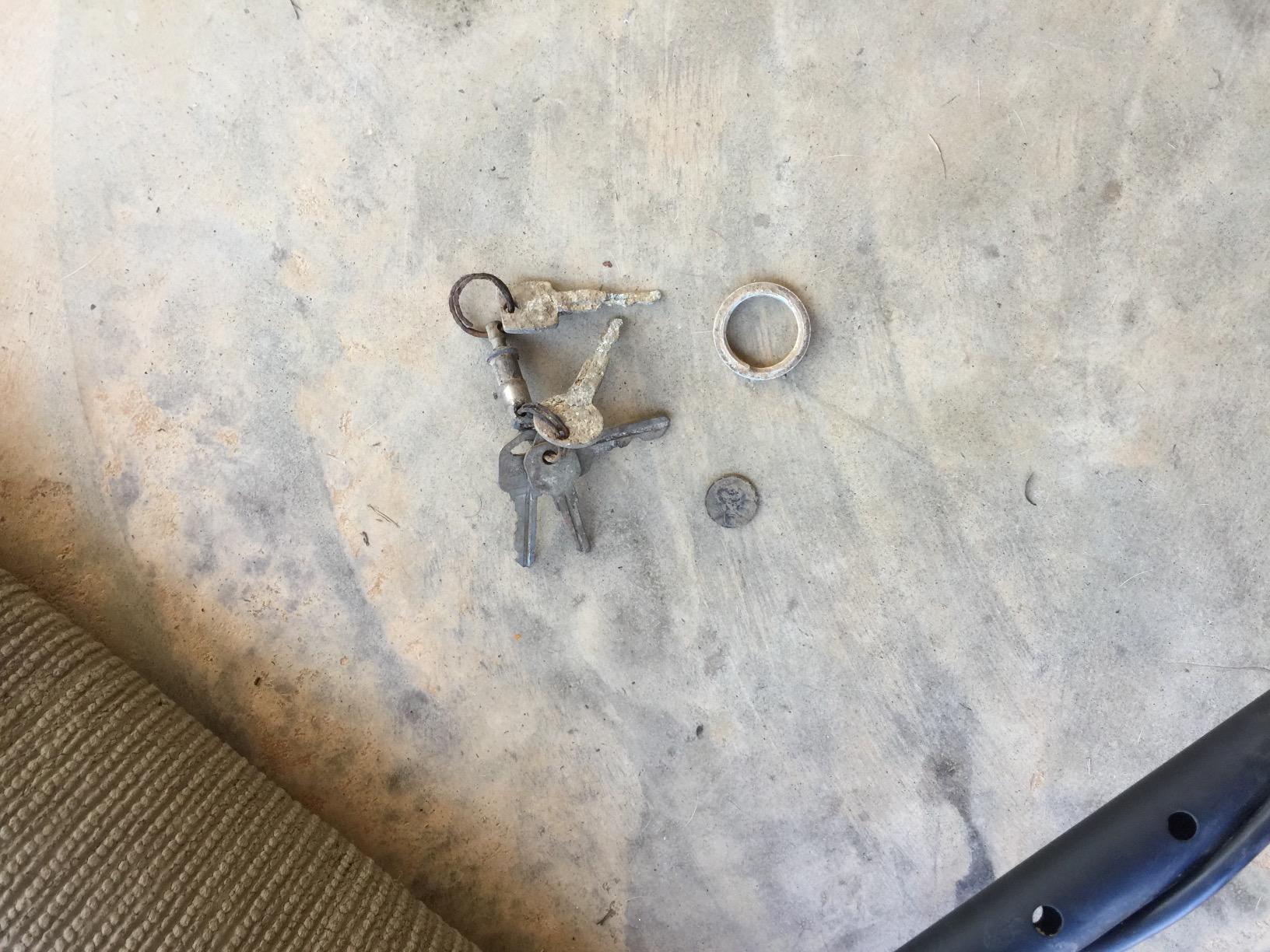
That said, the target ID and coin depth indicator are real features at a tier where they are often absent, and the IP54 rating is a genuine weather benefit. For a child learning the hobby, a park day, or a detectorist who only gets out a few times a year, the simplicity is a feature rather than a compromise.
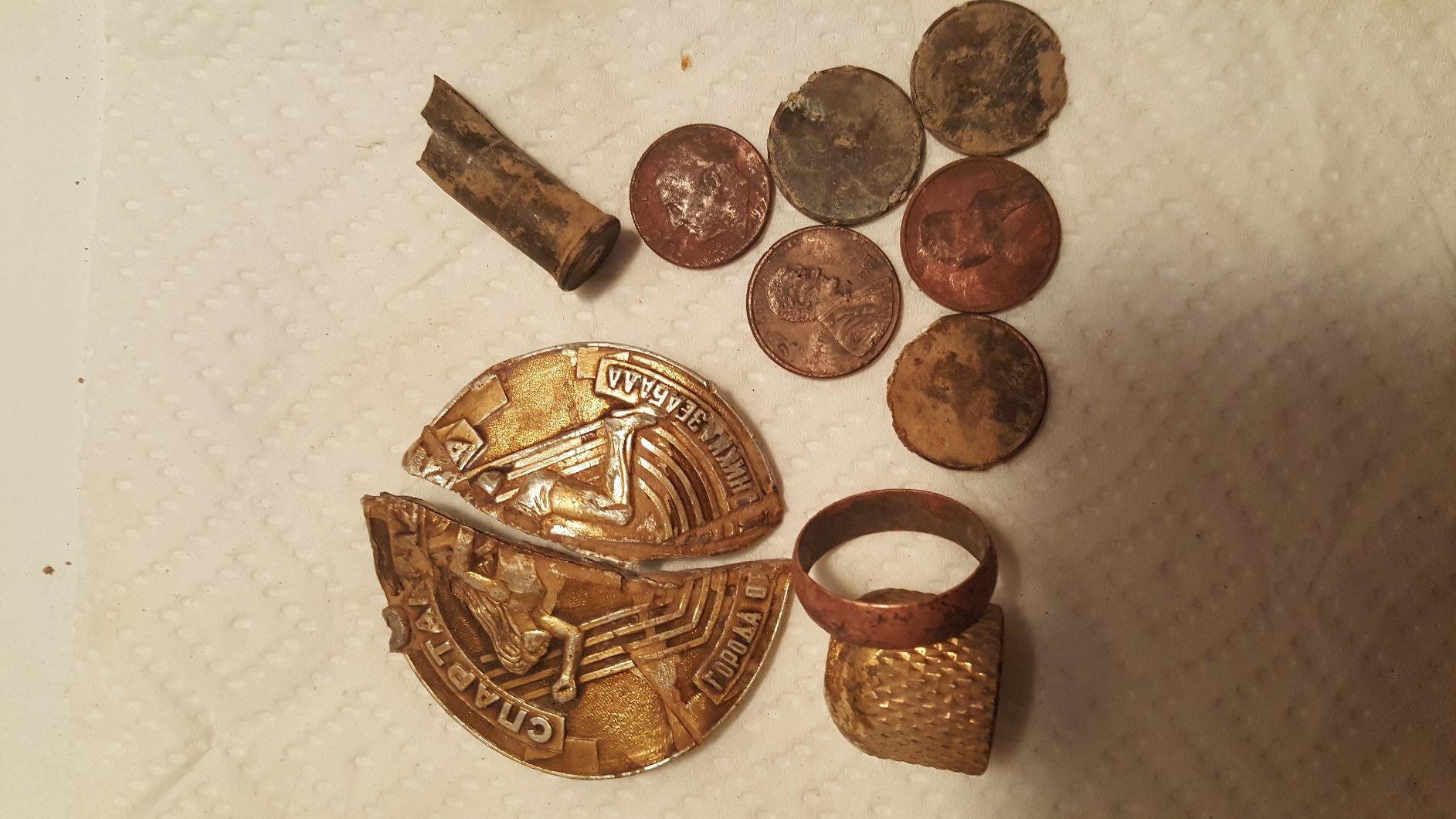
Several owners note that they used the Ace 250 for years before upgrading, and that it did the job the whole time. Forum consensus generally treats it as a decent machine and a time-saver, with the weak points being volume control, junk-rock sensitivity and discrimination accuracy rather than anything fundamental.
When the Ace 250 makes sense
It is right for a first purchase, for younger detectorists, and for anyone who wants a spare machine in the vehicle for occasional outings. Light weight and a long battery life make it comfortable to carry on a long day out.
It is also the natural choice if you are buying a present and you are not certain the hobby will stick. The cost of being wrong is low.
When to spend more instead
Working metal-contaminated ground is where it struggles most. The discrimination cannot separate targets from junk, so you will dig a great deal of nothing.
If you will use headphones, the missing volume control is a dealbreaker for many. And at 7.2 kHz it will miss small modern jewellery and tiny relics that any higher-frequency model here picks up.
8. Garrett AT Gold – Best for Small Gold Nuggets in Freshwater Ground
Garrett A.T. Gold Metal Detector with Pinpointer, Orange/Black
18 kHz high frequency
5 inch search coil for small targets
Pro-Pointer AT waterproof to 20 feet included
Pros
- 18 kHz is tuned for very small gold nuggets and jewellery
- 5 inch coil concentrates the signal on tiny targets
- Iron Audio prevents wasted digs
- Lightweight and assembles without tools
- Waterproof Pro-Pointer AT included in the box
Cons
- Not intended for ocean or surf use
- Small coil covers far less ground
- Settings and sensitivity take time to tune
The AT Gold runs at 18 kHz, higher than any other full-size detector here, and pairs that frequency with a 5 inch coil. Small coils concentrate energy, which is precisely what you want when the target is a nugget the size of a pea. Prospectors and general users alike praise its small-target sensitivity and useful Iron Audio, and several report it as a clear upgrade from lower-tier Garrett units.
True All-Metal Mode gives the best depth and sensitivity for prospecting work, and the Ground Balance Window lets you tune for changing soil along a creek. Owners report detecting targets in the 2 to 10 inch range in practice, which matches what you should expect from a high-frequency machine in reasonable ground.
The trap here is water. This is a freshwater machine, and the listing is explicit that it is not intended for ocean or surf use. Salt water loads the ground so heavily at 18 kHz that you would spend your day re-balancing or turning sensitivity down until targets disappear. If beach detecting is part of your plan, this is not the model.
Who should buy the AT Gold
Prospectors working creek beds, highbankers and old worked ground with small nugget potential are the clear audience. It also handles small jewellery extremely well, so it doubles as a general detector if you work dry land and freshwater only.
Our gold detector guide covers the frequency-versus-depth trade in more detail if you are still weighing this one against a general-purpose machine.
Who should not buy it
Saltwater and surf detectorists, full stop. A freshwater-only high-frequency machine at a beach is a frustrating and expensive lesson.
Open-ground relic hunters should note the coverage problem too. A 5 inch coil sees a small patch of ground per sweep, and nugget hunting is inherently patient, small-area work. Buying it to sweep a field would be a mistake.
9. Garrett Vortex VX9 – Best Garrett Detector for Underwater Work to 16 Feet
Garrett Metal Detectors Vortex VX9 Metal Detector
Submersible to 16 feet
Five single frequencies plus multi-frequency
Internal lithium-ion with USB-C charging
Pros
- Genuinely submersible to 16 feet
- Five single frequencies from 5 to 25 kHz plus multi-frequency
- Weighs 2.9 lbs and collapses to 24.75 inches
- High-resolution ground balance
- USB-C port supports firmware updates
Cons
- Lowest owner rating in this lineup
- Some units reported unreliable in surf mode
- Not suited to beginners
The VX9 is the only Garrett in this roundup rated to 16 feet, and that figure is not a marketing extrapolation. Owners use it in lakes, streams and ocean, and the water rating extends to the whole machine rather than the coil alone. If your target is underwater treasure hunting, this is the Garrett to buy regardless of what else you consider.
The frequency selection is unusually broad for one detector: 5, 9, 13, 18 and 25 kHz as single frequencies, plus a simultaneous multi-frequency mode. High-resolution ground balance adapts to the varied conditions you meet moving from shore to shallows, and the internal lithium-ion gives up to 15 hours with USB-C charging and a port that accepts firmware updates.
It is also light at 2.9 pounds and folds down to 24.75 inches, which is a genuine advantage for a machine you take to a boat ramp or a wade line. Owners report finding rings and coins with it and generally like the collapsible frame.
Now the honest part. This machine has the lowest average rating of anything in the roundup, and the reason is concentrated in surf mode: some units behaved unreliably at the beach and missed targets a much cheaper Ace 250 found. There are also reports of a defective audio volume on a freshly delivered unit. With a 59-review base, there is less long-term data here than on any other model in this list.
When the VX9 earns its rating
Freshwater, wade-line and shallow underwater work is where it performs best and where the 16-foot rating genuinely matters. The multi-frequency option helps in mixed mineralised bottoms that would break a fixed-frequency machine.
The frequency range also lets you cover jobs that would otherwise need a second detector, including a 25 kHz setting for very small targets.
When it is not the right call
If you are new, the mode and frequency combinations are a lot to hold, and reviewers are consistent on this point. The VX9 rewards an operator who already knows what their ground is doing.
For surf and wet-sand work specifically, the reliability reports give us pause, and its 4.0 average is the reason this is not our top pick despite the superior waterproofing. Check the current user feedback for your exact beach before committing.
10. Garrett Pro-Pointer AT – Best Pinpointer and the Highest Rated Unit Here
Garrett Pro-Pointer AT Waterproof Metal Detector – Made in The USA – 20ft Submersible, Orange Visibility, High Sensitivity for Nuggets & Small Targets, 3 Levels, Quick Button Adjustment
Submersible to 20 feet
Three sensitivity levels plus vibrate mode
LED light and scraping blade built in
Pros
- Highest rating in the roundup at 4.8 from 8864 ratings
- Submersible to 20 feet for underwater and beach work
- Three sensitivity levels plus a vibrate-only mode
- Cuts digging time sharply with fast retune
- Single-button control and built-in depth ruler
Cons
- Sensitivity pattern is not uniform along the shaft
- Two pinpoints close together will interfere
- One-button operation takes a day or two to master
The Pro-Pointer AT is not a detector, but it is the piece of Garrett equipment most people add after the detector itself. Its 4.8 rating from 8864 ratings is the highest of anything in this roundup, and the reason is straightforward: it cuts your digging time so drastically that you recover the time you spent on the machine in a single afternoon.
It is fully waterproof to 20 feet, which means it works in a wet hole, on a beach, or in shallow water without any change of procedure. Three sensitivity levels let you drop down for small targets like nuggets, and a vibrate-only mode is the correct setting underwater, where you cannot hear a tone through the water column.
The built-in LED and scraping blade are the details that matter in the field. When you have a target 10 inches down, the light and the blade mean you can see and free the object without standing in a widening hole, and the moulded inch and centimetre ruler lets you record the depth for your own records.
Advanced users note two real limitations. The sensitivity peaks at different points along the probe depending on how the target is oriented, so an experienced operator adjusts technique rather than fighting it. And two pinpoints held close together will interfere with each other, which is a genuine problem for clubs running group searches.
Forum comments about the single-button operation being awkward describe it as a one or two day adjustment, and it also has a reputation in this hobby for a pulsing tone that some operators find noisy after a full day. Neither complaint changes our view that it is the standard pinpointer, and it is the model we would pair with any detector in this roundup.
Several bundles above include it, which is one of the better reasons to buy a kit rather than a bare detector. Our main detector guide covers why we think a pinpointer matters more to your find count than a higher-frequency machine.

When to add one to your kit
Add it before you upgrade your detector. It makes every machine in this roundup more productive, works in conditions your detector coil may not, and costs a fraction of a step up the model range.
It is also the right standalone purchase for anyone who already has a good machine and wants to reduce hole time on trashy targets.
When a different pinpointer suits you
If you are new and want the simplest possible interface, a pinpointer with a continuous tone and a visual indicator will be more intuitive than the pulse-and-toggle scheme here, even though the Garrett is the better machine once learned.
If you run group searches with more than two people, the interference limitation is worth factoring in. And if you work a lot of deep coins, expect to reach for the sensitivity and the ruler often.
How to Choose a Garrett Metal Detector
Garrett currently sells across four families, and the single biggest source of confusion is that they all read as interchangeable. The ACE line is simple, lightweight and single-frequency. The AT line is the all-terrain workhorse, with higher frequencies, deeper discrimination and submersible bodies. The Vortex line is Garrett’s multi-frequency generation. The AT Gold is a specialist single-frequency machine. Choosing means picking a family first and a model second.
Then choose by target. Small jewellery and modern coins want 15 kHz and above, which is the AT Pro and AT Gold range. Relics want depth and recovery speed, which is the AT Pro and AT MAX. Lost rings on a lawn want a clear numeric target ID, which is the ACE 400. Underwater work wants a submersible body, which narrows the field to the AT MAX, AT Pro and Vortex VX9.
AT Pro or AT MAX: which one should you buy
Both are submersible to 10 feet and both use a PROformance DD coil, so the decision is about frequency and interface rather than capability. The AT Pro runs at 15 kHz, which is the higher of the two, and offers 40 levels of iron discrimination. The AT MAX runs at 13.6 kHz, offers 44 iron segments, adds True All-Metal Mode, a backlight and integrated Z-Lynk wireless with MS-3 headphones included, and moves to Pro-only search modes.
Our verdict: choose the AT Pro if you want the higher frequency for small silver and coins, or if you prefer the simpler Pro audio. Choose the AT MAX if you want wireless audio, the backlight and True All-Metal Mode for all-terrain flexibility. Experienced owners describe the AT MAX as the generational step up from the AT Pro, with the caveat that it remains a coin and relic machine rather than a gold detector.
Garrett or Minelab: how they actually differ
Forum consensus treats this as a false binary. Garrett wins on durability, US manufacturing and depth-per-dollar, with machines that are simple to repair and easy to learn the fundamentals on. Minelab wins on simultaneous multi-frequency versatility and salt-water tolerance, which is why many beach detectorists lean that way.
Inside the Garrett line the trade is the same one. The AT models are fixed-frequency machines that handle salt water well because of their ground balance and discrimination, while the ACE Apex and the Vortex VX9 bring multi-frequency capability at lower tiers than Garrett’s rivals charge. If your ground is highly mineralised or your water is salt, the multi-frequency options earn their keep.
How deep can a Garrett metal detector actually detect
For a coin-sized target on a consumer VLF machine, expect roughly 6 to 12 inches in ordinary soil, and much less in heavily mineralised ground. Marketing depth claims are measured under laboratory conditions on large, conductive targets and do not describe what you will find in a park.
Higher frequency finds small objects at shallower depths. The AT Gold at 18 kHz is excellent on a nugget at 4 inches and much weaker on a deep coin. A submersible rating is a separate measurement entirely, telling you how deep the machine can go underwater rather than how deep it hears in the soil.
Salt water, fresh water, and the AT Gold trap
The AT MAX, AT Pro and Vortex VX9 all work in salt water. The AT Gold does not, and its listing says so explicitly. Getting that wrong is the most expensive common mistake in the hobby, because a high-frequency machine in salt water is effectively unusable.
On any non-submersible model, note that a waterproof coil is not a waterproof detector. The ACE 300 and ACE 400 have waterproof coils and non-submersible control boxes, which is fine at the tideline and wrong if you plan to stand in surf.
Where you are allowed to detect
Ask permission before detecting on any private land, and check the specific rules for parks, beaches and nature reserves in your area, because archaeology permits are a real issue in some jurisdictions. Recovering artefacts that are protected, or digging without restoring the hole, is the fastest way to lose the goodwill that keeps access open.
Fill every hole, take only what you are allowed to take, and report anything of significant historical value to the appropriate authority rather than keeping it. Detectorists who follow these rules are the reason clubs and local authorities keep permissions open for everyone.
Finally, think about where to buy. An authorised dealer purchase carries the full US manufacturer warranty and avoids grey-market stock, which is the concern detectorists raise most often on forums when buying through marketplaces. Join a local club before you buy if you can, since access to ground is worth more to a new detectorist than any specification.
Frequently Asked Questions
Which Garrett metal detector is best?
The Garrett AT MAX is the best all-round Garrett metal detector, with 13.6 kHz detection, True All-Metal Mode, a body submersible to 10 feet and Z-Lynk wireless headphones included. The AT Pro is the pick if you want the higher 15 kHz frequency for small silver, and the ACE Apex is the best Garrett for beginners who want multi-frequency flexibility at low weight.
Which is better, the Garrett AT Pro or the AT MAX?
The AT MAX is the better all-terrain machine: 13.6 kHz, 44 iron discrimination levels, True All-Metal Mode, a backlight and integrated Z-Lynk wireless with MS-3 headphones. The AT Pro runs the higher 15 kHz frequency, which is better for small silver coins and tiny relics, and it is the established workhorse with a deeper used market. Both are submersible to 10 feet.
What metal detector is better, Minelab or Garrett?
Garrett wins on build durability, US manufacturing and depth-per-dollar, and its machines are simple to learn and repair. Minelab generally wins on simultaneous multi-frequency versatility and salt-water tolerance. Forum consensus treats it as a false binary: pick for your ground, your water and your target rather than for the badge on the box.
How deep can a Garrett metal detector actually detect?
For a coin-sized target on a consumer VLF machine in ordinary soil, expect roughly 6 to 12 inches, and considerably less in heavily mineralised ground. Manufacturer depth claims are measured on large conductive targets under ideal conditions. Higher frequencies such as the AT Gold at 18 kHz find small objects at shallow depth rather than reaching for deep coins.
What is the best Garrett metal detector for beginners?
The ACE Apex is the best Garrett for a beginner who wants to grow, offering Multi-Flex switching across 5, 10, 15 and 20 kHz plus multi-frequency, a rechargeable battery and a 2.5 pound weight. If simplicity matters more than features, the ACE 300 or ACE 400 is easier to run, and the Ace 250 is the lightest and most affordable entry point.
Conclusion: Which Garrett Metal Detector Should You Buy in 2026?
For most people, the best Garrett metal detectors in 2026 come down to three choices. Buy the AT MAX for all-terrain detecting, water and trashy ground. Buy the AT Pro if small silver and relics at higher frequency matter more to you, and you are happy running a wired headset. Buy the ACE Apex if you are starting out and want multi-frequency flexibility in a light, rechargeable package.
Below those, the ACE 300 is the safest starter with one of the largest owner bases, the Ace 250 is the lightest and cheapest way in, the ACE 400 is built for finding lost jewellery, the AT Gold is a freshwater nugget specialist, the Vortex VX9 is the underwater option rated to 16 feet, and the Pro-Pointer AT is the accessory that will improve your find count faster than any upgrade.
Whichever you choose, learn your ground before you learn the machine, ask permission before you dig, and fill your holes. Check the current listing for each model using the buttons above, and pick a machine you will still want to carry in five years.