
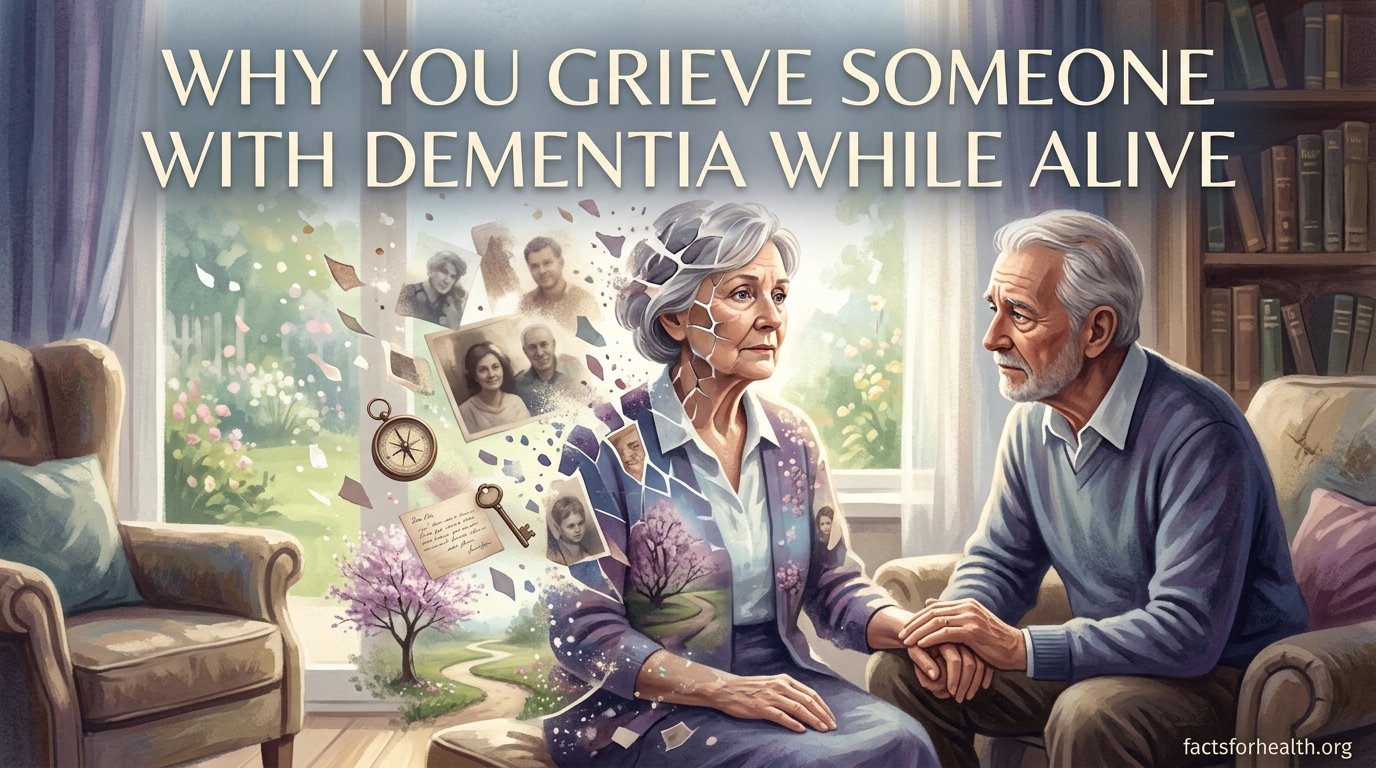
If you have found yourself crying over a parent, spouse, or loved one who is still sitting across the room from you, breathing, alive, and yet somehow gone, you are not losing your mind. What you are experiencing has a name, and it is real. The reason you grieve someone with dementia while they are still alive is rooted in a psychological phenomenon called anticipatory grief, and recognizing it can be the first step toward finding peace in an experience that so few people around you seem to understand.
One woman in an Alzheimer’s Society forum wrote, “I am so sad to see my mum like this and feel as though I am constantly grieving for the mum I used to have, and it is wearing me out emotionally.” Another person on Reddit, just 20 years old, shared, “I cry so much, mourning the loss of who my dad was and seeing him as a shell of the person he used to be.” These are not isolated voices. They reflect what thousands of dementia caregivers feel every single day in 2026.
This article exists because your grief matters, even when no funeral has taken place. We will explore exactly why this grief happens, what ambiguous loss means, the stages you may move through, and practical ways to cope when the person you love is physically present but psychologically fading. You will also find resources for getting help when the weight becomes too heavy to carry alone.
Table of Contents
What Is Anticipatory Grief in Dementia?
Anticipatory grief is the emotional pain and mourning that begins before an actual death occurs. In the context of dementia, it starts the moment you realize the person you know is gradually disappearing, even though their body remains. This form of grief is sometimes called pre-bereavement grief, and research published through the National Institutes of Health confirms a high prevalence of grief in dementia caregivers well before the physical death of the person.
Unlike sudden loss, dementia unfolds slowly. You watch your loved one forget a name, lose a skill, repeat a question, or fail to recognize your face. Each small decline is a mini-loss, and each one triggers a fresh wave of grieving. Over months and years, these waves accumulate into something that feels relentless.
The American Psychological Association notes that feelings of loss may begin long before a parent’s actual death because Alzheimer’s disease and other forms of dementia steal a person’s essential sense of self. You are not grieving an imagined loss. You are responding to a real, ongoing one.
The Concept of Ambiguous Loss
To understand why dementia grief feels so uniquely painful, you need to know about a concept called ambiguous loss. The term was developed by Dr. Pauline Boss, a family therapist and professor whose research over decades has shaped how counselors understand grief that does not fit traditional models.
Ambiguous loss happens when a person is physically present but psychologically absent. Your loved one’s body is right there in the chair, but the personality, the memories, the shared jokes, and the relationship you knew may be slipping away. This creates a confusing internal conflict. You cannot fully grieve because the person is still here, yet you cannot fully connect with them because they are no longer the same.
This is fundamentally different from grief after a clear death. In conventional bereavement, the loss is recognized, rituals exist, and society acknowledges your pain. With ambiguous loss, there is no funeral, no sympathy cards, and often no understanding from friends who ask cheerfully, “How is your mom doing?” without grasping the complexity of that question.
Dr. Boss describes this as a loss that is frozen, unresolved, and lacking closure. The brain struggles to process it because the typical markers of grief do not apply. That confusion is part of why dementia grief can feel heavier and more isolating than other types of loss.
Why You Grieve Someone With Dementia While They Are Still Alive: The Stages
The stages of grief in dementia caregiving do not follow a neat, linear path. Unlike the classic five-stage model most people associate with grief, dementia grief tends to cycle. You may revisit denial, anger, guilt, sadness, and acceptance repeatedly as the disease progresses through new stages of decline. Here is what each of these emotional phases commonly looks like.
1. Shock and Denial. The grief often begins at diagnosis, or even earlier when you first notice something is wrong. You may catch yourself thinking the doctor must be mistaken, or that your loved one will be the exception. Denial in the early stage serves a protective function, giving you time to absorb what is happening before reality fully sets in.
2. Anger. As the disease progresses, anger frequently appears. You might feel angry at the disease itself, at the medical system, at other family members who do not help, or even at your loved one for behaviors they cannot control. Anger is a normal response to helplessness, and feeling it does not make you a bad person.
3. Guilt. Guilt is one of the most common and most painful emotions in dementia grief. You may feel guilty for losing patience, for placing your loved one in a care facility, for not visiting enough, or for visiting and finding it unbearable. We address guilt in more detail in a later section because it deserves its own careful attention.
4. Sadness and Depression. A deep, lingering sadness settles in as you watch the person you love change. This sadness can become heavy enough to resemble clinical depression, draining your energy and making everyday tasks feel monumental. The emotional exhaustion of the long goodbye is real, and it compounds over time.
5. Acceptance. Acceptance in dementia grief does not mean being okay with what is happening. It means finding a way to live alongside the loss, connecting with whatever version of your loved one remains present, and creating new meaning in the relationship. Acceptance may come and go, returning each time the disease reaches a new milestone of decline.
What makes dementia grief distinctive is that you move through these stages not once, but over and over. Each significant cognitive decline can restart the cycle, which is why caregivers describe feeling emotionally worn down after years of repeated grieving.
The Different Types of Loss You Experience
When you grieve someone with dementia, you are not grieving a single loss. You are mourning many losses simultaneously, and naming them can help you understand why the pain feels so enormous.
Loss of the relationship. The dynamic you shared, whether it was parent-child, husband-wife, or friend-to-friend, fundamentally changes. Role reversal is common, especially for adult children who suddenly become the caregiver and decision-maker for the person who once cared for them.
Loss of communication. As cognitive decline progresses, conversations become harder. You lose the ability to share stories, seek advice, or have the meaningful talks that once defined your connection. Watching language slip away is its own form of ongoing loss.
Loss of identity and shared history. When your loved one forgets your name or your shared memories, you lose a witness to your life. The person who held your history no longer holds it. This is a profound, often unspoken loss that many caregivers struggle to articulate.
Loss of future plans. You may have imagined retirement travel with a spouse, or watching a parent grow old surrounded by grandchildren. Dementia rewrites those plans, and grieving the future you expected is a valid and important part of the process.
Conflicting Emotions: Guilt, Relief, and Anger
One of the hardest parts of dementia grief is the emotional whiplash. You can love someone deeply and simultaneously feel exhausted, resentful, or even relieved in certain moments. These conflicting emotions are completely normal, even though they can make you question your own character.
Guilt about enjoying life. A pain point that surfaces repeatedly in caregiver forums is the guilt of experiencing happiness while your loved one declines. You laugh at a joke, enjoy a night out, or plan a vacation, and then a wave of guilt crashes over you because the person with dementia cannot share in that joy. Holding both grief and gratitude for your own life is not betrayal. It is survival.
Relief mixed with love. Many caregivers experience moments of relief when a difficult behavior ends, when respite care begins, or, ultimately, when the person passes away. Feeling relief does not mean you did not love them. It means you were carrying an immense burden, and the human body and mind are wired to respond to the lifting of weight.
The social invalidation of your grief. Perhaps the most frustrating challenge is that society often does not recognize your grief as real. Friends may say, “At least they are still here,” or “Be grateful you still have your mom.” These comments, usually well-intentioned, can leave you feeling invisible. This experience is called disenfranchised grief, which is grief that is not openly acknowledged, socially validated, or publicly mourned.
Knowing the term disenfranchised grief can be powerful. It gives language to what you are experiencing and confirms that the problem is not your feelings but the lack of social recognition for them.
How to Cope With Grief While Caregiving
Coping with anticipatory grief does not mean eliminating it. It means finding ways to process the emotions, stay connected to your loved one in whatever form is possible, and protect your own wellbeing. The following strategies are drawn from grief counselors, caregiver support organizations, and the lived experience of people who have walked this path.
1. Name what you are feeling. Putting words to your grief, whether in a journal, a conversation, or a support group, helps your brain process it. Calling it anticipatory grief or ambiguous loss gives structure to something that otherwise feels formless and overwhelming.
2. Connect with people who understand. Friends who have not experienced dementia may struggle to relate. Support groups, whether in person or online through organizations like the Alzheimer’s Association, connect you with people who genuinely get it. That shared understanding can be profoundly relieving.
3. Practice the 90-second rule for difficult emotions. Neuroanatomist Dr. Jill Bolte Taylor’s research suggests that the physiological cycle of an emotion lasts approximately 90 seconds in the body. When a wave of grief hits, allowing yourself to feel it fully for that brief window, rather than fighting it, can help the emotion move through you rather than getting stuck.
4. Create rituals to honor the relationship. Even while your loved one is alive, you can honor who they were. Look through old photos together, play their favorite music, cook a recipe they loved, or write down stories about them. These small acts acknowledge the loss while celebrating what remains.
5. Protect your physical health. Anticipatory grief has physical symptoms, including fatigue, sleep disruption, weakened immunity, and anxiety. Eating regularly, moving your body, and sleeping enough are not luxuries. They are the foundation that keeps you strong enough to keep going.
6. Let go of the expectation that others will understand. Accepting that some people will never fully grasp your experience can actually reduce your suffering. Stop waiting for validation from those who cannot provide it, and redirect that energy toward people and spaces that already do.
7. Seek professional support before crisis. You do not need to wait until you are falling apart to see a therapist. A grief counselor, especially one familiar with caregiver issues and ambiguous loss, can help you develop tools to navigate this journey from a position of strength rather than desperation.
How Children and Young Adults Experience Dementia Grief
Most content on dementia grief focuses on adult children and spouses, but young people carry this weight too. A teenager watching a grandparent decline, or a young adult in their twenties losing a parent to early-onset dementia, faces a grief that is rarely discussed.
Young caregivers often feel isolated because their peers cannot relate. The 20-year-old who posted on Reddit about mourning her father is navigating something most people her age have never encountered. Children and teens may struggle to articulate their grief, acting out behaviorally instead of expressing sadness verbally.
If a young person in your life is grieving a loved one with dementia, validate their feelings directly. Let them know it is normal to feel sad, confused, or angry. Encourage questions, and consider connecting them with a counselor who specializes in youth grief. They deserve the same recognition and support as any adult caregiver.
When to Seek Professional Help
Some grief is a natural response to loss. Other grief becomes complicated grief, a condition where the pain does not ease over time and begins to interfere significantly with daily functioning. Knowing the difference matters.
Consider reaching out to a mental health professional if you experience persistent hopelessness, inability to carry out daily tasks, withdrawal from all social contact, thoughts of self-harm, or physical symptoms like severe insomnia and unexplained weight loss that last for weeks. There is no threshold of suffering you must reach before you are allowed to ask for help. If you are struggling, that alone is reason enough.
FAQs
Why do I grieve someone with dementia while they are still alive?
You grieve because dementia causes a gradual, ongoing loss of the person you knew. Each cognitive decline, forgotten memory, or behavioral change represents a real loss that triggers mourning. This experience is called anticipatory grief, and it is a normal, recognized response to watching someone you love slowly disappear while still being physically present.
What is ambiguous loss in dementia?
Ambiguous loss is a term coined by Dr. Pauline Boss to describe a situation where a person is physically present but psychologically absent. In dementia, your loved one’s body is here, but their personality, memories, and sense of self may be fading. This creates a uniquely confusing grief because you cannot fully mourn someone who is still alive, yet you cannot fully connect with who they used to be.
What are the stages of grief when caring for someone with dementia?
Dementia grief commonly cycles through shock and denial, anger, guilt, sadness and depression, and acceptance. Unlike traditional grief, these stages do not happen in a straight line. You may revisit each stage repeatedly as the disease progresses through new milestones of decline, which is why dementia grief is often described as an ongoing, layered experience rather than a single event.
How can I cope with grief while my loved one still has dementia?
Cope by naming your emotions, joining a support group of people who understand dementia grief, creating rituals to honor the relationship, protecting your physical health through sleep and movement, and working with a grief counselor familiar with ambiguous loss. Allow yourself to feel waves of grief without judgment, and let go of the expectation that others will fully understand your experience.
Is it normal to feel relief when someone with dementia dies?
Yes, feeling relief is completely normal and does not mean you did not love the person. Caregiving for someone with dementia can last for years and is physically and emotionally exhausting. Relief after death often reflects the lifting of that prolonged burden, not a lack of love. Many caregivers experience guilt about their relief, but grief counselors consistently affirm that mixed emotions at the end of a long goodbye are natural.
When should I seek professional help for my grief?
Seek professional help if your grief includes persistent hopelessness, inability to function in daily life, withdrawal from all social contact, severe insomnia, unexplained weight changes, or thoughts of self-harm. You do not need to wait until you reach a breaking point. A grief counselor familiar with caregiver issues and ambiguous loss can help you build coping tools at any stage of the journey.
What is disenfranchised grief?
Disenfranchised grief is grief that is not openly acknowledged, socially validated, or publicly mourned. Dementia caregivers frequently experience it because society tends to recognize loss only after a death occurs. When friends say things like at least they are still here, it can invalidate the very real grief you are feeling. Knowing this term can help you understand that your pain is legitimate even when others fail to recognize it.
Conclusion: Your Grief Is Real
Understanding why you grieve someone with dementia while they are still alive does not make the grief disappear, but it can make it feel less frightening and less isolating. Anticipatory grief, ambiguous loss, and disenfranchised grief are not signs that something is wrong with you. They are accurate labels for the very real pain of watching someone you love gradually change beyond recognition.
What you are going through is valid. The tears you shed while your loved one is still in the next room are not premature or exaggerated. They are a natural response to genuine loss, and you deserve the same compassion and support that any grieving person deserves.
If you are struggling, please reach out. The Alzheimer’s Association operates a 24/7 helpline at 1-800-272-3900, and the Alzheimer’s Society in the UK offers support at 0333 150 3456. You can also ask your doctor for a referral to a grief counselor who understands caregiver loss. You do not have to navigate the long goodbye alone.