
If you have ever found yourself gripped by sudden, intense anxiety in the days before your period starts, you are far from alone. The question “why does my anxiety get so much worse before my period?” is one of the most common concerns voiced in women’s health forums, doctor’s offices, and late-night search sessions. Our team has spent months researching the hormonal, neurological, and psychological mechanisms behind premenstrual anxiety to bring you a clear, evidence-based answer.
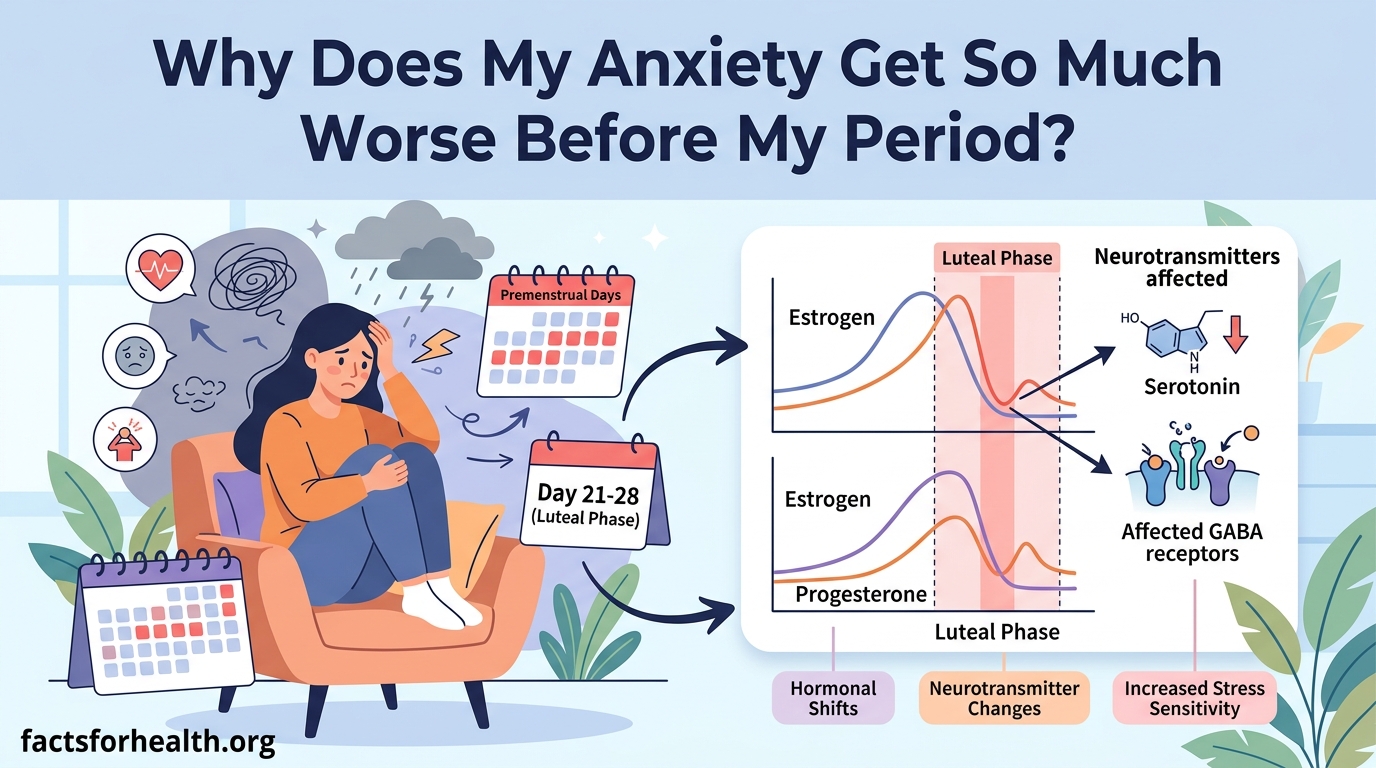
The short version: your anxiety spikes because of a sharp drop in estrogen and progesterone during the luteal phase (the 1 to 2 weeks before your period). These hormones directly influence serotonin, cortisol, and other neurotransmitters that regulate your mood. When hormone levels crash, your brain chemistry shifts, and anxiety can intensify dramatically, especially if you are already prone to it.
In this guide, we break down exactly what happens in your body, how to tell whether you are dealing with PMS, PMDD, or something else entirely, and which science-backed strategies actually help. We also include a day-by-day timeline of the luteal phase that no other resource provides, so you can anticipate when your symptoms will peak and plan accordingly.
Table of Contents
Quick Answer: The Short Version
Your anxiety gets worse before your period because of hormonal fluctuations during the luteal phase. After ovulation, estrogen and progesterone levels rise, then fall sharply if pregnancy does not occur. This drop disrupts key neurotransmitters in your brain.
Here is what happens in bullet form:
- Estrogen drops, reducing serotonin production. Serotonin is your brain’s “feel-good” chemical, and lower levels are linked to anxiety, irritability, and low mood.
- Progesterone falls, removing its natural calming effect on the brain. Progesterone metabolites normally act like a mild sedative, and when they disappear, your nervous system becomes more reactive.
- Cortisol rises, amplifying your stress response. Your body’s primary stress hormone can spike during this hormonal shift, making you feel on edge and physically tense.
- Brain sensitivity increases. Research published in PubMed Central shows that ovarian hormones have a neuromodulatory influence, meaning changes in hormone levels directly alter how your brain processes fear and anxiety.
If you are already prone to anxiety, have an existing anxiety disorder, or carry genetic risk factors, these hormonal shifts hit harder. The good news is that understanding the mechanism helps you predict, prepare for, and manage these episodes effectively.
Why Does Anxiety Get Worse Before Your Period? The Hormonal Connection
To understand why your anxiety gets so much worse before your period, you need to understand what happens during your menstrual cycle. The cycle is divided into two main phases: the follicular phase (before ovulation) and the luteal phase (after ovulation). Anxiety before your period is almost entirely a luteal phase phenomenon.
The Luteal Phase: When It All Begins
The luteal phase starts right after ovulation and typically lasts 10 to 14 days. During this time, your body prepares for a possible pregnancy. The corpus luteum (a temporary gland formed from the released egg) pumps out progesterone and estrogen to thicken the uterine lining. If no fertilized egg implants, the corpus luteum breaks down, and both hormones plummet.
This hormonal freefall is the trigger. It happens in every menstruating person, but not everyone experiences significant anxiety from it. The difference lies in how sensitive your brain is to these hormonal changes.
According to the Office on Women’s Health, premenstrual symptoms affect 30 to 80 percent of menstruating people. For most, the symptoms are mild. But for a significant portion, the anxiety is severe enough to interfere with daily life, relationships, and work performance.
Estrogen: The Serotonin Booster
Estrogen does far more than regulate your reproductive cycle. It is one of the most powerful influencers of serotonin in the brain. Estrogen helps your body produce serotonin, slows its breakdown, and makes serotonin receptors more sensitive. In other words, estrogen is a natural mood stabilizer.
When estrogen levels are high (during the follicular phase), many people feel their best. They report more energy, better mood, clearer thinking, and less anxiety. But when estrogen drops during the late luteal phase, all of that serotonin support vanishes.
This drop can trigger a cascade of mood changes. Research has shown that people with premenstrual dysphoric disorder (PMDD) may have brains that are genetically more sensitive to these estrogen fluctuations. Their serotonin systems do not just dip, they react intensely.
Progesterone: The Calming Hormone That Stops Calming
Progesterone has a complicated relationship with anxiety. During the early and mid-luteal phase, progesterone rises and its metabolite, allopregnanolone, acts on GABA receptors in the brain. GABA is your brain’s main inhibitory neurotransmitter. It calms neural activity, reduces anxiety, and promotes relaxation. Allopregnanolone works similarly to anti-anxiety medications in this regard.
But here is the catch: when progesterone drops in the late luteal phase, allopregnanolone levels crash too. Your brain suddenly loses its natural calming agent. For some people, this withdrawal effect triggers intense anxiety, irritability, and even panic attacks. It is like going off a mild sedative abruptly.
Community members on Reddit’s r/PMDD describe this vividly. One user wrote: “As soon as I get my period, my brain becomes so calm. Then the weird depression starts.” This pattern, intense anxiety followed by sudden relief at period onset, is a hallmark of hormonally driven anxiety.
Serotonin: The Feel-Good Connection
Serotonin is the thread that ties hormones to mood. When estrogen and progesterone fluctuate, serotonin levels swing with them. Low serotonin is associated with anxiety, depression, irritability, sleep problems, and food cravings, which are all classic premenstrual symptoms.
Studies have found that people with PMDD may have abnormal serotonin responses to hormonal changes. Their serotonin transporters function differently, meaning their brains process serotonin less efficiently during the luteal phase. This is why selective serotonin reuptake inhibitors (SSRIs) are one of the most effective medical treatments for PMDD, they directly target this deficit.
Cortisol: The Stress Hormone Spike
Cortisol is your body’s primary stress hormone, produced by the adrenal glands. During the luteal phase, cortisol levels tend to rise. Some researchers believe this happens because progesterone stimulates the stress response system, while others point to the overall hormonal disruption as the cause.
Whatever the mechanism, elevated cortisol during the luteal phase means your body is in a heightened state of alertness. Your heart rate may increase, your muscles may tense, and you may feel a constant sense of dread or unease. This is your nervous system responding to hormonal signals as if there were a physical threat.
For people who already struggle with chronic stress or anxiety disorders, this cortisol spike can push them over the edge into full-blown panic attacks. The physical symptoms described by forum users, racing heart, dizziness, flushing, fuzzy vision, are consistent with acute cortisol and adrenaline surges.
Why Some Brains Are More Sensitive
Not everyone who menstruates experiences severe premenstrual anxiety. So why does it hit some people so much harder? Research points to a complex interaction between genetics, existing mental health conditions, and individual neurochemistry.
A landmark study published in PubMed Central found that ovarian hormones create a “neuromodulatory influence” on the brain. This means hormones do not just affect your reproductive organs. They actively reshape how your neurons communicate. If you have a genetic variant that makes your serotonin system more reactive, or if you have an existing anxiety disorder that already taxes your nervous system, the hormonal drop hits you disproportionately harder.
Think of it like a volume dial. For some people, the hormonal shift turns the anxiety volume up by one or two notches, which is manageable. For others, it cranks the dial from three to ten. The underlying mechanism is the same, but the sensitivity is dramatically different.
PMS vs PMDD vs PME: Understanding the Differences
One of the most confusing aspects of premenstrual anxiety is figuring out which condition you actually have. Three terms get thrown around: PMS, PMDD, and PME. They sound similar but represent very different experiences and require different approaches. Understanding the distinction is essential for getting the right help.
PMS (Premenstrual Syndrome)
PMS is the most common form of premenstrual distress. According to the Office on Women’s Health, it affects 30 to 80 percent of menstruating people. Symptoms include mood swings, irritability, mild anxiety, bloating, breast tenderness, fatigue, and food cravings. These symptoms typically appear 5 to 7 days before your period and resolve within a few days after bleeding starts.
For most people with PMS, the anxiety is unpleasant but manageable. You might feel more on edge than usual, snap at your partner more easily, or find yourself worrying more than normal. But it does not typically prevent you from functioning.
PMDD (Premenstrual Dysphoric Disorder)
PMDD is a severe, sometimes disabling form of PMS. It affects approximately 3 to 8 percent of menstruating people. The symptoms are similar to PMS in type but dramatically more severe in intensity. People with PMDD describe extreme mood swings, intense anxiety, feelings of hopelessness or despair, sudden tearfulness, difficulty concentrating, and feeling completely out of control.
The key diagnostic criteria for PMDD require that symptoms are severe enough to interfere with work, school, social activities, or relationships. Symptoms must also be exclusively tied to the luteal phase and resolve shortly after menstruation begins. If the anxiety is present all month but gets worse before your period, that is a different condition.
The five core symptoms of PMDD include: (1) severe mood swings and irritability, (2) feelings of sadness or despair, (3) intense anxiety or tension, (4) difficulty concentrating, and (5) sleep disturbances and fatigue. Additional physical symptoms like bloating, breast tenderness, and joint or muscle pain are also common.
PME (Premenstrual Exacerbation)
PME stands for premenstrual exacerbation, and it is the least discussed but very common phenomenon. PME occurs when a pre-existing mental health condition worsens during the luteal phase. If you have generalized anxiety disorder (GAD), depression, panic disorder, PTSD, or bipolar disorder, you may notice that your symptoms intensify in the days before your period.
Research suggests that approximately 60 percent of people with existing mental health conditions experience PME. The tricky part is that PME is often misdiagnosed as PMDD because the symptoms look similar. The key difference: with PMDD, symptoms only appear during the luteal phase. With PME, symptoms are present all month but get significantly worse premenstrually.
This distinction matters enormously for treatment. If you have PME, treating the underlying condition (with therapy, medication, or both) while adding luteal-phase-specific coping strategies is the most effective approach. Treating it as PMDD alone may leave the year-round symptoms unaddressed.
How to Tell Which One You Might Have
The most reliable way to distinguish between PMS, PMDD, and PME is to track your symptoms daily for at least two to three full menstrual cycles. Rate your anxiety, mood, and physical symptoms on a scale of 1 to 10 every day. Then look at the patterns.
If your symptoms are mild and only appear in the week before your period, PMS is the likely explanation. If your symptoms are severe, life-disrupting, but confined to the luteal phase, PMDD may be the cause. If you experience anxiety throughout the month that intensifies before your period, PME is worth discussing with a healthcare provider.
A menstrual tracking app can make this process much easier. Many apps allow you to log mood, anxiety levels, physical symptoms, and sleep quality alongside your cycle data. Bringing this data to your doctor can dramatically improve the accuracy of your diagnosis.
Common Symptoms and the Day-by-Day Luteal Phase Timeline
Premenstrual anxiety does not just appear overnight. It follows a predictable pattern that tracks the hormonal changes across the luteal phase. Understanding this timeline can help you anticipate when symptoms will peak, plan accordingly, and avoid the confusion of thinking something has gone wrong when it is simply your cycle progressing.
Psychological Symptoms
The psychological symptoms of premenstrual anxiety can include excessive worrying, nervousness, tension, irritability, mood swings, racing thoughts, difficulty concentrating, brain fog, feeling overwhelmed, social withdrawal, sensitivity to rejection, and in severe cases, paranoia or feelings of hopelessness. Some people also experience panic attacks with physical symptoms like dizziness, racing heart, shortness of breath, and trembling.
Forum users describe the psychological toll in vivid terms. One Reddit user shared: “The day before my period starts, I go completely insane. I am despondent, anxious, zero appetite, paranoid. I feel like an open wound.” These descriptions, while distressing, are consistent with PMDD and severe PMS experiences reported in clinical literature.
Physical Symptoms
Physical symptoms often accompany the psychological ones. Common physical signs include fatigue, sleep disturbances or insomnia, breast tenderness, bloating, headaches, joint or muscle pain, food cravings (especially for sweet or salty foods), appetite changes, and digestive issues. These physical symptoms can amplify anxiety by making you feel physically unwell, which feeds back into worry and stress.
The Day-by-Day Luteal Phase Anxiety Timeline
Here is a breakdown of what typically happens during the 14-day luteal phase. Keep in mind that every person’s cycle is different, and your timeline may vary by a few days in either direction.
Days 1 to 3 after ovulation (approximately 11 to 14 days before your period): Progesterone begins rising while estrogen stays moderate. Most people feel relatively normal during this time. Some may notice subtle mood shifts or mild tension, but significant anxiety is rare. This is the calm before the storm.
Days 4 to 7 after ovulation (approximately 7 to 10 days before your period): Progesterone reaches its peak and estrogen begins to fluctuate. Allopregnanolone (the calming progesterone metabolite) is at high levels, which means many people actually feel calm or even slightly sedated. However, some may start noticing mild irritability or sleep changes.
Days 8 to 11 after ovulation (approximately 5 to 7 days before your period): Both progesterone and estrogen begin declining. This is when premenstrual symptoms typically begin. You may notice increasing worry, irritability, sleep disturbances, and mild physical symptoms like bloating or breast tenderness. Anxiety levels start creeping upward.
Days 12 to 13 after ovulation (approximately 1 to 3 days before your period): Estrogen and progesterone are in freefall. This is peak symptom time for most people. Anxiety can spike dramatically, racing thoughts, panic attacks, intense worry, and emotional volatility are common. Physical symptoms intensify. Forum users consistently report that their anxiety is most severe 2 to 3 days before their period starts.
Day 14 and beyond (period onset): Menstruation begins, and hormone levels start to stabilize and rise again. For most people, anxiety symptoms begin to resolve rapidly within hours to a day of bleeding starting. This sudden relief is one of the clearest signs that the anxiety was hormonally driven.
Understanding this timeline answers one of the most searched questions: how long does period anxiety last? For most people, significant anxiety symptoms last 3 to 5 days, typically peaking in the 2 to 3 days before the period and resolving within 24 to 48 hours of onset. If your anxiety persists well beyond your period, it may be a sign of an underlying condition rather than purely premenstrual.
Risk Factors: Who Is Most Likely to Experience Premenstrual Anxiety
While hormonal changes happen to everyone who menstruates, certain factors make some people far more vulnerable to premenstrual anxiety. Understanding your risk profile can help you take preventive action and seek appropriate support.
Existing Anxiety or Mood Disorders
If you already have generalized anxiety disorder, panic disorder, social anxiety, depression, PTSD, or obsessive-compulsive disorder, you are significantly more likely to experience worsening symptoms before your period. This is the PME pattern discussed earlier. Your nervous system is already operating at a higher baseline of sensitivity, and the hormonal drop pushes it further.
Research has shown that people with existing anxiety disorders report a 40 to 60 percent increase in symptom severity during the luteal phase. If you have noticed that your therapy techniques or coping strategies seem to stop working for a few days each month, hormonal fluctuations may be the reason.
Genetics and Family History
Genetics play a significant role in how sensitive your brain is to hormonal changes. If your mother, sister, or other close female relatives experienced severe PMS or PMDD, your risk is higher. Studies of twins have found that genetic factors account for 30 to 50 percent of the variance in premenstrual symptom severity.
Additionally, genetic variations in the estrogen receptor alpha gene (ESR1) have been linked to PMDD susceptibility. These genetic differences affect how your brain responds to estrogen fluctuations, making some people’s serotonin systems far more reactive to hormonal shifts.
Perimenopause and Hormonal Transitions
Perimenopause, the transitional period leading up to menopause, can dramatically worsen premenstrual anxiety. During perimenopause, which typically begins in the early to mid-40s but can start earlier, hormone levels become increasingly erratic. Estrogen may surge and crash unpredictably, rather than following the smooth rise-and-fall pattern of earlier reproductive years.
This hormonal unpredictability can make premenstrual anxiety more intense, more unpredictable, and harder to track. Many people in perimenopause report that their anxiety before periods becomes severe for the first time, or that existing PMS symptoms escalate to PMDD-like intensity. If you are in your late 30s or 40s and noticing new or worsening premenstrual anxiety, perimenopause may be a factor to discuss with your doctor.
Lifestyle Factors
Several lifestyle factors can increase your susceptibility to premenstrual anxiety. High stress levels, poor sleep, a diet high in processed foods and refined sugar, excessive caffeine intake, alcohol use, and lack of regular exercise all contribute to a baseline of nervous system dysregulation. When hormonal changes are layered on top of an already stressed system, the result is more severe symptoms.
Smoking has also been identified as a risk factor for PMDD. Research suggests that nicotine affects estrogen metabolism and may worsen hormonal sensitivity. If you smoke and struggle with premenstrual anxiety, quitting could be one of the most impactful changes you make.
Evidence-Based Ways to Manage Anxiety Before Your Period
The good news about premenstrual anxiety is that it is highly responsive to both lifestyle interventions and targeted treatments. Because the mechanism is well understood, you can take specific actions that directly address the hormonal and neurotransmitter disruptions. Here are the most effective, research-backed strategies.
1. Regular Aerobic Exercise
Aerobic exercise is one of the most effective natural interventions for premenstrual anxiety. Multiple studies have shown that moderate aerobic exercise (such as brisk walking, jogging, cycling, or swimming) performed 3 to 5 times per week for at least 30 minutes can significantly reduce PMS symptoms, including anxiety.
Exercise works through several mechanisms. It boosts endorphins (natural mood elevators), increases serotonin production, reduces cortisol levels, and improves sleep quality. The key is consistency. Exercising only during the luteal phase is less effective than maintaining a regular routine throughout your entire cycle.
If you are not currently exercising, start small. Even a daily 20-minute walk can make a measurable difference. As your fitness improves, you can gradually increase intensity and duration.
2. Nutrition and Dietary Adjustments
What you eat directly affects your brain chemistry and hormone balance. During the luteal phase, certain dietary choices can either amplify or reduce anxiety. Focus on these principles:
- Eat complex carbohydrates like whole grains, sweet potatoes, oats, and brown rice. Complex carbs help your body produce serotonin and stabilize blood sugar, preventing the mood swings that come from glucose spikes and crashes.
- Include omega-3 fatty acids from sources like salmon, sardines, walnuts, chia seeds, and flaxseeds. Omega-3s have anti-inflammatory properties and have been shown to reduce anxiety symptoms.
- Limit caffeine, especially during the 5 to 7 days before your period. Caffeine stimulates the nervous system and can amplify anxiety, jitteriness, and sleep disturbances.
- Reduce alcohol intake. Alcohol may temporarily reduce anxiety but ultimately disrupts sleep, depletes serotonin, and worsens mood the following day.
- Cut back on refined sugar and excess salt. Sugar causes blood sugar swings that mimic anxiety symptoms, while excess salt worsens bloating and physical discomfort.
Eating regular, balanced meals throughout the day is also important. Skipping meals can cause blood sugar drops that trigger anxiety and irritability, which are already heightened during the luteal phase.
3. Prioritize Sleep Hygiene
Sleep and anxiety are locked in a bidirectional relationship. Anxiety disrupts sleep, and poor sleep worsens anxiety. During the luteal phase, progesterone withdrawal can cause insomnia and fragmented sleep, which amplifies daytime anxiety. Breaking this cycle requires deliberate sleep hygiene practices.
Maintain a consistent sleep schedule, going to bed and waking up at the same time every day, even on weekends. Create a calming pre-sleep routine that includes dimming lights, avoiding screens for at least an hour before bed, and doing something relaxing like reading or gentle stretching. Keep your bedroom cool, dark, and quiet.
If racing thoughts keep you awake, try the 4-7-8 breathing technique before bed. Inhale through your nose for 4 counts, hold your breath for 7 counts, and exhale through your mouth for 8 counts. Repeat this cycle 4 times. This technique activates your parasympathetic nervous system, which promotes relaxation and sleep.
4. Practice Relaxation Techniques
Specific relaxation techniques can be powerful tools for managing acute premenstrual anxiety. Here are two that community members and research both support.
The 5-4-3-2-1 Grounding Method: When anxiety or panic surges, use this technique to pull your attention back to the present moment. Name 5 things you can see around you, 4 things you can physically feel, 3 things you can hear, 2 things you can smell, and 1 thing you can taste. This method works by engaging your senses and interrupting the anxiety feedback loop in your brain.
Restorative Yoga: Gentle, restorative yoga poses can help calm your nervous system during the luteal phase. Poses like child’s pose, legs-up-the-wall, and supine twist activate the parasympathetic nervous system and reduce cortisol. Even 10 to 15 minutes of gentle yoga before bed can improve sleep and reduce anxiety.
Mindfulness Meditation: Regular meditation practice has been shown to reduce anxiety sensitivity, which is the fear of anxiety symptoms themselves. People with high anxiety sensitivity are more prone to panic attacks during the luteal phase. Even 5 to 10 minutes of daily mindfulness practice can lower this sensitivity over time.
5. Cognitive Behavioral Therapy (CBT)
Cognitive behavioral therapy is one of the most well-researched and effective treatments for premenstrual anxiety, particularly for PMDD. CBT helps you identify and challenge the catastrophic thinking patterns that anxiety creates. Instead of spiraling into “something is terribly wrong,” you learn to recognize “this is my luteal phase, and this feeling will pass.”
Studies have shown that CBT can reduce premenstrual symptoms by 50 to 70 percent in some individuals. It is particularly effective because it gives you tools you can use in the moment when anxiety peaks. A therapist trained in CBT for premenstrual conditions can help you develop a personalized toolkit.
Other therapy approaches that may help include Acceptance and Commitment Therapy (ACT), which focuses on accepting difficult emotions rather than fighting them, and Mindfulness-Based Stress Reduction (MBSR), which combines meditation and yoga.
6. Track Your Cycle and Symptoms
Knowledge is power when it comes to premenstrual anxiety. Tracking your cycle and daily symptoms for at least two to three months can transform your experience. When you know that your anxiety is likely to spike on day 24 of your cycle, you can prepare. You can schedule lighter workloads, plan self-care activities, warn your partner, and remind yourself that it will pass.
Use a period tracking app or a simple journal. Record your anxiety level (1 to 10), mood, sleep quality, physical symptoms, and any significant events. Over time, patterns will emerge that help you predict your difficult days with remarkable accuracy.
This tracking data is also invaluable if you decide to see a doctor. Being able to show two to three months of daily symptom data makes diagnosis much more straightforward and helps your provider recommend the right treatment.
7. Build a Support System
One of the most common themes in forum discussions about premenstrual anxiety is isolation. People feel like they are losing their minds, that no one understands, and that something is uniquely wrong with them. This isolation amplifies anxiety. Connecting with others who understand can be profoundly healing.
Whether it is a trusted friend, a partner, a therapist, or an online community like r/PMDD or r/Anxiety, having a support system matters. Being able to say “I am in my luteal phase and feeling terrible” and having someone respond with “I understand, it will pass” can reduce anxiety significantly.
One Reddit user shared this wisdom: “Absolutely normal. As progesterone and estrogen drop, all of a sudden you do not feel your best self at all. And so expect it. Do not react from that place.” Having community validation helps you adopt this mindset.
Supplements That May Help Reduce Premenstrual Anxiety
Supplements are one area where most competitors fall short. They mention supplements briefly but do not provide evidence-based guidance on which ones, in what forms, and at what levels. Based on peer-reviewed research and community feedback, here are the supplements with the strongest evidence for premenstrual anxiety.
Important note: Always consult with a healthcare provider before starting any supplement regimen, especially if you take prescription medications. Supplements can interact with medications and may not be appropriate for everyone.
Magnesium
Magnesium is one of the most consistently recommended supplements for premenstrual anxiety, and the research backs it up. Magnesium plays a critical role in nervous system regulation, GABA receptor function, and cortisol management. Multiple studies have shown that magnesium supplementation can reduce PMS symptoms, including anxiety, irritability, and mood swings.
The form matters. Magnesium glycinate is widely recommended because it is highly bioavailable and has a calming effect on the brain. Magnesium oxide, the cheapest and most common form in supplements, has poor absorption. Aim for 200 to 400 mg of elemental magnesium daily, preferably in the glycinate or threonate form.
Reddit users frequently mention magnesium as one of the most helpful interventions. One user reported: “Magnesium glycinate has been a game changer for my premenstrual anxiety. I take it every night during my luteal phase.”
Vitamin B6
Vitamin B6 (pyridoxine) is involved in serotonin production and has been studied specifically for PMS symptom reduction. A meta-analysis of randomized controlled trials found that vitamin B6, particularly when combined with calcium, can significantly reduce premenstrual mood symptoms.
The recommended dose for PMS symptoms is typically 50 to 100 mg per day. Taking more than 100 mg daily long-term can cause nerve toxicity, so stick to the recommended range and cycle off periodically. Some people find that a B-complex supplement (which includes B6 along with other B vitamins) works better than B6 alone, since the B vitamins work synergistically.
Calcium
Calcium may not be the first supplement that comes to mind for anxiety, but the evidence is surprisingly strong. Large studies have shown that calcium supplementation (1,000 to 1,200 mg daily) can significantly reduce both the emotional and physical symptoms of PMS. Calcium is involved in neurotransmitter release and nerve function, which may explain its mood-stabilizing effects.
If you take calcium, choose calcium citrate for better absorption, and take it in divided doses (such as 500 mg twice daily) rather than all at once. Pair it with adequate vitamin D, which is necessary for calcium absorption and also plays a role in mood regulation.
Zinc
Zinc is a trace mineral that plays a role in neurotransmitter function, particularly in the regulation of GABA and glutamate (the brain’s calming and excitatory neurotransmitters, respectively). Research has found that women with PMS tend to have lower zinc levels, and zinc supplementation has been shown to reduce premenstrual symptoms.
The recommended dose is 8 to 15 mg per day. Zinc can cause nausea if taken on an empty stomach, so take it with food. Avoid taking zinc at the same time as calcium or iron, as they can compete for absorption.
Omega-3 Fatty Acids
Omega-3 fatty acids, particularly EPA and DHA, have well-documented anti-anxiety and anti-inflammatory effects. Some studies have specifically examined omega-3 supplementation for PMS and found reductions in anxiety, depression, and physical symptoms. The anti-inflammatory mechanism is relevant because hormonal fluctuations during the luteal phase increase inflammatory markers, which can contribute to mood symptoms.
Aim for 1,000 to 2,000 mg of combined EPA and DHA daily. Quality matters with fish oil supplements, so choose a reputable brand that tests for purity and freshness.
Medical Treatment Options and When to See a Doctor
If lifestyle changes and supplements are not enough to manage your premenstrual anxiety, medical treatments can make a dramatic difference. There is no shame in needing medication, and for some people, it is the most effective path to relief. Here is what you need to know about medical options and when to seek professional help.
SSRIs for PMDD and Severe PMS
Selective serotonin reuptake inhibitors (SSRIs) are the most well-studied and effective medical treatment for PMDD. Fluoxetine (Prozac), sertraline (Zoloft), and paroxetine (Paxil) are FDA-approved for PMDD. Research shows that 60 to 75 percent of people with PMDD experience significant improvement with SSRI treatment.
One unique aspect of SSRI treatment for PMDD is that some people only need to take the medication during the luteal phase (the 2 weeks before their period), rather than continuously. This is called luteal phase dosing and can reduce side effects while still providing relief. Talk to your doctor about whether continuous or intermittent dosing is right for you.
Hormonal Birth Control
Hormonal birth control can help premenstrual anxiety by stabilizing hormone levels throughout the month. Combined oral contraceptives (containing both estrogen and progestin) prevent ovulation, which means there is no luteal phase and no post-ovulation hormonal crash. For some people, this eliminates premenstrual symptoms entirely.
The FDA has approved a specific birth control pill called drospirenone-ethinyl estradiol (Yaz) for treating PMDD. However, hormonal birth control is not right for everyone. Some people find that certain formulations actually worsen their anxiety. If you try birth control for premenstrual anxiety and feel worse, talk to your doctor about switching formulations or exploring other options.
When to See a Doctor
You should consider seeing a healthcare provider if your premenstrual anxiety is severe enough to interfere with your daily life, relationships, or work. Other signs that it is time to seek professional help include:
- Your anxiety causes panic attacks that feel overwhelming or unmanageable
- You have thoughts of self-harm or hopelessness before your period
- Your symptoms last more than a week each month
- Lifestyle changes and supplements have not provided adequate relief
- Your premenstrual symptoms are getting progressively worse over time
- You suspect you may have PMDD rather than typical PMS
When you see your doctor, bring your cycle tracking data if you have it. This information helps your provider distinguish between PMS, PMDD, PME, and other potential causes of your symptoms. Be honest about the severity of your anxiety, even if it feels embarrassing. Many people minimize their symptoms out of habit, which can lead to under-treatment.
Emergency Warning Signs
If you experience thoughts of suicide, self-harm, or feeling completely out of control, seek immediate help. These can be symptoms of PMDD, but they require urgent attention. Call your local emergency number, go to the nearest emergency room, or contact a crisis helpline. You do not have to wait for your period to start to get help.
Special Considerations: Perimenopause, Pregnancy Anxiety, and OCD
Several special situations can make premenstrual anxiety more complex or confusing. These are areas where most existing resources fall short, but they are important to address because they affect many people searching for answers.
Perimenopause and Worsening Premenstrual Anxiety
As mentioned in the risk factors section, perimenopause can dramatically change your premenstrual anxiety pattern. During this transition, which can last anywhere from 2 to 10 years before menopause, your hormone levels become increasingly erratic. You may have cycles where estrogen surges very high and then crashes very low, creating more intense mood symptoms than you experienced in earlier decades.
Many people first develop significant premenstrual anxiety during perimenopause, even if they never had it before. Others find that existing PMS symptoms escalate to PMDD-like severity. If you are in your late 30s or 40s and experiencing new or worsening premenstrual anxiety, discuss perimenopause with your healthcare provider. Hormone testing, while not always definitive, can provide useful information.
Pregnancy Anxiety vs Premenstrual Anxiety
One of the most confusing experiences is trying to distinguish between premenstrual anxiety and early pregnancy anxiety. The hormonal mechanisms are different, but the symptoms can feel remarkably similar. Both can cause mood swings, heightened anxiety, irritability, breast tenderness, fatigue, and nausea.
The key differences: premenstrual anxiety follows a predictable pattern tied to your cycle and resolves when your period starts. Pregnancy anxiety may persist and intensify as hCG (the pregnancy hormone) rises. If your anxiety and other symptoms do not resolve with the onset of bleeding (or if your period does not arrive), a pregnancy test is the simplest way to clarify what is happening.
Some people experience intense pregnancy-related anxiety as a PMS symptom. One forum user described: “I get horrible anxiety and paranoia thinking that I might be pregnant. It comes on around 2 to 3 days before my period starts and ends about a day in.” This type of anxiety is driven by the hormonal shift itself, not by actual pregnancy, and is a recognized premenstrual symptom for some people.
OCD and Other Conditions Before Your Period
If you have obsessive-compulsive disorder, you may notice that your symptoms worsen significantly before your period. This is a well-documented but rarely discussed phenomenon. The hormonal fluctuations during the luteal phase can intensify intrusive thoughts, compulsions, and the anxiety that drives them.
Other conditions that commonly worsen before the period include eating disorders, body dysmorphic disorder, and post-traumatic stress disorder (PTSD). If you have any of these conditions, be aware that your symptoms may follow a cyclical pattern. Tracking can help you identify whether hormonal fluctuations are a trigger, and adjusting your treatment plan to account for luteal-phase worsening can improve outcomes.
FAQs
Does anxiety get high before your period?
Yes, anxiety can increase significantly before your period due to hormonal fluctuations during the luteal phase. As estrogen and progesterone levels drop after ovulation, they affect neurotransmitters like serotonin and cortisol that regulate mood and stress responses. This is a hallmark symptom of PMS and, in more severe cases, PMDD.
What are the 5 symptoms of PMDD?
The 5 core symptoms of PMDD include: (1) severe mood swings and irritability, (2) feelings of sadness or despair, (3) intense anxiety or tension, (4) difficulty concentrating and brain fog, (5) sleep disturbances and fatigue. Additional symptoms may include breast tenderness, bloating, and food cravings. Symptoms must occur during the luteal phase and resolve within a few days of menstruation starting.
How to stop premenstrual anxiety?
To reduce premenstrual anxiety: practice regular aerobic exercise 3 to 5 times per week, try relaxation techniques like meditation or 4-7-8 breathing, maintain a consistent sleep schedule, eat a balanced diet with complex carbohydrates while limiting caffeine and alcohol, consider supplements like magnesium glycinate or vitamin B6, track your cycle to anticipate symptoms, and consider therapy (CBT) or medication (SSRIs) if symptoms are severe.
What hormone causes anxiety before period?
The drop in estrogen is the primary hormonal cause of anxiety before your period. Estrogen helps regulate serotonin production, so when estrogen falls during the late luteal phase, serotonin drops too. The concurrent drop in progesterone also removes its natural calming effect on the brain. These combined hormonal shifts disrupt mood-regulating neurotransmitters.
How long does period anxiety last?
For most people, significant premenstrual anxiety symptoms last 3 to 5 days. Anxiety typically peaks 2 to 3 days before the period starts and resolves within 24 to 48 hours of bleeding beginning. If anxiety persists well beyond your period, it may indicate an underlying anxiety condition rather than purely premenstrual symptoms.
Can GLP-1 affect your period?
GLP-1 receptor agonists like Ozempic and Mounjaro can affect your menstrual cycle. Some users report irregular periods or changes in cycle length due to significant weight loss or metabolic changes. While not directly causing anxiety before your period, the hormonal shifts from GLP-1 medications may interact with your menstrual cycle and mood. Consult your healthcare provider if you notice changes.
You Are Not Alone in This
If you take one thing from this article, let it be this: your anxiety getting worse before your period is real, it is scientifically explainable, and you are not imagining it. The hormonal mechanism behind premenstrual anxiety is well-documented, affecting millions of people worldwide, and it is completely valid.
Understanding why your anxiety gets so much worse before your period is the first step toward managing it. When you know that the estrogen drop on day 24 of your cycle is responsible for the racing thoughts and panic, you can stop blaming yourself and start taking targeted action. Track your cycle, build your toolkit of coping strategies, prioritize sleep and nutrition, and do not hesitate to seek medical help if your symptoms are severe.
Your premenstrual anxiety does not define you. It is a temporary, hormonally driven state that will pass. With the right strategies and support, you can reduce its impact and reclaim those days each month. Start by tracking your symptoms today, and remember that millions of other people are navigating this exact same experience alongside you.