
Starting antidepressant medication can feel overwhelming, especially when you are already dealing with depression or anxiety. If you have just picked up your first prescription, you probably have a lot of questions about what comes next. Understanding what to expect during your first weeks on antidepressants can make the process far less frightening and help you stick with treatment long enough to see results.
Here is the truth that many people wish they had heard sooner: it is completely normal to feel worse before you feel better. The first two weeks can be rough. You might experience nausea, headaches, fatigue, or even a temporary spike in anxiety. These are not signs that the medication is failing or that something is wrong with you. They are signs that your brain chemistry is adjusting.
In this guide, our team walks you through a detailed week-by-week timeline of what typically happens when you start antidepressants. We cover the science behind why side effects occur, specific strategies for coping with each one, and clear guidance on when to call your doctor. Everything here is based on current clinical knowledge and real patient experiences shared in support communities.
By the end, you will have a roadmap for the first month and beyond. You will know what is normal, what is not, and how to give your medication the best chance of working.
Table of Contents
How Antidepressants Work: The Science Behind the Adjustment Period
To understand why the first few weeks can be bumpy, it helps to know what antidepressants actually do in your brain. Most commonly prescribed antidepressants belong to a class called SSRIs, or selective serotonin reuptake inhibitors. These medications work by increasing the amount of serotonin available between your nerve cells.
Serotonin is a neurotransmitter, a chemical messenger that plays a major role in regulating mood, sleep, appetite, and digestion. Under normal conditions, serotonin is released by one nerve cell, delivers its message to the next, and then gets recycled back in a process called reuptake. SSRIs block that recycling process. This leaves more serotonin active in the space between cells, which over time helps improve mood and reduce anxiety.
Other common antidepressant types work on different neurotransmitter systems. SNRIs (serotonin-norepinephrine reuptake inhibitors) target both serotonin and norepinephrine, which influences energy and alertness. Atypical antidepressants like bupropion affect dopamine and norepinephrine pathways instead. Each type has a slightly different side effect profile, but all of them require an adjustment period.
Here is why that matters: your brain has been operating with a certain level of neurotransmitter activity for years. When you suddenly change that balance, your nervous system needs time to recalibrate. Receptors that were used to the old normal need to adapt to the new levels. During that recalibration, you experience side effects. Think of it like adjusting the thermostat in your house. The system kicks on loudly at first, but eventually the temperature stabilizes and everything settles down.
This adjustment period typically lasts two to four weeks. During this window, side effects are at their strongest while the therapeutic benefits have not yet kicked in. That gap between feeling side effects and feeling better is what makes the first weeks so challenging.
What to Expect During Your First Weeks on Antidepressants: A Timeline
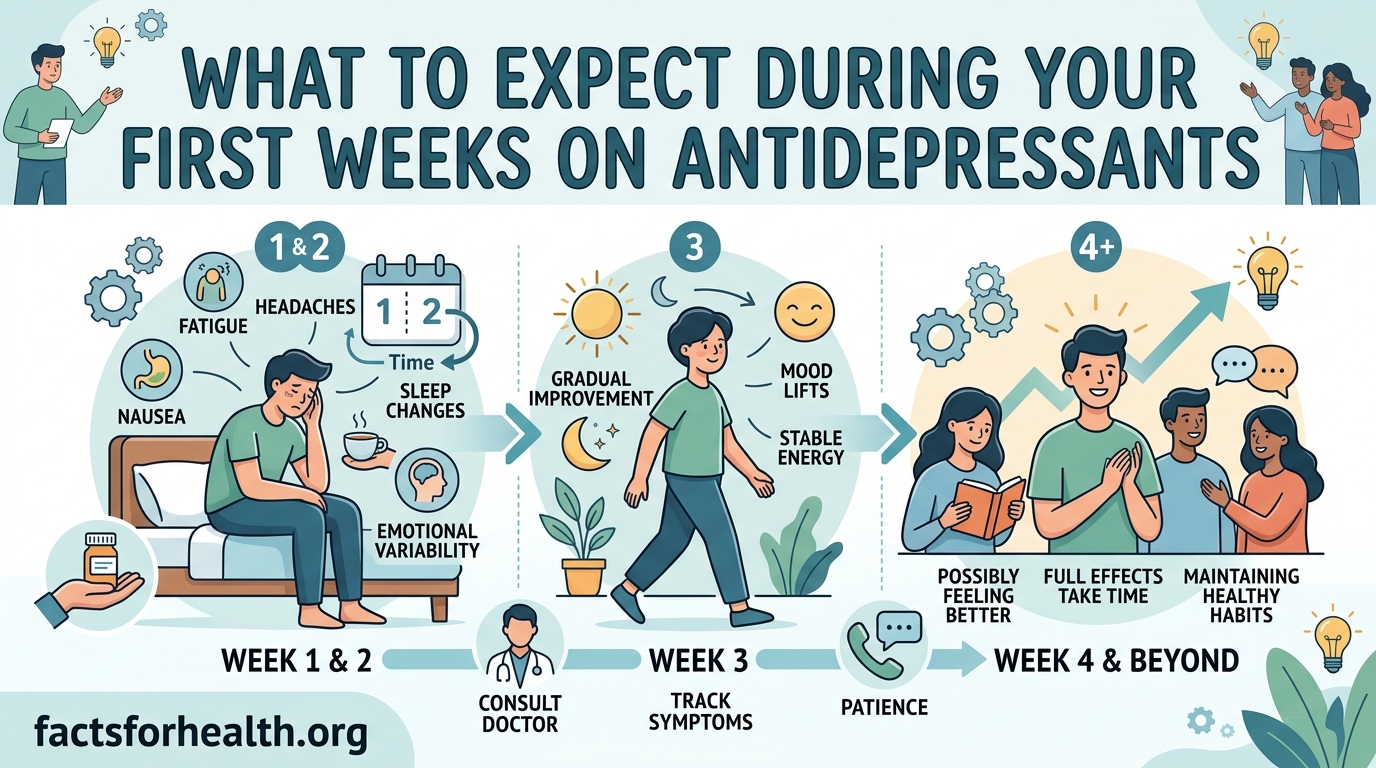
Everyone responds to antidepressants differently, but there are predictable patterns in how the adjustment period unfolds. Our team has broken down the timeline into three phases so you know what to watch for at each stage.
Weeks 1-2: The Adjustment Phase
The first one to two weeks are usually the hardest part of starting antidepressants. During this phase, side effects tend to peak while the medication has not yet started improving your mood. Many people describe feeling worse before they feel better, and that experience is backed by clinical evidence.
In the first few days, you might notice mild symptoms like a headache, slight nausea, or feeling unusually tired. Some people report that they felt fine for the first two or three days and then hit a wall of fatigue or digestive upset around day three or four. Others feel side effects within hours of their first dose.
One of the most unsettling experiences during week one is a temporary increase in anxiety. Many people report heightened nervousness, restlessness, or even panic-like feelings. This happens because serotonin receptors in your brain are suddenly getting more stimulation than they are used to, and your nervous system interprets that as heightened alertness. It feels awful, but it is a known effect that usually peaks within the first week and then subsides.
Real experiences from support communities echo this pattern. People frequently describe the first week as the toughest, with nausea, digestive issues, disrupted sleep, and a nagging worry that the medication is making things worse. Some report waking up feeling fine one morning during the second week, almost like a switch flipped overnight.
The most important thing to remember during weeks one and two: this is temporary. These side effects are not a sign that the medication is wrong for you. They are a sign that your brain is doing the hard work of adjusting.
Weeks 3-4: Early Signs of Improvement
Somewhere between week two and week four, most people start to notice a shift. Side effects that were intense during the first week begin to fade. The nausea becomes milder. Sleep starts to normalize. The anxiety spike from week one usually settles down significantly.
This is also when you might start noticing the first subtle signs that the medication is beginning to work. These early signs are not dramatic. You will not suddenly feel euphoric or like a completely different person. Instead, the changes are quiet and gradual.
You might notice that small tasks feel slightly less overwhelming. A conversation that would have drained you a week ago might feel more manageable. You might find yourself laughing at something on television and realizing it has been a while since that happened. Some people describe it as the volume of their negative thoughts being turned down just a notch.
Others report improvements in sleep quality or appetite before they notice mood changes. You might start sleeping through the night more consistently or find that food tastes good again. These physical improvements often come first because serotonin plays a direct role in regulating sleep and digestion.
Not everyone follows this exact timeline. Some people see improvements as early as week two, while others do not notice changes until week six. Both are normal. The key is to keep taking the medication as prescribed and give it time.
Month 2 and Beyond: Full Therapeutic Effect
By the six to eight week mark, most people reach what clinicians call the full therapeutic effect. This is the point where the medication has built up in your system and your brain has fully adapted to the new neurotransmitter levels. At this stage, side effects are typically gone or minimal.
The benefits at this stage tend to be more noticeable and consistent. Many people report feeling more like themselves, with a stable mood and a greater capacity to handle stress. Depression symptoms such as persistent sadness, loss of interest in activities, and difficulty concentrating usually show significant improvement by this point.
If you reach the eight week mark and are not noticing meaningful improvement, that is the time to have a conversation with your doctor. It may mean the medication or dosage needs to be adjusted. Finding the right antidepressant often requires some trial and error, and there is no shame in needing to try a different option.
Common Side Effects and How to Manage Each One
Side effects are the number one reason people stop taking antidepressants prematurely. Knowing what to expect and having practical strategies for each side effect can help you push through the difficult early weeks. Here is a detailed breakdown of the most common side effects and what you can do about them.
Nausea and Digestive Issues
Nausea is probably the most frequently reported side effect during the first week on antidepressants. Since serotonin receptors are heavily concentrated in your digestive tract, changing serotonin levels directly affects your gut. Some people also experience diarrhea, upset stomach, or changes in appetite.
To manage nausea, try taking your medication with food. A small snack or meal can significantly reduce stomach upset. Avoid taking your dose on an empty stomach, especially during the first few weeks. Ginger tea, crackers, and bland foods can help settle your stomach on particularly rough days.
If diarrhea is an issue, stay hydrated and eat binding foods like rice, bananas, and toast. Digestive side effects usually improve significantly within the first two weeks as your gut adjusts to the medication.
Fatigue and Drowsiness
Feeling unusually tired is extremely common when starting antidepressants. Many people describe a heavy, drained sensation during the first week. This happens because your nervous system is expending energy adapting to the new chemical balance, and some antidepressants have a naturally sedating effect.
If drowsiness is your main side effect, try taking your medication in the evening rather than the morning. A short nap during the day can also help, but keep it under 30 minutes so it does not interfere with nighttime sleep. Most people find that fatigue lifts significantly by the second or third week.
Insomnia and Sleep Changes
On the opposite end of the spectrum, some people experience insomnia or disrupted sleep when starting antidepressants. You might have trouble falling asleep, wake up frequently during the night, or experience vivid dreams. This is particularly common with medications that have a more activating effect.
If sleep is a problem, take your dose in the morning instead of at night. Practice good sleep hygiene by avoiding screens for an hour before bed, keeping your bedroom cool and dark, and maintaining a consistent sleep schedule. If insomnia persists beyond two weeks, talk to your doctor about adjusting the timing or dosage.
Dizziness and Headaches
Mild dizziness and headaches are common during the first week. These usually result from changes in blood pressure and serotonin activity in the brain. Most people find these symptoms mild and manageable.
Stay well hydrated and avoid standing up too quickly, which can make dizziness worse. Over-the-counter pain relievers can help with headaches, but check with your pharmacist about interactions with your specific medication. Dizziness and headaches typically resolve within the first two weeks.
Anxiety Spikes and Agitation
One of the most distressing side effects for many people is a temporary increase in anxiety during the first week. This feels counterintuitive when you are taking medication to feel better, and it is the side effect that most often leads people to want to quit. Understanding why it happens can help you push through.
When your serotonin levels increase suddenly, your brain receptors need time to downregulate. In the meantime, the extra serotonin can overstimulate areas of the brain responsible for alertness and threat detection. This produces feelings of restlessness, jitteriness, or heightened anxiety.
To cope, practice grounding techniques like deep breathing or the 5-4-3-2-1 sensory exercise. Avoid caffeine, which can worsen jitteriness. Remind yourself that this spike is temporary and usually peaks within the first seven to ten days. If the anxiety feels unbearable or you have thoughts of self-harm, contact your doctor immediately.
Emotional Blunting and Numbness
A less frequently discussed but surprisingly common experience is emotional blunting. Some people describe feeling flat, numb, or disconnected from their emotions during the early weeks. You might feel like you are watching your life through a window rather than fully participating in it.
This can be frightening, but it is often temporary. As your brain adjusts to the medication, emotional range typically returns. If emotional numbness persists beyond the first month, mention it to your doctor. It may indicate that a dosage adjustment or different medication is needed.
Sexual Side Effects
Sexual side effects, including reduced libido, difficulty reaching orgasm, or erectile dysfunction, are common with SSRIs and SNRIs. These effects can appear early in treatment and may persist for some people.
While this can be frustrating, there are options. Sometimes sexual side effects improve as your body adjusts. If they do not, your doctor may adjust your dosage, switch you to a different medication, or add another medication to counteract the effects. Do not be embarrassed to bring this up with your provider. It is a very common issue and there are solutions.
Weight Changes
Some people experience appetite changes during the first few weeks. You might notice increased cravings or a loss of appetite. Over the longer term, some antidepressants are associated with weight gain, though this varies widely by medication and individual.
During the adjustment period, focus on eating regular, balanced meals even if your appetite is fluctuating. If you notice significant weight changes over time, discuss this with your doctor. Different medications have different effects on weight, and a switch may help.
Coping Strategies: How to Survive the First Few Weeks
Getting through the adjustment period requires a combination of patience, self-care, and practical strategies. Here are the most effective approaches our team has found based on clinical recommendations and real patient experiences.
Track your symptoms daily. Keeping a simple log of how you feel each day serves two purposes. First, it helps you see gradual improvement that you might otherwise miss day to day. Second, it gives your doctor valuable information at follow-up appointments. Note your mood on a scale of one to ten, any side effects you experience, and how well you slept.
Time your dose strategically. If your medication makes you drowsy, take it at night. If it keeps you awake, take it in the morning. The timing can make a significant difference in how side effects impact your daily life. If you are unsure, ask your pharmacist for guidance.
Build a support system. Tell a trusted friend or family member that you are starting medication and might need extra support during the first few weeks. Having someone check in on you can make a big difference, especially on difficult days. Online support communities can also provide reassurance from people who have been through the same experience.
Be gentle with yourself. The first few weeks on antidepressants are not the time to push yourself hard at work or take on major projects. Give yourself permission to rest more than usual. Treat side effects like you would treat recovery from an illness, because your body and brain are indeed doing heavy work behind the scenes.
Do not stop taking your medication abruptly. If side effects feel unbearable, call your doctor before making any changes. Stopping suddenly can cause withdrawal symptoms and will set back your progress. There are almost always adjustments that can make the process more tolerable.
When to Contact Your Doctor Immediately
While most side effects are normal and manageable, there are specific warning signs that require immediate medical attention. Knowing the difference can keep you safe during the adjustment period.
Contact your doctor right away if you experience any of the following:
An increase in suicidal thoughts or self-harming urges. Antidepressants can temporarily worsen suicidal ideation in some people, particularly young adults and teenagers during the first few weeks. This is why close monitoring is essential when starting medication. If you have thoughts of harming yourself, call your doctor, a crisis line, or go to an emergency room immediately.
Symptoms of serotonin syndrome. This is a rare but serious condition caused by too much serotonin in the brain. Symptoms include high fever, sweating, agitation, confusion, rapid heartbeat, muscle stiffness, tremors, and in severe cases, seizures. Serotonin syndrome is most likely when antidepressants are combined with certain other medications or supplements. If you experience these symptoms, seek emergency medical care.
Severe allergic reactions. Signs include difficulty breathing, swelling of the face or throat, or a severe skin rash. These require immediate emergency treatment.
Persistent or worsening side effects after two weeks. While side effects are expected early on, they should be improving by the end of week two. If they are getting worse or staying the same, your doctor may need to adjust your dosage or try a different medication.
Types of Antidepressants and Their Side Effect Profiles
Different classes of antidepressants tend to produce different side effect patterns. Knowing which type you are taking can help you anticipate what to expect.
SSRIs are the most commonly prescribed antidepressants and include medications like sertraline, fluoxetine, escitalopram, and paroxetine. They tend to cause more nausea, sexual side effects, and emotional blunting. They are generally well-tolerated overall and are usually the first choice for treating depression and anxiety.
SNRIs include venlafaxine, duloxetine, and desvenlafaxine. In addition to the side effects common with SSRIs, SNRIs may cause increased sweating, dry mouth, and slightly higher blood pressure. Some people find SNRIs more energizing than SSRIs.
Atypical antidepressants like bupropion work differently and tend to cause less sexual dysfunction and weight gain. However, bupropion can cause insomnia, dry mouth, and in rare cases increases the risk of seizures. It is not typically prescribed for anxiety disorders.
Older classes of antidepressants, including tricyclic antidepressants and MAOIs, are effective but have more significant side effect profiles. These are usually prescribed only when other medications have not worked.
What to Do If You Miss a Dose
Missing a dose is common, especially during the adjustment period when you are still building the habit of taking medication regularly. Do not panic if this happens.
If you remember within a few hours of your scheduled time, take the dose as soon as you remember. If it is already close to the time for your next dose, skip the missed one and continue with your normal schedule. Never take a double dose to make up for a missed one, as this can increase side effects and potentially be dangerous.
If you miss several doses in a row, contact your doctor or pharmacist for guidance. Depending on the medication and how long you have been taking it, you may need specific instructions for restarting safely.
FAQs
What are the first signs of antidepressants working?
The first signs that antidepressants are starting to work typically appear around weeks 3 to 4. These include small improvements like feeling slightly less overwhelmed by daily tasks, sleeping better, noticing a return of appetite, or finding that negative thoughts are less intense. The changes are usually subtle at first and build gradually over time. Most people reach the full therapeutic effect by 6 to 8 weeks.
How does it feel to take antidepressants for the first time?
Most people do not feel anything dramatic on the first day. You may notice mild side effects like a headache, slight nausea, or fatigue within the first few hours or days. During the first week, side effects can intensify and you may feel temporarily worse before improvements begin. It is common to feel tired, slightly nauseous, or more anxious during the initial adjustment period.
Why do I feel worse when first starting antidepressants?
Feeling worse before feeling better happens because your brain is suddenly experiencing a change in neurotransmitter levels that it needs time to adapt to. Serotonin receptors get more stimulation than they are used to, which can temporarily heighten anxiety, nausea, and other side effects. The therapeutic benefits take 2 to 4 weeks to build, while side effects appear immediately, creating a gap where you feel side effects without yet feeling the benefits.
How long does it take to adjust to a new antidepressant?
Most people take 2 to 4 weeks to adjust to a new antidepressant. Side effects are typically strongest during the first one to two weeks and then gradually fade. The full therapeutic effect of the medication usually takes 6 to 8 weeks to develop. If side effects have not improved after two weeks or are severe enough to interfere with daily life, contact your doctor.
Do antidepressant side effects go away?
Yes, the majority of early side effects from antidepressants go away on their own within 2 to 4 weeks as your brain adjusts to the medication. Nausea, headaches, dizziness, and sleep disruptions typically fade first. Some side effects, like sexual dysfunction or weight changes, may persist longer and should be discussed with your doctor if they remain bothersome.
Can antidepressants make you feel anxious at first?
Yes, a temporary increase in anxiety is one of the most common side effects during the first week on antidepressants, particularly with SSRIs. This happens because increased serotonin can overstimulate receptors in the brain that regulate alertness. The anxiety spike usually peaks within the first 7 to 10 days and then subsides. If anxiety feels severe or unbearable, contact your doctor.
Giving Your Medication a Fair Chance
Understanding what to expect during your first weeks on antidepressants is one of the most powerful tools you have for staying the course. The adjustment period is challenging, but it is also temporary. Most side effects fade within two to four weeks, and meaningful improvements in mood typically appear by week four to six.
Remember that feeling worse before you feel better is a normal part of the process, not a sign of failure. Give your body time to adjust, track your symptoms, communicate openly with your doctor, and lean on your support system. If you have concerns about how you are responding to medication, reach out to your healthcare provider rather than stopping on your own. With patience and the right guidance, antidepressants can be an effective part of feeling like yourself again.
If you are in crisis or having thoughts of self-harm, call the 988 Suicide and Crisis Lifeline by dialing 988, or go to your nearest emergency room. You do not have to go through this alone.