
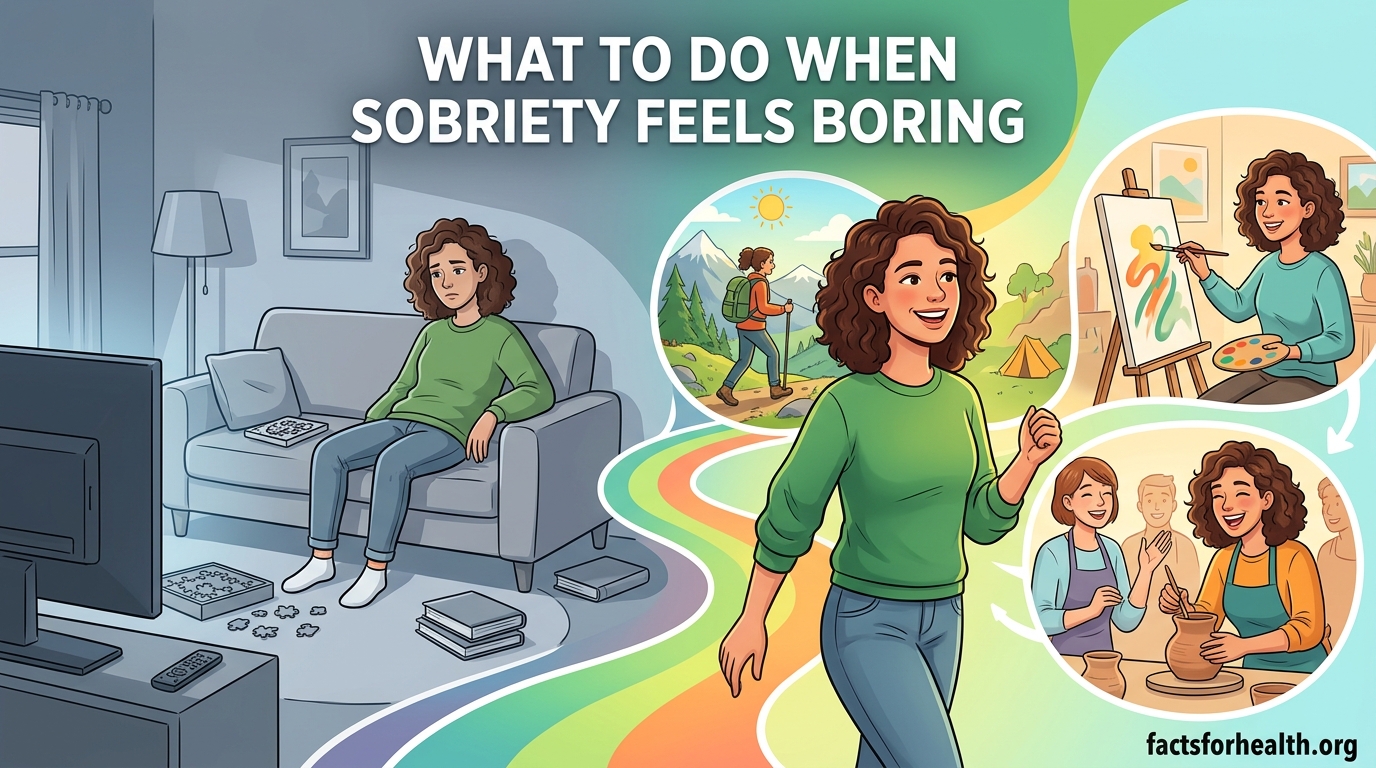
If you are sitting on your couch on a Saturday night wondering whether sobriety is supposed to feel this dull, you are not broken. You are not doing recovery wrong. And you are definitely not alone. Learning what to do when sobriety feels boring is one of the most common challenges people face in early recovery, and there are proven strategies that actually help.
The boredom you feel right now is not a character flaw or a sign that sober life is inherently empty. It is a biological response. Your brain spent months or years getting massive dopamine hits from alcohol or drugs, and now it is recalibrating to find pleasure in everyday things again. That recalibration takes time.
Our team has reviewed hundreds of recovery community discussions, clinical resources, and scientific studies to put together this guide. We wanted to answer the questions that people actually ask when they are lying awake at night questioning their sobriety. Whether you are 3 days, 3 months, or 3 years sober, the strategies in this article will help you move through the flatness and start building a life that feels genuinely fulfilling without substances.
Here is what we will cover: why your brain feels bored right now (the science behind it), how long the boredom typically lasts, practical strategies you can start using today, and how to tell the difference between normal adjustment boredom and something that might need professional support.
Table of Contents
Quick Answer: What to Do When Sobriety Feels Boring
When sobriety feels boring, the best approach is to rebuild your dopamine system through structured routines, new activities, social connection, and small daily pleasures. The boredom is temporary and directly tied to how long your brain takes to heal its reward pathways. Here is what works fastest:
- Fill the time blocks where you used to drink or use with specific, pre-planned activities
- Try one new thing each week to stimulate novelty and dopamine production
- Build micro-pleasures into your daily routine (a good cup of coffee, a walk, a hot shower)
- Connect with other sober people through support groups or recovery communities
- Get regular exercise to naturally boost dopamine and endorphins
- Practice patience with the process, understanding that joy returns gradually
- Talk honestly about what you are feeling instead of bottling it up
None of these are quick fixes, and we are not going to pretend they are. But together, they address the root cause of sobriety boredom and help you build a life that feels worth staying sober for.
Why Does Sobriety Feel Boring? (Brain Science Explained)
Sobriety feels boring because substances artificially flood your brain with dopamine at levels that normal activities simply cannot match. When you remove that artificial flood, everyday pleasures like food, music, conversation, and hobbies feel flat by comparison. This is not a personal failing. It is neuroscience.
Dopamine is the neurotransmitter responsible for motivation, reward, and pleasure. When you drink alcohol or use drugs, your brain releases a surge of dopamine that is far larger and faster than anything natural. Over time, your brain adapts by reducing its own dopamine production and dialing down the sensitivity of dopamine receptors. This is called dopamine deficit, and it is the core reason everything feels dull in early sobriety.
The clinical term for this experience is anhedonia, which means the reduced ability to feel pleasure. Anhedonia in recovery is extremely common. It is not a permanent condition, but it can feel relentless while you are in it. Activities that used to bring joy feel colorless. Social events that used to be exciting feel like chores. Even accomplishments that should feel rewarding fall flat.
Your brain needs time to recalibrate its dopamine system. The reward pathways that were hijacked by substances do not repair overnight. They heal gradually as your brain learns to respond to natural rewards again. This is why a good meal, a beautiful sunset, or a meaningful conversation slowly starts to feel good again over time.
One Reddit user described this experience perfectly: “What I was calling boredom was actually my nervous system settling down after years of overstimulation.” That is exactly what is happening. Your baseline for stimulation was artificially elevated. Now your brain is recalibrating to a calmer, more sustainable level, and that recalibration can feel like boredom.
The Dopamine Reset Timeline
Based on neuroscience research and recovery community reports, here is a general timeline for how the dopamine system resets after quitting substances. Keep in mind that individual experiences vary based on the substance used, duration of use, and personal factors.
Days 1 to 30: Dopamine levels are at their lowest. This is the hardest period for boredom. Everything feels flat, and the temptation to relapse can be intense. Your brain is essentially in withdrawal from the artificial dopamine spikes it relied on.
Months 1 to 3: Dopamine receptors begin to slowly recover. You may notice small moments of genuine enjoyment, like really tasting your food or laughing at something and actually feeling amused. These moments are sporadic but real. They are signs that your brain is healing.
Months 3 to 6: Many people report this as the toughest stretch for boredom. The initial novelty of sobriety has worn off, but the full joy of sober life has not arrived yet. This is the “in-between time” that recovery coaches talk about. It can feel like you are stuck in a gray zone.
Months 6 to 12: Dopamine sensitivity continues improving. Activities start to feel more rewarding. You may discover that you genuinely enjoy hobbies, exercise, or social connections without any chemical enhancement. The boring stretches get shorter and less intense.
Months 12 to 24: Most people report a significant shift. Life starts to feel rich and full. The dopamine system has largely recovered, and natural rewards feel genuinely rewarding again. Boredom still happens, but it feels like normal boredom rather than the oppressive flatness of early sobriety.
Users on recovery forums consistently report that the one- to two-year mark is when things really click. If you are in the first six months and wondering whether it will always feel this way, the answer from thousands of people who have been there is no. It will not.
Is Boredom in Sobriety Normal?
Yes, boredom in sobriety is completely normal. In fact, it would be more unusual if you did not experience it. Nearly every person in recovery goes through a period where life feels flat, dull, or uninteresting. This is not a sign that you are doing recovery wrong. It is a sign that you are doing it right and your brain is healing.
The pressure to feel grateful and positive about sobriety can make boredom feel even worse. People in recovery spaces sometimes push a narrative that sobriety should feel amazing right away. That message, while well-intentioned, can make you feel like something is wrong with you when your experience does not match. The truth is that early sobriety is often uncomfortable, boring, and difficult. That is the reality, and acknowledging it is healthy.
Recovery coach communities talk about the “in-between time.” This is the space between no longer drinking and not yet living your full sober life. You have given up the old version of yourself, but you have not yet built the new one. Everything feels transitional. You might feel like you are in a waiting room, unsure of when the real part of your sober life is going to start.
That in-between time is where the boredom lives. It is where you start questioning whether sobriety is worth it. It is where Friday nights feel empty and weekends stretch out endlessly. But it is also temporary, and it is doing important work. Your brain and your identity are both restructuring during this phase.
One of the most validating things we found in recovery community discussions was this simple reframe: “Boring is not dangerous. Boring is just uncomfortable.” Boredom will not hurt you. It will not destroy your recovery. It is an uncomfortable feeling that passes, and learning to sit with it is actually one of the most valuable skills you can build in recovery.
Boredom as a Relapse Trigger: Why It Matters
Boredom is one of the most commonly reported relapse triggers in addiction recovery. Studies and clinical observations consistently rank it among the top reasons people return to substance use, especially in the first six months of sobriety. Understanding why boredom leads to relapse is essential for protecting your recovery.
The connection works like this: your brain is used to getting dopamine from substances. When you remove those substances, your brain starts looking for anything that can fill the gap. Boredom creates an uncomfortable sensation of emptiness that your brain interprets as a problem to solve. And the fastest solution your brain knows is the substance you used to rely on.
This is why boredom is not just an annoyance in recovery. It is a genuine risk factor that deserves attention and planning. The people who successfully navigate early sobriety are not the ones who never feel bored. They are the ones who have strategies ready for when boredom hits.
Normal Boredom vs. Concerning Boredom
Not all boredom in recovery is the same. Learning to tell the difference between normal adjustment boredom and boredom that signals a deeper issue can help you know when to take action. Here is a framework for distinguishing the two.
Normal adjustment boredom feels like restlessness. You feel antsy, a little irritable, and like you do not know what to do with yourself. But you can still function. You can still engage in activities if you push yourself a little. This type of boredom comes and goes, and it gradually lessens over time.
Concerning boredom feels different. It is persistent, deepening, and accompanied by other warning signs. If your boredom is paired with withdrawal from people you care about, loss of interest in things you used to enjoy even before sobriety, thoughts that life is not worth living sober, or increasing fantasies about using, it may be pointing to something more serious like depression or Post-Acute Withdrawal Syndrome (PAWS).
PAWS is a condition where withdrawal symptoms, including emotional flatness and difficulty experiencing pleasure, persist for weeks or months after the acute withdrawal period. It is treatable, and recognizing it is the first step to getting the right support.
Warning Signs That Boredom Is Becoming Dangerous
Watch for these signs that boredom may be shifting from normal adjustment to relapse risk:
- You start romanticizing your drinking or using days, remembering only the good parts
- You begin isolating from sober friends and support networks
- Your internal monologue shifts from “this is hard but worth it” to “what is the point”
- You catch yourself looking for reasons to justify “just one time”
- Your sleep patterns change significantly, either sleeping too much or not enough
- You stop attending meetings, therapy, or other recovery activities you previously found helpful
- You feel increasingly irritable, resentful, or angry without a clear cause
If you notice several of these signs at once, reach out for support immediately. Call your sponsor, a recovery friend, a helpline, or a mental health professional. Boredom combined with isolation is a dangerous combination, and breaking the isolation is often the first and most important step.
Practical Strategies: What to Do When Sobriety Feels Boring
This is the section where we get specific. The strategies below are drawn from clinical research, recovery community wisdom, and the approaches that actually work for real people. You do not need to do all of them. Pick two or three that resonate with you and start there.
1. Fill Your Old Drinking or Using Time Slots
The biggest source of boredom in early sobriety is the sudden vacuum of free time. If you used to drink from 5 PM to 10 PM, that is five hours of empty time every evening. Your brain notices that gap and does not know what to do with it. The answer is to fill it intentionally, before the boredom sets in.
Write down the specific times of day when you feel most bored or most likely to crave substances. Then plan an activity for each of those time blocks. It does not have to be elaborate. A walk, a phone call with a friend, a workout class, cooking a new recipe, or going to a meeting all work. The key is having the plan ready before the boredom hits.
Weekends are particularly challenging for people in early recovery. If your weekends used to revolve around drinking or using, you now have entire days to fill. Plan at least one structured activity for each weekend day. It could be a Saturday morning farmers market visit, a Sunday hike, or a recovery meeting. Structure is your friend right now.
2. Try One New Thing Every Week
Novelty is one of the most powerful ways to stimulate dopamine production naturally. Your brain craves new experiences, and in sobriety, you have the opportunity to discover what genuinely interests you. The strategy is simple: commit to trying one new activity, food, place, or skill every week.
This does not have to be expensive or time-consuming. New things can include visiting a neighborhood you have never explored, trying a recipe from a different cuisine, taking a free online class, going to a museum on a free admission day, or picking up a library book on a topic you know nothing about.
Recovery forum users consistently report that picking one new thing to try each week helps break the monotony. It gives you something to look forward to, creates new memories, and helps you discover what you actually enjoy doing without substances. Some of these experiments will be duds. That is fine. The point is the trying, not the outcome.
3. Build Micro-Pleasures Into Your Day
Micro-pleasures are small, intentional moments of enjoyment scattered throughout your day. They are not about chasing big thrills. They are about training your brain to notice and appreciate small sources of pleasure that were always there but got drowned out by substances.
A micro-pleasure might be the first sip of really good coffee in the morning. It might be a hot shower after a workout. It might be the feeling of clean sheets, the sound of rain, the taste of a ripe peach, or the satisfaction of checking something off your to-do list.
The science behind micro-pleasures is straightforward. Each time you pause and genuinely notice a small pleasure, you are giving your dopamine system a gentle, natural stimulus. Over time, these small moments add up. Your brain starts to expect and look for them. This is how you rebuild the ability to feel pleasure from ordinary life.
Try this: write down three micro-pleasures you experience each day. They do not have to be profound. Just write them down. This practice trains your brain to actively scan for good moments instead of focusing on what is missing.
4. Connect With Other Sober People
Connection is the opposite of addiction, and isolation is one of the fastest paths to relapse. Building relationships with other people in recovery provides accountability, shared understanding, and the simple comfort of knowing you are not the only person who feels this way.
Support groups like Alcoholics Anonymous, Narcotics Anonymous, SMART Recovery, and online recovery communities all offer ways to connect. You do not have to love meetings or agree with every part of any particular program. The value is in being around people who understand what you are going through without you having to explain it.
If traditional meetings are not your thing, online communities can be just as valuable. Reddit’s r/stopdrinking, r/Sober, and r/SoberCurious have hundreds of thousands of members who share daily experiences, struggles, and wins. Many people find that simply reading other people’s stories helps them feel less alone.
The key insight from recovery communities is this: you do not have to figure this out by yourself. People who have been sober for years still lean on their support networks when things get tough. Reaching out is not weakness. It is one of the smartest things you can do.
5. Find Activities That Match Your Personality
Not every sober activity works for every person. One of the biggest mistakes people make in early recovery is forcing themselves into activities that do not fit who they are. If you are an introvert, going to large social events might drain you rather than energize you. If you are an extrovert, sitting alone at home reading might make the boredom worse.
Here are activity suggestions organized by personality type to help you find what actually fits.
For introverts: Solo creative activities like painting, writing, or playing an instrument. Quiet outdoor activities like hiking, birdwatching, or gardening. Learning-based activities like online courses, reading, or documentaries. Small group activities like book clubs or cooking classes. Mindfulness practices like meditation, yoga, or journaling.
For extroverts: Group fitness classes, recreational sports leagues, or running clubs. Sober social events like alcohol-free mixers, game nights, or dance classes. Volunteer activities that involve working with people. Group travel or adventure activities. Meetup groups for shared interests like board games, hiking, or language learning.
For people who do not like AA: SMART Recovery offers a science-based alternative to 12-step programs. Recovery Dharma uses mindfulness and Buddhist principles. Online communities like Tempest, Loosid, or the r/stopdrinking subreddit provide peer support without a formal program structure. Therapy or counseling can address underlying issues without a group format. The important thing is finding what works for you, not forcing yourself into a one-size-fits-all model.
6. Get Moving: Exercise and Physical Activity
Exercise is one of the most effective natural dopamine boosters available. It also releases endorphins, reduces stress, improves sleep, and gives you a structured activity that fills time. You do not need to become a marathon runner or join an expensive gym. You just need to move your body regularly.
Start with whatever feels accessible. A 20-minute walk around your neighborhood counts. So does a beginner yoga video on YouTube, a bike ride, swimming, or dancing in your living room. The goal is consistency, not intensity. Moving your body every day, even briefly, helps stabilize your mood and gives your brain the natural dopamine stimulation it is craving.
Many people in recovery find that exercise becomes one of their most important coping tools. It provides a healthy way to manage stress, a built-in activity for empty time slots, and a tangible sense of progress as you get stronger or faster. Some people describe the runner’s high or the post-workout feeling as one of the first genuinely good sensations they experienced in sobriety.
7. Give Back: Volunteering and Purpose
Boredom in sobriety often masks a deeper issue: a lack of purpose. When you remove substances, you also remove the structure and direction they provided, however destructive that direction was. Volunteering gives you something meaningful to do with your time and connects you to causes larger than yourself.
Volunteering opportunities are everywhere. Animal shelters always need help walking dogs. Food banks need people to sort and distribute food. Literacy programs need tutors. Environmental organizations need volunteers for cleanup events. Recovery organizations often need people to share their stories or support newcomers.
The act of helping others has a measurable effect on dopamine and overall well-being. Research consistently shows that people who volunteer report higher levels of life satisfaction and lower levels of depression. For people in recovery, volunteering also reinforces your own commitment to sobriety by reminding you why you chose this path.
How Long Does Sobriety Boredom Last?
This is one of the most searched questions about sobriety boredom, and it makes sense. When you are in the middle of it, the most important thing you want to know is when it will end. The honest answer is that it depends on several factors, but there are clear patterns that can help you set realistic expectations.
For most people, the worst of the boredom hits between months 2 and 6 of sobriety. This is the window where the initial excitement of quitting has faded and the brain’s dopamine system is still recalibrating. Many people describe this period as the hardest part of recovery. You are no longer in acute withdrawal, but you are not yet feeling the full benefits of sober life.
By the 6-month mark, most people start noticing real improvements. Activities that felt flat begin to have some texture. Social events become more enjoyable. The empty stretches of time get shorter. You start having moments where you forget you used to drink or use, and sober life just feels like life.
By the one-year mark, the majority of people report a significant reduction in boredom. The dopamine system has recovered substantially, and natural rewards feel genuinely rewarding. Most people who stay sober for a year say that life without substances is richer, not emptier, than life with them.
Full dopamine system recovery can take up to two years, according to neuroscience research. This does not mean you will feel bored for two years straight. It means that the complete restoration of your brain’s reward sensitivity is a gradual process that continues well past the one-year mark. Every month gets a little better.
If you have been sober for more than a year and are still experiencing intense, persistent boredom or anhedonia, it is worth talking to a healthcare provider. At that point, the issue may be related to depression, anxiety, or another underlying condition that can be treated separately from your recovery.
When to Seek Professional Help
While boredom is a normal part of recovery, there are times when what looks like boredom is actually something that needs professional attention. Knowing when to seek help is not a sign of weakness. It is one of the most important skills you can develop in recovery.
If your boredom is accompanied by persistent sadness that does not lift, loss of interest in all activities including ones unrelated to substances, changes in appetite or sleep that last more than two weeks, difficulty concentrating or making decisions, feelings of worthlessness or hopelessness, or any thoughts of self-harm, these may be signs of clinical depression rather than normal recovery boredom.
Depression and addiction frequently co-occur. Sometimes the substance use was masking an underlying mental health condition, and removing the substance reveals it. This is not a failure of your recovery. It is a common experience that responds well to professional treatment, including therapy and, when appropriate, medication.
Post-Acute Withdrawal Syndrome (PAWS) is another condition that can cause prolonged emotional flatness. PAWS symptoms include mood swings, anxiety, irritability, difficulty thinking clearly, and problems with memory. These symptoms can come and go for months after the initial withdrawal period. PAWS is temporary and treatable, but it can be confusing and frightening if you do not know what it is.
If you are experiencing PAWS symptoms or suspect you may have an underlying mental health condition, reach out to an addiction specialist, therapist, or psychiatrist who has experience with co-occurring disorders. They can assess your situation and create a treatment plan that addresses both your recovery and your mental health.
You can also contact the Substance Abuse and Mental Health Services Administration (SAMHSA) National Helpline at 1-800-662-4357 for free, confidential, 24/7 support and treatment referral. It is available in English and Spanish. If you are having thoughts of self-harm, call or text 988 immediately to reach the Suicide and Crisis Lifeline.
There is no shame in needing more support than willpower and community alone can provide. Recovery is not a DIY project. It is a process that benefits from professional guidance, peer support, and the willingness to ask for help when you need it.
FAQs
Why does sobriety feel so boring?
Sobriety feels boring because substances artificially flood the brain with dopamine at levels that normal activities cannot match. When you stop using, everyday pleasures feel flat until your brain recalibrates its dopamine system. This recalibration, called anhedonia, typically takes several months and is a normal part of recovery.
How to deal with boredom during sobriety?
The best ways to deal with boredom during sobriety include filling your old drinking or using time slots with planned activities, trying one new thing each week, building micro-pleasures into your daily routine, connecting with other sober people, exercising regularly, and volunteering. The boredom is temporary and improves as your brain heals.
What do sober people do when bored?
Sober people fill boredom with activities like exercising, cooking, hiking, reading, attending support group meetings, volunteering, taking classes, exploring new neighborhoods, playing sports, joining clubs, practicing creative hobbies, and connecting with sober friends. The key is having activities planned before boredom hits.
How to combat boredom in sobriety?
Combat boredom in sobriety by creating a structured daily routine, scheduling specific activities for high-risk time slots, joining a recovery community for accountability, exercising for natural dopamine boosts, trying new activities weekly for novelty, and practicing mindfulness to build appreciation for small daily pleasures.
What is the 3 3 3 rule for addiction?
The 3 3 3 rule in addiction recovery is a grounding technique where you identify three things you can see, three things you can hear, and three things you can touch. It helps manage anxiety and cravings by bringing your attention to the present moment. Some people also use a 3 3 3 timeline framework: 3 days, 3 weeks, 3 months sober as early recovery milestones.
What is rule 62 in sobriety?
Rule 62 is a phrase from Alcoholics Anonymous that means ‘don’t take yourself too damn seriously.’ It reminds people in recovery that humor, humility, and perspective are important tools. Taking yourself too seriously can lead to self-pity, rigidity, and eventually relapse. Rule 62 encourages lightness and laughter as part of the recovery process.
Conclusion
Figuring out what to do when sobriety feels boring is not about forcing yourself to love every moment of being sober. It is about understanding that the boredom is temporary, biological, and a normal part of your brain healing. The strategies in this guide, from filling your time slots intentionally to building micro-pleasures to connecting with other sober people, are proven approaches that get easier with practice.
Your dopamine system will recover. The activities that feel flat right now will start to feel rewarding again. The empty Friday nights will gradually fill with things you genuinely look forward to. Every person who has been sober for years once sat exactly where you are sitting now, wondering if it would always feel this hard. It will not. Keep going. Reach out when you need to. And remember that the boring part is not the whole story. It is just the chapter where your brain is rebuilding.