
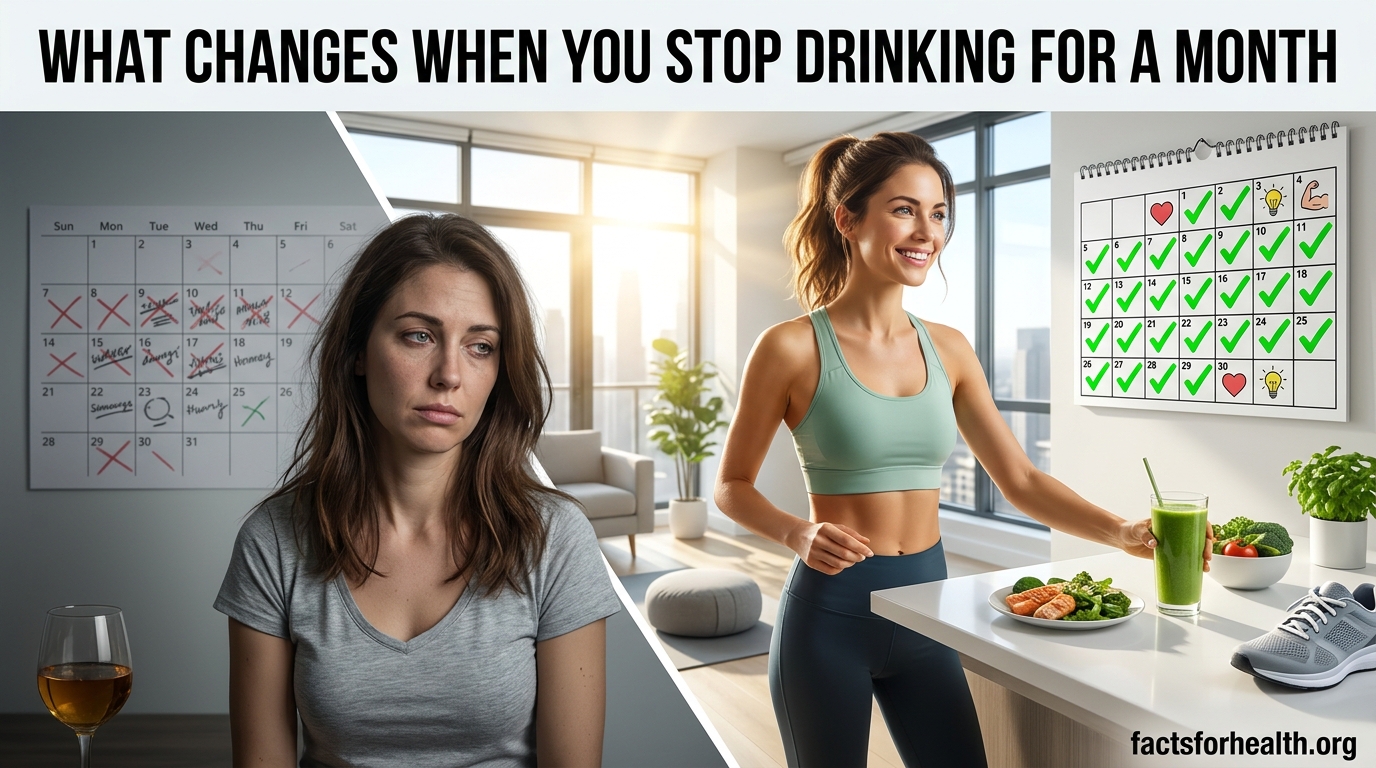
Maybe you signed up for Dry January. Maybe Sober October caught your attention. Or maybe you simply looked at your drinking habits and thought, “I need a break.” Whatever brought you here, you are probably wondering what changes when you stop drinking for a month, and whether 30 days is really enough to make a difference.
The short answer is yes. Even one month without alcohol triggers measurable changes across your entire body. Your sleep deepens, your liver starts repairing itself, your skin clears up, and your mood becomes more stable. Many people also lose weight, save money, and discover that they genuinely enjoy life without the fog of regular drinking.
I have spent years researching the health effects of alcohol, and the research is remarkably consistent. Studies from institutions like the University of Sussex, the Royal Free Hospital in London, and journals like Alcohol and Alcoholism all confirm that 30 days of sobriety creates real, documented improvements. Reddit communities like r/stopdrinking and r/DryJanuary back this up with thousands of personal stories.
In this guide, I will walk you through exactly what happens week by week when you stop drinking. You will get a clear timeline of physical changes, an honest look at the emotional rollercoaster, and practical tips for making it through the full 30 days. I will also cover what happens if you go back to drinking afterward, because almost no resource online addresses that question.
Table of Contents
Quick Overview: What Changes When You Stop Drinking for a Month
Here is a snapshot of the major changes most people experience during 30 days without alcohol. Your results will depend on how much you typically drink, your starting health, and your lifestyle habits.
- Days 1-7: Withdrawal symptoms for heavy drinkers, disrupted sleep initially, then deeper sleep by day 5-7, intense sugar cravings, dehydration improvement begins
- Days 8-14: REM sleep normalizes, skin begins clearing, digestion improves, acid reflux fades, energy levels rise noticeably
- Days 15-21: Blood pressure drops, liver fat starts reducing, weight loss becomes visible, mental sharpness increases, reduced anxiety
- Days 22-30: Liver enzymes approach normal levels, immune system strengthens, mood stabilizes, hormone balance improves, sustained mental clarity
People who drink heavily will see the most dramatic changes, but even moderate drinkers notice real differences. Research from the University of Sussex found that 71% of Dry January participants slept better, 67% had more energy, 58% lost weight, and 57% had better concentration after just one month.
Week 1 (Days 1-7): The Hardest Days
The first week is universally the toughest. Your body is adjusting to the absence of a substance it has grown accustomed to, and the transition can be uncomfortable. But the changes that begin here set the foundation for everything that follows.
Withdrawal Symptoms: What to Expect in the First 72 Hours
If you were a heavy drinker, the first 24 to 72 hours can involve real withdrawal symptoms. These include anxiety, irritability, tremors, sweating, nausea, insomnia, and elevated heart rate. In severe cases, heavy drinkers may experience palpitations or, rarely, delirium tremens, which is a medical emergency.
Moderate and casual drinkers usually skip full withdrawal and instead deal with milder effects. You might feel restless, have trouble falling asleep without your usual drink, or experience intense sugar cravings. This happens because alcohol spikes blood sugar, and your body is recalibrating.
One Reddit user from r/stopdrinking described it perfectly: “The first three days were rough. I could not sleep, I was irritable, and I craved sweets like crazy. But by day five, something shifted. I woke up actually feeling rested for the first time in months.”
If you have been drinking heavily or daily for a long period, talk to a doctor before quitting cold turkey. Severe alcohol withdrawal can be dangerous, and medical supervision may be necessary.
Sleep: Worse Before It Gets Better
Here is something that surprises many people. Your sleep may actually get worse for the first few nights without alcohol. If you are used to falling asleep after a drink or two, your brain has to relearn how to drift off naturally.
This is called rebound insomnia, and it is temporary. Alcohol suppresses REM sleep, the restorative phase where your brain processes memories and emotions. When you remove alcohol, your brain initially overcompensates, causing vivid dreams and fragmented sleep.
By night five to seven, most people notice a dramatic shift. Sleep becomes deeper, more consistent, and genuinely restorative. You wake up feeling refreshed instead of groggy. This is one of the most commonly reported benefits across forum discussions, and it happens fast.
Hydration Begins to Restore
Alcohol is a diuretic, meaning it makes you urinate more frequently. According to Priory Group, a single drinking session can cause your body to lose up to four pints of water through increased urination. This is why you wake up thirsty after a night of drinking.
Within the first few days of quitting, your body begins to rehydrate. You will probably notice less puffiness in your face, especially around the eyes. Your thirst regulates normally, and you stop losing excessive water throughout the day.
This improved hydration also sets the stage for clearer skin, better digestion, and more stable energy levels in the coming weeks.
Sugar Cravings Hit Hard
One of the most unexpected challenges of week one is the intensity of sugar cravings. Alcohol converts to sugar in your body, and when you stop drinking, your brain demands that sugar hit from somewhere else.
Many people find themselves reaching for candy, desserts, or sugary non-alcoholic drinks. This is completely normal and usually peaks around days 3-5 before gradually subsiding. Eating fruit, drinking sparkling water with a splash of juice, or choosing dark chocolate can help satisfy the craving without overloading on empty calories.
Forum users frequently warn against substituting alcohol with sugary mocktails every day. While a treat is fine, daily high-sugar substitutes can lead to weight gain and energy crashes that undermine the benefits you are working toward.
Week 2 (Days 8-14): Visible Changes Begin
By the second week, the hardest part is behind you. The physical discomfort fades, and you start noticing positive changes that keep you motivated. This is the week where many people think, “Okay, I can actually do this.”
REM Sleep Normalizes and Energy Surges
By week two, your sleep architecture has largely repaired itself. REM sleep, which alcohol suppresses, returns to healthy levels. This means your brain is properly cycling through all sleep stages, including the deep sleep needed for physical recovery and the REM sleep needed for cognitive function.
The result is a noticeable surge in daytime energy. You stop hitting that 3 PM wall. You wake up before your alarm. Tasks that felt exhausting during week one now feel manageable. This energy boost is consistently one of the top two benefits people report in r/stopdrinking.
One Reddit user from r/AskMenOver30 wrote: “By day 10, I was sleeping better than I had in years. I started waking up at 6 AM naturally, full of energy. I ate better, lost weight, and never had heartburn again.”
Skin Starts Clearing
Alcohol causes inflammation throughout your body, and your skin shows it. Regular drinking can cause facial redness, broken capillaries, acne flare-ups, and dull, dehydrated skin. Alcohol also triggers histamine release, which worsens redness and puffiness.
By week two, many people notice their skin looking brighter and more even-toned. The puffiness around the eyes diminishes. Redness from broken capillaries may not fully disappear in two weeks, but the overall inflammation that makes your skin look tired begins to fade.
Hydration plays a big role here. With your body retaining water properly again, your skin looks plumper and healthier. You may also notice improvements in conditions like eczema or dandruff, which alcohol can worsen through dehydration.
Digestion Improves and Reflux Fades
Alcohol irritates your stomach lining and relaxes the esophageal sphincter, which is why heartburn and acid reflux are so common among drinkers. It also disrupts your gut microbiome, the community of beneficial bacteria that supports digestion and immunity.
Within two weeks of quitting, most people experience significant relief from acid reflux and heartburn. Your stomach lining begins to heal, and digestion becomes more comfortable. Bloating decreases, and bowel movements become more regular.
Your gut microbiome also starts rebalancing. Alcohol reduces beneficial bacteria and promotes harmful strains, which affects everything from nutrient absorption to mood. Research shows that gut health and mental health are closely linked through the gut-brain axis, so healing your gut contributes to the mood improvements you will feel later in the month.
Week 3 (Days 15-21): Deep Healing
Week three is where the internal changes get serious. While weeks one and two are about your body adjusting, week three is about genuine repair. This is when your liver, cardiovascular system, and metabolism start showing measurable improvement.
Blood Pressure Drops
Alcohol raises blood pressure through multiple mechanisms. It increases adrenaline and cortisol, constricts blood vessels, and contributes to weight gain that further elevates blood pressure. Regular drinking is a well-documented risk factor for hypertension.
Studies show that blood pressure can begin dropping within two to three weeks of stopping alcohol. For people with elevated blood pressure related to drinking, this reduction can be significant. Research published in Alcohol and Alcoholism demonstrated measurable blood pressure improvements in participants who abstained for 30 days.
This is not just a number on a screen. Lower blood pressure means reduced strain on your heart, decreased risk of cardiovascular disease, and better overall circulation. You may notice you feel less flushed and that your resting heart rate is lower.
A Reddit user from r/stopdrinking shared a measurable data point: “My sleeping heart rate dropped to about 46 BPM when I stopped drinking. When I was drinking regularly, it was 55-60. The difference is undeniable.”
Liver Fat Begins Reducing
Your liver is one of the most resilient organs in your body, and it begins healing remarkably quickly. Alcohol causes fat to accumulate in liver cells, a condition called hepatic steatosis or fatty liver. This affects up to 90% of heavy drinkers but can also occur in moderate drinkers.
The good news is that fatty liver is largely reversible. Research from the Royal Free Hospital in London showed that one month without alcohol reduced liver fat by an average of 15% in study participants. Liver inflammation markers also dropped significantly.
By week three, liver enzymes like ALT and AST, which are elevated when your liver is under stress, begin trending toward normal levels. You will not feel your liver healing, but if you had bloodwork done before and after your sober month, the difference would be visible in your results.
Weight Loss Becomes Noticeable
Alcohol is calorie-dense and nutritionally empty. A standard glass of wine contains about 120-130 calories. A pint of beer runs 150-200 calories. A vodka soda is around 65-95 calories, but mixed drinks with sugary additives can exceed 300 calories each.
If you typically drink two glasses of wine per night, that is roughly 1,680 calories per week. Over a month, cutting those calories adds up to about 7,200 calories, which is roughly equivalent to two pounds of fat. And that does not account for the late-night food choices that often accompany drinking.
By week three, many people report losing 3-7 pounds. The weight loss comes from multiple factors: fewer liquid calories, better food choices, improved metabolism, and reduced bloating. Alcohol also disrupts the hormones ghrelin and leptin, which regulate hunger and fullness. When these hormones normalize, you naturally eat less.
Forum users commonly report losing 5-10 pounds after a full month. The exact amount depends on your starting weight, how much you were drinking, and whether you replace alcohol calories with food.
Week 4 (Days 22-30): Full Benefits Emerge
The final week is where everything comes together. The changes from the first three weeks compound, and you experience the full range of benefits that a month of sobriety can deliver. This is also when many people start reconsidering their relationship with alcohol long-term.
Brain Function and Mental Clarity
Alcohol affects your brain in ways you might not notice while drinking regularly. It impairs neurogenesis, the creation of new brain cells. It disrupts neurotransmitter balance. It contributes to brain fog, poor concentration, and memory issues.
By week four, many people report a dramatic improvement in mental clarity. Tasks that required mental effort feel easier. You can focus for longer periods. Your memory feels sharper. This cognitive improvement is one of the most valued benefits among people who complete a sober month.
Blood flow to the brain also improves when you stop drinking, which enhances cognitive function. Over longer periods of sobriety, studies show that brain volume can partially recover from alcohol-related shrinkage, though this takes months rather than weeks.
Immune System Recovery
Alcohol weakens your immune system in several ways. It reduces the effectiveness of white blood cells, impairs the gut barrier that keeps pathogens out, and disrupts the lymphatic system. This is why heavy drinkers are more susceptible to infections and take longer to recover from illness.
Within a month of quitting, your immune system begins to recover. White blood cell function improves. Your gut barrier strengthens. Inflammation throughout your body decreases, which supports overall immune function.
While you may not feel your immune system strengthening, you might notice that you stop catching every cold that goes around. For people who drink heavily, the immune recovery can be particularly significant.
Hormone Balance Improves
Alcohol disrupts the endocrine system, affecting multiple hormones. It raises cortisol, your stress hormone. It disrupts insulin sensitivity, which affects blood sugar regulation. It can lower testosterone in men and disrupt estrogen balance in women.
By week four, cortisol levels begin to normalize. This means less baseline anxiety and better stress resilience. Insulin sensitivity improves, which helps with blood sugar control and can contribute to the weight loss many people experience.
For women, alcohol’s effect on estrogen can affect menstrual regularity, mood, and even fertility. Quitting for a month gives your endocrine system a chance to reset. For men, testosterone levels may begin recovering, which supports muscle mass, energy, and mood.
Mood Stabilizes for Real
This is where the mood benefits become more than just feeling good because you are doing something positive. By week four, your brain’s dopamine system, which alcohol hijacks, has begun recalibrating.
Alcohol artificially spikes dopamine, creating a temporary mood boost followed by a crash. Over time, your brain reduces its natural dopamine production, relying on alcohol to feel good. When you stop drinking, there is an initial dip in mood.
But by week four, natural dopamine production begins to recover. Activities that used to feel rewarding before alcohol start feeling rewarding again. Your mood becomes more consistent. Many people describe feeling emotionally flat at first, then gradually experiencing emotions more vividly and stably.
The Science Behind What Changes When You Stop Drinking for a Month
Understanding the biology behind these changes helps explain why they happen so quickly. Your body is remarkably efficient at healing when you remove the thing causing damage. Here is what is happening at a cellular level.
Dopamine and the Reward System
Alcohol triggers dopamine release in your brain’s reward center, creating feelings of pleasure and reinforcement. Over time, your brain adapts by downregulating dopamine receptors, meaning you need more alcohol to feel the same effect.
When you stop drinking, dopamine receptor availability begins to recover. This process takes several weeks, which is why mood improvements are gradual rather than immediate. The brain fog many people experience during weeks one and two is partly due to this recalibration.
Cortisol and Stress Regulation
Alcohol increases cortisol production, even though it feels relaxing in the moment. This creates a cycle where you feel stressed, drink to relax, and then experience elevated cortisol that increases baseline anxiety. It is a self-reinforcing loop.
Stopping alcohol breaks this cycle. Cortisol levels gradually normalize over the first month, leading to reduced baseline anxiety. This is why many people report feeling calmer and less reactive after a few weeks of sobriety.
Insulin Sensitivity and Blood Sugar
Alcohol interferes with insulin sensitivity, making your cells less responsive to insulin and promoting insulin resistance over time. This affects how your body processes glucose and can contribute to weight gain and metabolic issues.
A 2026 study in Alcohol and Alcoholism found that one month of abstinence improved insulin resistance markers in moderate drinkers. This improvement in insulin sensitivity is one reason people lose weight and have fewer sugar cravings after quitting.
If you are wondering whether quitting alcohol can lower A1c, the answer is that it can help. By improving insulin sensitivity and reducing calorie intake, abstinence supports better blood sugar control. The effect is most pronounced in people whose drinking was contributing to elevated blood sugar.
Gut Microbiome Repair
Your gut microbiome consists of trillions of bacteria that influence digestion, immunity, mood, and metabolism. Alcohol disrupts this ecosystem by promoting harmful bacteria and reducing beneficial strains.
Research shows that gut bacteria begin rebalancing within days of stopping alcohol consumption. By the end of a month, significant improvements in microbial diversity can occur. This matters because gut health is linked to everything from immune function to mental health through the gut-brain axis.
Moderate vs Heavy Drinker: Different Outcomes
Not everyone experiences the same changes during a month without alcohol. The severity and visibility of benefits depend largely on your baseline drinking habits. This is a topic almost no competitor covers, but it matters enormously for setting realistic expectations.
Casual and Social Drinkers
If you drink occasionally, maybe a few drinks per week at social events, your changes will be more subtle. You might notice slightly better sleep and a small improvement in energy. Weight loss may be minimal. Skin changes might be barely visible.
However, even casual drinkers benefit from the metabolic reset. Your insulin sensitivity improves, your liver gets a break, and you may discover that you enjoy social events just as much without alcohol. Many casual drinkers use a sober month to recalibrate their relationship with drinking.
Regular Moderate Drinkers
If you drink one or two drinks most nights, you are in the category where changes are most noticeable and most rewarding. You will likely see significant sleep improvements, measurable weight loss, reduced anxiety, and visible skin changes.
The moderate drinker is also the most common participant in Dry January and Sober October. Research from the University of Sussex showed that moderate drinkers who completed a sober month reported the highest satisfaction with the experience and were most likely to reduce their drinking long-term.
Heavy Drinkers: Dramatic Changes and Caution
If you drink heavily, defined as more than 14 drinks per week for men or more than 7 per week for women, the changes will be dramatic. Weight loss can exceed 10 pounds. Blood pressure improvements can be significant. Liver markers can show substantial recovery.
However, heavy drinkers face the highest risk of severe withdrawal symptoms. If you drink heavily, do not quit suddenly without medical guidance. Alcohol withdrawal can cause dangerous symptoms including seizures and delirium tremens. A doctor can help you detox safely, sometimes with medication to ease withdrawal.
The Emotional and Psychological Timeline
The physical changes get most of the attention, but the emotional journey of quitting alcohol for a month deserves equal focus. Forum users consistently say the mental and emotional shifts are more impactful than the physical ones. No competitor covers this in depth, so let me break it down honestly.
Days 1-7: Irritability and Doubt
The first week is emotionally turbulent. You may feel irritable, anxious, or bored. Without alcohol as a crutch, emotions you have been numbing may surface. This is uncomfortable but temporary. Many people question whether the month is worth it during this phase.
Days 8-14: The Pink Cloud
Around the second week, many people experience what recovery communities call the “pink cloud” effect. You feel euphoric, proud, and energized. Everything seems brighter and more manageable. This is partly genuine improvement and partly the relief of breaking a negative cycle.
The pink cloud is real and enjoyable, but it is important to recognize it as a phase. Some people in r/stopdrinking warn that the pink cloud can set unrealistic expectations. When it fades, you might feel like something is wrong, when actually you are just settling into a new normal.
Days 15-21: Reality Check
By week three, the initial excitement may fade. You might feel emotionally flat or slightly bored. This is normal and does not mean sobriety is not working. Your brain is still recalibrating its emotional baseline without alcohol.
This is the week where social pressure often intensifies. You might attend an event where everyone is drinking and feel left out. Having a plan for social situations is critical during this phase.
Days 22-30: Genuine Stability
By the final week, emotional stability becomes genuine rather than forced. You handle stress without needing a drink. You enjoy activities without alcohol amplifying or numbing the experience. Many people describe feeling more present and authentic.
This is also when many people start reflecting on their drinking habits. Research from the University of Sussex found that six months after completing Dry January, participants were still drinking less than before. The month changes not just your body but your perspective.
What Happens When You Go Back to Drinking After a Month
Almost no resource online addresses this question, yet it is one of the most common concerns people have. If you complete a month without alcohol and then resume drinking, here is what you can expect.
Your tolerance will be lower. After a month of sobriety, your body has reset its tolerance to alcohol. This means you will feel the effects of alcohol more quickly and intensely. One drink might feel like two or three used to. Start slowly if you choose to drink again.
The physical benefits you gained will not vanish overnight. Your liver enzymes will still be healthier. Your sleep architecture will be more stable. But if you return to your previous drinking habits, the improvements will gradually reverse over weeks to months.
Research from the University of Sussex showed something interesting. People who completed a sober month tended to drink less even months later. About 70% of Dry January participants were still drinking less in August. The month off creates a natural reset point that changes your relationship with alcohol.
Some people find that alcohol does not taste as good after a month off. Others discover that one drink is enough where they used to want three. These are signs that your brain’s reward system has recalibrated. Pay attention to these signals.
If you resume drinking and quickly fall back into old patterns, that information is valuable. It may indicate that your relationship with alcohol needs deeper examination. Many people use a sober month as a starting point for longer-term changes.
Tips for Success: Navigating Your Month Without Alcohol
Knowing what to expect is half the battle. The other half is actually making it through 30 days. Based on research, expert advice, and thousands of forum experiences, here are the strategies that work.
Plan for Social Situations
Social pressure is the number one reason people abandon a sober month. Friends may not understand your decision. Events may revolve around drinking. Having a strategy prevents you from being caught off guard.
Prepare a simple explanation. Saying “I am doing a health challenge this month” is usually enough. Most people will not push further. If they do, keep it brief and redirect the conversation.
Always have a non-alcoholic drink in your hand at social events. People are less likely to offer you a drink if you already have one. Sparkling water with lime, non-alcoholic beer, or kombucha all work well and look like a real drink.
Reddit users also suggest planning your exit strategy for events where drinking is the main activity. Knowing you can leave early reduces anxiety about being there sober.
Find Alternatives You Genuinely Enjoy
Part of the drinking habit is the ritual. The act of pouring a drink, sitting down, and unwinding. Replacing that ritual with a satisfying alternative makes the transition much easier.
Try sparkling water with fresh fruit, herbal tea, kombucha, or craft non-alcoholic sodas. Many people enjoy the ritual of making a mocktail. The key is finding something you actually look forward to, not just a placeholder.
Be mindful of sugar content in non-alcoholic alternatives. Some mocktails and alcohol-free beers contain significant sugar. Enjoy them occasionally, but do not replace every alcoholic drink with a sugary substitute.
Track Your Progress and Savings
Seeing tangible evidence of your progress keeps you motivated. Track your sleep quality, energy levels, weight, and mood. Many people use apps designed for sobriety tracking, but a simple journal works just as well.
Also track the money you are saving. If you typically spend $40 per week on alcohol, that is $160 in a month. If you go to bars, the savings could easily be double or triple that amount. Many people are shocked by how much money they free up.
Reddit users frequently mention that calculating their savings and putting that money toward something specific, like a trip or new hobby, provides powerful motivation to stay sober for the full month.
Handle Slip-Ups Without Giving Up
If you slip up and have a drink during your sober month, do not abandon the whole effort. One drink does not erase the progress you have made. The key is to acknowledge the slip, understand what triggered it, and continue.
Forum users stress that perfectionism is the enemy of progress. Beating yourself up over a slip makes you more likely to give up entirely. Treat it as data, not failure.
Identify your triggers. Was it stress? A social situation? Boredom? Understanding what led to the slip helps you prepare for similar situations in the future. Build a plan for each trigger so you are ready next time.
Know When to Seek Professional Help
If you find that you cannot get through a day without alcohol, experience severe withdrawal symptoms, or feel that alcohol is controlling your life, reach out for help. These are signs of alcohol use disorder, which is a treatable medical condition.
Resources include SAMHSA’s National Helpline at 1-800-662-4357, which provides free, confidential treatment referral and information. Your primary care doctor can also guide you toward appropriate treatment options.
There is no shame in needing support. Alcohol use disorder affects millions of people, and effective treatments exist. A month off alcohol might be the first step toward understanding your relationship with drinking.
FAQs
What happens to your body after 1 month without alcohol?
After one month without alcohol, your body undergoes significant changes. Liver fat decreases by an average of 15%, blood pressure drops, sleep quality improves dramatically with restored REM sleep, skin becomes clearer and more hydrated, and most people lose 3-10 pounds. Mood stabilizes, energy increases, and immune function strengthens as inflammation reduces throughout the body.
Will quitting alcohol lower A1c?
Quitting alcohol can help lower A1c levels by improving insulin sensitivity and reducing calorie intake. Alcohol contributes to insulin resistance, so removing it allows your body to process glucose more efficiently. Studies show that one month of abstinence improves markers of insulin resistance, which over time can contribute to better A1c results.
What can 4 weeks without alcohol do to your body?
Four weeks without alcohol can reduce liver fat by approximately 15%, lower blood pressure, improve sleep quality, promote weight loss of 3-10 pounds, reduce skin inflammation and redness, strengthen immune function, and stabilize mood. Most people also report increased energy, better concentration, and improved digestion within this timeframe.
What to expect from 1 month sober?
Expect a challenging first week with possible withdrawal symptoms, sugar cravings, and disrupted sleep. By week two, sleep improves and energy increases. Week three brings measurable blood pressure and liver improvements. By week four, you will likely experience mental clarity, stable mood, improved skin, weight loss, and stronger immunity. Emotional changes include reduced anxiety and a recalibrated relationship with alcohol.
Final Thoughts on What Changes When You Stop Drinking for a Month
One month without alcohol can genuinely transform how you feel physically, mentally, and emotionally. Your liver heals, your sleep deepens, your skin clears, your mood stabilizes, and your energy returns. These are not exaggerated claims. They are documented in clinical studies and confirmed by thousands of personal experiences.
The changes start within days and compound throughout the month. Even if you return to drinking afterward, the experience gives you valuable insight into your habits and how alcohol affects your body. Many people discover they feel better without it.
If you are considering taking a month off from alcohol, the best advice is simple. Start today, plan for challenges, and see for yourself what changes when you stop drinking for a month. Your body and mind will thank you.