
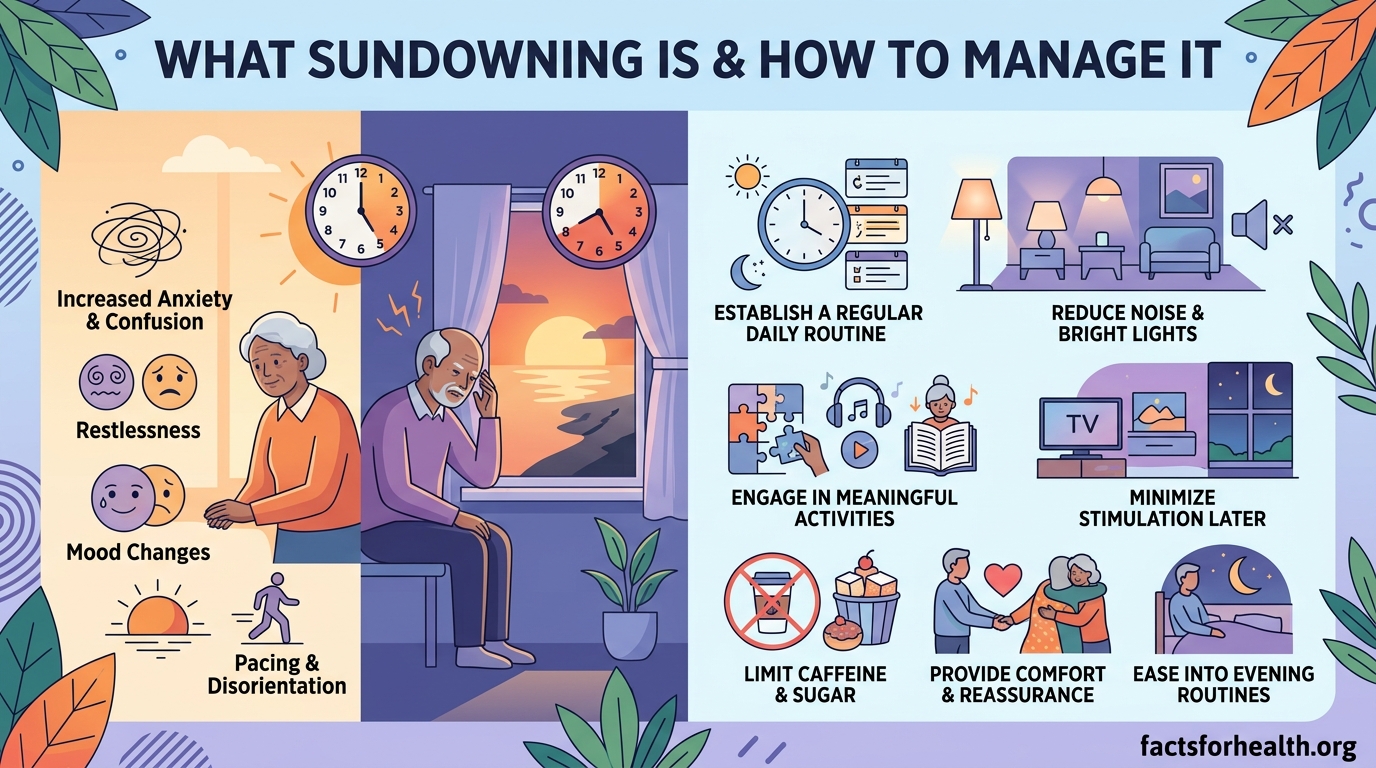
If you care for someone with dementia, you may have noticed their confusion, anxiety, or agitation gets noticeably worse as the sun goes down. This pattern is called sundowning, and understanding what sundowning is can help you manage it effectively in the evening hours.
Sundowning affects an estimated 20% of people with Alzheimer’s disease and related dementias. It typically begins in the late afternoon and can continue through the night. For caregivers, these evening hours can feel overwhelming and isolating.
The good news is that sundowning is a recognized medical phenomenon with evidence-based management strategies. In this guide, our team breaks down exactly what sundowning is, what triggers it, and the practical steps you can take to reduce its intensity. We have drawn on clinical research, caregiver experiences, and expert guidance from organizations like the Alzheimer’s Association and Mayo Clinic.
Whether you are new to dementia caregiving or have been managing sundowning behaviors for months, the strategies below can help you create calmer, more predictable evenings for both you and your loved one.
Table of Contents
What Is Sundowning?
Sundowning, also known as sundown syndrome, is a state of increased confusion, anxiety, and agitation that occurs in people with dementia, typically beginning in the late afternoon and lasting through the evening hours. The term describes a group of symptoms rather than a single condition.
For most people who experience sundowning, the behavioral changes start around 4:00 or 5:00 PM. They tend to peak in the early evening and may gradually subside as night falls. In some cases, the agitation and confusion can persist well past midnight, disrupting sleep for both the patient and the caregiver.
Sundowning is most commonly associated with Alzheimer’s disease and other forms of dementia, including vascular dementia and Lewy body dementia. However, the exact relationship between dementia progression and sundowning remains an area of active research.
One key factor is the disruption of the body’s circadian rhythm, the internal clock that regulates the sleep-wake cycle. As dementia damages brain cells, it can interfere with the production of melatonin, the hormone that signals the body to wind down for sleep. This disruption helps explain why confusion and agitation spike as daylight fades.
It is important to note that sundowning is not a sign that a person is deliberately acting out. The behaviors are a genuine neurological response to internal and external stressors that the person can no longer process effectively.
Researchers believe sundowning involves a combination of biological, environmental, and psychological factors. No single cause explains every case, which is why a multi-pronged approach to management works best.
What Sundowning Looks Like: Symptoms and Behaviors
Sundowning can look different from person to person, but certain behaviors appear consistently across patients. Recognizing these signs early gives you a head start on managing episodes before they escalate.
The most common sundowning symptoms include:
- Increased confusion — The person may not recognize familiar faces, forget where they are, or lose track of time as evening approaches.
- Anxiety and restlessness — A sense of nervousness or unease that builds throughout the afternoon.
- Agitation and irritability — Short temper, frustration over small things, or an inability to settle down.
- Pacing and wandering — Moving aimlessly around the house or attempting to leave, which can create serious safety concerns.
- Repetitive questions — Asking the same question over and over, such as “When are we going home?” or “Where is my mother?”
- Shadowing behavior — Following the caregiver from room to room, unable to tolerate being alone.
- Paranoia and suspicion — Accusing family members or caregivers of stealing, lying, or trying to harm them.
- Hallucinations — Seeing, hearing, or believing things that are not present, which can be frightening for everyone.
- Sleep disturbances — Difficulty falling asleep, frequent nighttime waking, or a complete reversal of the sleep-wake cycle.
The severity of these symptoms can vary widely. Some people experience mild restlessness that passes within an hour or two. Others have intense episodes that last most of the night.
On caregiver forums, we found real accounts that paint a vivid picture. One caregiver described her mother’s sundowning as “screaming and flailing to the point where she was punching herself, and we had to bring her to the ER.” Another shared that the episodes felt like “an extreme form of anxiety combined with paranoia that builds every evening like clockwork.”
These stories are difficult to read, but they underscore an important point. Severe sundowning behaviors are not something you should be expected to handle alone. Knowing when to seek help is just as important as knowing how to manage episodes at home.
What Causes Sundowning: Common Triggers
Understanding what triggers sundowning is half the battle. While no single cause applies to everyone, several factors consistently contribute to evening confusion and agitation in dementia patients.
The primary biological cause is disruption of the circadian rhythm. As dementia progresses, it damages the brain’s ability to regulate the sleep-wake cycle. Melatonin production drops, and the brain becomes less able to distinguish day from night. When sunlight begins to fade in the late afternoon, the already compromised internal clock struggles further.
Beyond the biological mechanism, these common triggers can make sundowning worse:
- Fatigue and sleep deprivation — A poor night’s sleep the night before often leads to worse sundowning the next evening. It becomes a vicious cycle.
- Reduced lighting — As shadows lengthen in the late afternoon, the dimming environment can increase confusion and fear, especially for someone with vision impairments.
- Overstimulation during the day — Busy, noisy, or chaotic daytime environments can overwhelm a dementia patient’s processing ability, leading to a delayed emotional crash in the evening.
- Hunger, thirst, or pain — Unmet physical needs become harder for a person with dementia to communicate. By evening, untreated discomfort can manifest as agitation.
- Medication side effects — Some medications, particularly sedatives, anticholinergics, and certain sleep aids, can paradoxically worsen confusion and agitation.
- Infection or illness — A urinary tract infection (UTI) or other hidden infection can suddenly intensify sundowning symptoms.
- Seasonal changes — Shorter winter days with less sunlight exposure can make sundowning more frequent and more severe.
Identifying which triggers affect your loved one takes careful observation. Many caregivers find it helpful to keep a log of when episodes start, what happened earlier in the day, and what seemed to help. Over time, patterns emerge that can guide your approach.
The Alzheimer’s Association recommends looking at triggers from multiple angles — physical, environmental, and emotional. Addressing even one contributing factor can noticeably reduce the severity of evening episodes.
How to Manage Sundowning in the Evening
Learning how to manage sundowning in the evening requires a combination of preparation, environmental control, and communication strategies. The following techniques are supported by clinical research and recommended by organizations like the Mayo Clinic and Cleveland Clinic.
Not every strategy will work for every person. The key is to experiment, observe what helps, and build a consistent routine around the approaches that show results.
1. Establish a Predictable Daily Routine
A structured daily routine is one of the most powerful tools for reducing sundowning. When a person with dementia knows what to expect, their anxiety decreases. Try to keep meals, activities, medications, and bedtime at the same times every day.
Avoid scheduling demanding activities or appointments in the late afternoon. Reserve that time for quiet, familiar, low-stress activities like listening to music, looking at photos, or sitting together in a comfortable space.
2. Maximize Daylight Exposure
Light therapy is one of the most effective non-drug interventions for sundowning. Encourage your loved one to get outside or sit near a bright window during the morning and early afternoon. Natural daylight helps regulate the circadian rhythm and supports healthy melatonin production.
If outdoor time is not possible, a light therapy box that delivers 10,000 lux of brightness for 20 to 30 minutes each morning can help. Several studies have shown that bright light therapy reduces evening agitation in dementia patients.
3. Control the Evening Environment
As evening approaches, the goal is to create a calm, well-lit, and familiar space. Close curtains before sunset to prevent confusing shadows. Turn on interior lights before the room starts to dim, so the transition feels gradual rather than sudden.
Reduce noise levels in the home during the late afternoon and evening. Turn off the television news, limit visitors, and avoid loud conversations. Some caregivers find that soft background music or nature sounds have a calming effect.
4. Adjust Diet and Caffeine Intake
What a person consumes during the day directly affects their evening behavior. Limit caffeine to the morning hours only. Coffee, tea, cola, and chocolate in the afternoon or evening can worsen restlessness and disrupt sleep.
Serve dinner early, and keep the evening meal light and easy to digest. Avoid alcohol entirely, as it can increase confusion and interfere with sleep quality. A small, comforting snack before bed — such as warm milk or crackers — can help signal that it is time to wind down.
5. Use Calming Activities and Familiar Objects
Familiar objects provide comfort when confusion sets in. Family photographs, a favorite blanket, or a beloved piece of music can ground a person who feels disoriented. Some caregivers create a “calm corner” with items their loved one associates with safety and happiness.
Gentle activities like folding laundry, sorting objects, or petting a therapy animal can redirect restless energy. The goal is not to challenge the person cognitively but to give their hands and mind something soothing to focus on.
6. Adjust Your Communication Approach
How you communicate during a sundowning episode matters as much as what you say. Speak in a calm, even tone. Use short, simple sentences. Avoid arguing, correcting, or reasoning with someone who is confused — this almost always escalates the situation.
Instead of correcting a mistaken belief, acknowledge the underlying emotion. If your loved one insists they need to go home, you might say, “Tell me about your home” rather than “You are already home.” Validation reduces anxiety, while correction increases it.
7. Prioritize Sleep Hygiene
Good sleep hygiene directly combats the circadian disruption that drives sundowning. Keep the bedroom dark, quiet, and comfortably cool at night. Limit daytime napping to 30 minutes or less, and avoid naps after 2:00 PM.
A consistent bedtime routine signals the brain that sleep is coming. Try a sequence like: warm bath, pajamas, a few minutes of quiet music, then lights out. Doing this in the same order every night helps the brain form a reliable association.
Can Sundowning Happen Without Dementia?
Most people associate sundowning exclusively with dementia, but the phenomenon can occur in other situations. Understanding this distinction helps caregivers and medical professionals identify the right underlying cause.
Sundowning behaviors can appear in hospitalized older adults experiencing delirium. Delirium is a sudden, fluctuating state of confusion often triggered by infection, medication changes, surgery, or dehydration. In hospital settings, the combination of unfamiliar surroundings, disrupted sleep, and sensory deprivation can produce evening confusion that looks identical to dementia-related sundowning.
People with severe sensory impairments, particularly vision and hearing loss, may also experience increased confusion and agitation as daylight fades. When the brain receives less sensory input in dimming light, it struggles to make sense of the environment. This is sometimes called “sensory sundowning.”
Even older adults without any cognitive impairment can experience mild evening confusion during acute illness, after anesthesia, or during periods of extreme stress. The key difference is that non-dementia sundowning is usually temporary and resolves once the underlying cause is treated.
If evening confusion appears suddenly in someone with no history of dementia, seek medical evaluation promptly. The cause could be a UTI, medication interaction, electrolyte imbalance, or another treatable condition.
When to Seek Medical Help for Sundowning
One of the most common questions caregivers ask is when sundowning crosses the line from a manageable challenge to a medical emergency. From our research on caregiver forums, the uncertainty around this decision causes significant anxiety.
You should seek immediate medical attention if any of the following occur during a sundowning episode:
- The person becomes physically violent toward themselves or others
- You cannot safely redirect or calm the person after 30 to 60 minutes of trying
- The person attempts to leave the home and is at risk of wandering into unsafe situations
- You notice a sudden, dramatic increase in the severity or frequency of episodes
- The person shows signs of acute illness, such as fever, rapid breathing, or sudden weakness
For non-emergency situations, schedule an appointment with the person’s primary care provider or neurologist. Several medical options can help manage sundowning when behavioral strategies alone are not enough.
Medications that doctors sometimes prescribe for severe sundowning include low-dose antidepressants for anxiety and mood, antianxiety medications for short-term acute episodes, and in some cases, atypical antipsychotics for severe agitation and hallucinations. Every medication carries risks, particularly in older adults with dementia. A geriatric psychiatrist or neurologist can help weigh benefits against potential side effects.
It is also worth reviewing all current medications with the doctor. Some drugs, including over-the-counter sleep aids with antihistamines, can paradoxically worsen sundowning. A medication review often reveals adjustments that improve evening behavior.
Be aware that medications can lose effectiveness over time. Caregivers on Reddit’s dementia support forums frequently mention that treatments like Ativan or lorazepam work initially but become less reliable after a few months. This is a known clinical pattern and not a sign that you are doing something wrong.
Caregiver Support: Taking Care of Yourself
Caregivers experiencing sundowning episodes in a loved one face some of the most challenging moments in dementia care. The evening hours, when sundowning peaks, are often the same hours when you are most exhausted. This creates a perfect storm of stress.
Caregiver burnout is a real and serious condition. Warning signs include chronic exhaustion that sleep does not fix, irritability or resentment toward the person you care for, withdrawing from friends and activities you once enjoyed, feeling trapped or hopeless, and physical symptoms like headaches, stomach problems, or frequent illness.
If you recognize these signs, take them seriously. You cannot provide good care when your own reserves are empty.
Respite care is one of the most effective ways to get a break. Options include adult day programs that provide supervised activities during the day, in-home care aides who can cover the evening hours, short-term residential care facilities that offer overnight or weekend stays, and family or friend volunteer networks that share caregiving responsibilities.
Support groups specifically for dementia caregivers are invaluable. Connecting with others who understand what sundowning looks and feels like reduces isolation. The Alzheimer’s Association offers a 24/7 Helpline at 1-800-272-3900 that provides free, confidential support from trained professionals.
Finally, protect your own sleep. If your loved one’s sundowning disrupts your nights, arrange for nighttime coverage at least a few nights per week. Sleep deprivation impairs your judgment, patience, and immune function. It also increases your own risk of depression and chronic illness.
Frequently Asked Questions About Sundowning
How long does sundowning last in the evening?
Sundowning episodes typically begin in the late afternoon, around 4:00 or 5:00 PM, and can last anywhere from one to four hours. In some cases, agitation and confusion persist through the entire night. The duration varies by individual and depends on factors like fatigue, environment, and the stage of dementia. Keeping a symptom log can help you identify your loved one’s typical pattern.
At what stage of dementia does sundowning typically appear?
Sundowning most commonly appears in the middle to moderate stages of Alzheimer’s disease and related dementias. However, it can begin earlier or later depending on the individual. As dementia progresses and circadian rhythm disruption worsens, sundowning episodes often become more frequent and intense.
What is the best medicine for sundowners?
There is no single best medication for sundowning. Doctors may prescribe low-dose antidepressants, antianxiety medications, or in some cases atypical antipsychotics for severe agitation. Medication decisions should always be made with a physician experienced in dementia care, as all of these drugs carry risks for older adults. Non-drug strategies like light therapy and routine should be tried first.
How do you calm down sundowning?
To calm someone experiencing sundowning, speak in a soft, reassuring voice and avoid arguing or correcting. Reduce environmental stimulation by dimming harsh lights and turning off the TV. Offer a familiar object like a blanket or photo. Try gentle redirection to a calming activity such as listening to soft music. Never use physical restraint, and ensure the environment is safe.
How do you deal with sundowning in the elderly?
Managing sundowning in elderly adults involves establishing a consistent daily routine, maximizing morning light exposure, controlling the evening environment with proper lighting and reduced noise, limiting afternoon caffeine, and using calming activities in the late afternoon. Working closely with a healthcare provider to review medications and address any underlying infections or pain is also essential.
What does sundowning look like?
Sundowning looks like a noticeable shift in behavior as evening approaches. Common signs include increased confusion, anxiety, pacing, repetitive questioning, shadowing the caregiver, paranoia, and sometimes hallucinations. The person may become agitated, irritable, or attempt to wander. These behaviors are typically absent or much milder earlier in the day.
Is sundowning always a daily occurrence?
No, sundowning is not always a daily occurrence. Some people experience it every evening, while others have episodes only a few times per week. The frequency and severity can fluctuate based on factors like sleep quality, illness, changes in routine, seasonal daylight changes, and environmental stressors. Good days and bad days are normal.
Why do Alzheimer’s patients sundown?
Alzheimer’s patients sundown because the disease damages the brain regions responsible for regulating the circadian rhythm and sleep-wake cycle. This disruption affects melatonin production and the brain’s ability to process sensory information as light fades. Fatigue accumulated throughout the day, combined with decreasing environmental cues, creates a neurological overload that manifests as confusion and agitation.
Moving Forward With Sundowning Care
Understanding what sundowning is and how to manage it in the evening transforms one of the hardest parts of dementia caregiving into something you can prepare for and respond to with confidence.
The most effective approach combines a predictable daily routine, strategic light exposure, environmental modifications, and compassionate communication. Start with one or two changes at a time, track what works, and build your strategy gradually.
Remember that sundowning is a medical symptom, not a behavioral choice. Your loved one is not doing this on purpose. And you are not expected to handle it alone. Reach out to healthcare providers, support groups, and respite services when you need them.
Every calmer evening you create is a win. Be patient with yourself and your loved one as you navigate this journey together.