
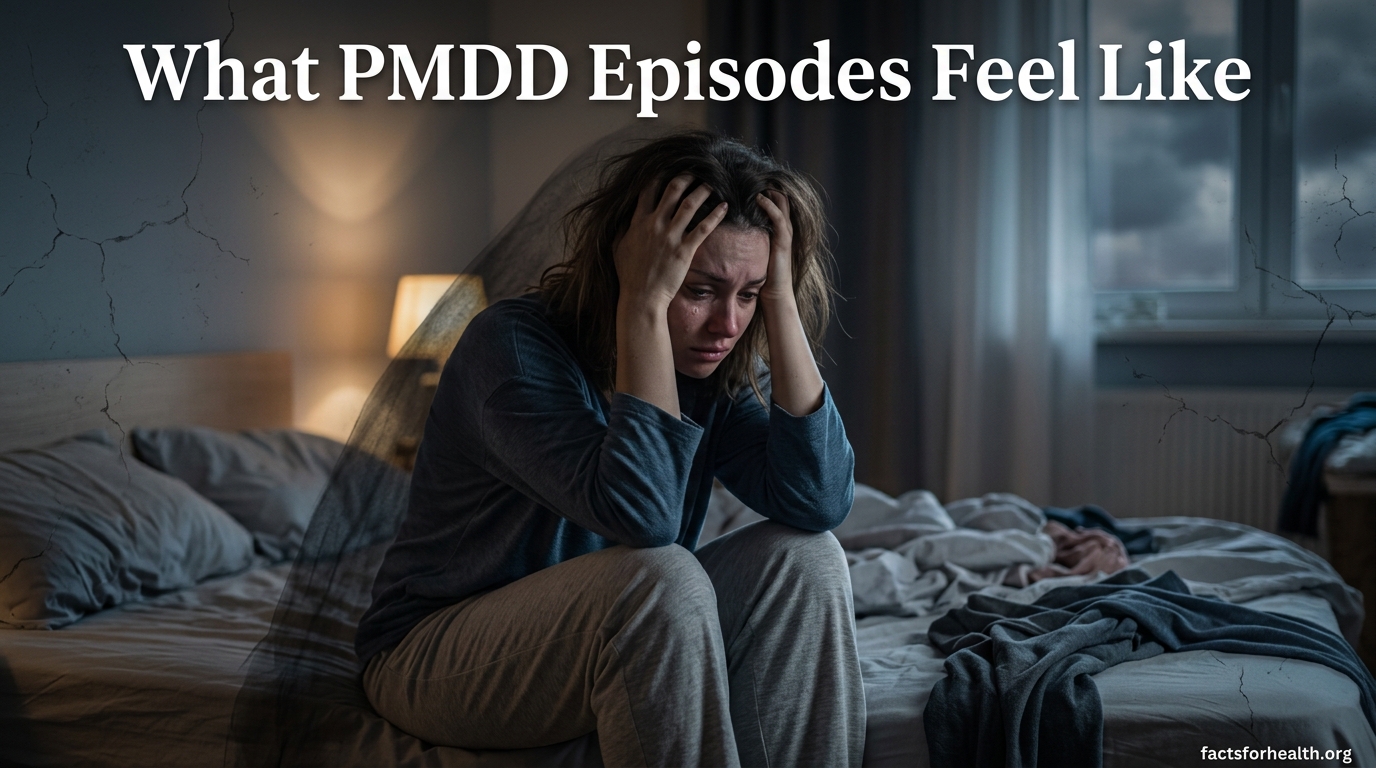
Premenstrual dysphoric disorder (PMDD) is a severe form of PMS that causes intense emotional and physical symptoms during the luteal phase, typically one to two weeks before your period begins. But a clinical definition does not capture what a PMDD episode feeling is actually like to live through. It does not describe the sudden shift where you stop recognizing yourself, the crushing weight that descends without warning, or the way your own mind can feel like a hostile environment.
If you have found yourself searching for answers at 2 a.m. while crying for no reason you can name, you are in the right place. This article walks through what a PMDD episode actually feels like from the inside, drawing on real experiences shared in support communities and clinical research. We will cover the timeline, the emotional storm, the physical toll, and concrete strategies for getting through it.
One thing needs to be said upfront: the feelings you experience during a PMDD episode are real. They are medically documented, neurologically driven, and shared by millions of people worldwide. You are not weak, broken, or imagining it. Understanding the internal experience is the first step toward managing it.
Table of Contents
What a PMDD Episode Actually Feels Like From the Inside
The best way to describe the onset of a PMDD episode is the flip of a switch. Many people describe being completely fine in the morning, going about their day with normal energy and outlook, and then within hours feeling like a completely different person. The transition is not gradual. It feels like being hijacked by your own brain.
One moment you are confident and engaged with your life. The next, a wave of despair or rage or anxiety washes over you so intensely that the person you were this morning feels like a stranger. People in PMDD support communities describe this as feeling swallowed by a black abyss, sinking under the weight of emotions that arrived from nowhere. You might look in the mirror and feel like you are looking at someone unfamiliar.
The thoughts change too. During an episode, your inner monologue turns cruel. Things you would normally brush off become evidence of your worthlessness. A mildly awkward interaction at work spirals into proof that everyone hates you. A small mistake becomes confirmation that you are a failure as a person. These thoughts feel completely real and rational in the moment, which is what makes them so terrifying.
Physically, there is often a sensation in the chest, a tightness or heaviness that mirrors the emotional weight. Some people describe it as feeling like they are being crushed. Sleep becomes fractured. You might lie awake with your mind racing, replaying conversations, catastrophizing about your relationships or your future, unable to silence the noise even though every part of you is exhausted.
Then, a few days after your period starts, the fog lifts. The switch flips back. You wake up and the person in the mirror is you again. The despair that felt absolute just days ago now seems incomprehensible. That cycle of losing and finding yourself month after month is one of the most disorienting parts of living with PMDD.
This is the experience that clinical symptom lists cannot convey. It is not just irritability or sadness. It is a temporary but total transformation of your emotional reality, one that repeats on a schedule your conscious mind cannot control.
The Timeline: When PMDD Hits and How It Builds
PMDD symptoms are tied to the luteal phase, the period between ovulation and the start of menstruation. For most people, symptoms begin 7 to 10 days before the period starts and intensify as menstruation approaches. The luteal phase is when progesterone and estrogen levels fluctuate dramatically, and for someone with PMDD, the brain reacts to these normal hormonal changes with an extreme emotional response.
Many people track a recognizable pattern. The first sign is often subtle: slightly shorter patience, a hint of anxiety, or a vague sense that something is off. Within a day or two, symptoms escalate sharply. Mood drops, irritability spikes, and physical symptoms like bloating and breast tenderness appear. The days immediately before the period are typically the worst, with symptoms reaching their peak intensity.
Then, usually within two to three days after bleeding begins, symptoms resolve. The speed of this resolution is striking. People describe going from suicidal despair to baseline functioning in what feels like overnight. This rapid return to normal is actually one of the diagnostic hallmarks of PMDD. If the symptoms persist throughout the entire cycle, a different condition may be at play.
Understanding this timeline is empowering. When you know that the darkness has an expiration date, it becomes slightly more bearable. You can remind yourself that this state is temporary, that the intensity will pass, and that the version of you that exists during the episode is not the real you.
Emotional Symptoms: The Mental Storm
The emotional symptoms of PMDD are what set it apart from typical premenstrual syndrome. These are not everyday mood fluctuations. They are intense, disruptive, and often resemble a major depressive episode or an anxiety disorder in their severity.
Severe depression is one of the most common and devastating symptoms. During a PMDD episode, you might feel a deep, hopeless sadness that has no connection to anything happening in your life. This is accompanied by feelings of worthlessness and self-loathing that feel absolutely true in the moment. People describe feeling like a burden to everyone they love, like the world would be better off without them.
Anxiety during PMDD can be overwhelming. You might feel a constant sense of dread, a feeling that something terrible is about to happen, even when everything in your life is stable. Physical tension accompanies this, with tight muscles, a racing heart, and an inability to relax. Some people experience panic attacks for the first time during their luteal phase.
Irritability and rage are also hallmarks. This is not mild annoyance. People with PMDD describe feeling furious at everyone around them, snapping at loved ones over nothing, and feeling unable to control their reactions even when they can see the reactions are disproportionate. Starting arguments with extremely supportive partners is a pattern many describe with deep guilt afterward.
Perhaps the most frightening symptom is the emergence of suicidal thoughts. Research shows that people with PMDD have a significantly higher risk of suicidal ideation and attempts, particularly during the days before menstruation. These thoughts are directly tied to the hormonal shift, which means they will pass, but they should always be taken seriously.
Emotional dysregulation ties all of this together. During an episode, you cannot control your emotions the way you normally can. Small setbacks feel catastrophic. Neutral comments feel like attacks. The gap between what you feel and what you know you should feel creates a distressing sense of being trapped inside your own mind.
Physical Symptoms: The Body in Distress
The emotional symptoms of PMDD get the most attention, but the physical toll is equally real and often amplifies the mental suffering. The body and mind are deeply connected during an episode, and physical discomfort can make emotional pain feel even more intense.
Profound fatigue is one of the most commonly reported physical symptoms. This is not normal tiredness. It is an exhaustion so deep that getting out of bed can feel like a monumental task. People describe feeling like their limbs are made of lead, like their battery has been drained to zero regardless of how much they slept. Brain fog often accompanies this fatigue, making it hard to concentrate, remember things, or make decisions.
Bloating and gastrointestinal distress are frequent complaints. Many people find that nothing they eat sits right during their luteal phase, with bloating so severe it changes how clothes fit and how they feel in their own body. Breast tenderness can be painful enough to interfere with sleep or exercise. Headaches and migraines often intensify during this window.
Joint and muscle pain is another physical symptom that is easy to overlook but significantly impacts quality of life. A general achiness, similar to what you might feel with a mild flu, can settle into the body. Some people also experience chest tightness, a physical sensation that mirrors the emotional weight and can trigger additional anxiety because it mimics the feeling of a heart issue.
Sleep disturbances complete the cycle of suffering. Even with profound exhaustion, sleep often becomes elusive. Insomnia, frequent waking, and unrefreshing sleep are all common. This creates a vicious cycle where poor sleep worsens emotional symptoms, which in turn makes sleep harder to achieve.
PMDD vs PMS: What Makes This Different
Many people wonder whether what they are experiencing is PMS or PMDD, and the distinction matters because it determines whether you need medical intervention. PMS, or premenstrual syndrome, involves mild to moderate physical and emotional symptoms before your period. These might include some irritability, mild sadness, bloating, and fatigue, but they generally do not stop you from functioning.
PMDD is categorized differently in the DSM-5 as a psychiatric condition. To meet the diagnostic criteria, you must experience at least five specific symptoms during the luteal phase, including at least one core emotional symptom such as depression, anxiety, mood swings, or anger. These symptoms must be severe enough to interfere with work, school, relationships, or daily activities.
The key difference is impact. PMS is uncomfortable but manageable. PMDD is debilitating. If your premenstrual symptoms make you feel like a different person, disrupt your relationships, interfere with your ability to work, or cause you to have thoughts of self-harm, that goes well beyond PMS. It is worth speaking with a healthcare provider about the possibility of PMDD.
Another important difference is the response to treatment. PMS often improves with lifestyle changes alone. PMDD frequently requires medical treatment, which can include SSRIs, hormonal birth control, or other targeted therapies. Getting the right diagnosis opens the door to treatments that can genuinely change your quality of life.
The Impact: Relationships, Work, and Identity
PMDD does not just affect the person experiencing it. The ripple effects touch every area of life, from intimate partnerships to professional responsibilities to your fundamental sense of who you are.
In relationships, PMDD can create a painful cycle. During an episode, you might become irritable, distant, or emotionally volatile with people you love deeply. You might start fights over nothing, push away partners who are trying to help, or say things you do not mean. When the episode passes, the guilt and shame arrive. You are left to repair damage you barely remember causing, knowing it will happen again next month.
Partners and family members often struggle to understand. They see the personality change and may take it personally, not realizing it is a medical event. This is why education is so important. When loved ones understand that the behavior during an episode is driven by neurochemistry, not by genuine feelings, it becomes easier to separate the PMDD version of you from the real you.
At work, PMDD can undermine performance in ways that feel impossible to explain. Brain fog makes simple tasks take twice as long. Fatigue drains the energy needed for meetings and deadlines. Anxiety makes presentations feel unbearable. And because menstrual health is still stigmatized in many workplaces, many people suffer in silence without accommodations or understanding from colleagues.
The deepest impact, though, is on identity. The monthly loss of self is a grief that accumulates over time. Each episode, you lose days of your life to a version of yourself you did not choose. Over years, this can erode your confidence in your own perception. You start second-guessing your emotions even when you feel fine, wondering if a feeling is real or just hormones. Rebuilding trust in yourself is a critical part of living with PMDD.
How to Track Your Symptoms
Symptom tracking is one of the most powerful tools for managing PMDD. It serves two purposes: it helps you confirm the pattern for yourself, and it provides concrete data for your healthcare provider to support a diagnosis.
Start by recording your symptoms daily for at least two to three full menstrual cycles. Note the date, where you are in your cycle, and rate the severity of each symptom on a scale of one to ten. Track both emotional symptoms (mood, anxiety, irritability, hopelessness) and physical symptoms (fatigue, bloating, pain, sleep quality). Also note any significant events or stressors so you can distinguish between situational distress and cyclical patterns.
There are several apps designed for cycle and symptom tracking, but a simple journal works just as well. The key is consistency. Even on days when you feel completely fine, log that too. The contrast between your baseline days and your luteal phase days is exactly what demonstrates the PMDD pattern.
As you accumulate data, look for the following patterns. Do your symptoms consistently start a specific number of days after ovulation? Do they resolve within a few days of your period starting? Is there a specific symptom that hits hardest? This information helps you predict when episodes will occur, which means you can prepare coping strategies in advance rather than being caught off guard every cycle.
Bring this data to your healthcare provider. Having two to three months of detailed tracking makes it far easier to get an accurate diagnosis. It also helps your doctor determine which treatment approach is most likely to help, since different symptoms respond to different interventions.
Coping Strategies: How to Get Through a PMDD Episode
Knowing how to get through a PMDD episode can make the difference between surviving and drowning. These strategies will not stop the episode from happening, but they can reduce its intensity and help you weather the storm until it passes.
First, learn to recognize the onset. The sooner you identify that an episode is beginning, the sooner you can activate your coping plan. Use your symptom tracking data to know when you are entering your danger window, and treat any sudden shift in mood during that window with suspicion. Tell yourself: this is PMDD, not reality.
Second, create a safety plan for the worst days. If you experience suicidal thoughts during episodes, have a plan in place before the episode hits. Save crisis line numbers in your phone. Identify a trusted person you can reach out to. Write a note to your future self during a clear-minded day reminding you that the darkness will pass and that the thoughts are not real, even though they feel real.
Third, adjust your schedule during your luteal phase. If possible, avoid scheduling major presentations, difficult conversations, or important decisions during the days when your symptoms peak. Give yourself permission to do less during this window. This is not weakness; it is strategic self-management.
Fourth, prioritize sleep and nutrition even though both feel difficult. Poor sleep directly worsens PMDD symptoms, so protecting your rest is essential. Avoid alcohol and excess caffeine during your luteal phase, as both can intensify mood symptoms and disrupt sleep.
Fifth, move your body gently. Exercise has been shown to reduce PMDD symptoms, but during an episode, intense workouts may feel impossible. Even a short walk, gentle stretching, or restorative yoga can help regulate your nervous system and provide a small mood boost.
Sixth, lean on your support system. Tell trusted people what is happening and what you need. Sometimes just having someone acknowledge that you are in a difficult window, without trying to fix it, can reduce the isolation that makes episodes feel worse.
Seventh, explore medical treatment options. If lifestyle strategies alone are not enough, effective treatments exist. SSRIs are one of the most well-researched treatments for PMDD, and some people respond to them within days rather than the weeks typically required for depression. Hormonal treatments, including certain birth control pills, can also help by suppressing ovulation. Nutritional supplements like calcium, magnesium, and vitamin B6 have shown modest benefits in some studies. Work with a knowledgeable provider to find the approach that works for your body.
When to Seek Help
If you suspect you have PMDD, the most important step is to talk to a healthcare provider who takes your symptoms seriously. Unfortunately, many people with PMDD experience dismissal from doctors who attribute their symptoms to stress, normal PMS, or exaggeration. If this happens to you, do not give up. Seek out a provider who specializes in menstrual health, whether that is a gynecologist, a psychiatrist, or a primary care doctor with experience treating PMDD.
Bring your symptom tracking data to your appointment. Be specific about how symptoms impact your daily life. Describe the timeline, the severity, and the fact that symptoms resolve after your period starts. This information is what distinguishes PMDD from other conditions.
If you experience thoughts of suicide or self-harm during your luteal phase, seek immediate help. Call or text 988 in the United States to reach the Suicide and Crisis Lifeline, or go to your nearest emergency room. These thoughts are a medical symptom of PMDD, not a reflection of your actual reality or your actual desires. They will pass, and help is available to get you through the crisis.
You do not have to suffer through PMDD episodes alone, and you do not have to accept them as an unchangeable part of your life. Treatment works. Support exists. The first step is reaching out.
FAQs
Are the feelings I feel from PMDD real?
Yes, the feelings experienced during a PMDD episode are absolutely real. They are caused by a neurological response to normal hormonal fluctuations during the luteal phase, not by imagination or weakness. PMDD is a recognized medical condition in the DSM-5, and research shows it involves abnormal serotonin sensitivity. Your emotions during an episode are genuine neurochemical events, even though they do not reflect your baseline reality.
What does PMDD really feel like?
PMDD feels like being suddenly overtaken by intense depression, anxiety, or rage that has no connection to your actual life circumstances. People describe it as feeling hijacked by their own brain, like a switch flipping from normal to unbearable within hours. The emotional pain feels physical, with chest tightness, crushing fatigue, and a sense of being trapped inside a mind that has turned hostile. The episode typically resolves within days of your period starting.
When does PMDD hit the hardest?
PMDD hits hardest during the late luteal phase, typically the three to five days immediately before menstruation begins. Symptoms usually start 7 to 10 days before your period and escalate as menstruation approaches. The peak intensity occurs right before bleeding starts, and most people feel significant relief within two to three days after their period begins.
How to get through a PMDD episode?
To get through a PMDD episode, recognize the onset early using symptom tracking, reduce demands on yourself during peak days, protect your sleep, avoid alcohol and caffeine, move your body gently, lean on trusted support people, and follow a safety plan if you experience dark thoughts. Medical treatments including SSRIs and hormonal birth control are also highly effective and can dramatically reduce episode severity.
Why does PMDD make me feel like a different person?
PMDD makes you feel like a different person because it temporarily alters brain chemistry, particularly serotonin sensitivity, in response to hormonal changes after ovulation. This creates a dramatic shift in mood, perception, and thought patterns that can make your own emotions and reactions feel foreign. The feeling is real and neurologically driven, and it resolves once hormone levels shift again after menstruation begins.
Can PMDD cause suicidal thoughts?
Yes, PMDD can cause suicidal thoughts, and this is one of the most serious symptoms of the condition. Research shows people with PMDD have a significantly higher risk of suicidal ideation during the luteal phase. These thoughts are a medical symptom tied to hormone-driven neurochemical changes, not a reflection of your true desires. If you experience suicidal thoughts, contact 988 or your local crisis line immediately.
Moving Forward With Understanding
Understanding what a PMDD episode feeling is like from the inside is the first step toward reclaiming your life from this condition. The episodes are real, they are medical, and they are not your fault. You are not imagining the intensity, and you are not alone in experiencing it.
There is genuine hope. With accurate diagnosis, symptom tracking, the right coping strategies, and appropriate medical treatment, the monthly storm becomes something you can prepare for and manage rather than something that blindsides you. Millions of people with PMDD have found ways to reduce episode severity and reclaim the days that PMDD once stole.
If you take one thing from this article, let it be this: the version of you that exists during a PMDD episode is not who you are. The real you is the one who exists between episodes, who is reading this right now, searching for answers. Keep seeking those answers. Talk to a healthcare provider. Build your support system. You deserve to live every day of your cycle, not just the ones between episodes.