
Note: This article discusses depression, anxiety, and suicidal thoughts. If you are in crisis, call or text 988 (Suicide and Crisis Lifeline) in the US, or contact your local emergency services.
If you have ever felt completely fine in the morning, then suddenly, by afternoon, felt like the world is collapsing around you, you are not alone. That sudden descent is what many people with Premenstrual Dysphoric Disorder call a PMDD crash. It is the moment the luteal phase hits and everything shifts.
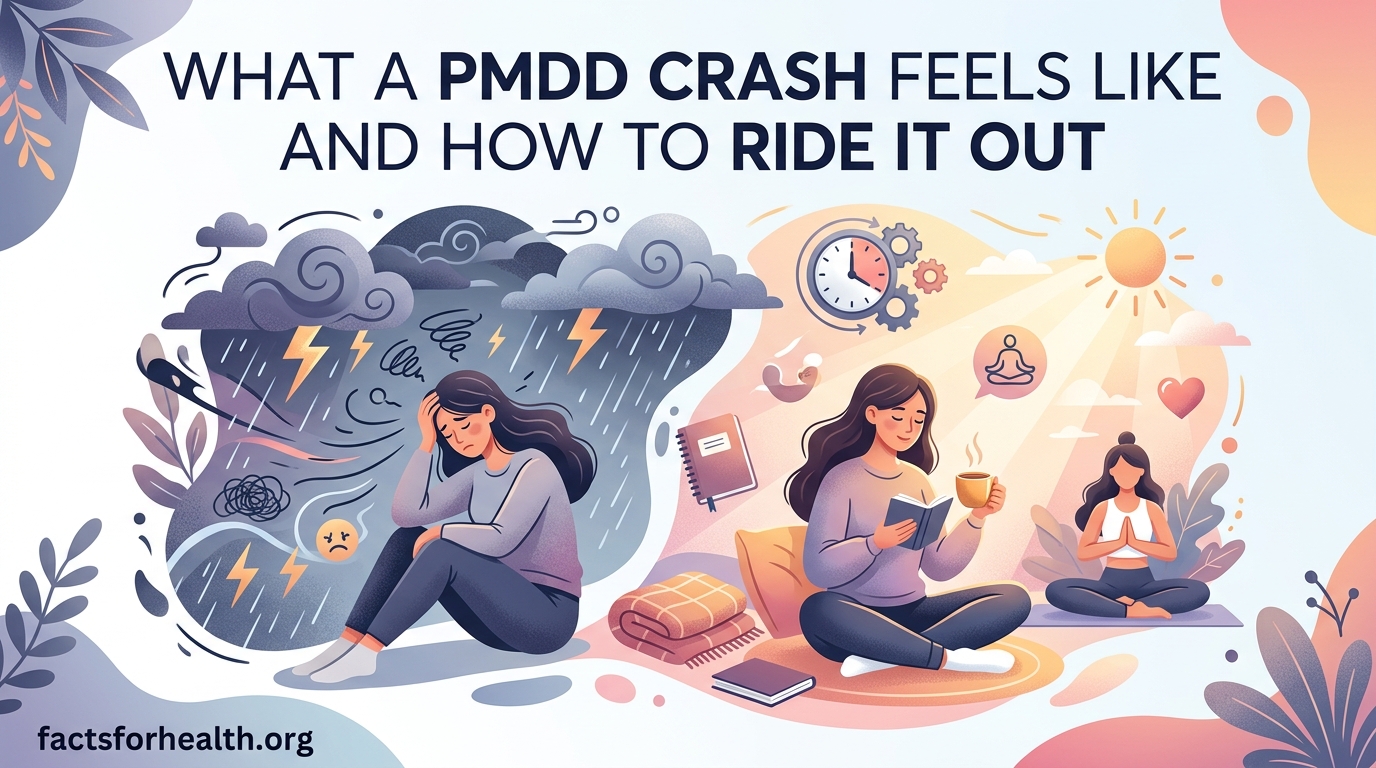
Understanding what a PMDD crash feels like and how to ride it out can mean the difference between suffering in confusion and having a plan. This guide walks through the crash experience in vivid, relatable detail, then offers practical, tested strategies for getting through it.
PMDD, or premenstrual dysphoric disorder, is a severe form of premenstrual syndrome that affects roughly 3 to 8 percent of menstruating people. Unlike typical PMS, PMDD brings intense emotional and physical symptoms that can derail your entire life for one to two weeks each month. The crash is the hallmark of that experience.
Table of Contents
What a PMDD Crash Feels Like
A PMDD crash does not feel like having a bad day. It feels like being swallowed by something you cannot control. People who experience it use visceral language to describe it: being dropped into a black abyss, feeling crushed by an invisible weight, or suddenly feeling like every cell in your body is vibrating with tension.
One person in the r/PMDD community described it this way: “I’m totally fine in the morning, energetic, stable, functioning, and then suddenly, I crash.” Another said the crash feels “like someone injected 10 energy drinks into my veins, can’t sleep, shaky, tense muscles.” These are not exaggerations. They are lived experiences from people who navigate this every single month.
The defining feature of a PMDD crash is its suddenness and severity. You may feel like yourself one day and then wake up the next morning as a completely different person. The shift is so dramatic that many people question whether something else is wrong, only to realize their period is a few days or a week away.
This is not just moodiness. The crash is a full-body, full-mind experience that disrupts how you think, how you feel, and how your body functions. It follows a predictable pattern tied to the menstrual cycle, which is both the curse and the clue.
The Drop: When Everything Changes
People across PMDD forums talk about “the drop.” This is the moment when ovulation passes, hormones shift, and symptoms begin. It can happen within hours. You go from feeling capable and clear-headed to feeling like you are drowning in your own skin.
The drop is so abrupt that many people say they can pinpoint the exact moment it started. One moment you are engaged with your work, your friends, your life. The next, everything feels wrong. Colors seem duller. Conversations feel overwhelming. Your own thoughts turn against you.
What makes the drop so disorienting is that you often do not see it coming until it has already arrived. By the time you realize what is happening, you are already deep in it. That is why recognizing the pattern through symptom tracking becomes so important.
Hour by Hour: The Crash Timeline
While every person’s experience differs, many describe a recognizable progression during a PMDD crash. Understanding this timeline can help you prepare and respond rather than panic.
Early signs (days 1 to 2 of luteal phase): It often starts subtly. You might feel extra tired despite sleeping well. Sudden food cravings hit, especially for carbohydrates and sugar. A vague sense of sadness or unease creeps in that you cannot explain.
The crash (days 3 to 7): This is when symptoms intensify dramatically. Severe depression sets in. Crying spells may erupt without clear triggers. Anxiety spikes. Irritability can flare into rage over small things. You might experience insomnia despite feeling exhausted, or conversely, sleep 12 hours and still feel drained.
Peak intensity (days 7 to 10): Symptoms reach their worst point for many people. Brain fog makes simple tasks feel impossible. Joint pain, headaches, and breast tenderness add physical misery. Emotional regulation feels completely out of reach. Some people describe feeling almost traumatized by the severity of this phase.
The lift (just before or during menstruation): Then, almost like a switch, symptoms begin to lift. Many people report feeling relief within hours of their period starting. The contrast is so striking that it reinforces how hormonal the entire experience was.
PMDD Crash vs PMS: What’s the Difference
Telling the difference between PMS and a PMDD crash comes down to severity and impact. PMS might make you irritable or bloated for a few days. A PMDD crash makes you feel like a different person for up to two weeks. PMS is uncomfortable. PMDD is debilitating.
The key distinction is functional impairment. If your symptoms are preventing you from working, maintaining relationships, or functioning normally, that points toward PMDD rather than standard PMS. PMDD also involves more severe psychological symptoms, including depressive episodes, anxiety attacks, and in some cases, suicidal thoughts.
Physical Symptoms During a PMDD Crash
The physical toll of a PMDD crash is real and often overlooked. Medical resources tend to focus on emotional symptoms, but your body is also going through a significant reaction. Recognizing these physical signs can help you validate what you are experiencing and take steps to care for yourself.
Exhaustion is one of the most common physical symptoms. This is not the kind of tired that a nap fixes. It is a bone-deep fatigue that makes getting out of bed feel like climbing a mountain. You might sleep excessively, or you might find yourself unable to sleep at all despite feeling completely drained.
Many people experience significant muscle tension during a crash. Shoulders, jaw, and neck tighten up. Some describe feeling physically shaky or jittery, as though their nervous system is stuck in overdrive. Headaches and migraines frequently accompany these tension patterns.
Joint pain and body aches are also widely reported. Some people notice that existing conditions like allergies or autoimmune symptoms flare up during the luteal phase. The inflammatory response in the body appears to intensify alongside hormonal shifts.
Then there are the digestive and appetite-related symptoms. Bloating is nearly universal. Food cravings, especially for sugar and carbohydrates, can feel overwhelming and compulsive. Some people experience nausea, while others find they cannot stop eating despite feeling uncomfortably full.
Breast tenderness, lower back pain, and pelvic pressure round out the physical picture. Every body is different, but the common thread is that a PMDD crash is not just in your head. Your entire physical system is affected.
Emotional Symptoms During a PMDD Crash
The emotional symptoms of a PMDD crash are where the experience becomes truly overwhelming. This is where the gap between PMS and PMDD is most visible. These are not mild mood swings. They are intense, consuming emotional states that can feel completely outside your control.
Depression during a PMDD crash is not situational sadness. It is a heavy, dark, suffocating weight that settles over everything. People describe it as feeling like they will never be happy again, even though they know rationally that this feeling has passed before. The rational mind and the emotional experience are completely disconnected.
Rage is another hallmark. PMDD rage is not ordinary irritability. It is a white-hot fury that can erupt over seemingly nothing. People in the PMDD community talk about snapping at loved ones, feeling consumed by anger, and then feeling deep shame afterward. This rage feels involuntary, as though someone else has taken the wheel.
Anxiety during a crash can reach panic-attack levels. Your mind races with worst-case scenarios. Your heart pounds. Simple decisions feel paralyzing. Some people experience depersonalization, feeling detached from themselves or their surroundings.
Perhaps the most painful emotional symptom is the feeling of losing yourself. You know who you are, but during the crash, that person feels unreachable. As one community member put it, “Every day feels like a heavy weight on my body and mind.” The emotional aftermath often requires apologies, repair conversations with loved ones, and time to recover from the intensity of what you just lived through.
How to Ride It Out
Surviving a PMDD crash requires a combination of preparation, self-compassion, and practical strategies. You cannot prevent the crash entirely through willpower alone, but you can build a toolkit that makes it more bearable. The goal is not perfection. The goal is getting through.
Step 1: Recognize What’s Happening
The single most powerful thing you can do during a PMDD crash is name it. When the dark thoughts start spiraling, remind yourself: this is the crash. This is PMDD. This has happened before, and it has passed before. You are not your symptoms.
This cognitive step sounds simple, but it matters enormously. Many people describe the relief of realizing their sudden despair is not a reflection of reality but a hormonal response with a known timeline. Naming it creates a small but critical gap between you and the symptoms.
Symptom tracking is what makes this possible. Apps, journals, or even a simple calendar can help you identify patterns. Once you know your crash typically arrives a certain number of days after ovulation, you can anticipate it rather than being blindsided every month.
Step 2: Reduce Your Load
When the crash hits, your operating capacity drops significantly. Treat it like any other medical flare-up. Cancel non-essential plans. Ask for extensions on deadlines. Tell trusted people in your life that you are entering a difficult phase and may need extra support.
Lowering expectations is not weakness. It is strategic. Pushing through a PMDD crash like nothing is wrong often leads to worse outcomes, including bigger emotional blowups and longer recovery periods. Giving yourself permission to do the bare minimum for a few days can shorten the crash’s grip.
If possible, batch tasks before your luteal phase begins. Meal prep, work projects, and social obligations are easier to manage when you set up systems in advance. Think of it as clearing the runway so the crash has less to disrupt.
Step 3: Soothe Your Body
Your body is under significant stress during a PMDD crash, so physical comfort matters. Heat therapy can help with cramps, muscle tension, and lower back pain. A heating pad, hot water bottle, or warm bath can provide genuine relief when everything hurts.
Focus on gentle nutrition rather than restriction. Cravings are intense during this phase, and fighting them often backfires. Instead, aim for balanced eating that includes protein and complex carbohydrates alongside whatever your body is asking for. Staying hydrated helps with bloating and headaches.
Movement can help, but keep it gentle. A short walk, restorative yoga, or light stretching can ease tension and provide a small mood boost. Avoid forcing intense workouts if your body is exhausted. Listen to what you actually need rather than what you think you should do.
Sleep hygiene becomes critical during the crash. If insomnia is hitting, create a calming nighttime routine. Reduce screen time before bed, keep your room cool and dark, and consider magnesium supplements if your doctor approves. If you are sleeping excessively, give yourself permission to rest without guilt.
Step 4: Protect Your Relationships
PMDD crashes can strain even the strongest relationships. The rage, the withdrawal, the sudden emotional shifts are hard on partners, family members, and friends. Having a communication plan in place before the crash hits can prevent damage.
Tell the people closest to you what a PMDD crash looks like for you when you are not in one. Let them know what to expect and what helps. Some people create a code word or phrase that signals the crash has started, so loved ones understand that behavior changes are coming from a medical event, not from how you really feel about them.
During the crash, minimize conflict triggers. If a conversation is escalating, step away. Use pre-written text messages to explain what is happening if speaking feels too hard. And afterward, when the symptoms lift, take time to reconnect and repair anything that needs attention.
Step 5: Track and Prepare
Long-term, symptom tracking is your most powerful tool. Record your symptoms daily for at least two to three cycles. Note when the crash starts, what symptoms appear, how long they last, and when they lift. This data serves multiple purposes.
First, it helps you predict and prepare. Second, it provides concrete documentation for healthcare providers. PMDD diagnosis typically requires symptom tracking over multiple cycles to establish the pattern. Having detailed records makes those conversations more productive.
Consider building a crash kit: a physical or mental collection of items and strategies you turn to when symptoms hit. This might include your favorite comfort foods, a playlist that calms you, contact information for your support people, and a written reminder that this will pass. Having everything ready means you do not have to think when the crash already has you struggling to function.
When to Seek Professional Help
If your PMDD crashes are severe enough to interfere with your daily life, professional treatment is worth exploring. You do not have to white-knuckle through this alone. Several effective treatments exist, and finding the right one can be life-changing.
SSRIs (selective serotonin reuptake inhibitors) are one of the most well-researched treatments for PMDD. Some people take them continuously, while others take them only during the luteal phase. Hormonal birth control, particularly pills that suppress ovulation, can also reduce or eliminate symptoms for some people.
Therapy, particularly cognitive behavioral therapy and dialectical behavior therapy, can help you develop emotional regulation skills. DBT techniques like the ABC PLEASE skill set, which focuses on accumulating positive emotions, building mastery, and caring for your physical needs, were designed for exactly this kind of emotional intensity.
If you experience suicidal thoughts during your PMDD crashes, seek help immediately. Call or text 988 in the United States. Go to an emergency room. Tell someone you trust. Suicidal ideation that is tied to your cycle is treatable, but only if you reach out. You deserve support, not just survival.
FAQs
How to get out of a PMDD slump?
To get out of a PMDD slump, focus on gentle movement like walking or stretching, eat balanced meals with protein and complex carbs, use heat therapy for physical discomfort, and practice self-compassion. Remind yourself the slump is temporary and tied to your cycle. Tracking symptoms helps you anticipate and prepare for the next one.
How to get out of PMDD rage?
To manage PMDD rage, step away from triggering situations as soon as you notice anger building. Use grounding techniques like deep breathing or holding something cold. Reduce sensory input by dimming lights and limiting social interactions. Communicate with loved ones using a pre-planned signal so they know to give you space.
When does PMDD hit the hardest?
PMDD typically hits hardest during the luteal phase, which is the one to two weeks before your period starts. For most people, symptoms peak around 5 to 11 days before menstruation begins. Symptoms usually resolve within a few days after your period starts.
How to get rid of PMDD symptoms?
PMDD symptoms can be reduced through SSRIs (taken continuously or during the luteal phase), hormonal birth control that suppresses ovulation, cognitive behavioral therapy, and lifestyle changes like regular exercise and stress management. Work with a healthcare provider to find the treatment combination that works for your specific symptoms.
Understanding what a PMDD crash feels like and how to ride it out starts with one fundamental truth: this is not your fault. The crash is a real, medical response to hormonal shifts, and it deserves real, compassionate treatment. Track your symptoms. Build your toolkit. Talk to a healthcare provider. And above all, remind yourself each time that the crash has passed before, and it will pass again.