
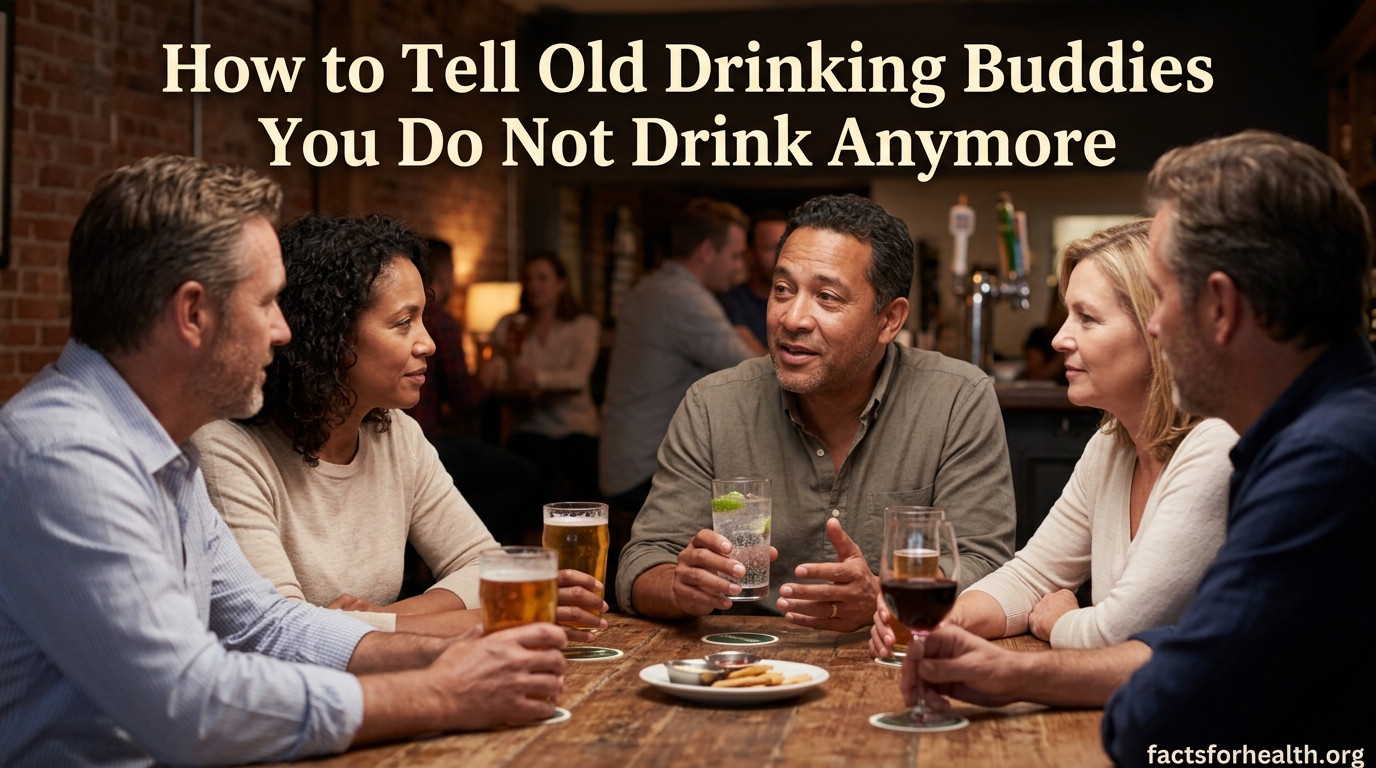
If you have decided to stop drinking, one of the hardest parts is not the cravings or the late-night temptations. It is figuring out how to tell old drinking buddies you do not drink anymore without making things weird.
You might be wondering whether your friends will judge you, pressure you, or slowly stop inviting you out. These fears are completely normal, and almost everyone who quits alcohol goes through the same anxiety.
The good news is that most conversations about quitting drinking are surprisingly short and painless. In our research across recovery forums and expert advice, people consistently report that these talks last about six seconds and go more smoothly than expected.
In this guide, we will walk you through exactly what to say, when to say it, and how to handle every type of reaction. Whether you are dealing with casual acquaintances, close friends, or pushy drinking buddies, you will find specific scripts and strategies you can use today.
By the end, you will feel prepared to have honest conversations that protect your sobriety and your friendships at the same time.
Table of Contents
Why Quitting Drinking Changes Friendships
Before we get into the practical scripts and strategies, it helps to understand why sobriety shifts friendships in the first place. When you remove alcohol from a relationship that was built around it, the foundation of that connection changes.
Many drinking friendships are held together by the shared activity of drinking itself. You met at bars, bonded over drinks, and spent your time together in settings where alcohol was the central focus. Without that common ground, some friendships naturally feel different.
This does not mean those friendships were fake or shallow. It simply means they were built on a specific shared activity, and now that activity has changed.
The Three Types of Friend Responses
From our research and real experiences shared in recovery communities, people generally fall into three categories when you tell them you quit drinking.
Supportive friends will accept your decision immediately. They might ask a genuine question or two, then move on. These are the people who value you beyond the bottle.
Curious or awkward friends may not know what to say. They might ask why, make a joke, or seem briefly uncomfortable before the conversation moves on. This reaction is about their surprise, not your decision.
Resistant friends will push back, tease you, or try to convince you to have just one drink. These friends may feel threatened by your choice because it holds up a mirror to their own habits. We will cover how to handle each type in detail later.
People Care Less Than You Think
One of the most common themes in sobriety forums is that people massively overestimate how much others care about their drinking. You might spend days agonizing over what to say, only to have your friend respond with a shrug and “cool, more for me then.”
This is worth repeating: most people are too focused on themselves to spend much energy thinking about whether you are drinking. The anxiety you feel before the conversation is almost always worse than the conversation itself.
How to Tell Old Drinking Buddies You Do Not Drink Anymore
The moment of telling your friends is the part most people dread. But with the right approach, you can handle it with confidence and minimal awkwardness. Here is a step-by-step process that works.
Step 1: Decide What Level of Detail You Want to Share
Before you say anything, get clear on how much you want to reveal. You do not owe anyone a full explanation of your decision to quit drinking.
Some people prefer to be completely open about their reasons, whether that is health concerns, addiction recovery, or simply wanting a change. Others want to keep it brief and private. Both approaches are valid.
The key is deciding in advance so you are not caught off guard when someone asks why. If you stumble through a long, defensive explanation, it invites more questions. A short, confident answer shuts down the conversation naturally.
Step 2: Choose the Right Time and Setting
Timing matters more than you might expect. Avoid having this conversation when everyone is already drinking, especially if the group is loud or rowdy.
For close friends, consider telling them one-on-one before a social event. A quick text or phone call works well: “Hey, just wanted to let you know I am not drinking anymore. Still excited to hang out Friday.” This gives them time to process before the actual event.
For casual acquaintances or larger groups, you do not need a formal announcement at all. Simply order a non-alcoholic drink when it is your turn and let it speak for itself.
Step 3: Use Simple, Firm Scripts
Having a go-to response ready prevents stammering and over-explaining. Here are proven scripts that work for different situations.
For casual settings: “I am not drinking tonight, but I am still in. Got anything non-alcoholic?”
For direct questions: “I decided to take a break from alcohol. Feeling good about it.”
When someone pushes: “I am good with water tonight, thanks. So anyway, how was your weekend?”
For close friends: “I have been thinking about this for a while. I am quitting drinking, and I wanted you to know because you are important to me.”
Notice that none of these scripts are long or defensive. They are short, clear, and quickly redirect the conversation back to normal territory.
Step 4: Have a Drink in Your Hand
This is one of the simplest and most effective tips from people who have been sober for years. Always have a non-alcoholic drink in your hand at social events.
When you are holding a drink, nobody notices what is in your cup. A soda water with lime looks exactly like a gin and tonic. A kombucha in a glass looks like a beer. This small detail eliminates about 80 percent of the questions and awkward moments.
If someone offers you a drink, you can simply raise your glass and say, “I am all set, thanks.” No explanation needed.
Step 5: Redirect the Conversation
The fastest way to move past any awkwardness is to change the subject. After delivering your line about not drinking, immediately ask a question or steer the conversation elsewhere.
“I am not drinking tonight. Hey, did you end up finishing that project?” This technique works because most people love talking about themselves and will happily follow your lead.
The redirect is not rude or evasive. It simply signals that your not-drinking is not a big deal, and the conversation should continue normally.
Handling Peer Pressure and Pushback
Even with the best scripts, some friends will push back. Understanding why people pressure you makes it easier to respond without getting defensive or angry.
Why People Pressure You to Drink
When you stop drinking, some friends feel uncomfortable, and that discomfort often comes out as pressure. Your choice quietly challenges their own relationship with alcohol, even if they do not realize it.
Other friends genuinely think they are being fun or inclusive. In their mind, offering you a drink is the same as offering you a seat at the table. They are not trying to sabotage your sobriety, they just do not know how else to include you.
A small percentage of friends may have a more concerning reaction. If someone repeatedly tries to get you to drink after you have clearly said no, that person may have their own drinking problem and your sobriety makes them uncomfortable.
Scripts for Common Pressure Situations
Here are specific responses for the most common types of pushback you will encounter.
When they say “Come on, just one drink:” “I appreciate it, but I am sticking with not drinking. I feel a lot better this way.”
When they say “You used to be so fun:” “I am still the same person. Just with fewer hangovers.” Deliver this with a smile and it usually gets a laugh.
When they keep pushing after you have said no: “I said no, and I mean it. Can we talk about something else?” This is firmer and sets a clear boundary.
When they ask if you are pregnant, sick, or in trouble: “Nope, just taking a break from alcohol. It suits me.” Keep it light and move on.
The Broken Record Technique
If a friend keeps pushing after you have given your answer, use the broken record technique. Repeat the same short phrase every time they bring it up.
“I am not drinking tonight.” Say it the same way each time, without adding new explanations or getting pulled into a debate. Eventually, they will run out of arguments and drop it.
This technique works because it removes the fuel from the conversation. There is nothing new to argue with, so the pressure fizzles out.
Using Humor to Deflect
Humor is one of your best tools for defusing tension. A well-timed joke can shut down pressure without creating conflict.
“Someone has to remember tonight.” “I am on a liquid diet, and water counts.” “My doctor said I should cut back, and my doctor is way scarier than you.”
These playful responses signal that you are not drinking but you are also not making a big deal out of it. Most friends will laugh and move on.
When Someone Will Not Respect Your Decision
If someone repeatedly disrespects your choice to not drink, pay attention. People who refuse to accept a clear no may not have your best interests at heart.
A true friend may not understand your decision at first, but they will respect it. If someone keeps trying to undermine your sobriety after you have been clear, that is valuable information about the friendship.
You do not need to confront them dramatically. You can simply start spending less time with that person and more time with people who support your choices.
Practical Strategies for Staying Social Without Alcohol
One of the biggest fears people have about quitting drinking is that their social life will disappear. The reality is that your social life will change, but it does not have to shrink.
Always Have a Non-Alcoholic Option Ready
Before you go to any social event, think about what you will drink. Walking in with a plan prevents the awkward moment of staring at a menu with no idea what to order.
Popular choices among sober socializers include soda water with lime, ginger beer, kombucha, mocktails, non-alcoholic beer, and iced tea. Many bars and restaurants now carry dedicated non-alcoholic options, so you are likely to find something appealing.
If you are going to someone’s house, bring your own non-alcoholic drinks. This removes any burden on the host and guarantees you will have something you enjoy.
Managing Social Anxiety Without Alcohol
For many people, alcohol was a social lubricant that made it easier to relax in groups. Without it, social anxiety can spike, especially in the early days of sobriety.
This is normal and it gets better with time. The anxiety you feel without alcohol is your brain recalibrating to social situations naturally instead of chemically.
A few techniques can help in the moment. Focus on asking other people questions, which takes the spotlight off you. Take slow breaths when you feel anxious. Give yourself permission to leave early if you need to.
Arrive a few minutes early before the crowd builds up. It is easier to connect with a few people in a quiet setting than to walk into a room full of people who are already drinking.
Suggest Alternative Activities
One of the most effective ways to maintain friendships is to suggest activities that do not revolve around alcohol. Instead of meeting at a bar, propose something different.
Coffee shops, hiking trails, movie theaters, restaurants, bowling alleys, and sports activities all provide social connection without making drinking the center of attention.
You might be surprised by how many friends are open to alternatives. Some of them may have been waiting for someone else to suggest doing something that does not involve drinking.
Build a Sober Social Circle
While you do not need to abandon your old friends, adding sober connections to your life makes a big difference. Spending time with people who do not drink removes the constant need to explain or defend your choice.
Look for local groups centered around fitness, hobbies, volunteering, or faith. Many cities have sober social meetups specifically designed for people who want to socialize without alcohol.
Online communities like r/stopdrinking on Reddit provide support and connection with people going through exactly what you are experiencing. These communities are active, welcoming, and full of practical advice.
Handling Specific Social Scenarios
Different settings call for slightly different approaches. Here is how to handle the most common ones.
Bar meetups: Arrive early, order a non-alcoholic drink immediately, and position yourself where you feel comfortable. You can always leave early if the vibe gets to be too much.
Dinner parties: Bring a non-alcoholic beverage to share. Most hosts will appreciate the gesture and you will have something to drink all night.
Work events: Keep it simple with “I am not drinking tonight” and redirect to work topics. Professional settings rarely involve serious pressure.
Family gatherings: Family members may have more opinions. Prepare a slightly longer explanation if needed, but keep the core message the same.
What to Do When Relationships Fade
Here is the honest truth that most articles gloss over: some friendships will change or fade when you stop drinking. This is not a failure on your part. It is a natural consequence of shifting priorities.
The Reality of Drinking Friendships
Sometimes friendships that seemed deep were really just proximity and shared habits. When you remove the shared activity of drinking, there may not be enough common ground left to sustain the relationship.
This can hurt, especially if the person was a close friend. It is okay to grieve that loss. But it is also worth asking whether a friendship that only worked when you were both drinking was truly serving you.
Many people in recovery report that the friendships they lost were replaced by deeper, more authentic connections. The friends who stick around are the ones who value you as a person, not as a drinking partner.
How to Navigate the Transition
If you notice a friendship fading, you do not have to force it to continue. Try inviting that friend to a non-drinking activity once or twice. If they consistently decline or seem uninterested, let the relationship drift naturally.
Do not burn bridges or make dramatic exits. People change and grow at different rates. A friend who cannot handle your sobriety today might come around in six months or a year.
In the meantime, invest your energy in relationships that feel supportive and effortless. Quality matters far more than quantity when it comes to friendships in sobriety.
Finding Your People
As you spend less time in drinking-centered environments, you will naturally start meeting people through other channels. Hobbies, classes, fitness groups, and volunteer work are all excellent ways to build connections that are not tied to alcohol.
Be patient with this process. Building new friendships takes time, but the connections you form in sobriety often feel more genuine and lasting than the ones that came before.
FAQs
How do I tell my drinking buddies I quit?
Keep it simple and direct. Say something like u0022I am not drinking anymoreu0022 or u0022I am taking a break from alcohol.u0022 You do not need to give a long explanation. Most friends will accept it quickly and move on. Having a non-alcoholic drink in hand helps avoid follow-up questions.
Will I lose my friends if I stop drinking?
Some friendships may change or fade, especially those built primarily around drinking. However, true friends who value you as a person will stick around. Many people find that sobriety actually deepens their closest friendships while naturally filtering out the more superficial ones.
How do I handle peer pressure to drink?
Use short, firm responses like u0022I am good tonight, thanksu0022 and then change the subject. If someone keeps pushing, repeat the same phrase without adding new explanations. This is called the broken record technique. People who refuse to accept your no after repeated requests may not have your best interests at heart.
Why do I feel awkward not drinking around friends?
Feeling awkward is completely normal, especially in the early weeks of sobriety. Alcohol often serves as a social lubricant, and without it your brain needs time to adjust to social situations naturally. The anxiety typically decreases significantly after a few sober social events as you build confidence.
What should I drink instead of alcohol at social events?
Popular non-alcoholic options include soda water with lime, ginger beer, kombucha, mocktails, non-alcoholic beer, and iced tea. Having a drink in your hand prevents most questions, since people rarely notice what is actually in your glass.
Do I need to explain why I quit drinking?
No, you do not owe anyone a detailed explanation. You can share as much or as little as you want. A simple u0022I decided to take a breaku0022 or u0022I feel better without itu0022 is enough. Deciding in advance what you will say prevents being caught off guard.
Moving Forward With Confidence
Learning how to tell old drinking buddies you do not drink anymore feels overwhelming at first, but it gets easier every time you do it. The first conversation is the hardest. By the fifth or sixth time, it will feel like second nature.
Remember that you do not owe anyone a long explanation, a debate, or a performance. A short, confident answer is all you need. The friends who matter will respect your choice without making it a big deal.
Some relationships will shift, and that is okay. The connections that remain and the new ones you build will be rooted in something real rather than a shared habit. Your social life does not end when you stop drinking. It transforms into something more authentic.
Keep a non-alcoholic drink in your hand, your scripts ready, and your boundaries firm. You have made a decision that serves your health and your future. The right people will stand beside you for it.