
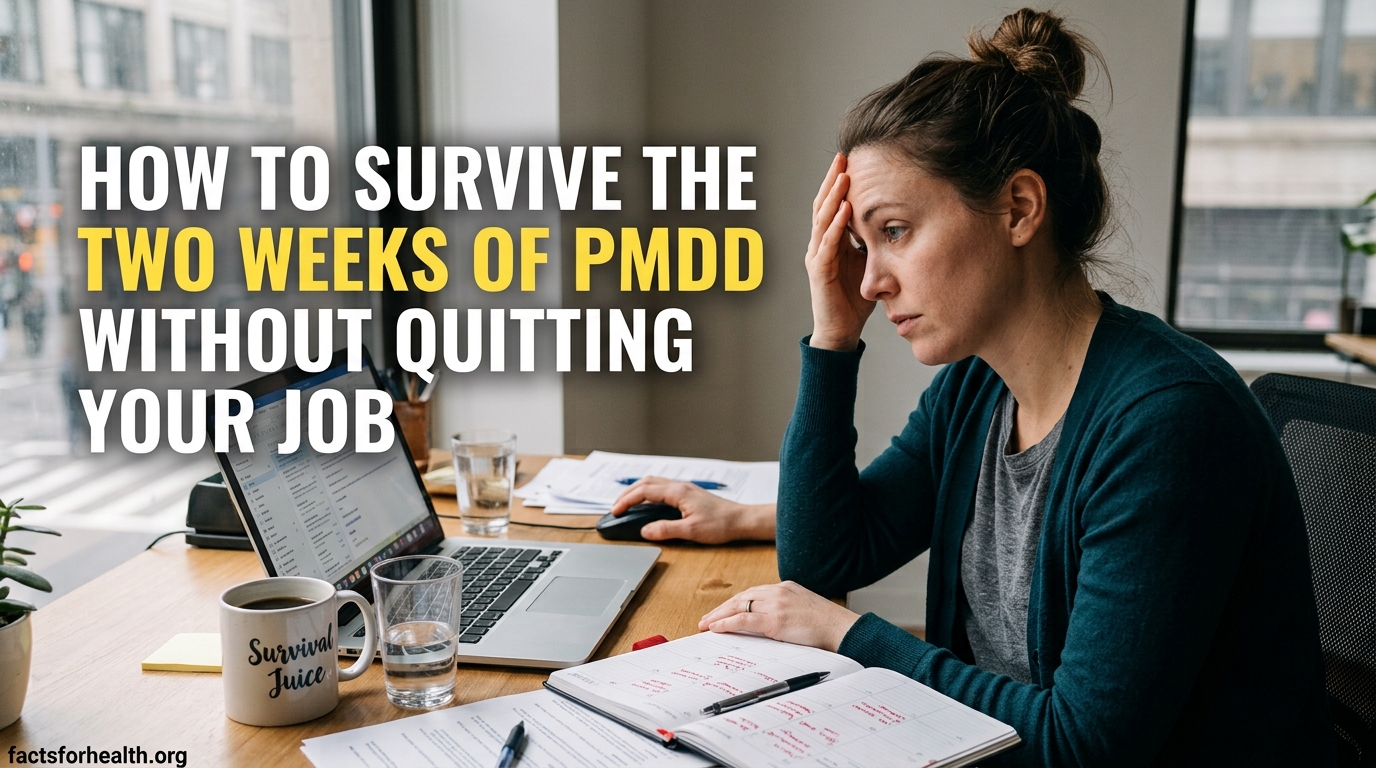
Every two weeks, it hits like a tide you can see coming but cannot stop. The brain fog rolls in. The anxiety spikes over an email that would not have bothered you five days ago. Your patience evaporates, your concentration scatters, and suddenly the job you handled with confidence feels impossible. If you have ever sat at your desk during luteal phase and quietly typed “how to survive the two weeks of PMDD without quitting your job” into a search bar, you are in the right place.
Premenstrual dysphoric disorder (PMDD) is a severe form of premenstrual syndrome that affects roughly 3 to 8 percent of women and people who menstruate. It triggers intense emotional, physical, and cognitive symptoms during the one to two weeks before your period. For many, those symptoms collide directly with deadlines, meetings, and workplace expectations in ways that feel unsustainable.
This guide breaks down practical, tested strategies for managing PMDD at work. You will find cycle tracking techniques, workplace communication scripts, accommodation strategies, and a luteal phase survival plan you can start using today. None of this is about pushing through. It is about building systems that let you work with your cycle instead of against it.
Table of Contents
Understanding PMDD and Its Impact on Work
What Is PMDD?
PMDD is a cyclical mood disorder tied to the hormonal shifts of the menstrual cycle. Unlike standard PMS, which causes mild discomfort, PMDD produces severe symptoms that can disrupt your ability to function at work, at home, and in relationships.
Researchers believe PMDD stems from an abnormal sensitivity to normal hormonal fluctuations, particularly the changes in estrogen and progesterone that occur after ovulation. These shifts affect serotonin and GABA pathways in the brain, which regulate mood, stress response, and emotional stability.
The result is a collection of symptoms that feel less like “just PMS” and more like a temporary but real mental health episode. Many people with PMDD describe feeling like a completely different person during luteal phase, then watching symptoms vanish within a day or two of menstruation starting.
The Luteal Phase: Your Two-Week Window
The luteal phase begins right after ovulation and lasts roughly 14 days, ending when your period starts. During this time, progesterone rises sharply, then drops if pregnancy does not occur. For someone with PMDD, that hormonal trajectory triggers a cascade of symptoms.
This means that for nearly half of each month, you may be operating under significant neurological and physical stress while still being expected to perform at your normal level. Understanding this timeline is the foundation of every strategy in this guide, because you cannot plan around a pattern you have not mapped.
How PMDD Symptoms Show Up at Work
PMDD does not stay at home. It follows you into every meeting, every project, and every interaction. The emotional symptoms include intense irritability, sudden sadness, anxiety attacks, and a sense of hopelessness that can make your entire career feel pointless. Many people report an overwhelming urge to quit their jobs during this phase, only to feel completely fine a week later.
The cognitive symptoms are equally disruptive. Brain fog makes simple tasks take twice as long. Concentration difficulties turn routine work into a slog. You might find yourself rereading the same paragraph four times or sending an email that reads nothing like your normal communication style.
Physical symptoms add another layer. Fatigue drains your energy reserves before the workday even starts. Bloating, headaches, breast tenderness, and joint pain make sitting at a desk physically uncomfortable. Sleep disturbances rob you of the rest you need to cope with everything else.
When all of these hit at once, it is no wonder that job performance suffers. Deadlines get missed. Mistakes slip through. Interactions with colleagues become strained. The key insight is that these patterns are predictable, which means they are also preparable.
How to Survive the Two Weeks of PMDD Without Quitting Your Job
Surviving PMDD at work comes down to seven core strategies that work together. None of them will eliminate your symptoms entirely, but together they can make the difference between barely functioning and maintaining your professional standing through every phase of your cycle.
1. Track Your Cycle So You Can Predict the Storm
Cycle tracking is the single most powerful tool you have. When you know exactly when luteal phase is coming, you stop blaming yourself for sudden mood changes and start planning around them instead. Women on forums like r/PMDD consistently identify cycle awareness as the strategy that made the biggest difference in their ability to hold a job.
Use a tracking app or a simple journal to record your symptoms daily for at least two to three months. Note when symptoms start, when they peak, and when they lift. Look for patterns in your mood, energy, concentration, and physical discomfort. Most people with PMDD discover that their symptom window is remarkably consistent from month to month.
Once you have that data, you can map your work calendar to your cycle. You will know which week is likely to be rough and can adjust your workload, meeting schedule, and deadlines accordingly. This transforms PMDD from a crisis that blindsides you into a known variable you can account for.
2. Front-Load Your Work During the Follicular Phase
The follicular phase begins when your period starts and runs until ovulation. For most people with PMDD, this is the window where energy, focus, and mood are at their best. Your brain feels clear, your motivation is high, and work feels manageable.
Use this time aggressively. Push major projects forward, knock out complex tasks that require deep concentration, and get ahead on anything with a flexible deadline. Think of the follicular phase as your productive sprint. The more you accomplish now, the more breathing room you create for yourself when luteal phase arrives.
Batch-create content, draft reports in advance, and prepare materials for meetings that fall during your symptomatic days. If you can move a deadline-sensitive task out of luteal phase and into follicular phase, do it every single time.
3. Build a Luteal Phase Survival Kit for the Office
A survival kit is a collection of items and resources you keep at your desk or in your bag specifically for luteal phase days. The goal is to have everything you need within arm’s reach so that when symptoms spike, you are not scrambling.
Your kit might include over-the-counter pain medication so you can take it early before physical discomfort drains your mental resources. Many people in PMDD communities emphasize that waiting until pain becomes severe costs far more energy than addressing it at the first sign. Add a heating pad or disposable heat wraps for cramps and back pain.
Include snacks that stabilize blood sugar, because hunger amplifies PMDD irritability. Pack a water bottle, herbal tea bags (chamomile and peppermint are popular choices), and any supplements your doctor has recommended. Keep noise-canceling headphones for sensory overload, a sleep mask for rest breaks, and a small notebook for brain-dumping anxious thoughts.
Also keep a list of grounding techniques in your kit. Simple exercises like box breathing, the 5-4-3-2-1 sensory method, or a one-minute body scan can pull you back from an anxiety spike during a stressful meeting.
4. Master the Art of Micro-Breaks and Energy Budgeting
Energy budgeting means treating your daily energy like a finite currency and spending it deliberately. During luteal phase, your energy budget shrinks. Tasks that normally cost you 10 units of energy now cost 30. If you do not adjust your spending, you will run out before the day is over.
Micro-breaks are the tool for stretching that budget. Instead of powering through for four hours and crashing, take a five-minute break every 45 to 60 minutes. Step away from your screen, stretch, step outside for fresh air, or simply close your eyes and breathe. These small resets prevent the compounding fatigue that leads to afternoon meltdowns.
Prioritize ruthlessly during luteal phase. Identify the one or two tasks that absolutely must get done today and let everything else slide. Delegate where possible, push non-urgent items to next week, and give yourself permission to do less. Doing less for two weeks is far better than burning out and needing months to recover.
5. Use the Fact Folder Technique to Combat PMDD Anxiety
One of the most devastating PMDD symptoms is the anxiety it generates about your job performance. During luteal phase, your brain can convince you that everyone is unhappy with you, that you are failing, and that you are about to be fired. These thoughts feel completely real in the moment, even when they have no basis in fact.
The Fact Folder technique, popularized in PMDD support communities, directly counters this. Create a folder, document, or note on your phone where you save evidence of your competence. Include positive feedback from managers, compliments from colleagues, successful project outcomes, and performance review highlights.
When PMDD anxiety hits and your brain tells you that you are terrible at your job, open the Fact Folder. Read the actual evidence. Remind yourself that the anxiety you are feeling is a symptom of hormonal changes, not a reflection of reality. This technique does not eliminate the anxiety, but it gives you something concrete to hold onto when your perception is distorted.
6. Adjust Your Diet, Caffeine, and Sleep Routine
What you consume during luteal phase directly affects how severe your symptoms feel. Many people with PMDD report that cutting back on caffeine was one of the most impactful changes they made. Caffeine amplifies anxiety, disrupts already-fragile sleep, and can worsen the jittery, on-edge feeling that PMDD already produces.
Try switching to half-caffeine or decaf during your symptomatic weeks. The same applies to alcohol, which disrupts sleep quality and can intensify mood instability. Reducing sugar and refined carbohydrates may help stabilize the energy crashes that make afternoon work feel impossible.
Sleep is non-negotiable during luteal phase. PMDD already causes sleep disturbances, so anything you can do to improve sleep quality pays dividends. Aim for a consistent bedtime, keep your room cool and dark, and avoid screens for the hour before bed. If sleep is severely disrupted, talk to your doctor about options.
7. Create an Emergency Action Plan for Bad Days
Some luteal phase days will be worse than others. You need a plan for the days when symptoms are so severe that normal work is not possible. Having this plan in place before you need it means you will not have to make decisions while in crisis.
Decide in advance what a “code red” day looks like for you. Know your employer’s sick leave policy and how much time you have available. Identify tasks that can be deferred, delegated, or dropped entirely on a bad day. Have a half-day or remote-work fallback plan if your workplace allows it.
Write down the phone number for your doctor, therapist, or a trusted friend who understands PMDD. If your symptoms ever include thoughts of self-harm, have crisis line information saved in your phone. PMDD can cause severe psychological distress, and having these resources ready removes the burden of finding them when you are already struggling.
How to Tell Your Boss About PMDD: Scripts and Strategies
Deciding whether to disclose PMDD at work is one of the hardest decisions many people face. You want accommodations, but you fear being seen as unreliable or less committed. The right approach depends on your workplace, your relationship with your manager, and your goals.
Should You Disclose Your PMDD Diagnosis at Work?
There is no one-size-fits-all answer. Disclosure can open doors to accommodations and understanding, but it also carries risk depending on your workplace culture. Start by assessing your situation objectively.
If your symptoms are mild enough to manage privately, you may not need to disclose anything. If symptoms are significantly impacting your performance or requiring regular accommodations, disclosure gives you legal protections and makes it possible to have an honest conversation about your needs.
Tell someone you trust first. This might be a work friend who can support you during difficult days. If you feel safe with your manager, that conversation can lead to practical changes that make your work life sustainable. You do not have to share details you are uncomfortable sharing. You can frame it in medical terms without elaborating beyond what feels right.
Script: Talking to Your Manager About PMDD
Here is a script you can adapt for a conversation with your manager:
“I want to share something with you because I value our working relationship and want to make sure I am performing at my best. I have been diagnosed with a medical condition called Premenstrual Dysphoric Disorder, or PMDD. It is a recognized hormonal condition that causes severe symptoms for about one to two weeks each month. During that time, I may need some flexibility with my schedule or workload. I am working with my doctor to manage it, and I am committed to keeping my work quality high. I wanted to be transparent so we can plan together rather than having it seem like I am randomly underperforming.”
This script is direct, professional, and frames PMDD as a managed medical condition rather than a personal weakness. Adjust the language to match your relationship with your manager and your workplace culture.
Script: Requesting Workplace Accommodations
Once you have opened the conversation, you can make specific requests. Here is a sample script for requesting accommodations:
“Based on my doctor’s recommendations, there are a few adjustments that would help me manage my condition and maintain my performance. Would it be possible to arrange flexible start times during my symptomatic weeks, or the option to work remotely on days when symptoms are most severe? I am happy to provide documentation from my doctor if that would be helpful. I want to make sure these changes do not impact the team, and I am open to discussing what would work best for everyone.”
Be specific about what you need. Vague requests are easier to dismiss. Whether you are asking for flexible hours, remote work, a quiet space for breaks, or adjusted deadlines during your symptomatic window, clarity helps your employer understand exactly what they are agreeing to.
Workplace Accommodations and Your Legal Rights
Knowing your rights gives you confidence to ask for what you need. Many countries have legal frameworks that protect employees with medical conditions, and PMDD may qualify under certain circumstances.
Reasonable Accommodations You Can Request
Reasonable accommodations are adjustments to your work environment or schedule that allow you to perform your job without placing undue hardship on your employer. For PMDD, common requests include flexible start and end times to accommodate fatigue and medical appointments, remote work options on high-symptom days, and a private space for rest or medication.
You can also request modified break schedules, permission to step away from your desk during anxiety spikes, adjusted deadlines during your symptomatic window, and reassignment of non-essential tasks during luteal phase. Some people negotiate a compressed work week, such as four longer days instead of five standard ones, to build in recovery time.
The key is that accommodations should be specific to your symptoms and realistic for your role. Bring documentation from your healthcare provider to support your requests. A doctor’s note that outlines your diagnosis and recommended accommodations carries significantly more weight than a verbal request.
Does PMDD Qualify as a Disability?
Whether PMDD qualifies as a disability depends on your location and the severity of your symptoms. In the United States, the Americans with Disabilities Act (ADA) protects individuals whose condition substantially limits one or more major life activities. If PMDD significantly impairs your ability to concentrate, sleep, regulate emotions, or work, it may meet that threshold.
In the United Kingdom, the Equality Act 2010 defines disability as a physical or mental impairment that has a substantial and long-term adverse effect on your ability to carry out normal day-to-day activities. PMDD, as a recurring condition that affects you for two weeks of every month, may qualify under this definition.
In Australia, the Disability Discrimination Act 1992 offers similar protections for conditions that affect your ability to work. Other countries have their own frameworks, so research the specific laws in your region or consult an employment lawyer if you are unsure.
The practical takeaway is this: you may have more legal protection than you realize. If your PMDD symptoms are severe enough to impact your work, you may be entitled to accommodations, and firing you for requesting them could constitute discrimination.
Building a Case for HR
If you decide to request formal accommodations through HR, preparation matters. Gather documentation from your healthcare provider that includes your diagnosis, a description of how symptoms affect your work, and specific accommodation recommendations. Keep records of your cycle tracking data to demonstrate the cyclical, predictable nature of your condition.
Document any instances where symptoms impacted your work and what accommodations would have helped. Come to the meeting with proposed solutions, not just problems. Frame your request in terms of how accommodations will help you maintain or improve your performance, which benefits both you and the company.
Remember that HR’s role is to protect the company, but that includes ensuring legal compliance with disability and discrimination laws. A well-documented, professionally presented request is harder to dismiss than a casual conversation.
Self-Care During the Luteal Phase: Beyond the Office
What you do outside of work hours directly affects how you function during them. Self-care during luteal phase is not indulgence. It is the maintenance work that keeps your engine running through the hardest weeks.
Prioritize sleep above everything else. If you only change one thing, make it sleep. Go to bed at the same time every night, create a wind-down routine, and protect your sleep environment from disruptions. If PMDD is causing insomnia or waking you through the night, talk to your doctor. Sleep deprivation amplifies every other PMDD symptom.
Move your body gently. Intense exercise can feel punishing during luteal phase, but complete inactivity makes fatigue and low mood worse. Walking, restorative yoga, swimming, and light stretching all help regulate mood and reduce physical discomfort without draining your already-limited energy.
Reduce inflammatory foods and focus on nutrient-dense meals. Some people find that magnesium supplements, B6, and calcium help reduce symptom severity, though you should always consult your doctor before starting any supplement regimen. Omega-3 fatty acids from fish or flaxseed may also help with mood regulation.
Consider professional treatment if self-care is not enough. PMDD is highly treatable. SSRIs, either taken continuously or during luteal phase only, are effective for many people. Oral contraceptives containing drospirenone are FDA-approved for PMDD. Cognitive behavioral therapy (CBT) helps with the anxiety and catastrophic thinking that luteal phase triggers. Talk to a gynecologist, psychiatrist, or primary care provider who takes your symptoms seriously.
You do not have to white-knuckle through this alone. Medical treatment combined with the workplace strategies in this guide can reduce PMDD’s impact on your career dramatically. Many people find that the right treatment plan transforms their symptomatic weeks from unmanageable to difficult but sustainable.
FAQs
How to get through PMDD week?
To get through PMDD week, track your cycle so you know exactly when symptoms will hit, front-load important tasks during your follicular phase, build a workplace survival kit with pain medication and grounding tools, take regular micro-breaks to manage energy, reduce caffeine and alcohol, prioritize sleep, and use the Fact Folder technique to counter anxiety. If symptoms are severe, talk to your doctor about treatment options like SSRIs or oral contraceptives.
Is PMDD worse in the morning?
PMDD symptoms can feel worse in the morning for some people due to cortisol naturally peaking early in the day, which can amplify anxiety. Poor sleep quality during luteal phase also means you may wake up already exhausted, making morning symptoms feel more intense. Establishing a calming morning routine and addressing sleep disruption with your doctor can help.
Does PMDD make you feel disconnected?
Yes, feeling disconnected or detached is a common PMDD symptom. Many people describe feeling emotionally numb, distant from loved ones, or like they are watching their life from the outside during luteal phase. This symptom, called derealization or depersonalization, is linked to hormonal effects on brain chemistry. It typically lifts once menstruation begins.
Can you live a normal life with PMDD?
Yes, you can live a normal and successful life with PMDD. The condition is highly treatable through a combination of medical options (SSRIs, hormonal birth control), lifestyle adjustments (cycle tracking, sleep prioritization, diet changes), and workplace strategies (flexible scheduling, accommodations, energy management). Many people with PMDD maintain thriving careers and relationships once they find the right combination of treatments and coping strategies.
Conclusion: You Are Not Broken
If you take one thing from this guide, let it be this: the fact that work feels impossible for two weeks each month is not a personal failing. It is a medical condition with a name, a biological mechanism, and a range of effective treatments. You are not lazy, unreliable, or bad at your job. You are dealing with a neuroendocrine disorder that temporarily alters your brain chemistry, and that deserves the same seriousness as any other medical condition.
Learning how to survive the two weeks of PMDD without quitting your job is a process of building systems. Track your cycle so you can see the pattern. Front-load work when your brain is clear. Pack your survival kit. Budget your energy. Use the Fact Folder when anxiety lies to you. Know your rights and use your voice to request what you need. And please, talk to a healthcare provider about medical treatment if you have not already.
The strategies in this guide are drawn from medical research, workplace advocacy resources, and the real experiences of people who have navigated PMDD in their own careers. Every person’s PMDD is different, and finding what works for you will take experimentation. But the pattern is predictable, the symptoms are treatable, and the two weeks that feel endless right now will pass. They always do.
You can hold your job and manage your PMDD. You just need the right tools, the right support, and the willingness to stop pretending you should be able to power through without help.