
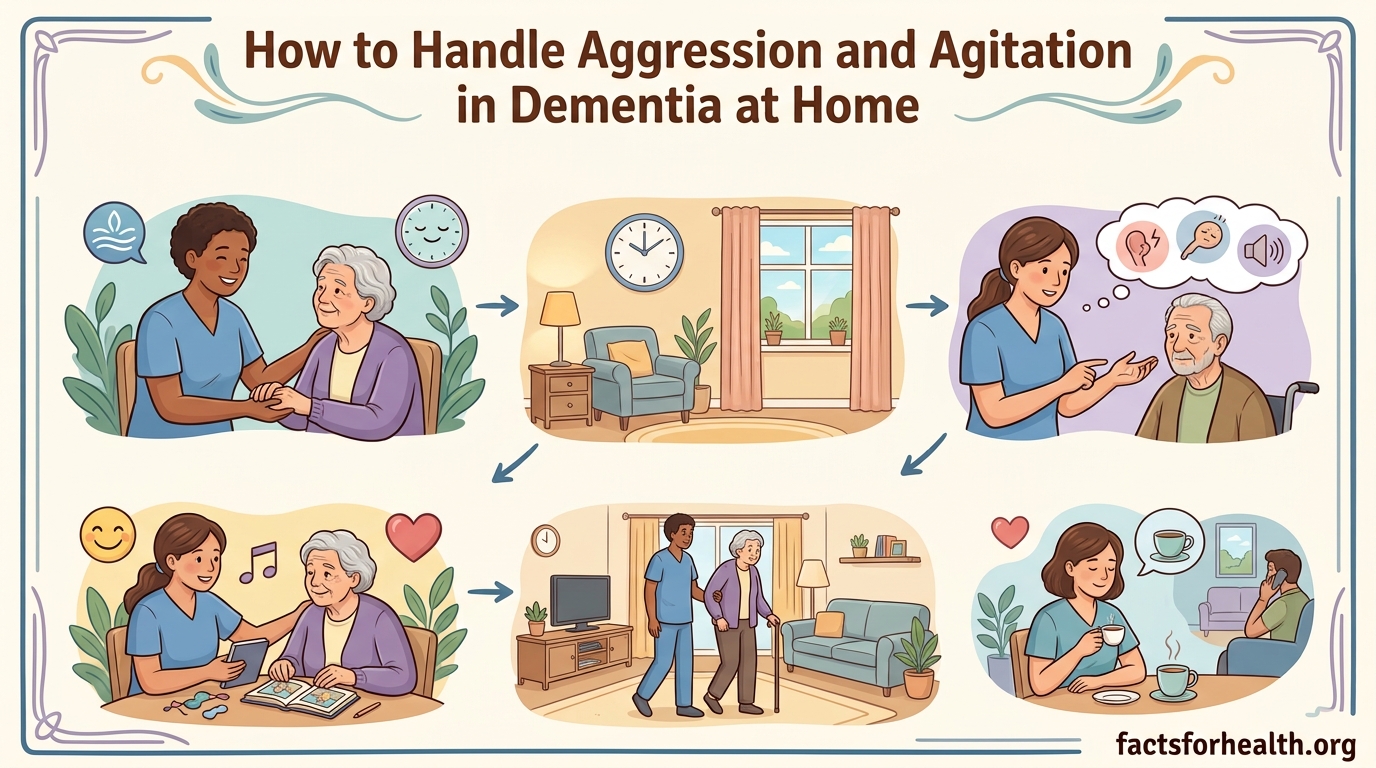
Caring for someone with dementia at home can feel overwhelming, especially when aggressive or agitated behaviors appear. You might see your gentle parent suddenly lash out, shove you away, or pace the hallway at 2 a.m. in a state of panic. If you are searching for how to handle aggression and agitation in dementia at home, you are far from alone — and the behaviors are not your fault.
Aggression and agitation rank among the most challenging symptoms caregivers face. Research suggests that up to 90 percent of people with dementia develop behavioral symptoms at some point during their illness. These behaviors strain relationships, create safety risks, and push many caregivers toward burnout.
The good news is that most episodes can be prevented or de-escalated with the right techniques. This guide walks you through why these behaviors happen, how to respond in the moment, and how to reduce their frequency over time. You will find practical, step-by-step strategies drawn from clinical guidelines, caregiver experiences, and decades of dementia care research.
Every person with dementia is unique, so not every technique works every time. But having a toolkit of proven approaches gives you something to try when tension rises. That sense of preparedness alone can reduce your own stress, which in turn helps your loved one stay calmer.
Table of Contents
Understanding Aggression and Agitation in Dementia
Aggression and agitation in dementia are behavioral symptoms caused by progressive brain changes. They are not character flaws, intentional meanness, or signs that the person has stopped caring about you. Understanding this distinction is the foundation for managing these behaviors at home.
As brain cells deteriorate, the person loses the ability to communicate needs, process information, and regulate emotions. When they cannot tell you they are in pain, hungry, or frightened, frustration builds. That frustration often comes out as agitation or aggression — the disease speaking, not the person you know.
Caregivers on dementia support forums repeatedly emphasize this insight. Once they accepted that the aggression came from the disease rather than their loved one, they felt less hurt and could respond more effectively. That mindset shift does not make the behavior acceptable, but it does make it easier to handle.
What Agitation Looks Like in Dementia
Agitation in dementia refers to a state of restlessness, unease, or emotional distress. It can range from mild fidgeting to severe pacing and inability to settle. The person may seem unable to relax, constantly moving from room to room or picking at clothing and bedding.
Common signs of agitation include pacing, wandering, hand-wringing, repetitive questions or phrases, inability to sit still during meals, and general irritability. You might notice your loved one pulling at their clothes, opening and closing drawers repeatedly, or seeming distressed without being able to explain why.
Agitation often builds gradually before erupting into aggression. Learning to recognize these early warning signs gives you a window to intervene before the situation escalates. Think of agitation as the smoke and aggression as the fire — catching the smoke early can prevent the fire from starting.
What Aggression Looks Like in Dementia
Aggression in dementia can be verbal, physical, or both. Verbal aggression includes shouting, name-calling, threatening, swearing, and making accusations. Physical aggression includes hitting, pushing, biting, scratching, kicking, grabbing, or throwing objects.
These behaviors can be deeply hurtful, especially when directed at a family member who is working hard to help. It is normal to feel shocked, sad, or even angry in response. Remember that the person is reacting to their own confusion and fear — not making a calculated choice to hurt you.
Catastrophic reactions are a specific type of aggressive response where a relatively minor trigger — being told it is time to bathe, for instance — produces an extreme emotional outburst. The brain can no longer process the situation proportionally. Understanding this helps you stay calm instead of matching their intensity.
Aggression Across Dementia Stages
Aggression and agitation are most common in the middle stages of dementia, typically when the person has moderate cognitive decline. This is often when communication difficulties become pronounced and the person struggles to express basic needs. During this stage, behavioral symptoms tend to peak in frequency and intensity.
In early-stage dementia, you might notice occasional irritability or frustration, especially around tasks that have become difficult. These moments are usually brief and manageable. In late-stage dementia, physical aggression may decrease as the person loses motor coordination, though vocal agitation and restlessness can persist.
Every disease trajectory is different. Alzheimer’s disease, vascular dementia, Lewy body dementia, and frontotemporal dementia each produce somewhat different behavioral patterns. Your loved one’s neurologist or geriatrician can help you understand what to expect based on their specific diagnosis.
Common Triggers: What Causes Aggression and Agitation
Aggression and agitation rarely happen without a reason, even when that reason is not obvious. Identifying triggers is the single most effective step you can take to reduce how often these behaviors occur. Most triggers fall into three categories: physical discomfort, environmental factors, and communication challenges.
Forum discussions across Reddit’s dementia communities and the Alzheimer’s Society forums consistently highlight one surprising trigger that many caregivers miss: urinary tract infections. A UTI can cause sudden, dramatic changes in behavior, including severe confusion and aggression, sometimes without typical urinary symptoms. Always consider a medical cause when agitation appears suddenly or worsens rapidly.
Other medical triggers include pain from arthritis, dental problems, constipation, hunger, thirst, medication side effects, sleep deprivation, and vision or hearing problems. When the brain cannot identify or communicate the source of discomfort, the result is often behavioral. Treating the underlying cause frequently resolves the behavior entirely.
The Comfort and Discomfort Checklist
When you notice agitation building, run through this comfort and discomfort checklist before anything else. Many aggressive episodes stem from an unmet physical need that the person cannot articulate. Going through this list systematically can resolve the issue without confrontation.
Check for the following: Is the person in pain anywhere? Are they hungry or thirsty? Could they need a bathroom break or help with incontinence? Are they too hot or too cold? Is their clothing tight, itchy, or uncomfortable? Could they be constipated? When did they last eat, drink, and use the restroom?
Next, check for less obvious issues. Are they wearing glasses or hearing aids that fit and work properly? Could medication side effects be causing distress? Is there any sign of infection, fever, or new physical symptoms? Are they sleep-deprived? Answering these questions first can prevent unnecessary escalation and may quickly solve the problem.
Keep a simple log of when episodes happen and what preceded them. Patterns often emerge within a week or two — maybe aggression spikes right before dinner, or agitation flares an hour after a certain medication. That data helps you anticipate and prevent future episodes.
Environmental and Communication Triggers
The environment plays a massive role in dementia behavior. Loud televisions, clattering dishes, bright overhead lights, crowded rooms, and cluttered spaces can overwhelm a brain already struggling to process information. Overstimulation is a primary driver of agitation that caregivers frequently underestimate.
Sudden changes in routine, unfamiliar visitors, or being rushed through tasks like bathing and dressing also trigger reactions. Imagine being confused about where you are, unable to follow a conversation, and then someone starts pulling at your clothes. The natural response is to resist, push away, or lash out.
Communication missteps are another major category. Asking too many questions at once, using complex sentences, arguing about facts, correcting the person’s reality, or speaking in a hurried tone can all spark catastrophic reactions. The person feels cornered by communication they cannot process, and aggression becomes their escape route.
Caregivers in online support groups repeatedly report that simplifying communication made the biggest difference in reducing daily conflicts. Slow down, use short sentences, offer one choice at a time, and never argue about facts — even when you know the person is wrong. You can be right, or you can have peace. In dementia care, peace wins every time.
How to Handle Aggression and Agitation in Dementia at Home: Immediate De-escalation
Knowing how to handle aggression and agitation in dementia at home requires a clear, practiced response plan. When an episode strikes, you will not have time to look up strategies — you need techniques that have become second nature through preparation. The goal during any episode is simple: keep everyone safe and help the person calm down.
Your own emotional state sets the tone. The phenomenon of emotional mirroring means that a person with dementia unconsciously picks up on and reflects your feelings. If you appear anxious, frustrated, or frightened, they will likely become more agitated. If you project calm, confidence, and gentleness, they have a better chance of settling.
This is harder than it sounds. When someone you love is screaming at you or trying to hit you, staying calm feels almost impossible. Take a deep breath, lower your shoulders, and remember that the disease is driving this behavior. Step back, both physically and emotionally, before you respond.
Step-by-Step De-Escalation Process
Follow this step-by-step process when you notice aggression or agitation escalating. These steps are drawn from clinical guidelines and refined by experienced caregivers who have managed thousands of episodes.
Step 1: Assess safety first. Before anything else, make sure no one is in immediate physical danger. If the person has a weapon or is being physically violent, create distance. Move fragile objects out of reach. If children or pets are nearby, guide them to another room calmly and quietly.
Step 2: Check for physical triggers. Run through the comfort checklist described earlier. Is the person in pain, hungry, thirsty, or needing the bathroom? Could a UTI or other infection be brewing? Addressing an unmet physical need often stops the behavior immediately.
Step 3: Lower the environmental stimulation. Turn off the television, dim bright lights, reduce background noise, and ask other people to leave the room. A quieter environment helps the overwhelmed brain settle. Close curtains if outside activity is adding to the distraction.
Step 4: Approach slowly and calmly. Do not come from behind or reach toward the person suddenly. Approach from the front, maintain eye contact, and keep your hands visible and open. Get to their eye level rather than towering over them, which can feel threatening.
Step 5: Speak softly and reassuringly. Use a calm, gentle tone of voice. Say something simple like, “I am here to help you” or “You are safe.” Do not raise your voice, even if they are shouting. Your quiet voice will eventually pull their volume down.
Step 6: Validate their feelings. Do not correct, argue, or reason. Instead, acknowledge the emotion: “I can see you are upset” or “That sounds really frightening.” Validation does not mean agreeing with delusions — it means showing the person you hear their distress and take it seriously.
Step 7: Redirect attention gently. Once the person has started to calm, shift focus to a pleasant, familiar activity. Offer a favorite snack, put on music they love, suggest a short walk, or bring out a photo album. The key is to move toward something positive rather than away from the conflict.
Step 8: Give it time. Rushing the person back to normal activities can re-trigger the episode. Allow them to recover at their own pace. Sit nearby, maintain a calm presence, and let the emotional storm pass naturally before returning to any tasks.
Communication Techniques That Work
Effective communication is your strongest tool for preventing and de-escalating aggressive episodes. The way you speak, move, and respond shapes whether a situation improves or spirals. Dementia changes how language is processed, so you must adapt your communication style accordingly.
Use short, simple sentences. Instead of asking, “Would you like to go to the kitchen and have some lunch now?” try, “Time for lunch.” Ask one question at a time and wait patiently for a response — processing delays are common and the person may need 15 to 30 seconds to respond. Offer two choices maximum, and show rather than tell whenever possible.
Never argue with someone who has dementia. If they insist it is 1985 and they need to pick up their children from school, do not tell them they are wrong. Distract, validate, or go along with the emotion behind the statement. Arguing only creates conflict and damages trust, and the person will not remember the conversation anyway. As one caregiver on the Alzheimer’s forums put it: you can either win the argument or keep the peace.
Nonverbal communication matters as much as words. A warm smile, relaxed posture, and gentle touch on the arm can communicate safety more effectively than any sentence. Conversely, crossed arms, a tense face, or a sharp tone can escalate agitation even when your words are gentle. Pay attention to the signals your body sends.
Emergency Safety Protocol for Violent Episodes
Some episodes escalate beyond what de-escalation techniques can manage. Having a clear emergency plan prevents panic and ensures everyone stays as safe as possible. Review this protocol with other family members and keep emergency numbers posted in a visible location.
If the person becomes physically violent and will not calm down: stay at least an arm’s length away, remove dangerous objects from reach (kitchen knives, heavy tools, scissors, medications), position yourself near an exit so you are not trapped in a room, and do not try to physically restrain the person unless someone is in immediate danger of serious harm. Restraining often escalates violence.
Call 911 if you or someone else is being physically harmed or if you genuinely fear for safety. When calling, state clearly that the person has dementia so responders arrive prepared. Ask for crisis intervention trained officers if available. After any violent episode, contact the person’s doctor to discuss what happened and whether a medication review or evaluation is needed.
Document every significant incident: what happened before, during, and after, the time of day, and any possible triggers. This record helps medical professionals identify patterns and adjust the care plan. It also helps you spot triggers you might otherwise miss.
Prevention Strategies: Reducing Episodes Before They Start
Prevention is always more effective than crisis management. While you cannot eliminate every episode, consistent preventive strategies can dramatically reduce how often aggression and agitation occur. These approaches focus on creating an environment and routine that minimizes stress for the dementia-affected brain.
Think of prevention as building a buffer. When the person is well-rested, comfortable, in a familiar environment, and following a predictable routine, their tolerance for frustration increases. They are less likely to reach the breaking point that triggers an aggressive outburst. Every small adjustment compounds over time.
Caregivers who commit to prevention consistently report fewer and less severe episodes within two to three weeks. The investment of effort upfront pays off in calmer days and better sleep for everyone in the household.
Building a Calming Daily Routine
A predictable routine is one of the most powerful tools in dementia care. The brain affected by dementia struggles with change and unpredictability. When the person knows what comes next — same wake time, same meals, same activities, same bedtime — they feel safer and less confused.
Post a simple visual schedule in a central location using pictures or large print. Include wake-up, meals, activities, rest periods, and bedtime. Keep the schedule consistent seven days a week, even on weekends. Involve the person in setting the routine if they are able, which increases their sense of control and reduces resistance.
Build in regular physical activity. A morning walk, light stretching, simple household tasks like folding laundry, or dancing to favorite music helps burn off restless energy. Physical activity improves sleep quality, reduces anxiety, and decreases agitation — naturally, without any medication. Aim for at least 20 to 30 minutes of movement daily.
Schedule demanding tasks like bathing, dressing, and medical appointments during the person’s best hours. For many people with dementia, mornings are calmest and late afternoons are hardest. If bathing always triggers a crisis at 4 p.m., move it to 10 a.m. and see what happens. Small schedule shifts can transform daily life.
Include meaningful activities that match the person’s current abilities. Sorting objects, looking through photo albums, listening to music from their youth, simple gardening, or helping with meal preparation gives purpose and direction. Aimless boredom breeds agitation; gentle engagement prevents it.
Modifying the Home Environment
Your home environment can either soothe or stress a dementia-affected brain. Thoughtful modifications reduce confusion, prevent overstimulation, and create a sense of safety. Start with the changes likely to have the biggest impact and build from there.
Reduce clutter aggressively. Cluttered spaces overwhelm the brain with too much visual information. Clear countertops of unnecessary items, remove piles of mail and magazines, simplify tabletops to just one or two items, and organize closets so only current-season clothing is visible. One caregiver described this as making the home look like a hotel room — clean, simple, and calm.
Control noise levels. Keep the television off unless someone is actively watching it. Avoid having multiple conversations at once. Turn off background music if it seems to agitate rather than soothe. If outside noise is a problem, consider using a white noise machine or gentle nature sounds to mask it.
Optimize lighting. Ensure every room is well-lit to reduce shadows, which can cause confusion and fear. Use nightlights in hallways and bathrooms for safety. During the day, open curtains to let natural light in, which also helps regulate sleep-wake cycles and reduce sundowning.
Use labels and visual cues. Label bathroom doors, bedroom doors, and drawers with simple words or pictures. Remove locks from bathroom and bedroom doors to prevent the person from locking themselves in. Use contrasting colors for plates, toilet seats, and steps so they are easier to see and navigate.
Create a safe wandering space. If the person paces, clear a circular path through the home so they can walk without hitting dead ends. Remove trip hazards like loose rugs and electrical cords. Consider safety proofing stairs with gates and securing exits with alarms or covers if wandering is a concern.
Redirection and Validation Techniques
Redirection means gently shifting the person’s attention away from a distressing topic or activity toward something more pleasant. It is not about ignoring their feelings but about breaking the cycle of fixation before it escalates. The most effective redirections feel natural rather than forced.
Try redirecting to food, music, movement, or a favorite activity. If the person is becoming upset about needing to find their mother, do not explain that their mother passed away years ago. Instead, say, “Tell me about your mother. What was she like?” Or gently suggest, “Let’s go get a cup of tea, and we can talk about it.” The new focus absorbs the mental energy that was fueling the distress.
Validation therapy takes this a step further by acknowledging and accepting the person’s emotional reality. If they believe they need to go to work, validate the feeling of purpose: “You have always been such a hard worker.” Then redirect: “Since it is Saturday, maybe we could work on this project together at home.” You join their world rather than dragging them into yours.
Forum caregivers consistently report that joining the person’s reality works better than correcting it. One caregiver shared that when her father insisted on going home to a house he had not lived in for 40 years, she started saying, “Tell me about your home. What does it look like?” He would describe it happily, and the agitation dissolved. The need was to be heard, not corrected.
Managing Sundowning: Late-Day Agitation
Sundowning refers to a pattern of increased confusion, agitation, and restlessness that occurs in the late afternoon or evening. It is extremely common in mid-stage dementia and can turn every evening into a stressful ordeal. Understanding sundowning helps you anticipate and manage it rather than being blindsided each day.
Sundowning is classified as a form of agitation in dementia, but it follows a recognizable time-based pattern. The person may be calm and pleasant all morning, then become increasingly anxious and combative starting around 3 or 4 p.m. Some people pace restlessly until late at night, unable to settle or sleep.
Why Sundowning Happens
The exact causes of sundowning are not fully understood, but several factors contribute. Fatigue accumulated through the day reduces the brain’s already limited coping resources. Changes in the body’s internal clock disrupt the sleep-wake cycle, so the brain cannot tell day from evening. Reduced lighting in the afternoon creates shadows that increase confusion and fear.
Hunger, thirst, and the need to use the bathroom can also build up by late afternoon if they have not been addressed. Staff changes in care facilities and the shift from daytime activity to evening quiet can disorient. For home caregivers, the arrival of other family members or the start of dinner preparation can add chaos at exactly the wrong time.
Researchers have found that disruptions in the body’s circadian rhythm play a central role. The dementia-affected brain struggles to regulate melatonin and other sleep hormones, so the natural signals that tell us it is time to wind down become unreliable. This is why consistent light exposure during the day and a calm, dark environment at night matter so much.
Practical Sundowning Strategies
You can reduce sundowning severity with targeted strategies that address its root causes. The goal is to minimize fatigue, prevent confusion as light fades, and create a calming transition from day to evening.
Maximize morning light exposure. Open curtains first thing in the morning. Encourage the person to spend time near windows or outside. Natural daylight helps regulate the internal clock and improves sleep quality. Even 30 minutes of morning sunlight can make evenings noticeably calmer.
Schedule demanding tasks early. Do bathing, dressing, outings, and medical appointments in the morning when the person is at their best. Reserve afternoons for quiet, familiar activities that do not require significant cognitive effort.
Prevent afternoon fatigue. Offer a short rest period or nap after lunch. Even 20 to 30 minutes of quiet time in a comfortable chair can recharge the brain. Avoid heavy physical exertion in the afternoon that could lead to exhaustion by evening.
Transition gradually. Start dimming lights gradually rather than all at once. Close curtains before sunset so the person does not notice the dramatic change in outdoor light. Turn on warm, soft indoor lighting that reduces shadows. Avoid bright overhead lights, which can feel harsh and disorienting.
Offer a calming evening routine. Serve dinner at the same time each day. Play soft, familiar music. Avoid stimulating television programs or visitors in the late afternoon. Create a predictable wind-down that signals the brain it is time to rest.
Limit caffeine and sugar after lunch. That afternoon cup of coffee or piece of cake could be fueling hours of agitation. Switch to decaf, water, or herbal tea. Offer a light, early dinner rather than a heavy meal close to bedtime.
Address nighttime restlessness. If the person wakes and paces at night, keep interactions calm and low-key. Do not turn on bright lights or engage in conversation. Gently guide them back to bed. If nighttime wandering persists, consult a doctor about sleep strategies.
Caregiver Self-Care: Protecting Yourself While Caring for Others
You cannot pour from an empty cup. Caregivers who neglect their own needs eventually lose the patience, energy, and emotional reserves needed to manage aggression. Self-care is not selfish — it is a clinical requirement for effective dementia caregiving.
Caregiver burnout is real, measurable, and dangerous. Chronic stress weakens your immune system, disrupts your sleep, and increases your risk of depression and anxiety. It also makes you more reactive, which means more conflicts with the person you are caring for. Breaking this cycle starts with taking your own needs seriously.
Start with the basics. Are you sleeping at least seven hours? Are you eating regular, nutritious meals? Are you getting any physical activity? Are you seeing friends or doing things you enjoy? If the answer to any of these is no, that needs to change. These are not luxuries; they are the foundation of sustainable caregiving.
Guilt is perhaps the most common emotion caregivers report. You feel guilty for feeling frustrated, for losing your temper, for wanting a break, for not doing enough. That guilt is normal but it is not helpful. Remind yourself regularly: the aggression is caused by the disease, not by your inadequacy as a caregiver. You are doing an extraordinarily difficult job.
Build a support system before you need it. Join a caregiver support group, whether in person or online. The Alzheimer’s Association offers free local support groups, and forums like r/dementia on Reddit provide community at any hour. Talking with people who understand firsthand what you are going through reduces isolation and provides practical tips no guide can replicate.
Use respite care without apology. Adult day programs, in-home aides, or short-term memory care stays give you time to rest and recharge. Many caregivers resist respite care out of guilt or fear, but regular breaks make you a better caregiver. Even four hours a week of professional help can transform your capacity to cope with challenging behaviors.
Consider professional counseling if you are feeling overwhelmed, depressed, or hopeless. Therapy is not a sign of weakness — it is a tool for managing the enormous emotional load of dementia caregiving. Many therapists specialize in caregiver issues and can provide strategies for coping with grief, anger, and burnout.
When to Seek Medical Help
Not every aggressive episode requires medical intervention, but some do. Knowing when to call the doctor, when to seek emergency care, and when to discuss medication options keeps your loved one safe and ensures nothing treatable is being missed. Sudden behavioral changes almost always warrant a medical evaluation.
Any new or rapidly worsening aggression should trigger a doctor visit. As forum caregivers repeatedly emphasize, UTIs are one of the most common hidden causes of sudden aggression and confusion in dementia patients. A simple urine test and a course of antibiotics can resolve what appeared to be a permanent behavioral decline. Other medical causes include infections, dehydration, medication interactions, strokes, and untreated pain.
Doctor vs. Emergency: A Quick Decision Guide
Call the doctor within 24 hours if: aggression or agitation is new, suddenly worse than baseline, accompanied by fever or other signs of infection, following a medication change, or associated with new physical symptoms like limping or grimacing. Most of these issues have treatable causes.
Call 911 or go to the emergency room if: the person is being physically violent and you cannot keep anyone safe, there are signs of stroke (sudden weakness, facial drooping, slurred speech), the person has fallen and may be injured, they show signs of a serious medical emergency like chest pain or difficulty breathing, or you fear for anyone’s immediate safety.
When behavioral interventions have been consistently applied for several weeks and aggression remains frequent or severe, request a comprehensive medical review. A geriatrician, neurologist, or psychiatrist specializing in dementia can evaluate for contributing factors and discuss whether medication might help.
Medications for Dementia Agitation
Medication should generally be a last resort, not a first response. Non-pharmacological approaches — the strategies in this guide — are recommended as first-line treatment by every major medical authority, including the National Institute on Aging and the Alzheimer’s Association. Behavioral interventions are effective and carry no side effects.
When medications are considered, doctors may prescribe antidepressants such as citalopram for agitation, which has shown benefit in clinical trials with relatively mild side effect profiles. Antipsychotic medications like risperidone, quetiapine, or olanzapine are sometimes used for severe aggression, but these carry significant risks. The FDA has issued black box warnings because antipsychotics increase the risk of death in people with dementia. They should only be used when behavior is dangerous and other approaches have failed.
Anti-anxiety medications like lorazepam are generally avoided because they can worsen confusion and increase fall risk. If a medication is prescribed, ask the doctor about expected benefits, common side effects, how long it will take to work, and when it will be reviewed. Medication management in dementia requires careful monitoring and regular reassessment. Never stop or change medications without consulting the prescribing doctor.
Caregivers on support forums frequently note that finding the right medication balance takes time and often involves trial and error. What works for one person may not work for another. Keep a symptom diary during any medication trial so you and the doctor can objectively evaluate whether it is helping.
FAQs
What triggers anger in dementia patients?
Common triggers include physical discomfort (pain, hunger, thirst, constipation, UTI), environmental overstimulation (noise, clutter, crowds), communication difficulties, medication side effects, fatigue, and disrupted routines. Identifying and addressing the specific trigger is the most effective way to reduce angry outbursts.
How do you calm down an aggressive dementia patient?
Stay calm yourself, lower your voice, reduce environmental stimulation by turning off the TV and dimming lights, approach slowly from the front, validate their feelings without arguing, check for physical causes like pain or needing the bathroom, and redirect attention to a pleasant activity. Never try to physically restrain the person unless someone is in immediate danger.
What medication is used for dementia agitation?
Antidepressants like citalopram are sometimes used for agitation. Antipsychotics such as risperidone or quetiapine may be prescribed for severe aggression but carry an FDA black box warning for increased mortality in dementia patients. Medication should only be considered after non-drug approaches have been consistently tried. Always discuss risks and benefits with a dementia specialist.
Should you argue with someone with dementia?
No. Arguing with someone who has dementia is counterproductive because their brain can no longer process logic the way it used to. Correcting facts or insisting on your version of reality increases agitation and damages trust. Instead, validate their feelings, redirect the conversation, or join their reality to keep the peace.
How to calm a dementia patient who is agitated?
Check for physical needs first: pain, hunger, thirst, bathroom, and temperature comfort. Then reduce noise and clutter, speak in a soft and reassuring tone, use gentle touch if welcomed, play familiar calming music, and offer a simple activity like a snack or looking at photos. Avoid asking rapid-fire questions or rushing them through tasks.
What stage of dementia is severe aggressive behavior?
Severe aggressive behavior is most common in the middle stages of dementia, typically stages 5 and 6 on the Global Deterioration Scale. During this phase, communication difficulties peak and the person struggles to express needs. In later stages, physical aggression often decreases as motor function declines, though vocal agitation may persist.
What are the symptoms of agitation in dementia patients?
Symptoms include pacing, restlessness, hand-wringing, repetitive questioning, inability to sit still, irritability, fidgeting with clothing or objects, wandering, and general emotional distress. Agitation often builds before erupting into aggression, so recognizing these early signs allows caregivers to intervene before escalation.
What stage of dementia is sundowning?
Sundowning typically appears in the middle stages of dementia and can continue into later stages. It involves increased confusion, agitation, and restlessness in the late afternoon or evening. While sundowning can occur at any stage, it is most prevalent and noticeable when cognitive decline is moderate and the person is still living at home.
Conclusion
Learning how to handle aggression and agitation in dementia at home is one of the hardest skills any caregiver develops. These behaviors can shake your confidence, strain your relationship with someone you love, and leave you physically and emotionally exhausted. But you now have a comprehensive toolkit of proven strategies that can make a real difference.
Start with the fundamentals. Accept that aggression is a symptom of the disease, not a reflection of your care. Learn the common triggers and check the comfort checklist every time agitation appears. Practice the de-escalation steps until they become instinctive. Build a predictable routine and a calm home environment. Take care of yourself without guilt so you have the reserves to keep going.
Progress may be gradual rather than overnight. Some strategies will work beautifully one day and fall flat the next. That is the nature of dementia care. The goal is not perfection but improvement — fewer episodes, shorter duration, and safer outcomes for everyone. Every small success matters and builds on the last.
Remember that you are not alone. Millions of families are navigating this same journey, and support is available. Reach out to the Alzheimer’s Association helpline at 1-800-272-3900, join a caregiver support group, and talk to your loved one’s doctor about any behavioral changes. You deserve support just as much as the person you are caring for. With patience, preparation, and the right strategies, you can create calmer days for both of you.