
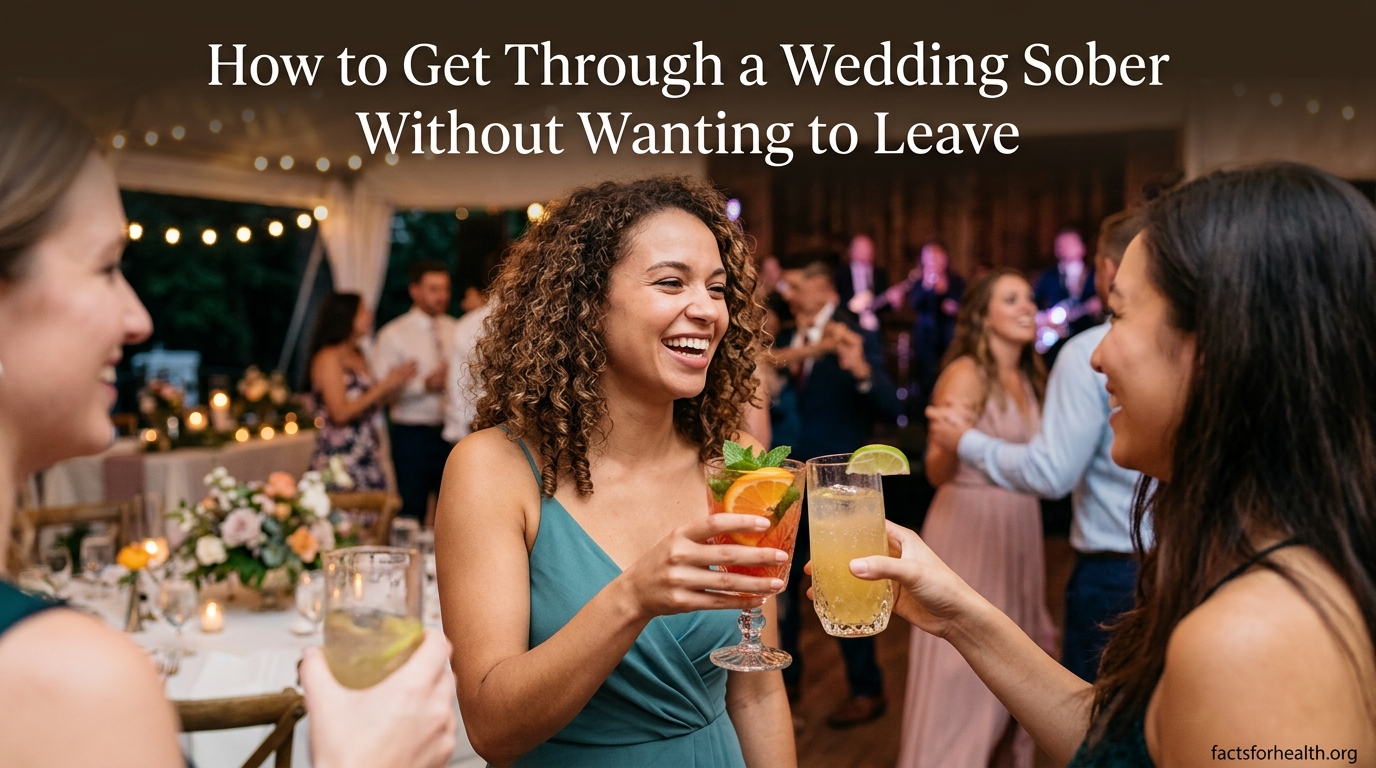
Learning how to get through a wedding sober without wanting to leave comes down to three things: deciding before you go, having a drink in your hand at all times, and giving yourself permission to step outside or leave early if you need to. Weddings are some of the most alcohol-soaked social events most of us will ever attend, and the pressure can feel relentless if you are not prepared.
But here is the truth that nobody tells you: it gets easier. The first wedding sober is the hardest. By your second or third, you start noticing things you never noticed before — the conversations, the music, the actual joy in the room. This guide walks through every strategy our team has gathered from recovery communities, therapists, and people who have been exactly where you are right now.
Table of Contents
Why Weddings Feel So Hard When You’re Sober?
Weddings are designed around alcohol in ways most people never question. There is the pre-ceremony drink, the champagne toast, the open bar at the reception, and the late-night shots. Alcohol is woven into nearly every moment of the celebration, which makes attending a wedding sober feel like you are swimming against the current.
On top of that, everyone else seems to be loosening up while you feel like you are standing still. If you are in early recovery, your brain might still associate celebration with drinking. That is not weakness — that is how neural pathways work. The connection between “party” and “alcohol” was built over years, and one sober wedding is not going to undo it overnight.
The “wanting to leave” feeling usually hits about 90 minutes into the reception. The speeches are wrapping up, the dancing starts, and suddenly everyone around you has had three or four drinks. You might feel self-conscious, bored, or anxious. People in recovery communities on Reddit describe this exact moment: that wave of wanting to bolt for the door that hits out of nowhere.
That feeling is normal. It does not mean you are failing. It means you are human, and your brain is noticing the gap between your experience and everyone else’s. The strategies in this guide are designed to carry you through that specific moment.
Before the Wedding: Preparation That Actually Works
Most of the work of staying sober at a wedding happens before you even get there. Deciding in advance — not waiting to see how you feel — is the single most important thing you can do. As The Sober School puts it: do not wait and see how you feel when you arrive, because once the atmosphere hits you, your resolve weakens.
Make the Decision Now
Tell yourself firmly: “I am not drinking at this wedding. That decision is already made.” Write it down if it helps. When you make the choice while you are calm and clear-headed, it becomes a fact rather than something you have to negotiate in the moment. Your sober self is making this decision for your future self, and that is an act of strength.
Plan Your Drink Strategy
The moment you walk in without a drink in your hand, someone will offer you one. It is practically a wedding reflex. Have your first drink ready to go before the socializing starts.
Popular choices from people who have been there:
- Soda water with lime — looks like a gin and tonic
- Cranberry juice with soda — passes for a cocktail
- Non-alcoholic beer — many say Guinness 0.0 helps them feel normal
- Ginger ale in a champagne flute — blends right in during toasts
- Sparkling water with a garnish — looks celebratory
The key is holding something. A drink in your hand is a social shield that prevents most offers before they happen.
Prepare Your Responses
People will ask why you are not drinking. Some will be curious, some will be pushy, and a few will be genuinely concerned. Having a few go-to responses ready means you never have to think on your feet.
Simple responses that work well:
- “I’m driving tonight.”
- “I’m taking a break from drinking.”
- “I’ve got an early morning tomorrow.”
- “Not tonight, thanks.”
- “I’m good with this.”
You owe no one an explanation. “Not tonight, thanks” is a complete sentence. But if you prefer a reason that ends the conversation quickly, the driving excuse is universally respected and shuts down follow-up questions.
Arrange Your Support
If you are in recovery, identify your support before the event. This might be a sober buddy attending with you, a friend you can text when things get tough, or your sponsor on standby. One strategy from recovery communities is to set up a check-in system: text your support person at specific times during the event so they know you are okay.
If you can bring a plus-one who knows you are staying sober, do it. Having someone in your corner who gets it makes an enormous difference. Many people in forums say their one regret was not bringing a sober friend to their first wedding.
Set Your Arrival and Departure Plan
You do not have to stay for the entire event. Decide in advance what parts matter most to you — maybe the ceremony and dinner, or the toast and the first dance — and give yourself permission to skip the rest. Having your own transportation means you control when you leave. If you rely on someone else for a ride, you are stuck on their timeline, which can lead to resentment and weakened resolve.
How to Get Through a Wedding Sober Without Wanting to Leave
Once you are at the wedding, these practical strategies will help you stay grounded and present without reaching for a drink or heading for the door.
1. Always Have a Drink in Your Hand
This is the number one tip from every source, every forum, and every expert. A drink in your hand stops 90 percent of alcohol offers before they happen. When a server or guest sees you holding something, they move on. Keep refilling your non-alcoholic drink throughout the night so you are never caught empty-handed.
2. Position Yourself Strategically
Where you stand matters. Avoid lingering near the bar — it is a magnet for temptation and for people handing out drinks. Instead, gravitate toward the food stations, the photo area, or the dance floor. Physical distance from the bar creates mental distance from the temptation.
3. Take Regular Breaks
You do not have to power through the entire reception without stopping. Step outside for fresh air every 45 to 60 minutes. Take a short walk around the venue. Sit in your car for five minutes of quiet. These micro-breaks reset your nervous system and keep the overwhelm from building up.
One therapist quoted in recovery resources recommends a simple mood check during these breaks: ask yourself how you are feeling on a scale of 1 to 10. If you are above a 7 on the stress scale, it might be time to use your escape plan.
4. Eat and Hydrate Consistently
Hunger and dehydration amplify anxiety and irritability. Wedding schedules are unpredictable — dinner might not happen until 8 PM, and if you have been running on adrenaline and soda water since noon, your body will feel it. Eat when food is available. Drink water constantly. A well-fed, hydrated you handles social pressure far better than a depleted you.
5. Use the 3-3-3 Rule When Anxiety Hits
The 3-3-3 rule is a simple grounding technique borrowed from anxiety management. When you feel the urge to leave building: name three things you can see, three things you can hear, and move three parts of your body. This pulls your brain out of the spiral and back into the present moment. It takes about 30 seconds, and it works.
6. Connect With Other Sober-Curious People
You might be surprised how many people at any given wedding are also not drinking. The designated driver, the pregnant guest, the person on medication, the quietly sober person — they are all there. Strike up conversations. You are almost never the only one, even when it feels like everyone has a glass in their hand.
Handling Questions and Pressure to Drink
Even with a drink in your hand, someone will eventually ask why you are not drinking alcohol. How you handle this moment can shape the rest of your evening.
The Direct Approach
“I’m not drinking tonight” is a complete answer. You do not need to elaborate, justify, or apologize. Say it with a smile, hold up your drink, and change the subject. Most people accept this immediately and move on.
The Deflection Approach
If you do not want to engage at all, redirect. “Oh, I’m good — hey, how do you know the couple?” Shifting the conversation back to the other person works almost every time. People love talking about themselves, and a quick topic change makes your drink choice a non-issue.
Looping in the Servers
A practical tip from Zola’s wedding experts: tell the bartending staff early that you are not drinking alcohol. Ask them to keep soda water with lime coming all night. Once servers know, they will bring you refills without asking, which means fewer awkward interactions at the bar and fewer moments standing in line near all those bottles.
Surviving the Champagne Toast
The champagne toast is the moment many sober guests dread. Everyone raises a glass, and you are standing there with nothing. The solution is simple: grab a glass of sparkling water, ginger ale, or even apple cider before the toast begins. Raise it with everyone else. Nobody will notice what is in your glass during a toast — they are all looking at the couple.
When Someone Gets Pushy
Occasionally, you will meet someone who will not let it go. “Come on, just one.” “Live a little.” “It’s a wedding!” These people are projecting their own relationship with alcohol onto you, and their pressure says more about them than about you. You can be firm: “I’m not drinking tonight, and I’d appreciate it if you respected that.” If they keep pushing, walk away. You do not owe your time to someone who does not respect your boundaries.
How to Actually Have Fun Sober at a Wedding
Nobody talks about this part, but it might be the most important section in this guide. Surviving is one thing — actually enjoying yourself is another. The good news is that sober weddings can be genuinely fun, sometimes more fun than you ever had while drinking.
Reframe What Weddings Are About
Alcohol tells you a wedding is about the open bar. Sobriety shows you it is about two people making a commitment in front of everyone they love. When you strip away the alcohol, you see the real event: the nervous excitement before the ceremony, the genuine tears during the vows, the unguarded laughter during the speeches. These moments are the actual wedding. The bar is just a accessory.
Dance Like Nobody Is Watching (Because They Are Not)
Here is a secret that will change your sober wedding experience: drunk people are not watching you. They are watching themselves, or they are watching the couple, or they are watching their own feet. Get on that dance floor. You do not need alcohol to dance — you need music and a willingness to look a little silly. Once you start, you will realize that the energy of the room carries you.
Notice What You Usually Miss
Being sober at a wedding means you remember everything. You catch the small moments — the father wiping his eyes during the father-daughter dance, the flower girl spinning in circles, the grandmother singing every word. These are the moments alcohol blurs. Being present for them is a gift, not a sacrifice.
Plan Something Rewarding Afterward
Give yourself something to look forward to after the wedding. A late-night diner run with your partner, a movie at home with your favorite takeout, a morning hike the next day. Having a plan gives you something positive to move toward, and it reinforces that staying sober leads to good things, not deprivation.
When You Want to Leave: Emergency Coping Strategies
Even with the best preparation, there may come a moment when the urge to leave hits hard. Your chest tightens, the room feels too loud, and every cell in your body is telling you to get out. Here is what to do when that moment arrives.
Recognize the Warning Signs
The wanting-to-leave feeling usually builds gradually before it peaks. Watch for: sudden irritability, feeling like everyone is watching you, repetitive thoughts about drinking, physical restlessness, or a wave of sadness. These are signals, not commands. You can observe them without acting on them.
Step Outside Immediately
You do not need permission to take a break. Walk outside, find a quiet hallway, or sit in your car for ten minutes. The change of scenery interrupts the anxiety loop. Breathe slowly — in for four counts, hold for four, out for four. This activates your parasympathetic nervous system and physically calms your body.
Call or Text Your Support Person
This is why you set up a support system beforehand. A 60-second text exchange with someone who understands can reset your entire evening. You do not need a long conversation. Just knowing someone is there, cheering for you, makes the moment bearable.
Give Yourself Permission to Leave
Here is the most important thing in this entire guide: leaving early is not failure. In recovery circles, this is sometimes called Rule 62 — “don’t take yourself too damn seriously.” If staying is putting your sobriety at risk, leaving is the right call. You showed up. You celebrated the couple. You did your part. Going home to protect your recovery is the strongest, smartest thing you can do.
The couple will not remember whether you stayed until last call. They will remember that you were there. And you will remember that you protected your sobriety, which is worth more than any open bar.
FAQs
How to survive a wedding sober?
To survive a wedding sober, decide before the event that you will not drink, always keep a non-alcoholic beverage in your hand, position yourself away from the bar, take regular outdoor breaks, eat and hydrate throughout the event, and arrange a sober support person you can text when things get difficult. Having an exit plan and giving yourself permission to leave early are also essential strategies.
What is the 3 3 3 rule for addiction?
The 3-3-3 rule is a grounding technique used to manage anxiety and cravings: name three things you can see, identify three things you can hear, and move three parts of your body. This exercise takes about 30 seconds and works by pulling your brain out of an anxiety spiral and back into the present moment, making it useful during high-trigger situations like weddings.
What is rule 62 in sobriety?
Rule 62 in sobriety means ‘don’t take yourself too damn seriously.’ It is a reminder from recovery communities (particularly AA) to keep perspective, not to overthink every moment, and to give yourself grace. In the context of attending a wedding sober, it also serves as permission to leave early or step away if the situation becomes too much — your recovery comes first.
What is the 2 2 2 rule alcohol?
The 2-2-2 rule for alcohol moderation suggests waiting 2 hours between drinks, alternating with 2 glasses of water per alcoholic drink, and limiting yourself to 2 drinks per occasion. This rule is designed for moderate drinkers, not for people in recovery. If you are staying sober at a wedding, the simplest version of this principle is to always have a non-alcoholic drink in hand and to hydrate consistently throughout the event.
How to have fun sober at a wedding?
To have fun sober at a wedding, reframe the event around what matters: the couple’s commitment, the genuine emotional moments, and the celebration itself. Get on the dance floor without overthinking it, engage in real conversations that you will actually remember, eat the good food, and notice the small beautiful moments that alcohol usually blurs. Plan something rewarding for afterward so the night ends on a positive note.
What should I drink at a wedding if I’m not drinking alcohol?
The best non-alcoholic options at a wedding are soda water with lime (looks like a gin and tonic), cranberry juice with soda, non-alcoholic beer like Guinness 0.0, ginger ale in a champagne flute for toasts, or sparkling water with a citrus garnish. The key is choosing something that looks like a cocktail so you blend in and avoid unwanted questions.
You Can Do This
Learning how to get through a wedding sober without wanting to leave is a skill, and like any skill, it gets easier with practice. The first wedding is the hardest. The second is a little better. By the third, you will wonder why you ever thought you needed alcohol to celebrate two people in love.
The strategies in this guide are not theory — they come from people who have sat in your exact seat, felt that exact urge to bolt for the door, and made it through. Decide before you go. Keep a drink in your hand. Take breaks. Reach out to your support. And remember Rule 62: do not take yourself too seriously. If you need to leave, leave. If you can stay and dance, dance.
Your sobriety is worth more than any wedding reception. And the couple — the real reason you are there — will be glad you showed up, however long you stay.
If you have been through a wedding sober, we want to hear from you. What strategies worked? What moment was hardest? Share your experience in the comments below, because your story might be exactly what someone else needs to read before their first sober wedding this 2026 wedding season.