
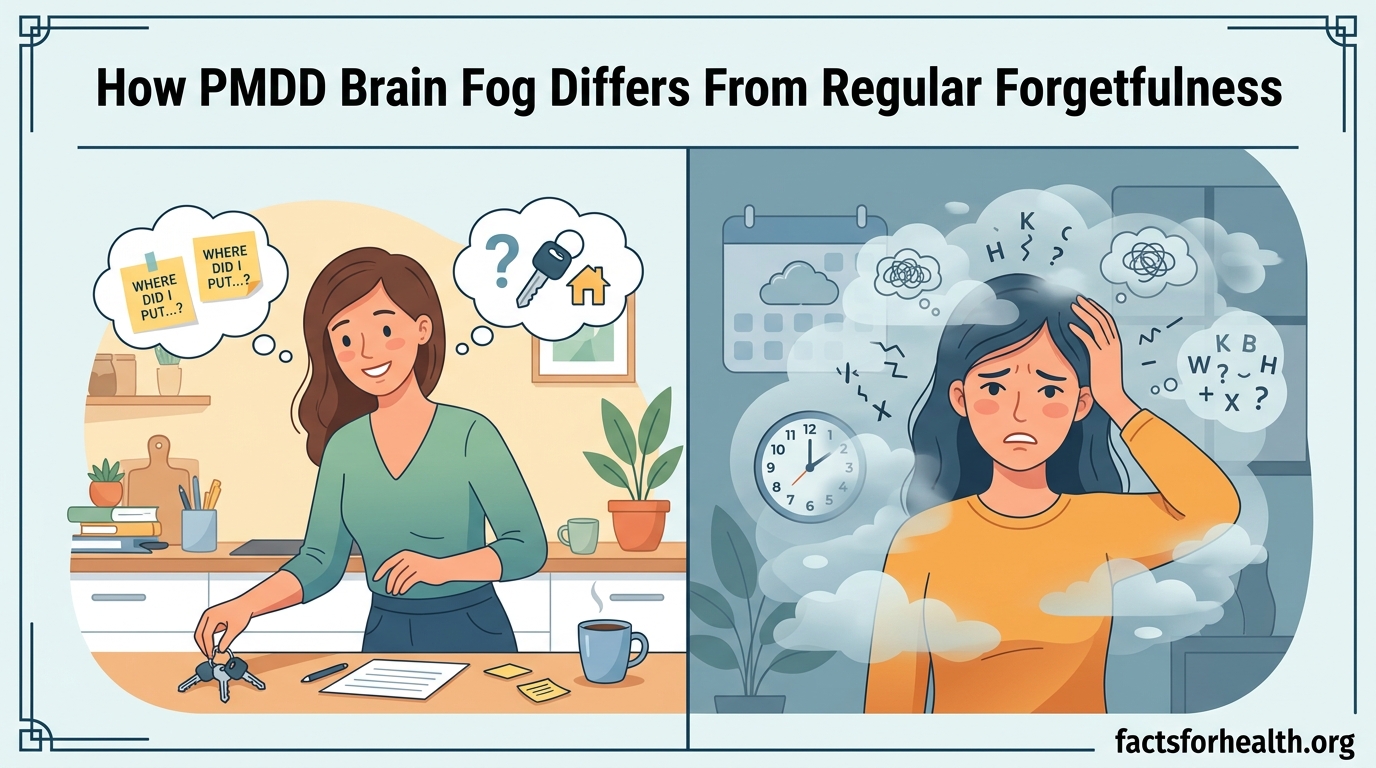
You walk into a room and forget why. You blank on a coworker’s name mid-conversation. You read the same paragraph three times and absorb nothing. If this sounds familiar, you might shrug it off as regular forgetfulness. But what if these moments cluster predictably in the one to two weeks before your period, disappear after menstruation starts, and come back like clockwork the next cycle?
That pattern is the hallmark of PMDD brain fog. Understanding how PMDD brain fog differs from regular forgetfulness matters because 5 to 8 percent of menstruating individuals have Premenstrual Dysphoric Disorder, and many of them struggle for years without a name for what is happening to their minds. They get told they are dramatic, lazy, or just stressed.
The distinction is not just semantic. It determines whether you get the right diagnosis, the right treatment, and the right support from the people around you. Someone who understands that their cognitive struggles are tied to a recognized biological condition can advocate for themselves at work, at the doctor’s office, and in their relationships in ways that someone who thinks they are just “getting dumber” cannot.
In this guide, our team breaks down the exact differences between PMDD cognitive symptoms and everyday forgetfulness. We cover the hormonal mechanisms behind the fog, real-world symptom patterns drawn from medical research and community experiences, a self-assessment framework you can use right now, and evidence-based strategies to manage the fog when it rolls in. Whether you are trying to understand your own symptoms or support someone you love, this guide will give you clarity.
Table of Contents
What Is PMDD Brain Fog?
PMDD brain fog is a cluster of cognitive symptoms that includes forgetfulness, poor concentration, mental sluggishness, and word-finding difficulties. These symptoms appear cyclically in the one to two weeks before menstruation in people with Premenstrual Dysphoric Disorder, and they significantly impair daily functioning.
Premenstrual Dysphoric Disorder is a severe form of premenstrual syndrome recognized by the DSM-5 as a psychiatric condition. While standard PMS may cause mild irritability or bloating that you can push through, PMDD brings debilitating emotional and cognitive symptoms that disrupt work, relationships, and basic self-care. Brain fog is one of the most frequently reported symptoms among those who live with PMDD, and also one of the least understood by the medical community at large.
What separates PMDD brain fog from garden-variety forgetfulness is its intensity, its cyclical timing, and the fact that it feels like your brain is operating through thick smoke rather than simply misfiring on an occasional detail. Women in online support communities describe it as having their brain held hostage for one to two weeks every month.
It is important to note that PMDD brain fog is not the same as PMS brain fog. While both occur before menstruation, the severity, duration, and functional impact are dramatically different. PMS brain fog might make you feel a bit scatterbrained for a day or two. PMDD brain fog can make you feel like your IQ has dropped 30 points for a solid week or more.
How PMDD Brain Fog Differs From Regular Forgetfulness
PMDD brain fog differs from regular forgetfulness in five key ways: it follows a predictable cyclical pattern tied to the menstrual cycle, it is significantly more severe, it comes with other physical and emotional symptoms, it impairs daily functioning, and it resolves once menstruation begins. Regular forgetfulness is occasional, situational, and not tied to any biological rhythm.
Timing: The Cycle Connection
The single most important difference is timing. PMDD brain fog arrives during the luteal phase, which is the window between ovulation and menstruation that typically lasts 12 to 14 days. Symptoms usually begin 7 to 10 days before your period starts and peak in the days right before bleeding begins.
Regular forgetfulness has no cycle. You might misplace your keys on a Tuesday because you were distracted, but it will not happen predictably every month at the same point in your cycle. There is no calendar that predicts when regular forgetfulness will strike.
Once menstruation starts, PMDD brain fog lifts. Many women describe a dramatic clearing of mental fog within 24 to 48 hours of their period beginning. This resolution is so reliable that doctors use it as part of the diagnostic criteria for PMDD. If the fog does not clear when your period arrives, PMDD may not be the explanation.
The luteal phase timing is what makes PMDD brain fog so psychologically taxing. You know it is coming. You can feel it creeping in. And you know that no amount of coffee, lists, or willpower will fully restore your cognitive function until the hormonal shift occurs.
Severity: A Different Category Entirely
Regular forgetfulness is annoying but manageable. You forget where you put your phone, you retrace your steps, you find it, and you move on with your day. It costs you maybe 30 seconds.
PMDD brain fog is functionally disabling. Women report being unable to answer simple questions from coworkers without extreme mental effort. One Reddit user in the r/PMDD community described it this way: “Coworkers, friends, family all asking me simple questions and I can’t answer any of them without a ridiculous amount of effort.”
Another user wrote: “I honestly think the worst symptom is the brain fog and inability to speak or think clearly for 1 to 2 weeks every month. PMDD holds my brain hostage.”
These are not people who occasionally misplace their keys. These are people whose cognitive function drops so dramatically that they cannot perform basic job duties, help their children with homework, or hold a coherent conversation. One woman described having actual data proving her cognitive performance declined during the luteal phase, saying: “I actually have proof that PMDD affects my brain.”
Accompanying Symptoms: Never Just Brain Fog
PMDD brain fog never travels alone. It comes packaged with other symptoms that regular forgetfulness does not produce. These include intense irritability, depression, anxiety, mood swings, feelings of being overwhelmed or out of control, breast tenderness, bloating, headaches, joint and muscle pain, fatigue, and sleep disruption.
The emotional symptoms are particularly significant because they interact with the cognitive symptoms. When you cannot think clearly and simultaneously feel depressed or anxious, the two compound each other. Anxiety about losing your cognitive abilities makes the brain fog worse, which creates more anxiety.
If you experience cognitive difficulties alongside these physical and emotional symptoms in a predictable premenstrual pattern, you are dealing with something very different from standard forgetfulness. Regular forgetfulness does not arrive with a suite of physical and emotional symptoms attached.
Impact on Daily Life
Regular forgetfulness has minimal impact on your overall quality of life. You might need to double-check that you locked the door or set a reminder for an appointment. It does not change who you are or how others perceive you.
PMDD brain fog damages work performance, strains relationships, and undermines self-confidence. Women describe botching presentations, missing deadlines, forgetting important conversations, and appearing rude or slow because their processing speed drops so severely during the luteal phase.
One particularly vivid account from a Reddit user: “My brain fog is so bad today that I actually forgot the word brain fog.” This meta-cognitive confusion, where you cannot even name the experience you are having, is characteristic of PMDD severity. It creates a disorienting loop where the fog prevents you from articulating what the fog is doing to you.
The social impact extends beyond work. Women report difficulty helping children with homework, inability to participate meaningfully in social conversations, and relationship strain when partners interpret cognitive symptoms as disinterest or lack of care. The invisibility of the condition makes it harder to explain, because there is nothing visibly wrong.
The Key Differences at a Glance
Here is how PMDD brain fog compares to regular forgetfulness across the dimensions that matter most:
Timing: PMDD brain fog follows a predictable luteal phase pattern. Regular forgetfulness is random and situational.
Duration: PMDD brain fog lasts 1 to 2 weeks per cycle. Regular forgetfulness is momentary.
Severity: PMDD brain fog is functionally disabling. Regular forgetfulness is a minor inconvenience.
Pattern: PMDD brain fog repeats every menstrual cycle. Regular forgetfulness is sporadic.
Resolution: PMDD brain fog clears when menstruation begins. Regular forgetfulness has no predictable endpoint.
Accompanying symptoms: PMDD brain fog comes with mood changes, physical symptoms, and fatigue. Regular forgetfulness stands alone.
Emotional toll: PMDD brain fog causes anxiety, frustration, and self-doubt. Regular forgetfulness produces a brief moment of annoyance.
The Hormonal Mechanisms Behind PMDD Brain Fog
Understanding how PMDD brain fog differs from regular forgetfulness requires looking at what happens in the brain during the luteal phase. The answer lies in a cascade of hormonal changes that affect neurotransmitter systems responsible for memory, focus, and processing speed. If you have ever wondered why you feel brilliant for two weeks and then suddenly cannot remember your own phone number, the explanation is rooted in endocrinology.
Estrogen and Cognitive Function
Estrogen is a powerful neuroprotective hormone. When estrogen levels are high, during the follicular phase and around ovulation, many women experience sharp thinking, strong verbal fluency, and quick reaction times. Estrogen supports the growth and maintenance of neural pathways in the hippocampus, the brain region central to memory formation and learning.
Estrogen also enhances the brain’s use of glucose, its primary fuel source. When estrogen is abundant, your brain has the energy it needs for demanding cognitive tasks. This is why many women feel mentally sharpest in the days leading up to and immediately after ovulation.
During the luteal phase, estrogen levels drop. For most women, this decline produces mild, barely noticeable cognitive changes. But for women with PMDD, this estrogen dip triggers a disproportionate neurological response that manifests as brain fog. The brain that was firing on all cylinders a week ago suddenly cannot access the same neural resources.
Research suggests that women with PMDD do not necessarily have abnormal hormone levels. Their bloodwork often looks identical to women without PMDD. Instead, their brains appear to have heightened sensitivity to normal hormonal fluctuations. This is what researchers call the “heightened sensitivity” theory of PMDD, and it may explain why PMDD runs in families, suggesting a genetic component to this neurological sensitivity.
Progesterone, Allopregnanolone, and GABA
As estrogen falls in the luteal phase, progesterone rises. Progesterone serves many roles in the body, but its most relevant effect for brain fog involves its metabolite, allopregnanolone. This compound acts on GABA receptors in the brain. GABA is the primary inhibitory neurotransmitter, meaning it calms neural activity and reduces excitability.
In most women, this progesterone-GABA effect produces a mild sense of relaxation. You might feel slightly more mellow or sleepy during the luteal phase. But in women with PMDD, the interaction between allopregnanolone and GABA receptors appears to malfunction. Instead of feeling calm, they experience a paradoxical response that can include anxiety, depression, irritability, and significant cognitive impairment.
This faulty GABA receptor response may be one of the core neurological differences between women who experience typical PMS and those who develop PMDD. It explains why the same hormonal changes that mildly affect most women can completely derail cognitive function in someone with PMDD. The problem is not the hormones themselves but the brain’s atypical response to them.
Serotonin Sensitivity
Serotonin is a neurotransmitter involved in mood regulation, memory, learning, and sleep. Estrogen modulates serotonin activity in the brain, enhancing serotonin production and receptor sensitivity. When estrogen drops during the luteal phase, serotonin signaling changes.
Women with PMDD appear to have a heightened sensitivity to these serotonin fluctuations. Their brains react to normal serotonin changes as if they were dramatic deficits, triggering mood disturbances and cognitive dysfunction. This is why SSRIs (selective serotonin reuptake inhibitors) are one of the most effective medical treatments for PMDD. By stabilizing serotonin levels, SSRIs can reduce both the emotional and cognitive symptoms of PMDD, including brain fog.
Studies have shown that SSRIs can work remarkably fast for PMDD, sometimes providing relief within days rather than the weeks typically required for depression treatment. This rapid response suggests that the serotonin system in PMDD works differently than in other conditions, and it supports the idea that serotonin sensitivity is central to the disorder.
Dopamine and Motivation
Dopamine is the neurotransmitter responsible for motivation, reward processing, and executive function. It is what drives you to start a task, stay focused on it, and feel satisfied when you complete it. Hormonal fluctuations during the luteal phase can disrupt dopamine signaling, which helps explain why women with PMDD often describe difficulty initiating tasks, poor decision-making, and trouble sustaining attention.
When dopamine signaling drops, even tasks you normally enjoy feel impossibly effortful. This is not laziness or procrastination. It is a neurological reduction in the brain’s reward-motivation system, driven by hormonal changes that you cannot control through willpower.
This dopamine disruption also contributes to the overlap between PMDD symptoms and ADHD symptoms, which we will explore in the next section. Both conditions involve dopamine pathway dysfunction, which is why their cognitive symptoms look so similar.
Cortisol and the Stress Response
The HPA axis (hypothalamic-pituitary-adrenal axis), which controls the body’s stress response, is also affected by the hormonal shifts of the luteal phase. Cortisol, the primary stress hormone, can become dysregulated during this time. Research suggests that women with PMDD may have an overactive HPA axis, leading to elevated cortisol levels during the luteal phase.
When cortisol is elevated, it directly impairs memory formation and cognitive performance. The hippocampus, which is packed with cortisol receptors, is especially vulnerable. Chronic or acute cortisol elevation can literally shrink hippocampal function temporarily, which is one reason why stress makes everyone, not just women with PMDD, feel foggy and forgetful.
This is why stress management is a critical component of any strategy to reduce PMDD brain fog. The hormonal cascade and the stress response feed each other in a loop that deepens the cognitive fog. Breaking that loop through sleep, mindfulness, and reducing external stressors during the luteal phase can meaningfully reduce symptom severity.
Inflammation and Cognitive Symptoms
Emerging research also points to inflammatory processes as contributors to PMDD brain fog. Hormonal changes during the luteal phase can trigger low-grade inflammation, which in turn affects brain function. Inflammatory markers like cytokines can cross the blood-brain barrier and interfere with neurotransmitter activity, producing the exact symptoms of brain fog: sluggish thinking, poor concentration, and mental fatigue.
This inflammatory component may explain why anti-inflammatory interventions like omega-3 supplementation, regular exercise, and anti-inflammatory diets help some women manage their PMDD cognitive symptoms. It also underscores that PMDD brain fog is a whole-body phenomenon, not just a hormone issue happening in isolation in the brain.
Common Cognitive Symptoms of PMDD Brain Fog
PMDD brain fog manifests as a specific cluster of cognitive symptoms that go well beyond simple forgetfulness. Recognizing these symptoms is the first step to distinguishing PMDD-related cognitive changes from everyday mental blips. Each symptom below can range from mild to severe, but in PMDD, these symptoms cluster together and reach a level that interferes with normal life.
Working Memory Problems
Working memory is the mental workspace where you hold and manipulate information in real time. It is what allows you to remember a phone number long enough to dial it, keep track of a conversation while formulating your response, or follow a set of instructions without having to re-read them. Working memory is essential for daily functioning, and PMDD impairs it significantly.
During the luteal phase, women with PMDD often experience significant working memory failures. They may walk into a room and forget what they came for, lose track of conversations mid-sentence, or find themselves unable to hold multiple pieces of information in mind simultaneously. These are the same types of errors that happen occasionally to everyone, but in PMDD they happen constantly and without warning.
Research published in medical journals, including a comprehensive review in the journalPMC database with over 200 citations, confirms that women with PMDD demonstrate objectively poorer performance on cognitive tests during the luteal phase, particularly in tasks involving working memory, attention, and reaction time. These are not subjective complaints. They are measurable cognitive deficits.
Word-Finding Difficulties
One of the most frustrating PMDD cognitive symptoms is the inability to recall specific words. You know the concept you want to express, but the word sits just out of reach, like a name on the tip of your tongue that refuses to resolve.
This goes beyond the occasional tip-of-the-tongue moment that everyone experiences. Women with PMDD describe struggling to find common words during meetings, stalling mid-sentence, and having to use awkward workarounds or circumlocutions to express basic ideas. A marketing professional might forget the word “campaign.” A teacher might lose the word “assignment” while explaining homework to students.
This symptom is particularly distressing because it happens in public settings where cognitive performance is visible. It feeds into the anxiety and self-doubt that already accompany PMDD, creating a cycle where fear of forgetting words makes it even harder to find them.
One Reddit user shared the frustration clearly: “In luteal phase the brain fog gets so bad. Coworkers, friends, family all asking me simple questions and I can’t answer any of them without a ridiculous amount of effort.”
Concentration and Focus Problems
Concentration issues during PMDD brain fog make it difficult to complete tasks that require sustained mental effort. Reading becomes a chore because paragraphs refuse to stick in your mind. Work projects that normally take an hour stretch into three. Following a movie or TV show requires constant rewinding.
This is not simple distraction from your phone or environmental noise. It is a genuine inability to direct and hold attention, even on tasks you care about and normally enjoy. The brain feels like it is operating at a fraction of its usual processing power, and no amount of caffeine or focus techniques can fully compensate.
Many women describe a frustrating gap between their intentions and their abilities during the luteal phase. They know what they need to do, they want to do it, but the cognitive bandwidth to actually execute is simply not there. This gap between intention and execution is one of the defining features that separates PMDD brain fog from ordinary distraction.
Mental Fatigue and Slowed Processing
Mental fatigue in PMDD brain fog is a bone-deep exhaustion of the mind that sleep alone cannot fix. Even after a full night’s rest, your brain feels drained and heavy. Simple decisions feel overwhelming, and information processing slows to a crawl.
Women describe feeling like they are thinking through molasses or wading through mental mud. Reaction times increase measurably, and even routine tasks require conscious effort that they normally perform on autopilot. A task that is effortless during the follicular phase becomes a herculean effort during the luteal phase.
This processing speed reduction is one reason why PMDD brain fog can make you appear rude or disengaged in social situations. By the time you have processed what someone said and formulated a response, the conversation has moved on. From the outside, it looks like you were not paying attention. From the inside, you were trying desperately to keep up.
Derealization and Dissociation
Some women with PMDD experience dissociative symptoms during the luteal phase, particularly a feeling called derealization. This is the sensation that the world around you is not quite real, or that you are observing life through a pane of glass or a barrier. You see and hear everything happening around you, but it feels distant and disconnected.
One user described it vividly: “I get the most horrible, awful, terrifying brain fog and dissociation, especially derealization, during my luteal phase. It usually peaks about 10 days before my period.”
This symptom is not covered by most articles on PMDD brain fog, but it is a very real experience for many women with the condition. It adds a layer of emotional distress to the cognitive impairment because feeling disconnected from reality is inherently frightening, even when you know the cause is hormonal.
Difficulty Multitasking and Executive Dysfunction
The ability to switch between tasks, manage multiple priorities, and juggle responsibilities is core to modern life. PMDD brain fog significantly impairs this executive function, which encompasses planning, prioritizing, organizing, and self-monitoring.
Women report becoming overwhelmed by situations that normally feel manageable. Switching between a work email and a phone call feels jarring and disorienting. Prioritizing tasks becomes nearly impossible because every task feels equally daunting. Even deciding what to eat for dinner can feel like an insurmountable cognitive challenge.
Executive dysfunction during the luteal phase can have serious professional consequences. It affects project management, meeting participation, email management, and the ability to respond quickly to unexpected problems. Understanding that this is a neurological symptom rather than a personal failing is crucial for self-compassension and for communicating effectively with employers.
PMDD Brain Fog vs Other Conditions
One of the biggest challenges in identifying PMDD brain fog is that its cognitive symptoms overlap with several other conditions. This section breaks down how PMDD brain fog differs from ADHD, perimenopause, and anxiety-related cognitive difficulties. Getting this distinction right is essential because each condition requires a different treatment approach.
PMDD Brain Fog vs ADHD
This is one of the most discussed topics in online PMDD communities. Many women with PMDD notice that their symptoms look remarkably like ADHD during the luteal phase, and some women with existing ADHD find their symptoms dramatically worsen before their period. The overlap is significant enough that researchers have begun studying the connection between the two conditions.
The overlap exists because both conditions involve dopamine and executive function disruption. PMDD brain fog and ADHD share symptoms like working memory problems, difficulty sustaining attention, poor task initiation, trouble multitasking, and mental restlessness. If you only experienced these symptoms during the luteal phase, distinguishing the two conditions would be straightforward.
The key difference is timing and consistency. ADHD symptoms are present across the menstrual cycle, though they may worsen significantly during the luteal phase. PMDD brain fog appears only during the luteal phase and disappears after menstruation starts. This cyclical pattern is the diagnostic dividing line.
If you feel sharp and focused during the first half of your cycle but lose all cognitive control during the second half, PMDD is more likely the culprit. If you struggle with focus, organization, and attention all month long, ADHD may be the underlying issue. It is also possible to have both conditions simultaneously, which is why professional evaluation matters.
One Reddit user captured the overlap perfectly: “My ADHD gets so bad right before my period. I nearly come off rude because of how slow I am to respond.”
PMDD Brain Fog vs Perimenopause Brain Fog
Perimenopause, the transitional period before menopause, also causes brain fog through hormonal fluctuations. Estrogen levels become erratic and unpredictable during perimenopause, leading to memory problems, difficulty concentrating, and word-finding issues that can feel very similar to PMDD brain fog.
The critical difference is the pattern. PMDD brain fog is strictly cyclical, appearing and disappearing with the menstrual cycle on a predictable schedule. Perimenopause brain fog is more persistent and does not follow a clean monthly pattern. It may last for days or weeks at a time and is not reliably tied to a specific phase of the cycle.
Additionally, PMDD typically affects younger women in their reproductive years (teens through late 30s), while perimenopause usually begins in the early to mid-40s. If your brain fog comes and goes with clockwork regularity tied to your cycle, PMDD is more likely than perimenopause. If your brain fog feels more random and is accompanied by hot flashes, night sweats, or irregular periods, perimenopause may be the explanation.
PMDD Brain Fog vs Anxiety and Depression
Both anxiety and depression can cause cognitive symptoms that mimic brain fog. Anxiety consumes mental bandwidth with worry and hypervigilance, leaving fewer cognitive resources for memory and concentration. Depression can slow thinking, sap motivation, and make even simple mental tasks feel impossibly effortful.
The distinction here is that PMDD brain fog is time-limited and cyclical. Generalized anxiety or depression persist regardless of where you are in your menstrual cycle. If your cognitive symptoms vanish during the follicular phase and return every luteal phase, PMDD is the more likely explanation.
That said, PMDD often coexists with anxiety and depression. The hormonal sensitivity that causes PMDD may also increase vulnerability to mood disorders. Some women find that treating their PMDD with SSRIs also reduces their baseline anxiety or depression. This is why a thorough medical evaluation is essential for accurate diagnosis and treatment planning.
Why the Distinction Matters
Misidentifying PMDD brain fog as ADHD, early dementia, or generalized anxiety can lead to inappropriate treatment. Someone might take stimulants for ADHD when the real issue is hormonal sensitivity that would respond better to SSRIs or hormonal birth control. Another might worry about cognitive decline when their symptoms are actually a well-documented, temporary, and treatable part of PMDD.
The wrong diagnosis also means the wrong expectations. If you think your brain fog is permanent and progressive, you might make career decisions based on fear rather than reality. If you know your fog is cyclical and treatable, you can plan around it, advocate for accommodations, and pursue treatment with realistic hope for improvement.
Getting the right diagnosis means getting the right treatment. SSRIs, hormonal birth control, CBT, and lifestyle modifications can dramatically reduce PMDD brain fog when it is correctly identified. This is why tracking your symptoms across multiple cycles is the single most valuable thing you can do before seeing a doctor.
Self-Check: Is This PMDD Brain Fog or Regular Forgetfulness?
No competitor provides a structured self-assessment framework, so we created one based on the diagnostic criteria for PMDD and the experiences shared by women in support communities. Use these questions to evaluate whether your cognitive symptoms are likely related to PMDD or more consistent with regular forgetfulness.
1. Do your cognitive symptoms follow a predictable monthly pattern? If your brain fog consistently appears 7 to 14 days before your period and clears within a day or two of bleeding starting, that strongly suggests a hormonal cause rather than random forgetfulness.
2. Do you feel mentally sharp during the first half of your cycle? If you experience a clear contrast between how your brain works before ovulation versus after, the difference is likely hormonal. Regular forgetfulness does not produce this dramatic cyclical contrast.
3. Are your cognitive symptoms accompanied by mood changes? If brain fog arrives alongside irritability, depression, anxiety, or emotional volatility, PMDD is more likely than simple forgetfulness. The combination of cognitive and emotional symptoms cycling together is a hallmark of the disorder.
4. Does the brain fog impair your ability to function? If you are missing deadlines, struggling in meetings, unable to do tasks that are normally easy for you, or avoiding social situations because you cannot follow conversations, the severity points toward PMDD rather than normal forgetfulness.
5. Do symptoms resolve without treatment once your period starts? This is the single most diagnostic question. PMDD brain fog lifts with menstruation. If you notice a dramatic improvement in cognitive function within 24 to 48 hours of your period beginning, that pattern is extremely characteristic of PMDD.
6. Have you tracked your symptoms for at least two cycles? Doctors diagnose PMDD based on prospective symptom tracking over multiple cycles. If you have not tracked yet, start now using a symptom tracking app or a journal. Record your cognitive symptoms, mood changes, and cycle dates daily for at least two months.
If you answered yes to four or more of these questions, your cognitive symptoms are more consistent with PMDD brain fog than regular forgetfulness. Consider discussing your pattern with a healthcare provider who understands menstrual cycle disorders, and bring your tracking data to the appointment.
Management Strategies for PMDD Brain Fog
While PMDD brain fog cannot be eliminated through willpower or positive thinking alone, several evidence-based strategies can reduce its severity and help you function better during the luteal phase. The approaches below range from lifestyle changes you can start today to medical treatments that require professional guidance. Most women benefit from combining multiple strategies rather than relying on any single intervention.
Stabilize Your Blood Sugar
Blood sugar fluctuations worsen every PMDD symptom, including brain fog. When blood sugar spikes and crashes, cognitive function takes a direct hit because the brain depends on a steady supply of glucose. Stabilizing blood sugar through nutrition is one of the most effective and immediate strategies you can implement.
Focus on protein at every meal, complex carbohydrates instead of refined sugars, and regular eating intervals to prevent dips. Avoid skipping meals during the luteal phase, when your brain is already vulnerable. Some women find that eating smaller, more frequent meals during the premenstrual week helps maintain steady cognitive function throughout the day.
Limit caffeine and alcohol during the luteal phase as well. Both can cause blood sugar swings and disrupt sleep, compounding the brain fog rather than relieving it. If you normally rely on coffee to get through the afternoon slump, try replacing it with protein-based snacks or a short walk instead.
Prioritize Sleep
Sleep and PMDD brain fog are locked in a vicious cycle. Brain fog and the anxiety that accompanies it make it harder to wind down at night, and poor sleep deepens the cognitive fog the next day. Breaking this cycle is essential for managing symptoms.
Aim for 7 to 9 hours of quality sleep, especially during the two weeks before your period. Create a consistent wind-down routine that signals to your brain that it is time to rest. Limit screens for at least an hour before bed, as blue light suppresses melatonin production and makes it harder to fall asleep.
Consider magnesium supplements before bed, which Reddit users in PMDD communities frequently credit with improving both sleep quality and brain fog. Magnesium glycinate in particular is well-absorbed and has calming properties that support restful sleep without next-day grogginess.
Consider Targeted Supplements
Several supplements have research support or strong anecdotal evidence for PMDD cognitive symptoms. None of these are substitutes for medical treatment, but they can serve as useful complements to a comprehensive management strategy:
Magnesium: The most frequently mentioned supplement in PMDD communities. Users report that magnesium helps balance estrogen effects, clear brain fog, reduce anxiety, and improve sleep quality. Magnesium glycinate is often recommended for its high bioavailability and gentle effect on digestion.
Vitamin B6: Involved in serotonin production, B6 supplementation has shown measurable benefit for premenstrual symptoms in clinical studies. It may be particularly helpful when combined with magnesium and calcium.
Calcium: Some studies suggest calcium supplementation reduces overall PMS and PMDD symptom severity, including mood-related symptoms that interact with cognitive function.
Omega-3 fatty acids: These have well-documented anti-inflammatory properties that may help reduce the neuroinflammation contributing to PMDD brain fog. They also support overall brain health and cognitive function.
Vitamin D: Deficiency is extremely common and can worsen both mood and cognitive symptoms. Have your levels checked if you have not recently, as supplementation is only effective if you actually need it.
Always talk to your doctor before starting new supplements, especially if you take other medications, as interactions can occur.
Reduce Cognitive Load During the Luteal Phase
If you know your brain will operate at reduced capacity for one to two weeks per cycle, planning ahead is one of the most powerful things you can do. Front-load cognitively demanding tasks like presentations, complex writing, major decisions, and creative projects into the follicular phase when your brain is operating at peak performance.
During the luteal phase, simplify your schedule deliberately. Use external memory aids like written lists, phone reminders, and calendar alerts to compensate for working memory deficits. Break large tasks into smaller, more manageable steps so each step requires less cognitive bandwidth.
Communicate with trusted people about what you need. Some women tell their partners that during the luteal phase they may need more reminders, more patience, and fewer decisions. Others negotiate flexible deadlines at work or schedule lighter workload weeks based on their cycle. Knowing the fog is coming and having a concrete plan reduces the anxiety that makes symptoms worse.
Explore Medical Treatment Options
For severe PMDD brain fog that does not respond adequately to lifestyle changes, medical treatment may be necessary. There is no shame in this. PMDD is a recognized medical condition, and effective treatments exist. The most evidence-based options include:
SSRIs: Selective serotonin reuptake inhibitors are the first-line medical treatment for PMDD. They can dramatically reduce both emotional and cognitive symptoms. Some women take them continuously, while others use them only during the luteal phase. SSRIs for PMDD often work within days, much faster than they work for depression, which suggests a unique mechanism of action.
Hormonal birth control: Combined oral contraceptives can stabilize hormone levels and eliminate the cyclical fluctuations that trigger PMDD symptoms. By suppressing ovulation, these medications prevent the luteal phase hormone shifts that cause brain fog. Not all formulations work for all women, so this requires patience and medical guidance.
Cognitive Behavioral Therapy (CBT): CBT has shown effectiveness for PMDD and can help women develop coping strategies for the cognitive and emotional challenges of the luteal phase. It does not eliminate brain fog, but it can reduce the anxiety and self-criticism that amplify the experience of cognitive impairment.
Treatment is not one-size-fits-all. What works beautifully for one woman may not help another at all. Work with a healthcare provider who takes your symptoms seriously and is willing to adjust the approach based on your response.
When to See a Doctor
If your cognitive symptoms follow a clear cyclical pattern and significantly impact your daily life, it is time to talk to a healthcare provider. PMDD is a recognized medical condition with effective treatments, but it requires proper diagnosis. Many women suffer for years before getting help because they dismiss their symptoms as normal PMS or personal weakness.
Certain red flags warrant prompt medical attention beyond standard PMDD evaluation. If your brain fog persists well beyond your period with no cyclical resolution, worsens progressively over months, or is accompanied by neurological symptoms like numbness, vision changes, severe headaches, or difficulty speaking, seek evaluation for other potential causes. These could indicate thyroid disorders, neurological conditions, or other medical issues that require different treatment.
If you experience thoughts of self-harm, severe hopelessness, or suicidal ideation during the luteal phase, contact a healthcare provider or crisis line immediately. PMDD can cause severe emotional distress that requires professional support, and there is no reason to endure it alone.
When you see a doctor, bring at least two months of symptom tracking data. This documentation is essential for an accurate PMDD diagnosis, because the condition is defined by its cyclical pattern rather than by any single symptom at a single time point. A gynecologist, psychiatrist, or primary care provider who understands menstrual mood disorders can use this data to confirm the diagnosis and recommend appropriate treatment.
FAQs
Do I have brain fog or am I just forgetful?
Brain fog is more than ordinary forgetfulness. It involves a persistent cloud of mental confusion, difficulty concentrating, word-finding problems, and mental fatigue that disrupts daily life. Regular forgetfulness is occasional and situational. Brain fog is a sustained cognitive state that makes even simple mental tasks feel effortful.
Does PMDD make you forgetful?
Yes, PMDD commonly causes significant forgetfulness and cognitive impairment. Research shows that women with PMDD demonstrate poorer cognitive performance during the luteal phase, especially in working memory, concentration, and reaction time. This forgetfulness follows a predictable cyclical pattern tied to the menstrual cycle and typically resolves within a day or two of menstruation starting.
How to get rid of PMDD brain fog?
Evidence-based approaches include stabilizing blood sugar with protein at every meal, prioritizing 7 to 9 hours of sleep, considering supplements like magnesium and vitamin B6 with medical guidance, reducing cognitive load during the luteal phase by front-loading demanding tasks, and for severe PMDD exploring SSRIs or hormonal birth control prescribed by a doctor. Symptom tracking across at least two cycles helps identify your personal pattern and triggers.
Is perimenopause brain fog like dementia?
No, perimenopause brain fog is not dementia. Both perimenopause and PMDD brain fog are hormone-related and temporary. Unlike dementia, these forms of brain fog are cyclical or fluctuating rather than progressively worsening. If cognitive symptoms persist outside your cycle, worsen over time, or interfere with basic daily activities like recognizing familiar people or navigating familiar places, consult a healthcare provider for a thorough evaluation.
Conclusion
The distinction between PMDD brain fog and regular forgetfulness comes down to pattern, severity, and resolution. If your cognitive struggles arrive like clockwork in the luteal phase, impair your ability to function, travel alongside mood and physical symptoms, and vanish when your period starts, you are experiencing something far beyond ordinary forgetfulness.
Understanding how PMDD brain fog differs from regular forgetfulness is the first step toward getting the right help. Track your symptoms across at least two cycles, talk to a healthcare provider who understands menstrual cycle disorders, and remember that what you are experiencing is a recognized biological condition, not a character flaw or a personal failing.
You are not lazy, dramatic, or making excuses. Your brain is responding to a hormonal cascade that science is still working to fully understand. With the right combination of tracking, lifestyle changes, and medical support, the fog does not have to control your life. There are real, evidence-based treatments that can help you reclaim your cognitive clarity and function at your best throughout your entire cycle.