
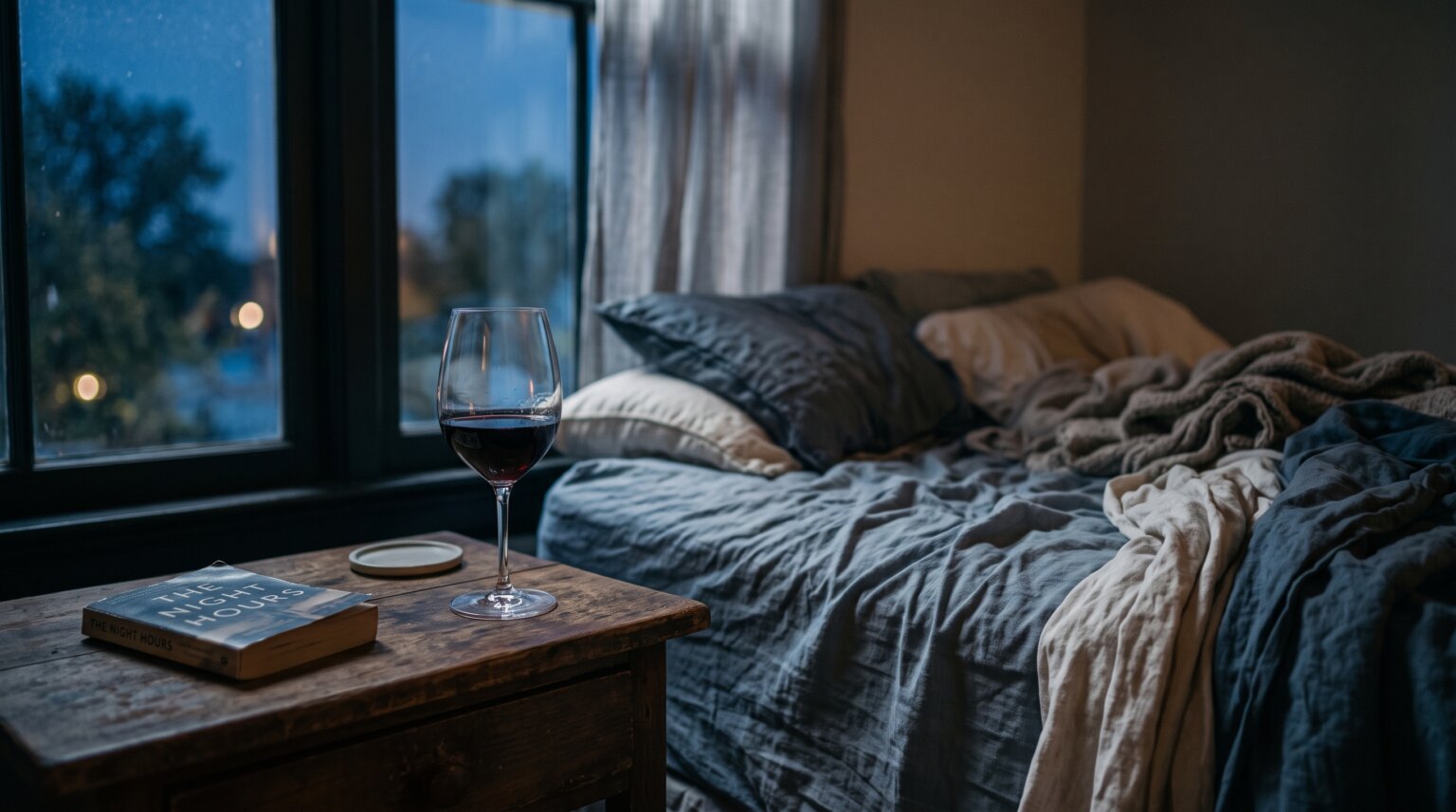
That glass of wine before bed helps you drift off in minutes, so it must be good for sleep, right? That assumption is one of the most common misconceptions I encounter when people ask me about sleep health. Understanding how alcohol secretly wrecks your sleep quality starts with recognizing the gap between falling asleep fast and actually getting restorative rest. The two are completely different processes, and alcohol only helps with the first one.
Alcohol disrupts sleep quality by suppressing REM sleep cycles, fragmenting the night with frequent awakenings, and triggering a homeostatic rebound that floods your body with cortisol and adrenaline as the alcohol wears off. The result is lighter, broken sleep that leaves you exhausted even after eight hours in bed.
Here is the part that surprises most people: you do not need to be a heavy drinker for this to happen. Sleep researchers have found that even one or two drinks in the evening can reduce sleep quality by 9 to 39 percent, depending on the individual. Our team has looked at sleep tracker data from countless users, and the pattern is consistent. People who drink moderately on weeknights report feeling drained, foggy, and reaching for caffeine by mid-afternoon.
In this guide, I will walk you through exactly what happens inside your brain and body when you combine alcohol and sleep. We will cover the four sleep stages, why that 3 a.m. wakeup happens, the hidden role of homeostasis, and practical rules you can follow tonight to protect your rest. If you have ever wondered why you feel wrecked the morning after just a couple of drinks, the answer is below.
Table of Contents
Why Alcohol Feels Like a Sleep Aid (But Is Anything But)
The reason alcohol feels like a sleep aid comes down to its sedative properties. Alcohol is a central nervous system depressant, meaning it slows brain activity and enhances the effects of GABA, a neurotransmitter that promotes relaxation. When you drink, GABA activity increases and you feel drowsy, calm, and ready for bed.
This sedative effect is real, but it is not the same as natural sleep. Sedation is the suppression of brain activity. Sleep is an active, highly organized process where your brain cycles through distinct stages that each serve a purpose. Alcohol forces your brain into a sedated state that mimics the onset of sleep without allowing the natural architecture to unfold.
Studies show that alcohol reduces the time it takes to fall asleep, a measure called sleep latency. This is why people reach for a nightcap. But reducing sleep latency through chemical sedation is a trade-off, not a benefit. The minutes you save falling asleep are paid for with hours of poor-quality rest later in the night.
The deeper problem is that your body builds tolerance to this sedative effect within just a few nights of regular drinking. Within three to nine days of using alcohol as a sleep aid, the drowsiness wears off but the sleep-disrupting effects remain. You end up needing more alcohol to fall asleep while getting even worse rest.
How Alcohol Wrecks Your Sleep Architecture
Sleep architecture refers to the structural organization of your sleep cycles throughout the night. A healthy sleeper moves through four distinct stages in 90-minute cycles, repeating four to six times. Alcohol distorts this architecture in three major ways.
First, it increases the amount of deep sleep in the first half of the night. This sounds positive, but it is not the natural kind. It is a sedative-induced deep sleep that bypasses the normal cycling pattern. Second, it suppresses REM sleep significantly during the second half of the night. Third, it fragments the entire night with micro-awakenings that you may not even remember but that prevent your brain from completing full restorative cycles.
Think of it this way. Normal sleep is like a well-conducted symphony where each section plays its part at the right time. Alcohol-affected sleep is like turning up the volume on one section while silencing another and cutting the performance short. The music plays, but it is not the same concert.
The 4 Stages of Sleep and Why They Matter
To understand how alcohol secretly wrecks your sleep quality, you need to understand what healthy sleep looks like. Every night, your brain cycles through four stages. Each one serves a specific biological function, and skipping any of them has consequences.
Stage 1: Light Sleep (N1). This is the transition from wakefulness to sleep. It lasts only a few minutes and accounts for about 5 percent of your total sleep time. Your brain waves slow down, your muscles relax, and your heartbeat begins to steady. Alcohol can push you through this stage too quickly, skipping the natural wind-down process.
Stage 2: Intermediate Sleep (N2). This stage makes up about 45 to 50 percent of your sleep. Your body temperature drops, your heart rate slows further, and your brain begins producing sleep spindles, bursts of brain activity that help consolidate memory and learning. Alcohol can disrupt the quality of this stage, reducing the number of sleep spindles your brain generates.
Stage 3: Deep Slow-Wave Sleep (N3). This is the most physically restorative stage. Your brain produces delta waves, the slowest and most powerful brain activity. During N3, your body repairs tissue, strengthens the immune system, and releases growth hormone. Alcohol increases the duration of N3 in the first half of the night, but this comes at a cost in the second half.
Stage 4: REM Sleep. Rapid eye movement sleep is where dreaming occurs. Your brain becomes nearly as active as it is during wakefulness, while your body is temporarily paralyzed to prevent you from acting out dreams. REM sleep handles emotional processing, memory consolidation, and creative problem-solving. Alcohol suppresses REM sleep dramatically, which is why you may wake up feeling mentally foggy and emotionally off balance after drinking.
In a normal night, you cycle through these four stages roughly every 90 minutes. Each cycle, the amount of deep sleep decreases while REM sleep increases. The final cycles of the night are almost entirely REM. Alcohol disrupts this natural progression, front-loading deep sleep and eliminating the critical late-night REM periods.
How Alcohol Blocks REM Sleep and Emotional Recovery
REM sleep is where your brain processes emotions, files away memories, and prepares you for the mental demands of the next day. When alcohol suppresses REM sleep, these functions do not happen properly. You wake up with a backlog of unprocessed emotional experiences and memories that were never properly stored.
Research has shown that even moderate alcohol consumption can reduce REM sleep by 20 to 40 percent in the second half of the night. This is significant because the majority of your REM sleep occurs during the last few hours before you wake up. A drink at 9 p.m. can still be affecting your REM sleep at 4 a.m.
The emotional consequences are real. People who regularly drink before bed report higher levels of anxiety, irritability, and mood swings. One reason is that REM sleep serves as a form of overnight emotional therapy. Without enough of it, your brain cannot regulate the emotional intensity of daily experiences. Over time, this can contribute to symptoms of depression and anxiety.
Memory consolidation also suffers. During REM sleep, your brain transfers short-term memories into long-term storage and prunes irrelevant information. Students who drink after studying perform worse on recall tests the following day. The learning never gets properly stored because the REM processing window was cut short.
There is also the phenomenon of REM rebound. When alcohol suppresses REM sleep, your brain accumulates a deficit. Once the alcohol is metabolized, the brain tries to catch up by flooding you with intense, vivid dreams or nightmares. Many people report having wild or disturbing dreams in the early morning hours after drinking. This is the brain forcing REM recovery, and it is not restful.
Why Alcohol Causes 3 a.m. Wakeups and Fragmented Sleep
If you have ever found yourself staring at the ceiling at 3 a.m. with a pounding heart and racing thoughts after a night of drinking, you are experiencing one of the most predictable effects of alcohol on sleep. This is not random insomnia. It is a measurable physiological response with a clear mechanism.
The explanation lies in how your body maintains balance, a principle called homeostasis. When alcohol enters your system, it acts as a depressant, slowing everything down. In response, your brain releases excitatory neurotransmitters to counteract the sedation. It is essentially your body fighting to stay alert despite the alcohol.
This counter-chemical response includes a surge of cortisol and adrenaline. Your body pumps out these stimulants to offset the depressant effects of alcohol. The problem is timing. Alcohol is metabolized at a rate of roughly one standard drink per hour, meaning that by 2 or 3 a.m., most of the sedative effects have worn off.
But the counter-chemicals are still circulating. You now have cortisol and adrenaline flooding your system with nothing to balance them out. People in sleep forums describe this perfectly, calling it a triple espresso effect. Your heart races, your mind spins, and sleep becomes impossible. This is the homeostatic rebound in action.
The result is severe sleep fragmentation. Instead of completing the natural sleep cycles, your night is chopped into pieces. You may fall back asleep briefly, only to wake again. Each awakening resets your sleep cycle, meaning you rarely reach the deep or REM stages you need. You wake up having technically been in bed for eight hours but having gotten very little actual restorative sleep.
Sleep Disorders Made Worse by Alcohol
Alcohol does not just degrade healthy sleep. It actively worsens existing sleep disorders and can trigger new ones. The effects span several specific conditions, each with its own mechanism of harm.
Sleep Apnea and Breathing Problems
Obstructive sleep apnea is a condition where the airway partially or completely collapses during sleep, causing pauses in breathing. Alcohol makes this significantly worse by relaxing the muscles of the throat and airway even further. Even people without diagnosed sleep apnea experience more breathing events after drinking.
Studies show that alcohol before bed increases the number of apnea episodes and makes each one last longer. The decreased respiratory drive also means your blood oxygen levels drop lower during each pause in breathing. For people with existing sleep apnea, this combination can be dangerous. Research has linked heavy evening drinking to increased cardiovascular events during sleep in apnea patients.
Snoring
That same muscle relaxation that worsens apnea also increases snoring. Alcohol relaxes the tissues of the throat and tongue, causing them to vibrate more during breathing. If your partner has ever told you that you snore more after a few drinks, they are right. This is not just annoying. It is a sign that your airway is partially obstructed, which reduces sleep quality for both you and anyone sharing your bed.
Insomnia
Alcohol and insomnia have a complicated and destructive relationship. People who struggle to fall asleep often turn to alcohol as a self-medication strategy. In the short term, it appears to work. But within days, the body develops tolerance and the sedative effect fades. What remains is fragmented, poor-quality sleep that actually makes insomnia worse.
Over time, this creates a vicious cycle. Worse sleep leads to more reliance on alcohol as a sleep aid, which leads to even worse sleep. Breaking this cycle often requires addressing both the alcohol use and the underlying insomnia simultaneously. People in recovery communities frequently report that their sleep was at its absolute worst during the period when they were using alcohol to manage insomnia.
Parasomnias: Sleepwalking, Night Terrors, and More
Parasomnias are undesirable behaviors that occur during sleep, including sleepwalking, sleep talking, night terrors, and sleep eating. Alcohol increases the likelihood and intensity of these events. The reason is that alcohol deepens the early stages of NREM sleep, where parasomnias typically originate, while also suppressing the normal muscle atonia that keeps you safely in bed.
People who have a history of parasomnias often find that even small amounts of alcohol trigger episodes. And for those without a history, heavy drinking can sometimes induce a first occurrence. These events are disruptive to sleep, potentially dangerous, and often leave the person feeling disoriented and unrested.
Circadian Rhythm Disruption
Your circadian rhythm is your body internal 24-hour clock. It regulates when you feel alert and when you feel sleepy, primarily through the release of melatonin, the hormone that signals to your brain that it is time to sleep. Alcohol interferes with this system in several ways.
Research has shown that alcohol consumption in the evening can delay the onset of melatonin production by up to an hour. This means even after you stop drinking, your body clock is shifted, making it harder to fall asleep naturally on subsequent nights. The effect is dose-dependent, meaning the more you drink, the more your circadian rhythm is disrupted.
Alcohol also affects the core body temperature cycle, which is closely tied to circadian rhythm. Your body temperature normally drops at night as part of the sleep signal. Alcohol causes an initial drop followed by a rebound increase, which can wake you up. This temperature disruption is another reason for those middle-of-the-night awakenings.
For people who travel across time zones or work shifts, alcohol can compound existing circadian disruptions. Using a drink to fall asleep in a new time zone may feel helpful, but it actually slows your body ability to adjust to the local schedule.
Long-Term Effects of Chronic Alcohol Use on Sleep
The effects I have described so far apply to even occasional drinking. But chronic, heavy alcohol use causes more profound and longer-lasting sleep damage. Understanding this progression helps explain why alcoholics find it hard to sleep, even long after they stop drinking.
In the early stages of regular heavy drinking, the body develops tolerance to the sedative effects. Falling asleep without alcohol becomes difficult, while drinking produces increasingly fragmented sleep. This is the beginning of alcohol-related insomnia, and it can develop within just a few weeks of nightly drinking.
With long-term heavy use, the sleep architecture becomes severely distorted. Deep sleep is reduced across the entire night, not just the first half. REM sleep is chronically suppressed. The percentage of light, stage 1 and stage 2 sleep increases dramatically. Essentially, the person spends most of the night in the least restorative stages of sleep.
The most insidious part is what happens when someone stops drinking. During withdrawal and early recovery, the brain experiences severe REM rebound. Sleep is filled with intense, vivid dreams and nightmares. Deep sleep is markedly reduced. Insomnia is extremely common during the first weeks and months of sobriety. Many people relapse specifically because the sleep disruption becomes unbearable.
Research shows that it can take anywhere from several months to over a year for sleep architecture to return to normal after chronic heavy alcohol use. This is why sleep support is such a critical component of recovery programs. The brain needs time and support to rebuild healthy sleep patterns.
The Timing Rules: When to Stop Drinking Before Bed
One of the most common questions I get is simple: how long before bed should you stop drinking alcohol? The answer depends on how much you drink, but sleep experts generally recommend stopping at least three to four hours before bedtime for moderate consumption.
The reason is straightforward. Your liver metabolizes alcohol at roughly one standard drink per hour. If you finish two drinks at 8 p.m., the alcohol is largely cleared from your system by 10 p.m. But the metabolic byproducts and the homeostatic rebound effects can linger for additional hours. Giving yourself three to four hours allows your body to process both the alcohol and its counter-effects.
For heavier consumption, the window needs to be longer. Six or more drinks can take most of the night to fully metabolize, meaning there is no safe timing window. The sleep disruption is inevitable at that level.
The 2-2-2 Rule for Alcohol
You may have heard of the 2-2-2 rule. This is a practical guideline that helps you enjoy alcohol responsibly while minimizing its impact on sleep. The rule is simple and easy to remember.
Stop drinking alcohol at least 2 hours before bed. Drink 2 glasses of water for every alcoholic beverage. And limit yourself to 2 drinks maximum on any evening. Following these three twos can dramatically reduce the sleep-disrupting effects of alcohol without requiring total abstinence.
The 3:2:1 Rule for Better Sleep
Another popular framework is the 3:2:1 rule, which is a broader sleep hygiene guideline. Stop eating large meals 3 hours before bed. Stop working or engaging in stressful activities 2 hours before bed. And stop looking at screens 1 hour before bed. Combining this rule with the alcohol timing guidelines above gives you a comprehensive evening routine that sets you up for genuinely restorative sleep.
Practical Tips for Better Sleep Without Alcohol
Breaking the nightcap habit can feel daunting, especially if you have relied on alcohol to fall asleep for months or years. The good news is that your sleep will improve faster than you might expect once you remove alcohol from the equation. Here are the strategies our team has found most effective.
1. Replace the ritual. For many people, the nightcap is as much about the routine as the alcohol. Pouring a drink signals that the day is over and it is time to wind down. You can replicate this signal with non-alcoholic alternatives. Herbal tea, sparkling water with lime, or a warm mug of milk with honey can serve the same psychological purpose.
2. Build a wind-down routine. Use the hour before bed for calming activities that naturally promote sleep. Reading, gentle stretching, journaling, or taking a warm bath all help lower your heart rate and signal to your brain that sleep is coming. This activates your natural sleep drive rather than relying on chemical sedation.
3. Keep your bedroom cool and dark. Optimal sleep temperature is between 60 and 67 degrees Fahrenheit. Use blackout curtains or an eye mask to eliminate light. These environmental factors support your circadian rhythm and make it easier to fall asleep naturally.
4. Limit caffeine after noon. Caffeine has a half-life of five to six hours, meaning that afternoon coffee is still affecting your nervous system at bedtime. If you are cutting out alcohol and struggling to sleep, check your caffeine intake first.
5. Try magnesium supplements. Magnesium supports GABA production in the brain, the same calming neurotransmitter that alcohol artificially boosts. A magnesium supplement taken an hour before bed can help your body produce natural relaxation without the rebound effects.
6. Track your sleep. Users across sleep forums consistently report that seeing the data is the most powerful motivator. Wearable sleep trackers like Garmin, Oura, and Whoop show clear drops in sleep quality scores after even one or two drinks. Watching your REM and deep sleep numbers tank after a nightcap makes it much easier to skip the drink next time.
7. Be patient with the transition. If you have been using alcohol as a sleep aid regularly, expect a one to two week adjustment period. Your sleep may actually feel worse for the first few nights as your brain recalibrates to natural sleep cycles. Push through this period and you will emerge with noticeably better, more consistent sleep.
When to See a Doctor About Alcohol and Sleep
If you have cut back on alcohol and your sleep has not improved after two to three weeks, it may be time to consult a healthcare professional. Persistent insomnia, loud snoring with pauses in breathing, or extreme daytime fatigue despite adequate sleep time are all signs that something beyond alcohol may be affecting your rest.
A sleep medicine specialist can conduct a sleep study to check for disorders like sleep apnea, which often coexist with alcohol use. They can also help you develop a safe plan if you are reducing heavy alcohol consumption, as abrupt changes can sometimes cause temporary but intense sleep disruption.
If you feel that your alcohol use is out of control and is primarily driven by sleep difficulties, talk to your doctor about evidence-based treatments for insomnia. Cognitive behavioral therapy for insomnia has been shown to be more effective than medication and does not carry the risks of alcohol self-medication.
FAQs
Why does alcohol ruin sleep quality?
Alcohol ruins sleep quality because it suppresses REM sleep, fragments the night with frequent awakenings, and triggers a homeostatic rebound that releases cortisol and adrenaline as the alcohol is metabolized. This combination produces lighter, broken sleep that lacks the restorative stages your brain and body need, even if you spend eight hours in bed.
What is the 2 2 2 rule alcohol?
The 2-2-2 rule is a practical guideline for minimizing alcohol’s impact on sleep. Stop drinking at least 2 hours before bed, drink 2 glasses of water for every alcoholic beverage, and limit yourself to 2 drinks maximum per evening. Following all three guidelines significantly reduces sleep disruption.
What is the 3:2:1 rule for sleeping?
The 3:2:1 rule is a sleep hygiene framework: stop eating large meals 3 hours before bed, stop working or stressful activities 2 hours before bed, and stop using screens 1 hour before bed. Combining this with the alcohol timing guidelines creates an ideal evening routine for restorative sleep.
Why do alcoholics find it hard to sleep?
Alcoholics struggle with sleep because chronic heavy drinking permanently distorts sleep architecture, reducing deep sleep and suppressing REM sleep. When they stop drinking, the brain experiences severe REM rebound with intense dreams and nightmares, while deep sleep remains limited. It can take months to over a year for normal sleep patterns to return after long-term heavy alcohol use.
Conclusion
Understanding how alcohol secretly wrecks your sleep quality comes down to recognizing the difference between sedation and genuine rest. Alcohol helps you fall asleep faster, but it suppresses the REM sleep you need for emotional processing, fragments your night with cortisol-driven wakeups, and worsens conditions like sleep apnea and insomnia.
The good news is that the damage is not permanent. By following timing rules like the 2-2-2 guideline, building a wind-down routine, and giving your body a week or two to recalibrate, you can restore the natural sleep architecture that alcohol has been quietly dismantling. Your brain knows how to sleep well. Sometimes it just needs you to stop getting in the way.
Try going seven nights without an evening drink and track your sleep. The data will tell the story better than any article ever could.