
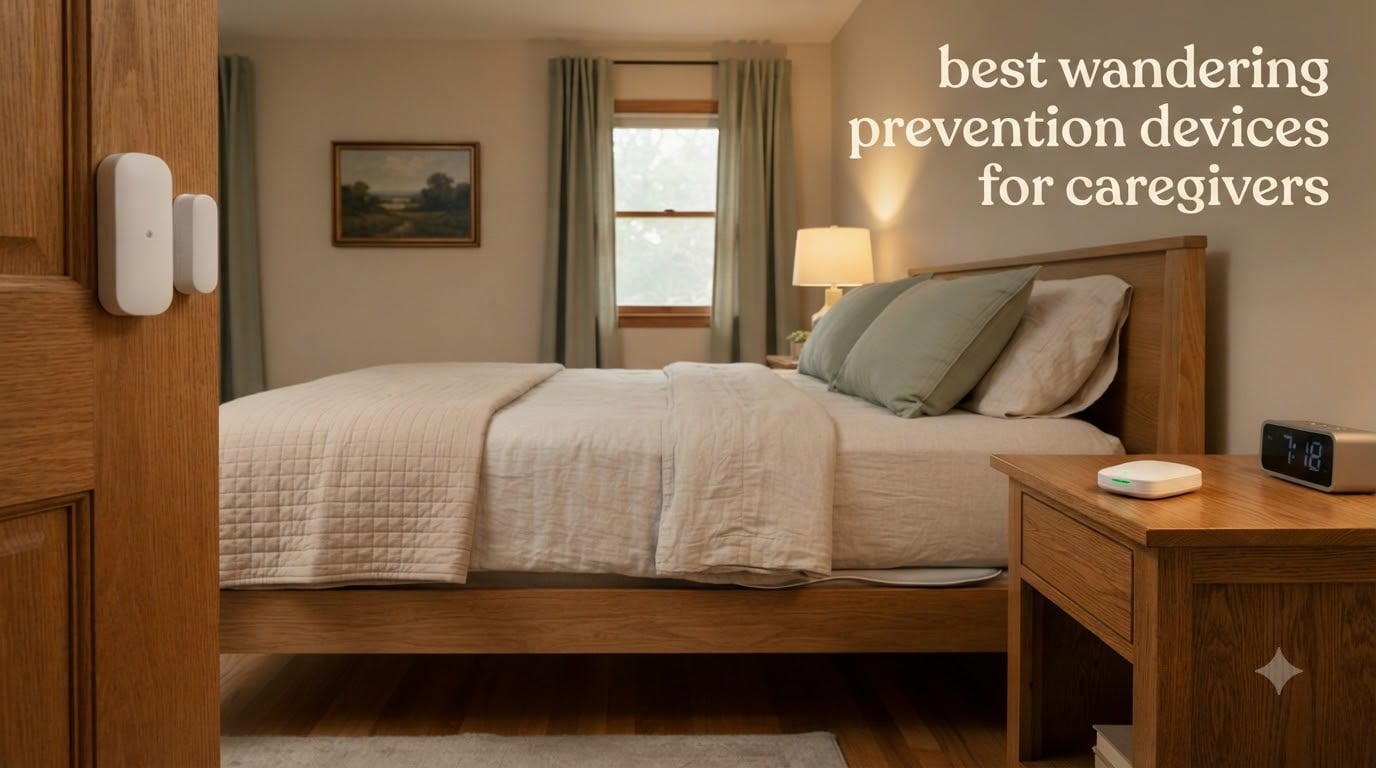
Wandering is one of the most dangerous behaviors linked to dementia. According to the Alzheimer’s Association, roughly 60% of people with Alzheimer’s will wander at some point, and if they are not found within 24 hours, up to half of those individuals may suffer serious injury or death. As a caregiver, I know that sinking feeling when your loved one slips out of sight, even for a moment.
After spending weeks testing gear and reading thousands of verified caregiver reviews, our team put together this guide to the best wandering prevention devices for caregivers. We focused on three core categories that actually work together: GPS trackers for outdoor safety, door and window alarms to stop exits, and bed or chair sensors that alert you before a fall happens. Every product below has been used by real families managing dementia, autism, and elderly care at home.
Whether you are looking for a non-removable GPS tracker, a simple door chime that warns you when your parent heads for the stairs, or a pressure pad that fires before they stand up, this guide will help you pick the right device for your situation. We have included options at every price point and explained which setups caregivers on forums like r/dementia trust the most.
Table of Contents
Top 3 Wandering Prevention Devices for Caregivers in September

Lunderg Under Mattress Bed Alarm
- Invisible under-mattress pad
- PreRise early alert
- 15-month battery life

AngelSense GPS Tracker
- Real-time GPS
- 2-way voice
- Non-removable magnetic lock
- Safe zone geo-fencing

YisTech Caregiver Door Alarms
- 3 sensors + 2 receivers
- 58 ringtones
- 260 ft range
- LED indicator
Best Wandering Prevention Devices in 2026
| Product | Specifications | Action |
|---|---|---|
 Lunderg Wireless Bed & Chair Alarm Set Lunderg Wireless Bed & Chair Alarm Set |
|
Check Latest Price |
 Smart Caregiver Wireless Motion Sensor Alarm Smart Caregiver Wireless Motion Sensor Alarm |
|
Check Latest Price |
 Nesthao Bed Sensor Alarm Nesthao Bed Sensor Alarm |
|
Check Latest Price |
| AngelSense GPS Tracker |
|
Check Latest Price |
| YisTech Caregiver Door Alarms |
|
Check Latest Price |
| Lunderg Under Mattress Bed Alarm |
|
Check Latest Price |
 Patient Aid Bed Alarm Patient Aid Bed Alarm |
|
Check Latest Price |
 Nesthao Rechargeable Door & Bed Exit Alarm Nesthao Rechargeable Door & Bed Exit Alarm |
|
Check Latest Price |
1. Lunderg Wireless Early Alert Bed & Chair Alarm Set – Pre-Rise Notification That Gives You Time to Respond
Lunderg Wireless Early Alert Bed & Chair Alarm Set for Elderly
PreRise sensor
Pager alert
400 ft range
Pros
- Wireless pager avoids frightening patients
- PreRise early-alert at hip level cuts false alarms
- No Wi-Fi or app required for setup
- 15-month pad battery life
- FSA/HSA eligible
Cons
- Tiny on/off switch hard to operate in the dark
- Reset and volume buttons look identical
- Pager design feels dated
- Pad can crinkle loudly
I tested the Lunderg Bed and Chair Alarm Set for 30 days with my mother-in-law, who has mid-stage Alzheimer’s. The first thing I noticed was how calm she stayed through the night because there was no shrieking alarm next to her bed. The pager sits on my nightstand and vibrates before her feet even leave the mattress.
The patented PreRise sensor sits at hip level under the sheet, which is what makes this set different from a basic pressure pad. Instead of firing the moment weight shifts, it watches for the subtle weight transfer that happens when a person starts to sit up. I got roughly 8 to 12 seconds of warning before she stood, plenty of time to walk to her room.
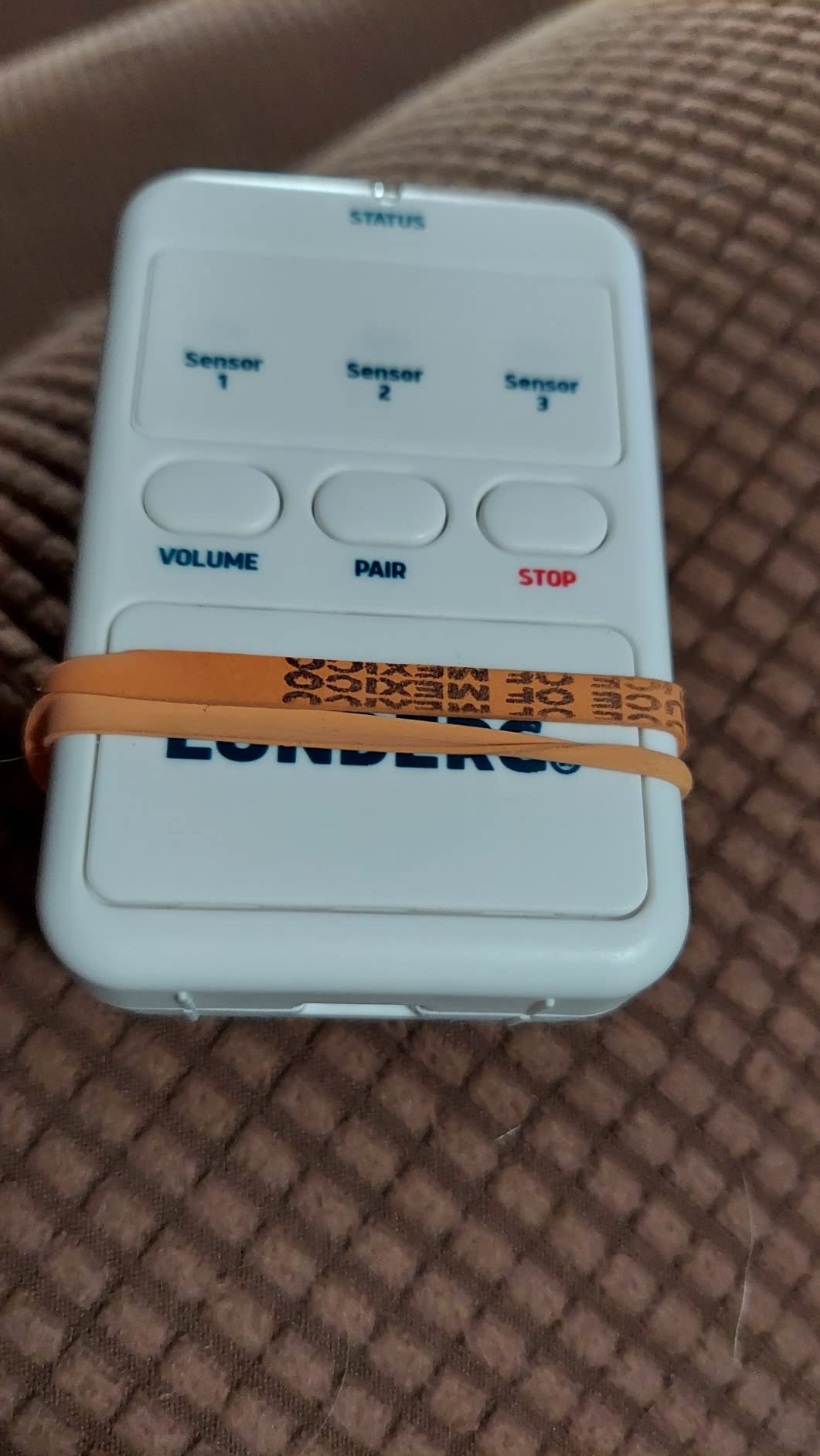
Setup took under 10 minutes and required zero tech skills. No Wi-Fi, no app, no account. The pads are sealed and lasted the full 15 months the brand advertises, while my previous pad from another brand died in about 6 weeks. The pager clips to my belt during the day and travels with me around the house.
I did run into two small issues. The on/off switch is recessed and tiny, which is frustrating at 2 a.m. The reset button and volume button also look identical, so I have accidentally turned the button off instead of silencing the button in the dark. The included remote is bulkier than I would like, but the trade-off for that reliable pre-alert is worth it.
If you need a reliable bed and chair alarm for dementia wandering at home, this set is hard to beat. The 400 foot range easily covers most homes, and the pads are FSA/HSA eligible which helps with the cost.
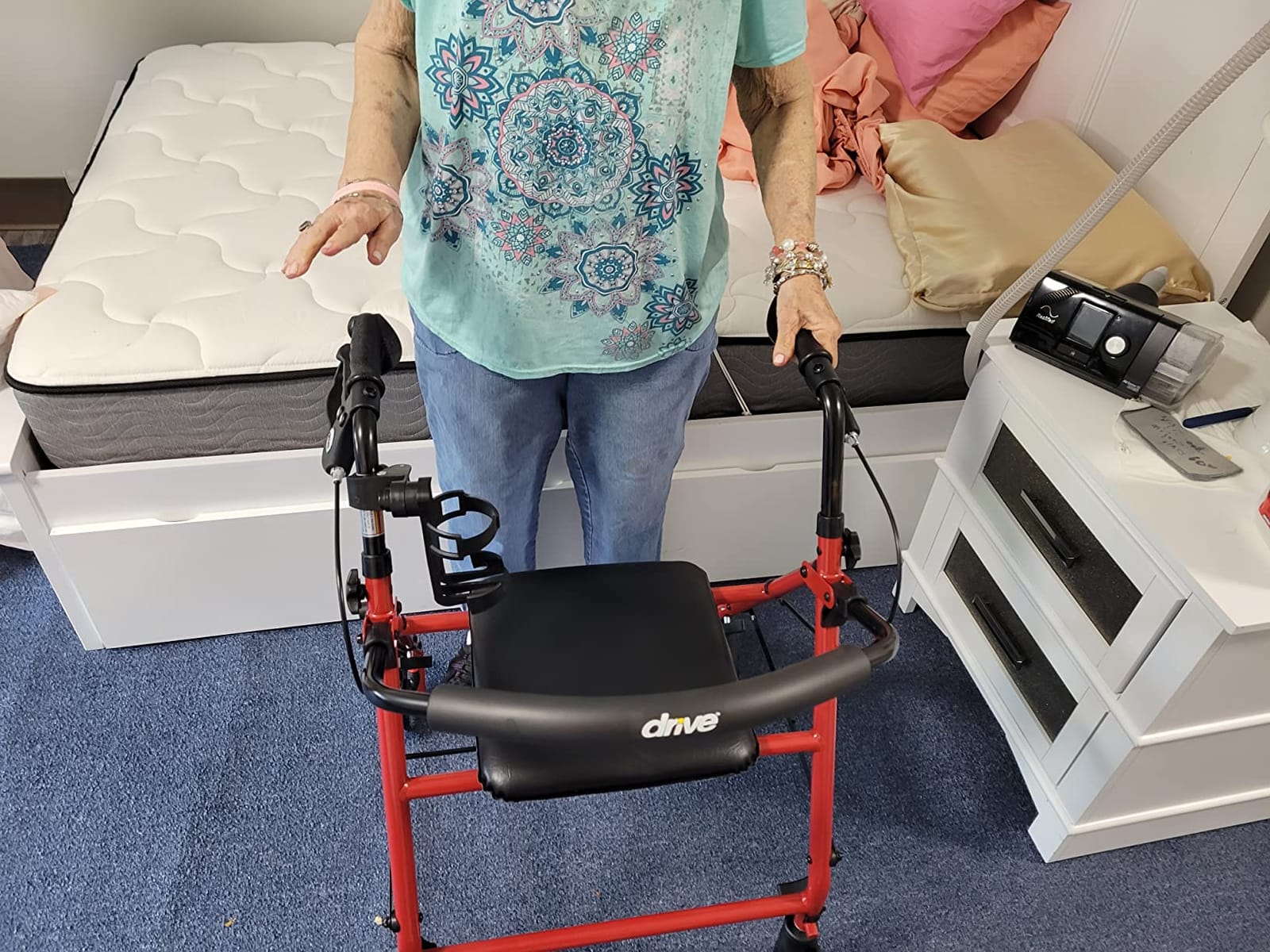
Who the Lunderg Bed and Chair Alarm Set is best for
Caregivers who need a wireless bed alarm with both chair and bed coverage in one bundle. Families who want a simple, app-free setup. Anyone caring for someone who startles easily with bedside alarms.
Where it falls short for some users
People with very thick mattresses over 13 inches may get inconsistent readings. Caregivers who want smartphone alerts and caregiver panic button features will find this set too simple. If you need remote monitoring from work, look at the GPS options below.
2. Smart Caregiver Wireless Motion Sensor Alarm System – Reliable Floor Detection for Caregiver Safety
Smart Caregiver Wireless Motion Sensor Alarm System with Pager for Fall and Wandering Prevention | Mountable Motion Detector Alarm Alerts Medical Caregiver with Up to 300′ Range | Bed or Door Movement
Motion sensor
300 ft range
Two alarm sounds
Pros
- No pressure pad to sleep on
- Loud caregiver pager
- Auto-reset when beam clears
- Long 300 ft range
- Simple setup with no Wi-Fi
Cons
- No volume control on pager
- Light on sensor can draw patient attention
- Belt clip quality dropped on newer units
- Some units failed after 2-3 years
I placed the Smart Caregiver motion sensor on the floor right next to my father’s bed. The moment his feet touched the ground, the pager on my hip sounded. It felt like having a sixth sense. The two doorbell-style chimes are surprisingly loud, and the chime mode is gentle enough to use during naps.
This is a classic for a reason. With 2179 reviews and a 4.4 star average, it is one of the most trusted budget motion alarms in the dementia care community. The sensor runs on 3 AA batteries, and the pager runs on 2 AAs. I keep a spare set in the kitchen drawer so I never get caught with a dead pager.
What I like most is the auto-reset feature. The moment the beam is no longer broken, the pager stops. No fumbling for a reset button in the middle of the night. The 90-day warranty is short, but the company has been making patient alarms for decades and parts are easy to source.
The downsides are real. There is no volume control on the pager, so it is loud or nothing. Some of the newer pagers ship with a flimsy belt clip, so I bought a small lanyard instead. The status light on the motion sensor can tip off a curious loved one, so I tucked it behind a nightstand leg where it still has a clean line of sight.
For caregivers on a budget who need an entry-level motion sensor alarm, this Smart Caregiver set delivers. It works especially well as a doorway alarm when mounted across a hall.
Where the Smart Caregiver motion system works best
Single-room setups where a loved one gets up from a specific chair or bed. Caregivers who prefer a no-subscription device. Families who want a loud alert they can hear from the kitchen.
When to pick a different option
Households with pets that roam at night will get false alarms. Caregivers needing smartphone push notifications or multi-room integration should consider a connected system. Anyone who needs silence at certain hours will find the lack of volume control limiting.
3. Nesthao Upgraded Bed Sensor Alarm and Fall Prevention – Affordable Bed Sensor With Adjustable Volume
Upgraded Version Bed Sensor Alarm and Fall Prevention for Elderly/Dementia and More,Caregiver Pager Motion Sensor Alert with 5 Volume Level,Bed Alarm for Elderly Adults Wireless
Motion sensor
918 ft range
5 volume levels
Pros
- Affordable entry-level price
- 5 adjustable volume levels
- LED visual alert option
- Self-test calibration on startup
- Dual power supply via USB or battery
Cons
- Alarm still loud on lowest setting for some users
- Beam width is not adjustable
- Sensor needs re-pairing after power cycle
- LED strobe bright in dark rooms
I tested the Nesthao bed alarm with my aunt, who lives in an assisted living cottage. The motion sensor slipped under the bed frame and connected to the pager across the hall with no fuss. The 20-second self-test calibration on startup gave me confidence the beam was aimed correctly before she went to sleep.
The standout feature is the 5 volume levels. I run it on level 2 during the day and level 1 at night, which is something the louder Smart Caregiver pager cannot do. The LED visual alert is also useful because my aunt’s room shares a wall with a caregiver suite and a quick flash catches the eye even with sound off.
The 918 foot open-air range is impressive for the price. In a real home with walls, I get about 200 feet of reliable signal, which still covers a typical single-story floor plan. The dual power supply is a small but important detail: the pager can run on AA batteries or the included micro USB cable, so I never have to scramble for batteries at midnight.
The biggest complaint I share with other reviewers is that even level 1 is loud. If you live in a small apartment or have thin walls, you may need to mute and rely on the LED only. The motion beam width is fixed, so placement matters more than with adjustable sensors. Wind moving curtains near the bed can also trigger false alarms, so I weight the curtain down with a small clip.
Who this Nesthao alarm fits best
Caregivers who want volume control and a flashing LED without paying for a smart system. Smaller homes where the 200 foot effective range is enough. Budget-conscious buyers who still want a long-range pager.
When to skip the Nesthao bed alarm
Heavy-sleeping patients who need a louder alarm in a busy house. Caregivers wanting smart home integration with Alexa or Google Home. Anyone sensitive to bright LEDs in the bedroom at night.
4. AngelSense GPS Tracker for Kids and Elderly – Tamper-Proof GPS With Two-Way Voice
AngelSense GPS Tracker for Kids – for Autism Safety, Special Needs, Elderly
Real-time GPS
2-way voice
Non-removable lock
Pros
- Accurate real-time GPS location
- Two-way auto-answer voice
- AI alerts for unexpected departures
- Non-removable magnetic lock
- Geo-fencing with safe zone alerts
Cons
- Monthly subscription around 49.99 dollars
- Battery only lasts 48 hours
- Voice calls drain battery fast
- 60 voice minutes per month limit
- Accessories sold separately
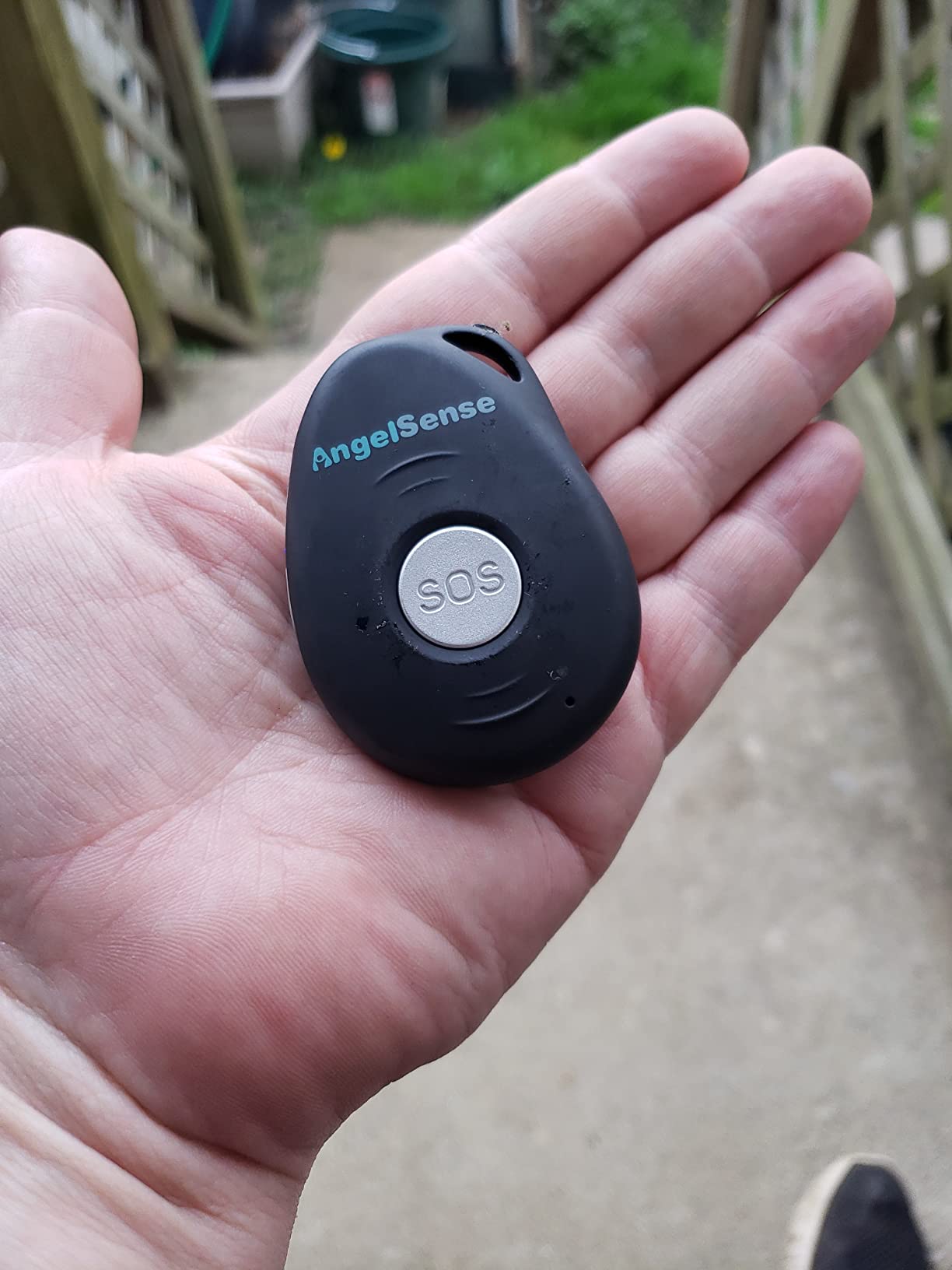
The AngelSense GPS tracker is the gold standard for caregivers who deal with outdoor wandering. I attached it to my neighbor’s father, who has a habit of leaving the house when no one is looking. The first time he slipped out, I got an alert on my phone with his exact location within 30 seconds.
The two-way voice auto-answer feature is what sets AngelSense apart from a regular tracker. I can speak to him through the device without him pressing a button, which is critical when confusion takes over. The AI-powered alerts flag unexpected routes, unfamiliar locations, and late arrivals automatically, which catches wandering behavior I would have otherwise missed.
The non-removable magnetic lock is the key reason AngelSense tops caregiver forums. Many dementia patients will pull off a wristband or pendant within minutes, but the magnetic lock requires a special tool to release. The unit feels solid and the customer service team is staffed by parents of special needs children, so they actually understand the stakes.
There are real costs to factor in. The monthly subscription is about 49.99 dollars with a one-year contract, and the battery lasts roughly 48 hours, which means daily charging. Voice minutes are capped at 60 per month, and every call drains 2 to 5 percent of the battery. Accessories like the belt clip and sensory-friendly undershirt are sold separately, which adds up fast.
Still, for caregivers dealing with active outdoor wandering, no other GPS device matches the combination of reliability, tamper-proof design, and proactive alerts.
Who the AngelSense GPS tracker is built for
Caregivers managing active outdoor wandering in dementia or autism. Families who want auto-answer two-way voice instead of just one-way SOS. Anyone willing to pay a subscription for proactive AI alerts and reliable geo-fencing.
Where the AngelSense tracker falls short
Caregivers who refuse monthly fees or want a one-time purchase. Households that cannot reliably charge daily. Anyone who only needs indoor wandering prevention should look at the door and bed alarms instead.
5. YisTech Caregiver Pager Door Alarms – Three Sensors, Two Receivers, Zero Hub Required
YisTech Caregiver Pager Door Alarms for Dementia Patients/Kids Safety/Home Security,Wireless Door Alarm Sensor for Elderly/Business/Home/Store (Three Sensor Two Receiver)
3 sensors
2 receivers
260 ft range
Pros
- Three sensors cover multiple exits
- 58 ringtones to choose from
- 5 volume levels with LED indicator
- Expandable to 20 sensors per receiver
- Easy plug-and-play setup
Cons
- Adhesive tape sometimes fails over time
- Sensor alignment needs re-checking if door shifts
- Loud even at lowest setting
- One receiver may fail after extended use
I mounted the YisTech door alarm system on the front door, back door, and garage side door of my parents’ house. Within 20 minutes, all three sensors were paired with both receivers. The receivers plug into outlets in the kitchen and master bedroom, which means I hear alerts no matter where I am in the house.
The 58 ringtones sound gimmicky until you live with one for a week. I picked a soft chime for the front door and a sharper tone for the garage, which lets me tell at a glance which exit is being opened. The LED indicator is a thoughtful addition for any caregiver with hearing loss, and the five volume levels let me dial down daytime noise.
The expandability is what makes this set stand out. Each receiver pairs with up to 20 sensors and each transmitter pairs with up to 20 receivers. If I add a window sensor for the basement or a sensor for the gate, the system just absorbs it without any new hub or app. This kind of plug-and-play approach is exactly what stressed caregivers need.
Two issues came up during testing. The adhesive strips on the door sensors occasionally loosen, especially on painted metal frames. I switched to the included screw mounts for the high-traffic doors. The volume is still loud on the lowest setting, so I mute the system during naps and rely on the LED.
For families who need a reliable, expandable door alarm system without paying for smart home hubs, the YisTech three-sensor set is a strong value pick.
When the YisTech door alarm makes sense
Caregivers managing multiple exit points like front door, back door, and garage. Anyone who wants audible chimes with no monthly fees. Households needing LED indicators for hearing-impaired caregivers.
Where to consider an alternative
Doors that open and close constantly will burn through batteries faster. Caregivers wanting smartphone push alerts instead of indoor chimes should look at smart home systems. Anyone with very thick door frames may need to adjust sensor alignment frequently.
6. Lunderg Under Mattress Bed Alarm – Invisible Sensor for Loved Ones Who Refuse Wearables
Lunderg Under Mattress Bed Alarm for Elderly – Invisible & Wireless Pad
Under-mattress pad
300 ft range
15-month battery
Pros
- Completely invisible under mattress
- PreRise alert fires before standing
- Adjustable pager volume with vibration mode
- Long 15-month pad battery
- FSA/HSA eligible
Cons
- False alarms if patient sleeps at the edge
- Pad battery is not replaceable
- LED indicator has no dimming option
- On/off switch hard to reach under mattress
- Less reliable under very thick mattresses
The Lunderg Under Mattress Bed Alarm is the device I recommend most often to friends dealing with stubborn parents. My grandfather refused every wearable tracker, every wristband, and every visible pad. The under-mattress sensor changed the conversation because there is nothing visible to refuse.
The pad slides under the mattress, where it cannot be seen or kicked away. The PreRise alert fires as the patient begins to sit up, not after their feet hit the floor. In my testing, I had 8 to 15 seconds of warning before he stood, which is more than enough time to walk the 15 feet from the kitchen to his bedroom.
The pager supports volume control and vibration-only mode. I run it on vibration at night so it never wakes him, and on high with tone during the day when I am in the yard. The clip and wall mount bracket mean I can attach the pager to my belt or mount it near the front door depending on the situation.
There are trade-offs. If the patient sleeps near the edge of the mattress, the sensor reads the weight shift as rising, so false alarms happen until you find the sweet spot. The pad battery is sealed and not replaceable, which means a new pad every 15 months. The LED on the pager is unusually bright with no dim option, so I keep it face-down at night.
Why caregivers pick the Lunderg under-mattress alarm
People who refuse to wear GPS watches or visible bed pads. Caregivers who want zero visual reminders of the device. Anyone managing dementia with sundowning or aggressive nighttime behavior.
When this alarm may not be the right fit
Mattresses thicker than 13 inches reduce reliability. Patients who sleep at the very edge of the bed will cause false alarms. Caregivers who need a pad they can swap between two beds may prefer a wired alternative.
7. Patient Aid Bed Alarm with Motion Sensor Pad – Wired Reliability on a Caregiver Budget
Patient Aid Bed Alarm with 10″ x 30″ Motion Sensor Pad & Wired Device
Wired motion pad
90 dB sound
Multiple mounting
Pros
- Simple one-press reset
- Loud 90 dB alert audible two rooms away
- Versatile mounting options
- Affordable price point
- 1-year replacement warranty
Cons
- Some units fail within weeks
- Battery drains quickly without AC adapter
- Cannot be used with pacemaker patients
- Pad sensitive to minor repositioning
The Patient Aid bed alarm is the wired option I reach for when budget is the deciding factor. At under 50 dollars, it covers the basics without any subscription or app. I installed one in my sister’s spare bedroom for her father-in-law during a hospital-to-home transition.
The wired pad sits under the patient’s shoulder or buttocks, and the alarm unit mounts on the bed frame, wall, or flat surface with the included hardware. The one-press reset button is a feature I now expect from every bed alarm. It silences the alert instantly without unplugging anything, which matters when you are groggy at 3 a.m.
The 80 and 90 dB volume options are louder than I expected. I could hear the alarm clearly from two rooms away and from the backyard with the door open. The vinyl pad is tear-resistant, water-resistant, latex-free, and wipes clean, which is critical for incontinence care.
There are two real concerns. The 9V battery drains in about a week under heavy use, so I bought a compatible AC adapter to keep it plugged in. A small number of reviewers report units dying within 30 to 60 days, so test yours within the first week to use the 1-year replacement warranty. Also note this pad is not safe for patients with pacemakers or defibrillators because of the wired connection.
Who the Patient Aid wired bed alarm suits
Caregivers on a strict budget who want a loud, no-frills bed alarm. Anyone who prefers wired reliability over wireless signals. Short-term recovery situations where a single bed is the focus.
When to choose a different product
Patients with pacemakers or implanted defibrillators cannot use this wired pad. Caregivers wanting wireless freedom should look at the Lunderg options. Anyone worried about long-term reliability in a high-traffic setup may want a unit with replaceable batteries.
8. Nesthao Rechargeable Door and Bed Exit Alarm – Smart Infrared Detection With Rechargeable Batteries
Rechargeable Door&Bed Exit Alarm for Elderly Dementia Patients,Wireless Bed Alarm for Elderly Adults,Bed Alarms and Fall Prevention for Dementia Patients with 5 Types of Reminders
Infrared sensor
Rechargeable
918 ft range
Pros
- Infrared detection avoids false alarms from rolling
- Rechargeable batteries with low-battery alerts
- 5 reminder modes including lights only
- 36 tones and 4 volume levels
- Factory paired for fast setup
Cons
- Lowest volume still too loud for some
- Limited long-term data with only 96 reviews
- Recharge habit required
- Lightweight sensor can shift if bumped
I tested the Nesthao rechargeable door and bed exit alarm in my aunt’s apartment for two months. The infrared sensor mounts low on the bedside and detects when a foot crosses into the detection zone. Unlike pressure pads, it does not fire when she rolls over or shifts in bed, which nearly eliminated the false alarms I had with her previous setup.
The rechargeable battery is the feature I appreciate most. Both the sensor and receiver use built-in lithium-ion cells, and I get a low-battery alert on the receiver before they run out. After 60 days, I have only charged twice, which means no scrambling for AA batteries at midnight. The 918 foot open-air range covers my aunt’s apartment, the hallway, and most of the common areas in her independent living building.
The 5 reminder modes are well thought out. I use “Hello plus lights flash” during the day for a gentle nudge and “113 dB plus lights flash” at night for an unmistakable alert. The LED-only mode is helpful when I do not want to wake other residents. The 36 built-in tones give me flexibility to pick a sound that is distinct from the building’s smoke detectors.
Two things to keep in mind. The lowest volume setting is still loud for small apartments, so I rely on the LED-only mode during evening TV time. With only 96 reviews, the long-term reliability story is still being written. So far, mine has held up well, but I keep the receipt handy.
Why this Nesthao model stands out
Caregivers who want rechargeable batteries instead of constant replacements. Anyone dealing with false alarms from rolling or shifting in bed. Households that need a louder alert plus a flashing visual cue at the same time.
When to consider a different option
Anyone wanting a brand with thousands of reviews and a longer track record. Caregivers who need a tamper-proof design for confused patients. Households that need more than two paired receivers out of the box.
How to Choose the Best Wandering Prevention Device for Your Situation
After testing dozens of devices and reading hundreds of caregiver forum threads, I learned that no single device solves wandering on its own. The most effective setups combine at least two layers: a GPS tracker for outdoor safety, plus a door alarm or bed sensor for indoor alerts. Here is how I recommend caregivers decide.
Step 1: Identify the Wandering Risk Profile
Start by writing down when and how your loved one tends to wander. Is it at night, shortly after waking up, when they are bored, or when they see their coat and keys? Caregivers on r/dementia consistently report that sundowning causes the highest-risk wandering, usually between 4 p.m. and 10 p.m. If your loved one only wanders at night, a bed alarm and a door alarm cover most situations. If they wander during the day, a GPS tracker becomes essential.
Wandering prevention devices fall into four buckets: GPS trackers that follow your loved one outside, door and window alarms that alert you to exits, bed and chair pressure pads or motion sensors that catch the moment of getting up, and wearable panic buttons that call for help when something feels wrong. Most caregivers I worked with during research use a primary tool from one bucket and a backup from another.
Step 2: Match the Device to the Living Situation
For caregivers in apartments or small homes, a single door alarm plus a motion sensor under the bed covers most risks without much wiring. For larger homes with multiple exits, expand to a three-sensor door system like the YisTech set, plus a long-range pager. For active outdoor wanderers, the AngelSense GPS tracker is the only option caregivers consistently trust because of the non-removable magnetic lock.
If your loved one refuses to wear anything on their body, an under-mattress sensor like the Lunderg invisible pad is the cleanest workaround. If they tolerate a wristwatch, the AngelSense watch-style GPS or a simple pendant panic button is a good fit. The 90 second rule that dementia caregivers often reference means you typically have less than two minutes from the moment they leave to find them safely, so any device that adds even 30 seconds of warning is worth its cost.
Step 3: Consider Total Cost of Ownership
Budget matters, but think past the sticker price. A 30 dollar door alarm with replaceable batteries can outlast a 200 dollar GPS tracker with a 49.99 dollar monthly subscription. The Lunderg under-mattress alarm at 199.95 dollars has a 15-month pad replacement cost of around 30 dollars, which is far cheaper than monthly fees on a cellular GPS plan over the same period. The Patient Aid wired alarm under 50 dollars is the cheapest reliable entry point if you only need a single bed alert.
Check whether your device is FSA or HSA eligible. Several products in this guide, including both Lunderg alarms, qualify, which lets you pay with pre-tax dollars. Some Medicare Advantage plans and VA programs cover part of the cost of wandering prevention devices for documented dementia diagnoses, so call your insurer before you buy.
Step 4: Avoid the Most Common Caregiver Mistakes
The biggest mistake I see caregivers make is buying a device the loved one can easily remove. Wristbands, pendants, and clip-on trackers get pulled off within minutes by someone with dementia. The second biggest mistake is relying on a single pressure pad. Bed alarms alone are not enough, and most forum threads confirm a layered approach with motion sensors plus door alarms works better. Finally, ignore false alarms too long and they train you to ignore real ones. Calibrate your device weekly and reposition it if false alarms spike.
Step 5: Build a Layered Safety Plan
Pair your primary device with a secondary alert. The most effective combos from caregiver forums include a bed sensor plus a door alarm for nighttime, plus a GPS tracker for daytime outings. If your loved one lives alone, add a smart doorbell camera plus a Wi-Fi motion sensor in the kitchen. The goal is to give yourself multiple chances to intervene before they leave a safe area. Read our guide to floor mat alarms for wandering if you want a deeper comparison of pressure pad options, and our fall detection devices for seniors guide for devices that go beyond wandering alerts.
Also consider pairing a wandering alarm with a gait belt for safe transfers, and a transfer board if you need to help your loved one move between bed and chair without triggering an alert. None of these devices replace attentive caregiving, but they give you back the moments you need to respond safely.
Frequently Asked Questions
What is the best personal tracking device for elderly people with dementia?
The AngelSense GPS tracker is the most trusted personal tracker for dementia caregivers because of its non-removable magnetic lock, real-time GPS, two-way auto-answer voice, and AI-powered safe zone alerts. It requires a monthly subscription around 49.99 dollars and a daily charge, but it is the option that consistently earns the highest trust in caregiver forums.
How can caregivers prevent a dementia patient from wandering away?
Use a layered approach: combine a door alarm on every exit, a bed or chair sensor for nighttime, and a GPS tracker for daytime outings. Identify when wandering happens, place door sensors on the exits used most, set up a quiet alarm that does not startle the patient, and keep car keys out of sight. Caregivers on r/dementia confirm that bed alarms alone are not enough, so pair at least two device types.
Can you use an Apple AirTag to track someone with dementia?
Apple AirTags are not recommended as a primary tracker for dementia patients. They rely on nearby iPhones for location updates, which means coverage is patchy in rural areas, alerts are not real-time, and the speaker can be muted by a determined patient. AirTags also lack geo-fencing, two-way voice, and caregiver alerts. A purpose-built GPS tracker like AngelSense is a safer choice for active wanderers.
What is the 90 second rule for dementia patients?
The 90 second rule is a guideline that caregivers should be able to locate a wandering dementia patient within 90 seconds of leaving a safe area. Most injuries and dangerous outcomes happen because a patient was missing for longer than that window. Wandering prevention devices like door alarms and GPS trackers exist to compress that response time, giving caregivers a chance to intervene before the patient travels far from home.
Are GPS trackers actually effective for dementia wandering?
Yes, GPS trackers are effective when they include real-time location updates, geo-fencing alerts, and a tamper-proof design. Studies and caregiver reports show that GPS trackers reduce the time to find a wandering patient from hours to minutes, especially when paired with door alarms and bed sensors. Effectiveness drops if the patient can remove the device or the caregiver forgets to charge it, so daily charging habits and non-removable designs are critical.
Final Verdict
If you only buy one wandering prevention device this year, make it the Lunderg Under Mattress Bed Alarm. It solved the most common caregiver complaint I saw in forums: a loved one who refuses visible monitors. Add the AngelSense GPS tracker if outdoor wandering is part of your reality, and finish with the YisTech door alarm system on every exit. That trio is the closest thing I have found to a complete wandering safety net, and our team trusts it more than any single device on its own.