
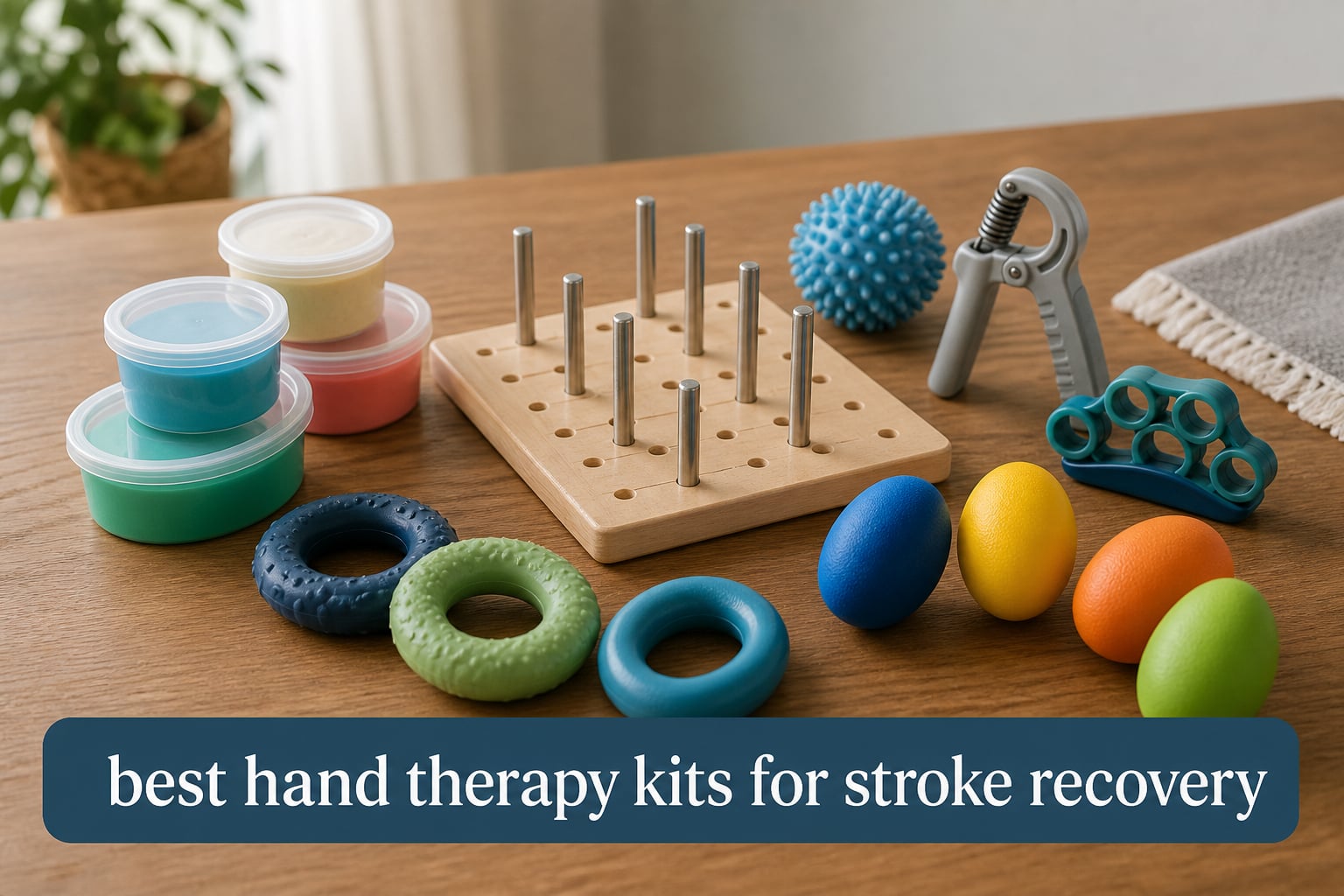
Regaining hand function after a stroke is one of the hardest parts of recovery, and it is also one of the most rewarding. When my uncle started his rehab journey, I quickly learned that clinic sessions twice a week were never going to be enough on their own. His occupational therapist told us the same thing repeated across r/stroke forums and every rehab resource we found: recovery comes from high repetition, done daily, at home.
That is exactly where hand therapy kits for stroke recovery earn their keep. A good kit gives you therapy putty, grip trainers, finger exercisers, and dexterity tools in one box, so a survivor or caregiver can run a real 20-minute session without driving anywhere or paying per visit. The science behind it is neuroplasticity, meaning the brain rewires around damage when you repeatedly ask the affected hand to perform specific tasks. Consistent daily practice with the right tools is what turns that principle into measurable gains in grip strength, dexterity, and fine motor skills.
We spent weeks comparing kits, digging through owner reviews, and checking which sets occupational therapists actually recommend. Some kits are built by stroke families, some are clinic staples with thousands of reviews, and one costs less than lunch. Below you will find our top three picks, a full comparison table of all eight kits, detailed hands-on reviews, a buying guide, and honest answers to the questions caregivers ask most.
Table of Contents
Top 3 Picks for Best Hand Therapy Kits for Stroke Recovery in October
If you only have a minute, these three kits cover the three most common situations we encountered: an all-in-one starter set, a shoestring-budget option, and a dedicated fine-motor trainer. Every other kit on this list is strong too, but these three earned their badges after we compared ratings, tool variety, and real user feedback side by side.

Special Supplies 15-Piece Therapy Putty Kit
- 15-piece all-in-one set
- Color-coded putty resistances
- OT-recommended for stroke rehab

FitBeast 9-Piece Grip Strength Kit
- 9 pieces under ten dollars
- Grip rings 10-60 lbs
- 1 best seller in category

Utag 36-Hole Wooden Pegboard Kit
- Progressive 3-diameter pegs
- Solid wood clinic-grade build
- Built for stroke and Parkinson's
Best Hand Therapy Kits for Stroke Recovery in 2026
Here is the full lineup side by side. Each of these eight kits earned its place through a combination of owner ratings, tool variety, and how well it fits stroke-specific recovery needs. We ranked the FitBeast kit first in the table because its 3,855 reviews make it the most battle-tested set here, but the right pick for you depends on the recovery stage, which we break down in each review below.
| Product | Specifications | Action |
|---|---|---|
| FitBeast 9-Piece Grip Strength Kit |
|
Check Latest Price |
| Special Supplies 15-Piece Putty Kit |
|
Check Latest Price |
 JoAnn’s Journey Stroke Recovery Kit JoAnn’s Journey Stroke Recovery Kit |
|
Check Latest Price |
| Utag 36-Hole Wooden Pegboard |
|
Check Latest Price |
 Vive Squeeze Ball 4-Pack Vive Squeeze Ball 4-Pack |
|
Check Latest Price |
 Special Supplies Putty and Flex Bar Kit Special Supplies Putty and Flex Bar Kit |
|
Check Latest Price |
 Theravio Hand Therapy Kit Theravio Hand Therapy Kit |
|
Check Latest Price |
 Triceratops Wooden Finger Board Triceratops Wooden Finger Board |
|
Check Latest Price |
1. FitBeast 9-Piece Grip Strength Kit – Best Value for Early Recovery
FitBeast Hand Grip Strengthener, Finger Exerciser, Forearm Strengthener Kit – 9 Pack, Targeted Hand & Forearm Strength, Relief & Recovery Kit (Deep Blue)
9-piece kit
Grip rings 10-60 lbs
Finger bands 6.6-11 lbs
Food-grade silicone
Carrying bag and manual
Pros
- Complete 9-piece set for the price of lunch
- Resistance from 10 to 60 lbs grows with you
- Includes workout guide and carrying bag
- 3855 reviews and a 1 best-seller rank
Cons
- Firmest ring had some defective units reported
- Tension can loosen after months of daily use
This is the kit I would buy first for any stroke survivor on a tight budget, and I say that after comparing it against sets costing five times more. You get grip rings spanning 10 to 60 pounds of resistance plus finger stretcher bands from 6.6 to 11 pounds, which means the kit adapts as grip strength returns instead of being outgrown in a month.
What surprised me most is how usable the whole set is with one functioning hand. The rings are easy to position, the textured silicone does not slip out of a spastic grip, and everything fits in the included carrying bag for therapy on the go. It currently sits at number 1 in Amazon’s Physical Therapy Hand Exercisers category, and with roughly 3,855 reviews behind it, it is the most proven set in this entire roundup.
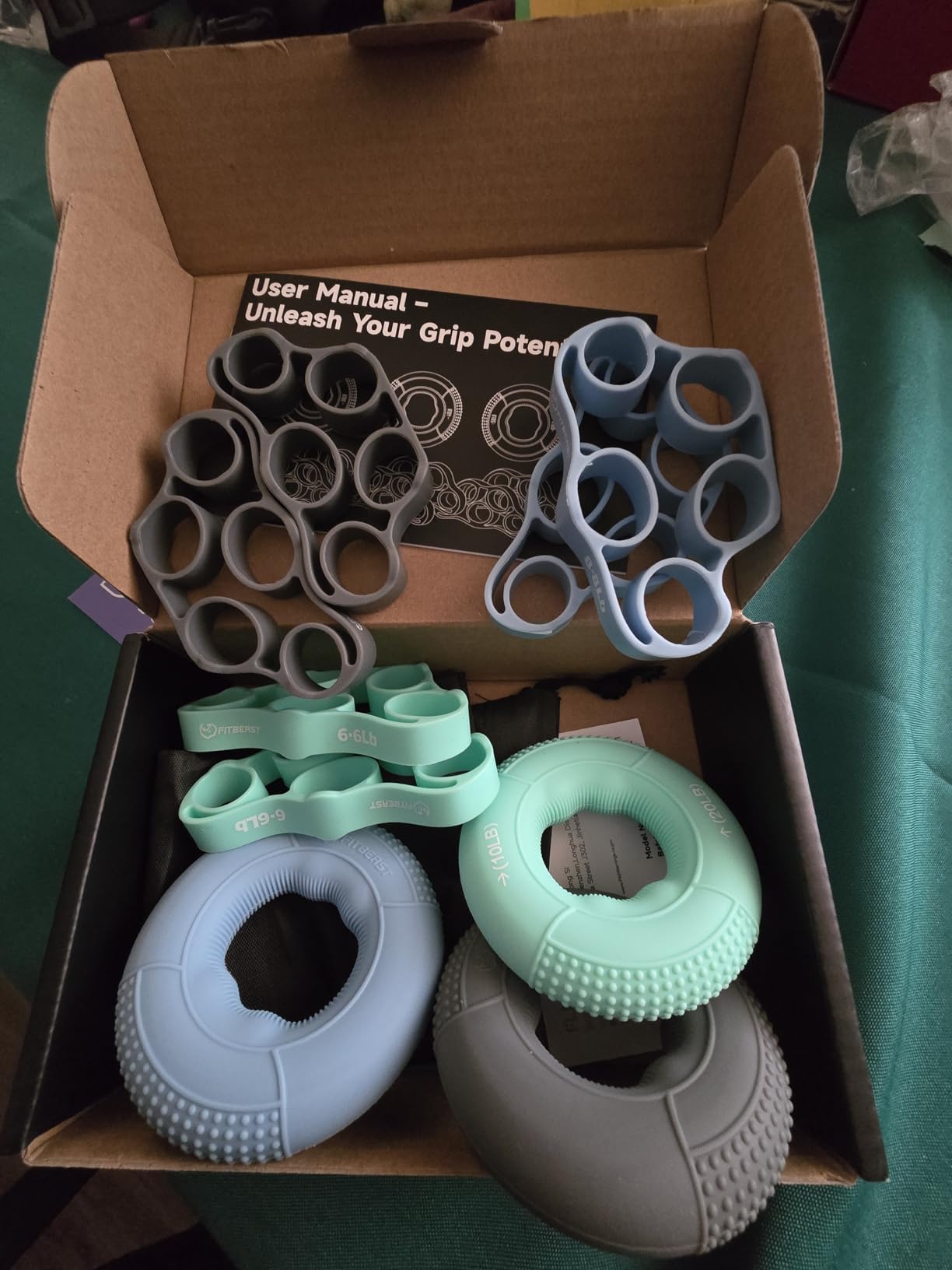
For stroke recovery specifically, the finger stretcher bands matter more than the grip rings early on. They train finger extension, which is usually the weaker movement after a stroke since flexor tone tends to dominate. Weaving extension work into every session made a visible difference for my uncle’s ability to open his hand voluntarily.
The downsides are minor at this price. A handful of reviewers received a defective 50 or 60 lb ring, and the tension softens slightly after months of heavy daily use. At eight dollars, replacing the set is painless, which is exactly why it earns the Budget Pick badge.
Who should buy this kit
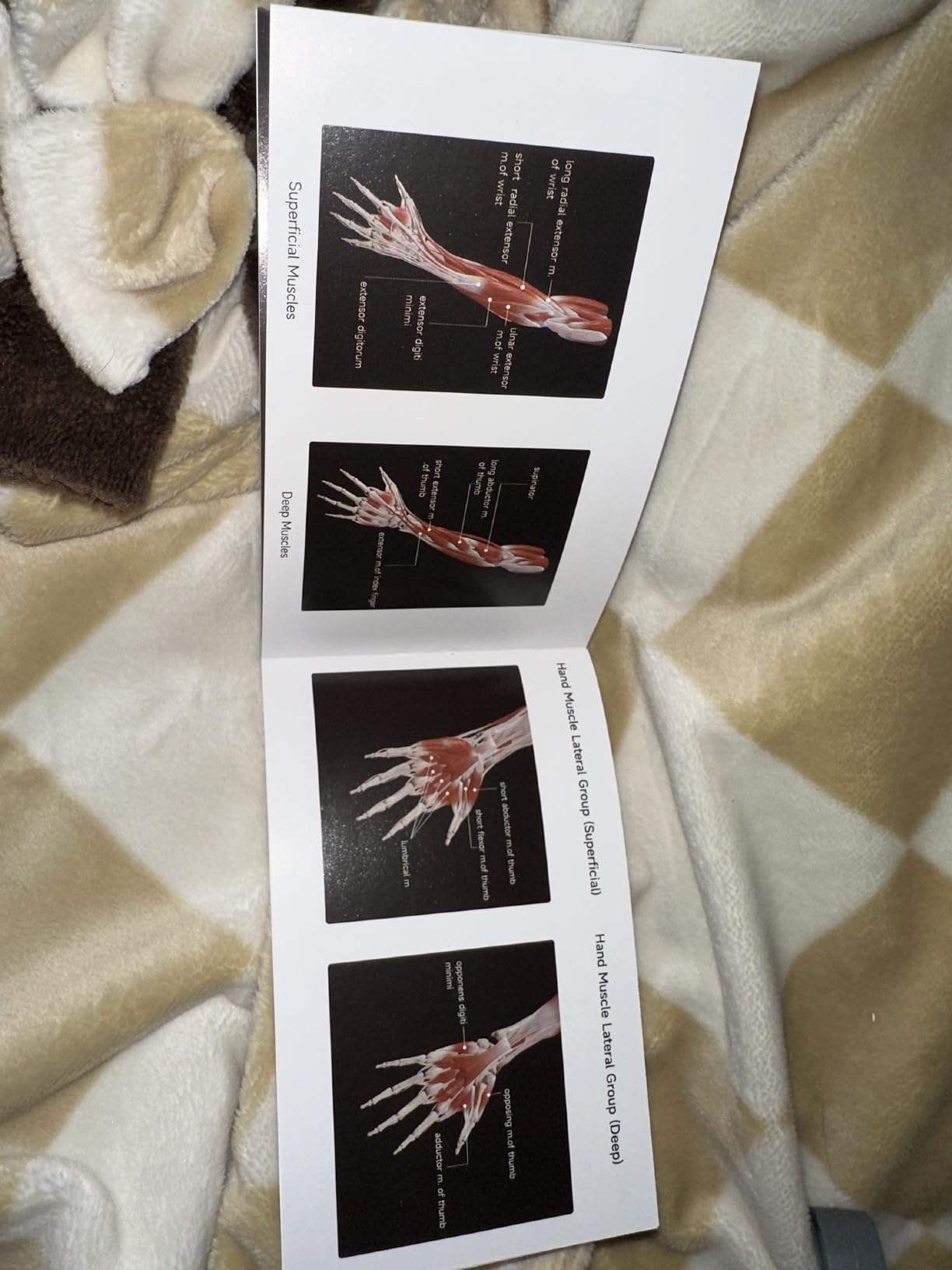
Anyone starting home therapy who wants the widest tool variety per dollar. It suits survivors with some active hand movement, caregivers building a daily routine, and family members who also want grip training. If you need guidance, the included manual walks you through a starter routine.
What stage of recovery it fits best
It shines from early recovery onward because the lightest ring and gentlest band are usable even with weak activation. Very dense hands with severe spasticity may struggle to position rings at first, in which case putty or squeeze balls are an easier entry point before graduating to this set.
2. Special Supplies 15-Piece Therapy Putty Kit – Best All-in-One Set
Special Supplies Physical Hand Therapy Putty Kit, Finger Exercisers, Hand Strengtheners, 15 Set Grip Strength,Dexterity, Mobility, Injury Stress Relief
15-piece bundle
Color-coded putty resistances
Ring finger exercisers
Hand strengtheners
BPA-free silicone
Pros
- Biggest variety of tools in the roundup
- Color-coded putty for progressive resistance
- Recommended by occupational therapists
- 4.8 stars across 736 reviews
Cons
- No instructions included in the box
- Silicone can feel sticky and pick up lint
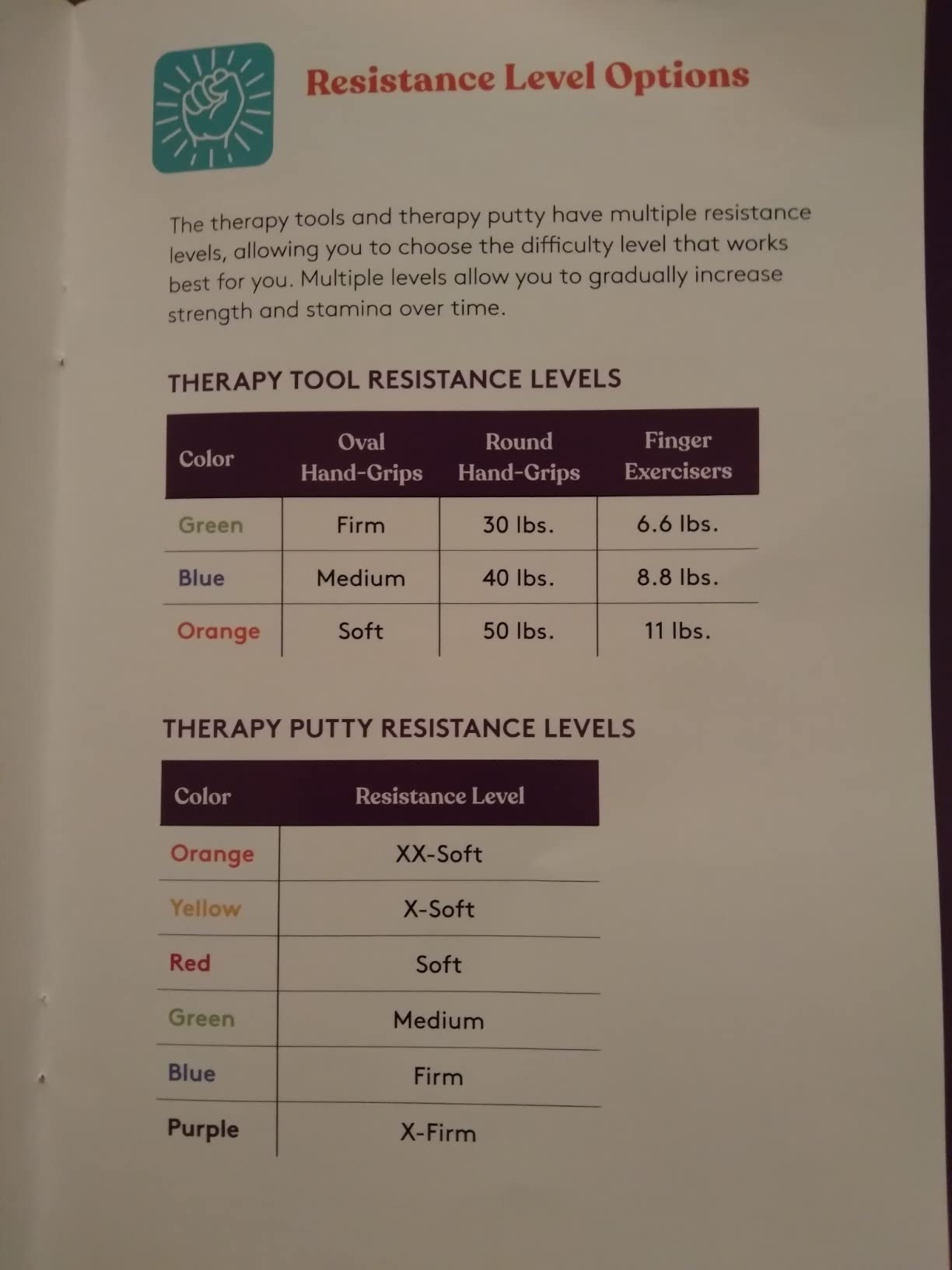
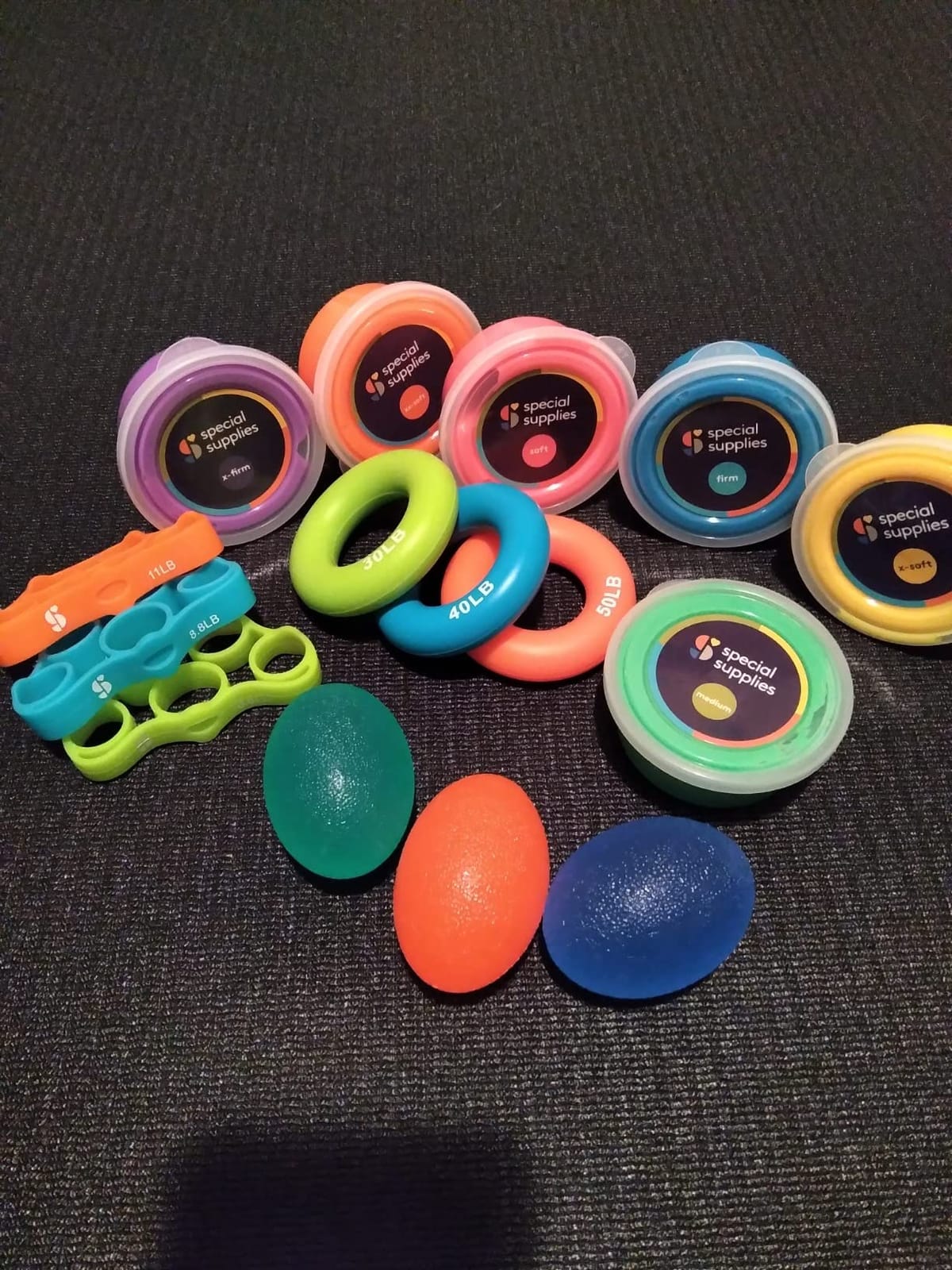
When I opened this kit I understood why therapists keep recommending it: there is genuinely something for every ability level in the box. Stretchy therapy putty in multiple consistencies, ring-style finger exercisers, and hand strengtheners together cover pinch strength, grip, finger isolation, and sensory stimulation in one purchase.
Therapy putty is the one tool every stroke community agrees on. On r/stroke, putty comes up again and again as the recommended starting point because squeezing, pinching, and burying coins in it builds strength while also retraining the sensory pathways in the hand. With multiple color-coded resistances, you progress from the softest putty to firmer grades as control returns.
The 736-review history at 4.8 stars, with about 85 percent five-star ratings, tells you the quality is consistent. Reviewers specifically call out stroke rehab, wrist injury recovery, and arthritis relief, and the set ranks number 12 in Exercise Putty. It is also quiet, portable, and usable while watching TV, which solves the motivation problem better than any gadget.
Two honest complaints recur in reviews. There are no printed exercise instructions, so pair it with an OT-designed routine or a free online program. And the silicone can feel sticky and attract lint, so store it in its containers and keep it off fabric. Neither issue outweighs the value.
Who should buy this kit
Families who want a single purchase that covers months of progressive home therapy. It works for survivors at nearly any stage, from very weak hands using soft putty up to stronger hands needing firmer resistance. It is also a strong choice when a therapist has asked for daily putty work between sessions.
What stage of recovery it fits best
All stages, which is rare. Start with soft putty pinches and passive-assisted squeezes early, then move to firmer putty and the finger rings as strength builds. If fine motor precision rather than strength is the main deficit, add the Utag pegboard below rather than pushing harder putty.
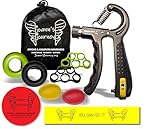
3. JoAnn’s Journey Hand Therapy Kit – Best Designed by a Stroke Family
Hand Therapy Kit for Stroke and Aneurysm Recovery, OT/PT Rehab Tools for Dexterity, Fine Motor Skills and Hand Coordination, Home Therapy Set for Survivors and Caregivers, by JoAnn’s Journey
OT and PT rehab tools
Dexterity and fine motor trainers
Resistance band included
Bottle and jar gripper
Free resources via QR code
Pros
- Created by an actual stroke family
- Daily-living tools like jar grippers
- Progressive difficulty across tools
- QR code unlocks free exercise resources
Cons
- Only 12 reviews so far
- No ratings history to lean on yet
Most therapy kits are designed by generic brands, but this one comes from a family who lived through stroke recovery themselves, and it shows in the details. Alongside the hand exercisers, finger exercisers, and dexterity trainers you get a resistance band for the whole arm and a gripper for bottle and jar tops, because real independence is about opening your own water bottle.
The focus on dexterity and hand coordination fills a gap that strength-focused kits leave open. For a survivor who can squeeze but struggles with buttoning or coordinating fingers, these fine motor tasks are the bridge back to daily activities. Everything is adjustable in tension and easy to clean, which matters when the kit gets used every single day.
The catch is simple: with only 12 reviews, there is less crowd evidence than the other kits here. That said, the early signal is strong at 4.8 stars with about 84 percent five-star ratings, and reviewers already report using it for stroke recovery, aneurysm rehab, and trigger finger. The included QR-code resources also mean you are not left guessing what to do with each tool.
For caregivers, this is arguably the most thoughtful purchase on the list because it was built for the survivor-plus-caregiver team. The price sits at the low end of the category too, so the risk in trying it is minimal.
Who should buy this kit
Survivors and caregivers who want daily-living function, not just grip numbers, from their home program. It suits anyone transitioning home after inpatient rehab, especially when insurance-covered therapy is winding down.
What to know before ordering
The kit covers a broad ability range but individual tools are lighter-duty than clinic equipment. If severe spasticity or significant weakness is the main issue, putty or squeeze balls may still be needed early on, with this kit taking over as coordination becomes the focus.
4. Utag 36-Hole Wooden Pegboard Kit – Best for Fine Motor Skills
Utag 36-Hole Wooden Pegboard for Finger Dexterity & Motor Skills
36-hole solid wood board
Metal rods in 3 diameters
L-shaped rods and buckles
Flannel storage bag
2.76 lb total weight
Pros
- Clinic-style progressive dexterity training
- Solid wood build with smooth edges
- Three rod sizes for graded difficulty
- Built-in storage design
Cons
- Pegs are larger than standard pegboards
- Weighs nearly 3 pounds for the set
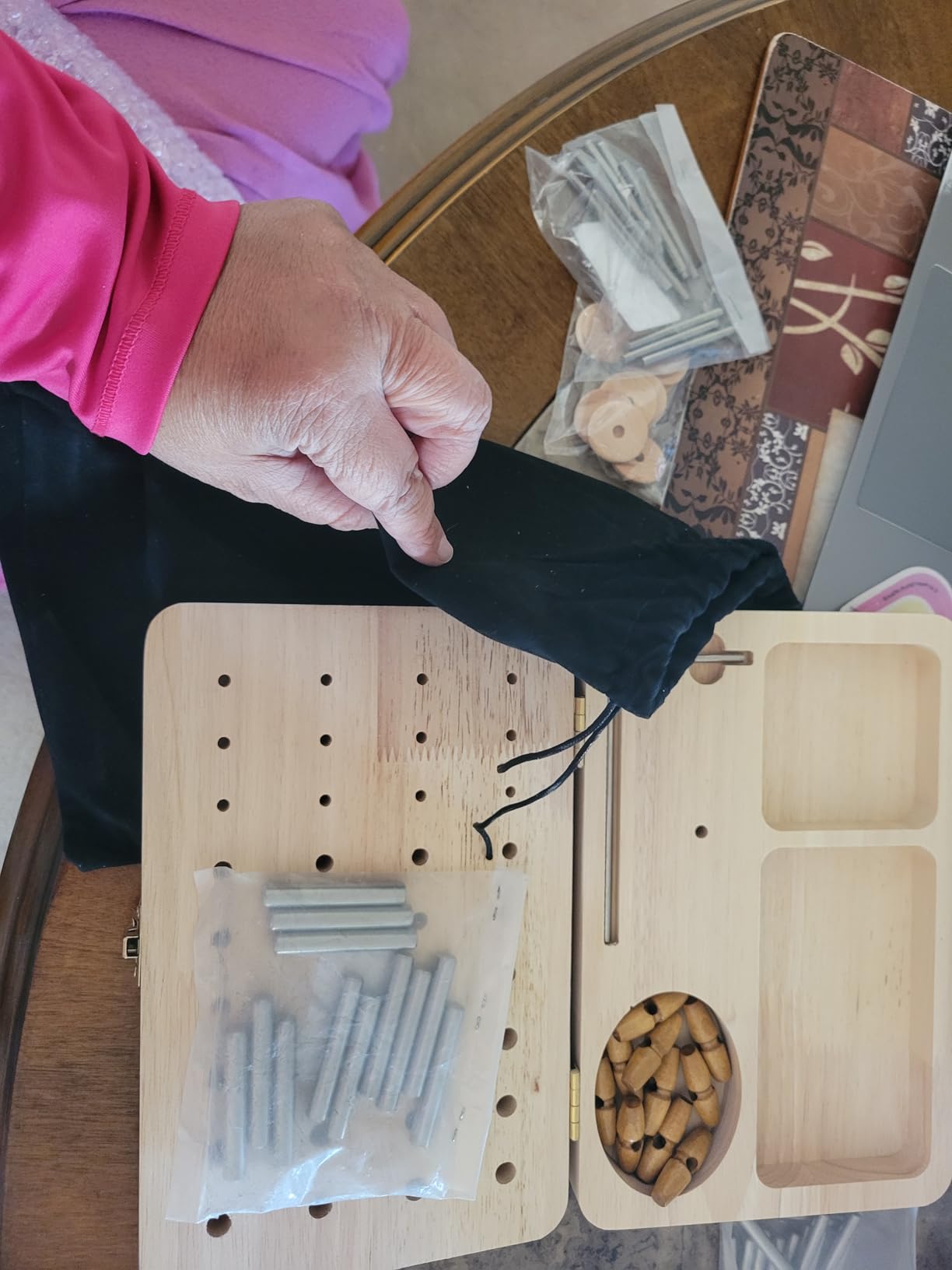
This is the closest thing to a real occupational therapy clinic tool you can put on your kitchen table. The solid wood board holds 36 holes, and the stainless steel rods come in three diameters so the difficulty scales as finger control improves, which is exactly how OTs grade fine motor work with stroke and Parkinson’s patients.
Beyond plain peg insertion, the kit includes L-shaped rods, round wood pieces, and olive buckles that require rotation and precise finger placement. Those variations are what turn simple pegging into genuine hand-eye coordination and dexterity training, and reviewers recovering from stroke consistently describe real progress with daily use.
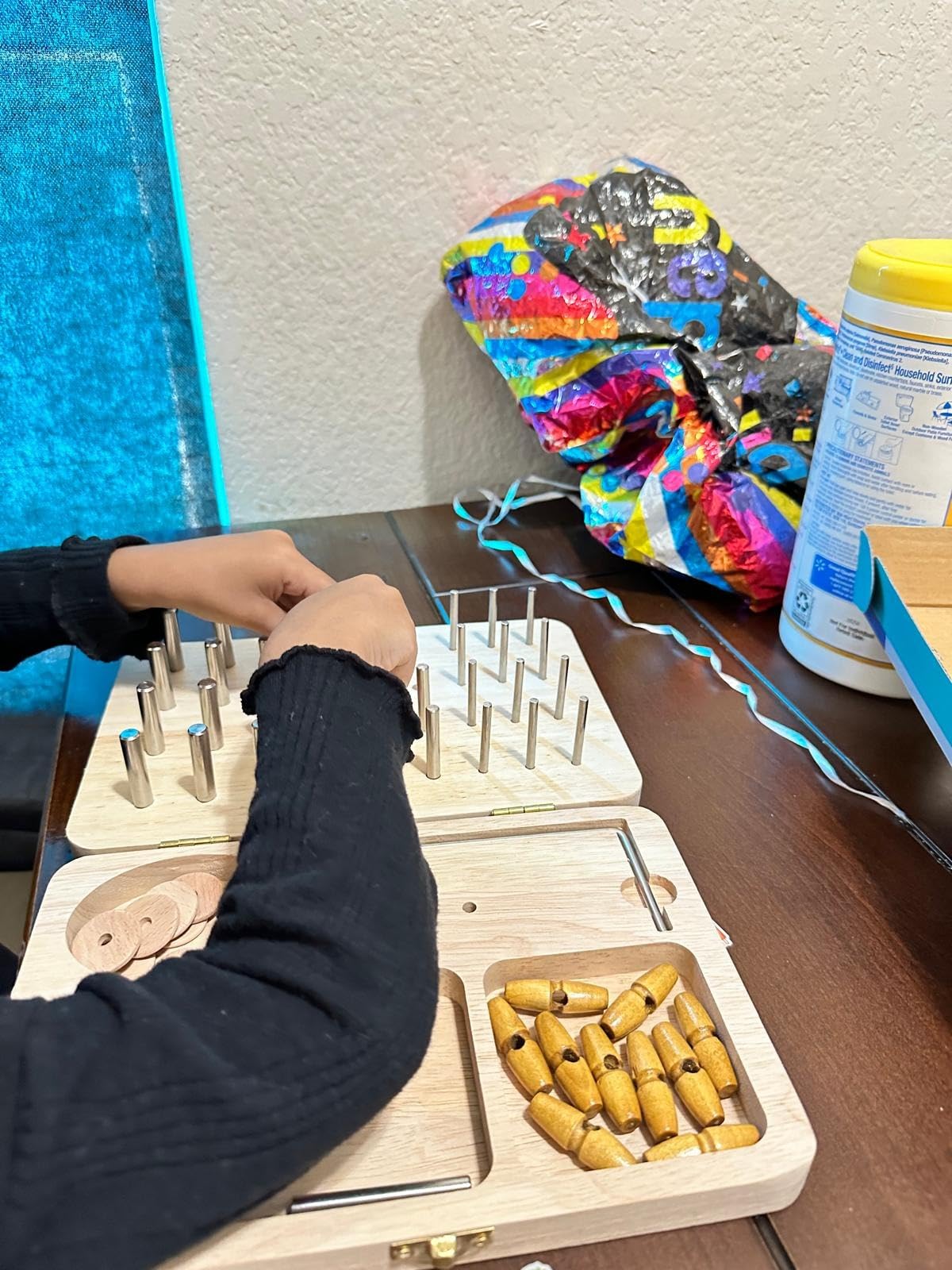
Build quality is a step above plastic kits. The wood is smooth, the rods have a satisfying weight that adds sensory feedback, and everything packs into the board itself with a flannel bag. At 90 reviews and 4.8 stars, with about 83 percent five-star ratings, the feedback pattern is strong for a niche rehab tool.
The main complaint is that the pegs and washers run larger than the standard clinic pegboards some therapists use, so exercises may feel slightly different from in-clinic versions. It is also a tabletop activity, so it targets dexterity rather than raw grip strength.
Who should buy this kit
Survivors whose strength is returning but whose fine motor precision lags, which is extremely common in the months after a stroke. It is also excellent for anyone with tremor, Parkinson’s, or post-surgical hand recovery who needs measurable, repeatable tasks.
How to use it effectively
Start with the largest diameter rods and graduate down as accuracy improves, timing each set to track progress. A useful progression is plain insertion first, then rotation with the L-rods, then the buckles. Ten to fifteen minutes daily beats an hour once a week.
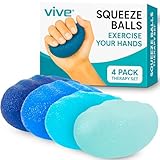
5. Vive Squeeze Balls 4-Pack – Best Progressive Resistance Balls
Vive Squeeze Balls for Hand Therapy (4 Pack) – Grip Exercise Strengthener
4 egg-shaped squeeze balls
Soft, medium, firm, extra firm
Pebbled non-slip surface
3.5 x 2.5 inch size
60-day guarantee
Pros
- Four clear resistance levels in one set
- Egg shape engages the whole hand
- HSA and FSA funds accepted
- Vive 60-day unconditional guarantee
Cons
- Runs large for medium or small hands
- Two firmest levels are very stiff
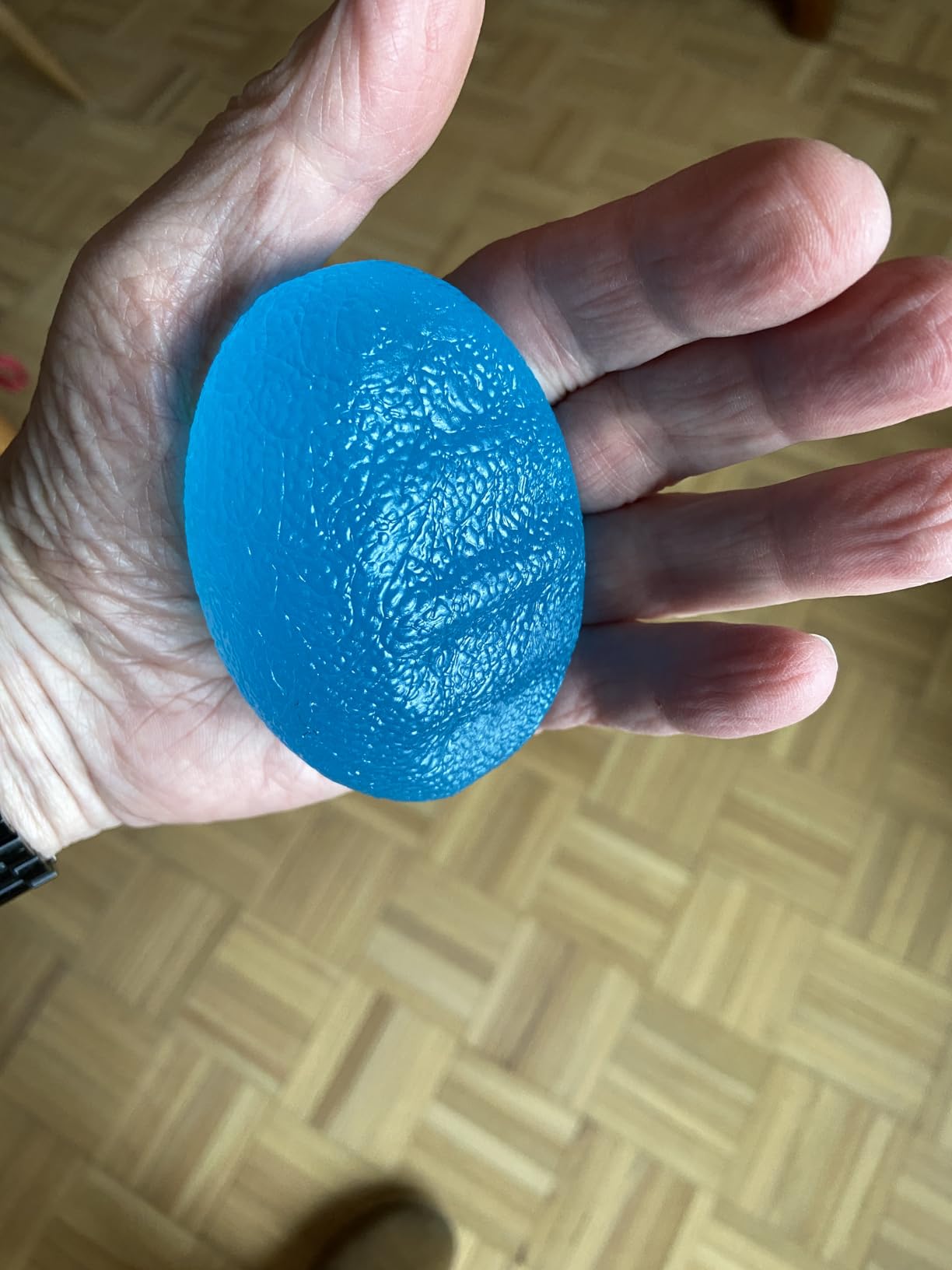
Squeeze balls are the classic stroke hand exercise tool for good reason: the movement is simple, safe, and repeatable. Vive’s set earns its spot by giving you four clearly graded resistances from soft to extra firm, so one purchase covers the whole strengthening curve from a weak post-stroke grip onward.
The egg shape is smarter than a round ball because it forces the fingers to wrap and works the whole hand at once. The pebbled surface also keeps the ball from shooting out of a hand that does not yet fully cooperate, a small detail that matters a lot for hemiplegia or hemiparesis.
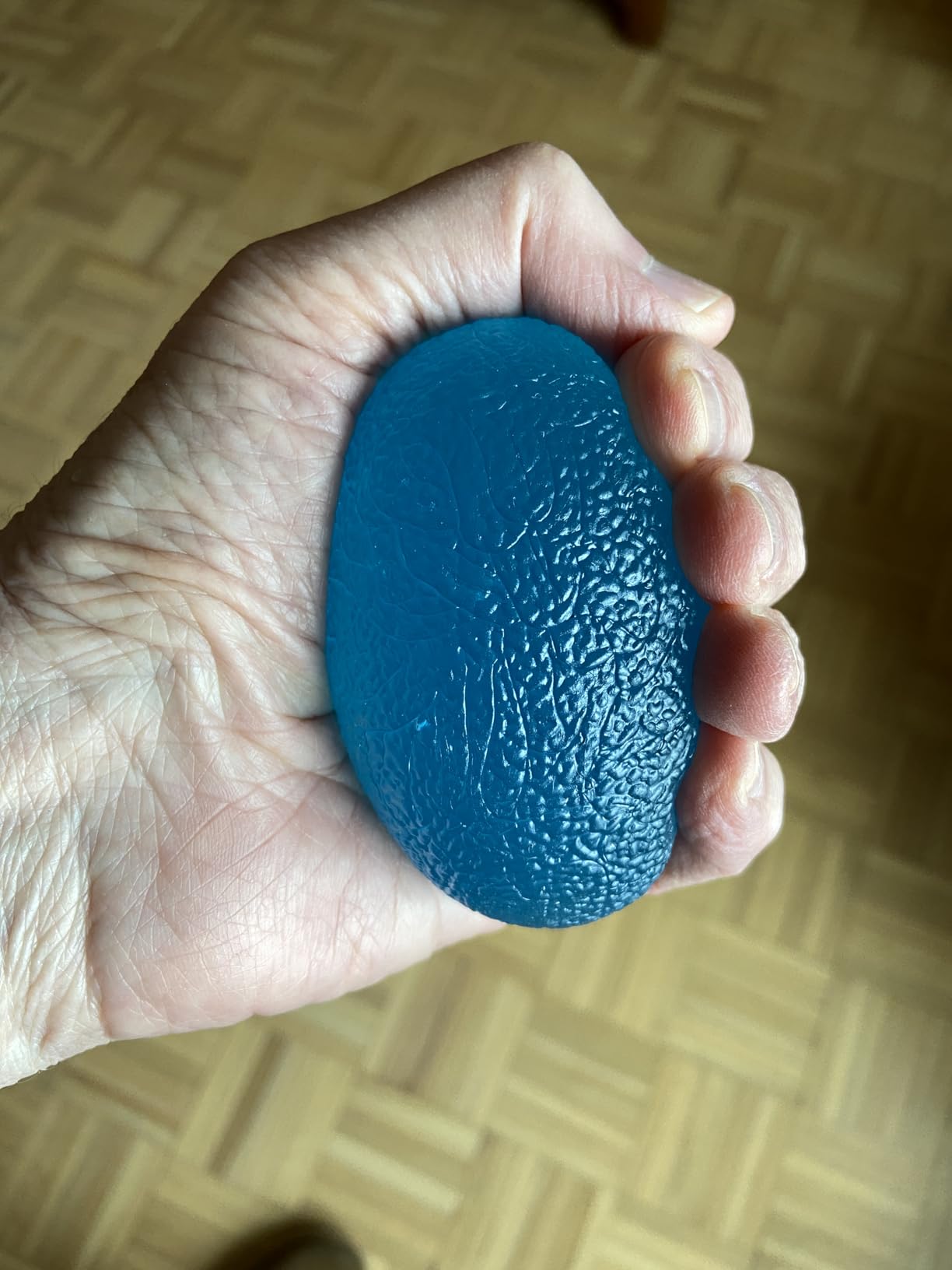
With 446 reviews at 4.2 stars, this is a proven set, and two practical perks stand out. It is HSA and FSA approved, so you can pay with pre-tax health funds, and Vive backs it with a 60-day unconditional guarantee. Few therapy products offer that safety net.
The honest caveats: reviewers with medium-sized hands find the eggs too big to grip comfortably, and the two firmest levels are stiff enough that many stroke survivors will not use them for months, if ever. If hand size is a concern, putty is the more forgiving alternative.
Who should buy this kit
Survivors with larger hands who want the simplest possible daily routine, and anyone with HSA or FSA funds to spend. It also suits seniors who find putty messy and prefer a tool they can hold while walking or sitting outside.
How hard each resistance actually feels
Soft and medium are genuinely usable early in recovery, while firm and extra firm are closer to athletic-grade. A practical approach is starting every session with the soft ball as a warm-up, then finishing with the hardest one you can fully compress for five reps.
6. Special Supplies Putty and Flex Bar Kit – Best for Grip Plus Forearm Strength
Special Supplies Physical Hand Therapy Putty & Flex Therapy Bar Resistive Hand Exercise Kit – Improve Grip, Strength, Dexterity & Mobility – Injury & Stress Relief – 8 Piece Set
8-piece set
4 therapy putties
4 flex resistance bars
Latex-free silicone
Storage bag included
Pros
- Combines putty with flex-bar wrist work
- Four putty resistances for progression
- Therapist-recommended for home programs
- Includes storage bag
Cons
- Putty can stick to clothing
- Flex bars feel low quality to some users
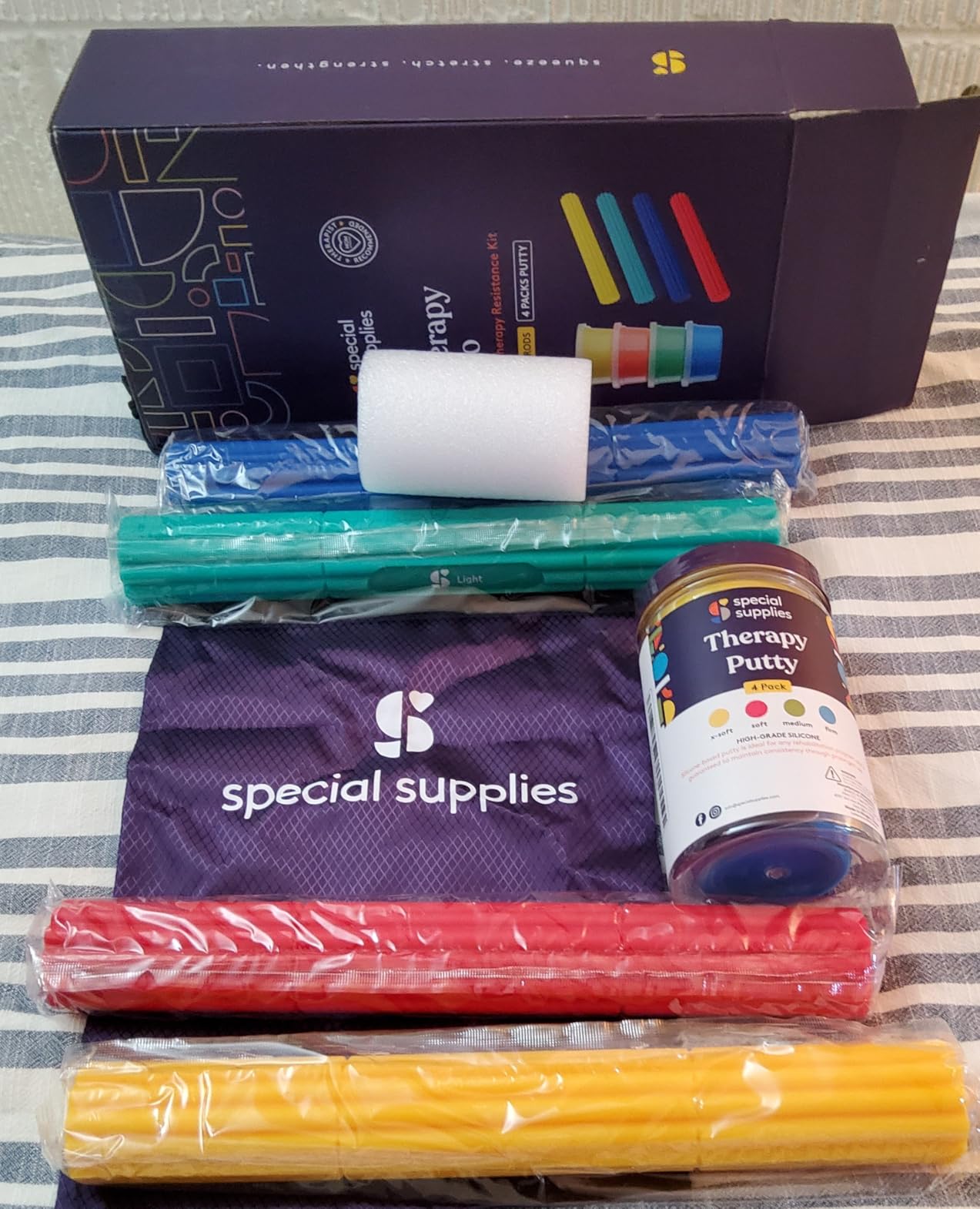
This 8-piece set pairs four therapy putties with four flex bars, and that combination is what makes it interesting for stroke recovery. Wrist and forearm strength sit upstream of hand function, and twisting a flex bar trains the whole chain in a way squeezing alone cannot.
In practice, the putty covers pinch, grip, and finger isolation while the flex bars handle wrist strengthening and elbow conditions like tennis elbow that often accompany one-sided overuse after a stroke. Physical therapists recommend the set for home programs, and reviewers recovering from stroke specifically mention grip gains with regular use.
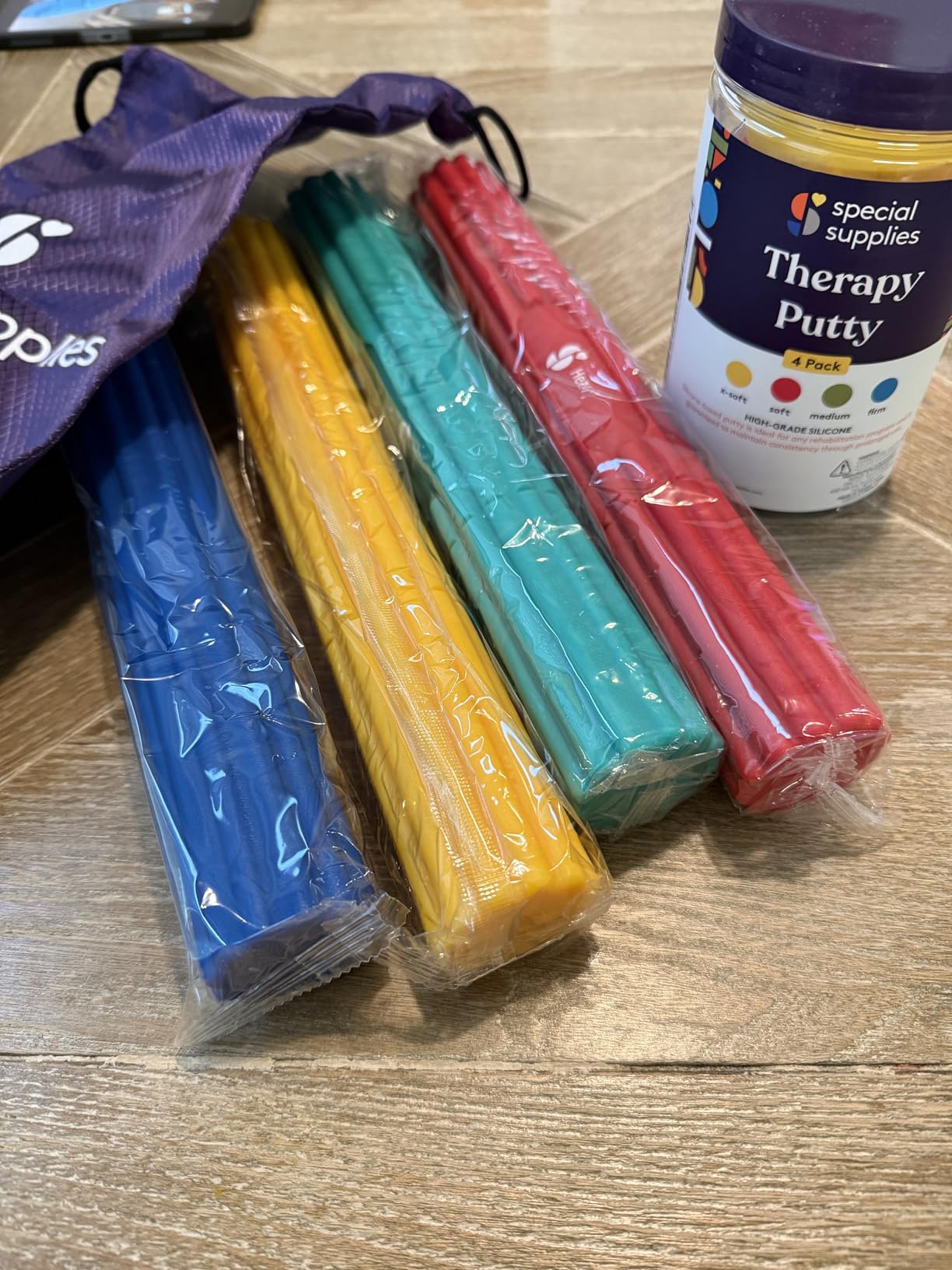
The putty quality matches the bigger Special Supplies kit, with four resistances to grow through, and the whole set stores in the included bag. At 53 reviews and 4.4 stars, it is newer and less proven than its 15-piece sibling but tracks well.
Two complaints repeat in reviews. The putty sticks to clothes and fabric, so it needs careful storage, and some users found the flex bars flimsy compared with name-brand therapy bars. If forearm work is your priority, the bar quality is the trade-off at this price.
Who should buy this kit
Survivors who have basic hand movement but need wrist and forearm conditioning to support it. It is also a good fit when one kit has to serve a whole household, since athletes and desk workers benefit from the same tools.
Putty versus flex bar balance
Roughly two-thirds of your session should stay with putty for hand-specific work, with flex-bar twists as the finisher. If the bars feel too stiff, anchored twisting with the unaffected hand assisting is a legitimate way to start.
7. Theravio Hand Therapy Kit – Best Guided Program
Hand Therapy Equipment for Rehabilitation and Recovery – Hand Therapy Kit with Grip Strength Trainer, Finger Strengthener & Exercise Balls for Arthritis, Carpal Tunnel and Physical Therapy by Theravio
Grip strength trainer
Finger strengthener
Exercise balls and putty
Free ebook and 30+ videos
Carrying case included
Pros
- Free ebook plus 30+ instructional videos
- Wide variety of resistance levels
- Portable carrying case
- OT-recommended for rehab
Cons
- Some items arrive mislabeled
- Pricier per item than rival kits
- Resistance levels require self-identification
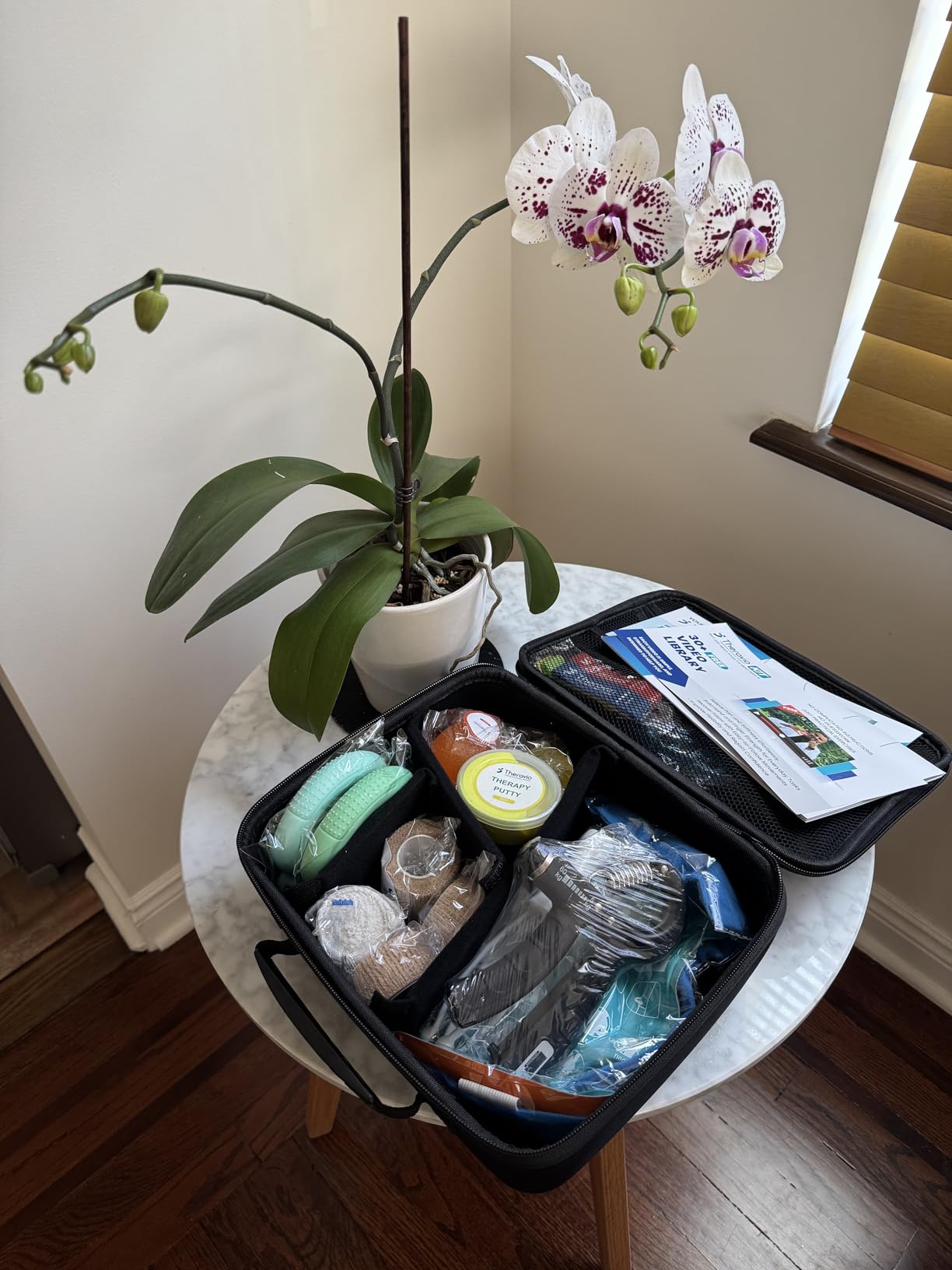
The biggest complaint in stroke forums is not equipment quality, it is not knowing what to actually do each day. Theravio attacks that directly: the kit ships with a free ebook and more than 30 instructional videos, so a survivor gets a structured program rather than a box of mystery tools.
The hardware covers the standard bases, including a grip trainer, finger strengthener, exercise putty, and therapy balls, with multiple resistance levels across the set. Occupational therapists recommend it, and reviewers praise the variety and the durable feel of the components.
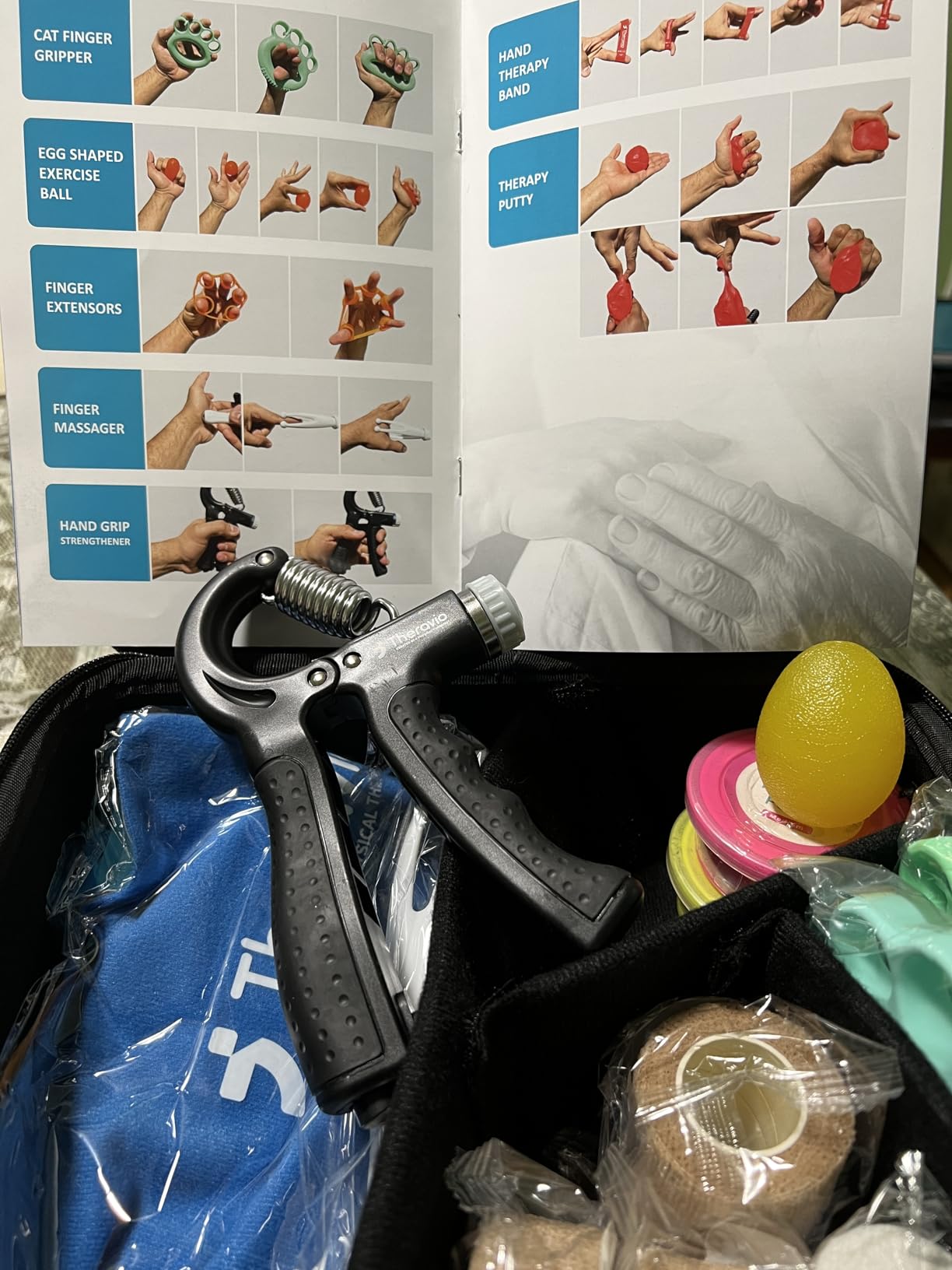
Where it earns its keep is adherence. My uncle’s routine collapsed whenever he was unsure what to do next, and a guided video queue solved that instantly. If motivation and structure are the weak links in your recovery plan, this kit is built for exactly that problem.
On the downside, it costs more per item than the FitBeast or Special Supplies sets, some buyers found items mislabeled, and you may have to figure out which resistance is which yourself. At 58 reviews and 4.3 stars it is solidly reviewed but far from the crowd favorite.
Who should buy this kit
Anyone who wants a plug-and-play daily program without hunting for exercises online, and caregivers coordinating therapy from a distance. The videos make it easy to hand a survivor a routine and know it is being done correctly.
What the included guidance covers
The ebook and video library walk through grip work, finger isolation, and putty routines from beginner to advanced. It is not a replacement for an OT assessment, but it fills the gap between clinic visits far better than a pile of unexplained equipment.
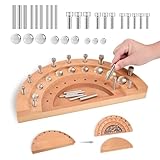
8. Triceratops Wooden Finger Training Board – Best 3-in-1 Dexterity Station
Triceratops Hand Therapy Finger Training Board, Multifunctional Wooden Dexterity Rehabilitation Tool for Stroke Recovery, Hand-Eye Coordination, Fine Motor Skills & Finger Strength Exercise, 27 Holes
27-hole wooden board
3-in-1 training modules
Rotational, pinch and grip, coordination
Semi-circular ergonomic shape
Wall-mountable design
Pros
- Three training modes on one board
- Thick heavy-duty wooden construction
- Ergonomic semi-circular design
- Compact for home or clinic use
Cons
- Reports of missing pieces
- Quality control complaints including second-hand units
This semi-circular wooden board takes a different approach from the Utag pegboard by combining three training modules in one station: rotational work, pinch and grip tasks, and hand-eye coordination drills. That variety keeps sessions interesting, which directly attacks the consistency problem that sinks so many home programs.
The 27-hole design supports progressive finger exercises, and the thickened wooden base feels like clinic equipment rather than a toy. It is compact enough for a bedside table and can even mount on a wall, which is genuinely useful when table access is limited.
Reviewers recovering from stroke and surgery report effective rehabilitation use and praise the build quality, and at 4.2 stars with 71 percent five-star ratings the early reception is positive. It targets stroke recovery, arthritis, and tendon rehabilitation across all recovery stages.
However, this is the one kit in the roundup with notable quality control flags, including reports of missing pieces and even what appeared to be a second-hand unit shipped to one buyer. With only 20 reviews, those complaints carry weight, so check the contents against the parts list the moment it arrives.
Who should buy this kit
Survivors who get bored with single-task tools and need varied drills to stay consistent, and clinics wanting a compact multi-function station. It suits anyone focused on finger strength and coordination rather than raw grip force.
What to check when it arrives
Count every rod, washer, and piece against the listing before your return window closes, given the missing-parts reports. Also confirm the mounting hardware is included if you plan to wall-mount it, since surfaces like concrete or brick need specific anchors.
How to Choose the Right Hand Therapy Kit for Stroke Recovery
Choosing well comes down to matching the kit to the survivor’s current ability, not buying the biggest box. Here is the framework we use after months of watching what actually gets used daily versus what sits in a drawer.
Match the kit to the recovery stage
Early recovery with minimal active movement calls for forgiving tools: soft therapy putty and the lightest squeeze balls. Once the hand opens and closes voluntarily, grip rings, finger exercisers, and flex bars become usable. When strength is decent but buttons and coins are still impossible, pegboards and dexterity boards are the right investment. Buying a stage ahead usually means frustration, not faster progress.
Prioritize progressive resistance
The single most valuable feature in any kit is a range of resistances, because returning hand strength changes month to month. Color-coded putty, graduated squeeze balls, and multi-ring sets all let one purchase cover a full year of progression. This is why our top picks all emphasize graded difficulty over single-tension tools.
Make sure it works one-handed
A stroke survivor often has one strong hand and one affected hand, so setup matters more than most people expect. Putty, rings, and balls need no assembly and can be positioned with the unaffected hand. Pegboards need a stable table but no fiddly setup. Anything requiring two-handed assembly will quietly stop being used.
Weigh the cheap-versus-expensive question honestly
Reddit’s r/stroke community is refreshingly blunt here: start with cheap tools and household objects like clothespins and building blocks before spending big. A clinic-grade NMES device or robotic glove can run into hundreds of dollars, while the FitBeast kit costs less than a movie ticket and covers the fundamentals. Expensive gadgets can help, but none of the forum veterans we read consider them a prerequisite for progress.
Consistency beats equipment
Every source we studied, from therapists to long-term survivors, repeated the same truth: short daily sessions outperform occasional marathons. Pick the kit the survivor will actually pick up every day, whether that is because it is fun, guided by videos, or simple enough to use while watching television. That is the kit that produces measurable gains in grip strength and fine motor skills.
Check insurance and HSA coverage
One gap we found across every competitor article is cost coverage. Original Medicare generally does not cover exercise equipment for home use, though Medicare Advantage plans and some private insurers offer fitness or DME benefits worth checking. On the payment side, several items here are HSA and FSA eligible, including the Vive set, which effectively cuts the cost with pre-tax dollars. Ask the survivor’s OT for a letter of medical necessity if you plan to pursue coverage.
Frequently Asked Questions
What are the best hand exercise tools for stroke patients?
The best hand exercise tools for stroke patients are therapy putty, graduated squeeze balls, grip strengthener rings, finger exercisers, and wooden pegboards for dexterity. Kits like the Special Supplies 15-piece set, FitBeast 9-piece kit, and Utag 36-hole pegboard combine several of these tools with progressive resistance for home use.
What is the best hand therapy rehabilitation glove for a stroke patient?
The kits in this roundup use putty, balls, rings, and pegboards rather than gloves, and for most budgets that is the smarter starting point. A therapist-guided robotic or NMES glove can cost several hundred dollars, so we suggest mastering low-cost tools first and asking an occupational therapist whether a glove is warranted for your specific level of hand activation.
What hand rehabilitation equipment is recommended for stroke patients?
Occupational therapists commonly recommend therapy putty for grip and pinch, squeeze balls in multiple resistances, finger exercisers for finger extension and isolation, pegboards for fine motor skills, and resistance bands for wrist and forearm support. A kit combining several of these, matched to the survivor’s recovery stage, covers most home programs.
Can you do hand therapy at home after a stroke?
Yes. Recovery after stroke is driven by neuroplasticity, which responds to high-repetition daily practice, and home sessions are where most of those repetitions happen. Aim for short daily sessions with progressive tools, ideally following a program designed by an occupational therapist, and track small wins like opening a jar to stay motivated.
How long does it take to regain hand function after a stroke?
Recovery timelines vary widely, and improvements have been documented months and even years after a stroke. The consistent predictor of progress is regular, repetitive practice, so choose equipment the survivor will genuinely use every day and expect gradual gains in grip strength, dexterity, and fine motor control rather than overnight results.
Conclusion
After comparing all eight sets, our recommendations are clear. The Special Supplies 15-piece putty kit is the best all-around hand therapy kit for stroke recovery thanks to its variety, progressive resistances, and OT endorsement. The FitBeast 9-piece kit is the unbeatable budget entry point, and the Utag pegboard is the finest fine-motor trainer for rebuilding dexterity.
Whichever kit you choose, the winner is the one used daily. Pick the set that matches the survivor’s current stage, keep sessions short and consistent, and celebrate the small victories like a jar opened or a button fastened. Check current prices on our top picks and start the routine this week, because every day of practice is a day of recovery.