
If you want one telescope that points itself at galaxies and nebulae and then actually shows you detail in them, the Celestron NexStar 8SE is the one we would put in the middle of the patio. It pairs a 203mm aperture with a 40,000-plus object database, and after a few minutes of SkyAlign you press one button and a globular cluster lands in the eyepiece.
That combination is the whole story with the best GoTo telescopes for deep sky objects. GoTo pointing solves the finding problem, but it adds zero light. What you actually see through a computerized telescope is still decided almost entirely by aperture, which is why cheap GoTo scopes frustrate owners who expected their databases to deliver faint galaxies and nebulae. Observers call those unreachable targets “faint fuzzies,” and understanding that ceiling is the difference between a satisfying first scope and a dusty one.
We compared ten computerized telescopes across the price range, weighing aperture against mount steadiness, alignment time and how much maintenance each one demands. We also mapped each scope’s GoTo platform, database size and power options, and worked out which deep-sky objects you can realistically reach with a 114mm, a 150mm or a 203mm aperture. If you are still deciding on a larger manual instrument, start with our deep space viewing telescope guide first.
Table of Contents
Top 3 Best GoTo Telescopes for Deep-Sky Objects in 2026


All 10 GoTo Telescopes Compared (October 2026)
| Product | Specifications | Action |
|---|---|---|
| Celestron NexStar 8SE |
|
Check Latest Price |
| Celestron NexStar 127SLT |
|
Check Latest Price |
 Celestron 114LCM Celestron 114LCM |
|
Check Latest Price |
 Celestron NexStar Evolution 8 Celestron NexStar Evolution 8 |
|
Check Latest Price |
 Sky-Watcher Virtuoso GTi 150P Sky-Watcher Virtuoso GTi 150P |
|
Check Latest Price |
 Celestron SkyProdigy 130 Celestron SkyProdigy 130 |
|
Check Latest Price |
 Celestron Advanced VX 8 inch Newtonian Celestron Advanced VX 8 inch Newtonian |
|
Check Latest Price |
 Celestron NexStar 6SE Celestron NexStar 6SE |
|
Check Latest Price |
 Celestron Origin Intelligent Home Observatory Celestron Origin Intelligent Home Observatory |
|
Check Latest Price |
 Celestron Advanced VX 6 inch Refractor Celestron Advanced VX 6 inch Refractor |
|
Check Latest Price |
1. Celestron NexStar 8SE – the all-round deep-sky winner
Celestron NexStar 8SE Computerized Telescope – Schmidt-Cassegrain
203mm aperture
2032mm focal length
40,000+ object database
Single fork arm GoTo
Pros
- 203mm aperture reveals galaxies and globular clusters
- 40000+ object database with automatic tracking
- SkyAlign gets you aligned in minutes
- Compact tube for an 8 inch
Cons
- Heavy and awkward to carry for field use
- Included 25mm eyepiece is a modest starting point
- Single fork arm is less stable than a dual fork design
The NexStar 8SE is the scope I keep coming back to because it refuses to compromise on the one number that matters for galaxies and nebulae. At 203mm with f/10 Schmidt-Cassegrain optics, it gathers enough light to pull structure out of objects that are just grey smudges in smaller tubes, and the fork-arm GoTo keeps it aimed while you look.
SkyAlign is the part that surprises new owners. You centre any three bright objects in the eyepiece, press ALIGN, and the hand control works out where the tube is pointing. Owners consistently report minutes rather than a learning project, which matters if you are setting up after dark in a driveway with a red headlamp.
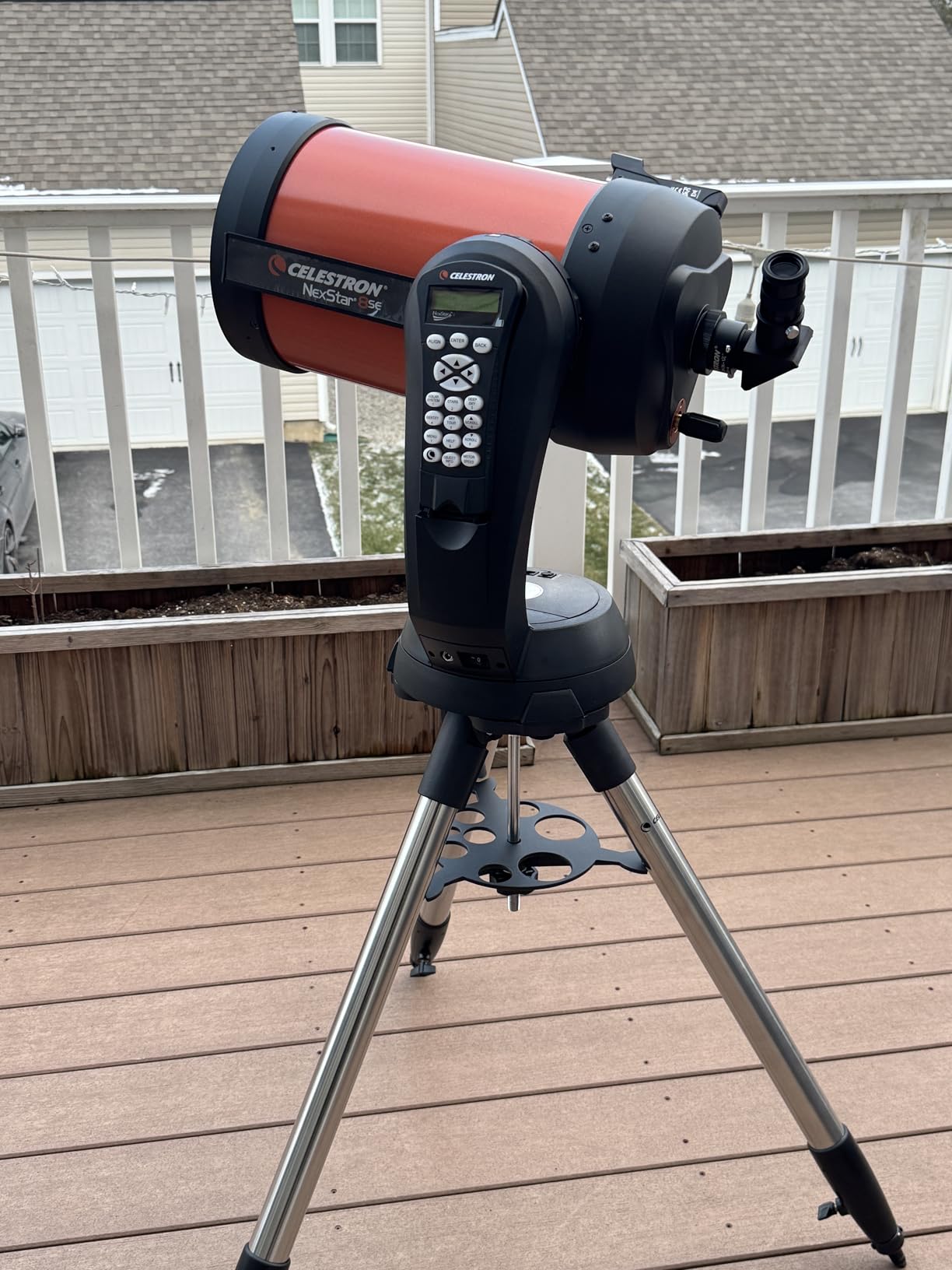
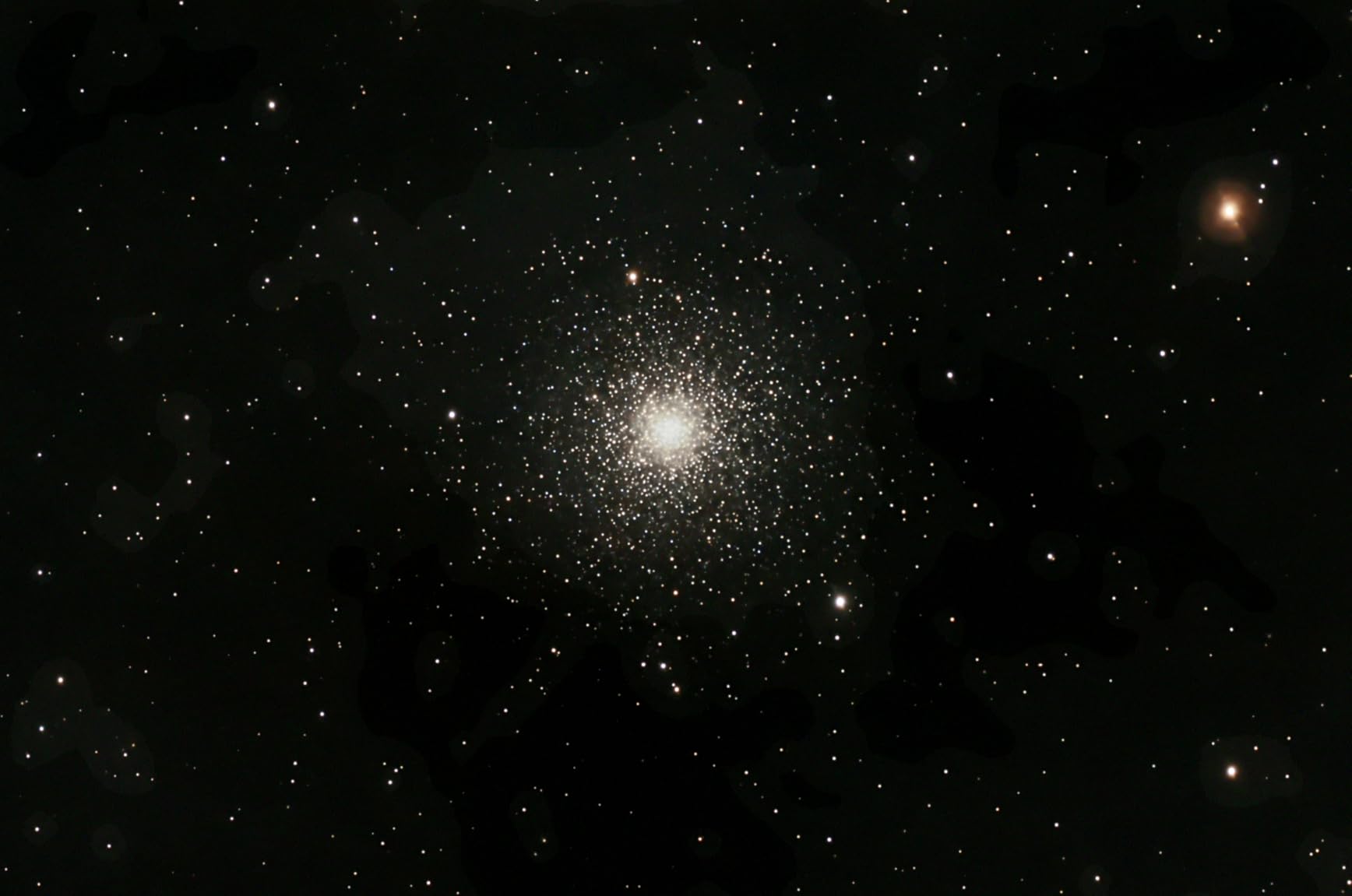
Technically it is a 2032mm focal length design with a 0.57 arc second Dawes limit, a 0.75 degree field of view and StarBright XLT coatings. In practice that means globular clusters like M13 start to resolve into grain at the edge, and the Orion Nebula shows the wings that swallow the Trapezium, not just a fuzzy patch.
Power is the quiet limitation. It runs on 8 AA batteries, a 12V AC adapter or a PowerTank that is not supplied, so a full night of GoTo slewing means budgeting for external power. The two-year warranty and US-based support are solid, and the whole thing breaks down into pieces that two people can carry from a car.
What 203mm of aperture actually shows you
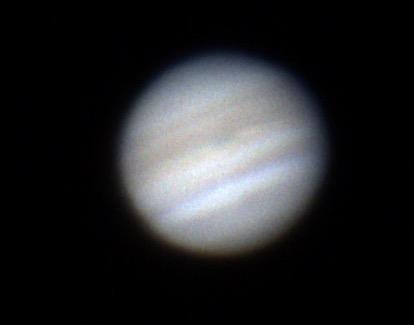
Eight inches is the point where deep-sky observing stops being a project and starts being a pleasure. You reach globulars, open and globular clusters with real brightness gradients, the brighter emission and reflection nebulae, and a growing slice of galaxies where you can tell a bright core from faint spiral arms.
On a night of decent transparency, M31 gives you a core and a suggestion of the dust lanes, M13 looks granular across half its face, and M27 shows the classic apple-core shape. The 0.75 degree native field is wide enough that a pair of wide-field eyepieces will sweep whole constellations in one shot.
Where the NexStar 8SE is the wrong choice
Skip it if you plan to move the telescope alone. At 10.88 kg with the tripod and counterweights, carrying it up stairs or across a field at night is a two-person job, and the 32 by 34 by 52 inch footprint needs a real corner of the house rather than a balcony rail.
The single fork arm is also the weaker member of the family for long-exposure imaging, since a single-arm altazimuth cannot track cleanly past the meridian. If your real goal is stacked deep-sky photos rather than looking, the German equatorial Newtonians further down this list are a better fit. Reserve the 8SE for visual observers who want the most light per minute of setup.
2. Celestron NexStar 127SLT – the compact deep-sky all-rounder
Celestron NexStar 127SLT Maksutov-Cassegrain Computerized GoTo Telescope
127mm aperture
1500mm focal length
40,000+ object database
Single fork arm GoTo
Pros
- Sharp high-contrast Maksutov views
- 40000+ catalogued objects with tracking
- Light enough for camping and trips
- Fast SkyAlign setup
Cons
- 127mm limits the faintest galaxies and nebulae
- Supplied 20mm and 9mm eyepieces are basic
- Slew accuracy good but not pinpoint
The NexStar 127SLT is the pick for anyone who wants one computerized telescope that does everything well and weighs 18.1 pounds. The Maksutov-Cassegrain design is a slow f/11.8 catadioptric, which means the view is high in contrast and forgiving of cheap eyepieces, and the tube is short enough to fit in a family car without disassembly.
You get the same NexStar+ hand control as the bigger scopes, so the database still lists more than 40,000 objects and still tracks them. Owners using it for families like that a child can pick an object from the list and the scope will find it, which is exactly the selling point for a household sharing one telescope.
What you give up is light. At 127mm the Dawes limit is 0.91 arc seconds and the exit pupil is a comfortable 3.53mm at moderate power, but the faintest galaxies and nebulae that the 8SE shows plainly are genuinely dim here. Reviewers are candid about this, and it is the single most common reason owners step up in size later.
It also runs on batteries, which suits casual backyard sessions but limits a full night of GoTo work without a power source. For a sub-6-inch scope, though, this is a hard combination to beat: a StarPointer red dot finder, two eyepieces, a 1.7 degree field of view and automatic pointing in one box.
Which objects a 127mm Maksutov reaches
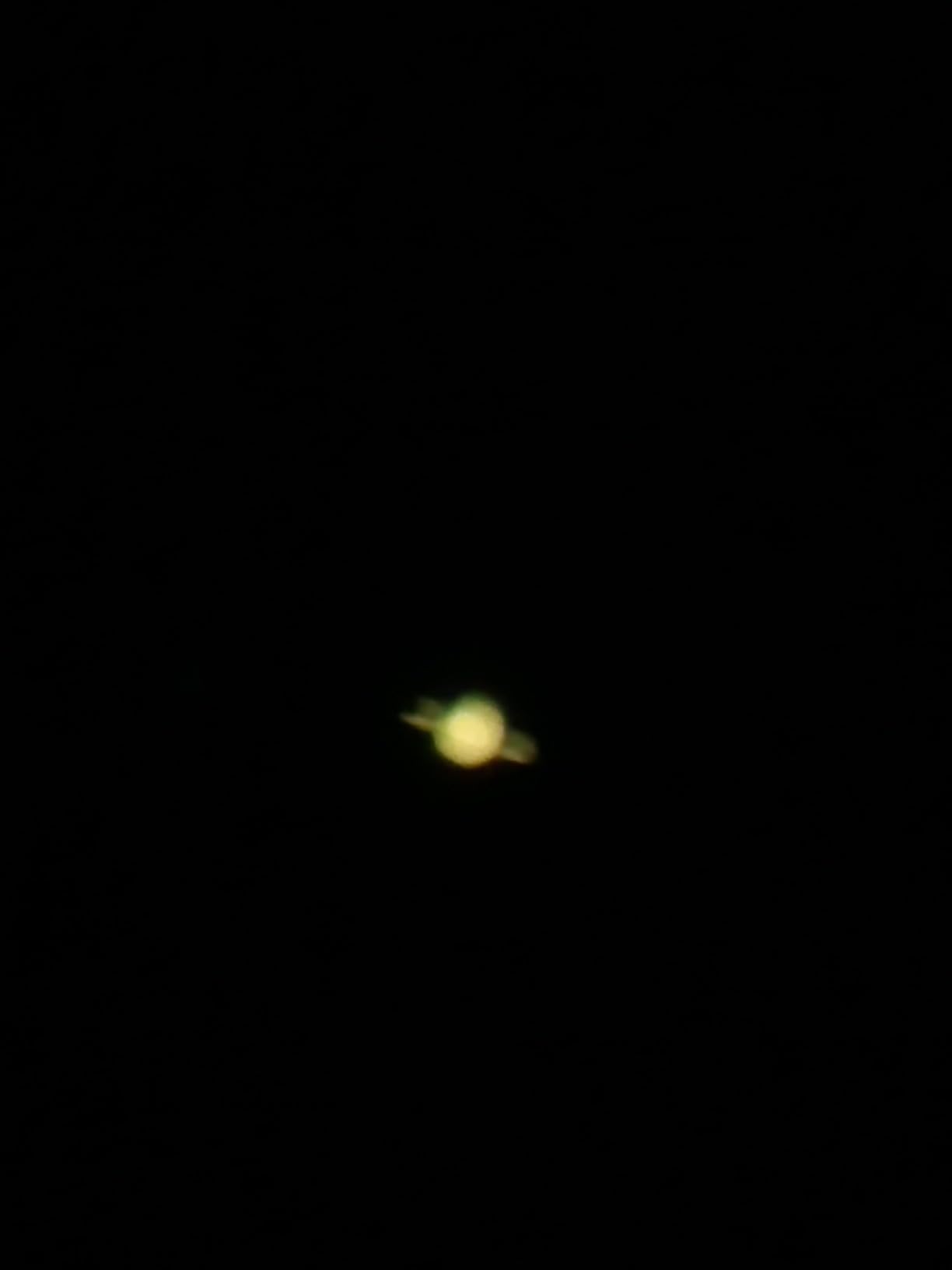
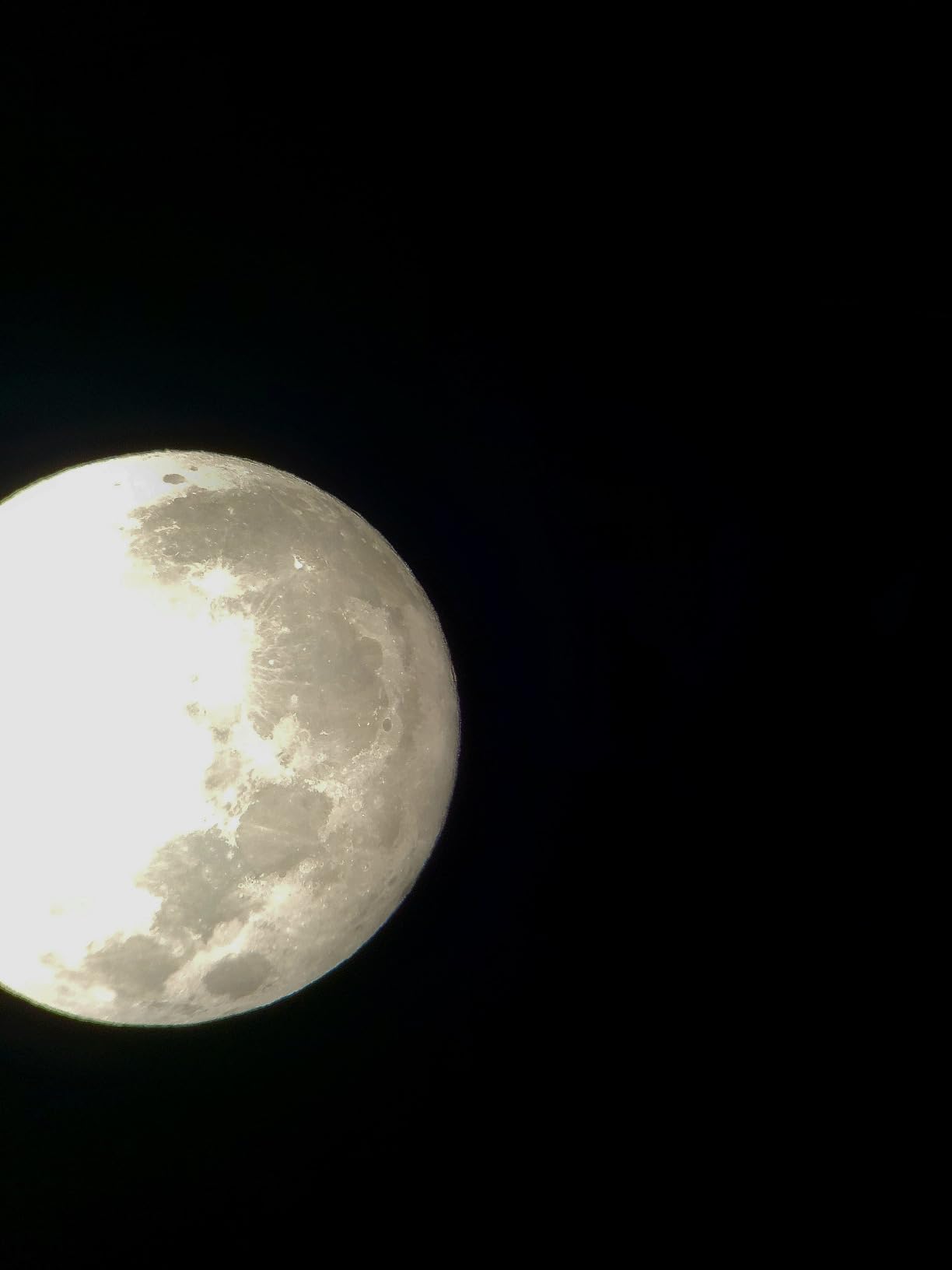
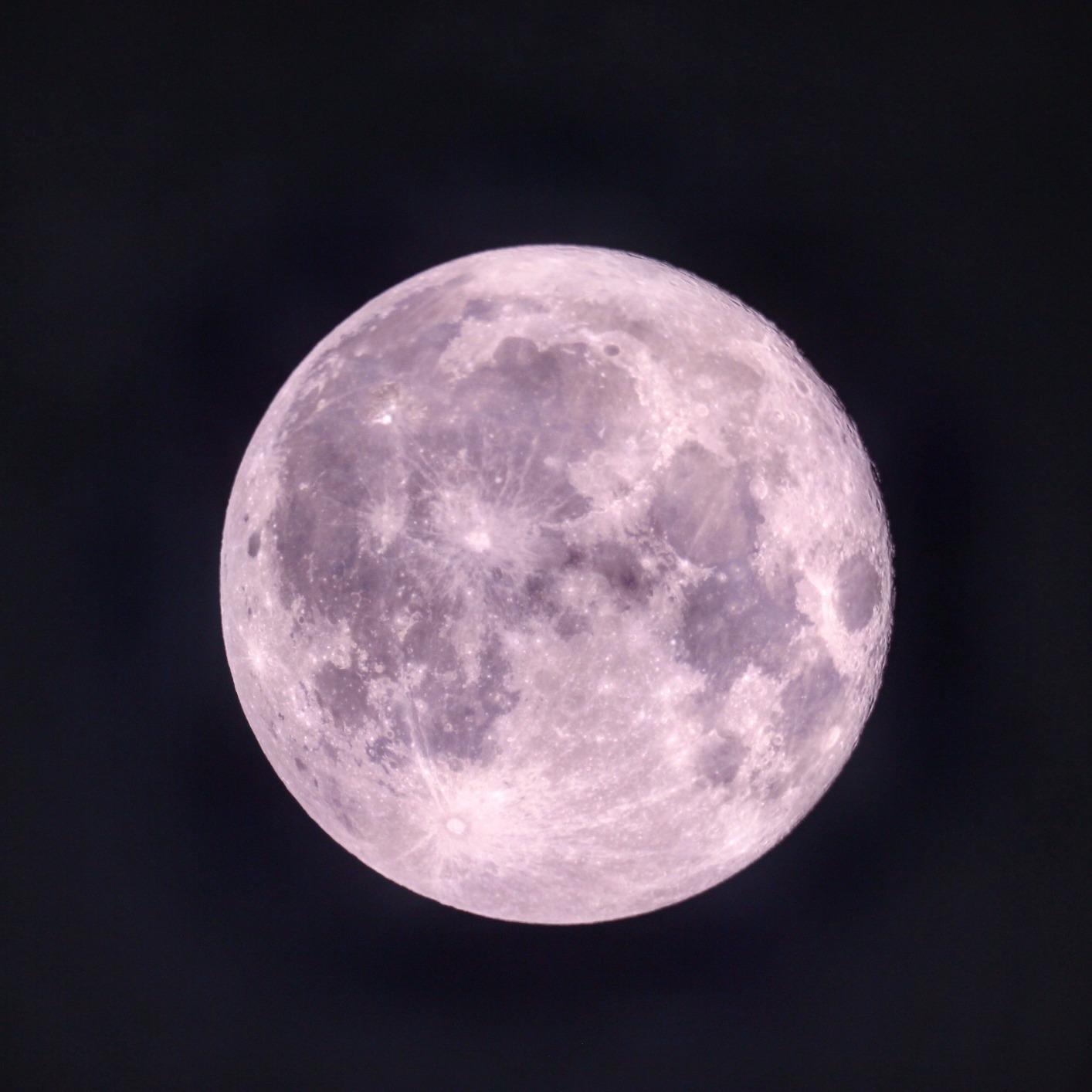
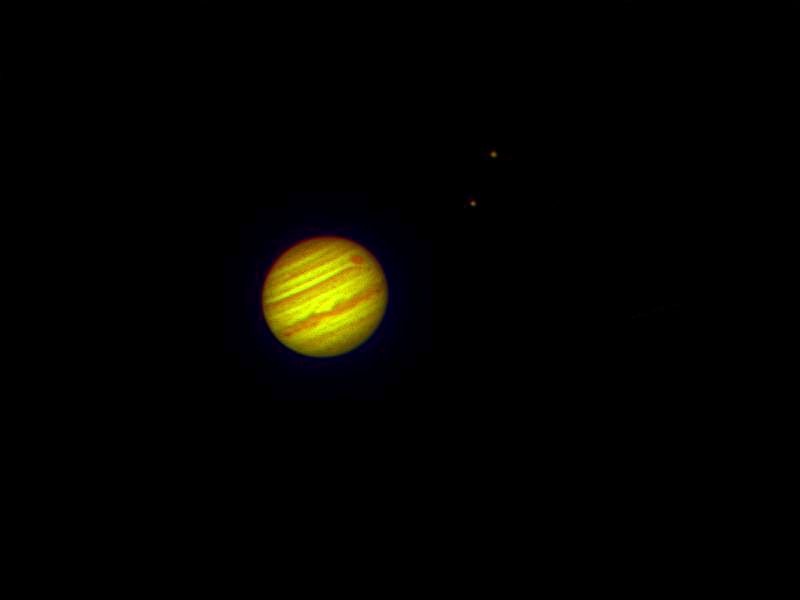
Expect a rewarding list. The Moon at moderate power shows craters and terminator detail, Jupiter shows cloud bands and the four Galilean moons, and Saturn is at the edge of what a 5 inch can resolve. In deep sky, open clusters, the Double Cluster, M13, M57, M27 and the Orion Nebula all have structure.
Where it struggles is anything below roughly magnitude 10. Low surface brightness galaxies like M33 and the fainter parts of the Veil complex will not reward you from a suburban backyard. Move to a dark site and the same tube performs noticeably better, which is why this scope shows up so often in portable observing kit lists.
Who should pass on the 127SLT
Pass if your target list is galaxies. This is a lunar, planetary and bright-cluster instrument with deep-sky capability rather than a deep-sky specialist, and no amount of GoTo accuracy will substitute for collecting the photons that make a galaxy visible.
The supplied 20mm and 9mm eyepieces are serviceable but plain, so budget for at least one higher-quality wide-field eyepiece before judging the optics. And if you live somewhere with regular dew, a Mak corrector at the front of the tube is the first surface to mist up overnight, so a dew shield is worth adding to the accessory list.
3. Celestron 114LCM – the cheapest way to learn GoTo
Celestron 114LCM Computerized Reflector Telescope for Beginners
114mm aperture
Motorized altazimuth GoTo
4,000 object database
Sky Tour button
Pros
- Lowest-cost route into a real GoTo mount
- Sky Tour generates a target list for the night
- Full tripod and two eyepieces included
- All-glass Newtonian optics
Cons
- 114mm reaches only the brightest Messier targets
- Newtonian collimation and dew need attention
- 4000 object database is far smaller than NexStar controls
The 114LCM is the cheapest way to find out whether computerized pointing is something you actually enjoy using, and for a first scope for an adult or an older child it does the job well. A 114mm fully coated Newtonian on a motorized altazimuth mount points, tracks and stops, and that is genuinely more than most entry telescopes manage.
The Sky Tour button is the sleeper feature. Press it and the hand control builds a list of the best objects currently above the horizon, so instead of scrolling a catalogue you get a short observing plan. For a new observer, that removes the two hardest parts of the hobby at once: finding things and choosing what to look at.
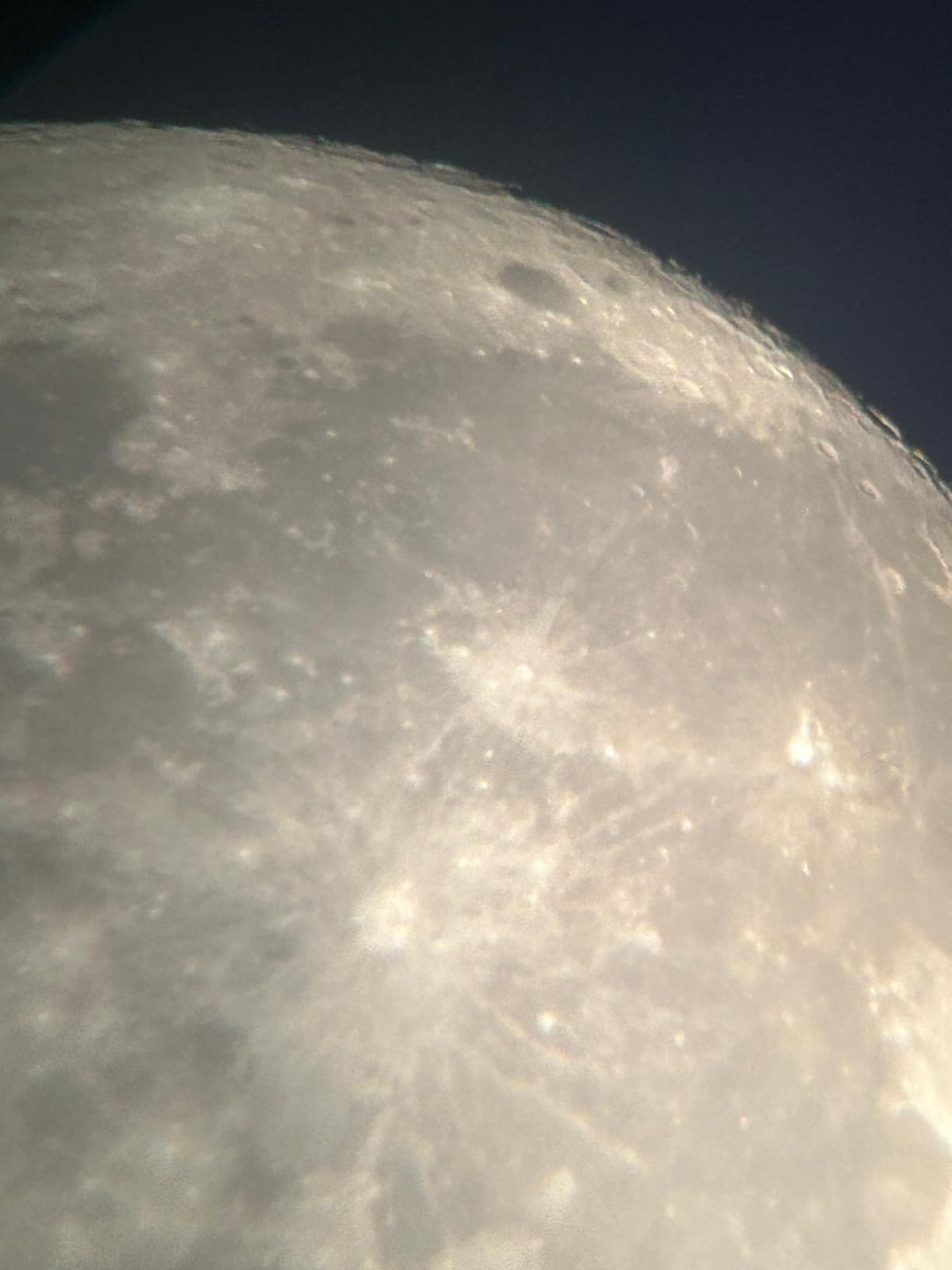
Be clear-eyed about the ceiling though. A 114mm aperture with a 1.44 degree field of view and a huge exit pupil is tuned for the Moon, planets and the brighter open clusters. Faint galaxies and nebulae are out of reach, and the 4,000 object database is a fraction of the 40,000-plus lists on Celestron’s NexStar hand controls, so much of the catalogue is theoretical from a typical backyard.
Owners treat it as a stepping stone rather than a destination, and that is the honest framing. The trade-offs are the usual Newtonian ones: periodic collimation, a mirror that collects dew, and a 13.2 pound weight that is manageable but not grab-and-go.
What this scope is genuinely good for
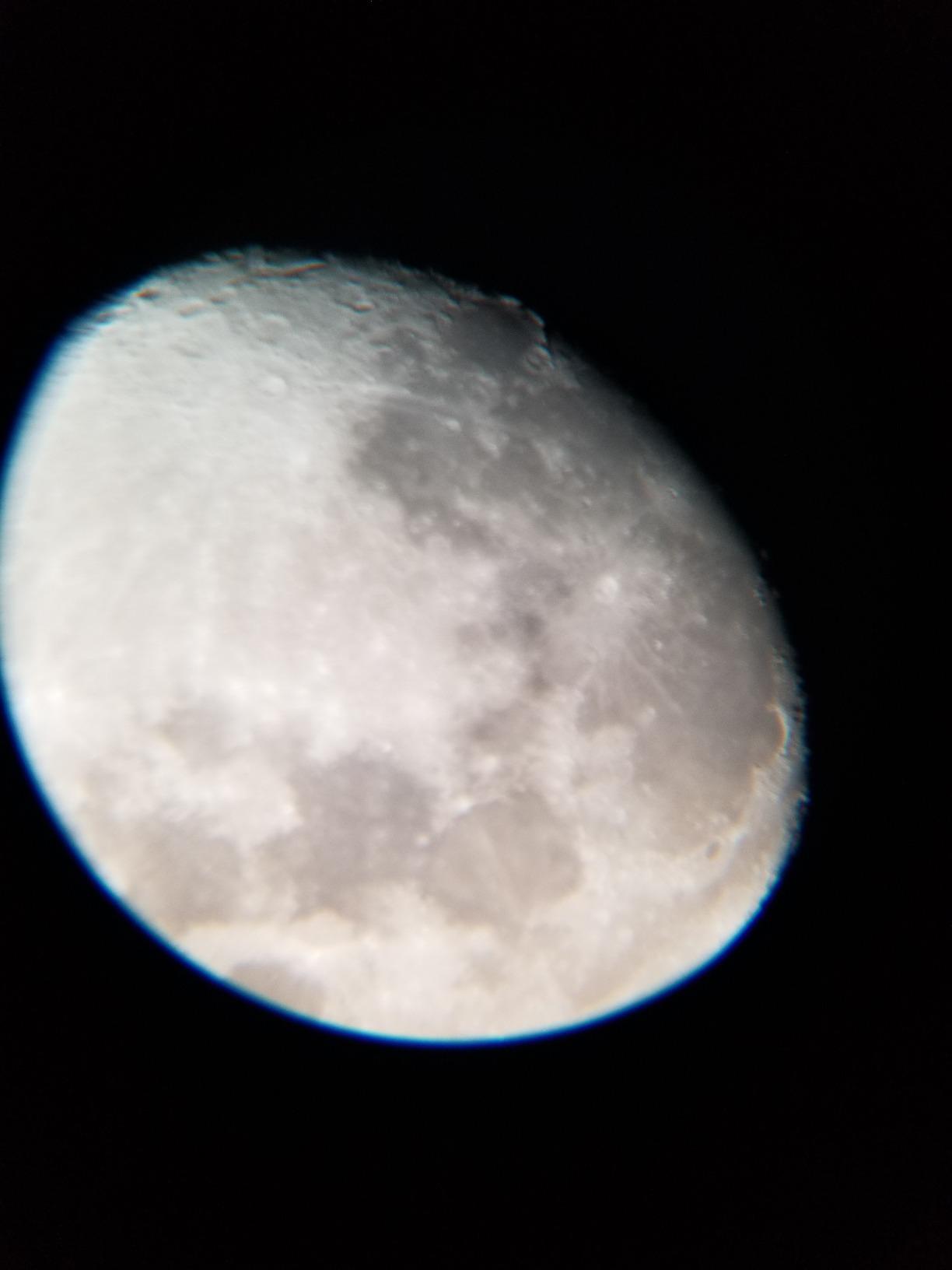
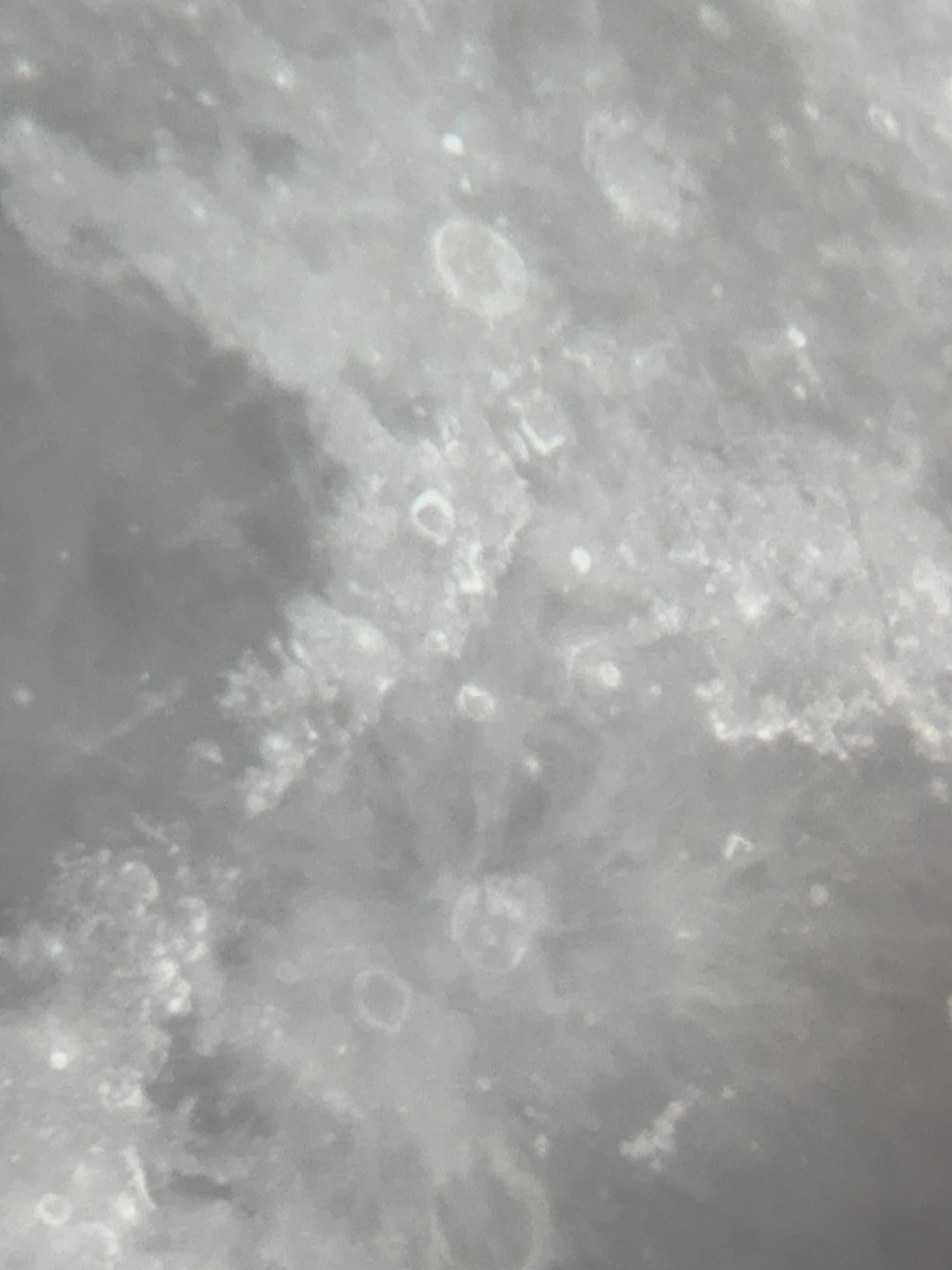
Lunar observing, where aperture matters less than steady air and mount rigidity. Jupiter’s belts and the Galilean moons are clear, Saturn shows rings at moderate power, and the Moon’s craters show up well at the 25mm and 9mm eyepieces supplied. Bright open clusters, the Pleiades, M44 and the Double Cluster are all rewarding.
It is also a good confidence-builder for alignment practice, because the 4,000 object database is short enough that you can learn how the hand control works before you meet a database with tens of thousands of entries. That knowledge transfers to every Celestron mount you might buy later.
Why we would not pick it for deep sky
Two reasons, and neither is about quality. The first is aperture: 114mm simply does not gather enough light for the galaxies and nebulae people buy a GoTo telescope hoping to see. The second is the database, which will happily list objects the scope cannot deliver from a light-polluted sky.
If your budget stretches, spending it on a larger manual Dobsonian is often the advice you will get from experienced observers, and you can read our Dobsonian telescope roundup for that route. Choose the 114LCM instead if the pointing is what you are really after.
4. Celestron NexStar Evolution 8 – the smoothest tracking and the Top Rated
Celestron NexStar Evolution 8″ WiFi Telescope for Deep-Sky Views
203mm aperture
2032mm focal length
WiFi app control
10-hour built-in battery
Pros
- SkyPortal app control over WiFi
- 8 inch StarBright XLT tube in a compact body
- Battery built in for a full session
- Brass worm gears track smoothly
Cons
- SkyPortal app connection can be finicky
- App slew buttons can stick and overshoot
- Included 13mm eyepiece is poor quality
- Some units need collimation out of the box
The NexStar Evolution 8 is the same 203mm Schmidt-Cassegrain aperture as our top pick, wrapped in the most capable mount Celestron makes for visual observing. Owners repeatedly single out the mount rather than the optics: the altazimuth GoTo is stable, alignment takes minutes, and targets settle into the field without hunting.
The battery is the feature that changes how you use it. A built-in 10-hour lithium iron phosphate pack means no PowerTank, no AA cartridges and no power cable to run across a patio, and the USB charge port doubles as a phone charger on long sessions. That single design decision removes the most common reason people cut a night short.
SkyPortal handles the pointing from iOS or Android over WiFi, with brass worm gears and motors that track smoothly. Manual clutches, integrated carry handles and two accessory trays are the details that show this was designed for field use rather than a shelf, and a 28.5 inch cube leaves a smaller footprint than most eight-inch tubes.
The friction is the app. Reviewers describe the WiFi connection as finicky, with the scope trying to hold several devices at once and occasionally needing a reset, and the slew buttons in the app sticking and carrying on past the target. The included 13mm eyepiece is widely criticised next to the good 40mm, and some units arrive needing collimation or a dew shield in damp climates. The warranty is one year, shorter than most of the range.
Why this mount holds a target so well
Because altazimuth GoTo on a rigid base only has to rotate about two axes in a balanced way, and this one is well balanced. The result is a scope that stays on a globular while you change eyepieces, then holds the faint outer arms of a galaxy steady enough to look at directly. At 203mm with a 2.46 degree field of view, wide-field sweeping is the other strength.
Owners who upgraded from a manual equatorial describe observing more objects in an hour than they used to in months, which is the honest argument for computerized pointing. It does not add light, but it converts time that would have gone into searching into time spent looking.
Who should look elsewhere
Pick the Evolution 8 only if you want visual observing with minimal friction and are comfortable managing an app. If you need astrophotography, an altazimuth mount like this one will fight field rotation, and the 1 year warranty means registering it is worth the minute it takes.
It is also the heaviest and least portable option in this roundup, so a garage or dedicated observing corner suits it better than a field. The 10.01mm exit pupil and long f/10 focal ratio are tuned for a narrow, high-contrast view rather than sweeping speed.
5. Sky-Watcher Virtuoso GTi 150P – the best aperture per dollar for tables
Sky Watcher Sky-Watcher Virtuoso GTI 150P Collapsible Tabletop GoTo Dobsonian Telescope
150mm aperture
750mm focal length
f/5 focal ratio
SynScan Pro WiFi GoTo
Pros
- 150mm aperture in a fast f/5 design
- Built-in WiFi with full GoTo in SynScan Pro
- Freedom Find encoders allow manual nudging
- Collapsible tabletop design stores easily
Cons
- Dobsonian base suits tables rather than field work
- Red dot finder and 25mm eyepiece are basic
- Newtonian collimation needs periodic adjustment
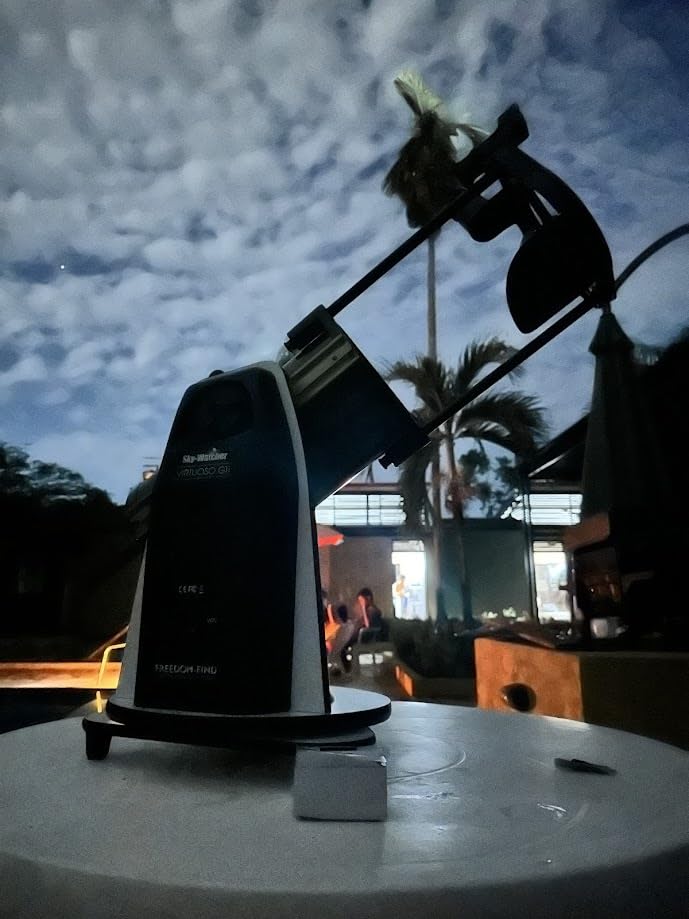
The Virtuoso GTi 150P is the aperture-per-dollar pick in this list, and it is the one that most directly answers the forum consensus that you should go bigger on glass rather than richer on electronics. A 150mm f/5 Dobsonian optical tube with full app-driven GoTo is a combination that costs less than many manual scopes, let alone computerized ones.
Freedom Find is the detail other mounts copy. The dual encoders let you push the tube by hand to centre an object and keep the mount aligned, so the GoTo stays useful instead of being ruined by a nudge. Combined with a 0.83 degree field of view, that makes a genuinely pleasant experience at a patio table.
The f/5 focal ratio is short for a Newtonian, which is a deliberate trade: wide fields, comfortable star fields at moderate power and forgiving eyepieces, at the cost of some off-axis coma you will not notice visually. Both a 25mm and a 10mm Super eyepiece are supplied, plus a red dot finder and a 27 inch optical tube that collapses for storage.
Community experience is clear that this scope needs a little work to become good. Collimation needs periodic adjustment, the red dot finder is too coarse for accurate GoTo alignment, and owners commonly replace the supplied 25mm eyepiece. Our tabletop telescope guide covers the accessories that pair well with scopes of this type.
What a 150mm aperture adds over a 5 inch scope
Meaningfully. A 150mm aperture is roughly twice the light grasp of a 102mm and noticeably more than 127mm, and that translates directly into the galaxies and nebulae people complain they cannot see. From a decent site, you start to get a hint of spiral structure in the brighter galaxies and real shape in the larger planetary nebulae.
Open and globular clusters are excellent at this size, and the fast focal ratio means low power comes easily, so sweeping the Milky Way through Cygnus with a wide-field eyepiece is a real possibility rather than a theoretical one. The 25.8 pound total weight is exactly what a table mount should be: heavy enough to be steady, light enough to carry with one hand.
Where it will disappoint you
Two limits stand out. The base is built for a table, patio or flat floor, so setting it on uneven ground or using it for long imaging sessions off a sturdy platform is outside its design, and the motors are sized for visual slews rather than sustained tracking with a camera.
Second, Newtonian maintenance is real. A Dobsonian GoTo scope needs periodic collimation and a light shroud, and dew on the secondary mirror will blur exactly the faint detail you bought the aperture for. Owners who skip the shroud and the collimation tool come away disappointed, and that is a process issue rather than a fault in the telescope.
6. Celestron SkyProdigy 130 – the scope that aligns itself
Celestron SkyProdigy 130 Self-Aligning Computerized Reflector Telescope
130mm aperture
650mm focal length
f/5 focal ratio
StarSense auto-alignment
Pros
- StarSense aligns the mount with no user input
- Database of over 4000 objects
- Battery pack runs past 30 hours
- 130mm at f/5 gives solid deep-sky views
Cons
- Some owners report StarSense failing to lock in
- Handheld controller and wobble reported by a minority
- Stand wobbles when touched and it is heavy to carry
- Included eyepieces are demonstration quality
The SkyProdigy 130 is for anyone who dreads alignment. StarSense places a camera on the rear of the tube, takes a picture of the sky, works out which stars it can see and sets the mount coordinates for itself, so there is nothing to centre. Owners report the scope “knew where it was” immediately and reached Jupiter and Saturn on the first night out.
Underneath, it is a 130mm f/5 reflector on a motorized altazimuth mount with a 1.9 degree field of view, which is a sensible deep-sky configuration: wide, bright and comfortable at low power. The 4,000 object database is smaller than the NexStar hand controls, but the 30 hour battery pack means pointing is rarely the reason a session ends.
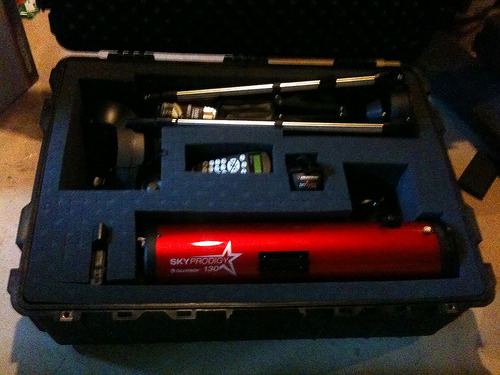
It is also a well-equipped package for the tier, with a battery pack, accessory tray, adapters and The SkyX First Light Edition software included, plus a StarSense hand remote. That completeness matters if you are comparing it against a bare optical tube and a separate mount.
The weak points come from the minority of owners rather than the majority. Reports include StarSense failing to lock in, handheld controller communication problems and shaky views, and an 18 percent three-star share that suggests the electronics are not uniformly reliable. The stand also wobbles when touched, which is annoying when you are trying to centre a faint object at high power.
What automatic alignment is actually worth
More than people expect, if your observing time is limited. SkyAlign on a Celestron hand control takes practice, and a fiddly alignment under a red light with cold hands is a common reason sessions end early. Removing that step makes the difference between getting out to observe twice a month and once.
Auto-alignment does not change what you can see. A 130mm aperture still caps your deep-sky ceiling, and the 4,000 object database will list things the tube cannot deliver from a suburban sky. What it does is make it easy to go back out, which is what actually builds skill.
Who should skip the SkyProdigy
Skip it if you want a long database or a WiFi app, because 4,000 objects and a wired hand remote are both dated in this category. Skip it if your tripod space is tight at 18 pounds and a 34 by 30 by 50 inch footprint, and skip it if shaky views at high magnification would spoil your observing.
The bundled eyepieces are described as demonstration quality, so budget for a proper zoom or a set of Plossls before judging the optics. If steadiness is your top concern, an equatorial mount or a double-fork design will serve you better than electronics.
7. Celestron Advanced VX 8 inch Newtonian – the imaging workhorse
Celestron Advanced VX 8″ Newtonian EQ GoTo Telescope
200mm aperture
f/5 focal ratio
1000mm focal length
German equatorial GoTo mount
Pros
- 200mm f/5 parabolic primary with wide-field views
- German equatorial mount tracks precisely
- Sturdy tripod and rigid assembly
- 2 inch eyepiece socket and quick-release dovetail
Cons
- Very heavy and typically needs a dolly to move
- Collimation required on arrival and drifts
- Hand controller is not user friendly or well lit
- Careful balancing needed on both axes
The Advanced VX 8 inch Newtonian is the only mount in this roundup that can hold a deep-sky object for minutes on end, and that is why experienced observers keep recommending an equatorial platform when imaging is on the table. A German equatorial mount tracks in a single axis around the pole, so a target stays put while a camera integrates light.
The optical design suits the job. A 200mm f/5 parabolic primary in a 1000mm tube gives a wide, bright field at 1.02 degrees, and the parabolic mirror is chosen specifically to reduce spherical aberration across that fast ratio. Permanently programmable periodic error correction and integer gear ratios target the recurring errors that normally spoil long exposures.
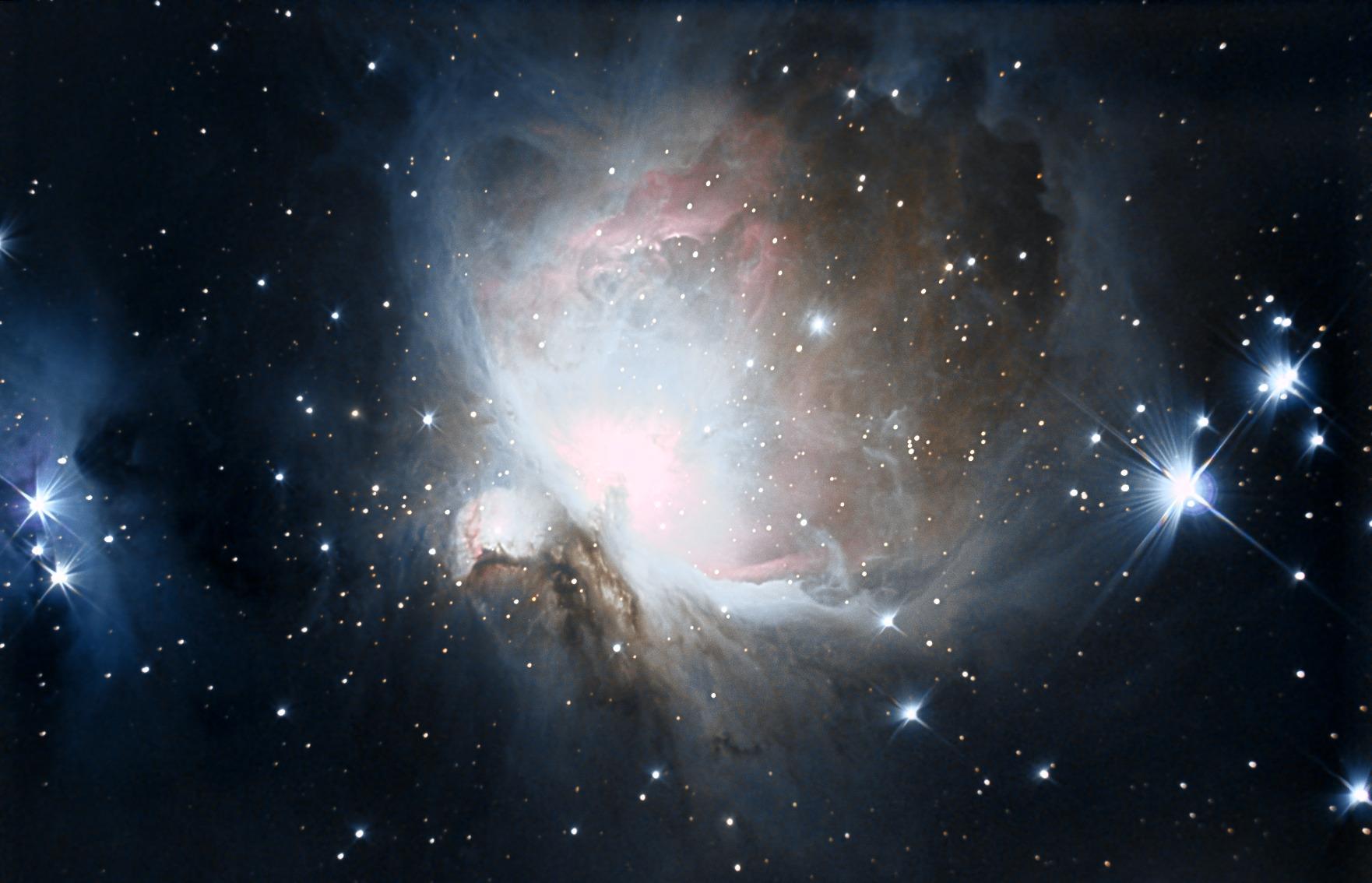
Owners with long astrophotography experience call the Advanced VX platform rock solid, and many report stacking deep-sky images with a DSLR and no guiding camera. The 2 inch eyepiece socket and quick-release dovetail also make visual use straightforward, so this is not an imaging-only purchase if you ever want to look through it.
The physical warnings are serious. Roughly 70 pounds of telescope plus tripod and counterweights, at 103.2 pounds as listed, means a dolly is close to essential and you should assume a two-person lift. Newtonian collimation is required on arrival and drifts, so a laser collimator is a near-essential purchase rather than an optional extra.
Why the equatorial mount matters for faint fuzzies
Because a fork-arm altazimuth changes the field orientation continuously as it tracks, so stars trail around the edges of a long exposure. An equatorial mount sidesteps that entirely. A 200mm f/5 with a tracking equatorial also gives you the widest, brightest field of any visual scope here, which is exactly what low-surface-brightness galaxies need.
All-Star polar alignment, SkyAlign, and the Celestron PWI control software are all in the box, so the pointing is genuinely good once balanced. Balancing on both axes properly takes ten minutes at setup and is the difference between targets landing near centre and landing off the edge of the field.
Where it is the wrong instrument
It is the wrong instrument for a beginner who wants to carry a scope to a dark site in a hatchback, for anyone without a clear, level patch of ground and power, and for anyone who will be frustrated by a hand controller that reviewers describe as not user friendly and not well lit.
If your interest is purely visual, the NexStar 8SE gives similar aperture in a much lighter, simpler package. Choose the Advanced VX when you want stacked images of galaxies and nebulae, and accept the weight as part of the deal.
8. Celestron NexStar 6SE – the planetary sharpener
Celestron Nexstar 6SE 150mm f/10 Schmidt-Cassegrain GoTo Telescope (Black)
150mm aperture
f/10 Schmidt-Cassegrain
40,000+ object database
Sky Link 2 WiFi module
Pros
- Compact tube breaks into lightweight pieces
- Sky Link 2 adds smartphone control and audio
- Long f/10 focal length is sharp on planets
- Quick and easy SkyAlign alignment
Cons
- Single-arm altaz cannot track across the meridian well
- f/10 needs steady air for crisp planetary detail
- 6 inch aperture is modest for faint targets
The NexStar 6SE is the one to buy if your list leans planetary. A 150mm f/10 Schmidt-Cassegrain gives a narrow, high-contrast view with a 1.02 degree field, and the long focal ratio rewards good seeing with the kind of steady detail that makes Cassini’s Division obvious rather than suspected.
It also breaks down into several lightweight pieces, which owners consistently praise for travel, and SkyAlign gets you from unpacking to observing in minutes. The NexStar+ hand control still lists over 40,000 objects, and the Sky Link 2 WiFi module adds smartphone control plus spoken descriptions of targets as the scope slews, which is a genuinely nice touch for a family observing together.
For deep sky it is adequate rather than strong. Six inches of aperture will show you open clusters, the Orion Nebula, brighter globulars and the large planetary nebulae, but it is a step down from the 8 inch scopes in this list, and owners say so directly. If galaxies are the goal, this is not the scope.
The two structural limits are well documented. A single-arm altazimuth cannot track cleanly across the meridian, which caps long imaging sessions, and an f/10 focal ratio means planetary detail is only as good as the atmosphere is that night. Bueller seeing will undo what the aperture bought.
What f/10 does for the planets
It magnifies detail from a longer baseline and keeps the optical path gentle, which is why small catadioptrics are the classic planetary instrument. Saturn’s ring gap, Jupiter’s festoons and the shading in Mars’s polar cap all become visible here in a way they often do not in a fast Newtonian at the same aperture.
The compromise is field width. A 1.02 degree native field means you are not sweeping the sky, you are working through a list. That is fine when the target has structure worth resolving, and unhelpful when you want to see a whole nebula in one view, which is the other half of what a deep-sky buyer wants.
Who should skip the 6SE
Skip it if faint galaxies are the goal, if you want to photograph deep sky, or if you plan to sit on one object for a long time on a single-arm altazimuth. The listed 41.1 pound weight is mostly tripod, and the breakdown design offsets that well, but it is still a two-piece carry.
For pure planetary and lunar work in a smaller, cheaper package, the 114LCM covers the same ground more cheaply. Buy the 6SE instead when you want the long focal ratio and the audio-described target list as well.
9. Celestron Origin Intelligent Home Observatory – the automated imaging box
Celestron – Origin Intelligent Home Observatory – All-in-one Astroimaging and Stargazing Smart Telescope – 6-inch RASA Telescope – Fully-Automated GoTo Mount – User-Friendly – iOS/Android Compatible
152mm RASA aperture
f/2.2 focal ratio
StarSense self-alignment
AI real-time stacking
Pros
- Scans the sky and aligns itself in about two minutes
- Fast f/2.2 RASA design gives very bright images
- AI stacks and processes every frame in real time
- Streams finished images to phone or tablet
Cons
- 42 pound weight and large footprint rule out field use
- f/2.2 design favours imaging over visual observing
- Needs a flat clear view of the sky to self-align
The Origin is not really a telescope in the traditional sense, it is an all-in-one home observatory. You assemble it, connect the app, and StarSense scans the sky, focuses and aligns the mount by itself, with owners reporting the app ready in about two minutes. There is no eyepiece work, no star alignment and no stacking software to learn.
The 6-inch RASA optical design at f/2.2 is the reason it works. That focal ratio produces an exit pupil far larger than the human eye can use, so the camera gathers light far faster than an f/10 Schmidt-Cassegrain, and images come out of short exposures. Built-in AI algorithms stack and process every frame in real time, so galaxies and nebulae arrive sharp and in colour with no intervention.
Owner sentiment is strongly positive, with 83 percent five-star ratings, and the surprise for many people is how much they actually observe as a result. It removes every barrier between a beginner and finished deep-sky images, which is precisely the problem that stops most people starting.
The limits are about form factor and intent. At 42 pounds with a 24 by 26 by 48 inch footprint it needs a dedicated spot, and an f/2.2 imaging design is not a general-purpose visual scope. Self-alignment also needs a flat, clear view of the sky, so a tree or a building in the way defeats the first two minutes of setup.
GoTo telescope or smart telescope: which is it?
This is the honest alternative to a GoTo telescope, and smart scopes in general are described in owner communities as the easiest route into astrophotography while still being a different category of instrument. The Origin leans further than most, because it is a fully automated workflow rather than a hand control or an app you drive yourself.
What you give up is the eyepiece. If the appeal of a telescope is watching a galaxy resolve in real time, the slow accumulation of photons is not the same experience, however good the final image looks. Visual observers who buy a smart scope often end up buying a conventional telescope as well.
Where it makes no sense
Skip it if you want to travel, if you want to observe planets and the Moon through an eyepiece, or if your observing spot is hemmed in by trees and neighbouring houses. It also makes little sense as a first purchase for a family that wants to show children the Moon at high power.
For someone who will never process an image, wants finished deep-sky results, and has a clear patch of sky at home, it is the shortest route in this entire roundup. For everyone else, one of the visual scopes above will reward you more.
10. Celestron Advanced VX 6 inch Refractor – the contrast specialist
Celestron Advanced VX 6″ Telescope – Refractor Computerized GEM
150mm aperture
1200mm focal length
German equatorial GoTo
Zero-obstruction light path
Pros
- High even contrast for globulars and clusters
- Advanced VX mount centres targets after three-star alignment
- Metal focuser cell with high finish quality
- Redesigned mount clears the meridian for imaging
Cons
- 99 pound weight and enormous assembled size
- Achromatic f/8 shows colour fringing at high power
- Focuser causes image shift and is commonly replaced
- Balancing a long tube is a one-person task
The Advanced VX 6 inch refractor is the pick for observers who care about contrast more than aperture. A refractor has no secondary mirror obstruction and no central obstruction at all, so the light path delivers an even, high-contrast image of globular clusters, open clusters and the Orion Nebula that a Newtonian of the same size cannot match.
Long-time amateur astronomers in owner reviews rate it as one of the best commercial instruments they own, specifically for the mount. The German equatorial centres targets to within about 10 arc minutes of a three-star alignment, and SkyAlign is included. For visual work that accuracy means the object is where the hand control said it would be, which is rarer than it should be.
The 150mm aperture with 1200mm of focal length gives a 1.1 degree field and a contrast level reviewers compare favourably with an 8-inch Schmidt-Cassegrain for deep-sky objects. A fully multi-coated achromatic at f/8 is a sensible compromise between focal length and colour error, and the metal focuser cell is built well.
The problems are physical and optical. At a listed 99 pounds with a 65 inch assembled depth, it is enormous and awkward, and the tripod legs may not extend high enough for comfortable viewing in every position. The achromatic design shows chromatic aberration and purple fringing on bright objects at high power, and the focuser causes image shift, so it is the most commonly replaced component.
Why a refractor shows objects differently
Because contrast comes from having one clean, unobstructed surface. On globular clusters that means you can see the bright core fade into a granular halo rather than seeing a bright ball, and on planetary nebulae you see the central star and the shell structure, which are the faintest details in the object.
That makes a 6-inch refractor a genuinely strong deep-sky instrument despite a mid-sized aperture, and the equatorial mount tracks well enough for imaging across the meridian without motor housing interference. If you also want to photograph what you see, a refractor on a solid mount is the classic combination, and our refractor telescope roundup covers the wider field.
Who should pass on it
Pass if you need to move the telescope at all. Balancing a long optical tube is described as a one-person task, the tube can collide with tripod legs near the zenith, and the sheer size rules out a balcony, a small flat or a car boot on a spontaneous trip.
Pass if you are a beginner who will start by pointing at the Moon, because the contrast advantage matters most on faint targets and Saturn is spectacular through almost any scope on this list. Keep this one for a second instrument, and buy something lighter and simpler first.
How Much Aperture Do Deep-Sky Objects Need?
You need more aperture than most buyers expect, and less magnification than the marketing suggests. Galaxies and nebulae are low surface brightness targets, which means you are collecting photons over many minutes and minutes of exposure across every square inch of aperture. A 70mm telescope shows you that a galaxy exists. A 200mm telescope shows you that it has a core, arms and a dust lane.
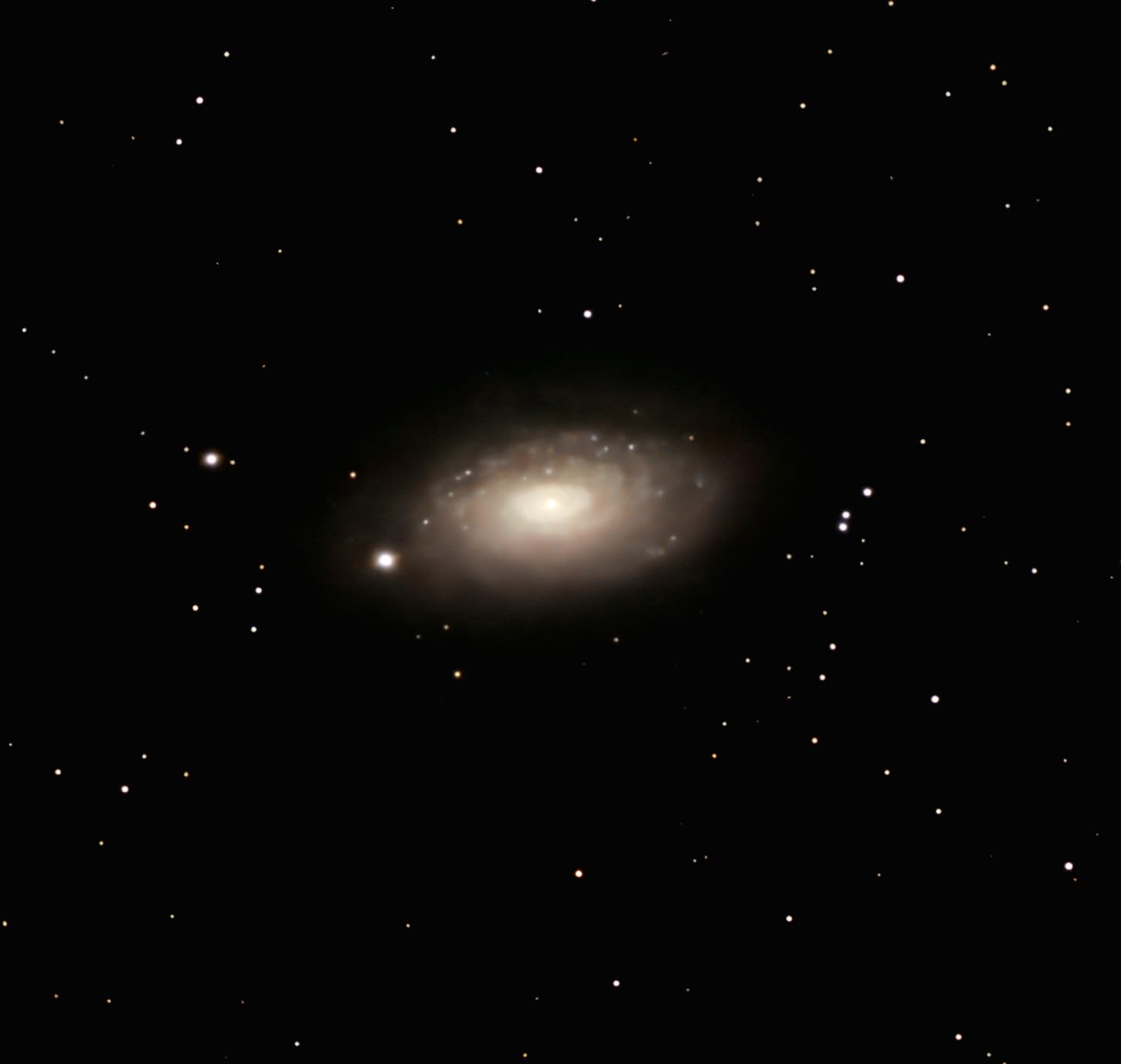
The mapping is straightforward once you see it. A 114mm aperture reliably shows open clusters, bright globulars, the Orion Nebula, the Double Cluster and the larger planetary nebulae, and it will not show most galaxies. A 130mm aperture adds the brighter emission nebulae and starts to give you a hint of structure on nearby galaxies. A 150mm aperture brings in many more galaxies and shows real shape on the large planetary nebulae. A 200mm aperture adds the Andromeda Galaxy in full, a long list of planetary nebulae, and the first details on low surface brightness galaxies.
Magnification is the number people overdo. A useful rule is twice the aperture in inches, so a 6 inch telescope tops out around 120x for most observers, and anything beyond that is dimming the image and exaggerating mount shake without adding a single photon. Deep-sky objects want low power, wide fields and steady air, and the difference between 50x and 150x on a globular cluster is much smaller than the difference between 114mm and 200mm of aperture.
Low surface brightness is also why a dark site matters more than aperture. In a Bortle 8 city backyard, the galaxies you can realistically reach are the same bright ones a small scope can see, no matter how large the tube. In Bortle 4 or darker, a 150mm aperture opens up dramatically. If your only observing site is a bright suburban garden, prioritise aperture over focal length and consider saving the money on a mount.
GoTo vs Star Hopping: When Computerized Pointing Is Worth It
GoTo is worth it when you cannot star-hop, when your site is light polluted enough that faint targets are invisible to the naked eye, or when you want to spend all of your observing time looking rather than searching. That covers most beginners, and it is the strongest argument for a computerized mount in this list.
It is not worth it when you already know the sky. Experienced observers repeatedly say the same thing: a larger manual Dobsonian shows more, and a pair of 10×50 binoculars plus a planisphere costs a fraction of any GoTo scope. The pointing database cannot add light, so every dollar spent on a hand control is a dollar not spent on aperture.
There is a middle path worth knowing. Scopes with Freedom Find dual encoders, like the Sky-Watcher Virtuoso GTi, let you nudge the tube by hand and keep the alignment, so you get the best of both. And for the first year, learning to star-hop to two or three objects teaches you the sky in a way no database does, which pays off on every future session.
Altazimuth or Equatorial: Mount Steadiness Caps Your Magnification
Mount steadiness decides how much of your aperture you actually get to use, and it is the most repeated complaint in owner communities about single-arm GoTo mounts. A shaky mount turns a faint fuzzy into a shimmering blur, so the detail you paid for never sits still long enough to see.
Three designs appear here, with different characters. A single fork arm, used by the NexStar SE and SLT scopes, is compact and light but is the least stable at high power, particularly when a long focal length meets a narrow fork. A double-fork or altazimuth base like the Evolution 8 is wider and much steadier. A German equatorial, used by both Advanced VX models, is the most stable of the three and the only one that can image a target for long exposures without field rotation problems.
Single-arm altazimuth mounts also cannot track across the meridian, so an object crossing the meridian mid-session can be lost. That is a non-issue for visual observing and a hard limit for imaging. The practical advice from forums is to touch nothing at high magnification, to avoid the tripod, and to let the mount damp before you start looking.
Which Telescope Type Works Best for Galaxies and Nebulae?
Dobsonian telescopes give the most aperture per unit of money, which is why a 150mm GoTo Dobsonian in this roundup out-resolves a computerized 4 inch catadioptric. Reflectors are unbeatable for faint light and easy to collimate once you learn, but they need periodic collimation and dewing management.
Schmidt-Cassegrains are the best compromise for planetary and deep-sky work in one tube, and the long f/10 focal ratio is only a liability in bad seeing. Maksutov-Cassegrain telescopes are more compact and more forgiving with cheap eyepieces, and their high-contrast corrector is pleasant on the Moon, but aperture is harder to grow in that design.
Refractors give the cleanest, highest-contrast image of any design, with no obstruction and no collimation, and they hold up well on bright targets, though chromatic aberration creeps in on fast achromats. A short-tube Newtonian is the deep-sky specialist among catadioptrics, and it pairs well with a smartphone or camera for wide-field imaging.
GoTo fits all of them differently. It suits small catadioptrics best, because their compact tubes leave a heavy, stable mount able to carry electronics. On large Dobsonian tubes, a GoTo base can become the heaviest and least stable part of the system, which is a reason to choose a mount rated for the tube rather than a budget one.
GoTo Platforms Compared: SkyAlign, SynScan WiFi and StarSense
Three ecosystems dominate, and they behave very differently in the field. Celestron’s NexStar+ hand control runs SkyAlign, which asks you to centre three bright objects in the eyepiece and then solves the pointing. It is the most widely supported, with a 40,000-plus object database, and the process takes a few minutes once you have done it twice.
Sky-Watcher’s SynScan Pro app is WiFi based, with alignment largely handled through the phone. It avoids a hand control entirely, and the Freedom Find encoders on the Virtuoso GTi add a recovery mechanism the others lack. Meade’s AudioStar ecosystem, which appears throughout competitor roundups though not in this one, is the middle ground: a physical hand control with a large database and a gentler learning curve.
Celestron’s StarSense is the outlier, because alignment is genuinely automatic. A camera on the back of the tube photographs the sky and solves the pointing itself, which removes the single most common source of frustration. The SkyProdigy 130 is built around it, and it costs a smaller database and a less reliable camera as the price of that automation.
Whichever platform you choose, budget ten minutes for the first alignment and five afterwards. Pressing slew repeatedly without a settled mount is the most common reason people conclude a GoTo scope is inaccurate, when in fact the mount was still settling.
Accessories and First-Night Targets You Should Plan For
Budget for eyepieces and filters separately, because the supplied ones are rarely the reason a scope disappoints. Two or three good eyepieces unlock more of an aperture than any upgrade to the mount: a low-power wide-field eyepiece for sweeping, a mid-range Plossl for clusters, and a longer one for planetary detail. Owners regularly report spending more on accessories than on the telescope itself, and it is money well spent.
Plan for dew. Mak front correctors and Newtonian secondaries mist up first on a humid night, and the fix is a dew shield, a small heater band or simply a fan moving air across the surface. A light shroud on a Dobsonian cuts stray light and helps with dew at the same time. For light-polluted skies, narrowband and UHC-style filters on a Newtonian make a real difference to nebulae, while filters do almost nothing for galaxies.
Plan for collimation if you own a Newtonian. It takes practice the first time and five minutes afterwards, and a cheap laser collimator turns a frustrating chore into a routine one. If you skip it, every faint object looks softer than it should and you will blame the telescope.
Start your first night with a short list. The Orion Nebula at around 60x shows the wings and the Trapezium. M13 needs 150x or more to start granulating. M57, the Ring Nebula, sits comfortably at 100x. The Double Cluster rewards 40x to 60x and a wide field. Andromeda, M31, needs at least 100x from a decent site before its companion galaxies show. If you only have one evening, do the Moon first, then Orion.
One last piece of advice that forum experts repeat more than any other: attend a star party or an outreach event before you buy. Seeing a real telescope under a real sky answers in ten minutes what a spec sheet cannot. Our general telescope roundup covers the wider market if you want the shortlist before the deep-sky detail here.
Frequently Asked Questions
What is the best telescope for viewing deep-sky objects?
The best telescope for deep-sky objects is a reflector with the largest aperture you can afford, usually a Dobsonian or a large Newtonian on an equatorial mount. Aperture, not magnification or GoTo pointing, determines how much faint light you gather from galaxies and nebulae. Add computerized pointing if you cannot yet find objects yourself.
What is the best budget computerized telescope for astronomy?
The Celestron 114LCM is the cheapest route into a real GoTo mount, with a motorized altazimuth, a 4,000 object database and a Sky Tour button that builds an observing list for the night. Its 114mm aperture limits you to the Moon, planets and bright clusters, so treat it as a learning scope rather than a deep-sky machine.
Which computerized telescope is the best for astronomy?
For visual deep-sky work the Celestron NexStar 8SE is the strongest all-round choice, combining a 203mm aperture with a 40,000-plus object database and a stable single fork arm mount. If you want the smoothest tracking and no external power, the NexStar Evolution 8 pairs the same aperture with a built-in battery and WiFi control.
How do I align a GoTo telescope for beginners?
Level the tripod first, then set the time, date and location in the hand control. Point at one bright star or planet, centre it in the finder and eyepiece, then press ALIGN. Repeat with two more bright objects, and keep the mount still while it slews. Give it a minute to settle after the final slew before you judge the accuracy.
Is a GoTo telescope worth it for beginners?
Usually yes, because it removes the hardest part of starting out, which is locating objects in the dark. It adds no light, though, so a cheaper GoTo scope shows less than a pricier manual one. If you already know your way around the sky, spend that money on aperture instead and star-hop with a planisphere.
What is the best smart telescope for the money?
The Celestron Origin is a fully automated home observatory that self-aligns, focuses, captures and stacks frames, then sends finished galaxy and nebula images to your phone in about two minutes of setup. It is the shortest route to astrophotography, but its fast imaging design is not a substitute for looking through an eyepiece.
Conclusion
The best GoTo telescopes for deep sky objects in 2026 are the ones that buy aperture and then hang a decent computer off it, and on that basis the Celestron NexStar 8SE takes the top spot. A 203mm aperture, a 40,000-plus object database and SkyAlign alignment in minutes is the package we would want in the middle of the patio.
Choose the NexStar 127SLT if you need something lighter to carry to dark sites, the Virtuoso GTi 150P if your priority is aperture per dollar at a table, and the NexStar Evolution 8 if you would rather not deal with batteries and cables. If imaging is the goal rather than looking, look at the Advanced VX 8 inch Newtonian or the automated Origin instead.
Whatever you choose, buy two good eyepieces alongside it, and give the sky a dark site at least once. The difference a telescope makes is far bigger than the difference between two telescopes makes.