
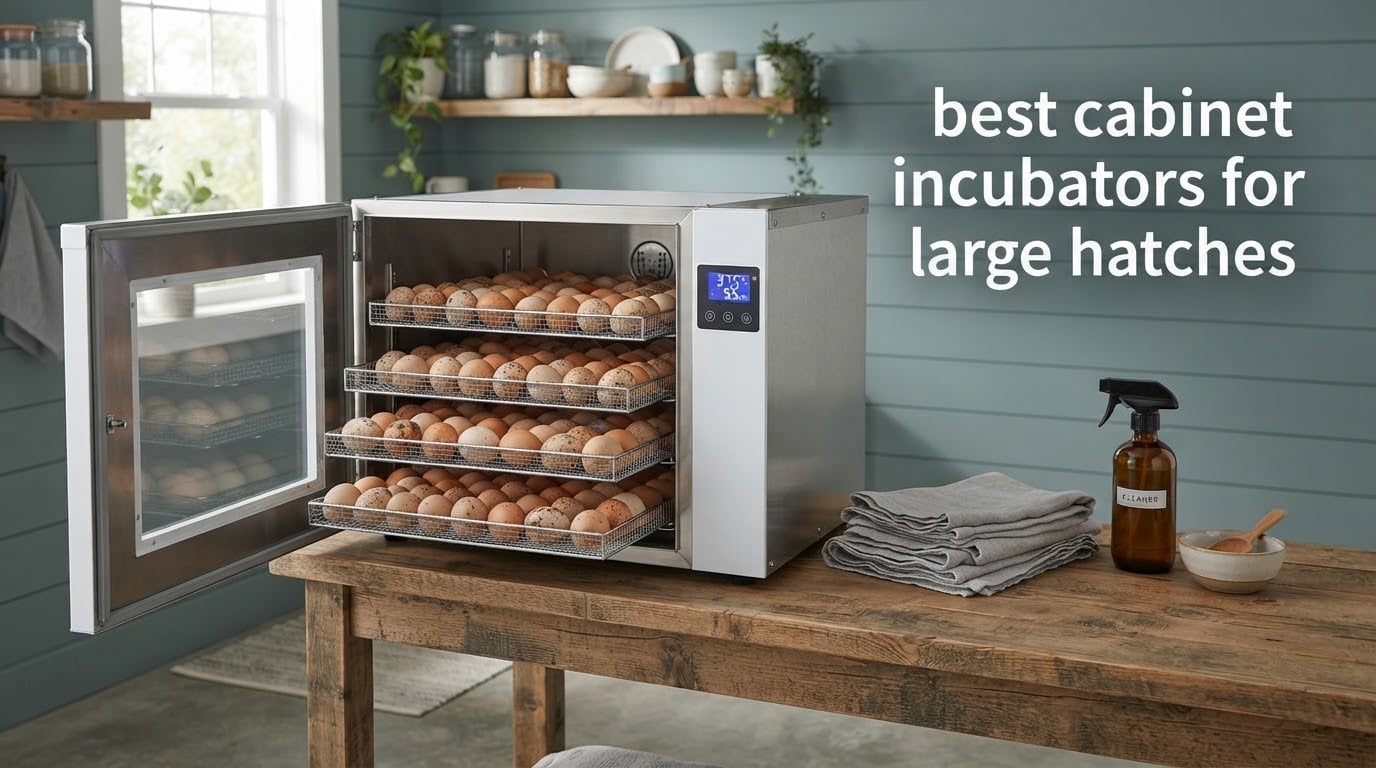
A cabinet incubator is an upright, forced-air egg incubator with interchangeable trays that holds 60 to 1,000+ eggs at a time, holding steady temperature and humidity and turning eggs automatically across a full 21-day cycle. For large hatches, that forced airflow is what separates a hatch in the high 80s and low 90s from one that lands near half.
For this roundup we treat a large hatch as 200 eggs or more in a single batch. That threshold matters, because everything that makes a cabinet incubator annoying at 24 eggs — size, noise, water refills, warm-up time — turns into an operational advantage once you are moving several hundred eggs a week. The failure modes flip too: a small styrofoam box that survives a few degrees of drift is fine at 24 eggs and catastrophic at 288.
We built these picks from published specification sheets, the distribution of owner ratings on each listing, and long-term ownership reports from BackYardChickens members who have run the same cabinets across multiple seasons. We did not hatch in all ten, so we treat capacity claims as manufacturer figures and rating averages as review-derived, and we flag where the owner history is thin.
One note before the picks: the price of every cabinet in this roundup changes constantly, so we have left pricing out and pointed each card at the current listing instead. Capacities, wattage, weight and tray counts are the numbers worth comparing, and those stay put. This guide was last checked in 2026 against live listings and current owner feedback.
Table of Contents
Top 3 Picks for Large Hatches in 2026
Which incubator is best for hatching eggs in large batches? For most large-batch hatchers the answer is the Hatching Time CT180SH, because it sets and hatches in one 180-egg cabinet with automatic turning and automatic humidity. The VEVOR 400 Egg is the value pick if cost per egg matters more than owner history. The GQF 1502 is the pick if you want the deepest parts ecosystem and the widest published conversion numbers.

Hatching Time CT180SH
- Sets and hatches 180 chicken eggs
- Conturn turners and Humisonic humidity
- IP55 AirRoute with active cooling
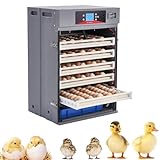
VEVOR 400 Egg Incubator
- 400-egg cabinet with 360-degree airflow
- Automatic turning and integrated sensor
- 12V battery fallback during outages

Pinnon Hatch Farms GQF 1502
- 288 chicken eggs and 1368 quail
- Three automatic racks plus hatching tray
- Five-gallon water reserve system
Best Cabinet Egg Incubators for Large Hatches in 2026
All ten cabinets below run on standard 110V supply and hold their own temperature and humidity for a full cycle. Read the wattage column carefully if you plan two cabinets running at once, and read the capacity columns carefully if you hatch anything larger than chicken eggs.
| Product | Specifications | Action |
|---|---|---|
| Hatching Time CT180SH |
|
Check Latest Price |
| Pinnon Hatch Farms GQF 1502 |
|
Check Latest Price |
 GQF 1500 Digital Professional GQF 1500 Digital Professional |
|
Check Latest Price |
 Hatching Time HB700C Hatching Time HB700C |
|
Check Latest Price |
| VEVOR 400 Egg Incubator |
|
Check Latest Price |
 XKV 176 Egg Incubator XKV 176 Egg Incubator |
|
Check Latest Price |
 TAMUBAKS 400 Egg Incubator TAMUBAKS 400 Egg Incubator |
|
Check Latest Price |
 Legendstone 1000 Egg Cabinet Legendstone 1000 Egg Cabinet |
|
Check Latest Price |
 Sailret Commercial Cabinet Sailret Commercial Cabinet |
|
Check Latest Price |
 ENWEGEY 400 Egg Incubator ENWEGEY 400 Egg Incubator |
|
Check Latest Price |
1. Hatching Time CT180SH – The Best All-Round Cabinet for Large Hatches
Hatching Time Incubators for Hatching Eggs, CT180SH Egg Setter & Hatcher
180 chicken eggs
Conturn turners
Humisonic humidity
110V 70W avg 200W max
Pros
- Sets and hatches in one cabinet with included baskets
- Automatic turning and automatic humidity cut daily hands-on work
- Wide species range including quail pheasant duck goose
- High and low temperature and humidity alarms with room sensors
- Largest owner review base among the branded setter-hatcher cabinets
Cons
- Indoor only and needs a temperature-controlled room
- Goose peacock and small quail counts need separately sold racks
- 12 percent of ratings sit at one star
This is the cabinet we come back to for anyone running 150 to 200 chicken eggs a batch, and it is the pick most BackYardChickens members land on alongside the GQF 1500 series when they ask the same question. The CT180SH does something the cheaper 400-egg cabinets in this roundup do not: it is genuinely designed as a setter and a hatcher in the same box. Hatching baskets are included, so you load eggs on the Conturn turners, then move the last three days worth into the baskets at the bottom without disturbing everything still incubating.
That single design decision is what makes it good for large hatches specifically. In a 400-egg cabinet that can only incubate, you are committing every egg to the same hatch day. In the CT180SH you can stagger loading, pull early hatchers, and keep the machine productive through the tail of a cycle.
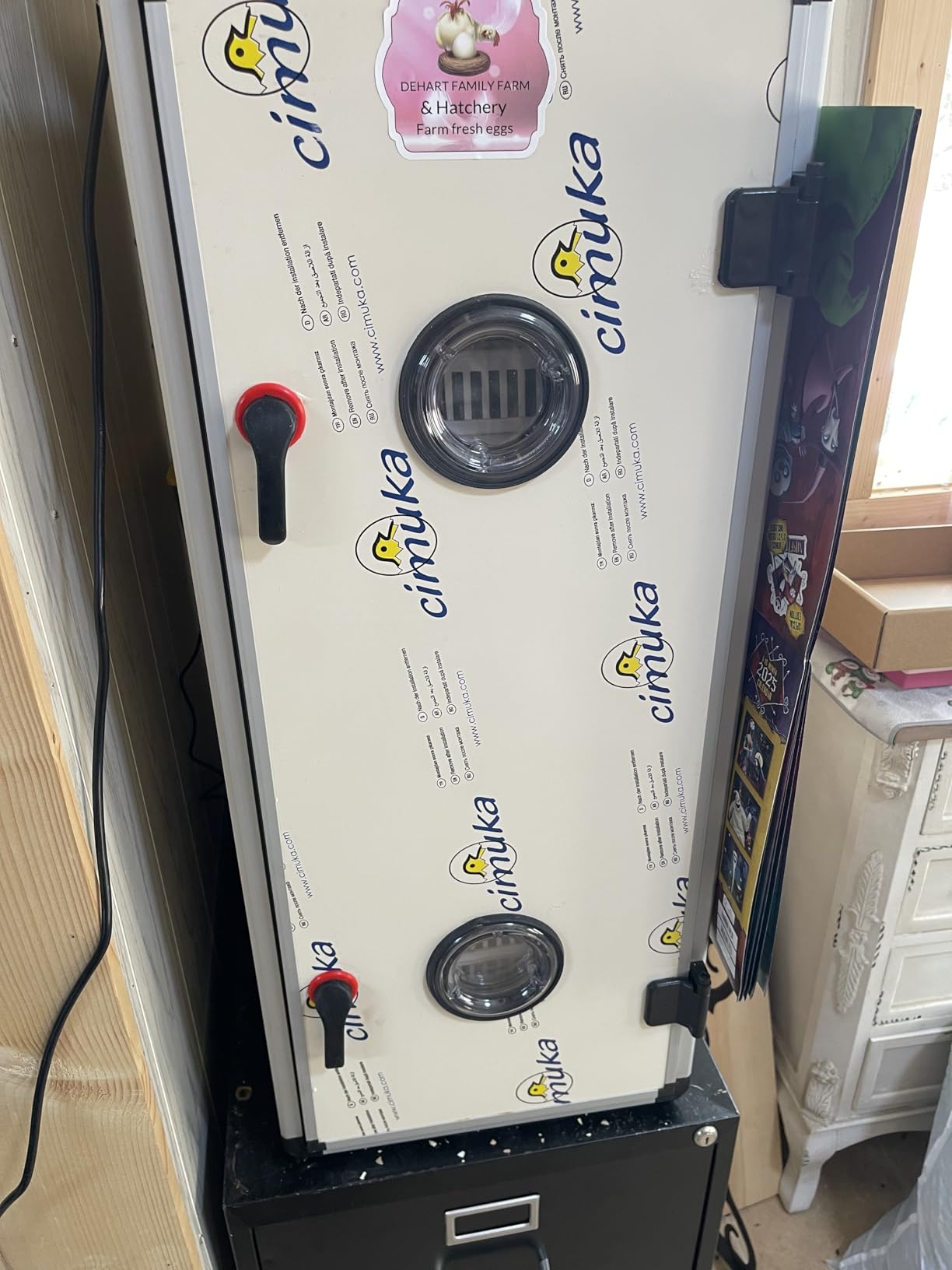
The numbers are sensible for a machine this size. It runs on 110V at 70W average and peaks at 200W, so a full 21-day cycle is inexpensive to run and you can pair it with another cabinet on a normal household circuit. The cabinet is 24.5 by 17 by 42 inches and weighs 49 pounds, which means one person can reposition it, unlike the 100-pound-plus cabinets further down this list.
Species conversion is where large-batch hatchers get interested. The published figures are up to 180 chicken, 252 partridge, 216 pheasant, 120 turkey or duck, 72 goose or peacock, and 324 quail eggs, rising to 468 quail with QT13 racks. Goose, peacock and small quail capacity depends on racks that are sold separately, so factor those into your budget if mixed game bird hatching is the plan.
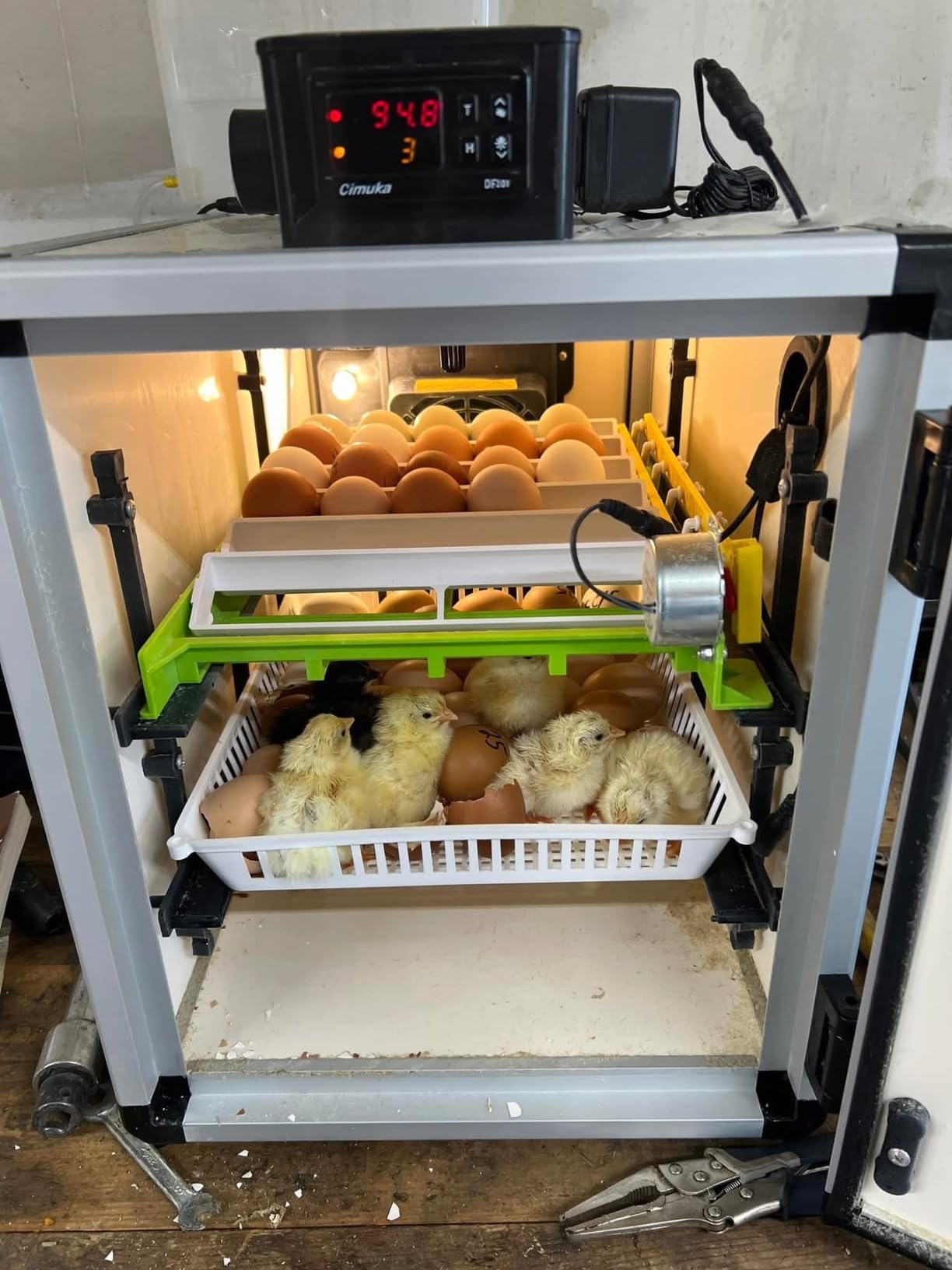
What the CT180SH does well at scale
The IP55-certified AirRoute ventilation with active periodic cooling is the feature that separates this from a generic 200-egg box. Active cooling means the cabinet can pull heat down when the room warms up, which matters most in late spring when ambient temperatures climb toward the 99.5F set point and the machine has to work against the room instead of with it.
Humisonic humidity management means the water level is handled automatically rather than by you opening the cabinet with a jug. Combined with Conturn automatic egg turners and high and low alarms on both temperature and humidity, it is close to a set-and-forget machine once you calibrate it.
Where it falls short
This is an indoor-only cabinet built for a temperature-controlled, draft-free room. Put it in an unheated garage in January and the alarms will do their job constantly. Owners on BackYardChickens also recommend buying spare turning trays upfront on Hatching Time units so you are not waiting on a part mid-hatch.
The rating split deserves a fair mention: 71 percent of ratings are five-star and 7 percent four-star, but 12 percent sit at one star. With 195 reviews that is a real group of owners and one of the two deepest review bases among the cabinets here, which is why we can read a pattern of complaints instead of guessing at it.
2. Pinnon Hatch Farms GQF 1502 – Best Parts Ecosystem and Widest Conversion Numbers
Pinnon Hatch Farms Incubator GQF 1502 Cabinet Incubator Hatcher Holds Up to 288 Chicken Eggs Includes + 6pk Hatching Egg Trays & 3030 Water Reserve System (with 6 Universal Trays)
288 chicken or 1368 quail eggs
Three automatic racks
3030 Water Reserve system
LCD humidity and temperature
Pros
- Widest numeric capacity conversion across chicken quail and duck eggs
- Five-gallon water reserve cuts humidification refills
- Quiet insulated plastic board cabinet wipes down easily
- Hand-assembled in the USA and 24-hour tested before it leaves the factory
- Highest average rating among cabinets with a meaningful review sample
Cons
- Returns may carry a 20 percent restocking fee
- Only 23 reviews so the 4.6 average is a small sample
- Goose peafowl and emu eggs need separately sold trays
The GQF 1502 is the platform community breeders most often name alongside the Hatching Time cabinets when they describe the one they have run for years. That long-term reputation is why we rate it TOP RATED even with 23 reviews: the spec sheet is strong and the ownership record runs across many seasons.
On conversion capacity this machine is the one to study. It holds up to 1368 quail eggs in the same platform that takes 288 chicken eggs or 162 duck eggs depending on the tray fitted, and the package includes six hatching egg trays plus six universal trays so you are not writing a parts list before the first cycle. Three automatically turned racks mean three rows of eggs run unattended through the incubation phase.
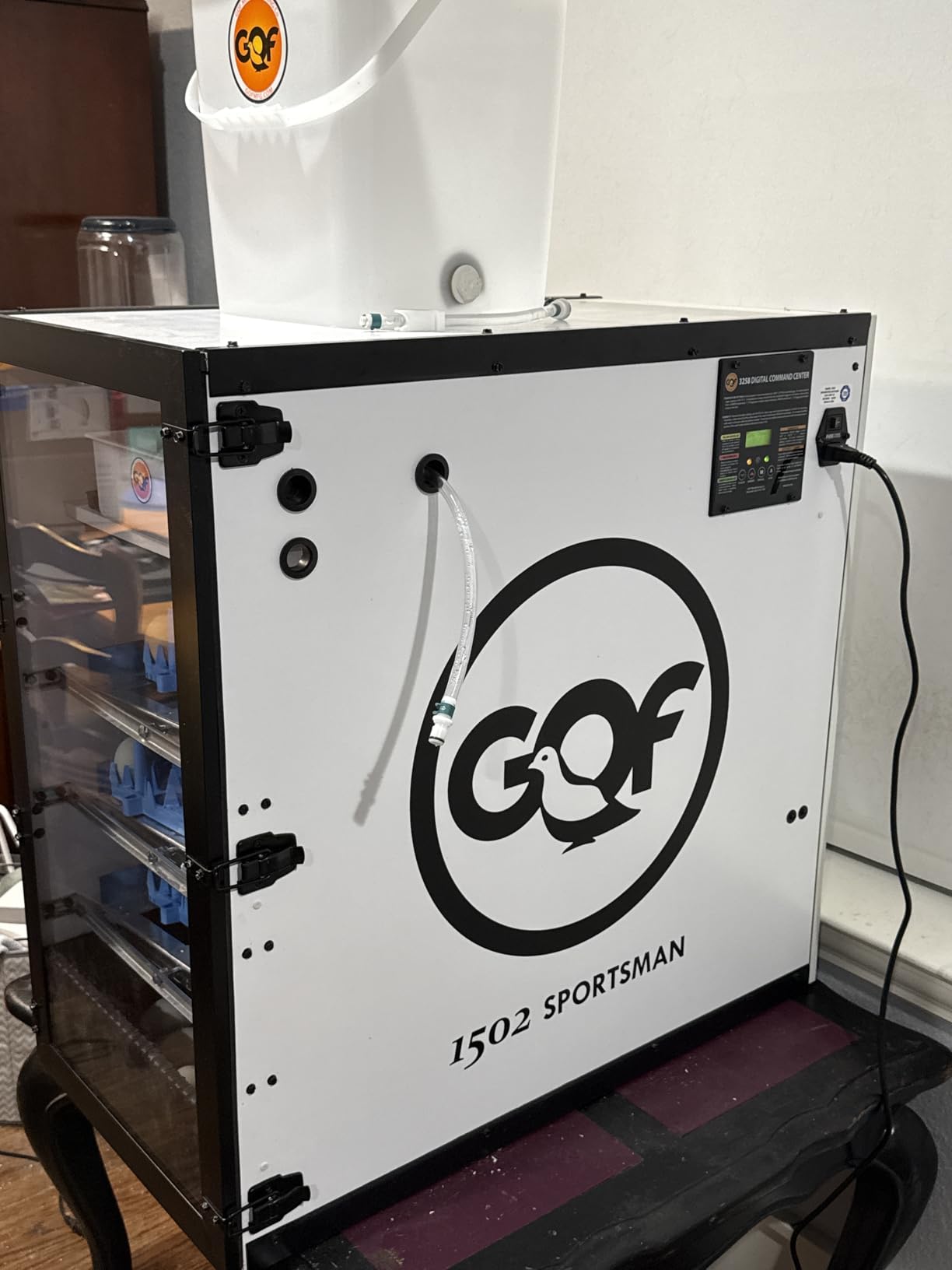
Humidity is handled by the 3030 Water Reserve System, which pairs a 5-gallon reserve tank with a constant-level humidity pan. For a 288-egg batch running 21 days, that is the difference between checking water twice a day and checking it when you remember, and it is the feature that large-batch owners single out most often in reviews.
The cabinet is high-strength plastic board rather than sheet steel, at 30.25 by 15.75 by 31.75 inches. It runs quietly, which matters if the machine lives in a room you also work in, and the surface wipes down easily between hatches. It is hand-assembled in the USA and 24-hour tested before it leaves the factory.
Where the 1502 earns its rating
Ratings break down as 79 percent five-star, 14 percent four-star and 7 percent one-star, and the praise concentrates on build quality, quiet operation and the water reserve system. Owners report consistent hatch rates across many cycles and confirm that replacement parts are available through specialist retailers such as Incubator Warehouse, which is the practical reason to buy this platform over a generic import.
BackYardChickens members running the 1502 long-term also report disconnecting the turning alarm speaker at night, because the audible turn signal is loud enough to wake the house and does not need to be that loud once you trust the cycle.
Who should skip it
The 20 percent restocking fee on returns is a real friction point and the most common complaint in the reviews. If you are not certain about tray configuration or room placement, buy from a seller with a straightforward return policy instead.
Goose, peafowl and emu hatching needs trays that are sold separately, so the true multi-species cost is higher than the base package. Anyone who only ever hatches standard chicken eggs will not spend that money well.
3. GQF 1500 Digital Professional – Factory-Calibrated Readouts on the Same Platform
1500 Digital Professional Incubator – Holds Up to 288 Chicken Eggs
288 chicken or 1368 quail eggs
Three automatic racks
LCD touch controls
Factory-calibrated sensors
Pros
- Same hand-assembled GQF cabinet platform as the 1502
- Factory-calibrated temperature and humidity readouts
- Touch controls and LCD display are simple to program
- Three automatic racks support unattended cycles
- Hand-assembled in the USA
Cons
- Only 2 reviews so the 5.0 average is not meaningful
- Returns may carry a 20 percent restocking fee
- Dimensions and weight are not published in the listing
This is the 1502 cabinet platform with a factory-calibrated digital readout and touch controls instead of the 1502’s display arrangement. If your priority is trusting the numbers your cabinet shows you, factory calibration is the whole story here, and it is why we gave it its own badge rather than folding it into the 1502 review.
Capacity matches the 1502: up to 1368 quail eggs, 288 chicken eggs or 180 duck eggs, across three automatically turned racks. For large-batch hatching the automatic racks are what matter, since they remove the single most common cause of failed batches, which is embryos sticking to the shell because somebody forgot to turn.
Both reviews on record are five-star, and we are not going to pretend two reviews tell you much. Treat the perfect score as provisional. What we can say is that the underlying platform is the one with the long community ownership record, so you are buying into a known cabinet with a newer control interface.
Why calibration matters more than resolution
Owners on BackYardChickens repeatedly recommend verifying whatever the cabinet displays against a standalone thermometer and hygrometer, especially on budget brands. A cabinet that reads a half degree high does not hurt you if you know it does. A cabinet that reads high on day one and low on day fourteen is a problem you cannot calibrate away.
A factory-calibrated readout, checked once with an independent hygrometer at the start of the season, is the cheapest insurance in this roundup. It costs nothing to confirm and it removes the guesswork from a 21-day commitment.
Where the thin review base bites
With a two-review sample you have no long-term field history on this specific listing, and the listing itself does not publish product dimensions or weight, which makes planning a shelf harder than it should be. Measure the space and confirm clearance with the seller before you commit.
The restocking fee applies here too. Anyone who wants the safest possible first purchase with a large hatch of eggs in the balance should start with a listing that has a longer owner record, and that points back to the 1502 or the CT180SH.
4. Hatching Time HB700C – Built for 500-Plus Egg Batches
Hatching Time Egg Incubator & Hatcher for Hatching 700 Eggs, HB700C
Up to 700 chicken eggs
TurnX turning to 45 degrees
16 adjustable setter trays
110V 160W avg 425W peak
Pros
- Largest stated chicken egg capacity among the wood-cabinet style cabinets here at up to 700 eggs
- TurnX system rotates eggs without vibration
- 16 adjustable trays with adaptable dividers from quail to large poultry
- Setter and hatcher combo supports staggered batch hatching
- Self-regulating humidity means less daily intervention
Cons
- 71 inch height needs real vertical clearance
- 425W peak is the highest draw in this group
- Weighs 115 pounds and is hard to reposition
- Only 3 reviews with ratings split almost evenly
If you are hatching 500 or more chicken eggs at once, there is really only one cabinet here designed for it rather than assembled for it. The HB700C is a full-height cabinet at 71 inches and 115 pounds with 16 adjustable setter trays, and it is the machine to look at when your annual hatch plan has moved past a few hundred birds.
The turning system is TurnX, which rotates eggs smoothly up to 45 degrees per side with minimal vibration. That detail is more important than it sounds. Embryos attach to the yolk early on and a rough turn can jolt them, so a gentle mechanism that still moves the egg a full 45 degrees is worth more than a faster, rougher one.
Power is the tradeoff you should plan around. It averages 160W and peaks at 425W on 110V supply. A full 700-egg cycle is still inexpensive electricity, but the peak draw is high enough that you should not put two of these on the same circuit, and it is the reason we would not recommend pairing it with a second cabinet on one outlet.
What works at 700 eggs
Staggered loading is built into the design. With 16 trays you can start a new row of eggs while the previous row is in its final three days, which keeps the cabinet producing rather than idling for a week between cycles. For anyone running continuous batches this is a feature worth planning the whole year around.
The adaptable dividers let the same cabinet run quail through large poultry eggs, so a mixed-species year does not mean buying a second machine. Self-regulated temperature and Humisonic humidity management reduce the daily check-in to a glance at the display.
Who should not buy this
The 71-inch height is the dealbreaker in many homes. Measure ceiling clearance with the door fully open before anything else, because the swing of the door plus your hand is usually the number people forget.
At 115 pounds this cabinet does not move easily once it is loaded, and its review history is thin and sharply divided: across three reviews, 51 percent are five-star and 49 percent are two-star. That split suggests two very different experiences, and with a sample this small we would want to see it in person or buy from a seller who will stand behind a 21-day cycle. Owners who reach for 500-egg-plus capacity should be the most demanding of all the people checking temperatures three times a day.
5. VEVOR 400 Egg Incubator – Best Value for Very Large Batches
VEVOR 400 Egg Incubator, Poultry Incubator Cabinet with Automatic Eggs Turning, Temperature & Humidity Control, Heating & Cooling Egg Hatcher, Commercial Incubators for Hatching Chicks Ducks Goose
400 eggs
360 degree airflow and turning
Integrated sensor
12V battery fallback
Pros
- 400 egg slots at a much lower outlay than the branded setter-hatcher cabinets
- Second-largest review base in the group at 239 reviews
- Only Prime-eligible cabinet here
- 360 degree air circulation with integrated temperature and humidity sensor
- Transparent shell with built-in lighting for embryo observation
- Can be switched manually to 12V battery power during an outage
Cons
- 26 percent of ratings sit at one star which is the highest negative share among cabinets with real review volume
- Temperature fluctuation of about 0.9 degrees F
- Styrofoam packing should be kept for insulation in cold rooms
The VEVOR CR400 wins on arithmetic. If you need 400 egg slots and you are counting cost per egg rather than brand prestige, the outlay here sits well below the branded setter-hatcher cabinets in this roundup, and it has the second-deepest owner history of the group with 239 reviews.
It also has the only battery story. It runs on 110V with a manual switch to 12V battery power when the supply drops, which does not run a full cycle but absolutely will carry a cabinet through the several hours that matter most, the night after a storm when you would otherwise be moving eggs out of a dead machine in the dark.
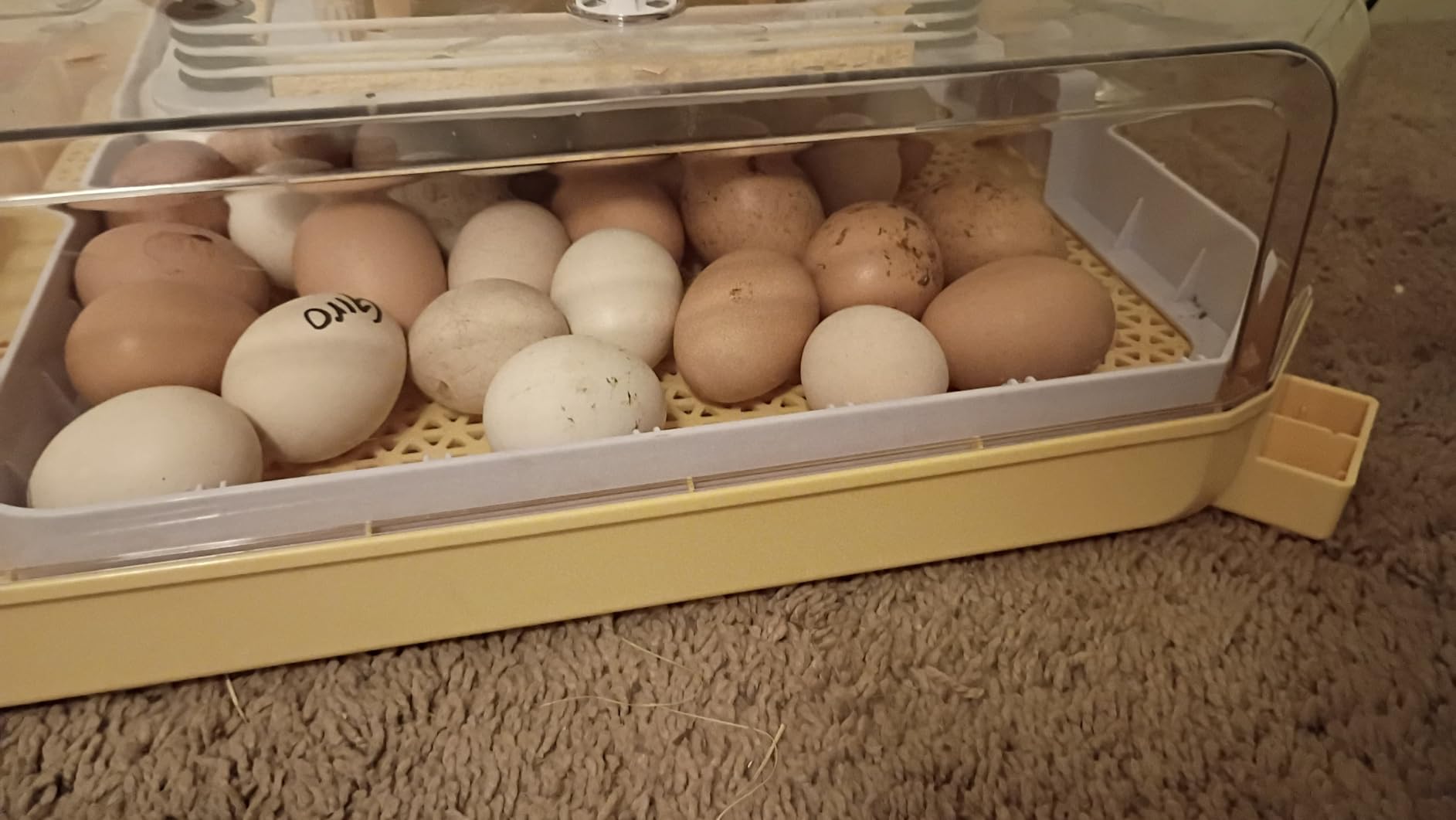
Physically it is a manageable size at 24.02 by 19.49 by 37.6 inches and 55.1 pounds, so it fits a normal utility room shelf and one person can lift it. The transparent PP shell with built-in lighting means you can watch embryo development without opening the cabinet and dumping the humidity.
What you get for the money
360-degree air circulation and an integrated temperature and humidity sensor with real-time monitoring do the heavy lifting on evenness, and the automatic 360-degree turning system keeps eggs moving on schedule. Heating and cooling control is unusual at this price point and gives you some protection in a room that swings temperature across a day.
The honest caveat is the temperature fluctuation. The listing states about 0.9 degrees F, and the maker describes that as within normal tolerance. For most hatchers that is acceptable, but it is exactly the situation where an independent thermometer on the middle rack is worth the two dollars.
Where the review split comes from
Ratings break down as 52 percent five-star and 12 percent four-star against 26 percent one-star. That is a sharply polarised buyer base, and it usually means two things are happening: some people get a well-functioning cabinet and some people get a unit damaged in transit.
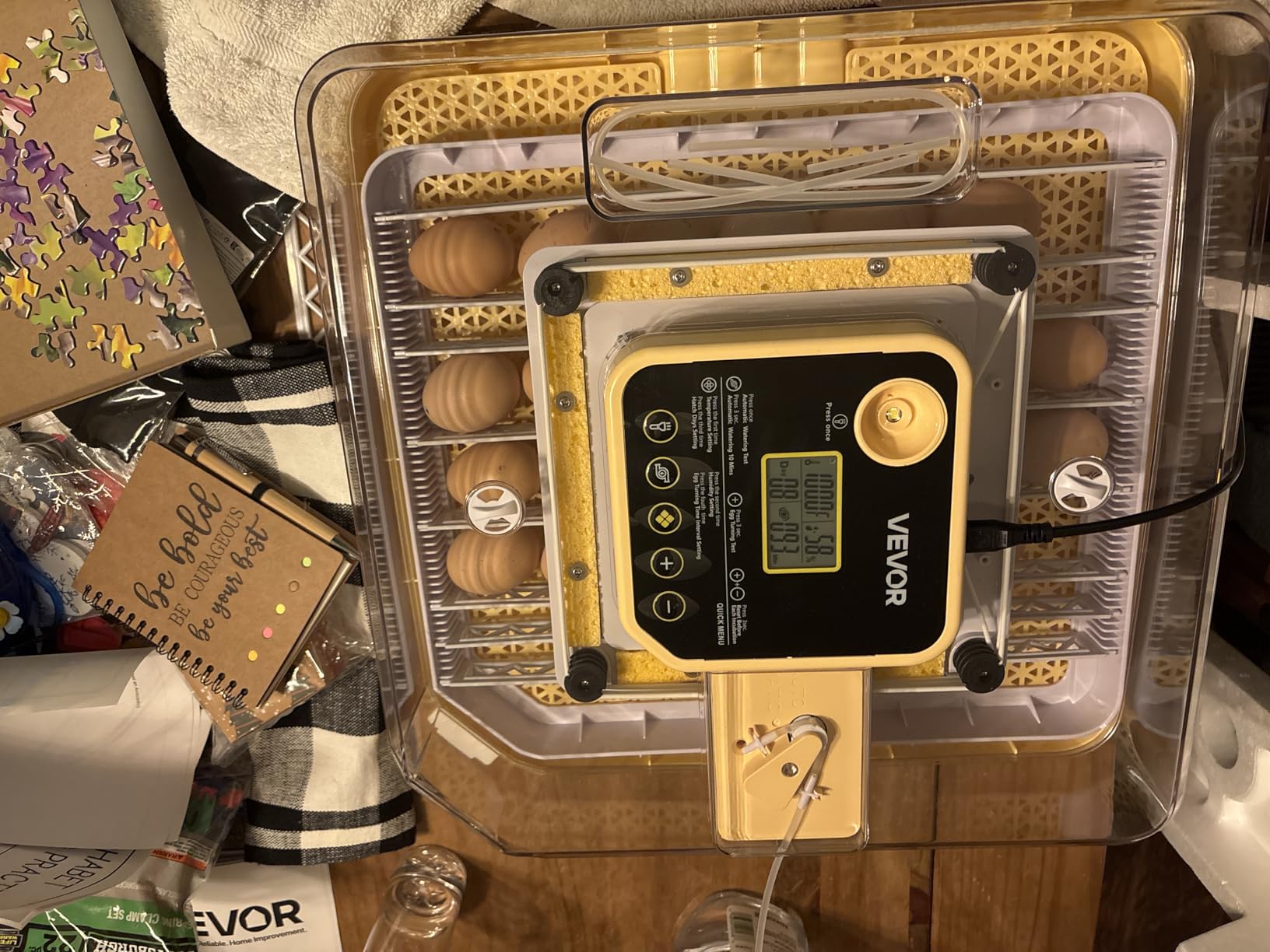
Owners on community boards consistently name transit damage as the most common complaint on new cabinets of any brand, with cracked panels, missing parts and scratched glass doors at the top of the list. Inspect the cabinet and glass door the moment it arrives, photograph any damage before assembly, and keep the styrofoam packing, which also insulates the cabinet in a cold room.
6. XKV 176 Egg Incubator – Best Fit for Flocks Just Past a Tabletop Unit
XKV 176 Egg Large Incubator with Automatic Egg Turning,with Viewing Window
176 eggs
45 degree turning
External water pipe auto-fill
Accuracy under 0.1 degrees C
Pros
- Automatic external water pipe fills the reservoir for you
- Temperature measurement accuracy error under 0.1 degrees C
- Gentle 45 degree tilting each way rather than full rolling
- Six pre-set incubation modes for common species
- Large 9.5 by 4.8 inch observation window plus an alarm device
- Ratings include no one or two star entries
Cons
- Only 3 reviews so the 4.5 average is a very small sample
- Weighs 81.5 pounds which is heavy for 176 eggs
- Stainless steel build and 176 eggs are modest next to 400-egg cabinets
Not every large hatch needs 400 slots. If your batches run between 150 and 180 eggs, the XKV EI-176 is the right size and skips a lot of wasted cabinet. It is also one of the few units here that treats egg size as a real variable rather than assuming chicken eggs.
The turning system tilts 45 degrees each way instead of rolling eggs continuously. That is the gentler option and it is the one we would want for large eggs like goose and peafowl, where full rotation is harsher than it needs to be. Adjustable egg trays and a brooding area let you stage early and late hatches in the same cabinet.
Humidity is the standout. An external water pipe connection with auto-fill to a set level means you are not opening the cabinet with a jug, which is the single most common way owners crash the humidity mid-hatch. Six pre-set incubation modes cover chicken, duck, goose, pigeon, pheasant and general poultry, and an alarm device flags abnormal readings.
Precision and observation
Published temperature accuracy is an error under 0.1 degrees C, which is a tighter specification than most cabinets in this roundup will publish. Whether the unit delivers that in a real room is a different question, which is why we still recommend an independent check.
The 9.5 by 4.8 inch observation window is a large viewing area, and automatic fan ventilation with an exhaust system that activates when temperature rises helps in a warm room. All three reviews are four or five stars with nothing at three stars or below, though three reviews is three reviews.
Who should skip it
At 81.5 pounds for 176 eggs this is heavy relative to its capacity, so if you need to move it between rooms often it is more of a chore than its size suggests.
If your plan is to grow past 200 eggs a batch within a couple of seasons, the community pattern is familiar: hobbyists report upgrading from a 60-egg unit to a 120-egg cabinet within the first year as flocks grow, and the same thing happens one tier up. Buying a cabinet you will outgrow in a year is the most common sizing mistake we see.
7. TAMUBAKS 400 Egg Incubator – Widest Species Range in One Batch
Poultry Breeding Incubator, Automatic Digital Egg Incubator with Temperature Control, 400 Eggs Capacity, 360° Roller Flipping, for Hatching Chicken Duck Goose Quail Birds (400 Pieces)
400 eggs
360 degree roller flipping
LED temperature and humidity
Intelligent deviation alerts
Pros
- Widest species list published in the roundup from quail through to macaw
- Roller flipping system adapts to eggs of varying sizes in one batch
- Automatic temperature control with humidity monitoring
- LED display shows live temperature and humidity settings
- Intelligent alert system flags deviations from programmed conditions
Cons
- Only 1 review so the 5.0 rating is a single data point
- Newest listing in the group with little long-term field history
- No published door or clearance dimensions beyond overall cabinet size
Mixed-species batches are where roller turners earn their keep, and this is the clearest example in the roundup. The 360-degree roller flipping system is described as adapting to eggs of varying sizes, which means a chicken egg and a quail egg can share a cabinet run rather than needing separate trays and separate machines.
The species list is the widest one published in this roundup, covering chicken, duck, goose, quail, pheasant, turkey, swan, parrot, lovebird and macaw eggs. For a breeder working show birds or a mixed flock, that flexibility is the reason to look here rather than at a chicken-only cabinet.
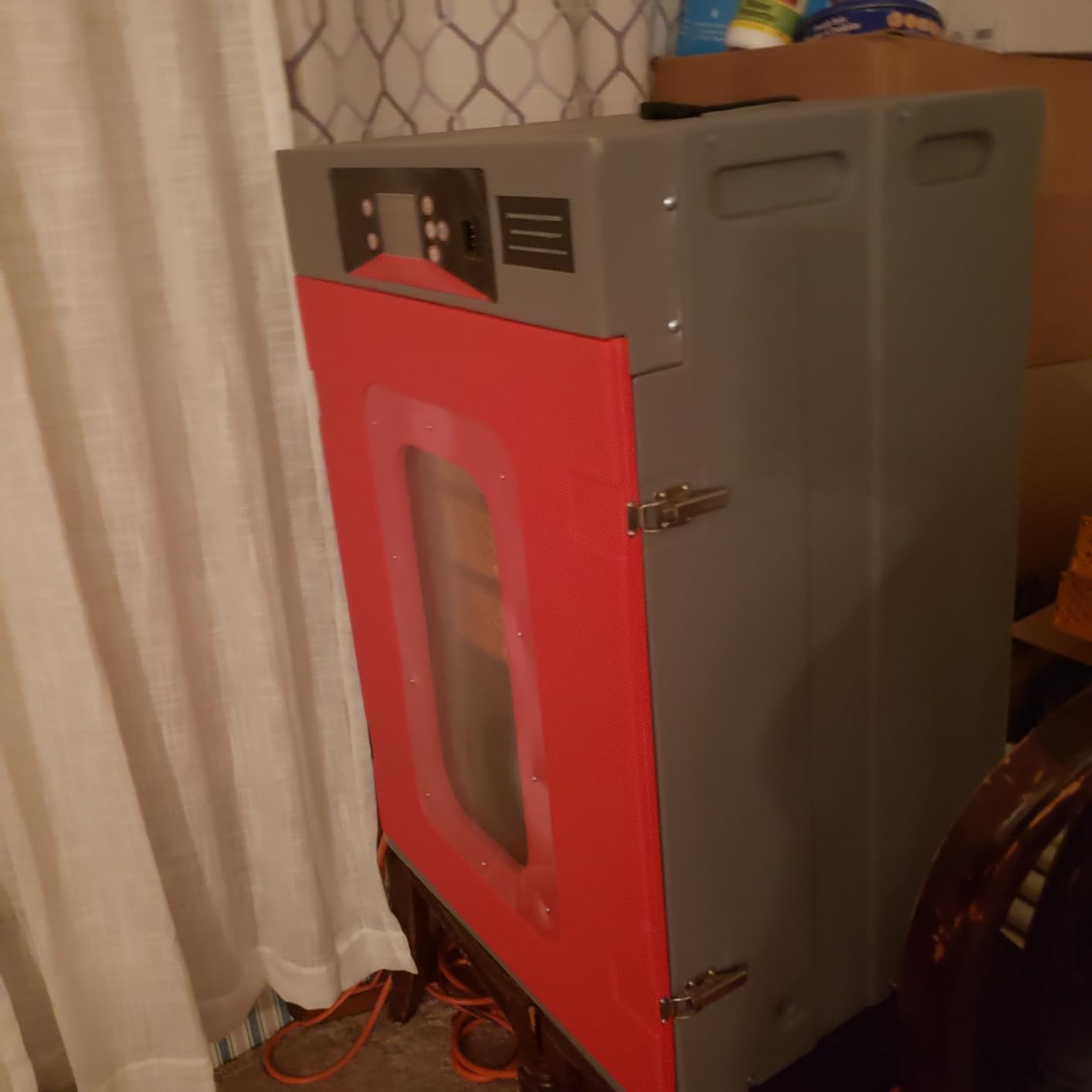
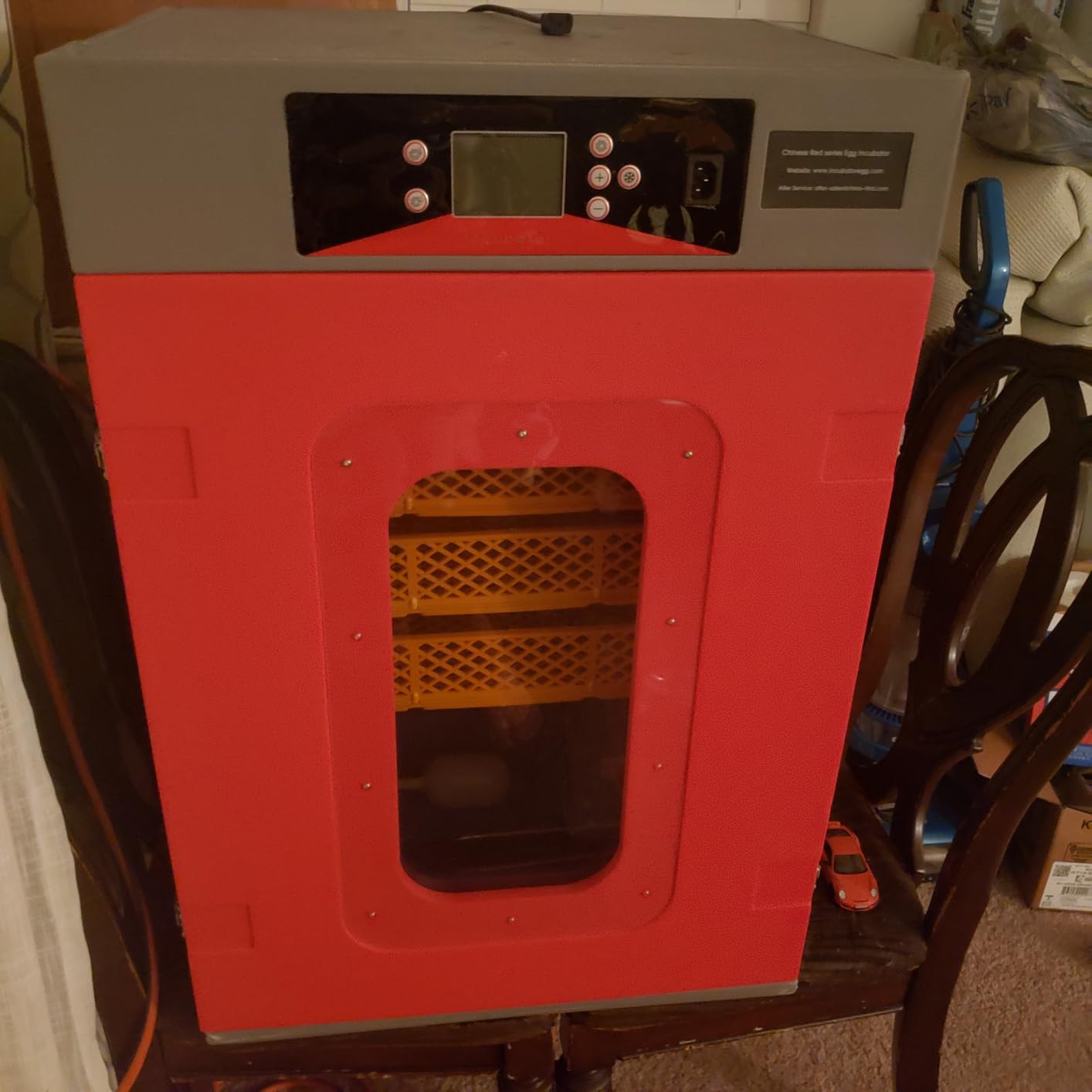
Controls are straightforward: LED display with real-time temperature and humidity settings, automatic temperature control with humidity monitoring, and an intelligent alert system that flags deviations from programmed conditions. At 49.6 pounds and 23.8 by 18.7 by 34.8 inches it is one of the lighter 400-egg cabinets, which makes it easier to reposition and clean.
The honest problem is evidence. There is one review on record, and it is a five-star, which tells you almost nothing about real hatch performance over a 21-day cycle. This listing is one of the newest in the group, so there is limited field history to lean on.
When the feature list is the argument
For a first large cabinet bought on a mixed flock rather than a single species, automatic temperature control with humidity monitoring and a turning system that tolerates size differences genuinely reduces the number of things that can go wrong. That is a real argument even without a long owner record.
Wide species claims are not free, though. Every species has its own incubation length and humidity curve, and a machine that accepts all of them does not automatically hatch all of them well. Plan to run one species per setting at a time until you know how your eggs respond to the presets.
What we would want to see first
Ask the seller what the return window is in practice, because a single-review listing with no published dimensions for the door or clearance is exactly where transit damage and fit problems surface. Measure the space, and confirm the cabinet will physically fit with the door open.
If you cannot get comfortable answers on returns or parts, we would steer you to a cabinet with a longer owner record instead. Paying more to buy a machine with a hundred cycles of community history behind it is cheaper than losing one 400-egg batch to a fault nobody will help you diagnose.
8. Legendstone 1000 Egg Cabinet – Highest Stated Capacity
1000 Egg Cabinet Incubator, Automatic Digital Poultry Hatcher with Temperature & Humidity Control – Commercial Large Capacity Egg Turning System for Chicken, Duck, Quail Eggs
1000 eggs
Auto-turn every 2 hours
PE cabinet with panoramic window
Automatic humidification
Pros
- Highest stated capacity in the roundup for mixed batches
- Smart 360-degree auto-turning rotates eggs every two hours
- Corrosion-resistant PE shell is straightforward to clean between hatches
- Panoramic observation window for undisturbed progress checks
- Circulating air ducts with an auto-humidification system
Cons
- Ratings scatter badly with 30 percent three-star and 18 percent one-star
- Only 6 reviews against a 1000-egg capacity claim
- No named model number or published electrical specifications
This is the largest stated capacity in the roundup, and if your hatch plan genuinely runs to 1000 eggs in one batch, there is not much else to compare it to. The Legendstone cabinet accepts mixed batches in one cycle, with circulating air ducts and an automatic humidification system doing the environmental work.
The turning system rotates eggs every two hours, which is a sensible interval. Digital temperature and humidity displays come with smart fluctuation alarms, and the panoramic observation window lets you check progress without opening the door and letting the humidity out.
At 88.8 pounds and 33.27 by 23.62 by 44.09 inches, this is a serious piece of equipment for a room to hold. It is not a device you reposition while it is loaded, so plan the room before it arrives rather than after.
Why we cannot recommend it more strongly
The ratings are scattered rather than low. Thirty percent sit at three stars and 18 percent at one star, with 32 percent five-star and 20 percent four-star. That pattern does not describe a broken machine; it describes a machine that works for some setups and not others, and without published electrical specifications or a named model number, it is hard to know which category you fall into.
There are six reviews behind a capacity claim of 1000 eggs. That is not enough evidence to put a whole season of production eggs into a machine whose failure modes you cannot read about.
Who this actually suits
A commercial hatchery running mixed batches at scale, with a controlled room, a backup power plan and someone on site who can respond to alarms within minutes, is the realistic buyer. Under those conditions the capacity-to-specification ratio is the point.
A backyard breeder hatching a few hundred birds a year is not that buyer. In that situation the reliability of the CT180SH or the GQF 1502, both of which have meaningful owner records, is worth more than a headline number. Confirm electrical details in writing before you commit.
9. Sailret Commercial Cabinet – Best for Long Unattended Runs
Commercial Cabinet Incubator for Hatching Eggs, Digital Hatcher with Auto Temperature & Humidity Control & Intelligent Humidification System
400-egg chamber
0.1 degree C LCD accuracy
Float-ball water protection
Motor-driven tray turning
Pros
- Float-ball water-shortage protection guards against overheating on long runs
- LCD panel reads temperature and humidity to 0.1 degrees C
- Real-time alarm protection
- Motor-driven turning covers the full tray in one pass
- Clear glass observation door with internal air ducts
Cons
- Only 1 review so the 5.0 rating is a single data point
- Newest listing of the group with no owner history yet
- Heaviest listed weight in the roundup at 101 pounds
- No published cabinet dimensions beyond the package size
The feature that makes this cabinet interesting for long unattended runs is the float-ball water-shortage protection on the built-in tank. Every large-hatch owner eventually has a cabinet run low on water, and on machines without protection that becomes a heat event while you sleep. A float ball that stops the heat source before the tank runs dry is simple engineering that prevents an expensive mistake.
The control panel is an LCD with 0.1 degree C accuracy on both temperature and humidity, plus real-time alarm protection. Motor-driven tray turning rotates the full tray in one pass at set intervals rather than nudging sections in sequence.
A clear glass observation door and internal air ducts give you both visual monitoring and continuous airflow through the chamber, which is a combination you want when you are checking progress on day 14 in a batch of several hundred eggs.
What makes it suit an unattended schedule
Shortage protection plus real-time alarms plus a tank that refills without you means the two most common failure modes of a long hatch, running out of water and drifting temperature, are both covered by the machine rather than by your diligence. That combination is what lets you start a batch before a weekend.
The listing is available in 400-egg and 1000-egg configurations, so the same design language covers a smaller farm batch or a full commercial cycle. It is listed at about 101 pounds, the heaviest in the roundup, so plan the route into the room and the room itself together.
Where the evidence runs out
One review, and a listing that is one of the newest in the group. The specification reads well for what it is, but there is no owner history to tell you how the fan, the float ball or the door seal perform after several cycles.
There are no published cabinet dimensions beyond the package size, and that is a genuine planning problem for a machine this heavy. Measure the space, confirm the route into the room, and buy from a seller with a real return window before you load eggs.
10. ENWEGEY 400 Egg Incubator – Straightforward 400-Egg Starting Cabinet
400-Egg Automatic Cabinet Incubator for Chicken Duck Goose Quail Eggs, Digital Temperature & Humidity Control, Large Capacity Hatching Machine with Automatic Egg Turning System
400 eggs
Turning every 2 hours
Digital monitoring
PE cabinet with observation window
Pros
- Automatic 360-degree turning on a two-hour interval
- PE cabinet construction is corrosion resistant and easy to wipe down
- Observation window allows progress checks without opening the cabinet
- Circulating air ducts plus automatic moisture control
- Digital displays for live temperature and humidity
Cons
- Only 1 review so the 4.0 rating is a single data point
- Lowest sales ranking among the cabinets here
- No electrical or power specifications published
The ENWEGEY 400 Egg is the simplest expression of a large-batch cabinet in this roundup: PE construction, circulating air ducts, automatic moisture control, and turning every two hours. If you want 400 slots and you want the feature set without the complication, this is the one to look at first.
Automatic 360-degree egg turning on a two-hour interval is the right cadence for a full 21-day cycle, and digital displays for real-time temperature and humidity monitoring mean you are checking numbers rather than guessing. The transparent observation window lets you look at progress without opening the cabinet, which keeps humidity stable.
It weighs 50 pounds and measures 18.7 by 23.8 by 34.8 inches, so it is one of the easier 400-egg cabinets to move and to clean between hatches. PE surfaces wipe down quickly, which matters more than it sounds when you are doing a full biosecurity clean after a disease exposure in your flock.
What it does right
The combination of circulating ducts, automatic moisture control and scheduled turning covers the three variables that decide whether a large batch succeeds, and it does so without requiring you to build a routine around water jugs and manual turns.
The intelligent alert system flags deviations from programmed conditions, so if the room warms up overnight you find out before a full day of heat stress has accumulated across four hundred eggs.
Where caution is warranted
There is one review on record, the listing has the lowest sales ranking of the cabinets we looked at, and no electrical specifications are published. That combination means you are buying on a feature list rather than on evidence.
If this is your first large cabinet, buy it from a seller who will take it back after a cycle and run it with a small batch first. If it is your fifth, you already know what you are doing and the arithmetic may be exactly what you need.
How Big an Incubator Do You Need for a Large Hatch?
Size the cabinet on your largest single batch, not your average. Work out how many eggs you actually set in your busiest week, because that is the number the cabinet has to hold at hatch day with nothing deferred to next week.
Then add 30 to 50 percent headroom. Headroom exists because you will occasionally have fertility problems, you will want to run two species at once, and you will occasionally want to split a batch across two cabinets rather than put every egg in one machine. A cabinet filled to 100 percent gives you no way to recover from a bad week.
Capacity tiers work roughly like this: 24 to 72 eggs for hobby and classroom work, 100 to 180 for a backyard flock, 200 to 400 for a serious breeder or small farm, and 400 upward for commercial and multi-species operations. Our own threshold for calling something a large hatch is 200 eggs in one batch.
One sizing trap is worth naming before you buy. The number on the box is a maximum at the smallest egg and widest spacing, which is why owners complain about advertised capacity running optimistic.
Convert for species before you buy. Chicken eggs run large, quail eggs run tiny, and goose and peafowl eggs need their own trays and often their own spacing. The same cabinet can be a 288-chicken-egg machine in one tray configuration and a 1368-quail machine in another, so check the conversion numbers for the species you actually hatch.
If you are still unsure what size you need, more room is safer than less. Hobbyists report upgrading from a 60-egg to a 120-egg cabinet within the first year as flocks grow, and the same pattern repeats one tier up. A cabinet you can grow into beats a larger cabinet you have to move twice.
Forced Air vs Still Air: Why Hot Spots Ruin Big Batches
Forced air wins for large hatches, and it is not close. A fan moves air across every rack so temperature is even top to bottom, while a still-air design relies on convective heat that naturally stratifies, leaving the top shelf warmer and the bottom shelf cooler.
Temperature stratification between racks is one of the most frequently reported problems on larger cabinets, and it is invisible until you candle or measure. A cabinet that holds 100.0F on the middle shelf may be running several degrees high on top and low on the bottom, which is exactly the kind of variance that produces a hatch where half the eggs pip and the rest do not.
At 24 eggs you can open the box and shuffle trays. At 288 eggs you cannot, and by the time you notice uneven development in a shell there is nothing to do about it. That is the entire argument for spending more on a forced-air cabinet once you are past a hundred eggs.
Verify rather than assume. Owners on community boards recommend checking cabinet readings against a standalone thermometer and hygrometer, especially on lower-cost brands, and measuring at three heights inside the cabinet rather than trusting the panel. Any cabinet in this roundup that runs a fan, an exhaust or active cooling has a real chance of holding evenness. The ones that only claim 360-degree circulation need the independent check.
Humidity Control, Lockdown and Water Reservoirs
The best humidity level for an egg incubator is roughly 50 to 55 percent through incubation and 65 to 75 percent for the final three days, and the single most common way owners ruin a large batch is opening the cabinet to refill water and dropping that number mid-cycle.
So is 75 percent humidity too high? Not for lockdown, where it is close to the target, but yes for the first 18 days, where sustained humidity that high causes condensation on the shell and drowns hatchlings as they pip. Think of 75 percent as the ceiling you approach for three days, not the setting you leave running for three weeks.
Automatic humidification is the feature that separates a cabinet you can leave alone from one you babysit. External water pipe connections, constant-level humidity pans, and large reserve tanks all exist to solve the same problem, and on a 288 to 400 egg batch the difference is two or three cabinet openings a day avoided.
Lockdown means you stop turning and stop opening the cabinet for the last three days. Chicks hatch in the hatching tray or basket, and moving or opening during lockdown is how healthy-looking eggs turn into a floor covered with chicks that were never fully dry. Set an alarm, then leave the room.
Watch the water and the chicks together. An open water reservoir inside a hatching cabinet is a drowning risk for newly hatched chicks, and a wet or slick floor surface is a common cause of splay leg, a leg deformity that follows a chick slipping on its first hours. Fill trays or baskets rather than leaving standing water where chicks land.
Egg Turner Types and Embryo Safety
Three turner designs cover this roundup: rolling, tilting, and cradle. Rolling turners rotate eggs continuously through 360 degrees, tilting turners tip the whole tray to an angle and back, and cradle turners rock a tray gently without a full rotation.
Rolling handles mixed sizes adaptively and keeps the largest batches moving on a fixed schedule, which is why the VEVOR, TAMUBAKS and ENWEGEY cabinets use it. The cost is that rolling is the most mechanically abrupt, and the gentler options exist because a rough turn can jolt an embryo that has already attached to the yolk.
Tilting is the middle ground and is what the XKV cabinet uses, moving 45 degrees to each side rather than a full rotation. For goose, peafowl and other large eggs it is meaningfully gentler, and for chicken eggs in a large batch it works perfectly well.
Cradle turners, the gentlest design, sit at the other end of the scale and appear on smaller tabletop machines rather than the cabinets here. The practical rule for a 200-egg-plus batch is that almost any automatic turner beats manual turning, and that the gentler designs earn their place when your eggs are larger than a chicken egg.
Any turner solves the same problem though, which is embryos sticking to the shell when nobody remembers to turn. At 288 eggs you are not turning by hand three times a day for three weeks. Automatic turning is not a convenience feature at this scale, it is a requirement.
Setter vs All-in-One: Scheduling Back-to-Back Large Hatches
An all-in-one cabinet sets and hatches in the same body, which is simpler to own and the right call when your batches are weekly or monthly. A separate setter and hatcher arrangement is the right call when you want continuous production, because new eggs go into the setter while the previous batch finishes in the dedicated hatcher.
That scheduling advantage is why the CT180SH and the HB700C both include hatching baskets and support staggered loading. With 16 adjustable trays on the HB700C you can start a new row while the last row sits in lockdown, so the cabinet never sits idle for a week while you wait for a hatch to finish.
For most large-batch home hatchers, one all-in-one cabinet running back-to-back staggered batches gets you most of the benefit at a fraction of the floor space and the electricity. Separate setter and hatcher pairs make sense once you are running several cycles a month on a fixed schedule and can dedicate a room to it.
Power Outages, Alarms and Backup Planning
A power failure during a 21-day cycle is the most common way a large batch is lost, and almost nobody plans for it until it happens. Eggs survive a few hours, but temperature recovery after a long outage in a cold room is slow, and a warm room makes it worse.
Start with alarms. Every cabinet in this roundup carries some form of high and low temperature or humidity alarm, and the CT180SH and HB700C go further with room sensors that compare cabinet conditions against the room. An alarm you never hear is not an alarm, so test it before each batch.
Then plan for supply. The VEVOR cabinet is the only one here with a stated battery fallback, a manual switch to 12V battery power during an outage. That is enough to hold temperature through several hours, which covers the realistic case of a storm at night or a tripped breaker.
For larger cabinets, plan a small inverter or a battery station you can plug into, and keep a thermometer you can read from outside the cabinet so you know what you are dealing with. Know where your nearest dual-outlet appliance is, and never put two large cabinets on one circuit. Finally, run a short test batch before committing real eggs, so you learn your cabinet’s recovery behaviour in an empty machine.
Hatch Room Setup, Cleaning and Biosecurity
Every cabinet here is indoor use in a temperature-controlled, draft-free room. A basement corner at 60F, a workshop at 95F, or a shed with a gap in the door will keep the alarms running and cost you hatch rate. Budget for a small dedicated room if you are hatching 300 eggs or more.
Ventilation matters as much as temperature. A cabinet needs to move air, which means it needs room to breathe on its intake and exhaust faces, and a machine crammed into a closed cupboard is a machine running against its own design.
Plan for cleaning between hatches, because that is when a large cabinet is most painful. A wipe-down of the plastic board GQF cabinet is quick. Pulling fixed trays and ducts apart on a 1000-egg cabinet is a half-day job. Removable PE cabinets and constant-level pans are the ones you will actually clean properly between batches.
Give yourself somewhere to put the trays. A hatch room with a deep storage cupboard sized for spare turning trays, dividers and humidity pans saves you the annoyance of leaning them against a wall for three weeks. If you are outfitting that room from scratch, soft-close cabinet hinges keep a tray cupboard quiet at 5am, which matters if the incubator sits in a room you sleep near. The same goes for the door and drawer fittings covered in our guides to cabinet hardware and cabinet knobs.
For biosecurity, dry clean first, then disinfect with a dilute bleach solution, then dry completely before loading. Do not spray disinfectant into a running cabinet, and do not load a new batch into a wet cabinet. Moisture left behind between hatches is how a clean machine passes a disease to the next batch.
Budget the cleaning time honestly. A 176 to 288-egg cabinet with removable trays and a constant-level pan takes an afternoon. A 400-egg cabinet with fixed internal ducts takes longer, and a 700- to 1000-egg cabinet takes most of a weekend. Hatches arrive on their own schedule, so a machine you never have time to clean is a biosecurity problem you will eventually pay for.
Frequently Asked Questions
Which incubator is the best for hatching eggs?
For large hatches of 200 eggs or more, the Hatching Time CT180SH is the best all-round cabinet because it sets and hatches in the same 180-egg body with automatic turning and automatic humidity. The VEVOR 400 Egg is the strongest value option for bigger batches, and the GQF 1502 is the pick if parts availability and multi-species trays matter most to you.
What is the best cabinet incubator?
The best cabinet incubator is an upright, forced-air unit with interchangeable trays that holds 60 to 1,000+ eggs, holds steady temperature and humidity, and turns eggs automatically across a full 21-day cycle. For large batches we rate the Hatching Time CT180SH first, with the GQF 1502 a close second for its water reserve system and wide parts ecosystem.
What is the best humidity level for an egg incubator?
Aim for roughly 50 to 55 percent relative humidity through most of incubation and raise it to 65 to 75 percent for the final three days before hatch. Forcing air to keep humidity high for the whole cycle risks condensation on the shell and drowned hatchlings at pip time.
Is 75% humidity too high for hatching eggs?
Yes, if you run it for the whole incubation period, and no during the final three days. 75 percent is close to the correct lockdown target, but holding that level from day one causes condensation on the shell and drowns chicks as they pip. Most of the cycle belongs at 50 to 55 percent.
What is the best incubator for hatching chicken eggs?
For hatching large batches of chicken eggs, a forced-air cabinet with automatic turning and automatic humidity is the right choice. The CT180SH handles 180 chicken eggs and the GQF 1502 and 1500 Digital Professional handle up to 288, while the HB700C reaches 700 for commercial-scale batches. Confirm the reading against a standalone hygrometer before you load.
What common mistakes ruin egg incubation?
The most common mistakes are opening the cabinet to refill water, which crashes humidity mid-hatch, skipping or delaying turns, running a cabinet in a room that is too hot or too cold, trusting a display that has never been checked against an independent thermometer, and disturbing the cabinet during the final three days. Forced air and a calibration check prevent most failed batches.
The Verdict: Which Cabinet Incubator Fits Your Hatch Plan
The Hatching Time CT180SH wins this roundup for most people reading about the best cabinet incubators for large hatches, because it is the rare cabinet that both sets and hatches in one body, turns and humidifies automatically, and carries one of the two deepest owner review bases of any unit here. Buy it if your batches run 100 to 200 chicken eggs with room to grow.
Go with the Pinnon Hatch Farms GQF 1502 if you want the widest published conversion numbers, the five-gallon water reserve, and a platform that breeders have run for years with parts available. Choose the VEVOR 400 Egg if cost per egg at 400 slots matters more than owner history, and pair it with an independent hygrometer from day one.
Move up to the Hatching Time HB700C only when you are genuinely running 500 or more eggs per batch and have the ceiling clearance and the floor space. Below that line, the cabinets with thin review records in this roundup are a reasonable gamble on a feature list, but a gamble is not what we would hand someone hatching their winter flock.
Whatever you choose, buy it for your largest batch rather than your average one, verify the readings before the eggs go in, and check the current listing for the exact tray configuration your species needs.