
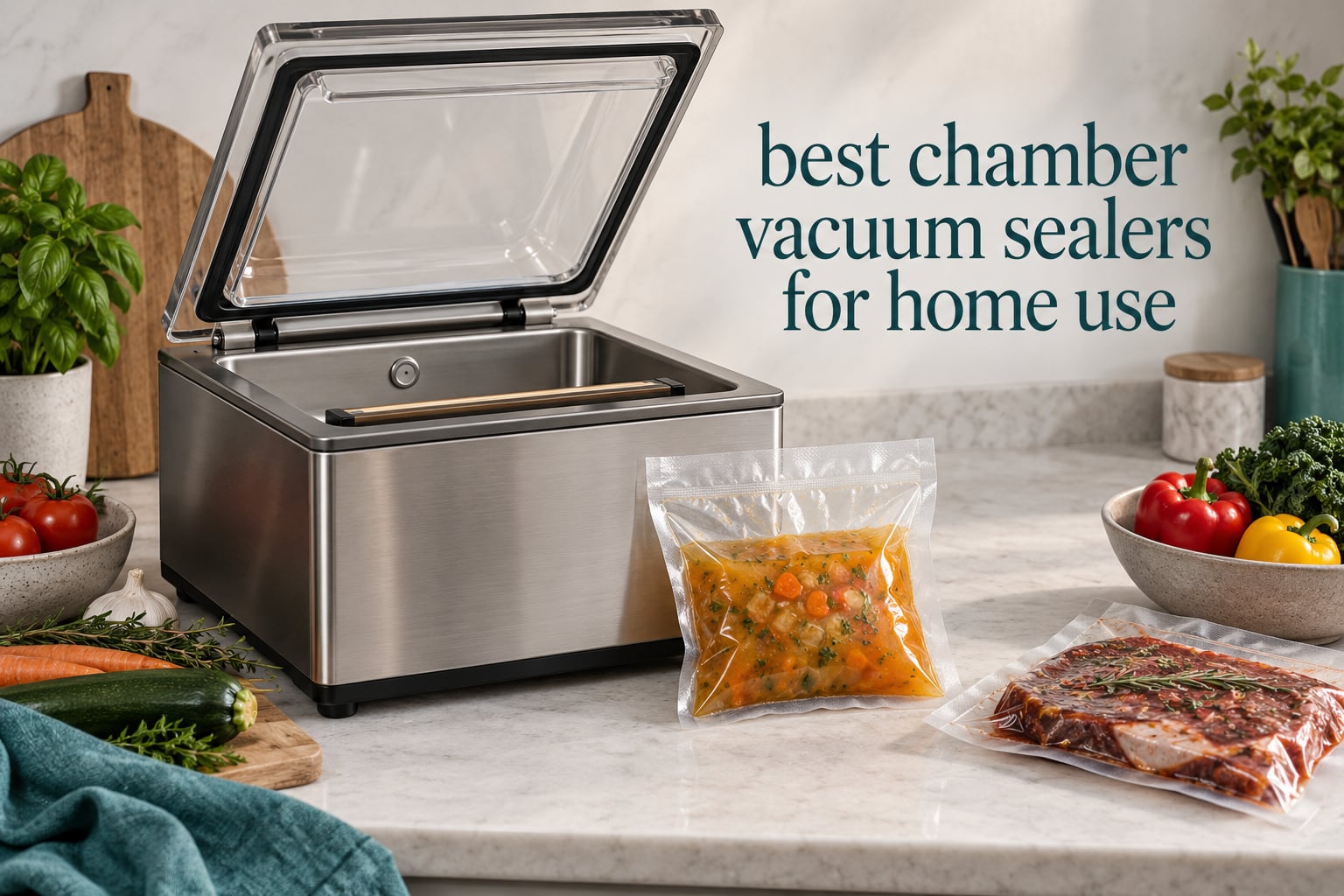
Chamber sealers are worth it if you regularly seal liquids, soups, marinades or bulky cuts of meat. Everything else in the kitchen is a better served by a good edge sealer for a fraction of the money. That is the short answer, and it is the answer most buyers eventually arrive at after a season of comparing the best chamber vacuum sealers for home use.
The mechanism is the whole difference. An edge sealer sucks air out through the open end of the bag, so liquid inside the bag gets dragged into the vacuum path and ends up in the pump or the channel. A chamber sealer puts the bag inside an airtight box, drops the air pressure in the box, and lets the surrounding air compress the bag around the food from the outside. Nothing has to travel through your food, which is why a chamber machine seals a quart of soup lying on its side without a drop reaching the pump.
That single design choice produces three practical differences. First, liquid sealing becomes routine rather than a trick. Second, the machine can pull a deeper, steadier vacuum because it does not fight the food for airflow. Third, premade smooth pouches cost less per bag than the textured embossed rolls an edge sealer needs. The trade-off is bulk: chamber machines weigh between roughly 21 and 62 pounds here, and they take up noticeably more counter space than the small edge units they replace.
If you are still deciding between machine types, our general guide to vacuum sealers for food storage lays out the edge sealer options in detail. This guide covers only the chamber category, with published weight, footprint, seal bar width and pump type for each of the ten machines reviewed.
Table of Contents
Top 3 Best Chamber Vacuum Sealers for Home Use in 2026
The three picks below are the ones we would put on a counter first. Each has enough owner feedback behind it to trust, and each solves a different household problem: a compact all-rounder, a large-capacity workhorse, and a low-cost entry point.
Avid Armor USV20
- 4L chamber for wet foods
- 11.5 inch heating bar
- Adjustable vacuum and seal times

Avid Armor USV32
- Stainless steel chamber with glass lid
- Dual-wire 11.5 inch seal bar
- Rapid infusion marinate mode

All 10 Chamber Vacuum Sealers Compared (October 2026)
Every machine below seals wet foods without draining them. The differences that matter day to day are chamber volume, seal bar width, pump type and how much of your counter the thing permanently occupies.
| Product | Specifications | Action |
|---|---|---|
| Avid Armor USV20 |
|
Check Latest Price |
| Avid Armor USV32 |
|
Check Latest Price |
 VEVOR Chamber Vacuum Sealer 320W VEVOR Chamber Vacuum Sealer 320W |
|
Check Latest Price |
| Avid Armor Ultra SeriesONE USV1 |
|
Check Latest Price |
 VEVOR DZ-260S-V1 VEVOR DZ-260S-V1 |
|
Check Latest Price |
 Beelicious Pro DualCore CVS101 Beelicious Pro DualCore CVS101 |
|
Check Latest Price |
 Gasbye CV4520 Gasbye CV4520 |
|
Check Latest Price |
 Mesliese CVS101S Mesliese CVS101S |
|
Check Latest Price |
 Wevac CV12 Pro Wevac CV12 Pro |
|
Check Latest Price |
 Vesta Precision V513 Vesta Precision V513 |
|
Check Latest Price |
1. Avid Armor USV20 – Best All-Round Chamber Vacuum Sealer for Home Kitchens
Avid Armor USV20 Chamber Vacuum Sealer Machine – High-Volume 11.5” Sealer
4L chamber
11.5 inch user-replaceable seal bar
17.3 pounds
Adjustable vacuum 15 to 60 sec
Pros
- Seals soups sauces and marinades without mess
- Compact 12.25 by 8.5 inch chamber footprint
- User-replaceable seal bar extends machine life
- External accessory port for jars
Cons
- Chamber depth limited to 3 inches
- No cover included for countertop storage
- Short learning curve for time settings
The USV20 is the machine we kept coming back to while assembling this list. It is the smallest chamber unit that still takes an 11.5 inch pouch, which means a full bag of carrots or a good-sized cut of meat fits without gymnastics. Owners describe sealing liquid-heavy meals as unremarkable once you get used to it, which is the highest compliment a kitchen machine can earn.
What sets it apart from the other compact options is the user-replaceable seal bar. When the heating element eventually fatigues, you swap a part rather than a machine. Combined with the adjustable vacuum time from 15 to 60 seconds, it gives you a real range of control over how hard the bag gets compressed.
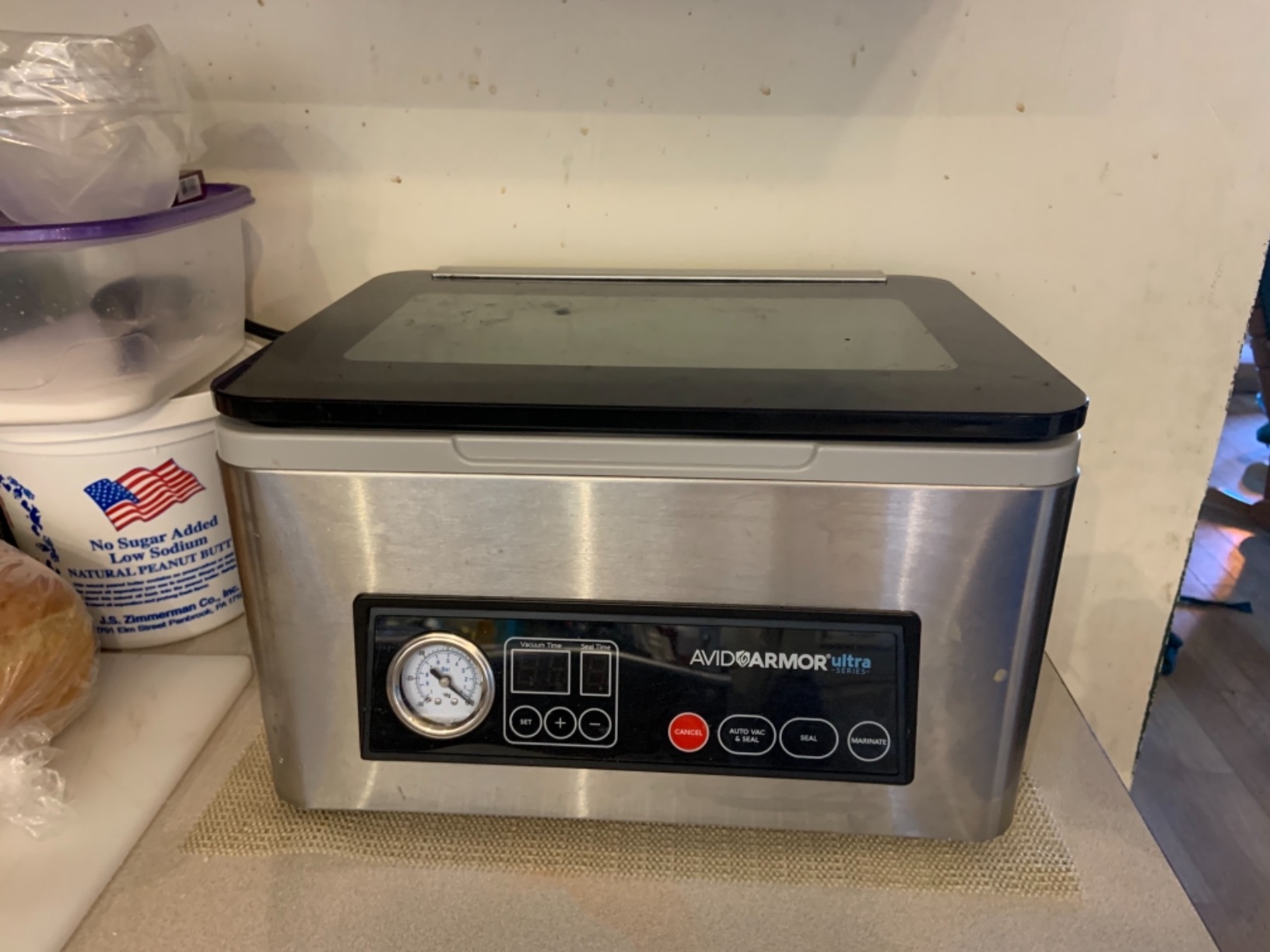
The bag economics surprised us the most in a good way. Because this is a chamber machine, it runs on plain smooth pouches up to 11 by 10 inches, and those are consistently cheaper than the textured rolls an edge sealer requires. Owners switching over report that their per-bag cost dropped sharply after the first month.
Physically, the unit is 14 inches wide, 12 inches deep and 8.25 inches tall, and the chamber itself is 12.25 by 8.5 by 3 inches. At 17.3 pounds it is one of the few chamber machines you can actually pick up and move to a different counter when you need the space for something else.
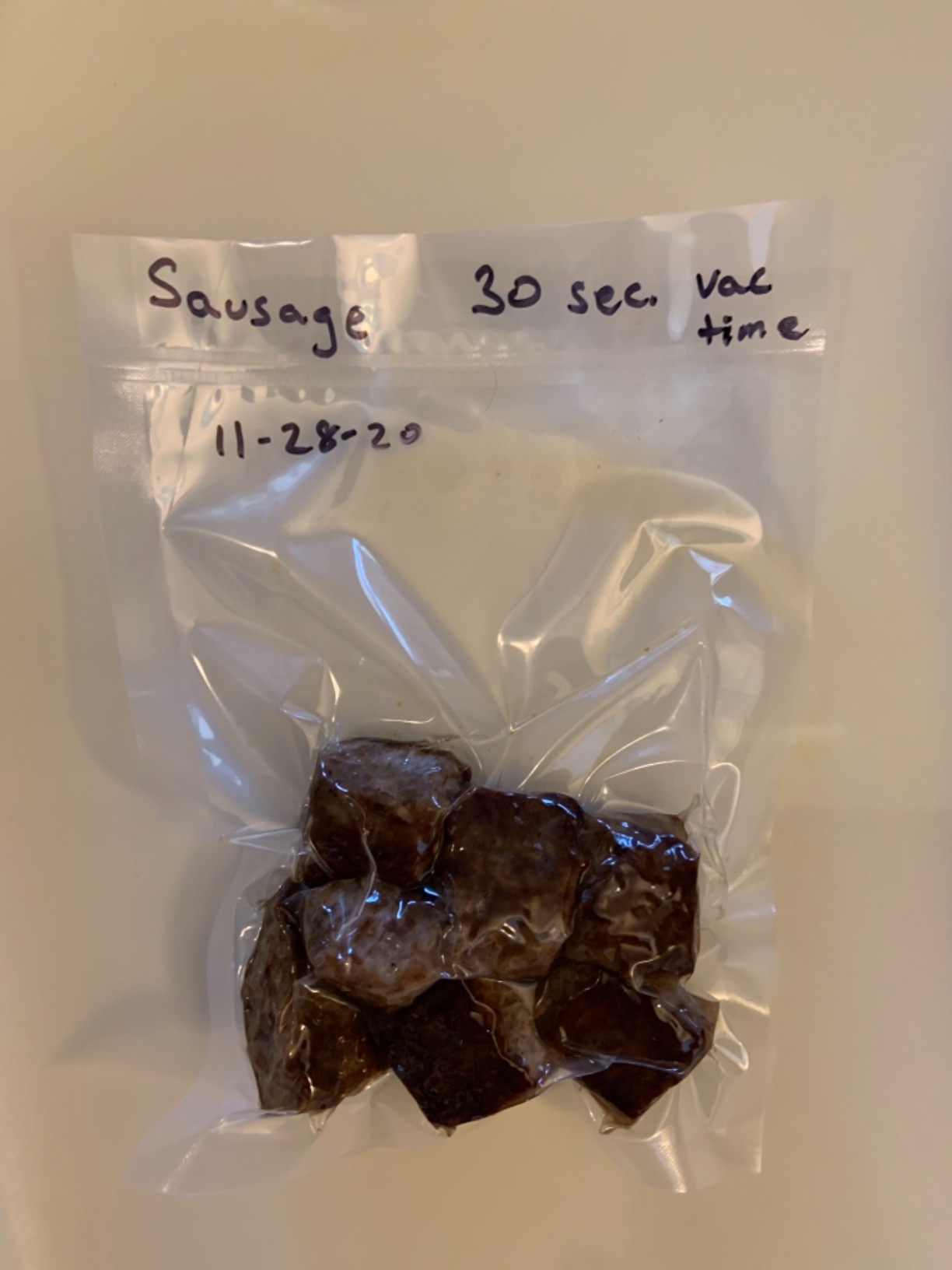
Will a 3 inch deep chamber be enough for what you cook?
It is enough for steaks, roasts cut down, bags of soup, marinated meat and produce. It is not enough for a whole turkey or a full leg of lamb sitting proud of the chamber. If your freezer plan involves whole birds or large primals, step up to a deeper chamber such as the Wevac CV12 Pro at 3.8 inches.
What do you give up against an edge sealer?
You give up counter weight, portability and a bit of speed. A cycle here is slower than a small edge sealer, and the machine takes up more room than a drawer-top unit. You also get nothing back at the store shelf in terms of throughput, so if you are sealing five dry bags a week and nothing else, this is overkill.
2. Avid Armor USV32 – Best Chamber Vacuum Sealer for Bulk Meat and Large Family Portions
Avid Armor USV32 Chamber Vacuum Sealer Machine for Foods, Soups & Liquids
Stainless steel chamber with tempered glass lid
11.5 inch dual-wire bar
26.4 pounds
380 watts
Pros
- Large chamber handles family-size portions
- Dual-wire bar creates an extra strong seal
- Rapid marinate mode shortens marinade time
- Glass lid lets you watch the vacuum cycle
Cons
- Heaviest of the three Avid models at 26.4 pounds
- No automatic vacuum sensing so times are manual
- Larger counter footprint than the USV20
The USV32 is the USV20 grown up. The chamber is deeper, the body is stainless steel with a tempered glass lid instead of a plastic one, and the sealing bar runs dual wires, which is what you want when the pouches are thick or the food is large enough to press hard against the seal.
The rapid infusion marinate mode is the feature that pulls people in. Owners running this on steaks and pork chops report getting overnight-style flavour in minutes because the negative pressure in the chamber forces the marinade into the meat instead of just sitting on the surface. For anyone tired of marinating for two days before cooking, that alone justifies the step up in size.
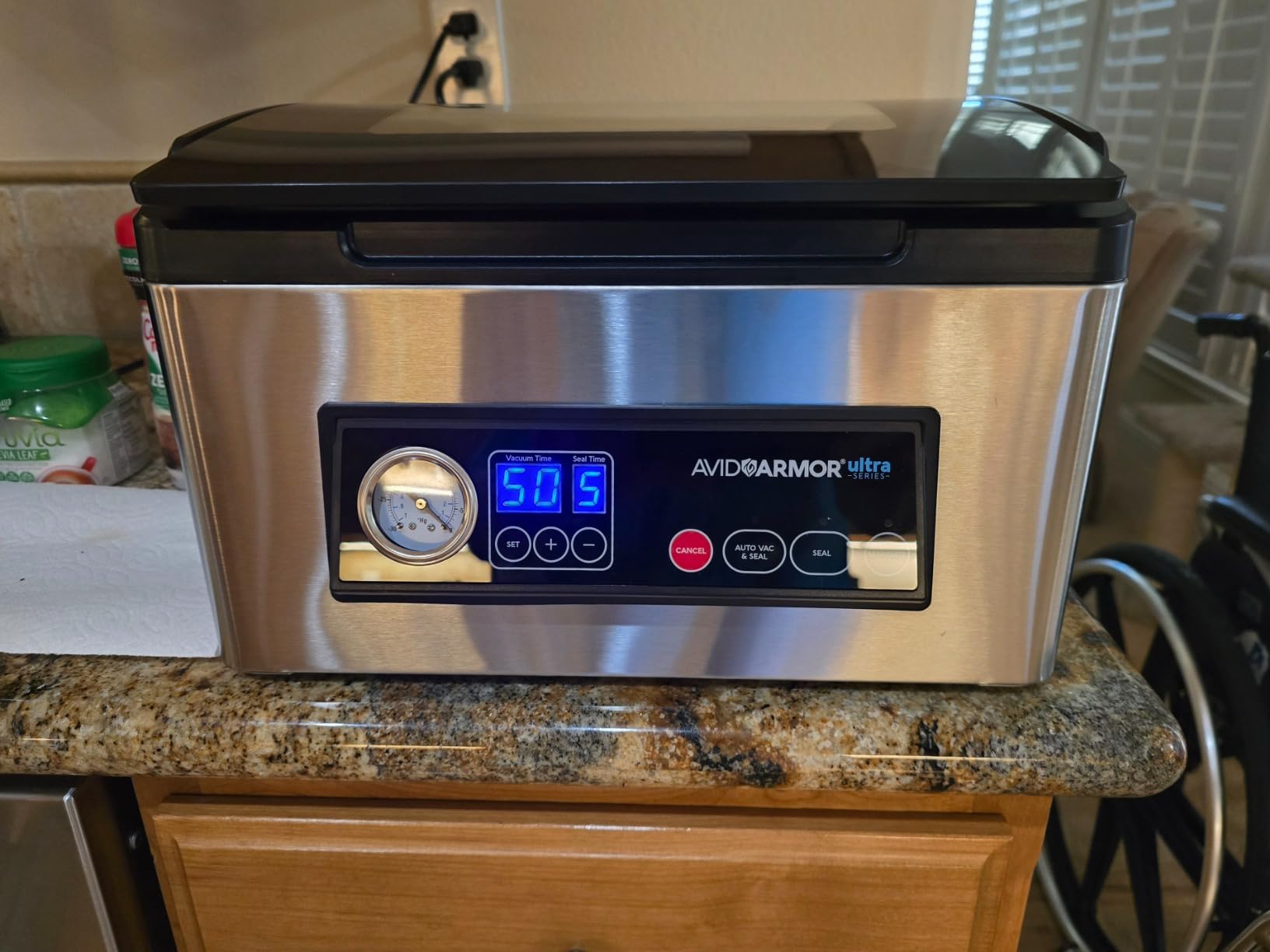
Seal quality is where the dual-wire bar earns its keep. When a bag goes into a freezer and the contents swell, a single thin seal line can be the weak point. Two heating wires spread the heat across a wider band, which produces a seal that reviewers describe as noticeably more forgiving.
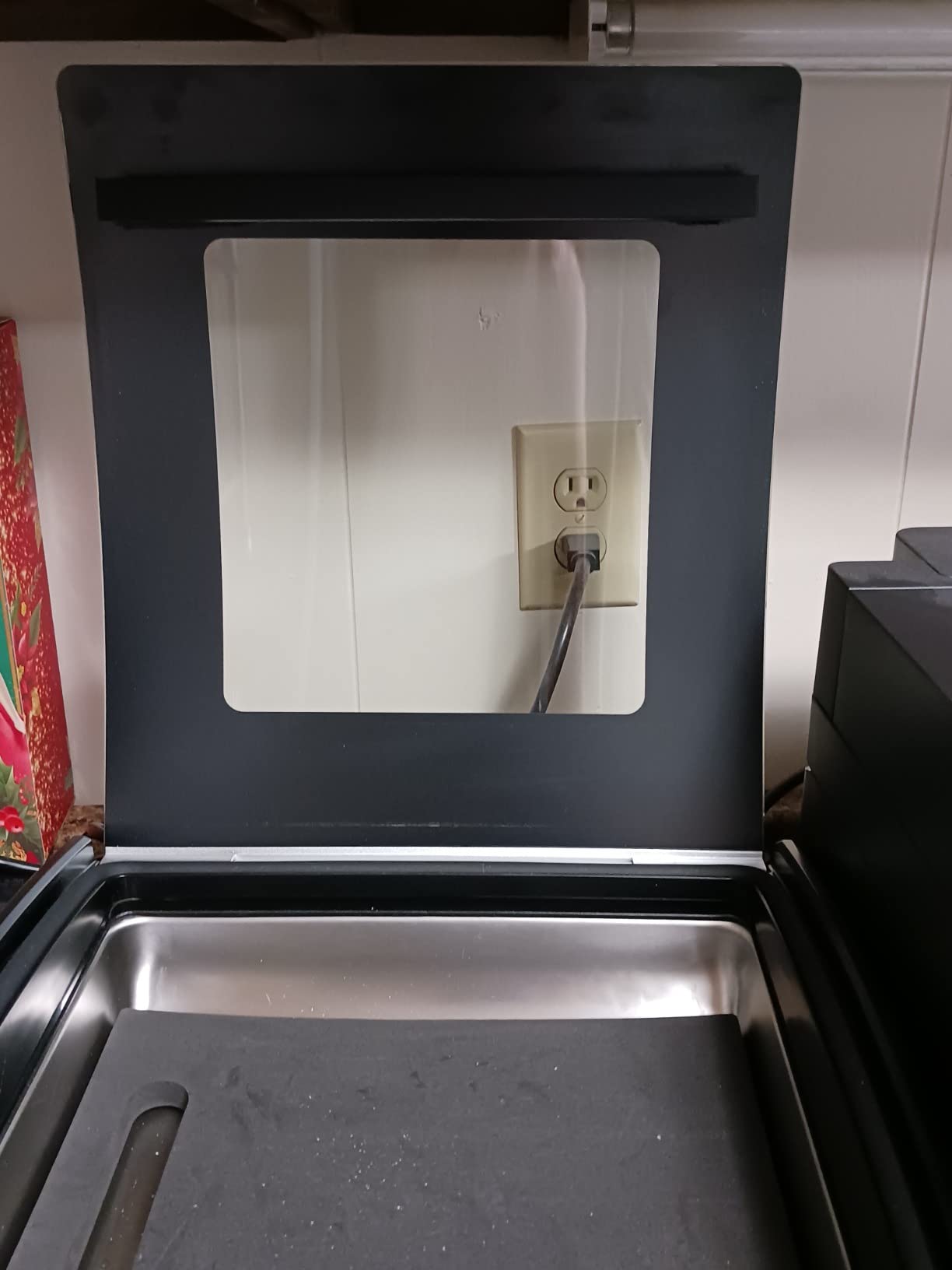
At 26.4 pounds and 12 by 11.5 inches on the base with a 3.5 inch chamber height, this is a machine you set down in a corner and use. The glass lid is worth noting for a practical reason: you can see the bag collapse as the vacuum pulls, so you know when the cycle is actually doing something.
Is the extra size worth it for a household of two?
Probably not. A household of two sealing a few pounds of meat a week gets the same liquid handling from the USV20 and does not have to find counter for a heavier body. The USV32 makes most sense once you are processing a whole side of beef, a batch of poultry, or a week of meal prep at once.
How do you handle bags that will not seal on the first try?
Because there is no automatic vacuum sensing, you set the vacuum and seal times yourself and learn what works by feel. Start with the default settings, then shorten the vacuum time for soft items like berries or bread so you do not crush them, and lengthen the seal time when the pouch material is thick or damp.
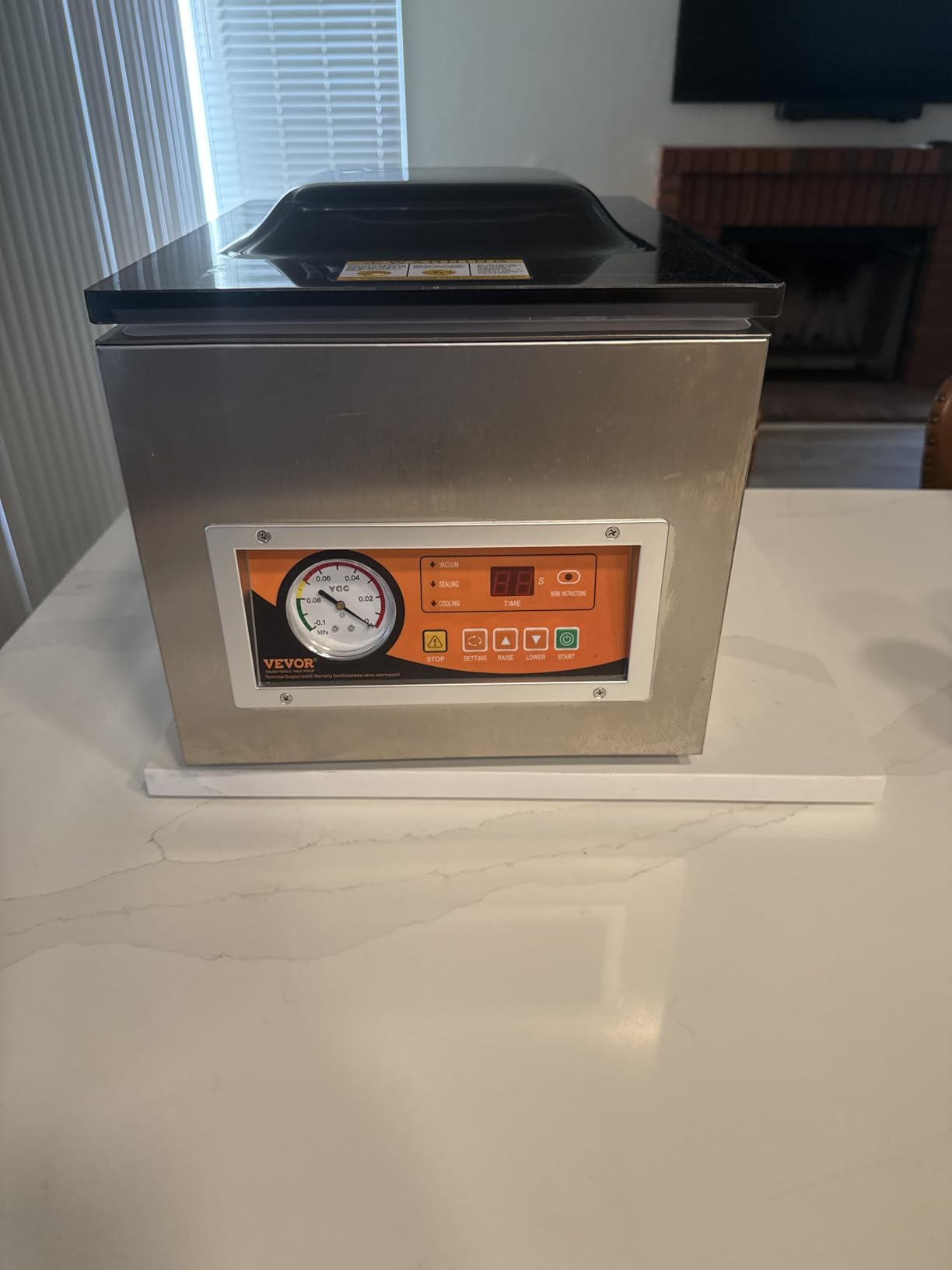
3. VEVOR Chamber Vacuum Sealer 320W – Longest Sealing Bar in This List
VEVOR Chamber Vacuum Sealer 320W Sealing Power 12.6 Inch Sealing Length
Minus 100KPa vacuum power
12.6 inch sealing length
62 pounds
Built-in pressure gauge
Pros
- Longest seal bar here handles large bags
- Built-in pressure gauge shows the pull
- Stainless steel chamber resists rust
- Dual lock seal with 10mm strip
Cons
- 62 pounds makes it a permanent fixture
- Loud pump during the vacuum cycle
- Oil pump needs periodic changes
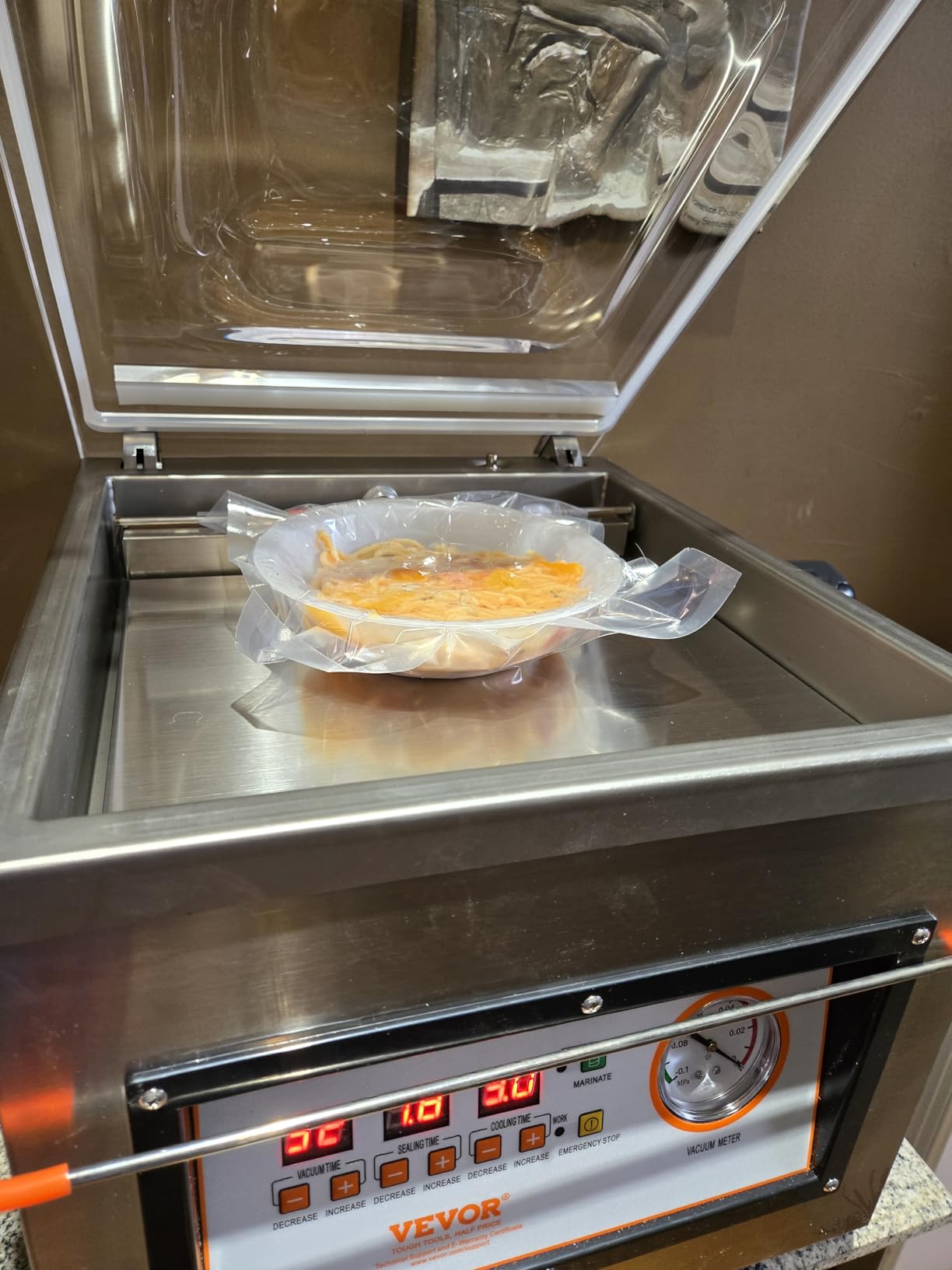
The headline spec on this VEVOR is the 12.6 inch sealing length, the widest bar of any machine in this roundup. If you buy large flat bags or cut your own pouches to size, that extra inch of bar width is the difference between sealing one pouch and sealing two narrow ones side by side.
The second feature worth knowing about is the built-in pressure gauge. On a chamber machine without a gauge, the only feedback you get is a bag that shrank a lot or a bag that did not shrink at all. A gauge lets you watch the pull climb and stop the cycle before a soft item like a bread roll or a block of cheese gets crushed flat.
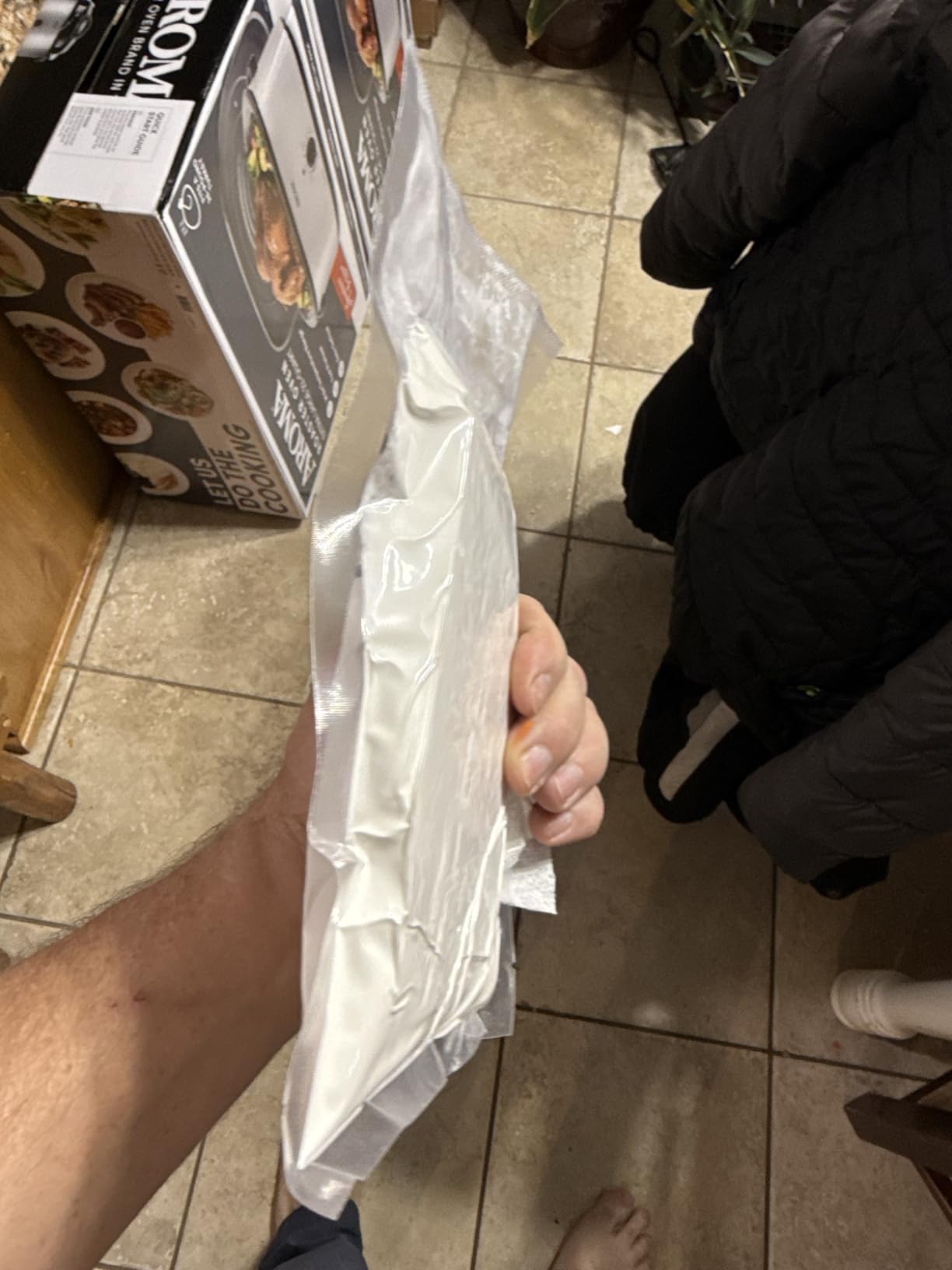
The 320 watt heater and the dual lock seal with a 10mm strip are both geared toward bags that will sit in a freezer for months. The wider seal strip is what resists the swelling that happens when frozen liquid expands, which is exactly the failure mode that ruins home-packed stock and soup.
Owners running commercial-style VEVOR units in a home kitchen report that they seal far more reliably than small edge units ever did for them. The trade-off shows up everywhere else: 62 pounds of weight, a body that measures 17.9 by 16.1 by 16 inches, and an oil-lubricated pump that needs attention on a schedule.
Can a 62 pound machine live in a normal kitchen?
Yes, but plan for it as a fixture rather than an appliance. That much weight means you set it on a sturdy base cabinet or a dedicated shelf and do not slide it around. The vertical lid also needs real overhead clearance, so check the cabinet above before you commit to the counter space.
Is the oil pump a dealbreaker for home use?
Not if you actually do the maintenance. The pump is a rotary oil design, which means a few minutes checking the oil level every few dozen cycles and an oil change on a set interval. Owners who set a calendar reminder are generally happy with it; owners who ignore it are the source of most of the durability complaints.
4. Avid Armor USV1 – Best Budget Chamber Vacuum Sealer With a Dry Pump
Avid Armor Ultra SeriesONE USV1 Chamber Vacuum Sealer Machine
Dry pump with no oil changes
10 inch seal bar
12 by 12 inch footprint
One-touch automatic cycle
Pros
- Maintenance-free dry pump needs no oil
- Smallest footprint here at 12 by 12 inches
- One-touch operation with no learning curve
- Accessory port for Mason jars
Cons
- Smallest chamber caps bags at 10 by 10 inches
- Only a 10 inch seal bar
- Limited review history at 171 reviews
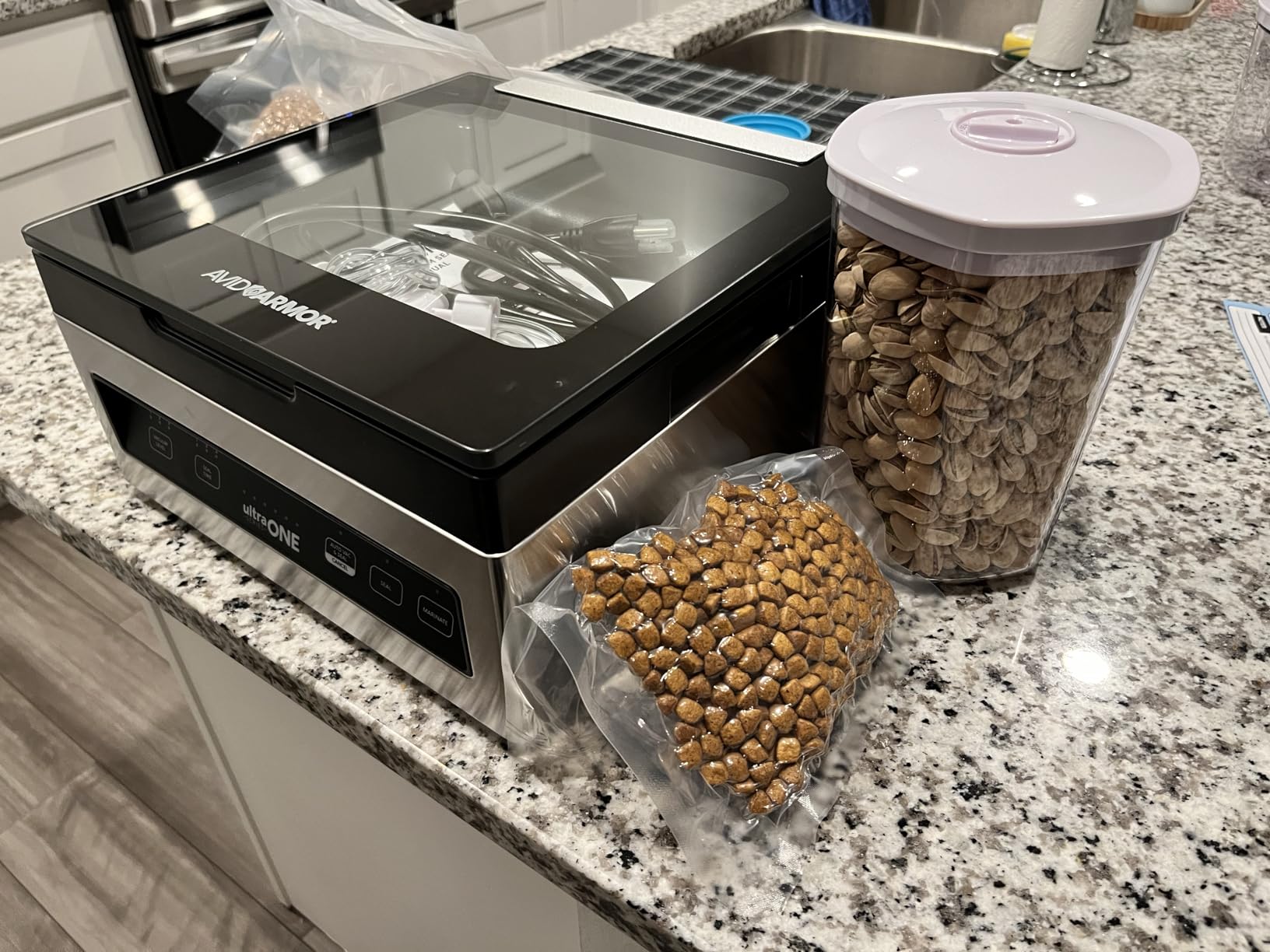
The USV1 exists because somebody asked for a chamber machine that fits under a cabinet and never needs oil. Both of those things are true. The body measures 12 by 12 inches with a height of 6.25 inches, which is small enough to slide out of sight when you need the counter, and the dry pump system means there is no oil to check and no oil to change.
That dry pump decision is what separates it from most of the machines in this price bracket. It also means no oil smell in your kitchen and no pump oil sitting on a shelf. For a first-time chamber sealer buyer who just wants to try the format without committing to a maintenance routine, that is a real advantage.
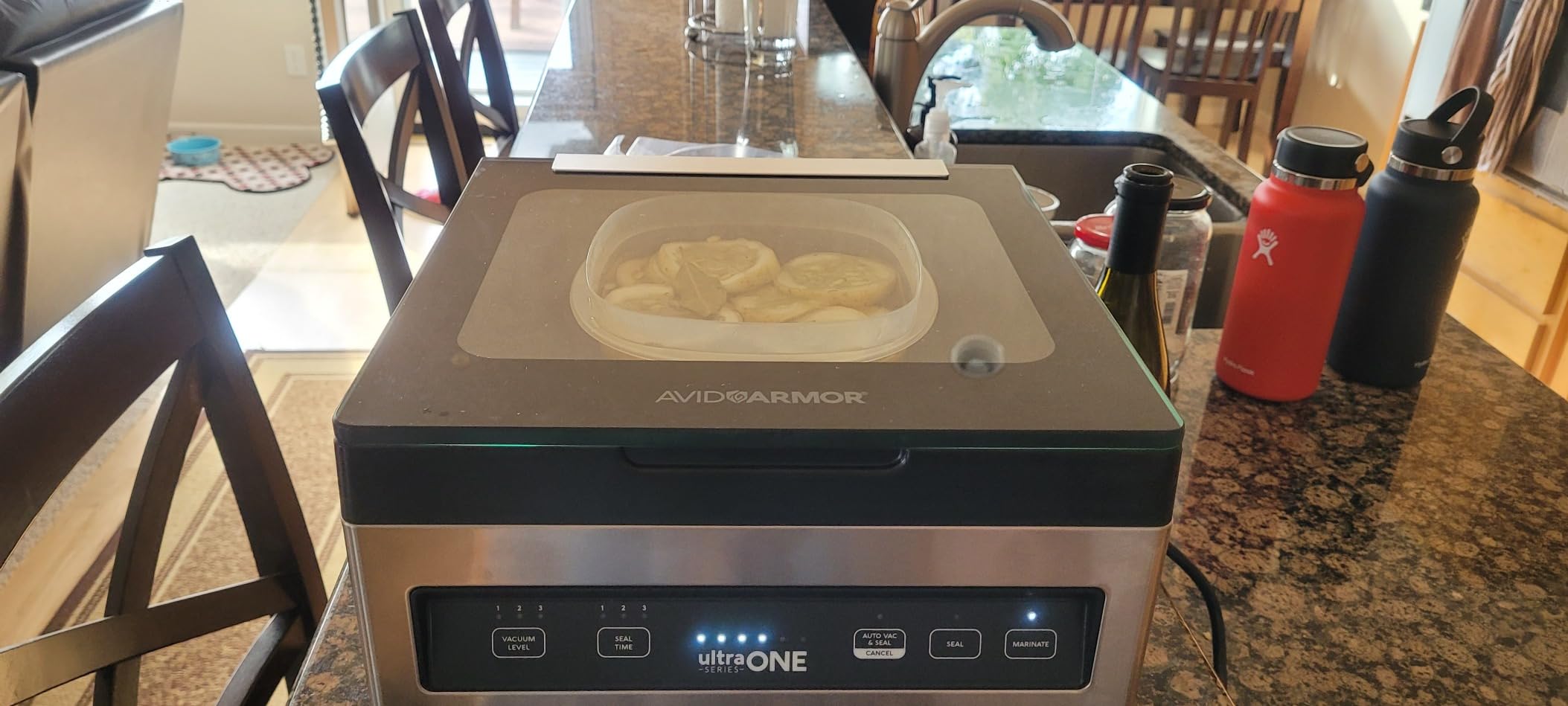
Operation is genuinely one touch. You drop the bag in, close the lid, press the button and it runs a fixed automatic cycle. There are no dials to learn and no settings to get wrong, which makes it a much easier introduction to chamber sealing than a manual-timer machine.
The accessory port accepts Mason jars and canisters, so it covers the full range of chamber sealers including external vacuuming, even though the sealing itself happens inside the box. That is worth noting because it is the capability that pushes people toward this machine type in the first place.
How long before you outgrow this machine?
For a small household or a single cook sealing meat, portions and soup, a 10 by 10 inch chamber covers a lot. You outgrow it the moment you want to seal a large roast, a big flat bag of vegetables, or a batch of stock in one go. Many owners describe it as a deliberate first step and then move up to the USV20 within a year.
Is the smaller review count a reason to skip it?
It is a fair caution, not a disqualifier. With 171 reviews the machine has a thinner long-term record than the models with a thousand-plus, so you are taking a slightly larger bet on build quality. In exchange you get the smallest footprint and the simplest pump in the group.
5. VEVOR DZ-260S-V1 – Best Chamber Vacuum Sealer for Mylar Bags and Freeze-Drying
VEVOR Chamber Vacuum Sealer, 260W Sealing Power, Vacuum Packing Machine for Wet Foods, Meats, Marinades and More, Compact Size with 10.2 in Sealing Length, Applied in Home Kitchen
Minus 100KPa vacuum power
10.2 inch sealing length
Vertical-opening lid
Supports Mylar bags
Pros
- Works with Mylar bags for freeze-drying
- Handles soups and marinades well
- Digital controls for vacuum and seal times
- Chamber fits a whole chicken
Cons
- Around 45 pounds so it does not move easily
- Lid needs roughly 25.5 inches of clearance
- Some reports of vacuum failure early on
This is the VEVOR to look at if you want chamber sealing and Mylar bag capability in one machine. Most home chamber sealers are built for smooth or textured polyethylene pouches. This one is documented as working with Mylar bags as well, which is the format you need if you plan to move into freeze-drying or long-term pantry storage with oxygen absorbers.
The digital control panel gives you adjustable vacuum time, seal time and cool-down, which is more control than the simple one-cycle machines at a similar size. That flexibility matters most when you are working with liquid, because liquid needs a gentle vacuum setting and a firm seal, and the two are not the same setting.
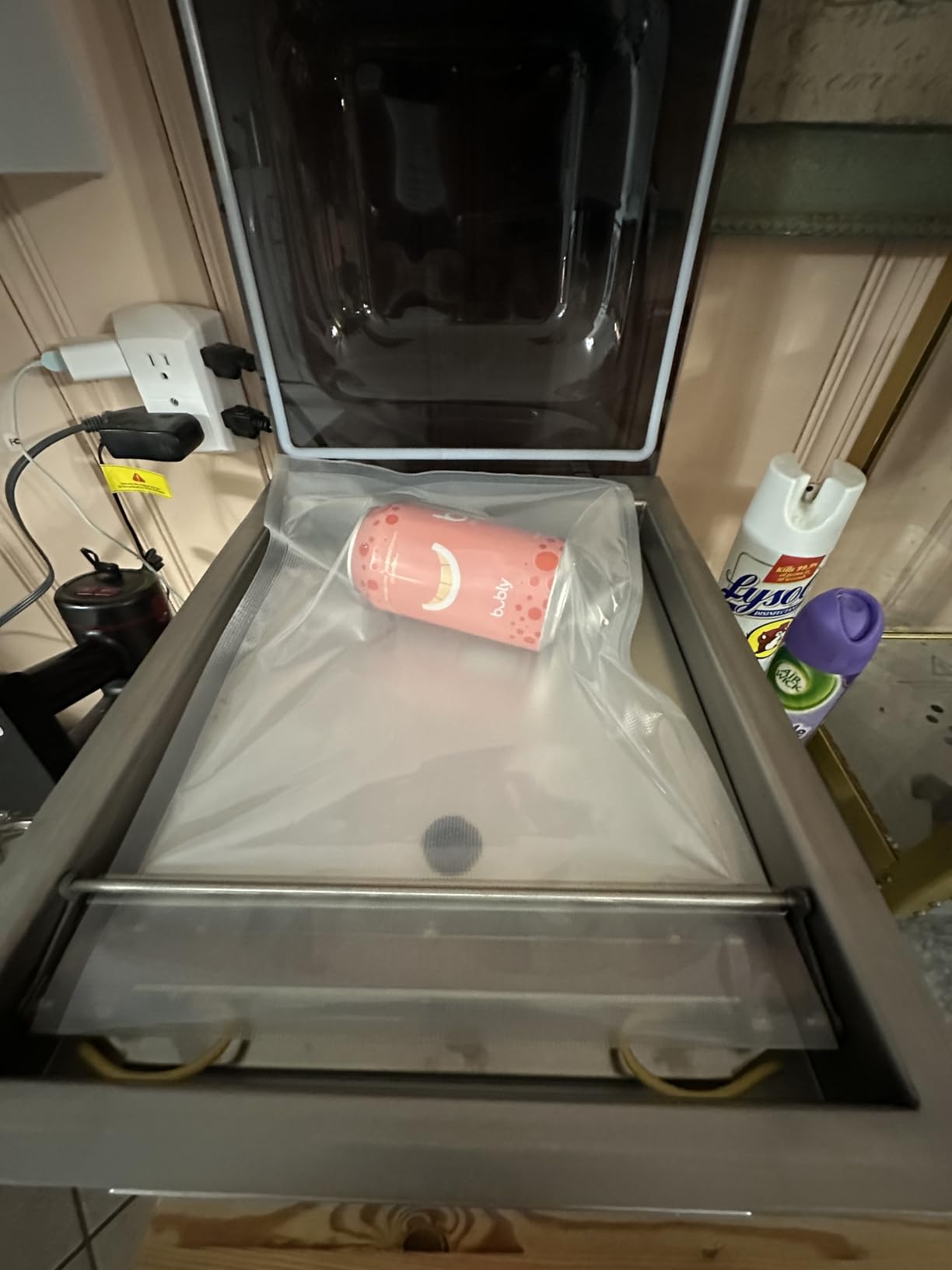
Capacity is a genuine strength. Owners report fitting a three pound coffee tin and a four and a half pound whole chicken inside the chamber, which is well beyond what the smaller compact machines in this list will take. The minus 100KPa vacuum specification is also among the stronger figures here.
The physical realities are what temper that. Reviewers put the weight at more than 45 pounds, the body measures 15.9 by 12.4 by 11.8 inches, and the lid opens all the way vertical, so you need roughly 25.5 inches of clear space above the machine before you place it.
Which bag formats should you actually buy for it?
Plan on smooth chamber pouches for everyday liquids and meat, textured bags if you want compatibility with edge-sealer rolls you already own, and Mylar if freeze-drying or long-term storage is the goal. Check the pouch width against the 10.2 inch sealing length, because bags wider than the bar will not seal across the full opening.
What should you know before buying at this tier?
Long-term durability reports are mixed. Most owners are positive about sealing quality, but a small number report vacuum trouble within weeks of purchase, and customer service feedback is not a strong point for this brand. That is the honest reason we would rank it below the models with a decade of owner feedback behind them.
6. Beelicious Pro DualCore CVS101 – Best Chamber Vacuum Sealer for Two-Zone Control
Beelicious Pro DualCore CVS101 6L Chamber Vacuum Sealer for Wet Foods
Dual vacuum zones with 6L chamber
Four oil-free dry pumps
12 inch dual seal bar
25.7 pounds
Pros
- Dual zone design pairs chamber with external sealing
- Four oil-free pumps need no maintenance
- Rated 4.9 out of 5 by owners
- Includes a starter bag kit
Cons
- Newer brand with only 60 reviews
- Bulky body needing dedicated counter space
- App dependency for some features
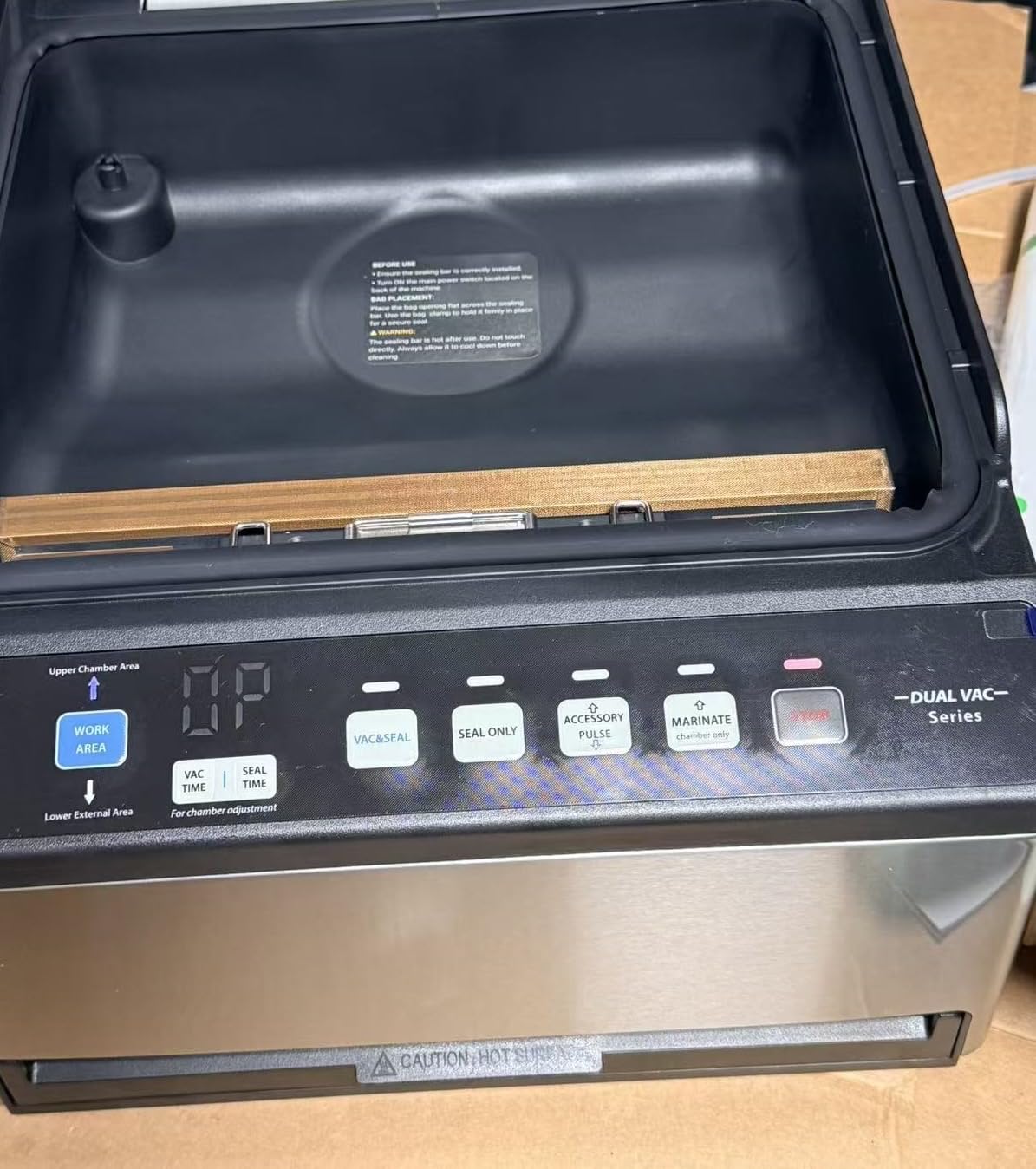
The DualCore CVS101 does something none of the other machines here do. It has an upper chamber and a lower external sealing area, so you can run a liquid bag through the chamber and then handle a dry bag at the lower station without dragging the whole chamber lid open. In a week where you mix soup with meat storage, that saves real time.
Power comes from four oil-free dry pumps driving a 230 watt system with a 12 inch dual seal bar. The oil-free design means there is nothing to service, and the dual-core arrangement shares the load between pumps rather than running one hard all cycle.
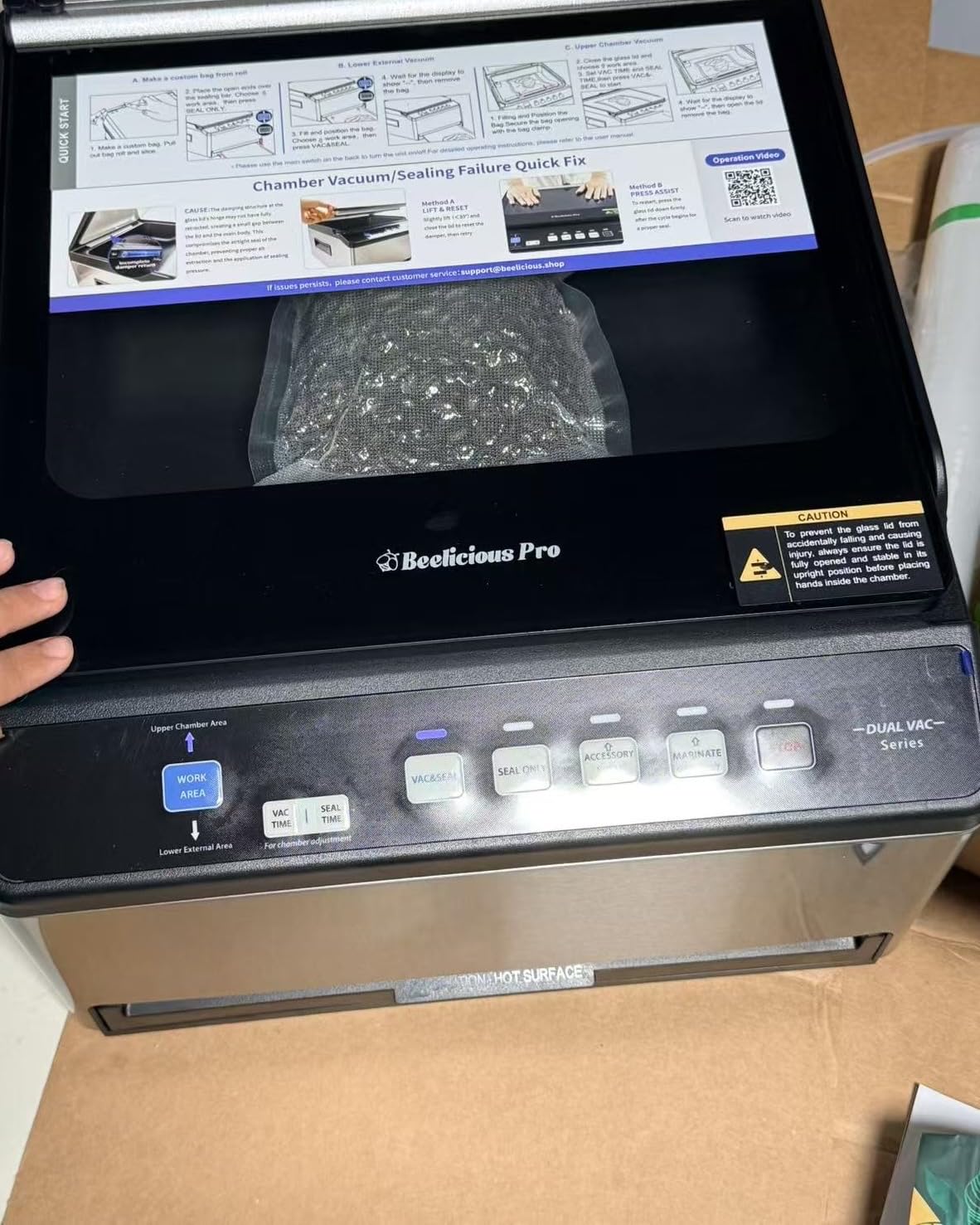
The chamber measures about 11.8 inches wide, 10.2 inches long and 3.1 inches high for a 6 litre volume, and the machine comes in at 25.7 pounds with an angled top panel. There is a built-in bag cutter, which removes a small annoyance that most competing machines make you solve with scissors.
Owners rate it highly for liquid handling, describing soups, sauces and brines as straightforward, and the 5X infusion mode is aimed at the same marinating benefit the Avid USV32 offers. The box also includes textured bags, smooth bags and a roll, so you can start sealing the same day it arrives.
Is a companion app a real advantage or a gimmick?
The app handles food identification and expiration logging, which is genuinely useful if you vacuum seal a lot and then forget what is in the back of the freezer. If you never open the app, nothing is lost; every sealing function works without it. But it is a smartphone dependency some buyers simply do not want.
What is the risk on a newer brand?
The honest answer is that 60 reviews is a thin record. The rating is the highest in this group at 4.9 out of 5, but that reflects early adopters who have had the machine a short time, not a decade of owners. Parts availability and long-term pump durability are the two things to watch as more history accumulates.
7. Gasbye CV4520 – Best Chamber Vacuum Sealer for Warranty Coverage and Included Bags
Gasbye Chamber Vacuum Sealer – 5.3QT Large Chamber, Replaceable 11.5″ Sealing Bar with Double Seal, Perfect for Meats, Soups, Sauces & Liquids, Includes 30 Pre-Cut Vacuum Bags, Stainless Steel
5.3QT chamber
11.5 inch replaceable dual-wire bar
300 watt pump
3 year warranty
Pros
- Three year warranty with replacement coverage
- Ships with 30 pre-cut bags and spares
- Replaceable heating wires and gasket
- Strong liquid sealing in owner reviews
Cons
- 115 volt design limits international use
- Heavy body is awkward for some users
- Newer brand with 53 reviews
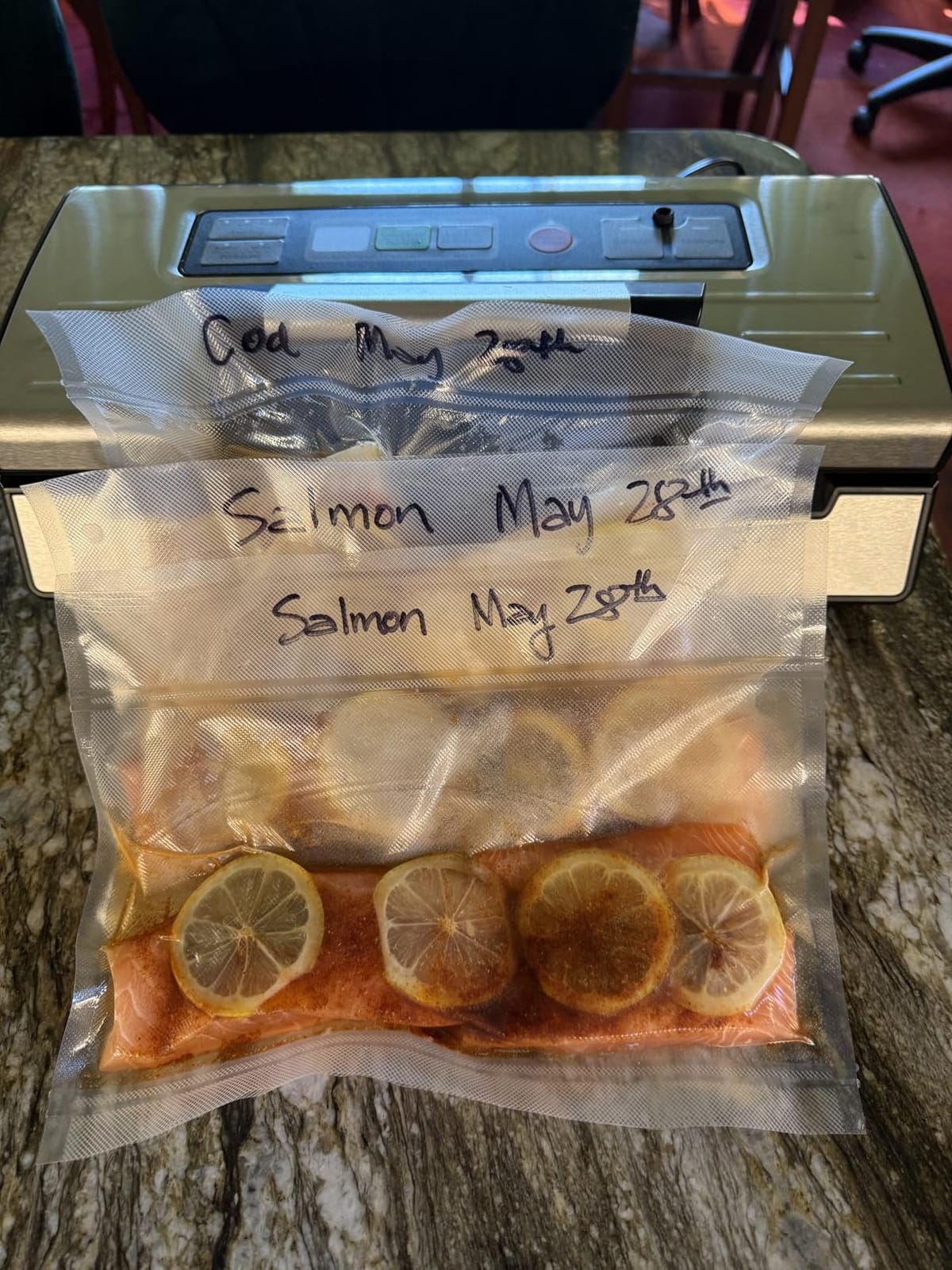
The CV4520 solves the two things that annoy new chamber owners most: you need bags immediately, and you want to know someone stands behind the machine. It includes 30 pre-cut 11 by 11 inch vacuum bags, a spare gasket, a spare heating element and an external suction hose, so nothing extra needs buying on day one.
Warranty coverage runs three years and is described as a full refund or a brand-new replacement, and owners report a US support team that answers within about eight hours. That is the strongest support commitment in this roundup and it matters more than it sounds when a machine has a mechanical pump inside it.
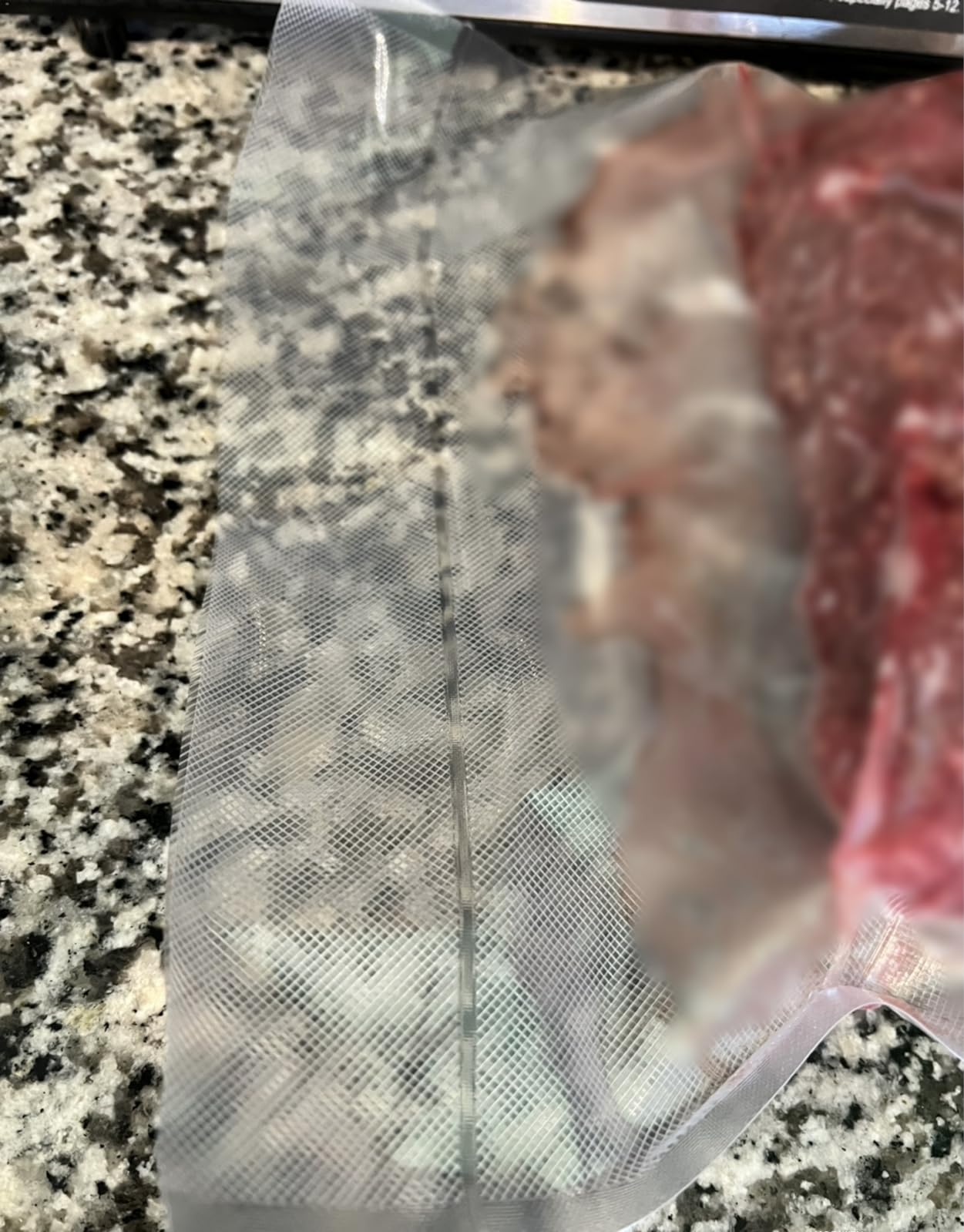
The sealing bar is an 11.5 inch replaceable unit with dual heating wires across a 9.7 inch chamber width. Being able to replace the bar rather than the machine removes the most common long-term failure point, and the double seal gives a second pass on the heat for thick or damp pouches.
Liquid performance is where owners are most enthusiastic, with bags of soup sealing without complaint at a 300 watt pump. The body measures 13.6 by 12.2 by 8.1 inches, and reviewers consistently describe it as heavy, so give it a permanent home rather than a shelf you need to reach into.
Can you use this machine outside the United States?
Not easily. It is a 115 volt design only, so in the UK, EU and Australia you would need a step-down transformer and would still be dealing with a plug mismatch. Several owners flagged this directly as a reason the machine did not work for them, so confirm your supply before ordering.
How steep is the learning curve on the cycle timing?
Mild, but real. For certain foods you need to stop the vacuum early rather than run the full cycle, and owners describe learning to hit the cancel button at the right moment. Set aside the first few bags as practice and the rest become automatic.
8. Mesliese CVS101S – Best Chamber Vacuum Sealer for Bag and Lid Flexibility
Mesliese 100kPa Chamber Vacuum Sealer for Dry Wet Soupy Foods & Sous Vide, 6L Food Sealer with 11.3″ Dual Sealing Bar, Built‑in Cutter, External Vacuum & Quick Marinate, Vacuum Roll & Universal Lids
6L chamber with 11.3 inch dual bar
Removable sealing bar
100kPa vacuum
21.4 pounds
Pros
- Works with smooth textured and embossed bags
- Includes two universal lids and a vacuum hose
- Removable dual sealing bar for cleaning
- Built-in cutter and a bag roll in the box
Cons
- Semi-automatic operation needs more input
- New brand with only 46 reviews
- No long-term reliability record yet
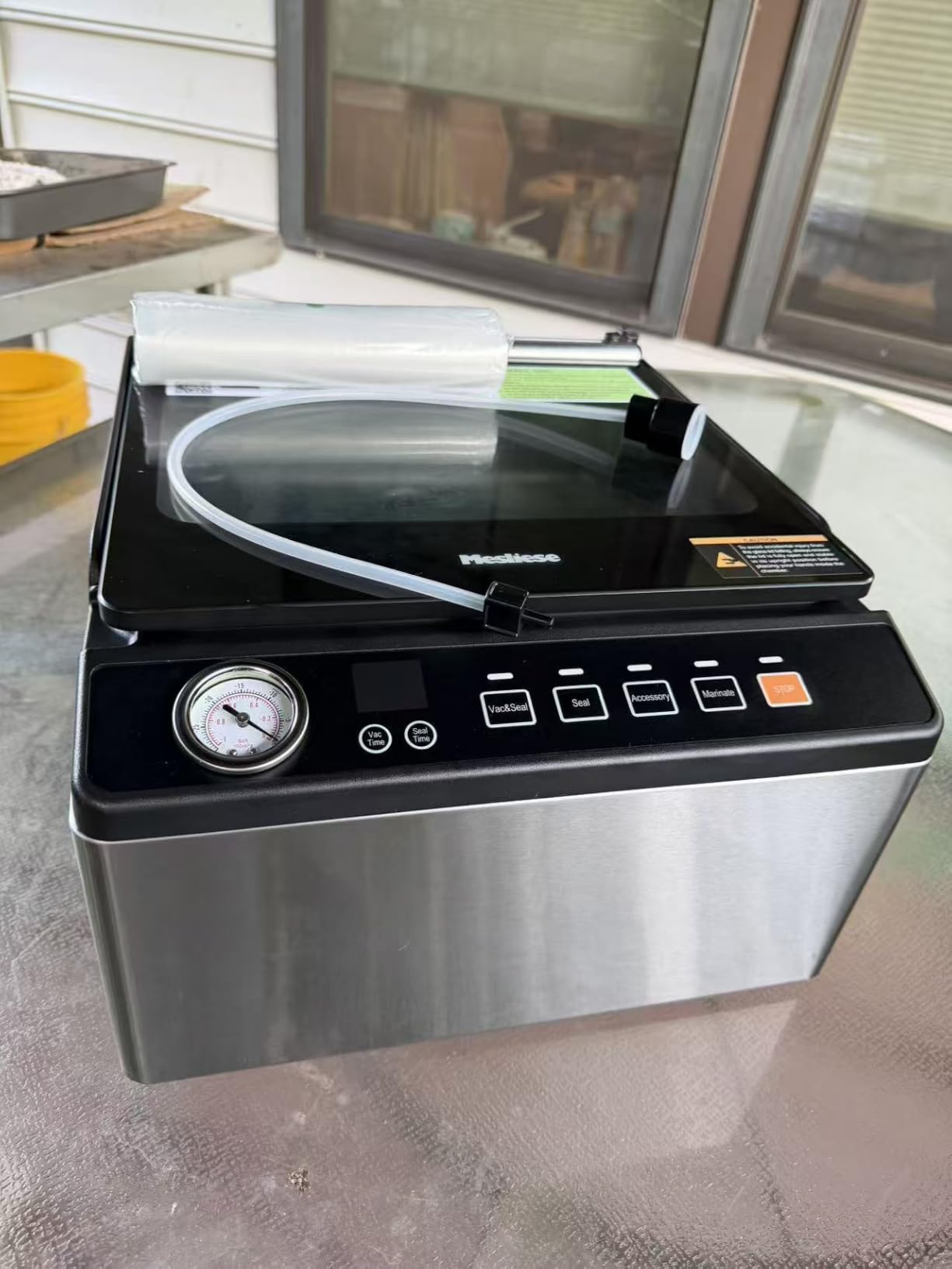
Bag compatibility is the standout here. The CVS101S is documented to run smooth chamber pouches, textured bags and embossed rolls, so it works with whatever bag stock you already have on the shelf. That is not a small convenience, because bags are machine-specific in width and a mismatch means wasted stock.
The accessory bundle is unusually complete for this tier. You get two universal lids at 6.3 and 7.5 inches, an air hose for external vacuuming, and a roll of 8 by 16 foot bags. Add the built-in 12.9 inch cutter and you can cut your own pouch widths to match whatever you are sealing.
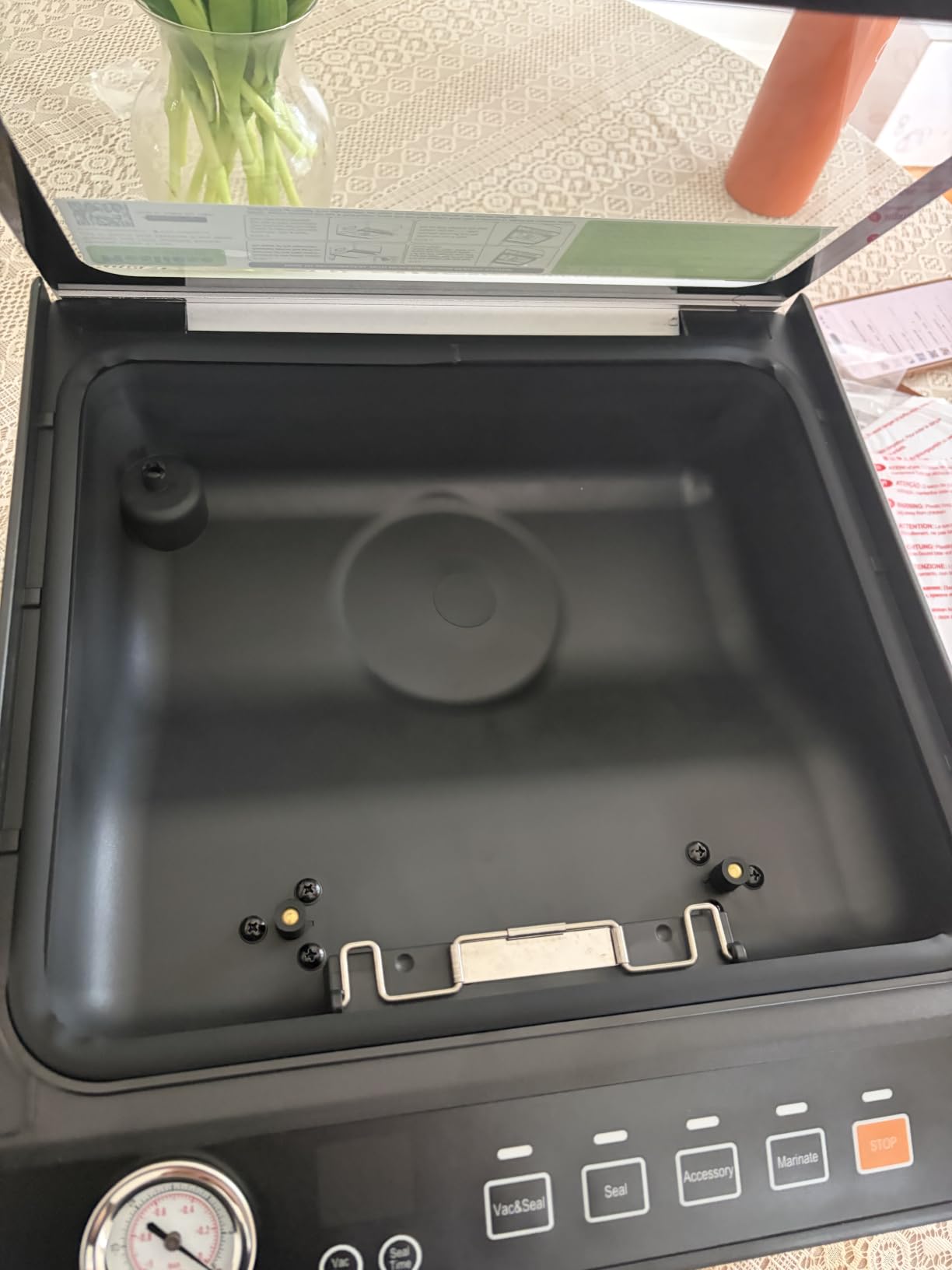
The chamber is 6 litres, measuring 12.3 inches wide, 10.4 inches long and 3.2 inches high, with a 100kPa vacuum specification. The 11.3 inch sealing bar is removable, which makes it easy to clean and means you can replace it rather than the machine when the element wears.
At 21.4 pounds it sits in the middle of the weight range here, light enough to reposition and heavy enough to feel like a real chamber unit. The marinate mode is documented as running up to 20 percent faster than traditional methods, and adjustable vacuum and seal times let you tune per food.
What does semi-automatic operation mean in practice?
It means the cycle does not run entirely on its own. You start the vacuum, watch the bag, and decide when to move to sealing rather than letting a sensor pick the moment. For someone learning chamber sealing that is arguably better, because you are learning what a good seal looks like before an automatic machine starts making the call.
How much weight should a perfect score carry?
Not much on its own. Forty-six reviews that are all five stars tells you early owners are happy; it does not tell you how the pump behaves in year three. Treat the rating as encouraging and wait for a longer record before treating this as a set-and-forget purchase.
9. Wevac CV12 Pro – Best Chamber Vacuum Sealer for the Deepest Chamber
Wevac 12″ Chamber Vacuum Sealer, 8.5 Qt, Auto Vacuum Sensing for Food
8.5 qt chamber at 3.8 inches deep
Auto vacuum sensing
12 inch dual-wire bar
29.4 pounds
Pros
- Deepest chamber here fits bulky roasts
- Auto sensing removes timing guesswork
- Detachable tray and washable seal bar
- Mason jar kit with two adapters included
Cons
- Largest footprint in this roundup
- Heaviest of the home-sized machines
- Only 40 reviews for long-term history
Chamber depth is the spec that decides whether a machine can handle a whole cut or only portions. The CV12 Pro runs an 8.5 quart chamber measuring 12.4 inches wide, 12.8 inches long and 3.8 inches high. Nothing else here is deeper, and for anyone roasting a large primal or packing a whole chicken this is the difference between sealing it in one bag and cutting it up first.
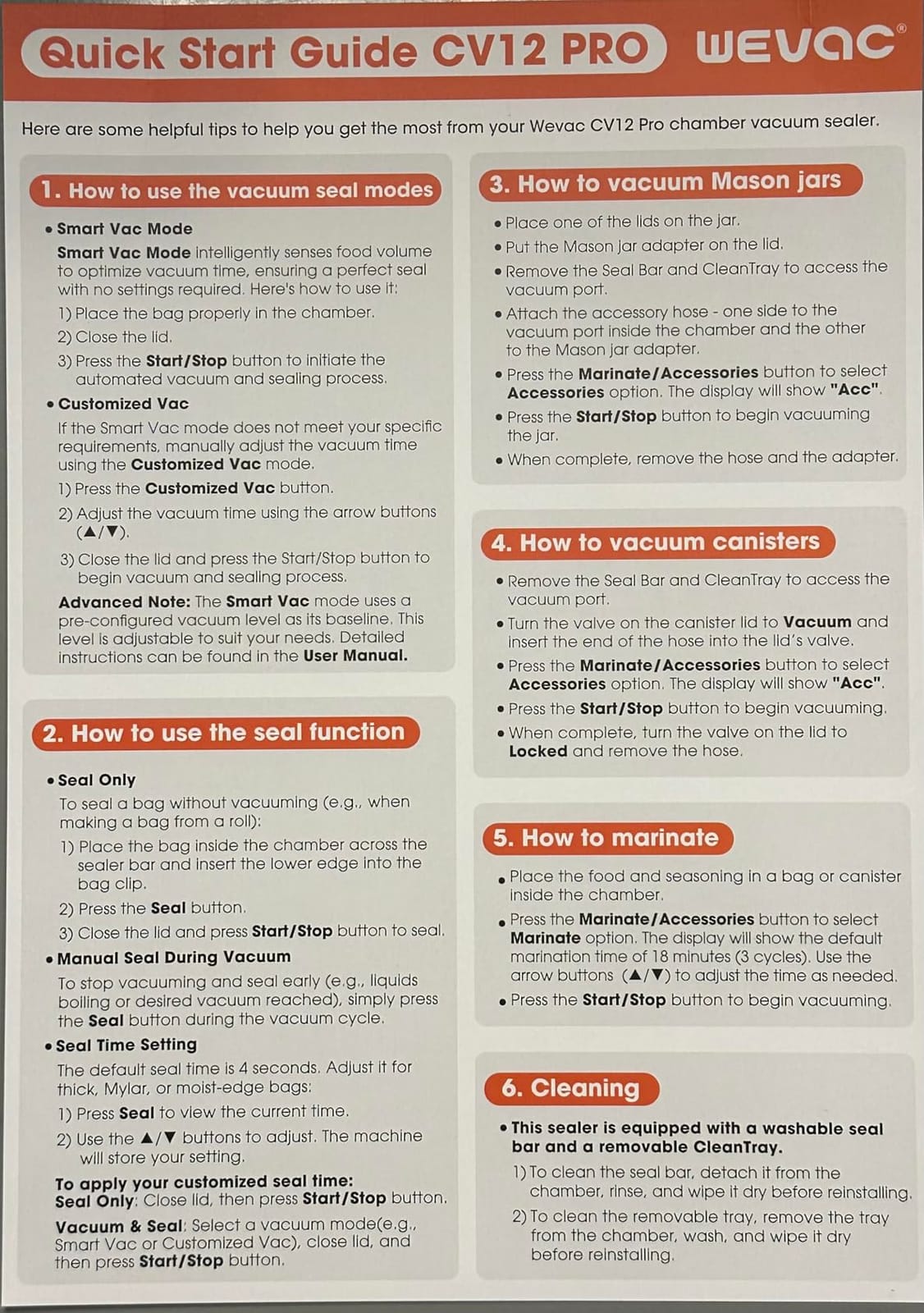
Auto vacuum sensing is the other headline. Instead of guessing a timer, the machine reads the chamber pressure and decides when enough air has been pulled. For liquid and for large mixed volumes of food that removes the fiddly part of chamber sealing, where a fixed timer either stops too early or crushes what is inside.
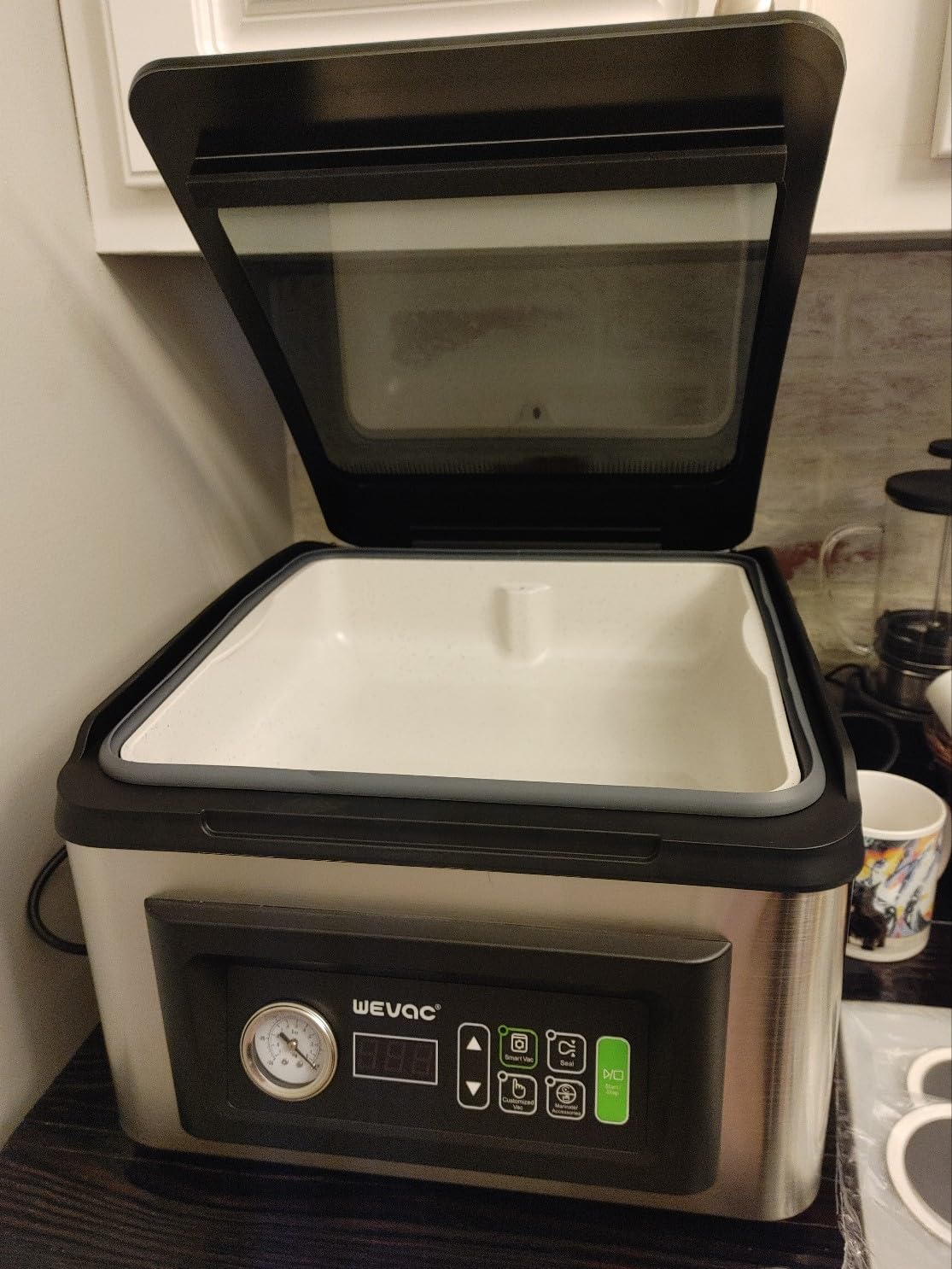
Cleaning is designed around a home kitchen rather than a back room. The clean tray detaches completely and the seal bar is washable, so after a session with soup or raw meat you are wiping two pieces instead of scrubbing a fixed cavity. The transparent lid has a damped assist so it closes softly rather than slamming.
The box includes 20 flat precut bags, a filler plate, two spare seal bars, a clean tray and a Mason jar sealing kit with two adapters. The pump is a commercial-grade design with double sealing wires across a 12 inch bar, and the warranty runs two years from the manufacturer.
What counter space should you reserve for it?
Plan for 17.9 by 14.5 inches of base area and about 9.6 inches of height, which is the largest footprint in this roundup. At 29.4 pounds you will set it down once and leave it. If your counter is already tight, the compact USV20 or USV1 will fit into a space this machine simply cannot.
Can auto sensing handle fragile food?
Not without help. Owners note that the auto setting can over-vacuum delicate items such as capsules, chips or bread, so use the custom time settings for anything that compresses easily. The sensor is excellent for meat and liquid and merely blunt for fragile goods.
10. Vesta Precision V513 – Best Chamber Vacuum Sealer for Mason Jars and Quiet Running
Vesta Precision 12” Chamber Vacuum Sealer, 5.6Qt chamber, Auto Vacuum Time
5.6 qt chamber
SmartVac auto-sensing
Variable frequency pump
21.6 pounds
Pros
- Regular and wide mouth Mason jar adapters included
- Variable frequency pump runs quietly
- Removable tray and washable 12 inch bar
- Soft-close glass lid
Cons
- Review distribution is bimodal with reported seal failures
- Only 39 reviews for long-term history
- SmartVac can crush delicate items
The V513 is the one to consider if jars are part of your plan. It includes adapters for both regular mouth and wide mouth Mason jars, so you can move from pouches to jar canning on the same machine, and the 5.6 quart chamber at 12.3 by 8.8 by 3.7 inches sits in the middle of this group for capacity.
Its variable frequency pump is the quietest running design here. Instead of one fixed speed it ramps up and down, which cuts the high-pitched whine that chamber pumps usually produce. In an open-plan kitchen where the machine sits on an island rather than behind a closed door, that is a real quality-of-life difference.
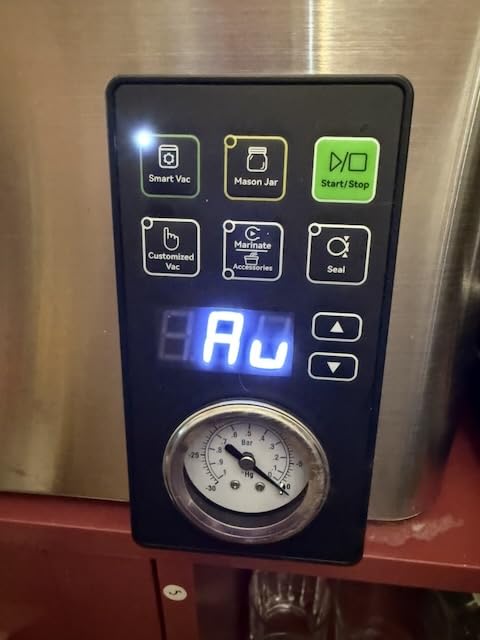
Construction details are well chosen for longevity. The clean tray removes for washing, the 12 inch seal bar is washable, and the glass lid uses a damping structure so it soft-closes instead of dropping. The machine is US designed and supported with a two year warranty and patented design elements.
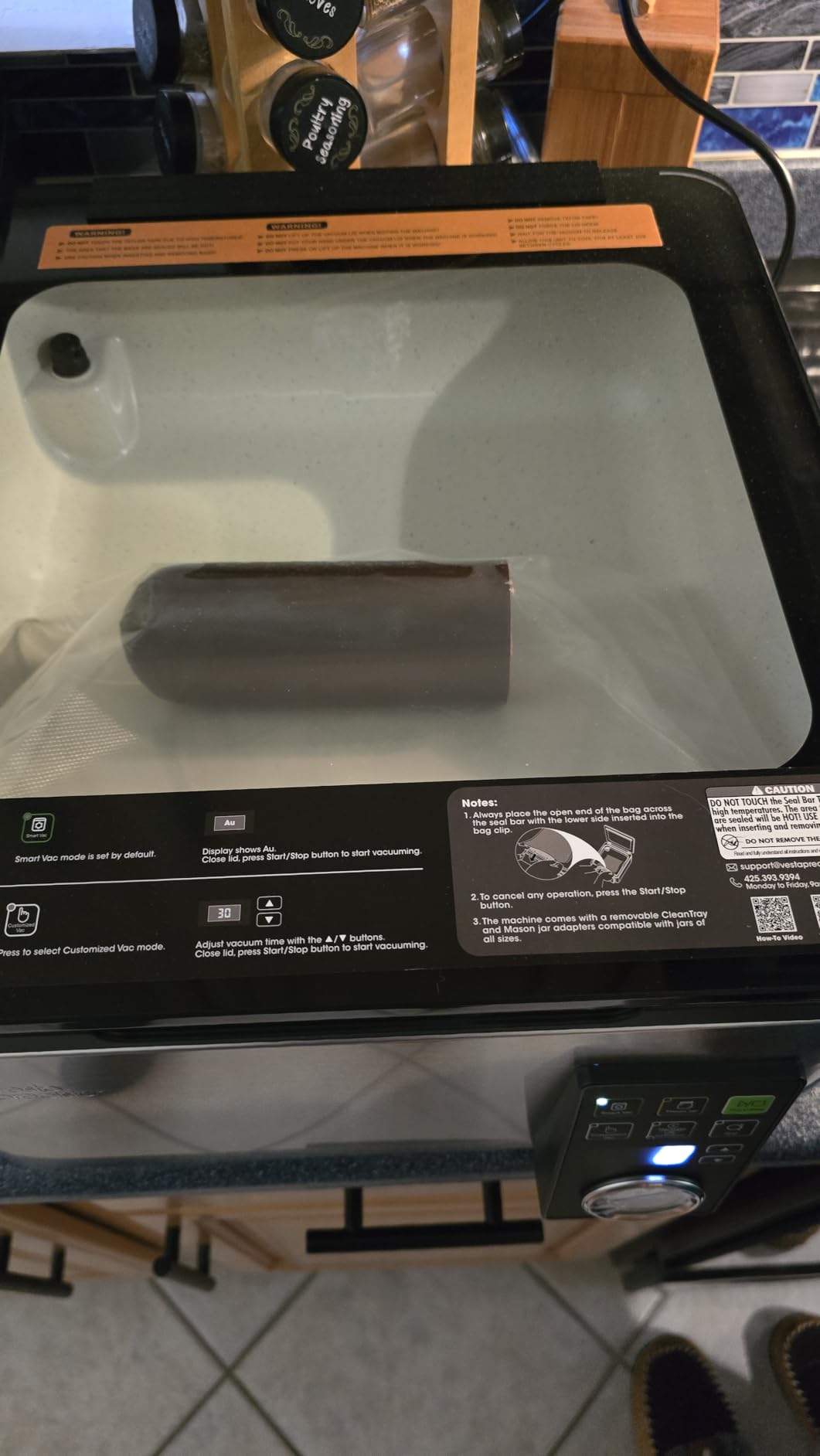
SmartVac intelligent control detects food volume and picks the vacuum time. That is genuinely convenient for a mixed workload, though owners report needing a custom setting for anything delicate such as supplements or brittle snacks.
How concerning are the reported sealing failures?
The rating spread is unusually wide: about 81 percent five-star against 9 percent one-star, with specific complaints about bags failing to seal even with the supplied bags. At 21.6 pounds and 12.6 by 13.9 by 8.5 inches the machine itself is well sized; the risk is more about build consistency than about size or features.
Who should skip it?
Skip it if you need a long, settled track record and cannot absorb a possible return. If you are comfortable being an early adopter on a newer brand with 39 reviews, the jar adapters and quiet pump make it a genuinely pleasant machine to own. Our general buying framework for home kitchen equipment applies here: prioritise the spec you will use daily, then accept the brand risk.
Chamber vs Edge Sealer: Is the Upgrade Real?
The upgrade is real, but only along three specific lines. A chamber sealer beats an edge sealer at sealing liquid, at sealing large bulky items, and at producing a deeper and more even vacuum. On every other axis, from footprint to speed to simplicity, an edge sealer wins or ties.
Here is the honest comparison, without the marketing gloss.
Liquids: A chamber machine pulls air from around the bag. An edge machine pulls air through the bag, so liquid contaminates the suction path. For soups, stocks, sauces and marinade, only the chamber format works reliably.
Bag cost: Chamber machines use plain smooth premade pouches. Edge machines require textured embossed rolls, which cost more per bag. Members of home sealing communities consistently report that per-bag spending drops after switching formats.
Vacuum depth: A dry piston pump in a chamber unit reaches a deeper vacuum than the same pump style in an edge unit, because the chamber removes air from both sides of the bag wall rather than dragging it through a narrow channel.
Counter space and weight: Edge sealers are typically a few pounds. The chamber machines here run from 17 to 62 pounds and take up the footprint of a small suitcase standing on end. This is the single biggest reason people regret the purchase.
Speed: A small edge sealer finishes a dry bag in well under a minute. A chamber cycle is slower because it has to evacuate a sealed volume of air. If you are sealing 30 dry bags in a row, the edge machine wins on time.
Marinating: Only chamber machines offer infusion modes. The negative pressure in the chamber forces marinade into the surface of the meat in minutes rather than hours.
Maintenance: Chamber machines carry a real pump with service requirements. A basic edge unit is almost maintenance-free apart from wiping the channel.
The pattern that shows up again and again in owner discussions is that the upgrade pays off once you cross a certain volume per session. Below roughly 20 to 30 bags in a sitting, an edge sealer is sufficient. Above that, or as soon as any liquid enters the picture, a chamber machine earns its cost.
Dry Pump vs Oil Pump: How to Choose for a Home Kitchen
For most home kitchens, a dry pump is the easier choice. An oil-lubricated rotary pump pulls harder and lasts longer in heavy service, but it needs an oil level check and periodic changes, and forgetting to do that is the most common cause of premature pump failure reported by owners.
Dry piston pumps run oil-free, so there is nothing to maintain and nothing to spill. The trade-off is that they are typically a little louder and pull to a slightly shallower vacuum than an oiled rotary pump of the same class. In a chamber machine that difference is smaller than you would expect, because the chamber already does most of the work of moving air.
Several machines in this roundup use an oil-free dry pump design, and those are the easiest machines here to own without thinking about upkeep. If you seal a few bags a week and never want to see a maintenance schedule, start there.
If you plan to run a chamber machine every week, process bulk meat, or share it with a small food business, the oil design is defensible. On oil pumps, check the oil level every few dozen cycles, plan an oil change on a set calendar interval rather than when performance drops, and keep a spare gasket on hand.
Noise follows the same split. Dry pumps have no oil sloshing to add to the sound but run at a higher pitch, while oil pumps are usually lower in tone and more insulated by the oil itself. None of these machines is quiet in an open-plan kitchen during a full vacuum cycle, so plan to run them when the room is not in use if that matters to you.
Chamber Bags and What They Cost You Per Year
Yes, you need specific bags. Chamber sealers use premade pouches sized to the sealing bar, and a bag from one machine will not seal properly in another if the widths differ. This is the most common packaging mistake new owners make, and it produces failed seals that look like a machine fault.
The good news is cost. Plain smooth pouches are the cheapest bag format in vacuum sealing, and members of home preservation forums confirm that per-bag spending drops noticeably once you stop buying textured rolls. Buy bags in bulk widths that match your seal bar and the annual cost becomes one of the smaller line items in your kitchen budget.
A few practical rules. Match the bag width to the sealing bar rather than to the chamber width. Check that your machine accepts the format you want, because the VEVOR DZ-260S-V1 handles Mylar for freeze-drying while most others do not. And buy a sample of a few brands before committing, because pouch thickness varies and thicker material needs a longer seal time.
Counter Space, Weight and Noise: What Actually Arrives
The objection that comes up most often in home sealing communities is space, and it is legitimate. The machines in this roundup span 17.3 pounds for the Avid USV20 up to 62 pounds for the VEVOR 320W, with footprints from 12 by 12 inches on the small end to 17.9 by 16.1 inches on the large.
Before you buy, measure three things: the counter area, the height of the cabinet above it, and whether you can slide the machine out when you need the space. The compact models, the USV1 at 12 by 12 by 6.25 inches and the USV20 at 14 by 12 by 8.25 inches, are the ones that genuinely tuck away. The heavier machines are fixtures.
Vertical-opening lids need more overhead clearance than you would guess. The VEVOR DZ-260S-V1 lid swings fully up and owners report needing roughly 25.5 inches of vertical space above the machine. Check under-cabinet clearance before committing to any of the larger units.
Noise is the other factor nobody publishes. Every chamber machine runs its pump hard during the vacuum phase, and that is audible across a kitchen. If you have an open-plan space or a home office nearby, run cycles when it will not interrupt a call. Our notes on fitting equipment into a real home apply: plan the placement, not just the purchase.
Food Safety: What Vacuum Sealing Does Not Do for You
Vacuum sealing removes oxygen, and some bacteria and yeasts that need oxygen to multiply cannot grow without it. That is a real benefit, and it slows spoilage in the freezer and the pantry. It is not a substitute for cold storage, and this is where a lot of first-time owners go wrong.
Refrigerate or freeze sealed food. Do not plan on a sealed bag of meat sitting on a counter for days because the air is gone. Anaerobic bacteria that thrive without oxygen exist, and sealed packaging gives them exactly the environment they want. Vacuum sealing is a preservation tool that works alongside refrigeration and freezing, not instead of them.
For liquids, cool the soup or stock first if you can, leave headroom in the pouch for expansion, and freeze rather than refrigerate when you will not use the bag within a couple of days. Frozen sealed stock keeps for months; a sealed bag of hot soup on a counter does not.
How to Seal Soup, Marinade and Sous Vide Portions
Sealing liquid is straightforward once you stop overthinking it. Set the pouch in the chamber with the liquid lying flat rather than pooled in a corner, use a moderate vacuum time so you do not crush soft ingredients, and give the seal a full cycle because a wet pouch edge needs more heat than a dry one.
For marinades, put the meat and the liquid in the bag together, seal it, then return the bag to the chamber and run the infusion mode. Owners consistently report the flavour change is dramatic because the pressure differential pushes the marinade into the meat. Treat the timing on the machine as a starting point and adjust for how porous the cut is.
For sous vide, the chamber sealer earns its keep in portioning rather than in the bag itself. Seal individual servings, chill or freeze them, and cook straight from frozen at the water temperature you set. Bags with no air inside transfer heat far more evenly than bags with pockets of air, and the chamber format gives you the tightest seal of the three bag options for this job.
One workflow note worth planning for: do not run a liquid bag immediately after a raw meat bag without cleaning the chamber and the tray. Machines with a detachable tray, such as the Wevac CV12 Pro and the Vesta Precision V513, make this a thirty-second job instead of a nuisance.
Frequently Asked Questions
Are chamber sealers worth it?
Yes for liquids, soups, marinades, bulky cuts and marinating, no for storing dry portions. A chamber sealer is worth it if you seal wet foods regularly, marinate meat, cook sous vide often, or process more than roughly 20 to 30 bags in a session. If you mostly seal dry food in small amounts, a good edge sealer gives you equal results for far less money and space.
What is better, a vacuum sealer or chamber sealer?
A chamber sealer is better for liquid and bulky food because it removes air from around the bag rather than sucking it through the bag. An edge sealer is better for speed, footprint, price and simplicity. Choose the chamber format if soup, stock, marinade or large cuts are part of your regular workflow. Choose the edge format if you seal mostly dry portions in small batches.
Do I need special bags for a chamber vacuum sealer?
Yes. Chamber sealers use premade pouches matched to the sealing bar width, and a bag sized for a different machine may fail to seal. Most use plain smooth pouches, which cost less per bag than the textured embossed rolls an edge sealer requires. Check the sealing length in the specifications before buying bags, and confirm whether your model accepts Mylar if you plan to freeze-dry.
How often should I change the oil in a chamber vacuum sealer?
Check the oil level every few dozen cycles and change it on a set calendar interval rather than waiting for performance to drop. Owners who follow a schedule report far better long-term pump life than those who wait. If maintenance reminders sound like a chore, an oil-free dry pump model such as the Avid Armor USV1 removes the issue entirely.
What are people saying about the VEVOR Chamber Vacuum Sealer 320W?
Owners like the 12.6 inch sealing length, the built-in pressure gauge and the minus 100KPa vacuum specification, and report sealing more reliably than small edge units. The recurring complaints are physical rather than functional: at 62 pounds the machine is essentially a permanent fixture, it needs real counter clearance, the pump runs loudly, and the oil pump requires maintenance. Long-term durability feedback is mixed.
The Best Chamber Vacuum Sealers for Home Use: Final Word
The Avid Armor USV20 is our pick as the best chamber vacuum sealer for home use in 2026. It takes an 11.5 inch pouch in a 4 litre chamber, weighs 17.3 pounds so you can move it when you need the counter, has a user-replaceable seal bar, and runs on plain smooth pouches that keep your per-bag cost low. Over 1000 owner reviews rate it at 4.7 out of 5, which is the deepest feedback record in this group.
If you need more chamber depth for bulk meat, step up to the Avid Armor USV32. If you want the smallest footprint and zero pump maintenance, the USV1 is the answer. If you need the deepest chamber available here, the Wevac CV12 Pro fits a whole cut.
Now the honest part. Skip this whole category if you seal fewer than about 20 dry bags a session, if you never handle liquid, and if you have no counter space to give up. A good edge sealer will serve you well for a fraction of the money and none of the weight. Chamber sealing is a capability upgrade, not a general-purpose improvement, and buying one without a liquid or volume problem to solve is the most common regret we see in owner discussions.
Whichever format you choose, buy bags that match the bar width, plan for a weekly cleaning routine, and keep your expectations on food safety honest: sealed food still gets refrigerated or frozen. Use the buttons below to check current details on each machine.