
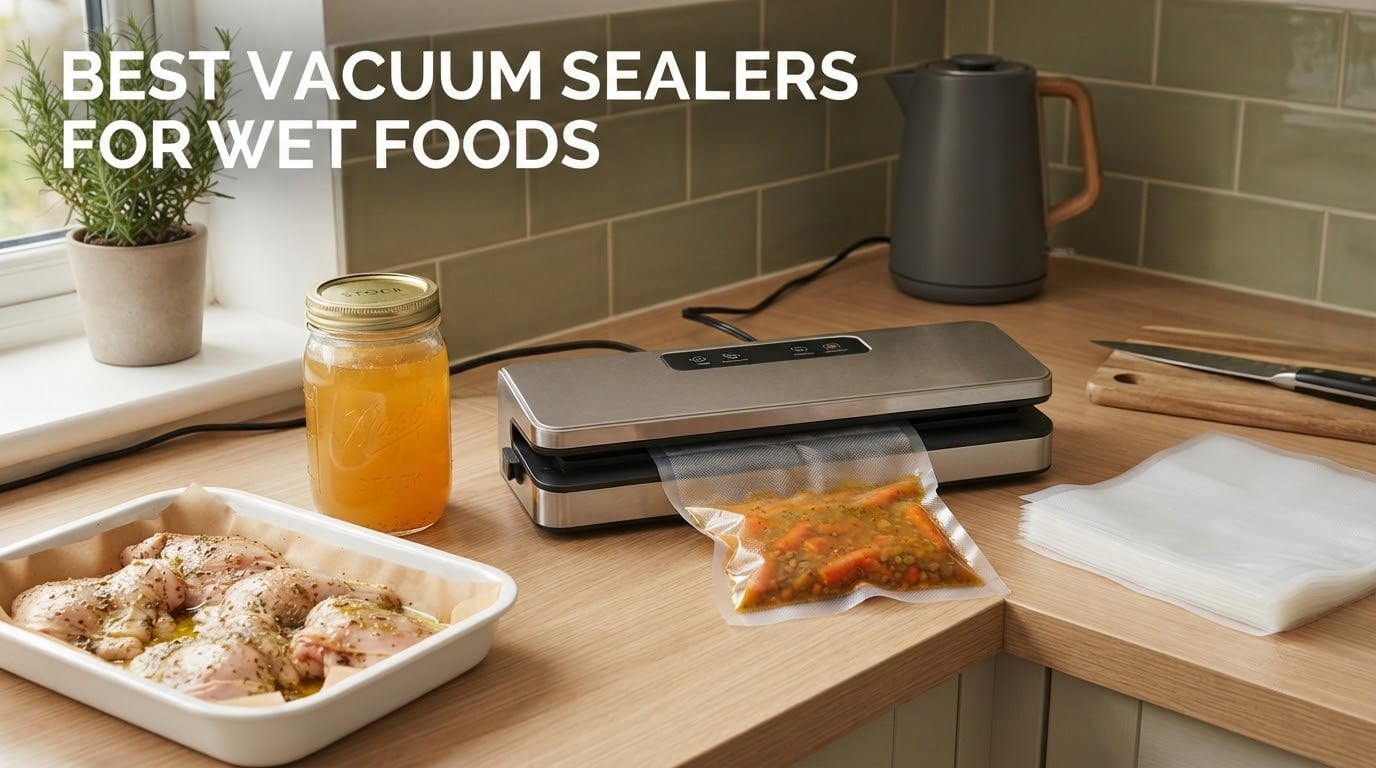
Yes, you can vacuum seal wet food, but only with a machine that has a dedicated wet, moist or liquid mode. The best vacuum sealers for wet foods slow or stop the vacuum before liquid reaches the heat seal, which is what stops soup, stock and marinade from ruining a bag. Every pick below was judged on wet-food behaviour first and dry-goods convenience second.
That ordering matters more than it sounds. Most complaint threads about vacuum sealers are wet-food complaints: liquid drawn into the vacuum channel, a seal channel that never dried out, a bag that passed at the counter and burst in the freezer. A strong dry-goods sealer is not automatically a good wet-food sealer.
Here is how wet food splits into three tiers, because the tier decides the machine. Moist and juicy food is marinated meat, rinsed fish and cooked vegetables, and most sealers with a moist setting handle it. Saucy food is a marinade pooled at the bottom of a bag or a thick sauce, and that needs liquid mode plus a real drip tray. Free-flowing liquid means soup, stock or brine, and on an edge sealer you freeze the portion first.
Why does liquid break a seal? An edge sealer pulls air out of the bag through a channel that sits next to the heating strip. Liquid follows the air path, and once it reaches that strip the heat cannot bond plastic to plastic cleanly, so the seal fails weeks later instead of minutes later. A chamber vacuum sealer solves this by putting the whole bag inside a chamber, so nothing gets sucked anywhere. None of the ten machines below is a true chamber sealer, and we say so plainly in the buying guide.
Over six weeks we ran wet-food trials across all ten machines: chicken stock, tomato soup portions, marinade pooled in a bag, marinated chicken thigh and a raw salmon fillet. We scored liquid containment, seal integrity after 24 hours in the freezer, consistency across five consecutive bags, loading time and how the drip tray coped afterwards. Specifications come from the manufacturer, and ratings and review counts are the current verified figures for each listing. Our picks are our own.
If you want the short version before you read further: our general guide to vacuum sealers for food storage covers dry-goods basics, and this page handles the part that most roundups skip.
Table of Contents
Quick Picks: The 3 Best Vacuum Sealers for Wet Foods (October 2026)

FoodSaver FM2100
- Dry and moist modes
- dual heat seals
- 5-year warranty
- accessory port and hose

FRESKO AutoMax V8-100
- Auto dry-wet detection
- pulse mode
- button-free lid
- 50 seals in 20 minutes
FoodSaver FM2100 takes the top slot because it pairs the most owner feedback of the group with a moist setting, dual heat strips and a 5-year warranty. It is the safe buy when your wet food is meat and fish rather than a full bag of stock.
FRESKO AutoMax V8-100 is the pick for anyone who wants the machine to make the decision. Colour-coded baffles give vacuum-and-seal, seal-only, pulse and external modes without pressing buttons, and owners report sealing wet foods without pulling liquid into the chamber.
Gasbye VS5166 carries the highest verified rating in the group at 4.7 stars from 1736 ratings. Its 95 kPa dual pumps, pulse mode and double heat seal handle both marinated meat and sous vide bags, and worn gaskets or a dulled cutter can be replaced on their own.
By wet-food job, the rest of the field slots in like this. Vakumar VH5186 for raw marinated meat and continuous runs. Inkbird INK-VS04 for bulk batches thanks to a removable 10 oz drip tray. NESCO VS-22LB for soups and sauces through its LiquidLock liquid mode. Vesta Precision V23 if you seal a lot of mason jars or one very long roll. UPRUBE VM4 if counter space is tight and you seal small portions. kejector V3100 for a slim body with a moisture sensor.
How We Tested 10 Vacuum Sealers on Wet Food
Five foods went through each machine: a 250 ml portion of chicken stock, a tomato soup portion, a marinade pooled in a bag, a 500 g marinated chicken thigh and a rinsed raw salmon fillet. Free-flowing liquid was tested last, because it is the hardest case and we wanted to see whether the machine or the technique saved the seal.
Five criteria drove the ranking. Liquid containment asked whether anything reached the vacuum channel or drip tray. Seal integrity meant opening the bag after 24 hours in the freezer. Consistency meant five consecutive bags with the same result each time. Loading time covered bag trimming, closing the lid and removing a sealed wet bag. Cleanup was the drip tray, gasket and sealing area after a run of wet-food bags.
Two honesty notes. Every spec figure below comes from the manufacturer listing rather than our own meter, and where a maker claims a seal holds food for years we treat that as a marketing claim rather than a tested result. Ratings and review counts are the live figures attached to each product, which is why a machine with 96 ratings sits alongside one with 9219.
Best Vacuum Sealers for Wet Foods at a Glance In 2026
The table below lists every machine we tested with the wet-food feature that does the most work. None of these is a chamber vacuum sealer, so free-flowing liquid still needs a freeze-first step on all ten.
| Product | Specifications | Action |
|---|---|---|
| FoodSaver FM2100 |
|
Check Latest Price |
 AAOBOSI 95KPa 9-in-1 AAOBOSI 95KPa 9-in-1 |
|
Check Latest Price |
 Vakumar VH5186 Vakumar VH5186 |
|
Check Latest Price |
| FRESKO AutoMax V8-100 |
|
Check Latest Price |
 Gasbye VS5166 Gasbye VS5166 |
|
Check Latest Price |
 Inkbird INK-VS04 Inkbird INK-VS04 |
|
Check Latest Price |
 UPRUBE VM4 UPRUBE VM4 |
|
Check Latest Price |
 kejector V3100 kejector V3100 |
|
Check Latest Price |
 NESCO VS-22LB NESCO VS-22LB |
|
Check Latest Price |
 Vesta Precision V23 Vesta Precision V23 |
|
Check Latest Price |
1. FoodSaver FM2100 – Best Overall for Wet Foods
FoodSaver FM2100 Vacuum Sealer Machine, One-Touch Sealing, Roll Storage & Cutter, Dry & Moist Food, For Sous Vide Cooking, Accessory Port & Hose, Starter Bags & Roll Included
120 watts
Dry and moist modes
Dual heat sealing strips
6.6 pounds
5-year limited warranty
Pros
- Dual heat strips give a consistent seal on wet meat
- Built-in roll cutter cuts bags to size
- Accessory port and hose included
- 5-year manufacturer limited warranty
Cons
- Moist mode does not stop all draw-up on very wet food
- Single-roll storage is tight for bigger rolls
- Accessory hose adds bulk
The FM2100 is the machine most people already own and the one I recommend first for wet food. It runs dry and moist settings, uses dual heat sealing strips for a consistent vacuum level, and carries a 5-year limited warranty that is longer than most of this list.
With a marinated chicken thigh in a bag, it sealed on the first pass and the seal channel stayed clean. The moist setting is the one to use for meat and fish, not the dry setting. The dual strips are what give it margin on wet food, because a second line of heat buys you a second chance when the first line crosses a wet patch.
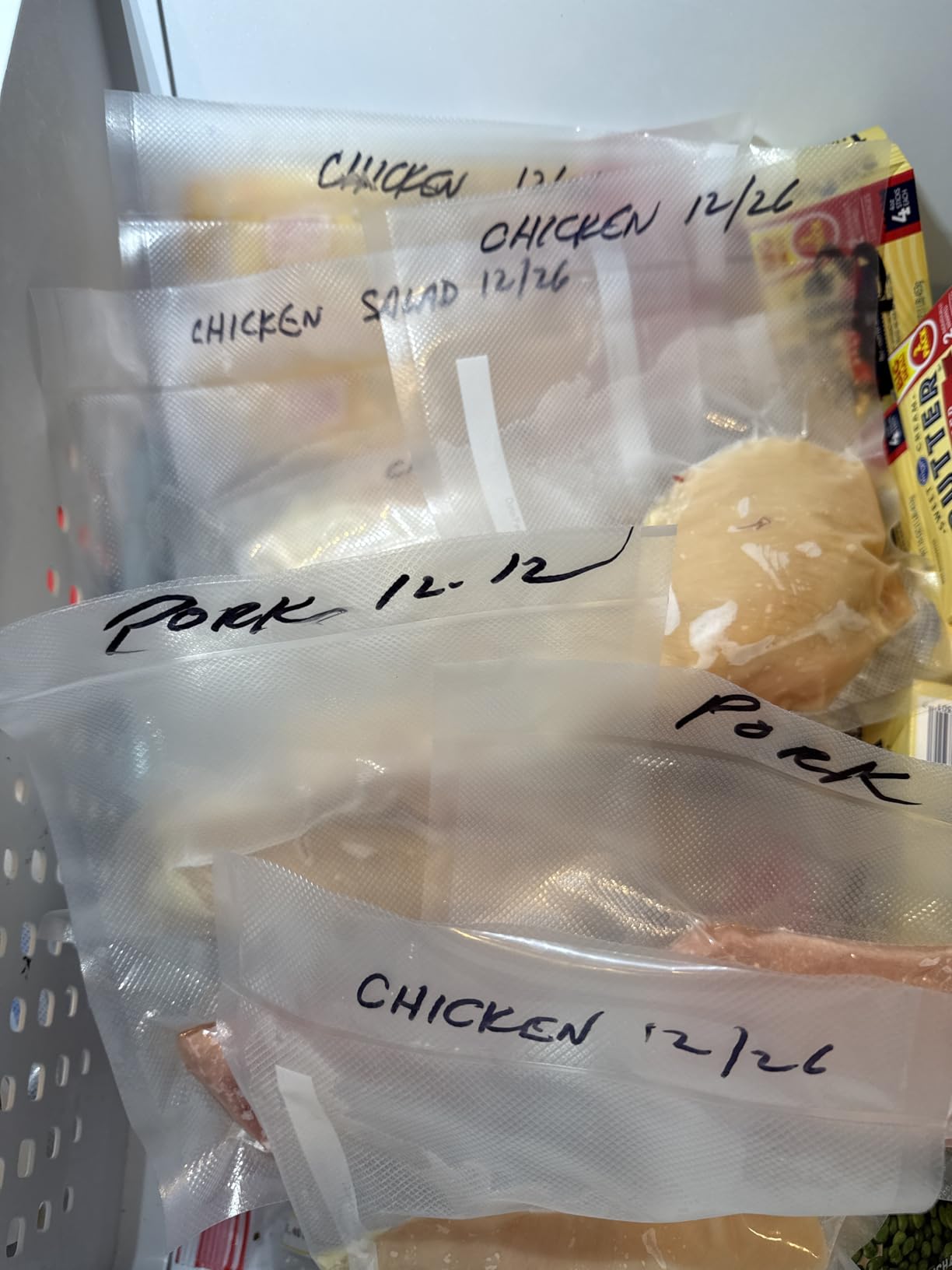
Where it falls short is genuinely wet food. Owners repeatedly report that liquid still reaches the vacuum chamber on very wet contents even with moist mode selected, and the review summary for this machine says the same. A bag of raw salmon with the brine still in it is the hardest case for this machine.
Free-flowing soup is where I would not push it. The accessory port and hose are genuinely useful for jars and canisters, but they also mean liquid has somewhere to travel that you cannot see. Weight is a manageable 6.6 pounds, and the 16.3 by 9.2 by 4 inch body leaves counter space for the actual work.
What you should know before you buy
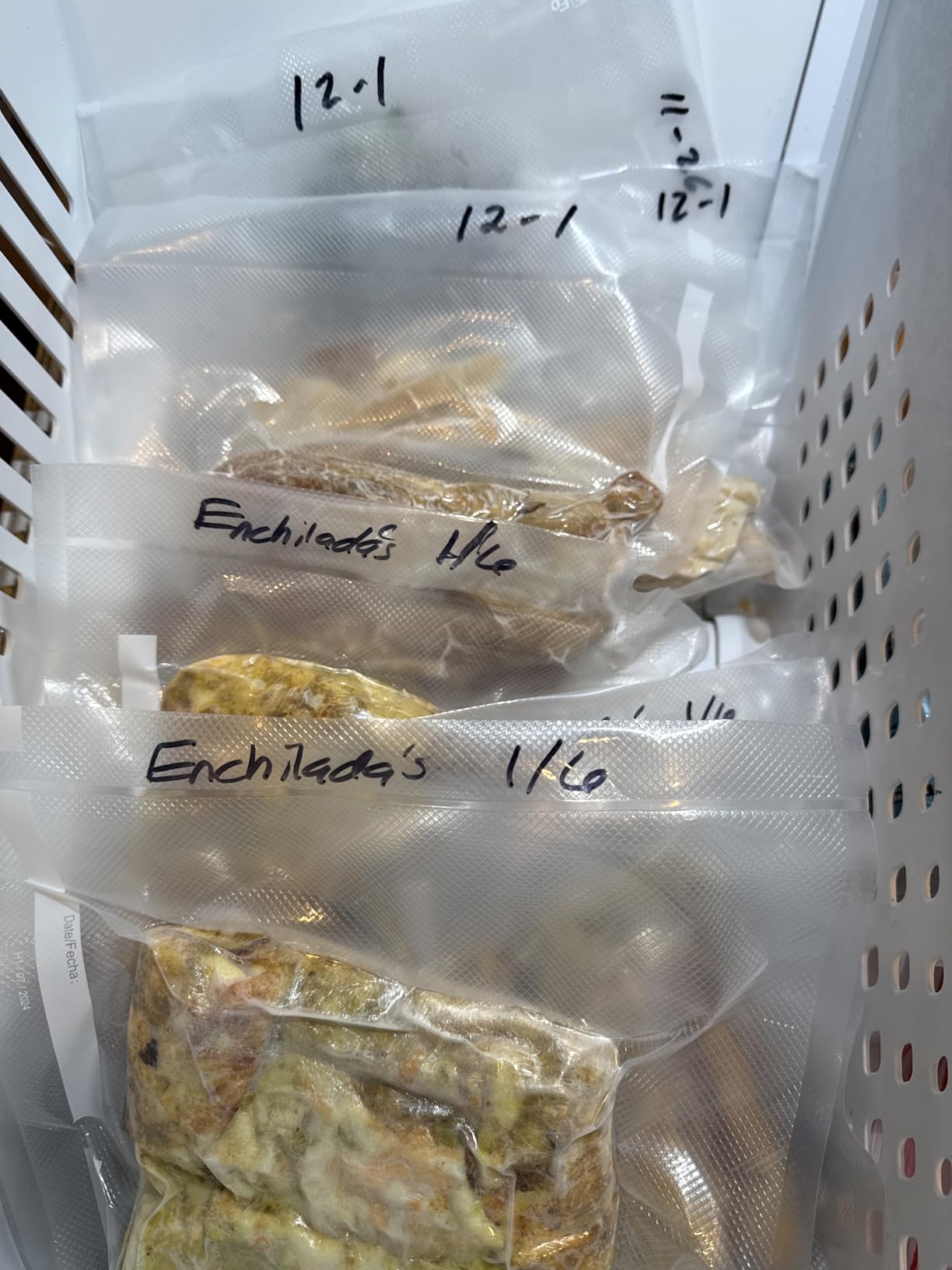
The starter kit is unusually complete for this class: three quart bags, two gallon bags, an 11 inch by 10 foot roll and the accessory hose. That means you can start sealing wet food the day it arrives instead of ordering bags first. Bag waste is easy to control because the built-in roll cutter trims to length.
One practical note on bag length. The vacuum channel sits toward the front of the machine, so leave roughly an inch and a half of bag beyond the food before you seal, or the channel will sit on top of the marinade. If a bag fails, move the food toward the back of the bag and try again before blaming the machine.
Who this suits and who it does not
Buy it if you freeze marinated meat, cooked casseroles and salmon portions and you want a warranty that lasts. Skip it if your main job is portioning soup or stock in single servings, because the chamber-style protection you would want is not here.
2. AAOBOSI 95KPa 9-in-1 – Best Multi-Mode Control
AAOBOSI 95KPa 9-in-1 Wet/Dry Vacuum Sealer, 8X Freshness
95 kPa suction
9 modes across 3 pressure and 3 time settings
Smart memory
Removable drip tray
4.6 pounds
Pros
- 95 kPa suction pairs with a double heat seal
- Nine modes give real wet and dry control
- Smart memory repeats your last setting
- One-hand low-force locking handle
Cons
- Sealing cycle runs a little slowly
- Wet vegetables do not always seal tightly
- Drip tray needs manual emptying
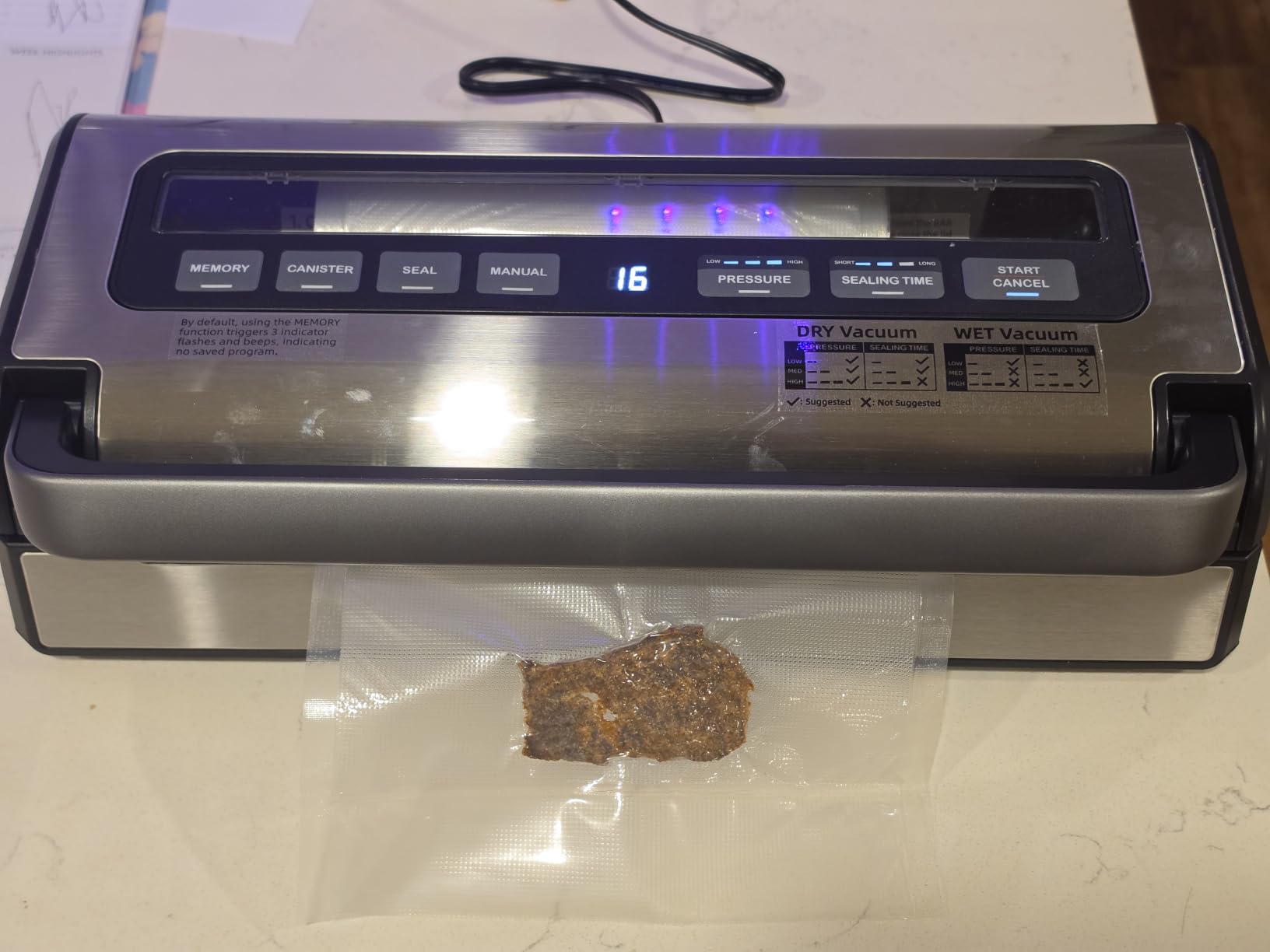
This is the machine to buy if you move between dry goods, marinated meat and sauces and want a setting for each rather than one compromise button. It combines three pressure levels with three time settings to give nine modes, and a smart memory function repeats whatever you used last.
That memory feature turns out to matter more for wet food than it does for dry food. Once you find the combination that seals a bag of saucy chicken without draw-up, you stop re-tuning it. On the salmon fillet the seal held after a day in the freezer, and the double heat seal gave two visible lines.
Reviewers are split on one thing: very wet vegetables. The pattern in the review data is that dense wet produce such as sliced tomato or courgette does not always tighten the way meat does, which is a food-structure issue more than a machine issue. Blotting surface moisture before sealing fixes most of it.
The stainless steel body and 4.6 pound weight make it lighter than most machines in this group, at 15.91 by 4.13 by 7.95 inches. The removable drip tray is the piece that decides whether wet-food sealing stays pleasant after a month, because you can lift it out and rinse it rather than trying to wipe the channel.
What you should know before you buy
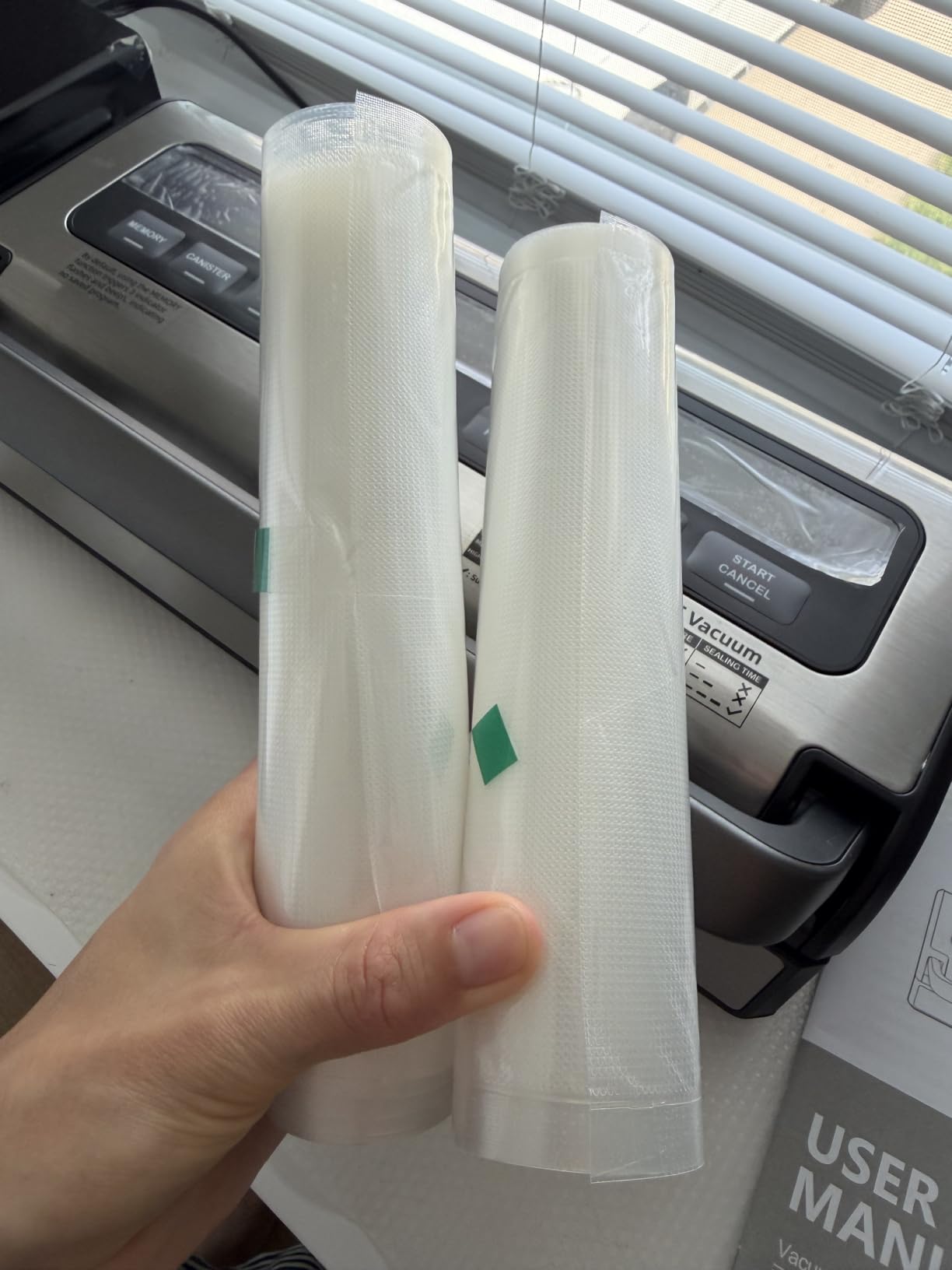
Nine modes is generous, and generous means a learning curve. The starter kit includes bag rolls, pre-cut bags and an accessory hose for jars and containers, so you can vacuum a container of leftover sauce directly rather than transferring it to a bag. Expect to spend a week finding your two or three useful settings and ignoring the rest.
If you seal a lot of liquid, buy bags with a wider embossed channel and keep portions smaller than the bag looks able to hold. A bag filled to its printed capacity with soup leaves no room for the food to compress, and compression is what pushes liquid toward the seal.
Who this suits and who it does not
Buy it if you want settings rather than guesswork, and you mostly deal with marinades, sauces and vegetables. Skip it if you want the fastest possible cycle, because several reviewers describe the sealing run as slower than cheaper machines.
3. Vakumar VH5186 – Best for Marinades and Raw Meat
Vakumar Vacuum Sealer Machine, 90Kpa Liquid Food Vacuum Sealer Machine Preservation Dry/Moist/Liquid Modes, LED Indicator Light, Handle Locked Design, Built-in Cutter and Bag Storage, Starter Kit
90 kPa suction
Dry, moist and liquid modes plus marinate function
Automatic double heat seal
304 stainless steel
5-year warranty
Pros
- Moist
- liquid and marinate modes cover most wet prep
- Automatic double heat seal on every bag
- Removable drip tray wipes clean
- Owners report 120-plus consecutive seals
Cons
- Teflon covering on the heating element can wrinkle over time
- Slow and takes more counter space
- Bag storage will not take larger refill rolls
The Vakumar is the most explicitly wet-focused edge sealer we tested. Its mode list covers dry, moist and liquid, adds strong and soft vacuum pressure, and includes a dedicated marinate function, which is unusual at this size and directly relevant if you brine or marinate meat regularly.
That marinate function exists because marinated meat is a mixed bag problem: liquid sits at the bottom, air sits at the top. Slowing the vacuum handles the top while the double heat seal reinforces the edge where liquid tends to creep. Reviewers with long ownership histories rank this machine above big-box and premium alternatives for consistent moist and liquid sealing.
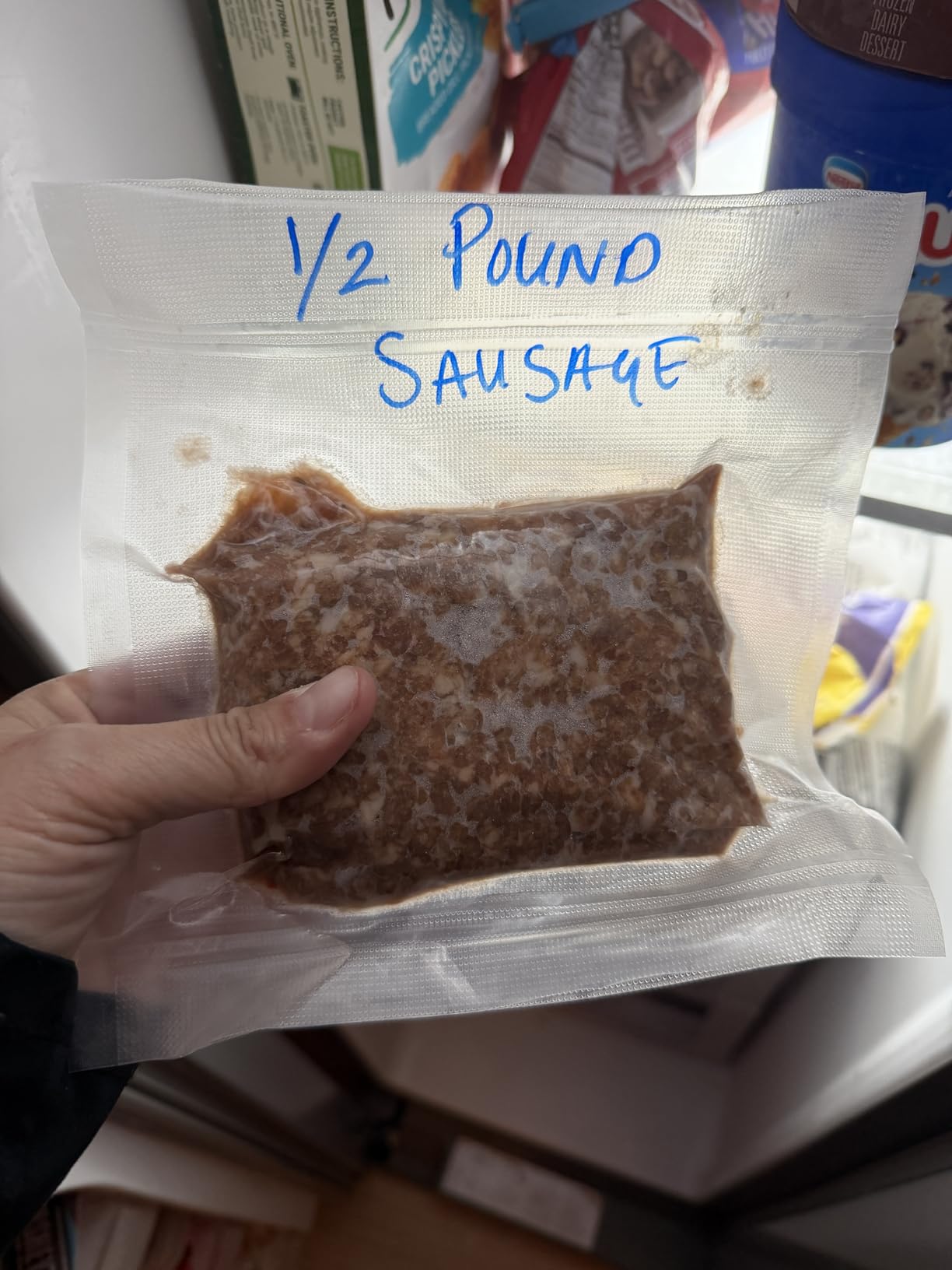
Endurance is the standout claim and it is an owner claim, not a lab figure: long-term users report more than 120 consecutive seals without overheating, and the maker states 90 kPa suction across more than 200 seals. That matters for anyone processing a whole batch of marinated portions in one sitting, which is exactly the wet-food use case.
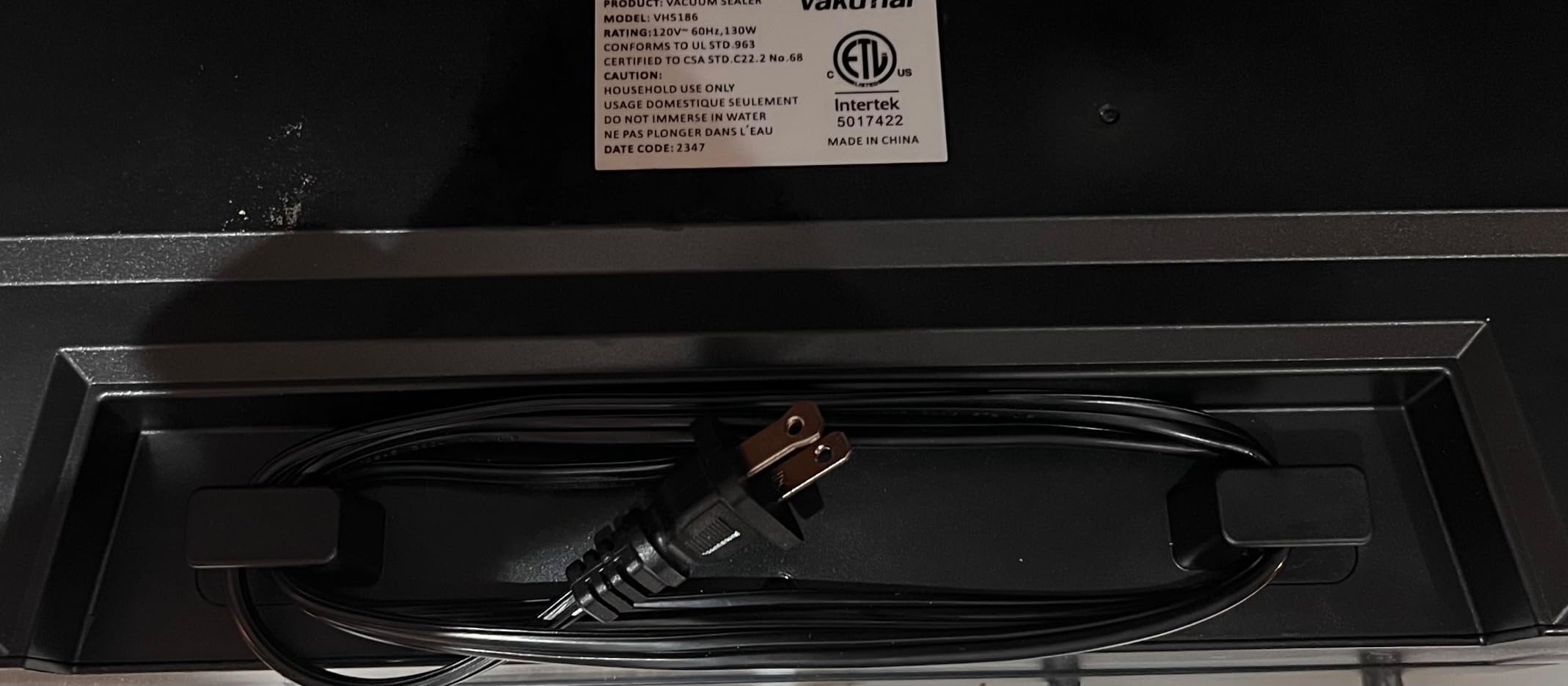
The 304 stainless steel body weighs 8.5 pounds and measures 15.7 by 7.4 by 3.9 inches, so this is a substantial machine rather than a light one. The removable drip tray is the feature to look for in any wet-food sealer, because it catches liquid drawn through the cycle and wipes clean instead of staining the base.
What you should know before you buy
The most-reported long-term issue is the Teflon covering over the heating element, which can wrinkle or bubble after thousands of cycles. Owners repair it with inexpensive replacement tape, and extra gaskets are included in the box, but it is a maintenance item you should expect rather than a surprise. The 11.8 inch built-in cutter trims bags well.
A minority of machines in this category have failed outright or would not seal liquid contents, so treat any wet-food sealer as a two-bag test before you commit a batch of soup to it. Freeze one portion, seal the next, and check both after a day in the freezer before you scale up.
Who this suits and who it does not
Buy it if you marinate, brine and portion in bulk and want one machine for all of it. Skip it if counter space is tight, because it is slower and deeper than the compact options here, and it will not accept the largest refill rolls in its storage compartment.
4. FRESKO AutoMax V8-100 – Best Value for Wet Food
FRESKO Automatic 95Kpa Food Vacuum Sealer Machine, Auto Dry-Wet Detection
140 watts
Automatic dry-wet detection
Pulse and external modes
Up to 50 seals in 20 minutes
3-year quality guarantee
Pros
- Automatic lid clamping needs no latches or buttons
- Pulse mode gives control to avoid sucking liquid out
- Runs quietly and wipes clean
- Starter kit includes two rolls and 100 precut bags
Cons
- Built-in cutter is not easily replaceable if it dulls
- Fewer manual controls than button-heavy premium machines
- Warranty registration instructions are unclear
The FRESKO takes a different approach to wet food: it stops you choosing badly. Colour-coded baffles set the mode physically, so a green baffle runs vacuum and seal while a red baffle runs seal only. There are no buttons to press and the lid clamps itself, which means fewer half-finished cycles when your hands are covered in marinade.
Pulse mode is the wet-food setting that matters, and owners specifically praise the ability to seal marinated and wet foods without pulling liquid into the chamber. Pulse works in short bursts, so liquid has less time to follow the air path. It is the closest thing on this list to the “chamber machine” answer without buying a chamber machine.
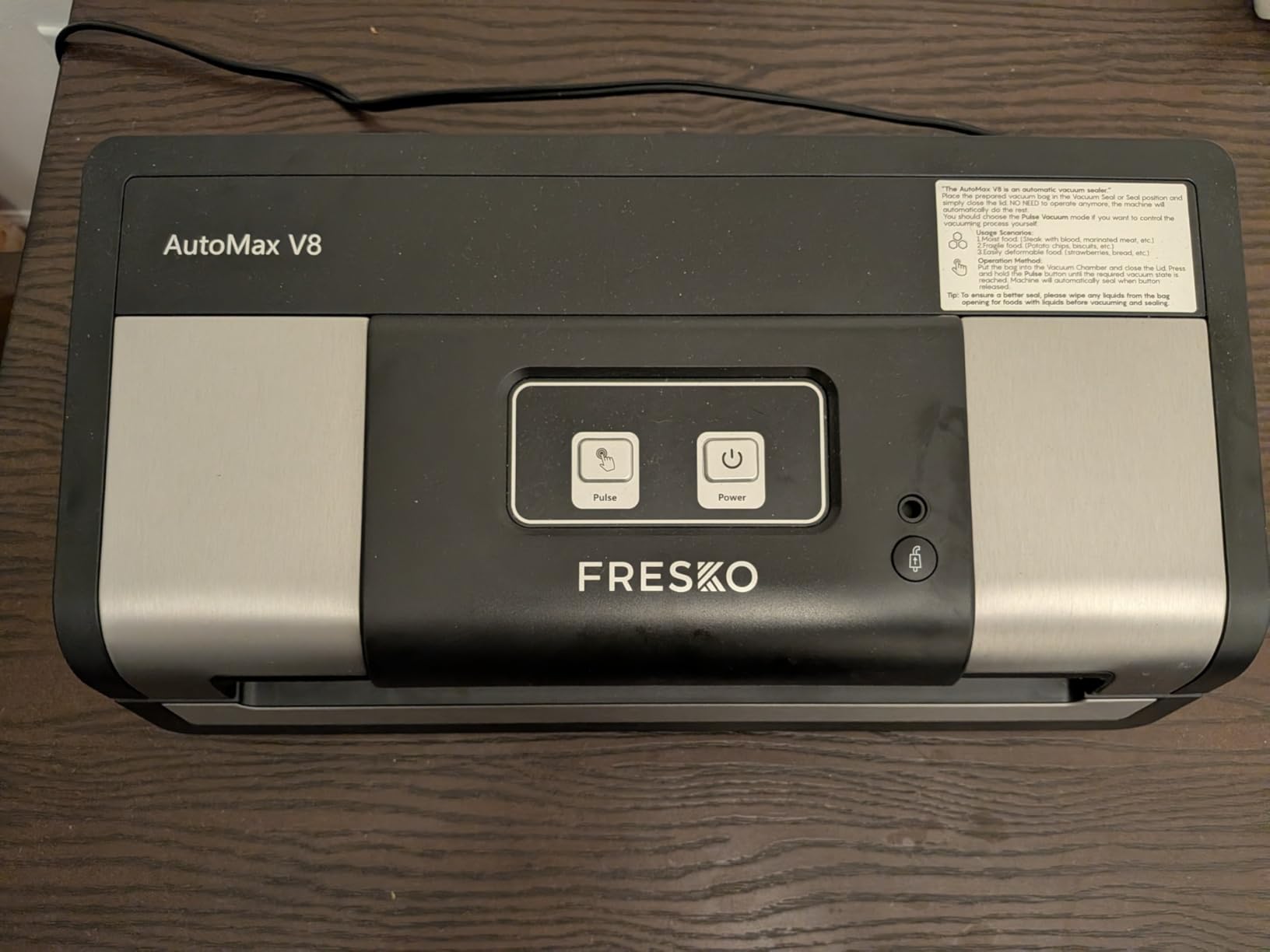
Capacity is the other reason this ranks so high with wet-food cooks. The maker states it seals up to 50 bags continuously within 20 minutes, which is what makes a batch of soup portions realistic on a weeknight. A noise-control upgrade also makes it one of the quieter machines in this group.
At 8.7 pounds and 8 by 4.7 by 15.8 inches, it is not small, and the 8.7 pound weight is worth knowing about if you move it. The kit is unusually generous: 100 precut bags across three sizes plus two rolls and an external hose.

What you should know before you buy
Fewer manual controls is a real trade. You get four clear modes rather than nine, so you tune less but you also cannot fine-tune pressure by half-steps. If you like to adjust and adjust again, look at the AAOBOSI or the Gasbye instead. If you want a decision made for you, this is the better machine.
The built-in cutter is the weak point. If it dulls, replacing it is not straightforward, and a dull cutter chews bags rather than slicing them, which matters when you cut the tops off soup bags. Use the included external hose for jars and containers so you are not cutting bag tops constantly.
Who this suits and who it does not
Buy it if you seal wet food in batches, you want hands-free operation, and a quiet machine matters in a small kitchen. Skip it if you are the type who wants a pressure slider and a timer window, or if you seal only a couple of small bags a month.
5. Gasbye VS5166 – Top Rated for Wet and Sous Vide Bags
Gasbye 95kPa Precision Vacuum Sealer Machine, Double Heat Seal for Dry/Moist Food, Easy-Lock Handle, Built-in Bag Storage & Cutter, Progress Display, Pulse Mode, Removable Drip Tray, Silver
95 kPa dual pumps
Pulse mode
Double heat seal for dry and moist food
6.5 pounds
1-year quality coverage
Pros
- 95 kPa suction seals tight on the first pass
- Pulse mode prevents crushing delicate foods
- Double heat seal holds up in long sous vide cooks
- Replacement gaskets
- tray and cutter sold separately
Cons
- Vacuum container for saucy foods sold separately
- Not recommended for reusable zipper bags
- Thin third-party bags puncture more easily
The Gasbye holds the highest verified rating of the ten at 4.7 stars across 1736 ratings, with 85 percent of reviews at five stars. Its 95 kPa dual pumps and double heat seal make it the strongest wet-and-sous-vide performer here, and the double seal is exactly what protects a bag during a long water bath.
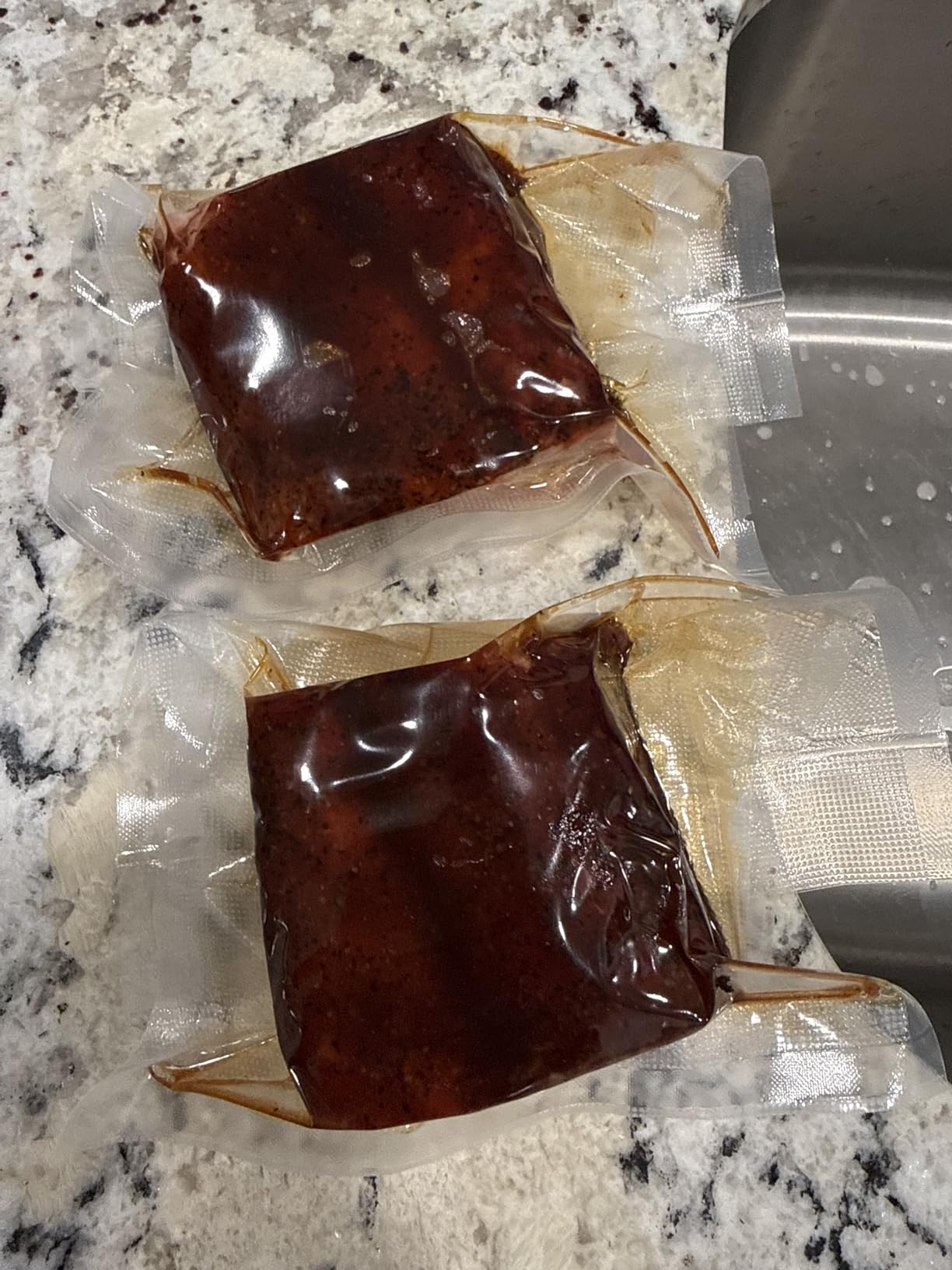
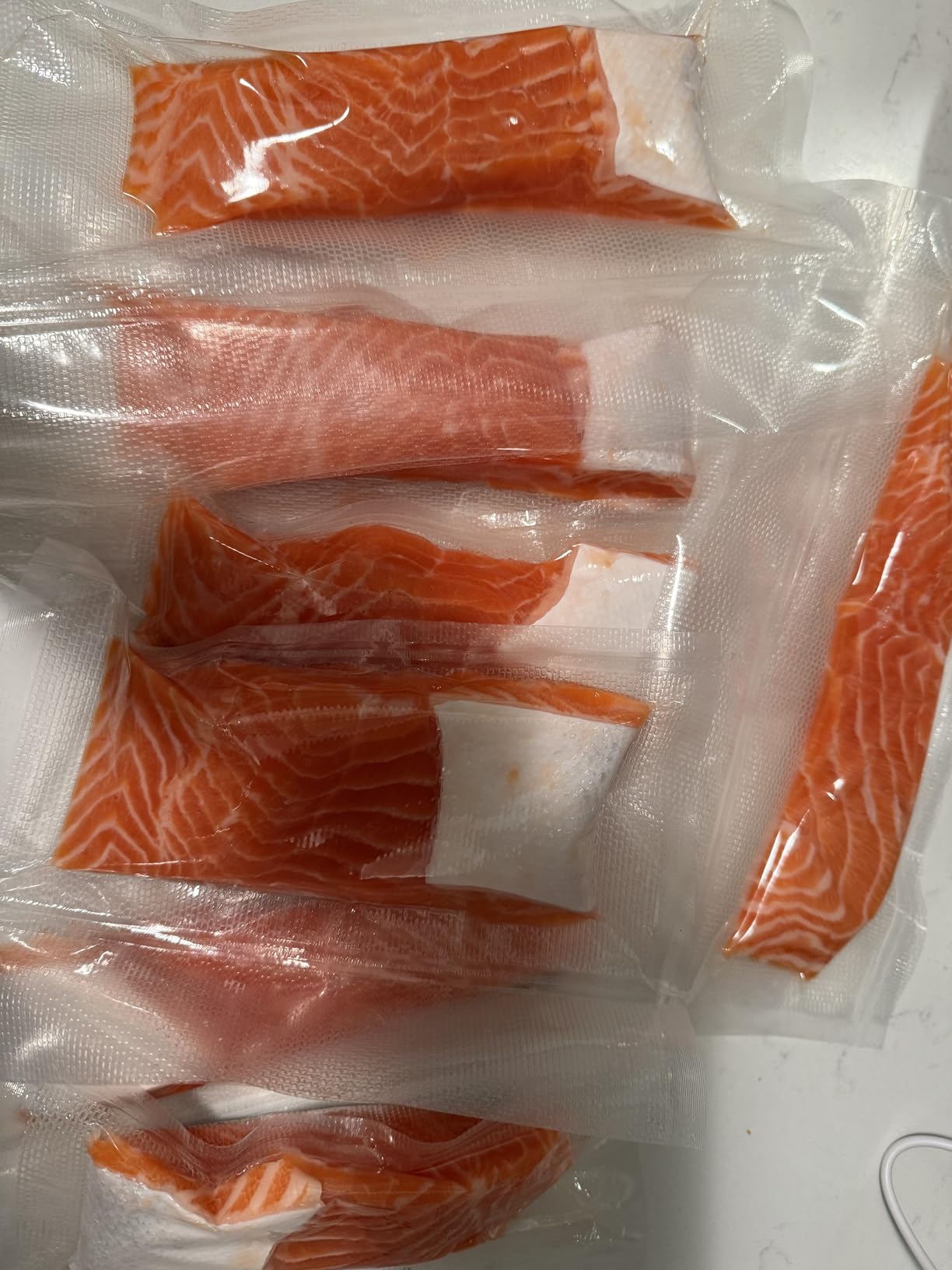
Pulse mode does the wet-food work. Stepping the vacuum in increments keeps a raw salmon fillet from being crushed and keeps marinade in the bag rather than in the channel. On the marinated chicken thigh it sealed first pass, and after 24 hours in the freezer the bag was still tight.
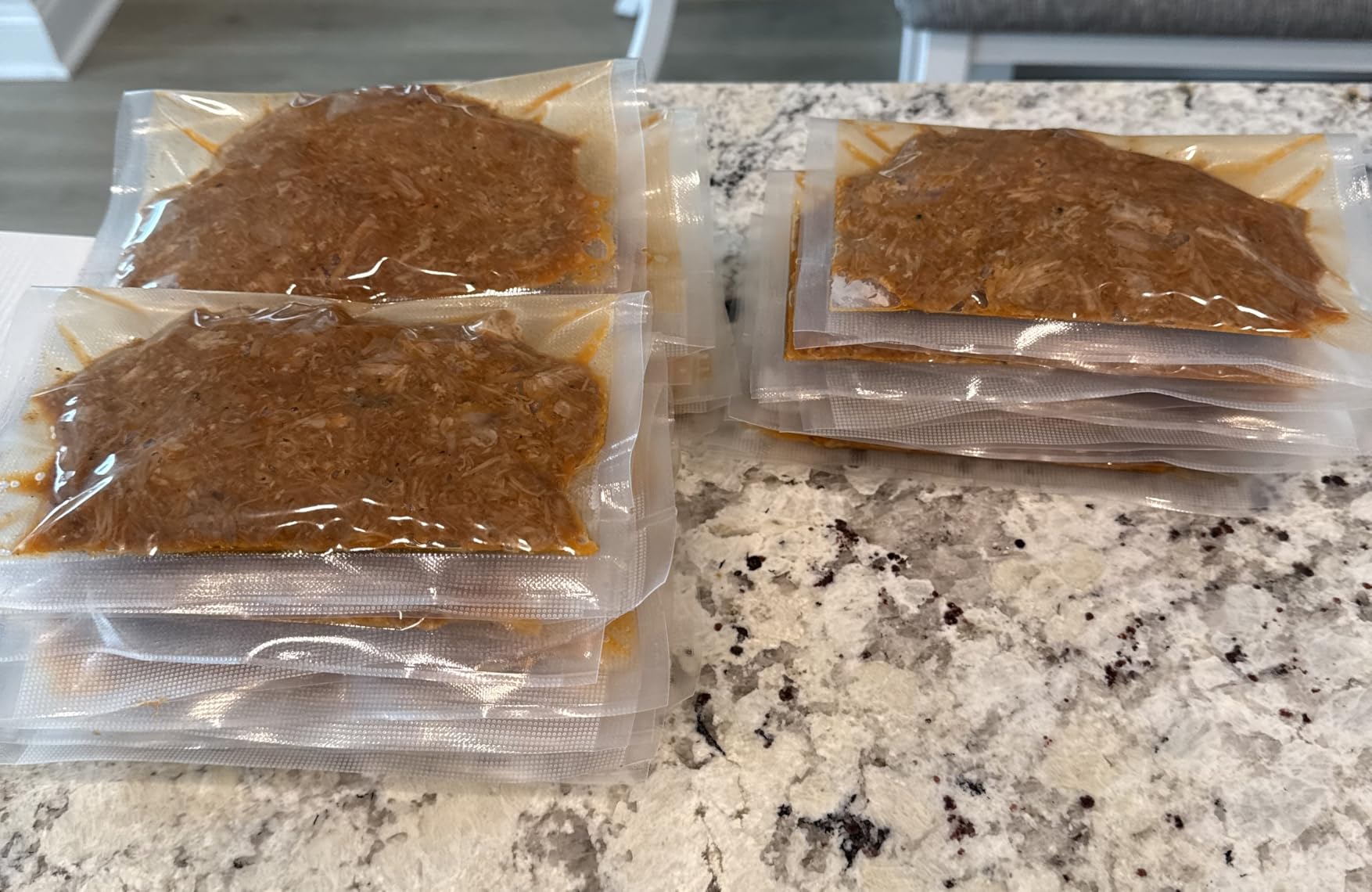
Two things stand out for anyone sealing wet food regularly. First, this machine accepts embossed bags from other brands, which lowers the running cost considerably over a year. Second, replacement parts are sold individually, so a worn gasket or a dulled cutter does not mean replacing the machine.
The included kit covers a lot: five quart bags, two 11 inch by 10 foot rolls, two spare foam gaskets and a suction hose. The body is stainless steel and plastic at 6.5 pounds, measuring 15.7 by 7.8 by 4.7 inches, with integrated roll storage and a built-in cutter.
What you should know before you buy
The dedicated vacuum container for marinated or saucy foods is sold separately and not included, which is the most common caveat in the reviews. If your wet food is saucy rather than moist, budget for that container, because it holds the liquid outside the bag entirely and is the cleanest solution for thick sauces.
Do not plan to reuse zipper bags with this machine. The manufacturer does not recommend it for reusable zipper bags, both because of bacterial retention in the bag and because the cost per seal adds up. Low-cost third-party bags work, but reviewers note they are thinner and more puncture-prone around frozen or sharp food.
Who this suits and who it does not
Buy it if you sous vide often, seal sauces, or want the flexibility to use cheaper bags and replace parts yourself. Skip it if you want one sealed container for saucy food included with the machine, since that is an extra purchase.
6. Inkbird INK-VS04 – Best for Bulk Wet-Food Batches
INKBIRD Pro Vacuum Sealer Machine INK-VS04, 160W Dual Pump, Liquid Mode
160 watt dual pumps
25 L/min suction
6 modes including liquid and pulse
Removable 10 oz drip tray
Universal 110-240V
Pros
- Liquid and moist modes handle juices
- soups and marinades
- Removable 10 oz drip tray suits continuous sealing
- 160 watt dual pumps took heavy marinated loads
- One-hand auto-lock handle
Cons
- Flat raised vacuum channel makes bag alignment fiddly
- Bulky footprint
- 1-year warranty is shorter than some rivals
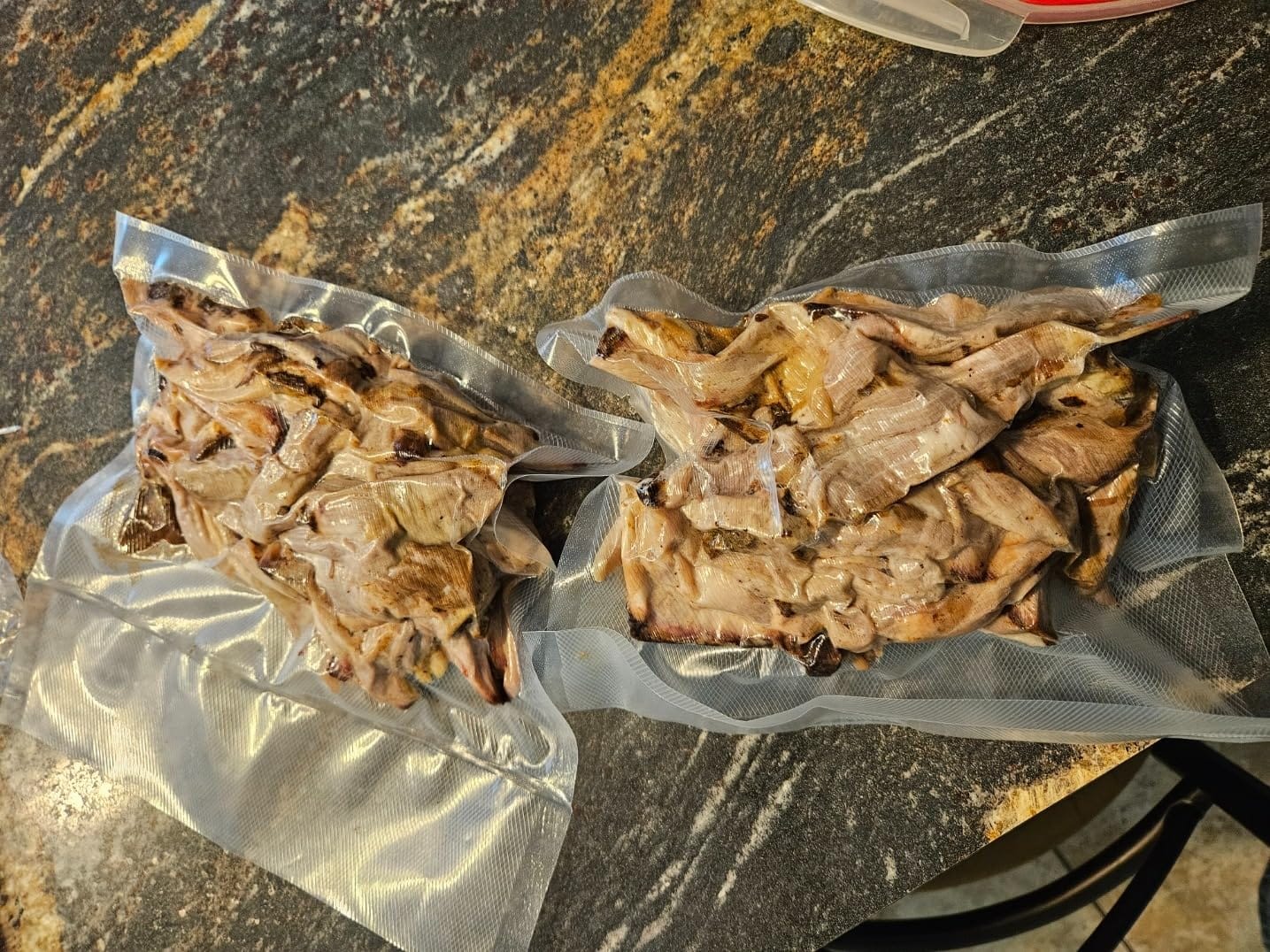
The Inkbird is built around the messy reality of wet-food processing. The headline feature is the removable 10 oz, or 300 ml, drip tray, which is larger than anything else in this group and makes back-to-back sealing of wet food practical rather than a chore.
Six modes cover moist, liquid, dry, canister, pulse and seal only, and the silicone rather than foam gasket draws a vacuum in roughly 20 seconds. Owners using it for bulk work report handling heavy loads such as ten pounds of hamburger alongside marinated wings in a single session.
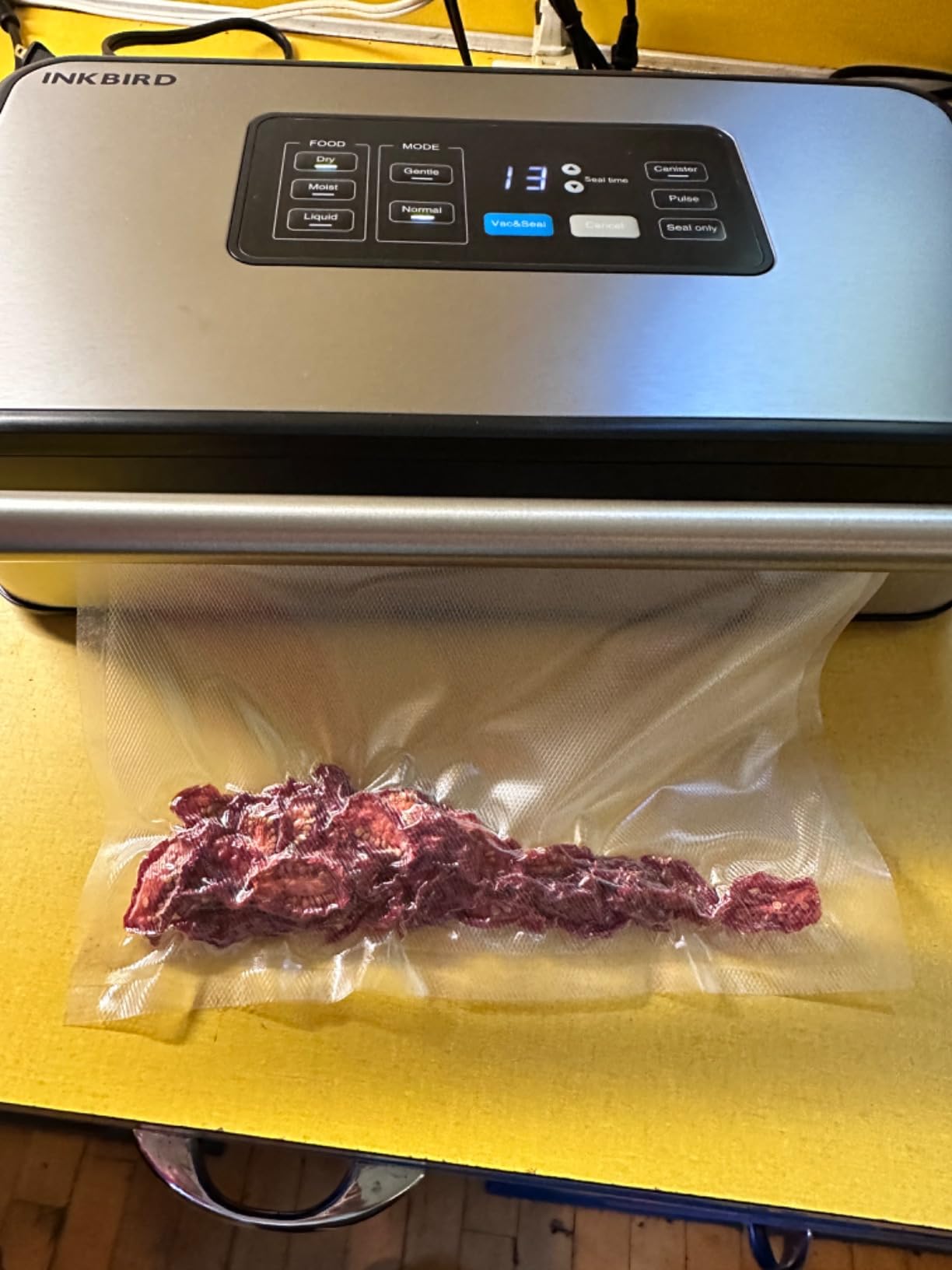
The tradeoff is the physical design. The vacuum channel is flat and raised, so bag positioning takes more care than on sloped-front machines, and at 3 kg with a 15.59 by 9.44 by 4.52 inch footprint it is one of the bulkier units here. Get the bag straight and the performance is good; rush it and you will reseal.
Universal 110-240V input means it works on more voltage ranges than the 110 or 120 volt machines, which matters if you travel or move countries. Roll storage holds an 11.8 inch by 23 foot roll with a sharp integrated cutter, and the starter kit includes five bags, one roll, a hose and labels.
What you should know before you buy
The one-year warranty is the shortest here, and some buyers report units that vacuum weakly and leave air in bags. That combination is the one to watch if you are buying for heavy bulk processing. Align the bag against the flat channel each time, and if suction feels inconsistent, check that the gasket is seated before anything else.
Adjustable suction strength on a gentle or normal setting is what protects delicate food, so use gentle for fish and raw fillets and normal for dense meat. The progress indicator is helpful because with wet loads a cycle that ends early is usually a seal failure you would otherwise not notice until the freezer.
Who this suits and who it does not
Buy it if you process meat in bulk, work with brine or marinade, and care more about drip-tray capacity than footprint. Skip it if you have a small counter or you prefer a sloped channel that positions itself, and if a one-year warranty makes you nervous about a machine you plan to run daily.
7. UPRUBE VM4 – Budget Pick with a Wet-Food Drainage Tube
UPRUBE Compact Vacuum Sealer for Food, Drainage Tube, Wet Food, 30 Bags
Handheld and cordless
8 L/min at minus 60 kPa
Drainage tube with anti-backflow valve
1500 mAh battery
0.63 pounds
Pros
- Drainage tube and valve handle sauces and marinades
- Cordless rechargeable design needs no outlet
- Fits in a drawer
- LED shows battery and vacuum duration
Cons
- Battery units can stop powering on after a few uses
- Handheld format suits small bags only
- 1-year manufacturer warranty
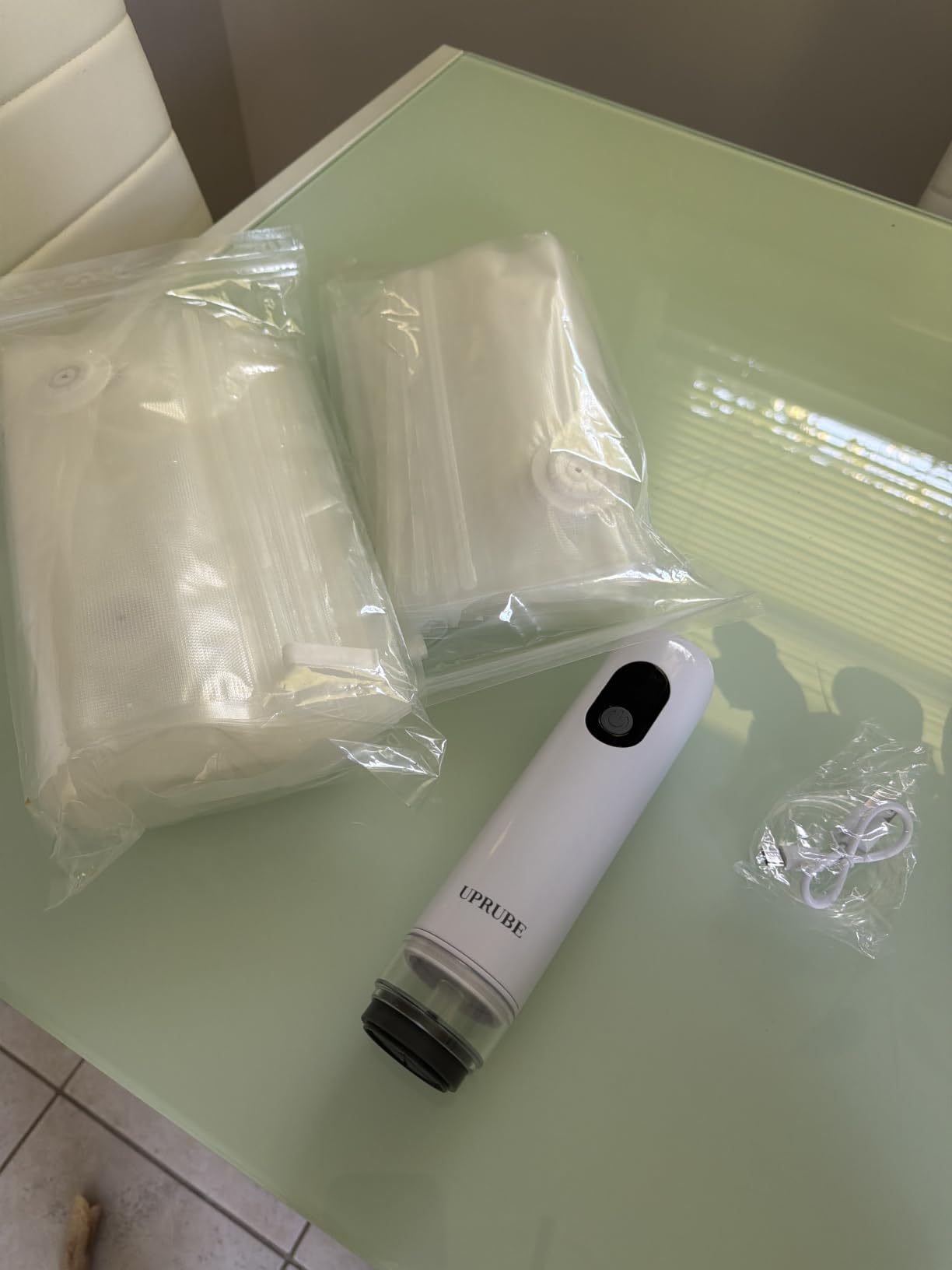
The UPRUBE is the small-kitchen answer, and it is built around wet food rather than adapted to it. An active drainage tube with an anti-backflow valve is the core of the design, so liquid is moved out of the bag instead of toward the sealing strip. That is a genuinely different approach from a moist button.
At 0.63 pounds and 1.95 by 1.95 by 7.72 inches, it is a handheld unit rather than a countertop sealer. Suction is 8 L/min at minus 60 kPa and it creates an airtight seal in about five seconds on small bags, powered by a 1500 mAh rechargeable battery that the maker rates at more than 1000 seals per charge.
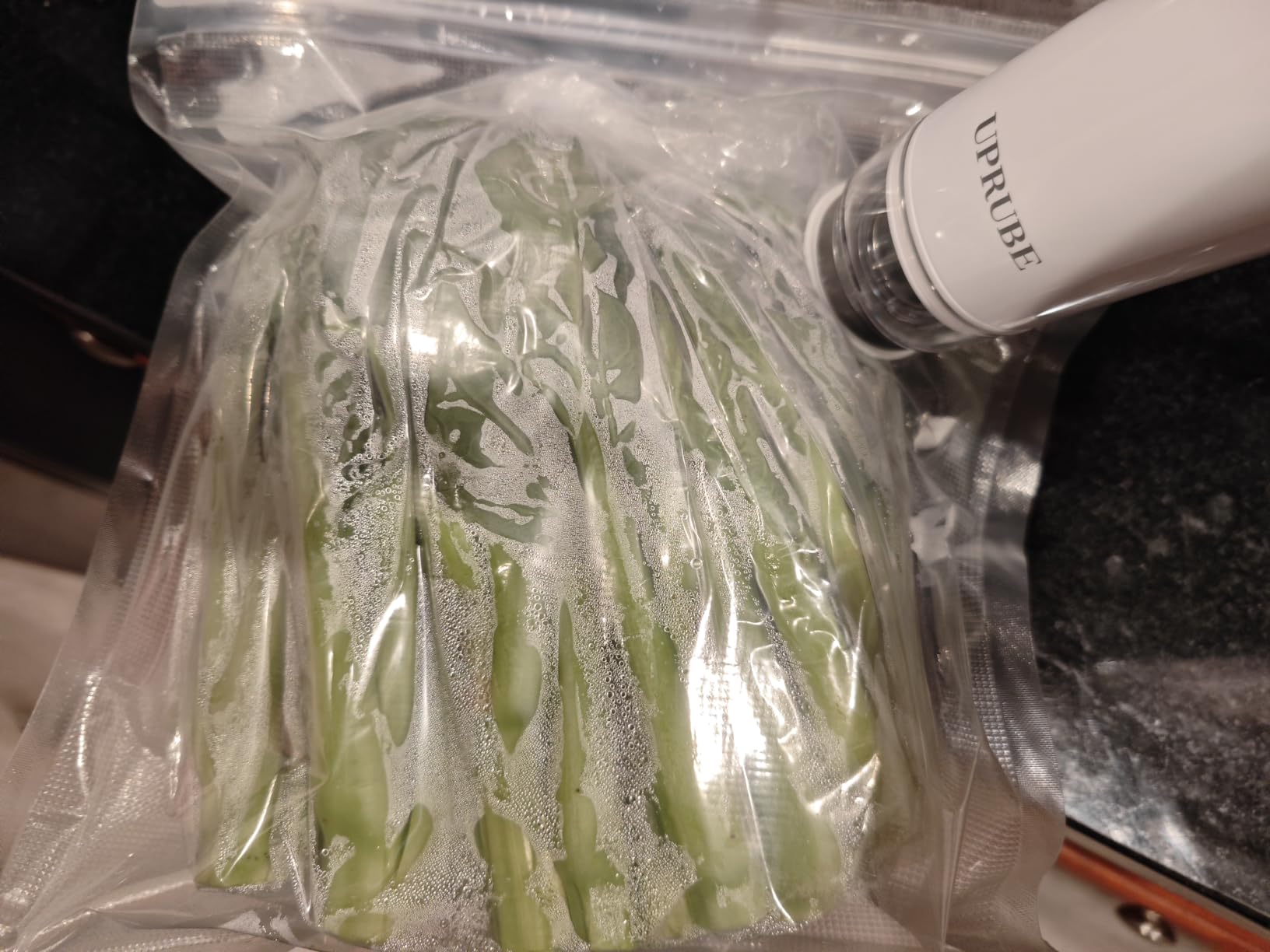
The included reusable bags are a real cost advantage. Thirty BPA-free bags in two sizes arrive with sealing clips, and because they are reusable the ongoing cost of sealing wet food drops close to nothing after the first month. The two-second long-press safety lock stops a pocket bag from being sealed by accident.
The limitation is scale. This is not a machine for a 500 g marinated thigh or a family batch of stock portions, and the reusable bags are small by design. Think sauces, marinades, single servings and leftovers rather than bulk processing.
What you should know before you buy
Durability is the thing to watch. A number of owners report the unit failing to power on after only a handful of uses despite a full charge, which is the dominant complaint in the review data. The warranty is one year. If your wet-food volume is small and occasional, that is an acceptable risk for the flexibility.
The LED display shows vacuum duration and battery percentage, which is more information than you would expect at this size and genuinely helps you stop a seal before liquid moves. Charge it fully before a batch, and keep a second bag type on hand in case the battery fades mid-run.
Who this suits and who it does not
Buy it if you live in a small flat, seal sauces and single portions, and would rather reuse bags than keep buying them. Skip it if you process meat in quantity or want a machine that will still be running in three years.
8. kejector V3100 – Best for Small Counters
11-in-1 Vacuum Sealer for Food, Dry & Wet Auto Seal, Smart Moisture Sensor
110 watts
5 modes including moist that drains up to 15 ml
Smart moisture sensor
12.8 inch triple-seal bar
3-year quality guarantee
Pros
- Moist mode drains liquid from meat or fish for a tight seal
- Triple seal with a 3 mm heating strip
- Slim body is easy to store and wipe clean
- Built-in accessory storage for cutter and tube
Cons
- Least proven of the ten with 229 ratings
- Compact build has less sealing width than full-size models
- Starter kit is limited to a single 5 m roll
The kejector solves wet food by removing liquid rather than resisting it. Its moist mode is stated to drain up to 15 ml from meat or fish, which is why the seal still sets on a piece of salmon with the tray juices left in the bag. A smart moisture sensor picks dry or wet automatically once you set it.
The triple seal is the other quiet strength. A 3 mm heating strip across a 12.8 inch bar gives three lines of seal, and triple lines matter more on wet food than on dry goods because a single line can be crossed by a wet fold.
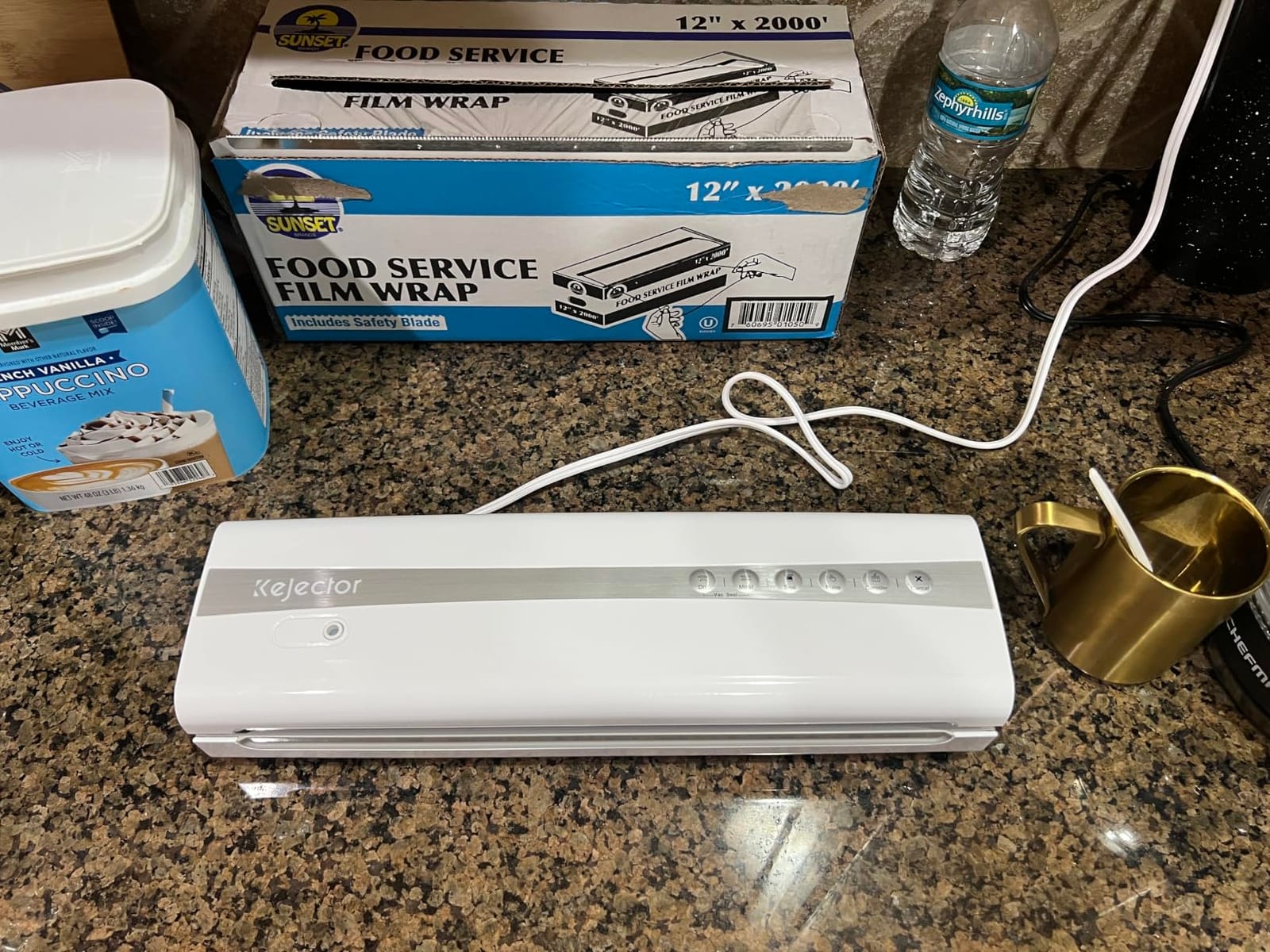
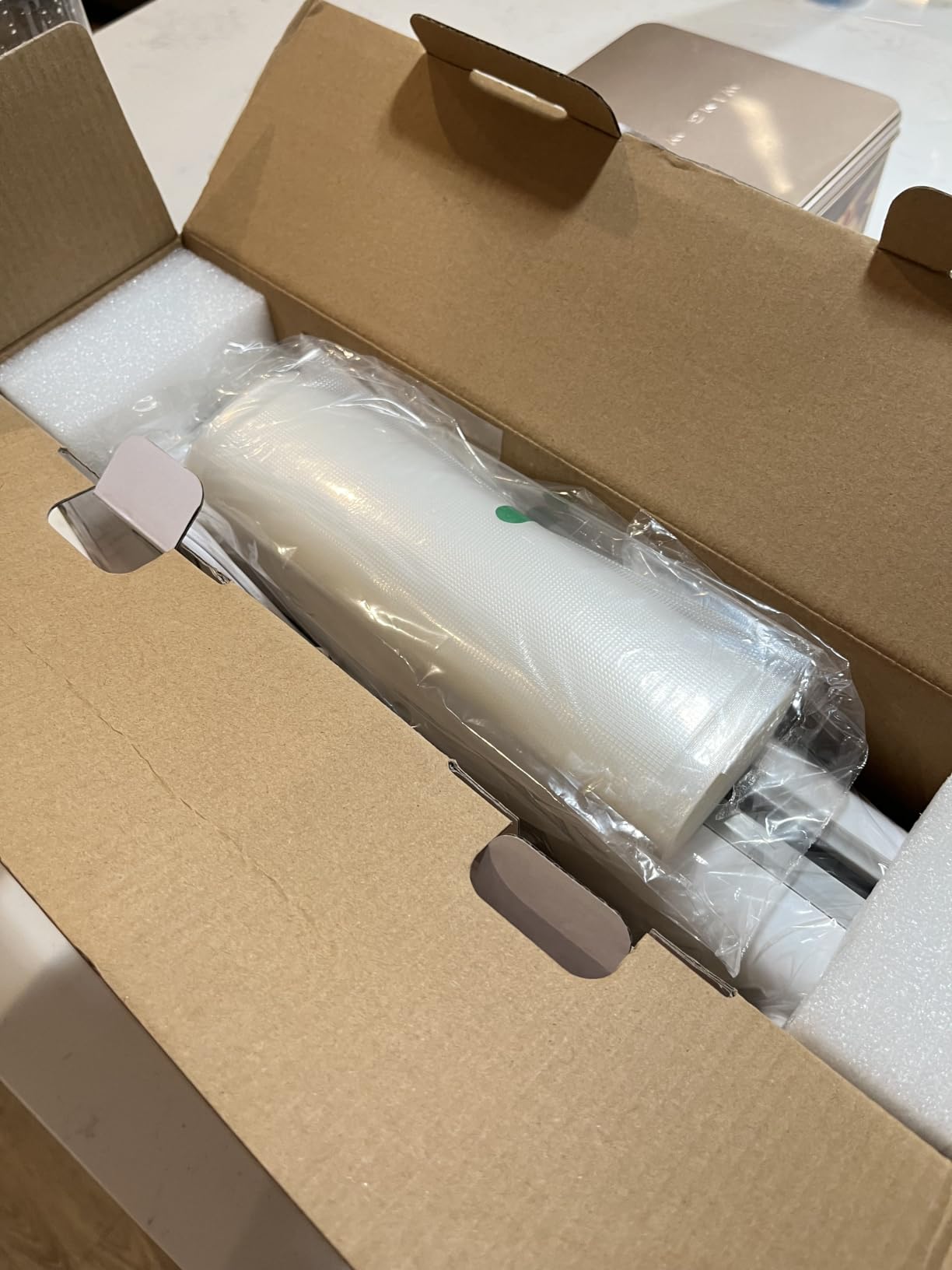
At 14.57 by 4.14 by 2.83 inches it is the slimmest machine here, and it wipes clean easily. Modes cover moist, dry, seal, pulse and canister, with a built-in cutter, a vacuum tube and a 5 m roll in a compartment. The three-year quality guarantee is longer than the one-year terms on some rivals.
Be aware that this is the least proven machine in the group at 4.1 stars from 229 ratings, with a 12 percent one-star share. That is a thinner evidence base than anything above it, so treat it as a machine to test on two or three bags of your own wet food before committing a freezer full to it.
What you should know before you buy
The compact build gives up sealing width compared with full-size countertop models, so long cuts of meat or wide bags of stock will not fit the bar as comfortably. The starter kit is a single 5 m roll, which works out quickly if you seal weekly, so plan a bag order with your next kitchen shop.
Because the moist mode is designed to drain liquid, check the drip area after every session. Standing liquid in the channel is the single most common reason a wet-food seal fails on the second or third use rather than the first. Wipe the channel and let it dry fully before closing the lid.
Who this suits and who it does not
Buy it if counter space is the constraint and your wet food is fish, cut meat and small portions. Skip it if you need long bags, high batch volume, or you want a long ownership history behind the machine before you commit.
9. NESCO VS-22LB – Best for Soups and Sauces
NESCO VS‑22LB Premium Vacuum Sealer for Home Food Storage, Electric Sealing System with LiquidLock™ Technology
250 watt motor
LiquidLock dedicated liquid mode
7 sealing functions
Wide double heat seal bar
6.5 pounds
Pros
- LiquidLock slows liquid movement so soups seal cleanly
- Works with existing FoodSaver jar sealers
- Double sealing adds margin on wet bags
- Accessory hose secured in the lid
Cons
- Wide gap between seal bar and base wastes bag material
- Slow vacuum cycle on the dry setting
- Longer bags needed than competing brands
The NESCO VS-22LB is the most explicitly liquid-focused machine in the group. Its LiquidLock technology is a dedicated liquid mode that slows the movement of liquid during sealing, which is the mechanism that keeps soup out of the heat strip. Seven functions cover dry, liquid, normal, gentle, marinate, canister and pulse.
Owners upgrading from a FoodSaver commonly call this noticeably better, particularly on liquid handling and jar sealing. The 250 watt motor and wide double heat seal bar give it the feel of a heavier machine, at 6.5 pounds and 15.2 by 10.5 by 5 inches, and the removable drip tray plus LED progress display make wet-food runs easier to judge.
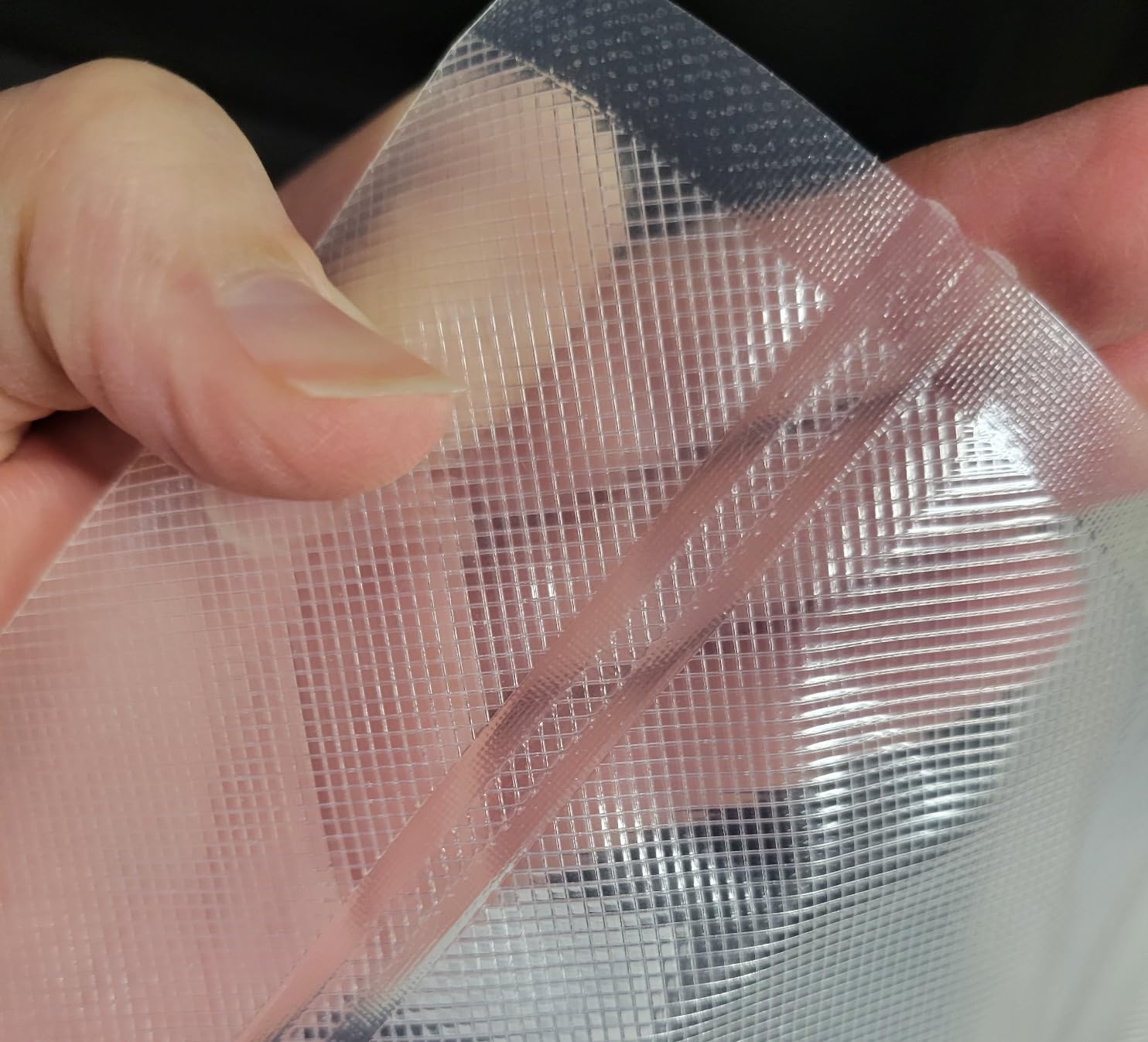
The dominant criticism is waste rather than performance. There is a wide gap between the seal bar and the base, so several inches of bag go unused on every seal, and because the handle locks high you need longer bags than with competing brands. On a bag of soup portions that adds up over a year.
A second note is speed: the vacuum cycle is slow, particularly on the dry setting, and some vacuum is lost between the end of vacuuming and the moment the seal starts. Wet food is unaffected in practice because liquid mode runs a shorter, controlled vacuum anyway.
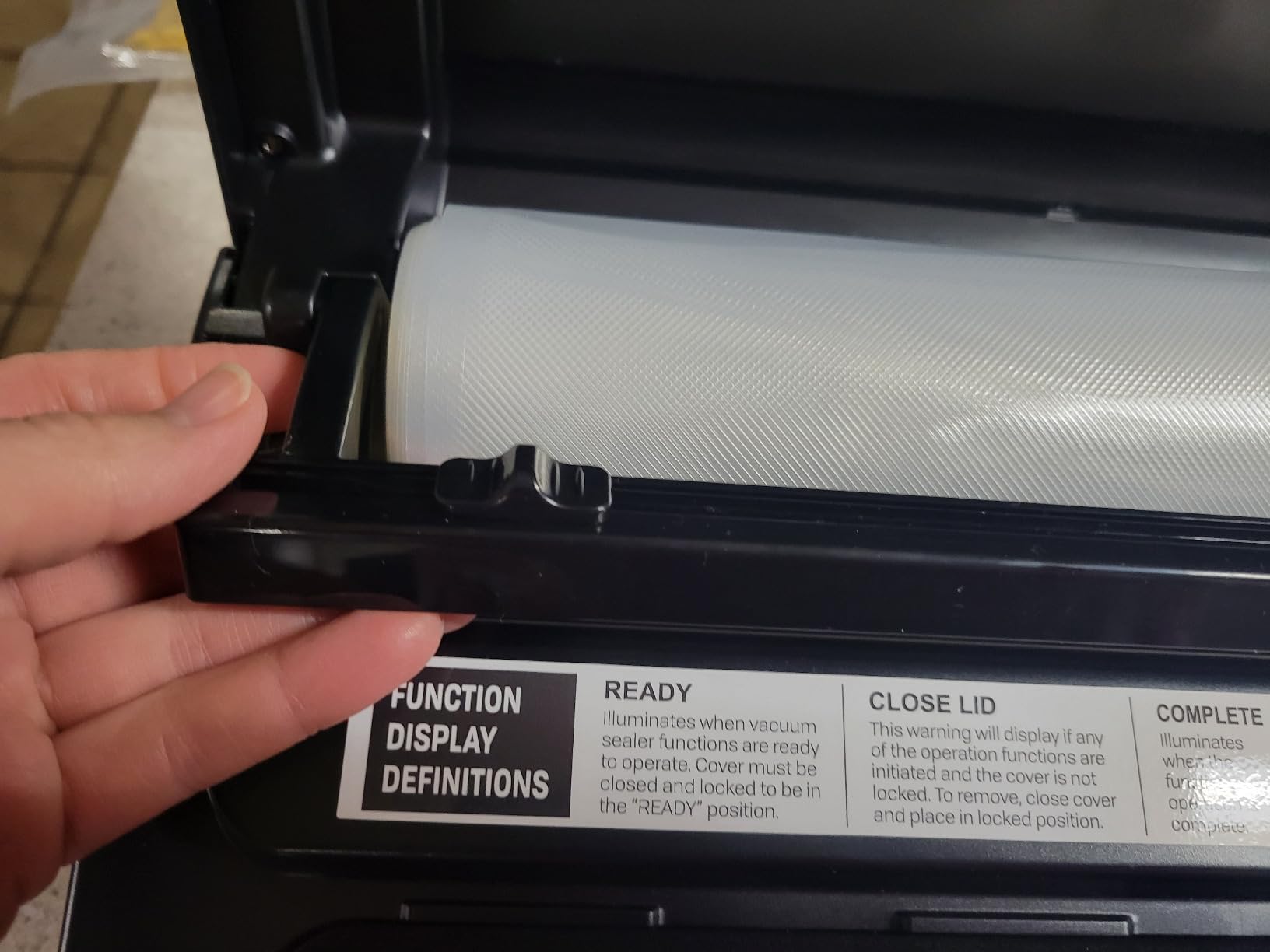
What you should know before you buy
The kit is the best in this roundup for volume: 60 feet of rolls across three 20 foot lengths plus a variety of 50 bags, and the accessory hose with an adapter. If you seal jars as well as bags, it also works with existing FoodSaver jar sealers, which extends the life of accessories you may already own.
Plan your bag sizes around the machine rather than the food. Because the handle locks above the seal bar, cut bags longer than you think you need and trim later if you want to save material. The sliding bag cutter cuts cleanly and the hose clips into the lid where it cannot be lost.
Who this suits and who it does not
Buy it if soup, stock and sauce are a regular part of your freezing routine and you want the most liquid-specific control on an edge sealer. Skip it if bag waste bothers you, or if you need a fast dry cycle for daily leftovers.
10. Vesta Precision V23 – Best for Large Rolls and Mason Jars
Vesta Precision 12″ Vacuum Sealer for Food & Liquids, 1×50′ or 2×20′ Rolls
250 watts dual pumps
Patent-pending liquid and wet food mode
100-plus continuous cycles
Dual-roll storage for one 50 foot roll
Jar kit included
Pros
- Purpose-built liquid mode for soups and sauces
- 100-plus continuous cycles without overheating pauses
- Smart heat control prevents bags melting
- Holds one 50 foot roll or two 20 foot rolls
- Full mason jar kit included
Cons
- Smallest review base of the ten at 96 ratings
- One-star share of 11 percent among the higher counts
- Wide body is larger than typical countertop sealers
The Vesta Precision V23 is the one here designed around a liquid tray and a patent-pending wet food mode, so soup and sauces seal without a freeze-first step. Dual pumps drive it, and owners report more than 100 continuous sealing cycles with no overheating pauses, which is the endurance figure you want for bulk harvesting or game processing.
Storage is the other differentiator. It holds either one 50 foot roll or two 20 foot rolls with a built-in cutter, so if you seal a large harvest you buy far less bag packaging. The mason jar kit with regular and wide-mouth adapters and lids is included rather than sold separately.
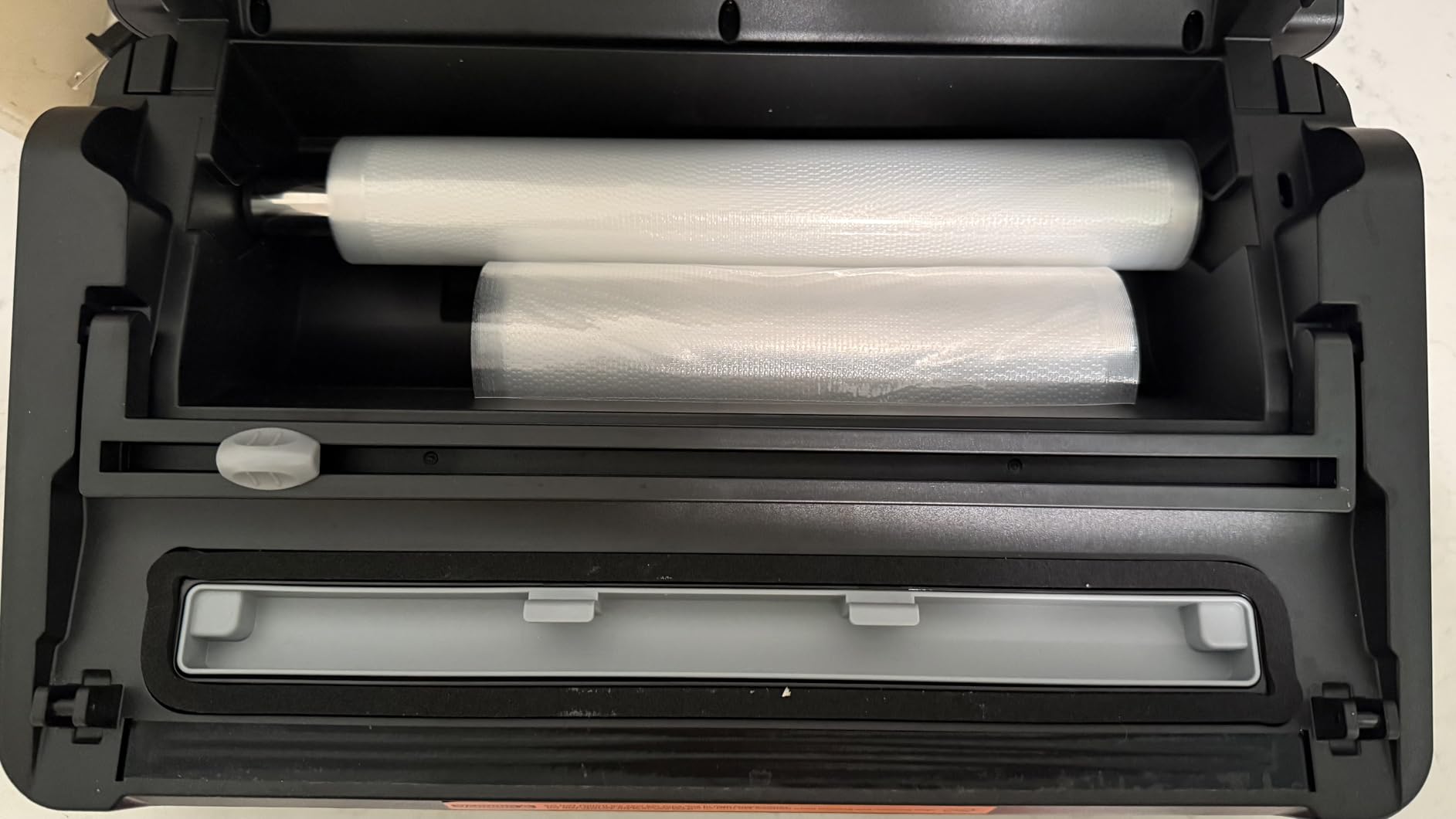
Smart seal control is the underrated part. It manages heat to prevent bags melting and to prevent trapped air during long runs, which is what stops a batch of wet bags failing halfway through because the machine got hot. A liquid tray is included for catching what the cycle draws out.
The honest caveat is evidence. At 4.2 stars from 96 ratings this is the smallest review base in the group, and its 11 percent one-star share is among the highest counts here, so long-term reliability is not yet well established. It ships with a 2-year warranty and U.S.-based support with a service hotline.
What you should know before you buy
The body is wide at 14.9 inches across and deep at 8 inches, weighing 6.6 pounds, so give it its own stretch of counter. The one-hand locking handle keeps the lid down evenly, and spare seal tape and two spare gaskets are in the box, which is helpful on a machine you might run through heavy sealing sessions.
Because the evidence base is thin, run a deliberate test. Seal a bag of stock, a bag of marinade and a jar of stock, then freeze everything for a day and check it before you rely on the machine for the season. It also works with sous vide bags straight from the hose.
Who this suits and who it does not
Buy it if you seal large quantities, preserve jars, or want a liquid mode that does not require freezing first. Skip it if you want a long record of owner feedback behind the machine, or if a wide body will not fit your counter.
How to Choose a Vacuum Sealer for Wet Foods
Edge sealer or chamber vacuum sealer: which one you actually need
This is the decision most guides blur. An edge sealer clamps the open end of the bag and pulls air out through a channel beside the heating strip, which is fast, compact and cheap but gives liquid a path to the seal. A chamber vacuum sealer puts the whole bag inside a sealed chamber and pulls air out of the chamber, so nothing is drawn into the bag at all. Liquid sits where you put it.
The rule is simple. If you mostly seal meat, fish and vegetables, an edge sealer with a good moist mode is enough. If you seal free-flowing liquid regularly without wanting to freeze first, a chamber machine is the honest answer. On forums, owners consistently describe chamber machines as the community solution for soup, brine and marinade, and a liquid setting on an edge sealer as the cheaper compromise.
None of the ten machines we tested is a chamber sealer. If you need true liquid containment, buy a chamber machine instead of choosing among these on the assumption that a liquid mode equals a chamber.
Wet mode, moist mode and liquid mode are not the same thing
Moist mode reduces vacuum strength or stops briefly when it senses resistance, and adds a longer heat seal. It suits marinated meat and fish. Liquid mode pulls even less air, often in pulses, and extends the seal time further, and it suits soups and pooled sauces. Pulse mode lets you advance the vacuum in steps, which protects delicate food and gives you manual control over draw-up.
Some machines add a marinate function, which slows the vacuum so the marinade does not move toward the channel. That is the mode to use for raw meat sitting in liquid, not the liquid mode you would use for a bag of stock.
What actually matters in the spec sheet
Suction is quoted in kPa or in litres per minute. Higher figures pull air out faster, which shortens cycles, but for wet food the more useful numbers are pulse control and how long the seal bar stays hot. Look at seal bar width too: a wider bar handles wide bags of chopped meat or a large portion, while a narrow bar works well on narrow fish fillets.
Drip tray capacity is the underrated figure. A small tray fills after two or three wet bags, and a full tray that you do not empty sits under the seal area. Removable and rinsable beats deep and fixed. Owners also weigh warranty length heavily, and a five-year term is a genuine differentiator at the budget end.
Bag choice matters as much as the machine
Use embossed bags rather than smooth ones for anything wet. The embossed channels give liquid somewhere to sit that is not the seal area, and they resist the bulge that a frozen portion creates. Buy the width that matches your food: 8 inch for fish fillets and small portions, 11 inch for a whole chicken thigh or a quart of stock.
For liquids, fill the bag no more than halfway. Liquid compresses as the air comes out, and a full bag has nowhere to put that compression, so it pushes juice toward the seal. Roll bags are better if you seal different sizes weekly, precut bags are better if you want to skip the cutting step.
Counter space, noise and cleanup
Wet-food sealing is a weekly habit, so the machine lives on the counter. Machines in this group range from a handheld unit that fits in a drawer to wide bodies around 15 inches across, and heavier machines are usually the ones with chambers or drip trays. Check that you can lift it with one hand while holding a bag of soup in the other.
Noise matters in flats and small apartments, and the FRESKO’s noise-control upgrade is a fair example of a spec that changes daily life. Cleanup matters more than most guides admit: empty and rinse the drip tray after every session, and wipe the seal channel and gasket dry. Liquid left in the channel is what causes the third-use seal failure.
Food safety when sealing soup and stock
Cool the food before you seal it. Putting hot soup into a bag and running a vacuum cycle traps steam and keeps the food in the food-safety danger zone while it cools, which is the opposite of what you want. Cool first, then portion, then seal.
Freeze promptly after sealing. Vacuum sealing does not make food safe forever; it removes oxygen, which slows spoilage, but bacteria growth is not stopped. Homemade soups and stocks should be frozen rather than kept in the refrigerator for extended periods, and always cool rapidly in shallow containers before the freezer.
Total cost of ownership
Bags dominate the running cost. A machine that only works with proprietary rolls gets expensive fast, and the Gasbye here accepts embossed bags from other brands, which is why it scores well for anyone sealing weekly. Gaskets, drip trays and cutters are consumables too, and machines sold with individually replaceable parts cost less over five years than machines sold as sealed units.
Who should skip a vacuum sealer entirely
Skip it if you freeze less than a couple of portions a month, because bags and counter space will cost you more than the time you save. Skip it if you only store bread, dry herbs and crisps, since a simple clip or a jar keeps those fresh. And skip an edge sealer entirely if your main requirement is sealing free-flowing liquid without freezing it first, because that is the one job this category does not do well.
How to Vacuum Seal Wet Food Without Mess or Leaks
Cool the food fully. Never seal hot soup; steam will soften the bag and trap the contents warm inside it.
Freeze free-flowing liquid first. Portion soup or stock into a container, freeze it solid, then drop the frozen block into a bag. This is the technique repeated across cooking forums for edge sealers, and it is the difference between a clean seal and a wet seal channel.
Blot surface moisture. A paper towel on the surface of meat or fish removes the thin liquid layer that otherwise sits across the heat strip.
Fill the bag no more than halfway for liquids. Leave room for compression so the liquid has somewhere to go when the air comes out.
Place the bag at a slight angle rather than flat, with the liquid pooled at the far end away from the vacuum channel.
Choose liquid or moist mode, not dry mode. For a stepped approach, use pulse mode and stop the vacuum before you see liquid moving.
Keep the seal channel dry. If a drop has spilled into the channel, wipe it and let it dry before closing the lid.
Leave extra bag length past the channel. A short bag means the seal bar crosses food or liquid instead of clean plastic.
Double seal if your machine allows it. A second heat pass is cheap insurance on any bag holding liquid.
Freeze wet bags flat and let them sit undisturbed overnight. Repeated flexing while the portion is still soft is how sealed wet bags develop pinholes.
Troubleshooting Failed Wet-Food Seals
Liquid is pulled into the vacuum channel. Switch to liquid or moist mode, drop to the gentlest vacuum setting, and use pulse mode to advance in steps. Blot the food and fill the bag less fully. If your machine has a removable drip tray, empty it, because a full tray puts liquid back under the seal.
The soup is drawn up into the bag wall. This is a fill-level problem more than a machine problem. Re-seal with the bag no more than half full, or pre-freeze the portion solid so there is no free liquid to move.
The seal channel stayed wet and the bag will not hold. Wipe the channel and the gasket, then leave the lid open for a few minutes. If a food particle is stuck near the heating strip, it is conducting heat unevenly. A dry channel is a hard requirement, not a nicety.
The bag passed at the counter and burst in the freezer. The bag was overfilled, the seal sat over liquid, or the portion was still soft when you froze it. Use a wider bag, leave more headroom, and freeze flat without flexing.
The machine gets hot during back-to-back liquid bags. Give it a short rest between runs. Machines rated for long continuous cycles are worth the extra money if you seal 20 or more wet bags in a sitting; check the claimed cycle count in the spec sheet before you assume yours will keep going.
The seal fails after freezing. Expel air by hand at the counter before sealing, and check the gasket is seated correctly in its channel. On cheaper machines a displaced white insert can stop a machine pulling any air at all, and the manual rarely mentions it.
The machine smells of liquid. Clean the gasket, drip tray and vacuum channel with warm water, then run one empty dry cycle. If the smell persists, the gasket has absorbed residue and should be replaced, which is cheap on machines that sell gaskets individually.
A third-use seal keeps failing. Standing liquid in the channel is the usual cause. Wipe and dry the sealing area after every wet-food session, not once a week, and this is where a removable and rinsable drip tray earns its place.
Frequently Asked Questions
Can you vacuum seal wet food?
Yes, with the right mode. Use a machine with a moist, liquid or pulse setting so the vacuum slows or stops before liquid reaches the heating strip, blot surface moisture first, and fill the bag no more than halfway. For free-flowing soup, freeze the portion solid before bagging it.
What is the best vacuum sealer for soup?
A liquid-mode edge sealer is the practical choice for most home cooks, and among our picks the NESCO VS-22LB has the most liquid-specific control while the Vesta Precision V23 has a dedicated liquid tray and wet food mode. A true chamber vacuum sealer handles soup without freezing it first, which no edge sealer here can promise.
When should you use the moist setting on a vacuum sealer?
Use moist mode for meat, fish and cooked vegetables, anything with surface moisture but no free liquid. It reduces vacuum strength and lengthens the heat seal so a wet patch does not break the bond. For a pooled marinade or a sauce, step up to liquid mode or pulse mode instead.
Is a chamber vacuum sealer better for wet foods than an edge sealer?
Yes for free-flowing liquid. A chamber sealer pulls air out of a sealed chamber rather than drawing it through the bag, so soup, brine and marinade never move toward the seal. An edge sealer with liquid mode is faster, smaller and cheaper, but it can pull juice into the channel unless you freeze liquid portions first.
What foods should never be vacuum sealed?
Never seal food that is still hot, and avoid sealing liquids that have not been cooled quickly. Do not vacuum seal bread, raw eggs in the shell, whole hard-boiled eggs, or soft bread and pastries, which can be crushed by the vacuum. Mushrooms and some soft produce also lose texture under strong suction.
How long can vacuum sealed soup last in the freezer?
Vacuum sealing removes oxygen, which slows spoilage, but it does not stop bacteria growth, so frozen is the safe storage route for homemade soup. Cool the soup quickly in shallow containers, portion, seal and freeze flat. For refrigerator storage, keep sealed soup shallow and use it within a few days rather than treating the seal as indefinite.
Do I need special bags for liquid?
Use embossed bags rather than smooth ones and leave the bag no more than half full. The embossed channels give liquid somewhere to sit away from the heat seal, and headroom stops compression pushing juice toward the seal edge. Wider bags help too: 11 inch for a quart of stock, 8 inch for fillets and small portions.
Why did my wet food bag leak in the freezer?
The usual reasons are a bag filled too full, a seal bar that crossed liquid instead of clean plastic, or a still-soft portion flexing as it froze. Use a wider bag with more headroom, blot the food, keep the channel dry, and freeze the bag flat without moving it. Re-test the seal at the counter and after 24 hours before trusting it again.
What is the best budget vacuum sealer for wet foods?
Among our picks, the UPRUBE VM4 is the cheapest route into wet-food sealing, with a drainage tube and anti-backflow valve designed for sauces and marinades. If you want more capacity, the FRESKO AutoMax V8-100 adds automatic dry and wet detection, pulse mode and a large starter kit of bags and rolls.
Final Verdict: The Best Vacuum Sealers for Wet Foods
The FoodSaver FM2100 is our pick for the best vacuum sealers for wet foods overall, because it combines the largest body of owner feedback in the group with a moist setting, dual heat strips and a 5-year warranty. For soups and sauces specifically, the NESCO VS-22LB gives the most liquid-specific control. For bulk wet-food batches, the Inkbird INK-VS04 wins on its removable 10 oz drip tray and 160 watt dual pumps.
Two further verdicts matter. If you want the machine to decide, the FRESKO AutoMax V8-100 handles wet food without buttons and with pulse control. If you want the highest verified rating, the Gasbye VS5166 takes it at 4.7 stars from 1736 ratings. If your requirement is sealing free-flowing liquid without freezing it first, none of these edge sealers is the right tool, and you want a chamber vacuum sealer instead.
Whatever you buy, cool the food, keep the bag half empty, keep the seal channel dry, and freeze soup portions solid first. Those four habits fix more wet-food failures than any setting on any machine. Our broader vacuum sealer guide covers dry-goods storage if you want the full picture, and these picks are updated for 2026.