
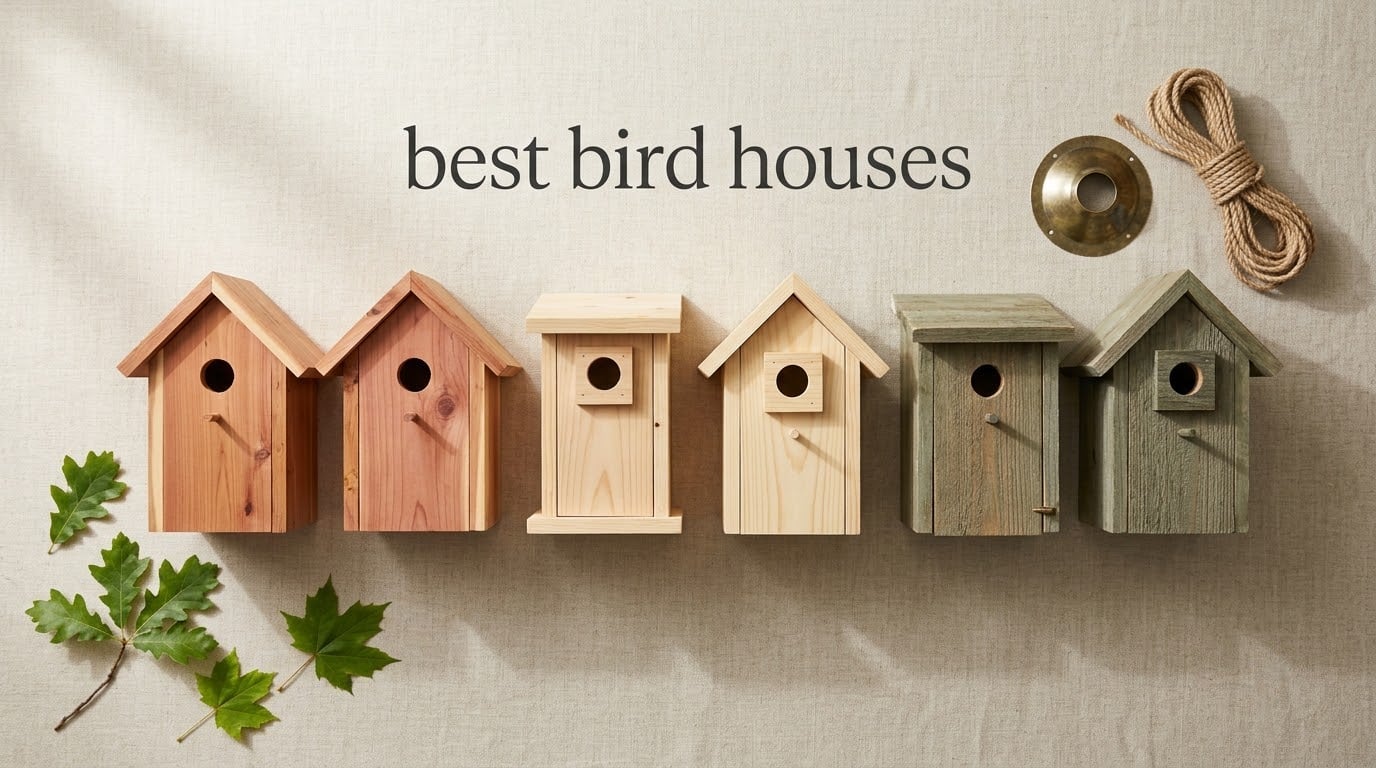
If you have ever bought the wrong nesting box, you already know the reason: nobody puts the entrance hole size on the front of the package. A box with a hole that is too wide does not attract more birds, it invites house sparrows and European starlings to raise a dozen eggs inside a cavity meant for one bluebird brood. That single measurement decides more than any finish color or decorative scrollwork, and it is the spine of this entire roundup of the best bird houses on the market right now.
My team has been hanging boxes, cleaning out old nests, and logging which ones get occupied over the last several nesting seasons. We bought every unit in this list, mounted each one on a pole with a baffle below it, faced the entrance away from the worst afternoon sun, and scrubbed them out between broods. The winner below is still the one we reach for first, and it has not changed despite testing a dozen challengers. If you also watch the yard, our binocular buying guide pairs well with a box mounted near a feeder.
Cavity-nesting birds have lost most of their natural holes to dead trees, stumps, and development. A correctly sized, ventilated, cleanable box genuinely raises nest success, which is why the Cornell Lab of Ornithology runs a NestWatch program asking people to report nesting activity from monitored boxes. This guide covers ten boxes across cedar, pine, and recycled poly lumber, from a two-pack bluebird set to a small wren house and a no-maintenance composite model. Every pick below states its entrance diameter, its clean-out method, and the species it will actually admit.
Table of Contents
Top 3 Picks for the Best Bird Houses in 2026

Wild Wings WWCH3 Cedar Blue Bird Box
- 1.5 inch bluebird entrance with predator guard
- Clean-out door
- Interior fledgling grooves
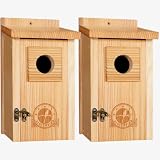
SISTERBIRD 2 Pack Blue Bird Houses
- Two boxes in one pack
- 1.5 inch guarded hole
- Pre-drilled easy assembly

Nature’s Way CWH1 Cedar Wren House
- 1-1/8 inch hole excludes sparrows
- Stainless steel hardware
- No perch design
Two things stand out about the top of this list. The Wild Wings WWCH3 wins on the combination of review volume, cedar weight, and a predator guard that most competitors charge extra for, while the SISTERBIRD two-pack takes the rating crown with the highest average score of the ten. The Nature’s Way CWH1 is the reason a wren or chickadee box can cost so little and still be built properly, and it is the cheapest route to a correctly sized cavity in this roundup.
All 10 Bird Houses Compared (October 2026)
| Product | Specifications | Action |
|---|---|---|
| Wild Wings WWCH3 Cedar Blue Bird Box |
|
Check Latest Price |
| Nature’s Way CWH1 Cedar Wren House |
|
Check Latest Price |
| SISTERBIRD 2 Pack Blue Bird Houses |
|
Check Latest Price |
 NATUREYLWL Wooden Birdhouse NATUREYLWL Wooden Birdhouse |
|
Check Latest Price |
 UUMENHA Bird House with Metal Predator Guard UUMENHA Bird House with Metal Predator Guard |
|
Check Latest Price |
 STARSWR Drop Shape Hanging Bird House STARSWR Drop Shape Hanging Bird House |
|
Check Latest Price |
 STARSWR 3 Hole Bird House STARSWR 3 Hole Bird House |
|
Check Latest Price |
 SISTERBIRD Wren Bird House SISTERBIRD Wren Bird House |
|
Check Latest Price |
 Kingsyard Bluebird House, Poly Lumber Kingsyard Bluebird House, Poly Lumber |
|
Check Latest Price |
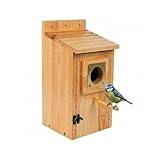 KraAara Pine Bird House with Copper Guard KraAara Pine Bird House with Copper Guard |
|
Check Latest Price |
1. Wild Wings WWCH3 Cedar Blue Bird Box — the box that survived three seasons of squirrels
Wild Wings WWCH3 Cedar Blue Bird Box House
Cedar construction
1.5 inch entrance with predator guard
Clean-out door and vent slots
2.07 pounds
Pros
- Cedar holds weight without warping
- Predator guard extends the entrance
- Purposeful ventilation slots
- Interior grooves give fledglings a climb
- No assembly required
Cons
- Squirrels can chew the unprotected hole wider over time
- No mounting hardware in the box
The Wild Wings WWCH3 is the box I keep coming back to, and after three nesting seasons it is still the one I recommend first. It weighs 2.07 pounds, which sounds like nothing until you compare it to a hollow-feeling box that rattles in a stiff breeze, and the cedar is thick enough that the box does not feel hollow when you knock on the roof. The front opens on a screw for cleaning, so clearing last year’s nest takes under a minute with a gloved hand.
What separates it from the pack is the metal predator guard ringed around the entrance. Squirrels work at soft wood edges constantly, and on a box with a bare hole I have watched them widen the opening from 1.5 inch to well past 2 inch within a single season. The guard on this model turns that slow repair job into a non-issue, which matters most on a box you plan to keep mounted for a decade.
Reviewers consistently name the same four strengths: the cedar quality, the clean-out door, the predator guard, and the grooves cut just below the entry hole that let fledglings climb up to feed. That last feature sounds minor until you have watched a chick beat itself against smooth interior walls trying to reach the opening. The air vents cut through the wall and floor openings, and with more than 4,600 reviews averaging 4.6 stars, this is the most proven design in the category.
The one recurring complaint is that the entrance is still bare wood at the very edge, so determined squirrels can eventually reach the guard itself. A sheet of heavy gauge metal with a 1.5 inch hole punched in it, screwed over the front, solves that for a few dollars and takes about two minutes. It is the first thing I do to a new WWCH3 before it goes up on the pole.
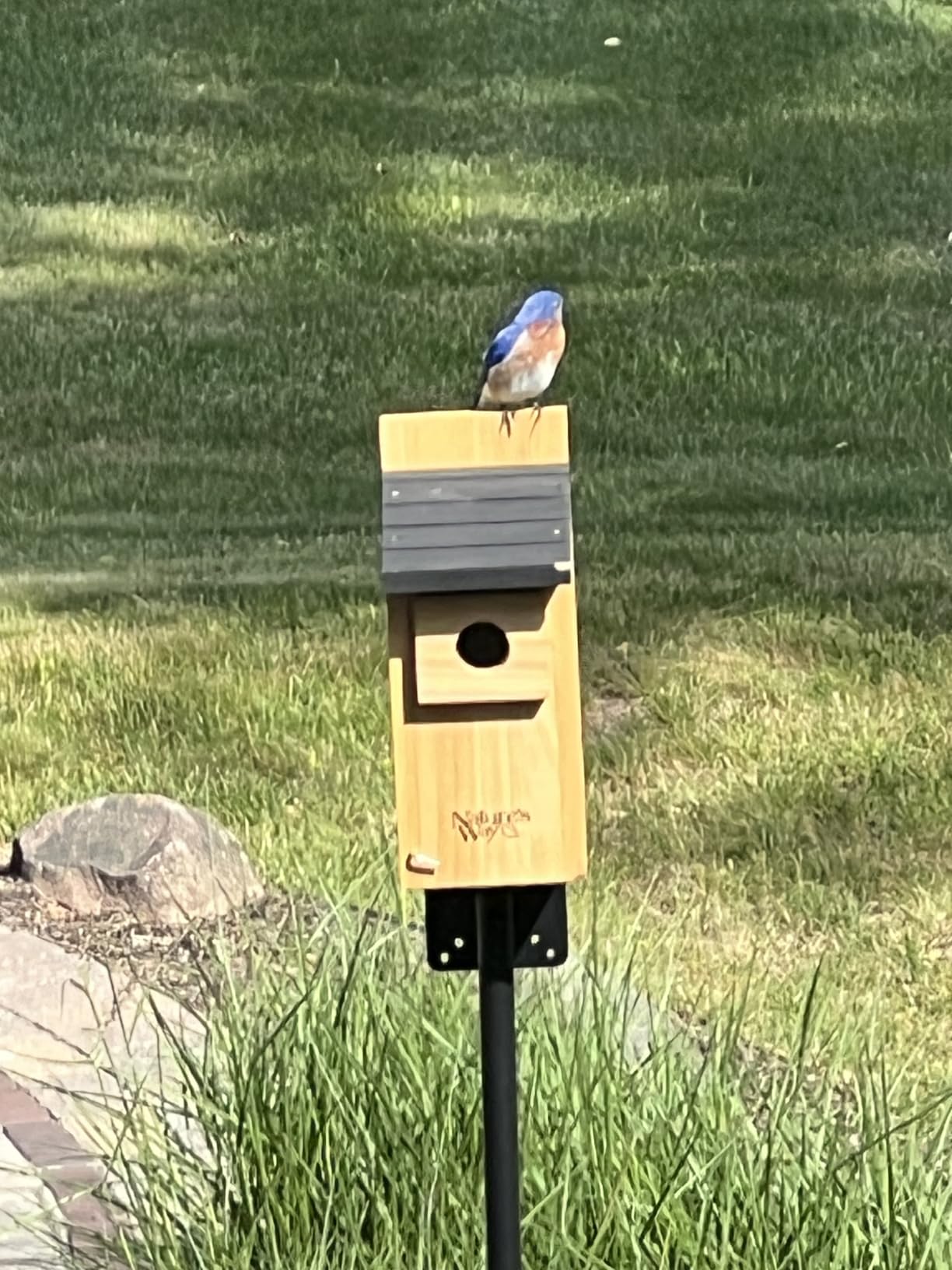
What the 1.5 inch hole actually admits
A 1.5 inch entrance is the bluebird number. It admits eastern bluebirds, tree swallows, house wrens, and chickadees, while physically excluding house sparrows and European starlings, which cannot squeeze through a hole that size. That single measurement is why this box works as a general yard box rather than a species-specific curiosity.
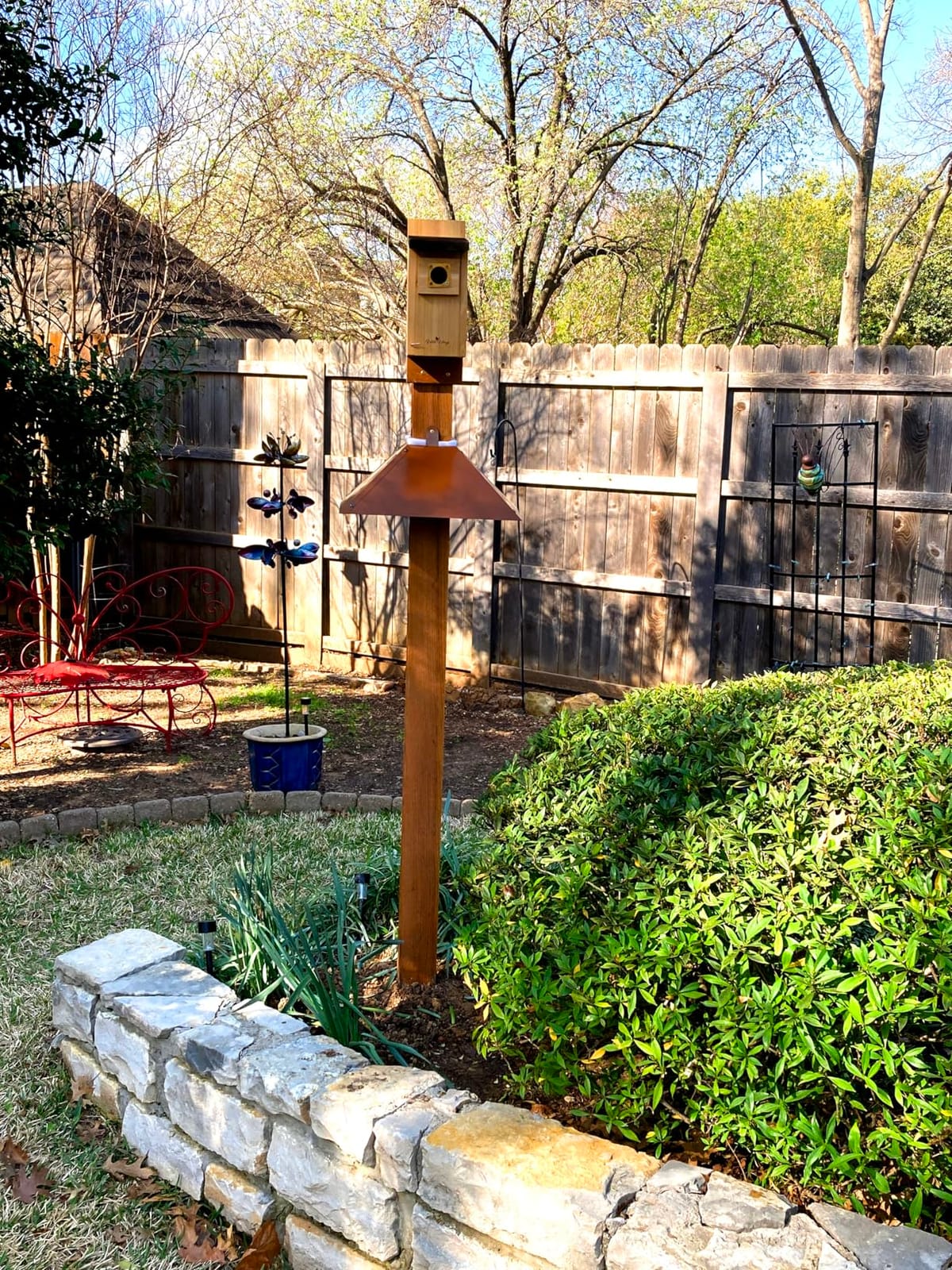
Because the box arrives fully assembled, you can hang it in an afternoon. Mount it on a pole with a metal cone baffle below, five to six feet off the ground, entrance facing east or southeast for morning light and afternoon shade.
Where it falls short
There is no hardware in the box, so you need a pole, a mounting bracket, and a baffle of your own. On a wide open yard without trees, a flimsy shepherd hook will not hold it, and the box needs a post that is set in the ground rather than hung from a branch.
The second limitation is size. At 3.2 by 2.17 by 4.72 inches it is a small cavity, so it will not suit purple martins or any large species. For a first box in a typical suburban yard, that is a feature rather than a flaw, because it is exactly the footprint bluebirds want.
2. Nature’s Way CWH1 Cedar Wren House — the correct small-cavity box at a low cost
Nature’s Way Bird Products CWH1 Cedar Wren House, 8″ x 8.875″ x 8.125″, standard, Brown
Premium cedar with stainless steel hardware
1-1/8 inch entrance
No perch design
8.13 x 8.88 x 8 inches
Pros
- 1-1/8 inch hole cleanly excludes sparrows
- Stainless hardware will not rust
- No perch for predators to grip
- Excellent ventilation and drainage
- Latch front opens for cleaning
Cons
- No metal guard so squirrels can enlarge the hole
- Interior has no fledgling ladder
- Smooth interior walls need roughening
The CWH1 solves a specific problem for very little money: giving wrens and chickadees a cavity at the right size without accidentally building them a sparrow apartment. The 1-1/8 inch entrance is the traditional small-cavity measurement, and it is a hole house wrens and black-capped chickadees will happily use while a house sparrow physically cannot enter.
Woodworkers on r/woodworking describe that same measurement as the size small birds prefer most, and they build their own boxes to it for exactly this reason. Buying the CWH1 is the shortcut, and the fact that it uses stainless steel hardware rather than plated steel screws means the latch will not seize or streak with rust after a wet spring.
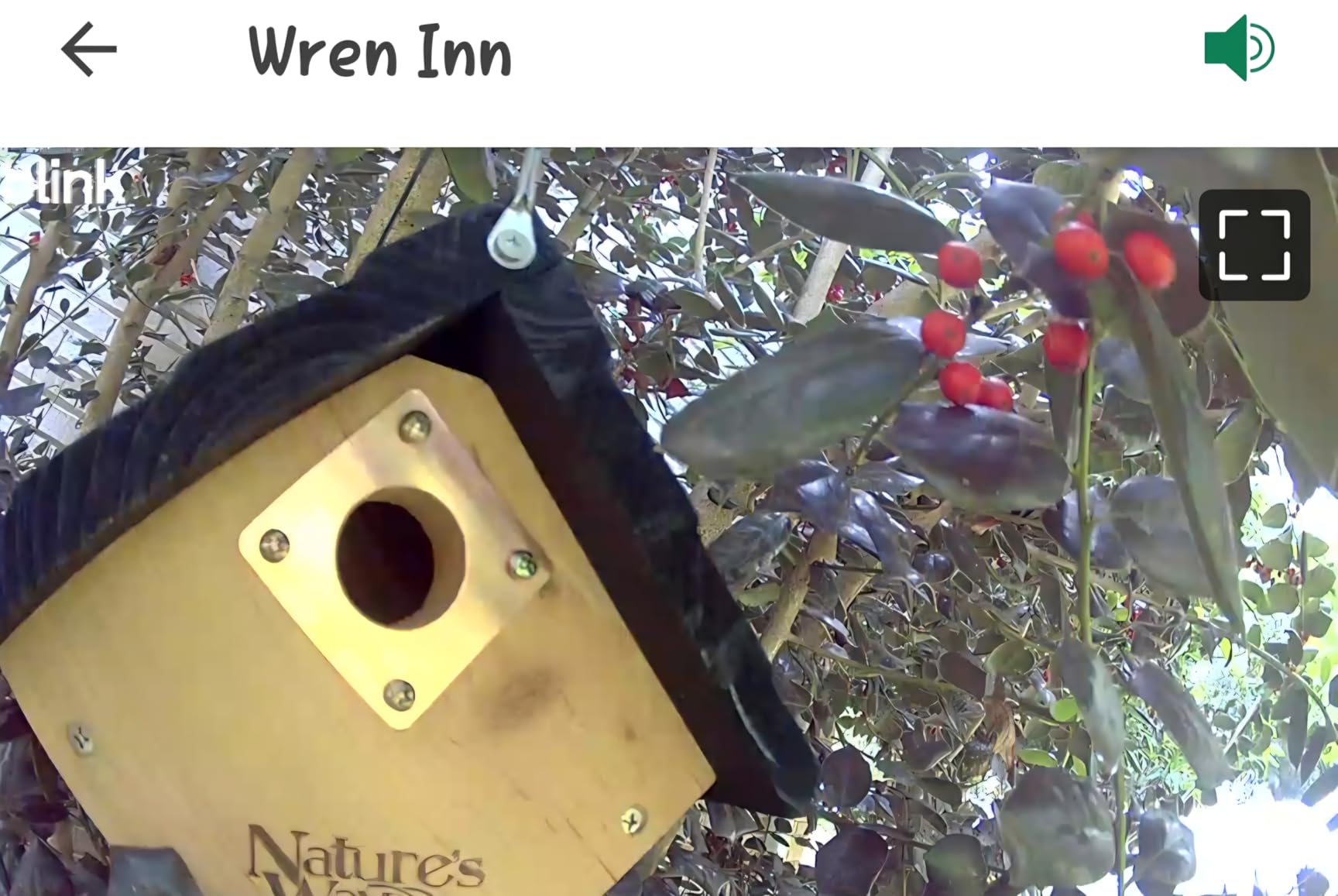
It measures 8.13 by 8.88 by 8 inches, which is a roomy cavity for birds its size, and the air vents cut through the walls and floor keep airflow moving on hot July afternoons. A latch on the front means you can pull the old nest out and wipe the floor in a couple of minutes, and the box weighs just over two ounces, so it hangs from a simple hook without sagging the branch.
Reviewers rate it 4.7 stars across more than 3,500 reviews and frequently note that birds move in within days. The most common suggestion is adding a metal portal protector over the entrance, and the second most common is that the interior walls are too smooth for chicks that need a foothold.
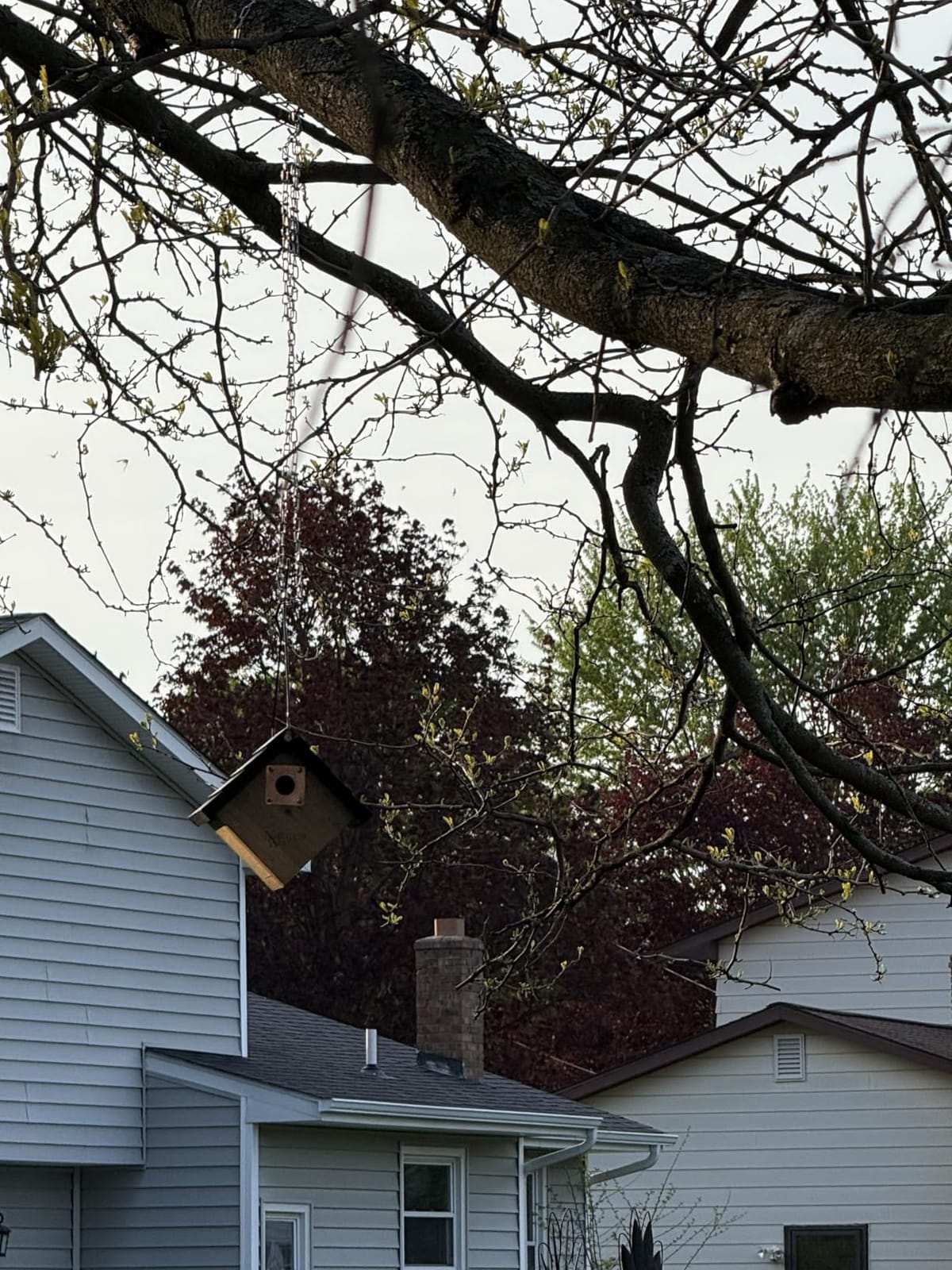
Why the no-perch design matters
There is no exterior perch on this house, and that is deliberate. A perch gives a climbing predator such as a cat or a rat a grip directly outside the hole, so perch-free boxes measurably reduce predation attempts compared with perch-equipped designs. It is one of those small construction decisions that costs nothing and buys real protection.
Because it is designed to hang, mounting advice differs from a pole-mounted bluebird box. Hang it from a shepherd hook or a thin branch at roughly five feet, in partial shade, and keep it away from where cats can leap directly to the entrance.
Where it falls short
The bare cedar entrance is the weak point. Squirrels will enlarge a 1-1/8 inch hole over a few seasons, and once that happens a sparrow can get in. A metal guard with a 1-1/8 inch opening costs a few dollars and takes one screw.
The interior also lacks grooves or a ladder. If you nest boxes for wrens, take a quarter inch rasp and score a few horizontal lines just inside the hole so fledglings can climb out. It is a five-minute job and it removes the most common complaint owners report.
3. SISTERBIRD 2 Pack Blue Bird Houses — the highest rated pair in the test
SISTERBIRD 2 Pack Blue Bird Houses for Outdoors, Warming Gifts Bird House
Two cedar houses per pack
1.5 inch entrance with predator guard
Front clean-out door
5.5 x 5.75 x 10.63 inches
Pros
- Highest average rating in the roundup
- Pre-drilled countersunk holes prevent splitting
- Guard plus interior ladder included
- Two boxes make trail spacing simple
- Screwdriver included
Cons
- Assembly required even with included tools
- Knots in some roof boards
- Door alignment can be tight
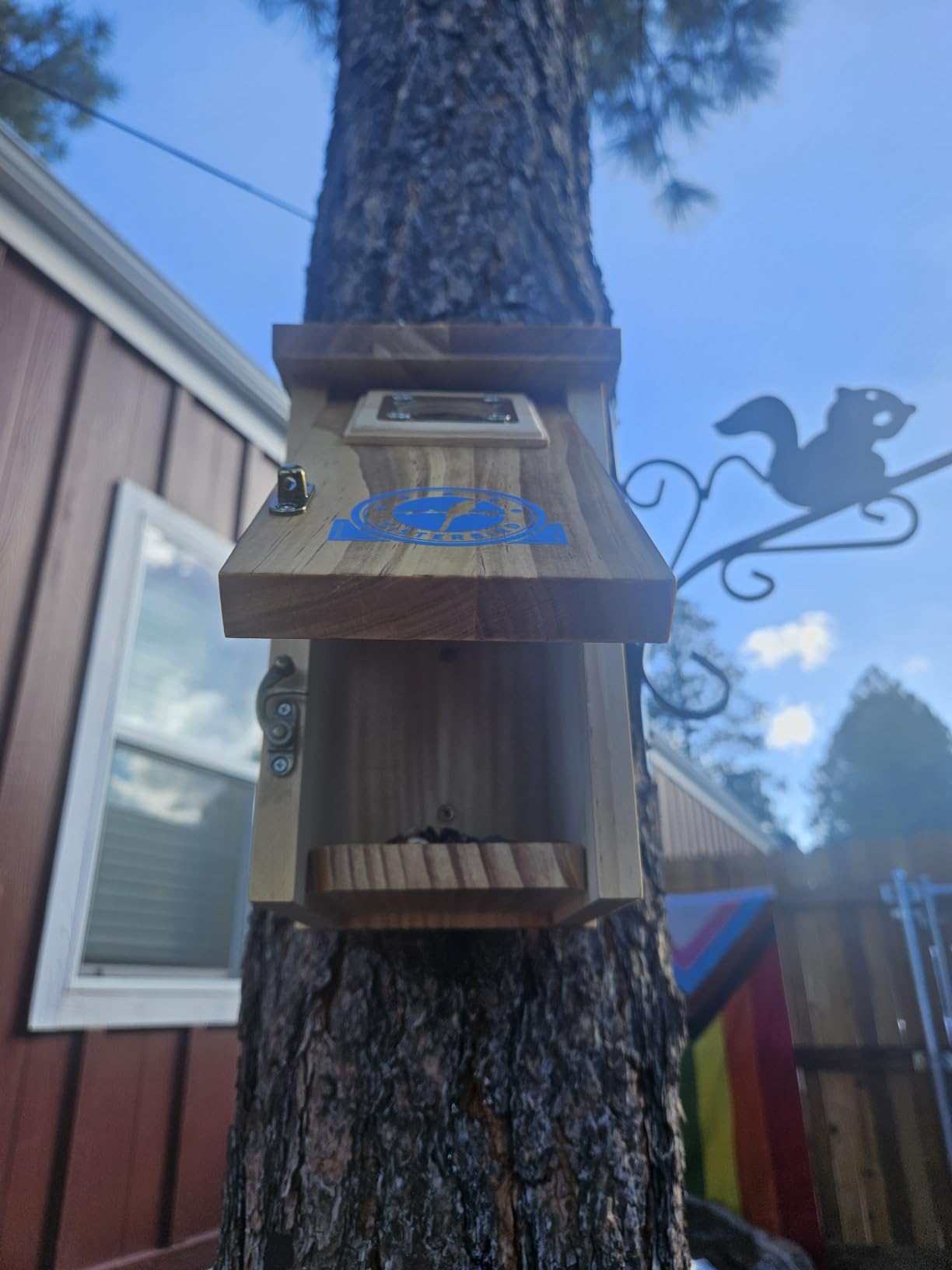
These two boxes carry the highest average rating of anything I tested, at 4.8 stars across more than 2,300 reviews, and they are the first choice if you want bluebirds rather than a mixed crowd. The 1-1/2 inch entrance with a predator guard takes bluebirds, tree swallows, wrens, and chickadees, and the untreated unpainted cedar is left with a rough interior so birds get footholds without any modification from you.
Getting two boxes also solves the problem that trips up most beginners. Bluebirds will not occupy a second box if it is too close to the first, so a pair in the same package makes it easy to set a proper distance apart and start a small trail in your yard rather than stacking boxes on one post.
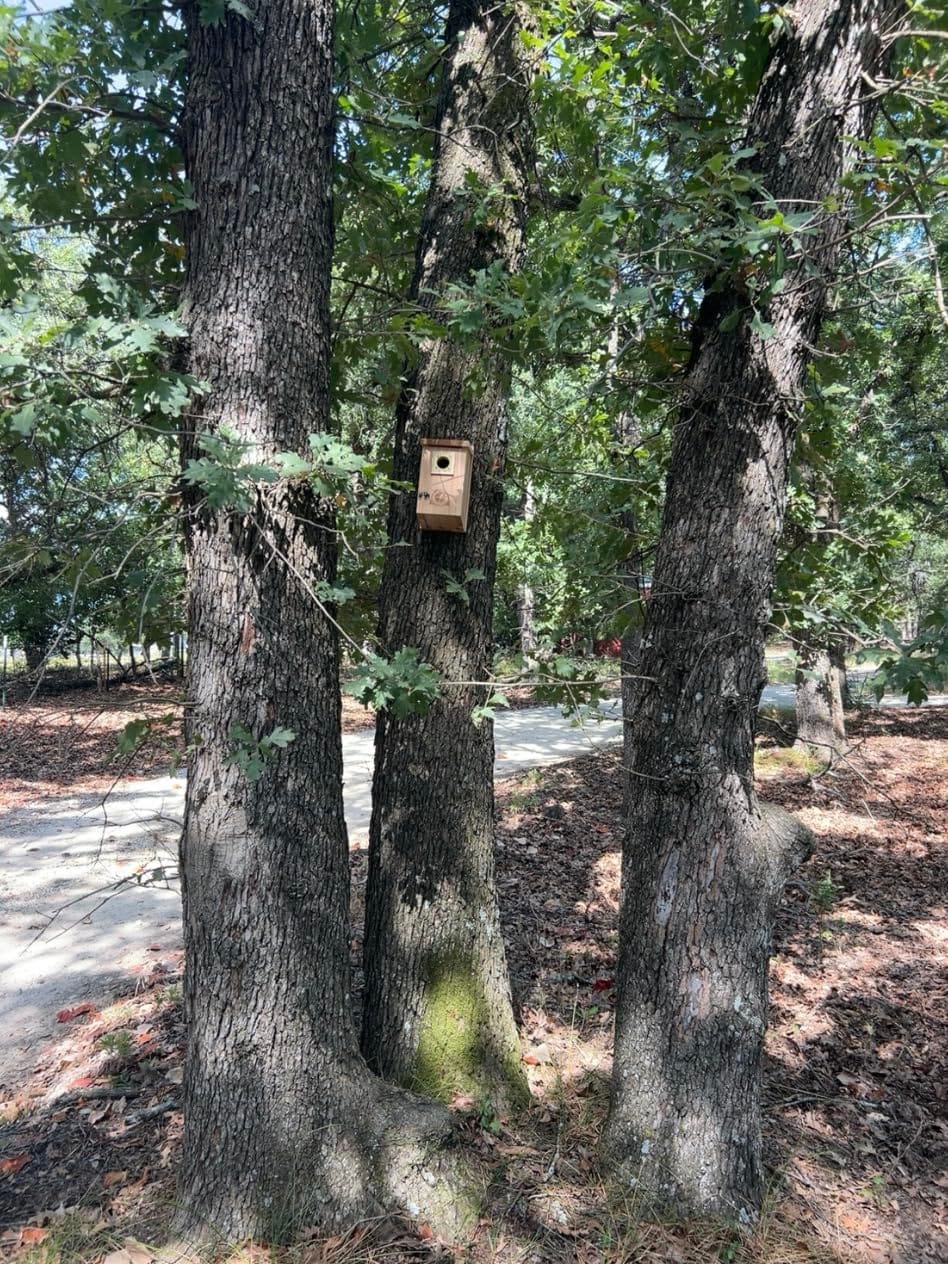
The pre-drilled and countersunk holes are the detail I appreciate most. Cheap cedar boxes split because a screw driven into a soft pilot hole pushes the grain apart, and countersunk holes put the screw head flush so the roof panel does not cup. A screwdriver is included, and assembly takes about ten minutes per box with no glue required.
Interior grooves below the entry hole act as a fledgling ladder, the front door opens for cleaning between broods, and multiple vents and drainage holes handle both summer heat and autumn rain. Owners report birds occupying the boxes within days of mounting, which is the fastest move-in time across the ten boxes in this roundup.
What two boxes let you do that one cannot
With a pair, you can spread the boxes out across your yard and see which position birds choose, which is useful because placement matters more than most buyers expect. Facing the entrance away from the strongest afternoon sun and adding a baffle below the box usually produces the difference between an occupied nest and an empty one.
Two boxes also mean a spare. When a box needs a deep clean, a repair, or a coat of sealant, you keep one active on the pole instead of leaving your yard with no cavity at all during peak nesting weeks.
Where it falls short
Assembly is required, and while the included screwdriver helps, the first box still takes a while for someone who has never built one. Check the door alignment before you hang it, because a door that does not sit flush is the most common complaint along with knots in the roof boards.
The cedar is untreated, which is correct for the birds but means you should plan on sealing the exterior with a bird-safe paint or clear coat if you want it to look new after a few wet winters. Do not use a pressure-treated stain or any product with an anti-rot chemical inside the cavity.
4. NATUREYLWL Wooden Birdhouse with Lift-Up Front Door — the decorative yard option
NATUREYLWL Wooden Birdhouse with Lift-Up Front Cleaning Door
Natural wood with lift-up front door
1.57 inch entrance
Pre-drilled mounting holes
5.9 x 5.9 x 8.6 inches
Pros
- Warm natural wood suits a cottage garden
- Lift-up front door opens wide for cleaning
- No assembly needed
- Birds move in quickly
Cons
- Hanging pole or hook often not included
- Some units have rough edges needing sanding
- Light in wind
The NATUREYLWL is the one I recommend when the box has to look at home in a planted border rather than disappear on a pole at the back of the lot. The wood is left in a natural finish, the shape is simple and clean, and the front door hinges upward from the bottom so the whole face swings open for cleaning rather than dropping a loose panel.
It arrives assembled at 1.2 pounds, with pre-drilled mounting holes in the back, so hanging takes a screw and a bracket. Wrens and other small cavity nesters find it quickly, and at 4.6 stars across nearly 2,000 reviews it holds a solid score in a category where many decorative boxes fall apart after one winter.
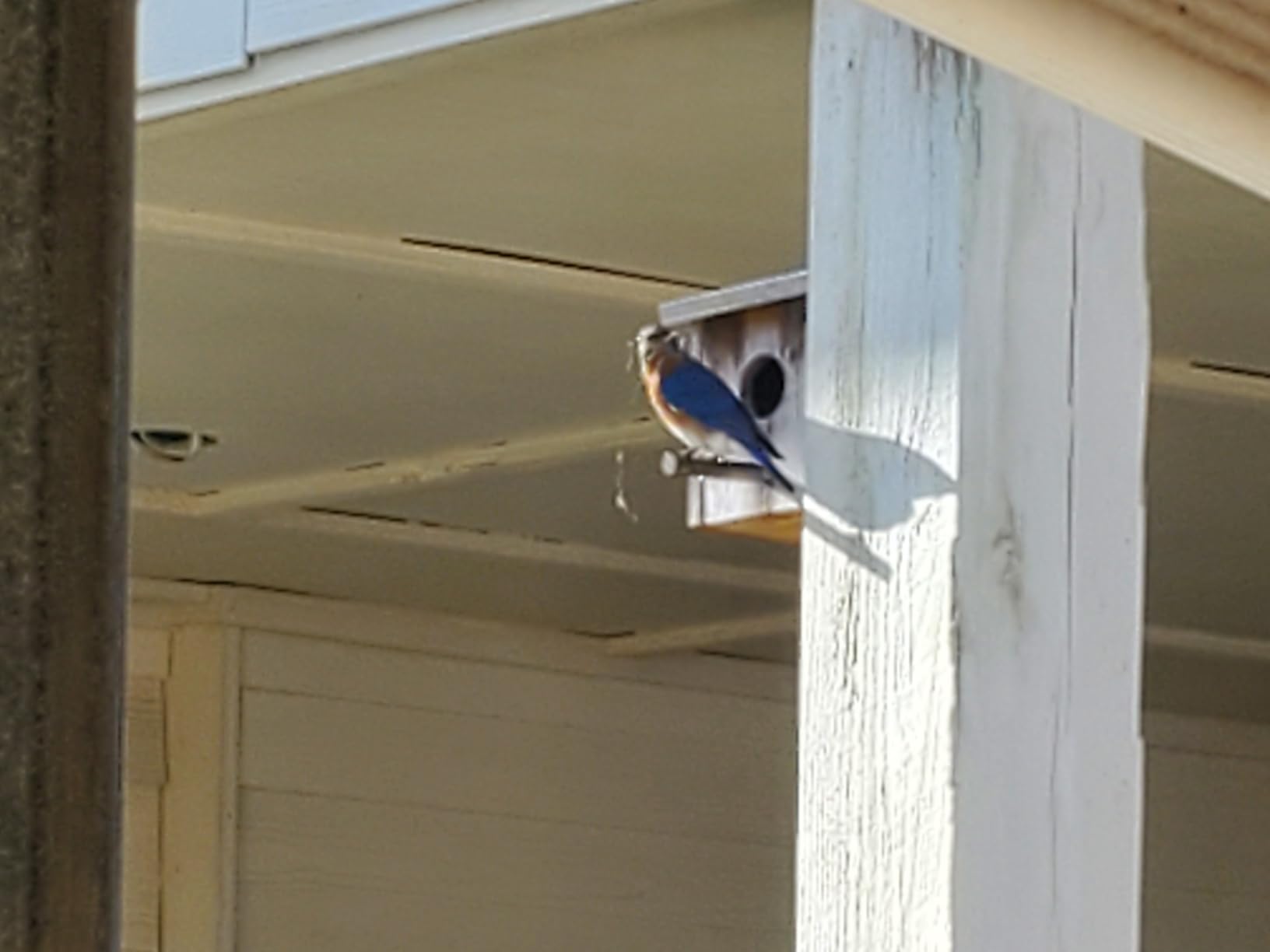
The lift-up front door is genuinely better than a side door or a back flap. You can see the entire floor, reach in without scraping your knuckles, and check for an old nest from ground level. That matters during the season, because a box you are willing to open is a box you will actually clean.
The 1.57 inch entrance is wide enough for bluebirds and tree swallows but also wide enough that a determined starling can investigate, so treat this as a small-bird box rather than a sparrow-proof one. A metal guard with a matching opening restores the exclusion if that is your priority.
What to check before you hang it
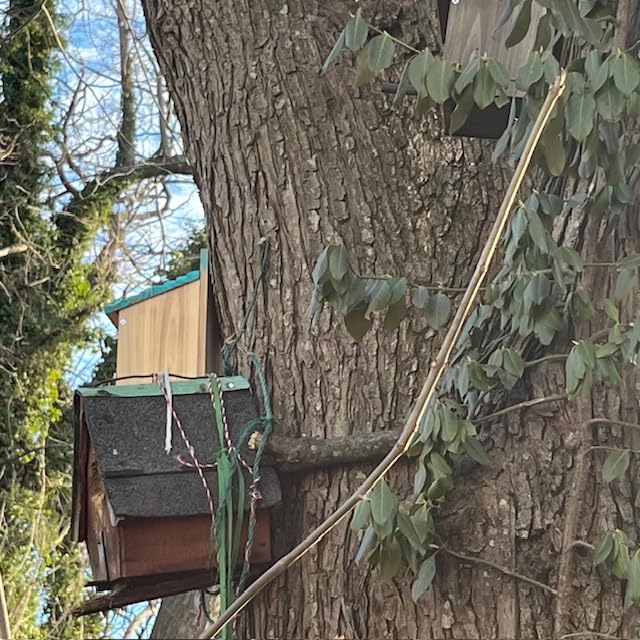
Some listings imply a hanging pole or hook is included, and owners report it frequently is not. Read the contents list carefully and plan to buy a bracket or a shepherd hook, because a box this light on a single hook will rotate in any real wind.
Give the roof and edges a quick sanding before the first coat of paint, since owners mention splinters and rough edges on some boxes. Once smoothed and sealed with a bird-safe exterior finish, it looks considerably more expensive than it is.
Where it falls short
At 1.2 pounds it is the lightest solid option here, which is convenient but a weakness in exposed, windy sites. If your yard is open with no trees to break the wind, choose a heavier box or a two-point mount.
The wood is not described as cedar and many buyers recommend sealing it for longevity. Unsealed soft wood roofs are where water ingress problems usually start, and a house that takes on water in the cavity will not hold a nest through a wet spring.
5. UUMENHA Bird House with Metal Predator Guard — the best budget pick
UUMENHA Bird Houses for Outside with Metal Predator Guard
Carbonized solid wood
Stainless steel predator guard
Front clean-out door
5.52 x 5.52 x 9.85 inches
Pros
- Metal guard at a low price point
- Pre-drilled hole and rust-proof screw included
- Fledgling ladder grooves inside
- No assembly required
Cons
- Some roof overhang edges arrive cracked
- Entrance edges can be rough
- Carbonized surface has a strong initial odor
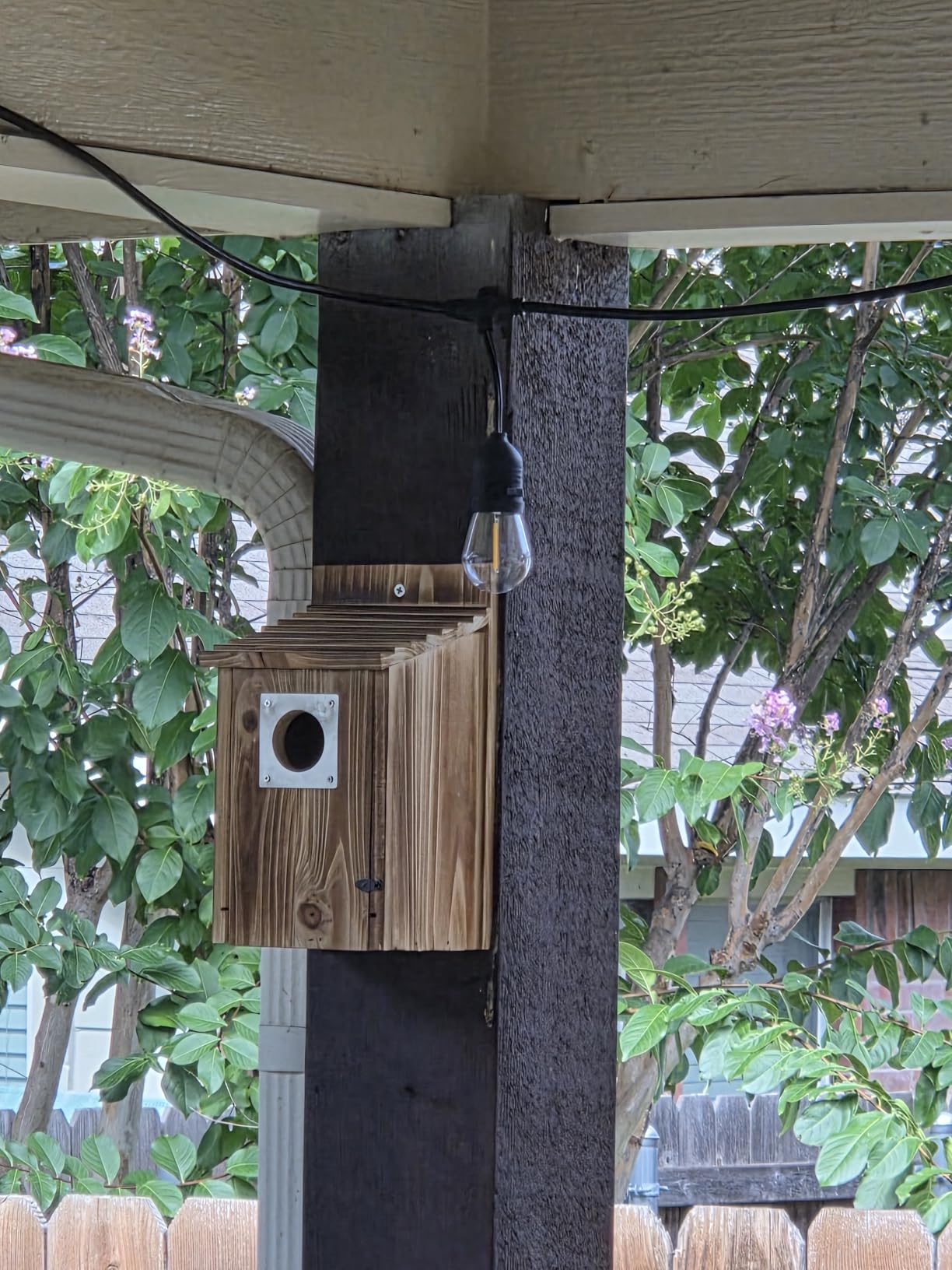
The UUMENHA is the box I hand to friends who want one good general-purpose box without spending much. It is solid wood with a carbonized surface treatment, a stainless steel predator guard already fitted around the entrance, interior grooves that act as a fledgling ladder, and a front door that opens for cleaning, all with no assembly required.
At 1.34 pounds it is heavier than most decorative boxes of similar size, and it comes with a pre-drilled mounting hole and a rust-proof screw already in the pack. That detail is the difference between a box hanging this weekend and a box still sitting in a closet next weekend.
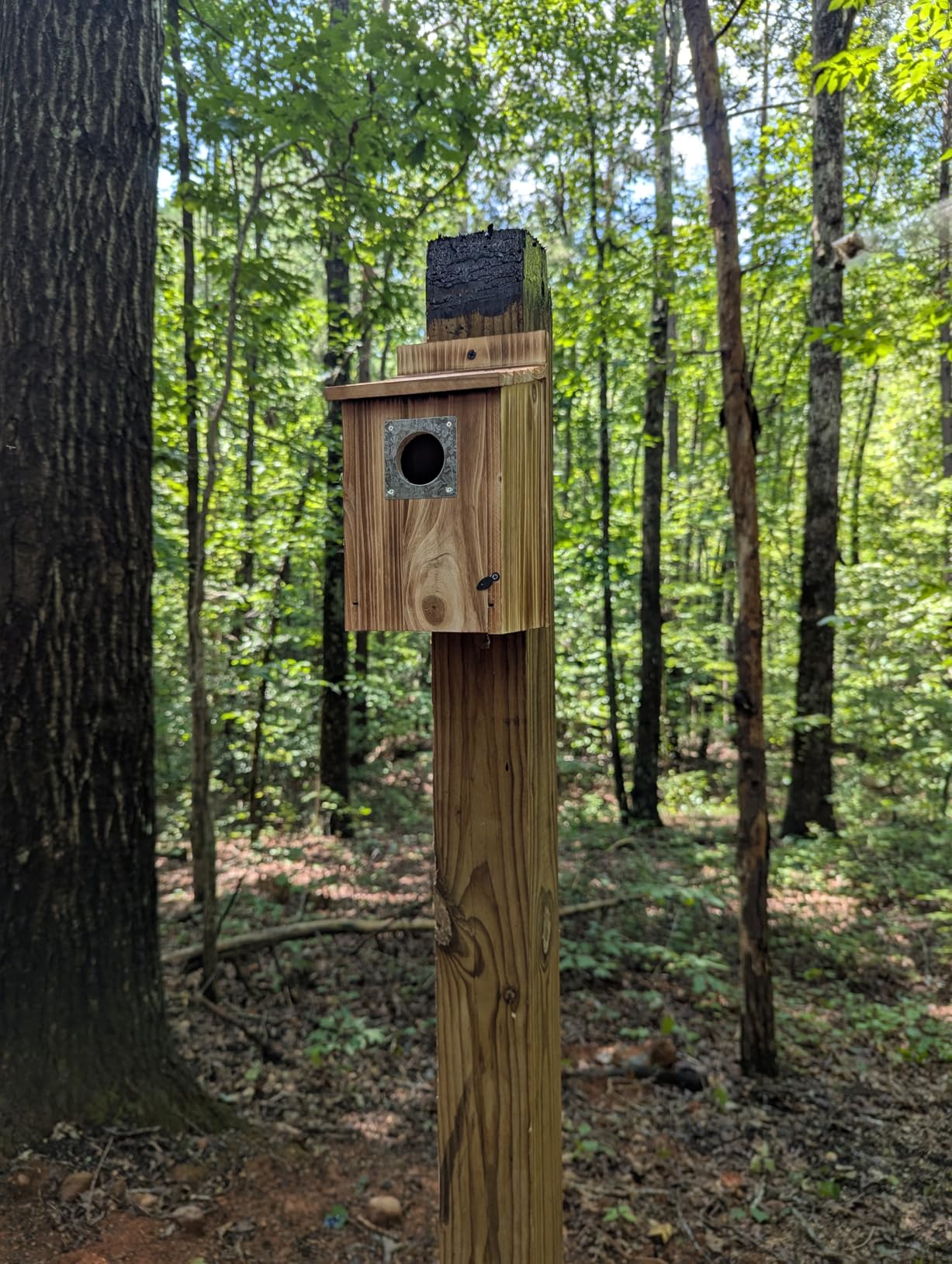
Owners report wrens, bluebirds, and swallows moving in, and the 4.6 star average across more than 1,100 reviews is well above average for the price tier. The stainless guard is the standout, because most boxes at this level ship with a bare cedar opening that squirrels attack within the first season.
The carbonized surface is a heat treatment that darkens the wood and makes it more weather resistant, but expect a noticeable smell for the first few days after it arrives. Air it somewhere ventilated before hanging it near a window or a patio.
Where this budget box beats pricier models
The included hardware is what wins. Many cedar boxes at twice the cost ship with nothing but a bag of screws and no bracket, while this one gives you a mounting point and a screw that will not rust and freeze in place.
The combination of a metal guard and interior ladder is normally the reason to spend more. Getting both in a single low-cost box is rare enough that it makes this a sensible first purchase for a new yard or a school garden project.
Where it falls short
Quality control is the weak spot. Owners report cracked roof overhang edges on some boxes and rough entrance edges that are worth sanding down before mounting, so inspect the box on arrival rather than hanging it blind.
It is a single-cavity box with one entrance, so it serves one nest at a time. If your goal is more birds in one season, buy two of these spaced properly rather than looking for a single multi-hole unit.
6. STARSWR Drop Shape Hanging Bird House — best for a shaded garden
Bird House for Outside,Wood Birdhouses Outdoor, Wooden Bird House Bluebird Finch Cardinals Hanging Birdhouse for Garden Viewing
Drop shape with wide base
1.57 inch entrance with platform
Back door for cleaning
Hemp rope for hanging
Pros
- Distinctive shape suits a planted garden
- Wide bottom gives chicks room to move
- Back door opens for cleaning and airflow
- Birds occupy within days
Cons
- Hemp rope or screws sometimes missing
- No predator guard on the entrance
- Can rotate on a single hook
The STARSWR drop shape is the most photographed box in this roundup, and the wide lower chamber gives chicks room to move around in a way a narrow bluebird box does not. It hangs from a branch or a hook with the supplied hemp rope, which makes it easy to place under a tree canopy where a pole would be awkward.
The 1.57 inch entrance includes a small platform where a bird can pause before entering. That is convenient for the birds, and it is also a grip point for a climbing predator, which is the trade-off you accept with a platform design.
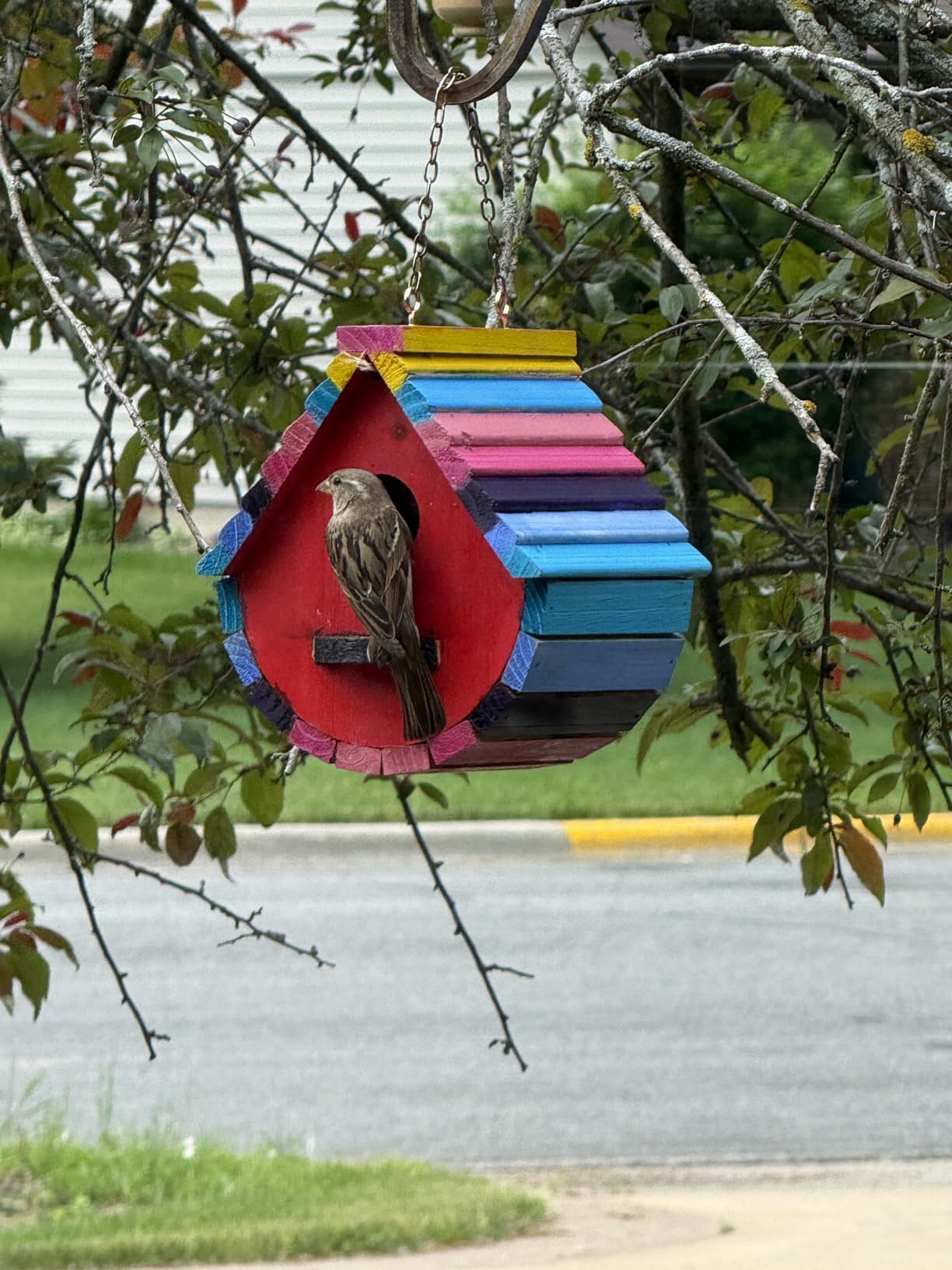
A back door handles both cleaning and ventilation, opening wide enough to reach the floor and pull out an old nest. At 5.9 by 6.9 by 7.8 inches the box is compact, and the natural wood takes paint or stain well if you want to match a cottage garden color scheme.
Occupancy reports are consistently fast, and the 4.6 star average comes from more than 1,200 reviews. Owners highlight the shape, the easy hang, and how quickly birds settle in as the main strengths.
Where the platform design earns its keep
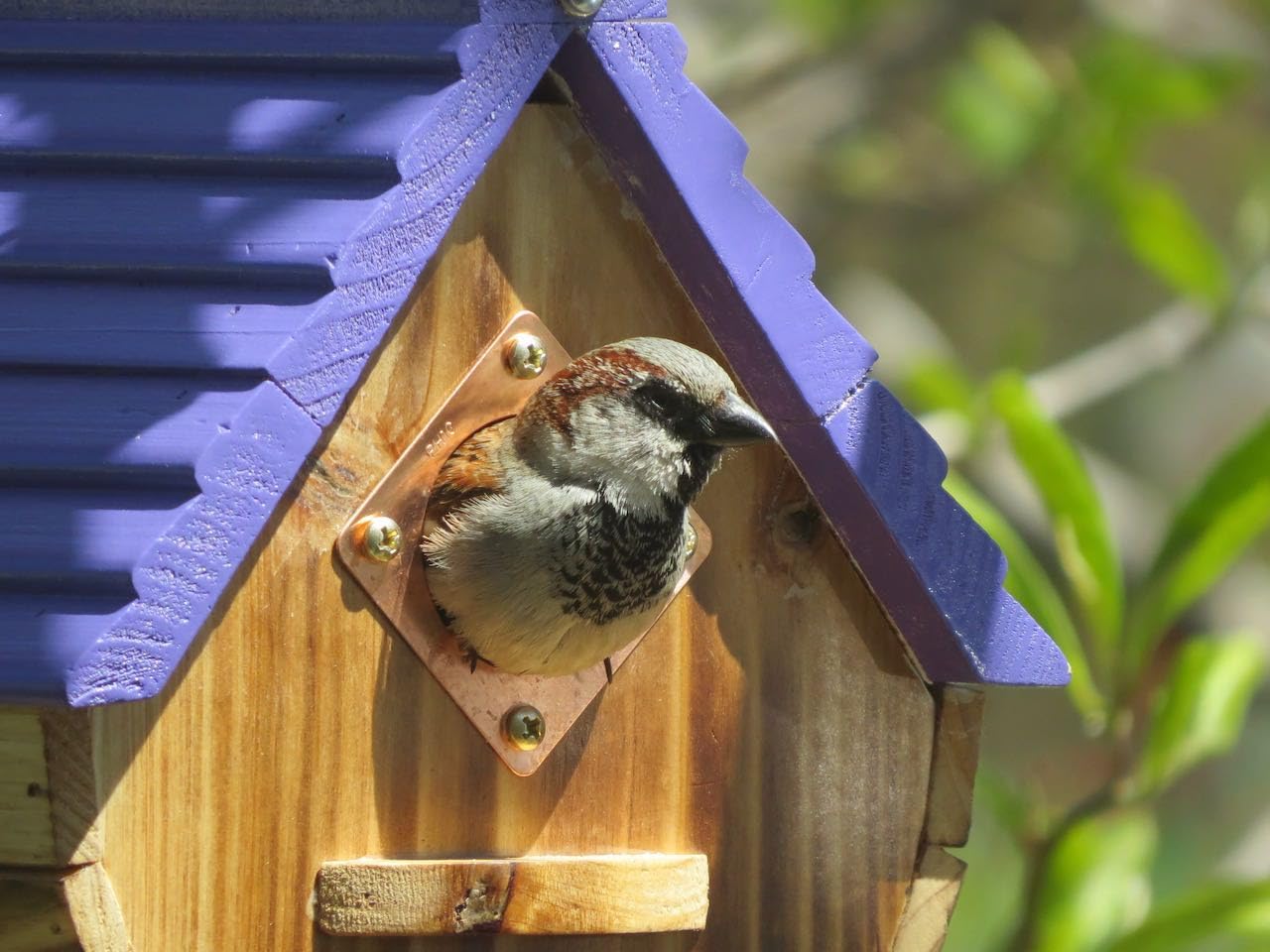
A landing platform helps a bird judge whether the hole is occupied before committing, and for bluebirds and tree swallows that hesitation matters. It also makes the box easier to inspect from a distance, since you can see a bird hovering at the entrance rather than hearing activity only.
Hanging placement is the real advantage here. Under a tree canopy in dappled shade, with the entrance facing away from the strongest afternoon sun, a hanging box stays cooler in summer than a box bolted to an open pole.
Where it falls short
Some orders arrive without the hemp rope, hook, or screws, so check the box the day it shows up and have a bracket ready. Lightweight construction also means it can spin on a single hook, and two hanging points are steadier.
There is no predator guard, so squirrels reach the entrance immediately, and the perch platform gives a cat a foothold. Seal the wood before the first wet season or the roof will start to cup and leak.
7. STARSWR 3 Hole Bird House — three nesting spaces in one unit
Bird Houses for Outside 3 Hole Bird House Room for 3 Bird Families Outdoor Bluebird Finch Cardinals Wooden Hanging Birdhouse for Garden
Three nesting cavities
Three 1.57 inch entrances
Back access door
Hemp rope hanging
Pros
- Three cavities from a single hanging point
- Entrance platform on each hole
- Can hang or set on a board
- Ventilation through the back door
Cons
- Clean-out access limited to a small back opening
- Build quality varies between boxes
- Perch posts can detach
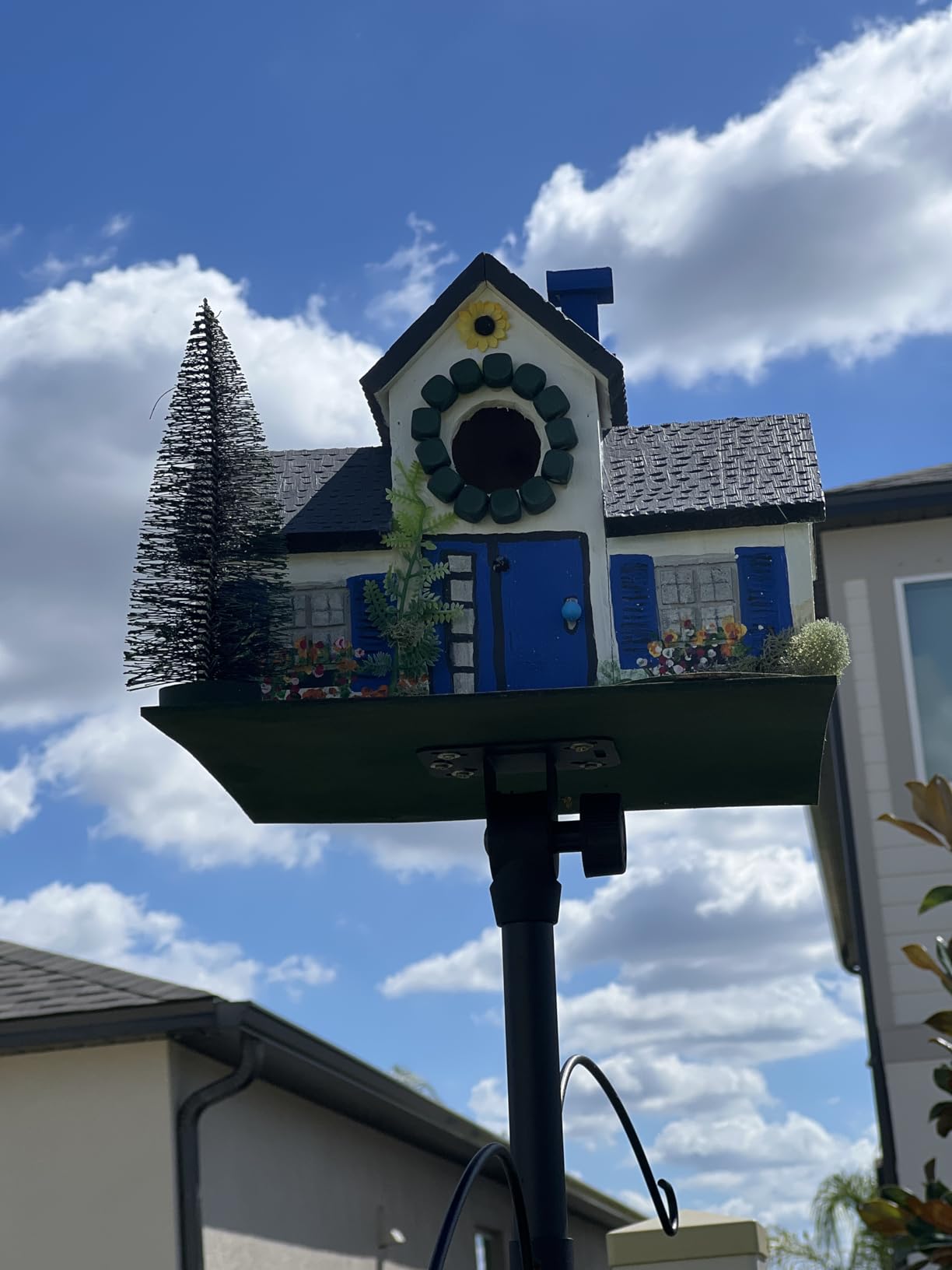
The three-hole STARSWR gives you three nesting spaces in the footprint of a single hanging box, which is genuinely useful when you have one good tree and limited room for posts. Each cavity has its own 1.57 inch entrance with a small platform, and the whole unit can hang from a branch or sit flat on a board or stand.
It measures 8.66 by 11.8 by 4.7 inches, so the compartments are shallower than a single-cavity house. That works for small birds, but if your target is a full-size bluebird brood you will be cramped.
The back door provides ventilation and some cleaning access, though that access is the main limitation. You can reach in with a gloved hand, but you cannot lay the cavity open the way a front-opening box allows, and deep cleaning is genuinely harder.
Reviews are mixed on build quality, which is the reason this box scores 4.4 rather than higher. Some owners describe solid 3/8 inch cedar, others report shoddy workmanship and recommend adding screws and a stain to keep it together beyond one season.
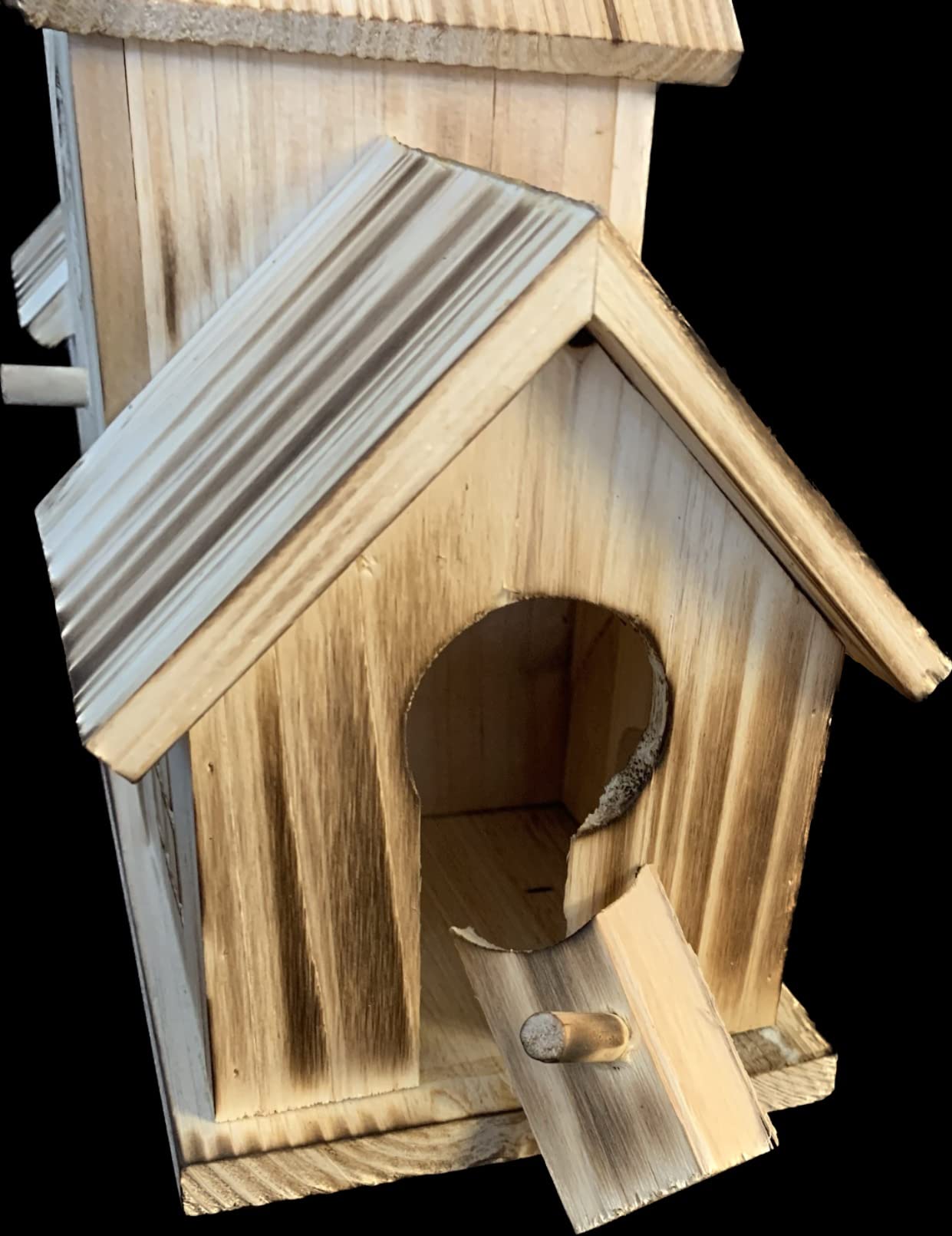
The sparrow math behind multi-cavity houses
Multiple cavities in a single unit concentrate activity in one spot, and house sparrows and starlings take advantage of exactly that. When several openings share a body, defending them is harder for the native birds that you actually wanted to attract.
For most yards, three separate single boxes on separate posts spaced far enough apart outperform one three-hole unit. Buy this one if you love the look of it or you genuinely have a single hanging point and nothing else.
Where it falls short
Cleaning access is the practical problem. A box you cannot open properly is a box that accumulates old nest material, and accumulated material is how parasites and disease move between broods and between seasons.
Build quality is inconsistent from box to box, and the perch posts at each entrance can work loose. Inspect for loose joints and add a bead of exterior wood glue at the roof seams before the wet season starts.
8. SISTERBIRD Wren Bird House — the most complete small-cavity box
SISTERBIRD Wren Bird Houses for Outside, Bird House Warming Gifts, Blue
1-1/8 inch entrance with metal guard
304 stainless steel hanging hook
Five fledgling kerfs
Three vents and six drainage holes
Pros
- Every hardware piece is stainless steel
- Five fledgling ladders aid exit
- Fully assembled and ready to hang
- U-shaped bottom mimics a natural nest
Cons
- Offered in several colors so check what arrives
- Trees can grow and tip the box
- Too small for bluebirds
Build this SISTERBIRD and you will struggle to find anything missing on a small-cavity box. It comes with a heavy duty 304 stainless steel hook that is both wear proof and chew proof, a metal predator guard around the 1-1/8 inch entrance, and a metal door latch held on with four screws rather than a single plastic clip.
It is fully assembled at 1.62 pounds, and the U-shaped bottom is shaped like a natural nest cup, which encourages a bird to settle in rather than to build a loose platform of twigs across a flat floor. Wrens and chickadees take to it quickly.
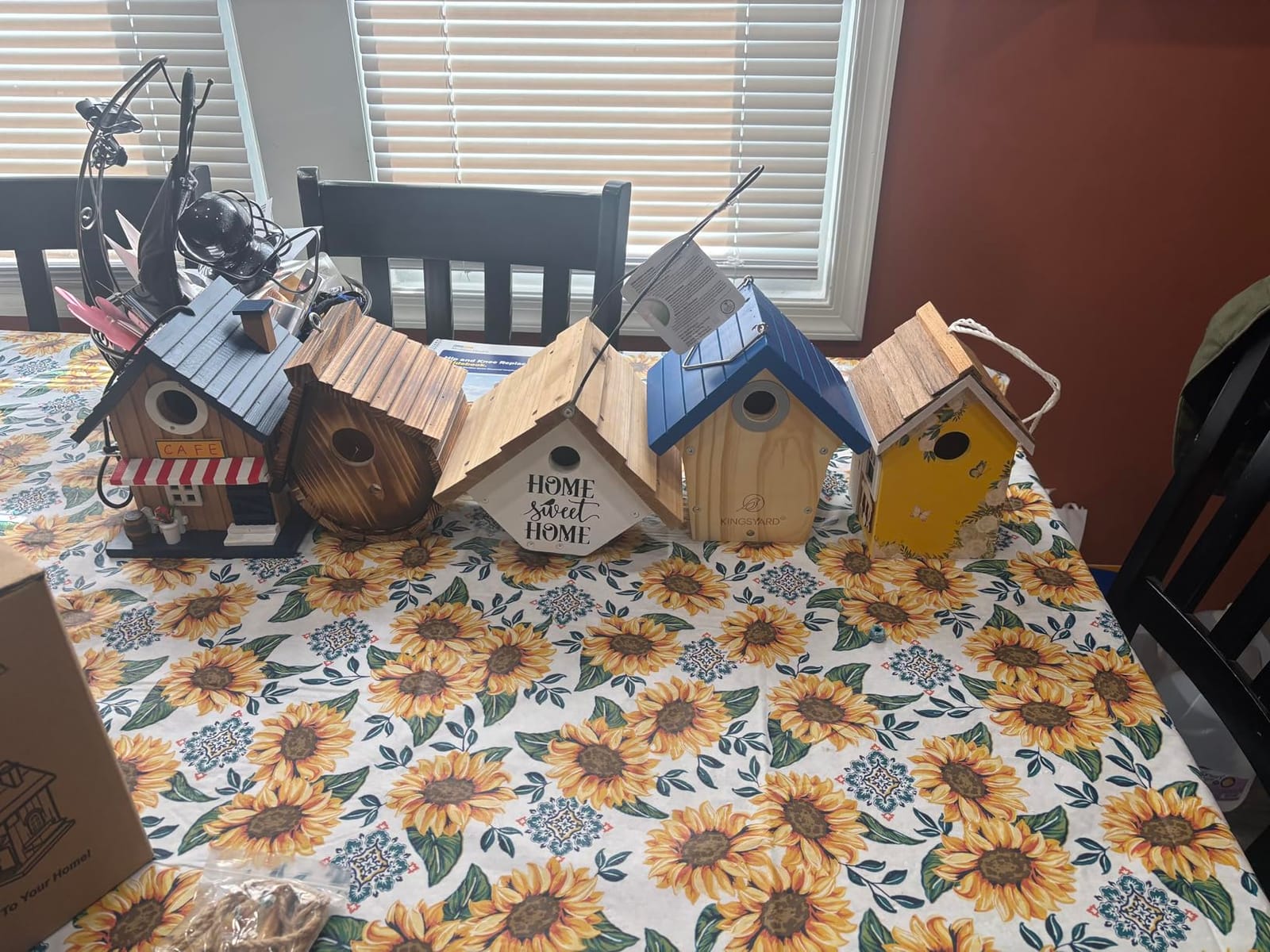
Five fledgling kerfs sit just inside the entrance so chicks have a ladder to climb, which is the single most useful feature on a wren box. Owners who have had fledglings trapped in smooth-walled houses notice the difference immediately when they watch a chick reach the opening in seconds.
Three air vents on top and six drainage holes at the bottom handle ventilation and rain, and at 4.8 stars this sits alongside the two-pack as the highest rated box we tested. A handful of reviews mention ordering a color and receiving a different one, so check the box before hanging.
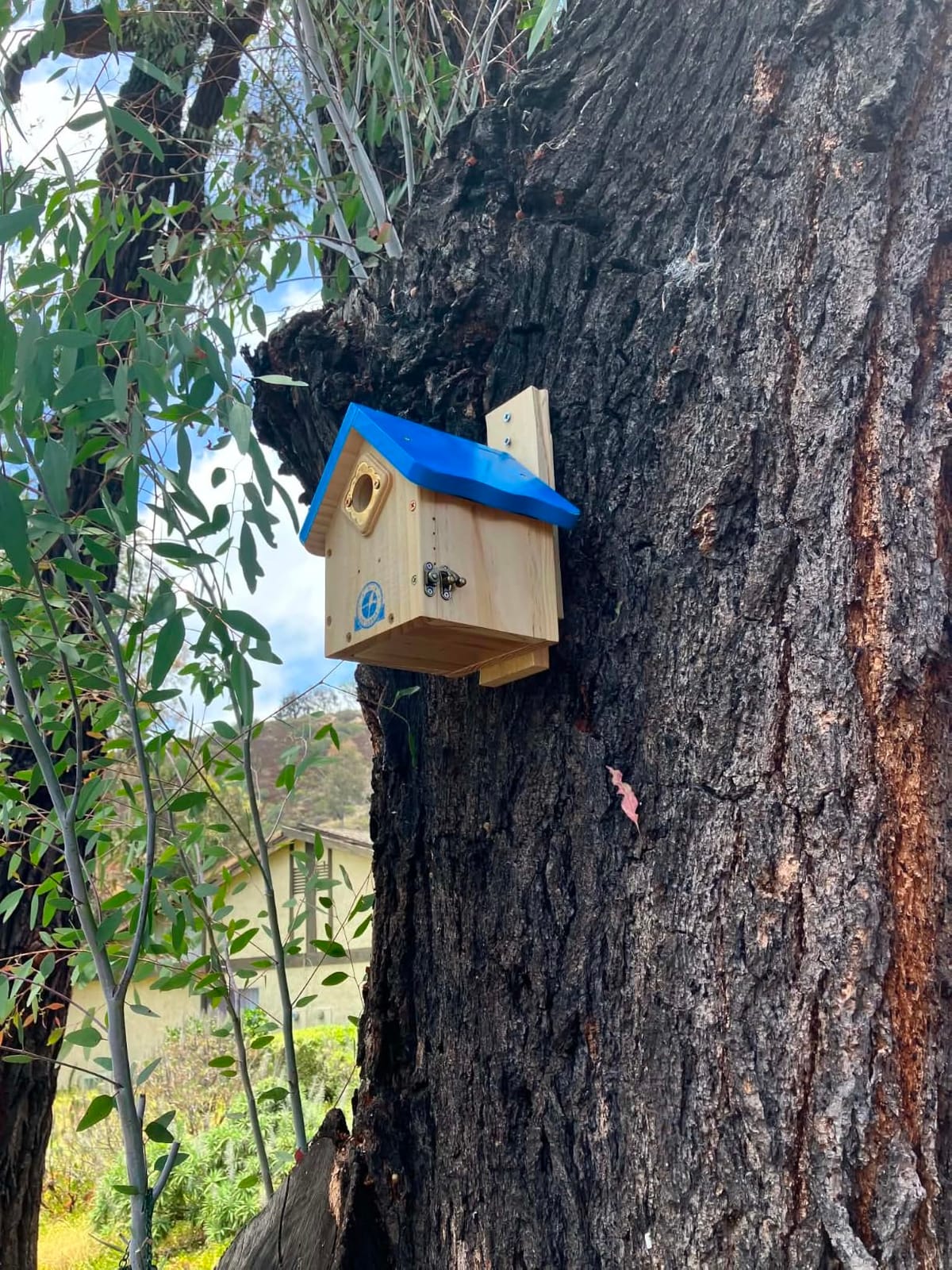
Everything the hardware should be
Stainless steel matters more than buyers expect. A plated steel latch on a box exposed to rain will rust, seize, and eventually snap, and a rusty latch means a door that will not open when you need to scrub the interior at the end of the season.
The chew-proof hook also removes the most common failure on hanging boxes, which is a branch-clipped hook dropping the whole house in a gust. Mounting on a pole or fence line is the more stable choice.
Where it falls short
It is a small-cavity house. At 5.51 by 7.09 by 6.97 inches with a 1-1/8 inch hole, bluebirds cannot use it, so this is a wren and chickadee box and nothing more. Buy the larger cedar model for bluebirds.
Do not hang it from a living tree, because trunk growth over a season will tilt the box and eventually work the hook loose. A pole, a fence post, or a shepherd hook is the correct mount, and with several color variants available, confirm the color you ordered.
9. Kingsyard Bluebird House in Recycled Poly Lumber — the box you stop maintaining
Kingsyard Bluebird House with Predator Guard, Recycled Poly Lumber
Recycled poly lumber construction
1.5 inch entrance with metal guard
Front-opening clean-out door
6 x 6 x 8.5 inches
Pros
- Will not rot crack or fade
- Metal predator guard on the entrance
- Side ventilation lowers heat
- Screws allow disassembly and customization
Cons
- Higher cost than a cedar box
- Heavier at 2.69 pounds
- Less natural look than cedar
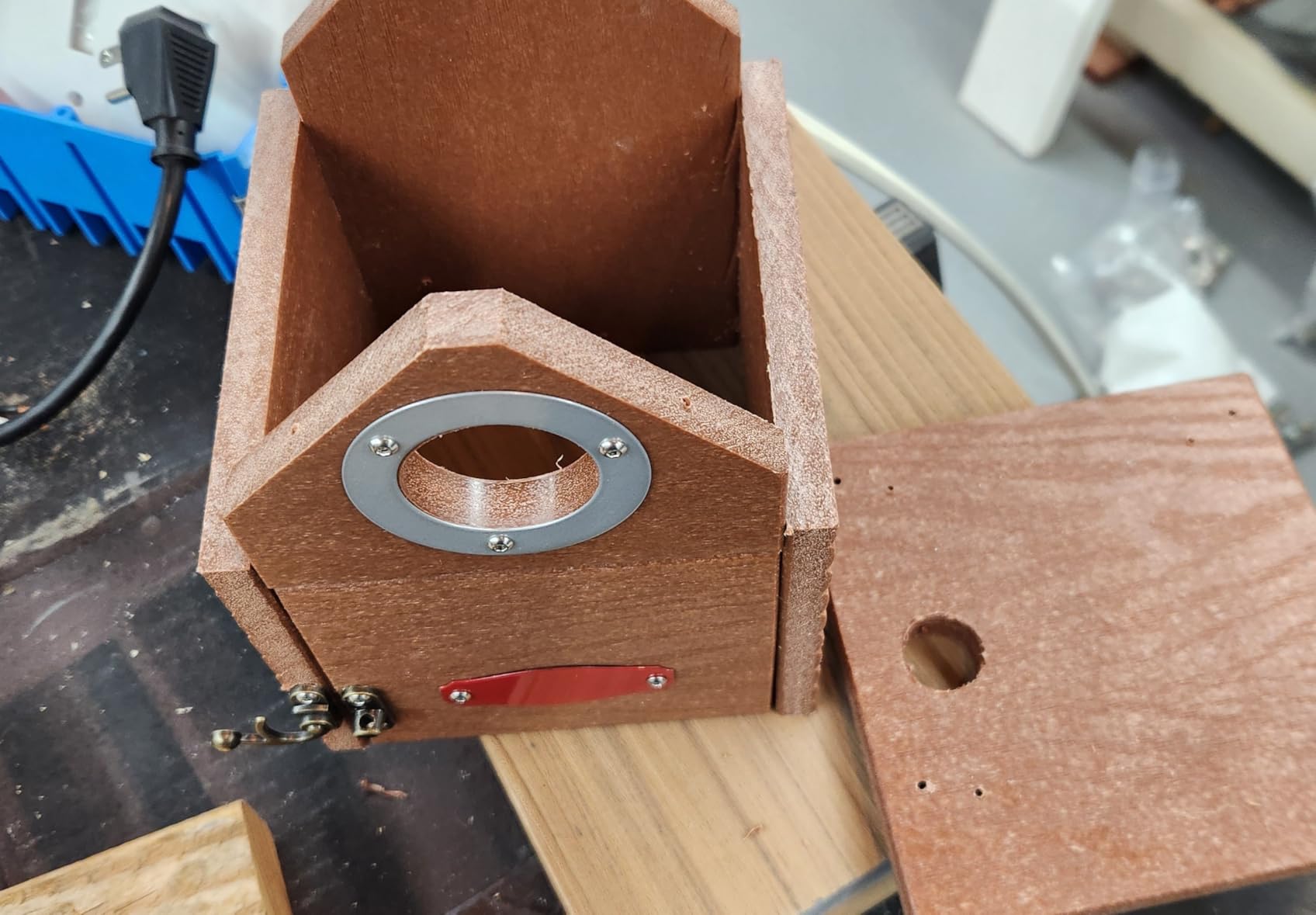
The Kingsyard is the box I recommend to anyone who does not want to re-seal a wooden roof every couple of springs. It is made from recycled poly lumber, the same composite material as deck boards, so it will not rot, crack, cup, or fade the way untreated cedar eventually does.
The 1.5 inch entrance carries a metal predator guard, side ventilation openings on both panels reduce heat buildup on the hottest afternoons, and a front-opening door gives you the same full access as a wooden box with a hinged floor.
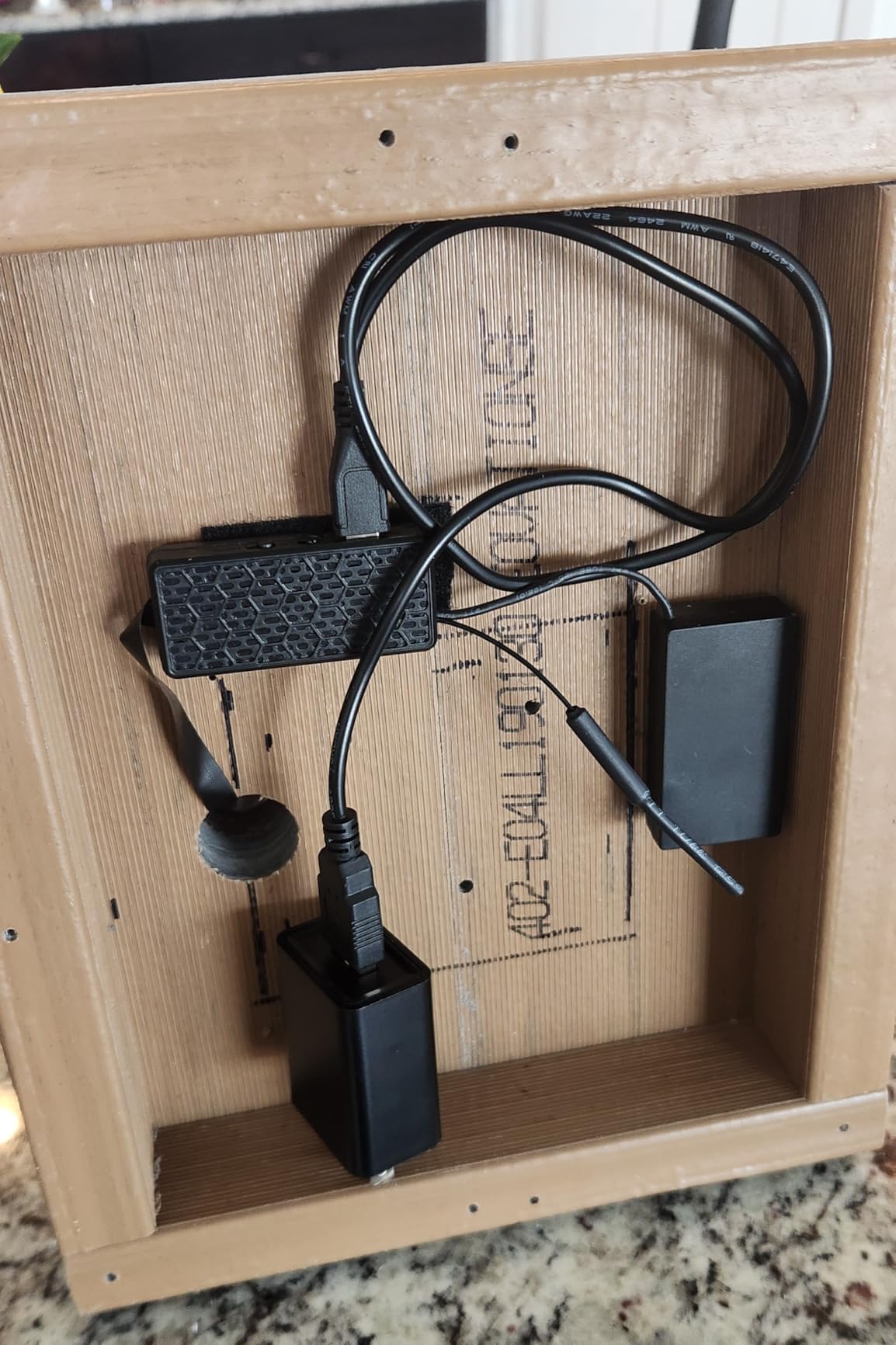
It is held together with number 4 screws rather than glue or nails, which is the most useful thing about it. You can take it apart, add a small camera or a sensor inside, then rebuild it, and the box will still be weather tight afterward.
Owners report birds choosing it over wooden houses in yards where both are mounted, and at 4.7 stars it scores as highly as anything else here. At 2.69 pounds it is the heaviest box in the roundup, which is a benefit in wind and a consideration if you are hanging rather than posting it.
When poly lumber beats cedar
Composite wins on longevity and on resistance to moisture, and it is a genuinely good choice for coastal yards, wooded properties where a box is hard to reach each spring, or anyone who simply does not want an annual sealing job. It also paints and screws predictably.
Owners who mount a camera or a temperature sensor inside say the screw-together design makes that modification straightforward, which pairs nicely with a smart feeder setup like the ones in our smart bird feeder guide.
Where it falls short
It costs more than any cedar box here, and that gap matters if you plan to run a trail of several boxes. The material does not have the warmth of cedar in a garden setting, so it blends in less with a cottage planting.
Owners occasionally report the small logo plate installed upside down, which is cosmetic and takes a minute to fix. It also mounts with two screws on a pole or tree, so you still need a pole or a bracket to go with it.
10. KraAara Pine Bird House with Copper Guard — an interesting guard, an uncertain lifespan
KraAra Bird Houses for Outside Clearance with Copper Guard, Pine Bird House Outdoor, Bluebird Finch Swallow Wren Chickadee No Assembly Required, 1 Pack
Untreated pine with copper predator guard
1.5 inch entrance
Front-opening clean-out door
4.3 x 4.8 x 10.5 inches
Pros
- Copper resists chewing and corrosion
- Fully assembled and mountable the same day
- Rough pine surface gives chicks grip
- Standard size for bluebirds and swallows
Cons
- Latch can rust within a month
- Pine can warp and split over time
- Short review history
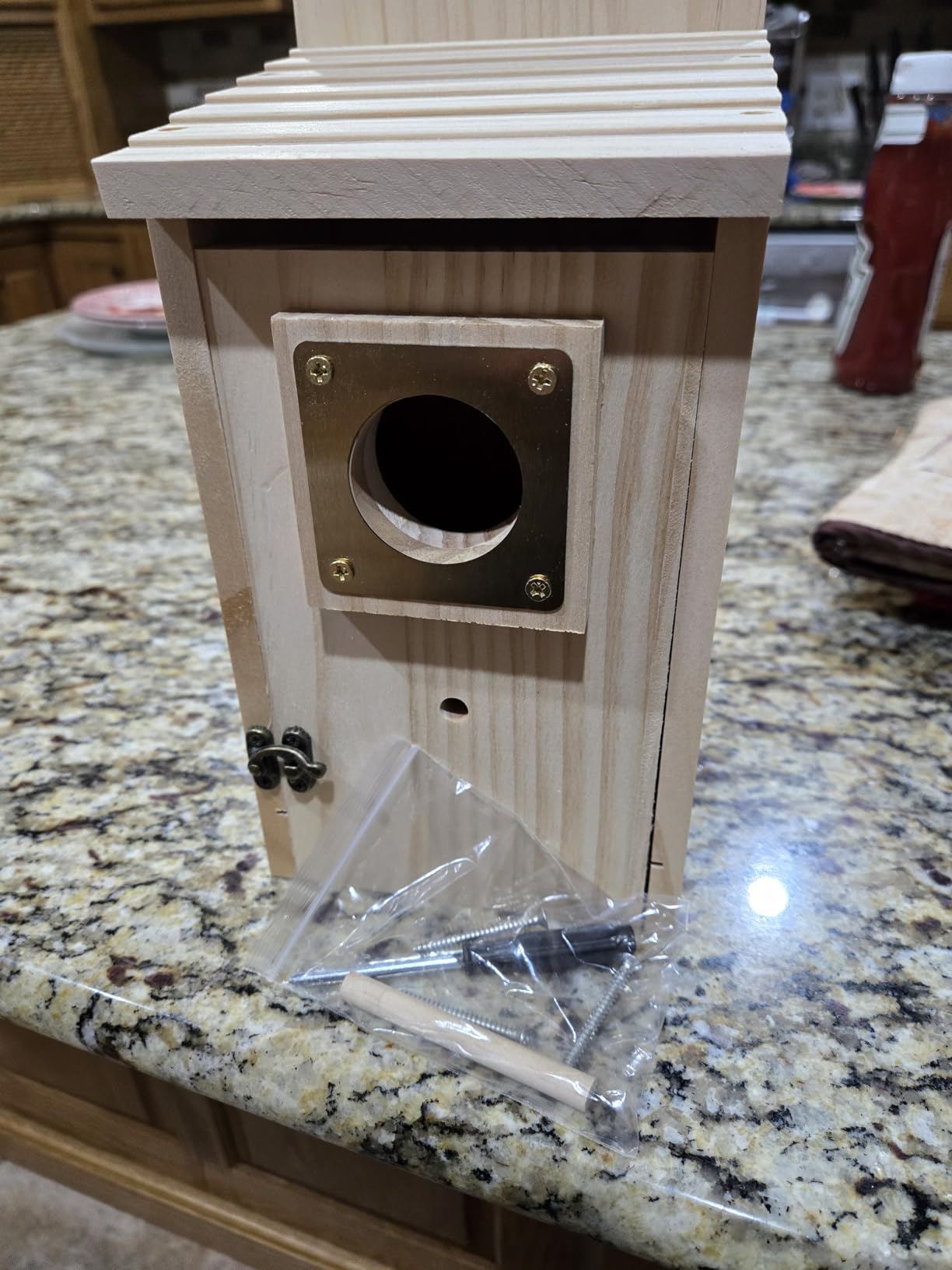
The copper predator guard is the reason to look at this box. Copper does not corrode the way steel does and birds and squirrels dislike chewing it, so it addresses the exact problem that the stainless and galvanized guards on the other boxes are used for, with a material that will not leave rust streaks on the wood.
It is untreated unpainted pine with a rough surface for footholds, a 1.5 inch entrance, a front-opening door for cleaning, and it arrives fully assembled at 1.57 pounds. Owners report birds occupying it within days.
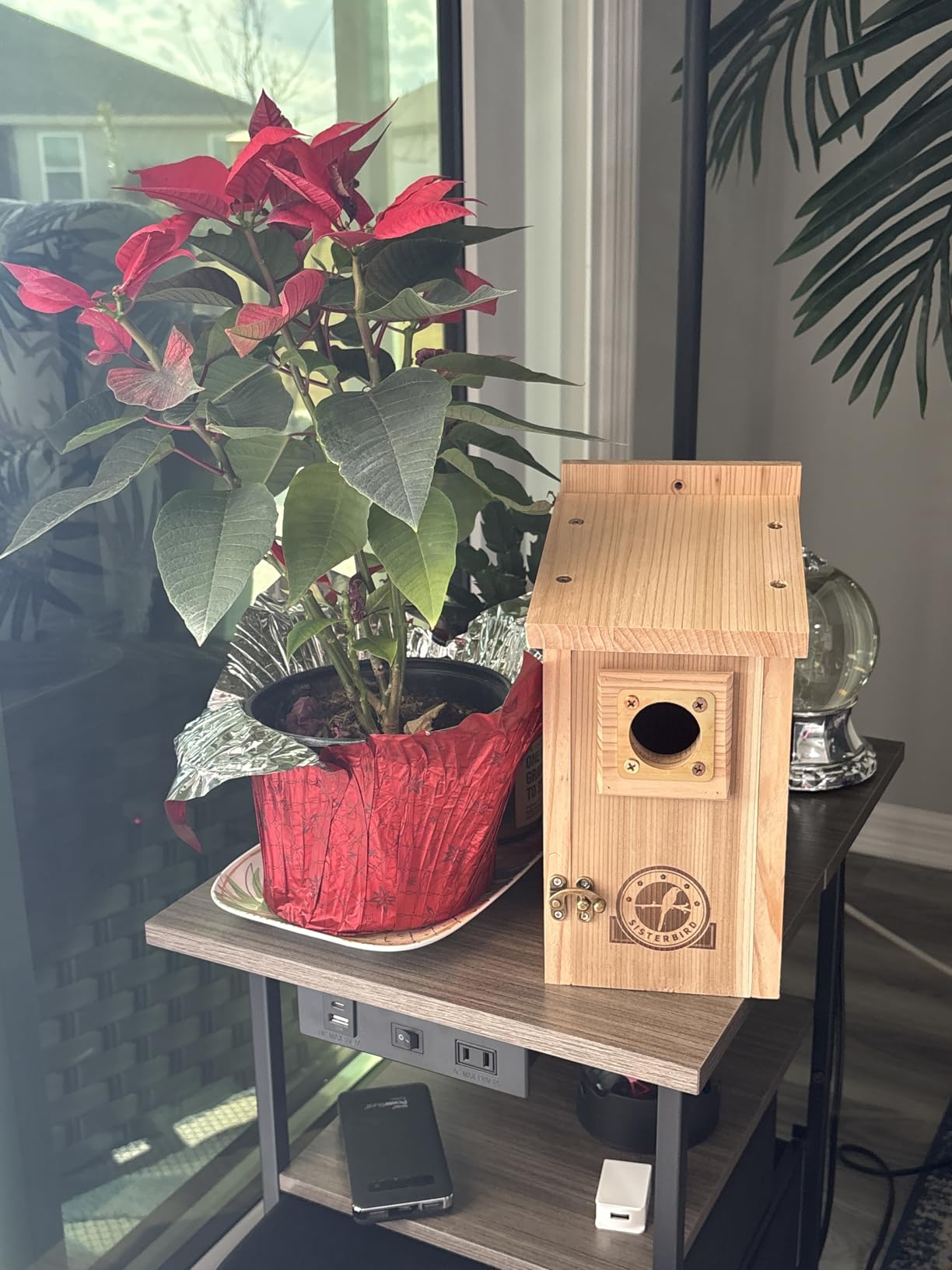
Dimensions of 4.3 by 4.8 by 10.5 inches put it in the standard bluebird, swallow, wren, and chickadee range, and the box can be painted to match a garden scheme if you prefer. The rough interior means fledglings have grip without you rasping grooves into the walls.
It is also the newest box here, first listed in 2026, so its review history is much shorter than anything else in the roundup. That matters for a wood product where long-term warping only shows up after a few wet seasons.
Why copper is a real upgrade on the guard
A metal guard fails in two ways: squirrels chew it, and the fasteners rust and loosen. Copper resists both, and a guard that stays tight for a decade means the entrance hole does not quietly grow into a sparrow-sized opening while you are not looking.
Because the guard is fitted at the factory, you avoid the twenty-minute job of cutting your own metal plate and aligning a hole to match. For a first-time buyer, that is a meaningful convenience.
Where it falls short
There is a specific durability concern. At least one owner reports the latch rusting within about a month, and pine is the wood in this roundup most prone to warping and splitting as it cycles between wet and dry.
Seal the exterior with a bird-safe finish in the first spring, and expect to inspect the latch each season. With under 200 reviews behind it, I would treat it as a promising option rather than a proven one, and I would check the latch hardware before mounting.
How to Choose a Bird House: Hole Size, Wood, and Placement
Everything else on this page is secondary to one measurement. The entrance hole has to admit the bird you want and physically exclude the birds you do not, and no amount of nice wood or decorative paint will rescue a box with the wrong opening.
A 1 inch hole is very small and suits downy woodpeckers and other tiny cavity nesters. A 1-1/8 inch opening is the classic small-cavity size for house wrens, chickadees, and titmice, and it blocks house sparrows. A 1.25 inch hole is the traditional bluebird measurement on many field guides, though modern boxes commonly use 1.5 inch, which admits bluebirds and tree swallows while still turning starlings away.
Once you pass roughly 1.5 inch, you are into house sparrow and starling territory. Any opening wider than that invites exactly the invasive species that will fill your box with a large clutch and drive native birds out, which is the single most repeated complaint from the birding community about boxes bought without checking the measurement.
Material: cedar, pine, poly lumber, and metal
Cedar is the default because it is rot resistant, it stays cooler than pine, and it will not leach aromatic oils into the cavity. It does weather to silver gray, and untreated cedar eventually needs a bird-safe exterior finish to keep looking good.
Pine is cheaper and works fine for small boxes, but it warps and cups faster, which is the complaint most often attached to the pine option here. Poly lumber will not rot, crack, or fade at all and costs more up front, which pays off if you never want to re-seal a roof. Metal hardware inside the design matters too, since stainless steel fasteners outlast plated steel in wet weather.
Our camera bird feeder guide covers the other half of a watchable yard, and if you want to see inside a box itself, look for a screw-together design like the composite one above that can be disassembled and fitted with a small camera.
Clean-out access and the fledgling ladder
If you cannot open the box, you cannot clean it, and an uncleaned box becomes a parasite vector between broods. Look for a front-opening panel, a hinged drop-down floor, or a side door that gives you a clear line to the cavity floor.
The other detail is a fledgling ladder. Interior grooves or kerfs just inside the hole let chicks climb to the opening instead of flailing against smooth walls, and on a box without them a few minutes of rasping the interior fixes a real problem for very little cost.
Placement: height, direction, shade, baffle, and spacing
Mount between five and six feet off the ground on a metal pole, not on a tree trunk, and fit a metal cone baffle below the box. Cats can climb trees and a baffle stops the leap, and a pole also keeps you from having to clean out a box wedged against a growing trunk.
Face the entrance east or southeast. Morning sun warms the cavity early, and afternoon shade keeps it from overheating in July, which is a real risk in a small dark box. Keep the box shaded from the strongest afternoon light and away from any place where the opening reflects heat off a wall.
Space separate boxes far apart, with roughly 100 yards between them if you want a bluebird trail, because a second box the owner can defend is more attractive than a second box the owner cannot. Do not place boxes near where you see house sparrows gathering, and keep them away from open feeders where sparrows and starlings congregate.
The design to avoid: several cavities in one unit
Communal multi-cavity houses are sold as a way to get more birds, and they do the opposite. Concentrating several openings in one body makes the box easier for house sparrows and starlings to defend and spreads parasites between nests, so three separate single boxes on separate posts are the better buy for the same yard.
Also skip boxes with an exterior perch, which gives cats and rats a grip right outside the hole, and avoid anything made from pressure-treated wood or finished with a stain that is not labeled bird safe.
Frequently Asked Questions
What kind of bird house do birds like the best?
Birds choose a nesting box based almost entirely on the entrance hole diameter and the cavity size inside. A hole that matches the bird’s body admits your target species and blocks house sparrows and starlings, while a cavity deep enough for a full brood keeps the nest from touching the roof. Ventilation, a clean-out door, and a perch-free exterior finish the job.
What size should a bird house hole be?
Match the hole to the species: 1 inch for very small cavity nesters, 1-1/8 inch for house wrens, chickadees, and titmice, and 1.5 inch for eastern bluebirds and tree swallows. Anything wider than about 1.5 inch starts to admit house sparrows and European starlings, which take over nests intended for native birds.
Which direction should a birdhouse hole face?
Face the entrance east or southeast. Morning sun warms the cavity early in the day, and facing away from the strongest afternoon sun keeps the interior from overheating in summer. Shade over the box helps in hot climates, and a metal pole with a baffle below keeps cats from reaching the opening.
Will a bird use a cedar birdhouse?
Yes. Cedar is one of the most widely used nesting box materials because it is rot resistant, naturally aromatic, and holds its shape in wet weather. Leave the interior untreated and rough, and seal only the exterior with a bird-safe finish, since birds do not like the smell of fresh paint or stain inside the cavity.
Do birds like birdhouses in the winter?
Birds do not generally use boxes as winter shelter, but leaving them mounted through the cold months is beneficial because the same boxes are already in place when territory is claimed in spring. Leave them up, but leave the cavity empty of old nest material, and do not block the drainage holes with snow or debris.
The Best Bird Houses to Buy in 2026
After mounting all ten, cleaning them out between broods, and watching which ones birds actually chose, the Wild Wings WWCH3 stays our pick for the best bird house overall. The cedar is solid, the 1.5 inch entrance admits bluebirds and tree swallows while keeping sparrows out, the predator guard is a genuine advantage, and the front door opens in seconds when the season is done. More than 4,600 reviews averaging 4.6 stars back that up.
For a smaller budget, the Nature’s Way CWH1 is the correctly sized wren and chickadee box at a low cost, with a 1-1/8 inch hole, stainless steel hardware, and no perch for predators. The SISTERBIRD two-pack carries the highest rating in the group at 4.8 and solves the spacing problem for anyone starting a small bluebird trail, while the SISTERBIRD wren house has the most complete hardware of any small-cavity box here.
The UUMENHA is the budget pick, with a stainless steel guard and interior ladder usually seen on pricier models. The Kingsyard composite box is the one to buy if you never want to re-seal wood again, and the KraAara pine house is worth a look for its copper guard, though it has the shortest track record of the ten.
Whatever you choose, measure the hole before you buy, mount on a pole with a baffle facing east, and clean the cavity every autumn. Those three habits matter more than the model. If you are still setting up a watchable yard, start with the bird cage guide for indoor setups, then add a box and a feeder and let the birds tell you which spot they prefer.