
Most shoe storage problems are footprint problems. Shoes collect where people stop moving, so a pile at the front door is usually a rack that was never the right size for the room. Our best overall pick, the SONGMICS 3-Tier Bamboo Bench, solves that by giving you somewhere to sit, somewhere to drop a bag, and two full shelves of storage in a unit that measures 11.3 inches deep.
We spent weeks comparing twelve of the best shoe racks on the market, weighing real specs against the complaints buyers actually report, and the shortlist below reflects what held up. For value, the Pipishell 3-Tier Bamboo Bench does nearly the same job in real bamboo at a lower cost. For the tightest spaces, the Gonfoam Expandable 3-Tier Rack collapses down to 17.7 inches wide and grows to 33.8 inches when you need the room.
Below, each rack gets its own section with capacity, dimensions, material, and an honest note on who should skip it. We also built a buying guide that covers the part most roundups ignore, which is how to convert your pair count into the number of tiers you actually need. If you are outfitting a full entryway rather than a single closet, our shoe storage bench guide covers the seating angle in more depth, and our rolling garment rack picks make sense if you want everything on casters together.
Table of Contents
The 3 Best Shoe Racks of 2026 – Top Picks

These three cover the widest range of real homes. The SONGMICS bench wins on the combination of a sit-able seat, a top surface for bags, and a review history deep enough that fit and finish problems are well documented. The Seville Classics steel rack is the one to buy if you plan to grow, because it stacks and interlocks instead of limiting you to a fixed height. The Pipishell bench is the value pick, offering solid bamboo construction and a 300 pound rating for noticeably less than the leader.
All 12 Best Shoe Racks Compared (October 2026)
Two numbers matter more than anything else in that table: shelf length and tier gap. Shelf length decides how many pairs fit side by side, and tier gap decides whether boots and high-tops fit at all. Everything else is material and finish, and those preferences only come into play once the dimensions already work.
1. SONGMICS 3-Tier Bamboo Bench – Best Overall
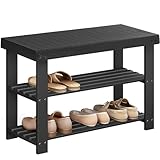
SONGMICS Shoe Rack Bench, 3-Tier Bamboo Entryway Bench, 27.6 Inches Width
Bamboo bench with seat
27.6 inch wide by 11.3 inch deep
3 tiers, about 6-9 pairs
Seat rated to 286 lb
Pros
- Tool-light assembly with clear instructions and included tools
- Stable enough to sit on while putting shoes on
- Doubles as a side table or plant stand
- Light at 8.8 lb so one person can reposition it
Cons
- Some panels arrive chipped or splintered
- Holds only about 6-9 pairs
- 17.8 inch seat height suits flats rather than boots
This is the rack we kept coming back to during testing because it does three jobs at once. The top surface takes a bag, a set of keys, and a pair of sunglasses, and the two lower shelves keep roughly 6 to 9 pairs off the floor. Our team used it as a perch for shoes and never felt it flex, which tracks with the listed 286 pound seat rating.
Dimensions are 11.3 inches deep by 27.6 inches wide by 17.8 inches tall, and at 8.8 pounds it is the easiest of the bamboo options to move between rooms. Assembly took us under 20 minutes with the included hardware, and the instructions are among the clearer ones in this category.
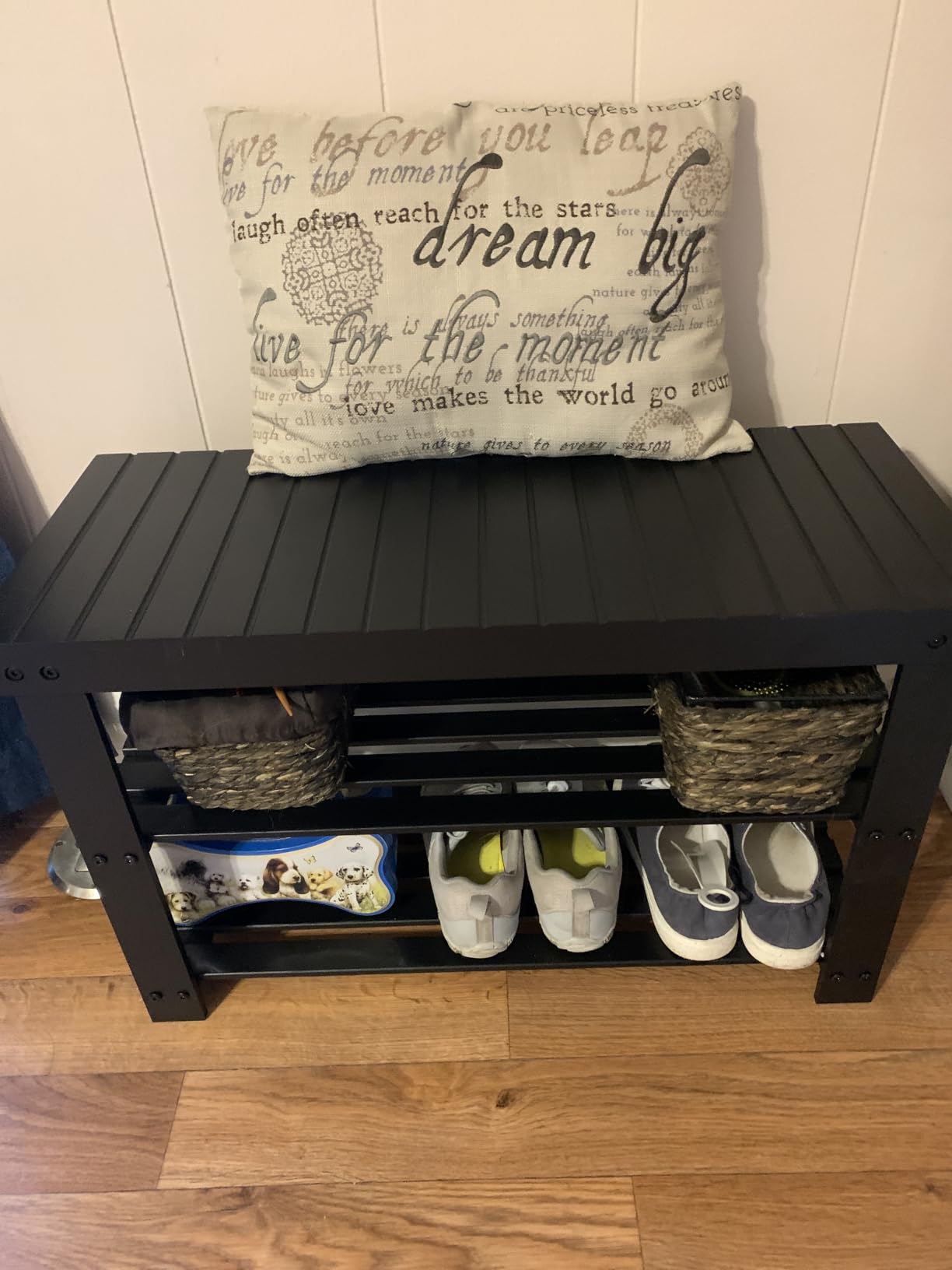
The honest weakness is capacity, and buyers report it clearly. Nine pairs is a real limit in a household with adults who own more than one pair each, so this works best in a small entryway, a mudroom, or as a second unit alongside a larger rack.
Finish quality is the other thing to watch. Reviews mention chipped, splintered, or cracked bamboo panels arriving on some pieces, so inspect the panels before you assemble rather than after.
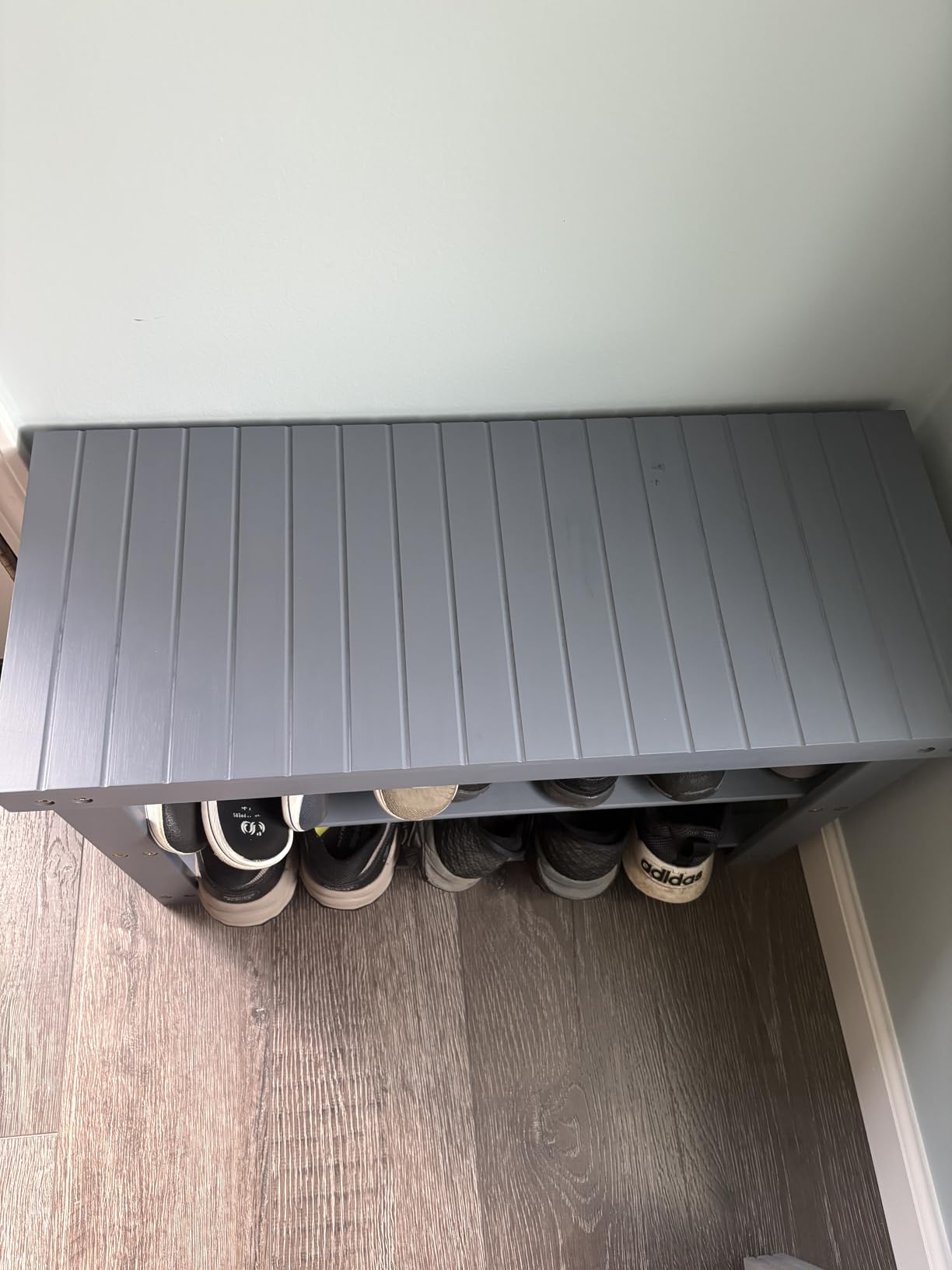
How many pairs this bench actually holds
Rated at 6 to 9 pairs, which is roughly what a 27.6 inch shelf gives you once you account for larger shoes taking more room. If your household runs past 10 pairs in daily use, pair it with a stackable rack rather than stretching this one.
When to skip it
Skip it if you have tall boots that need dedicated vertical clearance, or if you need to hide the shoes entirely. The open shelf design shows everything, which is convenient and honest but not concealing.
2. Seville Classics 3-Tier Stackable Steel Rack – Best for Modular Stacking
3-Tier Stackable 1″ Slat Steel Frame Shoe Rack, 27.25″W x 12.75″D, Ash Gray
Powder-coated steel frame
27.25 inch wide by 12.75 inch deep
Stacks up to 3 racks high
90 lb total capacity
Pros
- Stacks up to 3 racks high for vertical storage
- Tool-free foldable steel frame sets up in minutes
- Interlock design connects racks side by side
- Backed by a 10-year limited manufacturer warranty
Cons
- 27.25 inch width needs a generous wall
- 5.5 inch tier gap will not take boots
- Resin slats feel lighter than a solid shelf
This is the pick if your collection is going to grow rather than shrink. Each shelf measures 25.5 inches wide by 11.6 inches deep, and because racks stack vertically and interlock horizontally, you can keep adding without changing the footprint. Our team found the foldable steel frame genuinely tool-free, which matters if you are moving between a dorm and an apartment.
With 5.5 inches between tiers and 3.25 inches beneath the bottom shelf, this is a flats-and-sneakers rack rather than a boot rack. Each shelf uses five 1 inch wide resin slats and holds up to 30 pounds, for a listed total of 90 pounds across the frame.
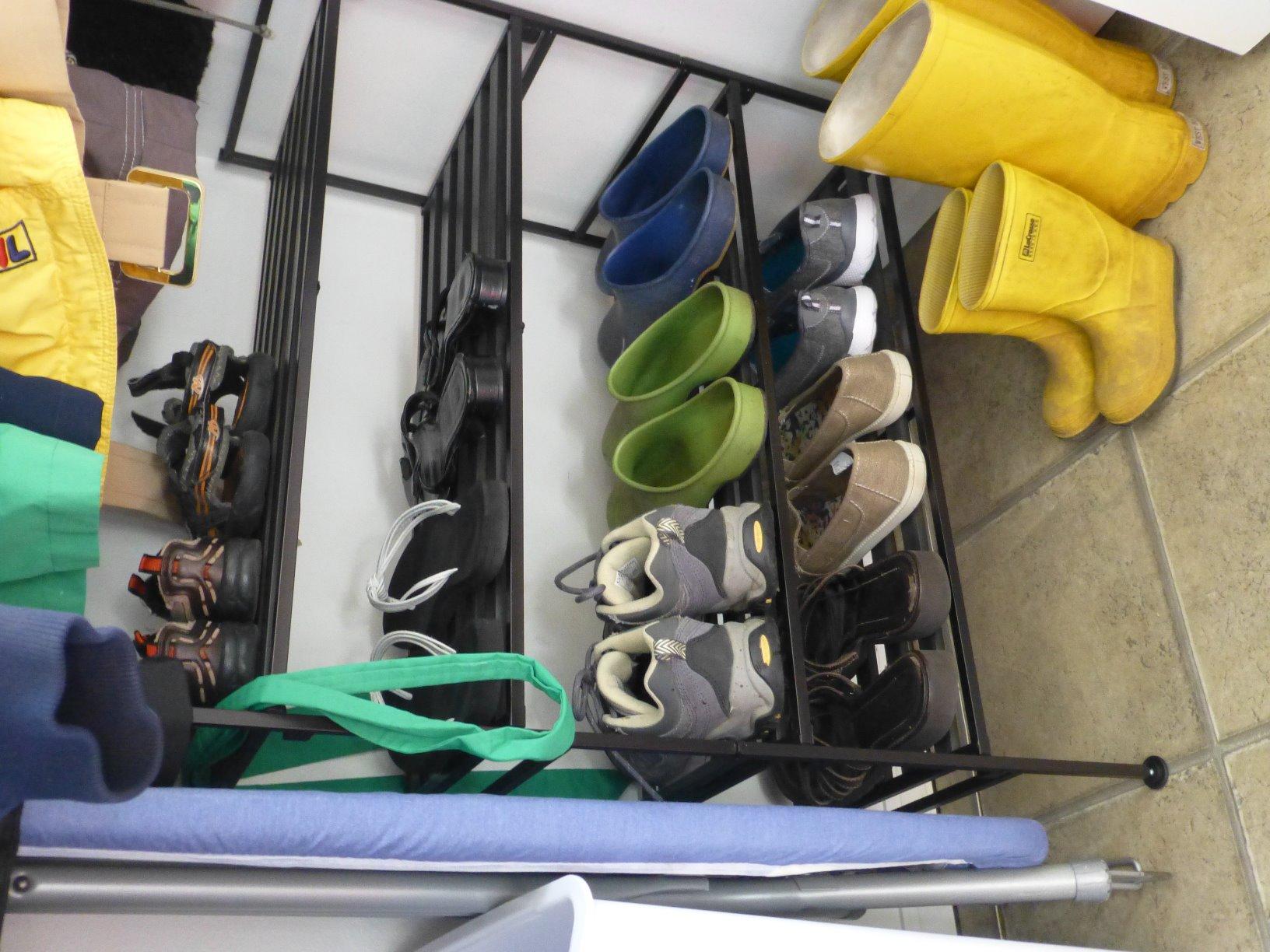
Capacity works out to about two adult pairs per tier, so three tiers gives you roughly six. Stacking two racks gets you to twelve in the same floor space, which is where the design earns its keep.
Sizing is the practical caution. At 27.25 inches wide, this needs a real wall or a generous closet opening, and reviewers repeatedly recommend measuring before ordering. The resin slats also feel lighter underfoot than a solid wood or full metal shelf.
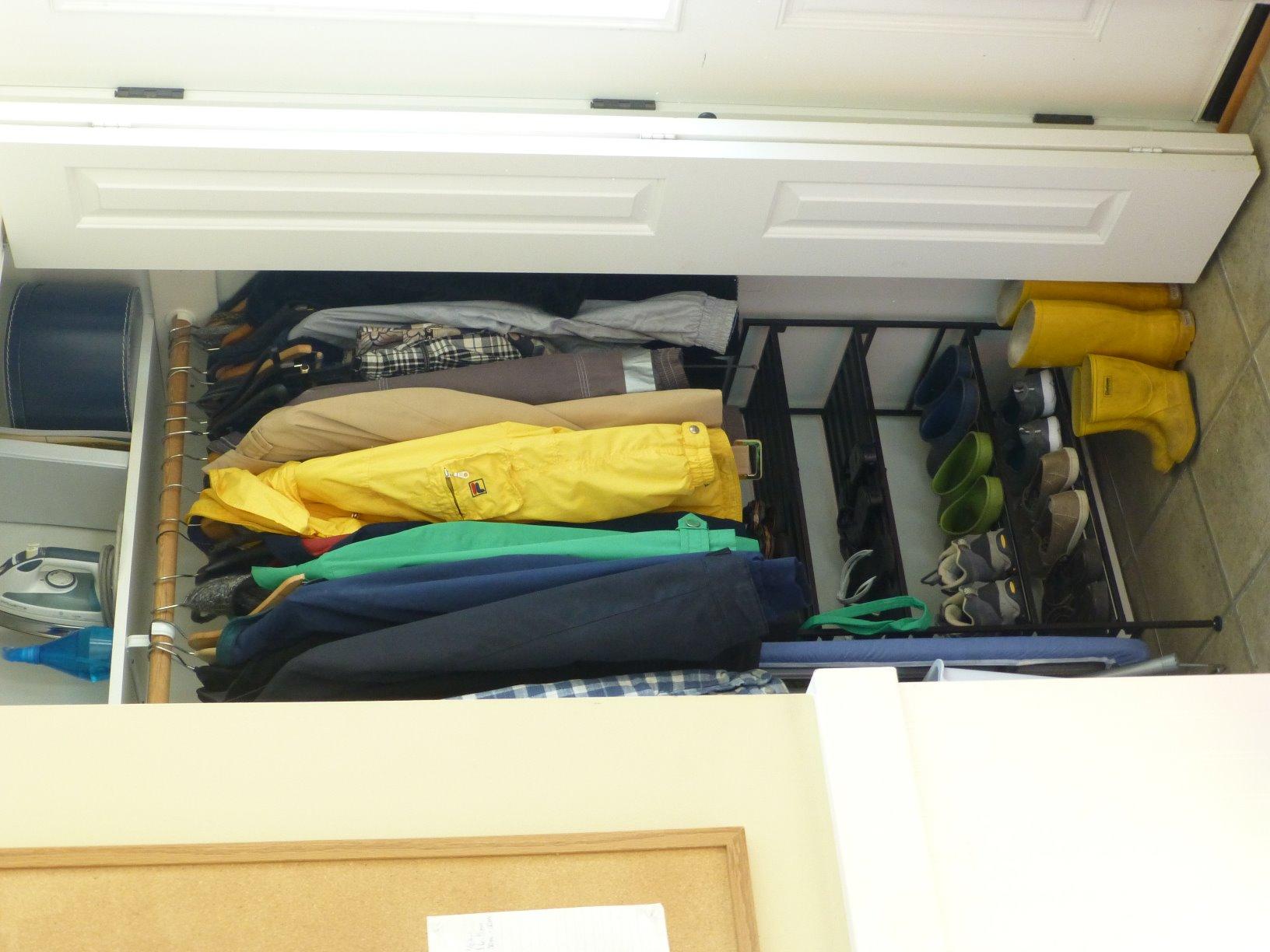
Whether the stacking holds up under load
The 10-year limited manufacturer warranty is the strongest longevity promise in this group, and the foldable steel frame stays rigid once locked. The wobble complaints we saw apply to cheaper plastic-connector racks, not to this steel frame.
Measure this before you order
Check both the width and the 12.75 inch depth. In a shallow closet, the depth is what disqualifies it, not the width, and swapping orientation is usually not an option once the shelves are loaded.
3. Pipishell 3-Tier Bamboo Bench – Best Value

Pipishell 3 Tier Bamboo Shoe Rack Bench for Entryway, Brown
Natural bamboo bench, brown
27.5 inch wide by 11 inch deep
Holds 6-8 pairs
300 lb maximum weight
Pros
- Genuine bamboo that resists wear and wipes clean
- Holds up to 300 lb and doubles as a bench
- Slim 11 inch depth works in tight entryways
- Weighs 3.4 lb so it moves with one hand
Cons
- Screws can loosen over time
- Some units need extra clamping to align predrilled holes
- Creaks slightly when weight is applied
For most households the Pipishell bench is the rational choice. It is real bamboo rather than a wood-look composite, it carries a 300 pound rating, and it costs meaningfully less than the leader in this roundup. The 11 inch depth is the narrowest of the three benches we tested, which makes it the easiest to squeeze against a wall.
It is also the lightest bench here at 3.4 pounds, so rearranging the entryway is a one-person job. Buyers report buying multiples, which suggests it works well as a scattered storage solution around a home rather than one central unit.
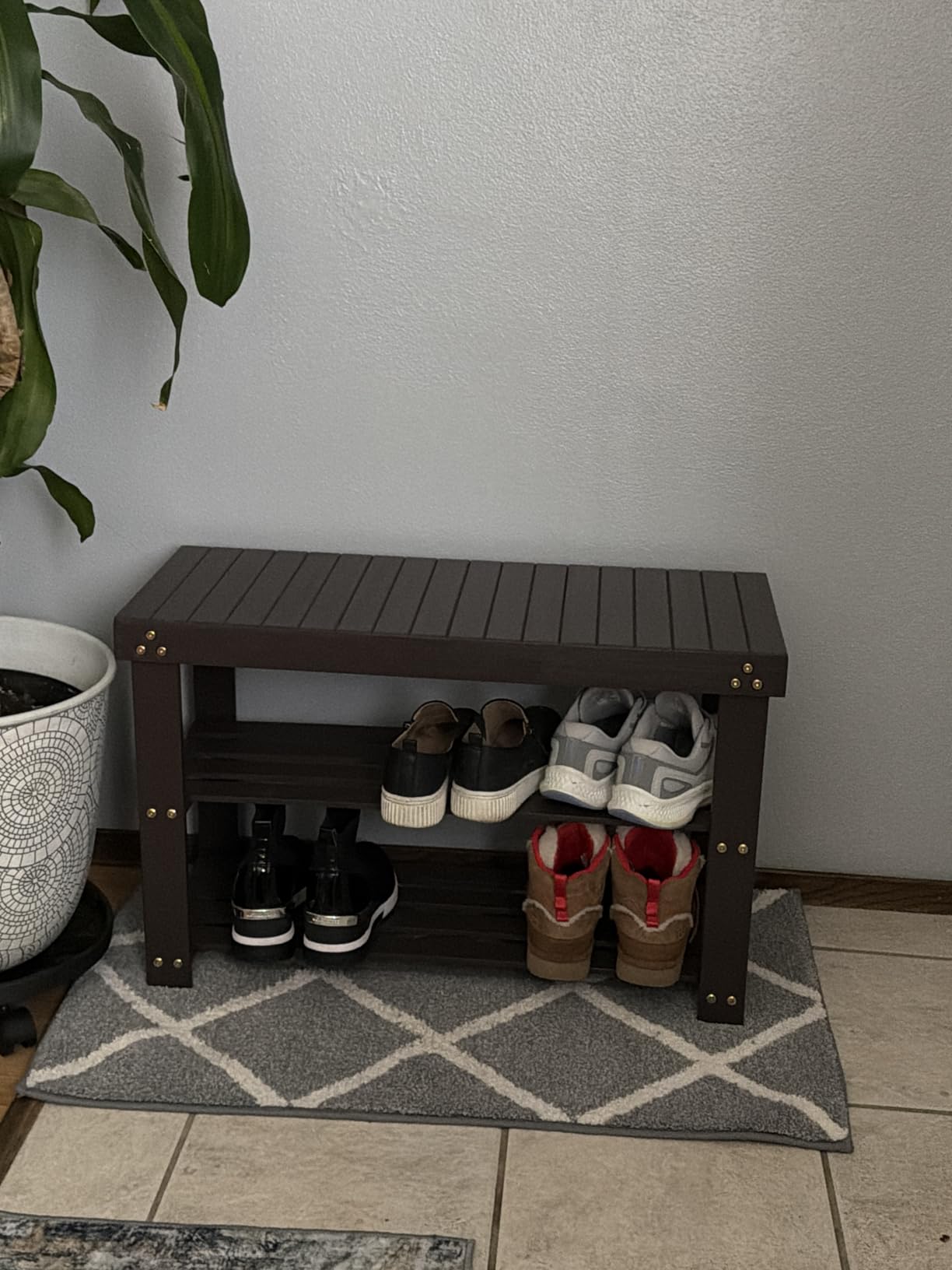
Capacity is 6 to 8 pairs across three tiers. That is the trade for the low cost, and it means this is a daily-wear organizer rather than a full collection manager.
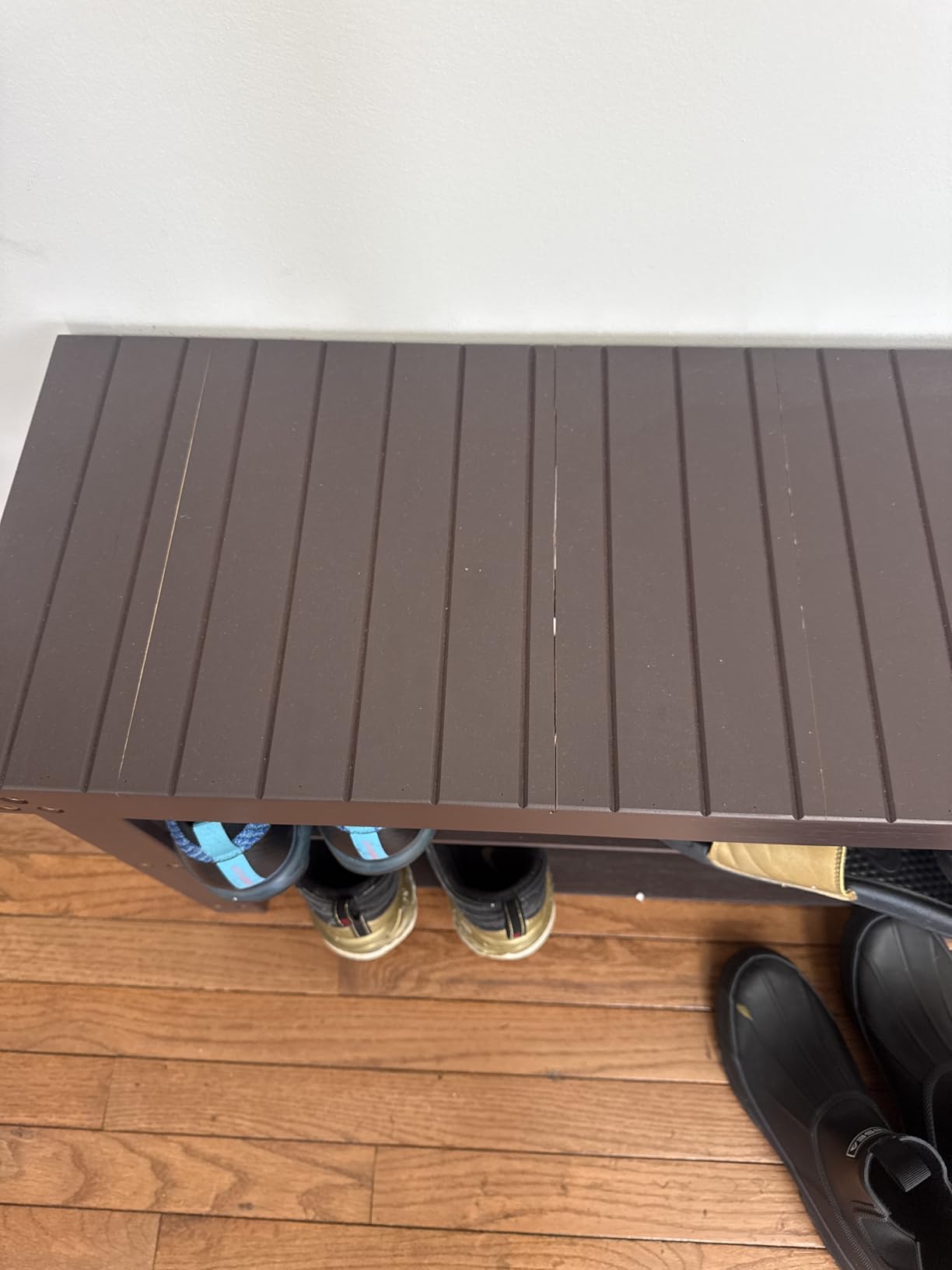
Build quality has two recurring complaints. Screws loosen after months of use, and some units need extra drilling or clamping to line up the predrilled holes. Check the joints after a few weeks of use if you plan to sit on it regularly.
Bamboo versus the metal and plastic options
Bamboo sits in the middle on durability. It will not dent like resin and it does not flex like thin wire, but it is more sensitive to moisture and to shipping damage than a steel frame is. Wipe it with a dry cloth and keep it out of damp basements.
When another rack makes more sense
If you need more than about 8 pairs, or you want the storage to disappear behind doors, this is the wrong bench. Those needs point toward a larger metal rack or an enclosed cabinet instead.
4. Simple Houseware 3-Tier Wired Grid Rack – Best for Mudrooms

Simple Houseware 3-Tier Stackable Wired Grid Shoe Rack, Black
Black wired grid metal
26.5 inch wide by 10.6 inch deep
Holds 9 pairs plus bottom space
30 lb per shelf
Pros
- Snaps together quickly with a screwdriver
- Stackable and connectable into a modular system
- 10.6 inch depth fits mudrooms and closets
- Wired grid lets dirt fall through the shelves
Cons
- Feet extend about an inch past the listed width
- Only the top shelf fits ankle-height boots
- Wiring is not weather resistant for covered outdoor use
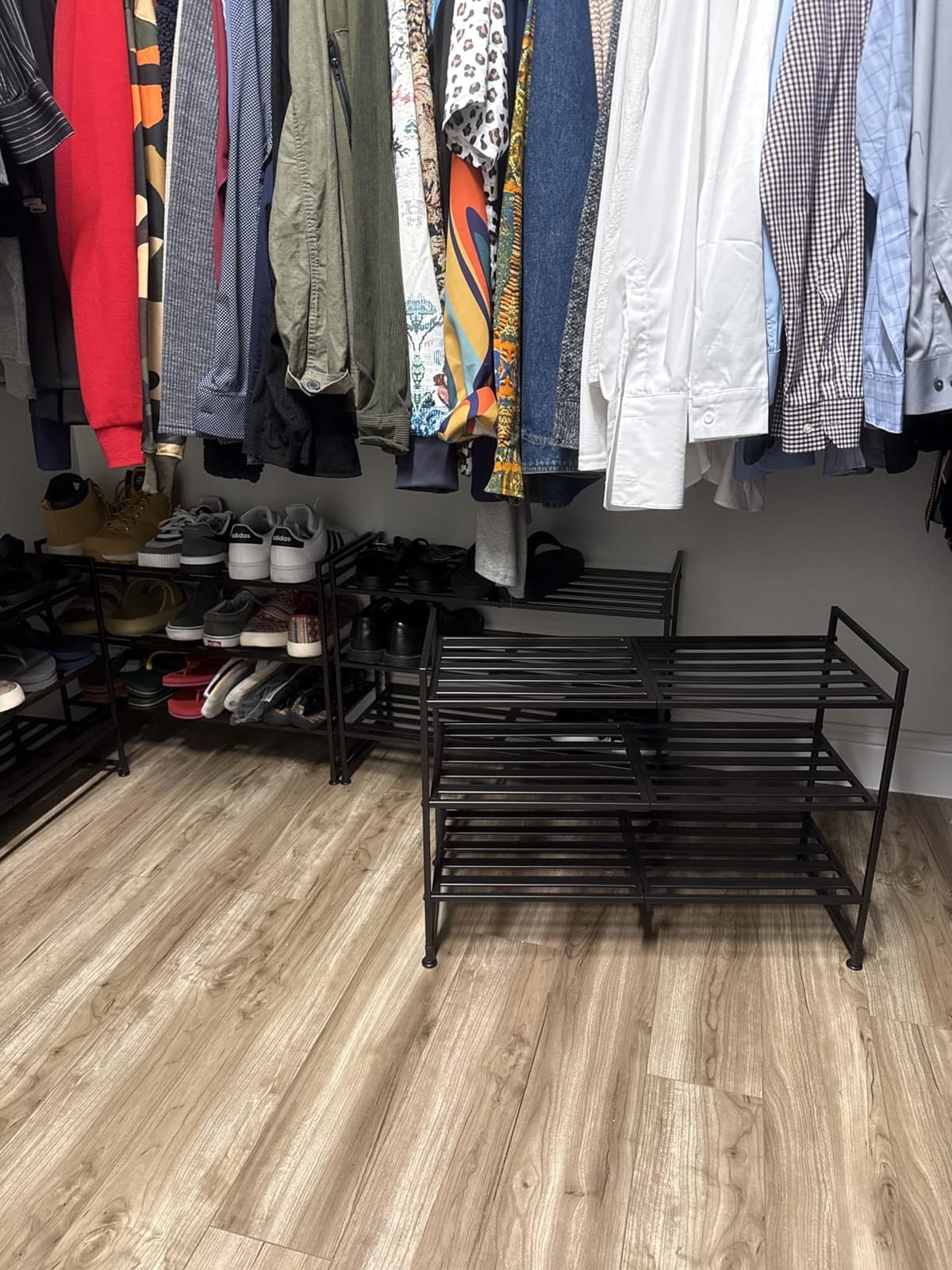
Grid shelving is an underappreciated format for entryways, and this is a clean example of it. Because the shelves are wire rather than solid board, grit falls straight through instead of collecting, which matters in a mudroom where shoes come in wet. The 10.6 inch depth is one of the shallower footprints in this group.
It holds 9 pairs across three tiers plus extra space below for slippers and sandals, and the shelves are rated to 30 pounds each. Assembly is a screwdriver and about ten minutes, and adjustable leveling feet help on uneven floors.
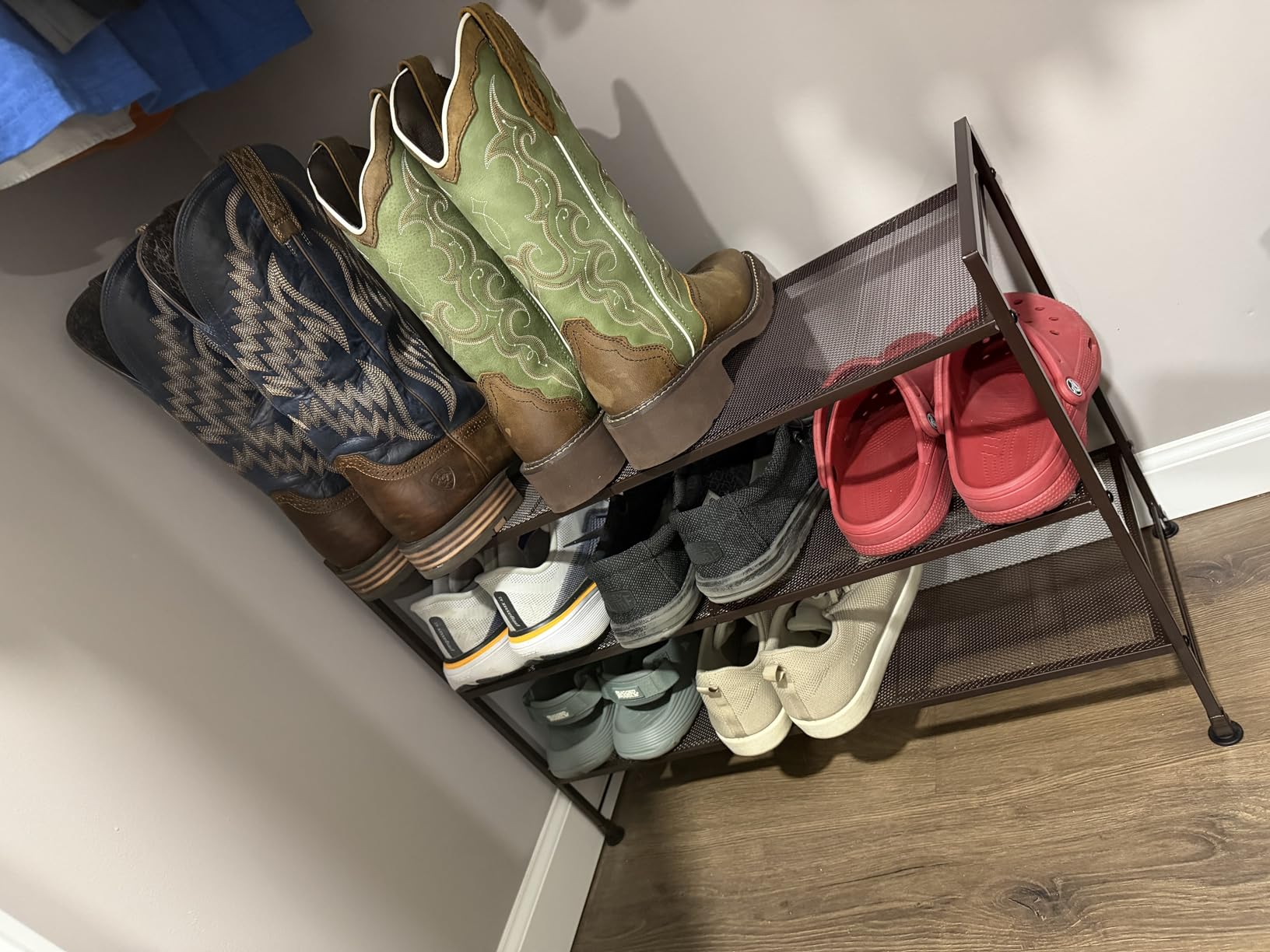
Stackability and connectability mean two racks can form a longer wall unit, and many buyers build out that way as the collection grows. At 4.4 pounds, moving it is trivial.
Measure twice on the width. Buyers report the feet projecting roughly an inch beyond the listed 26.5 inches, which is the difference between fitting and not fitting in a tight closet opening. Boot clearance is also limited to the top shelf.
Why grid beats solid shelves in a mudroom
Solid shelves trap sand and wet grit, and that debris shows up on the next pair of shoes. A wire grid lets it fall to the floor, where a broom can reach it. In an entryway that sees actual traffic, that difference adds up quickly.
Where it should not go
Keep it indoors or in a dry covered area. The finish is not built for damp or outdoor exposure, and corrosion shows up as rust bloom along the weld points.
5. FIDUCIAL HOME 10-Tier Organizer – Best for Narrow Closets

FIDUCIAL HOME 10 Tiers Shoe Rack Organizer 20 Pairs Tall Shoe Shelf
Ten fabric tiers on iron pipes
17 inch wide by 11 inch deep
Holds up to 20 pairs
50 lb maximum weight
Pros
- Fits about 20 pairs in a 17 inch footprint
- Tool-free hand assembly with no metal fittings
- Tiers can be removed or the rack split into two
- Disassembles into a small box for moving
Cons
- Light enough to tip if not anchored
- Plastic connectors can crack over time
- Roughly 40 connector pieces to align during assembly
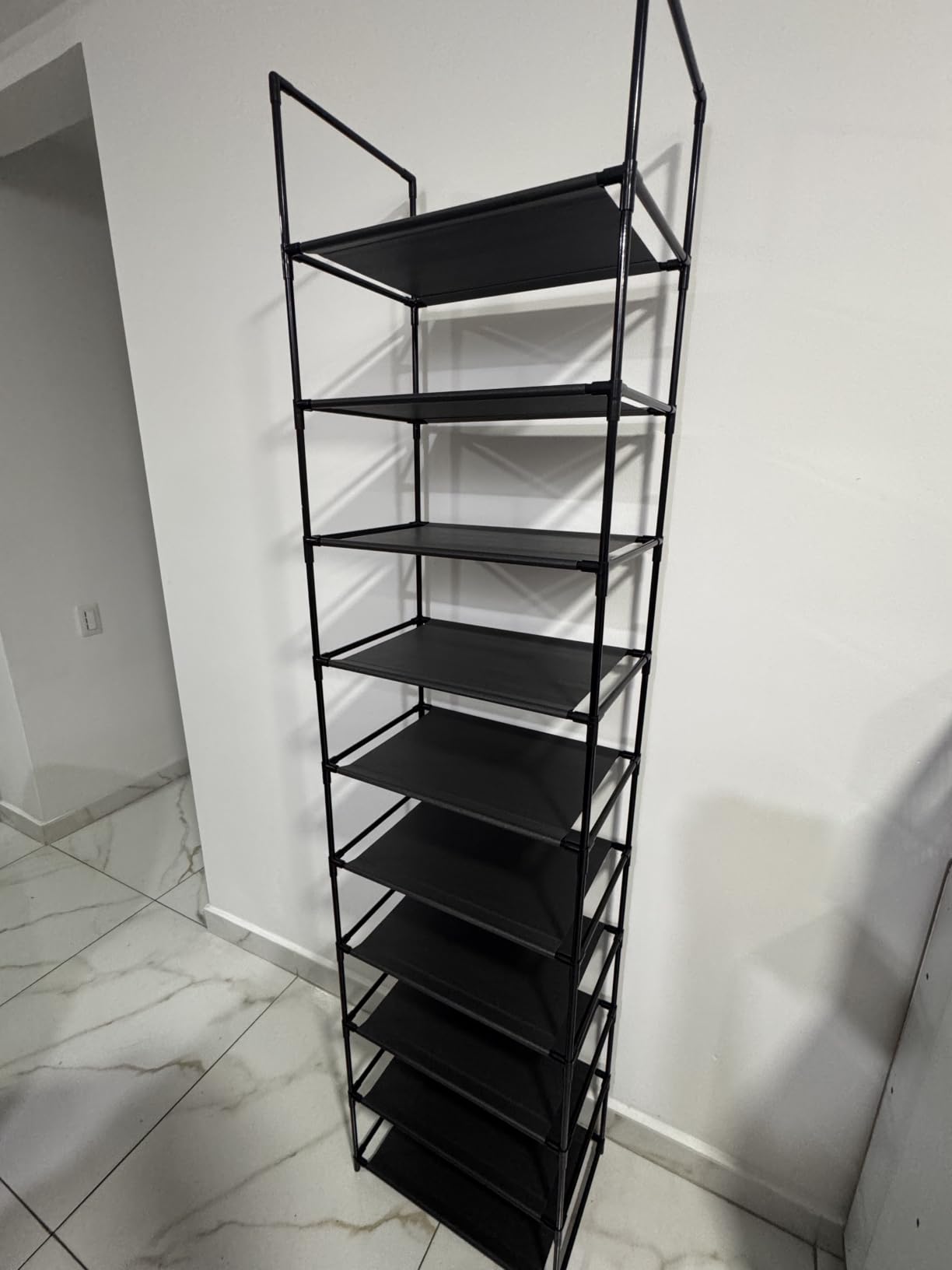
When floor width is the constraint, this is the answer. The rack stands 17 inches wide and 68.8 inches tall, so it stores 20 pairs in a strip narrower than a standard wastebasket. It is the configuration we would use in a rental closet, a dorm room, or a hallway corner where nothing else fits.
Assembly is entirely by hand with no tools. Ten waterproof fabric tiers sit on thickened iron pipes with strengthened plastic connectors, and you can remove a tier to create clearance for boots or heels, or split the whole thing into two separate 5-tier racks.
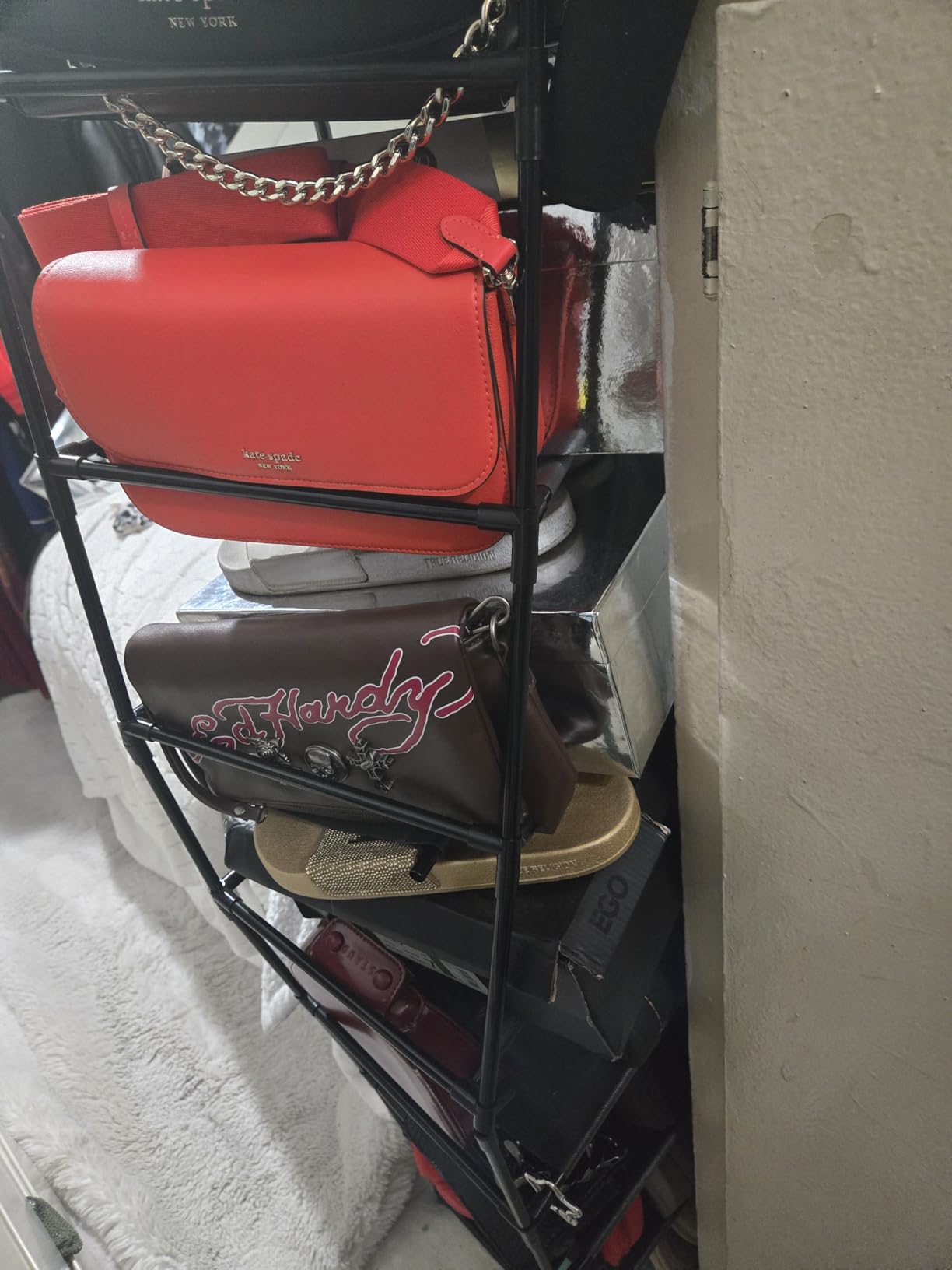
At 2.7 pounds and with a 50 pound rating, it is light enough to move constantly, which is exactly why anchoring matters. Buyers are candid that it is easy to tip if it stands in an open walkway.
Durability is the tradeoff. The fabric tiers and plastic connectors are the parts that crack or bend under heavy loads, and assembly takes longer than the tool-free claim implies because roughly 40 connector pieces need aligning.
Stability and children in the house
With a 68.8 inch height and a narrow base, this is the rack in the roundup most worth anchoring to a wall, particularly in a home with young children. The listed spare support does not replace a wall anchor at that height ratio.
Working out whether 20 pairs is enough
Tier depth fits roughly two average pairs, so 20 pairs is realistic rather than optimistic. If your daily footwear exceeds 20 pairs, this is a secondary unit rather than your only one.
6. SONGMICS 8-Tier Metal Organizer – Best for Big Collections

SONGMICS Metal Shoe Rack, 8-Tier Shoe Organizer, Holds 32-40 Pairs
Alloy steel mesh, ink black
36.4 inch wide by 12.1 inch deep
Holds 40 pairs of womens shoes
Splits into two 4-tier racks
Pros
- Holds up to 40 pairs in a single footprint
- Shelves assemble flat or angled
- 8.1 inch spacing fits heels and high-tops
- Adjustable feet plus an anti-tip kit included
Cons
- 36.4 inch width and 64.4 inch height need a large space
- At 22.7 lb it takes two people to move
If you have 40 or more pairs, this is the rack the rest of the list is measured against. Eight mesh shelves hold 40 pairs of womens shoes or 32 pairs of mens, and because each shelf can be set flat or angled during assembly, you can dedicate some tiers to heels and some to sneakers.
The 8.1 inch spacing between shelves is the standout number. Most racks in this roundup run 5.5 to 6 inches, which excludes boots entirely, while this one clears high heels and high-top sneakers without a workaround. You can still remove a tier for taller boots.
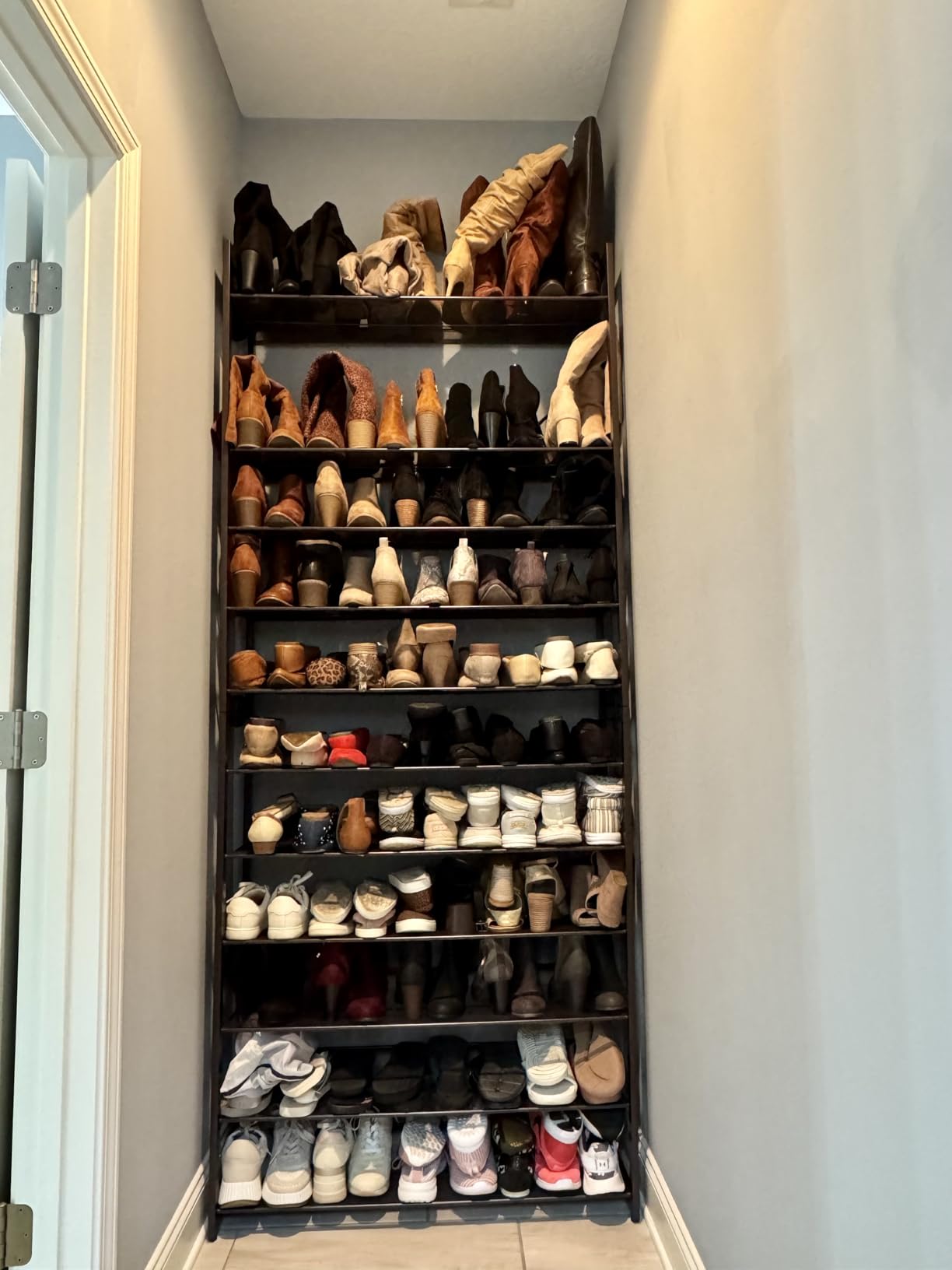
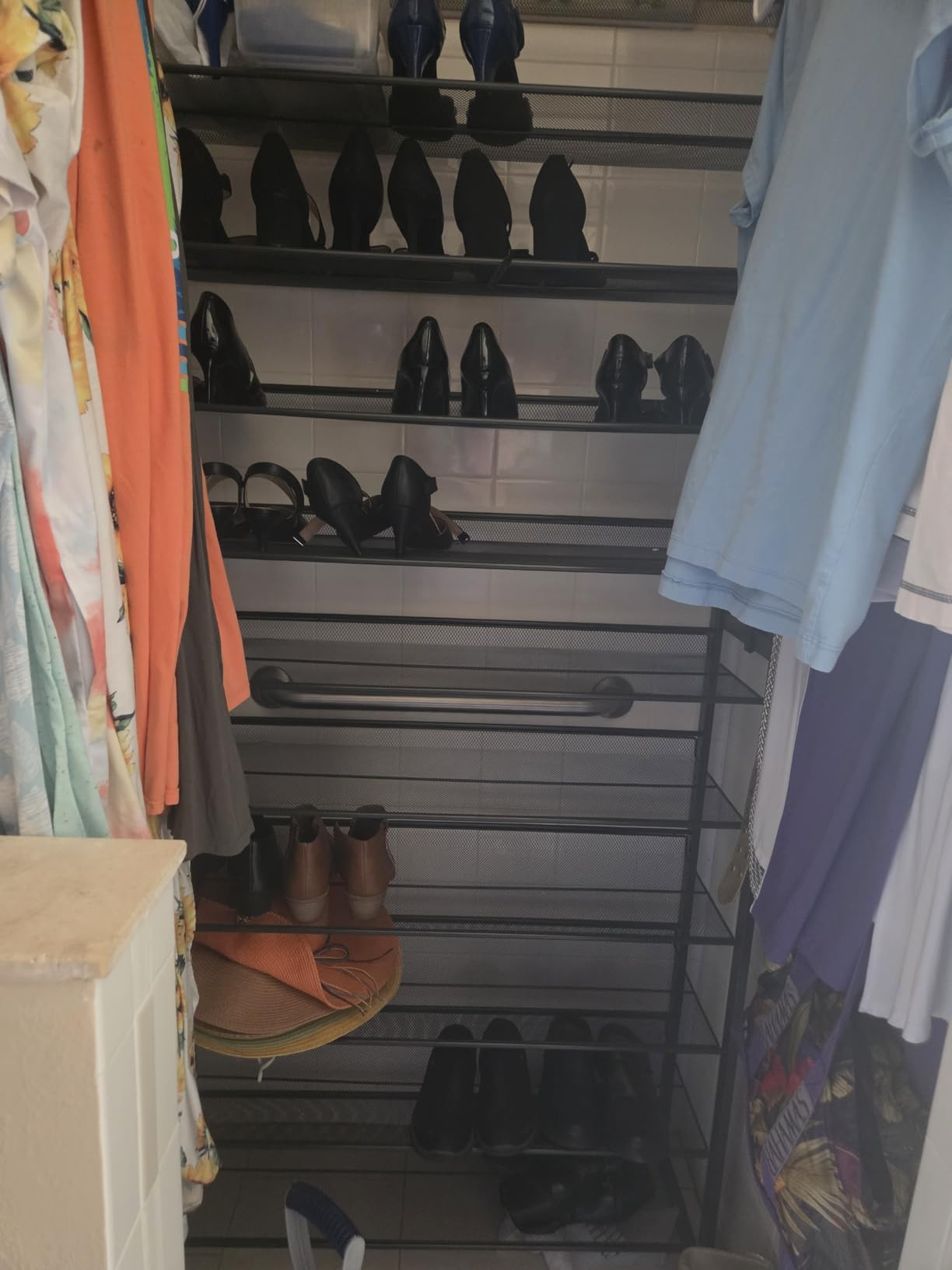
Stability gets real attention here. Adjustable feet handle uneven floors, and an anti-tip kit is included, which matters for a unit standing 64.4 inches tall. You can also split it into two separate 4-tier racks for different rooms.
The footprint is the price of that capacity. At 36.4 inches wide and 64.4 inches tall, it needs a dedicated closet, a hallway, or a garage bay, and at 22.7 pounds moving it is a two-person job.
Converting your pair count into tiers
Divide your collection by 4 to 5 pairs per tier, then add 20 percent headroom for growth. A 40-pair collection works out to 8 to 10 tiers, which is why this configuration lands almost exactly on target for collectors.
Flat shelves versus angled shelves
Angled shelves roll shoes forward so you can see the whole pair without pulling. Flat shelves hold more per tier because shoes sit fully on the surface. Our advice is angled for daily wear and flat for overflow storage.
7. VASAGLE 6-Tier Mesh Rack – Best for Walk-In Closets

VASAGLE 6-Tier Shoe Rack, 24-30 Pairs, Metal Mesh
Steel frame with particleboard top
39.4 inch wide by 11.8 inch deep
24-30 pairs across 6 tiers
Highest rated rack in the group
Pros
- Rated 4.8 stars with 90 percent five-star reviews
- 24-30 pairs in a shallow 11.8 inch depth
- Wide particleboard top doubles as a drop surface
- Adjustable feet keep the tall frame balanced
Cons
- 39.4 inch width suits a dedicated closet
- At 23.6 lb it is awkward to reposition alone
This rack posted the highest rating of anything we compared, at 4.8 stars across nearly 9,000 reviews, and the 90 percent five-star share is not an accident. Reviewers point to a rock-solid steel frame, dense mesh shelves that keep pairs aligned instead of sliding, and a genuinely useful top shelf.
Five mesh shelves plus the particleboard top hold 24 to 30 pairs. At 11.8 inches deep it is one of the shallower footprints here, and at 39.4 inches wide it wants a full closet wall or a generous hallway rather than a nook.
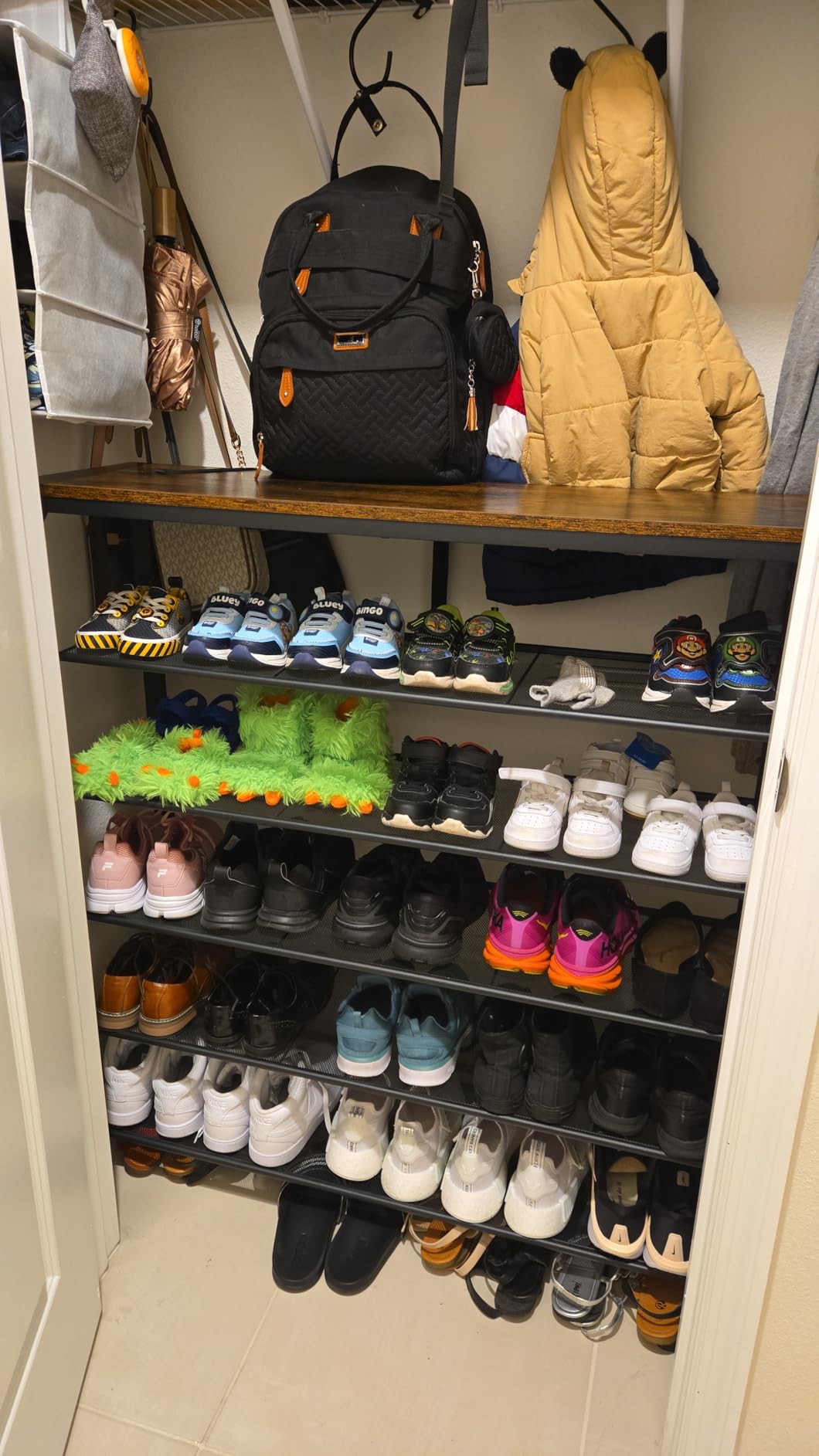
Storage beyond shoes is a real feature. The closed back and wide top shelf turn it into a general room shelf for photos, keys, and bags, which extends its usefulness well past footwear. An accessory kit and anti-tip kit are included.
Weight is the drawback at 23.6 pounds. The industrial look also reads as utility furniture, so it fits a garage or basement better than a styled entryway.
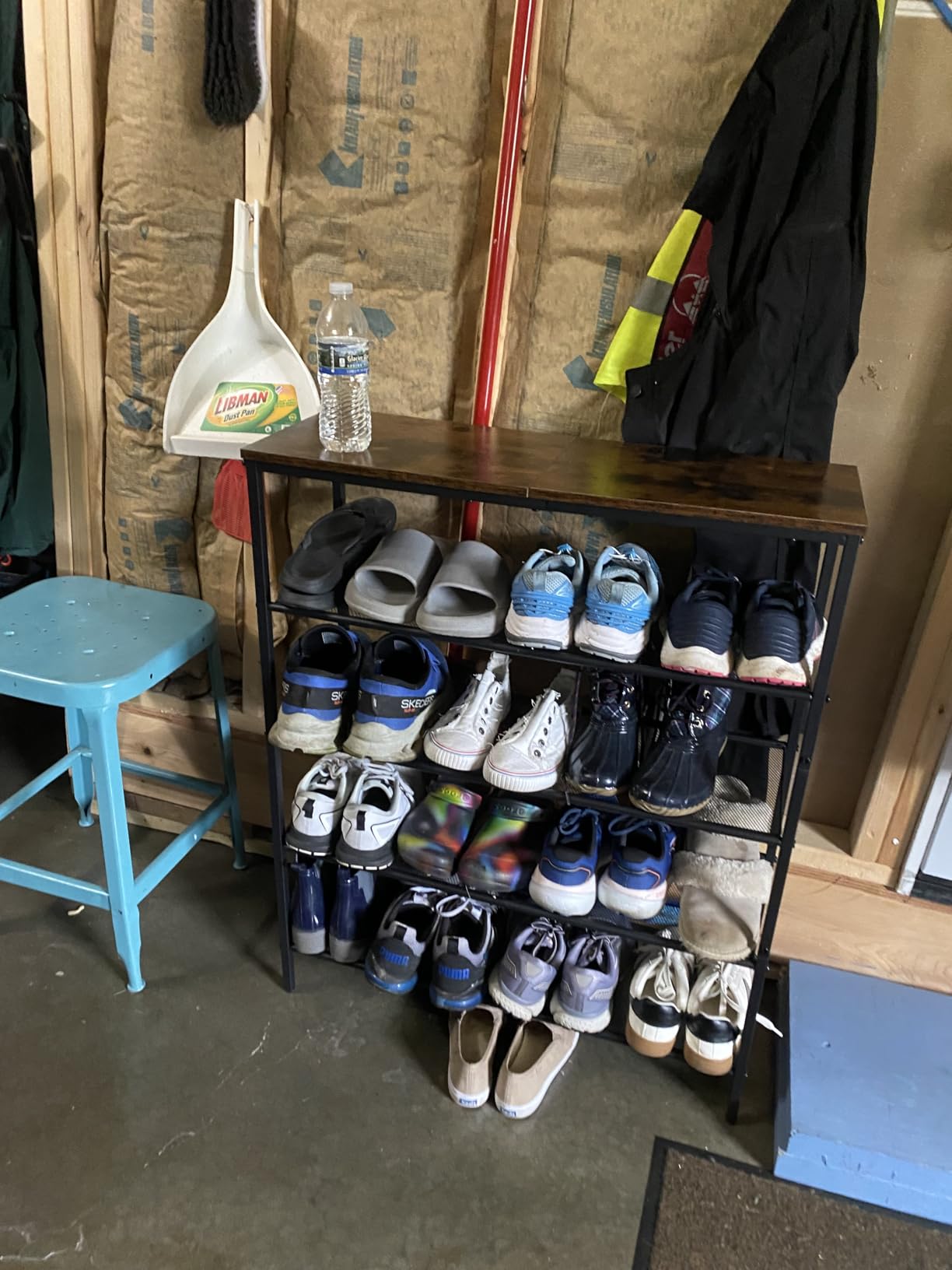
Why mesh shelves hold shoes better
Dense mesh gaps give shoes a grippy surface, so pairs stay where you put them instead of sliding off the front edge. That is why reviewers single out alignment as the reason for the high rating.
Checking you have the wall for it
Measure 39.4 inches of clear wall width and at least 44 inches of height, plus room to pull the rack out. Anything less and the narrower options on this list will serve you better.
8. Amazon Basics 50-Pair Rolling Rack – Best for Garage and Seasonal Storage
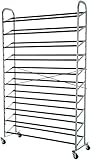
Amazon Basics 50-Pair Shoe Rack Organizer, Portable Rolling with Locking Wheels, Free Standing, 35.8 x 14.6 x 59.5 inches, Chrome
Chrome-finished metal, 10 tiers
35.8 inch deep by 14.6 inch wide
Holds up to 50 pairs
15.2 lb rolling frame
Pros
- Only wheeled rack here with locking casters
- Ten tiers hold up to 50 pairs in one unit
- Chrome metal suits garage and utility rooms
- Free-standing design needs no wall mounting
Cons
- 35.8 inch depth demands a large closet
- Metal mesh tiers are noisy when shoes land
- Assembly is not described as tool-free
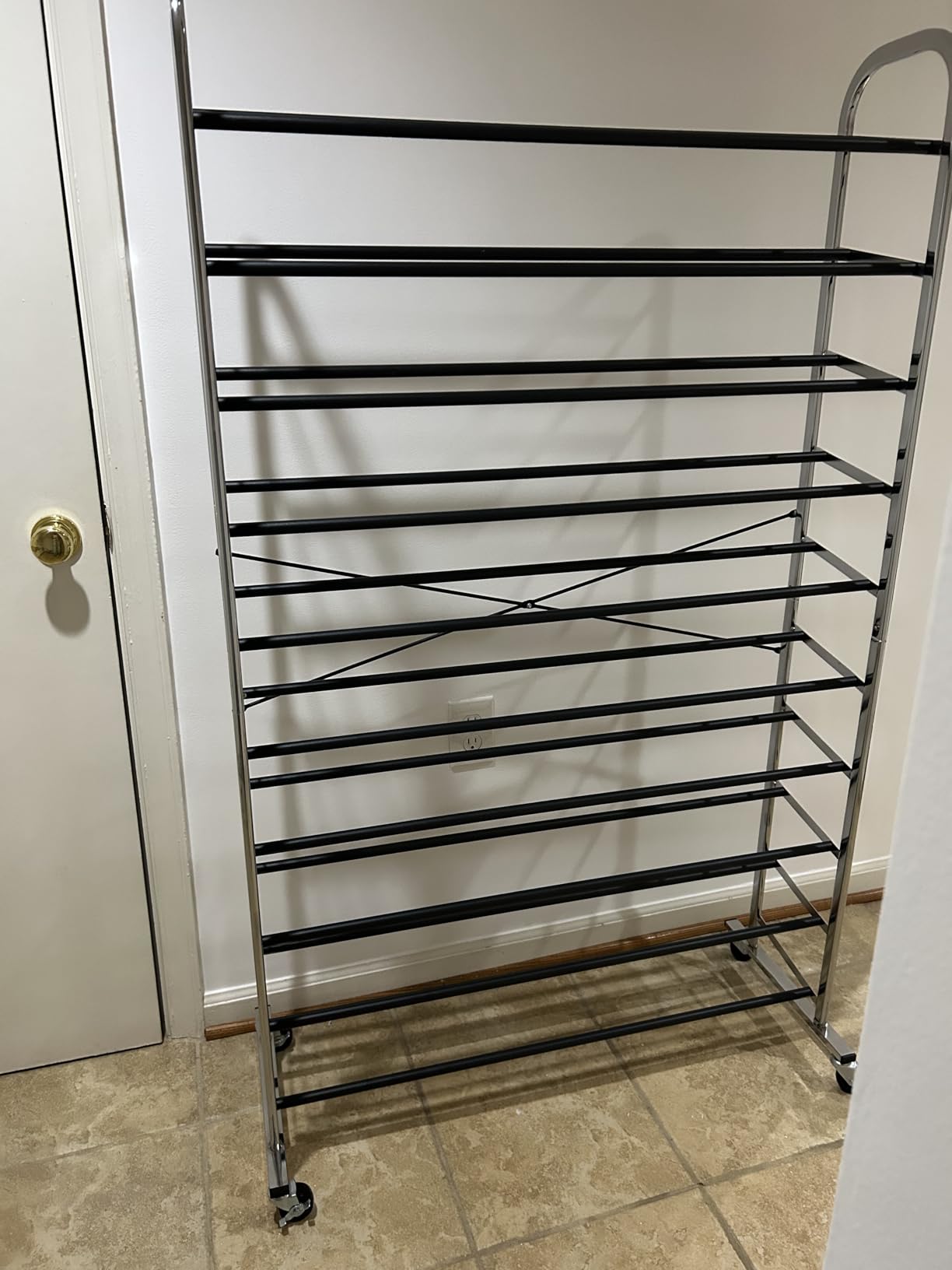
Rolling storage changes the equation in a way fixed racks cannot. Because this one has locking casters, you can load 50 pairs, wheel the whole thing into a garage or utility closet, and reclaim the walk-in closet floor for daily use. At 15.2 pounds it is light enough to move once loaded, which is unusual at this capacity.
Ten tiers hold up to 50 pairs, and the chrome-finished metal frame suits a utilitarian setting where a bamboo bench would look out of place. It measures 35.8 inches deep by 14.6 inches wide by 59.5 inches tall.
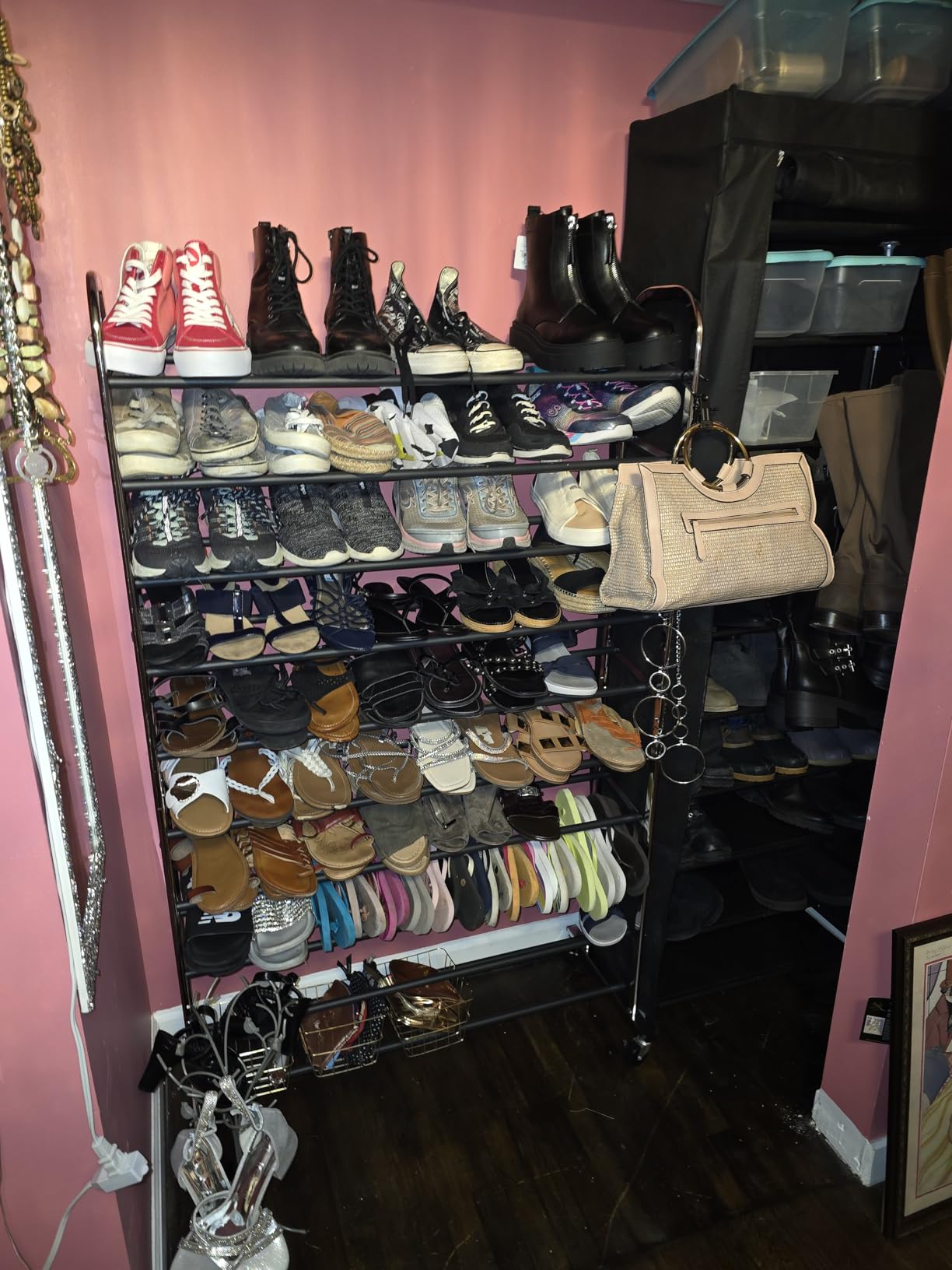
The main caveat is that 14.6 inch width and 35.8 inch depth is the deepest footprint in this roundup. Confirm closet depth first, because a rack that will not go in is an expensive lesson.
Two smaller annoyances: metal mesh tiers are noticeably noisy when shoes are dropped, and the listing does not describe assembly as tool-free, so budget real time for the build.
Rolling versus fixed for off-season storage
Casters pay off when the storage is seasonal. If winter boots take over a closet for six months, a rolling rack lets you slide them aside instead of rebuilding the storage twice a year.
When a lighter rack makes more sense
Skip this if you need it in an apartment hallway or a room with a low ceiling. The 59.5 inch height and 15.2 pound frame are built for a storage bay, not a living space.
9. viewcare 4-Tier Bamboo Rack – Best for a Natural Look

viewcare Shoe Rack, 4-Tier Long Shoe Rack for Entryway, Bamboo Wood Shoe Shelf for Closet & Hallway, Long 33IN | Beautiful | Functional | Sturdy | Durable
Natural bamboo, unfinished wood look
33 inch wide by 11 inch deep
Holds 12-15 pairs at 4 per tier
Tenon joint with hinged shelves
Pros
- Bamboo finish looks far less utilitarian than plastic
- Pre-hinged shelves cut build time to about 20 minutes
- Spare screws
- dowels and foam pads included
- Four pairs fit per tier on the 33 inch span
Cons
- Wobbles on uneven floors without the foam pads
- Folding shelves can pinch fingers during build
- Stacked dowels loosen over time without glue
If black wire and chrome steel are not the look you want, bamboo is the fastest route to a shoe rack that reads as furniture. This one spans 33 inches wide by 11 inches deep by 25 inches tall, holds 12 to 15 pairs, and fits roughly four adult pairs per tier.
The build is unusually well thought out. Shelves arrive hinged and fold open at the center, so assembly is closer to 20 minutes than a full flat-pack rebuild, and the box includes an Allen wrench, screws, spare screws, extra dowels, and adhesive foam pads for the feet.
Modularity is the real draw here. The tenon joint design lets you split one rack into two 2-tier pieces or stack it with a second rack into a taller unit, and a removable shelf creates clearance for long rain boots.
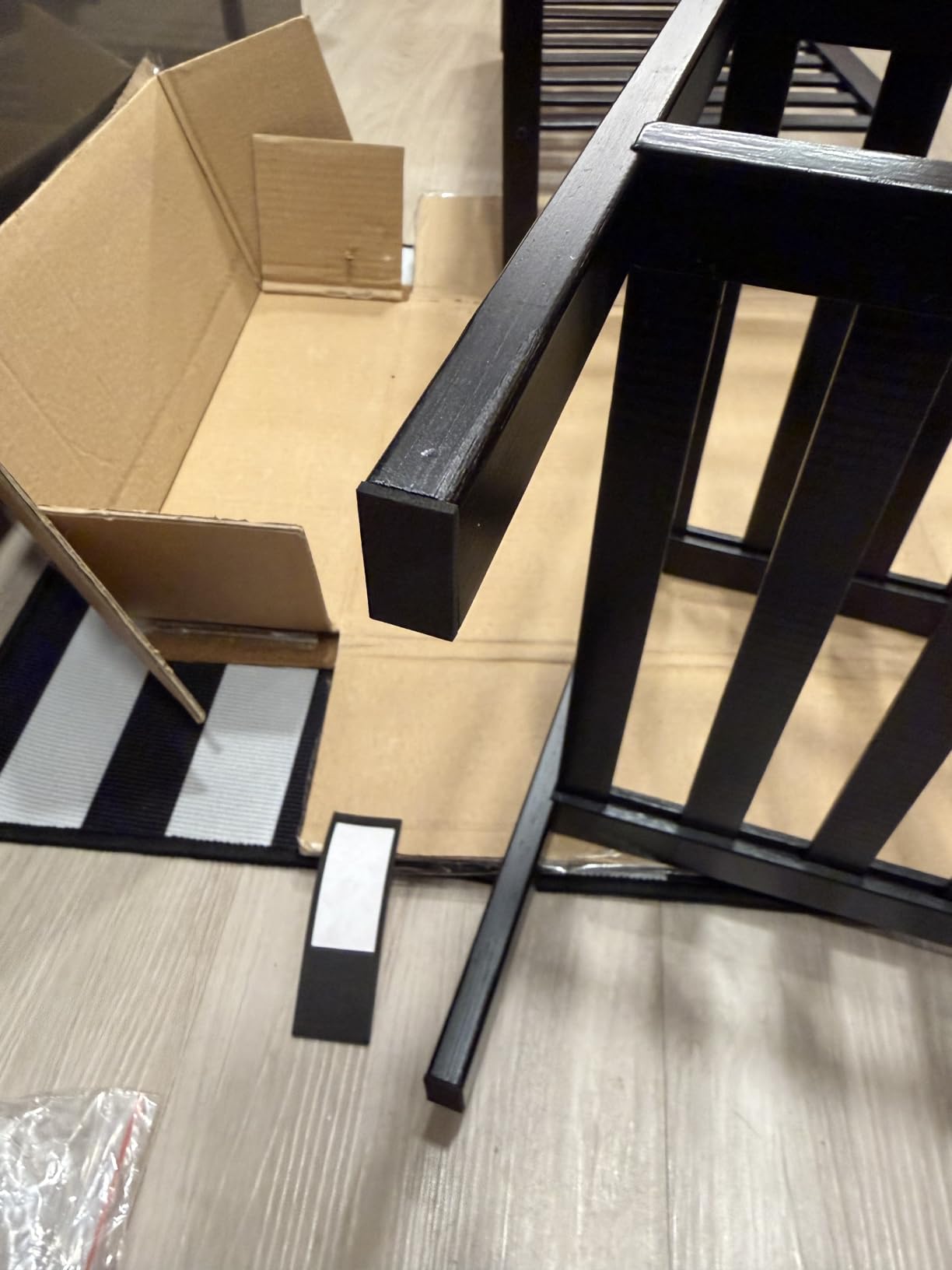
Two cautions from buyers. The folding shelves are not rigid mid-assembly and can pinch fingers, and dowels connecting stacked racks can work loose without a drop of wood glue. Use the foam pads, they are included for a reason.
Bamboo look versus bamboo bench
A bench seats two people, which this unit does not. If you want storage that guests can sit on, compare this against the SONGMICS and Pipishell benches instead.
Deciding between stacking and splitting
Split into two 2-tier racks if you want storage in two rooms, and stack if you want one tall unit in a single closet. Stacking needs glue on the dowels; splitting needs nothing beyond the original hardware.
10. Gonfoam Expandable 3-Tier Rack – Best for Small Spaces

Gonfoam Expandable 3-Tier Shoe Rack for Closet and Entryway, Black
Alloy metal, minimalist black
Collapsed 17.7 inch wide
Expands to 33.8 inch width
Holds up to 12 pairs
Pros
- Genuinely tool-free assembly under five minutes
- Expandable width adjusts as your needs change
- Light at 3.9 lb yet handles heavier footwear
- Arch handle makes it easy to carry
Cons
- Plastic locking tab does not fully engage
- Only holds about 13 lb per tier
- Narrow 17.7 inch width caps pairs per tier
Expandability is an idea more racks should copy. This one collapses to 17.7 inches wide and slides out to 33.8 inches, so the same rack works in a rental closet on day one and a wider hallway once you have accumulated more shoes. Capacity is up to 12 adult pairs when fully extended.
It measures 8.85 inches deep by 16.93 inches tall, so the depth is genuinely small. Assembly takes under five minutes with no tools at all, which is the fastest build in this roundup, and the arch handle makes it trivial to carry between rooms.
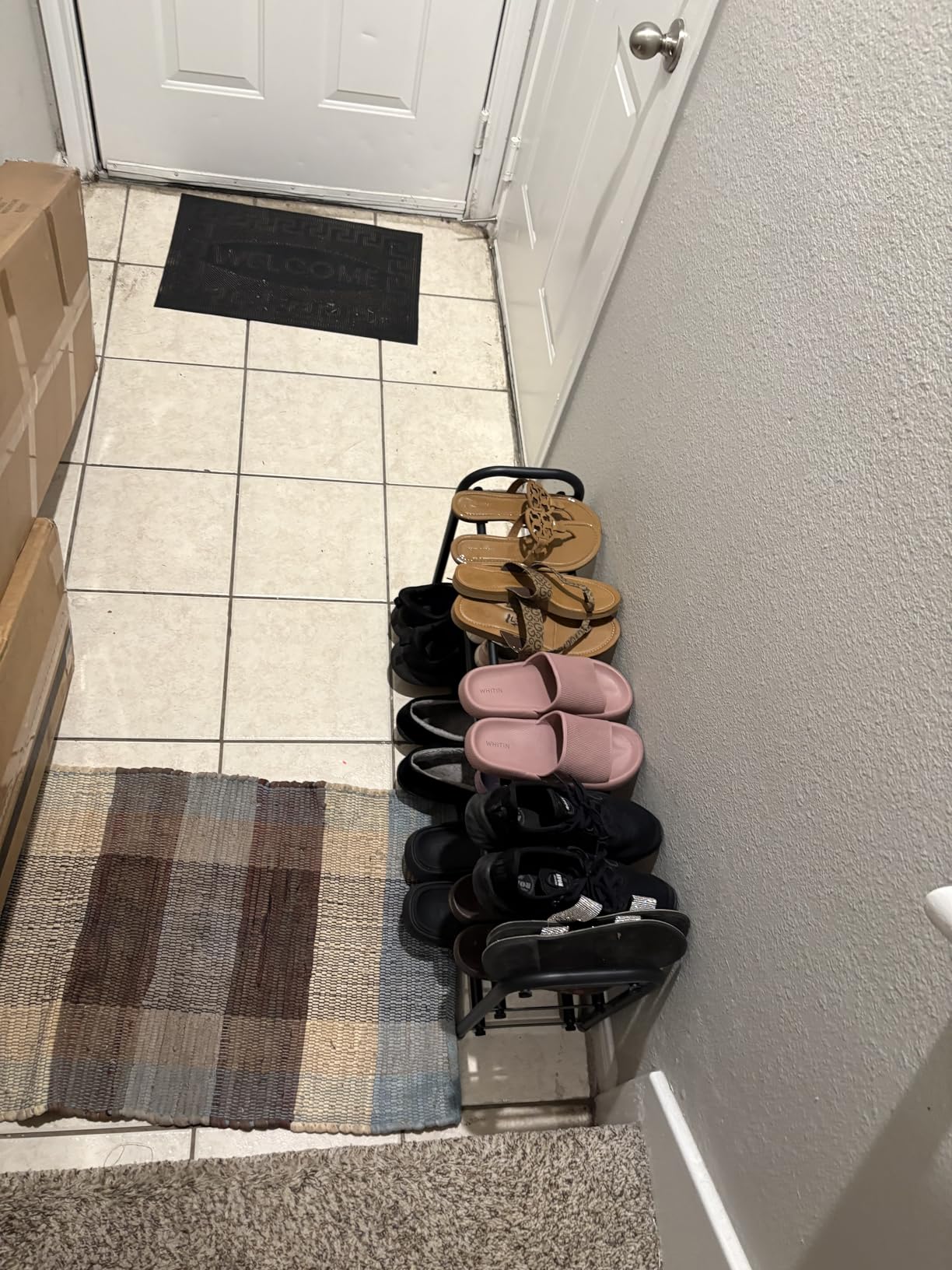
At 3.9 pounds it packs down small enough to move between dorms or apartments, a benefit reviewers call out specifically. The minimalist black finish suits a narrow closet without visual bulk.
The locking tab is the recurring complaint. It appears to hold the bars but does not always engage fully, leaving some movement while the rack is being loaded or moved. Check it before you trust the rack with boots.
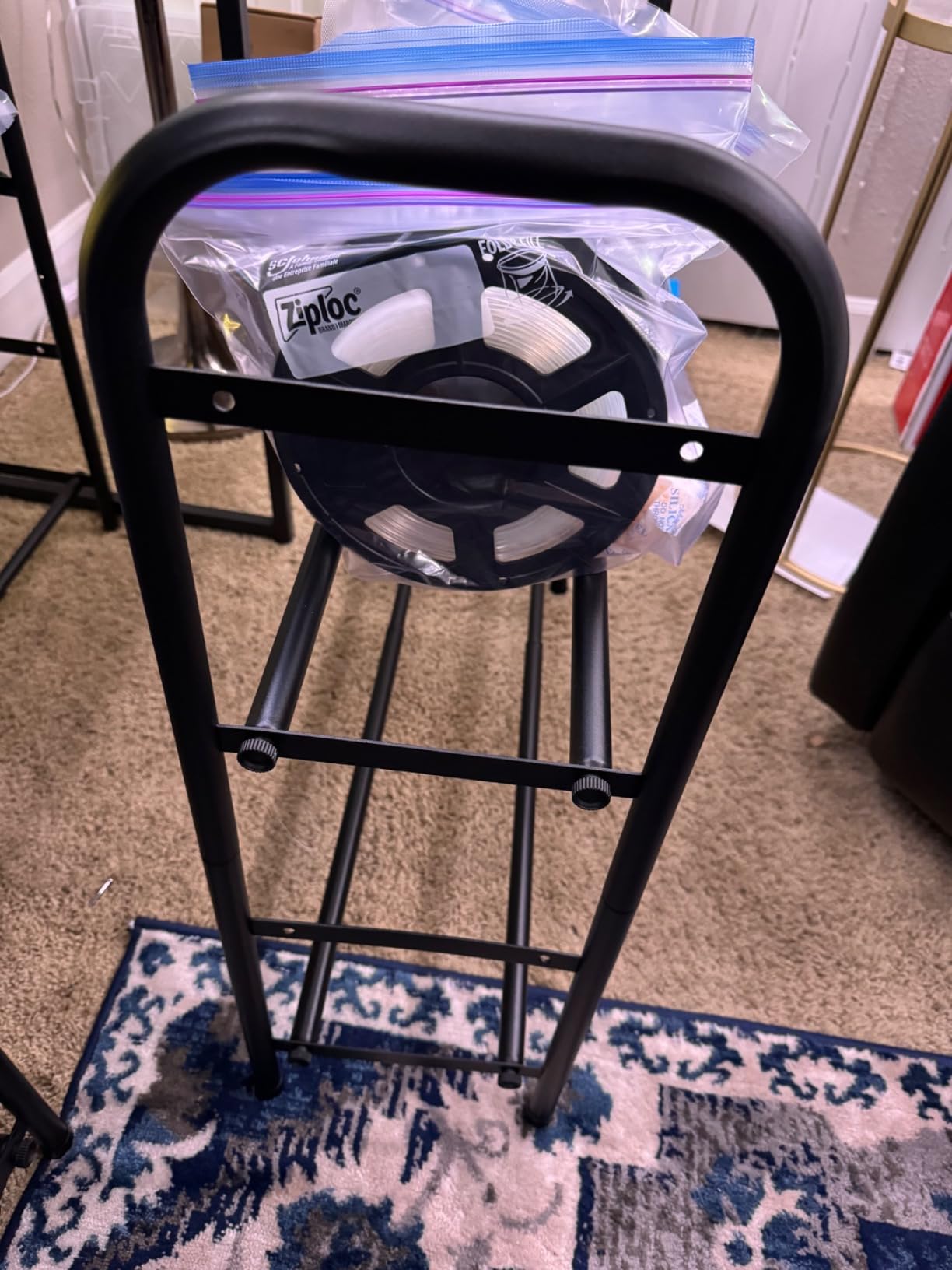
Checking the locking tab after assembly
Push each bar firmly toward the tab until you feel it seat. If the rack shifts sideways under a heavy pair, the tab has not fully engaged and the expanded width will drift over time.
Rating the load limit honestly
With thickened pipe rated to 13 pounds on the mid section, this holds heavy footwear but is not a boot rack. Boots and dense winter shoes should go on the bottom or on a different unit.
11. KEETDY 3-Tier Long Shoe Rack – Best for Boots and Heels

KEETDY 3-Tier Long Shoe Rack for Closet Metal Shoe Organizer for Entryway, Wide Stackable Shoe Storage Shelf with Sturdy Wire Grid for Closet Floor, Bedroom, Black
Stainless steel wire grid, black
43 inch wide by 11.4 inch deep
5-6 pairs per tier
8 inch shelf spacing
Pros
- Widest shelf here at 43 inch for 5-6 pairs per tier
- 8 inch spacing holds snow and rain boots
- Tool-free build often under 10 minutes
- Stacks into a 6-tier rack with floor space beneath
Cons
- Light frame wobbles without added support
- No adjustable feet for uneven floors
- Shelves give slightly in the middle under heavy loads
Tier spacing is the number that separates this rack. At 8 inches between shelves it holds snow boots and rain boots on the same tier as flats, where a 5.5 inch gap would force you to remove a shelf entirely. It measures 11.4 inches deep by 43 inches wide by 24.4 inches tall.
The 43 inch span is also the widest here, which translates to 5 to 6 adult pairs per tier. Two of these stack into a 6-tier rack, and the space beneath the bottom shelf takes flip-flops and sandals so they are not lost.
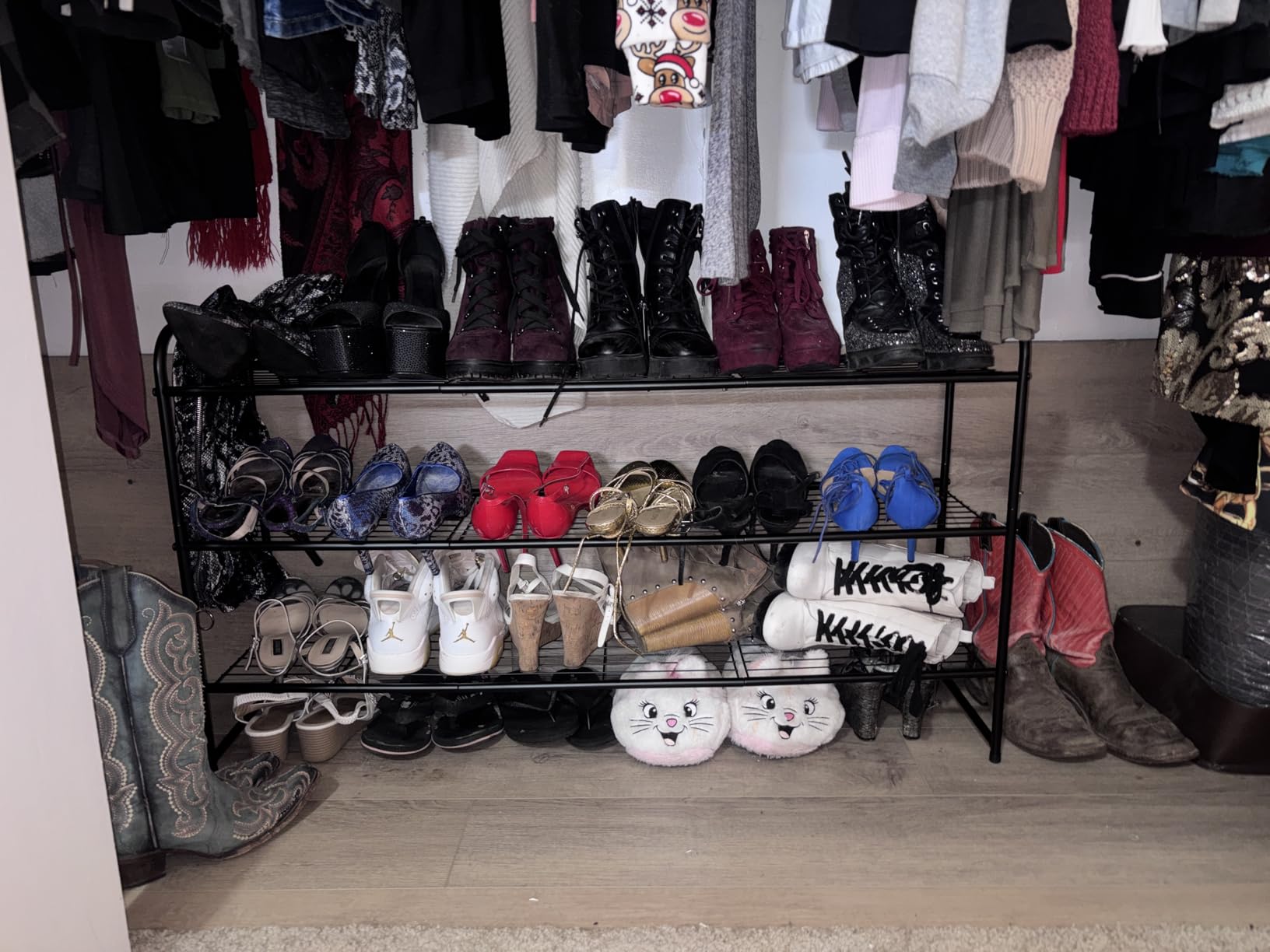
Assembly is tool-free click-together, though a screwdriver and screws are included. Buyers report builds under 10 minutes. The wire grid lets dirt fall through, the same advantage we valued in the Simple Houseware rack.
The frame is light enough to wobble on an uneven floor, and there are no adjustable feet to correct it. Adding front support or a wall anchor fixes it, and it is worth doing before loading heavy boots.
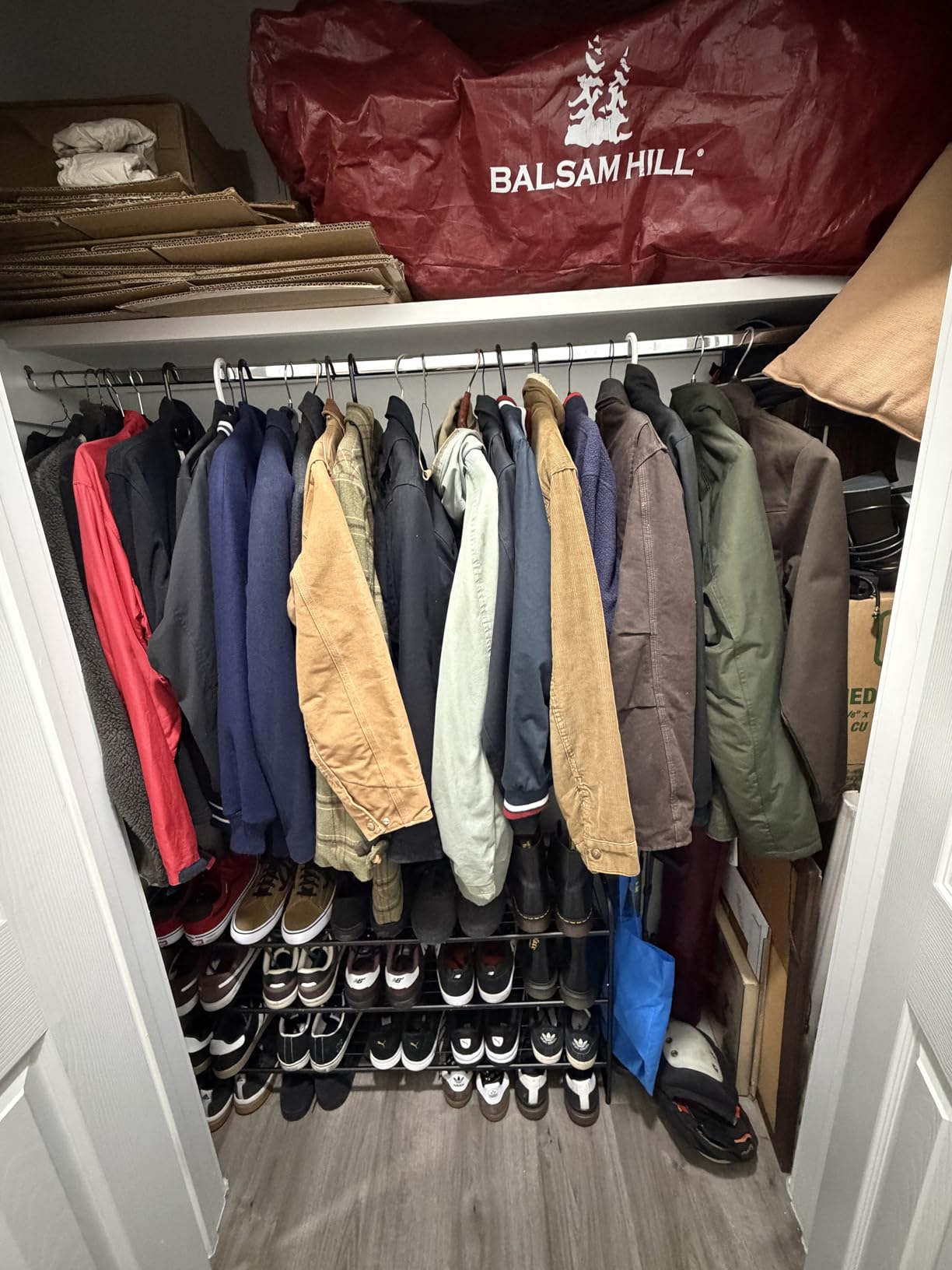
Whether 8 inch spacing covers winter boots
It covers most snow and rain boots worn as footwear. Mid-calf and knee-high styles may still need a removed tier, which the design allows since two units stack into six tiers.
Checking that 43 inch width fits
Measure a full closet wall or entryway run, not a single closet bay. At 43 inches this is a room-scale piece of furniture, and it will not turn a corner in a tight hallway.
12. Furinno Turn-S-Tube 4-Tier Rack – Best for Dorm Rooms and Offices

Furinno Turn-S-Tube 4-Tier Shoe Rack, Amber Pine/Black
FSC-certified engineered wood panels
23.6 inch wide by 11.6 inch deep
4 ventilated tiers
30 lb per shelf, 120 lb total
Pros
- Tool-free Turn-N-Tube assembly with no screws
- 30 lb per shelf and 120 lb total
- Open ventilated shelves suit small closets
- Lightweight and portable with a compact footprint
Cons
- Engineered panels feel less rigid than metal
- 22.3 inch height rules out boots and high-tops
- Backless design with no wall backing for stability
This is the most compact of the wood options and the simplest to build. The Turn-N-Tube posts assemble tool-free in minutes with no drill and no screws, and the four ventilated shelves give a listed 30 pounds per shelf and 120 pounds total.
At 23.6 inches wide by 11.6 inches deep by 22.3 inches tall, it fits a dorm room, a small closet, or an office nook without dominating the space. The top shelf doubles as a drop zone for the pair you wear most.
Build quality is the honest limitation. Engineered wood panels are laminated and FSC-certified, but they feel less rigid under load than solid wood or a steel frame, and the backless design offers nothing to brace against.
Height is the dealbreaker for some buyers. At 22.3 inches tall, boots and high-top sneakers simply will not go on this rack, and a removable shelf is not an option because the post spacing is fixed.
Checking stability on a backless frame
Because there is no back panel, resist loading one shelf heavily while the others sit empty. Distributing weight evenly keeps the frame square over time.
Who should buy the engineered wood version
It suits renters, dorm rooms, and offices where a light, tool-free unit that can be carried up stairs matters more than long-term rigidity. For a permanent family entryway, a metal or solid bamboo rack ages better.
How to Choose a Shoe Rack That Fits Your Space
Measure before you shop, and measure the opening rather than the wall. The single most common complaint across reviews in this category is a rack that turned out to be wider or deeper than the closet. For a tiered rack, expect roughly 11 to 12 inches of depth and 26 to 43 inches of width depending on how many pairs you want per tier.
Next, count your pairs and divide by the pairs-per-shelf figure. A 25 inch shelf holds about 4 adult pairs, a 43 inch shelf holds 5 to 6, and a 17 inch fabric tier holds 2. Add 20 percent headroom so you are not replacing the rack next year.
Then check tier gap against your tallest footwear. Flats need about 5.5 inches between shelves, sneakers and high-tops want 6 to 8 inches, and knee-high boots want a removed tier or a dedicated boot slot. This is the detail that quietly eliminates half the racks on the market.
Finally, think about tip-over risk. Anything taller than about 40 inches or lighter than 10 pounds should be anchored to a wall, particularly in a home with young children. Taller units in this roundup include an anti-tip kit for exactly that reason.
What Type of Shoe Rack Do You Need?
Tiered and stackable racks are the default choice for most homes, holding 6 to 20 pairs in a small footprint and expanding vertically when you need more. Stackable steel racks are the most flexible option because you can add tiers without buying a new unit, at the cost of a wide footprint.
Benches combine storage with seating, which makes them the natural choice for an entryway where people sit to remove shoes. They cap out around 6 to 9 pairs because the seat height limits vertical room.
Over-the-door organizers and hanging pockets use wall space instead of floor space, which is valuable in rentals where you cannot drill. Cubby and cabinet formats trade access speed for a clean look, and that is the tradeoff people argue about most in home design forums.
Rolling racks suit seasonal and off-season storage, since you can move a fully loaded unit out of sight. Wire grid and mesh racks are the best formats for mudrooms and garages because grit falls through the shelves instead of settling on them.
For anyone who prefers a permanent built-in look, a repurposed bookcase works as a shoe wall. We covered that angle alongside related storage rack ideas, and it is a solid choice when you want a built-in appearance without a built-in project.
Frequently Asked Questions
What is the best shoe rack for storing a lot of shoes?
For 30 or more pairs, the SONGMICS 8-Tier Metal Organizer is the strongest fit, holding 40 pairs of womens shoes or 32 pairs of mens in one footprint with 8.1 inches between shelves for boots and heels. The VASAGLE 6-Tier Mesh Rack is a close second at 24 to 30 pairs with a shallower 11.8 inch depth. For 40 to 50 pairs where depth is not a constraint, the Amazon Basics Rolling Rack carries up to 50 pairs on locking casters.
Which shoe rack is the best quality?
Build quality tracks with the frame material. The Seville Classics 3-Tier Steel Rack uses a powder-coated steel frame and carries a 10-year limited manufacturer warranty, which is the longest promise in our group. The VASAGLE 6-Tier Mesh Rack pairs a steel frame with dense mesh shelves and holds the highest rating we saw. Solid bamboo, like the Pipishell bench, sits just behind metal on long-term rigidity.
What is the best type of shoe rack?
A tiered or stackable rack suits most homes, and stackable steel is the most flexible because you can add tiers without replacing the unit. Choose a bench for an entryway where seating matters, a wire grid or mesh rack for a mudroom or garage, a rolling rack for seasonal storage, and an enclosed cabinet when you want shoes hidden rather than on display.
What to use instead of a shoe rack?
Common alternatives include an enclosed shoe cabinet for a clean look, wall-mounted hooks or a wall-mounted rail, over-the-door pockets, lidded floor storage boxes, and a repurposed bookcase used as a built-in shoe wall. Over-the-door options use no floor space at all, which makes them the standard pick for renters. If you store under 15 pairs, hooks on the back of a door often work better than any rack.
What is the best-rated shoe rack?
The VASAGLE 6-Tier Mesh Rack is the best-rated unit we compared at 4.8 stars across roughly 8,800 reviews, with 90 percent five-star feedback focused on its steel frame and shelf alignment. The SONGMICS 8-Tier Metal Organizer and the Seville Classics 3-Tier Steel Rack follow at 4.7 stars with much larger review counts, which makes them the safer choices statistically.
How do I measure for a shoe rack?
Measure the width and depth of the opening, not the wall. For tiered racks, allow 11 to 12 inches of depth and account for feet that may project an inch or more past the listed width, as they do on the Simple Houseware rack. Add 2 to 3 inches of clearance height for stacking, and check ceiling height against the 64 inch and 68 inch units if you are shopping tall models.
How many pairs can a 4 tier shoe rack hold?
It depends on shelf length rather than tier count. A 23 inch shelf like the Furinno Turn-S-Tube holds about 3 to 4 pairs per tier, so 4 tiers gives you 12 to 16 pairs. A 33 inch bamboo shelf holds about 4 pairs per tier and a 43 inch wire shelf holds 5 to 6, so the same tier count can range from 12 to 24 pairs depending on the model.
Which Shoe Rack Should You Buy in 2026?
The SONGMICS 3-Tier Bamboo Bench is our pick for most people in 2026, because a seat, a bag surface, and two shelves solve the entryway problem in a footprint of just over 11 inches deep. Its review history is deep enough that the known weak points, chipped panels and a 6 to 9 pair ceiling, are easy to plan around.
If your collection runs past 20 pairs, change the priority from style to capacity and move to the SONGMICS 8-Tier Metal Organizer, which holds 40 pairs and has the widest tier spacing in the group. If width is the problem rather than capacity, the Gonfoam Expandable Rack or the FIDUCIAL HOME 10-Tier Organizer will fit spaces nothing else will.
Measure your opening before ordering anything, and anchor any tall unit to a wall if children live in the house. If getting shoes on and off without bending is becoming an issue, our long-handled shoe horn guide covers that side of the routine.