
For about a week before your period, you feel like a completely different person. The mood swings hit hard, the anxiety spikes, and you wonder if something is genuinely wrong. If you have ever asked yourself how to tell if it is PMDD or just bad PMS, you are far from alone. This is one of the most common questions in women’s health communities, and the answer matters more than most people realize.
Many women go years, sometimes decades, without knowing that their pre-period suffering has a name and a treatment. They get told it is “just hormones” or that they are “being dramatic.” Our team has dug through medical research, DSM-5 diagnostic criteria, and hundreds of real patient experiences from support communities to put together a clear, practical guide.
The distinction between PMS (Premenstrual Syndrome) and PMDD (Premenstrual Dysphoric Disorder) comes down to severity, emotional impact, and how much the symptoms disrupt your life. Roughly 75% of menstruating women experience some PMS symptoms. Only about 3 to 8% meet the criteria for PMDD. But those 3 to 8% can spend up to 8 years of their lives dealing with disabling symptoms, according to UCLA Health.
Whether you are trying to figure this out for yourself or trying to help someone you love, this guide walks through every sign, symptom, and diagnostic step you need to know.
Table of Contents
How to Tell If It Is PMDD or Just Bad PMS: The Quick Answer
Here is the simplest way to think about it: PMS makes you uncomfortable, but PMDD makes you non-functional. Premenstrual Dysphoric Disorder (PMDD) is a severe, clinically recognized form of premenstrual syndrome characterized by intense emotional and physical symptoms that occur during the luteal phase of the menstrual cycle and significantly disrupt daily life, work, and relationships.
The key difference is functional impairment. If your pre-period symptoms cause you to miss work, fight with loved ones, feel hopeless, or question whether life is worth living, that goes beyond PMS. PMDD involves debilitating emotional and mood-related symptoms that interfere with your ability to function normally.
Both conditions follow the same timeline. Symptoms appear 1 to 2 weeks before your period (during the luteal phase) and resolve within 2 to 3 days after menstruation begins. The pattern repeats every cycle. The difference is intensity, not timing.
PMS vs PMDD: The Key Differences
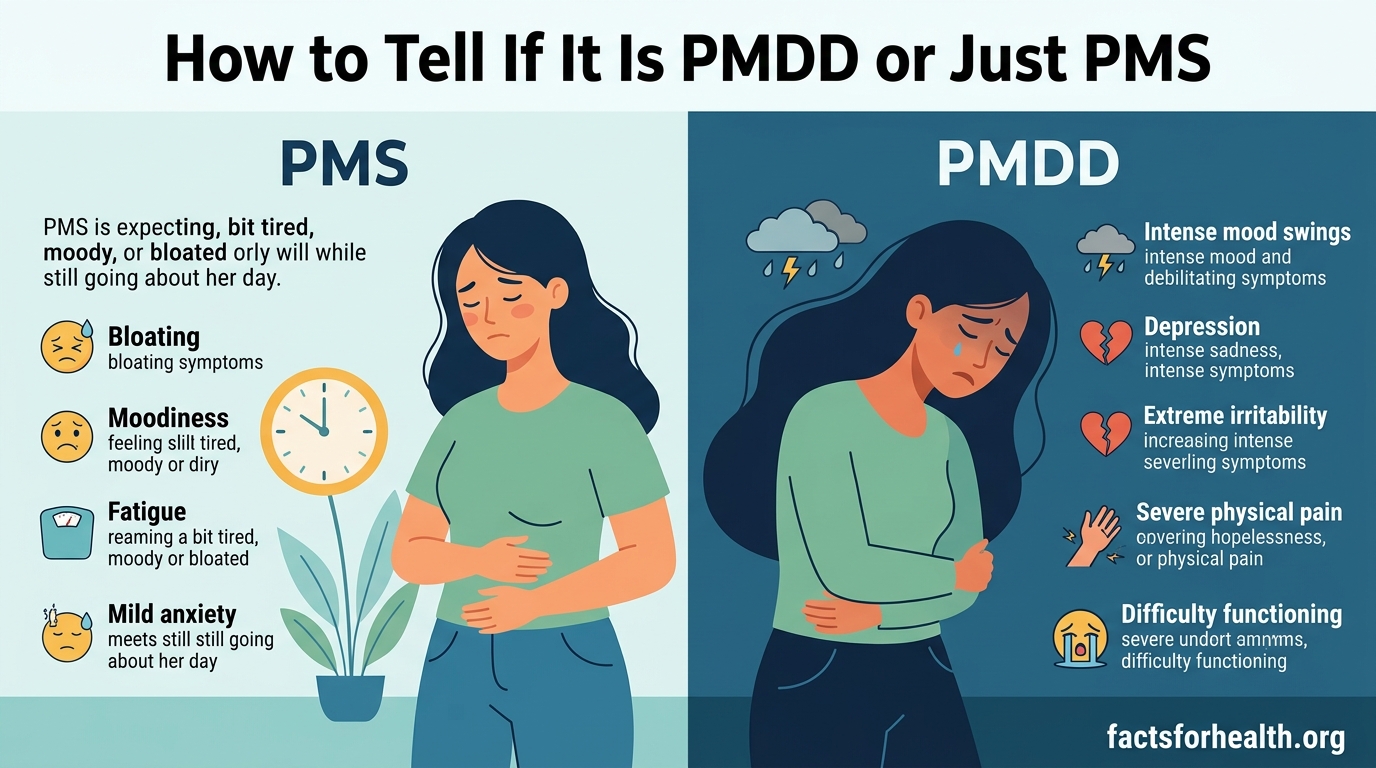
The fastest way to tell the difference is to look at the type and severity of symptoms. PMS tends to involve physical discomfort with mild emotional changes. PMDD centers on severe emotional and psychological symptoms that can feel overwhelming.
Common PMS Symptoms
PMS symptoms are familiar to most menstruating women. They are uncomfortable but manageable for the majority of people.
- Physical symptoms: bloating, breast tenderness, fatigue, headaches, muscle or joint pain, acne flare-ups, food cravings, and sleep disturbances
- Emotional symptoms: mild mood swings, slight irritability, minor anxiety, feeling a bit more emotional than usual
- Impact level: annoying but does not prevent you from going to work, maintaining relationships, or handling daily responsibilities
Most women with PMS can push through their day with some discomfort. A heating pad, some ibuprofen, and a little patience usually get the job done.
Common PMDD Symptoms
PMDD shares many physical symptoms with PMS, but it adds a layer of emotional intensity that can be frightening. The mood-related symptoms are what separate PMDD from typical premenstrual changes.
- Emotional symptoms: severe depression, feelings of hopelessness, extreme anxiety, panic attacks, intense irritability or anger outbursts, feeling out of control, sudden sadness or crying spells, rejection sensitivity
- Cognitive symptoms: difficulty concentrating, feeling overwhelmed, confusion, feeling disconnected from reality
- Behavioral symptoms: withdrawing from social activities, conflicts at work or in relationships, loss of interest in normal activities, changes in appetite
- Physical symptoms: severe bloating, extreme fatigue, joint or muscle pain, headaches, breast tenderness (similar to PMS but more intense)
The critical indicator is whether these symptoms cause functional impairment. If you find yourself canceling plans, calling in sick, or having serious conflicts that only happen during the premenstrual window, that is a red flag.
One Reddit user described the PMDD experience this way: “About 10 to 14 days before my period I would crash hard: intense mood swings, borderline I hate myself and everyone thoughts.” That level of emotional distress is characteristic of PMDD, not typical PMS.
Side-by-Side Comparison
Here is a quick-reference breakdown to help you compare PMS and PMDD directly. This can help you identify which category your symptoms fall into.
- Mood: PMS causes mild mood swings; PMDD causes severe depression, anxiety, or rage
- Daily function: PMS is manageable; PMDD disrupts work, school, or relationships
- Duration: Both last 1 to 2 weeks before period and resolve within days of bleeding
- Physical symptoms: Similar in both, but PMDD amplifies them
- Hopelessness: Not typical in PMS; a hallmark PMDD symptom
- Suicidal thoughts: Rare in PMS; possible in PMDD and requires immediate medical attention
- Prevalence: PMS affects up to 75% of women; PMDD affects 3 to 8%
PMDD vs PME: An Important Distinction
There is a third condition that often gets confused with both PMS and PMDD: PME, or Premenstrual Exacerbation. PME is when you have an existing mental health condition like depression, anxiety, or ADHD that gets noticeably worse during the premenstrual phase. The underlying condition is always present, but the luteal phase amplifies it.
With PMDD, symptoms disappear completely after your period starts. With PME, the underlying symptoms persist all month but intensify before menstruation. This distinction matters because the treatment approach is different. PMDD treatment targets the cyclical hormonal trigger, while PME treatment focuses on managing the underlying condition with adjustments for premenstrual worsening.
Many women in online communities report being misdiagnosed for years because the cyclical pattern was not properly tracked. One woman shared that she was diagnosed with BPD years ago but it never fit, and she only recently realized it was PMDD. This is exactly why tracking symptoms over time matters so much.
Diagnostic Criteria for PMDD (DSM-5)
PMDD is formally recognized in the DSM-5, the diagnostic manual used by mental health professionals. Understanding the official criteria can help you know whether your experience aligns with a clinical diagnosis.
According to the DSM-5, PMDD is diagnosed when at least five of the following symptoms are present during the week before menstruation, improve within a few days after the period starts, and become minimal or absent in the weeks after. At least one of the symptoms must be from the emotional category.
The DSM-5 Symptom List
Mood symptoms (at least one required):
- Marked depression, feelings of hopelessness, or self-deprecating thoughts
- Marked anxiety, tension, or feeling keyed up or on edge
- Sudden mood swings, sadness, or tearfulness with increased sensitivity to rejection or criticism
- Persistent and marked anger or irritability, or increased interpersonal conflicts
Additional symptoms (enough to reach five total):
- Decreased interest in usual activities
- Difficulty concentrating
- Lethargy, easy fatigability, or marked lack of energy
- Marked change in appetite, food cravings, or overeating
- Hypersomnia (sleeping too much) or insomnia
- A sense of being overwhelmed or out of control
- Physical symptoms such as breast tenderness, bloating, weight gain, or joint and muscle pain
Timing and Functional Impairment
The DSM-5 requires that these symptoms cause clinically significant distress or functional impairment. That means the symptoms must interfere with work, school, social activities, or relationships. Simply feeling irritable before your period does not meet the threshold.
The symptoms must also be present in most menstrual cycles during the past year. A single bad month is not enough for a diagnosis. This is why doctors ask patients to track symptoms for at least two to three consecutive cycles before making a formal diagnosis.
How Doctors Confirm the Diagnosis
No blood test or scan can diagnose PMDD. Instead, doctors rely on prospective symptom tracking. They will typically ask you to keep a daily symptom diary for two to three months to confirm the cyclical pattern. The most commonly used tool is the Daily Record of Severity of Problems (DRSP).
Your doctor may also order lab work to rule out thyroid conditions or other hormonal issues that can mimic PMDD symptoms. As UCLA Health notes, this differential diagnosis step is important because thyroid disorders can cause mood changes that look similar to PMDD but require entirely different treatment.
Causes and Risk Factors
The exact cause of PMDD is not fully understood, but research points to a combination of hormonal sensitivity and brain chemistry. It is not caused by a hormone imbalance in the traditional sense. Women with PMDD typically have normal hormone levels. The problem is how their bodies respond to normal hormonal fluctuations.
Serotonin and Brain Chemistry
Serotonin is a neurotransmitter that regulates mood, sleep, and pain perception. During the luteal phase, the natural drop in estrogen and progesterone appears to trigger an abnormal serotonin response in some women. This sensitivity to normal hormone changes is what sets PMDD apart from PMS.
This is why SSRIs (selective serotonin reuptake inhibitors) are one of the most effective treatments for PMDD. By stabilizing serotonin levels, these medications can dramatically reduce both emotional and physical symptoms. Studies cited by UCLA Health show a 60 to 70% improvement rate with medication.
Genetic and Environmental Factors
Several risk factors increase the likelihood of developing PMDD. Understanding these can help you assess your own risk profile.
- Family history: Having a mother or sister with PMDD increases your risk
- Personal or family history of mental health conditions: Particularly depression, anxiety, or mood disorders
- Stress and traumatic events: High stress levels and past trauma are associated with increased PMDD risk
- Lifestyle factors: Obesity, smoking, and lack of exercise may contribute
- Substance use: Alcohol consumption can worsen symptoms
Can PMDD Start Later in Life?
Yes, and this is one of the most surprising facts for many women. PMDD can develop in your late 20s or 30s even if you previously had mild or no PMS symptoms. Many community members report that their symptoms seemed to appear suddenly, which can be especially confusing and frightening.
Hormonal shifts, major life stressors, pregnancy, or going off hormonal birth control can all act as triggers. If your pre-period symptoms have recently intensified or appeared for the first time, it is worth discussing with a healthcare provider rather than assuming it is just aging or stress.
PMDD and Comorbid Conditions
PMDD frequently coexists with other conditions, which can make diagnosis challenging. It overlaps symptomatically with borderline personality disorder (BPD), bipolar disorder, generalized anxiety disorder, and major depression. The key difference is timing. PMDD symptoms follow a strict cyclical pattern tied to the menstrual cycle, while other conditions cause symptoms throughout the month.
PMDD also commonly co-occurs with ADHD. The community r/PMDDxADHD is highly active, with many members reporting that their PMDD symptoms worsen ADHD-related challenges during the luteal phase. If you have an existing mental health or neurodevelopmental condition, the premenstrual phase can amplify it significantly.
How to Track Your Symptoms
Symptom tracking is the single most powerful tool for figuring out whether you are dealing with PMS or PMDD. No doctor can diagnose you accurately without it, and tracking yourself for two to three cycles often provides clarity before you even set foot in a clinic.
What to Track
Your symptom log should capture both physical and emotional symptoms, along with their severity and the date relative to your cycle. Track daily for accuracy rather than trying to recall symptoms retroactively.
- Emotional state: mood, anxiety level, irritability, sadness, hopelessness, anger
- Physical symptoms: bloating, breast tenderness, fatigue, headaches, cramps, sleep quality
- Impact: did symptoms affect work, relationships, or daily activities?
- Cycle data: first day of period, expected ovulation date
- Severity scale: rate each symptom from 1 (mild) to 5 (severe)
Sample Symptom Log Format
You can use a notebook, a spreadsheet, or one of several cycle-tracking apps. What matters is consistency. Here is a simple daily format you can follow:
- Date and cycle day: Example: June 20, Cycle Day 22
- Mood (1-5): 4 (significant irritability and anxiety)
- Physical symptoms: bloating, fatigue, headache
- Functional impact: argued with partner, skipped social plans
- Notes: felt overwhelmed at work, difficulty concentrating
After two to three months of daily tracking, patterns become clear. If your emotional symptoms spike dramatically during the luteal phase and disappear after your period, that is strong evidence for PMDD. If symptoms are mild or present throughout the month, it may point to PMS, PME, or another condition.
When to See a Doctor
You should schedule an appointment with a healthcare provider if your premenstrual symptoms interfere with your daily life, relationships, or work. Be specific about what you experience and bring your symptom log. Many women in online communities report struggling to find doctors who take PMDD seriously, so do not hesitate to seek a second opinion if you feel dismissed.
A gynecologist, psychiatrist, or primary care provider can evaluate your symptoms. If you have a confirmed or suspected mental health condition alongside PMDD, a collaborative approach involving both a gynecologist and a mental health professional often works best.
Treatment Options for PMS and PMDD
Treatment for PMS and PMDD ranges from lifestyle adjustments to prescription medication. The right approach depends on severity, individual response, and whether you have any coexisting conditions.
Lifestyle Changes
For mild PMS and as a complement to medical treatment for PMDD, lifestyle modifications can provide meaningful relief. These changes are not a replacement for medication in severe PMDD cases, but they help build a foundation for symptom management.
- Exercise: Regular aerobic exercise reduces symptom severity for both PMS and PMDD
- Diet: Complex carbohydrates, calcium, and magnesium may help ease symptoms. Reducing caffeine, alcohol, and salty foods can also help
- Sleep: Prioritizing 7 to 9 hours of sleep during the luteal phase supports mood regulation
- Stress management: Mindfulness, yoga, and relaxation techniques can reduce anxiety and irritability
Medication Options
For PMDD specifically, medication is often necessary. SSRIs are considered the first-line medical treatment. They can be taken daily or only during the luteal phase (the two weeks before your period). Both approaches have shown strong results in clinical studies, with many patients reporting significant improvement within the first cycle of use.
Hormonal birth control is another option. The FDA has specifically approved Yaz and Beyaz (which contain drospirenone) for PMDD treatment. However, not all birth control helps. Some formulations can actually worsen mood symptoms, so it is important to work closely with your provider to find the right fit.
For severe cases that do not respond to SSRIs or birth control, doctors may consider ovarian suppression medications that temporarily induce a menopause-like state. This is a more aggressive approach typically reserved for treatment-resistant PMDD.
Therapy and Counseling
Cognitive behavioral therapy (CBT) has shown effectiveness in helping women manage the emotional impact of PMDD. Therapy can provide coping strategies for the anxiety, depression, and interpersonal conflicts that often flare during the luteal phase. For women with comorbid conditions like anxiety disorders or trauma history, therapy is an important part of a comprehensive treatment plan.
Crisis Resources
If you experience suicidal thoughts during the premenstrual phase, this is a medical emergency that requires immediate attention. PMDD-related suicidal ideation is real and well-documented in medical literature. You are not overreacting, and help is available right now.
Call or text the 988 Suicide and Crisis Lifeline at 988, available 24 hours a day, 7 days a week. You can also text HOME to 741741 to connect with the Crisis Text Line. If you are in immediate danger, call 911 or go to your nearest emergency room.
FAQs
Which is worse, PMS or PMDD?
PMDD is significantly worse than PMS. While PMS causes mild to moderate physical and emotional discomfort that most women can manage, PMDD involves severe emotional symptoms like depression, anxiety, panic attacks, and even suicidal thoughts that interfere with daily functioning. PMDD affects about 3 to 8% of menstruating women compared to the 75% who experience some degree of PMS.
What stage of cycle is PMDD the worst?
PMDD symptoms are worst during the luteal phase, which is the 1 to 2 weeks between ovulation and the start of your period. Symptoms typically peak in the final few days before menstruation begins and resolve within 2 to 3 days after your period starts. This cyclical pattern is a key diagnostic feature of PMDD.
Do I have PMDD or am I just dramatic?
If your symptoms cause functional impairment, meaning they disrupt your work, relationships, or daily life, it is not dramatic to seek help. PMDD is a recognized medical condition in the DSM-5. Track your symptoms daily for 2 to 3 cycles and share the results with a healthcare provider. If symptoms appear only during the luteal phase and disappear after your period, that pattern points to PMDD rather than a general mental health condition.
What age does PMDD peak?
PMDD symptoms are most commonly reported during a woman’s late 20s to mid 30s, though the condition can develop at any point during reproductive years. Many women report that symptoms appeared or intensified in their 30s even if they previously had mild PMS. PMDD typically resolves after menopause when menstrual cycles cease and hormonal fluctuations stop.
Can you develop PMDD later in life?
Yes, PMDD can develop later in life. Many women first experience PMDD symptoms in their late 20s or 30s, even if their earlier periods involved only mild or no PMS. Triggers can include major hormonal shifts, pregnancy, going off birth control, or significant life stress. If your premenstrual symptoms have recently intensified, talk to a doctor rather than dismissing the change.
How long do PMDD symptoms last?
PMDD symptoms last for 1 to 2 weeks before your period begins and typically resolve within 2 to 3 days after menstruation starts. This means that women with PMDD can spend up to 2 weeks out of every month experiencing significant symptoms. Over a reproductive lifetime, UCLA Health estimates this can add up to approximately 8 years of disabling symptoms without treatment.
Conclusion
Knowing how to tell if it is PMDD or just bad PMS comes down to three things: severity, functional impact, and timing. If your premenstrual symptoms are intense enough to disrupt your life, if they follow a predictable cyclical pattern tied to your menstrual cycle, and if they resolve shortly after your period starts, PMDD is a real possibility worth exploring with a healthcare provider.
Start by tracking your symptoms daily for two to three cycles. This simple step provides the clarity you need, whether you are confirming PMS or building a case for a PMDD diagnosis. The relief that comes from having a name for what you experience can be life-changing, as countless women in support communities have discovered.
You do not have to suffer through this alone. Effective treatments exist, from SSRIs and birth control to therapy and lifestyle changes. Reach out to a healthcare provider, bring your symptom log, and advocate for yourself. Your experience is real, and you deserve answers.