
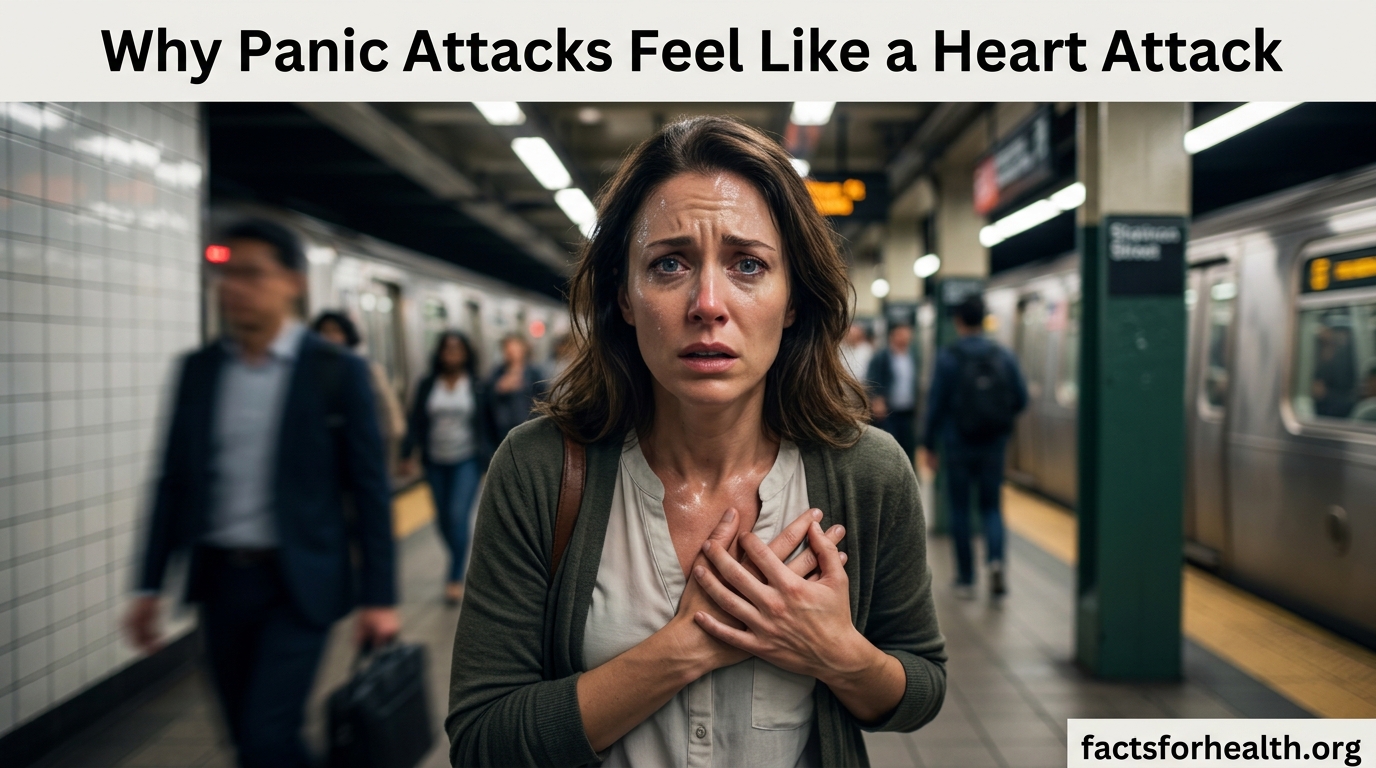
Your chest hurts. Your heart is pounding so hard you can feel it in your throat. You cannot catch a full breath, and a wave of terror washes over you, telling you that something is terribly wrong. If you have ever found yourself in an emergency room, convinced you were having a heart attack, only to be told your heart is fine, you are not alone. This scenario plays out thousands of times every day across the country.
Understanding why panic attacks feel like a heart attack comes down to one core mechanism: your body’s fight-or-flight response. When a panic attack hits, your brain floods your system with adrenaline and cortisol, the same stress hormones released during actual physical danger. These hormones make your heart race, your breathing accelerate, and your chest muscles tighten, producing sensations that are nearly identical to what happens during a cardiac event.
In this article, our team breaks down the exact physiology behind this overlap, how to tell the two conditions apart, and what to do in the moment when you are not sure. If you are reading this during an episode of chest pain and feel something is seriously wrong, call 911 immediately. It is always better to be safe.
Table of Contents
The Quick Answer: Why Panic Attacks Feel Like a Heart Attack
Panic attacks feel like heart attacks because both events trigger the same physical response in your body: a massive surge of stress hormones that puts your cardiovascular system into overdrive. The difference is the trigger. A heart attack is caused by a physical blockage in blood flow to the heart muscle. A panic attack is caused by your brain’s alarm system misfiring, releasing adrenaline and cortisol when there is no actual physical threat.
Here is the critical point: your body cannot tell the difference. The fight-or-flight response evolved to keep you alive in the face of predators and physical emergencies. When it activates, your body prepares for action by increasing heart rate, constricting blood vessels, accelerating breathing, and tensing muscles. Whether the trigger is a bear in the woods or a misfiring amygdala in your brain, the physical sensations are the same.
This is why the chest pain, shortness of breath, sweating, dizziness, and fear of dying feel so real during a panic attack. They ARE real. Your body is genuinely experiencing those sensations. The difference is that a panic attack is not dangerous to your heart, even though it feels like it is.
The Science: What Happens in Your Body During a Panic Attack
To truly understand why panic attacks mimic heart attacks so convincingly, we need to look at what happens beneath the surface. This is the part most articles skip, but it is the answer to the question you are really asking: how can something that is not dangerous feel so life-threatening?
The Autonomic Nervous System and Fight-or-Flight
Your autonomic nervous system controls all the involuntary functions in your body, including heart rate, breathing, blood pressure, and digestion. It has two main branches: the sympathetic nervous system (which accelerates everything) and the parasympathetic nervous system (which calms everything down).
During a panic attack, the sympathetic nervous system fires off like a smoke alarm in a building with no fire. This is the fight-or-flight response, and it is the same system that would activate if you were facing genuine physical danger. Your brain perceives a threat, whether real or imagined, and sends an urgent signal to prepare your body to fight or run.
The result is a cascade of physical changes that happen within seconds. Your heart starts racing to pump blood to your muscles. Your breathing quickens to take in more oxygen. Your blood vessels constrict, which can raise blood pressure and cause the sensation of pressure in your chest. Every one of these changes is your body trying to protect you. But when there is no actual threat, they feel terrifying instead of helpful.
Adrenaline: The Hormone That Mimics Cardiac Distress
Adrenaline, also called epinephrine, is the primary hormone behind the heart-attack-like sensations of a panic attack. When your sympathetic nervous system activates, your adrenal glands release a surge of adrenaline into your bloodstream. This happens almost instantly.
Adrenaline has specific effects on your heart and cardiovascular system. It forces your heart to beat faster and harder, which you feel as pounding or palpitations. It constricts blood vessels, which can create a sensation of pressure or tightness in your chest. It can also cause your heart rhythm to feel irregular, as though your heart is skipping beats or fluttering.
These are the exact same sensations people describe during the early moments of a heart attack. The adrenaline surge makes your chest hurt, your heart race, and your body break into a cold sweat. The difference is that in a panic attack, the adrenaline is responding to a false alarm. In a heart attack, the body is responding to actual cardiac damage. But the way it feels from the inside is nearly indistinguishable.
Cortisol and the Stress Cascade
Alongside adrenaline, your body releases cortisol, often called the primary stress hormone. While adrenaline acts within seconds, cortisol sustains the stress response over a longer period. Cortisol keeps your blood sugar elevated, your blood pressure raised, and your muscles tensed.
This prolonged stress response is why panic attack symptoms can linger even after the peak of the attack has passed. Many people report feeling exhausted, shaky, and washed out for hours after a panic episode. Cortisol is also responsible for the mental fog, the lingering sense of unease, and the hyperawareness of every heartbeat that can follow an attack.
For people who experience frequent panic attacks, chronically elevated cortisol levels can keep the nervous system on high alert between episodes. This is why many people with panic disorder describe feeling like their heart is always doing something strange, even when they are not actively having an attack. The body has become sensitized to every minor cardiac sensation.
Hyperventilation and Oxygen Changes
One of the most frightening aspects of a panic attack is the feeling that you cannot breathe. This is caused by hyperventilation, which means breathing too quickly and too shallowly. When you hyperventilate, you blow off too much carbon dioxide, which changes the acidity of your blood.
This chemical shift produces a cascade of physical symptoms that closely mimic cardiac distress. It causes dizziness, lightheadedness, and a feeling of being unable to get a full breath. It can also cause tingling or numbness in your hands, feet, and face. Some people describe a choking sensation or a feeling of pressure in their throat.
Hyperventilation also contributes to chest pain. When you breathe rapidly and shallowly, the muscles in your chest wall become tense and fatigued. This tension produces a sharp, aching, or tight sensation across the chest that can feel exactly like the pain of a heart attack. Many people who go to the ER for chest pain during a panic attack are experiencing this chest wall muscle tension, combined with the cardiovascular effects of adrenaline.
What a Panic Attack Feels Like in Your Chest
The chest symptoms of a panic attack are what send most people to the emergency room. They are intense, frightening, and feel genuinely life-threatening. Understanding exactly what they feel like can help you recognize them if they happen again.
Panic attack chest pain is typically described as sharp, stabbing, or piercing. It is usually localized to one specific spot in the center of the chest rather than spread across a wider area. The pain may come and go in waves, and it often feels worse when you take a deep breath. This is different from heart attack chest pain, which is usually described as crushing, heavy, or squeezing.
Alongside the pain, most people experience intense heart palpitations. Your heart may feel like it is pounding out of your chest, racing at 120 beats per minute or faster, or skipping beats entirely. These sensations are caused by adrenaline, and they feel deeply alarming even though they are not dangerous.
A sense of pressure or tightness in the chest is also common. Some people describe it as feeling like a heavy weight is sitting on their sternum. Others say it feels like a band tightening around their ribs. This pressure is caused by a combination of muscle tension, constricted blood vessels, and rapid breathing.
Beyond the physical chest sensations, panic attacks produce a psychological experience that intensifies the fear. Most people describe a overwhelming sense of impending doom, a feeling that they are about to die, or a sense that they are losing control of their body and mind. These thoughts are part of the panic response itself, driven by the amygdala, the brain’s fear center. They are not a sign that something is actually wrong. But they are powerful enough to make even someone who has had dozens of panic attacks question whether this time is different.
What a Heart Attack Actually Feels Like
To understand the difference, it helps to know what a heart attack actually feels like. A heart attack, medically called a myocardial infarction, occurs when a coronary artery becomes blocked, cutting off blood flow to part of the heart muscle. The symptoms develop because heart tissue is being deprived of oxygen.
Heart attack chest pain is most commonly described as a crushing, squeezing, or heavy pressure sensation. Many people compare it to having an elephant sitting on their chest. Unlike panic attack pain, which tends to be sharp and localized, heart attack pain is usually diffuse, spreading across the chest. It often feels deep rather than on the surface.
One of the most distinctive features of heart attack pain is that it radiates. The discomfort frequently spreads from the chest to the left arm, both arms, the jaw, the neck, the shoulders, or the upper back. Panic attack chest pain, by contrast, tends to stay in the chest area and does not travel.
Heart attack symptoms also tend to come on gradually and worsen over time. A person might feel mildly uncomfortable for several minutes or even hours before the pain becomes severe. Panic attacks, on the other hand, peak within minutes of onset.
Women often experience heart attack symptoms differently than the classic presentation. Women are more likely to have atypical symptoms such as shortness of breath without chest pain, nausea or vomiting, back or jaw pain, and overwhelming fatigue. These symptoms can overlap significantly with panic attack symptoms, which is why women with heart disease are sometimes misdiagnosed as having anxiety. This is an important reason why doctors recommend an ECG, also called an EKG, for anyone who arrives at the emergency room with chest discomfort.
Panic Attack vs Heart Attack: Key Differences
While the symptoms of panic attacks and heart attacks overlap significantly, there are several reliable differences that can help you tell them apart. These differences involve how the symptoms start, how long they last, what type of pain they produce, and what triggers them.
Onset and Duration
Panic attacks are defined by their sudden onset. They typically reach peak intensity within 10 minutes of starting. The entire episode usually resolves within 20 to 30 minutes, though lingering effects can last longer. Heart attacks, by contrast, usually build gradually. The symptoms may start mild and get progressively worse over 30 minutes to several hours. A heart attack does not resolve on its own. The symptoms persist and worsen until medical treatment is given.
Type of Chest Pain
Panic attack chest pain is usually sharp, stabbing, and localized to a specific point in the chest. It may worsen with deep breathing or movement. Heart attack chest pain is usually described as a heavy, crushing, or squeezing pressure that spreads across the chest. It typically does not change with breathing or body position.
Triggers and Context
Panic attacks can happen at any time, including during sleep, but they are often associated with stress, anxiety, or specific triggers like crowded spaces or social situations. They frequently occur at rest. Heart attacks are more likely to occur during physical exertion, though they can happen at rest too. A key clue is that heart attack symptoms often begin during or shortly after physical activity, such as climbing stairs, shoveling snow, or walking in cold weather.
How Symptoms Progress
Panic attack symptoms tend to fluctuate. They may spike intensely, ease off, and spike again within the same episode. The fear of dying is prominent early in the attack but gradually fades as the symptoms subside. Heart attack symptoms tend to follow a steadier trajectory. Once they begin, they usually persist and worsen rather than coming and going. The pain may intensify with continued physical activity and ease slightly with rest, but it does not fully disappear.
It is important to note that these differences are general patterns, not absolute rules. Some heart attacks present atypically, and some panic attacks can mimic heart attack symptoms perfectly. This is why the standard medical advice is simple: when in doubt, seek emergency care. No doctor will fault you for coming to the ER with chest pain, even if it turns out to be panic.
Can a Panic Attack Cause a Heart Attack?
This is one of the most common questions people ask, and the answer is reassuring. No, a panic attack cannot cause a heart attack. These are two completely different events with different underlying mechanisms.
A panic attack is caused by a surge of stress hormones that temporarily stresses your cardiovascular system. A heart attack is caused by a physical blockage in a coronary artery, usually due to plaque buildup or a blood clot. The stress hormone surge of a panic attack does not create blockages, and it does not damage your heart muscle. The strain it places on your heart is similar to what you would experience during vigorous exercise, which is safe for most people.
However, there is an important nuance. For people who already have diagnosed heart disease, severe panic or chronic anxiety can place extra strain on the cardiovascular system. Chronic stress and anxiety may contribute to heart disease risk factors over time, including elevated blood pressure and inflammation. But a single panic attack in a person with a healthy heart does not trigger a heart attack. If you have had a medical evaluation that confirmed your heart is healthy, you can be confident that panic attacks are not damaging your heart.
What to Do Right Now If You Are Not Sure
If you are reading this article because you are currently experiencing chest pain or a racing heart and you are not sure whether it is a panic attack or something more serious, here is what you should do.
First, if you have any of the following red flag symptoms, call 911 immediately: chest pain that spreads to your arm, jaw, neck, or back; chest pressure that feels like crushing or squeezing; sudden shortness of breath that does not improve; severe dizziness or fainting; or a sense that something is seriously wrong that does not go away. It is always safer to call 911 and find out it was panic than to wait and find out it was not.
If your symptoms are consistent with a panic attack you have had before, and your doctor has already confirmed your heart is healthy, you can try these techniques to help the attack pass.
Step 1: Try 4-7-8 breathing. Inhale through your nose for 4 seconds, hold your breath for 7 seconds, and exhale slowly through your mouth for 8 seconds. Repeat this cycle 4 times. This breathing pattern activates your parasympathetic nervous system, which is the body’s natural brake on the fight-or-flight response.
Step 2: Use the 5-4-3-2-1 grounding method. Name 5 things you can see, 4 things you can physically feel, 3 things you can hear, 2 things you can smell, and 1 thing you can taste. This technique pulls your brain out of the fear response by forcing it to process sensory information from your environment.
Step 3: Remind yourself that this will pass. Panic attacks typically peak within 10 minutes and resolve within 30 minutes. Tell yourself, out loud if it helps, that your body is experiencing a stress hormone surge and that it will subside. This is not your first time, and it will end.
Step 4: Splash cold water on your face. Cold water triggers the mammalian dive reflex, which slows your heart rate and activates the parasympathetic nervous system. It is a fast, simple way to interrupt the adrenaline cycle.
If these techniques do not help within 15 to 20 minutes, or if your symptoms worsen, call 911 or go to the nearest emergency room. There is no shame in seeking medical care, even if you have been before.
What to Expect at the ER
Many people with panic disorder avoid going to the ER because they feel embarrassed about having a false alarm. This is a common concern raised in anxiety support communities, and it is completely understandable. But knowing what to expect can reduce that anxiety.
When you arrive at the ER with chest pain, the medical team will take your symptoms seriously regardless of your age or history. They will typically perform an ECG, which is a painless test that records the electrical activity of your heart. This test takes about 5 minutes and can immediately show whether you are having a heart attack. They may also draw blood to check for cardiac enzymes, proteins that leak into the bloodstream when heart muscle is damaged.
If these tests come back normal, the ER team can confidently rule out a heart attack. They may offer medication to help calm the panic response, provide resources for follow-up mental health care, and send you home with reassurance. Many ER doctors see panic attack cases every day. You are not wasting their time, and you are not the first person to come in with these symptoms.
One important caution: people who have had multiple panic attacks sometimes develop false alarm fatigue. They start ignoring real cardiac symptoms because they assume every episode is panic. This can be dangerous. If you have new, different, or more severe symptoms than your typical panic attacks, do not assume it is anxiety. Get evaluated.
When to Seek Emergency Care: Red Flag Symptoms
Certain symptoms should always prompt a call to 911, regardless of whether you think it might be a panic attack. These red flag symptoms include:
Chest pain or pressure that lasts more than a few minutes or that goes away and comes back. Pain that spreads to one or both arms, the jaw, neck, shoulders, or upper back. Sudden severe shortness of breath, especially if it occurs at rest. Cold sweat, nausea, or vomiting that accompanies chest discomfort. Sudden dizziness, lightheadedness, or fainting. A racing or irregular heartbeat that does not slow down after several minutes of rest.
You should also be extra cautious if you have risk factors for heart disease. These include being over age 50, having a family history of heart disease, smoking, having high blood pressure, high cholesterol, or diabetes, being significantly overweight, or having a sedentary lifestyle. If any of these apply to you, take chest symptoms seriously every time.
The bottom line for emergency care is this: it is always better to go to the ER and learn it was a panic attack than to stay home and miss a heart attack. Emergency medical professionals would rather see you for a false alarm than not see you in time.
FAQs
Can a panic attack cause a heart attack?
No. A panic attack cannot cause a heart attack. Panic attacks are triggered by a surge of stress hormones that activate the fight-or-flight response, while heart attacks are caused by blocked blood flow to the heart due to plaque or blood clots. The adrenaline surge of a panic attack is similar to what happens during exercise and does not damage a healthy heart.
What happens to your body during a panic attack?
During a panic attack, your autonomic nervous system activates the fight-or-flight response. Adrenaline and cortisol flood your bloodstream, causing your heart to race, your breathing to quicken, your blood pressure to rise, and your chest muscles to tighten. These are the same changes that occur during real physical danger, which is why they feel so intense and frightening.
How to get yourself out of a panic attack?
Try the 4-7-8 breathing technique: inhale for 4 seconds, hold for 7, exhale for 8. Use the 5-4-3-2-1 grounding method by naming 5 things you see, 4 you feel, 3 you hear, 2 you smell, and 1 you taste. Remind yourself the attack will pass, usually within 10 minutes of peaking. Splash cold water on your face to trigger the dive reflex. If symptoms do not improve or you are unsure, call 911.
What does a panic attack feel like in your chest?
A panic attack typically causes sharp, stabbing, or tightening chest pain that is localized to the center of the chest. Your heart may feel like it is pounding, racing, or skipping beats. You may feel pressure or heaviness in your chest. The pain usually does not spread to the arm, jaw, or back, and it tends to peak within minutes before subsiding.
How long does panic attack chest pain last?
Panic attack chest pain typically peaks within 10 minutes of onset and gradually subsides over 20 to 30 minutes. Lingering sensations like mild chest tightness, fatigue, and a racing heart can persist for an hour or more. If chest pain lasts longer than 30 minutes without improvement, seek emergency medical care to rule out a cardiac event.
Can anxiety cause a heart attack?
No, acute anxiety or a single panic attack cannot cause a heart attack in a person with a healthy heart. However, chronic long-term anxiety may contribute to heart disease risk factors such as high blood pressure and inflammation over time. If you have existing heart disease, severe anxiety can place additional strain on your cardiovascular system, so discuss this with your doctor.
The Bottom Line: Why Panic Attacks Feel Like a Heart Attack
Panic attacks feel like heart attacks because both activate the same survival systems in your body. Adrenaline, cortisol, and the fight-or-flight response produce chest pain, a racing heart, shortness of breath, and a terrifying sense of impending doom. These sensations are real, and they are frightening. But understanding the mechanism behind them can take away some of their power.
If you are experiencing recurrent panic attacks, talk to a healthcare provider about treatment options. Cognitive behavioral therapy, medication, and lifestyle changes are highly effective for panic disorder. You do not have to live in fear of the next episode.
This article is for educational purposes only and is not a substitute for professional medical advice. If you are experiencing chest pain or other symptoms of a heart attack, call 911 immediately.