
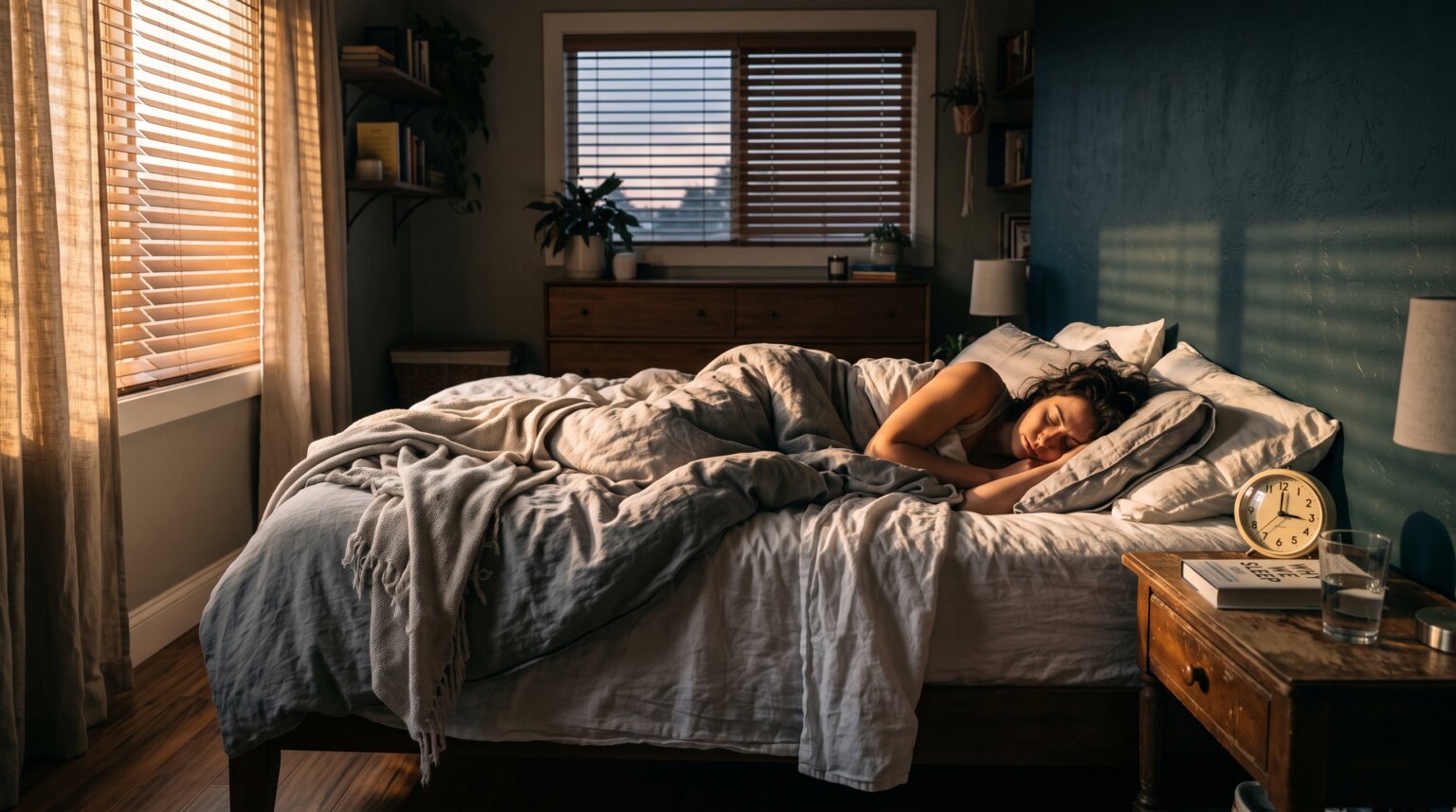
You lie down for a quick afternoon nap hoping to feel refreshed. Instead, you wake up groggy, disoriented, and inexplicably anxious. Hours later, when it is time for bed, you are staring at the ceiling with racing thoughts and zero ability to fall asleep. If this sounds familiar, you are far from alone.
Understanding why naps make anxiety worse starts with recognizing that this is a well-documented phenomenon, not something you are imagining. Thousands of people across anxiety support forums describe the exact same experience. One Reddit user in the r/Anxiety community put it bluntly: “Naps are the worst for me. I wake up feeling like death warmed up.” Another shared: “I stopped taking naps unless I am sick for this very reason.”
The paradox is frustrating. Sleep should restore you, not leave you worse off. Yet for many people, especially those already prone to anxiety or sleep difficulties, napping can backfire in multiple ways. The problem is not the nap itself but rather how long you nap, when you nap, and what stage of sleep your brain enters during that nap.
In this guide, our team breaks down the science behind why a daytime nap can trigger nighttime anxiety and insomnia. We will cover sleep stages, sleep inertia, circadian rhythm disruption, cortisol spikes, and the bidirectional relationship between anxiety and sleep. We will also give you practical, tested strategies to nap without wrecking your night, plus a clear self-assessment to figure out if naps are the root of your sleep problems.
Table of Contents
The Science of Sleep Stages: What Happens When You Nap
Your brain cycles through distinct sleep stages every night, and the same stages activate during daytime naps. Understanding these stages is the foundation for grasping why naps sometimes make anxiety worse instead of better.
Sleep is divided into two main categories: NREM (non-rapid eye movement) sleep and REM (rapid eye movement) sleep. NREM sleep itself has three progressively deeper stages, often labeled N1, N2, and N3. Each stage serves a different purpose and produces different brainwave patterns.
Stage N1 (Light Sleep): This is the transition from wakefulness to sleep. Your brain shifts from producing beta waves (active, alert thinking) to alpha waves (relaxed, calm awareness) and then to theta waves (light sleep). This stage lasts only a few minutes. You can be woken easily and may not even realize you were asleep.
Stage N2 (Moderate Sleep): During this stage, your brain produces sleep spindles and K-complexes, which are brief bursts of brain activity that help protect your sleep from external disturbances. Stage N2 accounts for about 50% of total sleep time. A nap that keeps you mostly in N1 and N2 is what people typically call a “power nap.”
Stage N3 (Deep Sleep): Also called slow-wave sleep, this is when your brain produces delta waves, the slowest and most synchronized brainwave pattern. Deep sleep is when your body repairs tissue, strengthens the immune system, and consolidates certain types of memories. It is also the hardest stage to wake up from.
REM Sleep: This is when most vivid dreaming occurs. Your brain becomes highly active, almost as active as when you are awake. REM sleep plays a critical role in emotional processing and memory consolidation. Interestingly, REM sleep is also when anxiety-provoking dreams tend to happen.
Here is where the problem begins. A short nap of 10 to 20 minutes keeps you in light sleep stages (N1 and N2). But once you pass the 30-minute mark, your brain typically enters Stage N3 deep sleep. Waking from deep sleep is where things go wrong for many people, and this brings us to one of the most important concepts in sleep science.
Sleep Inertia: Why Waking Up From a Nap Feels Terrible
Sleep inertia is the groggy, disoriented, and confused feeling you experience after waking up, particularly from deep sleep. Think of it as your brain struggling to shift gears from slow delta waves back to active beta waves. This transition is not instant. It can take anywhere from a few minutes to over an hour to fully shake off.
During sleep inertia, your cognitive function is impaired. Reaction times slow down. Decision-making suffers. Short-term memory feels foggy. Studies have shown that the cognitive impairment from severe sleep inertia can be comparable to being legally drunk. Your brain is quite literally not fully online yet.
For someone with anxiety, sleep inertia is more than just feeling fuzzy. It can trigger a cascade of anxious thoughts. You wake up confused about what time it is. The disorientation feels unnatural, even frightening. Your brain, still half in sleep mode, misinterprets this confusion as a threat. Next thing you know, your heart is racing and your thoughts are spiraling.
This is the core of what many people describe as post-nap anxiety or post-nap panic. One Reddit user described it vividly: “I wake up with anxiety at 1000% after naps.” That feeling of jarring, panicked awakening is sleep inertia colliding with an anxiety-prone nervous system.
The severity of sleep inertia depends on several factors:
How deep the sleep was: Waking from Stage N3 deep sleep produces the worst sleep inertia.
How sleep-deprived you are: If you are carrying significant sleep debt, your brain will dive into deep sleep faster and deeper, making the inertia worse.
What time of day it is: Waking during your natural circadian dip (typically early afternoon) can intensify grogginess.
Whether you were in REM sleep: Waking mid-dream from REM sleep can leave you with lingering emotional residue from whatever you were dreaming about.
The connection between sleep inertia and anxiety is straightforward. Sleep inertia triggers a stress response. Your body reacts to the disorientation by releasing stress hormones. Your sympathetic nervous system, the fight-or-flight system, kicks into gear. For someone already dealing with anxiety, this is like pouring gasoline on a fire.
Sleep inertia also explains why some people feel anxious specifically after naps but not after nighttime sleep. When you wake up in the morning, your body has already begun its natural cortisol awakening response, gradually preparing you for consciousness. When you wake up from a midday nap, that gradual ramp-up has not happened. You are jolted awake in the middle of a sleep cycle, and your body is caught off guard.
How Naps Disrupt Your Circadian Rhythm
Your circadian rhythm is your body’s internal 24-hour clock. It regulates when you feel alert, when you feel sleepy, when hormones are released, and when your body temperature rises and falls. This clock is remarkably precise, and it does not appreciate being messed with.
The circadian rhythm operates on two main drivers: the sleep-wake homeostasis and the circadian alerting system. Sleep-wake homeostasis is essentially a pressure valve. The longer you are awake, the more sleep pressure builds up (thanks to a chemical called adenosine accumulating in your brain). When that pressure reaches a certain threshold, you feel sleepy.
Here is the problem with napping. When you nap, you release some of that accumulated sleep pressure. Think of it like letting air out of a balloon. If you release too much during the day, there is not enough pressure left by nighttime to drive you into restful sleep. This is why many people who nap during the day find themselves lying awake at night, frustrated and anxious about not sleeping.
Melatonin plays a key role here too. Melatonin is the hormone that signals to your body that it is time to sleep. It typically begins rising in the evening as darkness falls, peaks during the night, and drops in the morning. Daytime napping, especially in a dark room, can confuse melatonin production. Your brain is not sure whether it should be in daytime mode or nighttime mode.
The circadian disruption from napping is particularly problematic in two scenarios:
Late afternoon naps: Napping after 3 PM is especially disruptive because it directly competes with your body’s natural wind-down process. Your circadian rhythm is already starting to prepare for nighttime sleep, and a late nap throws a wrench into that preparation. This is one of the most common causes of nap-related insomnia.
Long naps: Naps longer than 30 minutes not only push you into deep sleep (causing sleep inertia) but also release significant amounts of sleep pressure. The combination means you will likely feel terrible when you wake up AND struggle to fall asleep that night. It is the worst of both worlds.
For someone with anxiety, this creates a vicious cycle. The nap disrupts nighttime sleep. Poor nighttime sleep means you are exhausted the next day. Exhaustion makes anxiety harder to manage. Harder-to-manage anxiety makes it even more difficult to sleep. And around and around it goes.
The Cortisol Connection: Stress Hormones and Napping
Cortisol is often called the stress hormone, but that label is a bit misleading. Cortisol is essential for life. It regulates metabolism, reduces inflammation, and helps your body respond to stress. The key is not whether you have cortisol but whether your cortisol levels follow the right rhythm.
In a healthy sleep-wake cycle, cortisol follows a predictable daily pattern called the cortisol awakening response (CAR). Cortisol levels are at their lowest around midnight. They begin rising in the early morning hours, peak about 30 to 45 minutes after you wake up, and then gradually decline throughout the day. By evening, cortisol should be low, allowing melatonin to rise and sleep to come naturally.
Daytime naps can disrupt this carefully timed cortisol rhythm. When you nap and then wake up, your body often initiates a mini version of the cortisol awakening response. This means a burst of cortisol at a time when your levels should be steadily declining. Instead of winding down for the evening, your body gets a hit of stress hormone in the middle of the afternoon.
This cortisol spike has two major consequences for nighttime anxiety and insomnia:
First, elevated cortisol directly interferes with sleep onset. Cortisol and melatonin are essentially opposites. When cortisol is high, melatonin is suppressed. If your afternoon nap triggered a cortisol spike that has not fully resolved by bedtime, your brain will struggle to produce the melatonin needed to fall asleep. You lie awake, cortisol circulating, feeling wired and tired simultaneously.
Second, elevated cortisol amplifies anxiety. Cortisol activates the amygdala, the brain’s fear center, while simultaneously dampening the prefrontal cortex, the area responsible for rational thinking. This is why, after a nap, anxious thoughts can feel more intense and harder to control. Your brain is literally primed to perceive threats and less equipped to talk itself down.
For people with existing anxiety disorders, this cortisol disruption can be particularly destabilizing. The body’s stress response system is already operating on a hair trigger. Adding a midday cortisol spike from napping is like adding kindling to an already smoldering fire.
The cortisol connection also helps explain why some people experience post-nap panic attacks. A sudden surge of cortisol, combined with the disorientation of sleep inertia, can trigger the physiological cascade of a panic attack: racing heart, shortness of breath, chest tightness, and an overwhelming sense of dread. The person wakes up and within seconds is in full fight-or-flight mode, with no obvious external trigger.
The Bidirectional Anxiety-Sleep Cycle
One of the most important things to understand about anxiety and sleep is that the relationship goes both ways. This is called a bidirectional relationship, and it is the key to understanding why naps can become such a trap for people with anxiety.
In one direction, anxiety disrupts sleep. When you are anxious, your brain is in a state of hyperarousal. Your nervous system is on high alert, scanning for threats. This hyperarousal makes it difficult to fall asleep, difficult to stay asleep, and difficult to nap. Racing thoughts keep your mind too active to transition into sleep. Muscle tension keeps your body too rigid to relax. The anxiety itself becomes a barrier to the rest you desperately need.
In the other direction, poor sleep worsens anxiety. When you do not get enough quality sleep, the amygdala becomes up to 60% more reactive to negative stimuli. This means your brain literally becomes more sensitive to stress and perceived threats after a bad night of sleep. Your emotional regulation takes a hit. Situations that you could handle calmly after a good night of sleep suddenly feel overwhelming.
This bidirectional relationship is what sleep researchers call sleep reactivity, the degree to which stress disrupts your sleep. Some people have high sleep reactivity, meaning stress and anxiety quickly translate into sleep problems. For these individuals, even minor stressors can trigger insomnia, and naps become a minefield.
Now add napping into this already volatile mix. The nap triggers sleep inertia and cortisol disruption. That disruption worsens nighttime sleep. Poor nighttime sleep amplifies anxiety the next day. Increased anxiety makes it even harder to sleep the following night. Each cycle feeds the next, and the person finds themselves trapped in an anxiety-sleep feedback loop.
This is why simply trying to nap better often is not enough. If the underlying anxiety is not addressed, the cycle will continue regardless of nap timing or duration. Breaking the cycle requires addressing both sides: managing the anxiety and optimizing the sleep.
The bidirectional model also explains why some people cannot nap at all due to anxiety. One Reddit user shared: “Can anxiety make it impossible to nap? I literally cannot nap and this started when my anxiety began.” When the hyperarousal system is fully activated, the brain refuses to let go of consciousness. It is as if the anxious brain is saying, “We are under threat. We cannot afford to lose awareness.” Sleep becomes biologically impossible, no matter how exhausted the body feels.
Nap Duration Matters: Power Naps vs. Long Naps
Not all naps are created equal. The length of your nap is the single biggest factor in determining whether it will help or hurt you. Understanding the difference between nap types can help you avoid the traps that lead to nighttime anxiety and insomnia.
Power Naps (10-20 minutes): These short naps keep you in Stage N1 and N2 light sleep. You wake up feeling refreshed and alert, with minimal to no sleep inertia. Power naps can improve mood, boost cognitive performance, and increase alertness without interfering with nighttime sleep. This is the sweet spot for most people, especially those prone to anxiety.
Medium Naps (30-60 minutes): Naps in this range typically push you into Stage N3 deep sleep and sometimes into REM sleep. Waking from these stages produces significant sleep inertia. You will likely feel groggy, disoriented, and potentially anxious for 30 to 60 minutes after waking. Medium naps also release more sleep pressure, which can make it harder to fall asleep at night.
Full Cycle Naps (90 minutes): A 90-minute nap allows you to complete one full sleep cycle (light sleep, deep sleep, and REM sleep). Waking at the end of a full cycle produces less sleep inertia than waking mid-cycle. However, a 90-minute nap releases substantial sleep pressure and can significantly disrupt nighttime sleep, especially if taken in the afternoon.
The general rule of thumb is simple. If you are going to nap, keep it under 20 minutes or go for a full 90 minutes. The 30-to-60-minute range is the danger zone where you get the worst combination of sleep inertia and sleep pressure disruption.
As one Reddit user wisely advised: “Napping more than 20 minutes will put you into a deeper sleep. Try setting an alarm and keep naps to no more than the 20 minutes.” This advice aligns perfectly with sleep science research.
When It Is Not Just the Nap: Underlying Health Conditions
Sometimes post-nap anxiety and insomnia are not just about nap timing or duration. They can be symptoms of underlying health conditions that affect sleep quality. If you consistently feel worse after naps despite following all the best practices, one of these conditions may be involved.
Sleep Apnea: Obstructive sleep apnea causes repeated interruptions in breathing during sleep. These interruptions can happen during naps too, especially if you are lying on your back. Each apnea event triggers a micro-arousal, fragmenting your sleep and causing a stress response. People with sleep apnea often wake from naps feeling exhausted, anxious, and sometimes gasping for air. If you snore loudly or have been told you stop breathing during sleep, sleep apnea could be the culprit.
Thyroid Disorders: Both hyperthyroidism (overactive thyroid) and hypothyroidism (underactive thyroid) can disrupt sleep. Hyperthyroidism can cause anxiety, rapid heartbeat, and insomnia. Hypothyroidism can cause extreme daytime fatigue (leading to frequent napping) and poor sleep quality. A simple blood test can check your thyroid function.
Anemia: Iron deficiency anemia causes fatigue, weakness, and poor sleep quality. People with anemia may feel the need to nap frequently but wake up feeling unrefreshed and sometimes anxious. The lack of oxygen-carrying red blood cells can also cause heart palpitations that mimic or trigger anxiety.
Generalized Anxiety Disorder (GAD): If you have GAD or another anxiety disorder, your baseline level of hyperarousal is already elevated. Napping becomes risky because any sleep disruption (inertia, cortisol spike, disorientation) gets amplified by your already sensitized nervous system. For some people with anxiety disorders, the best strategy is to avoid naps entirely and focus on consolidating all sleep into the nighttime window.
Depression: Depression and anxiety frequently co-occur. Depression can cause both hypersomnia (excessive sleeping) and insomnia. Naps during depressive episodes may provide temporary relief but can worsen nighttime sleep and disrupt the circadian rhythm further.
If you suspect any of these conditions, talk to your healthcare provider. Post-nap anxiety that persists despite optimizing your nap habits deserves medical investigation.
Practical Strategies for Anxiety-Friendly Napping
If you want to keep napping without wrecking your nighttime sleep or triggering anxiety, these evidence-based strategies will help. Our team compiled these from sleep research, clinical guidelines, and real-world advice from anxiety communities.
1. Set an alarm for 20 minutes maximum. This is the single most effective strategy for avoiding sleep inertia and post-nap anxiety. Twenty minutes keeps you in light sleep stages. You wake up refreshed instead of disoriented. Factor in about 5 to 7 minutes to fall asleep, so set your alarm for 25 to 27 minutes if needed.
2. Nap early in the afternoon. The ideal nap window is between 1:00 PM and 3:00 PM, which aligns with the natural circadian dip most people experience. Napping after 3:00 PM begins to interfere with your body’s evening wind-down process. The later you nap, the more likely it is to disrupt nighttime sleep.
3. Try the coffee nap strategy. Drink a cup of coffee right before lying down for your 20-minute nap. Caffeine takes about 20 minutes to reach peak effectiveness in your bloodstream. By the time your alarm goes off, the caffeine is just starting to kick in, and you get a double boost from the nap and the caffeine. Research shows coffee naps are more effective than either napping or caffeine alone for improving alertness.
4. Nap in a comfortable but not too comfortable environment. A slightly reclined position is better than fully lying flat in bed. You want your body to rest but not drop into deep sleep too quickly. Use an eye mask and earplugs or white noise to minimize disturbances.
5. Use the 3-3-3 rule for anxiety if you wake up panicked. The 3-3-3 rule is a grounding technique for anxiety that works especially well for post-nap panic. When you wake up anxious, name three things you can see, three sounds you can hear, and move three parts of your body (for example, wiggle your toes, roll your shoulders, clench and release your fists). This forces your brain to shift from the internal threat-detection mode of anxiety to external sensory awareness, helping to break the panic cycle.
6. Get sunlight immediately after waking. Exposure to bright light, especially natural sunlight, helps reset your circadian rhythm and suppresses any lingering melatonin. Step outside for 5 minutes or sit by a bright window. This signals to your brain that it is daytime and helps clear sleep inertia faster.
7. Do not force a nap if you cannot fall asleep. If you lie down and your mind is racing, do not spend 30 minutes trying to force sleep. This only builds a negative association between your rest time and anxiety. Get up after 10 minutes if you have not fallen asleep, and try a different relaxation strategy instead.
8. Keep a consistent nap schedule. If you nap regularly, try to nap at the same time each day. Your circadian rhythm adapts to predictable patterns. A consistent nap time becomes a planned part of your rhythm rather than a disruption to it.
5 Signs Your Nap Is Hurting Your Nighttime Sleep
Sometimes the connection between napping and nighttime sleep problems is not obvious. Use this self-assessment checklist to determine if your napping habits are contributing to your nighttime anxiety and insomnia:
You lie awake for more than 30 minutes at bedtime. If you used to fall asleep quickly but now toss and turn since you started napping, your nap is likely stealing your sleep pressure.
You wake up from naps feeling worse, not better. Grogginess, confusion, irritability, or anxiety after naps are all signs that your nap is doing more harm than good.
Your nighttime sleep has become lighter and more fragmented. If you are waking up more frequently during the night since you started napping, the nap may be disrupting your circadian rhythm.
You experience increased anxiety in the evening. If your anxiety spikes at night on days when you napped but not on days when you skipped the nap, that is a clear signal.
You are napping because of poor nighttime sleep, but your nighttime sleep is not improving. This is the feedback loop in action. The nap is treating the symptom (daytime fatigue) while perpetuating the cause (poor nighttime sleep).
If you checked three or more of these signs, try eliminating naps entirely for two weeks. Track your nighttime sleep quality and anxiety levels. Many people are surprised by how quickly their nighttime sleep improves once they stop napping.
When to See a Healthcare Provider
Occasional post-nap grogginess is normal. But certain signs warrant professional evaluation. You should talk to a healthcare provider if you experience any of the following:
Post-nap anxiety or panic attacks that happen regularly, not just occasionally
Insomnia that persists for more than a few weeks despite improving your sleep habits
Daytime fatigue so severe that you cannot function without napping
Loud snoring, gasping, or choking sounds during sleep (possible sleep apnea)
Anxiety symptoms that interfere with your daily life, work, or relationships
Depression symptoms alongside sleep problems
A healthcare provider can evaluate you for underlying conditions like sleep apnea, thyroid disorders, or anxiety disorders. They can also refer you to a sleep specialist or mental health professional if needed.
Cognitive Behavioral Therapy for Insomnia (CBT-I) is considered the gold standard treatment for chronic insomnia, including anxiety-related sleep problems. CBT-I helps you identify and change the thoughts and behaviors that interfere with sleep. It is more effective than sleep medication in the long term and directly addresses the bidirectional anxiety-sleep cycle.
FAQs
Why do naps make my anxiety worse?
Naps can make anxiety worse due to sleep inertia, which is the groggy, disoriented feeling you get when waking from deep sleep. When you nap longer than 20 minutes, your brain enters deep sleep stages, and waking from these stages triggers a stress response. This includes a spike in cortisol and activation of the sympathetic nervous system, which can trigger anxiety, racing thoughts, and even panic attacks in people prone to anxiety.
What is the 3-3-3 rule for anxiety sleep?
The 3-3-3 rule is a grounding technique for anxiety. When you feel anxious, especially after waking from a nap, name three things you can see, identify three sounds you can hear, and move three parts of your body. This technique shifts your brain from internal threat-detection mode to external awareness, helping to interrupt the anxiety cycle and bring you back to the present moment.
Should people with sleep apnea take naps?
People with sleep apnea should be cautious about napping. Sleep apnea causes breathing interruptions during sleep, which can happen during naps too. These interruptions fragment sleep and trigger stress responses, making naps unrefreshing and potentially worsening anxiety. If you have sleep apnea, it is best to discuss napping with your doctor, especially since untreated sleep apnea often causes the daytime fatigue that leads to wanting naps in the first place.
How to cure anxiety-induced insomnia?
Anxiety-induced insomnia is best treated with Cognitive Behavioral Therapy for Insomnia (CBT-I), which addresses the thoughts and behaviors that maintain the cycle. Additional strategies include maintaining a consistent sleep schedule, avoiding late-day naps, practicing relaxation techniques before bed, limiting caffeine and screen time in the evening, getting morning sunlight exposure, and addressing the underlying anxiety through therapy or medication if needed. If insomnia persists beyond a few weeks, consult a healthcare provider.
Conclusion
Understanding why naps make anxiety worse comes down to four interconnected mechanisms: sleep inertia from waking out of deep sleep, circadian rhythm disruption that steals your nighttime sleep drive, cortisol spikes that prime your brain for stress, and the bidirectional anxiety-sleep cycle that turns each bad nap into a worse night.
The good news is that you do not have to give up napping entirely. Keeping naps under 20 minutes, napping before 3 PM, and using strategies like the coffee nap and the 3-3-3 grounding rule can help you get the benefits of rest without the nighttime consequences. If you have optimized your habits and post-nap anxiety or insomnia persists, talk to a healthcare provider to rule out underlying conditions and explore treatments like CBT-I.