
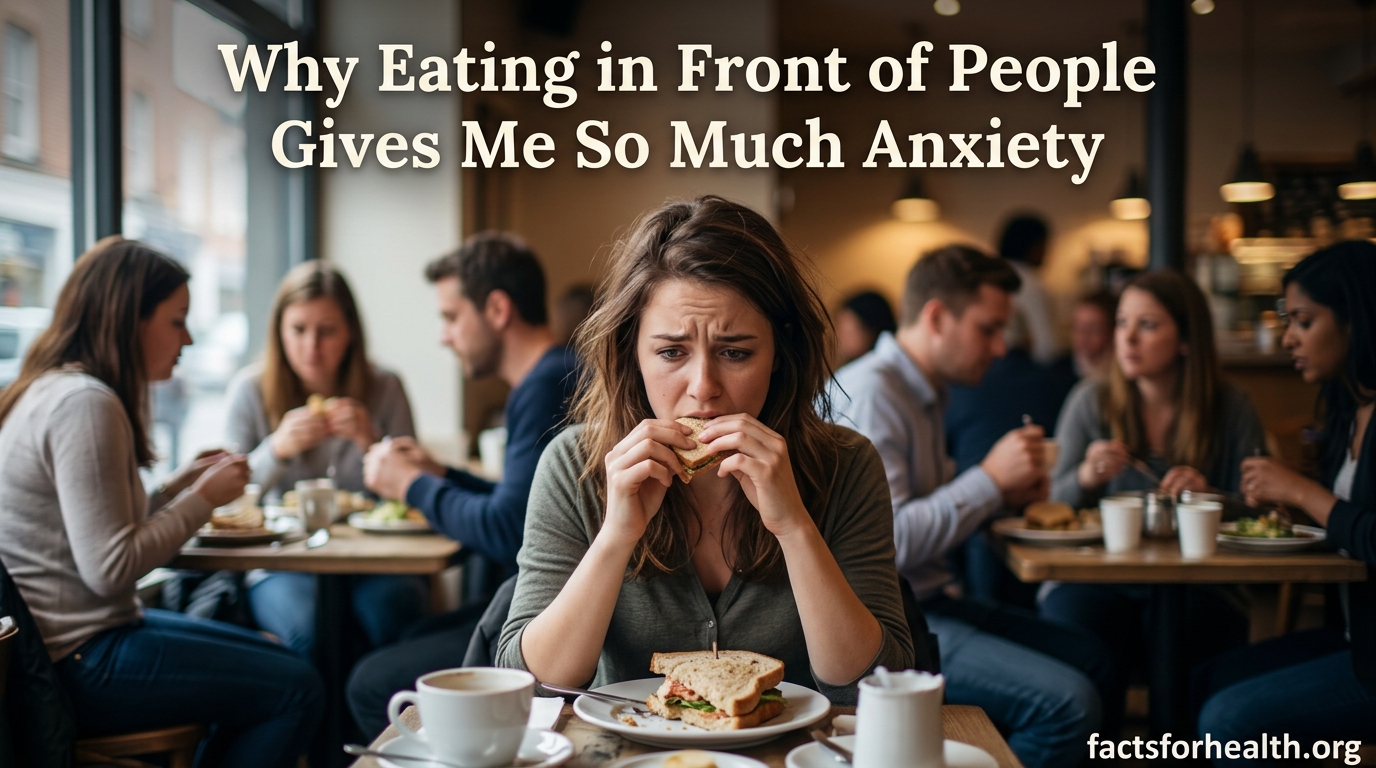
If you have ever sat in a restaurant, felt every pair of eyes on your plate, and wondered why eating in front of people gives me so much anxiety, you are far from alone. This experience is incredibly common, yet it can feel deeply isolating when you are in the middle of it. The racing heart, the trouble swallowing, the overwhelming urge to escape the table — these reactions are real, and they have a name.
Deipnophobia is a form of social anxiety disorder characterized by an intense fear of eating in front of others. It goes beyond ordinary self-consciousness. For many people, it triggers a full-body stress response that makes meals with friends, family dinners, and work lunches feel almost unbearable.
In this guide, our team breaks down exactly what causes this anxiety, how it shows up physically and emotionally, and what you can do about it. Whether you have been quietly managing this for years or just started noticing the pattern recently, the information here will help you understand what is happening and give you practical steps forward.
Table of Contents
What Is Deipnophobia? The Fear of Eating in Front of Others Explained
Deipnophobia is a specific anxiety centered on dining and eating in social settings. The word comes from the Greek “deipno,” meaning dinner or meal, and “phobos,” meaning fear. While it is not classified as a standalone diagnosis in the DSM-5, mental health professionals typically categorize it under social anxiety disorder.
What separates deipnophobia from normal nervousness is its intensity and persistence. Someone with this fear does not just feel a little awkward at a dinner party. They may experience genuine dread days before a social meal, go to great lengths to avoid eating in public, and feel exhausted by the mental effort of getting through a shared meal.
It is also worth noting that this fear exists on a spectrum. Some people feel anxious only in large groups or formal settings. Others struggle even eating with a close friend or partner. One person shared on a support forum that they stopped eating lunch at school entirely as a child because the anxiety was so overwhelming. The fear can start young and grow stronger over time if it is left unaddressed.
Research suggests that social anxiety disorder affects roughly 7 percent of adults in the United States in any given year. While exact numbers for deipnophobia specifically are harder to pin down because it is underreported, mental health professionals who specialize in anxiety disorders see it regularly in their practices. If you are experiencing this, your experience is valid and more common than you might think.
Why Eating in Front of People Gives Me So Much Anxiety: The Root Causes
Understanding why eating in front of people gives me so much anxiety starts with recognizing that there is rarely just one cause. This fear typically develops from a combination of psychological, social, and sometimes biological factors working together.
Fear of Judgment and Scrutiny
At its core, deipnophobia is driven by an intense fear of being judged. When you eat, you are doing something vulnerable. You are opening your mouth, chewing, swallowing, and making sounds that you cannot fully control. For someone prone to social anxiety, every bite can feel like it is being watched and evaluated.
This hyperawareness is exhausting. You might find yourself monitoring how fast you eat, how loud your chewing is, whether food is stuck in your teeth, or how much you have eaten compared to everyone else. The brain turns a basic biological function into a performance under constant review.
Body Image and Self-Consciousness
For many people, eating in public triggers body image concerns. There is often a fear that others are judging what you eat, how much you eat, or what your food choices say about you. This is particularly common in cultures that place heavy emphasis on diet, weight, and appearance.
Someone might feel self-conscious ordering dessert at a restaurant, eating a larger portion than others at the table, or choosing foods perceived as unhealthy. These anxieties are often amplified for people who have experienced weight-based teasing or bullying in the past.
Past Negative Experiences
Trauma and negative experiences play a significant role for many people. A childhood memory of being mocked for table manners, a humiliating comment from a family member about eating habits, or a specific incident of choking in public can all plant the seeds for long-term anxiety around eating.
One person described on a support forum how they became overly focused on swallowing after a choking scare, to the point where they had to physically jolt their body to get food down. The body remembers these experiences and creates protective responses that, over time, become the very anxiety the person is trying to avoid.
Food Textures, Sounds, and Specific Situations
Not all eating anxiety is the same across every meal. Many people report that their anxiety is worse with specific types of food. Loud or crunchy foods, messy foods, and foods that require skill to eat (like ribs or large sandwiches) can trigger higher levels of self-consciousness.
Sitting directly across from someone often feels worse than sitting beside them. The perception of being watched while eating is more intense when another person’s face is directly in your line of sight. Work events and professional lunches carry their own unique pressure because the social stakes feel higher.
Physical Symptoms: How This Anxiety Shows Up in Your Body
The anxiety of eating in front of others is not just in your head. It manifests as real, measurable physical symptoms that can make the act of eating genuinely difficult. Understanding these symptoms helps explain why simply “trying to relax” does not work.
When your brain perceives a social threat, it activates the body’s fight-or-flight response. This is the same survival mechanism that kicks in during any dangerous situation. Your body does not distinguish between a physical threat and the perceived threat of being judged at a dinner table.
Here are the most common physical symptoms people experience:
- Nausea and loss of appetite — Your digestive system slows down during a stress response, making food seem unappealing or even repulsive in the moment.
- Trouble swallowing — Many people describe a lump in their throat or the sensation that food will not go down. This is a real physiological response caused by muscle tension.
- Choking sensation — The fear of choking can become so intense that it creates a self-fulfilling cycle, where anxiety about choking actually makes swallowing feel more difficult.
- Rapid heartbeat and sweating — The adrenaline surge from social anxiety raises your heart rate and can cause visible sweating, which in turn creates more self-consciousness.
- Dry mouth — Reduced saliva production makes chewing and swallowing harder, which adds another layer of physical difficulty to eating.
- Trembling or shaking hands — Holding utensils or a glass can become visibly difficult, which reinforces the fear of being watched.
For some people, these symptoms escalate into a full panic attack while eating. The combination of physical discomfort and the fear of others noticing creates a feedback loop that can be genuinely terrifying in the moment.
What makes this particularly challenging is the aftermath. After a stressful meal, many people experience lingering anxiety, guilt, and exhaustion. One person described a cycle where getting nauseous made eating nearly impossible, which then led to more nervousness about not eating, which made the nausea worse. This spiral effect is a hallmark of anxiety disorders and is one of the reasons this fear can intensify over time if not addressed.
Is Deipnophobia an Eating Disorder? Understanding the Connection
One of the most common questions people ask is whether deipnophobia is the same as an eating disorder. The short answer is no, but the relationship between the two is important to understand.
Deipnophobia itself is classified as a form of social anxiety disorder, not an eating disorder. The fear is centered on the social act of eating in front of others, not on food, weight, or body shape. However, the two categories overlap in significant ways, and the relationship between them can be complex.
People with eating disorders like anorexia nervosa, bulimia nervosa, and binge eating disorder frequently experience anxiety about eating in front of others. For someone with anorexia, eating in public may feel like evidence of failure or lack of control. For someone with binge eating disorder, the fear might be centered on others witnessing how much they eat. In both cases, eating in public becomes a source of intense distress.
The reverse can also happen. Someone who starts with social anxiety around eating may begin restricting food intake, developing irregular eating patterns, or avoiding entire food groups to cope with the discomfort. Over time, these behaviors can evolve into a diagnosable eating disorder.
This is why mental health professionals evaluate both areas when someone seeks help for eating anxiety. Treating the social anxiety without addressing disordered eating patterns (or vice versa) often leads to incomplete recovery. If you suspect your eating anxiety is connected to body image concerns, restrictive eating, or binge episodes, it is especially important to work with a professional who understands both anxiety disorders and eating disorders.
How This Anxiety Affects Relationships, Work, and Daily Life
The impact of eating anxiety extends far beyond mealtime. It touches nearly every area of life, often in ways that people without this fear do not fully understand. Recognizing these impacts is an important step toward addressing them.
Romantic Relationships and Dating
Dating often revolves around shared meals, which makes this anxiety particularly painful. First dinners, anniversary celebrations, and casual coffee dates all involve eating in front of someone whose opinion matters deeply to you. Many people with deipnophobia avoid dating situations that involve food entirely, which can limit their opportunities for connection.
Even in established relationships, eating anxiety can create distance. Partners may not understand why their loved one avoids dinner dates, eats alone, or seems visibly distressed during shared meals. Without open communication, this can lead to misunderstandings and feelings of rejection.
Professional Settings
Work lunches, networking dinners, and corporate events are common in many industries. For someone with eating anxiety, these situations carry the additional weight of professional consequences. You are not just eating in front of people — you are eating in front of colleagues, clients, or supervisors whose opinions can affect your career.
People report avoiding lunch meetings, skipping networking events, or eating in their car during the workday. Over time, these avoidance behaviors can limit professional growth and create a sense of isolation in the workplace.
Family Meals and Holidays
Family gatherings and holidays are often centered around food. Thanksgiving dinners, birthday celebrations, and weekly family meals can become sources of dread rather than joy. The combination of familiar faces, large quantities of food, and the expectation of enjoyment creates a pressure cooker for someone with eating anxiety.
Avoidance is a natural response, but it comes at a cost. Skipping family events can strain relationships with parents, siblings, and extended family members. It can also reinforce the anxiety by teaching the brain that avoidance is the only way to feel safe.
Coping Strategies: What You Can Do Right Now
While professional treatment is often the most effective path forward, there are practical strategies you can start using today to manage eating anxiety. These techniques will not eliminate the fear overnight, but they can reduce its intensity and help you regain a sense of control.
Try Gradual Exposure Exercises
Gradual exposure is one of the most effective self-help approaches for anxiety. The idea is to start with situations that feel manageable and slowly work your way toward more challenging ones. Here is a step-by-step framework you can follow:
Step 1: Eat a small snack alone in a public space, like a park bench or a quiet coffee shop corner. The goal is simply to eat outdoors without focusing on others.
Step 2: Eat a small meal with one trusted friend in a casual setting. Choose a familiar restaurant where you feel comfortable.
Step 3: Gradually increase the challenge by eating with two or three close friends, then trying a new restaurant, then attending a small dinner party.
Step 4: Eventually, work toward eating in higher-pressure situations like work lunches or larger gatherings.
Each step should feel slightly uncomfortable but not overwhelming. If a step causes a panic attack, you moved too fast. Go back to the previous level and give yourself more time.
Choose Your Food Strategically
Food selection matters. When you are working on managing eating anxiety, choose foods that are easy to eat, require minimal utensil coordination, and do not make loud sounds. Sandwiches, pasta, soup, and bite-sized portions are often easier than foods that require complex maneuvering.
Avoid ordering foods you have never eaten before in social situations. Familiar foods reduce cognitive load and give you one less thing to worry about.
Practice Grounding Techniques
When anxiety spikes during a meal, grounding techniques can help bring your nervous system back to a calmer state. Try the 5-4-3-2-1 method: identify five things you can see, four things you can feel, three things you can hear, two things you can smell, and one thing you can taste. This exercise pulls your attention away from the internal anxiety loop and anchors you in the present moment.
Box breathing is another effective tool. Inhale for four counts, hold for four, exhale for four, and hold for four. Repeat this cycle three or four times. It activates your parasympathetic nervous system, which helps counteract the fight-or-flight response.
Prepare Communication Scripts
Having a simple, honest response ready can reduce the pressure of social meals. You do not need to explain everything, but a brief statement can deflect unwanted attention. Something as simple as “I am not very hungry right now, but I am happy to be here” or “I get a bit nervous eating in groups, so I might eat slowly” can relieve the pressure of pretending everything is fine.
Many people find that disclosing their anxiety to trusted friends actually reduces it. When you are not spending energy hiding your fear, you have more capacity to manage it.
Professional Treatment Options That Actually Work
If self-help strategies are not enough, professional treatment offers highly effective paths to recovery. The two most researched and recommended approaches for eating-related social anxiety are cognitive behavioral therapy and exposure therapy.
Cognitive Behavioral Therapy (CBT)
CBT is considered the gold standard treatment for social anxiety disorder, including deipnophobia. It works by identifying and challenging the thought patterns that drive anxiety. For example, if you believe “everyone is watching how I eat,” CBT helps you examine the evidence for and against that belief and develop more balanced ways of thinking.
A typical CBT course for social anxiety runs 12 to 16 sessions. During treatment, you will learn to recognize cognitive distortions, practice reframing anxious thoughts, and gradually face feared situations with professional support. Studies show that CBT produces significant improvement in 60 to 70 percent of people with social anxiety disorder.
Exposure Therapy
Exposure therapy is often integrated into CBT or used as a standalone treatment. It involves systematically and repeatedly facing the situations that trigger anxiety, under the guidance of a therapist, until the fear response diminishes.
For deipnophobia, this might involve eating sessions with the therapist present, gradually progressing from easy foods and settings to more challenging ones. The principle is that repeated exposure without negative consequences teaches the brain that these situations are not dangerous, which weakens the anxiety response over time.
Medication Options
In some cases, medication can be helpful, particularly when anxiety is severe enough to interfere with daily functioning. Selective serotonin reuptake inhibitors (SSRIs) are the most commonly prescribed medications for social anxiety disorder. They work by regulating serotonin levels in the brain, which can reduce the intensity of anxiety symptoms.
Medication is typically used in combination with therapy rather than as a replacement for it. Beta-blockers are another option for situational anxiety — they help manage physical symptoms like rapid heartbeat and trembling without affecting the mental experience of anxiety. A psychiatrist or primary care doctor can help determine whether medication is appropriate for your situation.
When to Seek Professional Help
If eating anxiety is affecting your ability to maintain relationships, perform at work, or enjoy daily life, it is time to seek professional support. You do not need to wait until the anxiety becomes unbearable. Early intervention tends to produce better outcomes and prevents the fear from becoming more entrenched.
Start by talking to your primary care doctor, who can provide a referral to a mental health professional. Look for therapists who specialize in anxiety disorders or eating disorders, as they will have specific experience with this type of fear.
How to Support Someone Who Feels Anxious Eating Around Others
If someone you care about struggles with eating anxiety, your support can make a meaningful difference. The most important thing is to approach the situation with patience and without judgment.
Avoid making comments about how much or how little they are eating. Do not pressure them to eat foods they are uncomfortable with or draw attention to their anxiety in front of others. Even well-intentioned remarks like “just relax” or “you need to eat more” can increase their distress.
Instead, ask how you can help. Offer to eat in settings they find comfortable. Let them choose the restaurant, the seating arrangement, and the food. Sometimes simply having a trusted person nearby who understands and does not judge is enough to make a social meal feel survivable.
If their anxiety is severe or seems connected to disordered eating, gently encourage them to speak with a professional. Offer to help them research therapists or accompany them to their first appointment. Your role is not to fix the problem but to be a steady, supportive presence while they take steps toward recovery.
FAQs
Can eating cause anxiety?
Yes, eating can trigger anxiety for several reasons. The physical act of eating activates your digestive system, which is closely linked to your nervous system through the gut-brain axis. For people with social anxiety, the vulnerability of eating in front of others activates the fight-or-flight response. Additionally, concerns about food choices, portion sizes, and body image can create psychological anxiety around meals.
Why is eating in front of people embarrassing?
Eating in front of people can feel embarrassing because it involves performing a vulnerable, basic human function in a social setting. You cannot fully control chewing sounds, facial expressions, or how much you eat. The brain interprets this lack of control as a social risk, triggering self-consciousness and the fear that others are judging your manners, food choices, or appearance.
Why is it uncomfortable to eat in front of people?
Eating in front of others is uncomfortable because the body’s stress response causes physical symptoms that make eating genuinely difficult. These include nausea, dry mouth, trouble swallowing, a lump-in-the-throat sensation, rapid heartbeat, and trembling hands. The combination of physical discomfort and mental self-consciousness creates a distressing experience that goes far beyond normal awkwardness.
Can deipnophobia be cured?
While there is no instant cure, deipnophobia is highly treatable. Cognitive behavioral therapy and exposure therapy have strong success rates for social anxiety disorders, with 60 to 70 percent of people experiencing significant improvement. Many people reach a point where eating in social settings no longer causes significant distress, especially with consistent treatment and practice.
What triggers deipnophobia?
Common triggers include fear of judgment about eating habits or food choices, past negative experiences like being mocked for table manners, body image concerns, cultural pressures around diet and appearance, and co-occurring anxiety or eating disorders. Specific situations like work lunches, formal dinners, dating meals, and eating directly across from someone tend to trigger the strongest responses.
How common is deipnophobia?
Exact prevalence is difficult to determine because deipnophobia is underreported and falls under the broader category of social anxiety disorder, which affects roughly 7 percent of U.S. adults annually. Mental health professionals who specialize in anxiety see this fear regularly, and online support communities have thousands of members sharing similar experiences. It is far more common than most people realize.
Is medication used to treat deipnophobia?
Yes, medication can be part of treatment, particularly when anxiety is severe. SSRIs are the most commonly prescribed medications for social anxiety disorder and work by regulating serotonin levels. Beta-blockers may be used for situational anxiety to manage physical symptoms like rapid heartbeat. Medication is typically combined with therapy for the best long-term outcomes.
Conclusion: You Can Overcome Eating Anxiety
Understanding why eating in front of people gives me so much anxiety is the first step toward changing the experience. This fear is not a personal weakness or a character flaw. It is a recognized anxiety pattern with clear causes, predictable symptoms, and proven treatment paths.
Throughout this guide, we have covered what deipnophobia is, how it develops, the physical and emotional toll it takes, and the strategies and treatments that genuinely help. Whether you start with self-help techniques like gradual exposure and grounding exercises or go straight to a therapist who specializes in anxiety disorders, the important thing is to take a step.
You deserve to share a meal with people you care about without dread, nausea, or the constant weight of self-monitoring. Recovery is not about becoming completely fearless — it is about reducing the anxiety enough that eating in social settings becomes something you can tolerate and eventually enjoy. That outcome is realistic, achievable, and worth working toward.
If today feels overwhelming, start small. Eat a snack in a park. Tell one trusted friend what you have been feeling. Look up one therapist in your area. Each small step moves you closer to freedom from this fear, and every person who has recovered started exactly where you are right now.