
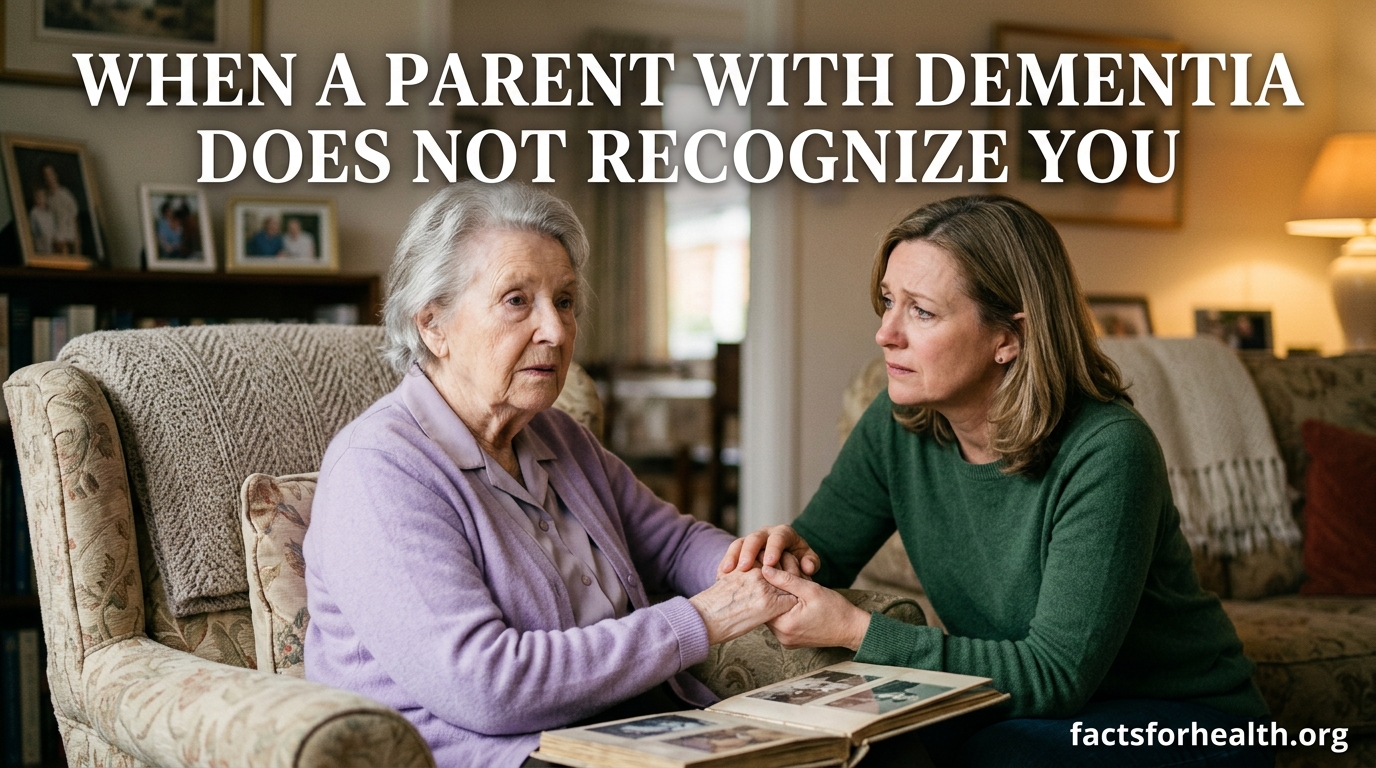
Walking into your parent’s room and seeing a blank look where there used to be warmth is one of the most painful experiences a family member can face. You are still their child, but they no longer know your face. If you are reading this, you probably already know that ache.
Learning how to cope when a parent with dementia does not recognize you is not something anyone prepares you for. There is no manual handed out at diagnosis. Most adult children stumble through this phase feeling lost, guilty, and heartbroken.
You are not alone in this. Thousands of families navigate this exact journey, and there are real strategies that can help you protect your emotional health while staying connected to the parent you love. This guide walks you through why this happens, what to say, what to avoid, and how to care for yourself in the process.
Our team has listened to caregivers in support forums, consulted dementia care principles, and gathered the practical techniques that families say actually work. The first time your parent doesn’t recognize you is often described as one of the hardest moments of the entire caregiving journey. But it does not mean your relationship is over. It simply means the relationship is changing.
Table of Contents
Why Dementia Causes Loss of Recognition
Dementia damages brain cells progressively, and the areas responsible for storing and retrieving memories are among the hardest hit. When your parent cannot recognize you, it is because the disease has affected the specific neural pathways that connect your face to your identity in their mind.
This is not a choice your parent is making. It is not a sign that they love you less or that they have forgotten the life you shared. The memories are often still there in some form, buried under damaged tissue that can no longer access them reliably.
In some cases, your parent may also experience a condition called prosopagnosia, sometimes referred to as face blindness. This means the brain loses the ability to process and identify faces, even faces of people they have known for decades. They may still recognize your voice, your perfume, or the way you walk, even when they cannot place your face.
Understanding this distinction matters. When a parent with dementia forgot me, many caregivers initially interpret it as rejection. It is not rejection. It is brain damage caused by a progressive disease. Holding onto that fact can be the difference between devastation and compassionate acceptance.
Another factor involves the difference between short-term and long-term memory. Your parent may remember you as a child but not recognize the adult standing in front of them. They might ask about their son or daughter while looking directly at that grown child, because the image in their mind is decades old.
When Recognition Loss Occurs in Dementia Progression
Loss of recognition typically begins in the mid-to-late stages of dementia, though the timeline varies by individual and by the type of dementia. With Alzheimer’s disease, the most common form, family recognition often starts to fade in the moderate stage and becomes more pronounced as the disease advances.
Some types of dementia affect recognition earlier. Frontotemporal dementia, for example, can impact social awareness and facial recognition sooner than Alzheimer’s. Vascular dementia may cause recognition to fluctuate depending on blood flow and whether small strokes have occurred recently.
What catches many families off guard is the inconsistency. Your parent might recognize you perfectly on Tuesday and have no idea who you are on Thursday. This fluctuation is a hallmark of dementia and does not mean the disease is reversing. It simply means some days the brain finds alternate pathways to access those memories.
It is also important to distinguish between dementia and delirium. Delirium is a sudden, often reversible state of confusion that can be triggered by infections, medication changes, dehydration, or illness. If your parent’s recognition changes suddenly over hours or days rather than gradually over months, ask a doctor to check for underlying medical causes immediately.
The Emotional Impact: When Grief Comes Before Loss
The grief of losing a parent who is still sitting right in front of you is one of the most confusing emotions a person can feel. In dementia caregiver communities, this is called anticipatory grief, and it is every bit as real as grieving someone who has passed away.
Caregivers in support forums describe the experience with striking similarity. They talk about feeling like they have already lost their parent while the person is still physically present. They describe mourning the relationship they once had while simultaneously trying to build a new one with someone who does not know them.
If you have felt this, you need to hear that it is completely normal. You are grieving a living person, and that type of grief carries unique complications. There is no funeral, no community outpouring of support, no clear endpoint. It just keeps unfolding.
Many adult children also struggle with guilt. You may feel guilty for dreading visits, for feeling relief when a visit goes better than expected, or for wanting to pull back. One caregiver shared that she felt ashamed for sometimes being relieved when her mother did not recognize her, because it removed the pressure to maintain a facade.
That guilt is common, and you do not need to carry it as a character flaw. Caring for someone with dementia is exhausting. Your complicated feelings are a normal response to an abnormal situation. The more you can accept them without judgment, the more energy you free up for the actual work of connection.
Some families also experience anger. Anger at the disease, anger at a healthcare system that feels inadequate, anger at siblings who do not help enough. Allow that anger space without letting it consume you. Talk to a therapist, join a support group, or confide in someone who understands.
How to Cope When a Parent With Dementia Does Not Recognize You: Practical Strategies
When your parent does not recognize you, the strategies below can help you maintain connection and reduce distress for both of you. These are techniques drawn from dementia care specialists, validation therapy principles, and the lived experience of families who have been through it.
1. Gently Reintroduce Yourself Without Pressure
Approach your parent calmly and offer a gentle reintroduction. Say something simple like, “Hi Mom, it’s Sarah, your daughter. I came to visit you today.” Keep your tone warm and matter-of-fact, as though this is the most normal thing in the world.
Do not quiz them or ask if they remember you. Questions like “Do you know who I am?” can create anxiety and embarrassment. If they cannot answer, they may feel shame or become agitated. Instead, simply state who you are and move forward with the visit.
If your parent accepts the introduction, wonderful. If they seem confused or skeptical, do not push. Let it go and shift to a different topic or activity.
2. Rely on Non-Verbal Communication
Long after words fail, the body remembers. Your touch, your tone of voice, your smile, and your presence all communicate love that transcends recognition. Many caregivers report that even when a parent cannot name them, they respond to a familiar hand to hold or a favorite song.
Sit close enough to touch. Hold hands if your parent is comfortable with it. Offer a gentle shoulder rub. Smile warmly and maintain soft eye contact. These physical cues often register emotionally even when cognitive recognition is gone.
Pay attention to your own body language too. If you are tense, worried, or bracing for rejection, your parent may pick up on that energy and become anxious themselves. Take a deep breath before entering the room. Set an intention of calm.
3. Practice Validation Therapy
Validation therapy is a communication approach developed specifically for people with dementia. Instead of correcting your parent or trying to bring them into your reality, you enter theirs. You acknowledge and validate their feelings without arguing about facts.
If your parent thinks you are a stranger, do not insist otherwise. Instead, engage with whoever they believe you are in that moment. If they call you by a different name, you can respond to that name. If they think it is 1975 and they are waiting for their young children to come home from school, you can sit with them in that moment.
The goal is not deception. The goal is to reduce suffering. A parent who is confused and frightened feels better when the people around them are calm and accepting rather than constantly correcting them.
4. Consider Therapeutic Fibbing
Therapeutic fibbing is a related concept that many dementia care specialists recommend. It involves telling small, compassionate lies to avoid causing unnecessary pain. If your parent asks when their deceased spouse is coming to visit, telling the truth might cause acute grief all over again. A gentle redirection or a small untruth can be kinder.
This does not come naturally to most people. We are raised to value honesty, and lying to a parent can feel deeply wrong at first. But dementia changes the rules. In this context, emotional comfort matters more than factual accuracy.
Many caregivers say therapeutic fibbing was one of the hardest but most effective shifts they made. It reduced conflict, lowered agitation, and allowed visits to end on a peaceful note instead of distress.
5. Use Music and Familiar Activities
Music reaches parts of the brain that language cannot. Playing songs your parent loved in their youth, hymns from their church, or music from a meaningful time in their life can spark recognition and joy that conversation cannot reach.
Several caregivers in support forums describe singing a parent’s favorite hymn and watching their face light up with a connection that words had failed to create. Even when a parent cannot speak, they may hum, tap their foot, or simply relax in response to familiar music.
Other activities can work well too. Looking through a photo album together, folding laundry, working on a simple puzzle, or just sitting outside in the garden. Focus on being together rather than on achieving any particular outcome.
What to Say and What to Avoid
Knowing what to say when a parent with dementia does not recognize you can feel impossible. The right words depend on the moment, but some general principles can guide you.
Do use short, simple sentences. Do state who you are without asking them to confirm. Do talk about pleasant topics from the past. Do offer compliments, such as commenting on how nice they look today. Do use their preferred name and address them respectfully.
Do not say “Don’t you remember me?” or “I’m your son, you should know me.” Do not argue if they insist you are someone else. Do not correct every inaccurate statement they make. Do not show frustration through your tone or facial expression.
Do not talk about them in the third person while in the room, as if they are not there. Even when someone cannot respond, they may still hear and process more than we realize. Address your parent directly and include them in conversations.
If your parent calls you by the wrong name, you have a choice. You can gently say, “Actually, I’m Sarah,” or you can simply respond to whatever name they use. Neither approach is wrong. Choose based on what seems to cause the least distress in the moment.
Managing your own emotional reaction is often the hardest part. If you feel tears coming, it is okay to excuse yourself briefly. Step into the hallway, take a few breaths, compose yourself, and return. You are allowed to feel sadness. Just try not to make your parent responsible for comforting you.
Using Memory Aids to Maintain Connection
Memory aids will not cure dementia, but they can create moments of connection and comfort. The key is to use them as tools for shared enjoyment rather than tests of memory.
Photos are one of the most powerful aids available. Bring a small album of family pictures and look through them together. Do not ask your parent to name the people in the photos. Instead, comment on them yourself. “That’s Grandma and Grandpa on their wedding day. She looks so happy.” This approach shares information without demanding recall.
Life story work involves creating a book or scrapbook that documents your parent’s life history. Include photos, names of important people, significant places, and career milestones. This can serve as a reference that grounds your parent in their own identity and gives visitors conversation starters.
Comfort objects can also help. A familiar blanket, a favorite sweater, a piece of jewelry they always wore, or a beloved pet if the facility allows. These tangible items carry emotional weight that words sometimes cannot.
Many caregivers share that visiting even when not recognized still matters. One man described visiting his wife of 50 years every day even though she no longer knew his name. He said she might not recognize him, but he always felt her love in his heart. That connection, even unnamed, was still real.
Explaining to Children When a Grandparent Doesn’t Recognize Them
Few resources address how to talk to children about a grandparent with dementia who doesn’t recognize them, yet this is one of the most searched topics among parents navigating this journey. Children feel the confusion and hurt deeply, and they need honest, age-appropriate explanations.
For younger children, keep explanations simple and concrete. You might say, “Grandma’s brain is not working the way it used to, and sometimes that means she forgets things, even people she loves very much. It’s not because she doesn’t love you. Her brain just can’t tell her who you are right now.”
For older children and teenagers, you can share more detail about the disease. Explain that dementia damages brain cells and that the person inside is still their grandparent, even if the recognition is gone. Encourage them to share their feelings and validate their sadness.
Help children understand what to do during visits. Tell them they can still hold Grandpa’s hand, show him a drawing, or sing a song together. Teach them not to take it personally when he calls them by the wrong name. Remind them that love does not require recognition.
Watch for signs that your child is struggling. Withdrawal, behavioral changes, or reluctance to visit can all indicate that a child is processing the loss in ways they cannot articulate. Consider connecting them with a school counselor or grief support group for children.
Caring for Yourself as a Caregiver
You cannot pour from an empty cup. The strain of visiting a parent who does not recognize you is real, and self-care is not selfish. It is necessary for your own survival and for your ability to keep showing up.
Build a support system. This might include a therapist who specializes in grief or caregiver support, a local or online dementia support group, or trusted friends who will listen without judgment. You need a space where you can express the full range of your emotions without filtering.
In the United States, the Alzheimer’s Association offers a 24/7 helpline at 1-800-272-3900 staffed by specialists who can provide guidance, emotional support, and local resources. In the United Kingdom, Dementia UK offers Admiral Nurse support through their helpline at 0800 888 6678.
Give yourself permission to step back when needed. If a visit becomes too painful or your parent becomes agitated, it is okay to leave early. If you need to reduce visit frequency for your own mental health, that is a valid choice. Do not let guilt drive you to burnout.
Take care of your physical health too. Eat regular meals, get enough sleep, exercise, and keep up with your own medical appointments. Caregivers often neglect their own health, and that neglect catches up eventually.
Consider your own grief as an ongoing process. Anticipatory grief does not resolve neatly. It shifts and changes over time. Some days will be harder than others. Be gentle with yourself on the hard days and grateful for the easier ones.
FAQs
When doesn’t someone with dementia recognize you?
Loss of recognition typically begins in the mid-to-late stages of dementia as brain cells in memory and facial recognition areas become progressively damaged. The timeline varies by individual and dementia type, but most families notice recognition fading during the moderate stage and becoming more consistent in advanced stages.
What stage of dementia is not recognising family?
Not recognizing family members most commonly occurs in the moderate to severe stages of dementia, which are stages 5 through 7 on the Global Deterioration Scale. By stage 6, most people with dementia have significant difficulty identifying close family members, though some may still respond to voices and non-verbal cues.
What to do with combative dementia parents?
If your parent becomes combative or agitated, stay calm and do not argue. Lower your tone, reduce noise and stimulation, give them space, and try redirecting their attention to a familiar activity like music or a snack. Look for triggers such as pain, hunger, or overstimulation. If combative behavior is new or sudden, consult a doctor to rule out delirium, infection, or medication side effects.
What not to say to someone with dementia?
Avoid saying things like u0022Don’t you remember me?u0022, u0022I just told you that,u0022 u0022You’re wrong,u0022 or u0022You already ate.u0022 Do not argue, correct every mistake, use sarcasm, talk down to them, or discuss them as if they are not in the room. Instead, use short sentences, gentle tone, validation of their feelings, and redirection when needed.
Is it normal to grieve someone who is still alive?
Yes, absolutely. This is called anticipatory grief, and it is a well-documented and completely normal response to watching someone you love decline from dementia. You are grieving the loss of the relationship, the parent you knew, and the future you expected to share. Mental health professionals recognize this grief as real and valid, and many encourage seeking therapy or support groups to process it.
Moving Forward With Compassion
Learning how to cope when a parent with dementia does not recognize you is a journey, not a destination. Some days will feel manageable and others will break your heart all over again. That is the reality of this disease, and there is no shortcut through it.
What you can do is show up with patience, use the communication strategies that reduce suffering for both of you, lean on your support system, and give yourself grace for the complicated emotions that arise. Your parent may not know your name, but the love between you is still there. It lives in the warmth of your hand in theirs, in the songs you share, and in the quiet moments of presence that need no words.
You are doing something extraordinarily difficult. Be kind to yourself.