
If you have ever felt your heart race, your chest tighten, and your mind spiral into fear, you know how terrifying these moments can be. Many people ask their doctors about the difference between a panic attack and an anxiety attack because the two experiences feel so similar in the moment. The confusion is understandable since both involve intense physical and emotional distress.
Our team has spent countless hours researching medical literature, clinical guidelines, and real patient experiences to break down this topic. Understanding the difference between a panic attack and an anxiety attack matters because it shapes how you cope, when you seek help, and what treatment path makes the most sense for you.
In this guide, you will learn clear definitions of each condition, how symptoms differ, what triggers them, and practical coping strategies you can use right away. We will also cover when symptoms warrant a call to 911 versus a routine appointment with your healthcare provider.
Table of Contents
What Is a Panic Attack?
A panic attack is a sudden, intense surge of fear or discomfort that peaks within minutes. The Diagnostic and Statistical Manual of Mental Disorders, Fifth Edition (DSM-5), officially recognizes panic attacks as a diagnosable experience with specific criteria.
These episodes trigger the body’s fight-or-flight response even when no real danger is present. Your autonomic nervous system fires as if you are facing a life-threatening situation, flooding your body with adrenaline and cortisol.
Panic attacks fall into two categories. Expected panic attacks occur when there is an obvious trigger, such as speaking in public or entering a crowded elevator. Unexpected panic attacks seem to come out of nowhere with no clear cause.
People who experience panic attacks often describe the sensation as feeling like they are dying, losing control, or having a heart attack. The intensity is overwhelming and the physical symptoms can be severe enough to send people to the emergency room.
Recurrent and unexpected panic attacks may indicate panic disorder, a recognized anxiety disorder in the DSM-5. This condition affects roughly 2 to 3 percent of adults in the United States each year.
What Is an Anxiety Attack?
An anxiety attack is not an official clinical diagnosis. The DSM-5 does not include anxiety attacks as a distinct medical condition, which surprises many people who have heard the term used by friends, family, and even some healthcare providers.
Instead, what people call an anxiety attack is typically a period of intense, prolonged anxiety that builds gradually. It usually develops in response to a specific stressor or worry, such as a looming work deadline, relationship conflict, or financial pressure.
The intensity of an anxiety attack tends to be less severe than a panic attack at its peak. However, anxiety attacks can last much longer, sometimes persisting for hours or even days. The buildup is slow and steady rather than sudden.
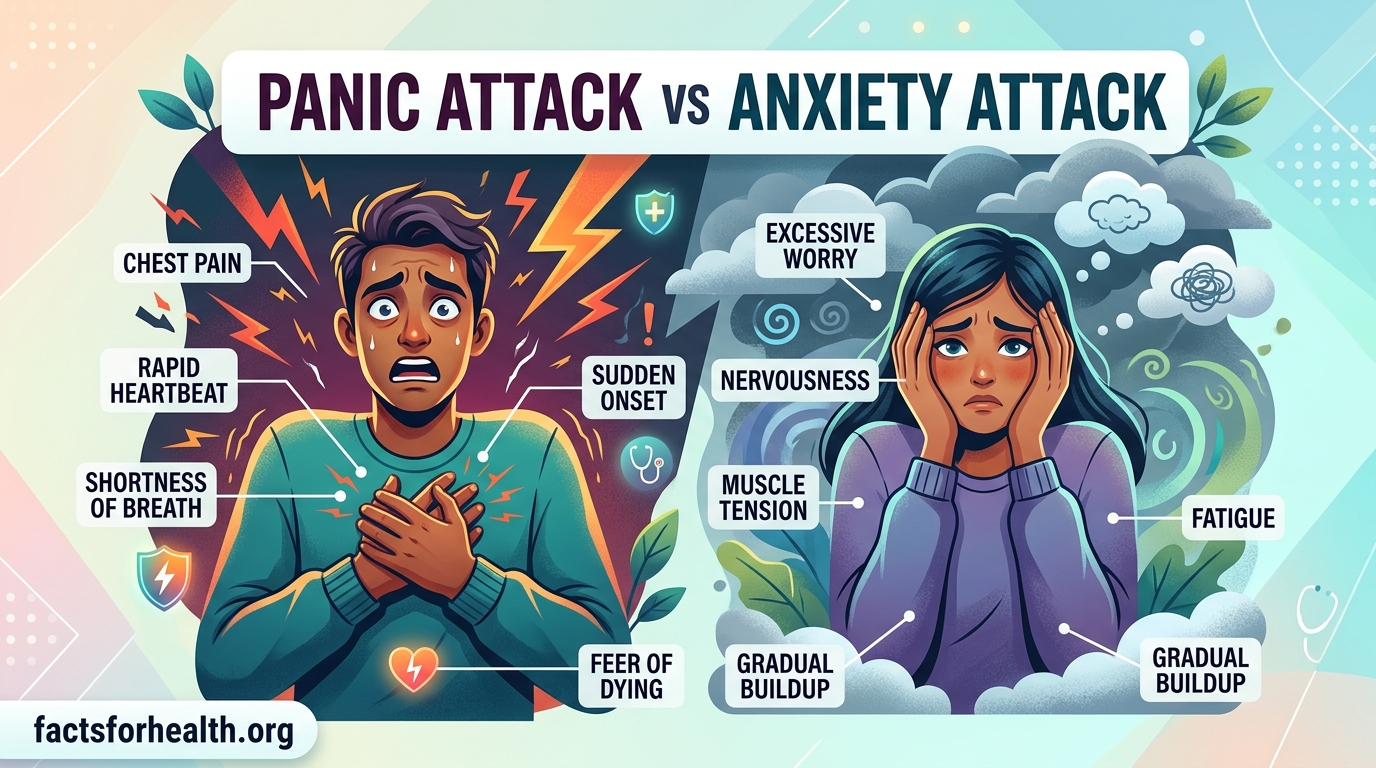
Symptoms often include excessive worry, restlessness, irritability, muscle tension, fatigue, and difficulty concentrating. Physical symptoms like a racing heart or upset stomach can occur, but they generally feel less overwhelming than the intense physical cascade of a panic attack.
When someone experiences persistent anxiety that interferes with daily life, a mental health professional may diagnose an underlying condition such as generalized anxiety disorder, social anxiety disorder, or another recognized anxiety disorder.
Panic Attack vs Anxiety Attack: Symptom Comparison
The difference between a panic attack and an anxiety attack becomes clearer when you compare symptoms side by side. While both share some overlap, the intensity, type, and pattern of symptoms set them apart.
Panic attack symptoms typically include:
- Sudden, intense fear of losing control or dying
- Heart palpitations or a racing heartbeat
- Shortness of breath or a feeling of being smothered
- Chest pain or discomfort
- Trembling or shaking
- Sweating, chills, or hot flashes
- Nausea or abdominal distress
- Dizziness or lightheadedness
- Numbness or tingling in the hands and face
- Depersonalization, or feeling detached from yourself
- Derealization, or feeling that your surroundings are not real
Anxiety attack symptoms typically include:
- Excessive worry or fear that builds over time
- Restlessness or feeling on edge
- Muscle tension and tightness
- Fatigue and irritability
- Difficulty concentrating
- Sleep disturbances
- A mild to moderate increase in heart rate
- Stomach upset or digestive discomfort
- A sense of dread or apprehension
The key distinction is that panic attack symptoms hit hard and fast, often peaking within 10 minutes. Anxiety attack symptoms are persistent but generally less intense, lingering as a heavy weight rather than striking like lightning.
Duration and Onset: How Timing Differs
One of the clearest ways to tell the difference between a panic attack and an anxiety attack is by looking at how each one starts and how long it lasts.
Panic attacks arrive suddenly. They peak within 10 minutes and typically subside within 20 to 30 minutes. The aftermath can leave you feeling drained, shaky, and exhausted for hours, but the acute attack itself is short-lived. Some people describe the onset as feeling like a switch was flipped.
Anxiety attacks build gradually. You may notice your worry increasing over the course of a morning, an afternoon, or even several days. The intensity ebbs and flows rather than spiking all at once. Because the symptoms develop slowly, many people do not realize they are in the middle of an anxiety episode until it has been going on for a while.
Recovery from an anxiety attack can take longer because the underlying worry often persists. Once a panic attack ends, the immediate physical danger has passed, even though emotional fatigue remains. With anxiety, the trigger may still be present, keeping your nervous system activated.
Causes and Triggers
Understanding what sets off each type of episode can help you identify patterns and manage your response.
Panic attack triggers:
- No identifiable trigger at all, which is what makes unexpected panic attacks so frightening
- Phobias, such as fear of heights, enclosed spaces, or social situations
- Major life stress, including loss of a loved one, divorce, or job loss
- Medical conditions such as hyperthyroidism or mitral valve prolapse
- Stimulants like caffeine, nicotine, or certain medications
- A history of trauma or abuse
- Genetics and family history of panic disorder
Anxiety attack triggers:
- Chronic stress from work, relationships, or finances
- Anticipation of a stressful event
- Health concerns or medical test results
- Lack of sleep or poor nutrition
- Social pressures and interpersonal conflicts
- Major life transitions, even positive ones
- Substance use or withdrawal
It is worth noting that the two can overlap. Severe, untreated anxiety can escalate into a panic attack. This is one reason why the terms get confused, and why managing anxiety early can help prevent panic episodes.
Coping Strategies: What to Do in the Moment
When you feel an episode coming on, having a plan can reduce its severity and help you regain control faster. Different strategies work better for panic versus anxiety.
For a panic attack:
Step 1: Recognize and label what is happening. Tell yourself, “This is a panic attack. It is uncomfortable but not dangerous, and it will pass.” Naming the experience engages your rational brain and reduces fear.
Step 2: Practice box breathing. Inhale slowly through your nose for 4 counts, hold for 4 counts, exhale through your mouth for 4 counts, and hold empty for 4 counts. Repeat this cycle for 2 to 3 minutes to activate your parasympathetic nervous system.
Step 3: Use the 5-4-3-2-1 grounding technique. Name 5 things you can see, 4 things you can physically feel, 3 things you can hear, 2 things you can smell, and 1 thing you can taste. This pulls your attention away from the panic and back into your surroundings.
Step 4: Change your temperature. Splash cold water on your face or hold an ice cube. The sudden temperature shift activates the mammalian dive reflex, which slows your heart rate and interrupts the panic cycle.
For an anxiety attack:
Step 1: Identify the trigger. Ask yourself what specifically you are worried about right now. Writing it down can help separate the actual concern from the spiral of catastrophic thoughts.
Step 2: Challenge your thoughts. Ask whether your worry is based on facts or assumptions. Consider what you would tell a friend facing the same situation.
Step 3: Use progressive muscle relaxation. Starting from your toes and working up to your jaw, tense each muscle group for 5 seconds, then release. This releases stored physical tension.
Step 4: Take a purposeful break. Step away from the source of stress for 10 minutes. Walk outside, stretch, or listen to calming music to reset your nervous system.
Many people in online support communities, including those on Reddit’s anxiety forums, say that simply learning the difference between these strategies gave them a sense of control they had been missing for years.
Panic Attack vs Heart Attack: Knowing the Difference
One of the most common fears people express is that their chest pain and racing heart signal a heart attack rather than a panic attack. This fear is valid, and it is always better to err on the side of caution.
Panic attack chest pain tends to be sharp, stabbing, and localized. It usually peaks quickly and eases as the attack subsides. Heart attack pain is more often described as a crushing pressure or squeezing sensation that may spread to the left arm, jaw, or back.
Panic attacks rarely cause profuse sweating along with chest pain, while heart attacks frequently do. However, these guidelines are not absolute. If you have never had chest pain evaluated before, or if you have risk factors for heart disease such as high blood pressure, diabetes, smoking, or a family history, call 911 immediately.
Doctors would always rather you come in and find out it was a panic attack than stay home during a cardiac event. This message came up repeatedly in forum discussions we reviewed, where users shared stories of being embarrassed by ER visits that turned out to be panic. Every single one said they were glad they went.
When to Seek Medical Help
Knowing when to seek professional help can feel tricky, but there are clear guidelines that can guide your decision.
Call 911 or go to the nearest emergency room if you experience any of the following:
- Chest pain or pressure that lasts more than a few minutes
- Shortness of breath that does not improve
- Fainting or severe dizziness
- Sudden weakness or numbness on one side of your body
- Confusion or trouble speaking
- A feeling that you might hurt yourself or someone else
Schedule an appointment with a healthcare provider or mental health professional if you experience any of the following:
- Recurrent panic attacks that interfere with your daily life
- Persistent anxiety lasting weeks or months
- Avoidance of places or situations due to fear of an attack
- Trouble sleeping, eating, or concentrating
- Increased use of alcohol or substances to cope
- Any symptoms that worry you, even if they seem mild
Early intervention leads to better outcomes. You do not need to wait until things become unbearable to reach out for support.
Treatment Options
Both panic attacks and anxiety respond well to treatment. The most effective approaches often combine therapy, lifestyle changes, and in some cases medication.
Cognitive Behavioral Therapy (CBT): CBT is considered the gold standard for treating both panic disorder and anxiety disorders. It helps you identify and reframe the thought patterns that fuel fear. A typical course of CBT lasts 12 to 20 sessions, and many people notice improvement within the first few weeks.
Exposure therapy: For panic attacks driven by specific phobias, gradual exposure to the feared situation in a controlled environment can reduce fear responses over time. This approach is highly effective when guided by a trained therapist.
Medication: Several medication options exist. Selective serotonin reuptake inhibitors, or SSRIs, are commonly prescribed for ongoing anxiety and panic prevention. Serotonin-norepinephrine reuptake inhibitors, or SNRIs, work similarly. For short-term relief during acute episodes, benzodiazepines may be prescribed, though they carry a risk of dependence and are typically used cautiously.
Lifestyle changes: Regular exercise, consistent sleep, limiting caffeine and alcohol, and practicing mindfulness or meditation can all reduce the frequency and severity of both panic and anxiety episodes. These changes support overall nervous system health and complement professional treatment.
Support groups: Connecting with others who understand what you are going through can be incredibly validating. Online and in-person support groups provide community, shared coping strategies, and reassurance that you are not alone.
Treatment is not one-size-fits-all. What works for one person may not work for another, so it is important to work with a qualified mental health professional to find the right combination for your specific situation.
Can You Have Both at the Same Time?
Yes, and this is more common than you might think. People with panic disorder frequently also experience generalized anxiety. The reverse is true as well. Long-standing anxiety can build to the point where it triggers a full panic attack.
This overlap is one reason why the terms are used interchangeably in casual conversation. If you experience both, your treatment plan may address each condition separately while also targeting shared underlying factors like stress management and nervous system regulation.
How to Explain the Difference to Family and Friends
Many people struggle to describe what they are going through to loved ones who have never experienced an attack. A simple way to frame it is this: a panic attack is like a false alarm going off in your body’s emergency system. An anxiety attack is like a smoke detector that has been beeping low battery for days.
Both demand attention. Both are exhausting. But they feel different in the moment and respond to different coping tools. Sharing this analogy can help the people around you understand why you might need different types of support depending on what you are experiencing.
FAQs
How do I know if I had a panic attack or anxiety attack?
A panic attack comes on suddenly, peaks within minutes, and includes intense physical symptoms like chest pain, shortness of breath, and a fear of dying. An anxiety attack builds gradually, lasts longer, and is tied to a specific worry or stressor. If the episode hit like a lightning bolt out of nowhere, it was likely a panic attack.
How to stop an anxiety attack fast?
To stop an anxiety attack quickly, identify your trigger, challenge catastrophic thoughts, practice progressive muscle relaxation, and take a 10-minute break from the stress source. Box breathing, which involves inhaling for 4 counts, holding for 4, exhaling for 4, and holding for 4, can also calm your nervous system within minutes.
Which is more serious, an anxiety or a panic attack?
Neither is inherently more serious, but they differ in intensity and duration. Panic attacks are more intense and sudden, which can feel more frightening in the moment. Anxiety attacks last longer and can drain you over hours or days. Both warrant attention, especially if they interfere with daily life or occur frequently.
How long does it take to recover from an anxiety attack?
Recovery from an anxiety attack varies depending on the trigger and the person. Some people feel relief within an hour of removing the stressor, while others may feel residual tension and fatigue for a day or two. Because anxiety attacks are tied to ongoing worries, recovery often involves addressing the underlying cause rather than just waiting for symptoms to pass.
Conclusion
Understanding the difference between a panic attack and an anxiety attack empowers you to respond effectively when symptoms arise. Panic attacks strike suddenly and intensely, peaking within minutes. Anxiety attacks build gradually and can linger for hours or days.
Neither experience means something is wrong with you. Both are your body’s alarm system responding to perceived threats, whether real or imagined. The coping strategies, treatment options, and professional resources available today are more effective than ever.
If you are experiencing recurring episodes, reach out to a healthcare provider or mental health professional. Early support makes a meaningful difference, and you deserve to feel equipped and supported no matter what you are facing.