
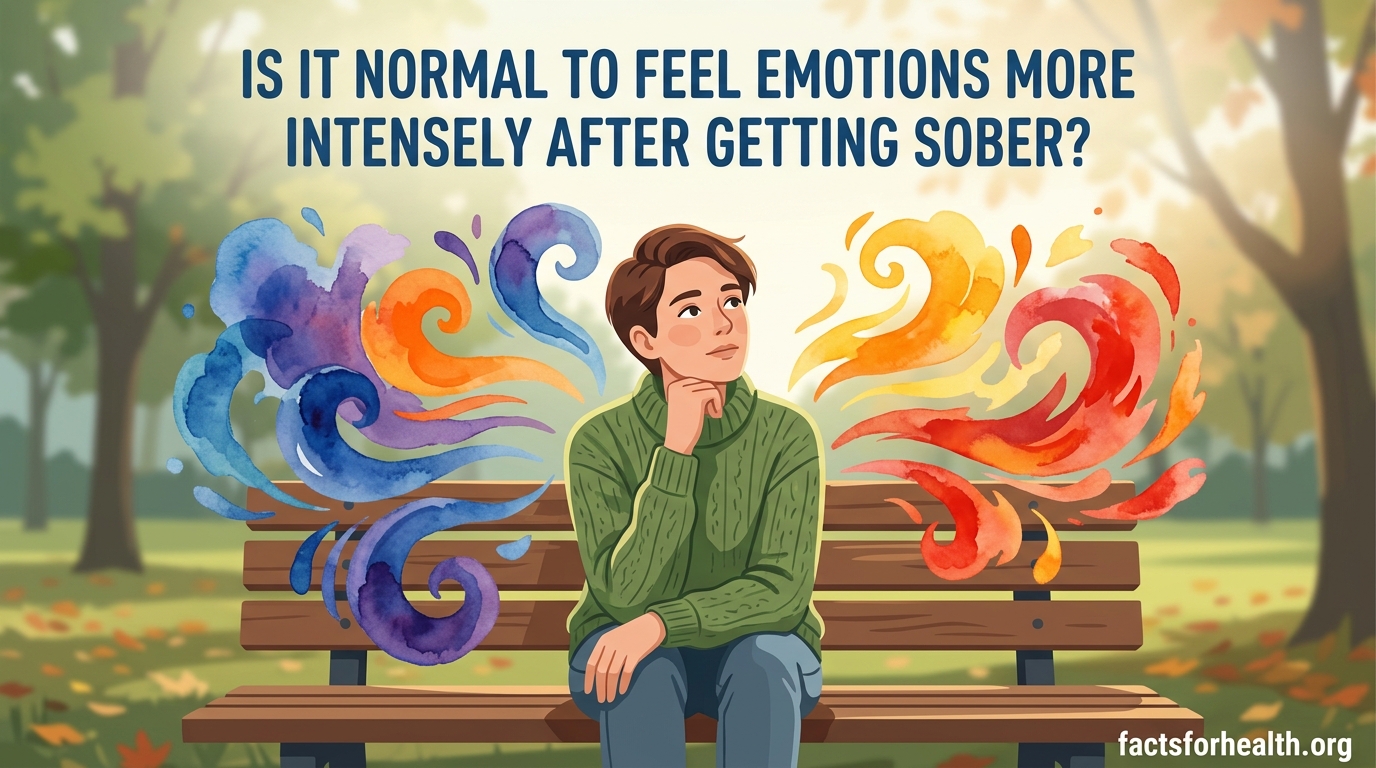
Yes, it is completely normal to feel emotions more intensely after getting sober. When alcohol or drugs are no longer suppressing your central nervous system, your brain must recalibrate its neurotransmitter production, and suppressed emotions begin to surface. This emotional intensity is a well-documented part of the recovery process, not a sign that something is wrong.
If you have recently quit drinking or using drugs and you feel like you are on an emotional rollercoaster, you are experiencing something that nearly every person in early recovery goes through. One Reddit user in the r/stopdrinking community described it perfectly: they found themselves “crying at nice things and sad things” but felt “so incredibly grateful to feel this depth of emotion.” That mixture of overwhelm and gratitude is something we hear over and over again.
In this article, our team breaks down exactly why emotions feel so intense after getting sober, what to expect at each stage of the emotional recovery timeline, and practical strategies you can use today to cope with the emotional whiplash of early sobriety. We also cover when intense emotions signal that you might need professional support versus when they are simply part of the healing process.
Table of Contents
Quick Answer: What You Need to Know Right Away
If you are looking for a fast answer, here are the most important takeaways about emotional intensity after getting sober:
- Yes, it is absolutely normal. Nearly everyone in early recovery experiences heightened emotional sensitivity, mood swings, and intense feelings.
- It is a sign of healing, not a setback. Your brain is recalibrating after being numbed by substances. Feeling emotions again means your nervous system is waking up.
- It typically improves within 3 to 6 months. WebMD notes that mood generally gets better within 3 to 6 weeks, with continued stabilization over the following months.
- You are not broken. What feels overwhelming now will become more manageable as your brain chemistry rebalances.
- Professional help is always an option. If emotional intensity lasts beyond several months or includes thoughts of self-harm, reach out to a professional.
Many people in recovery communities use a phrase that captures the essence of this experience: “the only way out is through.” The emotions you are feeling need to be processed, not numbed. That is the work of recovery.
Why Emotions Feel More Intense After Getting Sober
Understanding why emotions feel more intense after getting sober requires looking at what substances actually do to your brain and nervous system. The intensity you are feeling has a biological explanation, and it is not a personal failing.
The Numbing Effect of Alcohol and Drugs
Alcohol and many drugs act as central nervous system depressants or artificial mood regulators. They suppress emotional responses by dampening brain activity and interfering with how your brain processes feelings. When you drink or use substances regularly, your brain relies on the substance to manage emotional states rather than doing the work itself.
Think of it like wearing emotional earplugs. The noise does not actually go away. It just gets muffled. When you remove the earplugs, the sound feels deafening at first because your brain has forgotten what normal volume sounds like.
This is why people in early recovery often describe the experience as feeling raw, exposed, or like they have lost an emotional layer of skin. Everything hits harder because the buffer is gone.
Brain Chemistry Recalibration: Dopamine and Serotonin
The neuroscience behind emotional intensity in recovery comes down to neurotransmitters. These are the chemical messengers your brain uses to regulate mood, pleasure, motivation, and emotional responses.
Substances artificially flood the brain with dopamine and serotonin, creating feelings of pleasure or calm that are far more intense than what natural production provides. Over time, the brain reduces its own natural production of these chemicals because the substance is doing the work. This is the core mechanism of tolerance and dependence.
When you stop using substances, your brain’s natural neurotransmitter production is temporarily suppressed. This creates a deficit. Dopamine and serotonin levels are lower than normal, which can amplify negative emotions like anxiety, sadness, and irritability while making it harder to feel pleasure from everyday activities.
Research shows that it can take 3 to 14 months for dopamine receptors to return to pre-addiction levels, depending on the substance, duration of use, and individual factors. During this recalibration period, emotions feel extreme because the brain’s chemical infrastructure is rebuilding itself.
The Fight-or-Flight Response and Your Nervous System
Another key piece of the puzzle is how substances affect your autonomic nervous system. Alcohol and certain drugs artificially calm the fight-or-flight response, which is your body’s built-in alarm system for perceived threats. When substances are removed, this alarm system can become hypersensitive.
Without the dampening effect of substances, your nervous system recalibration involves learning to self-regulate again. This means that situations that previously felt manageable might now trigger intense anxiety, irritability, or emotional flooding. Your nervous system is essentially rebooting, and during the reboot, the system runs hot.
This is why you might find yourself snapping at a loved one over something small, or feeling overwhelmed by a minor inconvenience. Your threat detection system is recalibrating, and it is temporarily set to high sensitivity.
Repressed Emotions Rising to the Surface
There is also a psychological dimension to emotional intensity in recovery. Many people use substances as a way to avoid processing difficult emotions. Years of grief, trauma, anger, shame, and guilt get pushed down and stored away.
When the numbing agent is removed, those stored emotions begin to surface. This can feel like a dam breaking. You may find yourself crying about something that happened years ago, or feeling angry about a situation you thought you had moved past.
This emotional processing is actually one of the most important parts of recovery. It is uncomfortable, but it is also the path to genuine healing. Many people in long-term recovery describe this phase as essential to their growth.
Common Emotions People Experience in Early Sobriety
People in early recovery experience a wide range of intense emotions. Knowing what to expect can help you feel less alone and more prepared. Here are the most common emotions and why they show up.
Anxiety and Panic
Anxiety is one of the most frequently reported emotions in early sobriety. Without substances to calm the nervous system, everyday stressors can trigger intense worry, racing thoughts, and even panic attacks. Reddit users in recovery communities frequently report that anxiety peaks around the 2-week to 2-month mark before gradually subsiding.
This anxiety is partly chemical, as we discussed, and partly situational. You are navigating life without your usual coping mechanism, which naturally creates uncertainty. The good news is that as your brain recalibrates and you develop new coping skills, anxiety levels typically decrease significantly.
Anger and Irritability
Anger in early recovery is so common that entire articles have been written about it. Multiple recovery blogs describe the phenomenon of feeling “sober and mad at the world.” This anger can come from many sources: frustration with yourself for past behavior, anger at having to face consequences, irritation at not feeling normal yet, and anger as a response to surfacing trauma.
Irritability and anger tend to peak in the first few weeks and then gradually lessen. However, some people experience waves of anger months into recovery, especially during stressful periods or when processing difficult memories.
Grief and Sadness
Grief is a powerful and often unexpected emotion in early recovery. You may grieve the loss of your relationship with substances, even though you know quitting was the right decision. You might grieve lost time, damaged relationships, or opportunities you missed while actively using.
Many people also experience a more existential sadness. For months or years, substances provided structure, comfort, and identity. Without them, there can be a sense of emptiness that feels like grief. This is a normal part of the transition, and it typically eases as you build a new life in recovery.
Shame and Guilt
Shame and guilt are nearly universal in early recovery. As the numbing effect fades, memories of things you said or did while using substances come into sharp focus. This can trigger intense feelings of remorse and self-judgment.
The distinction between shame and guilt matters here. Guilt says “I did something bad” and can motivate positive change. Shame says “I am bad” and can drive relapse. Working with a therapist or counselor is one of the most effective ways to process these feelings constructively.
Loneliness and Isolation
Loneliness is a major challenge in early sobriety. Social circles often revolve around drinking or using, and stepping away from those environments can feel isolating. You may feel disconnected from friends who still drink, and you may not yet have built a sober support network.
This isolation is temporary. Support groups, recovery communities, and sober social activities can help fill the gap. Many people report that the connections they build in recovery are deeper and more authentic than the relationships they had while using.
Positive Emotions: Pride, Gratitude, and Joy
Not all emotions in early recovery are painful. Many people experience intense positive emotions too. Pride in achieving sobriety milestones, gratitude for second chances, and moments of genuine joy become part of the experience as the brain heals.
One Reddit user captured this beautifully: they described being moved to tears by beautiful moments, feeling a depth of emotion they had not experienced in years. These positive emotional experiences are evidence that your capacity for feeling is returning, not just the difficult emotions but the full spectrum.
How Different Substances Affect Emotional Intensity Differently
One topic that almost no recovery resource covers is how emotional intensity varies depending on the substance you are recovering from. The experience of getting sober from alcohol is different from recovering from opioids, stimulants, or cannabis. Here is what the science tells us about these differences.
Alcohol Recovery and Emotional Intensity
Alcohol is a central nervous system depressant, so quitting often produces a rebound effect where the nervous system becomes overactive. This leads to heightened anxiety, irritability, and emotional volatility. Alcohol also heavily impacts GABA and glutamate, two neurotransmitters that regulate calm and excitation, so the recalibration period can be particularly bumpy.
People recovering from alcohol often report intense mood swings, crying spells, and anger outbursts in the first few weeks. The emotional timeline for alcohol recovery generally follows a pattern of intense dysregulation for 2 to 6 weeks, followed by gradual improvement.
Opioid Recovery and Emotional Intensity
Opioid recovery involves a significant disruption to the endorphin system. Because opioids artificially stimulate the brain’s reward and pain-relief pathways, natural endorphin production is suppressed. In early recovery, this can lead to anhedonia, the inability to feel pleasure, alongside intense emotional flatness or sudden waves of emotional flooding.
People recovering from opioids often describe periods of emotional numbness punctuated by sudden, overwhelming emotional episodes. This pattern can be disorienting, but it reflects the endorphin system slowly coming back online.
Stimulant Recovery and Emotional Intensity
Recovery from stimulants like cocaine or methamphetamine involves a severe dopamine crash. Because stimulants cause massive dopamine releases, the brain’s natural dopamine production drops dramatically during active use. When you stop, the resulting dopamine deficit can cause intense depression, fatigue, and emotional blunting.
Stimulant recovery often involves a longer emotional flatline period, sometimes lasting weeks or months, before emotions begin to stabilize. This can be frightening, but it is a well-documented part of the process.
Cannabis Recovery and Emotional Intensity
Cannabis withdrawal is often underestimated, but regular users who quit frequently report intense irritability, anxiety, mood swings, and vivid dreams. Cannabis affects the endocannabinoid system, which plays a role in mood regulation, appetite, and sleep. As the system recalibrates, emotional volatility is common.
Emotional intensity from cannabis recovery typically resolves faster than from alcohol or opioids, often within 2 to 4 weeks for most users.
The Emotional Recovery Timeline: What to Expect and When
One of the most common questions in recovery forums is “how long will this last?” While everyone’s timeline is different, there is a general pattern that most people follow. Understanding this timeline can help you gauge where you are and what comes next.
Week 1: Acute Emotional Disruption
The first week of sobriety is often the most physically and emotionally intense. Acute withdrawal symptoms can include severe mood swings, anxiety, irritability, and emotional flooding. Your brain is reacting to the sudden absence of substances, and the chemical shock is at its peak.
During this phase, emotions can change minute to minute. You might feel fine one moment and be crying the next. This is normal, and it is also the phase where medical supervision is most important, as acute withdrawal from alcohol and certain other substances can be dangerous.
Weeks 2 to 4: Emotional Rollercoaster
After the acute phase passes, many people enter a period that feels like an emotional rollercoaster. The physical withdrawal symptoms subside, but emotional intensity often increases. This is because the initial shock has worn off and your brain is now in the early stages of recalibration.
During weeks 2 to 4, you might experience bursts of anxiety, waves of sadness, sudden anger, and moments of surprising clarity. People in recovery communities often describe this period as the most emotionally challenging, even though physical symptoms have improved.
Months 2 to 3: Gradual Stabilization
By months 2 to 3, most people begin to notice gradual improvement. The emotional extremes become less frequent, and the intensity starts to decrease. You may still have bad days, but they become interspersed with more stable periods.
This is also the stage where many people begin to feel the positive effects of sobriety more consistently. Emotional clarity increases, and moments of genuine contentment become more common. However, some people experience a secondary wave of emotional difficulty during this period, particularly if PAWS symptoms emerge.
Months 6 and Beyond: Emotional Resilience Building
By 6 months, most people report significant improvement in emotional regulation. The worst of the intensity has passed, and you begin building genuine emotional resilience. You start developing the ability to handle stress, difficult emotions, and challenging situations without substances.
That said, recovery is not linear. Some people report a burst of anxiety around 6 months that lasted about a month, showing that challenges can recur even after initial improvement. At 2 years sober, some people still experience occasional emotional waves, though these are typically less intense and easier to manage.
The key takeaway from the timeline is this: emotional intensity peaks early and gradually decreases. There will be bumps along the way, but the overall trajectory is toward stability and emotional maturity.
Post-Acute Withdrawal Syndrome (PAWS): What It Is and How It Affects Emotions
Post-Acute Withdrawal Syndrome, commonly known as PAWS, is one of the most important concepts to understand in early recovery. PAWS refers to a set of symptoms that occur after the initial acute withdrawal phase has ended, typically beginning 2 to 4 weeks after the last use and potentially lasting for months.
PAWS symptoms are primarily emotional and psychological rather than physical. They can include mood swings, anxiety, irritability, emotional flatness, difficulty concentrating, sleep disturbances, and reduced stress tolerance. These symptoms tend to come in waves, meaning you might feel fine for several days and then experience an intense episode of emotional dysregulation.
The wave-like nature of PAWS is one of its most frustrating features. Just when you think you are through the worst of it, an emotional wave can hit without warning. Understanding that these waves are part of the recovery process, not a sign of failure, can help you ride them out without panicking.
PAWS is believed to result from the prolonged nature of brain chemistry recalibration. While acute withdrawal addresses the immediate physical dependence, PAWS reflects the longer process of the brain reestablishing normal neurotransmitter function. For most people, PAWS symptoms gradually decrease in frequency and intensity over 6 to 24 months.
Is Intense Emotionality Actually a Sign of Healing?
One of the most important shifts in perspective you can make during early recovery is understanding that feeling emotions intensely is actually a positive sign. It means your brain is healing, your nervous system is coming back online, and your emotional capacity is returning.
During active addiction, emotional development often stalls. This is sometimes called arrested development or the concept that your emotional maturity pauses at the age you began heavily using substances. When you get sober, emotional growth resumes, but you are essentially picking up where you left off. This can be jarring because you may find yourself experiencing emotions with the intensity of a younger version of yourself.
Recovery communities consistently emphasize that intense emotions are a sign the brain is healing, not a setback. When you feel overwhelmed, try to reframe the experience: your body is doing the hard work of rebuilding its natural emotional infrastructure. The pain of feeling is the pain of growth.
This reframing is not just positive thinking. It reflects the biological reality of recovery. Every wave of emotion you process without substances strengthens your brain’s natural regulatory pathways. Each time you sit with a difficult feeling instead of numbing it, you are building emotional resilience that will serve you for the rest of your life.
Practical Coping Strategies for Managing Intense Emotions in Recovery
Knowing that emotional intensity is normal does not make it any easier to live through. You need practical tools to manage the feelings as they arise. Here are the strategies that recovery professionals, community members, and research consistently recommend.
Grounding Techniques to Use in the Moment
When emotions hit hard and fast, grounding techniques can bring you back to the present moment and reduce the intensity. These techniques work by engaging your senses and interrupting the emotional spiral.
The 5-4-3-2-1 technique: Name 5 things you can see, 4 things you can touch, 3 things you can hear, 2 things you can smell, and 1 thing you can taste. This exercise pulls your attention out of your thoughts and into your body.
Temperature change: Splash cold water on your face or hold an ice cube. The sudden temperature shift activates your dive reflex, which slows your heart rate and reduces emotional intensity.
Physical grounding: Press your feet firmly into the floor, feel the chair supporting your weight, or press your palms together. Physical sensation helps anchor you when emotions feel overwhelming.
Deep Breathing Exercises
Deep breathing is one of the most effective tools for emotional regulation because it directly influences your autonomic nervous system. When you slow your breathing, you signal to your brain that you are safe, which reduces the fight-or-flight response.
Four-square breathing: Inhale for 4 counts, hold for 4 counts, exhale for 4 counts, and hold for 4 counts. Repeat this cycle 4 to 8 times. This technique is widely recommended in recovery programs and is backed by research on its calming effects.
Extended exhale breathing: Inhale through your nose for 4 counts, then exhale through your mouth for 6 to 8 counts. Lengthening the exhale activates the parasympathetic nervous system, which promotes relaxation.
Journaling for Emotional Processing
Writing down what you are feeling serves multiple purposes. It externalizes the emotion, making it feel more manageable. It helps you identify patterns and triggers. And it provides a record you can look back on to track your progress.
You do not need to write a perfect essay. Simply getting the feelings out of your head and onto paper can reduce their intensity. Try writing for 10 minutes without stopping, letting whatever comes up flow onto the page.
Many people in recovery keep a daily emotions journal where they rate their emotional intensity on a scale of 1 to 10 and note what triggered the feeling. Over time, this creates a valuable picture of your emotional recovery journey.
The H.A.L.T. Framework for Self-Care
H.A.L.T. stands for Hungry, Angry, Lonely, and Tired. These four states are the most common triggers for emotional spirals and relapse in early recovery. The framework is simple: when you feel emotionally overwhelmed, check whether you are experiencing any of these four conditions.
If you are hungry, eat. If you are angry, process it through movement or journaling. If you are lonely, reach out to someone in your support network. If you are tired, rest. Often, what feels like an overwhelming emotional crisis is actually your body responding to unmet basic needs.
This framework is used in recovery programs worldwide because it works. It is a quick, memorable check-in that can prevent emotional escalation before it starts.
Building a Support System
Connection is one of the most powerful tools for emotional regulation in recovery. Isolation amplifies emotional intensity, while shared experience reduces it. Having people you can call, text, or meet with when emotions run high can make the difference between riding out a difficult moment and reaching for a substance.
Support options include 12-step programs like AA and NA, SMART Recovery, online communities like Reddit’s r/stopdrinking, therapy, counseling, and sober living communities. You do not need to use all of them, but having at least one reliable source of connection is essential.
Reddit users in recovery communities consistently emphasize that connection and community are essential for emotional regulation. Many describe reaching out to someone as the single most effective strategy for weathering emotional storms in early sobriety.
Physical Self-Care Practices
Your physical health directly impacts your emotional well-being. Regular exercise, adequate sleep, and proper nutrition all support the neurotransmitter production your brain needs to regulate emotions naturally.
Exercise is particularly effective because it releases endorphins and helps metabolize stress hormones. Even a 20-minute walk can noticeably reduce emotional intensity. Sleep is equally important, as sleep deprivation significantly worsens mood swings, anxiety, and irritability.
Nutrition matters too. Your brain needs amino acids, vitamins, and minerals to produce neurotransmitters. A diet rich in whole foods supports the recalibration process, while poor nutrition can prolong emotional instability.
When to Seek Professional Help for Emotional Intensity in Recovery
While emotional intensity is normal in early recovery, there are times when it signals something that needs professional attention. Knowing the difference between typical recovery emotions and symptoms of a co-occurring mental health condition can help you get the right support at the right time.
Normal Recovery Emotions vs. Concerning Symptoms
Normal recovery emotions tend to come in waves, fluctuate day to day, and gradually decrease in intensity over time. You have good days and bad days, but the overall trend is toward improvement. Emotions feel intense but manageable, especially when you use coping strategies.
Concerning symptoms, by contrast, tend to be persistent, severe, and worsening rather than improving. If your emotional intensity is not gradually decreasing after several months, or if it is getting worse over time, that may indicate a co-occurring condition such as depression, anxiety disorder, or PTSD that requires separate treatment.
Warning Signs That Require Professional Support
Seek professional help immediately if you experience any of the following:
- Thoughts of self-harm or suicide. This is always a reason to seek immediate help, regardless of where you are in recovery.
- Persistent depression or anxiety that does not improve after several weeks.
- Inability to function in daily life due to emotional intensity. If you cannot work, maintain relationships, or take care of basic needs, professional support is needed.
- Severe mood swings that do not follow the wave pattern of PAWS but instead feel constant and unrelenting.
- Panic attacks that occur frequently and do not respond to grounding or breathing techniques.
- Symptoms of trauma, such as flashbacks, nightmares, or dissociation, that are interfering with your recovery.
Seeking professional help is a sign of strength, not weakness. Recovery communities consistently reference therapy and professional support as a positive step, and many people in long-term recovery credit professional treatment as a key factor in their success.
Co-Occurring Mental Health Conditions
It is common for substance use disorders to coexist with mental health conditions. In some cases, substances were being used to self-medicate an underlying condition like anxiety, depression, or PTSD. When the substance is removed, the underlying condition becomes visible.
This is not a failure of recovery. It is actually the first step in treating the whole person. If you suspect you may have a co-occurring condition, a mental health professional can provide an accurate diagnosis and treatment plan that addresses both your recovery and your mental health needs.
Reddit users frequently mention that medications like Abilify and gabapentin have been prescribed for mood swings in early recovery, indicating that medical support is a normal and accepted part of the process. There is no shame in using medication to support your recovery and emotional well-being.
The Long-Term Emotional Benefits of Sobriety
While early recovery can feel emotionally overwhelming, it is important to remember that this phase is temporary. The long-term emotional benefits of sobriety are profound, and they make the difficult early months worth enduring.
Over time, most people in recovery develop greater emotional resilience than they ever had before. They learn to identify, process, and express emotions in healthy ways. They build deeper, more authentic relationships because they are fully present rather than numbed. And they experience positive emotions like joy, gratitude, and contentment with a depth and clarity that substances never provided.
People with multiple years of sobriety frequently describe a level of emotional stability and self-awareness that they never thought possible. The emotional maturation that occurs during recovery, the process of picking up where emotional development left off, results in genuine growth that lasts a lifetime.
One Reddit user who shared their experience at multiple years sober put it simply: over time, emotions became less intense. The rollercoaster smoothed out. What once felt unbearable became manageable, and then eventually became just a normal part of life. That transformation is available to everyone who stays the course.
FAQs
Why do I feel worse after giving up alcohol?
Feeling worse after giving up alcohol is a normal part of the recovery process. Alcohol suppresses your central nervous system and artificially regulates neurotransmitters like dopamine and serotonin. When you stop drinking, your brain must relearn how to produce and regulate these chemicals naturally, which causes a temporary deficit. This deficit leads to intensified emotions, anxiety, irritability, and mood swings. Additionally, repressed emotions and trauma that were numbed by alcohol begin to surface, adding to the emotional intensity. Most people start feeling better within 3 to 6 weeks as brain chemistry begins to rebalance.
How long do mood swings last after getting sober?
Mood swings after getting sober typically follow a timeline. The first week involves acute emotional disruption with the most intense mood swings. Weeks 2 to 4 often feel like an emotional rollercoaster with frequent highs and lows. By months 2 to 3, most people experience gradual stabilization with fewer and less intense mood swings. By 6 months, emotional regulation improves significantly for most people. However, PAWS (Post-Acute Withdrawal Syndrome) can cause waves of mood swings that come and go for 6 to 24 months. The overall trajectory is toward stability, though the process is not perfectly linear.
Why am I so emotional when I’m sober?
You feel more emotional when sober because substances like alcohol and drugs were numbing your emotional responses by suppressing your central nervous system. Without that numbing effect, your brain experiences emotions at full intensity for the first time in months or years. Additionally, your brain’s neurotransmitter production (dopamine, serotonin, and other mood-regulating chemicals) is temporarily suppressed after quitting substances, which amplifies emotional reactions. Repressed emotions from months or years of numbing also begin to surface. This heightened emotionality is a sign that your brain is healing and your nervous system is recalibrating, not a sign that something is wrong.
When does sobriety get better?
Sobriety begins to get noticeably better for most people around the 3 to 6 month mark. Physical withdrawal symptoms typically resolve within the first 1 to 2 weeks. Emotional intensity usually peaks in the first month and gradually decreases over the following months. By month 3, many people report more frequent good days and improved emotional regulation. By 6 months, the worst of the emotional rollercoaster has usually passed, and genuine emotional resilience begins to develop. Full emotional stabilization can take 6 to 24 months, with occasional waves of difficulty even after significant improvement. The key is that the overall trend is toward feeling better, even if the progress is not perfectly linear.
Conclusion: You Are Not Alone in Feeling This Way
If you take one thing away from this article, let it be this: it is completely normal to feel emotions more intensely after getting sober. Every person who has walked the recovery path has experienced some version of what you are going through right now. The emotional whiplash, the unexpected tears, the sudden anger, the anxiety that feels like it will never end. These are all part of the process.
Your brain is healing. Your nervous system is recalibrating. And the emotions you are feeling, as overwhelming as they may be, are proof that your body is doing exactly what it needs to do to recover. The intensity will not last forever. With each day, each week, and each month of sobriety, your emotional regulation will improve.
Use the coping strategies we have shared. Build a support system. Be patient with yourself. And if you need professional help, do not hesitate to reach out. Recovery is not a journey you have to make alone, and asking for help is one of the bravest things you can do.
The only way out is through. And on the other side of these intense emotions is a version of yourself who feels deeply, processes honestly, and lives fully without substances. That version of you is worth every difficult moment along the way.