
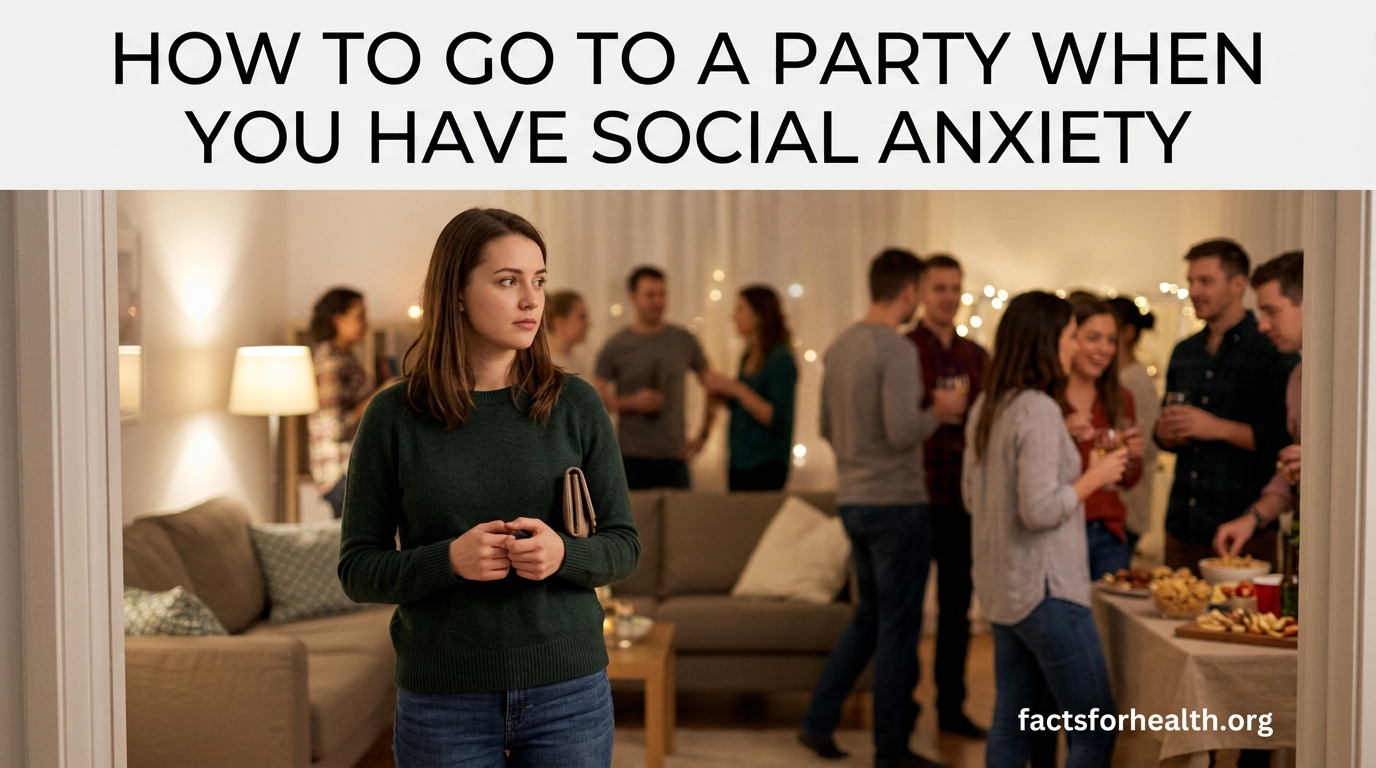
If you are reading this, there is a good chance you have stared at a party invitation and felt your stomach drop. The invitation that should feel exciting instead triggers a wave of dread, a racing heart, and a mental list of reasons to stay home. You are far from alone in this experience.
Learning how to go to a party when you have social anxiety is not about suddenly becoming the life of the gathering. It is about giving yourself practical tools to walk through the door, survive the event, and maybe even enjoy a few moments along the way.
Social anxiety affects roughly 7 percent of adults in the United States, according to the National Institute of Mental Health. Many people with social anxiety do still go to parties, weddings, work events, and dinners. They just need a strategy to get through them.
In this guide, our team breaks down every phase of attending a social event, from the days before the party to the moment you walk back through your own front door. Each section includes actionable steps drawn from mental health research, expert advice, and real experiences shared by people who live with social anxiety every day.
Table of Contents
Understanding Social Anxiety at Parties
Social anxiety disorder is more than everyday shyness. It is a persistent fear of being judged, negatively evaluated, or embarrassed in social situations. When you walk into a party, your brain can interpret the room full of people as a genuine threat.
This triggers your body’s fight-or-flight response. Adrenaline floods your system, your heart races, your palms sweat, and your mind might go blank. These physiological responses feel alarming, but they are not dangerous.
Here is something that surprises many people: anxiety typically peaks within the first 15 to 20 minutes of arriving at a social event. After that window, your body starts to recognize that there is no actual danger, and the physical symptoms begin to fade. Knowing this timeframe can be incredibly reassuring when every instinct tells you to flee.
Avoidance is the trap that keeps social anxiety alive. Every time you cancel plans or skip an event, your brain learns that avoiding the situation is what kept you safe. Over time, this shrinks your world and makes the anxiety stronger. That is why showing up, even imperfectly, matters so much.
Pre-Party Preparation: Setting Yourself Up for Success
The work of managing party anxiety starts long before you reach the venue. What you do in the hours and days leading up to the event can dramatically shape your experience. Here is a step-by-step approach to pre-party preparation.
1. Be honest with yourself and others. Acknowledge that you feel anxious rather than pretending everything is fine. If a trusted friend is attending, tell them you are nervous. Vulnerability actually reduces anxiety because you stop spending energy hiding how you feel.
2. Prep your outfit in advance. Lay out your clothes the day before. Choose something you feel confident and comfortable in, not something that will have you tugging at a hemline all night. The goal is to remove one less decision from an already stressful day.
3. Reach out to the host beforehand. Send a quick text saying you are looking forward to coming and asking if you can help with anything. This serves two purposes: it builds a connection before you arrive, and it gives you a natural task to focus on when you walk in.
4. Arrange a wingman or backup person. Ask a supportive friend to attend with you, or designate someone who is not at the party as your text backup. As one Reddit user in r/socialanxiety put it, having someone to text when things get overwhelming can be the lifeline that keeps you there.
5. Decide when to arrive. Arriving slightly early or right on time is often easier than walking into a crowded, loud room. When you arrive early, the group is smaller and conversations are calmer. You also get to grow into the party rather than crashing into it.
6. Set a time limit. Tell yourself you only need to stay for 45 minutes or one hour. Setting a ceiling on your commitment reduces the feeling of being trapped. Many people find that once they settle in, they want to stay longer than planned.
7. Prepare two or three conversation starters. Write them down if it helps. Simple openers like “How do you know the host?” or “What brought you to this city?” give you something to fall back on when your mind goes blank.
8. Plan your transportation. Drive yourself or have a ride-share app ready so you can leave on your own terms. Knowing you have an exit removes a layer of helplessness that fuels anxiety.
How to Arrive and Walk Through the Door
For many people with social anxiety, the hardest part is not the party itself but the moment of arrival. One forum contributor shared that they once drove all the way to a party, sat in the parking lot for 20 minutes, and drove home without going inside. If you have ever done something similar, you know exactly how defeating that feels.
Here is how to get through that threshold moment.
Sit in your car for five minutes first. Use this time for deep breathing. Inhale for four counts, hold for four, exhale for four. This activates your parasympathetic nervous system and brings your heart rate down before you even step out.
Walk in with a purpose. Instead of hovering near the entrance, head toward the host immediately. Finding the host gives you a clear first interaction and someone whose job it is to welcome you and help you settle.
Bring a small gift. A bottle of wine, a box of chocolates, or a small bouquet of flowers gives you something to do with your hands and an instant conversation topic. The host will thank you, and that exchange breaks the ice.
Mind your body language. Keep your shoulders relaxed and your head up. You do not need to project false confidence, but standing open rather than crossed and hunched sends a signal to both others and your own brain that you are okay.
Find a home base. Scan the room for a relatively quiet spot, maybe near the food table or a seating area. Having a place to return to when you need a break reduces the feeling of being adrift in a sea of strangers.
Starting and Sustaining Conversations
Starting a conversation at a party feels impossible when anxiety has your throat tight and your mind blank. But conversation is a skill, and skills can be practiced. Here is a framework to get you talking.
Start with one person, not a group. Look for someone who is also standing alone or refilling their drink. People standing solo at parties are often relieved when someone approaches them. Research suggests that people consistently underestimate how much others want to be talked to, with one study finding an 89 percent success rate when initiating conversations with strangers.
Use open-ended questions. Avoid questions that can be answered with a yes or no. Instead of “Are you having fun?” try “What’s been the highlight of your week so far?” Open-ended questions keep the conversation flowing and take the pressure off you to carry it.
Try the FORD method. FORD stands for Family, Occupation, Recreation, and Dreams. These are four reliable conversation categories. Ask about where someone grew up, what they do for work, what they do for fun, or where they would travel next. These topics are broad enough to find common ground quickly.
Set a measurable goal. Commit to speaking with three new people during the event. A specific, achievable target gives you something to focus on besides your anxiety. Each conversation you have builds momentum and confidence for the next one.
Know what to do when you freeze. If you go silent mid-conversation, do not panic. Simply say, “Sorry, I completely lost my train of thought, what were we talking about?” Most people will laugh and relate. Freezing is a universal human experience, and acknowledging it often diffuses the tension instantly.
Listen actively. When you focus on truly hearing what the other person is saying, you spend less energy monitoring your own behavior. Nodding, maintaining comfortable eye contact, and asking follow-up questions make you a great conversationalist without having to say much.
Coping Strategies When Anxiety Spikes Mid-Party
Even with perfect preparation, anxiety can still hit you like a wave in the middle of a party. Your chest tightens, the room feels too loud, and every thought tells you to escape. This is normal, and there are specific techniques you can use right in the moment.
Use the 333 rule for anxiety. This grounding technique pulls your attention away from anxious thoughts and back to the present moment. Here is how it works: name three things you can see, identify three things you can hear, and touch or move three different parts of your body. The 333 rule engages your senses and interrupts the anxiety spiral by forcing your brain to process real sensory input instead of imagined threats.
Practice boxed breathing. Inhale slowly for four seconds, hold for four seconds, exhale for four seconds, and hold empty for four seconds. Repeat this cycle four or five times. Boxed breathing has been shown to reduce cortisol levels and calm the nervous system within minutes.
Take a bathroom break. Stepping away for two or three minutes is completely normal party behavior. Use the privacy to splash cold water on your wrists, do a round of breathing, and reset. Nobody will question a bathroom visit.
Step outside for fresh air. If the venue has an outdoor area or balcony, take a few minutes there. Cool air and a change of scenery can break the sensory overload that often accompanies anxiety spikes.
Use your phone strategically. A brief check of your phone can serve as a mental reset. Text your backup person, scroll through a calming app, or look at a photo that makes you smile. Just be careful not to use it as a permanent hiding place, which can deepen the sense of isolation.
Text your backup person. A quick message to your wingman saying “struggling a bit but still here” can provide an instant boost. Sometimes just knowing someone is in your corner is enough to help you push through the wave.
Remind yourself of the timeline. If you arrived recently, tell yourself that the peak anxiety window of 15 to 20 minutes is still active. The discomfort you feel right now is temporary and will pass as your body adjusts to the environment.
Navigating Alcohol and Food
Alcohol and parties go hand in hand, which creates a particular challenge for people with social anxiety. A drink can feel like the fastest way to loosen up, but it comes with real risks.
Understand the alcohol trap. Alcohol initially reduces anxiety by depressing your nervous system. But as it wears off, it can cause a rebound spike in anxiety that is often worse than what you started with. It also impairs judgment, which can lead to saying or doing things that fuel anxiety later.
Set a drink limit before you arrive. Decide on one or two drinks maximum and stick to it. Alternating alcoholic drinks with water keeps you hydrated and slows your intake. Nobody at a party is counting your drinks.
Hold a drink as a social prop. If you choose not to drink alcohol, holding a glass of sparkling water or soda still gives you something to do with your hands. People rarely ask what is in your cup, and having a prop reduces the self-consciousness of standing empty-handed.
Use food as a grounding tool. Eating engages your senses and gives you a natural reason to move around the room. The snack table is also a low-pressure place to bump into people and start casual conversations without the formality of a one-on-one approach.
Knowing When and How to Leave
One of the most powerful anxiety reducers is knowing you are allowed to leave. When you feel trapped, anxiety multiplies. When you know the exit is open, the pressure lifts.
Prepare your exit lines in advance. Have two or three phrases ready. Something like, “I have an early morning tomorrow, so I am going to head out” or “Thank you so much for having me, it was great seeing you” works perfectly. Keep it simple and warm.
Say goodbye to the host. Finding the host before you leave is a courtesy that takes 30 seconds and leaves a positive impression. It also gives you a clear endpoint rather than drifting toward the door aimlessly.
Do not over-explain. You do not need a detailed reason for leaving. A brief thanks and a wave goodbye is enough. Over-explaining often stems from anxiety about what people will think, but most guests are too focused on their own experience to scrutinize your departure.
Honor your limits without guilt. If you said you would stay an hour and you made it 40 minutes, that is still a victory. Leaving when your anxiety becomes unmanageable is not failure. It is self-awareness, and it is a skill that will serve you at every future event.
Have a plan for feeling trapped. If you feel cornered in a conversation or overwhelmed by the crowd, excuse yourself to the restroom or to grab a drink. Physical movement breaks the feeling of being stuck and gives you a moment to regroup before deciding your next move.
After the Party: Reflection and Self-Compassion
What you do after the party matters just as much as what you do during it. Many people with social anxiety experience a phenomenon called post-event rumination, where they replay every interaction and cringe at everything they said.
Recognize post-event processing. This is your anxiety talking, not reality. Research shows that people with social anxiety significantly overestimate how negatively others perceive them. The awkward moment you are replaying likely went unnoticed by everyone else.
Celebrate the effort, not the outcome. You showed up. You walked through the door. You spoke to at least one person. Those are wins, regardless of how the evening went. One Reddit user in r/socialanxiety shared that simply acknowledging they went, even for 30 minutes, helped them build confidence for the next event.
Create a reward system. Plan something enjoyable for after the party. Watch your favorite show, order takeout, or take a warm bath. Associating social events with a positive follow-up helps your brain start to link parties with reward rather than dread.
Avoid the comparison trap. Do not measure your experience against the person who danced on tables or worked the room effortlessly. Your version of success looks different, and that is perfectly fine. Progress for someone with social anxiety might simply mean staying 15 minutes longer than last time.
Track your progress over time. Keep a simple journal of social events you attend and how they went. Over weeks and months, you will see patterns of improvement that are invisible in the moment. Seeing your growth in writing is powerful motivation to keep pushing forward.
Practice self-compassion. Treat yourself the way you would treat a friend who just did something brave. Speak to yourself with kindness, not criticism. Self-compassion has been shown in studies to reduce anxiety and increase resilience over time.
FAQs
What is the 333 rule for social anxiety?
The 333 rule is a grounding technique that helps interrupt anxiety spirals. You name three things you can see, identify three things you can hear, and touch or move three parts of your body. This forces your brain to process real sensory input instead of imagined threats, bringing you back to the present moment.
Do people with social anxiety go to parties?
Yes, many people with social anxiety do attend parties and social events. They often use coping strategies like arriving early, bringing a supportive friend, setting time limits, and preparing conversation starters in advance. Going to social events despite anxiety is actually an important part of managing the condition, because avoidance reinforces fear over time.
What not to do if you have social anxiety?
Avoid canceling plans at the last minute, relying heavily on alcohol to cope, isolating yourself from social situations entirely, ruminating on perceived mistakes after events, and using your phone as a permanent hiding place at gatherings. These behaviors provide short-term relief but reinforce anxiety in the long run.
How to calm social anxiety?
Effective ways to calm social anxiety include deep breathing exercises like boxed breathing, using the 333 grounding rule, stepping outside for fresh air, texting a supportive friend, preparing conversation starters in advance, arriving early to ease into the environment, and remembering that anxiety symptoms typically peak within 15 to 20 minutes before fading.
Moving Forward: Your Social Anxiety Does Not Define You
Learning how to go to a party when you have social anxiety is a process, not a one-time fix. Every event you attend is a chance to practice, build confidence, and prove to yourself that you can handle more than your anxiety tells you.
The strategies in this guide work best when used together. Prepare before the party, arrive with purpose, use coping tools when anxiety spikes, and leave on your own terms. Then be kind to yourself afterward, because showing up is the victory.
If social anxiety is significantly impacting your daily life, relationships, or career, consider speaking with a mental health professional. Cognitive behavioral therapy (CBT) has been shown to be highly effective for social anxiety disorder, and a therapist can help you build a personalized toolkit for navigating social situations.
You deserve to experience connection, celebration, and community. Social anxiety makes those things harder to reach, but it does not make them impossible. Take it one party at a time.