
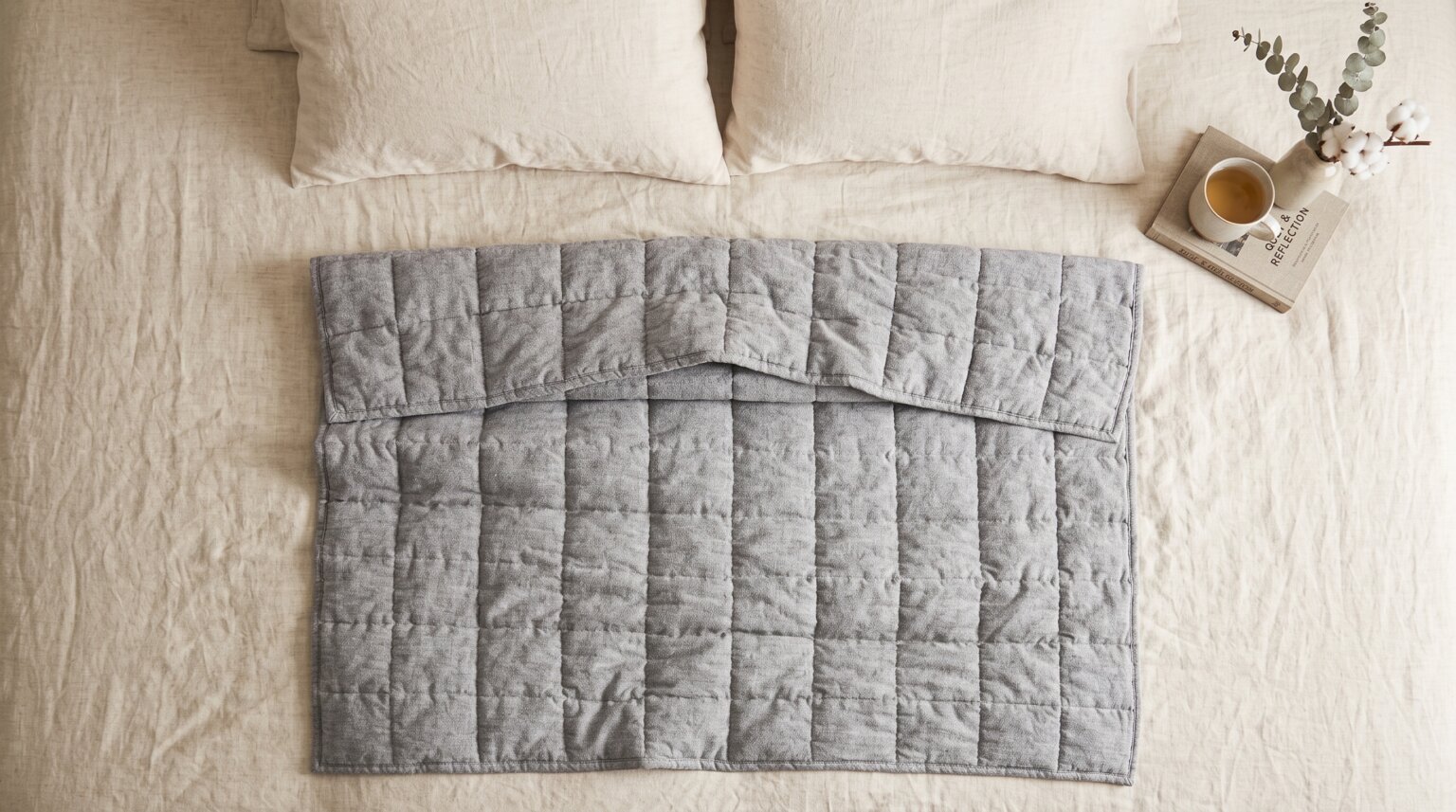
Figuring out how heavy a weighted blanket should be for your body comes down to one simple rule: choose a blanket that weighs roughly 10% of your body weight. If you weigh 150 pounds, that means a 15-pound blanket. If you weigh 200 pounds, you would look for something around 20 pounds.
But that 10% guideline is just a starting point. The ideal weight also depends on your age, body composition, personal comfort preferences, and any health conditions you might have. Going too heavy can restrict movement and make breathing feel labored, while going too light means you miss out on the calming benefits entirely.
In this guide, I break down the exact weight recommendations for every body type and age group. You will find a complete weight chart, safety warnings, signs your blanket is the wrong weight, and practical tips that most other guides leave out.
Table of Contents
The 10% Body Weight Rule Explained
The general rule for how heavy a weighted blanket should be for your body is to pick one that equals approximately 10% of your total body weight. This guideline comes from occupational therapy research and has been widely adopted by sleep specialists and sensory health professionals.
The 10% rule works because it provides enough deep pressure stimulation to trigger a calming response in your nervous system without overwhelming your body. At this weight, the blanket applies gentle, even pressure across your entire body. That pressure stimulates the release of serotonin and dopamine while reducing cortisol levels.
Most manufacturers and sleep experts recommend staying within a range of 5% to 12% of your body weight. If you prefer a lighter feel or are new to weighted blankets, start closer to 5% or 8%. If you are an experienced user who craves that deep, grounding sensation, you can push toward 12%.
For children, the formula is slightly different. Experts recommend 10% of body weight plus 1 to 2 additional pounds. So a 50-pound child would use a 6 to 7-pound blanket. I cover children’s guidelines in detail further down.
Weighted Blanket Weight Chart
Use this weighted blanket weight chart to find your recommended blanket weight based on body weight. I have included both pounds and kilograms for easy reference.
| Your Body Weight (lbs) | Your Body Weight (kg) | Recommended Blanket Weight (lbs) | Recommended Blanket Weight (kg) |
|---|---|---|---|
| 40-50 lbs | 18-23 kg | 5 lbs | 2-3 kg |
| 50-70 lbs | 23-32 kg | 7 lbs | 3-4 kg |
| 70-90 lbs | 32-41 kg | 10 lbs | 4-5 kg |
| 90-110 lbs | 41-50 kg | 10-12 lbs | 5-5.5 kg |
| 110-130 lbs | 50-59 kg | 12-15 lbs | 5.5-7 kg |
| 130-150 lbs | 59-68 kg | 15 lbs | 7-8 kg |
| 150-170 lbs | 68-77 kg | 15-17 lbs | 7-8 kg |
| 170-190 lbs | 77-86 kg | 17-20 lbs | 8-9 kg |
| 190-210 lbs | 86-95 kg | 20 lbs | 9-10 kg |
| 210-230 lbs | 95-104 kg | 20-22 lbs | 9-10 kg |
| 230-250 lbs | 104-113 kg | 22-25 lbs | 10-11 kg |
| 250+ lbs | 113+ kg | 25-30 lbs | 11-14 kg |
If you fall between two weights, round down rather than up. It is always safer to start lighter and work your way up if needed. Many users on Reddit’s weighted blanket communities report that starting too heavy caused discomfort and even anxiety, while a slightly lighter blanket felt perfect.
Keep in mind that these ranges assume the blanket covers your entire body evenly. If your blanket is larger than a twin size and drapes over the edges of your bed, the weight distributes across a wider surface area. That means the effective weight pressing down on your body is slightly less than the total blanket weight.
Weight Guidelines for Children
Children need special consideration when it comes to weighted blanket weight. The standard recommendation is 10% of the child’s body weight plus 1 to 2 pounds. A child weighing 40 pounds should use a 5 to 6-pound blanket.
Weighted blankets should never be used with infants under 2 years old. For toddlers and young children, always consult a pediatrician or occupational therapist before introducing a weighted blanket. Children with sensory processing differences, autism, or ADHD often benefit greatly from the deep touch pressure, but the weight must be carefully calibrated.
A 13-year-old weighing around 100 pounds would typically use a 10 to 12-pound blanket. As children grow and gain weight, you will need to upgrade the blanket to match their new body weight. One Reddit user shared that their blanket felt right at first but started feeling too light after two years of growth and regular use.
Watch for any signs of discomfort. If a child struggles to move freely under the blanket or complains about feeling trapped, the weight is too high. Reduce by 2 to 3 pounds and observe how they respond.
Weight Guidelines for Adults
Most adults find their ideal weighted blanket falls between 12 and 20 pounds. This range covers body weights from approximately 120 to 200 pounds. Adults weighing over 200 pounds may need blankets in the 20 to 30-pound range, though availability becomes limited above 25 pounds.
Body composition plays a role too. Someone with more muscle mass and upper body strength may find a heavier blanket more comfortable. Those with lower muscle tone or joint issues may prefer staying at the lighter end of their recommended range.
If you have never used a weighted blanket before, give yourself a 5 to 7 night adjustment period. The first few nights can feel unusual, and your body needs time to adapt to the deep pressure stimulation. Many first-time users report that what felt heavy on night one felt perfectly natural by night five.
Weight Guidelines for Seniors
Seniors need a more conservative approach to weighted blanket selection. As we age, muscle strength decreases, joint mobility can become limited, and circulation may slow down. A blanket that feels manageable at age 40 can become difficult to reposition at age 75.
For older adults, I recommend starting at 7% to 8% of body weight rather than the full 10%. A senior weighing 160 pounds would start with a 12-pound blanket instead of the standard 16 pounds. If that feels comfortable after a week, they can gradually increase.
Seniors with arthritis, osteoporosis, or circulation issues should pay extra attention to how their joints and limbs feel under the blanket. Numbness, tingling, or increased stiffness are signs the weight is too heavy. Anyone taking medications that cause drowsiness should also use caution, as the combination of sedation and heavy pressure may reduce mobility during sleep.
Signs Your Weighted Blanket Is Too Heavy
Using a blanket that is too heavy can cause real problems. Here are the warning signs to watch for:
Restricted movement: If you struggle to roll over, shift positions, or get out of bed, the blanket is too heavy. This was one of the most common complaints in Reddit forums, with users describing feeling trapped or pinned down.
Breathing difficulty: A properly weighted blanket should never make it hard to breathe. If you feel pressure on your chest that makes each breath feel like work, remove the blanket immediately and switch to a lighter one.
Morning soreness: Waking up with achy muscles or stiff joints can mean the blanket weight is pressing too hard on certain areas of your body overnight.
Restless sleep: Counterintuitively, a blanket that is too heavy can disrupt sleep rather than improve it. If you are tossing and turning more than usual or waking up frequently, the weight might be the culprit.
Feeling claustrophobic: Some people experience anxiety rather than calm when the weight is excessive. If the blanket makes you feel anxious or panicky rather than relaxed, drop down by 3 to 5 pounds.
Signs Your Weighted Blanket Is Too Light
A blanket that is too light will not provide the deep pressure stimulation your nervous system needs. You might notice that you do not feel the calming, grounded sensation that weighted blankets are known for.
If you have been using the same blanket for a year or more and it suddenly feels too light, your body may have adapted. This is a common experience shared across weighted blanket communities. Users who initially loved their 15-pound blanket reported that after 18 to 24 months, it felt like a regular blanket.
In that case, it may be time to upgrade by 3 to 5 pounds. Alternatively, you can try layering a lighter weighted blanket on top of your existing one to add extra pressure without buying a completely new product right away.
Temperature Regulation and Weight
One of the biggest complaints about weighted blankets is that they get too hot. This is an issue that very few guides address, but it matters a lot for hot sleepers and people in warm climates.
The weight of your blanket and its heat retention are closely linked. Heavier blankets contain more filling material, whether that is glass microbeads, plastic pellets, or sand. More material means more insulation and less breathability.
If you are a hot sleeper, you do not have to sacrifice weight for cooling. Look for blankets with breathable outer covers made from bamboo, cotton, or moisture-wicking fabrics. Glass microbeads are the best filling choice for temperature regulation because they are denser (requiring less volume to achieve the same weight) and do not trap heat the way plastic pellets do.
You can also consider cooling weighted blankets specifically designed with breathable quilting patterns and moisture-wicking technology. These let you use a slightly heavier blanket without overheating. Another option is using the weighted blanket without a duvet cover during summer months and adding one during winter for extra warmth.
Safety and Contraindications
Weighted blankets are generally safe for healthy adults and older children, but certain medical conditions require extra caution or complete avoidance. Always talk to your doctor if you have any of the following conditions.
Respiratory conditions: People with COPD, asthma, sleep apnea, or other breathing disorders should consult their doctor before using a weighted blanket. The added weight on the chest can make breathing more difficult, especially for those with already compromised lung function.
Circulatory conditions: Individuals with diabetes, poor circulation, or circulatory disorders should use caution. Heavy pressure can potentially affect blood flow, particularly in the extremities. Type 1 diabetics should monitor how their body responds and consult their endocrinologist.
Pregnancy: No major competitor covers this, but it is an important topic. Pregnant women should avoid weighted blankets in the third trimester, especially when sleeping on their back. The pressure on the abdomen can restrict blood flow to the fetus. If you are pregnant and want to use a weighted blanket, use a lighter weight (5% of body weight or less) and only apply it to your legs or shoulders, never across your full body or belly.
Claustrophobia and anxiety disorders: Some people with severe anxiety or claustrophobia find weighted blankets triggering rather than calming. Start with a very light blanket and test your reaction before committing to a heavier one.
Neuropathy: People with nerve damage or neuropathy may not feel pressure accurately, which means they could unintentionally use a blanket that is too heavy without realizing it. If you have neuropathy, stick to the lighter end of your weight range and check your skin regularly for any pressure-related issues.
How to Choose the Right Weighted Blanket
Choosing the right weighted blanket involves more than just picking a weight. Here is a step-by-step process to make sure you get it right.
Step 1: Calculate your target weight. Take your body weight and calculate 10%. If you weigh 170 pounds, your target is 17 pounds. Round to the nearest available weight, typically offered in 2-pound increments.
Step 2: Consider your experience level. If this is your first weighted blanket, start 2 to 3 pounds lighter than your calculated target. Your body needs time to adjust to the deep pressure stimulation.
Step 3: Choose the right material. Glass microbeads are the most popular filling because they provide even weight distribution and temperature neutrality. Plastic pellets are cheaper but bulkier and tend to trap more heat. Sand and steel shot fillers are less common but very durable.
Step 4: Pick the right size. A weighted blanket should cover your body, not your entire bed. A twin-size blanket is usually sufficient for one person. Using a king-size blanket on a single sleeper means the weight spreads over too large an area, reducing the pressure on your body.
Step 5: Factor in shared use. If you share a bed, you have two options. Use separate twin-size weighted blankets, one for each person. Or if you want a shared blanket, combine both partners’ body weights and calculate 10% of the total. A couple weighing 350 pounds combined would look for a 35-pound blanket, though this is quite heavy and may require a custom order.
Step 6: Check for quality construction. Look for blankets with small, evenly stitched quilted pockets. This prevents the filling from shifting and pooling in one area. Poorly constructed blankets develop cold spots and heavy spots after just a few weeks of use.
Step 7: Consider maintenance. Some weighted blankets are machine washable while others require spot cleaning or professional cleaning. If you plan to use your blanket nightly, choose one with a removable, washable duvet cover.
Step 8: Give it time. Do not judge a weighted blanket after one night. Use it consistently for at least a week before deciding whether the weight is right. Your nervous system needs several nights to adapt to the deep touch pressure and start producing the calming serotonin and oxytocin response.
FAQs
Can someone with COPD use a weighted blanket?
People with COPD should consult their doctor before using a weighted blanket. The added pressure on the chest can make breathing more difficult for those with compromised lung function. If approved by a physician, start with a very light blanket (5% of body weight or less) and monitor breathing closely.
Is a 20lb weighted blanket too heavy?
A 20lb weighted blanket is appropriate for someone weighing 180 to 220 pounds, following the 10% body weight rule. For someone under 160 pounds, 20 lbs would be too heavy and could restrict movement. Always match the blanket weight to your body weight for safety and comfort.
Can type 1 diabetics use weighted blankets?
Type 1 diabetics can generally use weighted blankets but should consult their endocrinologist first. Heavy pressure can potentially affect blood flow and circulation, particularly in the extremities. Start with a lighter weight and monitor for any changes in sensation or blood sugar patterns.
Will a weighted blanket help with neuropathy?
Weighted blankets may provide mild comfort for some neuropathy symptoms through deep pressure stimulation, but results vary widely. People with nerve damage may not feel pressure accurately, which increases the risk of using a blanket that is too heavy. Consult a neurologist before use and choose a lighter weight than standard guidelines suggest.
Conclusion
Finding the right answer to how heavy a weighted blanket should be for your body starts with the 10% rule and adjusts from there based on your age, health status, and personal comfort. Use the weight chart as your baseline, listen to your body’s feedback, and do not be afraid to go lighter if anything feels uncomfortable.
The perfect weighted blanket should feel like a firm hug, not a burden. Start with the right weight, give your body time to adjust, and enjoy the deeper, more restful sleep that deep pressure stimulation can provide.