
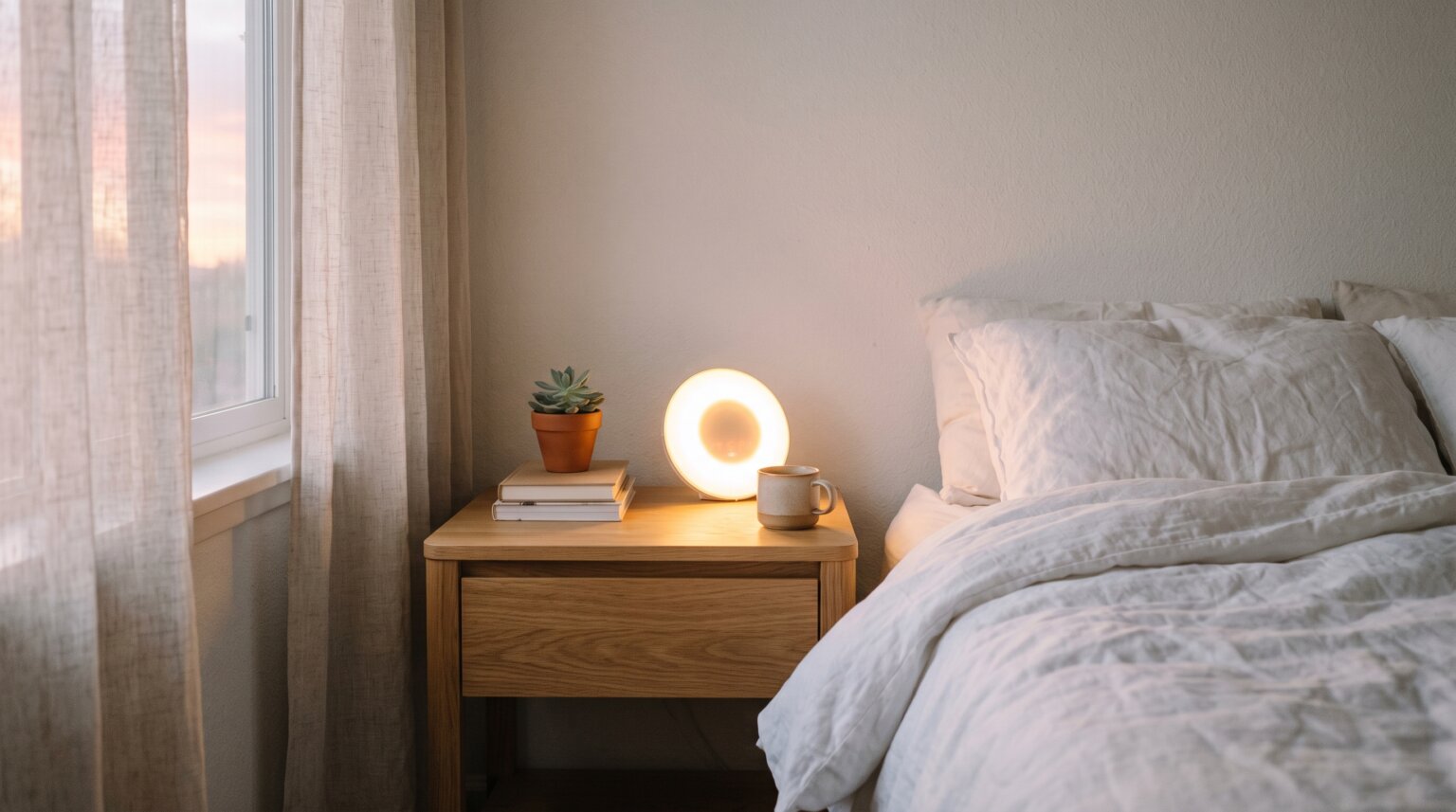
Yes, a sunrise alarm clock does actually help you wake up. Research shows these devices reduce sleep inertia, support your circadian rhythm, and make mornings feel less jarring than a traditional alarm. But the degree to which they help depends on your sleep habits, the brightness of the device, and whether you use it consistently.
I have spent months digging into the science behind wake-up lights, reading through dozens of Reddit threads from real users, and comparing what sleep specialists say about gradual light exposure. This guide breaks down everything you need to know about whether a sunrise alarm clock help wake up strategy is right for you.
We will cover the biology of how these devices interact with your brain, what studies actually found, who benefits the most, and how phone apps compare to dedicated sunrise alarm clocks. By the end, you will have a clear answer to whether investing in one makes sense for your mornings.
Table of Contents
What Is a Sunrise Alarm Clock?
A sunrise alarm clock is a wake-up light that mimics natural dawn by gradually increasing brightness over a set period before your alarm time. Instead of jarring you awake with a loud beep, it uses light to signal your brain that morning has arrived. Most models also include nature sounds or FM radio as a backup audio alarm.
These devices go by several names. You might see them called dawn simulators, wake-up lights, or light alarm clocks. They all do the same core thing: simulate a sunrise in your bedroom so your body wakes up the way nature intended.
The concept is simple but powerful. Your brain evolved to respond to natural light cues from the rising sun. Modern life means we often wake in the dark, especially during winter months or in rooms with blackout curtains. A sunrise alarm clock bridges that gap by recreating the light signal your body expects.
How Does a Sunrise Alarm Clock Work?
A sunrise alarm clock works by gradually increasing light output over 30 to 90 minutes before your set alarm time. The simulation starts at a very low brightness, almost imperceptible, and slowly ramps up to full intensity. This gradual brightening mimics what happens when the sun rises naturally outside your window.
The mechanism comes down to a small region in your brain called the suprachiasmatic nucleus. This cluster of cells sits in your hypothalamus and acts as your body’s master internal clock. When light hits your eyelids, even when closed, special receptors in your retina send signals to this nucleus. Your brain then starts the process of waking up before you are even conscious of it.
As the light intensifies, your body begins making physiological changes. Melatonin production drops, cortisol levels begin their natural morning rise, and your core body temperature increases. By the time the light reaches full brightness, your body has already shifted from deep sleep toward wakefulness.
This is fundamentally different from a traditional alarm clock. A standard alarm triggers an abrupt stress response, shocking your nervous system into alertness. The gradual approach of a dawn simulation lets your body transition through lighter sleep stages naturally.
Most sunrise alarm clocks also offer a sunset mode, which reverses the process for falling asleep. The light gradually dims over 15 to 60 minutes, helping your body wind down and produce melatonin for sleep onset.
The Science Behind Sunrise Alarm Clocks
The research on sunrise alarm clocks focuses on a concept called sleep inertia. Sleep inertia is that groggy, disoriented feeling you get right after waking up. It can last anywhere from a few minutes to several hours, and it significantly affects your cognitive performance and mood in the morning.
Studies have shown that waking up to gradual light reduces sleep inertia compared to waking up in darkness with a sudden alarm. A key study from researchers at the University of Basel found that dawn simulation improved self-reported alertness and well-being upon waking. Participants reported feeling less groggy and more ready to start their day.
The cortisol awakening response plays a central role here. Cortisol is a hormone that naturally spikes about 30 to 45 minutes after you wake up, helping you feel alert and energized. Light exposure before waking appears to prime this response, making the cortisol rise smoother and more effective.
At the same time, the gradual light suppresses melatonin, the hormone that makes you sleepy. Melatonin levels naturally fall as morning approaches, but this process can stall if you wake up in a dark room. The wake-up light accelerates melatonin suppression, helping you feel clear-headed faster.
Your circadian rhythm also benefits from consistent morning light exposure. When you receive light at the same time each morning, your internal clock becomes more regular. This phase shift effect helps you fall asleep more easily at night and wake up more naturally over time.
One often-overlooked benefit relates to heart health. UW Medicine notes that a gradual wake-up may be less stressful on your cardiovascular system than a sudden, jarring alarm. The shock of a loud alarm triggers a spike in adrenaline and heart rate. A light-based wake-up avoids this sudden stress response.
For people with seasonal affective disorder, sunrise alarm clocks can serve double duty. While they are not a replacement for a dedicated light therapy box, the morning light exposure does provide some mood-supporting benefits during dark winter months.
Does a Sunrise Alarm Clock Actually Help You Wake Up?
The short answer is yes, a sunrise alarm clock does actually help you wake up, but with some important caveats. The evidence shows that gradual light exposure before waking improves alertness, reduces grogginess, and helps regulate your sleep-wake cycle. However, it is not a magic solution for everyone.
For people who already get adequate sleep and simply struggle with dark mornings, a sunrise alarm can be transformative. The light provides the missing signal your brain needs to complete the waking process naturally. Many users report feeling like they woke up on their own rather than being dragged out of sleep.
Forum discussions on Reddit paint a consistent picture. Users across multiple communities, from r/productivity to r/sleephackers, report that sunrise alarms make waking up noticeably less unpleasant. Many describe it as the difference between being ripped from sleep and gently guided into wakefulness.
However, the effectiveness depends heavily on the brightness of the device. This is where many budget models fall short. Dedicated sunrise alarm clocks from reputable brands produce 250 lux or more at bedside distance. Cheap knockoffs and phone apps often max out around 50 lux, which may not be enough to trigger the full biological response.
Heavy sleepers should also know that light alone may not be enough to wake them from deep sleep. Most sunrise alarm clocks include sound options as a backup, and sleep specialists recommend using both for people who sleep deeply or have hearing differences.
The bottom line from the research and real-world experience: sunrise alarm clocks help most people feel more refreshed and alert in the morning, but they work best as part of a consistent sleep routine rather than a standalone fix.
Who Benefits Most From a Sunrise Alarm Clock?
Certain groups of people see more dramatic benefits from sunrise alarm clocks than others. If you fall into any of these categories, a dawn simulator is likely worth trying.
People who wake up before sunrise. If your alarm goes off at 5:30 or 6:00 AM during winter, you are waking in near-total darkness. Your body has no natural light signal to help it transition. A sunrise alarm provides that missing cue, making early mornings feel far less brutal.
People with seasonal affective disorder. SAD is linked to reduced light exposure during darker months. While a sunrise alarm is not a medical treatment, the additional morning light can complement other therapies. The consistent light exposure helps regulate circadian rhythms that SAD disrupts.
Heavy sleepers and people who hit snooze repeatedly. Traditional alarms can become white noise to deep sleepers. The gradual increase of light starts working before the audio alarm sounds, priming your brain to be more responsive. Many heavy sleepers find they wake up before the sound even plays.
Shift workers with irregular schedules. If you work nights or rotating shifts, your circadian rhythm takes a beating. Sunrise alarm clocks help signal to your body when it is time to be awake, even when the sun disagrees. Shift workers can use them to establish a consistent wake-up light routine regardless of the actual time.
People with ADHD and autism. Forum data from communities like r/adhdwomen and r/AutismInWomen shows high enthusiasm for sunrise alarms. Many neurodivergent users find the gentle, predictable wake-up less dysregulating than sudden alarms. The visual routine can also support morning structure.
Anyone who hates their alarm. If you wake up stressed, irritated, or anxious every morning, the gentler approach of a wake-up light can change your relationship with mornings entirely.
Phone App vs Dedicated Sunrise Alarm Clock
This is one of the most common questions people ask before buying. Many smartphones now have a sunrise or gradual wake feature built in. So do you really need a separate device?
The short answer comes down to light output. A dedicated sunrise alarm clock uses powerful LEDs designed to fill a room with light. Testing shows they can produce 250 to 400 lux at typical bedside distances. A phone screen, even at maximum brightness, produces roughly 50 lux at the same range.
That difference matters because the biological effect of light depends on intensity. Your suprachiasmatic nucleus needs a certain threshold of light to fully trigger the wake-up cascade. At 50 lux, your phone provides a gentle nudge. At 250-plus lux, a dedicated device delivers a genuine biological signal.
Reddit users consistently report this gap. Many people who tried phone apps first and felt underwhelmed switched to dedicated devices and noticed an immediate difference. The phone version simply does not produce enough light for most rooms, especially if your bed is more than arm’s length from your nightstand.
There is also the issue of placement. A phone lying on a nightstand directs light sideways at best. A dedicated sunrise alarm clock is designed to project light upward and outward, filling the space above and around you. This wide distribution is closer to how natural sunlight enters a room.
That said, phone apps do have advantages. They are free or cheap, always with you, and require no extra hardware. For people who sleep very close to their phone or are extremely light-sensitive, a phone app might be enough to start.
If you are serious about testing whether sunrise alarm clocks help you wake up, a dedicated device will give you the most accurate experience. Think of the phone app as a trial run and the dedicated device as the real thing.
Pros and Cons of Sunrise Alarm Clocks
Before investing in a wake-up light, it helps to understand the full picture. Here is an honest look at what these devices do well and where they fall short.
Benefits of Sunrise Alarm Clocks
They reduce sleep inertia. Gradual light exposure helps your brain transition through sleep stages more naturally, so you wake up feeling clearer and more alert.
They support your circadian rhythm. Consistent morning light at the same time each day helps regulate your internal clock, which can improve both your mornings and your nights.
They are gentler on your nervous system. No more adrenaline spikes from a blaring alarm. The light-based wake-up avoids the fight-or-flight response that sudden noise triggers.
They may help with seasonal depression. The extra morning light during dark winter months provides some of the benefits of light therapy, though at a lower intensity.
Many include useful extras. Most models feature sunset mode, white noise, FM radio, and multiple alarm sounds. These additions can replace several other bedside devices.
They can improve your overall sleep schedule. When waking up feels better, you are more likely to maintain a consistent bedtime and wake time.
Limitations of Sunrise Alarm Clocks
Budget models can be too dim. Devices under a certain price point often lack the brightness needed for a full biological response. Check lux ratings before buying.
Heavy sleepers may still sleep through the light. If you sleep very deeply, the light alone might not wake you. Use the audio backup alarm as well.
They take up nightstand space. A dedicated sunrise alarm is larger than your phone, and some models have a noticeable footprint.
The clock display can be too bright at night. Some users complain that the clock face illuminates their room even on the dimmest setting. Look for models with full display dimming.
They require consistency to work. Skipping days or using them irregularly limits the circadian benefits. You need to commit to using it daily for the best results.
Some models lock features behind subscriptions. A few brands charge monthly fees for basic features like additional alarm sounds or advanced scheduling, which frustrates users.
Tips for Getting the Most Out of Your Sunrise Alarm
Setting up your sunrise alarm correctly makes a big difference in how well it works. Here are the tips that users and sleep experts consistently recommend.
Set the sunrise duration to 30 minutes minimum. Most devices let you choose how long the light takes to ramp up. Sleep specialists generally recommend 30 to 45 minutes for most people. Some prefer 60 to 90 minutes for an even gentler transition. Experiment to find what feels best for your body.
Place the device within 2 feet of your head. Light intensity drops sharply with distance. The closer the light is to your face, the stronger the biological signal. A nightstand right next to your pillow is ideal.
Aim the light toward your face, not the ceiling. Some models project upward, which creates nice ambient light. But for waking up, the light needs to reach your eyelids. Position it so the beam crosses your sleeping position.
Use it every day, including weekends. Your circadian rhythm thrives on consistency. Using the sunrise alarm seven days a week will produce better results than weekday-only use.
Combine with an audio alarm as backup. Especially if you are a heavy sleeper, set the sound alarm for your target wake time. Ideally, the light will wake you before the sound plays, but the audio ensures you do not oversleep.
Dim the clock display fully at night. Any light in your bedroom can interfere with melatonin production. Set the display to its lowest setting or turn it off entirely if your model allows it.
Pair it with good sleep hygiene. A sunrise alarm works best alongside consistent bedtimes, limited evening screen time, and a cool, dark sleeping environment. It is one tool, not the whole solution.
FAQs
How effective are sunrise alarm clocks?
Sunrise alarm clocks are moderately to highly effective for most users. Research shows they reduce sleep inertia, improve morning alertness, and help regulate circadian rhythms. However, effectiveness depends on the device brightness, placement, and consistent daily use. Dedicated devices producing 250-plus lux tend to be more effective than phone apps.
Is it better to be woken up or wake up naturally?
Waking up naturally is ideal, but most people cannot rely on it due to work and life schedules. A sunrise alarm clock is the closest thing to natural waking because it uses light to guide your brain through the wake-up process. This gradual approach is gentler on your body than a sudden loud alarm and produces less sleep inertia.
How long should I set my sunrise alarm for?
Most sleep experts recommend setting the sunrise simulation duration to 30 to 45 minutes before your desired wake time. Some people prefer 60 to 90 minutes for an even more gradual transition. Start with 30 minutes and adjust based on how you feel. The key is giving your body enough time to shift from deep sleep toward wakefulness before the audio alarm sounds.
Do sunrise alarm clocks work for heavy sleepers?
Sunrise alarm clocks can work for heavy sleepers, but light alone may not be enough to wake them from deep sleep. Heavy sleepers should use the audio alarm backup feature and place the light close to their face. Many deep sleepers find that the gradual light primes their brain so the sound alarm is less jarring, even if the light does not wake them fully on its own.
Conclusion
So, does a sunrise alarm clock actually help you wake up? The answer is a confident yes for most people, backed by research on sleep inertia, circadian biology, and real user experiences. These devices work by using gradual light to trigger your body’s natural wake-up processes, reducing grogginess and supporting a healthier sleep-wake cycle.
The key is choosing a device bright enough to make a biological difference, placing it close to your bed, and using it consistently every day. If you struggle with dark mornings, seasonal mood changes, or jarring alarm wake-ups, a sunrise alarm clock is one of the simplest changes you can make for better mornings.
Start with a dedicated device rather than a phone app to get the full effect, set the sunrise duration to at least 30 minutes, and give it two to three weeks of daily use. Your body will adjust, and you may find that mornings become something you actually look forward to.