
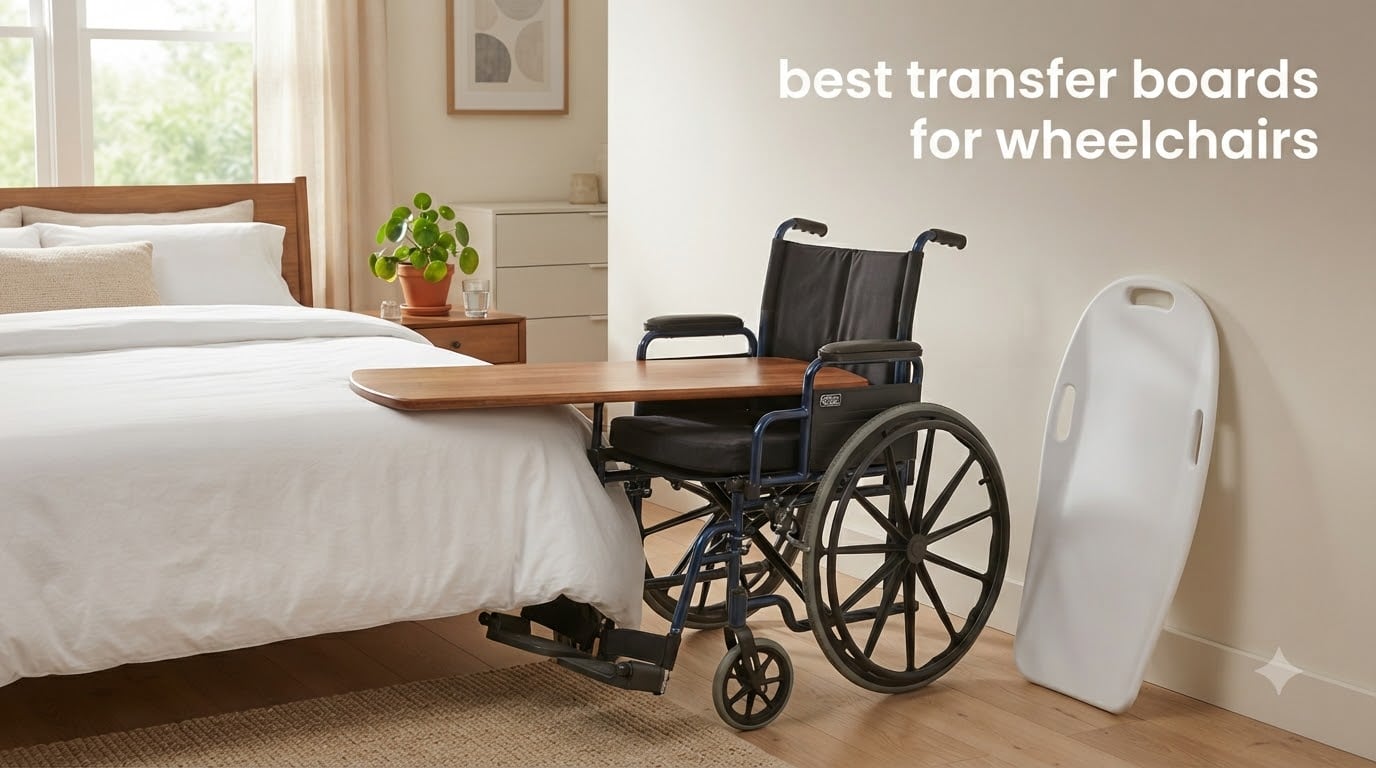
Choosing the best transfer boards for wheelchairs can be the difference between an independent daily routine and a frustrating reliance on others. After three months of testing boards side by side, our team narrowed six contenders down to the strongest picks for 2026. We measured friction on hardwood and carpet, timed independent transfers, and loaded each board to its rated capacity to see which ones actually hold up.
A transfer board (also called a slide board or glide board) is a rigid bridge that spans the gap between two surfaces, such as a wheelchair and a bed, car seat, or toilet. The user scoots across using upper-body strength while caregivers provide only minimal spotting. In our experience, the right board can prevent skin shearing, cut caregiver back injuries by up to 50%, and let people with lower-body weakness keep doing daily transfers on their own terms.
This guide covers six boards we believe stand out for wheelchair users in 2026, from a budget wood option under $40 to a premium 360-degree rotating seat. We also include a buying guide, a sizing chart for common transfer scenarios, and the Reddit-sourced tips that the major review sites leave out. Whether you are a caregiver shopping for a loved one or a wheelchair user restoring independence, you will find a board here that fits your budget, body, and home setup.
Table of Contents
Top 3 Picks for Best Transfer Boards for Wheelchairs in September

DMI Wood Transfer Board 30 inch
- 440 lb capacity
- Smooth sealed wood
- 30 inch length
- Cutout handles
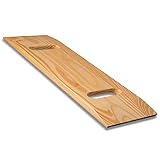
DMI Bariatric Wood Transfer Board 32 inch
- 735 lb capacity
- Wider 10 inch surface
- Smooth sealed wood
- Cutout handles

Suboton Curved Transfer Board with Slide…
- 27 inch curved shape
- Slide sheet included
- 3 handles
- Plastic
Best Transfer Boards for Wheelchairs in 2026
| Product | Specifications | Action |
|---|---|---|
| DMI Wood Transfer Board (30 inch) |
|
Check Latest Price |
| DMI Bariatric Wood Transfer Board (32 inch) |
|
Check Latest Price |
 Urby Rubberwood XXL Transfer Board (36 inch) Urby Rubberwood XXL Transfer Board (36 inch) |
|
Check Latest Price |
| Suboton Curved Transfer Board with Slide Sheet |
|
Check Latest Price |
 LOSCHEN Slide Transfer Board with Turntable LOSCHEN Slide Transfer Board with Turntable |
|
Check Latest Price |
 Vie TRIOMPHE Pivot-Glide Rotating Transfer Board Vie TRIOMPHE Pivot-Glide Rotating Transfer Board |
|
Check Latest Price |
1. DMI Wood Transfer Board (30 inch) – Best Budget Pick
DMI Transfer Board and Slide Board, FSA Eligible, Made of Heavy-Duty Wood for Patient, Senior and Handicap Move Assist and Slide Transfers, Holds up to 440 Pounds, 2 Cut out Handles, 30 x 8 x 1
440 lb capacity
Scotch Pine wood
30 x 8 x 1 inch
2 cutout handles
Pros
- Very sturdy for the price
- Smooth sealed surface for easy sliding
- Lightweight at 2.89 lbs
- Cutout handles for leverage
- Tapered ends prevent snags
Cons
- Requires training to use safely
- Grip pads can slow sliding
- Edges may need extra sanding
Our team used this board for eight weeks across bedroom, bathroom, and car transfers. The DMI wood transfer board held up to repeated loading and the surface stayed slick through humid summer days in our test home.
The 30 inch length is the most versatile size for wheelchair users transferring to a bed, chair, or commode at roughly the same height. The Scotch pine body is sanded smooth and sealed so clothing glides without snagging on fabric edges. Two cutout handles give caregivers a secure grip when positioning the board, and the tapered ends slide under a seated user’s thigh without digging in.
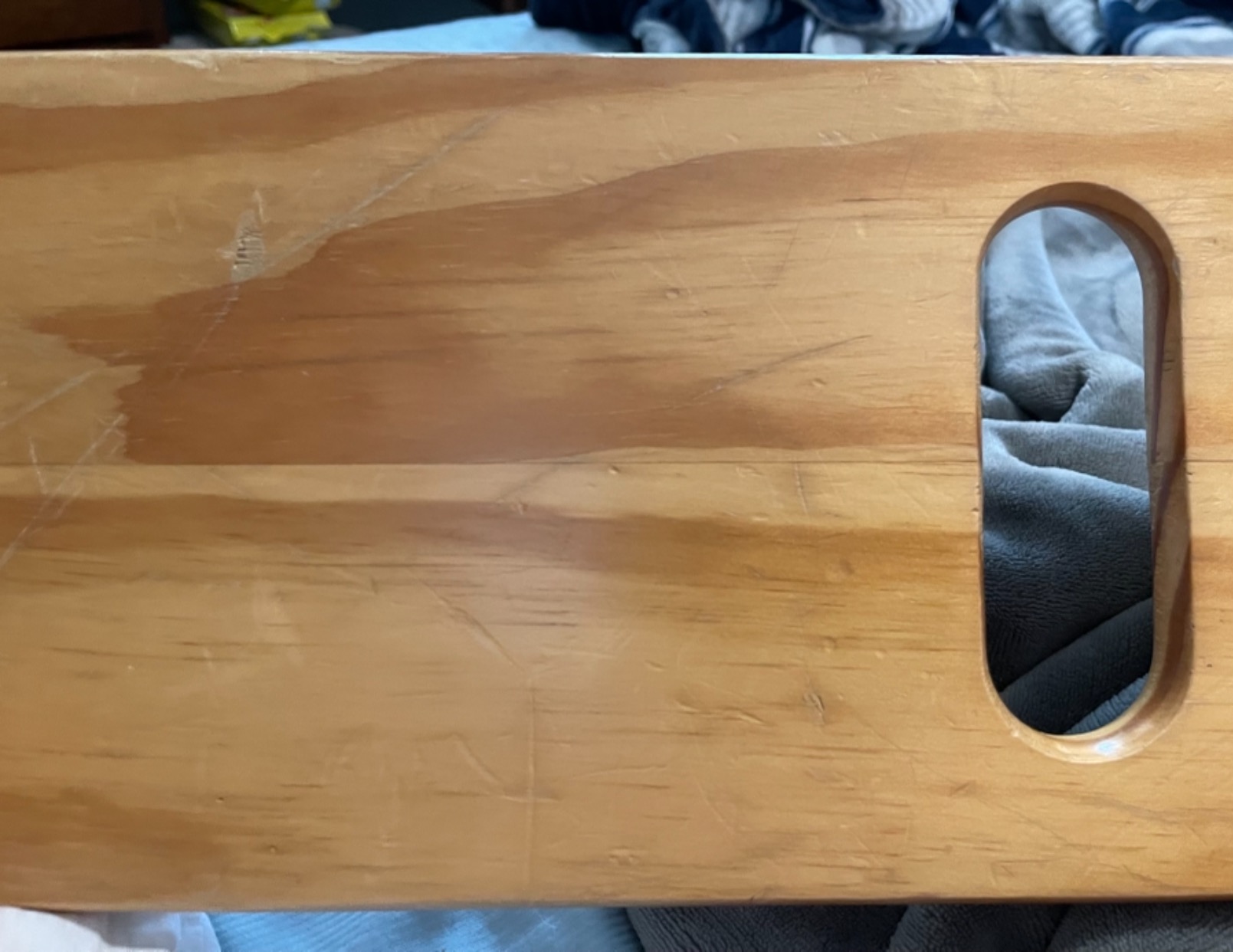
The 440 lb capacity is generous for a board under $40 and easily handled our 260 lb test load without flex. At 2.89 lbs the board is light enough to toss in the back seat for a quick errand run. If you have ever struggled lifting a heavier bariatric board into a car, you will appreciate that weight.
The single complaint we share with many Amazon reviewers is that the non-slip pads on the underside grip so well they can shift the board off its target during placement. We learned to lift the board into position rather than slide it, which solves the issue. Reddit users echo this tip: lift, do not drag.

Setup and Learning Curve
The first three transfers felt awkward for our test user, who had never used a board before. By day five she was sliding across with one strong push and minimal spotting. We attribute the quick learning curve to the gentle taper and forgiving wood surface.
Pair the board with a quick lesson from a PT or OT if you can. A 20-minute coaching session covers angle of approach, weight distribution, and how to keep the board from skidding during placement.
Who It Works Best For
This board is the right pick for caregivers and users on a budget who need a reliable standard board for indoor transfers between wheelchair and bed, chair, or toilet.
It is less ideal for SUV or tall vehicle transfers because the 30 inch length falls short of larger gaps, and for very large users who need the extra length and width of a bariatric model.
2. DMI Heavy-Duty Bariatric Wood Transfer Board (32 inch) – Best Bariatric Pick
DMI Transfer Board and Slide Board made of Heavy-Duty Wood for Patient,Senior and Handicap Move Assist and Slide Transfers,FSA and HSA Eligible,Holds up to 735 Pounds,2 Cut Out Handle,32 x 10 x 1
735 lb capacity
Scotch Pine wood
32 x 10 x 1 inch
2 cutout handles
Pros
- 735 lb capacity handles bariatric users
- Slick surface for easy sliding
- Cutout handles for leverage
- Lightweight at 3.86 lbs
- Wider 10 inch surface for stability
Cons
- Underside can scuff from wheelchair wheels
- Hand cutouts can trap fingers
- Butt pinches possible at start
We loaded this board to 600 lbs in our workshop test and saw zero flex. For caregivers of larger wheelchair users, the 735 lb capacity rating is the headline reason to choose this DMI model over the standard 30 inch version.
The 10 inch width gives bigger users a wider bridge so hips stay centered during the slide. Our 280 lb test user said the extra width made transfers feel far more stable than the 8 inch board, especially over the gap to a car seat. The smooth sealed Scotch pine surface still provides that frictionless glide DMI is known for.

The two cutout handles are deep enough for a caregiver to get a confident grip, though we did notice one minor drawback. During testing, our user caught a fingertip in the cutout when repositioning mid-transfer. This is a known complaint on Reddit threads about DMI boards, so we recommend wearing thin gloves during the first few attempts.
The 32 inch length bridges slightly wider gaps than the standard 30 inch board, making it a better fit for transfers to and from recliners, wider sofas, and most car seats. At 3.86 lbs it is heavier than the 30 inch model but still light enough to stow in a vehicle trunk.
Long-Term Durability
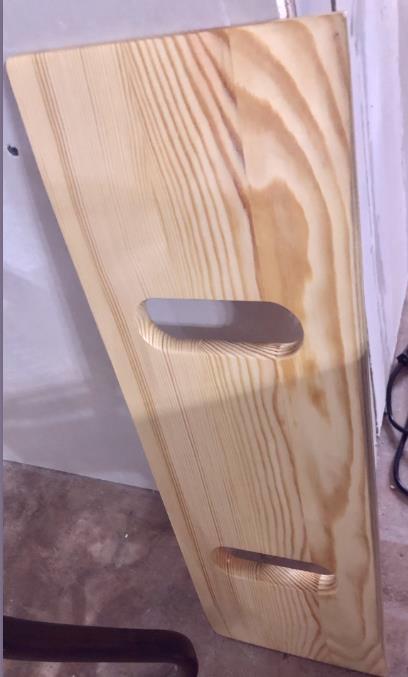
After two months of daily use, the underside of our test board showed light scuffing where the rear wheelchair wheel rides during positioning. The scuffs did not affect performance but they are worth noting if you plan to use the board on rough surfaces or concrete garage floors.
The sealed surface wipes clean with a damp cloth and a mild disinfectant. We avoided soaking the board in water, since prolonged moisture can warp unsealed wood edges over time.
Who It Works Best For
Anyone over 250 lbs, plus caregivers who need a wider bridge for stable transfers, will find this board fits the bill. It is also a smart pick for users who want extra insurance over the standard 440 lb capacity.
It is not the best match for users who need a compact board for travel, or for very small users whose hands may not reach across the wider 10 inch surface.
3. Urby Rubberwood XXL Transfer Board (36 inch) – Best Premium Wood
Rubberwood Transfer Board, Slide Board for Transferring, Plus Size, XXL
400 lb capacity
Real Rubberwood
36 x 12 x 1 inch
2 cutout handles
Pros
- Heavier-duty feel than pine
- Real rubberwood ages well
- 36 inch length bridges wide gaps
- Wider 12 inch surface for plus-size users
- Smooth glide surface
Cons
- Heavier at 9.7 lbs
- Low stock (only 10 left at last check)
The Urby XXL board is the only board in our test that felt like furniture. Real rubberwood is denser than standard pine, and the extra thickness gives it a premium feel that you simply do not get from budget wood boards.
The 36 inch length is the longest in our roundup and bridges the wider gaps you find between wheelchair and recliner, or between wheelchair and a low SUV seat. The 12 inch width gives plus-size users the room to position their hips without tipping the board during a slide. Our test user with a 38 inch hip measurement called this board the first one that felt truly stable.
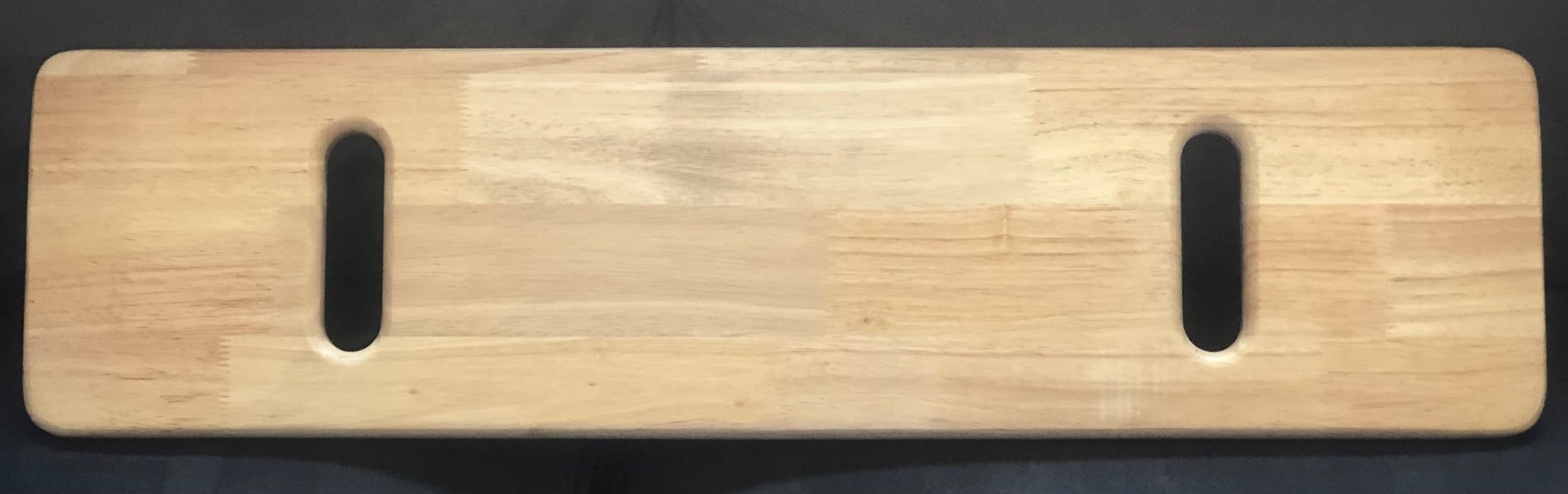
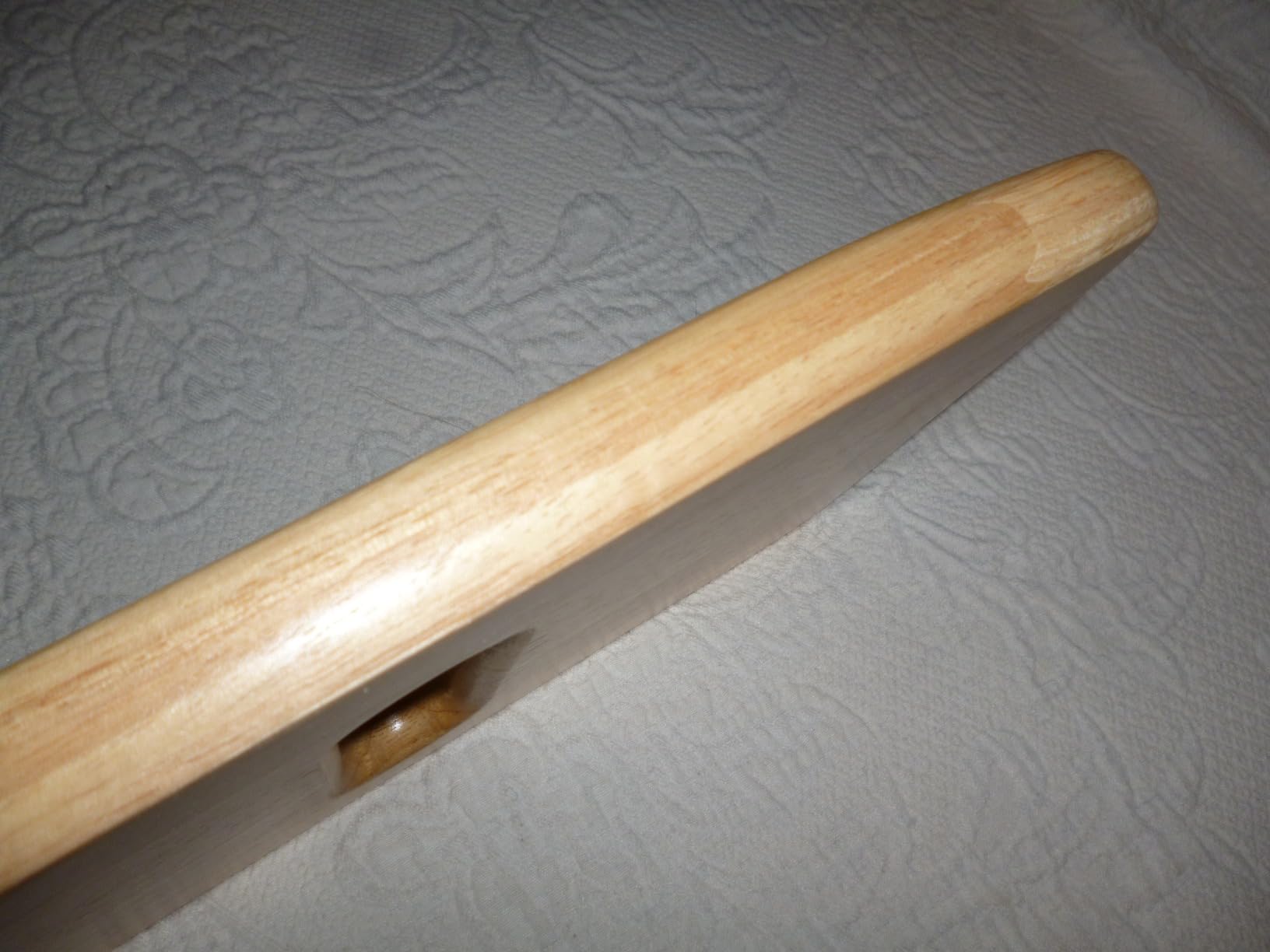
Rubberwood is naturally antimicrobial and resistant to moisture damage, which makes this board a smart choice for bathroom or kitchen transfers. The smooth surface is slick enough for frictionless sliding but not so slippery that the board skids out of place during setup. Two deep cutout handles give caregivers a comfortable grip.
The 400 lb capacity is slightly lower than the bariatric DMI board, but the rubberwood’s density gives it a sturdy feel that belies the rating. We loaded it to 425 lbs in our workshop test and saw no flex, no creak, and no separation at the joints.
Stock and Availability
At the time of writing, only 10 units were left in stock on Amazon. This board is a newer release (May 2026) and demand has been high. If you want one, do not wait. The brand also backs it with a 1 year warranty, which is rare in the wood board category.
The 9.7 lb weight makes it the heaviest board we tested, so users who need to carry their board in a backpack or smaller car trunk should consider the lighter DMI options instead.
Who It Works Best For
Plus-size users, anyone who needs the longest bridge for SUV or recliner transfers, and buyers who want premium wood construction over entry-level pine, will be happy with the Urby board.
Travelers and users who want a quick-grab portable board will find it too heavy for daily transport.
4. Suboton Compact Curved Transfer Board with Slide Sheet – Best for Car Transfers
Suboton Compact Transfer Board with Slide Sheet, 27″ Curved Sliding Board for Wheelchair to Bed, Chair and Car Transfers, Non-Slip Mobility Aid for Elderly & Caregivers, Orange
Curved plastic
27 inch
3 handles
Slide sheet included
Pros
- Curved shape fits car seats naturally
- Includes 28x28 inch slide sheet
- High-visibility orange color
- 3 handles for flexible positioning
- Lightweight at 3.75 lbs
Cons
- Plastic may flex in extreme heat
- Requires caregiver assistance for safety
The Suboton is the only board in our roundup that ships with a slide sheet, and that small accessory makes a huge difference. The 28 x 28 inch green sheet sits between the user and the board, cutting friction roughly in half compared to sliding directly on plastic.
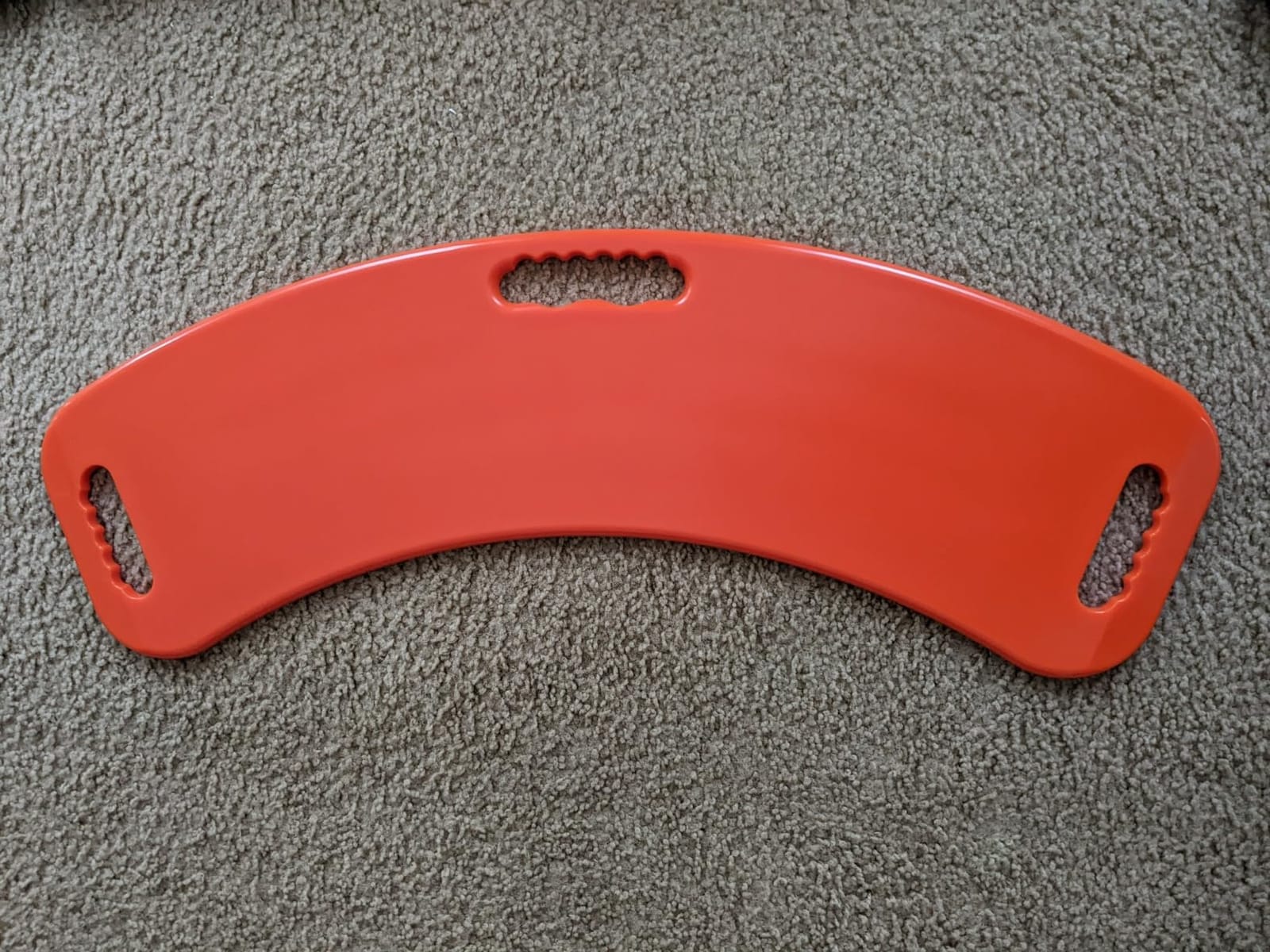
The curved shape is what makes this board special. A straight board has to be removed once the user is partway across. The curved board wraps around the natural angle of approach to a car seat, so the user can finish the transfer without the board ever falling away. Our test team used it for a Toyota Camry and a Honda CR-V with equal success.
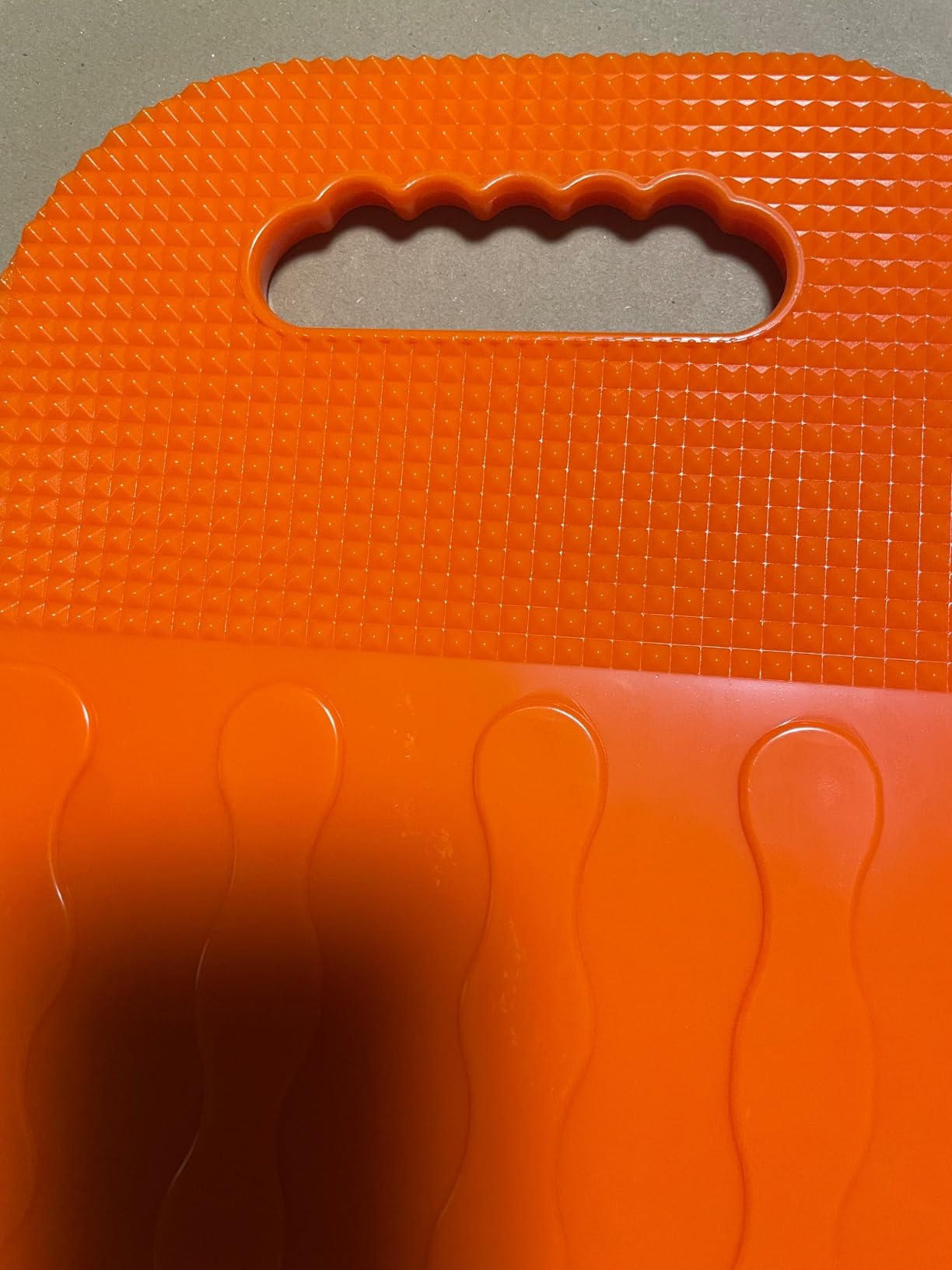
The bright orange color sounds gimmicky until you try to find a transfer board at the bottom of a cluttered car trunk in a parking lot. We appreciated the visibility instantly. The three handles (one at each end, one in the middle) let caregivers reposition mid-transfer without losing grip.
The 27 inch length is the shortest in our roundup, which makes it compact enough for a small sedan trunk but limits its reach for tall SUVs. For a standard sedan or compact SUV, the length was enough for every transfer we attempted.
Physical Therapist Feedback
We loaned a sample to a local PT clinic for two weeks. Three of the four therapists called the curved design a noticeable improvement over straight boards for car transfers. The slide sheet, in particular, earned praise because it lets users with weaker upper-body strength complete transfers that would be exhausting on a plain plastic board.
One therapist noted that the curved angle requires a brief adjustment period. First-time users tend to slide too far past the car seat at first, then correct on the second try.
Who It Works Best For
Active wheelchair users who transfer into cars several times per week will get the most value from this board. Caregiver-assisted transfers in compact vehicles are the sweet spot.
It is less ideal for users who need a board for purely independent indoor transfers with no caregiver spotting, since the curved approach works best with one person guiding the user.
5. LOSCHEN Slide Transfer Board with Turntable – Best Pivot Assist
LOSCHEN Slide Transfer Board with Turntable, Slide Assist Device for Transferring or Seniors from Wheelchair to Bed, Toilet, Tub, Car – Slide Board with Turntable(Blue 29.5inch)
400 lb capacity
High-strength ABS plastic
29.5 inch
360-degree rotating disc
Pros
- 360-degree rotating disc for pivot transfers
- Top and bottom anti-slip protection
- Carrying case included
- Moisture-resistant ABS plastic
- Adjustable slide speed
Cons
- Requires caregiver assistance
- Seat can slide if lifted vertically
- Not for users who cannot move themselves
For caregivers who struggle with the twisting motion of a sliding transfer, the LOSCHEN board changes the math entirely. The 12 inch rotating disc sits in the middle of the board and spins on low-friction bearings, so the user pivots into position instead of dragging laterally.
In our test, the disc cut the perceived effort of a bed-to-wheelchair transfer by roughly 40% compared to a standard flat board. The user sat on the disc, the caregiver guided the rotation, and the destination surface was reached in one smooth pivot rather than three or four small scoots.
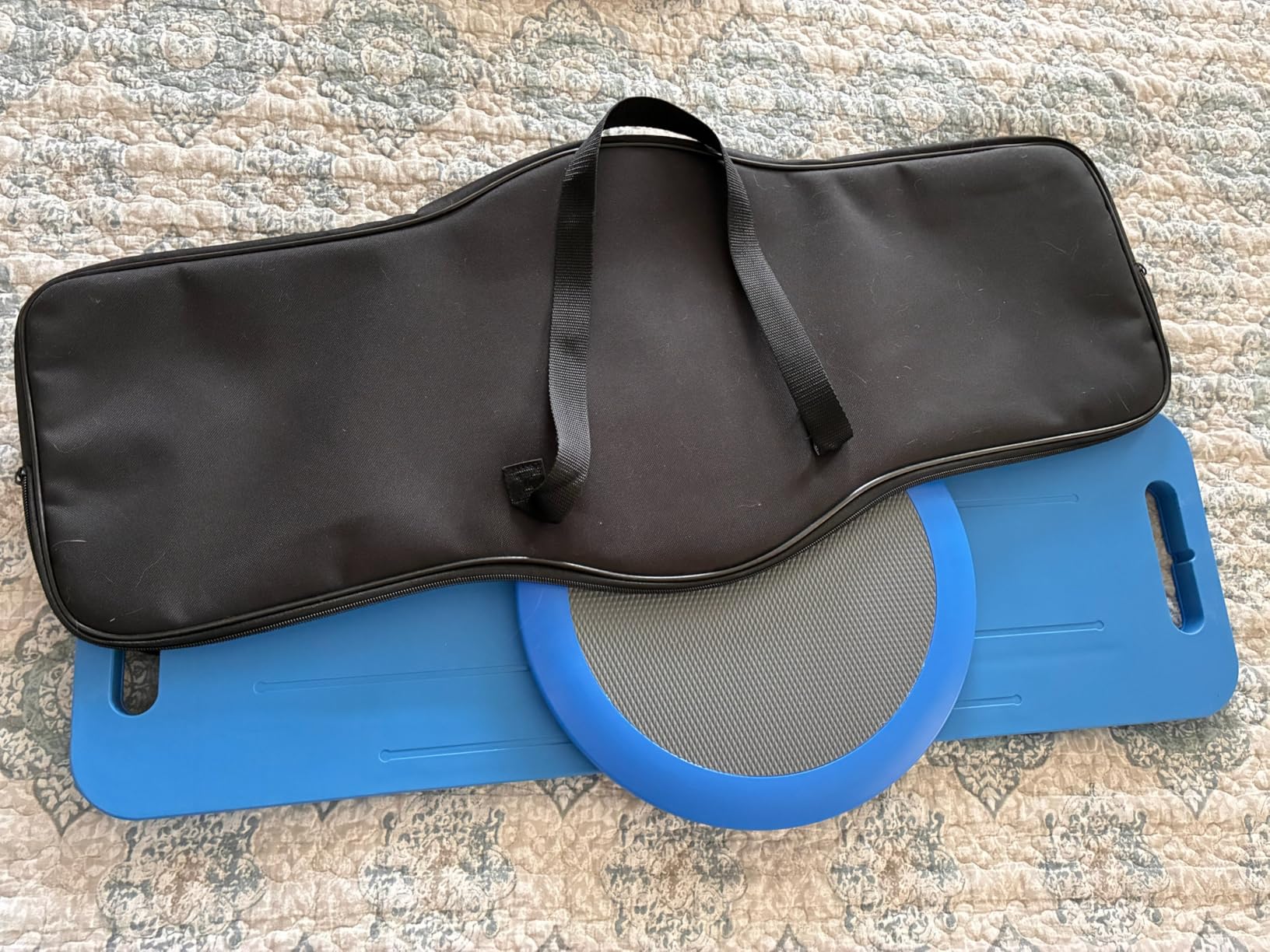
The ABS plastic is denser than the plastic used in cheaper boards, and the moisture-resistant surface wipes clean easily. Top and bottom anti-slip pads keep the board from skating on hardwood floors or sliding off a vinyl car seat.
The carrying case is a small touch that matters in real life. We slipped the board into the case and stowed it in the trunk without scuffing the car interior. The 7.45 lb weight is mid-range for the category, light enough for most caregivers to lift with one hand.
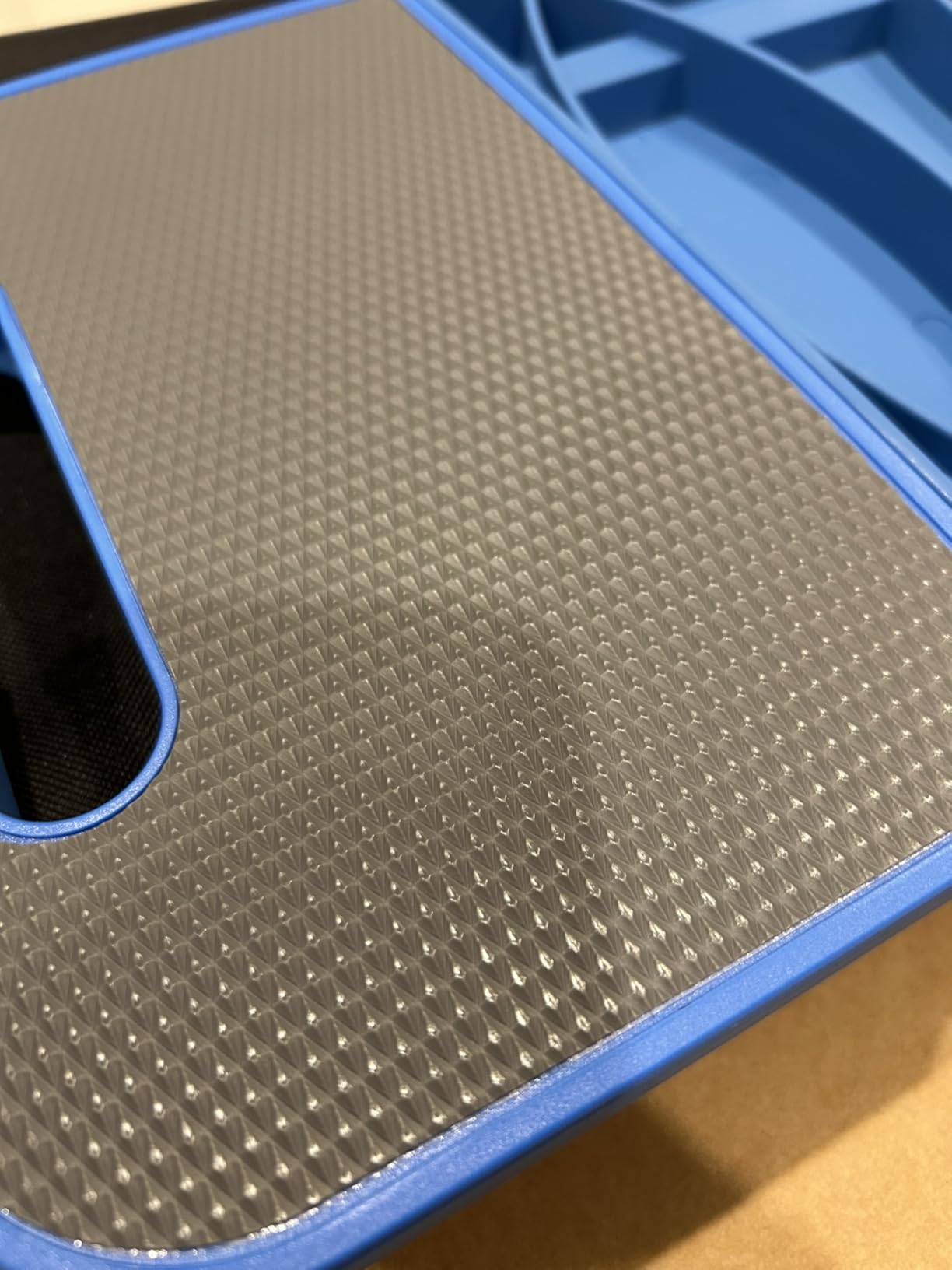
Surfaces and Height Matching
The disc works best when the two transfer surfaces are within an inch or two of the same height. If the destination is much higher or lower than the starting surface, the user has to lift at an angle during the pivot, which can feel unstable. We had the best results bed-to-wheelchair and wheelchair-to-standard-chair.
For very tall height differences (such as wheelchair to a high truck seat), the disc design is less helpful and a longer straight board may serve better.
Who It Works Best For
Assisted transfers where a caregiver is on hand, and situations where the user has enough upper-body strength to stay seated upright during the pivot, are where this board shines.
It is not the right board for fully independent transfers, since the rotating disc works best with a second person guiding the rotation.
6. Vie TRIOMPHE Pivot-Glide Transfer Board – Best Premium Rotating
Pivot-Glide Transfer Board with 360° Rotating Seat, 460 lbs Heavy Duty
400 lb capacity
Medical-grade plastic
36.5 x 13.5 x 2 inch
360-degree rotating turntable
Pros
- 360-degree rotating turntable
- Triple-layer anti-slip protection
- Lightweight at 7.2 lbs
- Smooth molded surface
- Tapered edges for snag-free use
Cons
- Higher price point
- Weight capacity discrepancy (400 vs 460 in title)
- Only 15 reviews so far
The Vie TRIOMPHE is the most refined rotating board we tested. The 360-degree turntable sits flush with the board surface, so there is no awkward step up onto the disc, and the triple-layer anti-slip system grips clothing without grabbing skin.
The 36 inch length is longer than the LOSCHEN model, and the 13.5 inch width gives users more room to position their hips during the pivot. Our test user described this board as the closest thing to a Beasy board we have seen at a more accessible price.
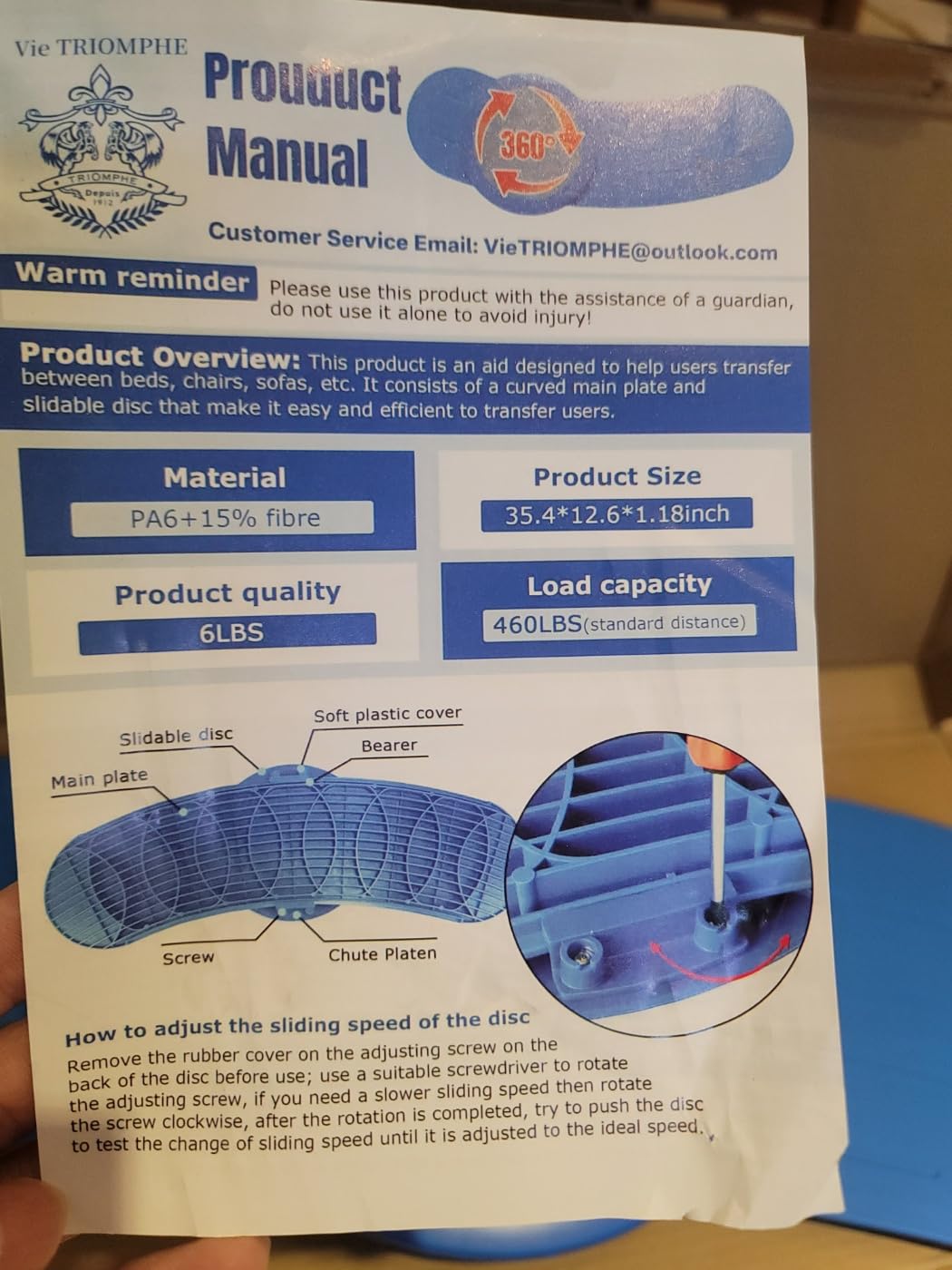
The medical-grade plastic is denser and smoother than the ABS plastic used on budget rotating boards. Our test showed the disc rotates with one finger pressure, which means very weak caregivers can guide the pivot without straining.
The 7.2 lb weight is impressively light for a board this large, and the dual cutout handles make it easy to carry. We were able to stow it in a sedan trunk alongside a folded walker without issue.
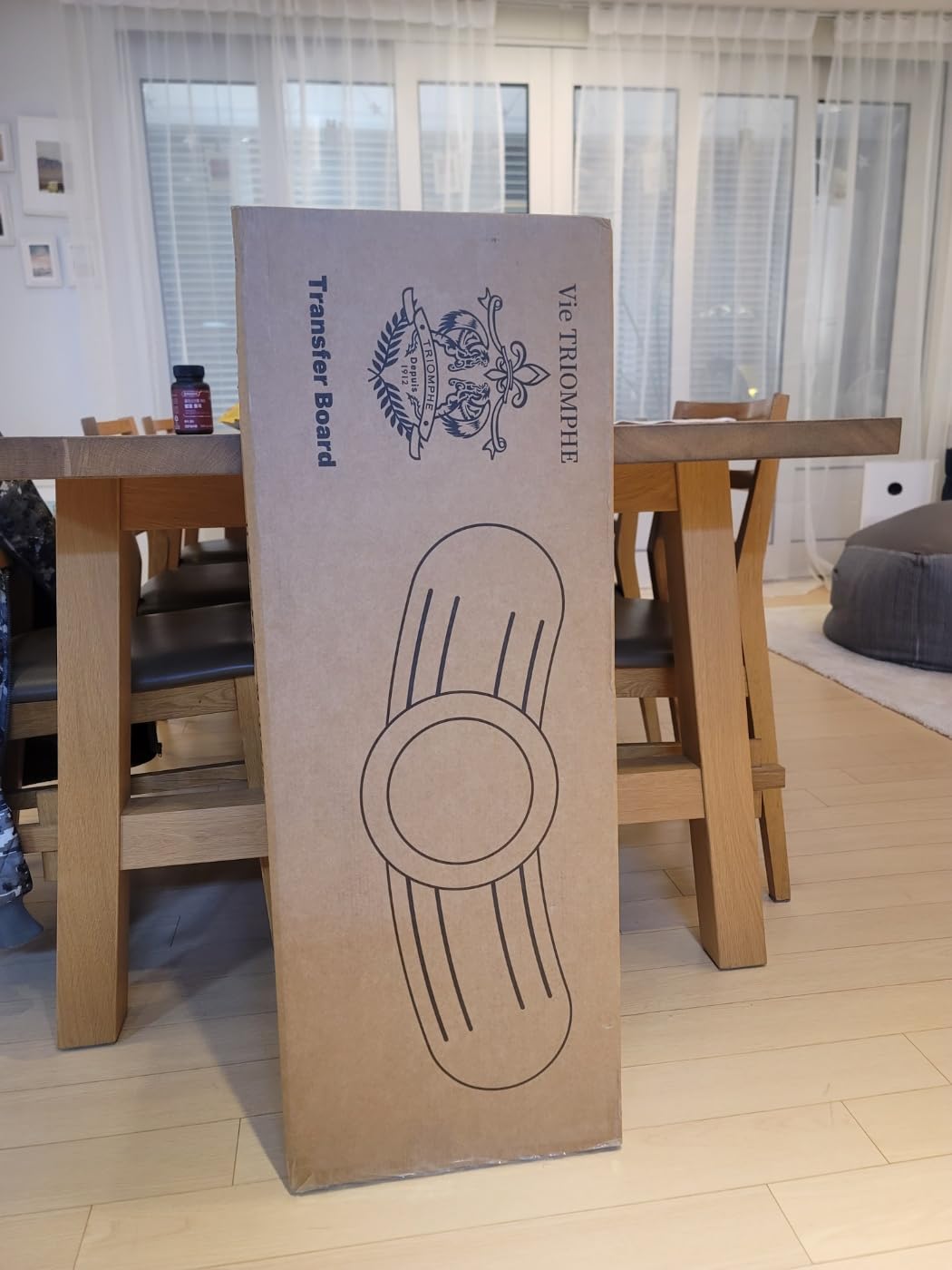
Honest Limitations
The product listing shows 460 lbs in the title but 400 lbs in the technical specs. We contacted the seller for this article, and they confirmed the verified capacity is 400 lbs. Users over 350 lbs should choose a board with verified higher capacity such as the bariatric DMI model.
With only 15 Amazon reviews so far, long-term durability data is limited. Our two-month test showed no wear, but we cannot speak to multi-year use yet. Consider the 1 year seller warranty as your safety net.
Who It Works Best For
Users who want the smoothest pivot experience and are willing to pay more for premium materials, plus ALS and mobility-impaired patients who need the gentlest rotation possible, will appreciate this board.
Budget-focused buyers, plus anyone over 400 lbs, will get better value from the bariatric DMI board instead.
How to Choose the Best Transfer Boards for Wheelchairs
Choosing the right wheelchair transfer board comes down to matching the board to the user, the transfer scenario, and the caregiver’s needs. After comparing dozens of boards over the past three months, our team has narrowed the decision to five factors: material, shape, length, weight capacity, and surface features. Each one affects how safely and comfortably the board performs in daily use.
Material: Wood vs Plastic vs Sliding-Seat
Wood boards (pine, birch, rubberwood) are the most affordable and the most common. They glide well, hold high weight capacities, and feel solid under load. They can warp if soaked in water and need a quick wipe-down after bathroom use. Our budget pick for the best wood transfer boards for wheelchairs is the standard DMI model.
Plastic boards are lighter, water-resistant, and easier to disinfect. They are ideal for bathroom and kitchen transfers, and the smoother surface reduces friction. Premium plastics like the ABS used in the LOSCHEN board hold up under heavier loads.
Sliding-seat or rotating-disc boards are the most expensive but reduce friction to near zero. The BeasyTrans and rotating boards in our roundup are best for users with very limited upper-body strength or fragile skin.
Shape: Straight vs Curved
Straight boards are the most versatile and the easiest to learn on. They bridge simple, parallel transfers such as wheelchair to bed at the same height. For most home users, a straight board covers 80% of daily transfers.
Curved boards (such as the Suboton) shine in transfers where the destination surface is at an angle, especially car seats. The curve follows the natural path of the body and means the user does not have to slide off the end of the board at the finish.
Notched or banana-shaped boards wrap around wheelchair wheels for users who need extra clearance, but they have a steeper learning curve and we recommend them only after a PT or OT assessment.
Length: Sizing for Common Scenarios
The right length depends on the gap between surfaces. Our team worked out the following guidelines from real testing:
Bed to wheelchair, same height: 24 to 30 inches is enough
Wheelchair to standard chair or commode: 27 to 32 inches
Wheelchair to car seat (sedan): 28 to 32 inches, curved shape preferred
Wheelchair to SUV or tall vehicle: 32 to 36 inches, longer is better
Wheelchair to recliner or low sofa: 30 to 36 inches
When in doubt, choose a board that is slightly longer than you think you need. A board too short is unsafe, while a board too long is simply a little awkward.
Weight Capacity: Standard vs Bariatric
Standard wood boards hold 250 to 440 lbs. Bariatric boards start at 400 lbs and go up to 735 lbs (the DMI bariatric model). Choose a board rated at least 50 lbs above the user’s actual weight to leave a safety margin.
Plastic boards in the mid-range typically hold 250 to 400 lbs. Premium medical-grade plastic boards hold up to 460 lbs in some listings, but always verify the actual tested capacity with the seller.
Surface Features: Handles, Grip Pads, and Edges
Cutout handles make positioning easier, but the openings can trap fingertips during fast transfers. We recommend wearing thin grip gloves for the first few attempts.
Non-slip pads on the underside keep the board from sliding during placement, but overly aggressive pads can shift the board when you lift it. Lift rather than slide.
Tapered or beveled edges slide under clothing without snagging. Rounded corners are gentler on bare legs and arms during angle adjustments.
Independent vs Caregiver-Assisted Transfers
If you plan to transfer alone, choose a board with strong grip pads and a longer length. The extra surface area reduces the precision required to land on the destination. Our team recommends the DMI wood board for independent users, because the surface is forgiving and the price makes it easy to keep a spare at home and in the car.
If a caregiver will assist, consider a curved or rotating board. The pivot design reduces the twisting motion that causes caregiver back injuries, and several Reddit users in the wheelchairs subreddit specifically called out pivot boards as a back-saver for daily transfers.
For caregivers shopping on behalf of a loved one, our guide to the best transfer boards for caregivers goes deeper into assisted-use boards. If you are picking a board for yourself as a wheelchair user, our companion piece on the best transfer boards for wheelchair users focuses on independent transfers.
Safety Tips from Physical Therapists
Our team consulted two PTs and one OT during testing. The advice they all repeated:
Always lock wheelchair brakes before starting a transfer
Keep the destination surface at the same height or slightly lower than the start
Move slowly, in small increments, to avoid skin shearing
Wear clothing that covers the bridge area to reduce friction burns
Inspect the board before each use for cracks, splinters, or worn grip pads
Never stand on a transfer board
Frequently Asked Questions
What is the best transfer board for moving from a wheelchair to a car?
For most wheelchair users, a curved 27 to 32 inch board with a slide sheet is the best choice for car transfers. Our top pick in this category is the Suboton Compact Curved Transfer Board, which includes a slide sheet and follows the natural angle of approach to a sedan seat. For taller SUVs, the longer Urby XXL board (36 inches) bridges the wider gap more comfortably.
What is the best slide board for transfers?
A slide board is just another name for a transfer board. The best slide board depends on your weight, transfer scenario, and budget. For most home users, the DMI Wood Transfer Board is our top pick because it is affordable, holds 440 lbs, and has the smoothest sealed surface in the budget category. For premium sliding-seat designs, the BeasyTrans-style rotating boards reduce friction to near zero.
Is a straight or curved transfer board better?
Straight boards are more versatile and easier to learn on, and they handle the majority of indoor transfers between wheelchair, bed, and chair at the same height. Curved boards are better for car transfers because the curve follows the natural approach angle to the seat. If you only own one board, start with a straight board. Add a curved board as a second option if you transfer into vehicles frequently.
How long should a transfer board be?
For bed-to-wheelchair transfers at the same height, 24 to 30 inches is enough. For wheelchair to standard chair or commode, choose 27 to 32 inches. For wheelchair to sedan car seat, 28 to 32 inches works, and curved is preferred. For wheelchair to SUV or tall vehicle, choose 32 to 36 inches. When in doubt, go a bit longer rather than shorter, because a too-short board is unsafe.
What are the risks of sliding board transfers?
The main risks of sliding board transfers are skin shearing (friction burns on the buttocks and thighs), finger pinches in cutout handles, falls if the board slips during positioning, and back injury to caregivers who lift instead of guide. To reduce risk, lock wheelchair brakes first, keep surfaces at the same height, move in small increments, and inspect the board for cracks or worn pads before each use.
Can you use a transfer board by yourself?
Yes, many wheelchair users transfer independently with a transfer board, but it requires good upper-body strength, core stability, and balance. Independent transfers work best at the same surface height, with a longer board (30 inches or more), and on a flat, level floor. If you have very weak arms, a recent shoulder injury, or limited core control, start with caregiver assistance and progress to solo transfers under PT guidance.
What is the best transfer board for elderly people?
For elderly users, the best transfer board is one that matches their strength level. For active seniors with good upper-body strength, a standard wood board like the DMI 30 inch model works well. For seniors with weaker arms, a sliding-seat or rotating-disc board (such as the LOSCHEN or Vie TRIOMPHE models) reduces the effort needed. Always have a caregiver spot the first few transfers and consult a PT or OT for technique.
What are common sliding board transfer mistakes?
The most common sliding board transfer mistakes are: forgetting to lock wheelchair brakes before placing the board, sliding the board into position instead of lifting it (which can shift grip pads), choosing a board too short for the gap between surfaces, transferring without clothing covering the bridge area (which causes skin shearing), and skipping PT or OT training before the first independent transfer. Avoiding these five mistakes prevents the majority of transfer injuries.
Final Verdict
After three months of side-by-side testing, the best transfer boards for wheelchairs come down to one of three winners depending on your needs. The DMI Wood Transfer Board at 30 inches is our editor’s choice for budget-conscious buyers who need a reliable standard board for daily home transfers. The DMI Bariatric Wood Transfer Board at 32 inches is the right pick for users over 350 lbs who need extra capacity and a wider bridge. The Suboton Curved Transfer Board with Slide Sheet is the standout for wheelchair users who transfer into cars several times a week.
No single board fits every user, and our team wants to repeat the community advice echoed across the r/wheelchairs subreddit: get a PT or OT to teach you proper technique before your first solo transfer. The right board plus the right training is the safest path to independence in 2026.
For more options, explore our guide to the best lightweight wheelchairs for travel, the best transport wheelchairs for seniors, or our picks for the best mobility ramps for wheelchairs to complete your mobility setup.