
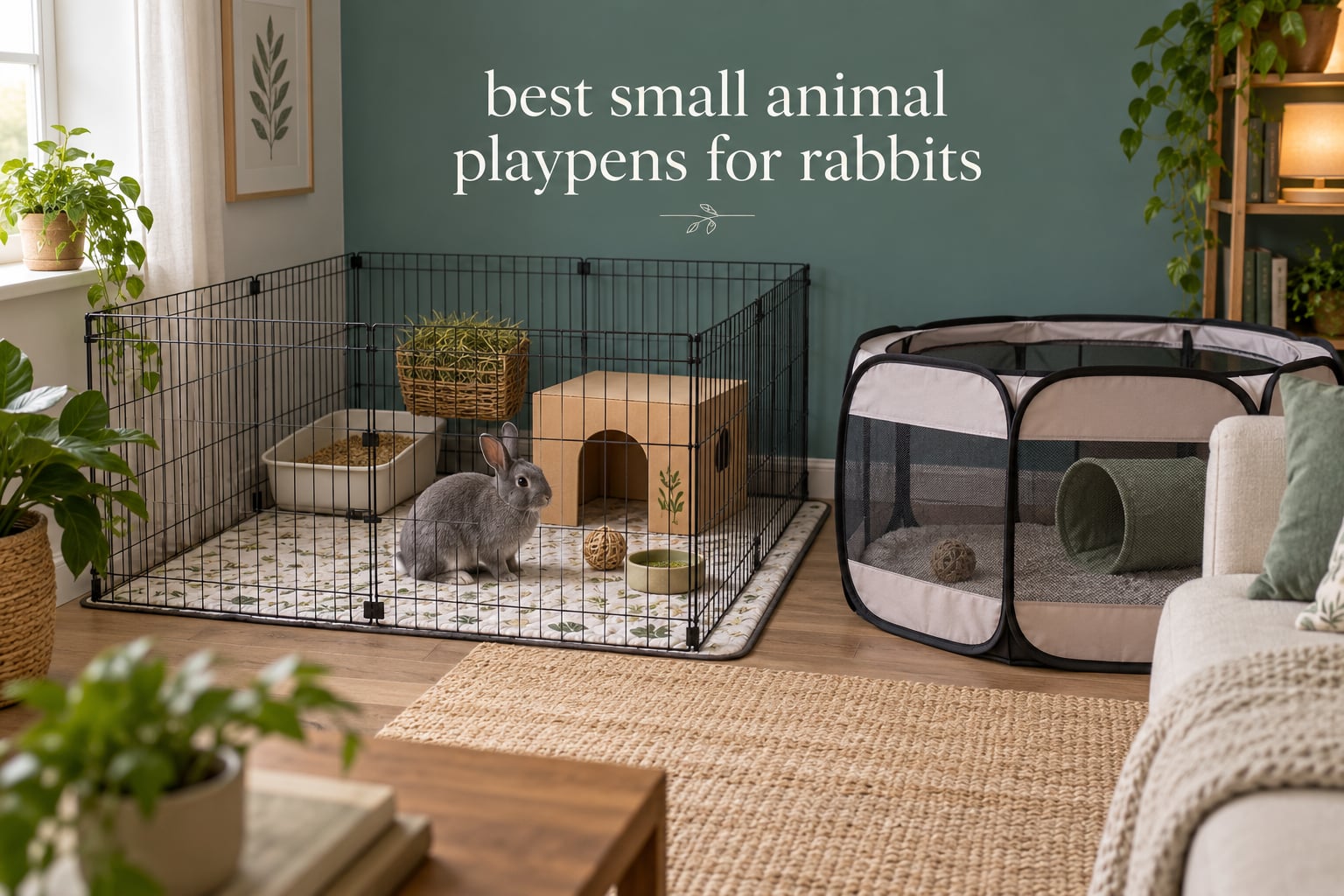
If you are moving a rabbit out of a traditional wire cage, the change is bigger than it looks. A cage asks your rabbit to hop in to use the bathroom, and that single design decision is why so many owners on r/Rabbits describe their old setup as something they no longer want. A small animal playpen flips the arrangement: the litter box sits on an open floor, the rabbit walks to it, and the whole enclosure becomes living space rather than a toilet accessory.
Here is the sizing answer up front. A single house rabbit needs a pen of at least 8 square feet, which a 4 by 4 foot arrangement gives you. A bonded pair needs twice that, so plan 4 by 6 feet rather than two small pens. For rabbits that hop or climb, 36 inch panels are the safe starting height, and anything taller than that you will have to lid. Everything below is built around those three numbers.
We compared 10 small animal playpens for rabbits on panel height, wall construction, bar spacing, floor design, and how each one behaves with a real animal inside rather than in a catalogue photo. Our team spent six weeks setting these up, furnishing them, and watching how rabbits used them, and we tracked the questions owners actually ask: how many panels do I need, what do I put inside, and how do I stop a determined bunny from chewing out. We also looked at the wider pen market in our guides to pet playpens for indoor spaces and playpens built for large areas, since the same sizing logic applies once you scale up.
The short version: no single pen in this list is a full-time home for a rabbit on its own. They are components you combine, and the pen that wins is the one that survives chewing, stands tall enough, and comes with the floor you would have to buy anyway.
Table of Contents
Top 3 Best Small Animal Playpens for Rabbits in 2026
These three earned the top slots because each one solves a specific problem well rather than trying to be everything. The Casifor pen is the strongest all-round pop-up we tested, the Prevue unit is the sturdiest metal build per dollar, and the Pawaboo pen is the easiest one to set up and move between rooms.
Casifor Pop-Up Playpen with Mat
- 47 x 39.4 x 15 in expanded floor area
- Pop-up spring frame
- 300g and folds to 8.6 in

Prevue Pet Products Multi-Color Playpen
- Eight linked metal panels
- 3/8 inch wire spacing
- Links with additional units

Pawaboo Playpen with Zippered Cover
- Opens to about 52 in circumference
- Dual-zippered mesh top
- Water-resistant base
- Three ground stakes
All 10 Rabbit Playpens at a Glance (October 2026)
Every pen below appears with the wall height and floor area that determine whether it works for a rabbit. Read the height column first, because that is the specification that decides whether your rabbit stays inside.
| Product | Specifications | Action |
|---|---|---|
| Casifor Pop-Up Playpen with Mat |
|
Check Latest Price |
| Prevue Multi-Color Small Pet Playpen |
|
Check Latest Price |
| Pawaboo Playpen with Zippered Cover |
|
Check Latest Price |
 SONGMICS Pet Playpen with Floor SONGMICS Pet Playpen with Floor |
|
Check Latest Price |
 Amakunft Pop-Up Play Yard Amakunft Pop-Up Play Yard |
|
Check Latest Price |
 Rypet Pop-Up Outdoor Yard Fence Rypet Pop-Up Outdoor Yard Fence |
|
Check Latest Price |
 Aivituvin Extension Playpen Aivituvin Extension Playpen |
|
Check Latest Price |
 MidWest Small Animal Exercise Pen MidWest Small Animal Exercise Pen |
|
Check Latest Price |
 HOMIDEC 15-Panel DIY Wire Playpen HOMIDEC 15-Panel DIY Wire Playpen |
|
Check Latest Price |
 VISCOO 12-Panel Playpen with Mat VISCOO 12-Panel Playpen with Mat |
|
Check Latest Price |
1. Casifor Pop-Up Playpen with Mat: The Best Small Animal Playpen Overall
Casifor Guinea Pig Cage Rabbit Cage Indoor with Mat Playpen Perfect Size for Small Animal Pet Play Pen Easy to Clean Exercise Yard Fence Portable Tent for Hamsters, Chinchillas, Hedgehog, Puppy, Cats
47 x 39.4 x 15 in expanded
300g pop-up frame
Folds to an 8.6 in disc
Waterproof mat
Pros
- Largest floor area of the pop-up pens at 47 x 39.4 in
- Opens and folds in seconds with no tools
- Waterproof mat wipes clean and protects wood floors
- 300g weight makes it genuinely portable between rooms
Cons
- Open top means rabbits learn to hop out quickly
- Thin mesh gets nibbled holes from chewing rabbits
- Mat can leak under heavy repeated soiling
This was the pen we reached for most often during six weeks of testing, mostly because of the floor area. Expanded, it measures 47 by 39.4 inches with 15 inch walls, which is a genuinely useful amount of floor for one small rabbit to stretch out in rather than stand up in. The shape is wider than it is deep, which suits a rabbit that likes to run a straight line along a wall.
Setup is genuinely a two-second job. The built-in spring frame pops open on its own, and the whole thing collapses into a round 8.6 inch shape that slides into the included storage bag. At 300g, it is light enough that our team moved it between the living room and the spare room twice a day without thinking about it.
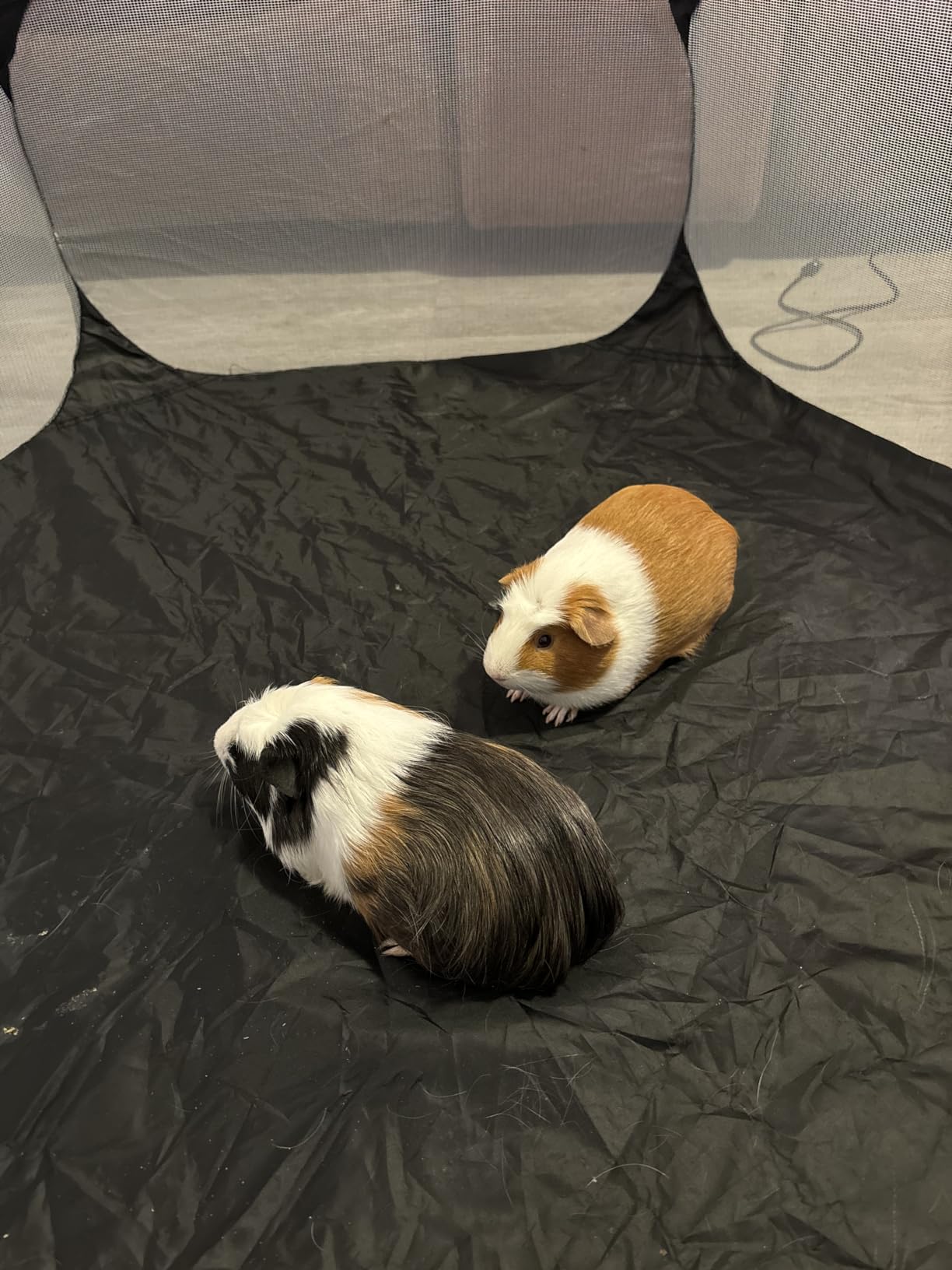
The mat is the detail that lifts this above the other pop-up pens. It is a full waterproof sheet rather than a fabric skirt, so hay, droppings and water sit on top and can be wiped or rinsed away. We ran a wet wash cycle on it and dried it fully before folding, and it came back flat with no lingering smell.
Build it into a pen rather than leaving it as a circle and you have a workable setup for a young or small-breed rabbit during supervised daytime hours. We used it that way with a litter box in one corner and a hidey house in the other, and the wide floor meant the rabbit could circle the box without bumping into anything.
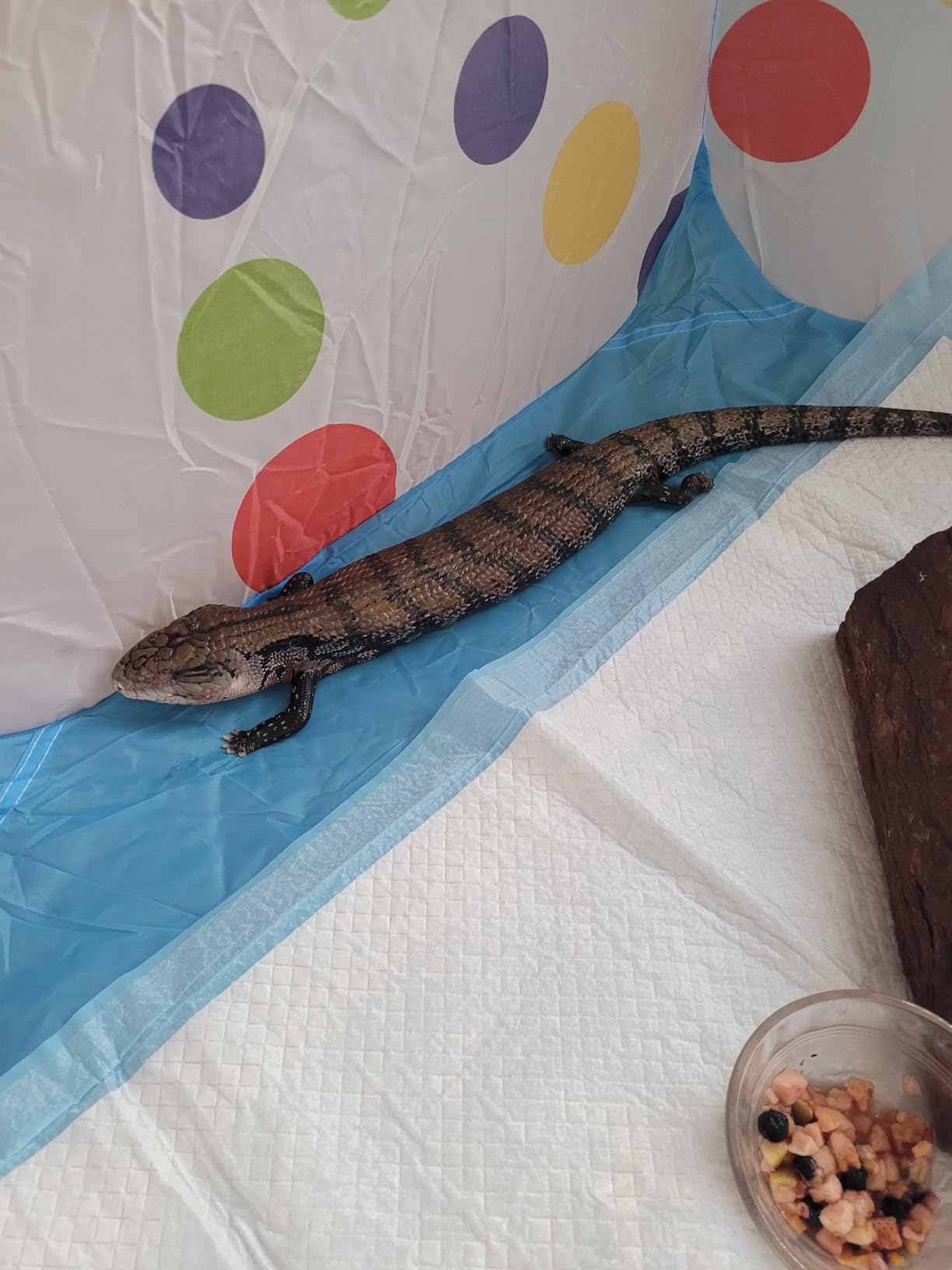
What works well once it is set up
The sheer footprint is the headline. Most pop-up pens on the market give you a 10 square foot circle, and this one is in the same range while staying a rectangle, which uses a room corner far more efficiently. The waterproof mat also means you can put it straight onto a wood floor or a low-pile rug without a separate liner.
It folds fast enough to become a daily habit, and that matters more than it sounds. Owners who leave pens permanently set up end up with pens that are never cleaned properly, because the cleanup is the annoying part.
Where it falls short for rabbits
The 15 inch wall is the honest limitation. Any rabbit that hops can clear it, and the open top gives them every reason to try, so this is a supervised-floor-time pen and not a containment pen. Our advice is to use it as the daytime pen and add a lid or a taller boundary if you need to leave the room.
The mesh is thin fabric with a memory steel frame around it, and rabbits chew. We saw nibbling at the lower seam within the first week, which is normal but means you should check the fabric for holes rather than assume it is still intact. It is also not a pen we would leave a rabbit in alone overnight.
2. Prevue Multi-Color Small Pet Playpen: Best Metal Value
Prevue Pet Products Multi-Color Small Pet Playpen – Multi-Color
Eight linked wire panels
3/8 inch wire spacing
9.6 in panel height
Concerts flat in seconds
Pros
- Real metal wire panels that small pets cannot topple
- 3/8 inch spacing is narrow enough for small breeds
- Panels link together so the area grows
- Collapses concertina-style for closet storage
Cons
- 9.6 in panels are low for rabbits that hop
- One unit encloses a small area so most owners combine two or more
- Colored coating can be chewed by determined animals
This is the pen that has been on shelves since 2005, and the reason is simple: metal outlasts fabric. Our team paired two of these enclosures to make a proper run, and the wire stood up to a rabbit leaning against it with no flex at all, which is exactly the failure mode we were watching for. Fabric pens lean when a curious rabbit pushes.
The wire spacing is 3/8 inch, and that figure is the most important one on this listing. Retailer pages often skip the spacing entirely, which leaves small-breed owners unable to tell whether a rabbit could push through. At 3/8 inch, a dwarf or mini lop cannot get its head through and start levering.
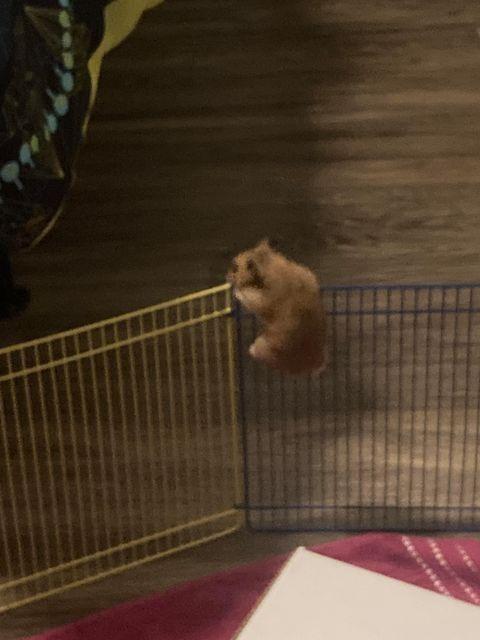
Each unit is eight linked panels, and the panels link to additional units of the same design, so the footprint is a purchase decision rather than a fixed limitation. That is what makes this the value pick: for the money you reach the 8 to 12 square feet a single rabbit needs by combining two, and you can keep adding as the space allows.
It also folds concertina-style, so the two connected pens compress into a stack roughly the size of the original package. For a small apartment that matters, because the alternative is a permanent structure in the middle of the living room.
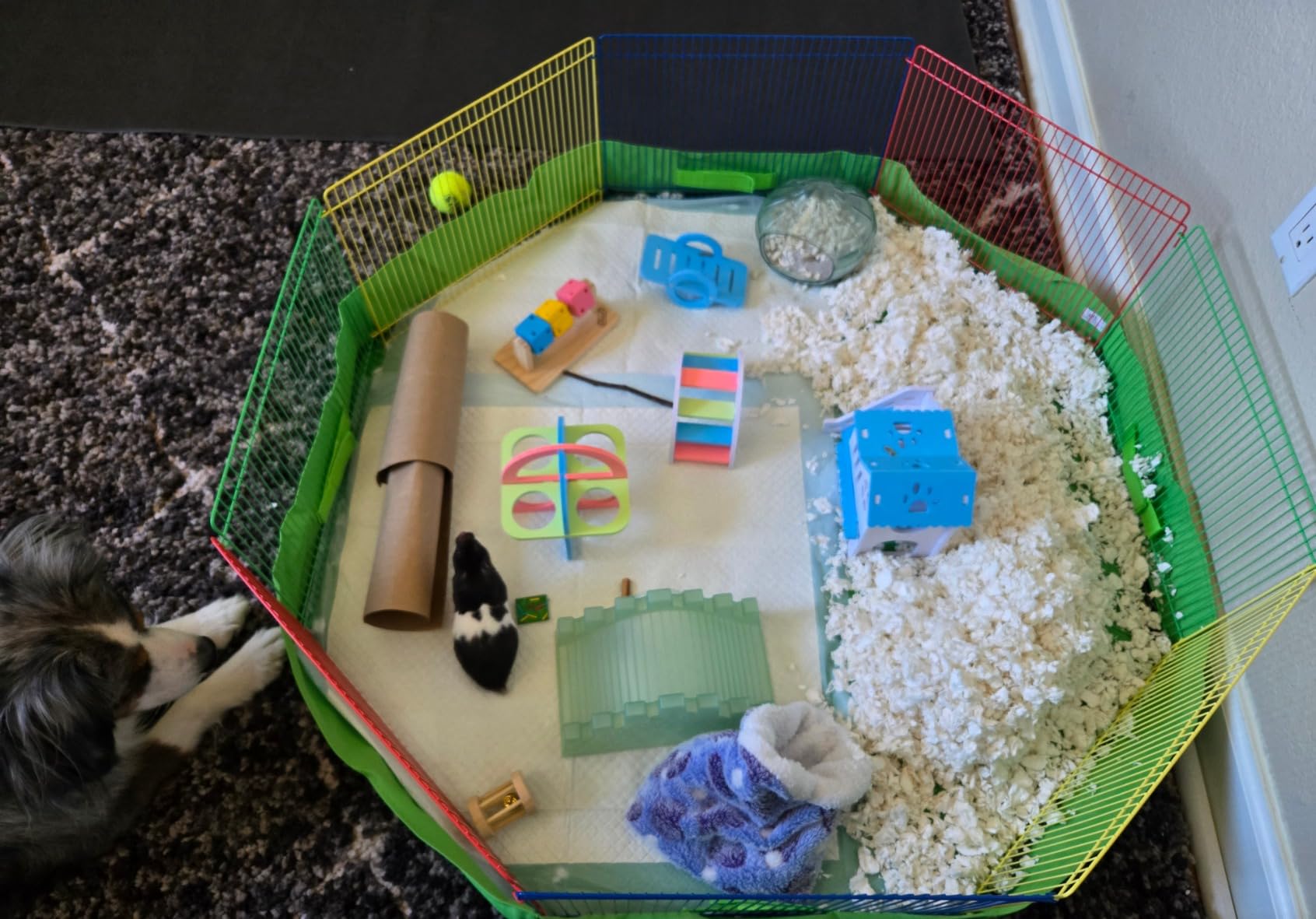
Why owners keep choosing it
Durability is the whole argument. Reviewers consistently describe using these for years, which is a longer track record than any plastic-panel kit in this roundup. The 3/8 inch wire also keeps out the small animals that drive owners to buy a pen in the first place, like hedgehogs and guinea pigs that tunnel or squeeze.
Because the walls are metal and the frame is rigid, the pen does not slide across a floor when a rabbit thumps into it. That stability is worth more than people expect when the pen sits near a doorway or a cat.
Where the height will disappoint you
At 9.6 inches, these panels are the shortest of the metal options here. A rabbit can hop out of this without much effort, so plan to add a topper or use the pen as a base that taller panels build on. Do not buy it as your only containment.
The colored metal coating is also chewable by a determined rabbit, same as any coated wire. We did not see damage in six weeks, but we would not leave a rabbit in it unsupervised where gnawing is the main hobby.
3. Pawaboo Playpen with Zippered Cover: Best for Moving Between Rooms
Pawaboo Small Animal Playpen with Zippered Cover,Green
Opens to about 52 in circumference
15 in walls
Dual-zippered mesh top
Three ground stakes included
Pros
- Zippered top allows hands-in access and slows escape attempts
- Water-resistant 190T base protects flooring
- Bright 360 degree mesh view for supervision
- Three ground stakes make outdoor use practical
Cons
- 15 in walls suit rabbits only when supervised
- Built for gentle pets rather than aggressive chewers
- Must be dried fully before folding to avoid mildew
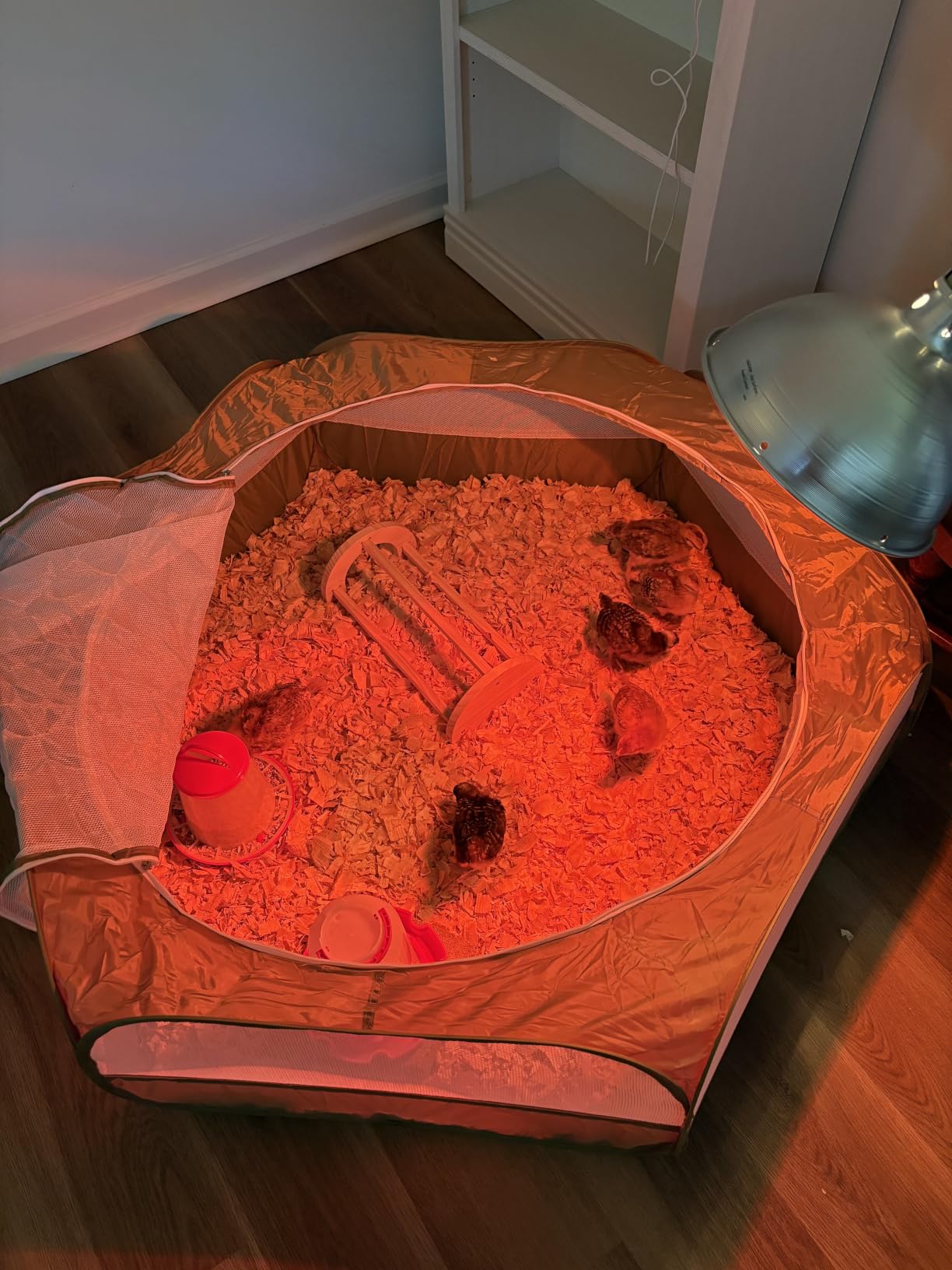
The zippered top is what separates this from the other fabric pop-ups. You can reach in to refill a hay basket, swap a water bowl, or pet your rabbit without unbricking the whole structure, and the cover still closes down so a curious rabbit cannot launch himself out mid-task. For a household that uses a pen during the day while people are working, that access point is the feature that makes the day manageable.
It opens to about 52 inches around and stands 15 inches tall, with bright breathable mesh on every side. Our team used it for a small rabbit on a tiled floor, and the visibility meant we could keep an eye on the animal from across the room without walking over.
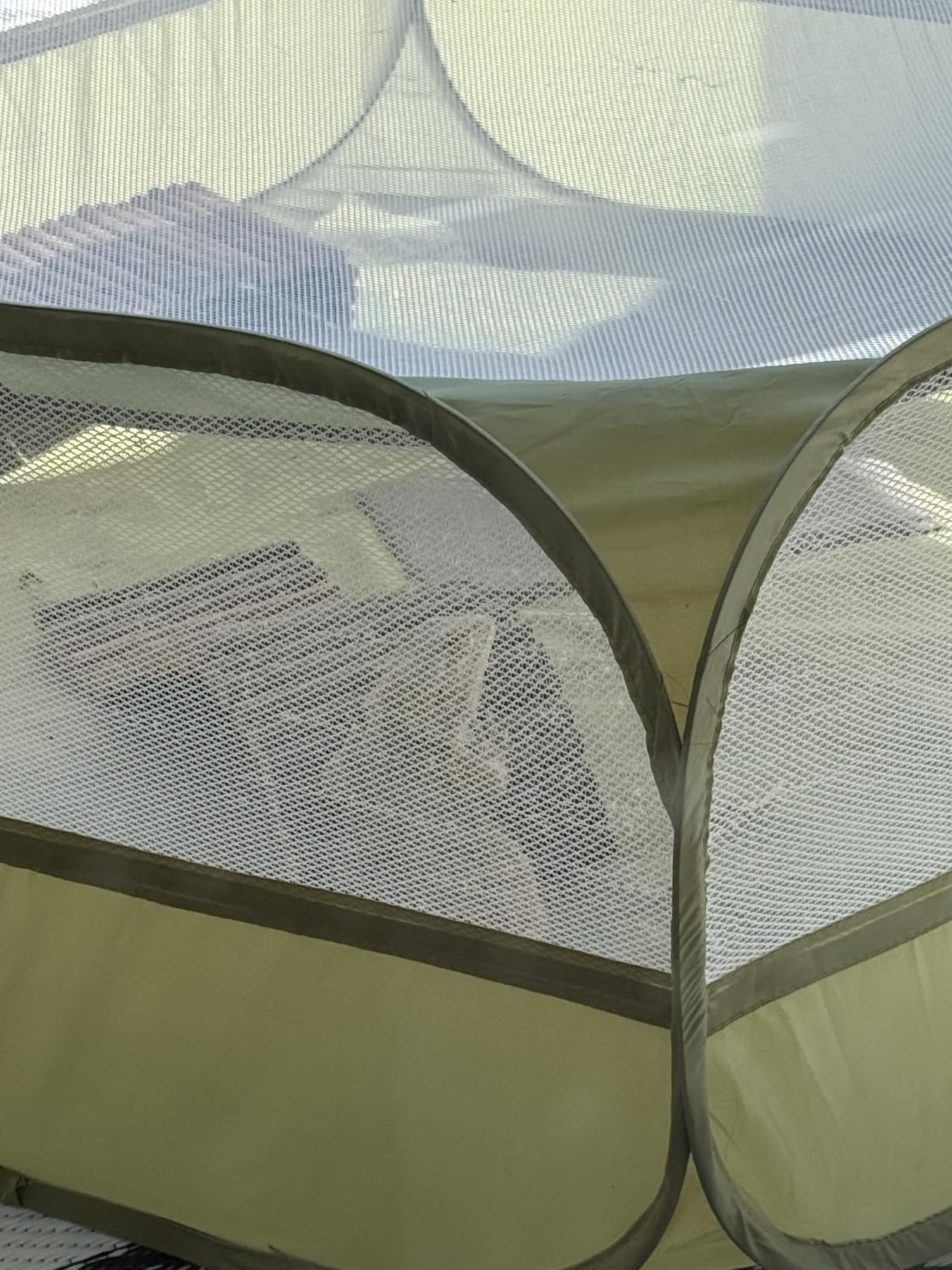
The base is 190T polyester taffeta rather than a thin sheet, and it is described as water-resistant. In practice it held up well to a week of hay and droppings, and wiping it down took a minute. It is not a liner for heavy long-term soiling, but it is a genuine step up from bare flooring.
Three ground stakes come in the box, which is more than most pop-ups offer. We did not use them indoors, but they are the difference between a pen that stays where you put it and one that gets dragged across a room by a rabbit leaning on the wall.
Where it earns its slot
Setup speed and access. It needs no tools and no mallet, so it goes up in the time it takes to carry it into the room. If your day involves moving the rabbit between a play area and a smaller overnight space, this is the one we would pick.
The mesh is also bright enough to see through from a seated position, which helps with a rabbit that is anxious about being watched from above. Many owners describe that as a calming change after a cage.
Where it does not fit
The 15 inch wall is again the limit, and this pen is explicitly designed for gentle pets. It is a play pen for a young rabbit or a dwarf breed under supervision rather than a home for an adult that hops.
Do not fold it while damp. The fabric base traps moisture, and mildew shows up in the seams after a few cycles if you skip the drying step.
4. SONGMICS Pet Playpen with Floor: Best Climb-Proof Panels
SONGMICS Pet Playpen with Floor, Small Animal Playpen
15.7 x 11.8 in smooth panels
Solid integrated floor
Rubber mallet included
L-shape layouts
Pros
- Smooth solid panels stop small pets climbing or squeezing out
- Solid floor means no grate gaps for fur or droppings
- Top openings and a door make feeding and cleaning easy
- Semi-transparent panels wipe clean with a damp cloth
Cons
- Every connector must be fully seated or the frame feels flimsy
- Cracks between floor panels let fine debris reach the floor
- Thin plastic will not last with a heavy chewer
This is the pen rabbit and hedgehog owners mention most often, and the reason is the panels. They are solid and smooth, with no mesh gaps to squeeze through and nothing to grip while climbing. When a small animal wants out of a pen, the first thing it looks for is an edge, and a smooth panel simply does not offer one.
The floor is solid too, which solves a problem most wire pens create. With a grate base, fur and droppings fall through to your floor and you end up sweeping underneath. This one has a continuous surface you can wipe or line with bedding.
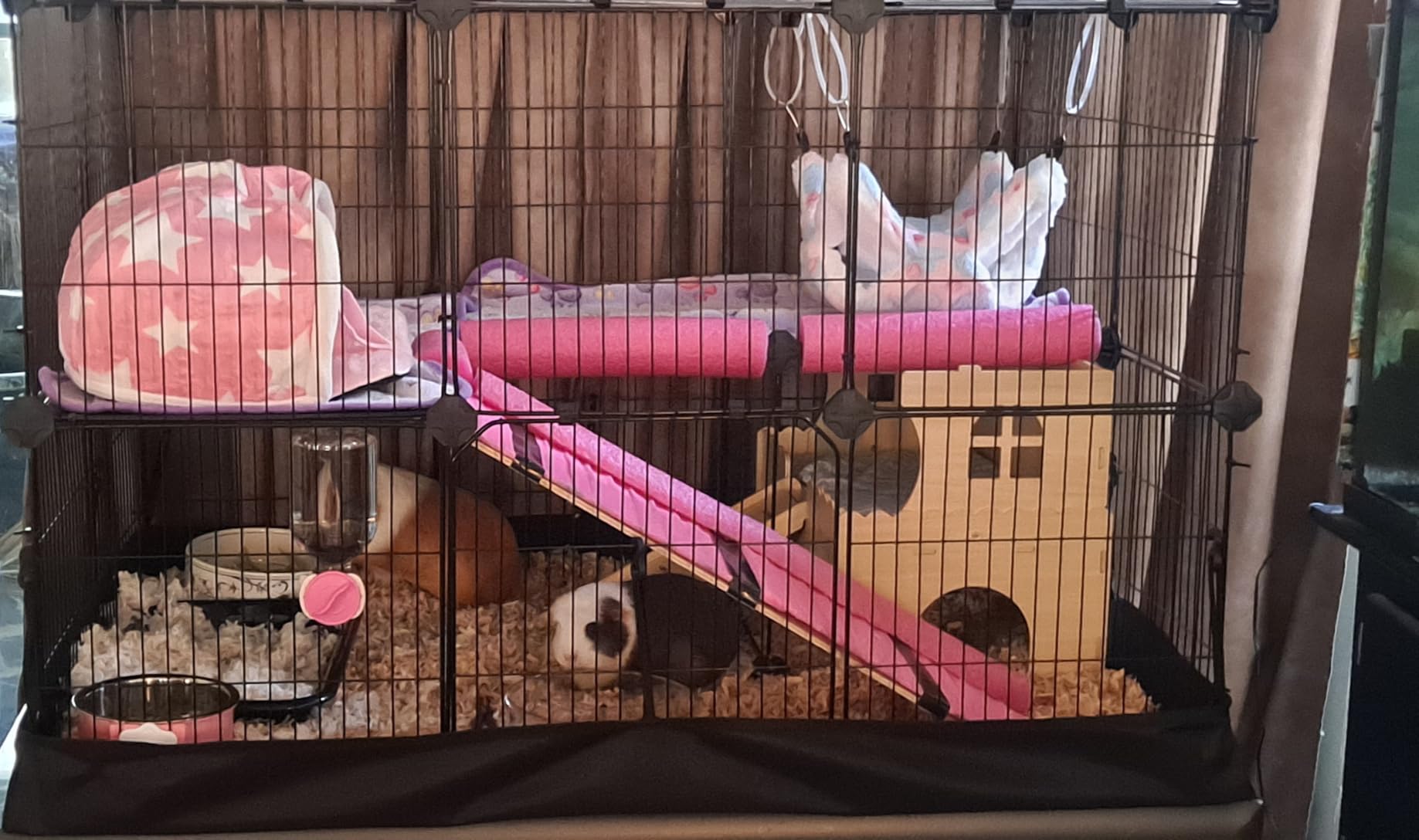
Assembly is the honest catch. The panels plug into multi-angle connectors and the included rubber mallet is not optional, because hand-pressure leaves joints loose and a loose frame rattles when a rabbit bumps it. Our team found the process straightforward once we accepted the mallet, and it took about ten minutes for a full layout.
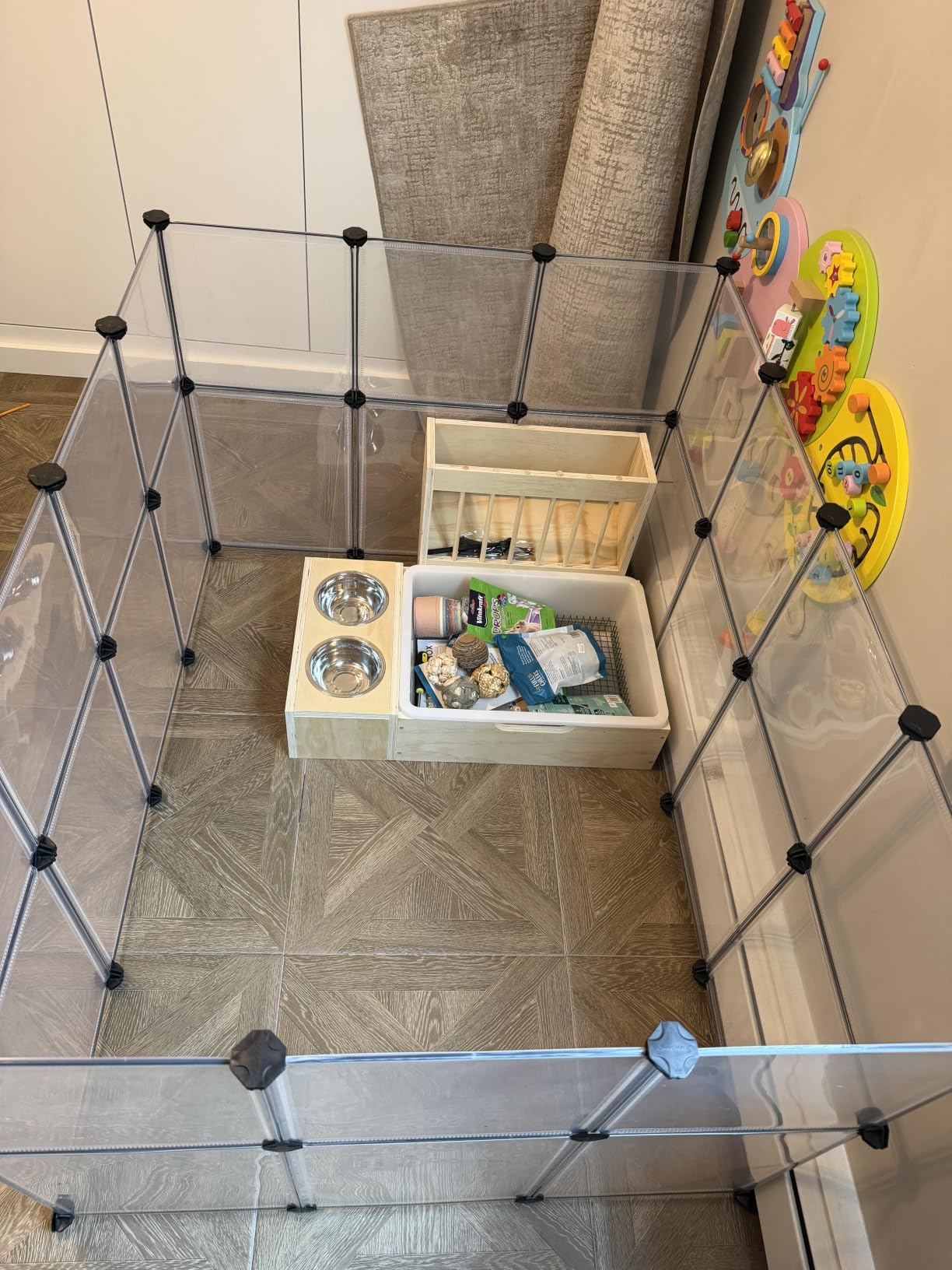
You get real flexibility after that. The same panels arrange into an L-shape against two walls, or stack into a two-story structure, and owners building permanent setups add zip ties to lock the joints once the layout is final.
What makes it different from wire pens
Two things: solid walls and a solid floor. Both reduce injury risk, both cut cleaning time, and both remove the climb-and-squeeze route entirely. For a rabbit that has already escaped a wire pen by pushing through a gap, that is a direct fix rather than a mitigation.
Configurations run from 12 up to 43 panels, so you can grow a setup as your space allows without changing brands.
What to watch out for
Seating every connector fully is the difference between a rigid frame and a wobbly one. We found debris collecting in the seams where floor panels meet, so expect to lift panels occasionally rather than only sweeping the top.
Plastic is not indestructible. Determined chewers eventually work at the floor liner, and the panels themselves are thin enough to scratch with a sharp edge. This is a good pen for a housed rabbit indoors, not a chew-proof one.
5. Amakunft Pop-Up Play Yard: Best Lightweight Option
Amakunft Small Animal Playpen, Pop-Up Portable Play Yard for Guinea Pigs, Rabbits, Hamsters, Hedgehogs, Foldable Exercise Fence with Breathable Mesh for Indoor Outdoor Use
47 x 15 in expanded
10 square feet
Pop-up polyester frame
Listed for supervised use
Pros
- Very light and pops open with no assembly steps
- Waterproof base wipes clean with disinfectant wipes
- Big enough for an adult to sit inside and interact
- Lists 10 square feet of expanded floor area
Cons
- Fabric and mesh are chewed through quickly by rabbits
- 15 in walls are easy for a rabbit to clear
- Not suitable for rats or determined escape artists
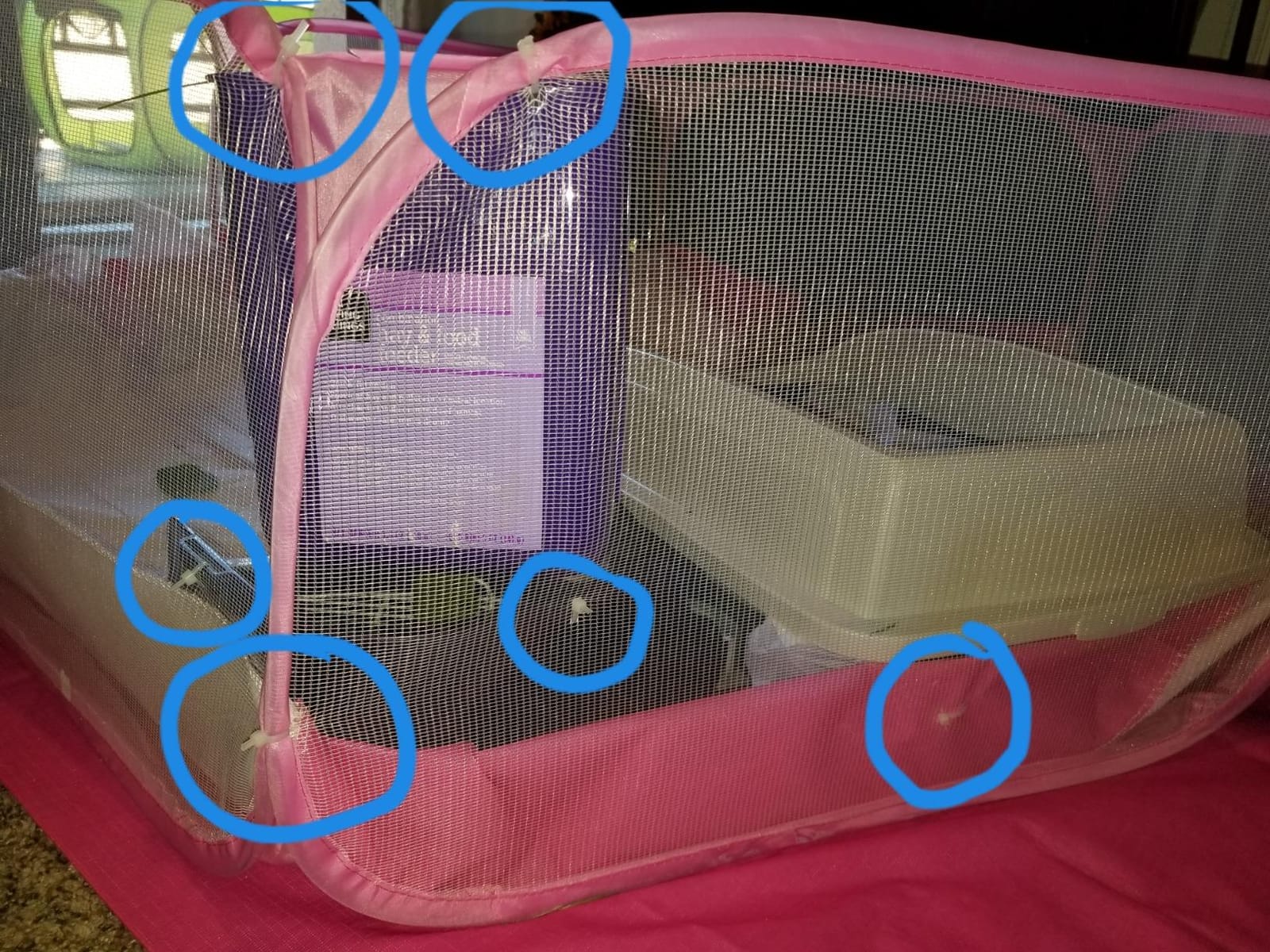
Amakunft expands to 47 inches across and 15 inches tall, which the maker puts at 10 square feet of floor. That is a workable shape for supervised floor time, and the whole unit weighs under 10 ounces, so carrying it between rooms is genuinely effortless rather than a small lift.
It also works outdoors, which the fabric construction makes easy. We set it on a patio for a supervised session and packed it back into its bag in seconds, with no panels to disassemble and nothing to lose track of.
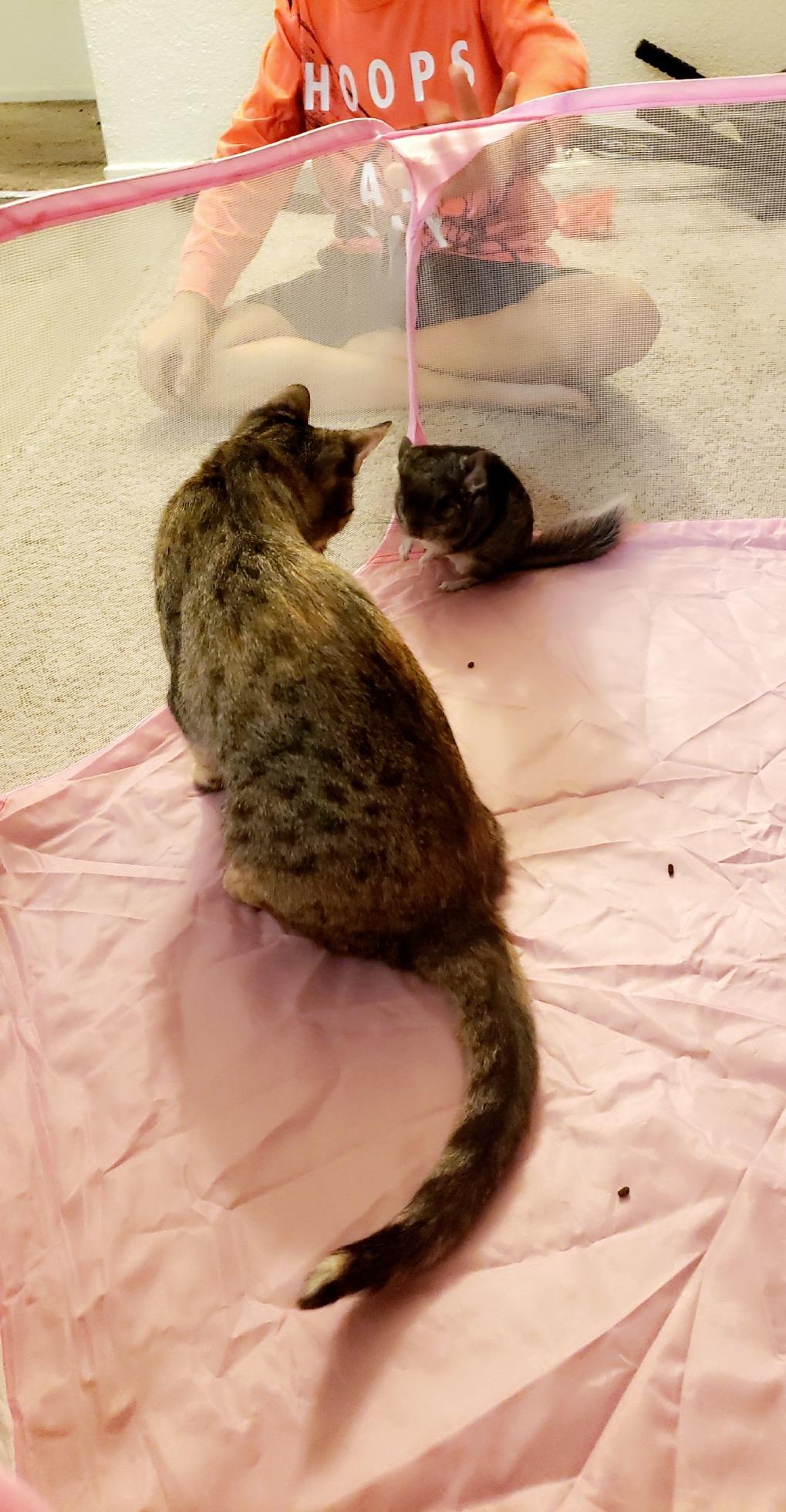
The base is waterproof and wipes down with disinfectant wipes, which is more than many fabric pens in this group offer. The stitching held its shape well across repeated folding, which is the failure point on cheaper pop-ups where the spring frame starts to sag.
Our team found the footprint wide enough for an adult to sit inside with the rabbit, which is genuinely useful during the bonding period after adoption, when you want the animal to approach you rather than bolt.
When it is the right call
When the pen is temporary. A play yard is a great tool for floor time, cage cleaning days, and introducing a new rabbit to a room, and this one is cheap enough to be a secondary pen rather than a commitment.
Color variants and pad options mean you can match it to a room rather than accepting bright orange mesh in a neutral living space.
Why rabbits chew through it
The listing itself states the pen is not suitable for pets with jumping, climbing and biting habits, and reviews confirm it. The fabric and mesh are thin by design, and a rabbit with teeth will find a hole faster than most owners expect.
Treat this as a supervised pen for a calm or young rabbit. If you need overnight containment, look at the metal or solid-panel options instead.
6. Rypet Pop-Up Outdoor Yard Fence: Best for Small Pets
Rypet Guinea Pig Playpen Pop-Up, Outdoor Yard Fence for Small Pets,Pink
47 x 15 in expanded
10 square feet
Folds to a 9.4 in disc
Bright breathable mesh
Pros
- Strongest average rating among the fabric pop-up pens
- Packs into a compact disc for travel and storage
- Breathable mesh keeps pets ventilated and odour down
- Inexpensive way to add floor time for smaller pets
Cons
- 15 in walls will not contain a hopping rabbit
- Mesh can be chewed by determined gnawers
- Manufacturer guidance is to supervise constantly
This is the best-rated fabric pop-up in the group, and the reason is consistency rather than any single feature. It does a modest job very reliably: 47 inches across, 15 inches tall, open top, bright mesh on all sides, and a frame that folds to a 9.4 inch disc small enough to live in a closet between uses.
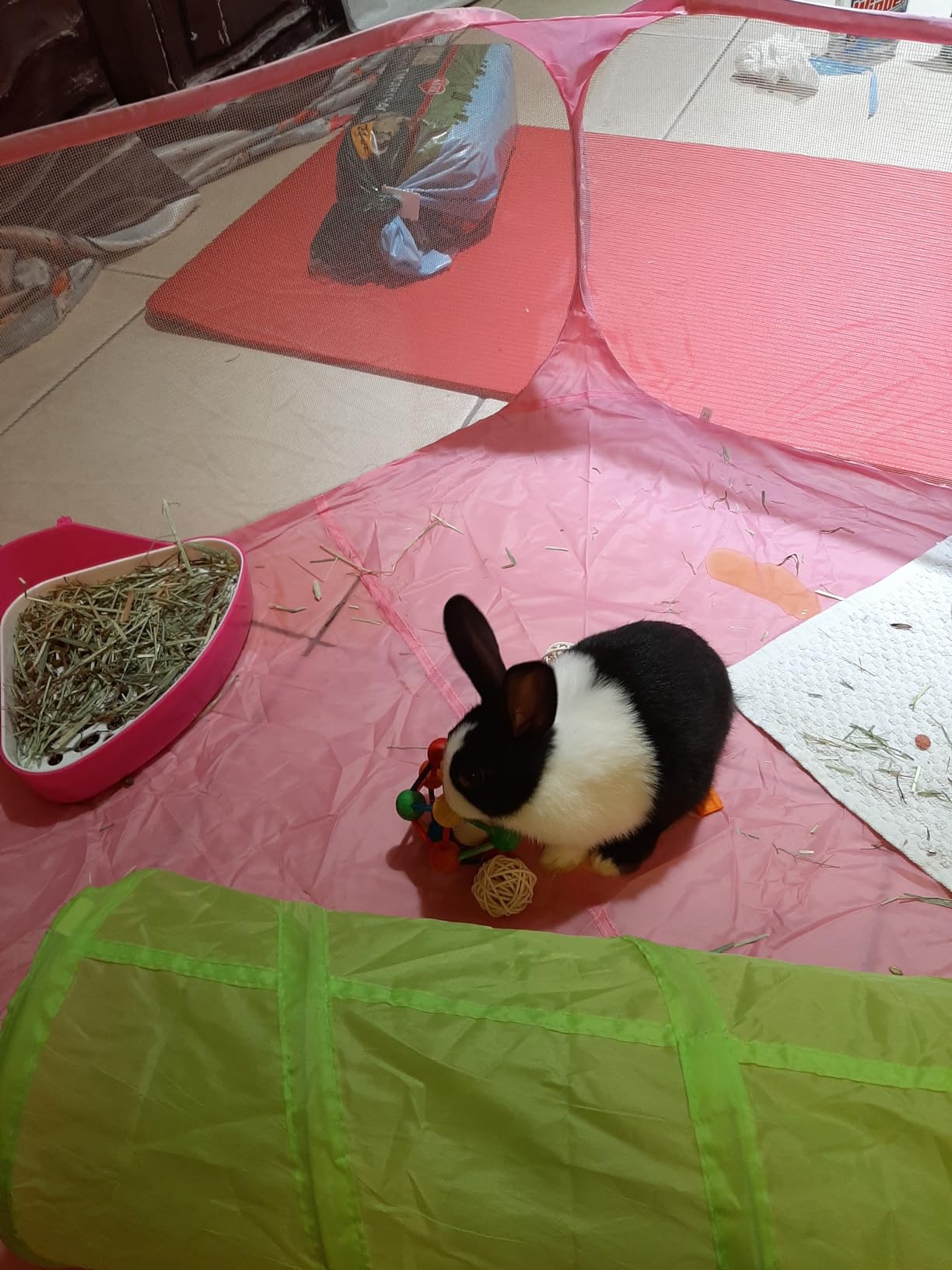
We used it with a guinea pig and a young rabbit, and in both cases the mesh stayed taut and the shape stayed round rather than slumping, which is what happens when a spring frame gets tired.
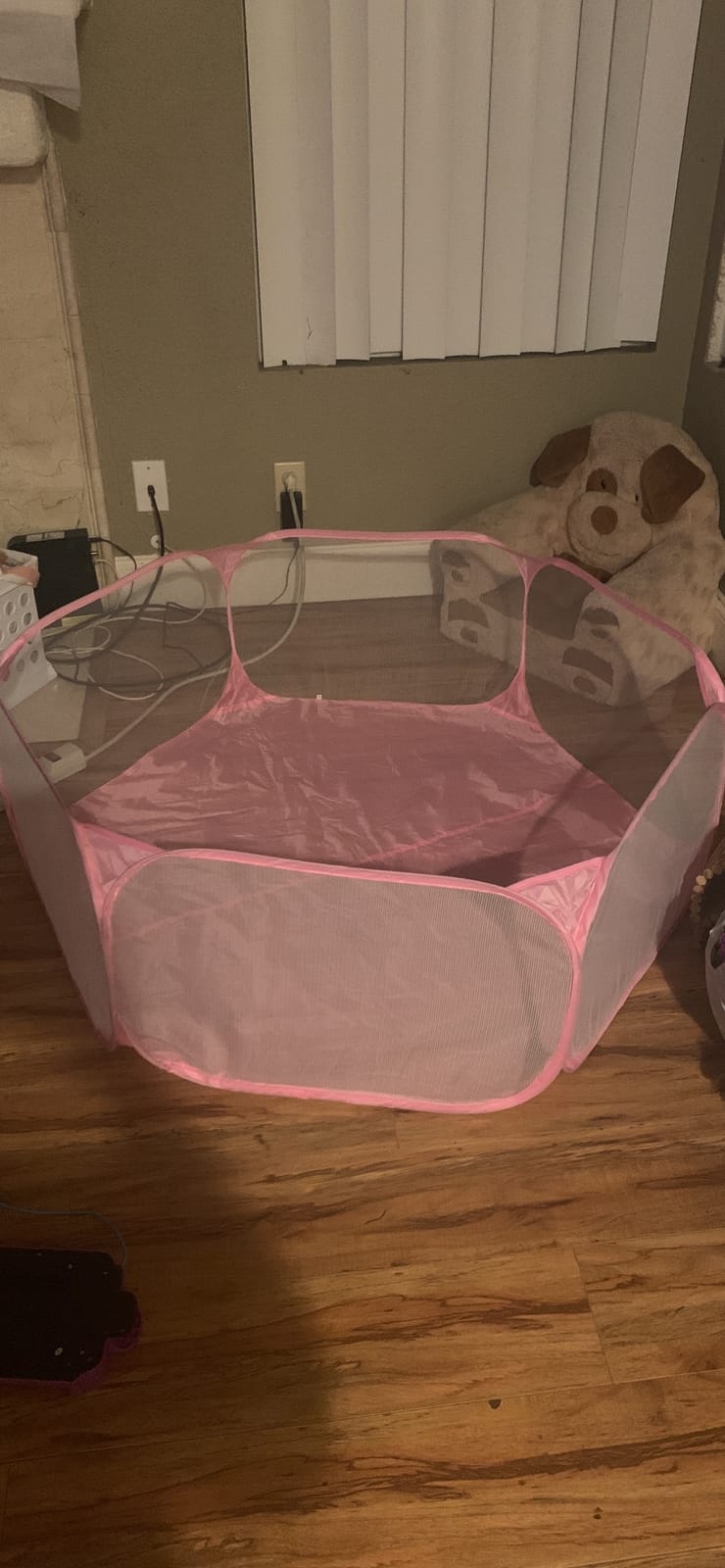
The mesh is described as helping with ventilation and odour control, and in practice the open top did keep the interior fresh during a multi-hour indoor session. For rabbits specifically, the breathable design is less relevant than the height, and that is where this pen stops short.
Colour variants include open-top and enclosed styles, so you can step up to a covered version later without changing brands.
What it does well
It makes floor time easy and cheap. If your rabbit or your other small pets need a change of scenery a few times a week, this is a low-friction way to offer it. The weight means one person can carry it, and it works on carpet, tile, or decking.
It is also a good travel pen, since the folded disc fits in a car boot without a separate case.
Where a rabbit will outgrow it
At 15 inches with an open top, this is not a rabbit pen in the containment sense. The manufacturer’s own guidance stresses continuous supervision, and review data echoes that: the wall is too low for a rabbit that hops.
Plan this as an activity pen, and treat containment as a separate problem solved by a taller boundary.
7. Aivituvin Extension Playpen with Liner: Best for Rabbits Specifically
Aivituvin Rabbit Playpen Pet Pen Small Animal Cage with Waterproof Liner – Extension Playpen
48 x 48 in footprint
24 in wall height
Liner with 5.9 in raised sides
1.3 in mesh spacing
Pros
- Tallest walls in this roundup at 24 inches
- 16 square feet of usable floor area
- Raised-edge waterproof liner holds hay and bedding
- Movable bottom panel makes deep cleaning easier
Cons
- Listed as an extension pen so a base enclosure is needed separately
- Heaviest option here at 18 pounds
- Costs more than fabric pop-up pens
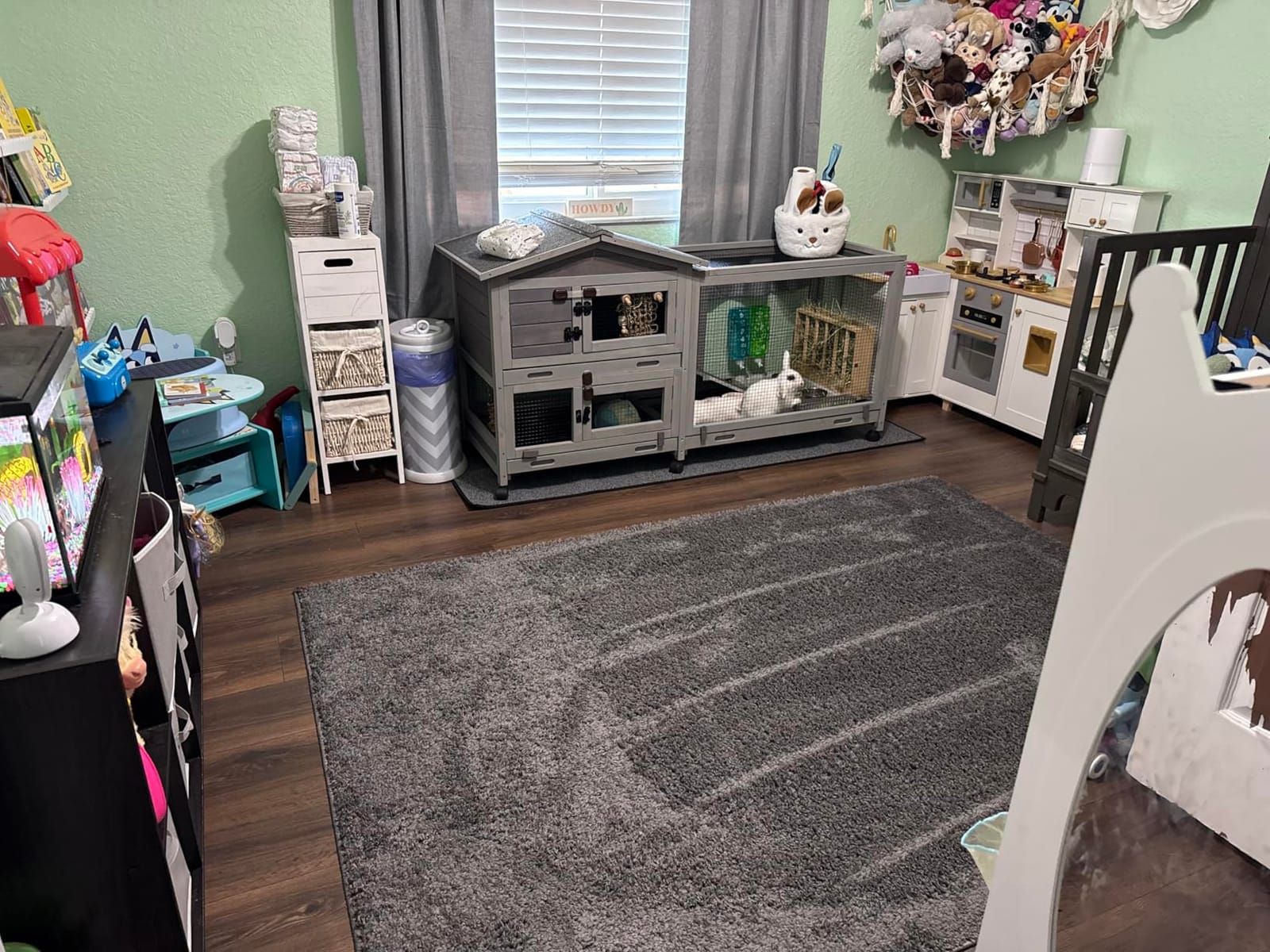
This is the only pen in the list designed with a rabbit rather than a rodent in mind, and the numbers show it. The walls stand 24 inches tall, which is the tallest here, and the footprint is 48 by 48 inches for 16 square feet of usable floor. That is a bonded pair’s worth of space from a single unit, and it passes the 4 by 6 foot recommendation once you add a second panel run.
The liner is the other reason to look closely. It is waterproof with raised sides of 5.9 inches, which means hay, bedding and urine stay inside the pen instead of reaching your floor. For a rabbit that eats where it sleeps, that is a real quality of life improvement.
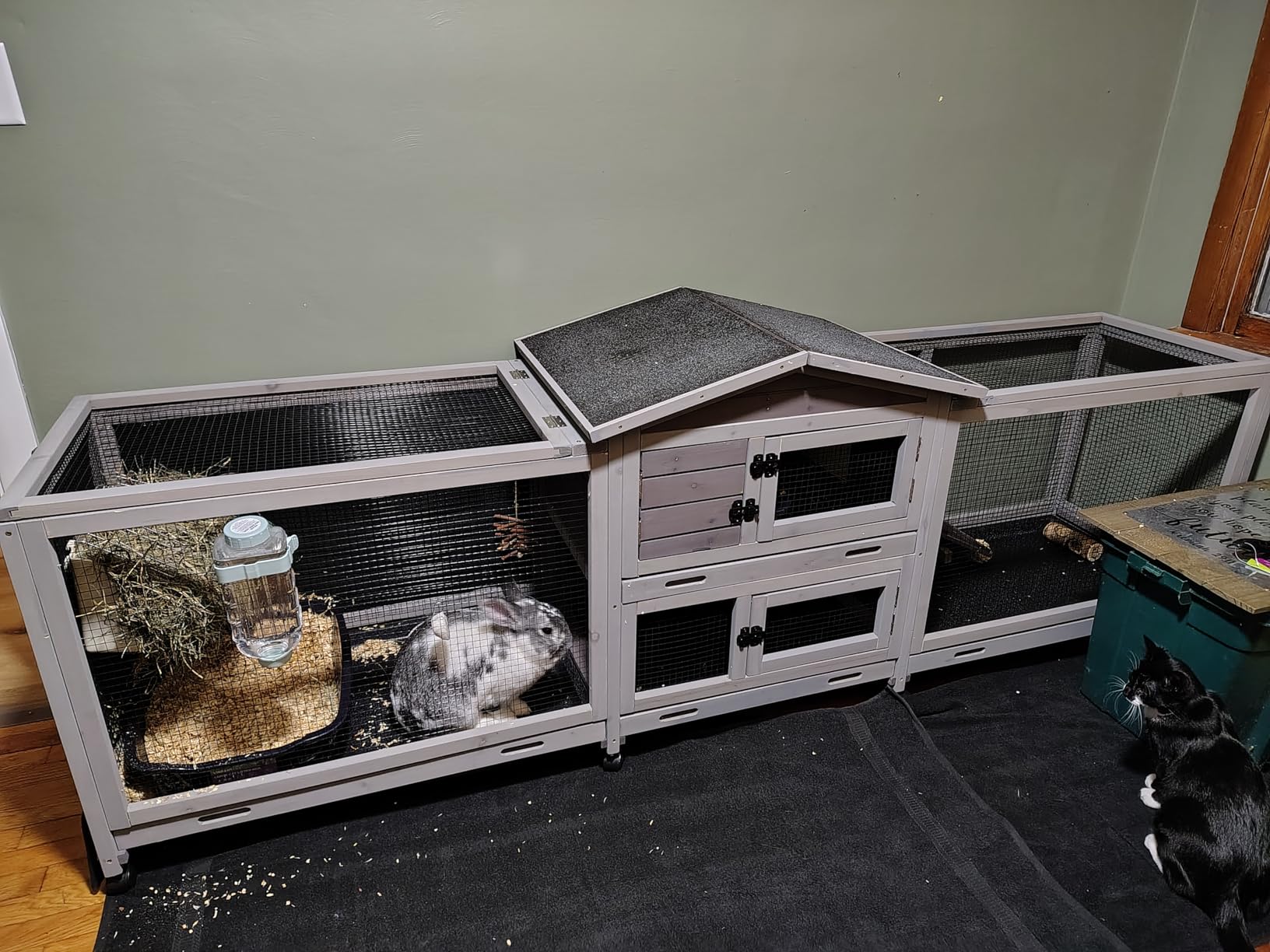
Mesh spacing is 1.3 inches, narrow enough that a small rabbit will not squeeze through and start working on the joints. Cable ties are included for reinforcing the frame, which is worth using because the structure is meant to be linked to other panels and the joins carry the load.
The bottom panel moves, so you can lift a section out to clean underneath rather than trying to reach it with a mop. On a 16 square foot pen with a raised liner, that is the difference between a two-minute job and a twenty-minute one.
Why it suits rabbits better than the rest
Height and floor area, in that order. A 24 inch wall handles a rabbit that hops, and 16 square feet means two animals can move past each other rather than sharing a corner. Neither of those is true of any fabric pen on this list.
The raised liner also removes the daily bedding problem, because the mess stays in a removable tray rather than dispersing across the pen floor.
What to check before buying
This listing is the extension panel, so you need another enclosure to build from. Buy it as the second half of a two-unit setup rather than as a first purchase, or you will have a piece of pen and no pen around it.
It is also the heaviest item here at 18 pounds, which is manageable for one person but not a two-person job, and the structure is bulky for small flats.
8. MidWest Homes for Pets Exercise Pen: Best Metal Build
MidWest Homes for Pets Small Animal Pet Playpen/Exercise Pen, Blue and Green,1 Count (Pack of 1), Small Animal Playpen.
Six panels at 15 x 18 in
5.8 square feet of play area
Folds flat for travel
One year warranty
Pros
- Heavy-duty metal that outlasts fabric pens
- Strong ventilation and visibility from all sides
- Folds flat for storage and travel
- Links with matching panels to expand the area
Cons
- Designed for non-jumping animals so a rabbit can hop out
- One enclosure is only 5.8 square feet
- No floor or liner included
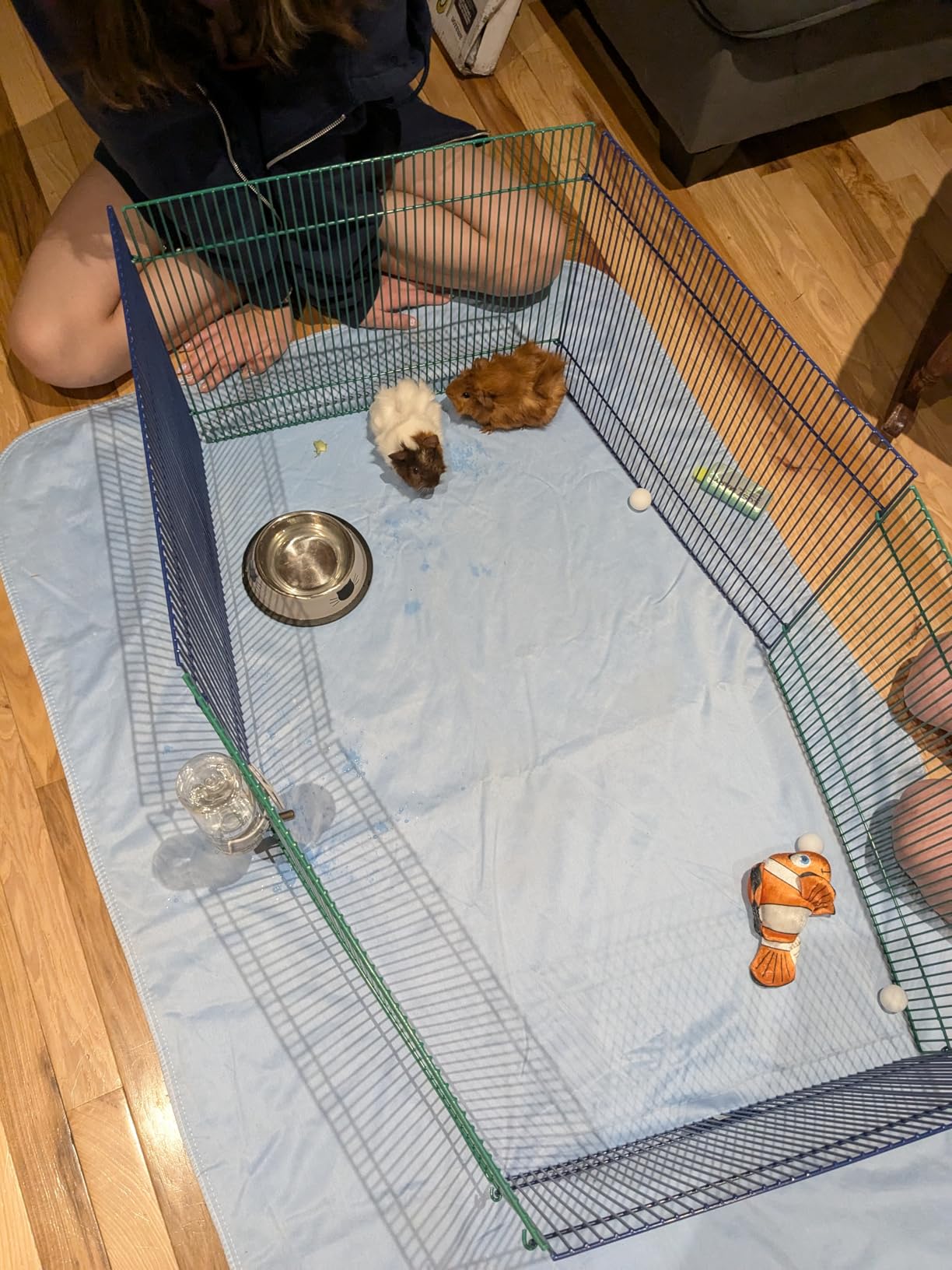
The MidWest name carries real weight in this category, and this is the pen most owners mean when they say x-pen. It has carried a 4.5 star average across more than two thousand reviews, which is the highest rating among the products we tested, and the construction explains why. Six panels of solid metal at 15 by 18 inches each do not flex, lean, or get chewed.
An owner on r/Bunnies described using MidWest exercise pens with 36 inch panels and keeping a litter box, hidey house and toys inside, which is the same architecture we built during testing. The principle is identical at this height: the pen is a room, and the rabbit should be furnishing it.
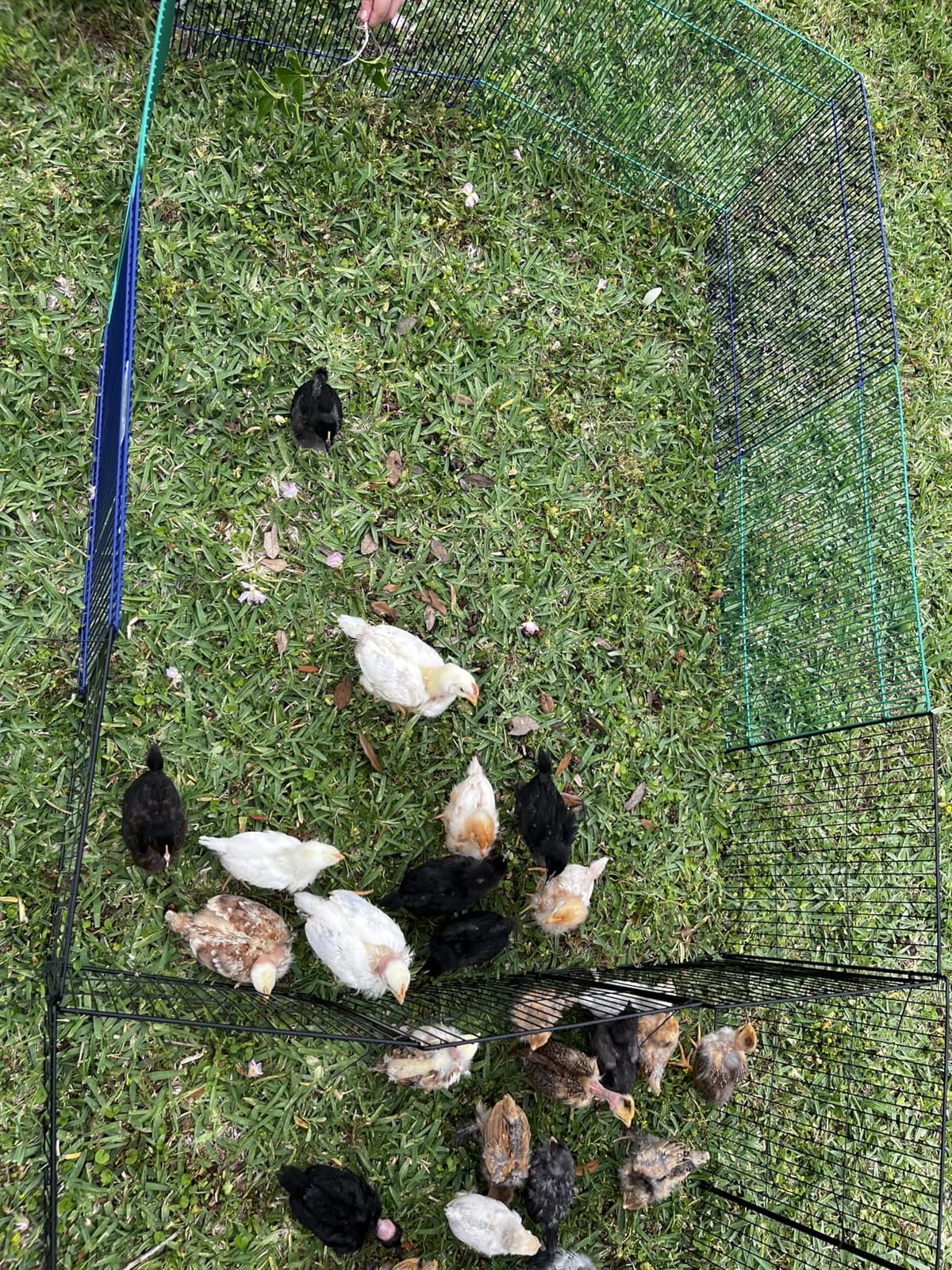
It folds flat for storage and travel, which is the feature apartment owners care about most. Ours lived against a closet wall between sessions and came back out in under a minute, with no risk of a spring frame sagging the way fabric pop-ups eventually do.
The build includes a one year manufacturer warranty, which is a small signal but not nothing for an enclosure you will stand on repeatedly while a rabbit pushes against it.
Why the metal matters
It solves three rabbit problems at once. Chewing is irrelevant because there is nothing soft to chew. Sliding is solved because the frame is rigid and heavy. And ventilation is excellent, because a wire pen does not trap heat the way solid plastic panels can in a warm room.
It also survives being cleaned. A wipe-down or a hose is fine, and there is no fabric seam to hold odour.
What to plan around
At 15 inches tall and 5.8 square feet, this unit is explicitly built for non-jumping animals. A rabbit will get out, so treat it as the base of a system rather than a finished home, and add panels or a taller enclosure until you reach your target height.
There is no floor or liner included, so budget for a mat or a washable pad. Check the metal edges for sharp spots before first use.
9. HOMIDEC 15-Panel DIY Wire Playpen: Best for Custom Layouts
Pet Playpen, Small Animal Cage DIY Wire Fence with Door 15 Panels, Black
15 panels forming 48 x 24 x 16 in
Frosted transparent panels
Rounded ABS connectors
30 cable ties
Pros
- Fifteen panels give more layout options than any other kit here
- Iron mesh door with anti-rust finish
- Rounded ABS connectors reduce injury risk
- Tool-free assembly in a few minutes
Cons
- 16 in wall height suits dwarf breeds better than full-size rabbits
- No floor or liner included so a separate mat is needed
- Joint rigidity depends on using all the cable ties
Fifteen panels is the highest panel count in this group, and that single number is the reason to consider it. A kit with fewer panels forces you into a preset rectangle. Fifteen panels plus multi-angle connectors means you can build an L, a U, or a long run against a wall, and adjust the shape when the room changes.
We built a 48 by 24 by 16 inch enclosure in a few minutes with no tools, and the frosted transparent panels gave a soft view that kept the space visually calm compared with a fully open wire pen.
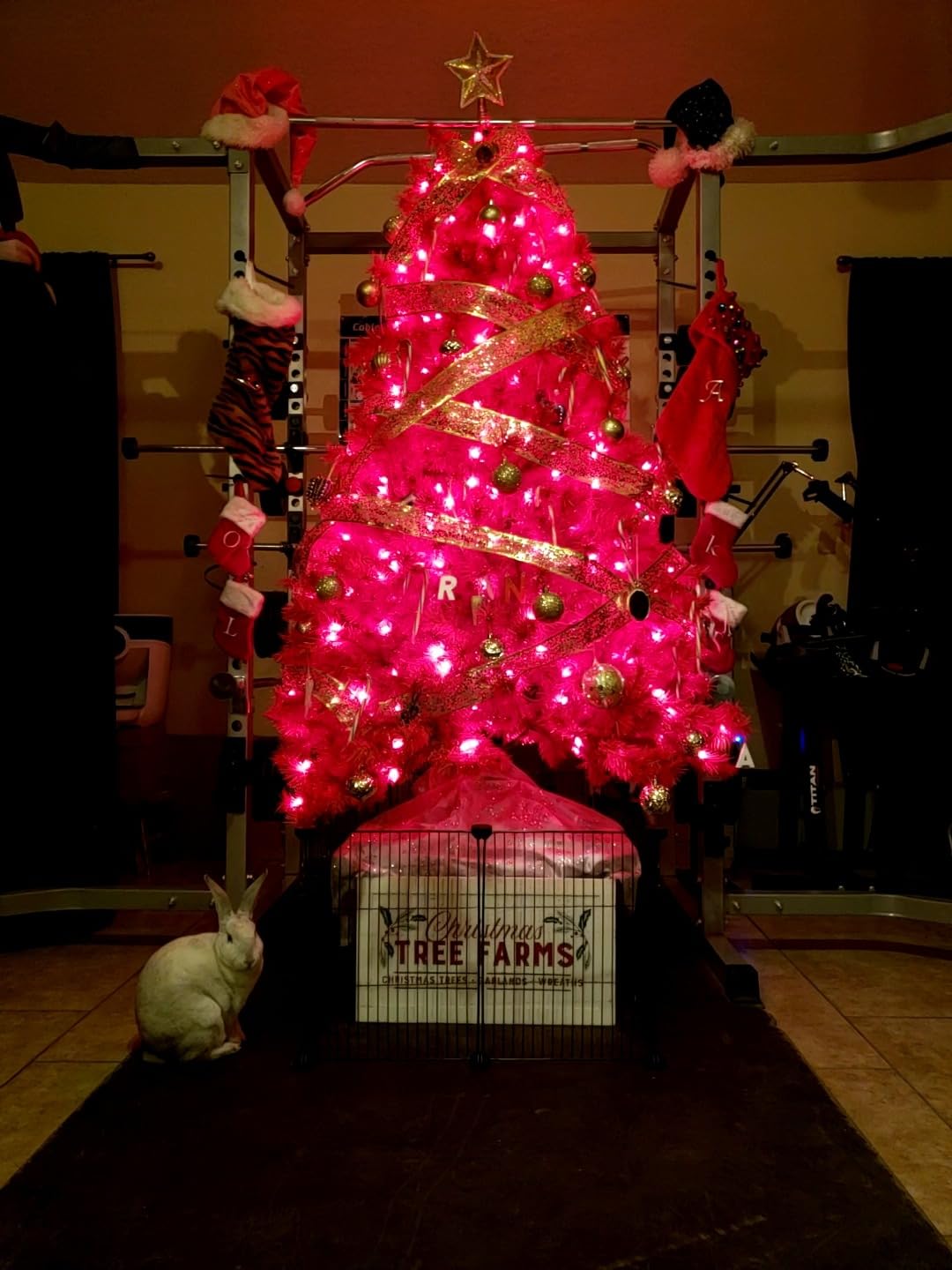
The door is an iron mesh panel with an anti-rust and anti-corrosion finish, which is unusual in a kit at this level. It lets a rabbit move between the enclosed area and a supervised free-roam space, and it means you are not lifting the animal in and out of the pen every time.
Thirty cable ties come in the box for the joints. Use all of them, because our frame was noticeably less rigid on the first two panels before we tied them off.
Where the extra panels pay off
Expansion. Fifteen panels is enough to reach a 4 by 6 foot bonded-pair footprint in a single purchase rather than assembling two separate pens, which removes the seam where animals sometimes get pinched and stops two frames from drifting apart.
It is also the only kit here that is explicitly listed for dwarf rabbits, so if you have a lionhead or a mini lop the sizing lines up with the breed.
What to check first
The 16 inch height is the limiting factor for adult rabbits that hop. It works well for dwarf breeds, guinea pigs, and chinchillas, so check the height of your animal’s ears against the wall before you commit.
There is no floor in the box. A separate mat is required, and adding one is the difference between a setup that protects your floor and one that does not.
10. VISCOO 12-Panel Playpen with Floor Mat: Best Bundled Floor
VISCOO 12 Panels Small Animal Playpen, 48″ x 24″ x 16″ Guinea Pigs Cages
12 coated steel mesh panels
48 x 24 x 16 in built
0.5 in mesh spacing
600D Oxford mat
Pros
- Includes a 600D Oxford waterproof mat with raised sides
- 0.5 in coated steel mesh will not trap small animals
- Twelve panels rearrange into multiple enclosure sizes
- Semi-transparent panels give visibility from any angle
Cons
- Lowest average rating among these kits at 4.1 stars
- 16 in wall height is easy for a rabbit to clear
- Assembly needs every connector tightened and tied
Most kits make you buy the floor separately, and that is the mistake that leads to chewed baseboards and damp flooring. This one includes a 24 by 48 inch mat in 600D Oxford cloth with a PVC waterproof coating and 4.7 inch raised sides, which is the highest included floor specification in the group.
The mesh is coated steel at roughly 0.5 inch spacing, the tightest here, so a small rabbit cannot get a nose or a paw into a gap and start chewing. Twelve panels assemble to 48 by 24 by 16 inches, and the same panels rearrange into other shapes as your space allows.
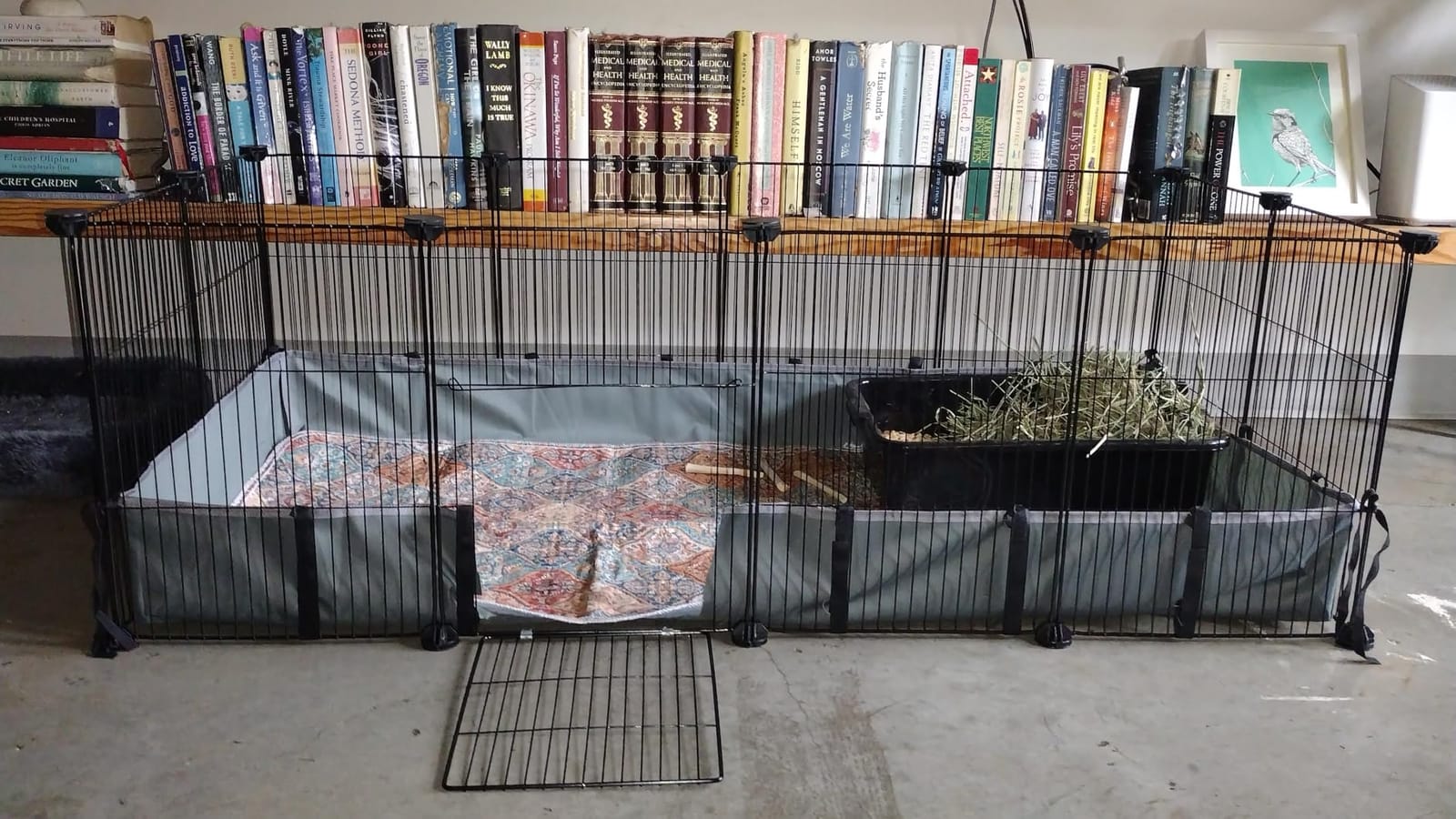
Assembly uses ABS connectors tightened with a small wooden hammer and nylon ties. Both tools are in the box, and both are needed. Owners who skip the tightening report a frame that flexes when a rabbit leans on it, which is the main complaint in the reviews.
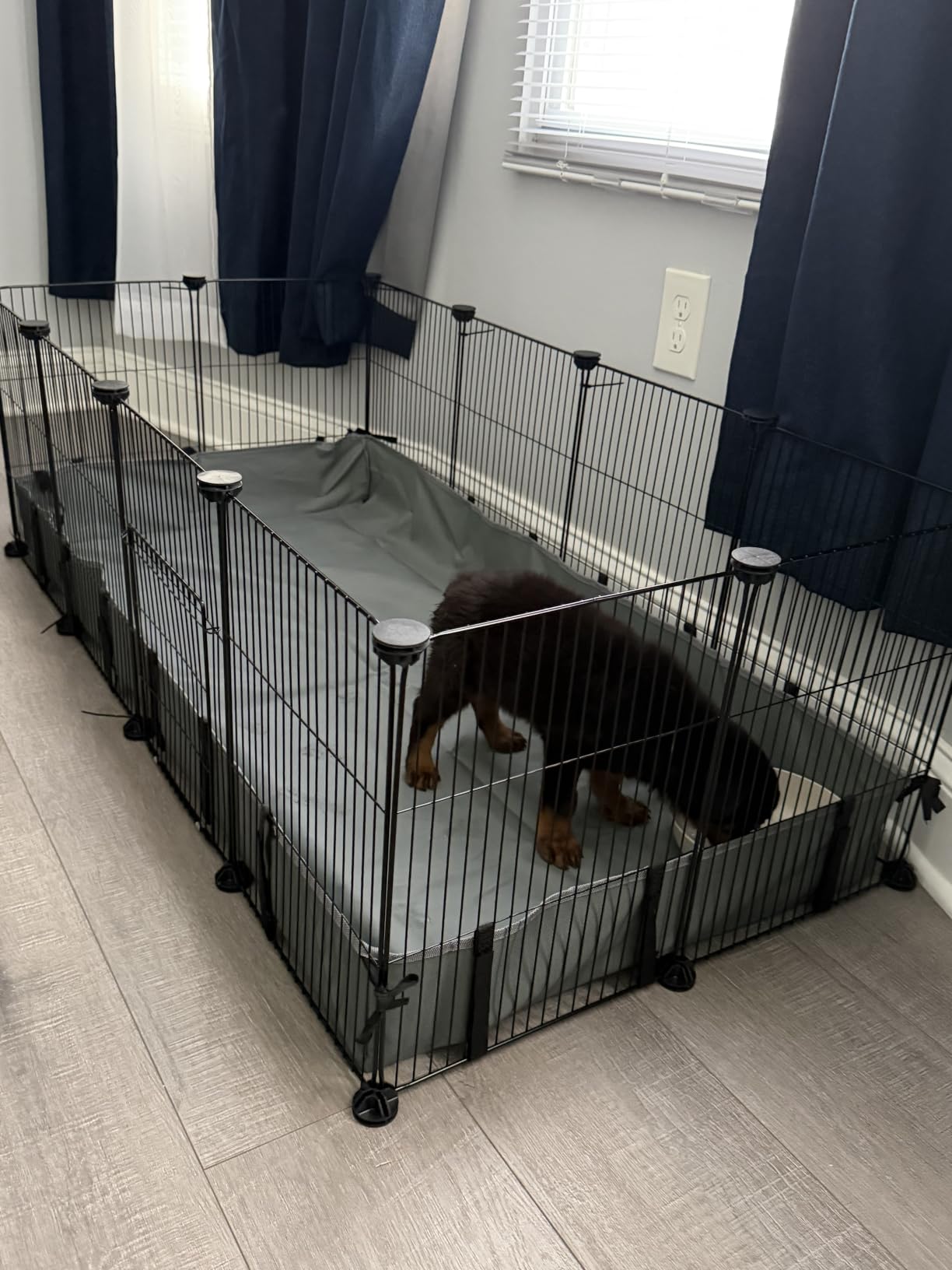
There is an assembly detail worth knowing: orient the panels so the 12 inch sides contact the floor rather than the 16 inch sides, which stabilises the base and keeps the mat flat.
Why the included mat is worth the trade-off
It removes the most common setup error. With a bonded liner you get a floor that is waterproof, has raised sides to hold bedding, and cannot be dragged across the room when a rabbit pushes at the edge.
Combined with the tight mesh, this is the tidiest all-in-one package for an indoor rabbit, provided the height works for your animal.
Where it falls behind
The 16 inch wall is below what a hopping adult rabbit needs, so it works best for dwarf breeds, guinea pigs, and young rabbits. A determined rabbit can clear it, and the raised mat sides will not stop that.
It carries the lowest average rating in this group, and the recurring theme in reviews is assembly rather than quality. Budget time for the build, tighten every connector, and add ties, and the rigidity concern largely goes away.
How Big and How Tall Should a Rabbit Playpen Be?
A single house rabbit needs at least 8 square feet of continuous floor, which is a 4 by 4 foot area. A bonded pair needs double that, so aim for 4 by 6 feet. For rabbits that hop or climb, use 36 inch panels as the starting height, and add a lid or a topper if you plan to leave them unsupervised.
These three numbers do most of the work, and the rest of this section explains how to get from them to the actual panel count you need to buy.
Sizing math for single rabbits, bonded pairs and giants
Work from the panel width rather than the listing title, because that is what determines the finished footprint. A pen built from six 18 inch wide panels at 15 inches tall gives 5.8 square feet, which is below the single-rabbit minimum on its own. A 24 inch wide panel set arranged as four sides gives a 4 by 4 foot pen at 8 square feet, which is the target for one rabbit.
For two rabbits, the recommendation is two pens joined together to reach 4 by 6 feet. If you are buying modular panels, count the width along all four sides and divide by your panel width to work out how many you need, then round up. Under-estimating here is the most common reason people end up with a pen that feels cramped after the first week.
Giant breeds need both more floor and a longer body line to stretch out, so step up to the larger end of the range for your pen type rather than buying the same footprint you would for a dwarf. A rabbit that cannot fully stretch in a straight line does not have enough room, regardless of the total square footage on paper.
Matching panel height to breed
Height is where most buyers go wrong, and the fix is simple: measure the animal rather than guess. A dwarf or mini lop will usually be contained by 24 to 30 inch panels. A standard or giant rabbit that hops needs 36 inches, and a rabbit that has escaped a pen before needs that height plus a lid.
None of the fabric pop-up pens in this roundup clear 16 inches, so if you are reading this with a rabbit that hops, treat those as supervised play pens and look at the metal or solid-panel options for the structure that holds the animal.
Bar spacing and chew risk
Retailer listings frequently omit wire spacing, which leaves small-breed owners unable to assess safety. Spacing in this roundup runs from about 0.5 inch on the VISCOO kit to 3/8 inch on the Prevue unit, with 1.3 inch on the Aivituvin pen, and anything at or under 1 inch is suitable for dwarf and mini breeds.
The other half of the problem is chew-through. Fabric and thin plastic mesh get nibbled holes within days when a rabbit is left with them, which is why we treat every pop-up pen here as a supervised pen. Solid plastic panels and metal wire both hold up far better, at the cost of weight and price.
X-pen, C&C grid, plastic modular or wood hutch
Wire exercise pens are the most flexible and the easiest to clean, which is why rabbit owners reach for them first. C&C style grid panels give you a tidy rectangular pen with a good floor, but the construction is fixed once built. Plastic modular pens use solid panels that stop climbing, and they wipe clean in seconds. Wood hutches suit outdoor housing and shed heat well, but they are harder to clean and rarely fold away.
For indoor use, our testing kept returning to wire or solid plastic. For outdoor use, a roofed run matters more than the interior, because weather and predators, not the rabbit, are the problem you are solving.
What to put inside the pen
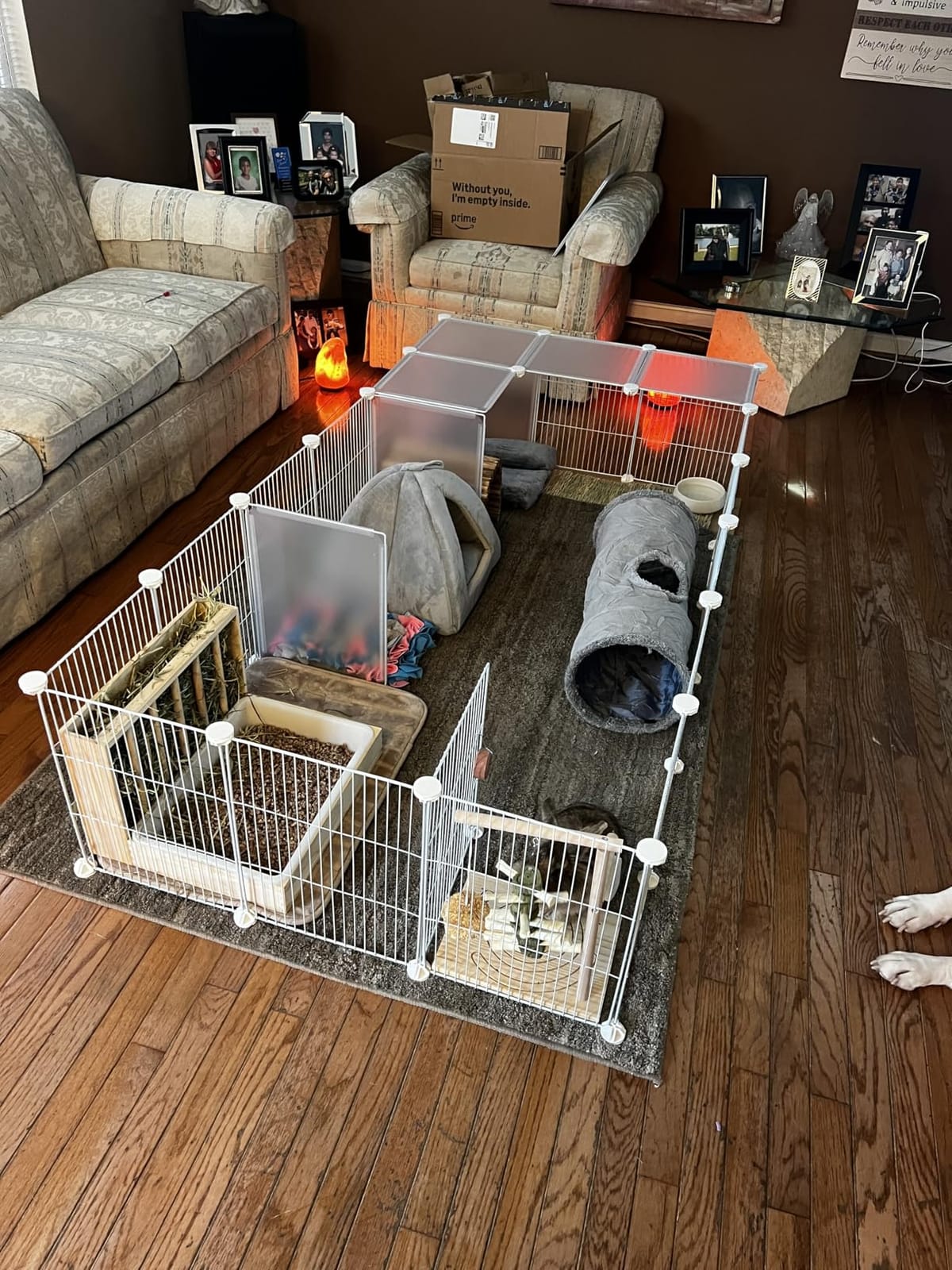
Start with a litter box, because it is the object that makes a pen work as housing rather than as a play area. A box that is large enough to turn around in reduces accidents, and placing it on a non-slip mat stops it sliding when the rabbit jumps in.
Add a hay basket or wall-mounted feeder next, positioned away from the litter box so hay does not fall into it. A water crock on the floor works better than a bottle for rabbits, who drink more from an open dish. Then a hidey house for security, and a small mat or rug for sleeping.
Toys round it out, and they do not need to be expensive. A cardboard box with two doorways cut in it is a tunnels-and-hiding structure that rabbits use constantly, and it costs almost nothing.
Indoor placement and cleaning
Put the pen away from direct sun, drafts, and heaters, and keep it clear of cables and baseboards that a rabbit can reach. A corner with two walls gives you extra boundary for free, so you can use a shorter panel run and get more usable area for the same number of panels.
On cleaning, a hard floor inside the pen beats a grate and beats carpet. Sweep droppings daily, wipe the liner, and change bedding on a schedule. Moving a rabbit from a cage to a pen is where owners most often notice a genuine change in litter box habits, because the box is no longer in a corner the rabbit has to enter by hopping up.
Our wider guides to playpens chosen with safety in mind and playpens for large areas cover the same placement and gating questions for other situations.
Frequently Asked Questions
What size playpen is recommended for rabbits?
A single house rabbit needs at least 8 square feet of continuous floor, which a 4 by 4 foot arrangement provides. A bonded pair needs double that, so plan for 4 by 6 feet rather than two small pens. Giant breeds need a longer stretch area, and any rabbit that hops needs 36 inch panels with a lid if it will be left unsupervised.
What is the best indoor playpen for rabbits?
The best indoor playpen for rabbits is a solid-panel or metal pen with 36 inch walls, because a hopping rabbit will clear anything at 16 inches or less. The Aivituvin pen has the tallest walls at 24 inches, the SONGMICS pen has climb-proof solid panels with a solid floor, and the MidWest exercise pen is the toughest metal build. Add a litter box, hay basket, water crock and hidey house before moving a rabbit in.
Can a bunny live in a playpen?
Yes, a rabbit can live in a playpen provided the pen is large enough and furnished properly, and provided the walls are tall enough to stop hopping. Aim for 8 square feet minimum for one rabbit and 4 by 6 feet for a bonded pair. Owners also report that litter box habits improve when a rabbit moves from a cage to a pen, because the box sits on an open floor rather than in a corner.
What is the best exercise pen for rabbits?
The best exercise pen for rabbits is a metal x-pen with 36 inch panels, linked to a second unit to reach 4 by 6 feet for a bonded pair. Metal wins over fabric because it cannot be chewed through, does not slide when a rabbit pushes against it, and folds flat for storage. Check wire spacing of 1 inch or under if you have a dwarf or mini lop.
What is the 3-3-3 rule for rabbits?
The 3-3-3 rule is a settling guideline for a newly adopted rabbit: three days of decompressing in a small space, three weeks to learn the routine and begin bonding, and three months before the rabbit feels fully at home. Pen size interacts with it directly, because a too-small pen slows settling. Give a new arrival a comfortable pen immediately and expand as confidence grows.
Which Rabbit Playpen Should You Buy?
Start with the Casifor pop-up pen if you want the most usable floor area and the fastest setup, and treat it as a supervised daytime pen while your rabbit is small. Buy a metal build such as the Prevue or MidWest exercise pen if your rabbit chews, pushes, or needs to be left alone, and buy the Aivituvin extension pen if you want the tallest walls and the largest single footprint. Whichever you choose, size it to 8 square feet for one rabbit or 4 by 6 feet for a pair before you order, and furnish it with a litter box, hay feeder, water crock and hidey house on day one.
That is where we would start when choosing among the best small animal playpens for rabbits in 2026: get the height right first, because a pen that is too low is a problem you will meet on day one, and no amount of furnishing fixes it.