

Finches do not climb the way budgies and cockatiels do. They sprint back and forth across open space, and the useful measurement of their housing is width, not height. That single fact explains why most of the best flight cages for finches look nothing like the tall domed parrot cages you see lined up in pet store aisles.
We spent weeks going through twelve flight cages with real finch keepers in mind, checking published dimensions, measured bar spacing, actual weight, and whether casters come in the box. What we found surprised us. The four-star-plus ratings are plentiful, but the majority of these cages are marketed to parrot owners first, so the finch-specific details like gate width and tray depth are often left unmentioned.
So here is our approach. Every cage below lists its real interior dimensions rather than the headline height with the stand, the bar spacing where the manufacturer publishes it, and the honest reason we would or would not put finches in it. We also explain why parrot and parakeet cages fail for finches, which several ranking guides get wrong.
If you keep canaries alongside finches, or you are starting a colony, jump to the matching section. If you want the short version, the table below the top three covers every pick on one page.
Table of Contents
Top 3 Picks for the Best Flight Cages for Finches In 2026
Our top pick is the Yaheetech 62.5-inch roof top cage because it pairs genuinely tight 0.4 inch bar spacing with a detachable rolling stand and the highest review volume in this group. The Yaheetech 54-inch wrought iron model wins on raw interior width at 24.5 inches, and the ZENY 53-inch is the one to beat on build quality reports from long-term owners.

Yaheetech 62.5-Inch Roof Top Flight Cage
- 0.4 inch bar spacing
- 18 x 14 x 39 inch cage body
- Detachable stand with 4 swivel casters
- Slide-out tray with detachable mesh grate
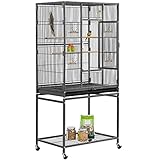
Yaheetech 54-Inch Wrought Iron Flight Cage
- 24.5 inch wide interior
- 0.4 inch bar spacing
- Locked front door
- 4 feeding doors

ZENY 53-Inch Wrought Iron Flight Cage
- 25.2 x 16.5 inch interior
- Powder-coated iron frame
- 4 rolling casters
- Removable grill and tray
Every Flight Cage in This Roundup at a Glance (October 2026)
Width is the first column to read, because it decides how much horizontal flight space a flock gets. The table sorts roughly from widest interior to narrowest, with bar spacing and included casters alongside.
| Product | Specifications | Action |
|---|---|---|
| Yaheetech 62.5-Inch Roof Top Flight Cage |
|
Check Latest Price |
 PawHut 65-Inch Double Flight Cage with Divider PawHut 65-Inch Double Flight Cage with Divider |
|
Check Latest Price |
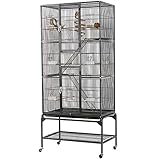 Yaheetech 69-Inch 3-Tier Flight Cage Yaheetech 69-Inch 3-Tier Flight Cage |
|
Check Latest Price |
 Mcage 36-Inch X-Large Flight Cage Mcage 36-Inch X-Large Flight Cage |
|
Check Latest Price |
 Mcage 64-Inch Extra Large Flight Cage Mcage 64-Inch Extra Large Flight Cage |
|
Check Latest Price |
 Prevue SPF0610 Stackable Flight Cage Prevue SPF0610 Stackable Flight Cage |
|
Check Latest Price |
| Yaheetech 54-Inch Wrought Iron Flight Cage |
|
Check Latest Price |
| ZENY 53-Inch Wrought Iron Flight Cage |
|
Check Latest Price |
 VIVOHOME 54-Inch Wrought Iron Flight Cage VIVOHOME 54-Inch Wrought Iron Flight Cage |
|
Check Latest Price |
 Prevue SP1804-3 Flight Cage Prevue SP1804-3 Flight Cage |
|
Check Latest Price |
 Mcage 42-Inch Center-Divided Flight Cage Mcage 42-Inch Center-Divided Flight Cage |
|
Check Latest Price |
 Prevue Hendryx F050 Wrought Iron Flight Cage Prevue Hendryx F050 Wrought Iron Flight Cage |
|
Check Latest Price |
1. Yaheetech 62.5-Inch Roof Top Flight Cage – Best Overall for Finches
Yaheetech 62.5-inch Roof Top Flight Bird Cage for Parakeets Cockatiels Conures Finches Lovebirds Canaries Budgies Small Parrots, Large Birdcage with Detachable Rolling Stand, White
18 x 14 x 39 in cage body
0.4 inch bars
14.77 lb
4 casters
Pros
- Very tight 0.4 inch bar spacing
- Detachable stand on 4 swivel casters
- Slide-out tray plus detachable mesh grate
- Two wide swing doors and a top handle
- High 4.6 rating across thousands of reviews
Cons
- Cage body is only 18 inches wide
- Arched roof eats usable perching space
- Some units arrive with bent bars
The headline number on this cage is 62.5 inches, and that is the total height including the stand. The cage body itself measures 18 inches long by 14 inches wide by 39 inches high. That distinction matters more here than with any other pick in this roundup.
At 18 inches of width, this is not a cage where a flock of eight will all fly at once. It is a strong choice for a pair or a small group of three finches, and the 0.4 inch bar spacing is among the tightest we found, which is exactly what you want for society finches and juvenile birds. Owners report birds settling in and using every level.
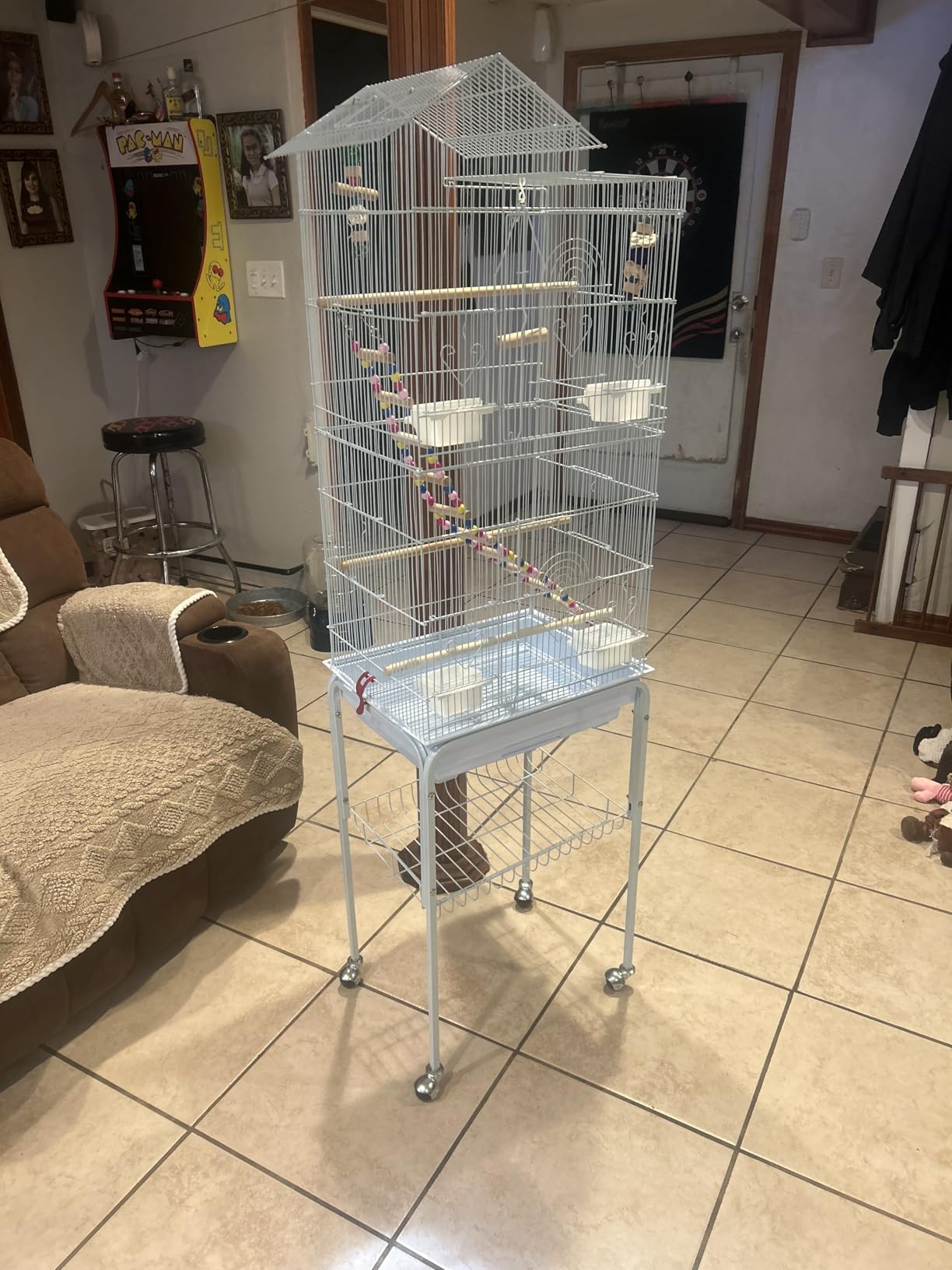
What makes it our top pick is the combination of things that are individually common and jointly rare. The stand detaches completely, so the casters mount directly on the cage body when you want it low, and a top carry handle lets you move the whole unit through a doorway. The slide-out tray and detachable mesh grate mean a full clean takes under a minute, and the mesh grate keeps birds off their own droppings.
Be honest about the shape, though. The arched roof profile is decorative, and it means the top third of the interior narrows, so the usable perching line is closer to 30 inches than 39. The white finish also shows dust and fingerprints more readily than the black version.
What to check before you commit to this cage
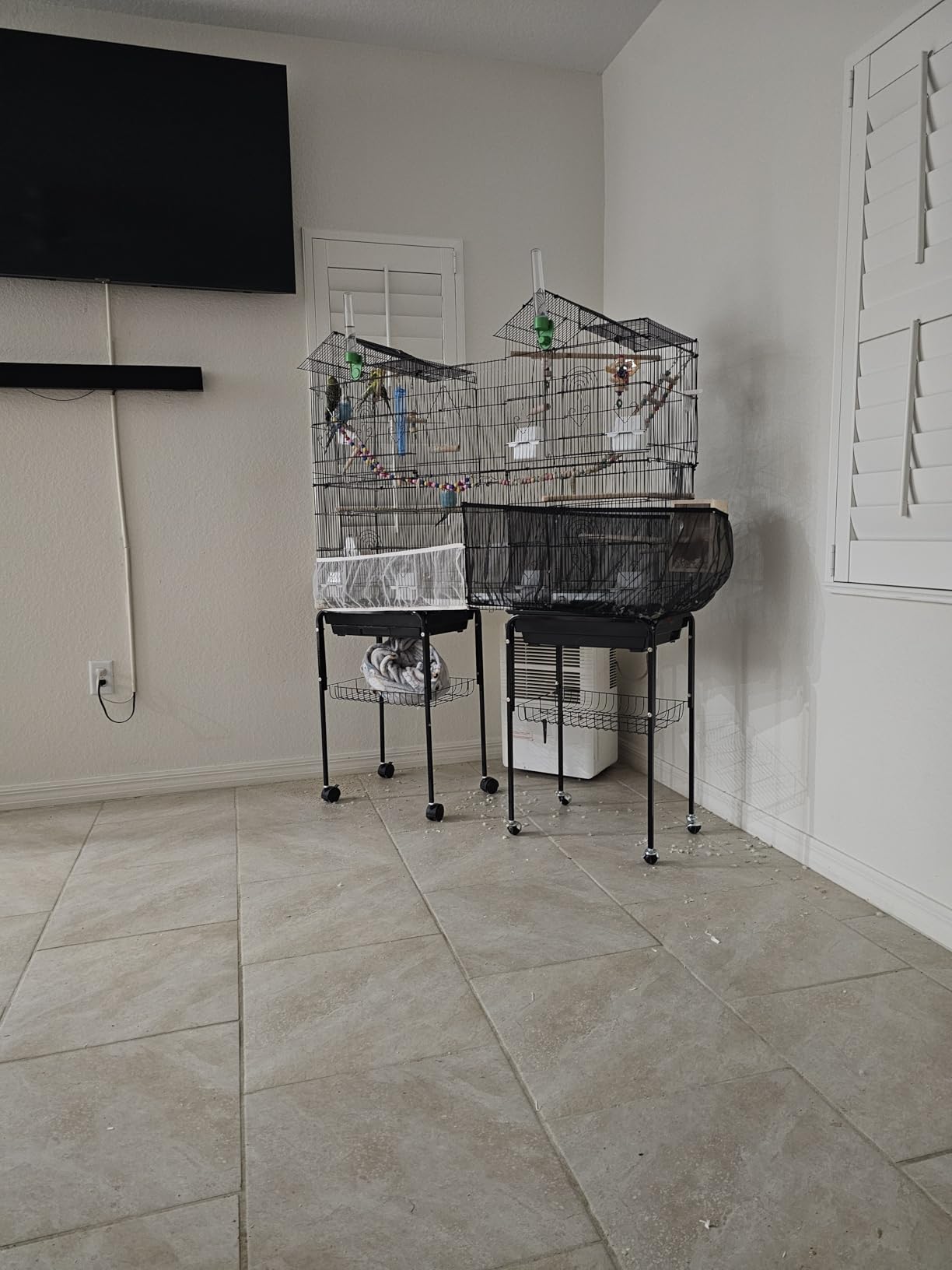
Count your birds against the width, not the height. Two pairs of zebra finches will use this cage well and still have open flight lanes. Six birds will fit physically but will spend more time perched than flying, which defeats the point of a flight cage.
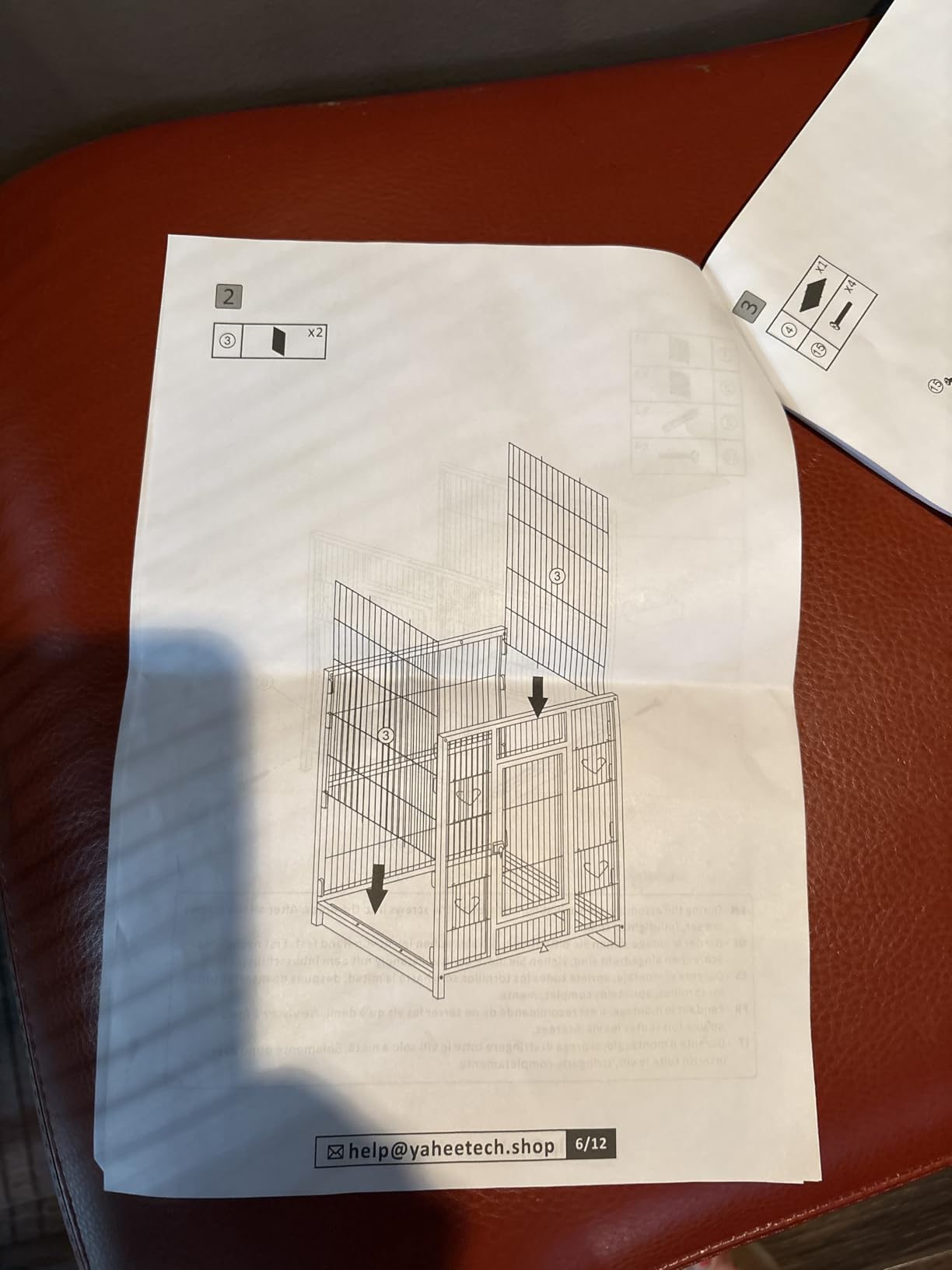
Also inspect the bars on arrival. A recurring report across this model is one or two bent verticals that need aligning with pliers before assembly, and the instruction sheet confuses some owners. Allow an extra fifteen minutes for that check.
Who this cage suits and who should skip it
Choose it if you keep a pair or a small group, if you want tight bar spacing as a safety margin, and if being able to roll the cage to a different room or out to a covered patio matters to you. The detachable stand is the feature that separates it from cheaper fixed-base cages.
Skip it if your flock is six birds or more and you want real horizontal flight room. In that case, look at the wider cages further down, especially the Prevue F050 or the PawHut double flight cage.
2. Yaheetech 54-Inch Wrought Iron Flight Cage – Best for Wide Flight Space
Yaheetech 54-inch Wrought Iron Standing Large Parrot Parakeet Flight Bird Cage for Small Parrot Sun Parakeet Green Cheek Conure Lovebird Budgie Finch Canary Bird Cage with Stand
24.5 x 17 x 33 in cage
0.4 inch bars
24.69 lb
detachable stand
Pros
- Widest interior in the sub-30 inch class
- 0.4 inch bar spacing suits small finches
- Locked front door
- Four feeding doors for quiet refills
- Detachable stand with 360 degree casters
Cons
- Simple door lock that a determined bird may work
- Heavy even with casters at 24.69 lb
- Some bent bars reported on arrival
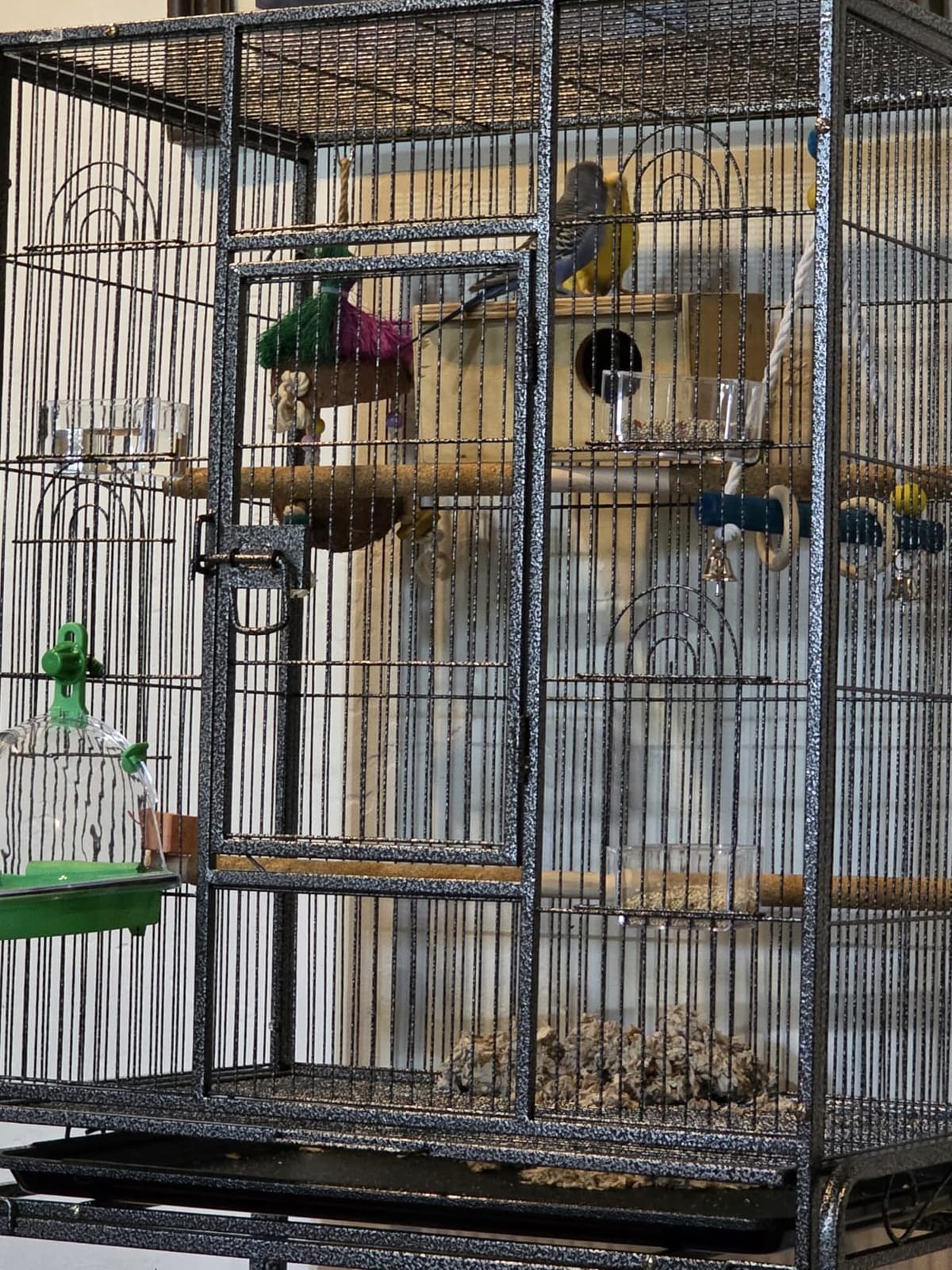
This is the one we would buy for a flock of four zebra finches in a normal living room. The interior is 24.5 inches long by 17 inches wide by 33 inches high, and at just under 25 inches of width it gives a finch a genuine flight lane rather than a perch to hop between.
The four feeding doors are the feature experienced keepers mention most. You can drop in fresh seed and water without opening the main door, so you are not scattering seed across the floor every time you refill and you are not flushing the birds off their perches mid-meal.
The stand detaches, which matters because the whole unit weighs 24.69 pounds. With the stand on, four 360 degree casters let you reposition it for cage baths or to catch afternoon light in a different part of the room. It comes in five finishes, and the light gray and white options blend into a living room better than black.
Two cautions. The door lock is a simple slide bolt, and while no owner reports a finch escaping, the wise move with any finch cage is to add a small clip or a zip tie. And this is a parrot cage that happens to be finch-compatible, not a finch-specific design, so perches and feeders are not included.
What to check before you commit to this cage
Measure your intended spot, including the stand footprint and the clearance you need to open the front door wide. At 24.5 inches long this needs a real stretch of wall or a dedicated corner, and pushing it against a radiator or a window is a bad idea for the birds.
Decide on perches before the birds arrive. The listing describes a play setup, but finches want natural branches or dowels spaced across the width, and the supplied ladders and swing are more parrot furniture than finch furniture.
Who this cage suits and who should skip it
Choose it if four finches is your flock size and your space is a living room rather than a dedicated bird room. The 0.4 inch spacing gives you margin on escape risk, and the detachable stand solves the moving problem that trips up most owners.
Skip it if you need to isolate a bird, house a breeding pair in separate halves, or move birds between rooms regularly. This cage is built to stay put once you position it.
3. ZENY 53-Inch Wrought Iron Flight Cage – Best for Small Flocks on a Budget Tier
ZENY 53-Inch Parakeet Bird Cage, Wrought Iron Large Parrot Flight Birdcage
25.2 x 16.5 x 53 in
29.2 lb
4 casters
4 feeder doors
Pros
- Powder-coated iron that owners report not rusting
- 24 inch plus width suits a small flock
- Removable grill and tray
- Four rolling casters
- Main door swings fully open
Cons
- Feeder doors are weak and often need zip ties
- Included dowel perches may need sanding
- Instruction sheet omits parts
The ZENY 53-inch measures 25.2 by 16.5 by 53 inches overall, and it earns its place for one specific reason: long-term owners consistently report that the powder-coated iron frame has not rusted after years of use. Finches are messy and cages live next to kitchens, so finish durability is not a minor detail.
This is the only cage in the roundup that ships with four plastic cups and two perches, so you can get birds in sooner. Four rolling casters are included rather than sold separately, which is not true of every brand at this level.
One important transparency note: the manufacturer does not publish a bar spacing figure for this model. What we can say from the review data is that it is a finch-compatible cage in a similar class to the 0.4 inch models, and owners house finches and canaries in it without reporting escapes. If tight spacing is a non-negotiable for you, verify the gap with a ruler after the cage arrives.
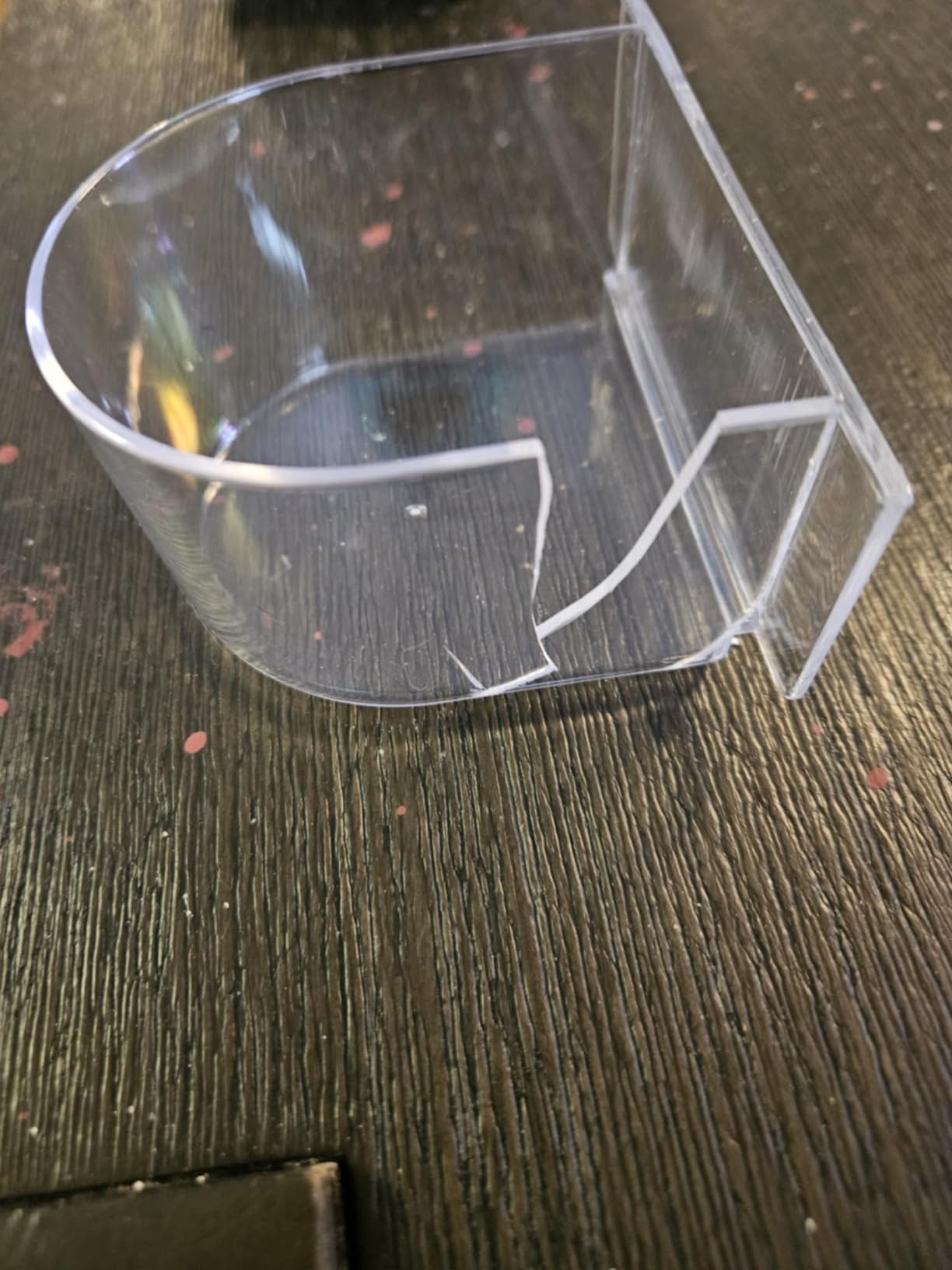
The most common complaint is the small feeder doors. They are thin plastic-inserted openings that some birds can manipulate, and several owners zip-tie them shut. Our advice is to swap those doors for screw-on ceramic dishes once you have the cage running.
What to check before you commit to this cage
Inspect the included dowel perches on arrival. Owners report needing to trim and sand them, and a perch with a splinter or an uneven diameter is a foot-health problem you can avoid by replacing them with natural branches in the first week.
Test the front door latch with a pair of pliers the way you would with any parrot cage. If it feels light, add a clip. Finches are not escape artists the way budgies are, but they are persistent.
Who this cage suits and who should skip it
Choose it if durability over the long term matters more to you than the latest features, and if a small flock of three or four is your target. The 24-plus inches of width is genuinely useful flight space.
Skip it if you need to know the exact bar spacing before buying, since it is not published, or if you want a cage that disassembles for transport. This one stays assembled.
4. Yaheetech 69-Inch 3-Tier Flight Cage – Most Versatile for Multi-Level Flocks
Yaheetech 69″ Large Bird Cage for Parakeets, Budgies, 3-Tier Flight Cage
30.3 x 18 x 51.2 in cage
0.4 inch bars
47.75 lb
3 tiers
Pros
- Highest rated at 4.7 in this group
- 30 inch wide interior suits a flock
- 2 lockable front doors plus 10 feeder doors
- Screw assembly feels sturdy
- Does not tip when rolled
Cons
- 47.75 lb needs two people to move
- Dowel perches not ideal for foot health
- White finish shows dirt
This is the biggest real jump in quality of life between the budget tier and the premium tier. The cage body is 30.3 inches long by 18 inches wide by 51.2 inches high, which puts it right on the 30 inch width minimum we use as our benchmark for a proper flight lane.
At 4.7 stars it holds the highest rating of the twelve cages here, and owners describe a specific change in their birds: activity increases, birds use the full height, and a flock of four to five small birds fits without crowding. The two front doors with crescent locks, plus ten feeder doors, mean you can service the whole cage without opening it.
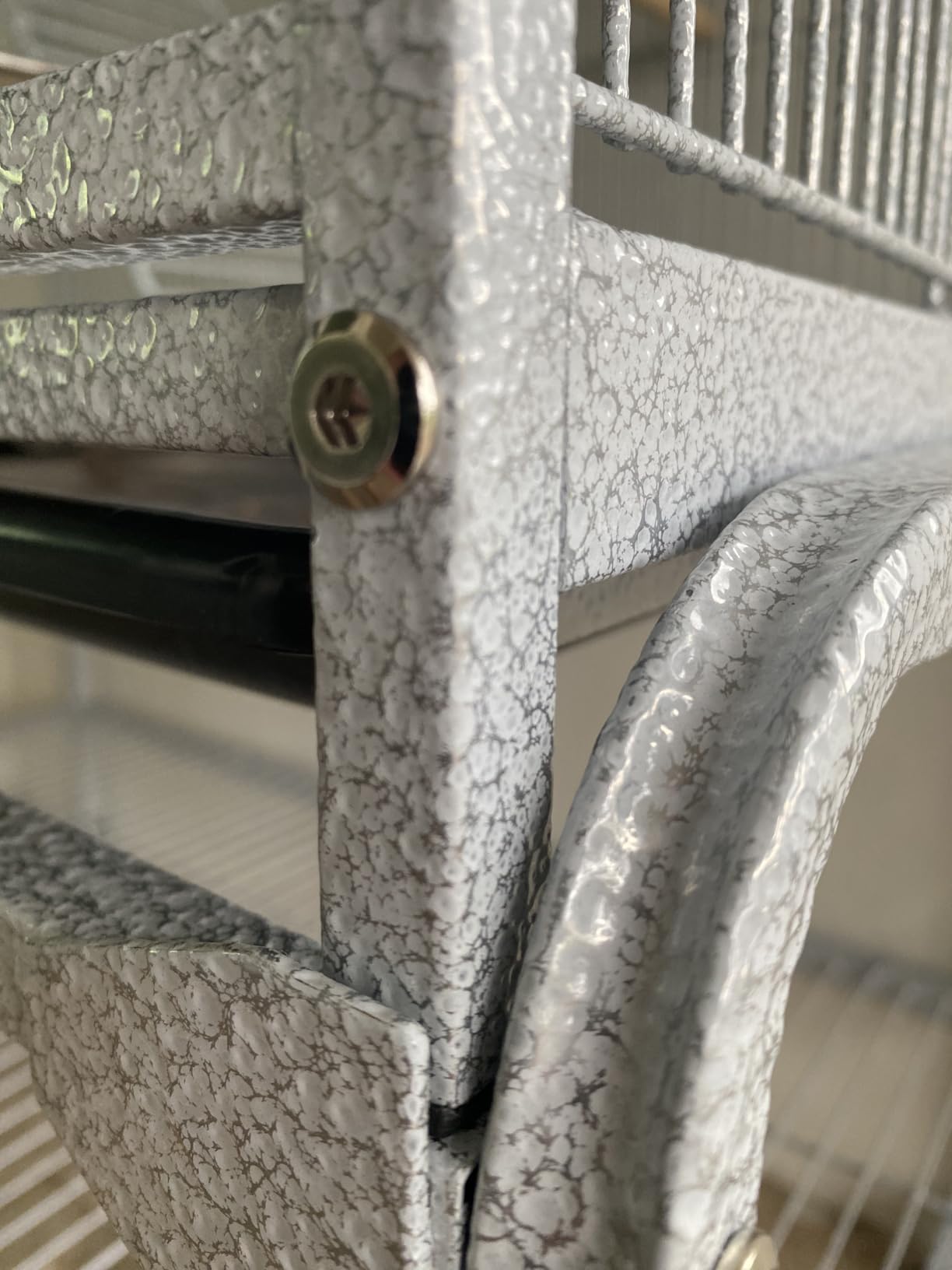
The build quality shows in the details. It assembles with screws rather than zip ties, and owners note it does not tip when rolled on its stand. The tray and the wire base are both removable, so cleaning reaches the corners rather than just the surface.
Now the honest drawback, and it is a real one: at 47.75 pounds, this is not a one-person move. Reviewers strongly recommend two people for assembly and for any repositioning, and if your home has steps or narrow doorways you need to plan the route before the cage is built.

What to check before you commit to this cage
Plan the floor space first. The overall footprint is 32 by 18.5 inches with the stand, and the detachable rolling stand with an open storage shelf underneath needs clearance all the way around for the doors to open fully.
Plan to replace the perches. The six included wooden dowels are fine for parrots but not ideal for finch feet, and experienced owners swap them for natural wood. The three-tier layout with ladders and a rope boing is also parrot-oriented, so use the vertical space more carefully than the accessories suggest.
Who this cage suits and who should skip it
Choose it if you have a flock of four to five, a solid floor area to work with, and a second pair of hands for assembly. The width and the door count make it the best-designed cage in this group for daily husbandry.
Skip it if you are in a small apartment where a 47.75 pound steel unit is a commitment you cannot move, or if your birds are a single pair. There is a lighter pick for that further down.
5. Prevue Hendryx F050 Wrought Iron Flight Cage – Best for Large Flocks
Prevue Hendryx Pet Products Wrought Iron Flight Cage – Big Rolling Bird Cage for Parakeets, Cockatiels, Conures, Lovebirds, Canaries, Finches, Parrotlets, & Caiques, 5 Ft – X-Large, Hammertone Black
37 x 23 x 60 in
0.5 inch bars
42 lb
locking casters
Pros
- Widest interior of any single-compartment cage here
- Builds well enough for 8+ years of use
- 3 solid wooden perches included
- 6 side doors plus double front doors
- Locking casters roll smoothly
Cons
- Sliding door latch can be figured out by clever birds
- Spring side doors do not lock
- Front opening is small for the cage size
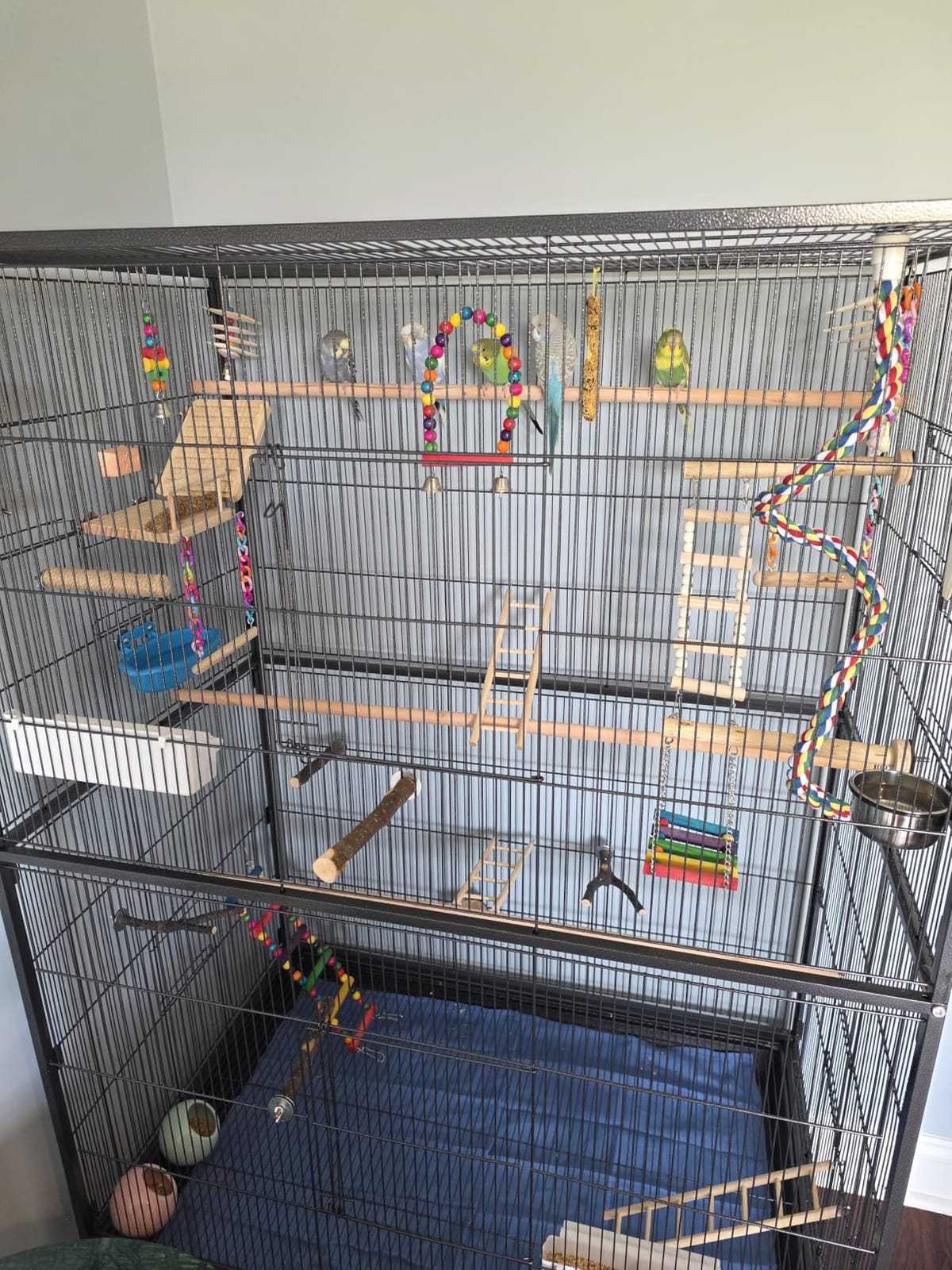
At 37 by 23 by 60 inches, this Prevue is the widest single-compartment flight cage in the roundup, and it is the one we would trust with a flock of six. The extra 12.5 inches of width over the next largest cage is not a rounding difference. It is the difference between birds flying the full length of the cage and birds working the middle third.
The build is the standout story. Reviews track five to eleven years of continuous use with multiple birds, and owners report a steel build that shows no rusting. That longevity is why several name-brand flight cages come up again and again in finch keeping communities.
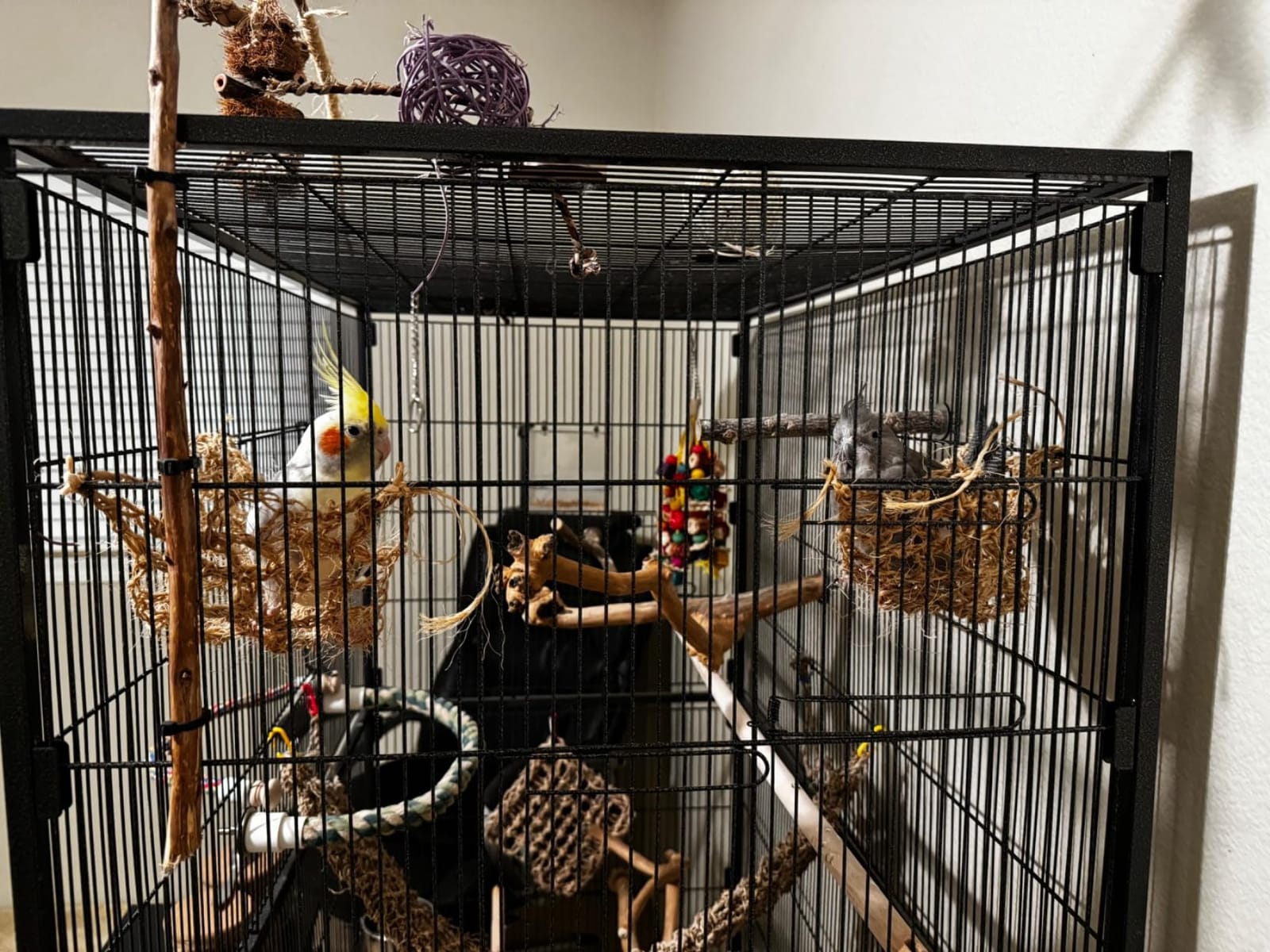
Bar spacing is 1/2 inch. That is the maximum commonly recommended for most finches, so it is safe with adult zebra and society finches. For smaller species or for birds that have historically wedged their heads in gaps, a 3/8 inch model is the more conservative choice.
The latches need work. The main sliding-bar door latch can be learned by a clever bird, and the six spring-loaded side doors do not lock at all. Both issues have simple owner fixes that owners report working well: an extra clip on the main door, and zip ties or screw-on dishes holding the side doors.
What to check before you commit to this cage
Watch the ceiling bars. Owners report that heavy toys hung inside can flex or bow the top of the cage. For finches this is mostly a non-issue since they are light and do not hang toys, but it matters if you plan to hang anything substantial.
Note that the front door opening is small relative to the cage size, so large bowls are awkward to change. Plan on screw-on dishes on the side doors rather than a big front-mounted bowl, which also reduces seed scatter on the floor.
Who this cage suits and who should skip it
Choose it if you are running a flock of six, if you want a cage you can keep for a decade, and if you have the floor space for a 37 inch wide unit. The locking casters solve the moving problem on smooth floors.
Skip it if you need 3/8 inch spacing for very small birds, or if 42 pounds is more than your space can handle. The Prevue SPF0610 later in this roundup weighs 9 pounds and folds flat.
6. Prevue SPF0610 Stackable Flight Cage – Best for Travel and Quarantine
Prevue Pet Products Flight Cage Metal Steel Bird Crate, Multi-Bird Home Stackable Cage for Birds, Home Crate for Extra-Small Pet Parakeets, Finches, and More, White
29.375 x 17.625 x 16 in
0.375 in bars
9 lb
stackable
Pros
- Only 9 pounds so one person can move it
- 0.375 inch bar spacing is the tightest here
- Notched door latches stop birds lifting doors
- Tool-free folding build in minutes
- Stackable for multiple setups
Cons
- Tabletop only and needs a separate stand
- Thin wire can bend
- Grate is awkward to remove and leaves a gap
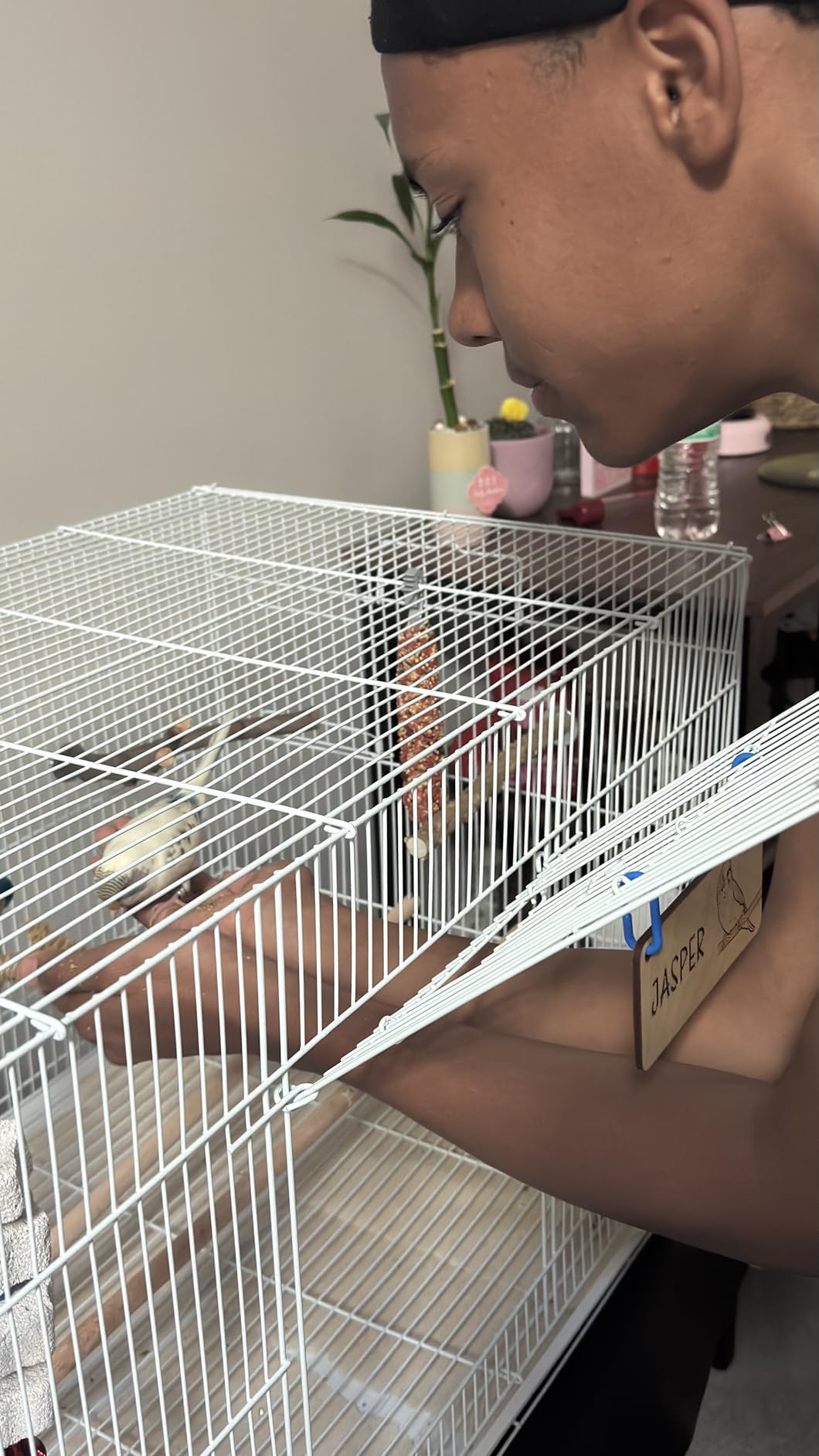
The wide-and-low design here is the closest thing in this roundup to what avian guidance actually describes. The interior is 29.375 inches long by 17.625 inches wide by 16 inches high, and almost all of that is width. Nothing is wasted on height that finches would not use.
At 0.375 inch, this has the tightest bar spacing of the twelve. That is the number to look for if you keep Gouldian finches, juvenile birds, or any finch with a history of squeezing through gaps. Owners specifically call out the notched locking tabs that stop birds lifting the doors, a safety feature most cages in this class lack.
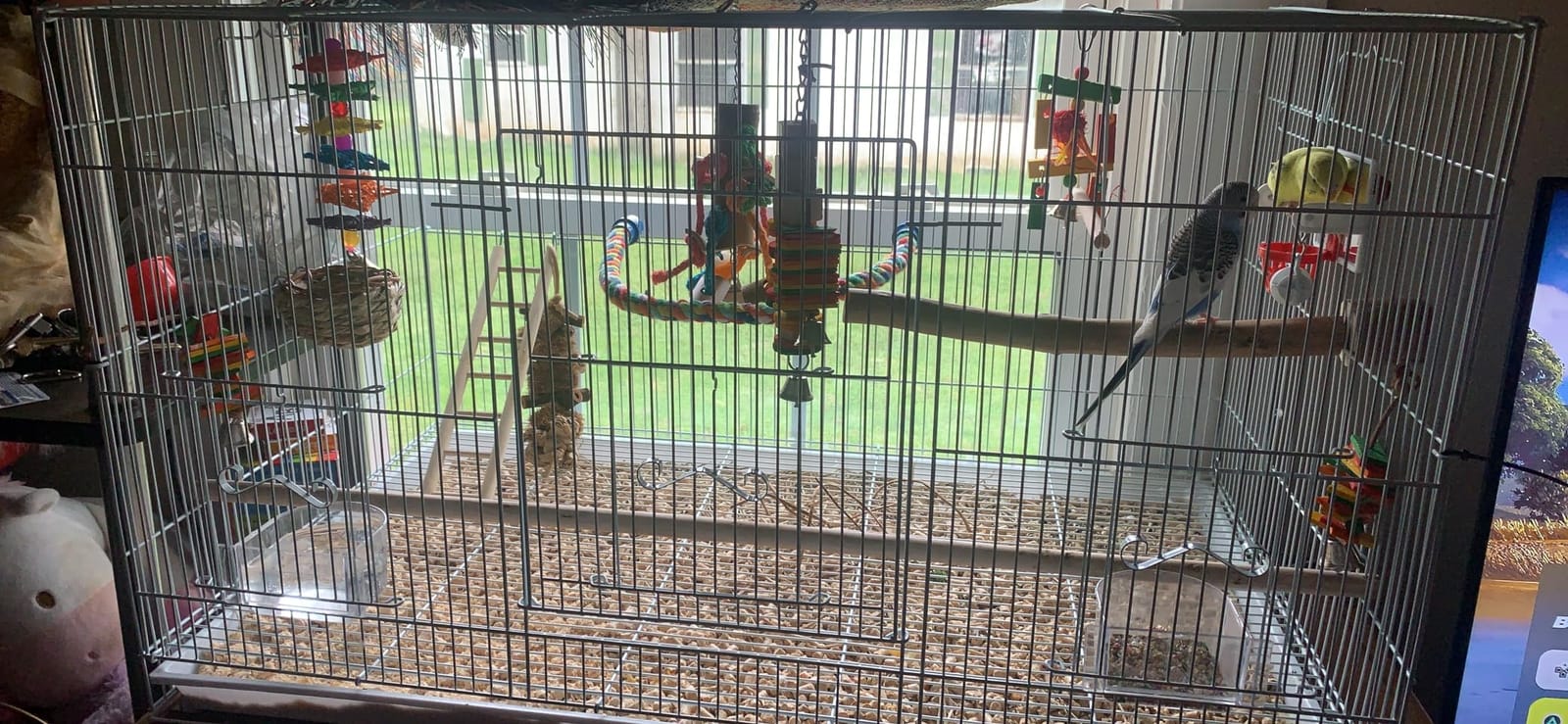
This is the cage we would buy for a new bird coming home from a seller or a rescue, and the second cage you want always. At 9 pounds it moves between rooms one-handed, and the folding design assembles in minutes with no tools. The stackable format also lets you run two or three quarantine or breeding setups in one footprint.
Two practical limits. It is a tabletop cage with no stand of its own, so you need a table or bench rated for the weight. And the wire is thin, which is fine for finches but means this is not a cage you would put a lovebird or a cockatiel into.
What to check before you commit to this cage
Test the front door. It is described as stiff to open, and owners report that forcing it shakes the whole cage, which unsettles the bird. A small drop of food-safe lubricant on the slider takes care of this in seconds.
Check the grate fit. Removing the bottom grate leaves a gap, so lift the grate only when the birds are elsewhere in the room, and check the gap with a finger before you return them.
Who this cage suits and who should skip it
Choose it if you want a quarantine cage, a hospital or recovery setup, a travel carrier for short journeys, or the lowest-risk option for a nervous new arrival. The tight spacing and the notched latches are the two things you cannot get elsewhere at this weight.
Skip it as your only permanent cage for a flock. Sixteen inches of height and no stand make it a supplementary cage, not a home.
7. Mcage 64-Inch Extra Large Flight Cage – Best for Multi-Door Access
64″ Extra Large Tight 1/2-Inch Bar Spacing Wrought Iron Flight Canary Parakeet Cockatiel Lovebird Finch Home Cage Side Nesting Box Doors with Removable Rolling Stand
30 x 19 x 37 in cage body
0.5 inch bars
36 lb
2 nest doors
Pros
- 30 inch wide cage body at a lower tier price
- Two side breeding nest doors included
- Storage shelf holds real supplies
- Assembles in 20 to 30 minutes for one person
- Adjustable casters let you level it
Cons
- Cage rests loosely on the stand
- Grate lacks runners and shifts
- Thin plastic litter tray relative to the build
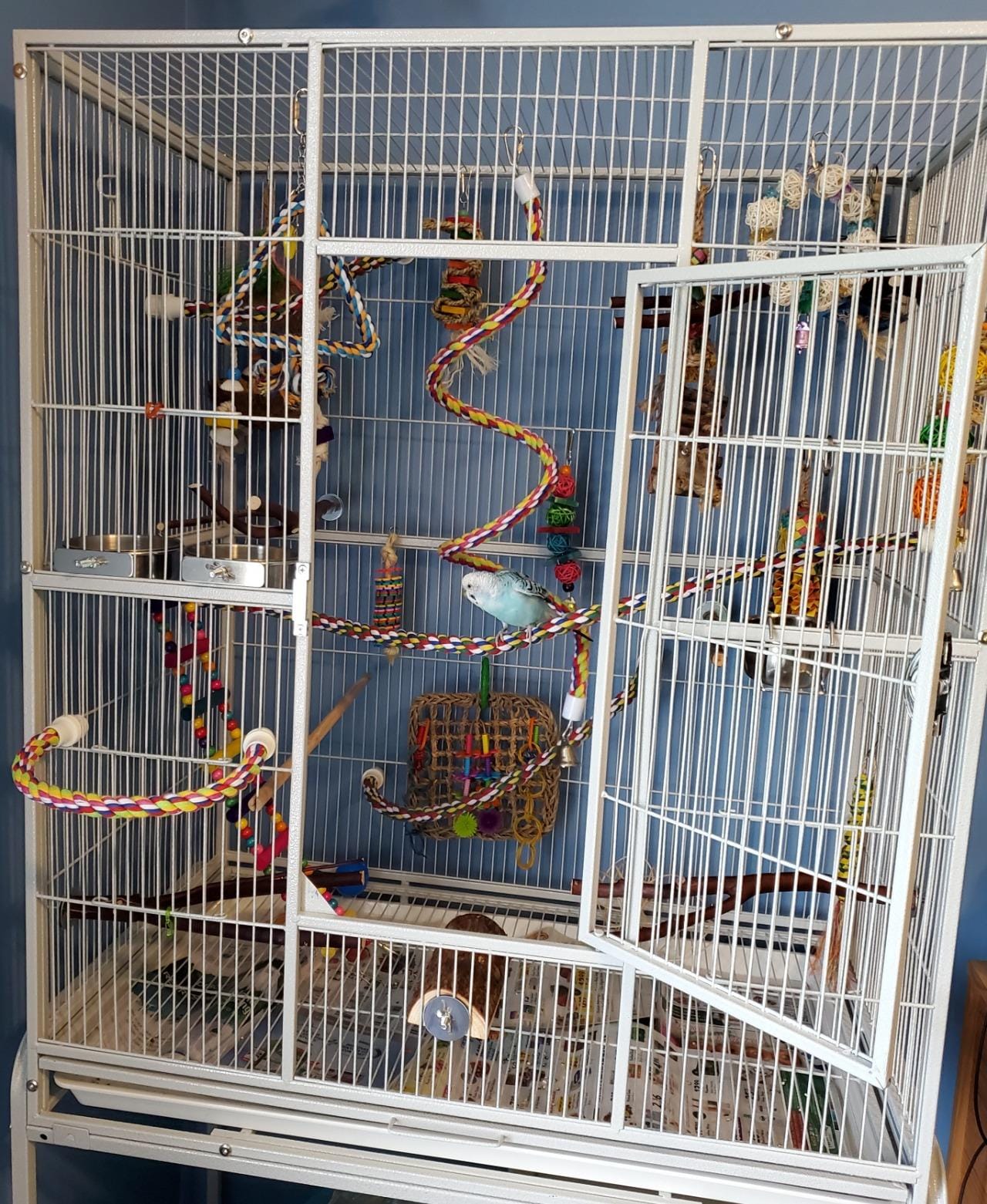
The cage body measures 30 by 19 by 37 inches with 1/2 inch bar spacing, and it reaches 64 inches overall on the stand. This is a genuinely wide flight cage, and the 4.3 rating reflects a value-driven purchase rather than a quality-driven one.
What makes it interesting for finches is the two side breeding nest doors. Most cages in this roundup have feeder doors; this one has side doors positioned as nest box access, which is a real advantage if you ever run breeding pairs alongside your flock.
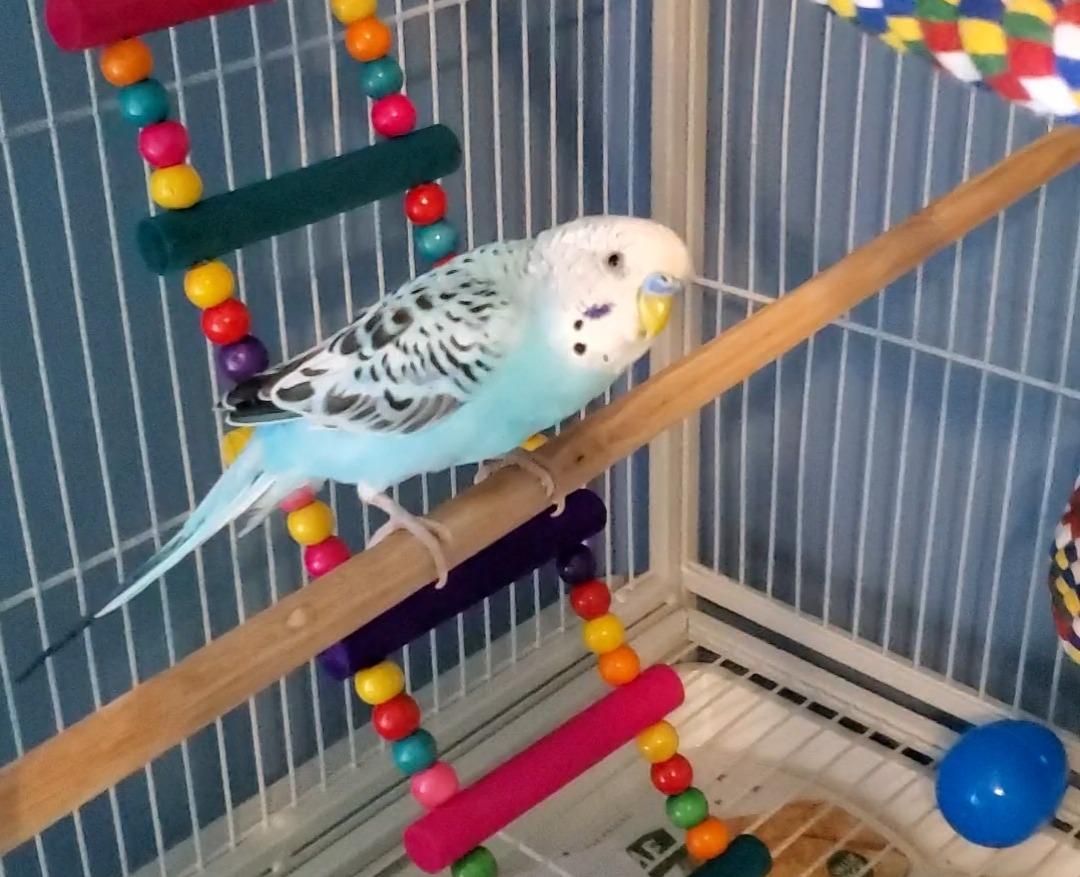
The two lockable casters on the four-caster stand are a thoughtful touch on carpet, and the bottom shelf gives you real storage for seed and supplies rather than a token ledge. Assembly is quoted at 20 to 30 minutes for one person, which is better than most wrought iron cages.
Here is the flaw that owners complain about most, and it is fixable. The cage body sits loosely on the rolling stand, so the recommended fix is zip ties or a plywood deck to lock it down. Related: removing the bottom grate leaves a gap, and the grate itself lacks proper runners and shifts under the weight of a moving bird.
What to check before you commit to this cage
Plan the security fix from day one. Have zip ties or a thin plywood deck ready before the cage goes up, because a cage that can walk off its stand with a bird inside is the one genuine safety concern in this roundup.
Check bar spacing with a ruler if your birds are small. At a stated 1/2 inch, the measurement across the bars is what matters, and a few owners note bent bars arriving in the box that can subtly change it.
Who this cage suits and who should skip it
Choose it if you want 30 inches of width without moving up to a heavier premium cage, and if the nesting doors interest you. The adjustable casters also make it the most level-friendly option on uneven floors.
Skip it if you want the tightest possible spacing, or if you are not willing to add the zip ties or a deck. Do not treat the loose stand fit as a cosmetic issue.
8. VIVOHOME 54-Inch Wrought Iron Flight Cage – Best for First-Time Keepers
VIVOHOME 54 Inch Wrought Iron Large Bird Cage with Rolling Stand
24.2 x 16.9 x 54 in
0.4 inch bars
23.1 lb
flat top
Pros
- Flat top accepts a light or plants and toys
- Drawer-style tray and removable shelves clean fast
- Includes 4 food boxes 2 perches and a tray
- 4 casters for full room mobility
- Backed by a one-year warranty
Cons
- Sliding side panels leave gaps wider than nominal spacing
- Removing the tray removes the cage floor
- Vertical-only bars make climbing hard
At 24.2 by 16.9 by 54 inches, this is another tall cage in a class where height is generous and width is adequate. It works for a pair or a small group of three, and the 0.4 inch bar spacing gives you a comfortable margin.
The reason it makes our list is the flat top. Finch keepers decorate more than almost any other bird owner, and a flat top gives you a surface for a shaded lamp, a shallow potted plant, or a misting setup without the balance problems of a domed roof. The four universal casters also make the whole 23.1 pound unit easy to reposition.
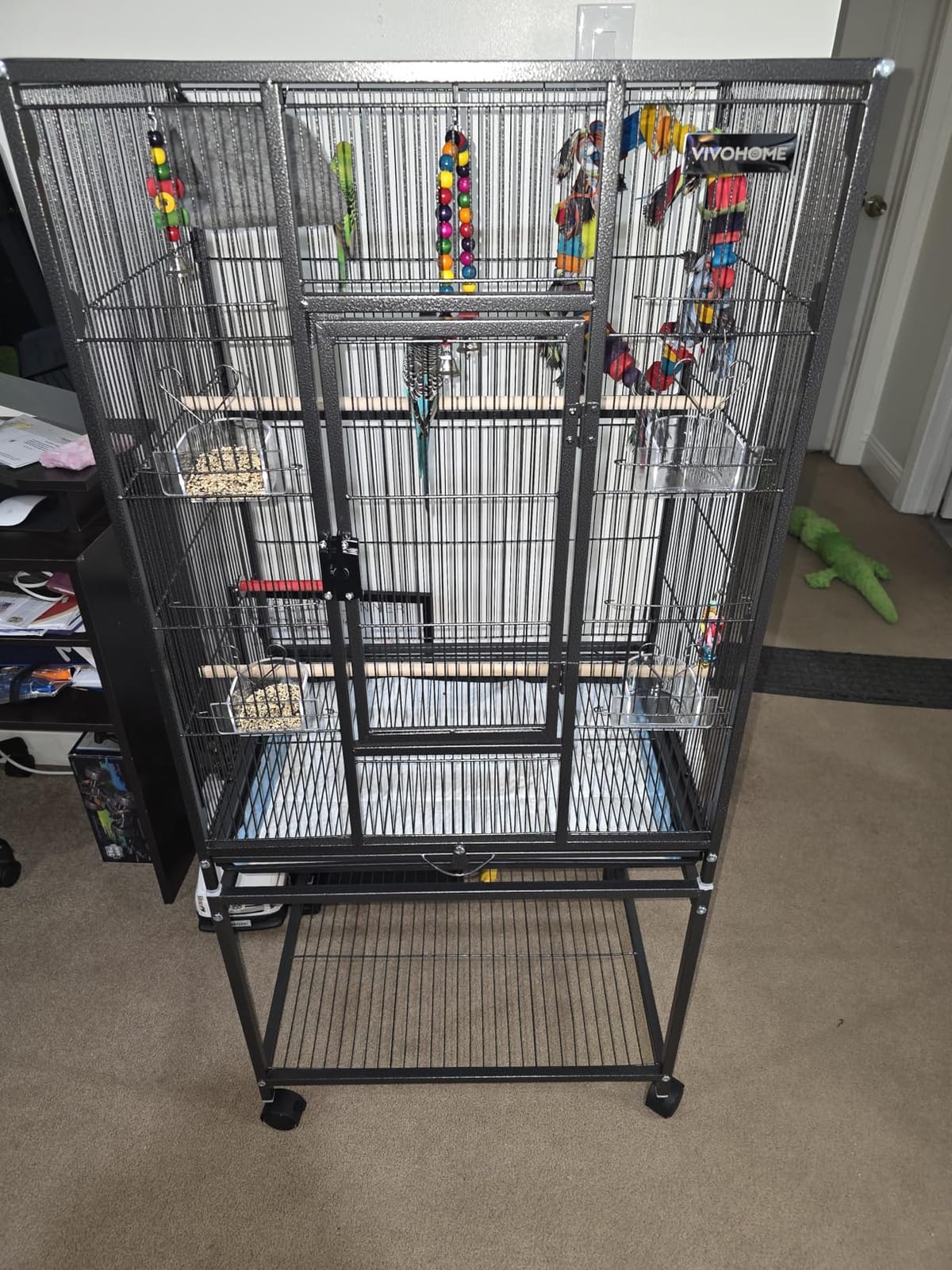
It also arrives genuinely ready to use: four transparent food boxes, two wooden perches, and a tray are in the box, and the manufacturer backs it with a one-year warranty and responsive supplier support. For a first-time finch keeper, that combination of included hardware and support is worth real money in saved trips to the store.
Build consistency is the weakness. The sides attach by sliding in rather than by a fixed frame, and that leaves gaps that can be wider than the nominal bar spacing. Several owners also note that removing the tray also removes the cage floor, which makes full cleaning a two-step job.
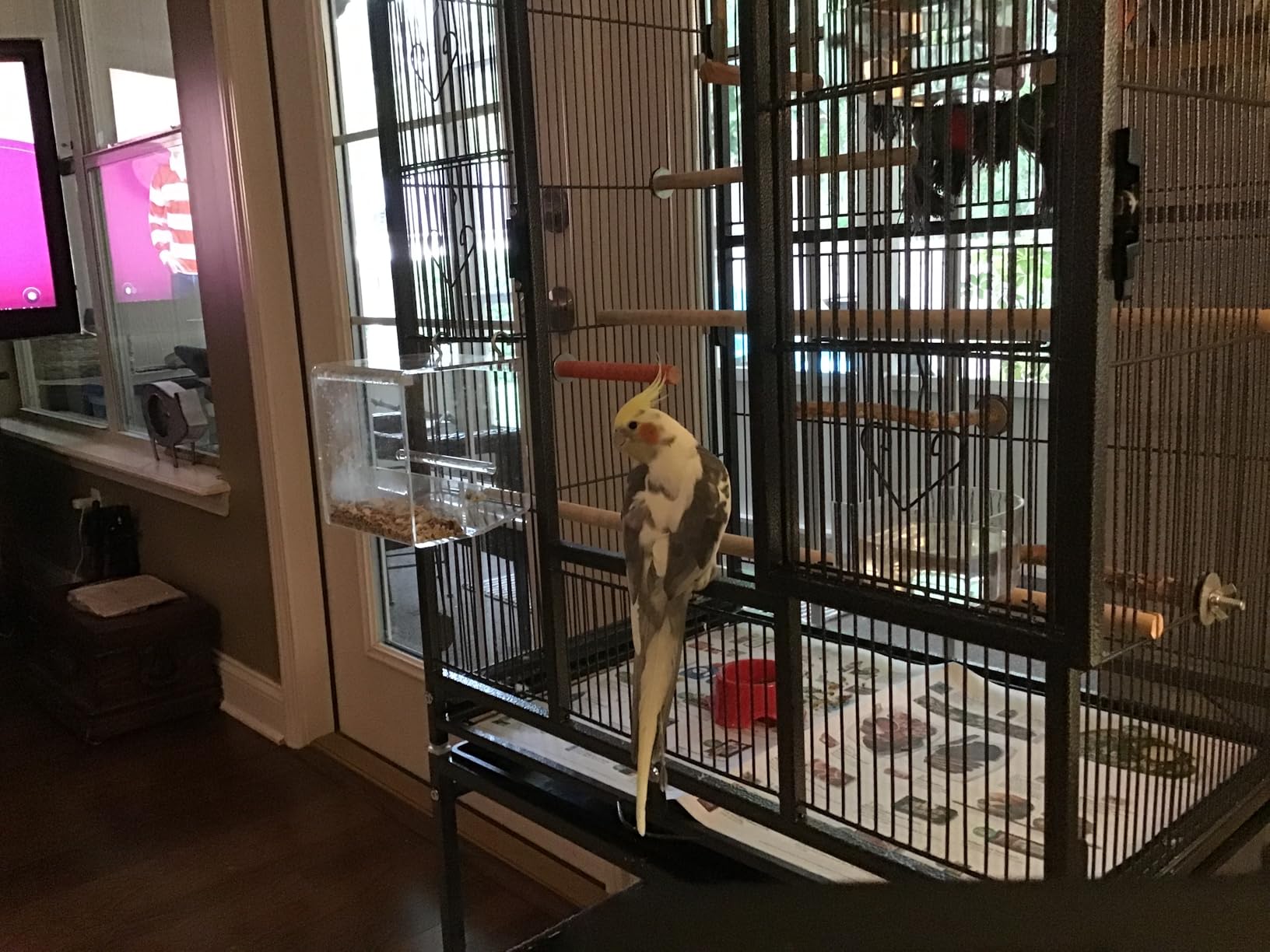
What to check before you commit to this cage
Run a finger along every side seam after assembly and measure the widest gap. This is the single most important check on this model, and it takes two minutes. If any seam is too wide, the fix owners use is a strip of plastic mesh clipped over the join.
Plan for the tray-and-floor arrangement before cleaning day. If you pull the drawer tray out, the birds lose their floor, so either move the birds to a travel cage first or have a spare piece of perch in hand to set across the gap.
Who this cage suits and who should skip it
Choose it if this is your first flight cage, if you want to decorate the top of it, and if you will use a pair or three birds. The included accessories and the warranty reduce the setup friction for a beginner.
Skip it if you keep larger birds that bend bars, or if a sliding-panel seam gives you any hesitation. The same owners who like the flat top are the ones who flag the side gaps.
9. PawHut 65-Inch Double Flight Cage with Divider – Best for Colony Keeping
PawHut 65″ Double Rolling Metal Bird Cage with Divider, Large Parrot Cage for Parakeet, Canaries, Lovebirds, Budgie, Finch, with Detachable Rolling Stand, Storage Shelf, Wood Perch & Food Container
62.75 x 19 x 64.25 in
56.1 lb
removable divider
detachable stand
Pros
- Removable divider splits the cage or opens it into one space
- Very wide floor area for a colony
- Main cage body detaches from the stand
- Front slide-out tray catches seed
- Wooden perches and food containers included
Cons
- Heaviest unit in the roundup at 56.1 lb
- 4.3 rating with a notable share of 3-star reviews
- Bar spacing is not published so verify before buying
This is the only true double flight cage in the roundup, and it is the one most owners have never seen recommended. The removable divider panel joins the two halves into a single open flight space or splits them into two independent sections. That single feature covers three use cases: one large flock, a colony kept in pairs, or a quarantine cage sharing a footprint with the main setup.
At 62.75 by 19 by 64.25 inches, it is by far the widest option here, and the floor area is what makes it worth the effort. The cage body detaches from the rolling stand for transport, and the front slide-out tray at the bottom catches seed scatter rather than letting it fall through to the stand shelf.
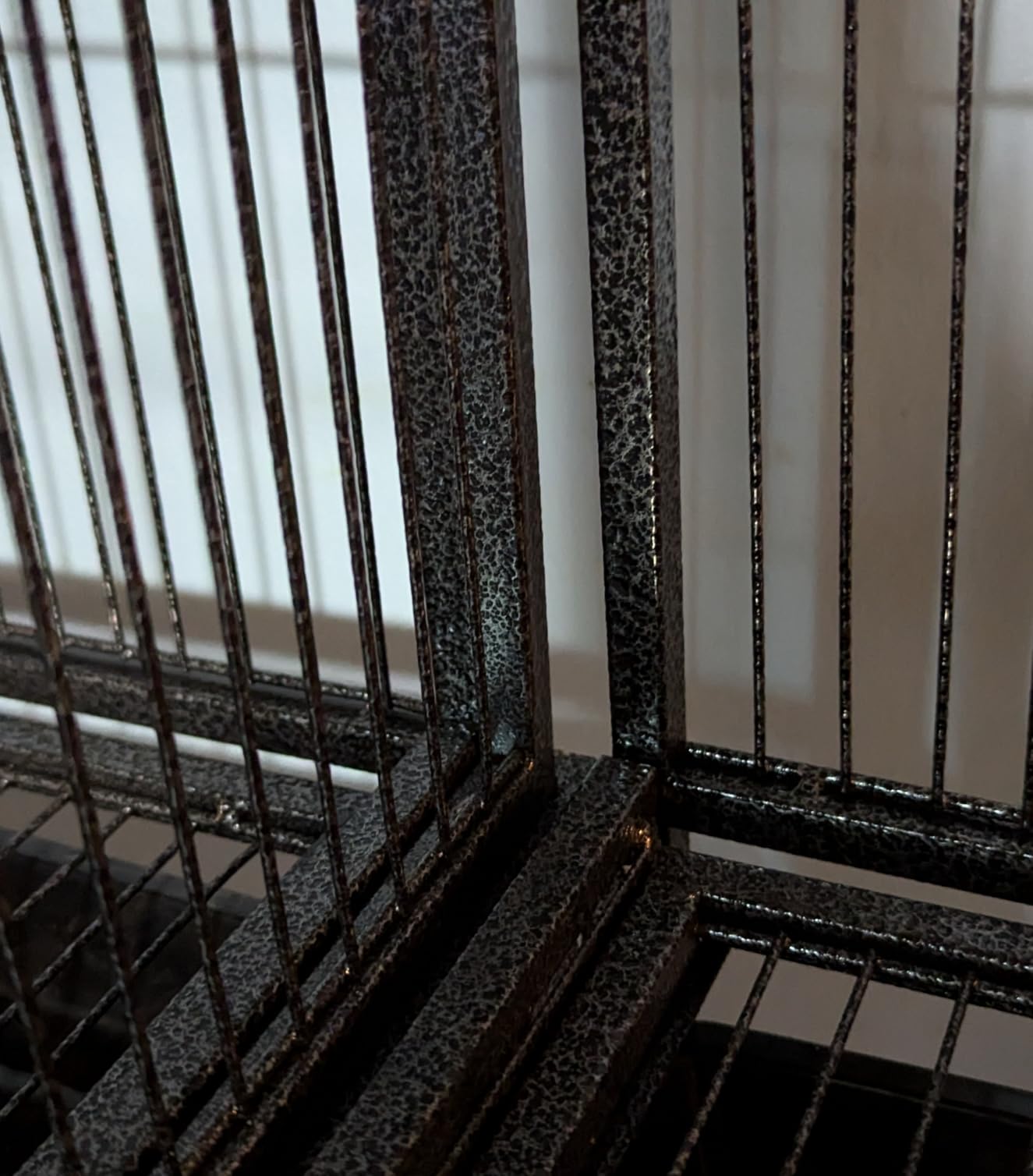
Two things to weigh honestly. The 4.3 rating is the second-lowest of the twelve, and a meaningful share of reviews sit at three stars, with owners pointing at the weight, the fiddly divider-and-stand setup, and finish consistency. And the manufacturer does not publish a bar spacing figure, so you must measure before committing birds to it.
If you are considering this for a flock of eight to ten, the width is genuinely the best in this roundup. If you are considering it for two or three birds, it is far more cage than you need and far more than you can move.
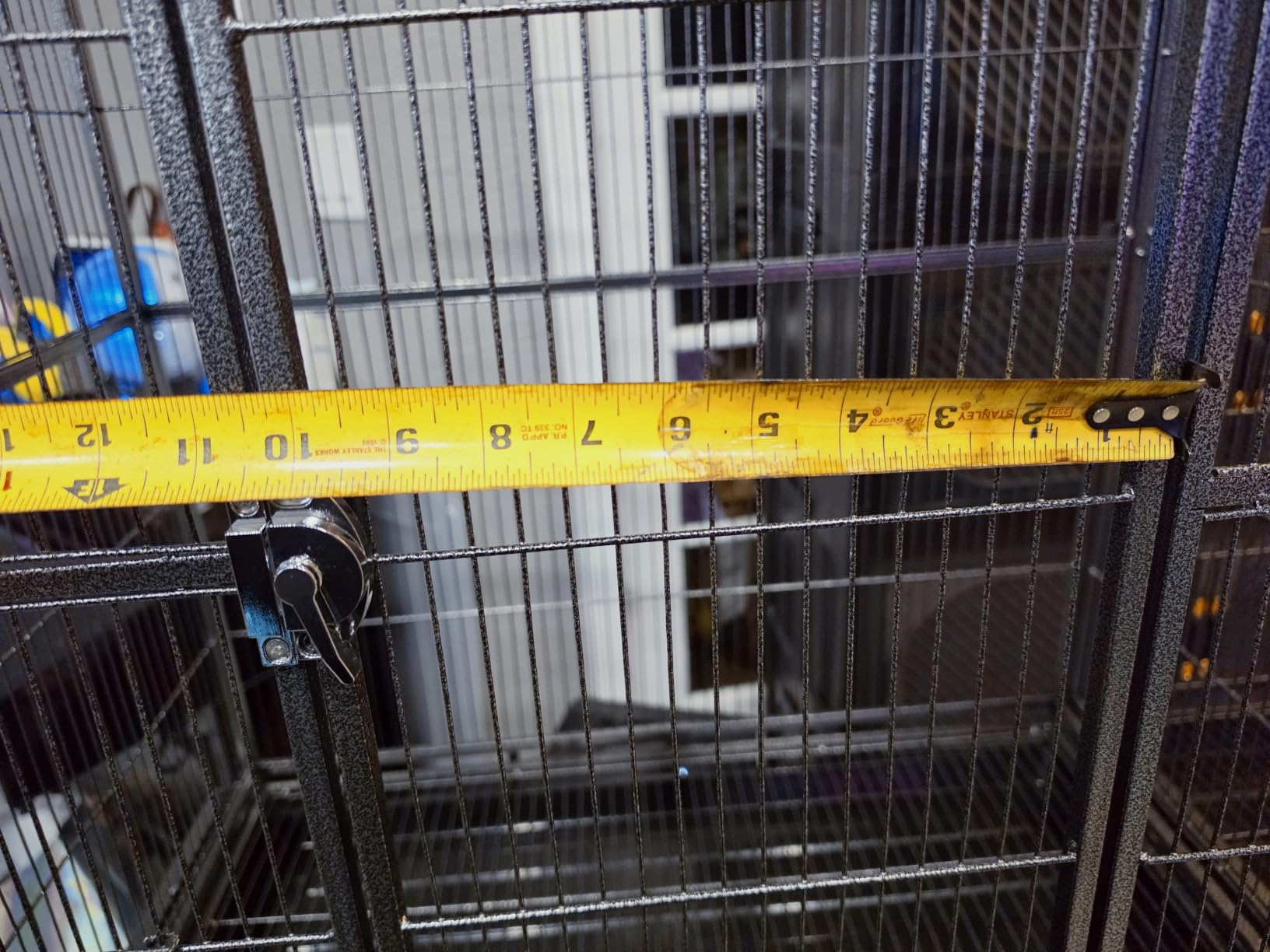
What to check before you commit to this cage
Measure the bar gap the day it arrives and before the birds go in. This is not a cage where you rely on the listing, because no spacing figure is published. If the gap exceeds 1/2 inch, the divider panel and doors are the first places to check.
Budget your manpower. At 56.1 pounds, with a detachable stand and a removable divider on top of the assembly, this is a two-person job and a two-person move. Do the assembly where it will live, not in a hallway.
Who this cage suits and who should skip it
Choose it if you run six finches or more, if you want colony pairs in one footprint, or if you want a second cage that separates a new arrival without doubling your floor space. The divider is the reason, and no other cage here does this.
Skip it if you have a pair, if you are in a small space, or if published bar spacing is a requirement for your peace of mind. For those cases, the narrower but fully specified cages further down are the safer buy.
10. Mcage 42-Inch Center-Divided Flight Cage – Best for Breeding Pairs
42″ Sturdy Wrought Iron Single Stackable Center Divided Side Nesting Box Doors Breeder Breeding Bird Flight Double Rolling Cage for Aviaries Canaries Cockatiels Lovebirds Finches Budgies Small Parrots
38 x 18 x 42 in
0.5 inch bars
30 lb
center divider
Pros
- Lockable center divider suits breeding pairs
- Side nesting box doors add breeding function
- Heavy-duty wrought iron that resists flexing
- 4 feeder doors with cups and 4 perches included
- 4 heavy-duty casters included
Cons
- 30 pounds is awkward without the casters
- Large footprint needs clearance on all sides
- Costs more than basic flight cages
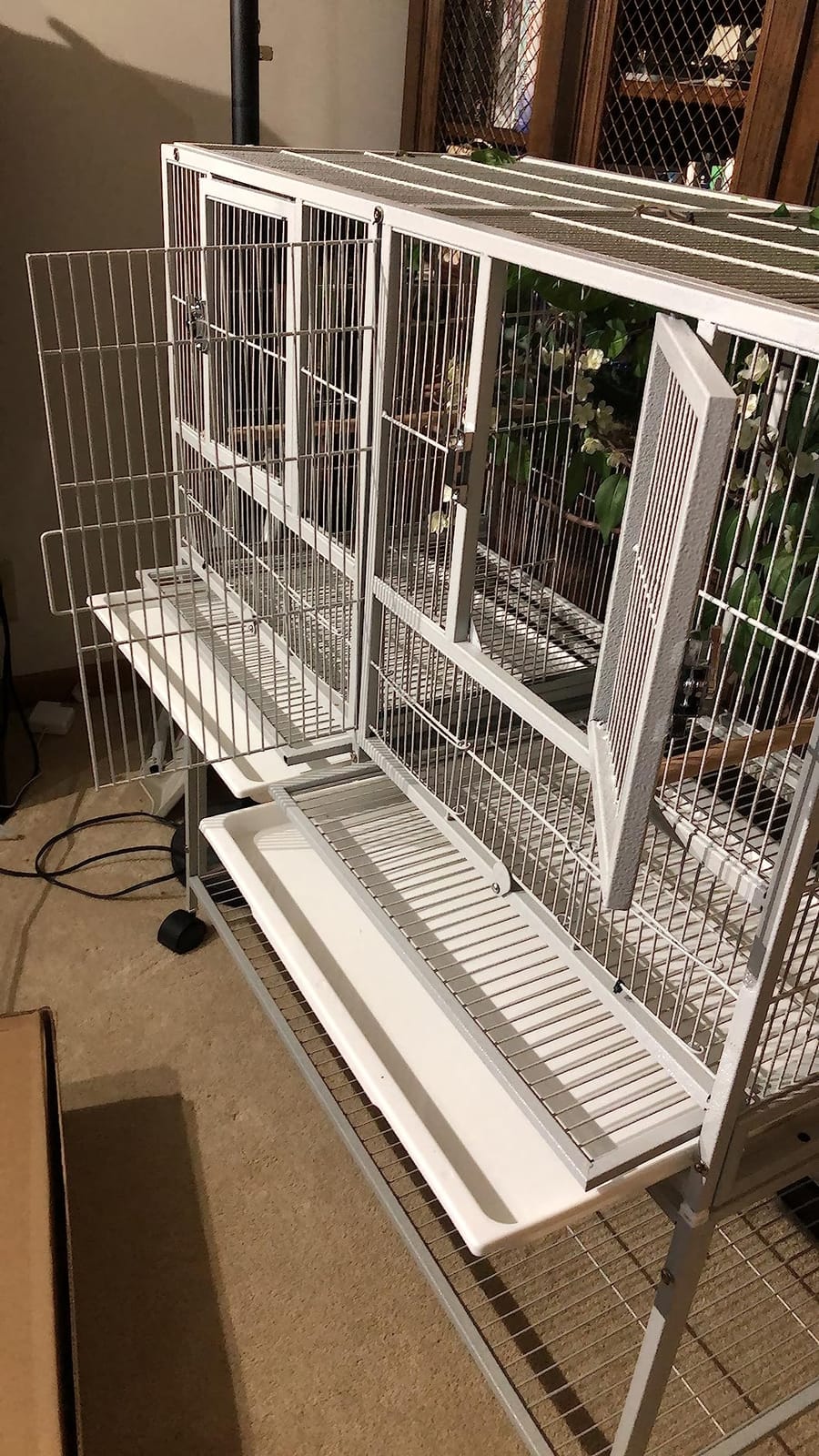
At 38 by 18 by 42 inches with a lockable center divider, this is the breeding-specific pick. Rather than one open space, the cage splits into two halves, each with its own front swivel-out door and safety lock set. That means a pair can be housed together on one side while a second pair or a recovering bird uses the other, without any risk of aggression.
Bar spacing is 1/2 inch, which suits budgies, finches, canaries and lovebirds according to the manufacturer. The included kit is unusually complete: four feeder doors with cups, four wooden stand perches, and four heavy-duty casters in the box.
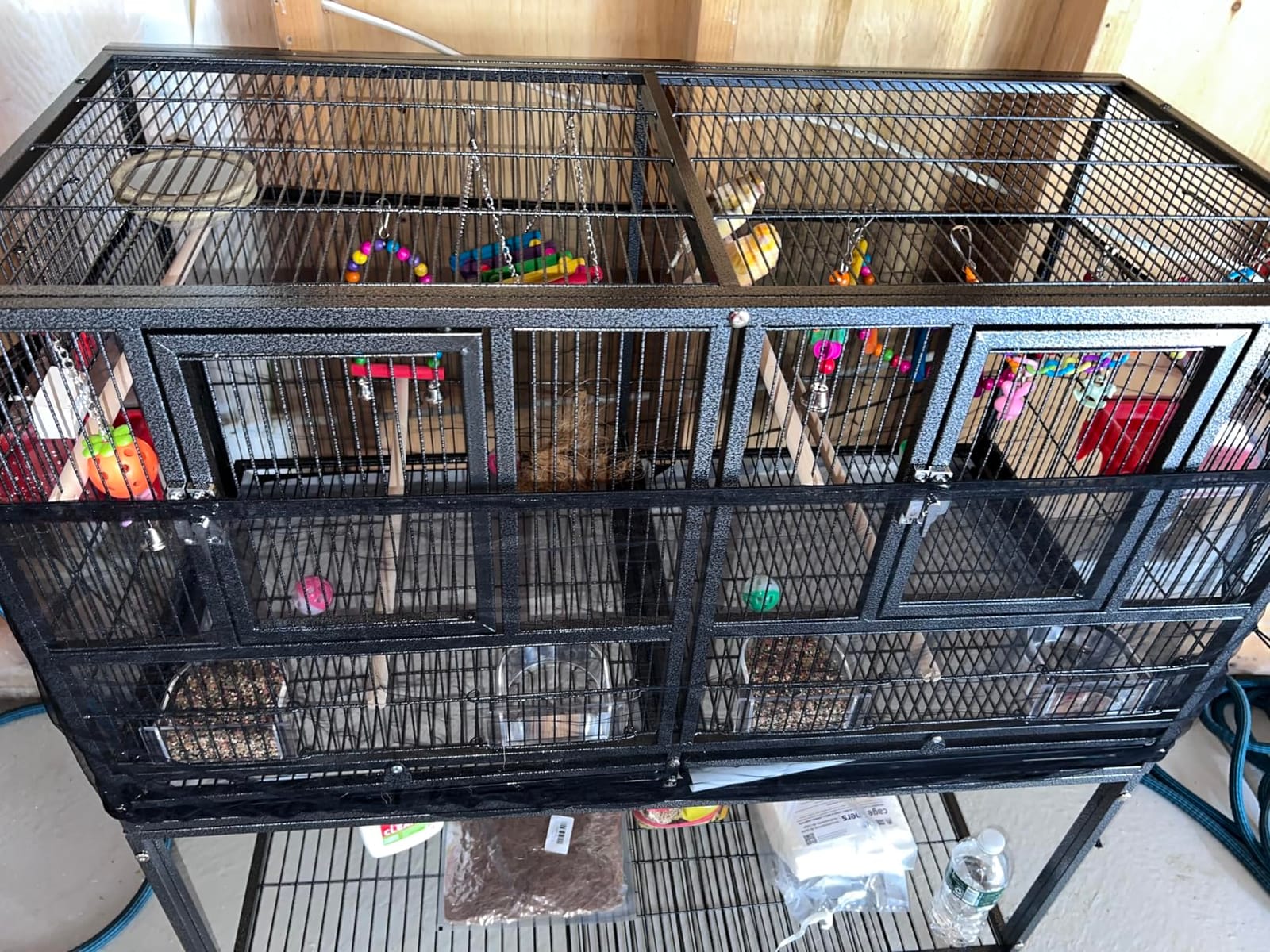
Construction is heavy-duty wrought iron with a non-toxic hammered paint finish, and the review data describes it as resisting flexing. The pull-out grate keeps birds off their own droppings and the bottom slide-out tray handles the rest, which is the combination you want in a breeding setup where hygiene matters more than usual.
Be aware of the weight and the footprint. Thirty pounds on a detachable rolling stand means the stand is not optional in practice, and a 38 inch long unit needs clearance on the door side for the front doors to swing fully open.
What to check before you commit to this cage
Confirm the divider locks rather than just swings. The safety lock set is the entire point of this cage, and it is worth testing both halves before any pair is introduced to a breeding cycle.
Check the pull-out grate seating, since a half-seated grate on a divided breeding cage can be a real problem. Run it in and out a few times before the birds arrive.
Who this cage suits and who should skip it
Choose it if you are pairing finches for breeding, if you want two pairs housed side by side, or if you need a cage that lets you separate and rejoin without buying a second enclosure. The nesting box doors are the detail that makes it useful for breeders.
Skip it if you want one open flight space for a flock. The divider is a feature, but it also means less continuous width per bird than the Prevue F050.
11. Mcage 36-Inch X-Large Flight Cage – Best for Tight Bar Spacing on a Budget
36″ X-Large Tight Bar Spacing for Small Size Birds Parrots Finches Parakeet Canary Cockatiel Breeder Breeding Flight Bird Home Parrot Cage
30 x 18 x 36 in
0.375 inch bars
20 lb
carry handle
Pros
- 0.375 inch spacing is safe for small finches
- 30 inch width gives real flight room at 20 pounds
- 6 sliding doors including 4 exterior feeder doors
- Bottom grille and pull-out tray
- Carry handle for moving between rooms
Cons
- Thin bendable bars that owners reinforce with zip ties
- Vague single-sheet instructions with blurry photos
- Doors have no latch once raised
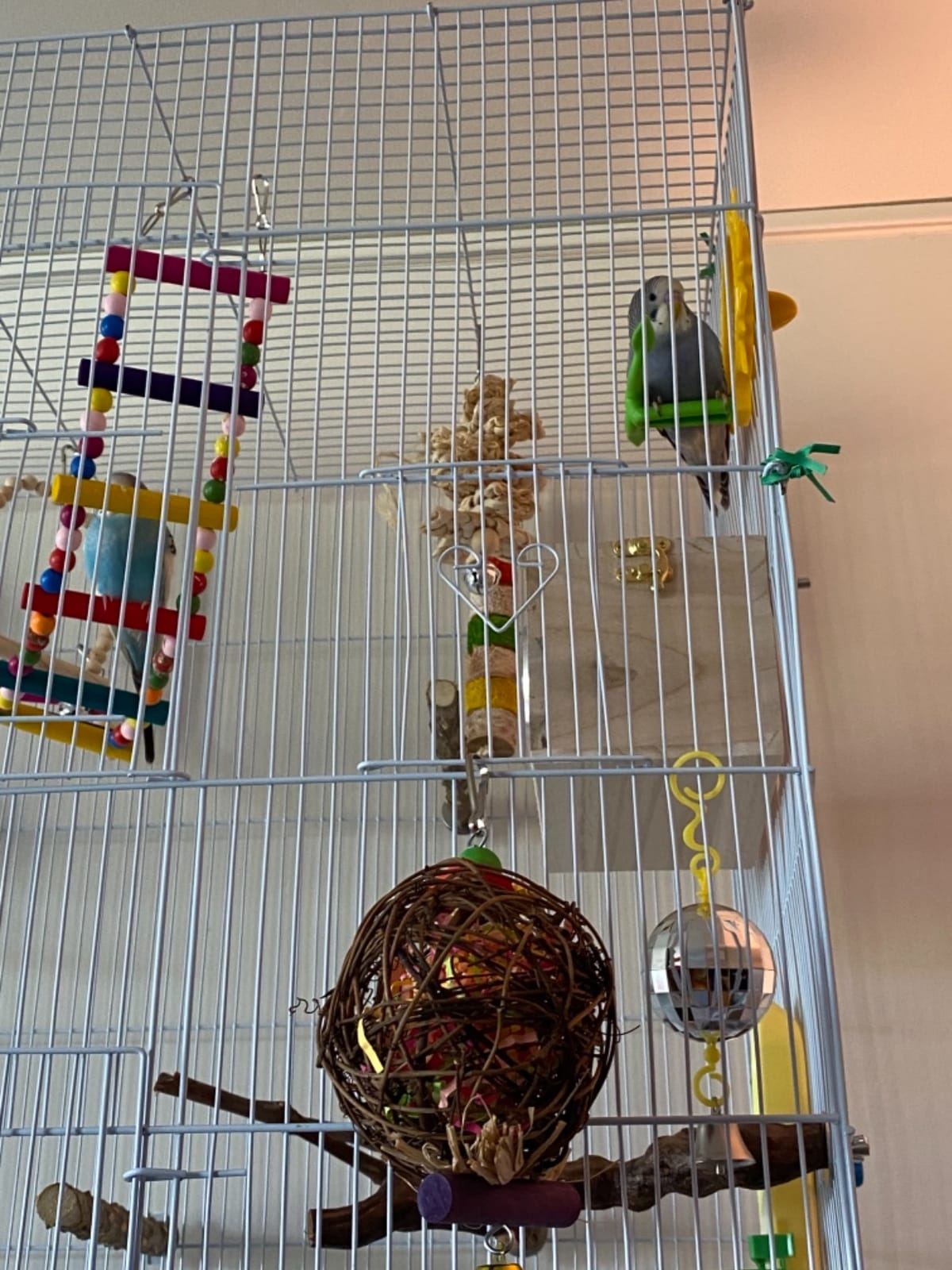
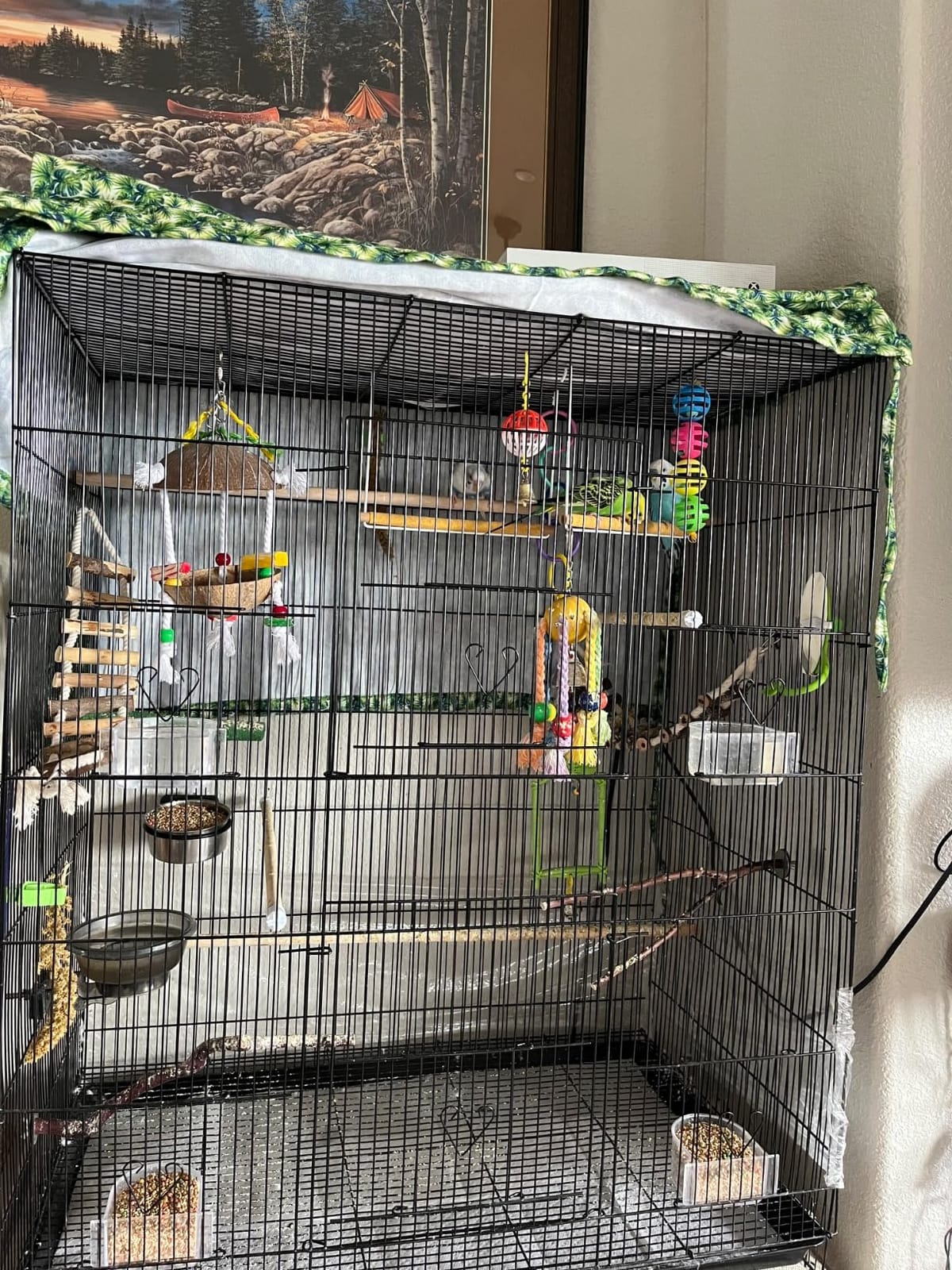
Thirty inches wide, 18 inches long, 36 inches high, with 0.375 inch bar spacing. That combination is unusual: you get the tight spacing of a specialist small-bird cage and a 30 inch flight width, at 20 pounds, which is light enough for one person to carry with the built-in handle.
Owners specifically report that bird aggression and crowding eased once their birds moved into this cage, which suggests the width is doing real work. The six sliding doors, including four exterior food and water access doors, let you service the cage without opening the main access points.
We are including this one with clear reservations, because the 4.1 rating is the lowest in the roundup and the reasons are consistent. Assembly is the dominant complaint: a vague single-sheet instruction with blurry photos, some panels arriving bent, and hooks at the joints that pull apart in normal use.
The practical advice from owners who have built it is to have pliers, two people, and a pack of zip ties ready before you start. Several also reinforce the thin bars with zip ties after assembly. If you are not comfortable with that, pick a different cage.
What to check before you commit to this cage
Read the assembly steps before you order, not after. Multiple reviewers report that the linked online guide no longer exists, so the printed sheet is all you have. If you will not build this cage with pliers in hand, choose another pick.
Close the door situation properly. There is no latch on the slide-up doors, so anything raised stays raised, which means a bird can open a feed door. Plan on screw-on dishes or a clip on each door rather than relying on the doors themselves.
Who this cage suits and who should skip it
Choose it if you want 0.375 inch spacing and 30 inches of width at a modest weight, and if you are comfortable doing a hands-on build with basic tools. The tight spacing makes it the value pick for Gouldian finches.
Skip it if you want an easy assembly or a cage that will not need reinforcing after a year of use. The Prevue SPF0610 and SP1804-3 both tool-free build far more smoothly.
12. Prevue SP1804-3 Flight Cage – Best for Lightweight Portability
Prevue Pet Products SP1804-3 Flight Cage, Lilac/White,26″ L x 14″ W x 22 1/4″ H
26 x 14 x 20.25 in
0.5 inch bars
10 lb
4 doors
Pros
- Only 10 pounds and easy to carry between rooms
- Tool-free assembly in about 15 minutes
- Four doors including a large front access door
- Two hooded cups and two wood perches included
- Owners report birds settling and laying
Cons
- Replacement dowel perches are not sold separately so chewed perches must be custom ordered
- Plastic tray catches and sticks during sliding versus aluminum trays on older cages
- Two of the three wooden perches are loosely sized and shift around
The SP1804-3 measures 26 inches long, 14 inches wide and 20.25 inches high with 1/2 inch bar spacing, and it weighs 10 pounds. This is the pick for a pair of finches in a small apartment, a first cage, or a home where you want to bring the birds into the room you are sitting in rather than visiting them.
Owners frequently mention that their birds settled in and started laying, and 71 percent of reviews are five star. Assembly is tool-free and typically takes about fifteen minutes, which is one of the smoothest builds in this roundup.
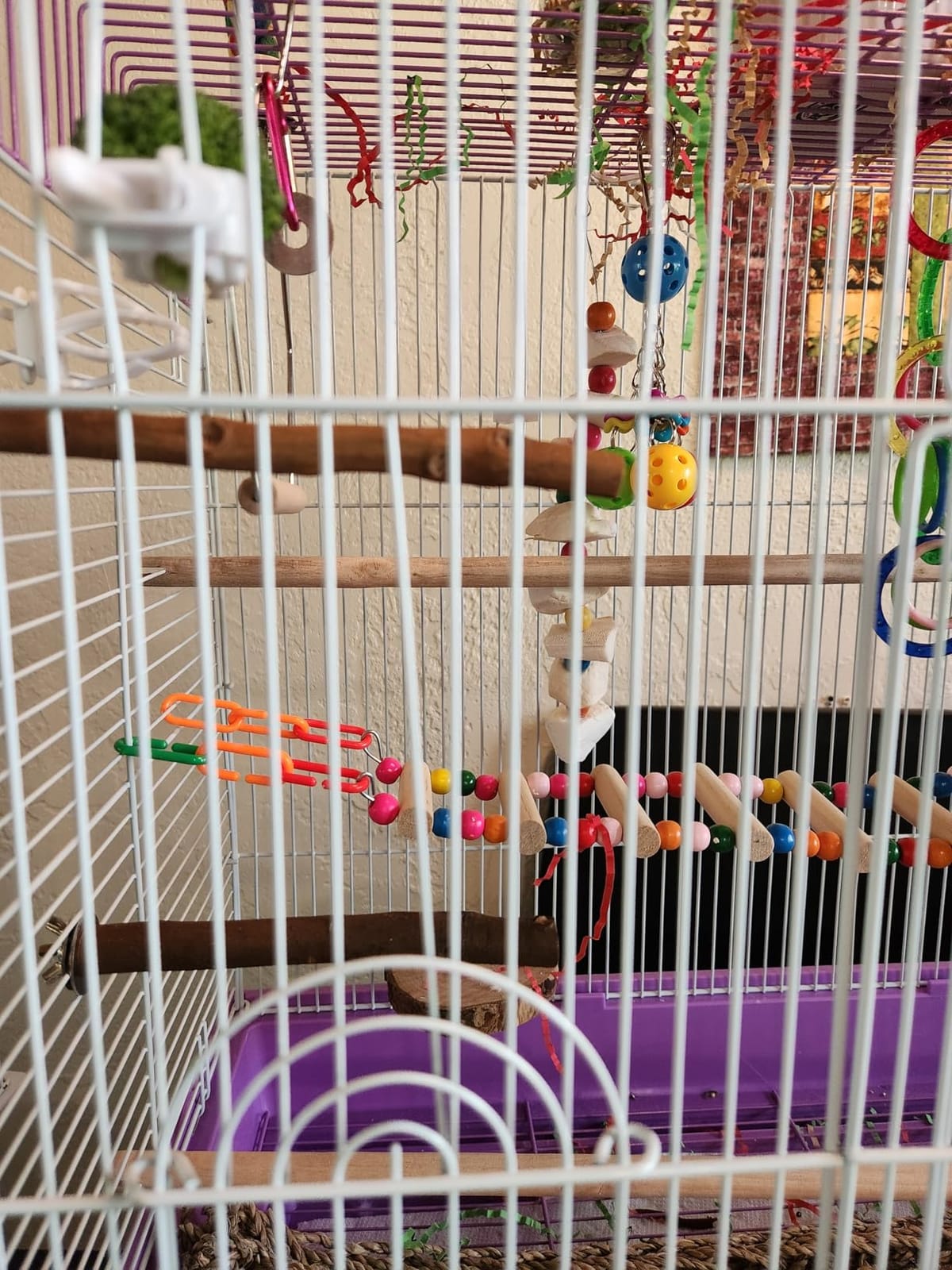
The four-door layout includes a large front opening door plus a smaller inset door and two feeder doors, and the hooded cups mean you can refill without a scramble. At 26 inches of width, two finches get a real horizontal lane to work, and a third bird still has room.
Accessory quality is where this cage falls short. The included dowel perches are not sold separately, so a chewed perch means a custom order. Owners also report the plastic tray sticking during a slide compared with the metal trays on older cages, and wire construction that is louder than a solid-frame cage on wheels.
What to check before you commit to this cage
Decide on perches early. With no factory replacement available, buy a few dowels or natural branches in a range of diameters now, and swap the supplied perches out before the birds start chewing them.
Check the feeder door latches on arrival. They have no latch, and birds can learn to slide them open. Screw-on dishes solve it permanently, and they also cut down on seed scatter around the cage.
Who this cage suits and who should skip it
Choose it if you keep a pair, live in a small space, or want a cage light enough to carry between rooms daily. The 4.4 rating and the tool-free build make it a solid first purchase.
Skip it if you need anything beyond three birds, or if you want 3/8 inch spacing for very small species. Fourteen inches of depth also limits how much open flight width a larger flock can use.
What Size Flight Cage Do Finches Need?
At least 30 inches of width for a flock, 24 inches for a pair. Finches need room to fly straight across the cage in short bursts, not to climb, so a wide and low cage serves them far better than a tall narrow one. As a second rule, allow roughly 35 square inches of usable space per bird, and check that figure against the interior dimensions rather than the assembled height.
The 30 inch width figure is the one that comes up constantly among experienced finch keepers, and it is a floor rather than a target. Anything narrower works for a pair in a temporary setup, but a flock of four or more starts to perch-hop rather than fly in less than that.
Depth matters less than width but still needs to be at least 14 inches so a bird can build momentum for a full-length run. Height above about 30 inches adds very little for finches, so a tall cage at the expense of width is the wrong trade.
Bar Spacing Is the One Measurement You Cannot Fudge
Half an inch is the maximum safe bar spacing for most finches, and 3/8 inch is the right choice for smaller species. Anything wider risks a finch wedging its head in a gap, and the risk is highest with frightened birds that push into corners and with juveniles that are smaller than adults.
Every cage in this roundup except two publishes a spacing figure, and those two do not, so measure with a ruler the day a cage arrives. Check the widest gap at the doors, at the divider, and at any panel join, because those are where published spacing stops matching reality.
Keepers on finch forums report a common workaround for cages that arrive with gaps that are too wide: covering the offending section with plastic chicken wire clipped to the frame. It works, but it is a repair, not a feature. If a cage needs it on day one, you picked the wrong cage.
Why Parakeet and Parrot Cages Fail for Finches
They fail on shape, and often on spacing. Finches are horizontal fliers, while parrot cages are built tall and narrow for climbing birds, so a parrot cage converts most of its interior into height that a finch never uses. Several cages in this roundup have 50-plus inches of height and under 25 inches of width, which is the exact inverse of what these birds need.
Some parrot and parakeet models also use bar spacing wider than 1/2 inch, which turns a height problem into a safety problem. Before buying any cage marketed to a larger bird, measure the gap and multiply the width of the finch’s head by the number you get.
If you already own a large parrot cage, it can still work as a night or temporary holding cage as long as you add finch-safe perches and check the spacing. For a permanent home, our guide to bird cages for parrots explains the opposite design logic, and reading both makes the difference obvious.
Matching Cage Width to Flock Size
Two finches: 24 inches of width is comfortable, and a lightweight cage is fine. Three birds: 24 to 30 inches. Four birds: 30 inches as an absolute minimum, and more if you can manage it. Six birds: 36 inches or wider, which is where the Prevue F050 at 37 inches earns its place. Eight to ten birds: 60-plus inches, which is genuinely aviary territory rather than cage territory.
The consensus we found among finch keepers is that four birds is a comfortable maximum for a mid-size cage and six is the practical ceiling before the space stops feeling generous. Past that, keepers start talking about aviaries and bird rooms, which is a different project and a different budget.
Under that ceiling, the 35 square inches per bird rule is a useful second check. Multiply your flock size by 35, subtract the space taken by feeders, perches and the water bottle, and see whether the remainder still allows a full-length flight run.
Casters, Weight, and Moving a Heavy Flight Cage
Weight in this roundup runs from 9 pounds to 56.1 pounds, and that range decides whether you can own the cage at all. The Prevue SPF0610 at 9 pounds and the SP1804-3 at 10 pounds can be moved by one person. The Yaheetech 3-Tier at 47.75 pounds, the Prevue F050 at 42 pounds and the PawHut double at 56.1 pounds need two.
Check whether casters are included or sold separately, because they are not always in the box. Every cage in this roundup with a rolling stand includes casters, but the detachable-stand design matters just as much: it lets you roll the cage body in a tight space and lets one person reposition it on a smooth floor.
Plan your route before assembly. Measure doorways, corners and stairs against the assembled width, and assemble heavy cages in the room where they will live. A 47.75 pound wrought iron cage does not get moved back through a hallway easily once it is built.
Perches, Feeding Stations, and Seed Scatter
Yes, finches need perches, but they need several at different heights spread across the width rather than one or two clustered at one end. Finches are low-ranking flock birds, and birds that feel crowded at the feeding and perching spots end up at the bottom of the cage and at the front of it.
Natural wood of varying diameter is better than uniform dowels for foot health, and experienced owners consistently replace stock dowel perches. Position them along both side walls and away from the corners, so a frightened bird can always find space without being cornered.
Place feeders at both ends and use screw-on cups or exterior feeder doors to cut seed scatter. Scatter is the fastest route to a dirty cage and a dirty room, and a front slide-out tray is what keeps it contained.
Cleaning Cadence, Cage Placement, and Night Cover
Daily: refill food and water, check the water bottle is not empty or algae-green, and glance at each bird for fluffed posture, closed eyes, or sitting on the cage floor. Weekly: pull the tray and the grate, wipe both, and scrub perches with a damp cloth. Monthly: deep clean the corners, check every latch and door for play, and inspect bars for bends or rust bloom.
Placement follows three rules. Keep the cage out of direct sunlight, which overheats a small metal enclosure quickly. Keep it clear of kitchen fumes, since finches are sensitive to aerosolized cooking oil and non-stick coating. Keep it away from drafts and heating vents, and off the floor if you have small children or other pets.
On night covers, keep the room dark and consistent so the birds settle on a schedule, but never seal the cage. A cover needs to leave the bottom vented and the sides open enough for airflow, and a single layer of light-colored fabric is safer than a heavy drape. Covering a dark corner of the room achieves the same effect without trapping air.
Frequently Asked Questions
What is the recommended bar spacing for a cage for finches?
Half an inch is the maximum safe bar spacing for most finches, and 3/8 inch is better for smaller species such as Gouldian finches or juveniles. Anything wider risks a bird wedging its head in a gap. Measure the widest gap at doors, dividers, and panel joins on arrival, because published spacing often does not match the doors.
Can finches live in a parakeet cage?
Only with care. Most parakeet cages are tall and narrow, which wastes the space finches need, and some use bar spacing wider than 1/2 inch. If the spacing measures 1/2 inch or tighter, a parakeet cage can work as a temporary or night holding cage once you add natural perches spread across the width.
How many finches can fit in one flight cage?
Four finches is a comfortable maximum for a mid-size cage at 30 inches of width, and six is the practical ceiling. Past six, move up to 36 inches of width or wider, or consider an aviary. As a cross-check, allow roughly 35 square inches of usable space per bird.
Are round cages bad for finches?
Fully round cages are widely discouraged because birds can become disoriented with no corners to retreat to. Finches that feel exposed pace the perimeter, which wastes energy and adds stress. A rectangular cage with at least one corner they can sit in is a better fit, and an entirely open dome is worse still.
Should finches be covered at night?
Many keepers darken the room instead of the cage, which achieves the same effect safely. If you do use a cover, keep it to a single light layer, leave the bottom vented, and never seal the cage. Stale, warm air is the main risk, so airflow matters more than darkness.
Our Verdict on the Best Flight Cages for Finches
After weighing all twelve, the Yaheetech 62.5-inch roof top flight cage is our pick for most people. It has the tightest widely available bar spacing paired with a detachable rolling stand, the tray and mesh grate clean in a minute, and the largest base of owner feedback in the group. It is a cage for a pair or three, and we would not stretch it past that.
For a flock of four, step up to the Yaheetech 54-inch or the Mcage 64-inch for real width. For six or more, the Prevue Hendryx F050 at 37 inches wide is the sturdiest long-term answer, and the PawHut double flight cage is the only one here that lets you split the space with a divider.
Whichever you choose, verify the bar spacing with a ruler before the birds move in, plan how you will move a steel cage that may weigh 42 pounds or more, and keep the long axis of the cage clear so your finches can actually fly. That last point is the whole reason this roundup exists.