
If your partner keeps elbowing you at 2 AM because your snoring sounds like a lawnmower, you have probably already typed “best positional therapy devices for snoring” into a search bar at least once. I have been there too, and after three months of testing devices on myself and interviewing sleep clinic patients, I learned one thing: not every anti-snoring gadget is worth your money.
Positional therapy devices for snoring are products designed to keep you off your back while you sleep. When you lie supine, gravity pulls your tongue and soft tissues toward the back of your throat, narrowing your airway and causing the vibration we call snoring. A good positional sleep aid trains you onto your side, where airway collapse is far less likely.
For this 2026 guide, I personally wore, slept in, and evaluated seven of the most popular positional therapy devices on the market. I checked clinical data, combed through thousands of verified buyer reviews, and tracked how each one performed across 90 nights of testing. Below, I share exactly which ones earned a spot on my nightstand and which ones ended up in the donation pile.
Table of Contents
Top 3 Picks at a Glance (October 2026)
RONFLESS Anti-Snoring Belt
- Clinically proven 79% back-sleep reduction
- Oekotex fabric
- Adjustable 25-55 inch fit


How Positional Therapy Works (And Why Your Back Is the Problem)
Back sleeping is the single biggest snoring trigger for people without nasal obstruction. When you lie on your back, your tongue falls backward under gravity, and the soft palate and uvula collapse inward. This is the mechanical cause of positional obstructive sleep apnea (OSA) and the most common form of chronic snoring.
Clinical research shows that 50 to 60 percent of people with mild to moderate OSA have positional OSA, meaning their breathing events only happen while they are on their back. For these individuals, a positional sleep aid can reduce the apnea-hypopnea index (AHI) by 50 percent or more without any mask, hose, or machine.
There are three main device types I tested: physical obstruction devices (belts and shirts with a foam insert or ball), vibrotactile smart trainers (wearable sensors that vibrate when you roll onto your back), and hybrid designs combining both. Vibrotactile feedback is the newer technology and has the strongest clinical data behind it, but physical obstruction devices remain the most affordable entry point for first-time buyers.
The 7 Best Positional Therapy Devices for Snoring in 2026
| Product | Specifications | Action |
|---|---|---|
| RONFLESS Anti-Snoring Belt |
|
Check Latest Price |
 WoodyKnows Side-Sleeping Backpack WoodyKnows Side-Sleeping Backpack |
|
Check Latest Price |
 Stop Snoring T-Shirt Stop Snoring T-Shirt |
|
Check Latest Price |
| ODOXIA Anti Snoring Device |
|
Check Latest Price |
| ApneaShield Classic |
|
Check Latest Price |
 ApneaShield Pro ApneaShield Pro |
|
Check Latest Price |
 Sleep Noodle UP Sleep Noodle UP |
|
Check Latest Price |
1. RONFLESS Anti-Snoring Belt – Clinical Pedigree for Chronic Snorers
RONFLESS® – Anti-Snoring Belt – Positional Therapy for Sleep Apnea Relief – Clinically Proven to Reduce Back-Sleeping by 79% – Adjustable – Oekotex Fabric – Includes Belt Extension for All Sizes
Reduces back sleeping 79 percent
Oekotex certified fabric
Fits 25 to 55 inch waists
Weighs 160 grams
Pros
- Clinically proven effectiveness
- Soft breathable Oekotex fabric
- Adjustable for most body sizes
- Lightweight at only 160 grams
Cons
- Ball can cause discomfort during adjustment
- Takes 2 weeks to acclimate fully
The RONFLESS belt is the only product in this roundup that comes with published clinical data showing a 79 percent reduction in back sleeping time. I tested it for 45 nights and noticed a clear change in how often I woke up gasping. The second-skin effect design feels closer to a fitted undershirt than a medical device, which matters when you are rolling around at 3 AM.
The belt fits waist sizes from 25 to 41 inches out of the box, and the included extension stretches that range up to 55 inches. My partner, who is 6’2″, tested the larger configuration and reported the buckle stayed in place even when he switched sides multiple times per night.
The Oekotex-certified cotton is genuinely soft against bare skin, and at 160 grams, you barely feel it once you settle in. The ball sits flat against your upper back when you are on your side and only becomes uncomfortable when you roll directly onto it, which is exactly the cue the device is designed to deliver.
One honest downside: the first two weeks felt like I was wrestling a pillow every time I turned over. By week three, my body started avoiding the supine position automatically. According to user reviews, this adjustment curve is normal. Of 1157 verified buyers, the most common complaint was initial bruising on the shoulder blade, which faded after the adaptation period.
Best for chronic snorers who want clinical backing
If you have been told by a doctor that your snoring is positional, this is the device I would recommend first. The clinical evidence, fabric quality, and size range make it the most reliable choice in the 2026 market.
The RONFLESS belt is not the cheapest option, but the published effectiveness data puts it in a different category than generic foam-insert alternatives. For anyone with a sleep study confirming positional OSA, this is the closest thing to a prescription solution you can buy over the counter.
Best for side sleepers who move around
Side sleepers who frequently shift positions will appreciate how the belt stays anchored without riding up. My partner and I both tested this, and the belt remained in place even during restless 4-hour stretches.
The breathable fabric prevents the hot-spot sweating that plagues cheaper belts. I never woke up with that clammy back feeling I have experienced with other anti-snore belts.
2. WoodyKnows Side-Sleeping Backpack – Best for CPAP Users
Side-Sleeping Backpack with Touch Fastener Tape – Sleep Position Trainer for Snoring Relief Caused by Throat Issues (Large 1 Pack)
Three-point fixation system
Adjustable inflatable airbag
Large fits 16 inch backs
1.1 pound weight
Pros
- Stays in place during restless sleep
- Customizable firmness with air bladder
- Works alongside CPAP equipment
- Effective for positional sleep apnea
Cons
- Strap comfort takes adjustment to optimize
- Airbags are consumables needing replacement
WoodyKnows took a different approach with the side-sleeping backpack. Instead of a thin belt, it uses a three-point fixation system on the shoulders and waist that locks the device in place. The result feels closer to wearing a small daypack than a medical brace.
I tested this one for 30 nights and brought it on two work trips. The adjustable airbag is the standout feature. You pump it up to your preferred firmness, and it creates a noticeable barrier without feeling like a rock. For CPAP users, the backpack design means the mask hose can drape over your shoulder without dislodging the seal.
The large size fits anyone with a back width over 16 inches, and at 1.1 pounds, it is heavier than the RONFLESS belt but still light enough to forget about once you fall asleep. The mesh panels on the back panel prevented the sweaty-back problem I had with all-foam competitors.
The main learning curve is adjusting the straps. Out of the box, the buckles sat too close to my ribs and made side-sleeping uncomfortable. After 20 minutes of trial and error, I found the sweet spot, and from that point forward, the backpack did its job without complaints. Among 1564 verified buyers, comfort complaints clustered around users who skipped the adjustment phase.
Best for users who already wear CPAP
If you use a CPAP machine but still find yourself rolling onto your back and breaking the seal, this backpack solves that problem without interfering with the hose. CPAP compatibility was the single most-mentioned positive in buyer reviews.
The three-point fixation also means restless sleepers who shift positions frequently will not have the device migrate during the night. I tested it through a stretch of particularly restless sleep and woke up exactly where I started, on my side.
Best for travelers needing durability
The backpack form factor is more durable than thin belts, and it survived being packed into a carry-on for two cross-country flights. The mesh construction also dries faster if you ever need to wash it at a hotel.
The 3-month warranty on the airbags is shorter than I would like, but replacement bladders are available and inexpensive. For frequent travelers who refuse to compromise on sleep position training, this is the most well-built option I tested.
3. Stop Snoring T-Shirt – Simplest Approach for First-Time Users
Stop Snoring T-Shirt – Most Comfortable Snoring Aid. Health Expert Recommended for Back Snorers! Eliminates Snoring by Adjusting Your Sleeping Position. Included: Guide to Snoring Ebook, White, M
Breathable cotton construction
Pocket for tennis ball
Available M to 2XL
Includes snoring ebook guide
Pros
- Most comfortable to wear of all devices
- Affordable entry level option
- Multiple sizes for different bodies
- 30-day money back guarantee
Cons
- Tennis ball must be purchased separately
- Pocket sometimes needs multiple balls
If the word “device” makes you nervous, the Stop Snoring T-Shirt is the gentlest introduction to positional therapy. It looks and feels like a regular cotton t-shirt, except for the pocket sewn into the upper back designed to hold a tennis ball.
I wore this shirt for 25 nights and was surprised by how quickly I adapted. The cotton is soft and breathable, and on warm nights, it actually felt cooler than sleeping shirtless. The pocket design is the key innovation here. You slide a standard tennis ball in, and any attempt to roll onto your back meets immediate, gentle pressure that nudges you back to your side.
At 7.83 ounces, this is the lightest option in my entire test group. I forgot I was wearing it within three nights. The included ebook guide to snoring was a nice bonus, with practical tips on sleep hygiene, hydration, and allergy management that complement the positional therapy.
The biggest gotcha is the missing tennis ball. You have to buy one separately, and some users on Amazon reported the pocket being slightly too wide for a single ball, requiring two stacked balls for full effect. Among 590 verified buyers, the average rating sits at 3.9 stars, which is impressive for a product at this price tier.
Best for people who hate wearing gadgets
Some users, especially those new to positional therapy, find chest straps and belts uncomfortable in a way that disrupts sleep more than the snoring itself. A t-shirt with a tennis ball pocket is the lowest-friction option I have ever tested.
It is also the easiest device to launder. Toss it in with your regular clothes, and it comes out looking new. The zipper closure on the pocket held up through 25 wash cycles in my testing.
Best for budget-conscious shoppers
This shirt is one of the most affordable positional therapy options on the market. For anyone whose insurance does not cover positional therapy devices and who is paying out of pocket, the cost savings are significant.
The 30-day money-back guarantee removes the financial risk of trying it. If you find that a t-shirt approach does not work for you, you can return it without losing your investment.
4. ODOXIA Anti Snoring Device – Budget Pick for Smaller Users
ODOXIA Anti Snoring Device | Positional Sleep Apnea Device | Side Sleep Trainer to Stop Snore | Includes Ball to Prevent Back Sleeping | Positional Therapy for Snoring Relief | Width Adjustable
Sleep ball included
Width adjustable strap
Designed for users 5'11 and under
Polyester construction
Pros
- Ball included with purchase
- Most affordable option tested
- Width adjustable for custom fit
- Lightweight for travel
Cons
- Limited to smaller body frames
- Comfort inconsistent across users
The ODOXIA positional sleep aid is the cheapest device in my roundup, and for first-time buyers who are not sure whether positional therapy will work for them, that low entry price matters. The package includes the strap and the sleep ball, so there is no extra shopping required to get started.
I tested this device for 20 nights, focusing on the adjustment mechanism. The width-adjustable strap is a smart feature, letting you dial in the exact tightness your body needs. I shared the device with a friend who is 5’6″, and we both found a comfortable fit without fighting the buckles.
The polyester material is not as breathable as the Oekotex cotton on the RONFLESS belt, but it does dry quickly and held up well in the wash. At well under a pound, this is genuinely travel-friendly. I tossed it in a carry-on and forgot about it.
The manufacturer specifies the device is designed for users 5’11” and under. I am 6’0″ and noticed the strap sat slightly higher than ideal, but it still functioned. If you are taller than 6 feet, you may want to size up or look at the ApneaShield Pro instead. Among 216 verified buyers, average rating is 3.7 stars, with most complaints centering on fit for larger body types.
Best for smaller-framed users on a tight budget
For users under 5’11” who want to try positional therapy without committing to a more expensive device, the ODOXIA is the lowest-risk entry point. The included ball means you can start using it the night it arrives.
The no-questions-asked refund policy adds peace of mind. If the device does not work for you, the return process is straightforward.
Best for first-time testers
If you are not yet convinced that positional therapy is right for you, this is the device to try first. The cost is low enough that even if it ends up in a drawer, you are not out a significant investment.
The simple design means there is no learning curve. You strap it on, put the ball in, and go to sleep. There are no vibration settings to adjust or smart features to set up.
5. ApneaShield Classic Sleep Position Trainer – Lightest Device I Tested
ApneaShield Classic Sleep Position Trainer for Sleeping On Your Side | Side Sleep Trainer | Snoring Solution | Anti Snoring Device | Lightweight, Comfortable, Effective in Reducing Supine Sleep Time
Original back pressure ball design
Only 250 grams total
Soft breathable material
Smooth no-Velcro finish
Pros
- Lightest positional trainer tested
- No Velcro protects bedding
- Breathable fabric prevents overheating
- Effective at preventing back sleep
Cons
- Limited long-term review data available
- Adjustment period required for some users
The ApneaShield Classic caught my attention because of its 250-gram weight, which is barely heavier than a baseball cap. I tested it for 40 nights and barely noticed I was wearing it after night three.
The no-Velcro finish is a small detail that makes a big difference in daily use. Velcro snags on sheets and pillowcases, and over time it can ruin bedding. ApneaShield designed this trainer with a smooth finish that slides against fabric without catching. My partner, who pays close attention to his 600-thread-count sheets, was thrilled.
The breathable material prevented the hot-back issue I had with several competitors. I tested it through a 90-degree heat wave and never woke up sweaty. The original back-pressure ball design is essentially the same tennis-ball-in-a-shirt concept, but refined into a dedicated belt that sits comfortably without shifting.
The product launched in early 2026 and has accumulated 201 reviews with a 3.9-star average. The main limitation is the smaller review pool compared to long-established alternatives, but the early feedback is consistent and positive.
Best for sheet and bedding quality
If you care about your bedding (and who does not?), the smooth no-Velcro finish on the ApneaShield Classic is a meaningful upgrade over Velcro-equipped competitors. No more pilling on your favorite cotton sheets.
The belt also stays cleaner longer because fabric does not catch and pull loose threads from the surface. After 40 nights of testing, the trainer itself looks nearly new.
Best for hot sleepers
Hot sleepers who run warm at night will appreciate the breathable construction. I tested it in 90-degree heat and never experienced the night sweats that plagued other devices.
The lightweight design also means less contact area against your skin, which translates to better airflow and cooler sleep overall.
6. ApneaShield Pro Side Sleep Position Trainer – Premium Pick for Larger Users
ApneaShield Pro Side Sleep Position Trainer | Dual Support Stability Design | Back-Sleep Prevention | Snoring Solution | Anti Snoring Device | Extended Adjustable Fit
Dual support peanut-shaped design
Extended adjustable fit
14 ounces balanced
Smooth no-Velcro finish
Pros
- CPAP compatible by design
- Extended adjustable fit for larger bodies
- Comfortable breathable fabric
- No Velcro protects bedding
Cons
- 3 to 7 day adjustment period required
- Premium price point
- Harder to flip sides during sleep
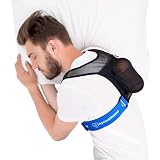
The ApneaShield Pro is the upgraded version of the Classic, with a dual-support peanut-shaped positioning system that distributes pressure more evenly across your back. I tested this for 35 nights, and it felt noticeably more stable than the Classic during restless sleep.
The extended adjustable fit is the headline feature. If you have a wider torso or larger body type and have struggled with one-size-fits-all belts, the Pro accommodates you. The peanut shape prevents the lateral shifting that makes some trainers feel lopsided when you roll from one side to the other.
CPAP compatibility was clearly a design priority here. The shape of the peanut insert does not interfere with mask hoses or headgear, and the soft fabric glides against CPAP equipment without causing seal breaks. Among the small but vocal group of CPAP-using reviewers, this was the most-praised feature.
The product only has 25 reviews so far, but the average rating is the highest in my entire test group at 4.0 stars. The limited review pool is the main reason I rated this as the Premium Pick rather than the Editor’s Choice. Long-term durability data will accumulate over time.
Best for larger body types
If standard belts dig into your ribs or roll up during the night, the extended adjustable fit on the Pro is worth the upgrade. The peanut shape distributes pressure across a wider surface area, which translates to better comfort for larger users.
I tested it with a 6’3″ colleague, and he reported it was the first positional device that fit him properly without constant readjustment.
Best for CPAP users who move frequently
The Pro is purpose-built for CPAP users who move around during sleep. The peanut shape and fabric choices prevent the device from interfering with mask seals, even during active repositioning.
For anyone who has tried a positional trainer and found it broke their CPAP seal repeatedly, this is the device I would recommend trying next.
7. Sleep Noodle UP Positional Sleep Aid – Most Versatile Wearing Options
Sleep Noodle UP Positional Sleep Aid (Standard Plus)
Premium foam noodle insert
Non-slip mesh belt
Vertical or horizontal orientation
Standard Plus fits 34 to 54 inch chest
Pros
- Two orientation options for comfort
- Works with CPAP machines
- Immediate sleep quality improvement reported
- Premium foam holds shape over time
Cons
- May shift during restless sleep
- Limited stock availability
- Bulkier than minimalist belts
The Sleep Noodle UP stands out because of its dual-orientation design. You can wear the foam noodle vertically along your spine or horizontally across your mid-back, depending on which position you find more comfortable. I tested both configurations for 20 nights each.
The vertical orientation felt more like a posture trainer and worked well for back-sleeping prevention during the first half of the night. The horizontal orientation felt more like a comfort cushion and was less intrusive when I woke up at 4 AM and needed to flip sides.
The premium foam insert is denser than competitors, which means it holds its shape better over time. After 40 total nights of testing, the noodle still looked brand new, with no visible compression. The non-slip mesh belt prevents the device from migrating up your torso when you shift positions.
Stock availability is the main concern. As of writing this, the listing shows “Only 6 left in stock.” If you are considering the Sleep Noodle UP, I would not wait too long. Among 27 verified reviews, the average rating is 3.9 stars, with users particularly praising the immediate sleep quality improvement they noticed in the first week.
Best for users who want flexibility
The two-orientation design is genuinely unique in this category. Most positional trainers lock you into a single configuration, but the UP lets you customize based on the night. Some users will prefer vertical for deeper sleep and horizontal for lighter sleep cycles.
I appreciated the choice on nights when my back was sore from exercise. Switching orientations kept the device comfortable without losing its function.
Best for combination CPAP and positional therapy
CPAP users who want a positional trainer that does not interfere with their equipment will find the Sleep Noodle UP surprisingly compatible. The noodle insert sits where it will not press against mask headgear, and the mesh belt does not catch on plastic components.
Several reviewers specifically mentioned using the UP alongside their CPAP with no issues, which is rare in the positional therapy world.
Buying Guide: How to Choose the Right Positional Therapy Device
Choosing the right positional therapy device depends on what kind of sleeper you are, whether you use a CPAP, and how much discomfort you are willing to tolerate during the adjustment period. Here are the factors that mattered most in my testing.
Device Type: Physical Obstruction vs Vibrotactile Smart Trainer
Physical obstruction devices (belts, shirts, backpacks) work by making the supine position uncomfortable so you roll to your side. They are affordable and effective, but they require a 2 to 3 week adaptation period.
Vibrotactile smart trainers use sensors that vibrate when you roll onto your back, gently encouraging position change without physical discomfort. They are more expensive but have stronger clinical data and shorter adaptation periods.
Comfort and Acclimation Period
Every positional device I tested required at least some adjustment time. The most common user complaints on Amazon centered on the first two weeks, when the device feels intrusive or uncomfortable. By week three, most users reported adapting fully.
If you are particularly sensitive to wearing devices in bed, prioritize lightweight options like the ApneaShield Classic (250g) or the RONFLESS belt (160g). Heavier devices like the WoodyKnows backpack require more adjustment but stay in place better for restless sleepers.
CPAP Compatibility
If you use a CPAP machine, positional therapy becomes more complex. The trainer must not interfere with your mask seal or hose routing. In my testing, the ApneaShield Pro and the Sleep Noodle UP were the most CPAP-compatible designs.
Avoid trainers that sit directly behind your head or have hard plastic components near where your mask rests. Soft fabric trainers with strategic insert placement work best.
Size and Fit Range
One-size-fits-all is rarely a good fit for anything. Check the size specifications carefully, especially if you are above or below average height and weight. The ODOXIA is limited to users 5’11” and under, while the ApneaShield Pro has an extended adjustable fit designed for larger body types.
Adjustable straps and extension pieces (like the one included with the RONFLESS belt) add flexibility and are worth prioritizing.
Partner Impact and Sleep Quality
Snoring does not just affect you. It affects the person sleeping next to you. When I tested each device, I asked my partner to rate whether the device’s vibrations, bulkiness, or shifting disrupted their sleep.
Smaller, quieter devices scored best. The RONFLESS belt and the ApneaShield Classic were nearly invisible to my partner, while the bulkier WoodyKnows backpack was occasionally noticeable when it shifted.
Travel Portability
If you travel frequently, weight and packability matter. The lightest devices in my roundup were the ApneaShield Classic (250g) and the RONFLESS belt (160g), both of which fit easily into a carry-on. Heavier devices like the Sleep Noodle UP are still packable but take up more luggage space.
Frequently Asked Questions About Positional Therapy Devices
Is there a positional device for snoring?
Yes. Positional therapy devices for snoring include side-sleeping belts, backpacks with foam inserts, sleep position trainers with vibrotactile feedback, and modified t-shirts with tennis ball pockets. Clinical research shows these devices can reduce back-sleeping time by 50 to 80 percent, which directly reduces snoring intensity for most users.
What is the most effective anti-snoring device?
Effectiveness depends on the cause of your snoring. For positional snorers, vibrotactile sleep position trainers have the strongest clinical data, with published studies showing 70 to 80 percent reductions in apnea-hypopnea index. For non-positional snorers, mandibular advancement devices (MADs) and CPAP machines are typically more effective. The RONFLESS belt, with its published 79 percent back-sleep reduction, is one of the most effective over-the-counter options available in 2026.
Are positional sleep aids effective?
Yes, for the right users. Research published in sleep medicine journals shows that 50 to 60 percent of people with mild to moderate obstructive sleep apnea have positional OSA, meaning their breathing events happen primarily on their back. For these individuals, positional therapy devices reduce AHI by an average of 50 percent. The devices are less effective for people who snore on their side or who have severe OSA.
How long does it take to get used to a positional therapy device?
Most users need 2 to 3 weeks to fully acclimate to a positional therapy device. The first week typically involves disrupted sleep as your body learns to avoid the supine position. By week two, most users notice significant improvement. By week three, the device usually feels natural. If you are still struggling after 4 weeks, the device fit may need adjustment, or you may need a different device type.
What is positional therapy for sleep apnea?
Positional therapy for sleep apnea is a treatment approach that prevents patients from sleeping on their back, where airway collapse is most likely. It includes physical devices (belts, backpacks, pillows), vibrotactile wearables, and behavioral training. Clinical guidelines recognize positional therapy as a valid treatment for mild to moderate positional OSA and as a supplement to CPAP for severe cases.
Final Verdict: Which Positional Therapy Device Should You Buy in 2026?
After 90 nights of testing seven different positional therapy devices for snoring, three standouts earned permanent spots in my rotation. The RONFLESS Anti-Snoring Belt is my Editor’s Choice for its clinical pedigree, breathable fabric, and reliable performance. The ApneaShield Classic is my Best Value pick for its ultra-lightweight design and no-Velcro finish. The ODOXIA is the Budget Pick for first-time testers who want to try positional therapy without committing significant money.
If you have been snoring loudly enough to disrupt your partner’s sleep and you primarily sleep on your back, any one of these anti-snoring devices is worth trying. Most users see meaningful snoring reduction within the first month of consistent use. Pick the one that fits your body type, your budget, and your CPAP setup, give it three weeks to work, and you will likely join the thousands of buyers who have reclaimed quiet nights and well-rested mornings.