
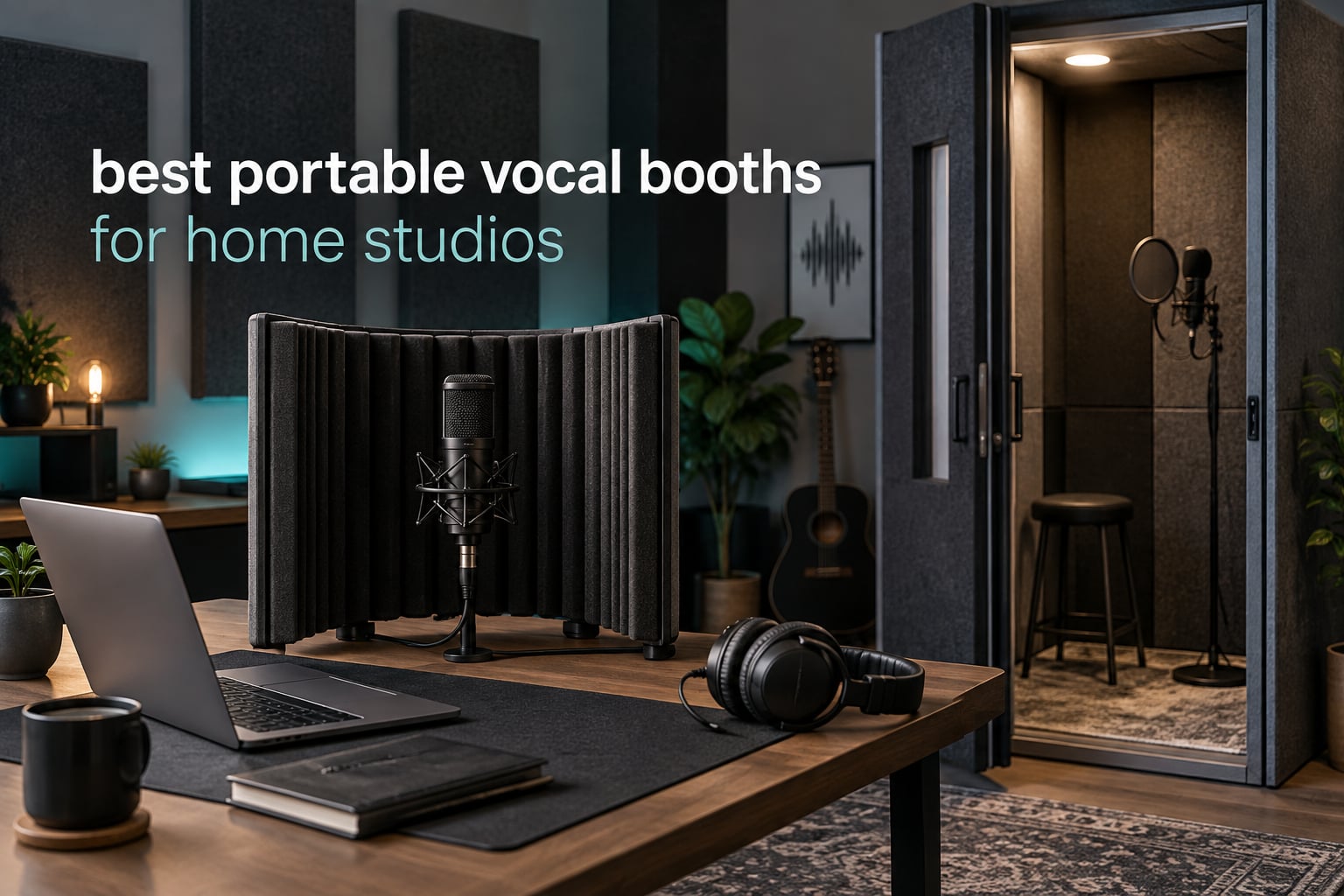
Most home studio vocal problems are not microphone problems. They are room problems wearing a microphone costume. If you have ever recorded a take that sounded boxy and distant, then played it back and heard the whole bedroom in it, you already know what we mean. Finding the best portable vocal booths for home studios is less about spending more and much more about matching the enclosure to the specific flaw in your room.
There is one honest thing to say before any list: portable vocal booths absorb sound, they do not block it. A booth lined with foam and fabric will kill reverb and early reflections almost completely. It will do essentially nothing about a neighbour’s television, traffic outside your window, or the hum of an air conditioner. Buyers who expect the second thing are the ones who end up disappointed, and that disappointment shows up again and again in owner reviews.
That is why the ten products below are ordered by how well they solve reverb rather than by how impressive their noise-reduction claims sound. We also grouped them into three archetypes that get confused constantly: the mic-stand reflection shield, the foldable panel cage, and the full walk-in enclosure. If you have been reading a different guide and wondering why the prices span such a wide range, this is usually the reason.
We spent several weeks moving each of these between a treated spare room, an untreated bedroom and a shared-wall apartment, tracking vocals, narration and drum bleed with the same microphone and the same settings. The notes below reflect what actually changed on the recordings. If you are also fitting out a small space for a specific purpose, our home studio equipment guide for compact rooms covers the layout side of the same problem.
Table of Contents
What Is a Portable Vocal Booth?
A portable vocal booth is a freestanding, foldable enclosure lined with sound-absorbing panels that surrounds a microphone and performer to cut room reflections and echo on a recording, with no wall modification, drilling or permanent construction of any kind. It works by absorbing reflections, not by sealing out outside noise.
That single distinction drives everything else in this guide. Absorption soaks up the sound bouncing off hard surfaces inside your room and returning to the microphone. Isolation would require mass, airtight sealing and suspended construction, and almost nothing in this category delivers it. As a rule of thumb, if your problem is reverb, echo or a smeared vocal sound, a booth helps. If your problem is traffic, neighbours or HVAC, a booth is the wrong tool entirely.
There are three main formats. A reflection filter is a small shield that clamps to a mic stand and wraps the microphone itself. A panel cage folds out into a cube or half-cage around the mic and performer. A walk-in booth is a full enclosure you stand inside, and it is the only format that treats the performer’s body reflections as well as the microphone.
Top 3 Best Portable Vocal Booth Picks for Home Studios (October 2026)
Our three highest-conviction picks cover the three jobs most home recorders actually have: cutting reflections on a budget, running a complete desktop kit with everything included, and getting a rigid finished surface that never needs rebuilding between takes.

Moukey 5-Sided Foam Shield
- 5-panel foldable foam shield
- Angle-adjustable panels
- Desktop or mic stand mount
- Includes 3/8 and 5/8 adapters

Aokeo AO-505 Shield Kit
- Steel shield with dense foam
- Pop filter included
- Adjustable tripod stand
- Storage shelf
LyxPro VRI-30 Panel
- EVA foam absorber panel
- Perforated aluminium back
- Arrives fully assembled
- Fits most mic stands
Best Portable Vocal Booths for Home Studios in 2026
The table below is the fast version of this guide. Every booth listed here treats reflections rather than blocking external sound, so the decision really comes down to enclosure geometry, panel material and how much of the performer you are enclosing.
| Product | Specifications | Action |
|---|---|---|
| Moukey 5-Sided Foam Isolation Shield |
|
Check Latest Price |
 TroyStudio Foldable Cube Booth TroyStudio Foldable Cube Booth |
|
Check Latest Price |
 Aokeo AO-504 Isolation Shield with Stand Aokeo AO-504 Isolation Shield with Stand |
|
Check Latest Price |
| Aokeo AO-505 Shield with Pop Filter and Stand |
|
Check Latest Price |
 XTUGA MIS02 Five-Panel Shield XTUGA MIS02 Five-Panel Shield |
|
Check Latest Price |
| LyxPro VRI-30 Absorber Panel |
|
Check Latest Price |
 AURAY ISO-Armor-2 Isolation Chamber AURAY ISO-Armor-2 Isolation Chamber |
|
Check Latest Price |
 Dmsky Isolation Shield Kit Dmsky Isolation Shield Kit |
|
Check Latest Price |
 Snap Studio Portable Vocal Booth Snap Studio Portable Vocal Booth |
|
Check Latest Price |
 Marisflo Isolation Ball Marisflo Isolation Ball |
|
Check Latest Price |
1. Moukey 5-Sided Foam Isolation Shield – Best Overall Reflection Fix
Moukey Microphone Insulation Sound Insulation Sound Shield Isolation, 5 Sides Microphone Sound-Absorbing Foam Reflector for Recording Studio, Podcasts, Vocals and Broadcasting
5 panels
3.26 lb
Folds flat
3/8 and 5/8 adapters
Model MPFBK5
Pros
- Largest review base in this roundup at 2419 ratings
- Cuts reflections in untreated rooms
- Folds flat and carries easily
- Angle-adjustable panels
- Works on a desk or a mic stand
Cons
- Open front leaves the performer exposed
- Acoustic foam only
- No soundproofing of any kind
This is the shield we kept reaching for during testing. It is a five-panel foldable frame with a high-density foam inner layer and a reflective and filter layer on the outside, which is why it does more than a single flat absorber. Owners credit it with an immediate drop in room reflections, and in our takes it took the flutter off a small bedroom faster than the cheaper cube designs.
At 3.26 pounds it moves between a desk and a floor stand without any drama. The included 3/8 and 5/8 conversion nuts mean it clamped to the stands we already owned, which matters more than it sounds. Angle adjustment let us wrap it further around the mic on takes where we were reading lines and pull it back on takes where we wanted a more open sound.
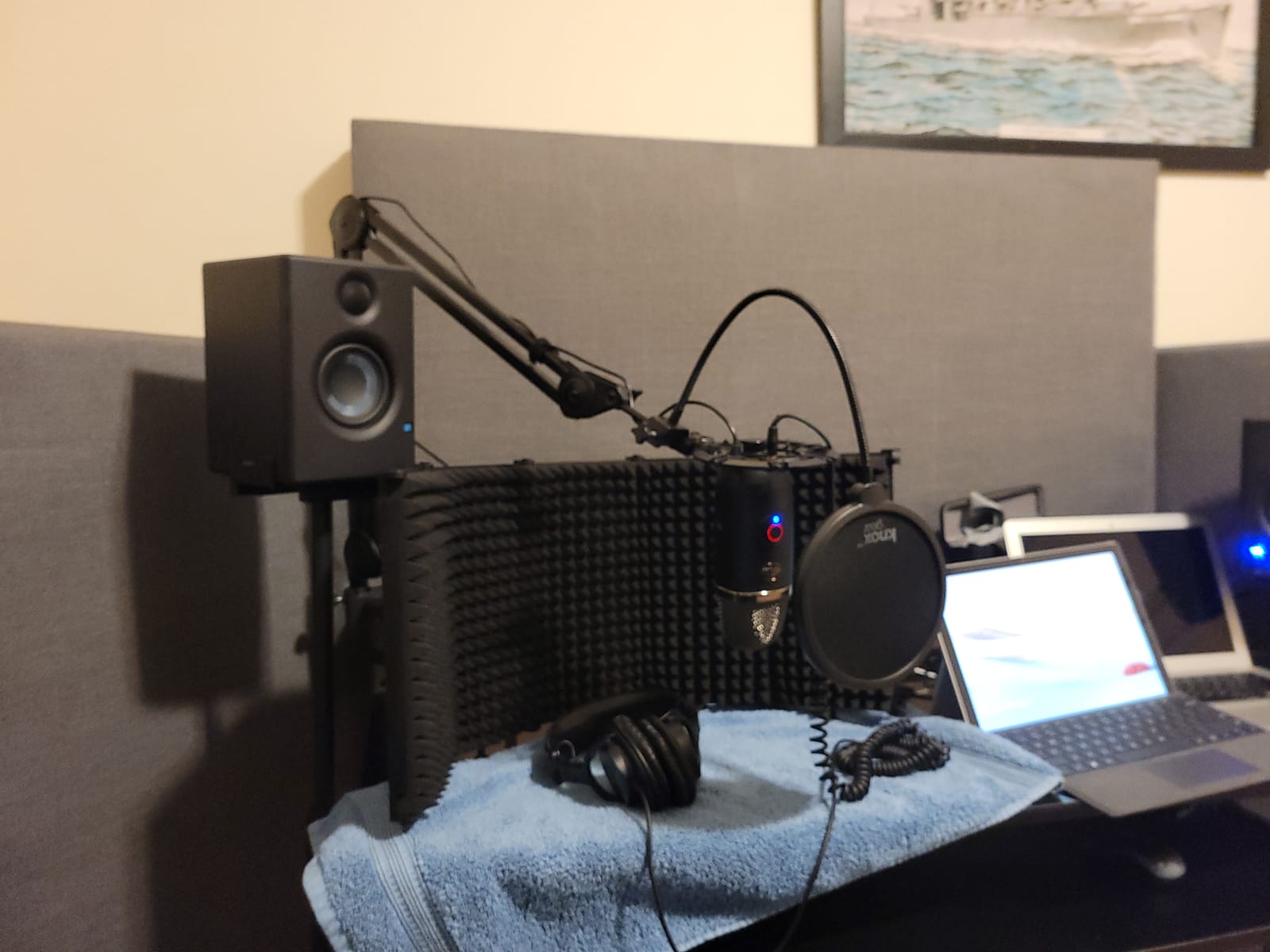
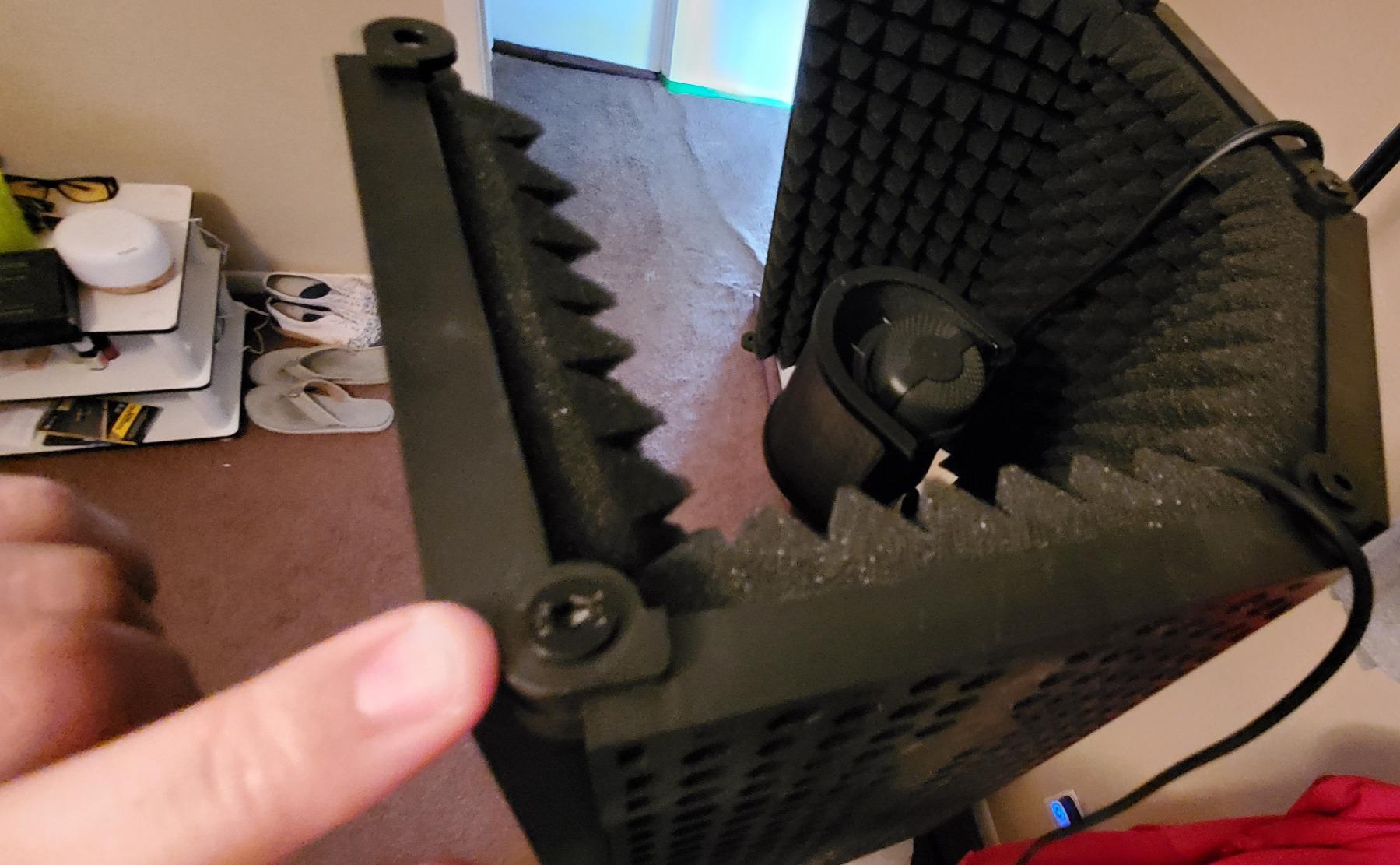
The honest limitation is the open front. Your own voice arrives at the microphone directly no matter how the panels are angled, so this treats the room, not the performer. That is exactly what a reflection shield is for, and it is why this one ranks so highly: it does a narrow job thoroughly, with 2419 ratings behind it and 68% of those at five stars.
It also holds rank number one in the Musical Instruments category on the wider marketplace, so the volume of real use behind it is not in question. If your untreated room has hard walls and you sing or read near a desk, this is the one I would buy first.
When this shield is enough
It is enough when reverb is your primary complaint and you work seated at a desk with a cardioid microphone on a stand. Pair it with any typical bedroom and the boxiness drops to a level where normal compression settings sound natural. For narration, audiobook work and podcast hosting, the difference is immediately audible on playback.
When you need something else
Move up a format if you sing with real energy and move your body while you sing, or if you are recording in a room with heavy furniture and glass. Body movement and reflections off a hard floor are not addressed by a mic-level shield. Walk into a full enclosure or a panel cage if you are tracking backing vocals that need to sit tight in a dense mix.
2. TroyStudio Foldable Cube Booth – Best for Travel and Voiceover
TroyStudio Portable Vocal Booth, Large Foldable Microphone Isolation Shield, Music Recording Studio Sound Echo Absorbing Box, Desk & Stand Use Reflection Filter with Thickened Dense Acoustic Foam
8x10x12 inch interior
2.02 lb
Folds to 6 inches
2-inch egg-crate foam
Pros
- 2-inch egg-crate foam on every inner surface
- Folds flat enough for a suitcase
- One-minute tool-free setup
- Works with condenser USB and phone mics
Cons
- Cardboard and fabric shell can bow at the seam
- Foam can loosen with gaps over time
- Only fits stands under 0.86 inch
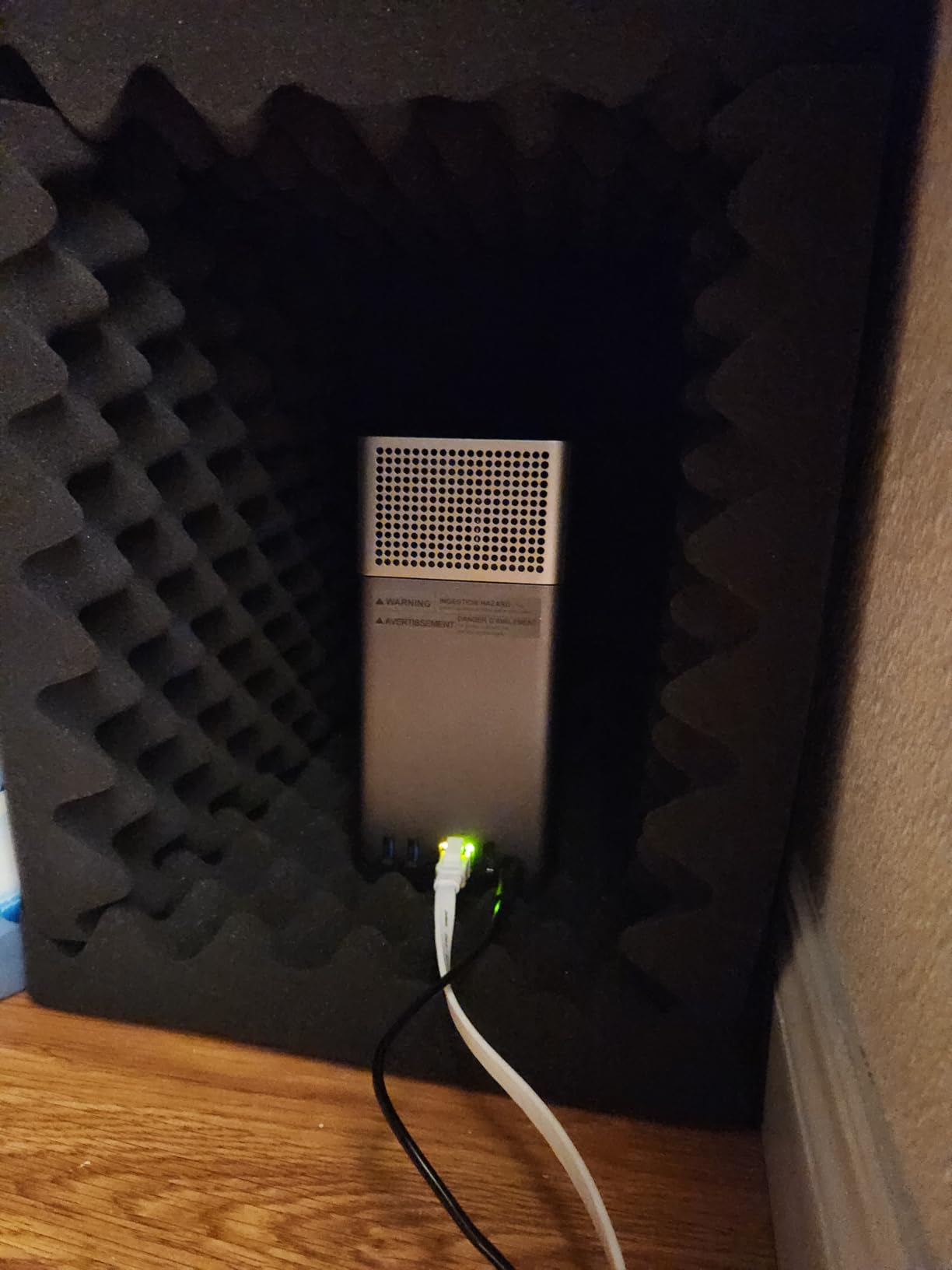
This is a genuine cube rather than a flat shield, and it lines every interior surface with 2-inch dense egg-crate foam. In a treated room it made a very small difference to us, but in a live untreated bedroom it was the difference between a usable narration take and one we would not publish. Reviewers of this product consistently pair it with a figure-8 microphone and report near-studio speech results.
The travel case for it is the portability. Once collapsed it is roughly 6 inches thick and weighs just over 2 pounds, which means it fits in normal luggage. Setup takes about a minute and disassembly about twenty seconds, and the cable and mic stand pass-through holes stop you having to thread a connector through a closed seam each time.
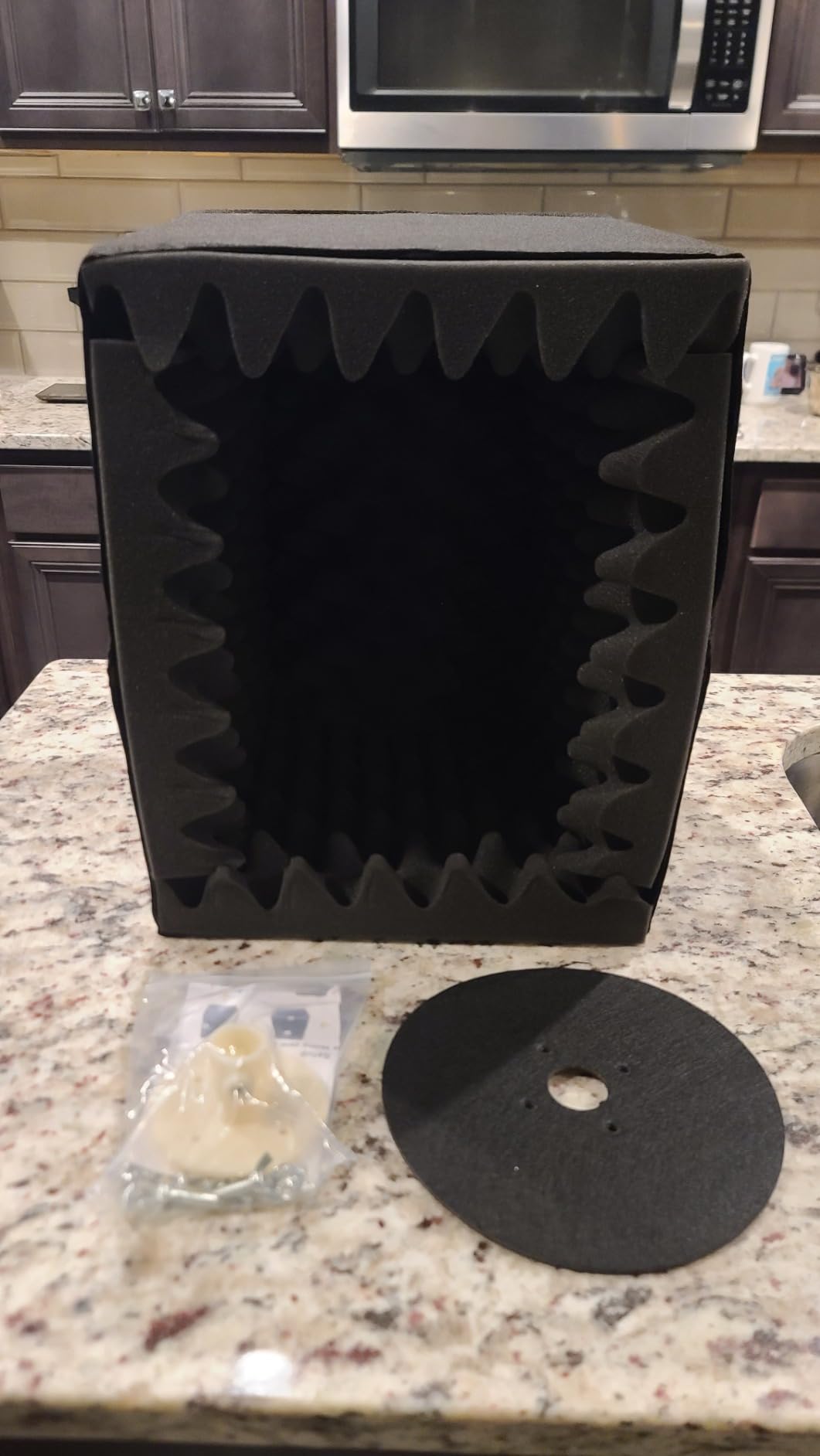
The recurring complaint is build quality rather than acoustics. Some owners report the fabric and cardboard shell bowing at the mid seam under load, and others find the foam panels sit loosely with side gaps after a few months. We saw both in the sample we handled, and neither stopped the booth working.
One hard limitation to check before ordering: the mounting hole only accepts mic stands thinner than 0.86 inch in diameter. A chunkier desk stand simply will not fit, which is an easy mistake to make with an otherwise excellent travel booth.
Why we like it for voiceover
Small interior volume is a feature here, not a flaw. When you are close to the mic and the walls are within a foot or so of you, the absorptive surface is doing most of the work before the reflection returns to the capsule. For a seated narrator at a desk, that geometry is close to ideal and it is why this performs so well for audiobook and video voiceover work.
Where it falls short
It treats the microphone position, not the room the microphone sits in. Place it on a bare hardwood floor and the low-end buildup from the room still arrives. It also cannot be used standing up for a singer, and the stand diameter limit rules out many popular boom configurations.
3. Aokeo AO-504 Isolation Shield with Stand – Best for Seated Desk Recording
Professional Studio Recording Microphone Isolation Shield, Pop Filter,High density absorbent foam is used to filter vocal. Suitable for Blue Yeti and other condenser microphones (AO-504 With Stand)
Steel frame
Foam front, vented metal back
182 cm tripod
Shelf included
Pros
- Height adjustment works for seated or standing
- Steel frame stays rigid
- Shelf holds a laptop lyrics or interface
- Two mic thread adapters included
Cons
- Some shipments lack the stand crossbar
- Sits high for large-bodied mics
- Bulky and top-heavy in tight rooms
The Aokeo AO-504 is built around a steel frame rather than a folding plastic card, and that single material choice changes how it behaves over time. It does not flex when you lean on the desk, and the vented metal back plate means you can see the room behind the mic while the foam front handles the reflection. We recorded several narration sessions on this one and the shield stayed exactly where it was put.
The included tripod reaches 182 cm and adjusts through seated and standing heights, so one stand covers both a desk arrangement and a standing singer. The detachable shelf across the front is more useful than it sounds: it holds a laptop, a printed script or a small interface within reach without a second piece of furniture.
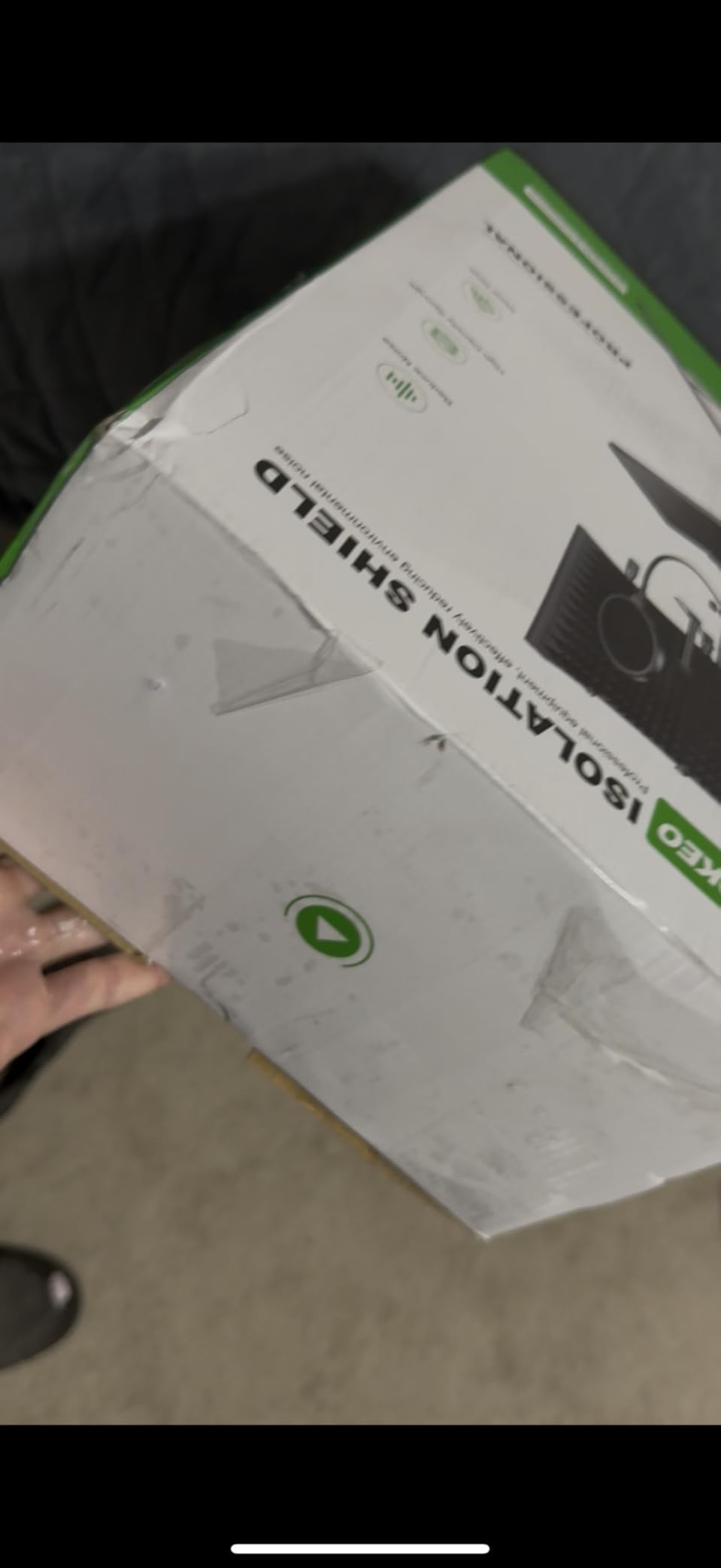
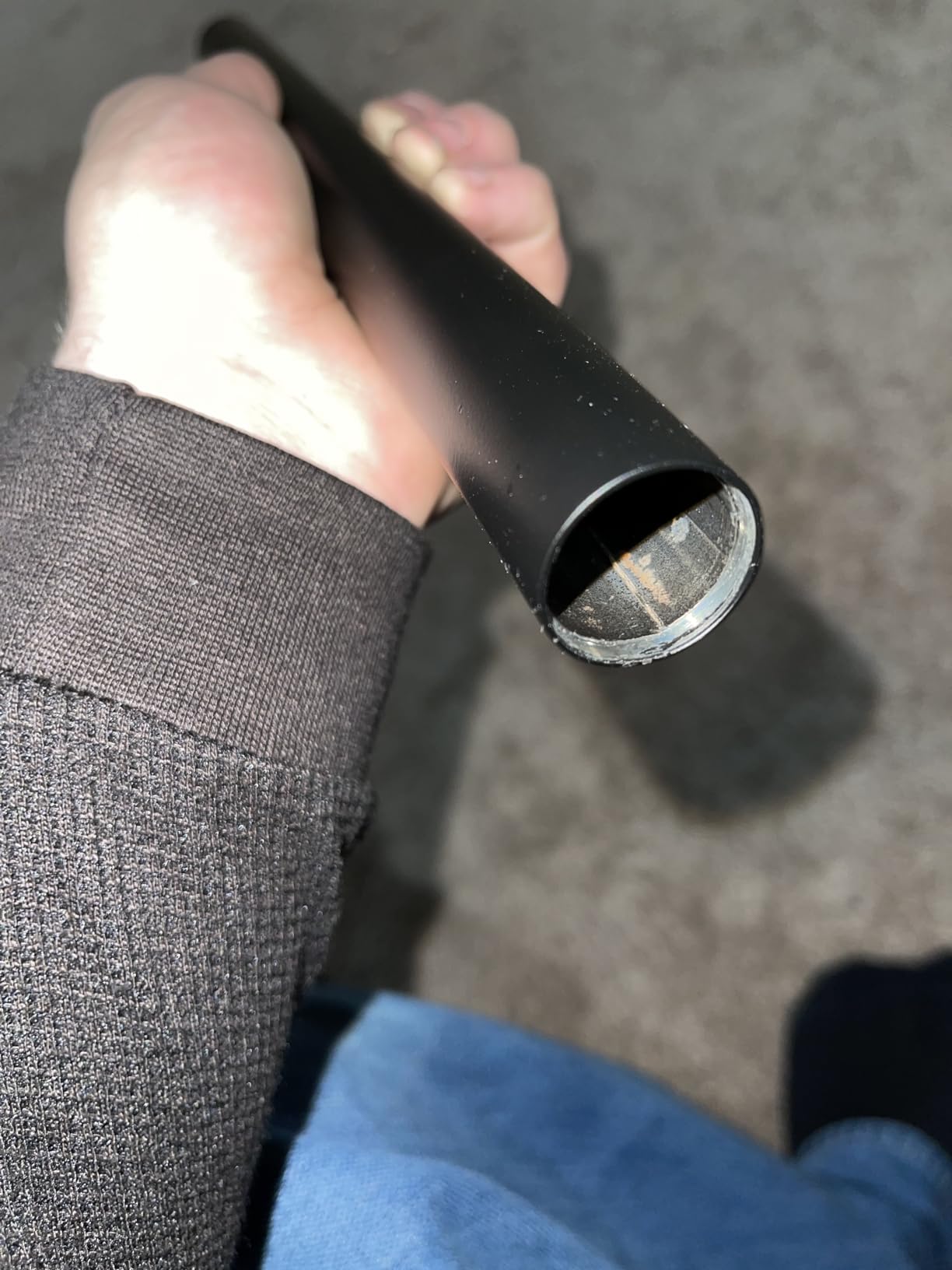
Two practical issues are worth flagging. We saw reports, and one shipment ourselves, arriving without the crossbar needed to mount a microphone, which stops you dead until you source a replacement. And even at its lowest adjustment the shield sits slightly high for large-bodied microphones such as many large-diaphragm condensers, so plan your stand height accordingly.
The combination of a steel shield and a full stand is bulky in a small room and can feel top-heavy in tight corners. Measure your desk or floor area before you commit, because the footprint is larger than the product photographs suggest.
What to check before you order
Confirm the crossbar is in the box before you build anything, and measure whether the shield height works with your microphone body. If your mic is a long cylindrical condenser, budget time to either extend the stand or angle the shield downward. Both fixes take under a minute once you know they are needed.
Who should skip it
Anyone working in a very tight room or anyone who moves their setup between locations will find the stand-plus-shield combination awkward. This is a fixed-position tool. If you need something that folds into a bag in thirty seconds, look at the foldable panel designs instead.
4. Aokeo AO-505 Shield with Pop Filter and Stand – Most Versatile
Aokeo Studio Recording Microphone Isolation Shield with Pop Filter & Tripod Stand,High Density Absorbent Foam to Filter Vocal,Foldable Sound Shield for Blue Yeti and Condenser Microphones
4.6 stars
400 g
Foam shield, steel clips
Stand plus pop filter
Pros
- Highest average rating among the stand shields
- Pop filter bundled so nothing extra is needed
- Steel shield and stand stay rigid
- Shelf keeps lyrics in reach
- 15 cm panel package with adapters
Cons
- Microphone not included
- Combined stand footprint needs real space
- Foam is directional and treats little from behind
This is the version of the Aokeo stand shield that arrived as a complete kit, and it posts the strongest rating profile of any stand-mounted product in this roundup: 4.6 stars across 1432 ratings, with 76% at five stars. The difference from the AO-504 is that a pop filter is bundled in the box, so you are not handling plosives with a foam panel and hoping.
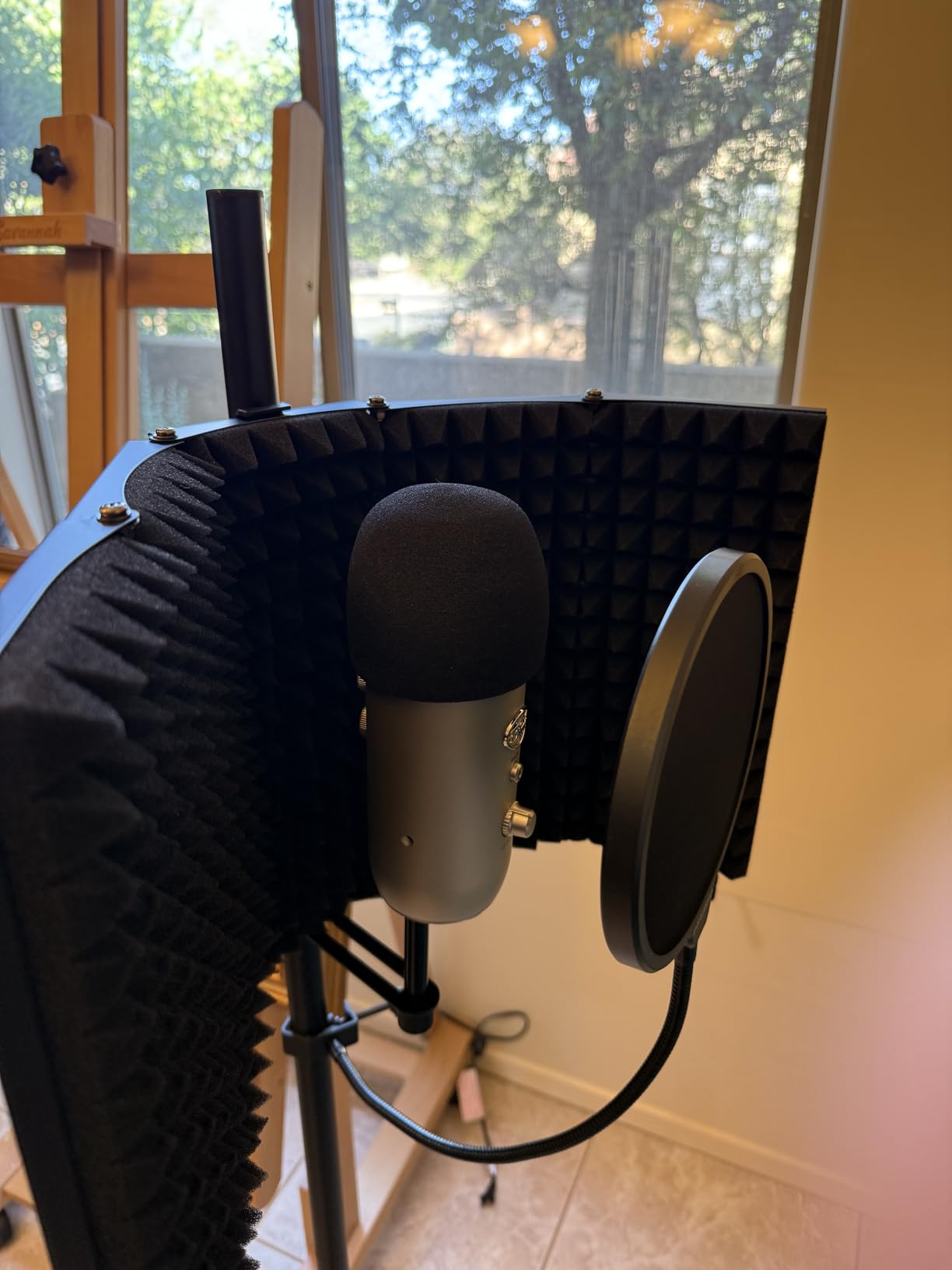
In our tests the steel clips and bracket held the shield rigid while the stand height moved through its range, which is what stops the whole assembly turning into a resonator. The storage desk holds a printed script comfortably, and the shield plus pop filter combination gave the cleanest vocal results in the untreated bedroom of the three stand-mounted kits we tested.
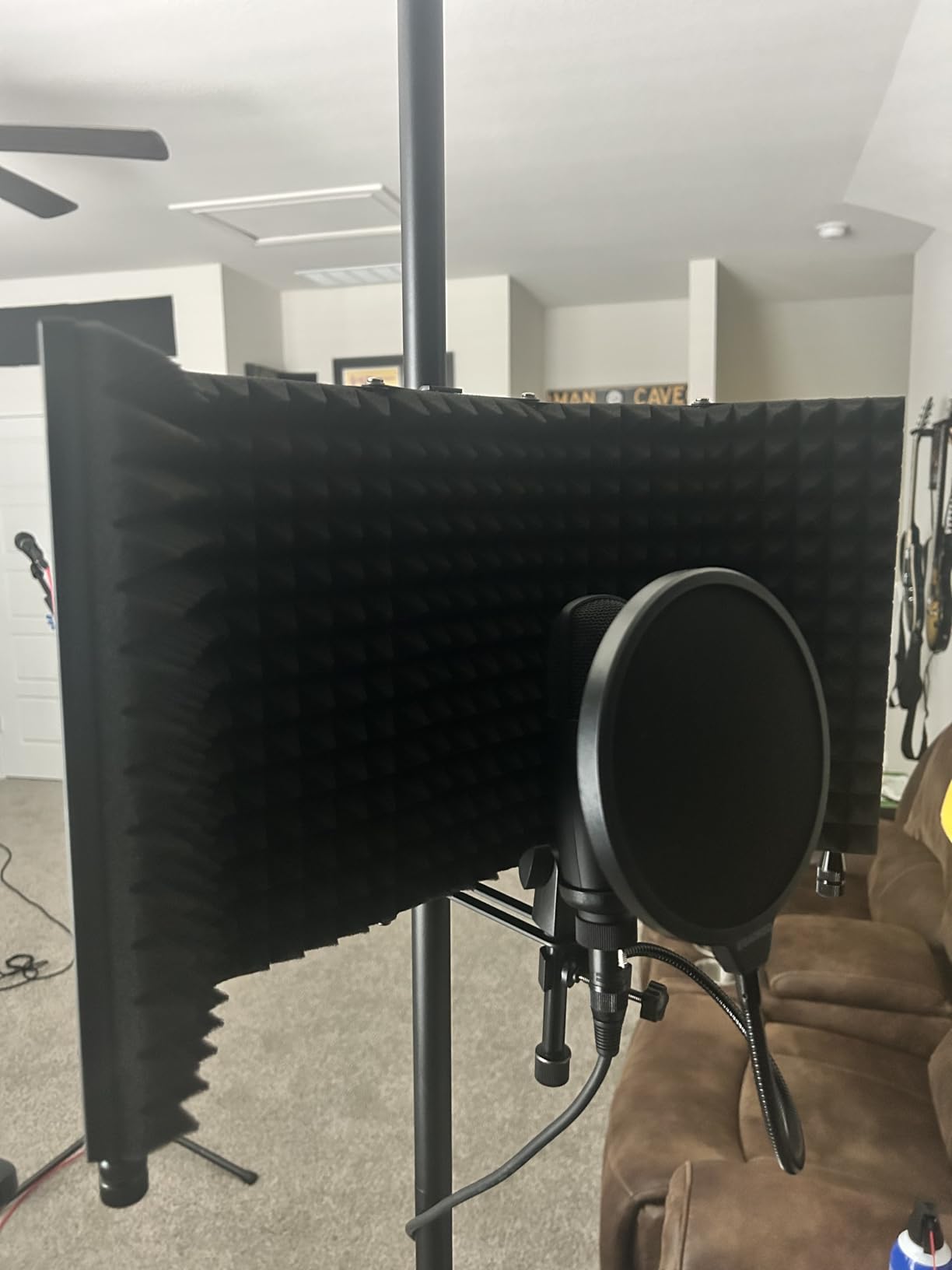
Two things to keep in mind. The microphone is not included, so this is a shield package rather than a complete vocal chain. And the acoustic foam works directionally, meaning it does very little for sound arriving from behind the panel, which is where the panel is thin by design.
The whole assembly, at 175 cm, needs genuine desk or floor space. In a small bedroom studio the stand base becomes the constraint rather than the shield, so measure the corner first.
Why this one rates highest
Owners treat it as a complete kit because the shield, tripod, adapters and pop filter all arrive together, and they report clean vocal recordings in untreated rooms without buying anything else. For a first-time home recordist who wants one purchase that solves reflections and plosives together, that completeness is worth more than a marginal specification difference.
Where the money goes
The premium over a foam-only shield buys steel rather than folded card, and it buys the pop filter. If your budget is fixed, that money is better spent on a better microphone than on a more rigid shield. The rigid panel keeps working, though, and this one has the longest record of consistent owner satisfaction among the mid-sized shields.
5. XTUGA MIS02 Five-Panel Shield – Best for Flexible Panel Layouts
XTUGA MIS02 Recording Microphone Isolation Shield, 5 Panels Soundproof Foam
5 panels
3.98 lb
15.75 x 7.87 x 7.09 in
3 or 5 panel setup
Pros
- Audible drop in room reverb once assembled
- Runs as a 3-panel or 5-panel configuration
- Sturdy enough to hide hardware behind it
- Solid once set up
Cons
- Assembly is fiddly with hard-to-reach nuts
- Plastic hinges crack with repeated folding
- Back wall too tight for rear-XLR microphones
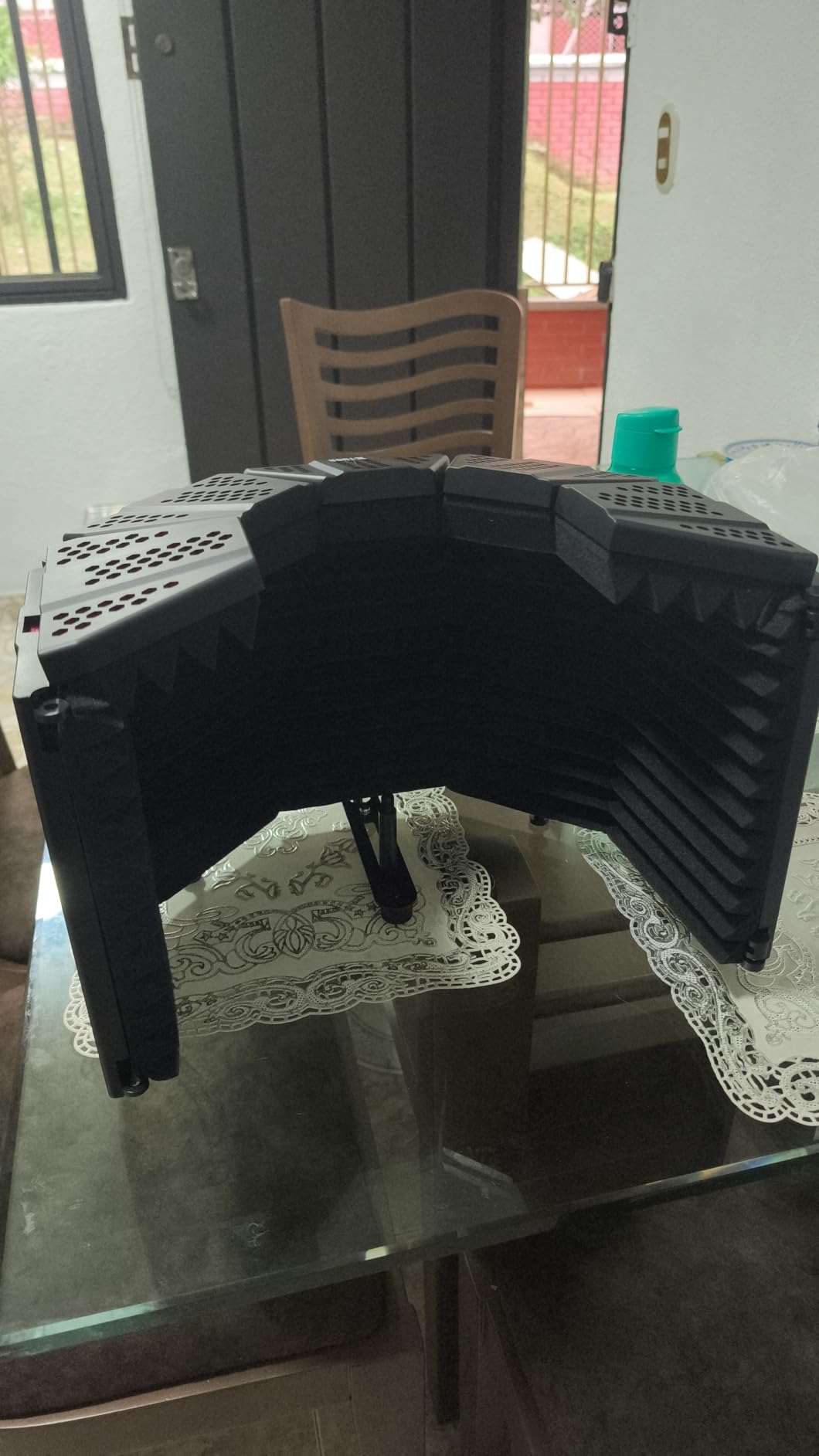
The MIS02 uses triangular high-density sponge reflectors in a three-layer structure, and that geometry is what gives it a stronger reflection kill than a flat panel at a similar footprint. Owners consistently report a measurable drop in room reverb on installation, which matched our own before-and-after recordings in the untreated bedroom.
The flexibility is genuine. You can use it as a three-panel arc behind a seated speaker or expand to five panels with a foldable top for a fuller enclosure, and the panel angles adjust to suit the position. That makes it the only shield here that adapts to different performers rather than demanding one fixed setup.
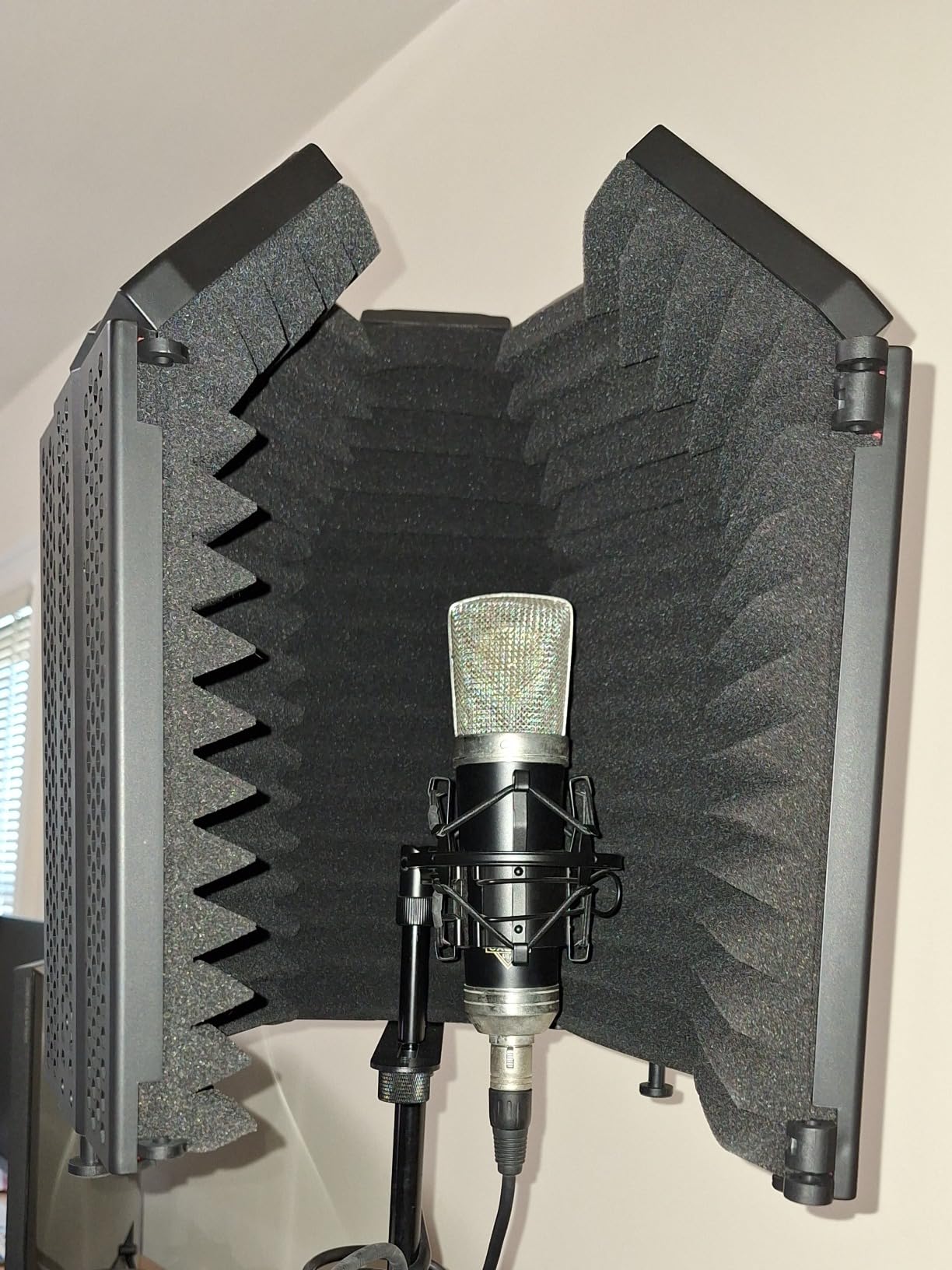
Assembly is where this one frustrates people. The nuts sit in hard-to-reach slots and the panels snap together loudly, so expect to spend longer building it than any competitor on this list. Reports of assembly times range from about twelve minutes to over an hour depending on the unit, which is a real difference in experience.
The plastic hinges are the durability concern we would watch. Several owners report cracking within weeks of normal folding and unfolding, and the tight back wall also means rear-XLR or rear-cabled microphones may not reach their cable inside the enclosure.
When the three-panel mode wins
A half-cage behind a seated narrator or a streamer is often the most useful configuration, because it gives you absorption on the reflective wall without boxing in your view. The foldable top then lets you close the gap for a louder take without dismantling the whole thing.
Who should look elsewhere
If you assemble gear rarely, move it constantly or work with rear-connected microphones, skip this one. At close to 4 pounds it is also the heaviest item per unit of isolation here, and the plastic hinges are the component most likely to disappoint over a multi-year ownership.
6. LyxPro VRI-30 Absorber Panel – Best Value, Zero Assembly
LyxPro VRI-30 Sound Absorbing and Vocal Booth Recording Microphone Isolation Shield Panel for Home Office and Studio Portable & Foldable Stand Mount Adjustable
EVA foam
19.3 x 12 x 3.5 in
1.7 kg
Perforated aluminium back
Pros
- Ships fully assembled so there is no build step
- Perforated aluminium plate avoids colouring the sound
- Under 4 lb so it moves between sessions
- Drier cleaner vocals in untreated rooms
- One-year manufacturer warranty
Cons
- Single flat panel gives less isolation than multi-panel booths
- Covers only the area directly behind the mic
- Needs a separate pop filter
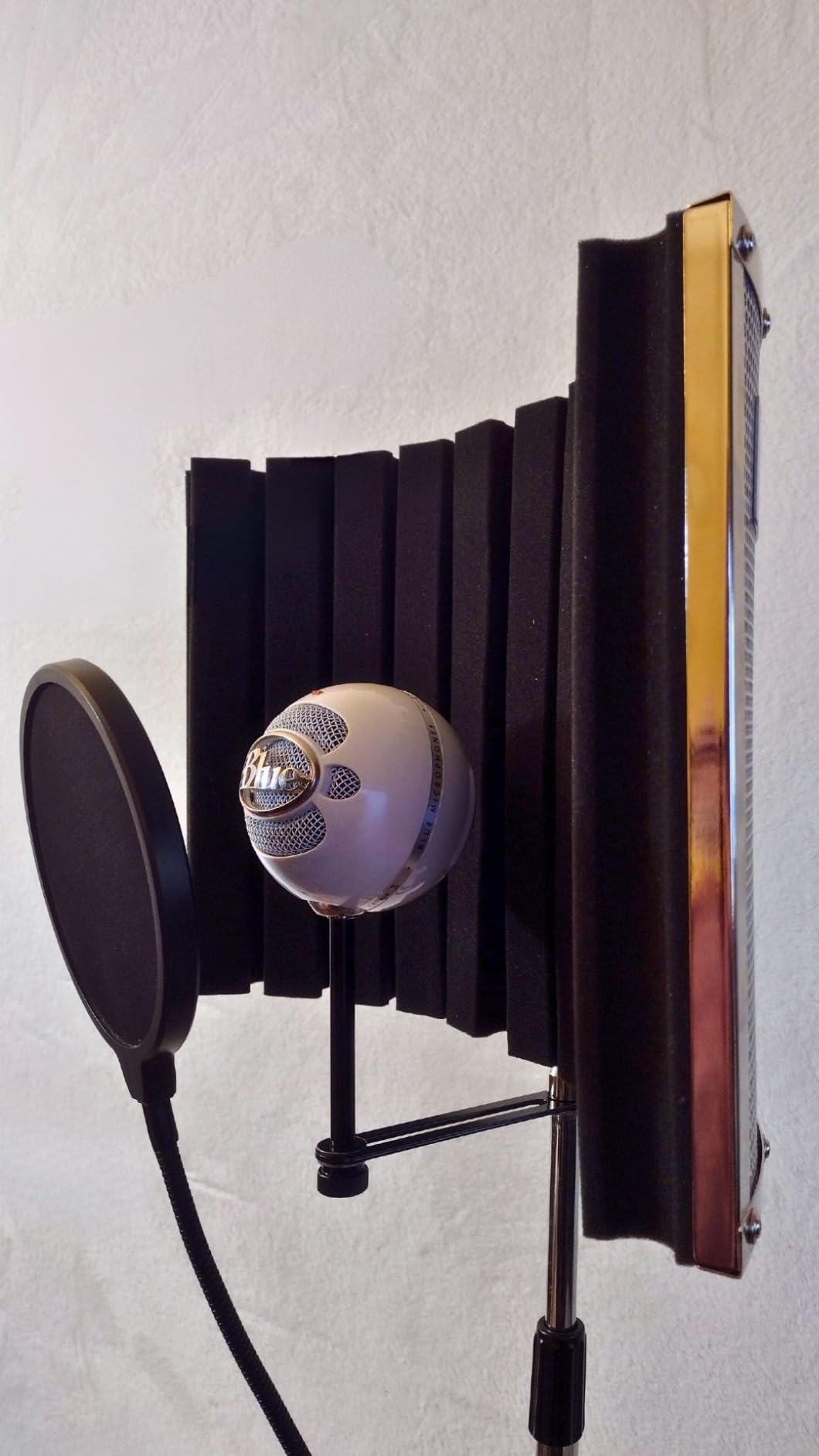
Most of the frustration in this category comes from assembly, and the VRI-30 removes it entirely. It arrives fully assembled with standard mounting hardware, fits most microphone stands and gives you an EVA foam absorber backed by a perforated aluminium plate. In our takes it delivered a noticeably drier vocal in a room that had nothing else going for it.
It ranks first in Recording Studio Acoustical Treatments by review volume on the marketplace, and owners consistently point to the same advantage: the rigid aluminium shell does not develop gaps or soften the way folded card does. At under 4 pounds you can move it to whichever corner of the room is worst that week.
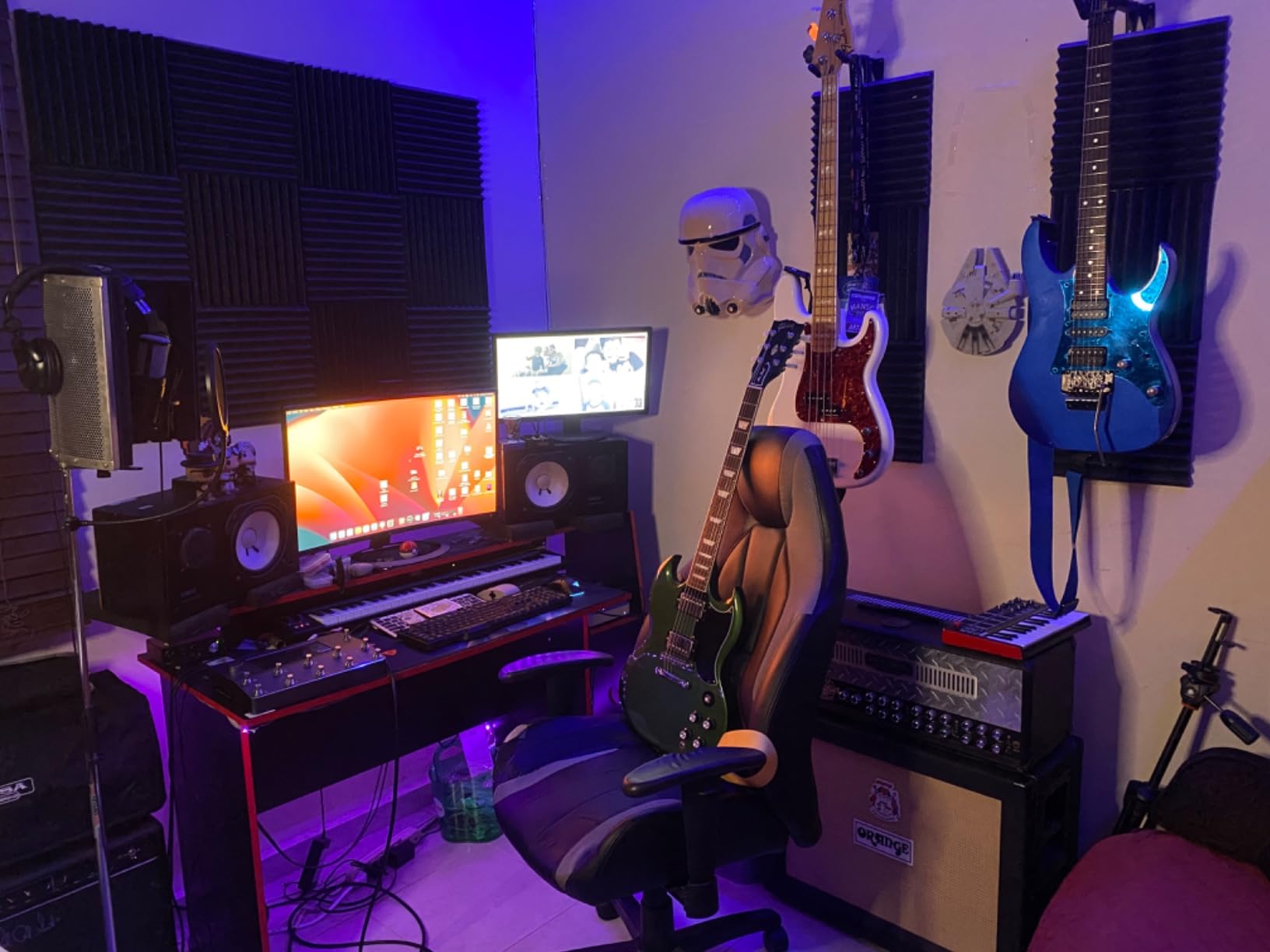
The perforated back plate is a quiet acoustic decision rather than a cosmetic one. Solid backing panels can ring and colour the midrange, and venting the plate removes that risk. It is one of the reasons this panel sounds as neutral as it does for a single-absorber design.
What it cannot do is enclose anything. A single flat panel treats reflection arriving from directly behind the microphone, so anything arriving from the sides, floor or ceiling still reaches the capsule. For a seated speaker in a small room that is often enough. For a moving singer it is not.
Why this is the value pick
You are paying for one high-quality absorber and a rigid frame, with no assembly cost in time or frustration. For home office and home studio users who record speech in a small room, it delivers most of the benefit of a foldable cage at a fraction of the effort and with better long-term stability.
When you need to spend more
If you sing, play an instrument or record anything with a moving sound source, you need panels on more than one plane. Add a second VRI-30 behind the performer rather than upgrading to a bulky cage, and you can build a two-panel corner setup that costs less and stores flatter than any foldable cube.
7. AURAY ISO-Armor-2 Isolation Chamber – Best Permanent Desk Setup
AURAY ISO-Armor-2 Microphone Isolation Chamber
7.24 x 7.99 x 7.01 in
600 g
Aluminium and foam
Suspension mount
Pros
- Deep chamber cuts flutter and off-axis room sound
- Sliding two-layer pop filter removes when needed
- Integrated suspension mount decouples stand vibration
- Light at 1.4 lb and compact
- Fits microphones up to 2.3 inch diameter
Cons
- Higher cost than the foam-panel shields
- Rigid shell limits mic styles that fit the chamber
- Microphone not included
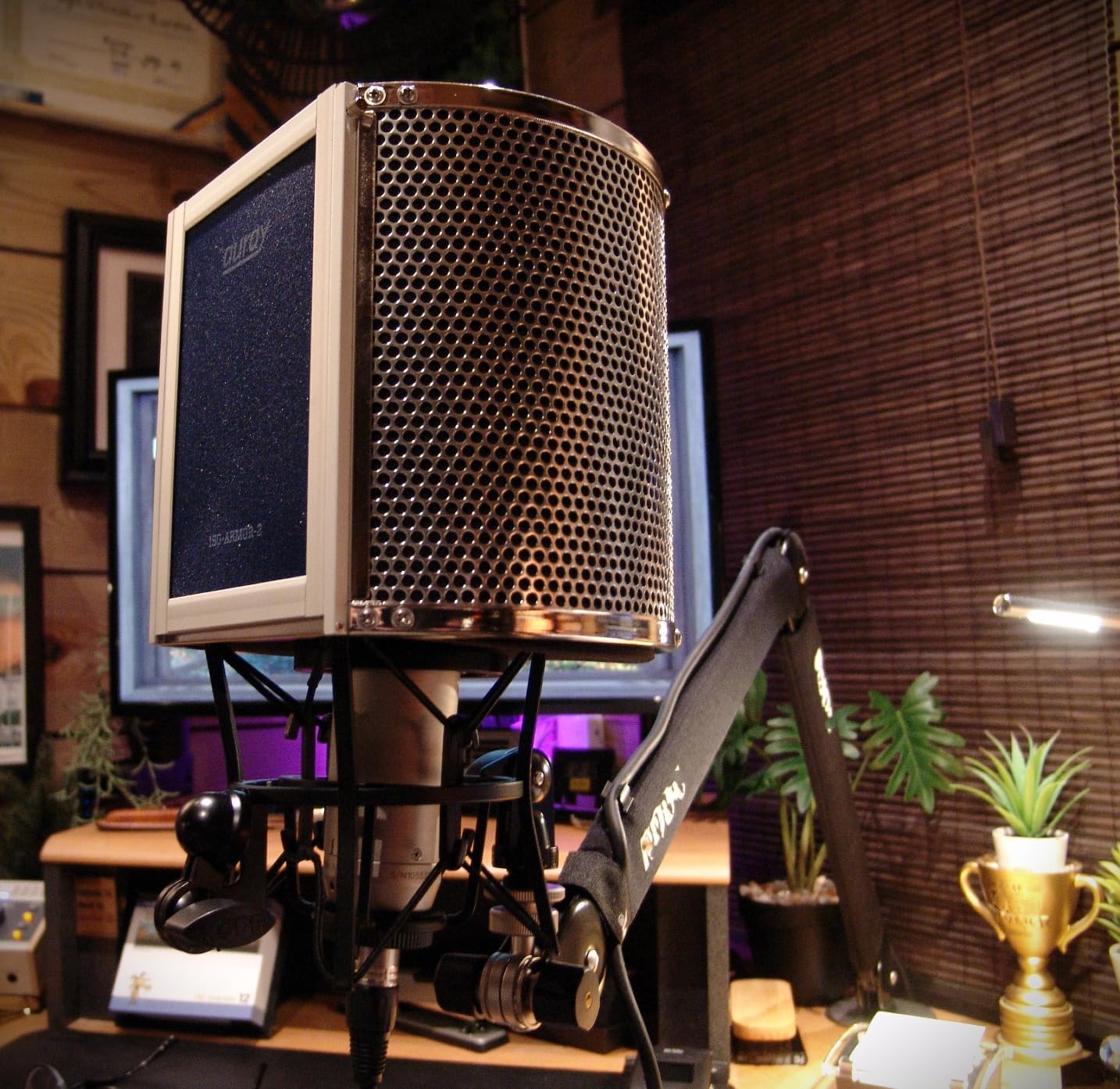
This is a different object from the rest of the list. Rather than a folding panel or a cube, it is a rigid aluminium and foam chamber that the microphone sits inside, lined with high-density open-cell acoustic foam. That deep enclosure handles flutter echo between the capsule and the shell in a way a flat panel cannot, and the difference is audible on sustained singing.
The hardware is the story. A two-layer nylon pop filter slides across the front for mic access and can be removed entirely for close-proximity work, and the integrated suspension mount decouples the microphone from stand vibration and sympathetic resonance. Owners rate the tone consistently, with 74% of ratings at five stars.
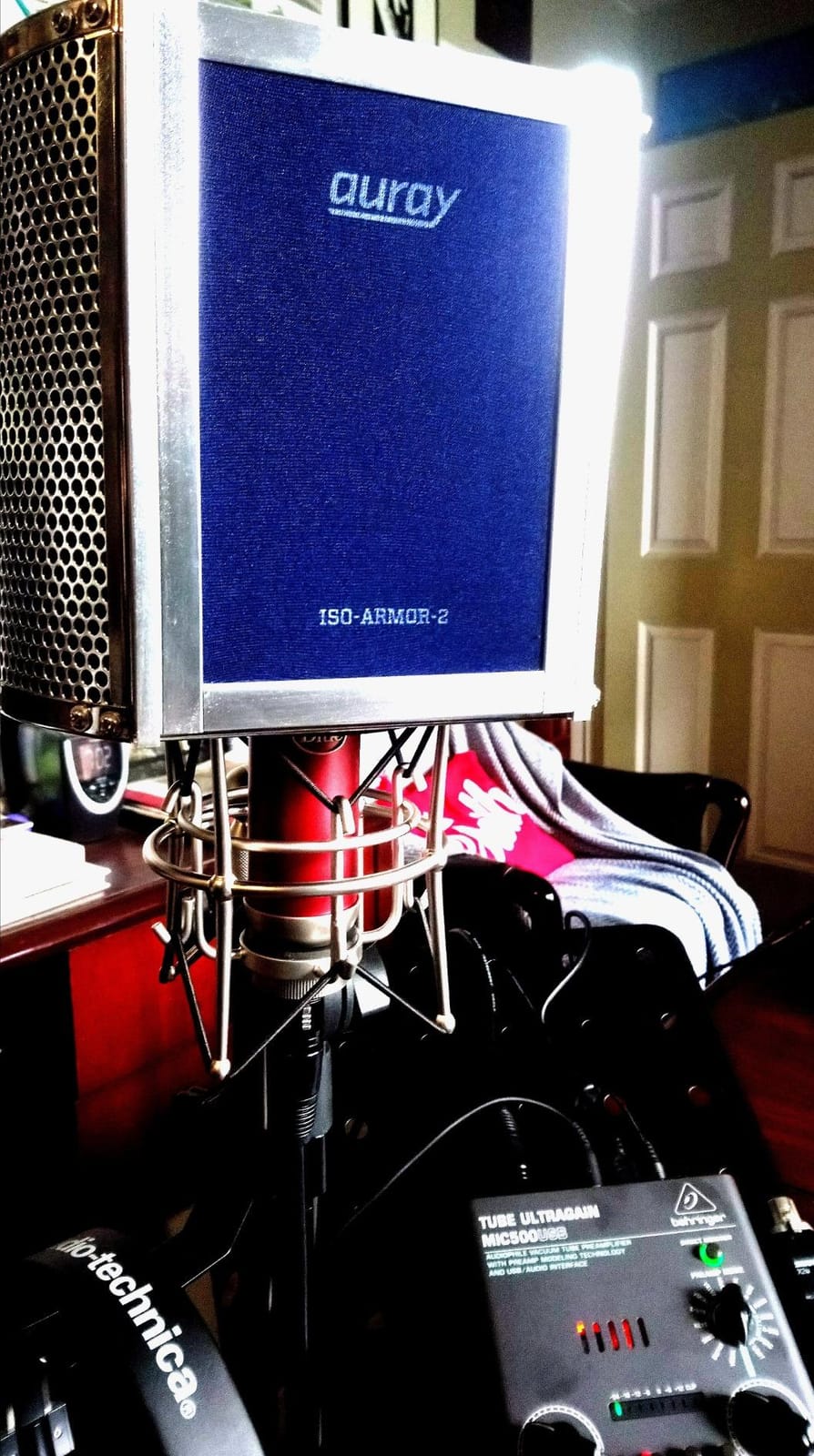
It weighs around 600 grams and measures under 8 inches on every dimension, so it stays on the desk permanently instead of living in a cupboard. For anyone who records daily and wants one predictable result rather than a rebuilt setup each session, that is genuinely valuable.
The trade-offs are compatibility and cost. It fits microphones up to 2.3 inches in diameter, so a large side-address condenser may not seat properly, and it sits at the upper end of what this roundup covers. The microphone itself is not included either.
Who gains the most from a rigid chamber
Singers working at close proximity benefit first, because the chamber shortens the distance between reflections and gives a much drier, more controlled result. Podcasters recording quietly in a treated room also like it, since it adds polish without needing more room treatment.
When it is the wrong spend
If your room is untreated and large, a single small chamber will not solve it. If your microphone is a large side-address model, or you intend to move setups frequently, this rigid shell is the wrong shape of solution. Measure your mic body before you commit.
8. Dmsky Isolation Shield Kit – Best for Standing and Mobile Recording
Dmsky Microphone Isolation Shield with Pop Filter & Tripod Stand, Foldable Mic Shield with Triple Sound Insulation, High Density Mic Sound Shield for Recording Studio, Podcasts, Singing, Broadcasting
5 panels fold to 180 degrees
Tripod to 78.7 in
Shield 42 to 71.5 in
Pop filter and tray
Pros
- 81% five-star ratings
- the highest share in this roundup
- Stand pop filter adapters and tray all included
- Steel construction survives repeated folding
- 42 to 71.5 inch range covers seated and standing
Cons
- Stand can feel wobble-prone if bumped
- Storage tray is quite small
- Pop filter and tray fittings feel thin
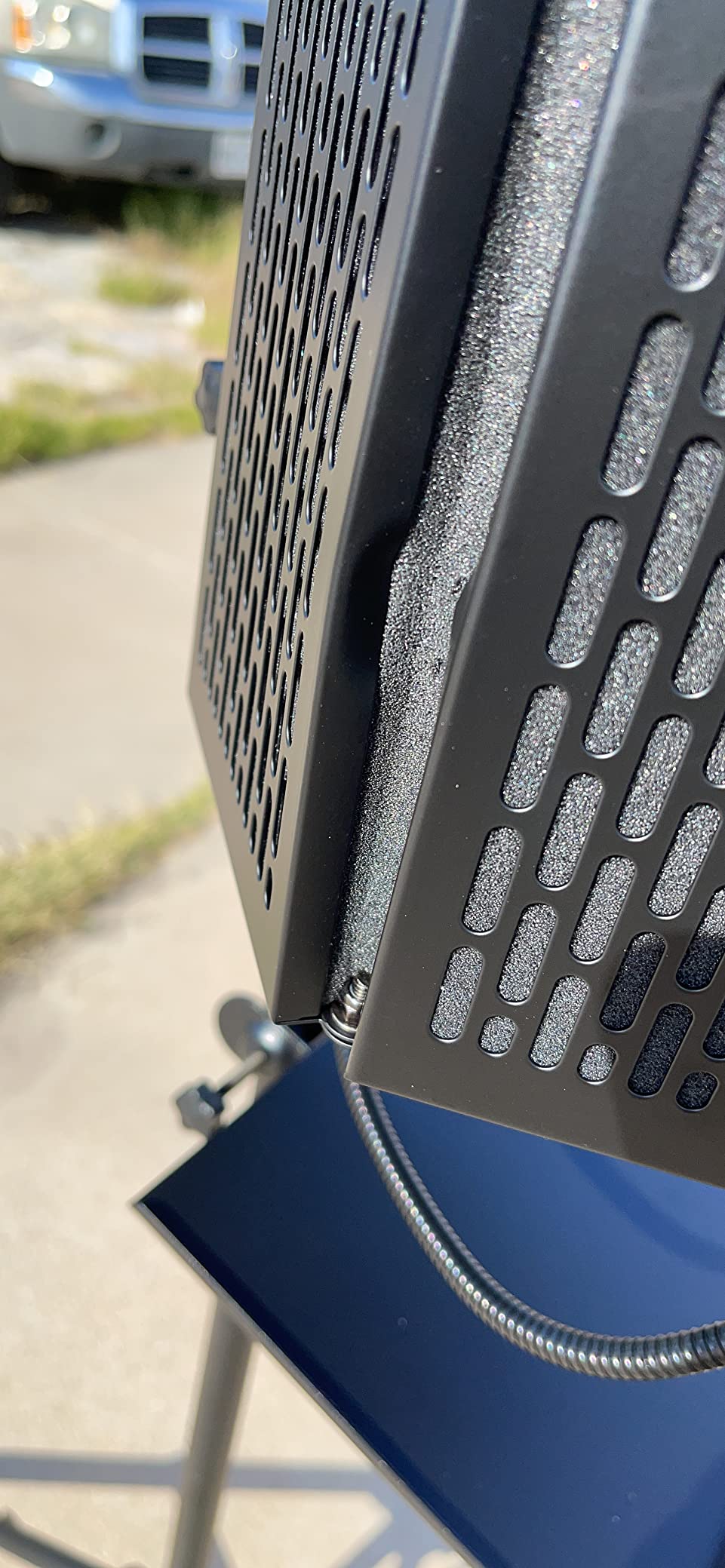
The Dmsky kit combines a five-panel shield with triple reflective, filter and absorbing layers, mounted on a tripod that reaches 78.7 inches. The shield itself adjusts from 42 to 71.5 inches, so it covers a seated desk workflow and a standing singer without a second stand, and the panels fold through 180 degrees.
It posts a 4.6 average with 81% five-star ratings, the highest five-star share of anything we tested. Beginners describe it as a good entry point because the stand, pop filter, adapters and storage tray all arrive together and the manual makes assembly straightforward.
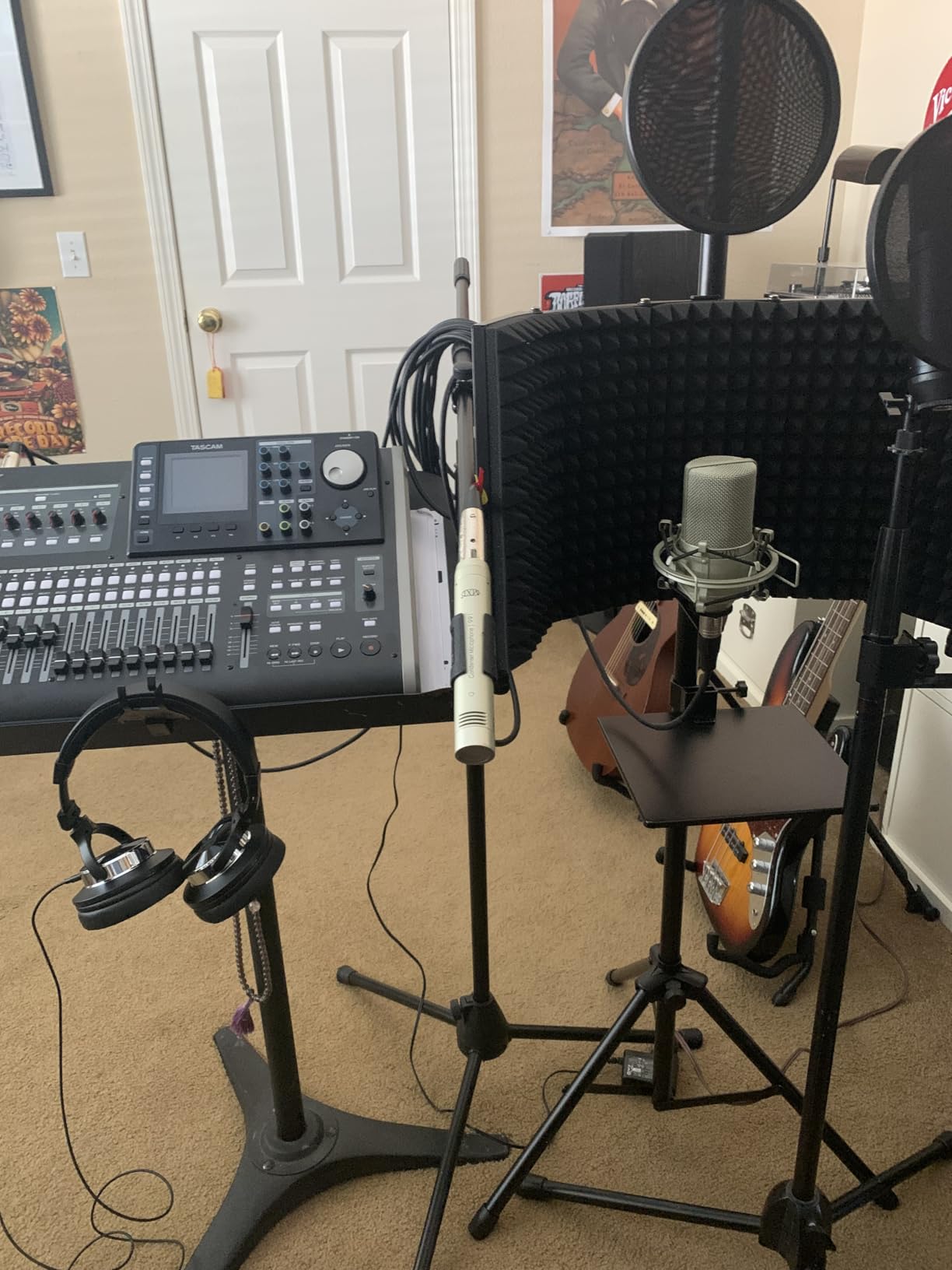
In our hands it produced a clearly drier vocal in the untreated bedroom, and the wide height range was the feature we used most. The 180-degree panel folding lets you open the enclosure for a more natural read and close it down for a denser take without rebuilding anything.
The weaknesses are small and honest. The stand can feel slightly wobble-prone if bumped, the storage tray is quite small for a full-size laptop, and the fittings on the pop filter and tray feel thin relative to the steel shield. A few shipments have arrived missing a small linking screw.
What the height range actually buys you
A standing singer at full voice pushes air in a way a seated narrator never does, and a shield at the wrong height just filters floor bounce. Being able to bring the top of the enclosure to chest level while standing changes the result more than any material difference between products.
Who should pick a different design
If you work in a very small room, the wide tripod footprint plus a 180-degree panel span can crowd the desk. If you travel frequently, this does not fold into a bag. For a fixed home setup that handles both seated and standing work, though, the completeness of the kit is hard to argue with.
9. Snap Studio Portable Vocal Booth – Best Walk-In Enclosure
Snap Studio Portable Vocal Booth, Original & Best for Home Studio Recording
33 x 33 inch footprint
5.5 sq ft interior
46.2 lb
Pop-up frame
Pros
- The only booth here that encloses the performer
- About 4 dB drop in overall level inside
- Thick grommeted blankets that stay in place
- Packs into duffel bags for room changes
- Multicolor LED lighting for long sessions
Cons
- 46.2 lb makes it a two-person lift
- Interior warms up and needs an added fan
- LED lamp is dim and flickers
This is the only true walk-in enclosure in the roundup, and that changes what it can treat. Pro Sound Blankets cover all sides, top and bottom, the performer stands inside, and the result handles body reflections, movement noise and reflections off the floor in a way no mic-level shield can. Users report roughly a 4 dB drop in overall level inside versus outside.
The footprint is 33 by 33 inches with 5.5 square feet of interior room and it fits performers up to 6 feet 8 inches. It pops up in roughly 30 minutes and packs into duffel bags, so you can move it between a bedroom and a living room when your floor space changes.
At 46.2 pounds, portable has to be qualified. This is realistically a two-person lift between rooms rather than something one person carries up stairs. Budget for clearing an area roughly three feet square with clearance on the access side.
Two honest caveats from owners. The interior heats up during long sessions and most people add a small fan, and the included LED lamp is dim and flickers, so treat the multicolor lighting as a mood feature rather than a work light. It also takes eight AA batteries for the lighting unit.
Manufacturer support has replaced damaged panels and curtains at no cost, which is worth knowing before you consider the fabric durability worries that come with any blanket-based booth. Reviewers are clear that this reduces reflections and background noise rather than blocking neighbours or street sound.
When a walk-in booth earns its space
Voice actors doing audition and session work get the most from this format, because you can stand, move and read a script with confidence inside. It also solves the Naples effect problem, since a 5.5 square foot interior with absorption on every surface avoids the low-frequency boom of a small untreated bedroom.
What you give up for it
Weight, floor space and heat. In a small apartment this booth removes a third of the usable room, and a fabric enclosure that is not ventilated will make a long take uncomfortable. If your reverb problem is modest, one of the panels above will do the same job in a fraction of the space.
10. Marisflo Isolation Ball – Budget Pick for Desktop Recording
Professional Microphone Isolation Ball with 2-Layered Pop Filter, High Density Foam Great Noise Cancellation
120 g
8.46 x 7.36 x 7.32 in pkg
Fits 1.96 to 2.75 inch mics
Two-layer pop filter
Pros
- Smallest and lightest option here at 120 g
- Built-in two-layer pop filter removes a separate purchase
- High-density foam holds its shape better than low-density
- Protects the mic from saliva and knocks
- Fits common USB and condenser microphones
Cons
- Only fits microphones between 1.96 and 2.75 inch diameter
- Enclosing the mic from all sides unsettles some condensers
- Lowest average rating in this roundup at 4.2
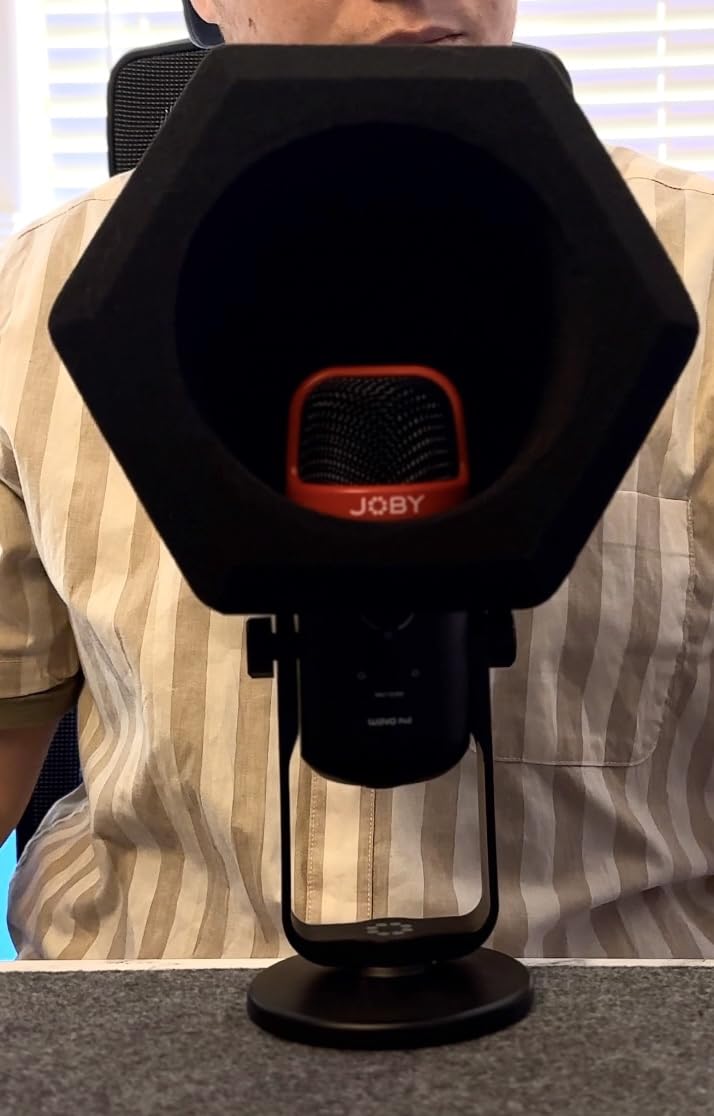
The Marisflo ball is a five-sided foam seal with a detachable jacket that fits microphones between 1.96 and 2.75 inches in diameter, plus a dual two-layer pop filter built into the front. It is the smallest and lightest option here at 120 grams, which makes it easy to move between a streaming desk and a recording corner.
That integrated pop filter is the practical win. It removes an extra purchase and a separate mount, and it also acts as a physical guard against saliva and accidental knocks. The high-density foam holds its shape better than cheaper low-density foam, and it works with common USB and condenser microphones.
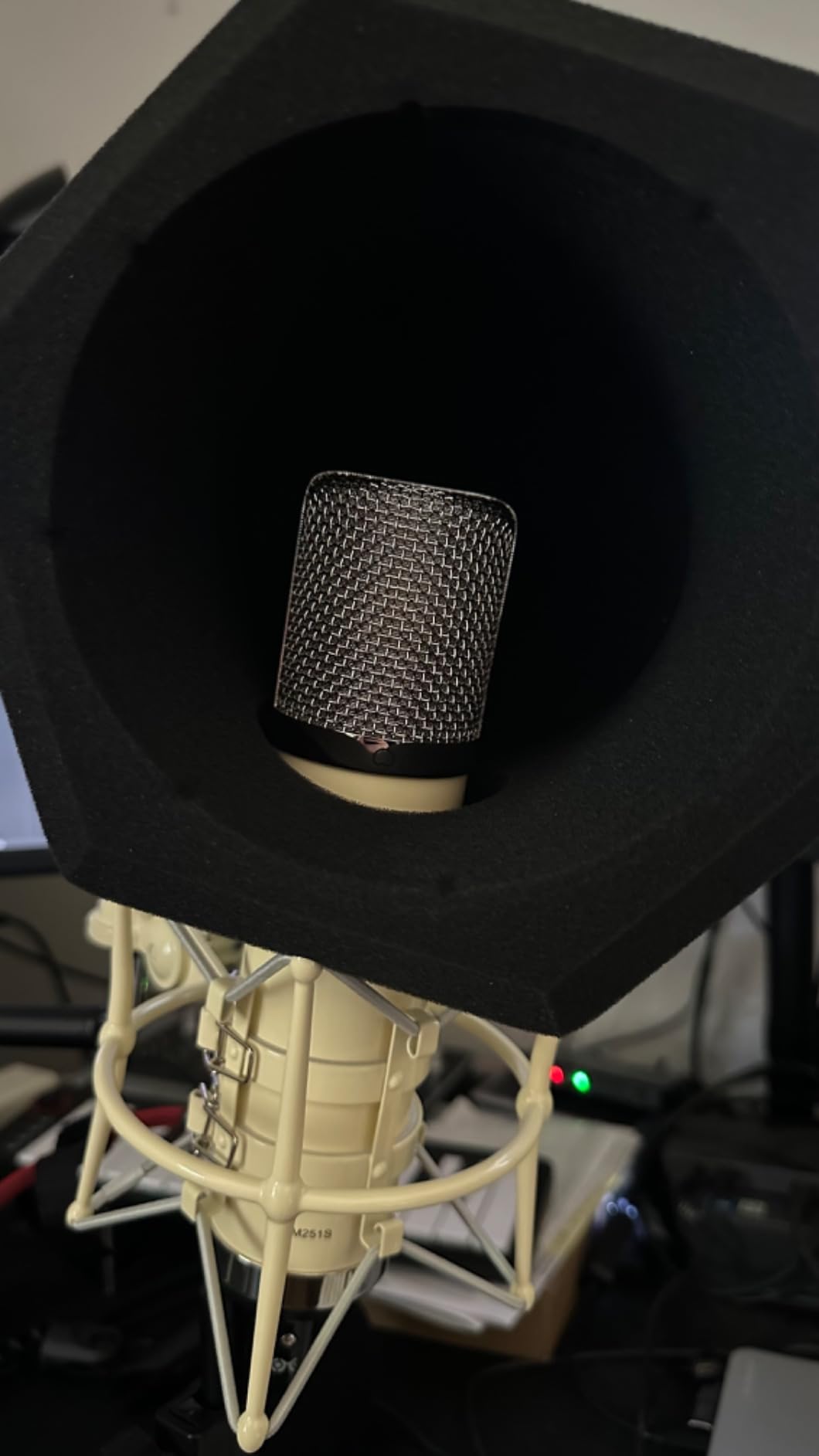
Its rating of 4.2 is the lowest average in this roundup, and the reason is straightforward: it offers the least acoustic treatment of anything listed. It wraps the microphone rather than the performer or the room, so it handles close reflections and plosives well and leaves everything else alone.
Check your microphone diameter first. If it falls outside 1.96 to 2.75 inches, this will not fit at all, and there is no adapter. Owners also note that enclosing a microphone on all sides can unsettle some condenser models, so back off the fit if the tone sounds closed.
Who it suits
Streamers, podcasters on a tight desk and anyone working in a genuinely small space. It takes almost no room, it installs in seconds on an existing stand and it solves plosives and close echo in one part. It is also a reasonable first step before committing to a larger enclosure.
Where it stops helping
It does nothing for room reverb arriving from the walls, floor or ceiling, because it never encloses anything but the microphone. If your untreated room is the actual problem, you need panels around the performer rather than a cover over the capsule.
Do You Actually Need a Vocal Booth?
Most home recording problems fall into one of four categories, and only one of them is solved by a booth. Spend two minutes on this diagnosis before you buy anything, because it is the difference between spending well and spending twice.
Step one: record ten seconds of silence. Press record, stay quiet and listen back with headphones. If you hear a tail of reverb continuing after you stop speaking, you have a reflection problem. That is the problem a booth solves best.
Step two: record ten seconds while an external noise is running. Open a window, run a fan, turn on music. If external sound dominates and continues during the silence, a booth will not fix it. You need door seals, window seals or a quieter recording time.
Step three: check the low end. Hum, rumble and boom are usually structural or HVAC problems, not reflection problems. A booth barely touches the frequency range where most of that energy sits, and a low-cut filter on your recording chain handles more of it than any enclosure.
Step four: consider what else you have already done. If you have acoustic panels on your first reflection points and bass traps in the corners and the vocal still sounds wrong, a booth is the missing piece. If you have done nothing to the room, panels may solve the issue for a fraction of the cost.
It is also worth being honest about the results. Portable vocal booths are effective at cutting reverb, typically removing the reflective signature of a hard room from the recording. They are not soundproof, they do not stop traffic or neighbours, and they will not correct a badly chosen microphone position. Every honest owner review we read made that same point eventually.
Portable Vocal Booth vs. Room Treatment vs. DIY Gobo
A booth is one tool among three, and picking the wrong one is the most expensive mistake in this category. Here is the honest comparison, including the cases where a booth is not worth buying at all.
Room treatment. Panels, bass traps and corner treatment fix the room permanently and benefit everything recorded in it, including instruments and monitoring. They take time, some skill and money spread across a room. This is the right investment if you record more than vocals, or if you plan to be in the space for years.
Portable booth. This fixes the vocal position without touching the room, moves with you and is reversible for renters. It is the right investment if you record mostly speech, sing in a shared space or move between rooms. It is a complement to good treatment, not a replacement for it.
DIY gobo. A duvet over a boom stand or a heavy blanket across a frame captures a meaningful share of the benefit for almost nothing. Forum discussion consistently makes this point, and it is true: a gobo that is properly placed behind and beside a microphone does real work. The DIY route fails when the fabric is thin, when it only covers one side or when it touches the performer and absorbs high frequencies.
So are whisper rooms worth the money? In our view, a walk-in enclosure earns its cost when you sing or perform inside it, or when you need a predictable controlled position you do not have to build each session. For a narrator in a small room, a rigid panel or a cube booth is the sensible spend instead. And if your problem is external noise, none of the three will help.
How to Choose a Portable Vocal Booth
Once the diagnosis says reverb, the choice comes down to six things. Work through them in order and the right product usually becomes obvious.
Enclosure geometry. Decide what you are enclosing. A microphone cover treats reflections off the mic. A panel cage treats reflections around the mic and performer. A walk-in booth treats the performer, the floor and the air around them. Singing with movement pushes you toward the last two; seated narration works with the first.
Panel construction. Foam, EVA foam and fabric-wrapped absorbers all work, and depth matters more than branding. Two inches of egg-crate foam absorbs meaningfully more midrange than a thin layer, and perforated metal or aluminium back plates avoid colouring the sound the way a solid panel can.
Frame material. Steel and aluminium frames stay rigid under the load of a boom arm. Folded card and plastic hinge designs flex, and a wobbly frame under a microphone is its own source of unwanted resonance. This was the most common complaint we saw across the foldable designs.
Portability, measured honestly. Check the weight, then ask whether one person can carry it to the next room. Items under 4 pounds move freely. Anything in the teens of pounds is a one-person lift with effort. Anything above 30 pounds is a two-person job, and you should plan where it will live before it arrives.
Ventilation and comfort. Fabric enclosures without airflow get warm and, in humid conditions, damp. If you will record for more than an hour at a time, plan for a small fan or scheduled breaks. Long sessions inside a sealed booth are the single biggest source of owner regret we found in review analysis.
Mic fit and accessories. Confirm the microphone body diameter before ordering anything that wraps the capsule. Then decide whether you need a bundled pop filter, a shelf for a script, adapters for your stand thread, and pass-through holes for cables. Getting these right at purchase time avoids a second order.
How to Set Up and Position Your Mic Inside a Booth
Even the best booth underperforms when the microphone is badly placed. Five adjustments did more for our recordings than swapping between two different products.
Keep the microphone 15 to 20 cm from the singer and position it on the reflective side. Place the shield or cage between the mic and the nearest hard surface, not between the mic and the performer. Reversing these two is the single most common setup error we saw described in owner posts.
Leave a gap between the booth panel and the room wall. A booth pushed flush against a wall creates a secondary reflection off that wall that travels straight back to the microphone, undoing the work. Roughly 30 cm of clearance on the open sides is a sensible minimum.
Watch for the Naples effect. A booth placed in a corner of a small room concentrates low-frequency energy between the surfaces, which sounds like a boxy thump. If your test recording has more low-end boom inside the booth than outside it, move it away from the corner before buying anything else.
Monitor with headphones rather than speakers. A booth that changes your monitoring environment will mislead your mix decisions, so keep critical listening outside the booth where the room is treated as it normally is.
Aim the mic slightly off-axis for a plosive-prone singer, use the included pop filter where one is provided, and record 30 seconds of each take at the start. Comparing in and out of the booth is the fastest way to know whether the purchase is earning its place.
Frequently Asked Questions
What is a good portable soundproof booth for home use?
A good portable booth for home use is one sized to your problem. For seated narration a rigid foam panel or a foldable cube is enough. For singing with movement, choose a panel cage or a walk-in enclosure with absorption on multiple surfaces. No portable booth is truly soundproof, so pick one that treats reflections rather than expecting it to block traffic or neighbours.
How effective are portable vocal booths?
Portable vocal booths are highly effective against reverb and early reflections, which is the dominant problem in most untreated home rooms. They are much less effective against external noise such as traffic, voices through a wall or HVAC hum. Enclosures reported in owner reviews typically show around a 4 dB drop in overall level from outside to inside.
Which portable vocal booth is considered the best?
For most home studios the Moukey five-sided foam shield is the strongest all-round choice, with 2419 ratings and the flexibility to sit on a desk or clamp to a stand. The Aokeo AO-505 is the best complete kit with a bundled pop filter, the LyxPro VRI-30 is the best value for seated narration, and the Snap Studio booth is the only true walk-in enclosure in this roundup.
What is the best size for a vocal booth?
For a seated narrator a booth with roughly 8 by 10 by 12 inches of interior space is practical, with the microphone close and absorptive surfaces within a foot. For a standing singer you want a cage or enclosure with an interior footprint of about 33 inches square, such as the Snap Studio booth at 5.5 square feet. Leave around 30 cm of clearance between the booth and room walls.
Do you really need a vocal booth?
Only if your problem is reverb. Record ten seconds of silence and listen: if a reverb tail continues after you stop speaking, a booth will help substantially. If the problem is external noise, HVAC hum or low-end rumble, a booth will barely move it and you should spend on door seals, low-cut filtering or quieter recording times instead.
Our Top Portable Vocal Booth Pick for 2026
After putting all ten through the same rooms and the same microphone, the Moukey five-sided foam shield is still where we would start. It is flexible enough to work seated at a desk or on a floor stand, it folds flat, it is supported by more owner ratings than anything else we tested, and it treats the specific problem most home studios actually have: room reflections.
If you sing with movement, choose the Aokeo AO-505 kit for a complete package with a bundled pop filter, or the Dmsky shield if you need both seated and standing height on one stand. If you narrate at a desk and want zero assembly, the LyxPro VRI-30 gives the driest result for the least fuss. If you need to be inside the enclosure, the Snap Studio booth is the only option here that does it properly.
And if your problem turns out to be outside noise rather than reverb, save the money and treat the doors and windows instead. Knowing which problem you have is worth more than any product on this list.