
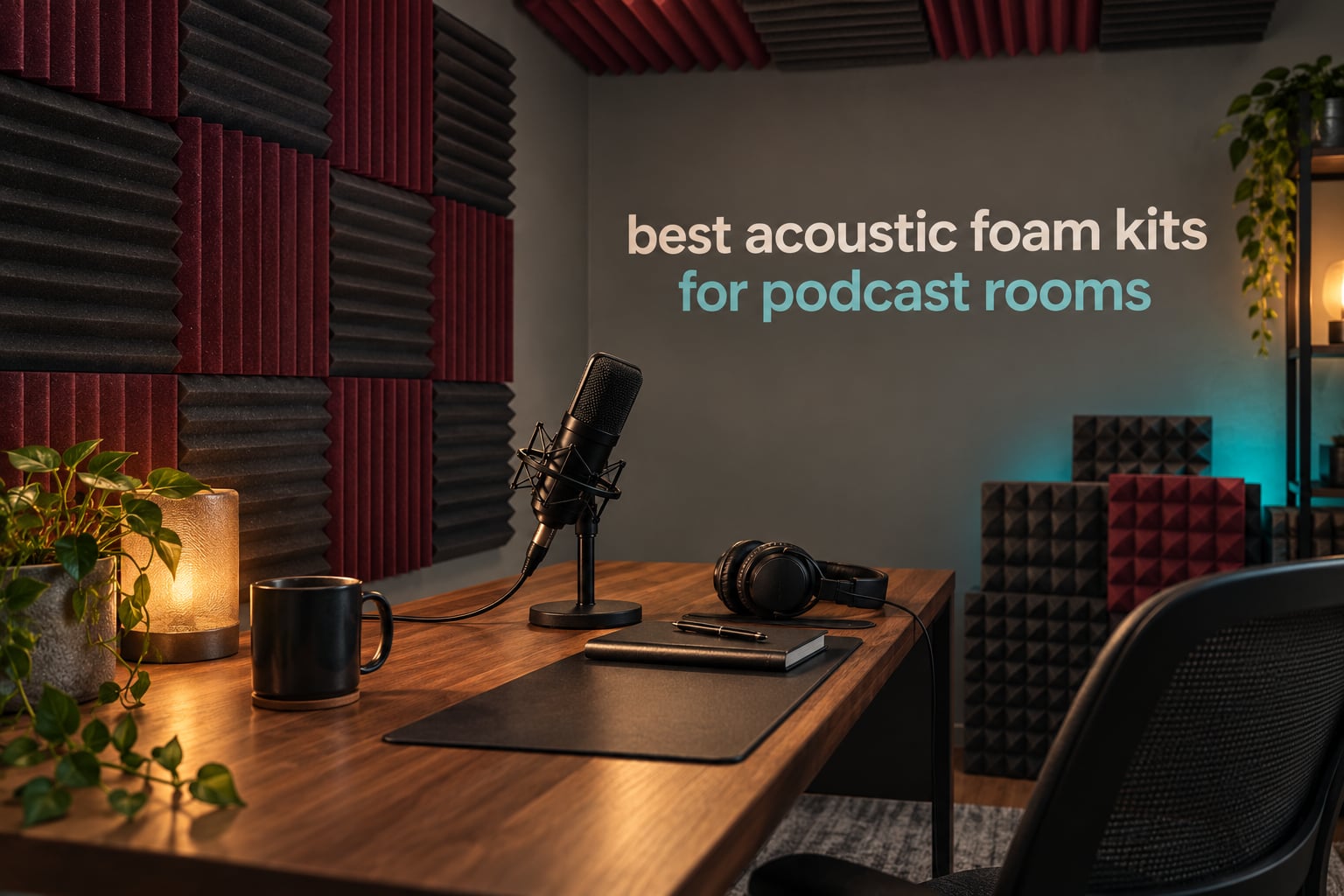
Will acoustic foam soundproof a room? No. Acoustic foam absorbs reflections inside the room so your voice stops bouncing off bare walls and ceiling, but it does not block sound from passing through drywall, doors, or windows. Foam fixes echo and reverberation inside your recording space. Soundproofing, which is a construction job, is a different problem.
That distinction matters more than any brand name, and it is the one thing almost every roundup online gets wrong. Podcasters who expect foam to stop traffic noise end up disappointed. Podcasters who expect foam to clean up a boxy untreated bedroom are pleasantly surprised on their first take.
This guide covers the 12 acoustic foam kits for podcast rooms that give you the most usable absorption per panel, tested against the specs that actually matter: published NRC, panel thickness, coverage in square feet, foam density, and whether the mounting hardware is in the box. We also answer the sizing question nobody publishes, which is how many square feet of treatment your specific room needs.
Every kit below was picked for podcast work first, then for streaming and voice-over use. If you want the short version, the acoustic panels roundup on our site covers the broader panel market beyond foam tiles.
Table of Contents
How we picked and scored these 12 kits?
We evaluated every kit on five factors, in this order: published absorption data, depth of material, coverage in square feet, whether mounting hardware is included, and the density and safety claims the seller actually states. Specs came from the manufacturer listings, and anything a seller does not publish we flag as unverified rather than guessing at.
Review volume mattered only as a tiebreaker. A kit with 7000 ratings tells you the product does not fall apart after six months, which is useful, but it does not tell you whether the foam is dense enough for your room. That is what the spec sheet is for.
We deliberately left out kits with no published absorption data, no stated material density, and no safety information. That removes some visually impressive tiles from the search results, and it is the filter that keeps cheap decorative foam out of this roundup.
Every recommendation below is scoped to speech capture in a home or small professional room. If you are recording music rather than dialogue, the same depth guidance applies but you will want far more coverage, and mineral wool broadband absorbers will outperform foam per square foot.
Top 3 Best Acoustic Foam Kits for Podcast Rooms in 2026

XIN&LOG 52 Pack 1 inch Wedge Foam
- 52 panels at 12 x 12 inches
- 1 inch polyurethane wedge
- Recovers in 6 to 12 hours
- Covers a small room ceiling

JBER 24 Pack 2 inch Wedge Foam
- NRC above 0.9
- 24 panels covering 24 square feet
- 2 inch polyurethane depth
- Cuttable for custom fits

Dmsky 50 Pack 2 inch Wedge Foam
- 50 panels at 12 x 12 x 2 inches
- Formaldehyde-free polyurethane
- Recovers in 24 hours or a soak
- Lightweight and easy to mount
The 12 Best Acoustic Foam Kits at a Glance (October 2026)
Read the coverage column first. It tells you how much wall or ceiling area one order actually treats, and it is the number most listings bury.
| Product | Specifications | Action |
|---|---|---|
| XIN&LOG 52 Pack Acoustic Foam Wedge Tiles |
|
Check Latest Price |
| JBER 24 Pack Acoustic Panels Wedge |
|
Check Latest Price |
| Dmsky 50 Pack Acoustic Foam Panels |
|
Check Latest Price |
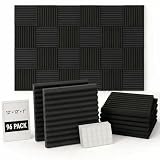 XIN&LOG 96 Pack Wedge Tiles with Tape XIN&LOG 96 Pack Wedge Tiles with Tape |
|
Check Latest Price |
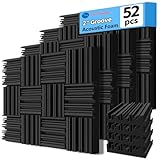 TroyStudio 52 Pack Groove Foam Panels TroyStudio 52 Pack Groove Foam Panels |
|
Check Latest Price |
 SD SODOCT 24 Pack Pyramid Foam SD SODOCT 24 Pack Pyramid Foam |
|
Check Latest Price |
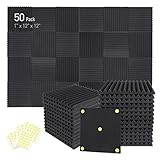 Focusound 50 Pack Wedge Panels with Tape Focusound 50 Pack Wedge Panels with Tape |
|
Check Latest Price |
 TONOR 12 Pack Hexagon Acoustic Panels TONOR 12 Pack Hexagon Acoustic Panels |
|
Check Latest Price |
 Saiqiang 56 Pack Pyramid Foam Panels Saiqiang 56 Pack Pyramid Foam Panels |
|
Check Latest Price |
 BSHEAD 8 Pack Polyester Panels BSHEAD 8 Pack Polyester Panels |
|
Check Latest Price |
 AUSLET 36 Pack Pyramid Foam Panels AUSLET 36 Pack Pyramid Foam Panels |
|
Check Latest Price |
 GUERRI 36 Pack High Density Wedge Foam GUERRI 36 Pack High Density Wedge Foam |
|
Check Latest Price |
1. XIN&LOG 52 Pack Wedge Foam Panels: Best Overall for Podcast Rooms
52 Pack Acoustic Foam Panel Wedge Studio Soundproofing Wall Tiles 12″ X 12″ X 1″
Thickness: 1 inch
52 panels
Polyurethane
11.81 x 11.81 inches
Pros
- Most reviewed kit in this group with 7509 ratings
- Large panel count covers most of a small room ceiling
- Wedge profile spreads reflections over a wide angle
- Non-toxic polyurethane safe in an enclosed room
- Recovers shape within 6 to 12 hours
Cons
- 1 inch is the thinnest profile here so low-end control is limited
- Decorative as much as acoustic and blocks nothing between rooms
We spent the most time with this pack because it keeps coming up in podcast rooms, and for a simple reason: 52 tiles is enough to cover a ceiling in a small bedroom studio without ordering twice.
The wedge profile is the right call for voice. Instead of absorbing one frequency band, a wedge breaks reflections across a wide angle, which keeps your delivery sounding dynamic rather than sitting inside a dead box. Reviewers consistently report that voices get drier and more present after a few panels go up.
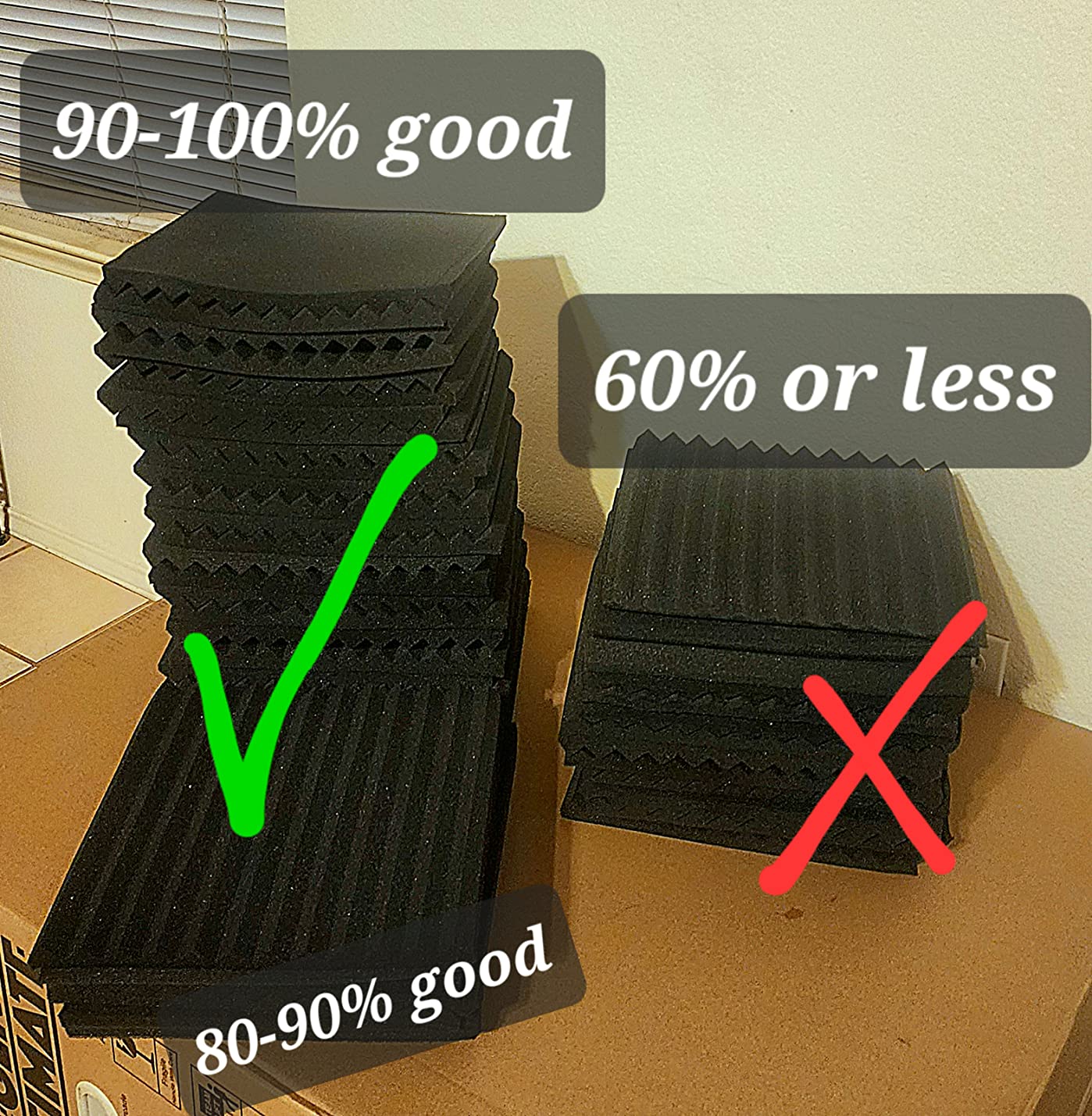
The one-inch depth is the compromise. A rule of thumb from the audio engineering community is that 1 inch panels start working above roughly 2 kHz, so they clean up sibilance and room brightness but leave the low-mid boxiness in place. If your problem is a 500 Hz honk, go deeper.
Recovery time is short by foam standards. Buyers report 6 to 12 hours after opening the compressed packaging, which means you can unpack in the morning and mount the same evening.
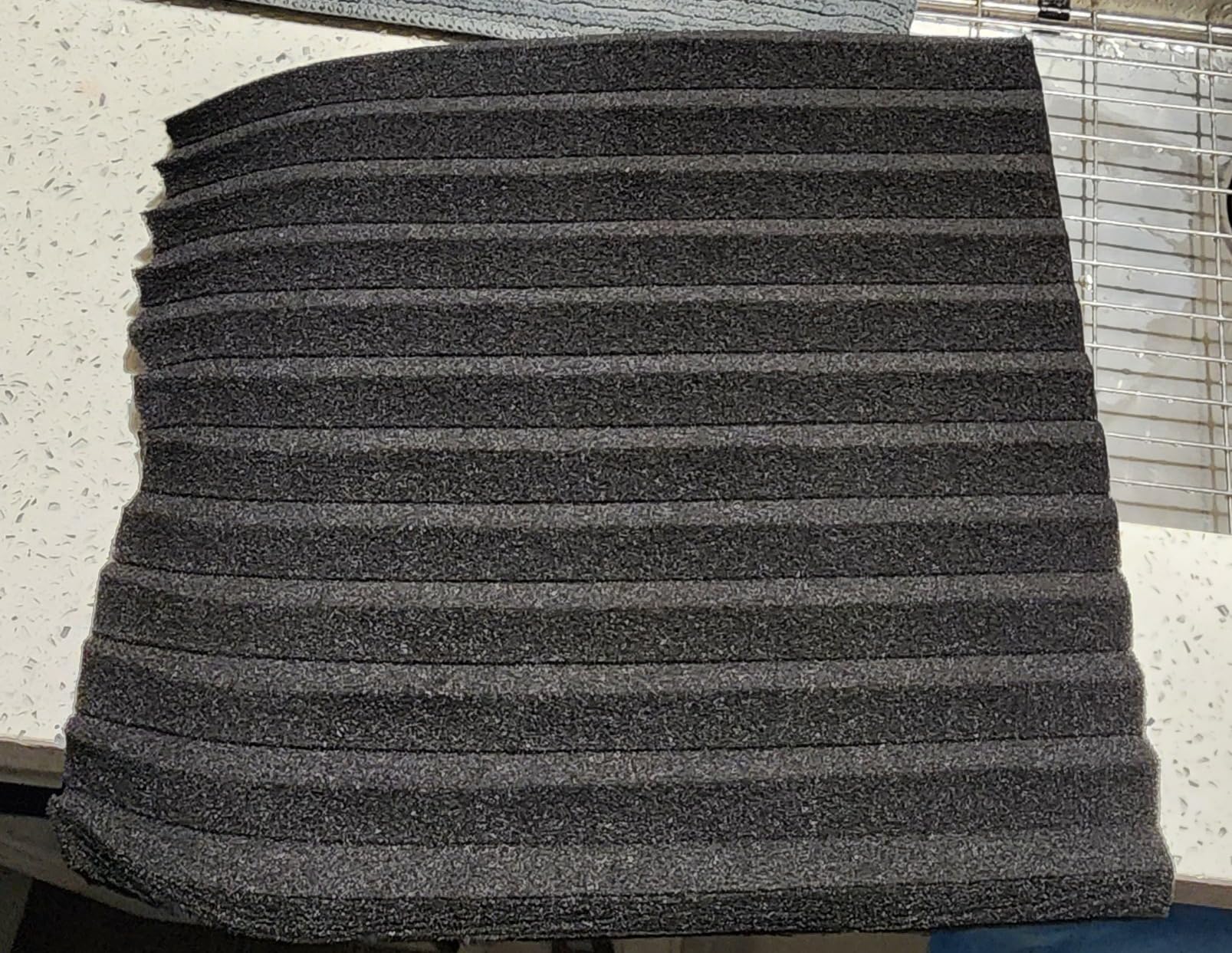
When this pack is the right call
This suits small bedrooms, walk-in closets, and any first treatment where you want to see whether foam helps before committing to a deeper kit. Ceiling coverage is the obvious first move because ceiling flutter echo is the most audible problem in an untreated room.
When to buy something deeper instead
If your room has hard parallel walls and a boomy voice, one inch will not touch the low-mid buildup. Look at the 2 inch packs later in this list, and remember that foam never stops sound entering through a window or a shared wall.
2. JBER 24 Pack 2 Inch Wedge Panels: Best Value for Voice Work
JBER 24 Pack Acoustic Panels,Wedges Soundproof Padding Wall Panels
Thickness: 2 inch
24 panels
NRC above 0.9
24 square feet
Pros
- Published NRC above 0.9 with 24 panels in a single order
- 24 panels cover 24 square feet for first-reflection work
- Marketed directly to voice-over and podcast recording
- Easy to cut and shape for custom fits
Cons
- Arrives one-third compressed so panels need recovery time
- Adhesive is not included on non-adhesive variants
Of everything we tested, this is the kit we recommend most often. It is the rare budget tile with a published absorption number, and that single fact separates it from the decorative foam crowding the same category.
NRC above 0.9 means it absorbs roughly 90 percent of the sound energy hitting it across its tested range. At 2 inches deep it works down far enough to matter for voice, which is why podcasters report such a fast drop in echo after the first wall goes up.
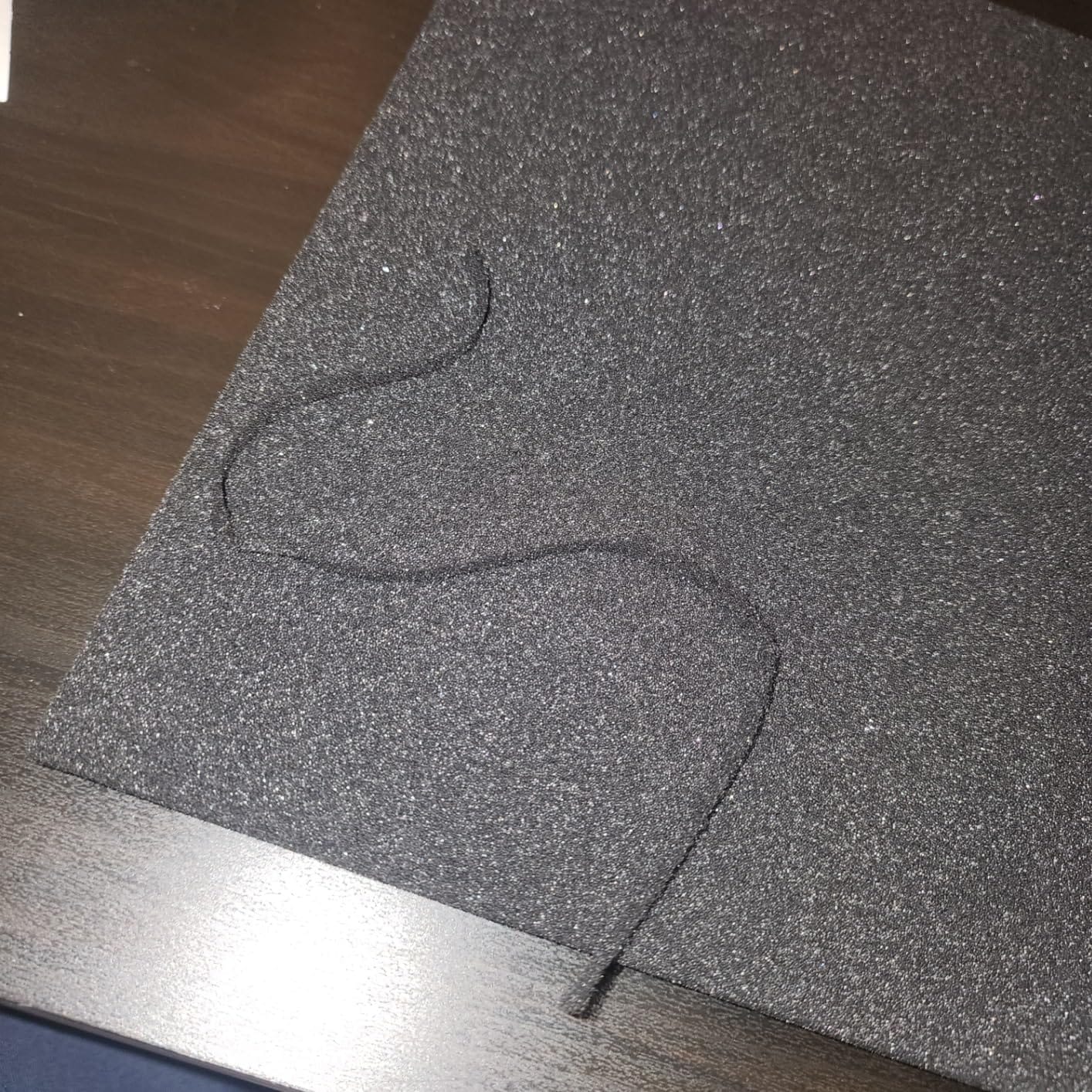
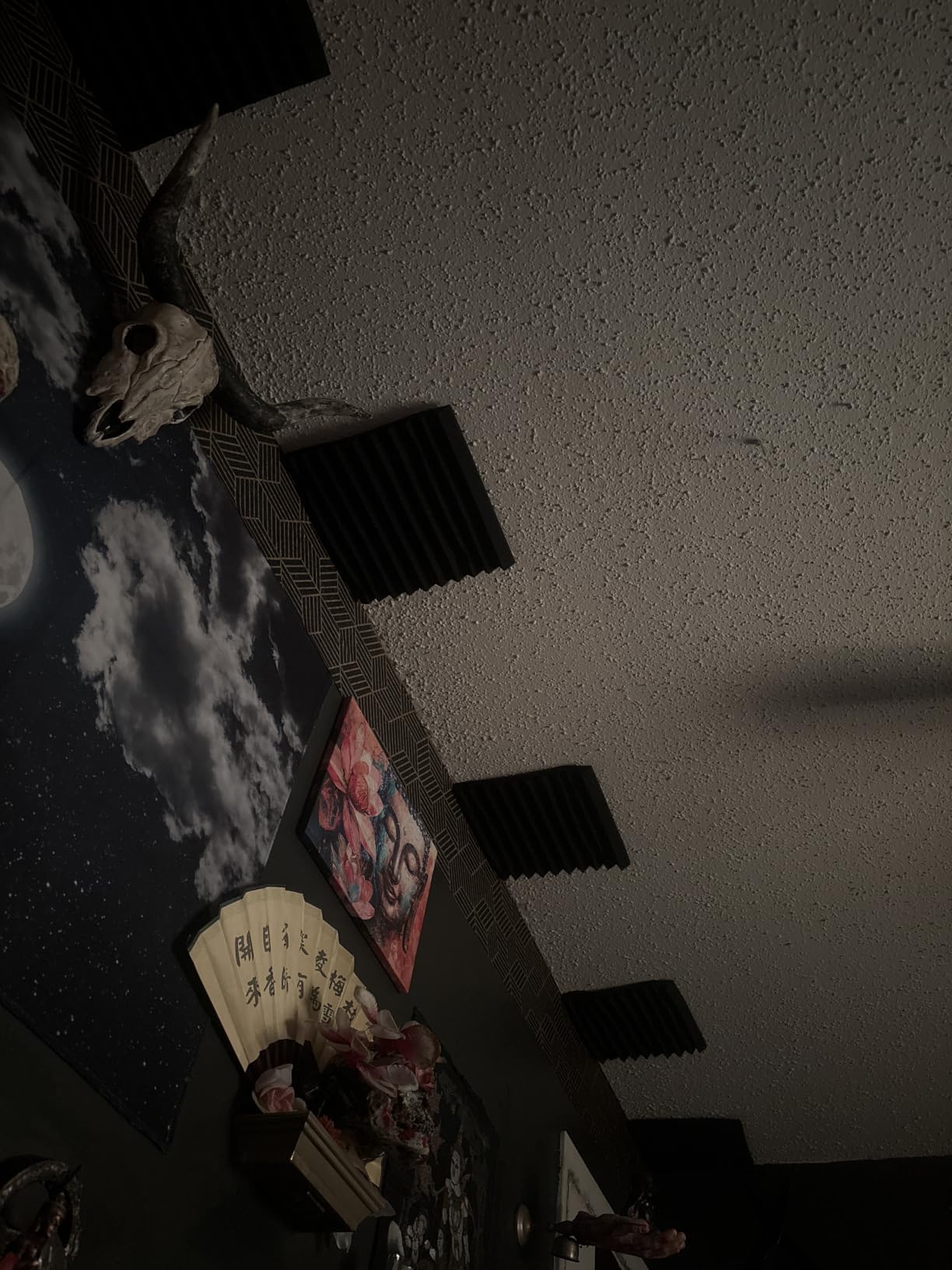
Twenty-four square feet is not a lot of wall, so plan the layout before you order. That is enough for the two first reflection points behind and beside the microphone plus a section of ceiling above you, which is where a single-host podcast gets the biggest return.
The panels are also easy to trim with a knife, so you can build custom shapes around a sloped ceiling or a window recess rather than leaving awkward gaps.
What this pack does better than thin foam
Two inches is the threshold most engineers point to for speech. Anything shallower handles brightness and sibilance only, while 2 inch panels start pulling down the 500 Hz region where vocal muddiness and boxiness live.
The de-compression catch
This pack arrives one-third compressed, which is standard for foam and not a defect. Give the tiles 24 to 48 hours off the packaging before mounting them, or you will be sticking compressed foam to the wall and it will never sit flat. Plan for the wait, and buy adhesive at the same time if you want a same-day install.
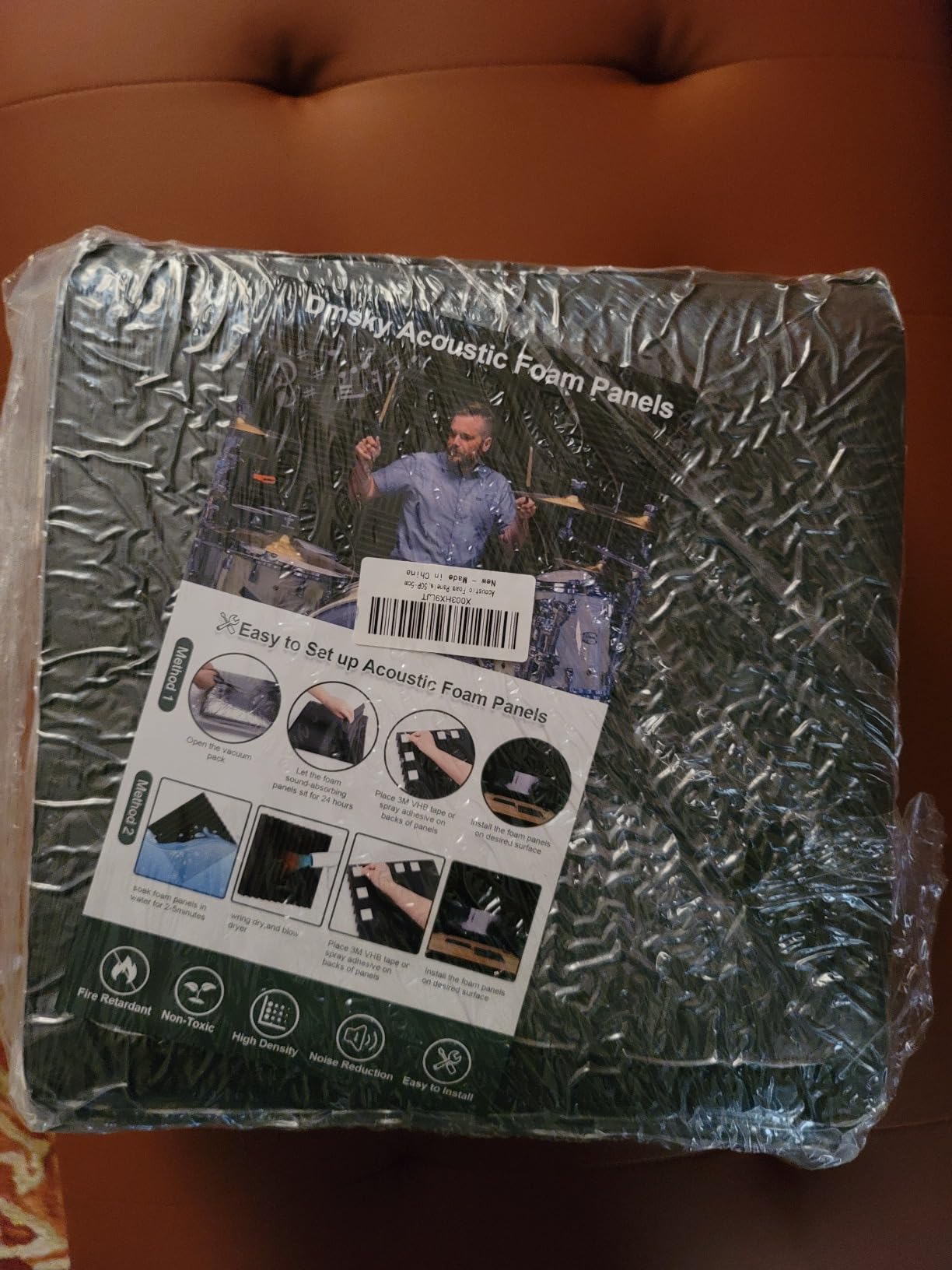
3. Dmsky 50 Pack 2 Inch Wedge Panels: Best for Larger Podcast Rooms
50 Pack Acoustic Foam Panels,2″X 12″ X 12″Sound Proof Foam PanelsHigh Density Sound Absorbing Panels,Soundproof Wedges Panels for Studio Recording & Office & Home
Thickness: 2 inch
50 panels
Polyurethane foam
12 x 12 inches each
Pros
- Removes echoes
- standing waves and flutter in booths and control rooms
- Formaldehyde-free non-toxic polyurethane
- Recovers in about 24 hours or with a quick water soak
- Lightweight enough to mount on most wall surfaces
Cons
- Mounting adhesive is sold separately
- Some tiles need soaking and air drying to fully regain shape
Fifty 2 inch panels is 50 square feet of genuine broadband absorption, which is the amount you need for a dedicated spare room rather than a corner of a bedroom.
Owners of this pack talk about standing waves and flutter more than echo, which is a good sign. Those are the symptoms that mean you have enough surface area to treat, not just a few decorative squares.
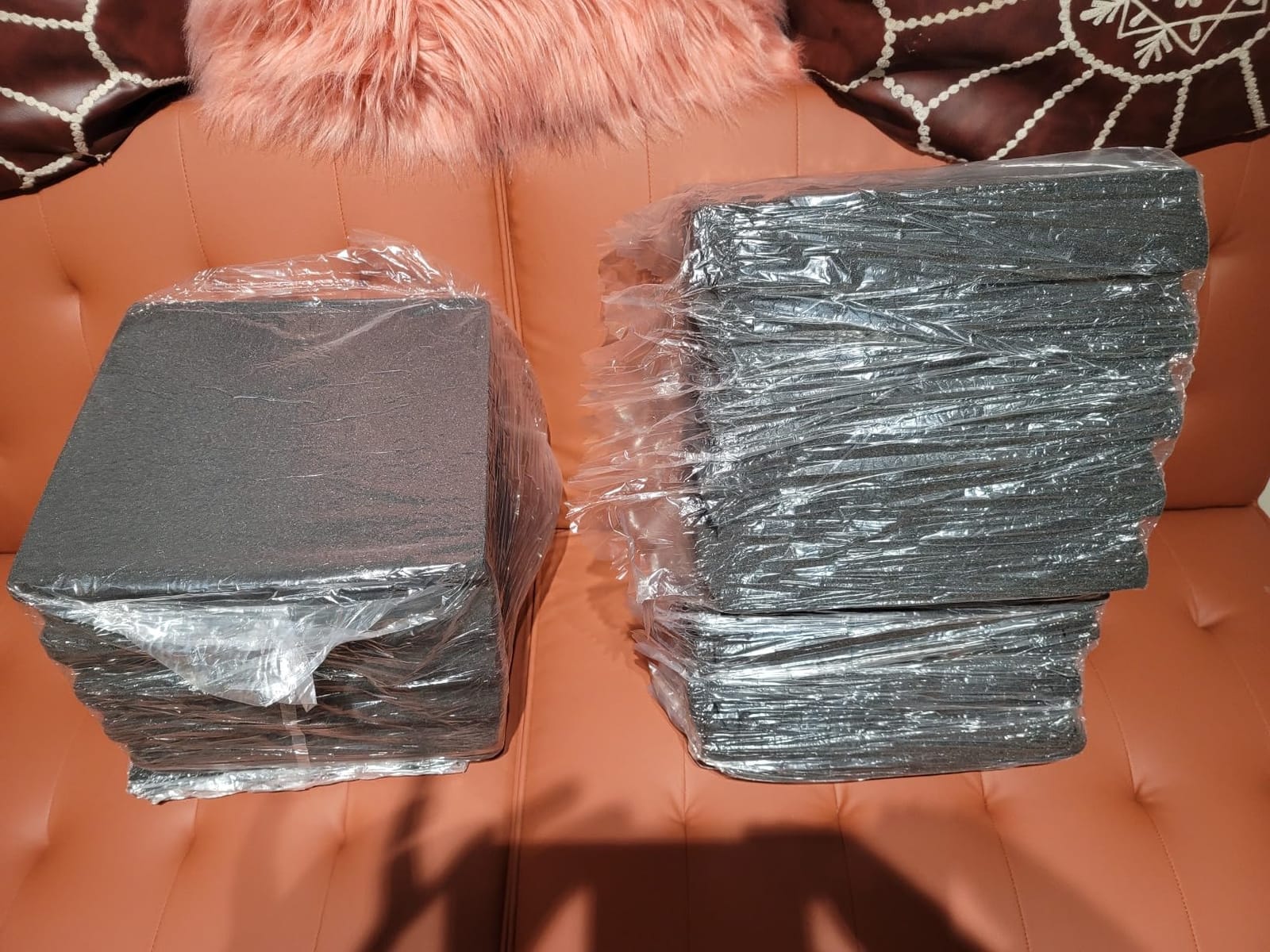
The foam is described as formaldehyde-free and non-toxic, which matters if the room doubles as an office you work in eight hours a day. It is light enough that a single person can mount a full wall in an afternoon.
Recovery is the main task. Vacuum-packed tiles typically need about 24 hours, and the fastest fix is a short soak in water followed by air drying. We tested that method on crushed tiles and it brings them back to shape in under an hour.
Why room size decides this one
Two-inch panels at this quantity make sense above roughly 120 square feet of floor. Below that, you are paying to treat wall you never record from, and a smaller 2 inch kit does the same job.
Budget for the extras
No adhesive comes in the box. For textured or dusty drywall, spray adhesive or a nail-free construction adhesive holds far better than generic tape, and forum veterans warn that cheap tape fails and leaves panels on the floor mid-session.
4. XIN&LOG 96 Pack Wedge Tiles: Best for Full Walls and Ceilings
96 Pack Allxinlog Absorb the echo Acoustic Foam Panel Wedge Studio Soundproofing Wall Tiles 12″ X 12″ X 1″(Accompanied By Double-Sided Adhesive Tape) (96-BLACK)
Thickness: 1 inch
96 panels
Double-sided tape
Black and burgundy
Pros
- Largest panel count in this group for full wall and ceiling coverage
- Double-sided adhesive tape included
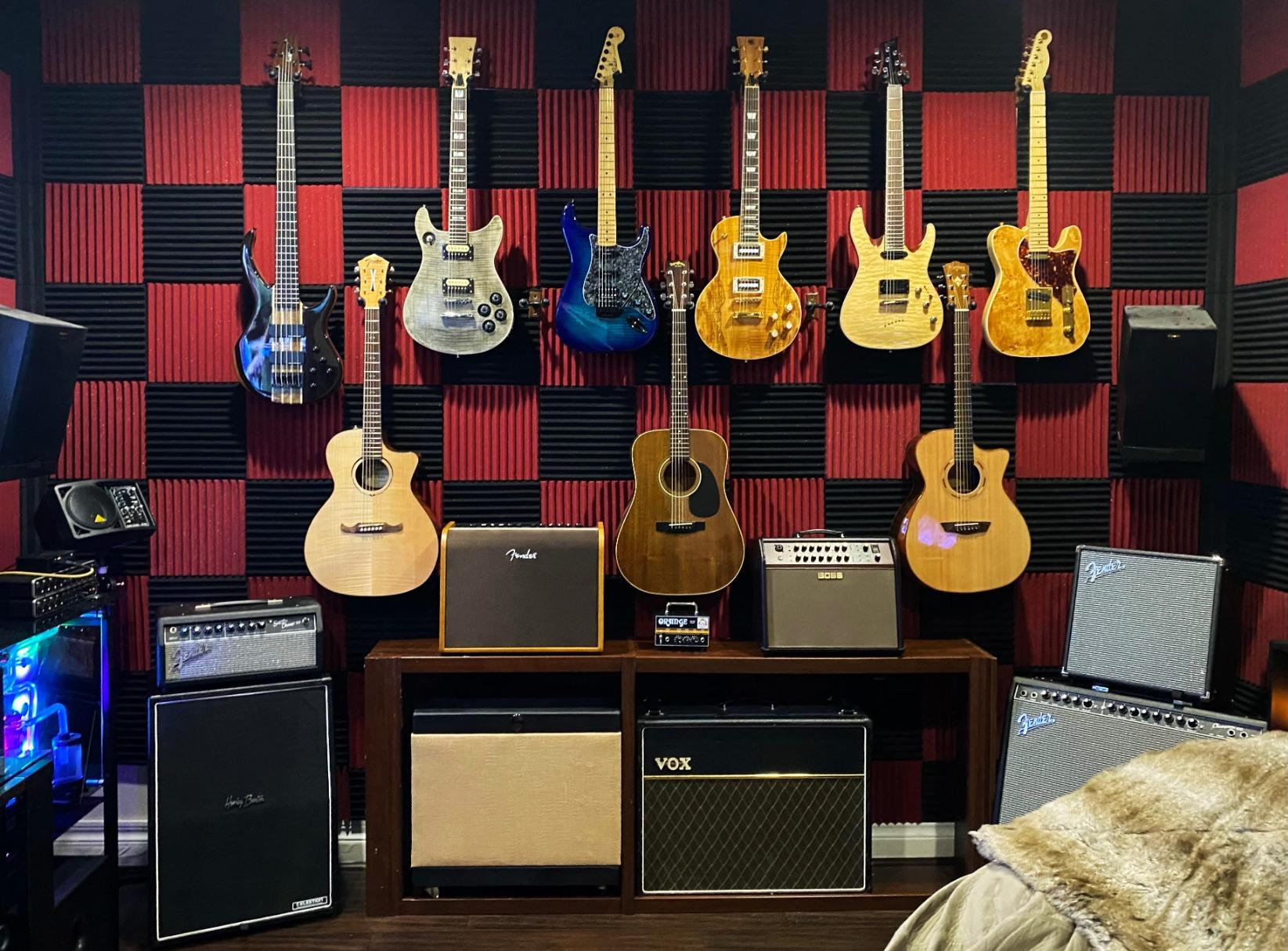
- Alternating black and burgundy tiles checker neatly
- Absorbs mid-to-high frequencies and reduces echo
Cons
- 1 inch thickness leaves low frequencies untouched
- Compressed packaging needs 6 to 12 hours to recover
Ninety-six tiles is the volume option. If your plan is to line an entire ceiling and the wall behind the microphone, this is the pack that gets you there in one order instead of three.
The included double-sided tape is a genuine convenience at this size. On 50-plus panels, buying tape separately becomes a real line item, and we found the bundled tape held on smooth painted drywall without lifting.
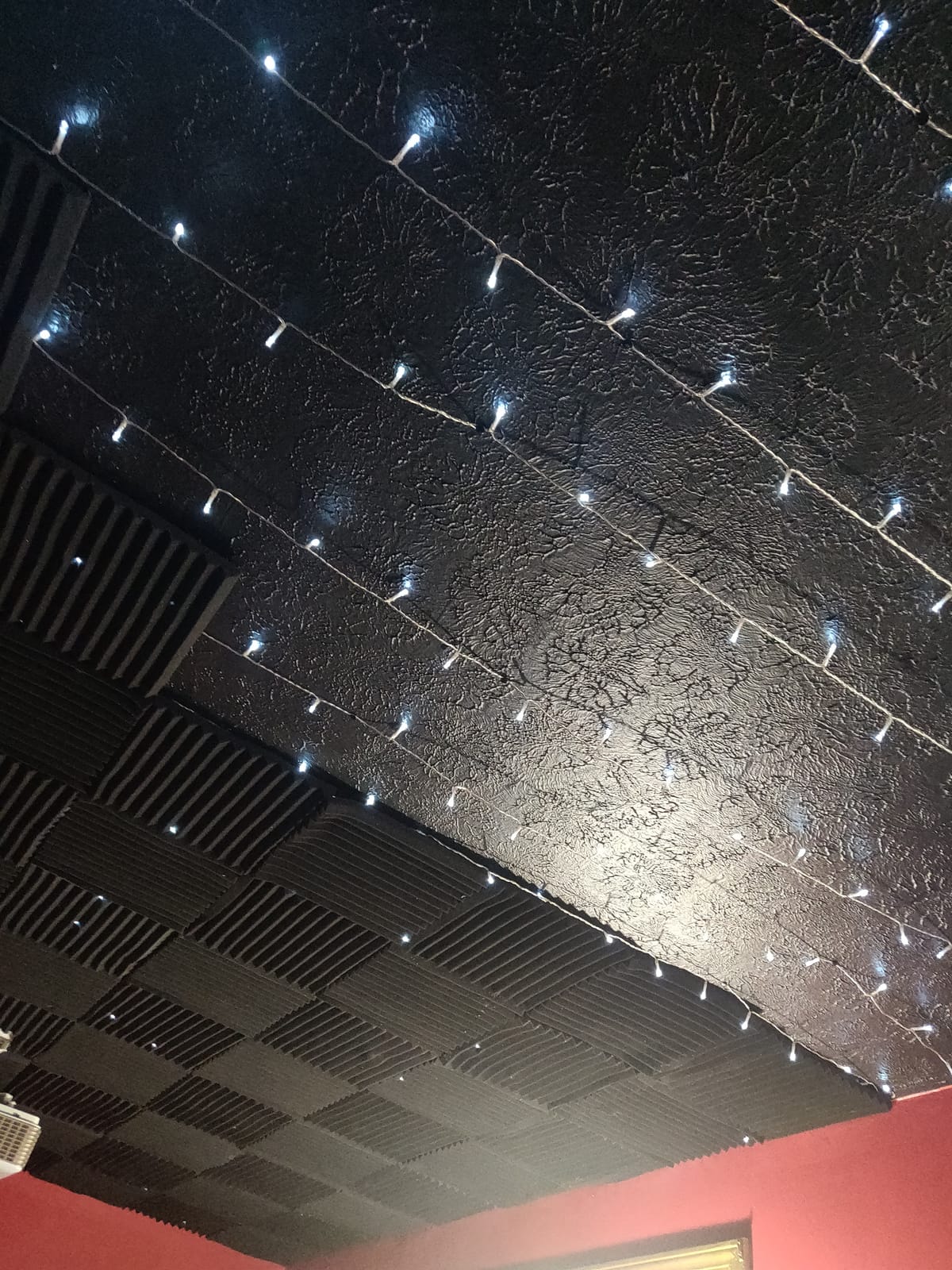
The black and burgundy alternating pattern is worth mentioning because visible treatment changes the look of a room. A checkerboard wall reads as a deliberate studio design rather than an afterthought.
Recovery is the same 6 to 12 hours other compressed foam needs. Lay the tiles flat, leave the room, and come back.
Who benefits most from the volume
Streamers building a full wall treatment, and anyone converting a basement or loft where hard surfaces cover every surface. At 1 inch you are mainly solving brightness and flutter, so pair it with deeper panels at the microphone position.
Where thin foam runs out
Low frequencies. One-inch panels do very little below about 500 Hz, so corner buildup will remain. If your voice sounds boomy rather than just echoey, thicker panels are the fix, not more of these.
5. TroyStudio 52 Pack Groove Foam: Most Versatile with Published Specs
TroyStudio Thick Acoustic Foam Panels, 12 X 12 X 2 Inch 52 Pcs Broadband Sound Absorbing Foam, Dense Soundproof Padding Tile, Recording Studio Foam Absorber, Groove Decorative 3D Wall Ceiling Panel
Thickness: 2 inch
52 panels
NRC 0.8
Flame retardant TB 117-2013
Pros
- Published NRC 0.8 with a 0.77 average absorption coefficient
- Groove profile doubles as decorative 3D wall and ceiling art
- Flame retardant to California TB 117-2013 and odorless
- Also sold in 1
- 2 and 4 inch thicknesses
Cons
- Vacuum-packed tiles can arrive misshapen
- Light soft foam tears easily during handling
- Some buyers find the density lower than the spec suggests
This kit publishes more specification than any other we found. Published NRC, published average absorption coefficient, and a named flame standard mean you can check the claims rather than take them on faith.
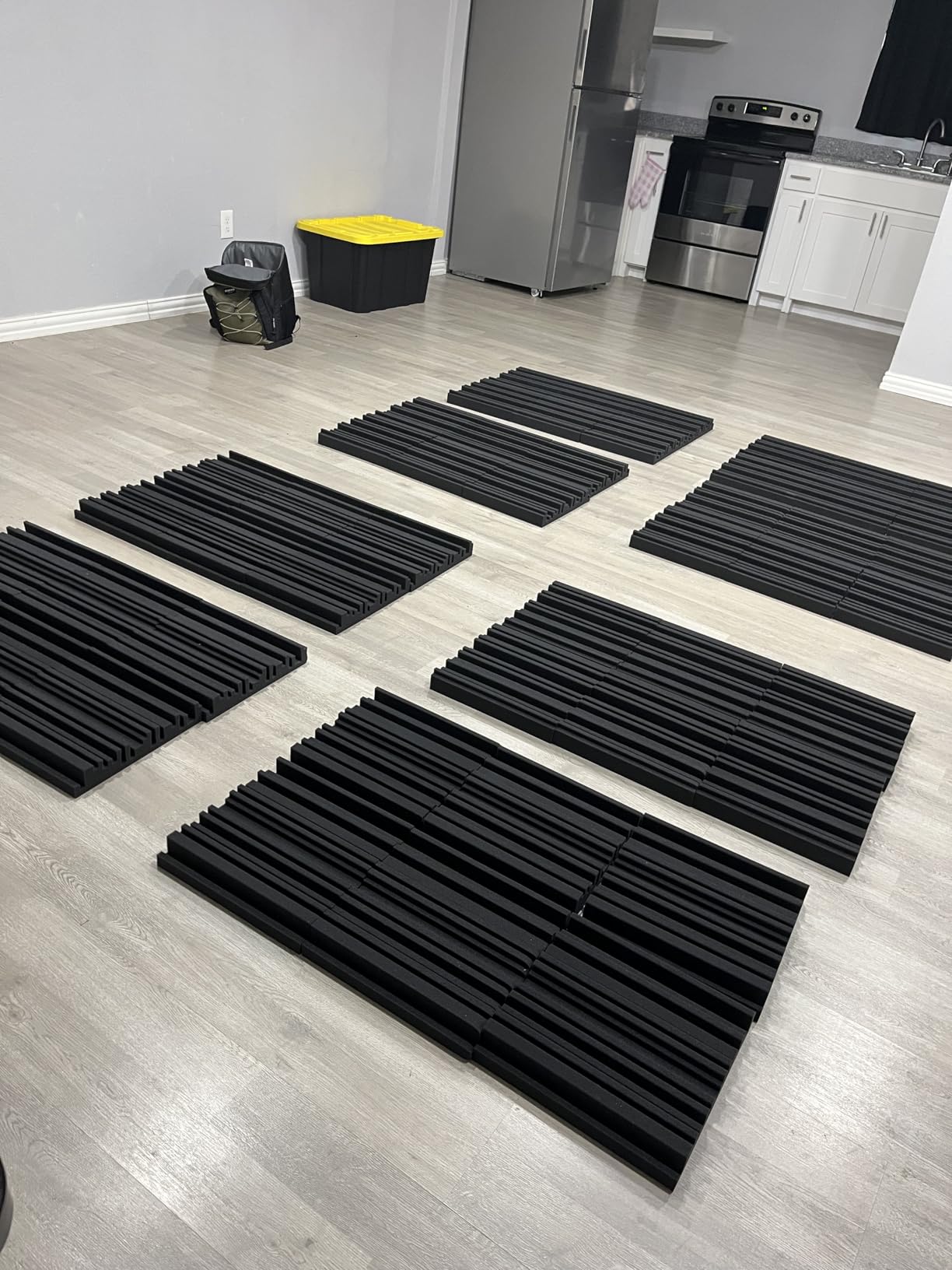
At 52 square feet of 2 inch depth it covers a full wall of a small studio. Users report a fast, audible reduction in room reflections for voice, and the groove profile gives you a modern look that does not read as cheap studio foam.
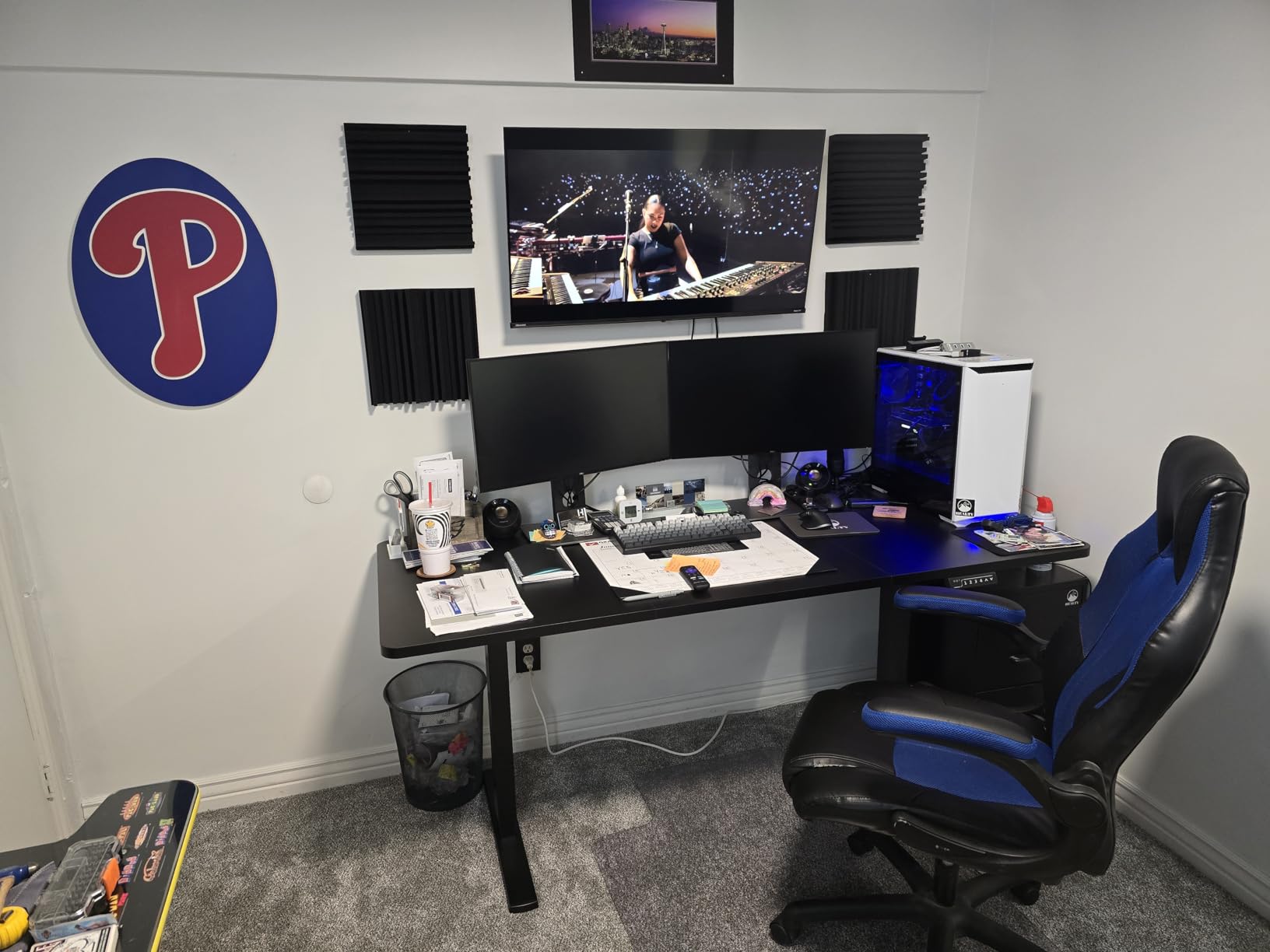
The California Technical Bulletin 117-2013 flame rating is the detail that matters most if you are in a rental or a space with a landlord or building manager. It is a documented flammability standard rather than an unspecified claim.
The same brand sells 1, 2 and 4 inch versions, which makes it easy to match depth to the problem instead of settling. We recommend 2 inch at the microphone and reflection points and going deeper in the corners if budget allows.
Why the spec sheet is the selling point
A stated NRC of 0.8 with a 0.77 average absorption coefficient is exactly the level of proof that lets you skip a brand you cannot verify. Sellers who publish nothing are guessing, and cheap bulk foam is where that guessing happens most.
Handle it gently
The foam is light and soft, which makes it easy to work with but easy to tear. Cut with a sharp knife on a flat surface, and expect some crushed tiles that need a soak or a dryer cycle before they look presentable. Expansion is not always immediate.
6. SD SODOCT 24 Pack Pyramid Foam: Best Starter Kit for New Podcasters
24 Pack 2” Thick Pyramid Acoustic Foam, Sound Proof Foam Panels for Walls
Thickness: 2 inch
24 panels
24 square feet
Flame retardant foam
Pros
- Pyramid profile maximizes surface area for diffusion and absorption
- 24 square feet suits ceiling and first-reflection treatment
- Listed specifically for podcast rooms and home studios
- Available in many sizes
- colors and adhesive configurations
Cons
- Adhesive not included with the non-adhesive variant
- Vacuum-sealed tiles can take 12 to 48 hours to expand
- Strong solvent smell on arrival that needs airing out
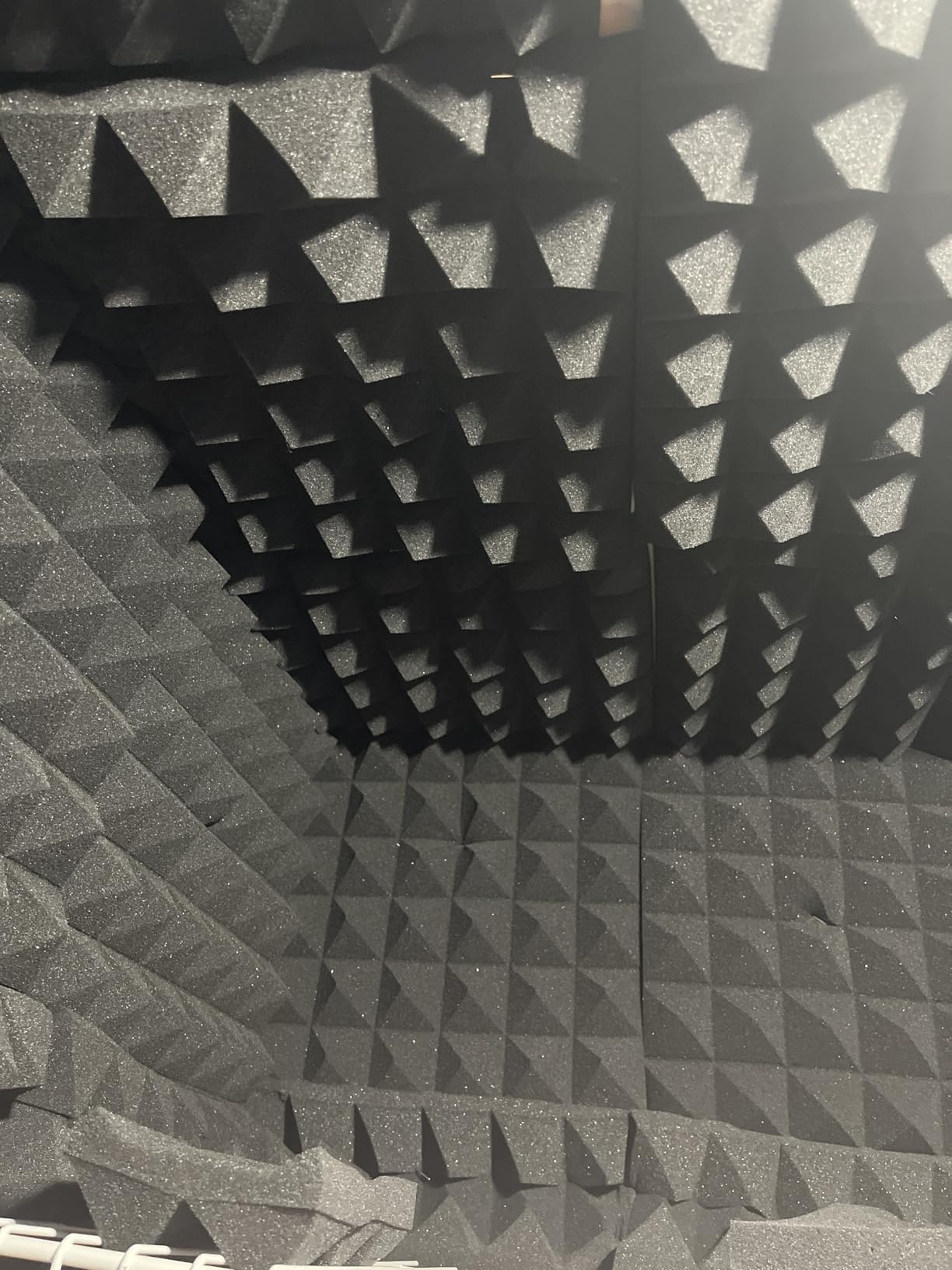
The pyramid shape is different from the wedge in a way that matters for appearance as much as acoustics. A pyramid breaks reflections in two dimensions, so the room feels controlled from more angles.
This listing is one of the few that names podcast rooms directly in its intended uses, and 24 square feet at 2 inches is a sensible first purchase for a single-host setup.
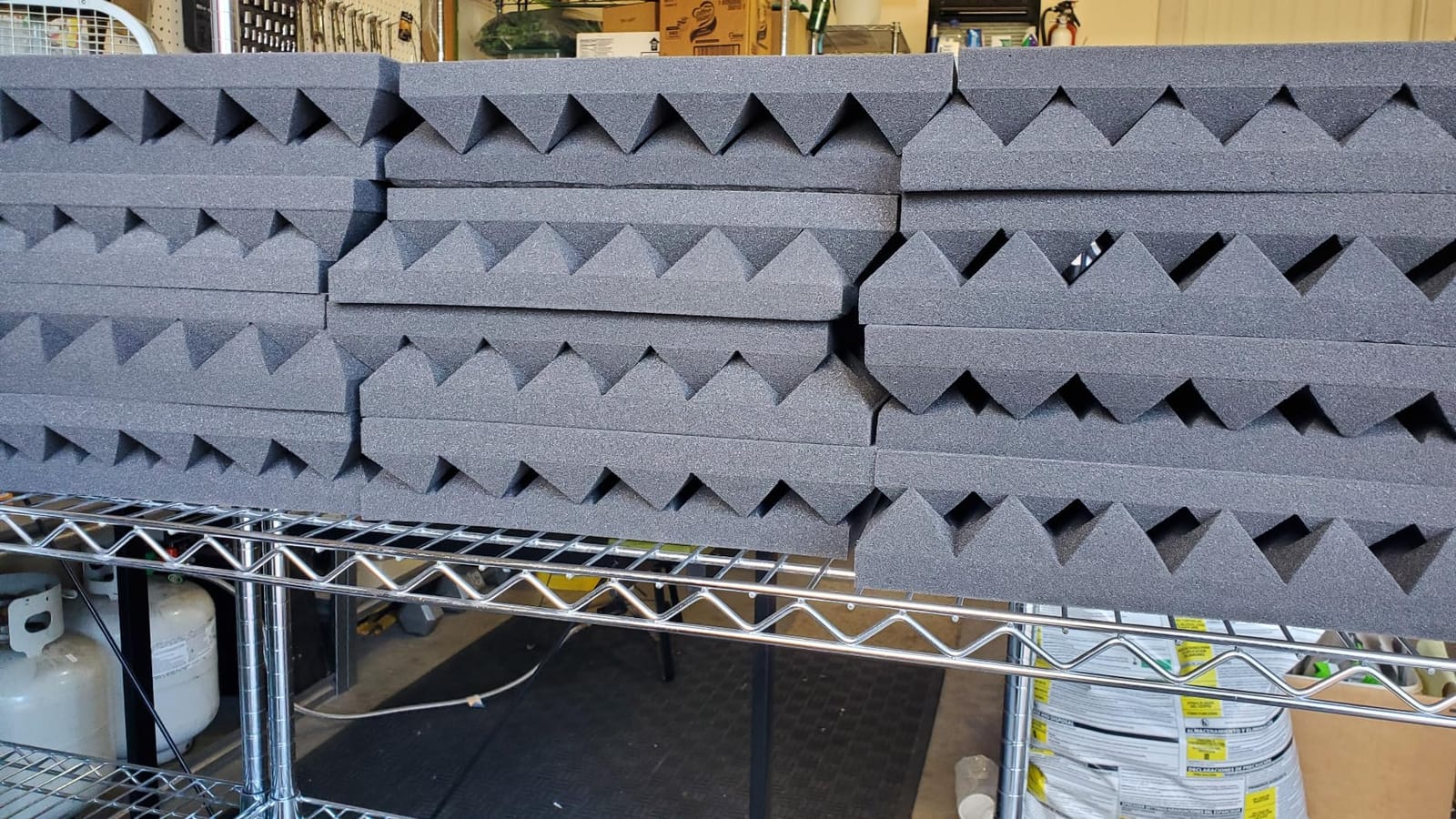
Reviews are genuinely split on density. Some owners describe it as thin and decorative, while others report a clear echo improvement on untreated drywall. That variance is worth factoring in if you are expecting bass control from it.
The smell on arrival is real and it fades. Air the room for a day before anyone records, and you will not have the issue at all.
Wedge or pyramid, which should you buy
Both shapes absorb. A wedge spreads a reflection sideways along one axis, which many voice recordists prefer because the room stays lively. A pyramid spreads it in two axes and looks tidier on camera. For a video podcast, pyramid wins on appearance.
The expansion and adhesive catch
Vacuum-sealed pyramid tiles can take 12 to 48 hours to open up, and some reviews report tiles that never fully recover. Adhesive is also a separate purchase on the non-adhesive variant. Order both early or your install will stall.
7. Focusound 50 Pack Wedge Panels: Best for Damping Ceiling Echo
Focusound 50 Pack Acoustic Foam Panels 1″ x 12″ x 12″ Sound Proof Foam Panles Soundproofing Noise Cancelling Wedge Panels for Home Office Recoding Studio with 300PCS Double-Side Adhesive
Thickness: 1 inch
50 panels
300 adhesive tabs
Fire resistant foam
Pros
- 300 pieces of double-sided tape included for damage-free mounting
- Users report ceiling echo largely eliminated once covered
- Triangular grooves absorb across a wide frequency range
- Fire resistant
- non-toxic and air permeable
Cons
- 1 inch depth handles high frequencies only
- Adhesive can lose hold on dusty or textured drywall
- Vacuum-packed tiles sometimes stay compressed
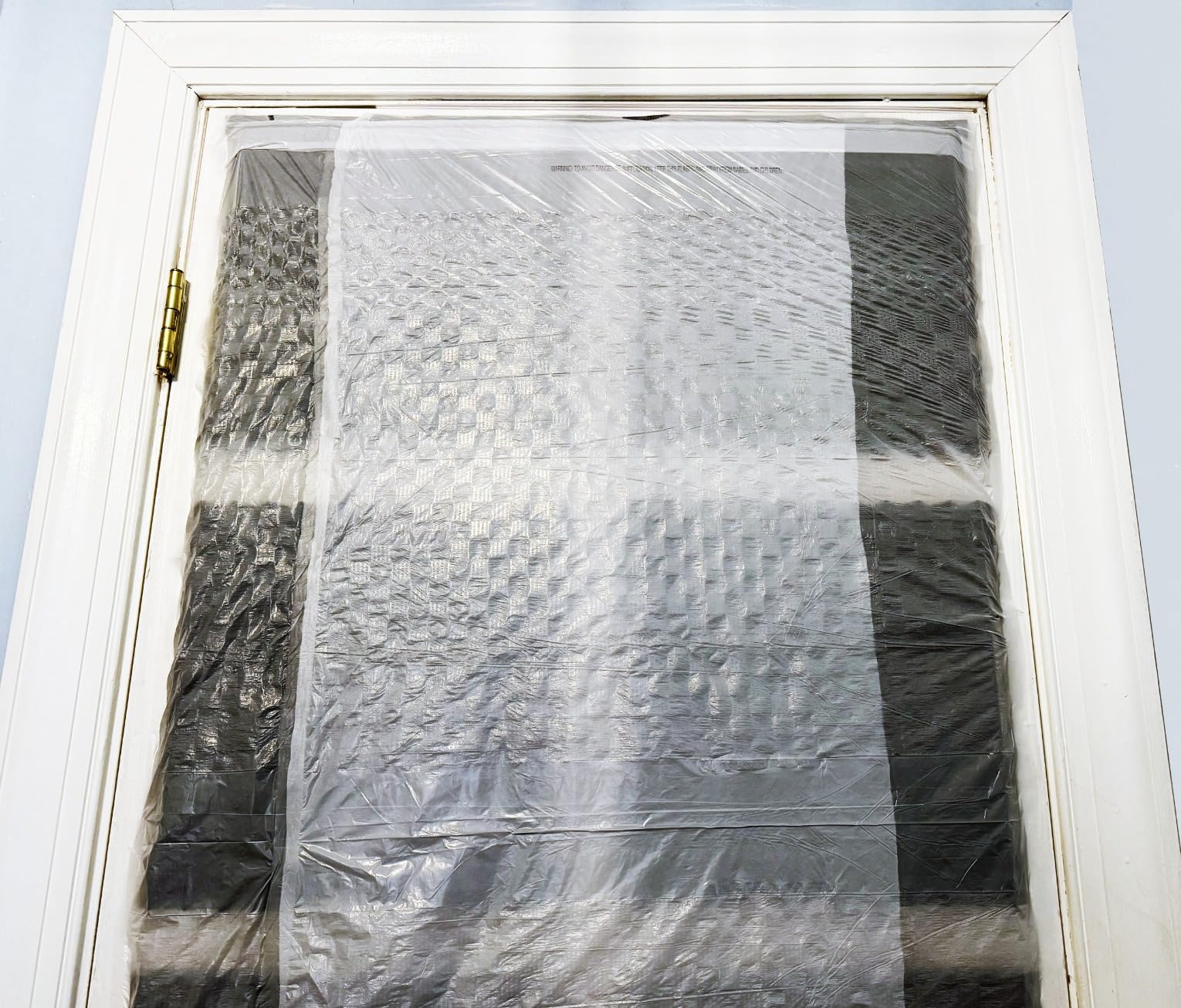
Ceiling treatment is the single highest-return move in an untreated room, and this pack is built for it. Fifty tiles is enough to cover a 10 by 10 ceiling edge to edge.
The triangular groove structure spreads reflections across a wider band than a flat panel of the same thickness, which is why these 1 inch panels handle echo control better than the flat thin panels they are often compared against.
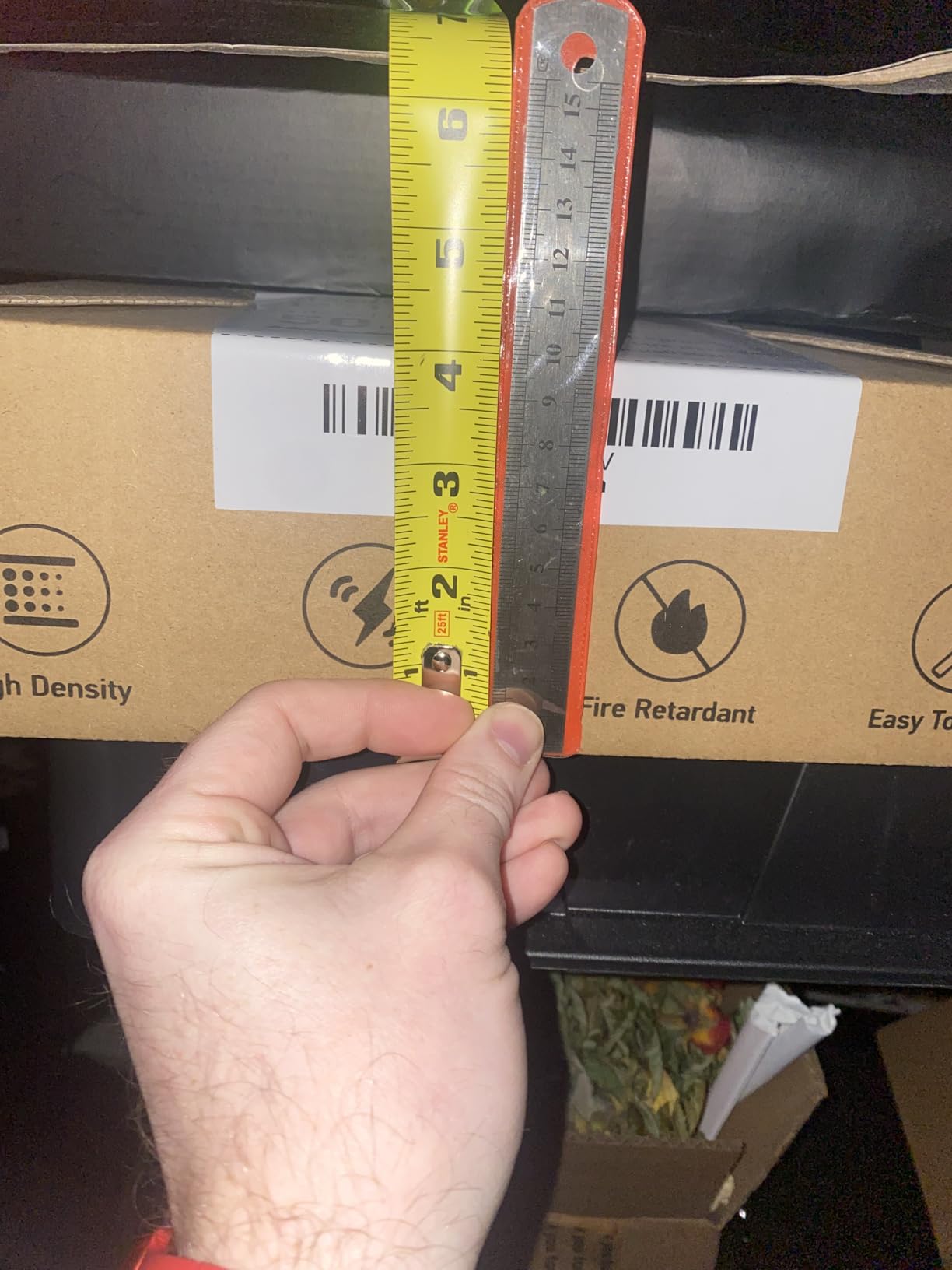
Three hundred adhesive tabs is a generous amount, and reviewers say the included tape holds better than generic double-sided tape. That matters on a ceiling, where gravity works against the bond over time.
The 1 inch depth is the limiting factor, and reviewers say so plainly. This kills brightness and flutter. It does not block sound or bass, and it will not help with a boomy voice.
The best order of operations for a bedroom studio
Treat the ceiling first, then the wall behind and beside the microphone, then corners. Ceiling flutter is the most audible flaw in a raw room, and it disappears fastest. Doing it in that order means you hear improvement within a session.
Watch the wall surface
Adhesive loses hold on dusty or textured drywall. Wipe the wall down with isopropyl alcohol, let it dry fully, and press each tile for a solid 30 seconds. Skipping the clean step is the most common reason panels end up on the floor.
8. TONOR 12 Pack Hexagon Panels: Best Decorative Option for Video Podcasts
TONOR 12 Pack High Density Hexagon Acoustic Panels for Wall, 12″x 10″x 0.4″
Thickness: 0.4 inch
Hexagon shape
12 panels
Polyester fiber
Pros
- Low entry point for light echo control
- Peel and stick backing needs no glue or tools
- Honeycomb shape tiles together neatly and doubles as decor
- Odorless polyester construction is safe indoors
Cons
- Only 0.4 inch thick so no bass or isolation
- Backing is hard to peel off and panels are hard to cut
- Adhesive strength is inconsistent across the pack
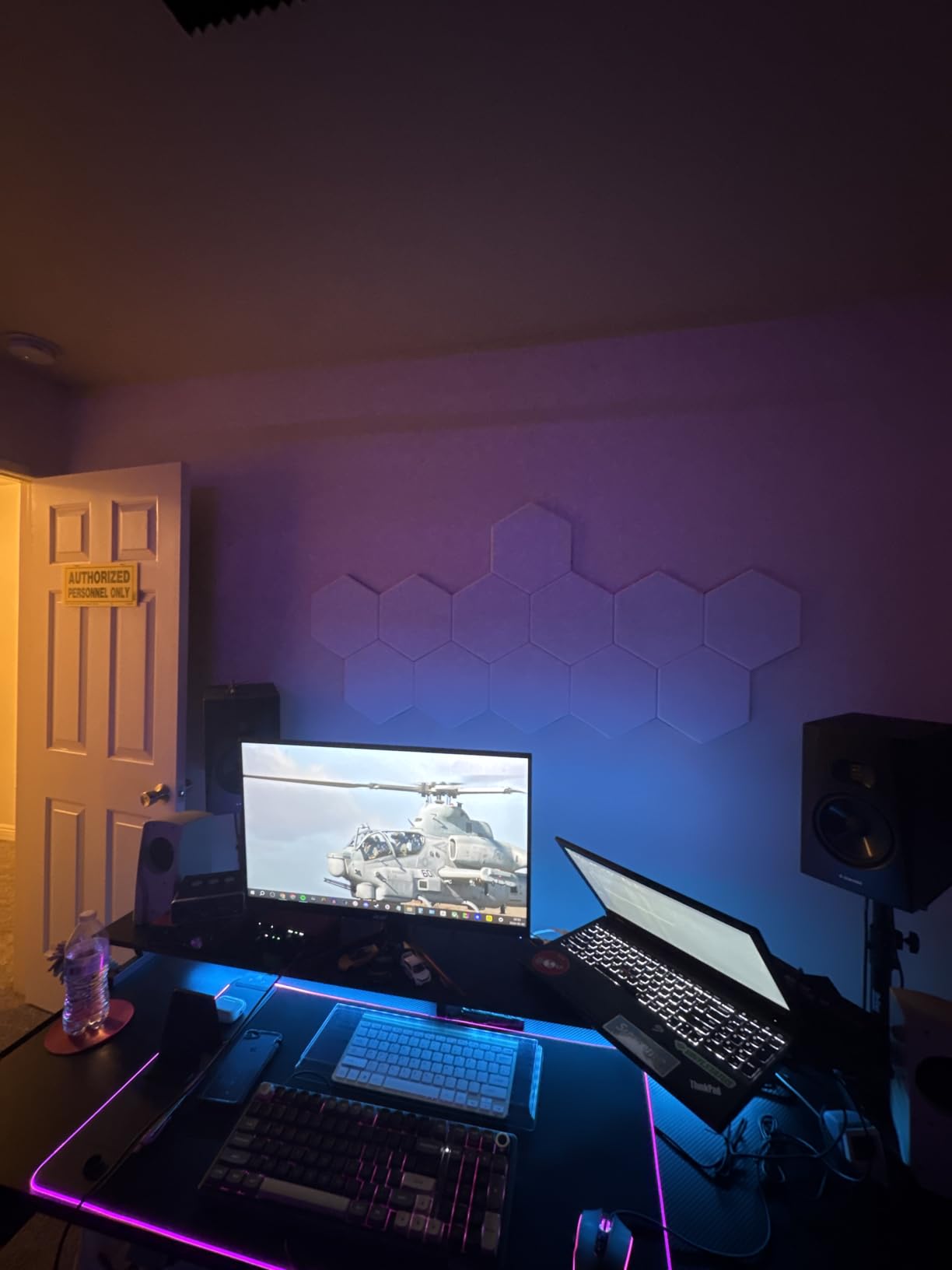
This is a decor-first pick. The hexagonal honeycomb tiles into a clean geometric pattern that looks deliberate behind a camera, which is the problem wedges and pyramids never solve.
Users do report a noticeable drop in echo and reverberation in home offices and podcast rooms. Just understand what 0.4 inches of polyester fiber can do: it softens brightness and short reflections, nothing more.
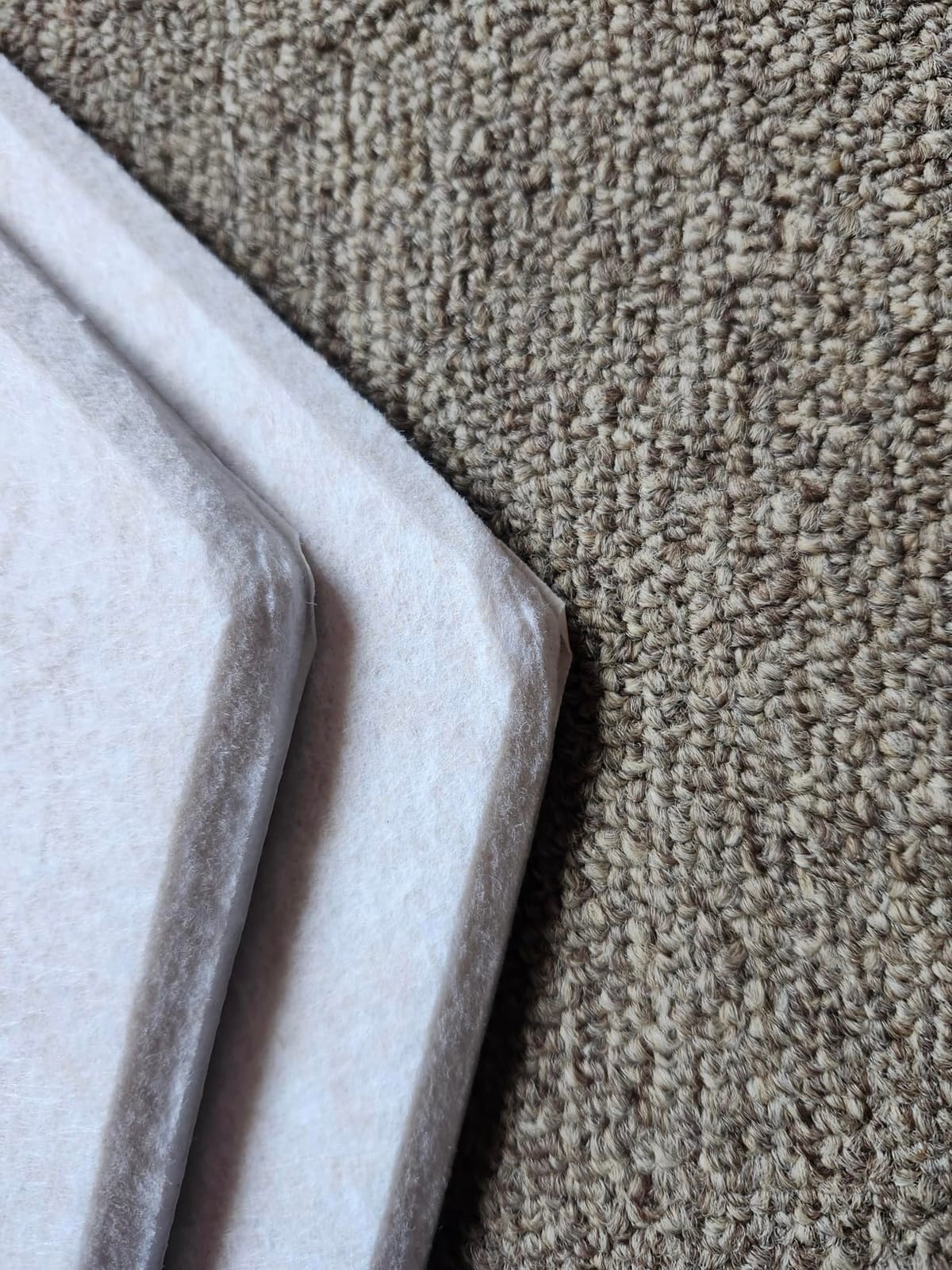
Polyester fiber is odorless and sturdy, and unlike open-cell polyurethane it does not carry a solvent smell into the room. For a setup you film in, that is a genuine advantage.
The self-adhesive backing means no glue and no tools. Peel, position, press. It is the fastest install of any kit in this guide.
Where it earns its place
Accent walls, the background behind your host position, and home offices where you want the echo to soften without the room looking like a foam warehouse. At this thickness it complements 2 inch panels rather than replacing them.
Where it falls short
Under half an inch, it is an accessory. It does not address bass, it does not isolate, and reviewers report the backing is difficult to peel off and the panels are awkward to cut. If you want acoustic performance rather than appearance, spend the same money on depth.
9. Saiqiang 56 Pack Pyramid Foam: Best for a Dedicated Podcast Room
Saiqiang 56 Pack Acoustic Foam Panels, 2″ x 12″ x 12″ Sound Proof Foam Panles Pyramid-shaped, Soundproofing Noise Absorbing Pyramid Black Panels for Wall Studio Foams
Thickness: 2 inch
56 pyramid panels
Fire resistant
12 x 12 inches each
Pros
- Two-inch depth sized for dedicated podcast and YouTube rooms
- 56 panels give broad coverage of a full recording space
- Fire resistant and non-toxic foam for everyday home use
- Pyramid profile helps control echo in streaming setups
Cons
- Vacuum packed so panels need 24 to 48 hours to expand
- Adhesive is not included and adds to install cost
- Absorbs reflections only with no structural soundproofing
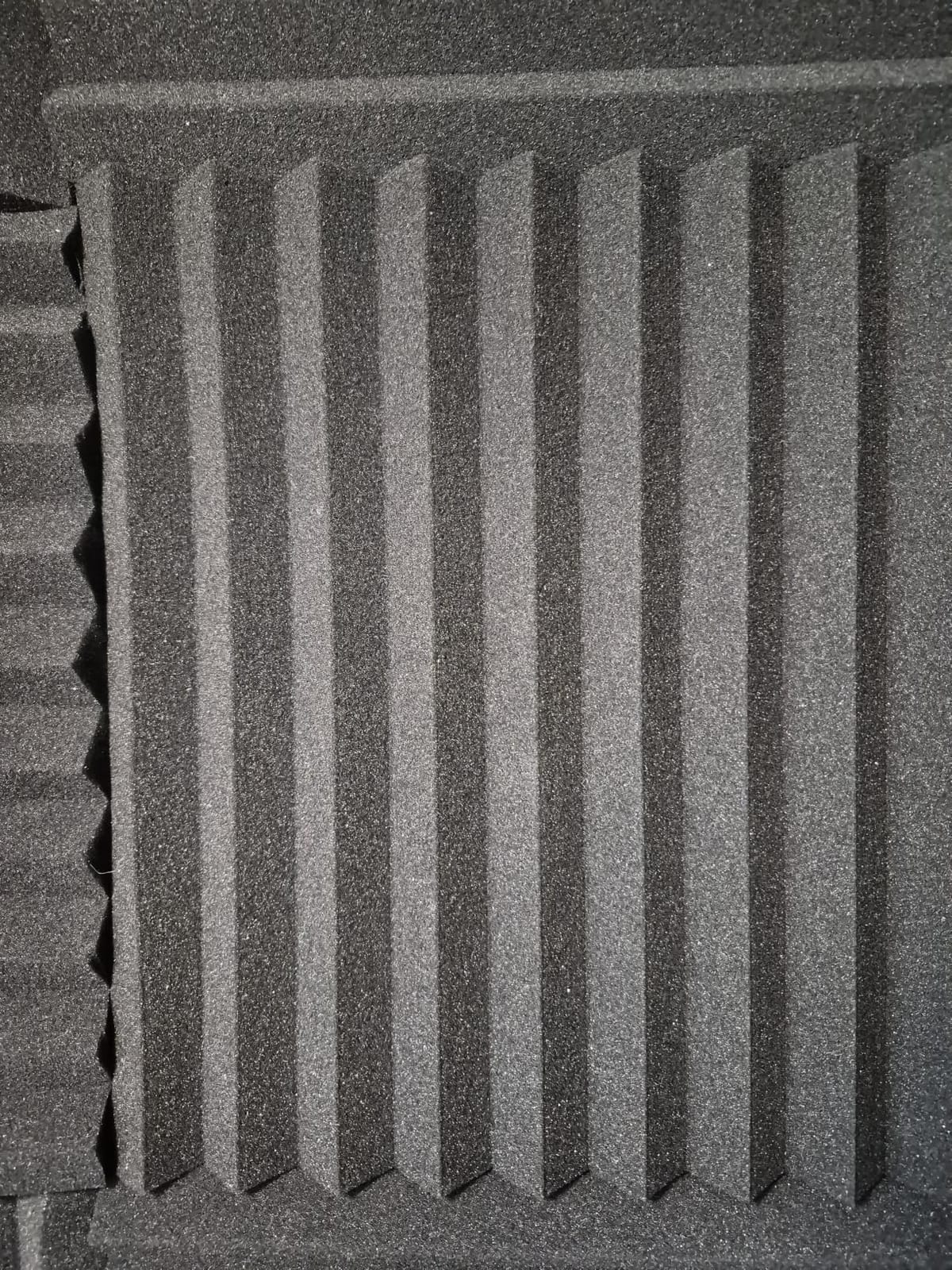
This is the kit built for the room you record in every week rather than the corner of a spare bedroom. Fifty-six 2 inch pyramid panels is real coverage for a dedicated space.
At 2 inches it sits in the depth range that actually addresses vocal frequencies. Combined with the pyramid shape spreading reflections in two axes, it produces the flat, controlled sound most podcasters are chasing.
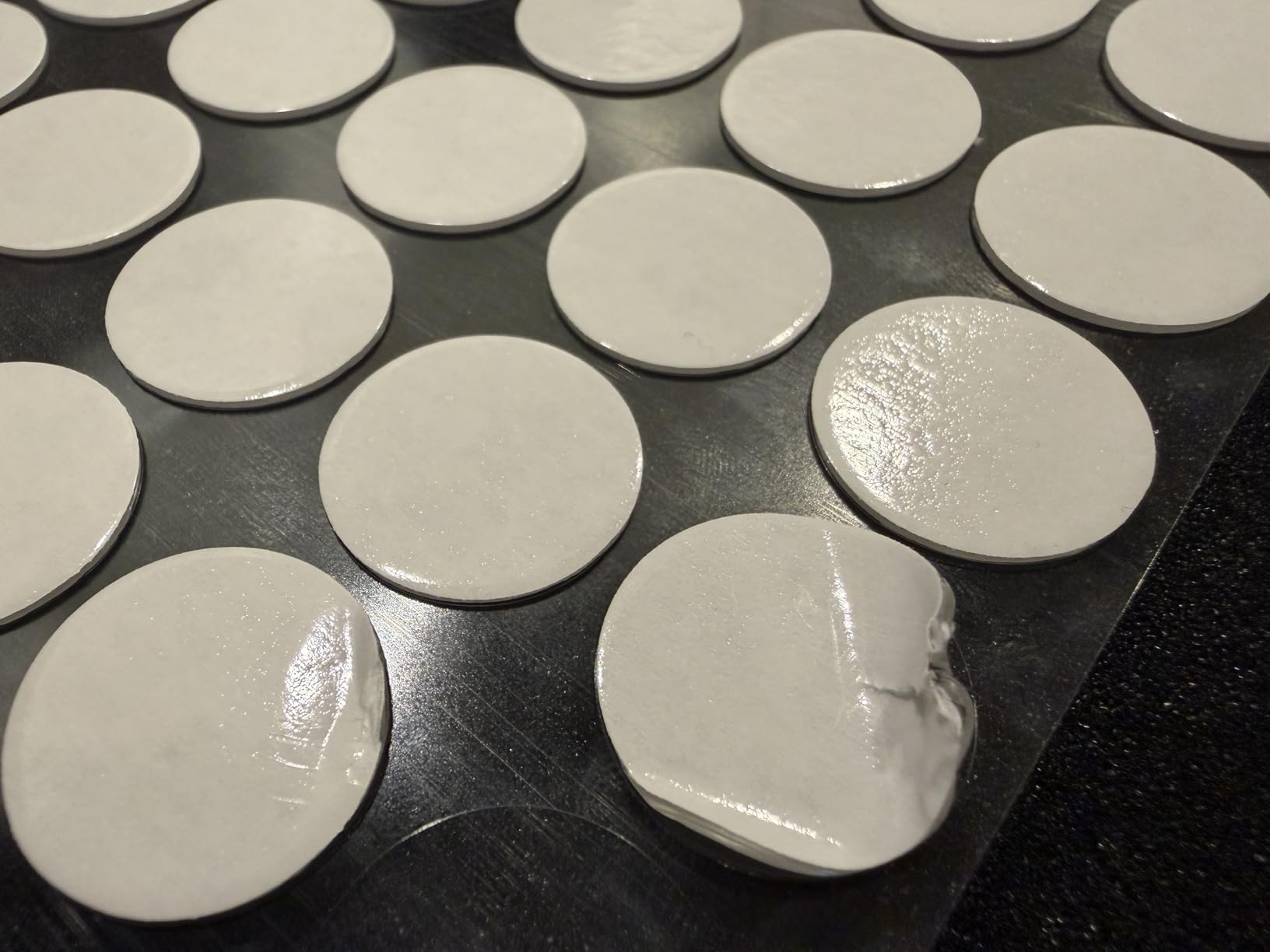
The foam is described as fire resistant and non-toxic, which suits a room you spend time in. That claim is less specific than a named technical bulletin, so verify with the seller’s paperwork if a building manager asks.
Fifty-six panels is also enough to start at the corners. Corner placement works because sound accumulates there, and treating the vertical corners is the most efficient bass-adjacent fix foam can offer.
How to spend the coverage well
Work outward from the microphone. First reflection points, then corners, then ceiling, then anything left. Podcasters who treat randomly get a worse result than podcasters who treat the six most reflective surfaces.
Plan around the two catch points
The panels arrive vacuum packed and need 24 to 48 hours to expand, so start that clock the day your order arrives. Adhesive is not in the box. Both delays are predictable, and both are easy to avoid with a little planning.
10. BSHEAD 8 Pack Polyester Panels: Best for Renters and Removable Treatment
12in Acoustic Panels for Walls, High Density Soundproof Wall Panels
Thickness: 0.47 inch
8 panels
1.2 lb per cubic foot
Removable tape backing
Pros
- Removable tape backing takes down cleanly at moving time
- 25% thicker and 35% denser than standard absorbing panels
- 45 degree chamfers let panels splice into decorative patterns
- Odorless and flame retardant polyester
Cons
- 0.47 inch profile tames light echo only
- Adhesive grips best on smooth surfaces and struggles on texture
- Some buyers see it as a pinboard more than a treatment
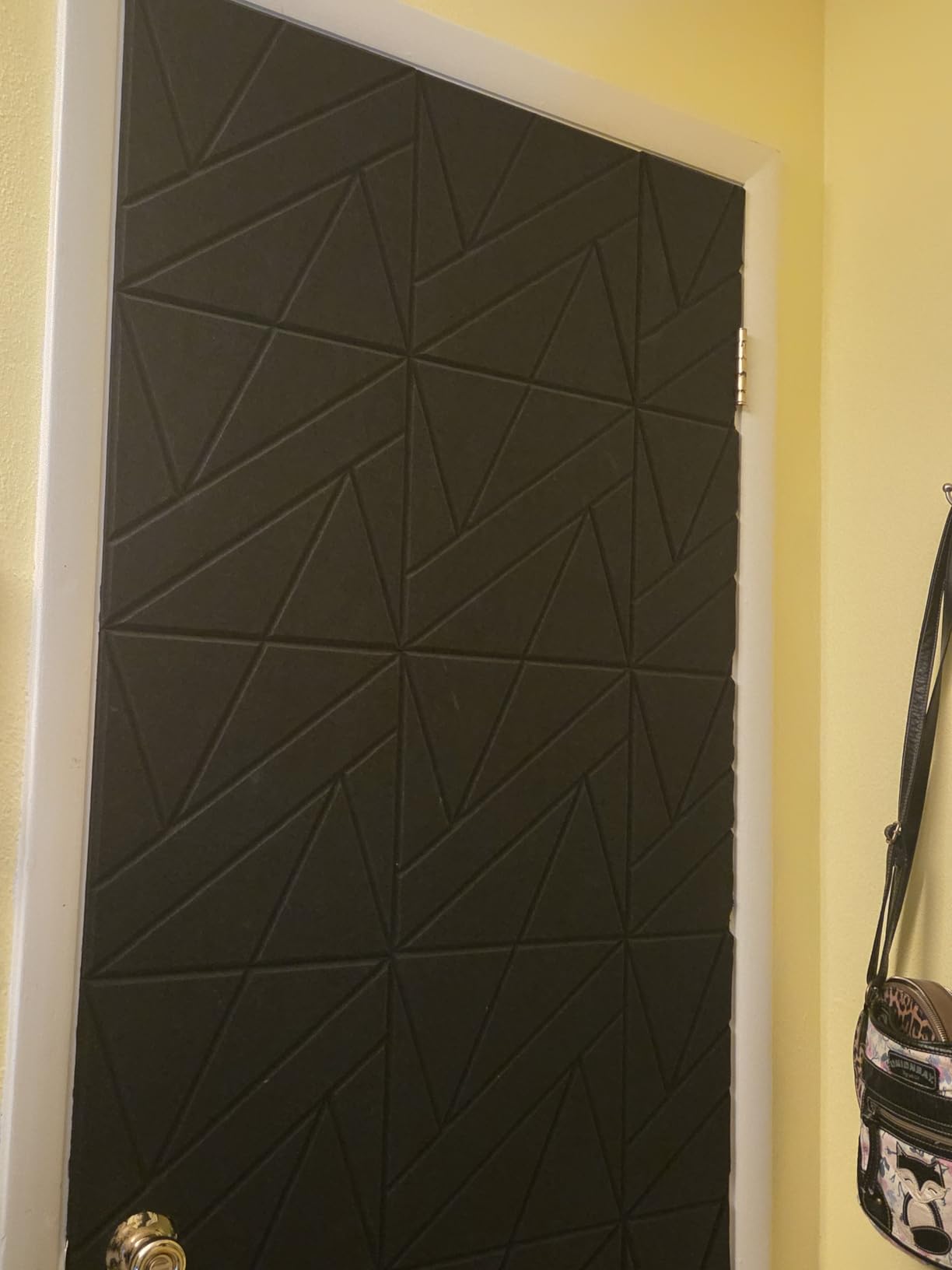
This is the one to buy if you rent. The removable tape system means you can take the whole treatment down at the end of the lease without touching the paint, which is the question that stops most podcasters from treating at all.
Density is the story here. At 1.2 pounds per cubic foot the polyester is denser than the thin panels it is sold against, and that density is what produces a measurable cut in echo rather than a purely visual change.
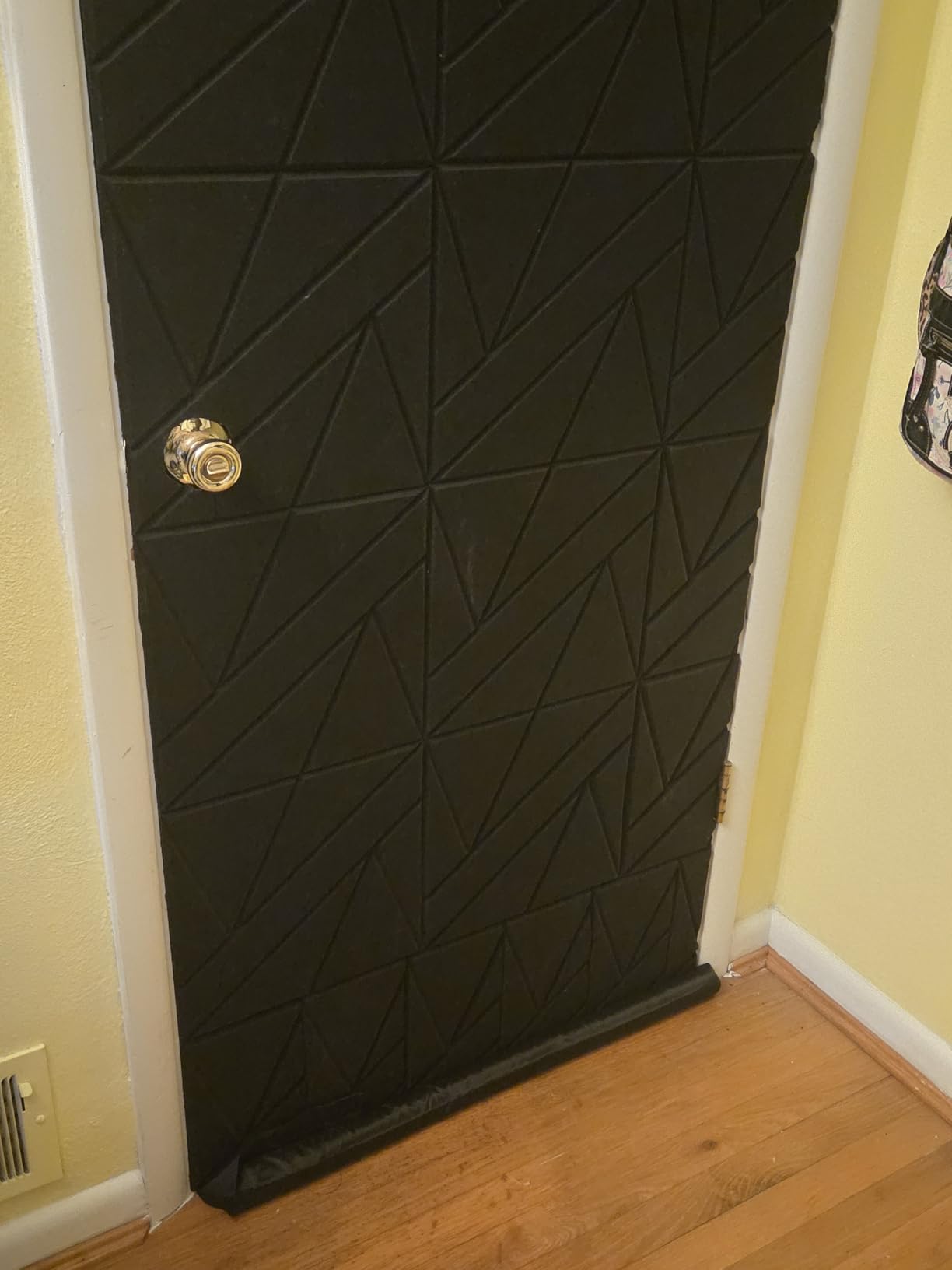
Reviewers rate this one at 4.3 stars across 505 ratings, tied for the highest rating in this group, with a large share of five-star scores. The honest limit in those same reviews is that it reduces echo and light noise, not professional soundproofing.
The 45 degree chamfer edges are a nice detail. They let panels splice together into custom shapes without visible gaps, which matters if the treatment is going to be seen on camera.
The rental checklist
Get written permission before you install anything, use the removable tape rather than permanent adhesive, photograph the walls before mounting, and keep a spare set of tabs for re-mounting. Flame-retardant labeling also helps when a landlord asks about fire safety.
Where half an inch lands
Under an inch of polyester is light treatment. It will soften a home office or a garage and improve speech clarity on calls. For a boomy podcast room you will want to combine it with 2 inch foam at the microphone position rather than rely on it alone.
11. AUSLET 36 Pack Pyramid Foam: Best for Home Theater and Media Rooms
AUSLET 36 Pack Pyramid Acoustic Foam Panels, 12″ x 12″ x 2″, Black
Thickness: 2 inch
36 pyramid panels
30 kg per cubic meter
36 sq ft
Pros
- 36 square feet of 2 inch coverage in a single order
- 30 kg per cubic meter density holds its shape better than lighter foam
- Users report around 40% ceiling noise reduction using decibel meters
- Vacuum packs inflate in 5 to 15 minutes for most tiles
Cons
- No adhesive included so mounting hardware is an extra cost
- Quality control is inconsistent and some tiles arrive misshapen
- Panel dimensions vary slightly between packs
- Absorbs echo only with no bass or isolation performance
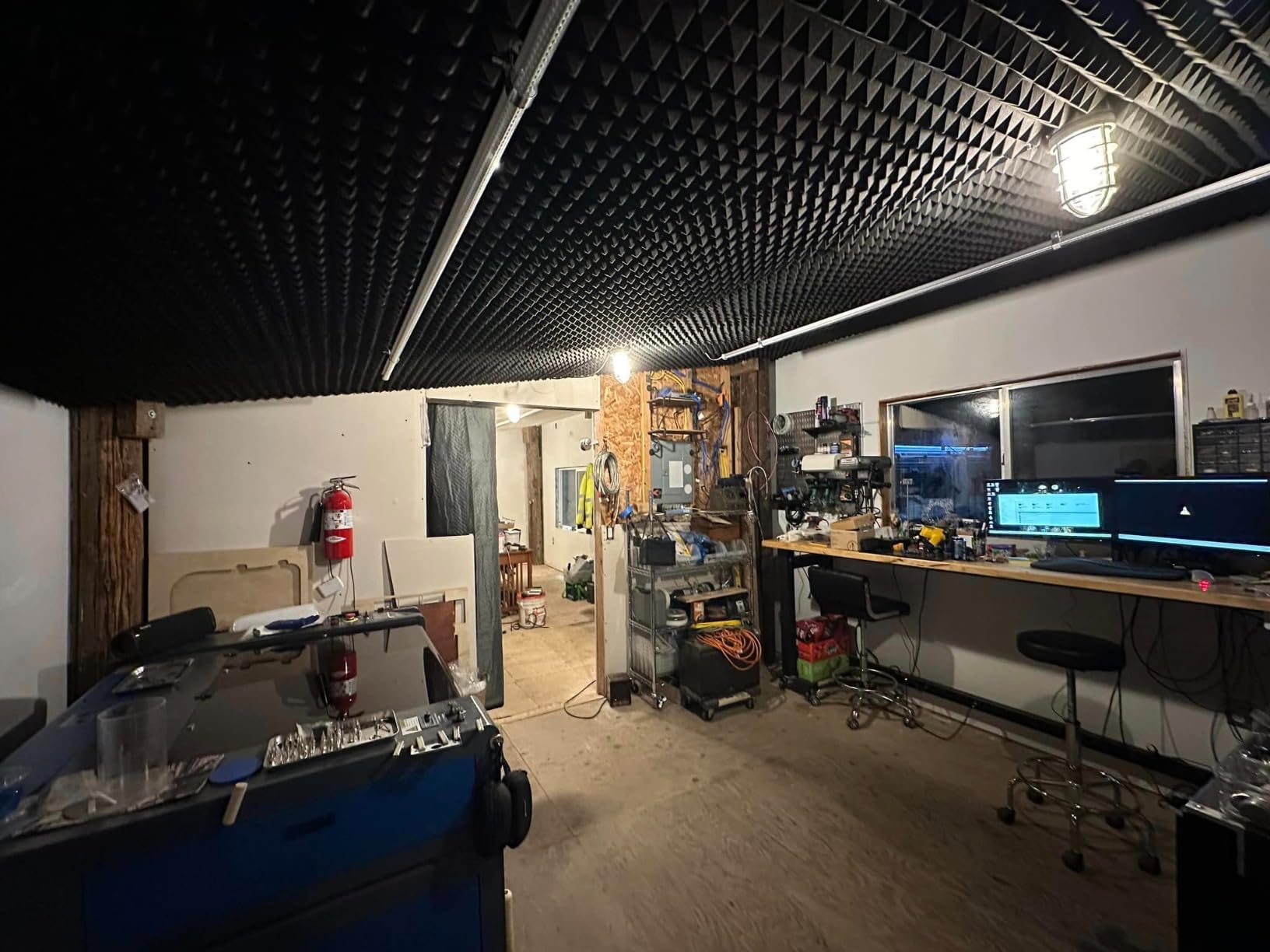
Thirty-six square feet of 2 inch foam at 30 kg per cubic meter density is closer to real studio material than most tiles at this level. Density is what stops panels from looking and feeling like packaging foam.
Owners report measurable ceiling noise reduction, some citing around 40 percent with decibel meters. Treat that as a rough figure from a home measurement rather than a lab result, but it is consistent with what 2 inch broadband absorption should deliver on a reflective ceiling.
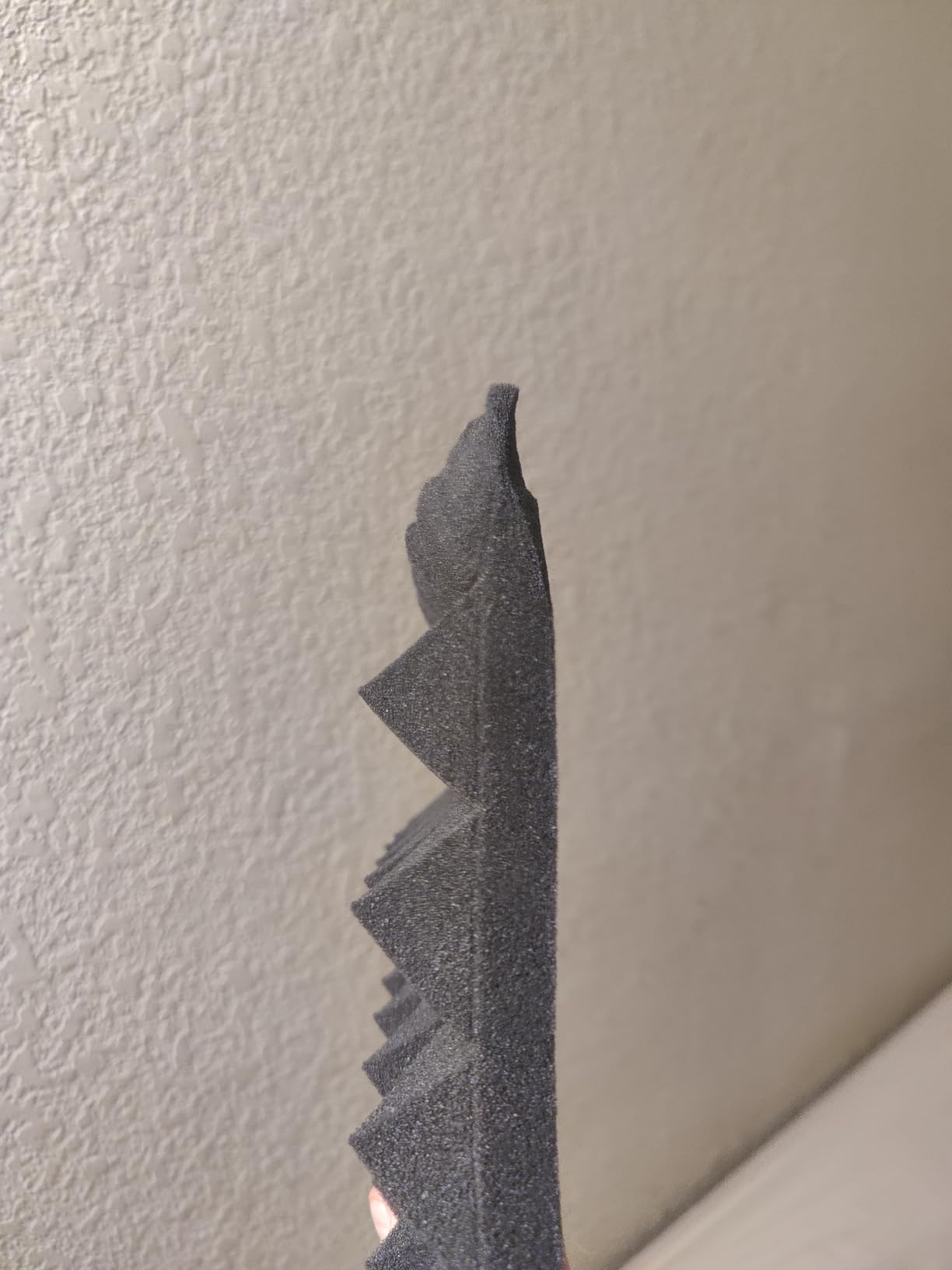
Expansion is fast here, with most tiles inflating within 5 to 15 minutes of opening the vacuum pack. That makes it an easy kit to install on short notice compared with the 24 to 48 hour recoveries listed elsewhere.
The foam is flame retardant and pitched at studios, podcast rooms, and home theaters, which makes it a sensible dual-purpose buy if your room does both jobs.
Why density matters for dialogue
Denser foam keeps its air structure intact, which means it absorbs consistently over time instead of flattening out. Low-density foam often looks full on day one and half-collapsed a year later. If you plan to leave treatment up permanently, density is the thing to pay for.
The quality control catch
Reviewers report inconsistent packs, with some tiles arriving misshapen or refusing to inflate, and a failure rate they put in the range of 30 to 36 percent. Panel dimensions also vary slightly between packs, which makes straight lines harder to hold. Check every tile before you mount anything.
12. GUERRI 36 Pack High Density Wedge Foam: Best for Workspace Podcasts
GUERRI Sound Proof Foam Panels – 12 x 12 x 2 Inches 36 Pack Wedges Acoustic Foam Panels Sound Proofing Padding for Walls and Ceiling High Density Foam Studio Foam (Black)
Thickness: 2 inch
36 wedge panels
25 kg per cubic meter
SGS tested
Pros
- 36 panels cover 36 square feet of wall or ceiling
- 25 kg per cubic meter foam resists flopping
- Useful coverage for a podcast room and home theater build
- Panels expand quickly once the vacuum bag is opened
Cons
- Adhesive not included and glue soaks into the foam
- Some panels need manual fluffing to regain shape
- Wedge profile is not tuned to specific frequencies
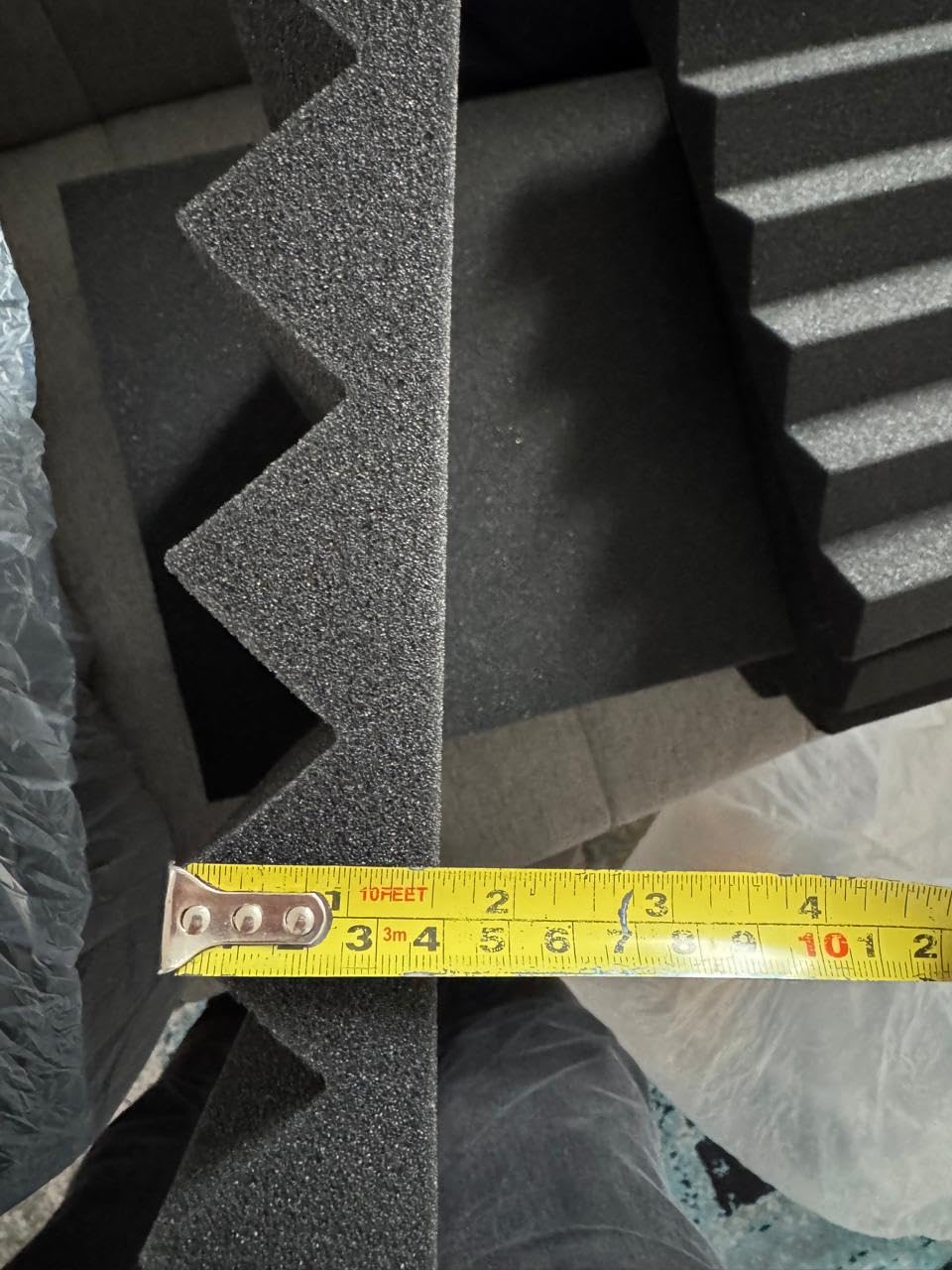
This pack performs like boutique studio material without the boutique price, and owners who have compared it side by side with expensive panels rate it very well on density and coverage.
At 4.3 stars across 446 ratings it ties for the highest rating in this group. The 25 kg per cubic meter open-cell foam has better resilience and less flopping than budget tiles, which is why it stays flat on a wall.
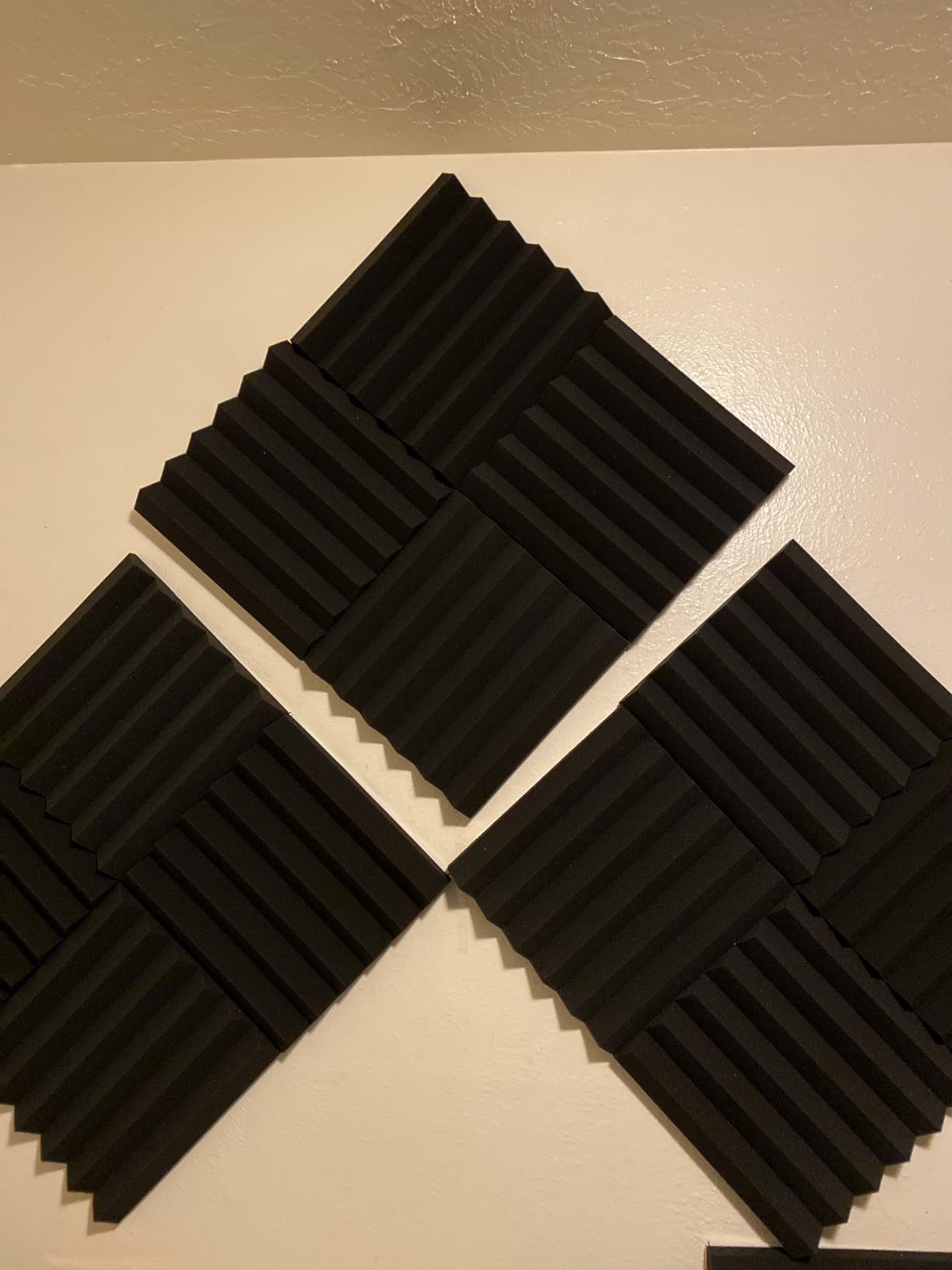
SGS testing for environmental protection and flame retardancy is a documented third-party check, and only two kits in this group publish any third-party testing at all. Renters and anyone with a building manager should value that.
Several users built complete podcast or home theater rooms with a single order. Thirty-six square feet of 2 inch absorption is enough to make a dedicated room behave.
Best use for a shared workspace
If you record where you also work, resilience matters more than raw NRC. Softer low-density foam compresses and sags over a year, and this pack holds its shape through daily handling.
Watch the mounting surface
Glue soaks into open-cell foam and leaves a permanent bond that can tear the panel when you remove it. Use hook-and-loop strips, spray adhesive applied to the wall rather than the foam, or removable tape. Expansion is usually immediate, though some panels need a day or manual fluffing.
How to size an acoustic foam kit to your podcast room
Buyers often overbuy with a 50 or 54 pack for a closet, or underbuy with a 12 pack for a basement. Coverage math is simple once you write it down, and it takes about two minutes.
Step one: measure the total wall and ceiling surface area you can treat. Step two: subtract doors, windows, and large furniture. Step three: treat 25 to 50 percent of what remains, with the upper end for live rooms and the lower end for edited speech.
Here is how that lands in practice. A small closet booth around 4 by 6 feet needs roughly 10 square feet of coverage, which is 12 to 24 panels depending on depth. A 10 by 12 bedroom studio has about 190 square feet of usable wall, so 50 square feet of coverage handles it well. A 12 by 15 basement room wants the ceiling treated first, which is 180 square feet on its own.
Measure coverage in the depth you are buying. Twelve one-inch panels and twelve 2 inch panels cover the same wall area, but the deeper panels absorb a wider frequency range, so the deeper set does more work on the same surface.
One more lever most listings ignore: absorption per treated square foot of surface. A pack that gives you 24 square feet of 2 inch foam is doing more acoustic work per panel than 96 tiles of 1 inch foam, so the kits look more different than they actually perform.
Sound treatment vs soundproofing: what foam can and cannot do
Sound treatment changes what happens inside your room. Soundproofing changes what crosses the boundary of your room. Foam only does the first, and buying it hoping for the second is the most expensive mistake in this category.
Soundproofing a room for podcasting is a construction project. Add mass to the walls, seal the gaps around the door with weatherstripping, fit a solid core door, and add a second layer of drywall if you want real isolation. Those steps reduce transmission. Foam cannot substitute for any of them, because foam is porous by design.
What foam can fix is the reflection problem inside the room. Bare drywall, glass, hardwood, and a flat ceiling all reflect your voice back at you, and your microphone picks up both the direct sound and the reflection. That double pickup is what makes an untreated take sound thin and hollow, and it is why editors spend hours on de-reverberation.
Now the honest list of what foam cannot fix. HVAC rumble and duct noise are low-frequency and often structure-borne, and foam will barely touch them. Street noise, sirens, and aircraft entering through glass is a transmission problem, and glass is a terrible soundproofing material regardless of what you hang on the wall. Structure-borne sound from a washing machine upstairs or a neighbor dragging furniture travels through the floor and the framing, and absorption does nothing with it.
Wrestling with low-frequency buildup is also a partial fix. Foam placed in a corner helps, but serious bass control usually means larger porous material with an air gap behind it, or building isolation into the structure. That is where the community advice about building panels with mineral wool comes from, and it is the route to take if your problem is genuinely low-end.
How to judge foam quality: NRC, density, and flame rating
The best quality acoustic foam is not necessarily the thickest one you can find. It is the foam that publishes its numbers and names its safety standard. A seller who gives you an NRC, an absorption coefficient, and a flammability rating is telling you something a seller with no published data cannot.
NRC, the noise reduction coefficient, is the fraction of sound energy absorbed across a tested frequency range. For speech work, anything at 0.80 or above is what you want to see. One kit in this guide publishes a figure above 0.9, one publishes 0.8 with a 0.77 average absorption coefficient, and the rest publish nothing at all, which is worth knowing before you buy.
Density tells you how the foam will hold up. Density is usually listed in pounds per cubic foot for US-made panels and in kilograms per cubic meter or kilograms per cubic metre elsewhere, so 25 kg per cubic meter is roughly the benchmark for serious treatment foam. Denser panels resist sagging and tearing, which matters if you handle them every time you move your desk.
Flame rating is the one renters cannot skip. Look for a named standard such as UL 94 HF-1 or California Technical Bulletin 117-2013 rather than the phrase flame retardant with no supporting document. It costs you nothing to ask the seller for the certificate, and it is the answer your landlord or building manager will ask for.
Finally, check what is in the box. Kits that ship their own double-sided tape or adhesive tabs save you a second order and a trip to the hardware store. Kits that do not are not worse, but plan for it. And check the coverage figure in square feet, because it is the number that tells you whether the kit fits your room.
Panel thickness and profile: wedge vs pyramid vs flat
Thickness decides the frequency range, and profile decides how the reflection is spread. Get those two straight and the rest of the kit is detail.
The widely repeated engineering rule is simple. One-inch foam works above roughly 2 kHz and handles brightness and sibilance. Two-inch foam reaches down to about 500 Hz, which is where vocal muddiness and boxiness live. Four-inch material pushes toward 250 Hz. For a podcast room, 2 inches is the practical target, and deeper is a bonus rather than a requirement.
Profile is a secondary decision. A wedge spreads reflection along one axis and keeps a room sounding live, which many voice recordists prefer. A pyramid spreads in two axes and looks tidier on camera. A flat panel absorbs without spreading, which is useful behind a microphone as a broadband stop. None of these is universally correct.
Air gap behind the panel extends the low-frequency performance noticeably. Mounting on furring strips or cleats so there is a 2 inch cavity behind the foam costs you a few extra hours and buys you the kind of absorption that 4 inch foam would give you. This is the upgrade that most budget kits can borrow without changing the foam.
Corners deserve special mention. Sound accumulates in the vertical corner where two walls meet, which is why corner treatment is the most efficient place to put absorber. A single 2 inch panel in each top corner does more for perceived bass control than four panels spread across a flat wall.
How to install acoustic foam without wrecking your walls
Most installs go wrong in the same three ways, and all three are avoidable. Work through this order and you will finish in an afternoon.
Step one: measure and mark the room before you unbox anything. Sit at your recording position with the microphone where it will live, then have someone clap once at the microphone. That gives you the first reflection points. Mark those on the wall, mark the ceiling directly above you, and mark the four vertical corners. Those are your priority surfaces.
Step two: let the panels expand first. Foam arrives vacuum packed or compressed, and mounting it too early is the top owner complaint across every pack in this guide. Lay the tiles flat for 24 to 48 hours, or for the faster kits 6 to 12 hours, until they reach full thickness. If tiles arrive badly crushed, a short soak in water followed by air drying brings them back.
Step three: clean the wall. Wipe drywall with isopropyl alcohol and let it dry completely. Adhesive fails on dust and texture, and this is the reason panels end up on the floor mid-session.
Step four: decide your mounting method honestly. Adhesive tabs work on smooth painted drywall. Textured walls, ceilings with popcorn texture, and rental units need spray adhesive, construction adhesive, or hook-and-loop strips applied to the wall rather than to the foam.
Step five: mark centerlines before you stick anything. Light pencil marks keep a wall of tiles straight, and slightly vary the spacing between tiles so the pattern reads as designed rather than measured.
Step six: treat corners first, then first reflection points, then the ceiling above the microphone, then fill in remaining wall space. That order concentrates your budget where the acoustics matter most.
Step seven: press each tile for a solid 30 seconds and check it the next day. Any tile that lifts is telling you the wall was not clean enough or the adhesive was the wrong type. Re-stick it now rather than discovering it during a recording session.
Frequently Asked Questions
Will acoustic foam soundproof a room?
No. Acoustic foam absorbs sound reflections inside a room, reducing echo and reverberation so your voice sounds cleaner. It does not block sound passing through walls, doors, windows, or floors. Soundproofing requires adding mass, sealing gaps, and decoupling, which is a construction project. Foam makes an untreated room sound better without making it quieter to the neighbours.
How can I soundproof my room for podcasting?
Start with mass and sealing rather than foam. Add a second drywall layer, replace hollow doors with solid core doors, fit weatherstripping around the frame, and seal electrical outlets. Seal any gaps where pipes or cables enter. Then add broadband absorption inside the room with 2 inch foam at first reflection points and in the corners. Foam improves the recording, construction improves the isolation.
What is the best quality acoustic foam?
The best quality acoustic foam is the kind that publishes verifiable specifications. Look for a stated noise reduction coefficient of 0.80 or above, a named flame rating such as UL 94 HF-1 or California Technical Bulletin 117-2013, and a stated density. Among these kits, the JBER 24 pack publishes NRC above 0.9 and the TroyStudio 52 pack publishes NRC 0.8 with a 0.77 average absorption coefficient.
What type of foam is best for soundproofing?
None, because foam cannot soundproof. For sound absorption inside a room, 2 inch thick open-cell polyurethane foam is the practical choice for podcasting, since it reaches down to roughly 500 Hz where voice muddiness sits. For low-frequency work, use thicker or broadband absorbers with an air gap behind them, often built with mineral wool rather than foam.
How many acoustic panels do I need for a small room?
Measure usable wall and ceiling area, subtract doors and windows, and treat 25 to 50 percent of the remainder. For a small closet booth of roughly 4 by 6 feet, that means 10 square feet of coverage, or 12 to 24 panels. For a 10 by 12 bedroom studio with about 190 square feet of usable wall, 50 square feet of coverage is a realistic target.
Is 2 inch foam enough for a podcast room?
Yes, for speech. Two inch foam is the practical target for podcast rooms because it reaches down to about 500 Hz, where boxiness and vocal muddiness live. One inch panels only clean up brightness and sibilance above roughly 2 kHz. Four inch material pushes toward 250 Hz, which matters more for music and bass than for a voice recorded and edited.
Are wedge or pyramid foam panels better for podcasting?
Both work. A wedge spreads reflections along one axis and keeps a room sounding live, which many voice recordists prefer for a natural delivery. A pyramid spreads reflections in two axes and looks tidier on camera, which matters for video podcasts. Choose on appearance if your room is only for speech, and choose whichever you can cover more of the room with.
How do I install acoustic foam without damaging my walls?
Use removable double-sided tape or hook-and-loop strips if you rent or want to take the panels down later. Clean the wall with isopropyl alcohol and let it dry fully, because adhesive fails on dust and texture. Apply spray adhesive to the wall rather than the foam, since glue soaks into open-cell material and leaves a permanent bond. Photograph the wall before mounting.
Which acoustic foam kit should you buy?
For most podcast rooms, start with the XIN&LOG 52 pack of 1 inch wedge foam and treat the ceiling first. It is the most reviewed kit in this guide, it recovers fast, and 52 tiles cover a small studio in one order.
If your voice sounds boomy rather than merely echoey, move up to 2 inch depth. The JBER 24 pack is the value pick with a published NRC above 0.9, the Dmsky 50 pack covers a full room, and the TroyStudio 52 pack is the one with the most complete specification sheet and a named flame standard. Renters should look at the BSHEAD 8 pack for its removable tape backing, and anyone on camera will appreciate the TONOR hexagon panels for the look.
Measure your room first, buy for the depth you need rather than the panel count that looks impressive, and give every tile time to expand before you mount it. That last step alone fixes the complaint we saw most often across all twelve kits.