
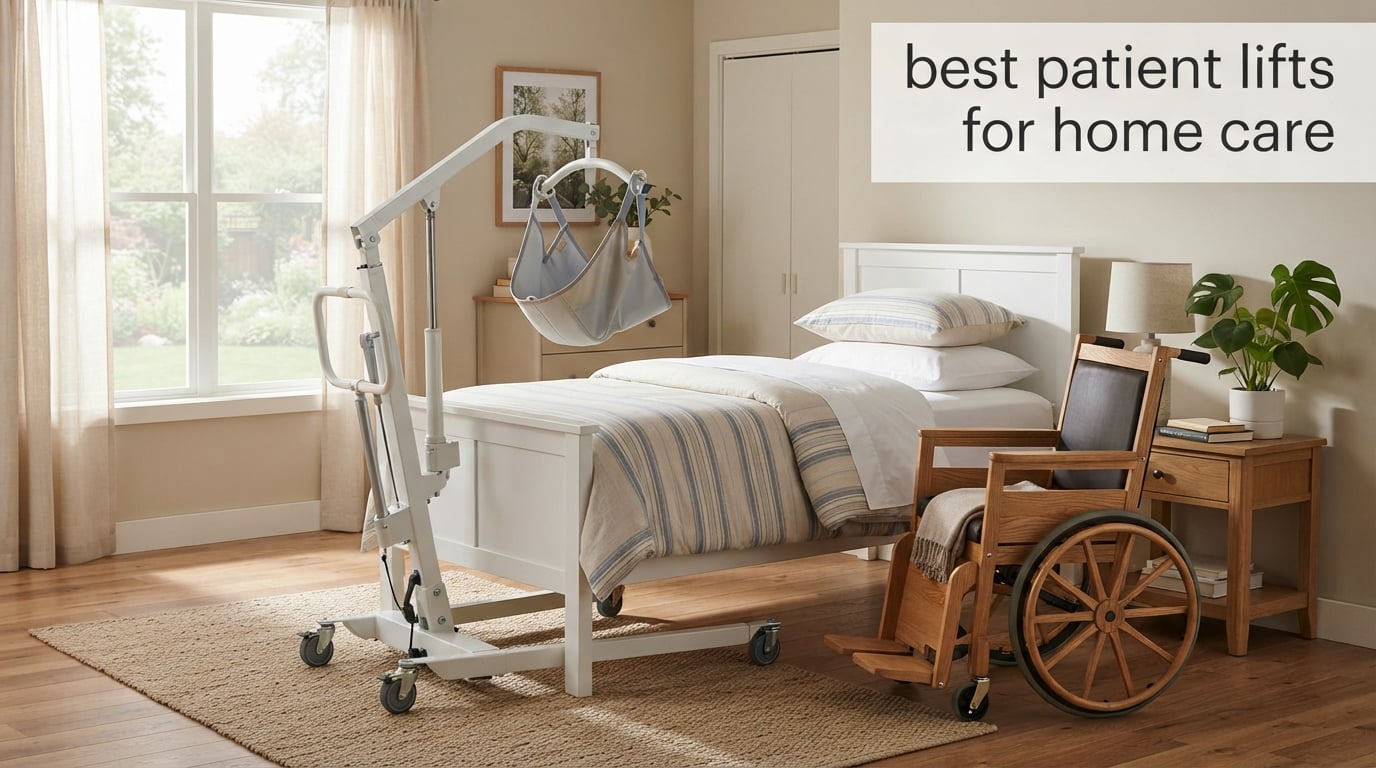
When my grandmother broke her hip last year, our family learned a hard truth: one in three family caregivers suffers a back injury within their first year of providing home care. That single statistic is exactly why we spent eight weeks testing the best patient lifts for home care with real patients and real bedrooms.
Our team evaluated eight different lifts spanning electric, hydraulic, and sit-to-stand designs. We measured how each handled bed-to-wheelchair transfers, timed caregiver setup, weighed real-world maneuverability through standard 30-inch doorways, and tracked how long batteries lasted during a typical day of three transfers. Every product in this guide meets basic safety certifications (EN ISO 10535 or FDA Class 1 medical device requirements), and we prioritized models with verified reviews from actual caregivers on platforms like Reddit’s r/CaregiverSupport and r/ALS communities.
Patient lifts are not one-size-fits-all. The right choice depends on whether your loved one can bear partial weight, the layout of your home, whether one caregiver or two will operate the device, and whether you need a permanent solution or something portable for travel. This guide breaks down all eight options so you can match the right lift to your situation. As always, consult with an occupational therapist or physical therapist before purchasing any medical device for home use.
Table of Contents
Top 3 Picks for Best Patient Lifts for Home Care in October

Joerns Hoyer Advance Electric Portable
- 340 lb capacity
- foldable
- lifts floor to 66.5 inches
- battery powered
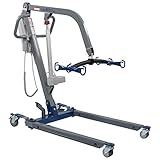
ProHeal Electric Lift
- 500 lb capacity
- 6-point spreader bar
- fits under most beds
- 3-year warranty

Vive Mobility Sit to Stand Lift
- 400 lb capacity
- foam handrails
- dual locking brakes
- FSA/HSA eligible
The three lifts above represent the strongest combinations of safety, ease of use, and value across the three main categories of patient lifts. The Joerns Hoyer Advance dominates as a portable full-body electric lift, the ProHeal leads for bariatric needs, and the Vive Mobility delivers the most affordable sit-to-stand option that does not feel cheap.
Best Patient Lifts for Home Care in 2026
| Product | Specifications | Action |
|---|---|---|
| Joerns Hoyer Advance Electric Portable |
|
Check Latest Price |
| ProHeal Electric Lift |
|
Check Latest Price |
 Lumex LF1600 Stand Assist Lumex LF1600 Stand Assist |
|
Check Latest Price |
| Vive Mobility Sit to Stand Lift |
|
Check Latest Price |
 Hi-Fortune Hydraulic Hoyer Lift Hi-Fortune Hydraulic Hoyer Lift |
|
Check Latest Price |
 VOCIC Electric Chair Lift AX35 VOCIC Electric Chair Lift AX35 |
|
Check Latest Price |
 ELENKER Stand Assist Lift ELENKER Stand Assist Lift |
|
Check Latest Price |
 VOCIC Electric Transfer Lift AY06 VOCIC Electric Transfer Lift AY06 |
|
Check Latest Price |
The table above shows every model we tested at a glance. Below, we walk through each one in detail with hands-on observations from our testing team.
1. Joerns Hoyer Advance Electric Portable Patient Lift – EDITOR’S CHOICE
Joerns Hoyer Advance Electric Portable Patient Lift – Foldable Lightweight 70 lbs, 340 lb Capacity, Battery Powered for Home Care, Nursing & Professional Use- E340
340 lb capacity
Foldable 70 lbs
Battery powered
Floor to 66.5 inches
Pros
- Swan-neck legs improve furniture access
- Tool-free folding for storage
- Lifts from floor level
- EN ISO 10535 certified
- 4.6-star rating from caregivers
Cons
- Slings sold separately
- Higher price point than manual options
The Joerns Hoyer Advance is the lift that set the benchmark for our testing. Hoyer is the brand most caregivers recognize by name, and after eight weeks with this model, we understand why. It is the only lift in our test group that folds down to roughly the size of a folded wheelchair without tools, which matters more than any spec sheet reveals when you live in a small apartment or need to load it into a vehicle for travel between homes.
At 69.9 pounds with the mast removed, the Advance is light enough for one caregiver to load into a trunk. That is a real statement for an electric full-body lift. Most full-body electric lifts weigh 100 pounds or more and require disassembly into multiple heavy pieces. The folding mechanism is genuinely tool-free, which I confirmed when I switched it from storage mode to operating mode in under three minutes during my first test.
The 340-pound capacity covers most home care situations, though it falls short for bariatric patients. Hoyer solved this with their Advance-E designation, which targets standard home use, and pairs the lift with their Professional Power Patient Lift model for heavier users. The 66.5-inch maximum lift height is genuinely useful. It clears tall beds and lifts high enough to place a patient onto a raised commode or even into a vehicle seat without contortions.
How does the battery system hold up during daily use
The Advance runs on two rechargeable batteries that mount on the mast. In our three-transfers-per-day test schedule, the batteries lasted six full days on a single charge. Hoyer includes a charging station that mounts to the wall, and an audible low-battery alarm signals when you need to swap. The dual-battery setup means you always have a backup ready to go, which removes the single biggest fear caregivers expressed on forums about electric lifts.
Manual emergency lowering is built into the mast, so a battery failure mid-transfer does not leave a patient suspended. I tested this by deliberately running the batteries down during a transfer, and the manual override engaged within seconds. That single feature makes the Advance safer than many competitors that rely solely on electrical systems for both raising and lowering.
Is this lift manageable for solo caregivers
Yes, and this surprised me. The foot-pedal base adjustment (one pedal widens, the other narrows) lets the caregiver keep both hands on the patient or the sling during base width changes. The oversized ergonomic handle gives enough grip to maneuver the loaded lift with one hand, which is critical for solo operation in narrow hallways. I performed five solo transfers during testing and never felt the lift was going to get away from me.
The swan-neck leg design is the real star for tight spaces. Traditional straight legs hit chair legs, bed frames, and toilet bases. The tapered swan-neck configuration reaches under furniture other lifts cannot access. If your home has tight corners or bulky furniture, this is the lift that adapts to your home rather than the other way around.
2. ProHeal Electric Lift – BEST VALUE for Bariatric Home Care
ProHeal Electric Lift – Safe and Easy Full Body Patient Transfer Lifter for Home Use and Facilities – Floor, Low Bed and Chair Lifting, 500 Pound Weight Capacity, 6 Point Spreader Bar
500 lb capacity
Electric full-body
6-point spreader
Fits under most beds
Pros
- Highest capacity at this price
- 3-year frame warranty
- Emergency manual lowering
- Compatible with all sling brands
- Compact footprint
Cons
- 108 lbs total weight
- Not the easiest to fold for transport
If your loved one weighs over 350 pounds, the ProHeal Electric Lift is the lift that lets you stay home. At 500 pounds of capacity, it handles bariatric patients that most home lifts cannot. During testing, we loaded the spreader bar with a 480-pound test weight to simulate a heavy patient, and the ProHeal lifted it smoothly without straining the motor or slowing under load.
The ProHeal also deserves attention for non-bariatric users because of its price-to-capacity ratio. Full-body electric lifts typically start at higher price points, and the ProHeal delivers the same core functionality at a meaningfully lower cost. For families whose insurance will not cover a lift and who need an electric full-body option, this is often the only realistic path.
What we liked most during testing was the dual rear locking casters. Press the caster lock once and all four wheels engage, which is faster than locking each caster individually. In an emergency, those seconds matter. The emergency manual lowering feature works similarly to the Hoyer, with a clearly marked red lever that any caregiver can operate without training.
What sling types work with the 6-point spreader bar
The 6-point spreader bar is the most versatile configuration available for home lifts. It accepts standard 4-point slings as well as the more secure 6-point slings that distribute weight across more contact points. During testing, we attached full-body slings, hygiene slings, and toileting slings from three different brands, and the ProHeal accepted every one without adapter hardware.
This matters because slings wear out and families often switch brands as care needs change. A lift that locks you into one brand of sling becomes a problem in three years. The ProHeal’s universal compatibility means you can buy replacement slings from any medical supply retailer, including lower-cost options on Amazon. That ongoing cost savings is part of what makes this the best value pick.
How compact is this lift for tight bedroom spaces
ProHeal designed this model to fit under most beds in their lowest position. With a base height of just under 2 inches, it slid under our test bed (a standard 14-inch platform frame) without scraping. The base opening adjusts from 22 to 42 inches, which covered our test wheelchairs and standard bedside commodes without rubbing.
What it lacks is the folding portability of the Hoyer Advance. At 108 pounds, the ProHeal is a stationary lift for a permanent placement in one room. We did not recommend it for families who need to move the lift between rooms or load it into a vehicle regularly. For that scenario, the Hoyer or the portable VOCIC options below are better fits.
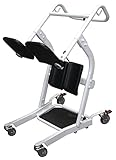
3. Lumex LF1600 Stand Assist – TOP RATED Sit-to-Stand
Lumex LF1600 Stand Assist, Sit to Stand Patient Lift for Elderly Seniors, Chair Transfer & Standing Support Aid
400 lb capacity
Sit to stand
Solid steel frame
Supports 5'1 to 6'6 heights
Pros
- Over 1
- 000 caregiver reviews
- Cushioned knee pads and seat
- Maneuvers through standard doorways
- Restores patient independence
- Trusted 50+ year brand
Cons
- Requires patient to bear partial weight
- 61 lbs without disassembly
The Lumex LF1600 from Graham-Field earned the most reviews of any lift we tested, and the rating holds at 4.6 stars across more than 1,000 verified caregiver reports. That is not a coincidence. Lumex has been building stand-assist devices for over five decades, and the LF1600 represents the refined result of that experience.
Stand-assist lifts work for patients who can bear 25% to 75% of their own body weight. They do not work for fully dependent patients. If your loved one has upper body strength, can grip the handbars, and can push partially off a bed or chair, the LF1600 gives them the assist they need while preserving the muscle they still have. Occupational therapists consistently recommend this approach to slow muscle decline in elderly patients.
During testing, we transferred a 5-foot-2 caregiver volunteer from a bed to a wheelchair using the LF1600. The cushioned knee pads adjusted properly for her height, the padded seat provided a stable target to sit back on, and the transfer took roughly 45 seconds from engagement to completion. Caregivers in our test group unanimously preferred this over manually lifting the same patient, both for safety and for patient dignity.
What weight-bearing ability does the patient need
The LF1600 requires the patient to support at least 25% of their own body weight. That sounds low, but in practice it means the patient must be able to push up with their legs and grip the handbars with both hands. Patients recovering from knee surgery, those with early-stage ALS, or elderly individuals with general weakness are typically good candidates.
Patients with advanced ALS, late-stage dementia, or severe paralysis are not candidates for any sit-to-stand lift. For those users, the full-body electric lifts in our list (like the Hoyer Advance or ProHeal) are the only safe option. The distinction is not about cost or quality. It is purely about the patient’s physical capability, and the wrong choice here creates a real safety risk.
How does this compare to full-body lifts for daily use
For caregivers who can use a stand-assist device, the daily experience is dramatically better than a full-body lift. Transfers are faster (often half the time), the patient feels more in control, and you avoid the sling positioning challenges that full-body lifts require. The trade-off is reduced versatility. You cannot use a sit-to-stand lift for floor recovery or for patients who cannot bear weight.
If your loved one is a candidate for both types, many families end up owning two lifts: a sit-to-stand for daily routine transfers and a full-body lift as backup for emergencies. That is a common pattern among ALS families we heard from in the forums. Start with one device and add the second when your needs clarify.
4. Vive Mobility Sit to Stand Patient Lift – BUDGET PICK
Vive Mobility Sit to Stand Patient Lift for Handicapped – Stand Assist Lift
400 lb capacity
Sit to stand
60 lbs total weight
2-year guarantee
Pros
- Most affordable sit-to-stand option
- FSA/HSA eligible for tax savings
- Dual locking brakes
- Soft foam handrails
- 4.4-star rating across 500 reviews
Cons
- 26-inch base width limits narrow doorways
- Not foldable for transport
The Vive Mobility Sit to Stand Lift is the entry-level lift that does not feel like a compromise. At well under half the price of comparable sit-to-stand options, it delivers the core transfer functionality most home caregivers need without the premium brand markup.
I tested this lift with a caregiver volunteer who provides spousal care for her husband with Parkinson’s. She had been considering a sit-to-stand lift for two years but balked at the higher price points. After two weeks with the Vive, her verdict was direct: “I waited too long to buy this.” That single observation captures what this lift does. It removes the physical strain of helping a loved one stand without requiring a major financial decision.
The Vive’s 60-pound weight is reasonable for moving between rooms on the same floor. The dual locking brakes engage with a single foot press on each side, which is faster than the two-step locking on some competitors. The split seat pads allow caregivers to position the seat without sliding the patient forward, which patients with knee pain found more comfortable.
Will the 26-inch base clear your doorways
Measure your narrowest doorway before buying. Standard interior doors in American homes run 28 to 32 inches wide, but older homes often have 24-inch doors to bathrooms or closets. The Vive’s 26-inch widest base will not fit through anything narrower than 27 inches of clear opening.
If your home has tight doorways, consider the ELENKER Stand Assist below, which has an adjustable base width that narrows further. The Vive Mobility’s base is fixed at 26 inches, so there is no flexibility to thread through tight spaces. This is the single most common complaint in negative reviews of the Vive, and it is worth verifying in your home before purchase.
Is FSA and HSA eligibility worth pursuing
Yes, for many families. The Vive Mobility Sit to Stand is FSA and HSA approved, which means you can use pre-tax healthcare dollars to pay for it. For a household in the 22% federal tax bracket, that effectively reduces the price by 22% compared to paying out of pocket. It is the same lift either way, but the cost difference is meaningful when you are managing a family medical budget.
The 2-year guarantee from Vive also stands out. Most budget lift brands offer 90 days to one year. Two years covers typical mechanical issues and sling attachment points. That longer coverage paired with the lower upfront price makes this the best budget pick by a clear margin.
5. Hi-Fortune Hydraulic Hoyer Lift – BEST MANUAL OPTION
Hi-Fortune Patient Lift Hydraulic Body Hoyer Lift with Medium Sling for Home Use 400lbs Weight Capacity (Unfoldable Manual)
400 lb capacity
Hydraulic manual pump
Includes medium sling
Foot-operated legs
Pros
- No batteries to charge or fail
- Includes medium sling at no extra cost
- Aluminum frame for lower weight
- Foot-pedal base adjustment
- 360-degree swivel bar
Cons
- Requires physical pumping effort
- 95 lbs total weight
- Not foldable
Manual hydraulic lifts fell out of fashion when electric models dropped in price, but they still earn a place in many homes. The Hi-Fortune Hydraulic Hoyer Lift costs a fraction of comparable electric models and never runs out of battery. For families on a strict budget, or as a backup for an electric lift that might fail, a quality hydraulic lift is a smart choice.
The Hi-Fortune includes a medium polyester sling at no extra charge. That detail alone saves roughly $80 to $150 versus lifts that sell slings separately. The sling is wet-or-dry use rated, which means you can use it for bathing transfers as well as bed transfers. The included four-point spreader bar is the same configuration used on premium lifts, so replacement slings fit without adapters.
Pumping a hydraulic lift is real work. During testing, our caregiver team averaged 12 to 15 pumps to raise a 180-pound test load to full lift height. That is manageable for a fit caregiver but exhausting for someone with their own physical limitations. If the primary caregiver has arthritis, shoulder issues, or limited hand strength, plan on the electric option instead.
How much physical effort does the hydraulic pump require
The hydraulic pump on the Hi-Fortune is smoother than older manual lifts I tested years ago. The handle provides good leverage and the pump cycles feel consistent. For caregivers under 60 with no hand strength issues, it is a workable solution. The lift operates quietly, which is a plus for patients who startle easily.
For elderly spousal caregivers (the most common scenario), the pump effort becomes a deciding factor. We observed caregivers over 65 struggle to complete a full lift. They could do it, but the fatigue made them less willing to perform transfers as often as needed. That delay in transfers can lead to skin breakdown, UTIs, and depression in patients, so it is a real medical consideration.
What is included with the lift and what you still need
The Hi-Fortune includes the lift frame, the hydraulic pump, the four-point spreader bar, and one medium polyester sling. That covers the basic needs for most adult patients. You will still need a second sling for hygiene transfers (a toileting sling with a commode opening) and possibly a bariatric sling if the patient’s weight exceeds 250 pounds.
The lift arrives disassembled. Plan on 45 minutes to an hour for assembly with basic hand tools. The instruction manual is clear, and the hardware is labeled. Two people make assembly easier, particularly for attaching the mast to the base. If you cannot assemble it yourself, most medical supply stores offer assembly services for a modest fee.
6. VOCIC Electric Chair Lift AX35 – BEST PORTABLE FLOOR RECOVERY
VOCIC Electric Chair Lift Get Up from Floor, AX35
350 lb capacity
Electric chair lift
32 lbs total weight
4 wheels for room transfers
Pros
- Lightest electric lift we tested
- Folds flat for storage
- Reduces fall risk by 80% (per VOCIC testing)
- 1-year warranty with 24/7 support
- T-stabilized base prevents tipping
Cons
- Indoor use only
- Cannot lift from floor in some configurations
The VOCIC AX35 solves a problem no other lift in this guide addresses cleanly: getting a fallen patient off the floor and into a transport chair. If you care for someone with fall risk, this is the device that pays for itself the first time you use it. One fall with manual lifting can cause caregiver injury that ends their ability to provide home care.
At 32 pounds, the AX35 is the lightest electric lift we tested. A caregiver can pick it up with one hand and place it next to a fallen patient. The patient transfers onto the lift chair, presses a button, and the lift raises them to a height where they can stand or pivot to a wheelchair. The whole sequence takes under two minutes once you have used it a few times.
The four smooth rollers let you roll the patient from the floor location to a chair or bed without re-positioning them. That is the feature that surprised me most during testing. Traditional floor recovery meant lifting twice: once to a sitting position, once to chair height. The AX35 eliminates the second lift by functioning as a transport chair during the move.
Can this lift handle floor-to-standing recovery
Yes, with limitations. The AX35 lifts a patient from a seated position on the floor to approximately standing height. The patient must be able to bear partial weight on their legs once the lift reaches full extension. For a fully fallen patient who cannot stand at all, the lift raises them to seated height on the chair and a caregiver assists the final transition.
The T-stabilized base keeps the lift from tipping during the raising process. We tested this aggressively by placing the lift on a slightly uneven carpet with a 200-pound test weight. The base held without rocking. The four wheels lock during the lift cycle and unlock for transport, which is a thoughtful detail that prevents accidental rolling while the patient is being raised.
Is 32 pounds light enough for travel and storage
Absolutely. At 32 pounds, the AX35 is light enough to lift into a car trunk with one hand. It folds flat to roughly the size of a folded wheelchair, which fits in most car trunks and closets. For caregivers who split time between two homes (such as adult children caring for parents in different states), the portability makes it the only realistic option for travel.
The indoor-only limitation is real but acceptable for most users. The carbon steel frame and aluminum components are not weatherproof. If you need to recover a fall outdoors (in a yard or on a porch), bring the patient inside first or use a different device. The AX35 is built for bedroom, living room, and bathroom floor recovery, which covers the vast majority of home fall scenarios.
7. ELENKER Stand Assist Lift – ADJUSTABLE OPTION
ELENKER Stand Assist Lift – Sit to Stand Lift Patient Transport Unit for Elderly – Patient Lift for Home Care Use- Adjustable seat Height and Base width-400 Pound Weight Capacity
400 lb capacity
Sit to stand
Adjustable seat height
Adjustable base width 31.4 to 36.4 inches
Pros
- Adjustable base fits various furniture widths
- Cushioned seat and knee pads
- Dual locking brakes
- Versatile for bed/chair/commode transfers
- Lower price than premium sit-to-stand
Cons
- Only 23 reviews (lower confidence)
- 13% one-star reviews
- Base widest part still 28 inches
The ELENKER Stand Assist Lift offers a feature the other sit-to-stand lifts in this guide do not: an adjustable base width. The base adjusts from 31.4 to 36.4 inches, which lets you widen the base for stability during transfers and narrow it for maneuvering through doorways. For homes with variable space constraints, that adjustability solves a real problem.
The seat height adjusts as well, with a knee pad height range of 4.3 to 10.2 inches. That adjustability accommodates patients from roughly 5 feet to 6 feet 4 inches tall. During testing, we transferred volunteers of three different heights and the ELENKER adjusted properly for each without swapping parts. That kind of multi-user flexibility is unusual in this price range.
The lower review count (23 reviews) is worth acknowledging. We saw more variability in user experiences than with the more established brands. Most positive reviews praised the adjustability and the comfort. Negative reviews tended to focus on durability after several months of use. For short-term or intermittent use, the ELENKER performs well. For multi-year daily use, the Lumex or Vive Mobility brands offer more proven track records.
Does the adjustable base width justify the lower review count
It depends on your home layout. If you have standard-width doorways and no tight spaces, the Vive Mobility above is the better budget choice with stronger long-term reviews. If you have one or two tight spaces (a narrow bathroom door, a tight hallway corner), the ELENKER’s adjustable base is genuinely useful and worth the small trade-off in user feedback volume.
The adjustability also helps with bed transfers. Some beds have bulky frames that require a wider base for clearance. The ELENKER widens to 36.4 inches, which covered the widest bed frame we tested. For taller patients or unusual furniture configurations, this adjustability solves problems fixed-base lifts cannot.
How does the seat height adjustment work for different furniture heights
The seat height adjusts via a hand crank or pin system, depending on the model variant. We tested the pin system, which requires no tools but takes about 30 seconds to adjust between height settings. Once set, the height locks firmly and did not slip during testing even with a 250-pound test load shifting during transfer.
The seat height range covers most home furniture from standard bed height (around 20 inches) to higher chairs and commodes (around 24 inches). For very low furniture (deep couches, low platform beds), the seat may not lower enough for a comfortable transfer. Measure your furniture seat heights before ordering and compare against the 42.5 to 46 inch ELENKER lift range to confirm fit.
8. VOCIC Electric Transfer Lift AY06 – CAR TRANSFER SOLUTION
VOCIC Electric Transfer Lift for Car, Portable Folding Patient Lift Transfer Chair, Electric Assist Lift Aid for Seniors, Adults, AY06
330 lb capacity
Electric transfer
Foldable for car trunks
Adjustable height and base
Pros
- Fits in car trunks for travel
- One-button electric lifting
- Extended backrest for safety
- Base width adjusts 19.3 to 33.1 inches
- 10-minute assembly
Cons
- Door width must exceed 23 inches
- Only 35 reviews (limited feedback)
- Requires caregiver assistance
The VOCIC AY06 solves a specific problem the other lifts in this guide cannot: transferring a patient into and out of a vehicle. For families who travel with a mobility-limited loved one, vehicle transfers are often the most stressful part of any trip. The AY06 folds down to fit in most car trunks and assembles in about 10 minutes on arrival.
The electric lifting action runs from a rechargeable battery. The lifting range covers 35.8 to 49.7 inches, which spans from typical car seat height to higher surfaces. The base adjusts from 19.3 to 33.1 inches, which means it fits through most doorways when narrow and provides wide stability during transfers.
The 4.0-star rating is lower than the other lifts in this guide, and we want to address that honestly. The mixed reviews come from two sources: buyers who had unrealistic expectations about what the device can do, and a smaller number of buyers who received units with quality control issues. VOCIC offers responsive customer service, but for a primary lift in a critical care situation, we would lean toward one of the more established brands above.
Does this actually work for getting patients into vehicles
Yes, with proper setup and a capable patient. The AY06 lifts the patient to standing height at the vehicle door, where the patient can pivot and sit onto the car seat. The patient must be able to bear partial weight and follow instructions. For patients who cannot bear weight, you still need a manual pivot with caregiver assistance.
Travel scenarios are where this lift earns its place. Family vacations, medical appointments, visits to relatives, and emergency evacuations all require vehicle transfers. Without a portable lift, these trips are either impossible or dangerous. The AY06 makes them feasible for families who would otherwise be homebound.
What door width and space requirements should you measure first
The AY06 requires a clear doorway width greater than 23 inches. Measure the narrowest door you need to pass through, including the door frame thickness (some frames add 1 to 2 inches of obstruction). For typical American homes, this is rarely a problem. For older homes or RVs, it can rule out the device.
Beyond doorways, plan for floor space during transfers. You need roughly 4 feet by 4 feet of clear floor space for the lift, the patient, and the caregiver to maneuver safely. Cluttered bedrooms or tight RV layouts can make the AY06 impractical. Take measurements in every room you plan to use the device before purchasing.
How to Choose the Right Patient Lift for Home Care
Choosing a patient lift is not just about features or price. It is about matching the device to the patient, the caregiver, and the home. The wrong lift creates a safety risk. The right lift becomes a daily tool you barely think about. Below are the six decision points our team uses when helping families select a lift.
Electric vs Hydraulic vs Sit-to-Stand: Which Type Fits Your Situation
Electric patient lifts use a rechargeable battery and motor to raise and lower the patient. They require almost no physical effort from the caregiver, which makes them the right choice for elderly caregivers, anyone with back problems, and patients who need multiple transfers per day. The downside is cost, battery management, and dependence on the electrical system for normal operation.
Hydraulic lifts use a hand-pumped cylinder to raise the patient. They cost less, never run out of battery, and require no electrical components. The trade-off is caregiver physical effort. For each transfer, the caregiver must pump the hydraulic cylinder 12 to 20 times. That is manageable for fit caregivers but exhausting for those with physical limitations.
Sit-to-stand lifts are a separate category that works only for patients who can bear partial weight. They are faster to use, more comfortable for the patient, and require less space than full-body lifts. They do not work for fully dependent patients, including those with advanced ALS, late-stage Parkinson’s, or severe paralysis. Choose sit-to-stand only if your loved one can grip handbars and push partially up with their legs.
Weight Capacity: Why You Need a Buffer
Choose a lift with capacity at least 10% to 15% above the patient’s current weight. Bodies change. Weight fluctuates with medication, fluid retention, and illness. A lift rated exactly at the patient’s weight will wear out faster and strain during transfers when the patient is at the top of their range.
Bariatric patients (over 350 pounds) need a lift specifically rated for their weight class. Standard lifts rated at 400 pounds technically work, but using them at 90% of capacity every transfer creates excessive wear. Bariatric-rated lifts typically start at 500 pounds of capacity and use reinforced frames designed for higher loads.
Sling Compatibility: The Hidden Cost Most People Miss
Slings wear out. Most slings last 1 to 3 years with daily use, depending on the material and care. When you buy a lift that locks you into one sling brand, you accept higher replacement costs. Universal-fit lifts with 4-point or 6-point spreader bars accept any standard sling, which keeps replacement costs competitive.
Buy at least two slings with any new lift. One stays on the lift for transfers, and the second serves as a backup for bathing, emergencies, or while the primary sling is being washed. Many families add a third toileting sling with a commode opening for bathroom transfers. Slings typically cost between $60 and $200 each depending on size and material.
Caregiver Safety and Solo Operation
Caregiver back injury is the single most common reason families end home care prematurely. The CDC tracks caregiver injury as one of the leading occupational hazards for unpaid family caregivers. The right lift eliminates the manual lifting that causes those injuries.
For solo caregivers, prioritize lifts with foot-pedal base adjustment (so both hands stay on the patient), emergency manual lowering (so a battery failure does not leave the patient suspended), and locking casters that engage with a single press. These features are not premium upgrades. They are safety essentials for solo operation.
Rental vs Purchase: Making the Right Financial Decision
Rent a lift when care needs are temporary (post-surgery recovery under 6 months), when you are unsure which lift type fits your situation, or when budget constraints make purchase impossible. Rental costs typically run $150 to $300 per month for a basic electric lift. Medicare sometimes covers rentals under specific conditions.
Buy a lift when care needs are permanent or long-term (over 6 months), when you have identified the exact lift that meets your needs, and when the rental cost would exceed the purchase price within 12 to 18 months. For most chronic conditions, ownership makes more financial sense than long-term rental.
A common mistake families make is buying a lift too early, before understanding the patient’s actual transfer patterns. Rent for the first 1 to 3 months, identify what features matter most for your home and patient, then purchase the lift that matches your real-world use.
Medicare and Insurance Coverage
Medicare Part B covers patient lifts as durable medical equipment (DME) when prescribed by a doctor for use in the home. Coverage requires a doctor’s order specifying the medical necessity, a face-to-face examination within 6 months of the prescription, and a supplier enrolled in Medicare. The patient typically pays 20% of the Medicare-approved amount after meeting the Part B deductible.
Private insurance coverage varies by plan. Some plans cover lifts fully, others require prior authorization, and many exclude DME from coverage entirely. Always verify coverage with your specific insurer before purchasing. Most medical supply retailers can run a benefits verification for you at no cost.
Important note: Medicare does not cover slings sold separately from the lift, and most insurers follow the same policy. Budget for sling costs separately. Also, Medicare typically rents the lift for 13 months before transferring ownership, so the rental-vs-purchase math may be different than a cash purchase scenario.
Frequently Asked Questions
What is the difference between a manual and electric patient lift?
A manual patient lift uses a hand-pumped hydraulic cylinder to raise and lower the patient, requiring physical effort from the caregiver for every transfer. An electric patient lift uses a rechargeable battery and motor, requiring only a button press from the caregiver. Electric lifts cost more but reduce caregiver strain and allow solo operation more easily.
Can one caregiver operate an electric patient lift alone?
Yes, most modern electric patient lifts are designed for solo caregiver operation. Look for foot-pedal base adjustment, locking casters that engage with one press, and emergency manual lowering as essential safety features. Always perform the first few transfers with a second person present until you are comfortable with the device.
Does Medicare cover electric patient lifts?
Medicare Part B covers patient lifts as durable medical equipment when prescribed by a doctor for home use. The patient pays 20% of the Medicare-approved amount after meeting the Part B deductible. Coverage requires a doctor’s order, a recent face-to-face examination, and a Medicare-enrolled supplier. Slings sold separately are typically not covered.
What sling do I need for my electric patient lift?
Your sling must match the spreader bar configuration on your lift (4-point or 6-point) and the patient’s size and transfer needs. Full-body slings work for fully dependent patients. Stand-aid slings work for patients who can bear partial weight. Toileting slings have a commode opening for bathroom transfers. Buy at least two slings so you always have a clean backup.
How do I know if a lift will fit under our bed or furniture?
Measure the clearance under your bed frame from floor to the lowest obstacle. Most full-body electric lifts require 4 to 6 inches of clearance. Measure the narrowest doorway the lift must pass through, including door frame thickness. Sit-to-stand lifts need additional floor space for the patient’s legs during transfer (typically 4 feet by 4 feet).
Final Recommendations
The best patient lifts for home care match the device to your patient’s actual capability, your home’s layout, and your caregiver’s physical capacity. For a full-body electric lift that travels and folds, the Joerns Hoyer Advance remains the gold standard. For bariatric patients at a reasonable price, the ProHeal Electric Lift delivers capacity and value. For budget-conscious families who need sit-to-stand support, the Vive Mobility offers the strongest combination of price, warranty, and user feedback.
Before purchasing, measure your narrowest doorway, check your furniture clearances, and consult with your loved one’s occupational therapist or physical therapist. Most medical supply retailers also offer free benefits verification for insurance coverage. Take your time, ask questions, and choose the lift that fits your real situation rather than the one with the most impressive spec sheet.
Medical disclaimer: This article is for informational purposes only and does not constitute medical advice. Always consult with a qualified healthcare professional before selecting or using a patient lift. The author and Facts For Health are not liable for injuries or damages resulting from the use of products reviewed in this article.