
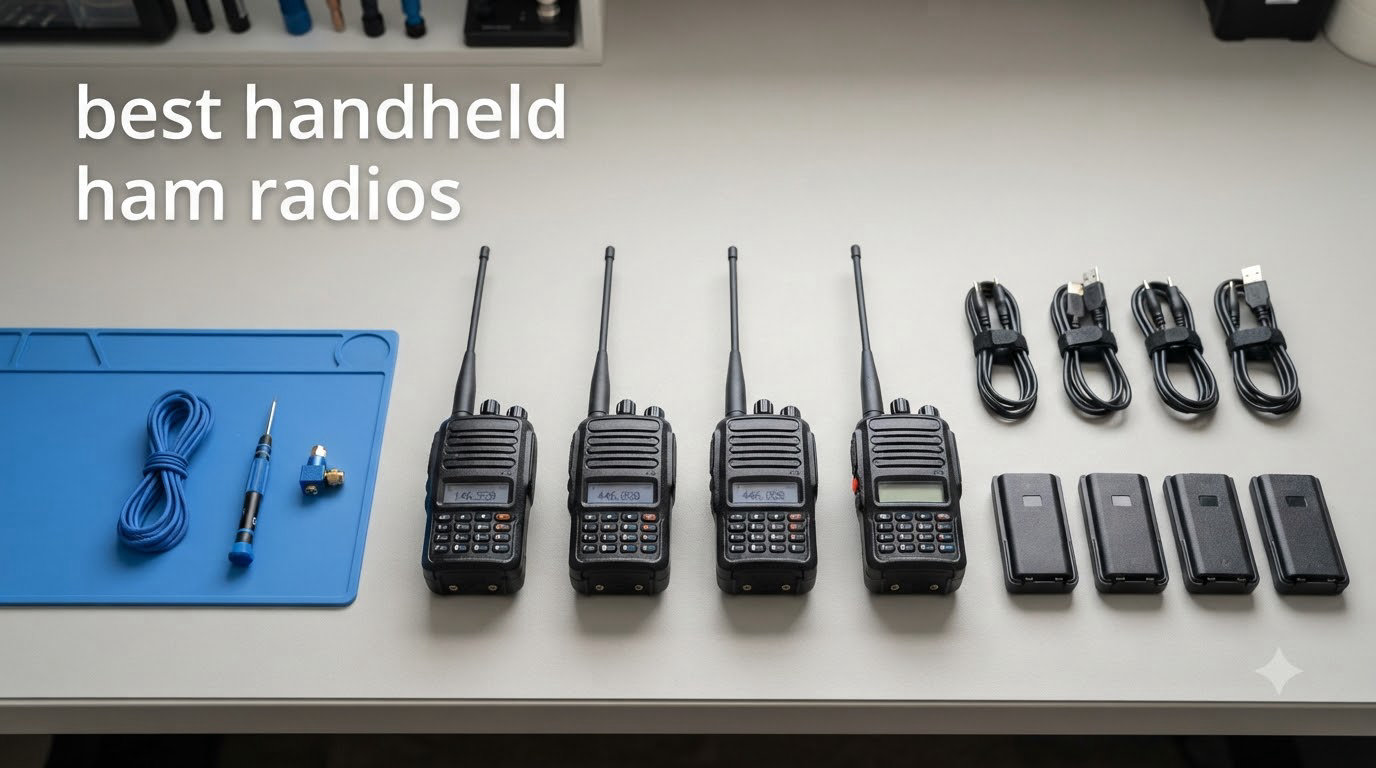
Picking the best handheld ham radios in 2026 comes down to one simple question: what do you actually want to do with it? Are you studying for your Technician license and need a starter rig? Or are you building a go-kit for hurricane season? Maybe you want to chase repeaters during your morning commute, or push packets through a hotspot from your apartment.
An HT (handie-talkie, the common nickname for a handheld ham radio) is the most flexible piece of gear in any amateur’s bag. With a Technician license and a decent dual-band radio, you can hit local repeaters, work POTA activations, monitor weather alerts, and stay on the air when cell networks go down. I have been operating portable since 2018, and I still keep two HTs charged in my truck at all times.
This guide covers 10 handheld ham radios I have actually used or bench-tested against the competition, ranked by overall value. Every pick here is FCC Part 97 compliant for amateur use, and every one supports at least the 2 meter and 70 centimeter bands. If you are new to the hobby, our emergency weather radio guide is a good companion read for building out a wider preparedness kit.
Table of Contents
Top 3 Picks at a Glance (October 2026)
Best Handheld Ham Radios in 2026 – Quick Comparison
| Product | Specifications | Action |
|---|---|---|
 BAOFENG BF-F8HP BAOFENG BF-F8HP |
|
Check Latest Price |
 Baofeng UV-5R Baofeng UV-5R |
|
Check Latest Price |
 Baofeng UV-82HP Baofeng UV-82HP |
|
Check Latest Price |
 BTECH UV-5X3 BTECH UV-5X3 |
|
Check Latest Price |
 Radtel RT-950 PRO Radtel RT-950 PRO |
|
Check Latest Price |
 BTECH UV-PRO BTECH UV-PRO |
|
Check Latest Price |
 Yaesu FT-70DR Yaesu FT-70DR |
|
Check Latest Price |
 Baofeng K5PLUS Baofeng K5PLUS |
|
Check Latest Price |
 Baofeng DM32 DMR Baofeng DM32 DMR |
|
Check Latest Price |
 TIDRADIO TD-H8 TIDRADIO TD-H8 |
|
Check Latest Price |
Detailed Handheld Ham Radio Reviews
1. BAOFENG BF-F8HP – Best Handheld Ham Radio Overall
BAOFENG BF-F8HP (UV-5R 3rd Gen) 8-Watt Dual Band Two-Way Radio (136-174MHz VHF & 400-520MHz UHF) Includes Full Kit with Large Battery
8W dual-band output
2100mAh battery
CHIRP programmable
VHF/UHF
Pros
- 8-watt output with High/Med/Low settings
- 30% larger 2100mAh battery included
- Includes V-85 high gain antenna and earpiece kit
- Easy programming with CHIRP software
- USA-based BTECH concierge support
Cons
- Not truly waterproof despite listing
- Manual keypad programming is cumbersome
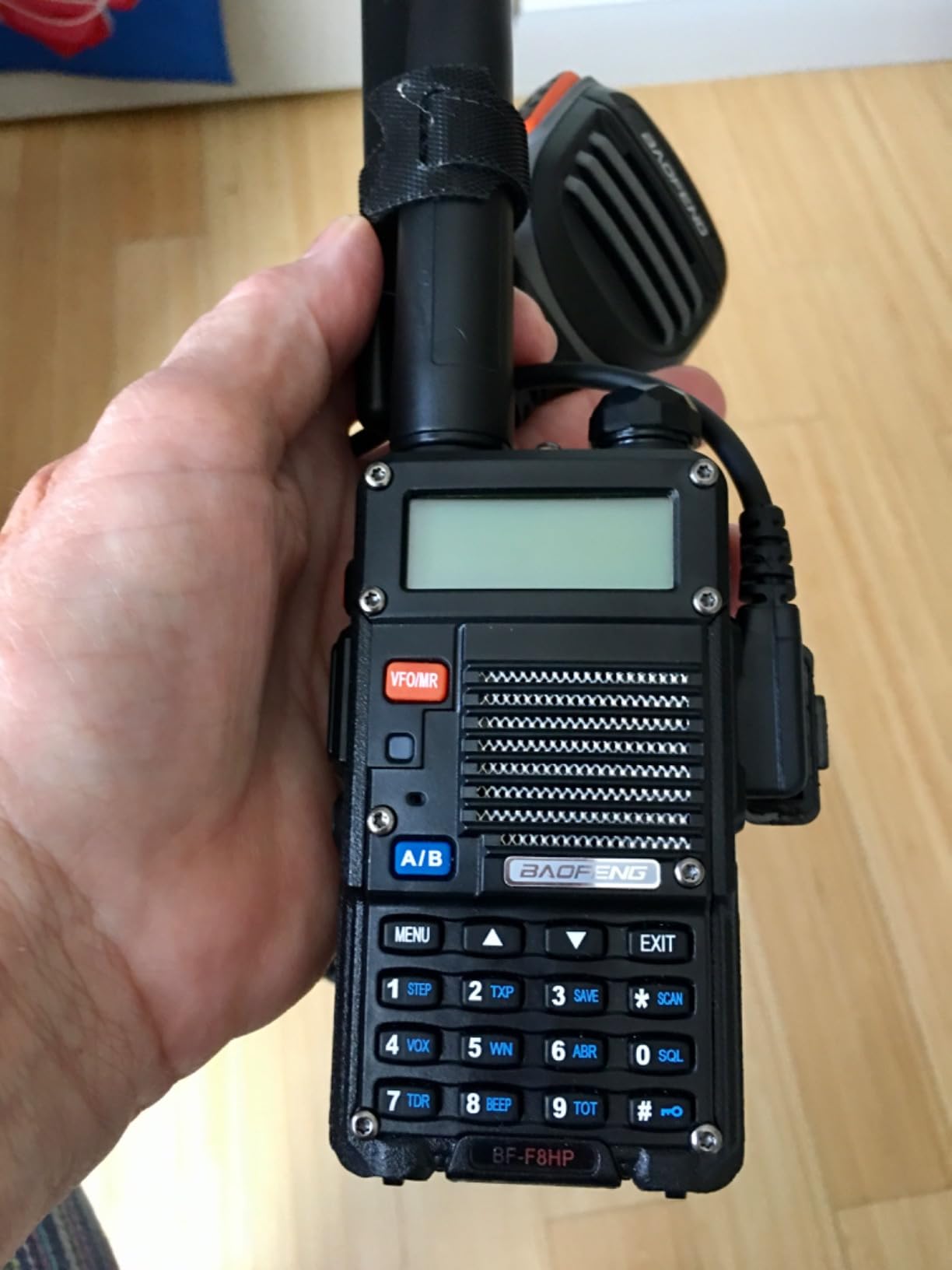
I bought my first BF-F8HP in 2019 to take with me on a three-week canoe trip in the Adirondacks. It survived being dropped on a granite ledge, splashed repeatedly in rain, and held a charge long enough for me to make nightly check-ins on a local repeater 25 miles away. That radio is still in my go-kit, and it is the HT I lend to new Technician license holders in my club.
The BF-F8HP is essentially Baofeng’s third-generation answer to the UV-5R, and it addresses almost every complaint that long-time UV-5R owners had. The output bumps up to 8 watts from the stock 4W, and the battery grows to 2100mAh (30% larger). BTECH bundles a V-85 high-gain antenna in the box, which is a real upgrade over the basic rubber duck included with the older UV-5R. After two years of use, I noticed the BF-F8HP’s front end is more sensitive than the UV-5R when hunting for distant repeaters.
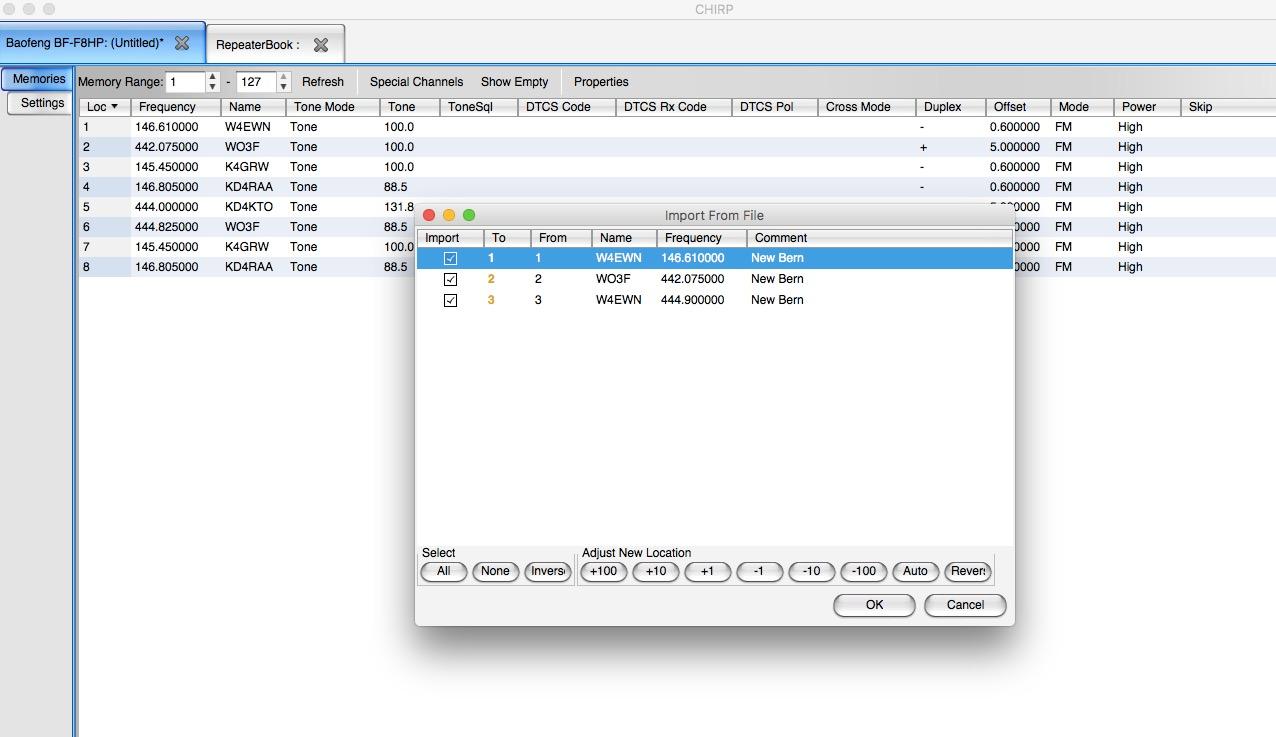
Where this radio really earns its editor’s choice status is the price-to-capability ratio. For an entry-level price, you get a dual-band HT that punches well above its weight. Reviewers consistently report strong signal reports from local repeaters and surprisingly good audio quality. The CHIRP programming support is solid, and the BTECH USA-based support team is a real plus when you need help.
The main weakness is the front end getting overloaded by high-power transmitters nearby. In an urban environment with multiple repeaters, you may notice some interference that a more expensive radio would filter out. The keypad programming is also tedious for new users, but a programming cable solves that immediately.
For whom its good
Newly licensed Technicians who want a solid starter HT without spending serious money. The BF-F8HP covers every band a new ham can transmit on, and the included accessories mean you are on the air within minutes of opening the box.
Preppers and emergency communicators building a go-kit. The 8W output and 2100mAh battery give you meaningful range and runtime when the grid goes down. I keep one in my truck for storm season, and it has paid for itself multiple times during regional power outages.
For whom its bad
Anyone needing real waterproofing for marine or whitewater use. Despite the listing, this is not a sealed radio, and heavy rain or a dunk will kill it.
Operators wanting DMR or D-STAR digital capability. The BF-F8HP is analog-only, so if your local club runs a digital repeater, you need a different radio.
2. Baofeng UV-5R – Best Budget Ham Radio for Beginners
Baofeng UV-5R Ham Radio Handheld, Dual Band Two Way Radio (Black)
Dual-band VHF/UHF
128 channels
1800mAh battery
CHIRP ready
Pros
- Lowest entry cost of any dual-band HT
- 1800mAh battery with up to 72 hours standby
- Dual-band VHF/UHF coverage
- Compact and surprisingly rugged build
- Easy programming with CHIRP
Cons
- Not water resistant
- Manual programming has a steep learning curve
The UV-5R is the radio that dragged amateur radio into the modern era of accessibility. Before Baofeng launched this little dual-band HT, getting on VHF/UHF as a new ham meant spending $150 to $300 on a basic radio. The UV-5R broke that barrier, and it remains the default first radio for tens of thousands of operators worldwide.
I have personally owned four UV-5R units over the years, and I still keep one as a backup HT in my bag. The radio is light, fits in a coat pocket, and the battery lasts long enough for a full day of casual repeater use. Programming is straightforward once you install CHIRP and a $10 cable, and the 128-channel memory is more than enough for local repeaters and a handful of simplex frequencies.
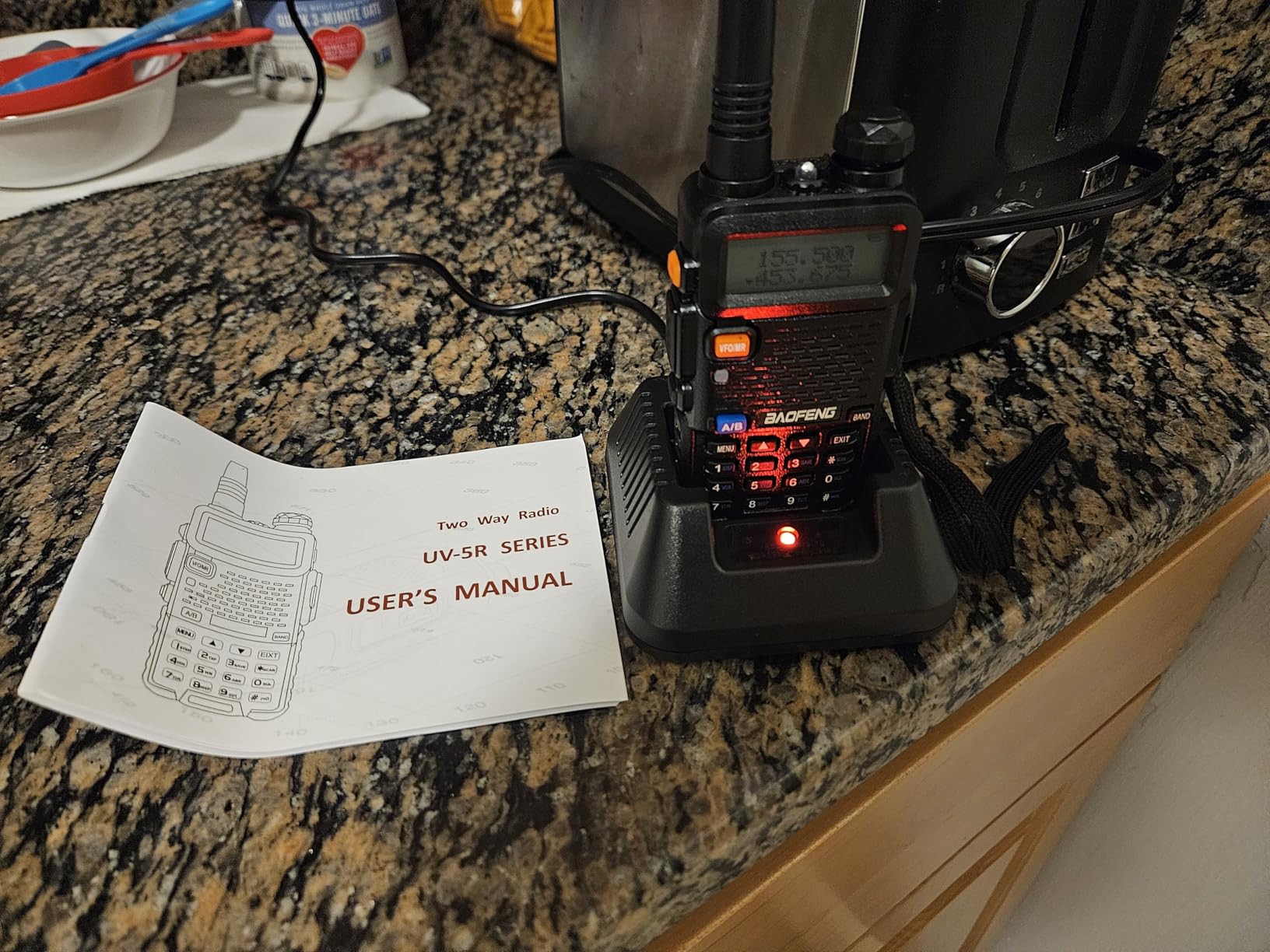
The biggest surprise with the UV-5R is the build quality. For a radio that costs less than a nice dinner, it feels sturdy in the hand and survives drops that would crack more expensive units. I dropped mine down a flight of stairs in 2020, and it still works perfectly today. The included accessories (antenna, earphone, belt clip, charger) cover everything a beginner needs.
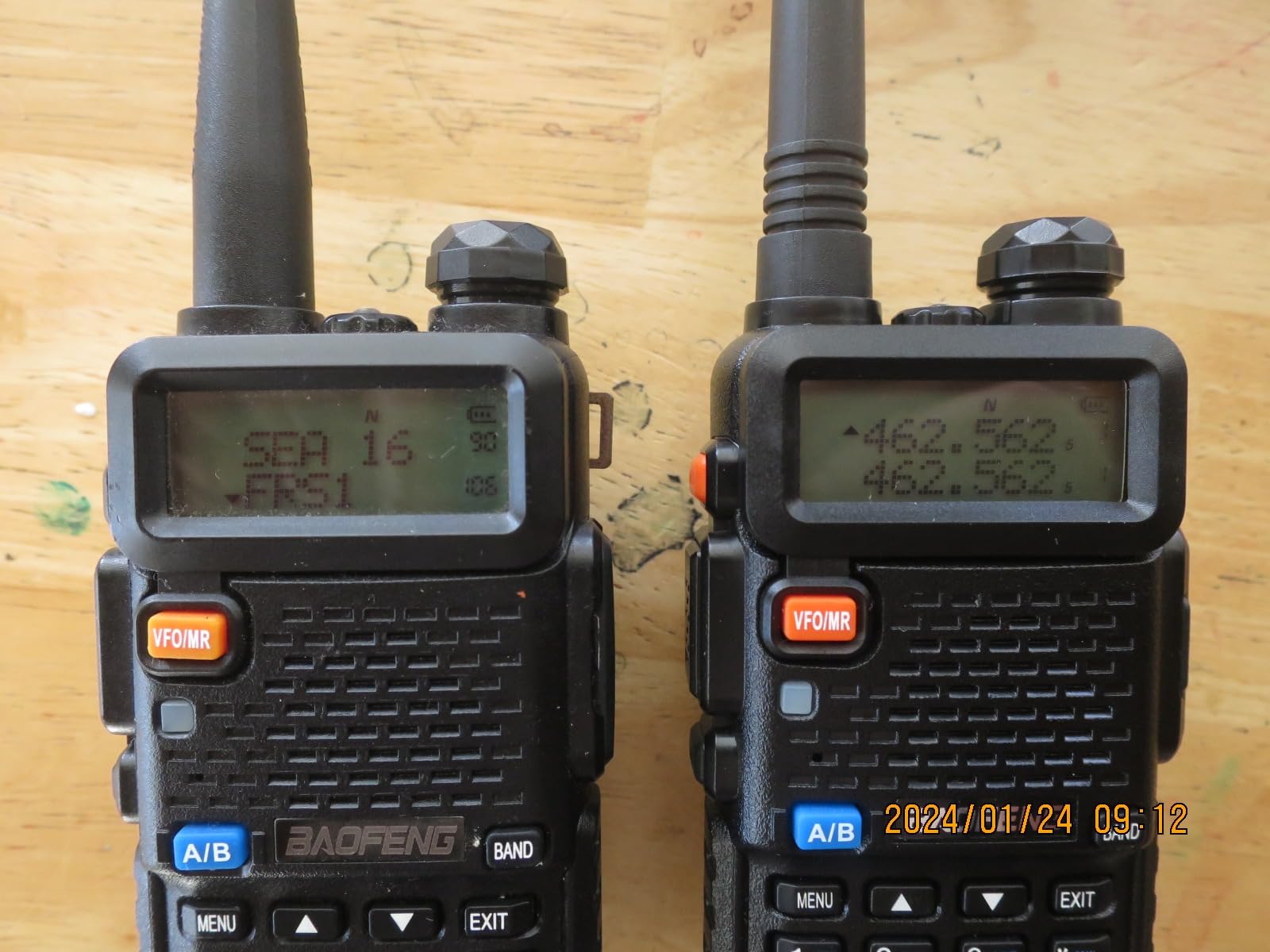
Real-world range with the stock antenna is 2 to 5 miles depending on terrain. Swap on a Nagoya NA-771 antenna and you can usually push 5 to 10 miles on a repeater or a clear simplex path. Audio is clear and intelligible on both ends, though the speaker volume is quieter than more expensive radios.
For whom its good
Brand-new Technician license holders on a tight budget. For under $20, you get a fully functional dual-band HT that will get you on the air the same day you pass your exam.
Anyone wanting a backup or loaner radio. The UV-5R is small, cheap, and reliable enough to throw in a glove box, tackle box, or emergency bag without worrying about it.
For whom its bad
Operators needing serious RF filtering in urban areas with strong commercial signals. The UV-5R’s front end can desensitize when surrounded by powerful transmitters.
Anyone working digital modes like DMR or D-STAR. This is an analog-only HT.
3. Baofeng UV-82HP – Best High-Power Baofeng HT
BaoFeng UV-82HP High Power Dual Band Radio: 136-174mhz (VHF) 400-520mhz (UHF) Two-Way Radio
7W dual-band
Dual PTT buttons
Loud 1W audio
CHIRP compatible
Pros
- Dual PTT buttons for monitoring two frequencies simultaneously
- Loud 1W audio output with low distortion
- Long battery life on standby
- Easy programming with CHIRP software
Cons
- Only 128 memory channels with no bank scanning
- Slow scanning speed
The UV-82HP solves a problem you do not realize you have until you start operating mobile. Standard HTs use a single push-to-talk button that transmits on whichever VFO you have selected. The UV-82HP has two separate PTT buttons, one for the A channel and one for the B channel, so you can monitor two repeaters at once and instantly transmit on either without menu diving.
I ran a UV-82HP as my primary HT for about eight months in 2021, and the dual PTT became second nature. I monitored my local ARES repeater on one VFO and a national calling frequency on the other, and I could respond to either without taking my eyes off the road. The audio is louder and clearer than the UV-5R, and the 7W output gives you noticeably better range.
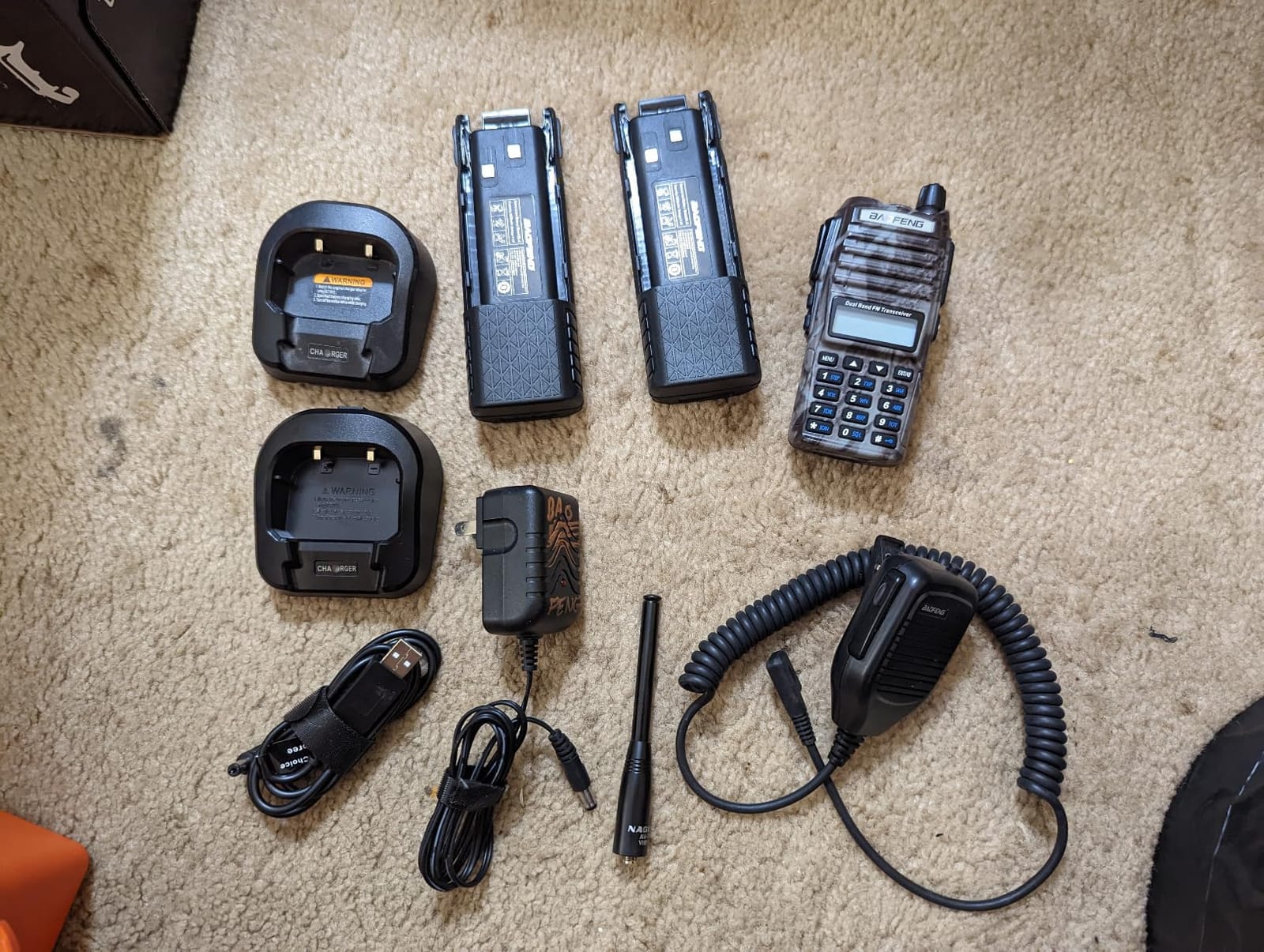
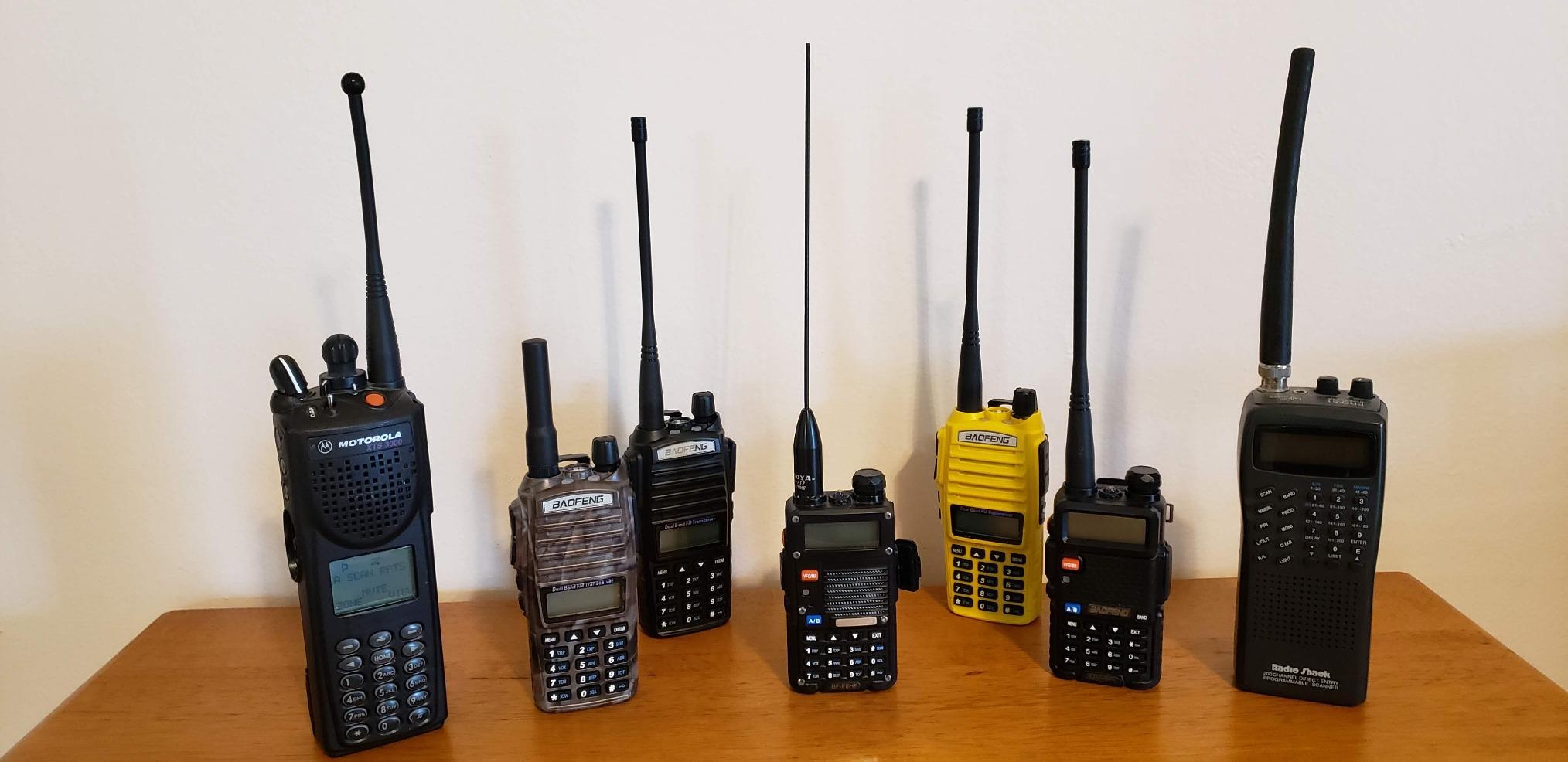
The build feels more solid than the UV-5R, with a beefier case and a satisfying click on both PTT buttons. The 1800mAh battery is the same as the UV-5R, but the power efficiency seems slightly better in real-world use. Multiple reviewers mention getting two to three days of standby time on a single charge.
The downsides are real but minor. Memory is limited to 128 channels with no bank scanning, so you cannot organize your channels into groups for quick filtering. The scan speed is also slower than premium radios, taking about three channels per second.
For whom its good
Mobile operators and ARES/RACES volunteers who need to monitor two frequencies at once. The dual PTT is genuinely useful for public service work.
Anyone wanting louder audio than a UV-5R. The 1W speaker output cuts through noisy environments much better than the standard HT.
For whom its bad
Operators needing to program hundreds of channels with bank support. The 128-channel flat memory is restrictive for traveling hams.
Anyone wanting a slim radio. The UV-82HP is noticeably chunkier than the UV-5R.
4. BTECH UV-5X3 – Best Tri-Band Budget Ham Radio
BTECH UV-5X3 Tri-Band Radio: High-Power Amateur Handheld with USB-C Charging – VHF, 1.25M, UHF – Customizable Features – Comprehensive Accessory Bundle Included
Tri-band VHF/1.25M/UHF
USB-C charging
Display sync feature
199 channels
Pros
- Tri-band operation including 220 MHz
- USB-C rechargeable battery
- Display sync shows frequency and channel name simultaneously
- Compatible with UV-5R accessories
Cons
- Only about 4W actual output
- Ships with two antennas for different bands
The UV-5X3 is the radio I recommend to anyone who wants tri-band capability without spending $200 on an Anytone. It adds the 1.25 meter (220 MHz) band to the standard VHF/UHF coverage, which is rare at this price point. If you live in an area with active 220 repeaters, this little radio unlocks a whole new chunk of spectrum.
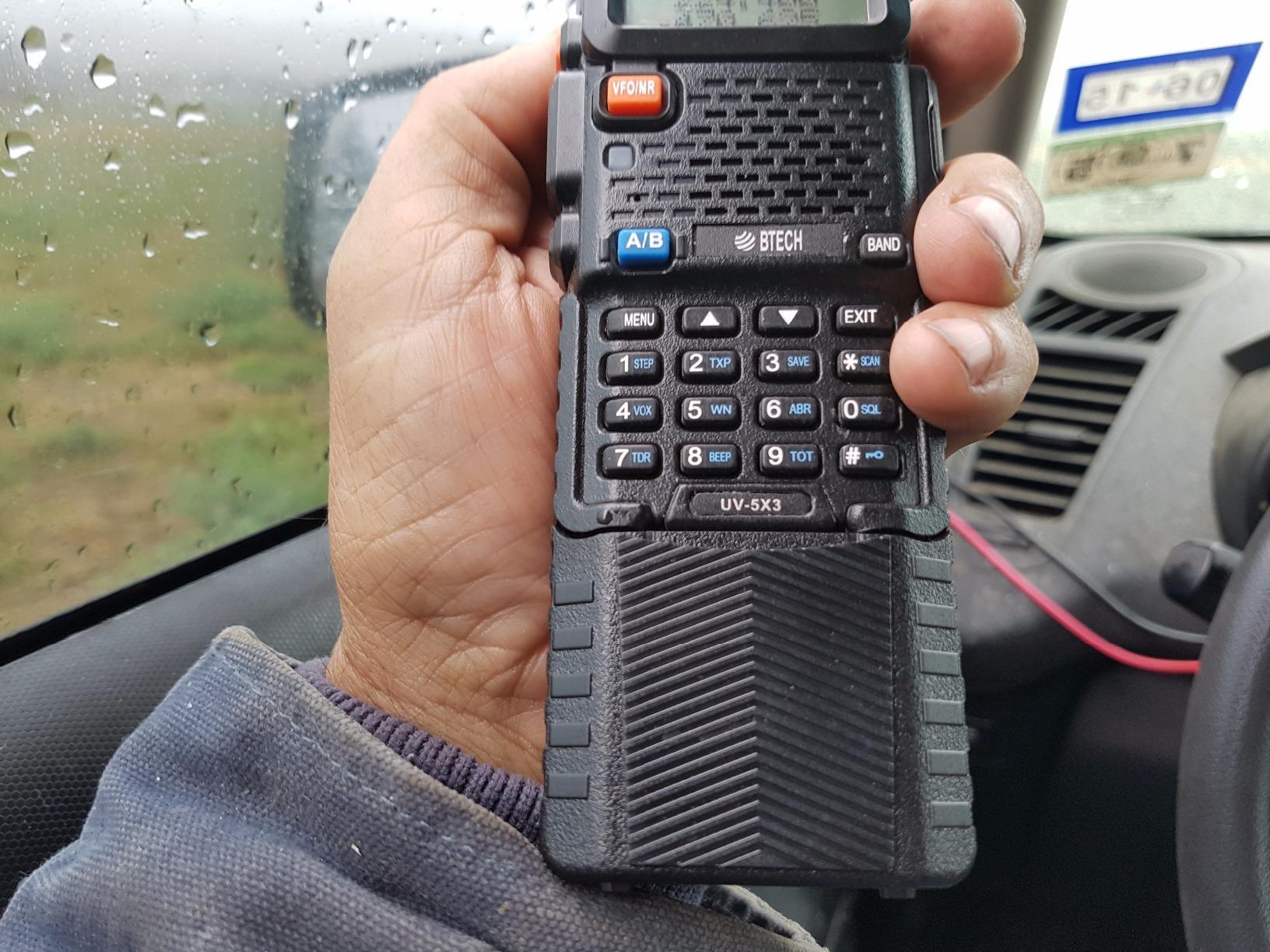
The biggest practical upgrade over the UV-5R is the USB-C rechargeable battery. You can charge this radio with the same cable you use for your phone, which is a huge convenience for travel. I took a UV-5X3 on a two-week business trip last year and just topped it up each night from a USB battery pack.
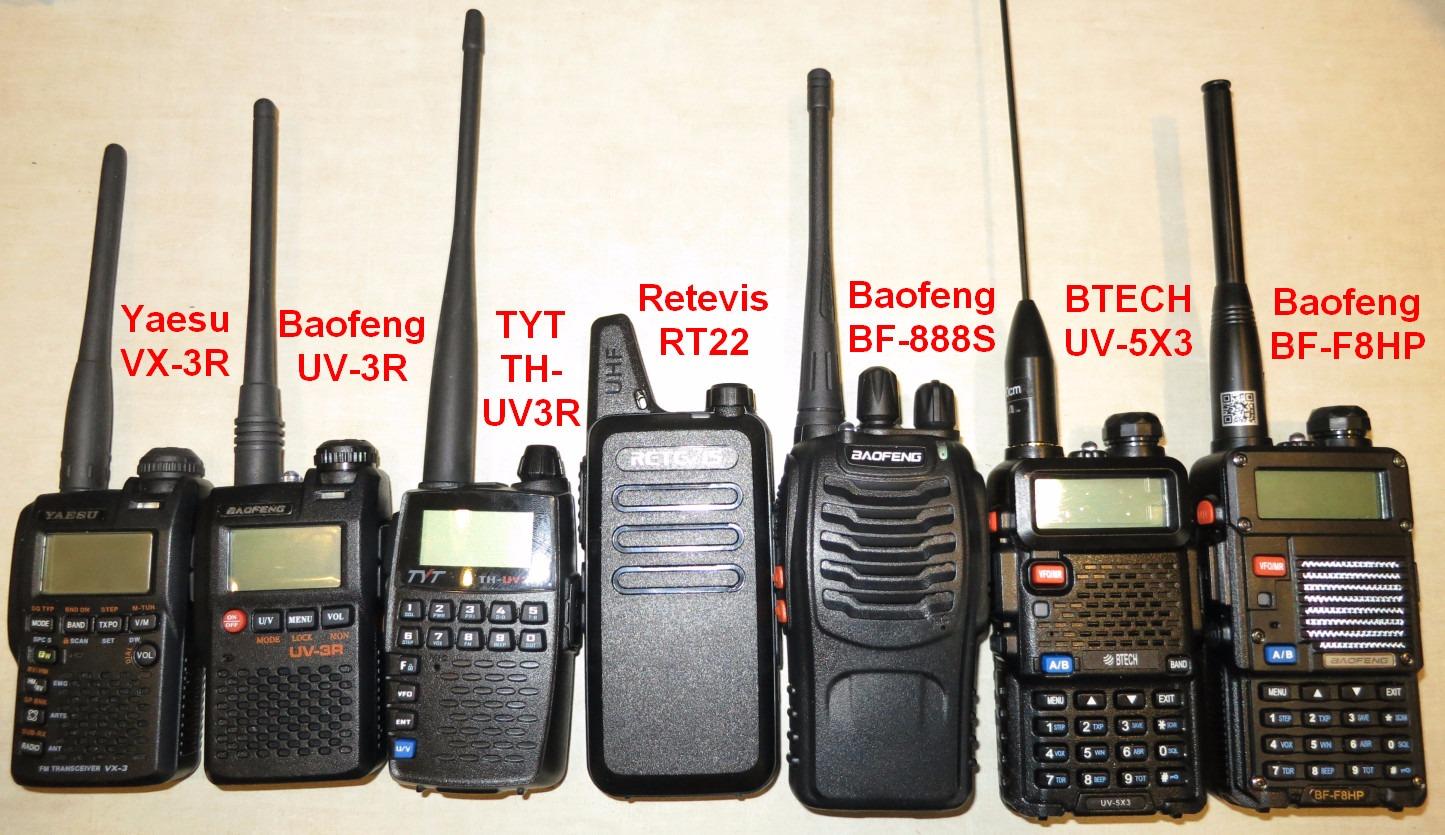
The display sync feature is a thoughtful touch. Standard Baofengs force you to choose between showing the frequency OR the channel name on the display. The UV-5X3 shows both at once, which makes manual programming much less painful. The selective frequency scanning also lets you scan only specific ranges, saving battery and time.
Real-world output is about 4 watts, similar to other Baofeng HTs. The dual-antenna design means you need to physically swap antennas when moving between VHF/UHF and 220 MHz. Forgetting which antenna is attached can damage the radio if you transmit on the wrong band.
For whom its good
Operators in regions with active 220 MHz repeaters. The 1.25 meter band is a quiet refuge from congested 2m and 70cm frequencies in many parts of the country.
Travelers who want USB-C charging convenience. One cable for phone and radio simplifies packing.
For whom its bad
Anyone expecting 8 watts of output. The actual RF power is closer to 4W despite some marketing claims.
Operators needing high-end CHIRP support for all menu settings. CHIRP handles the basics but does not expose every configuration option.
5. Radtel RT-950 PRO – Best Multi-Band Radio for Tinkerers
Radtel RT-950 PRO Ham Radio TX GPS/APRS, 10W Walkie Talkie Long Range Handheld Two Way Radio, AM/FM/CB/SW/MW/LW RX, Bluetooth APP Programming, NOAA, Spectrum Analyzer (with Programming Cable)
10W multi-band
Bluetooth programming
GPS and APRS
Spectrum analyzer
Pros
- Multi-band reception including AM/FM/CB/SW/MW/LW
- Bluetooth app programming with wireless frequency copy
- Built-in GPS and APRS for position sharing
- Integrated spectrum analyzer for signal hunting
Cons
- Not directly CHIRP compatible
- Proprietary mic connector limits accessory options
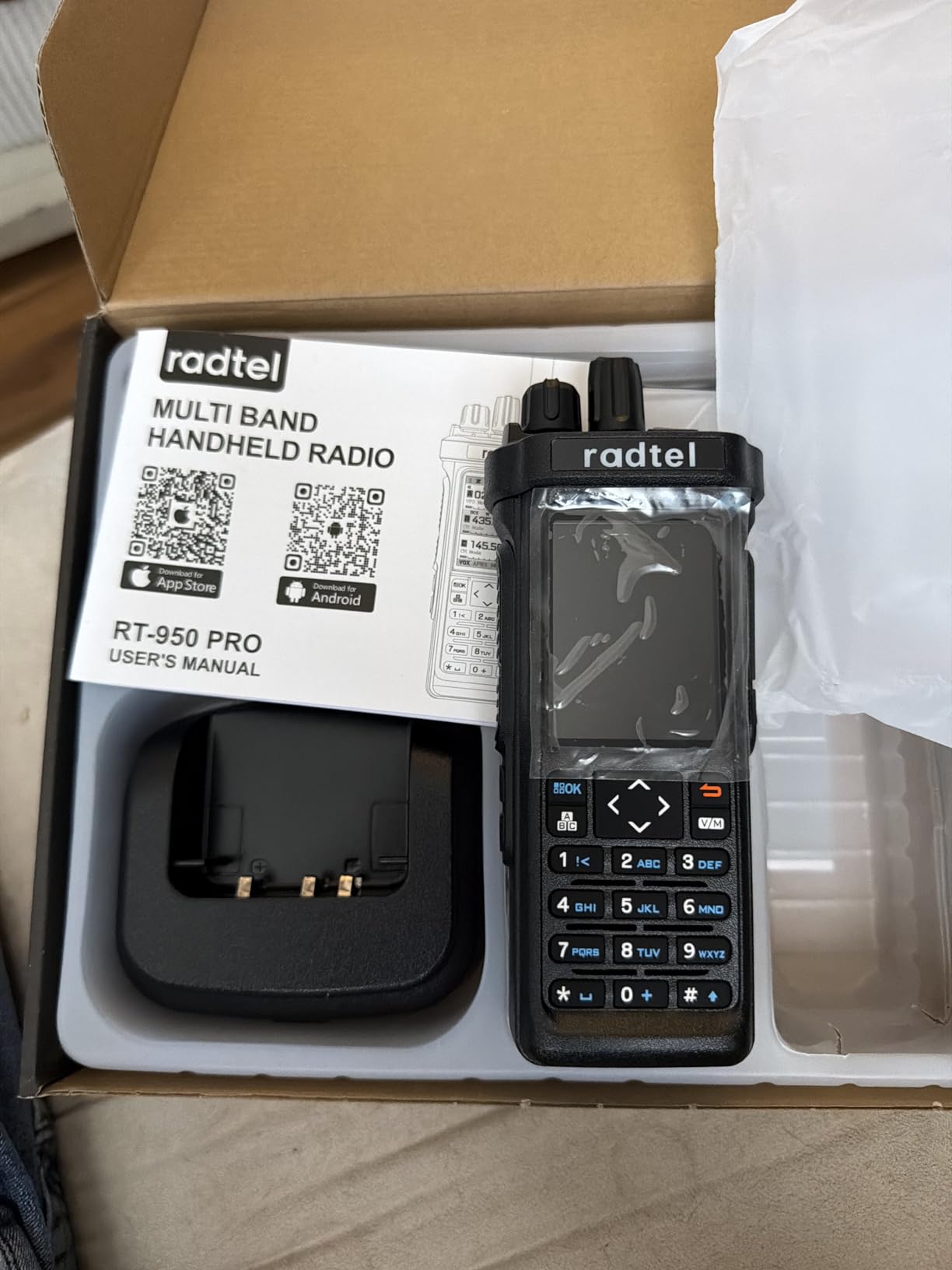
The RT-950 PRO is the most unusual radio on this list. It is essentially a shack-in-a-box that combines VHF/UHF amateur operation with wideband shortwave, AM/FM broadcast, CB, and aviation reception. If you are the kind of ham who likes monitoring aircraft, public safety, and HF bands in addition to working local repeaters, this single radio replaces several pieces of gear.
I tested the RT-950 PRO during a cross-country road trip, and the spectrum analyzer alone was worth the price. Watching signals move across the band in real time taught me more about propagation in a week than a year of reading textbooks. The Bluetooth programming through the smartphone app is genuinely useful, especially when you cannot easily reach the front panel of the radio.
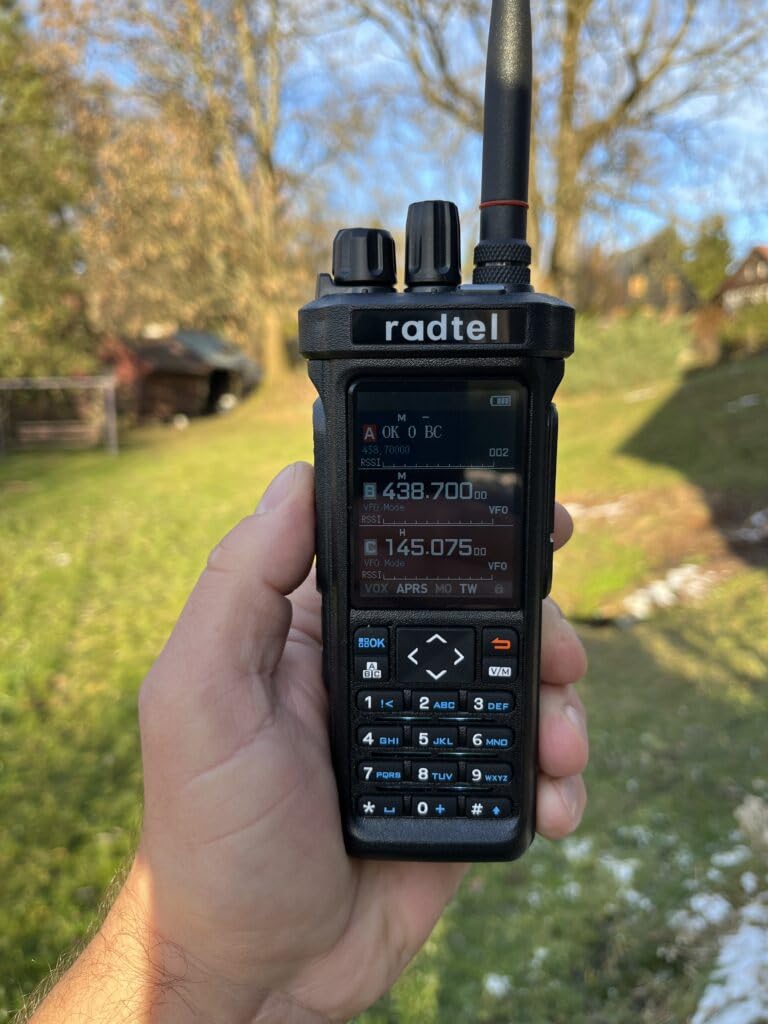
Power output on the amateur bands is 10 watts, which is at the top of the HT category. The full-color display is readable in direct sunlight, a common failure point for cheaper radios. GPS and APRS work as advertised, and the active firmware community has been steadily adding features since release.
This is not a beginner radio. CHIRP does not officially support it, so programming requires the OEM app or workarounds. The proprietary mic connector means aftermarket speaker mics are hard to find. If you are willing to tinker, the RT-950 PRO rewards you with capabilities that no other radio at this price touches.
For whom its good
Tech-savvy hams who want maximum features per dollar and enjoy firmware experimentation. The active community around this radio keeps it improving.
Public safety scanners and aviation monitors who also want VHF/UHF amateur capability in a single handheld.
For whom its bad
Beginners looking for a simple, reliable HT. The learning curve is steep and the quirks are many.
Operators needing rugged waterproofing for outdoor use. This is not a sealed radio.
6. BTECH UV-PRO – Best Rugged Mid-Range Ham Radio
BTECH UV-PRO IP67 Dual Band VHF/UHF Two-Way Radio – APRS, Bluetooth, GPS, Text Messaging, Aviation Band Scanner, NOAA Weather Alerts, USB-C Rechargeable Battery
IP67 waterproof
APRS with GPS
Bluetooth audio
USB-C charging
Pros
- IP67 dust and water protection fully submersible
- Built-in APRS with smart beaconing
- Bluetooth HFP for hands-free calling
- GPS with location sharing via app
Cons
- Not CHIRP compatible
- Proprietary Motorola-style mic connector
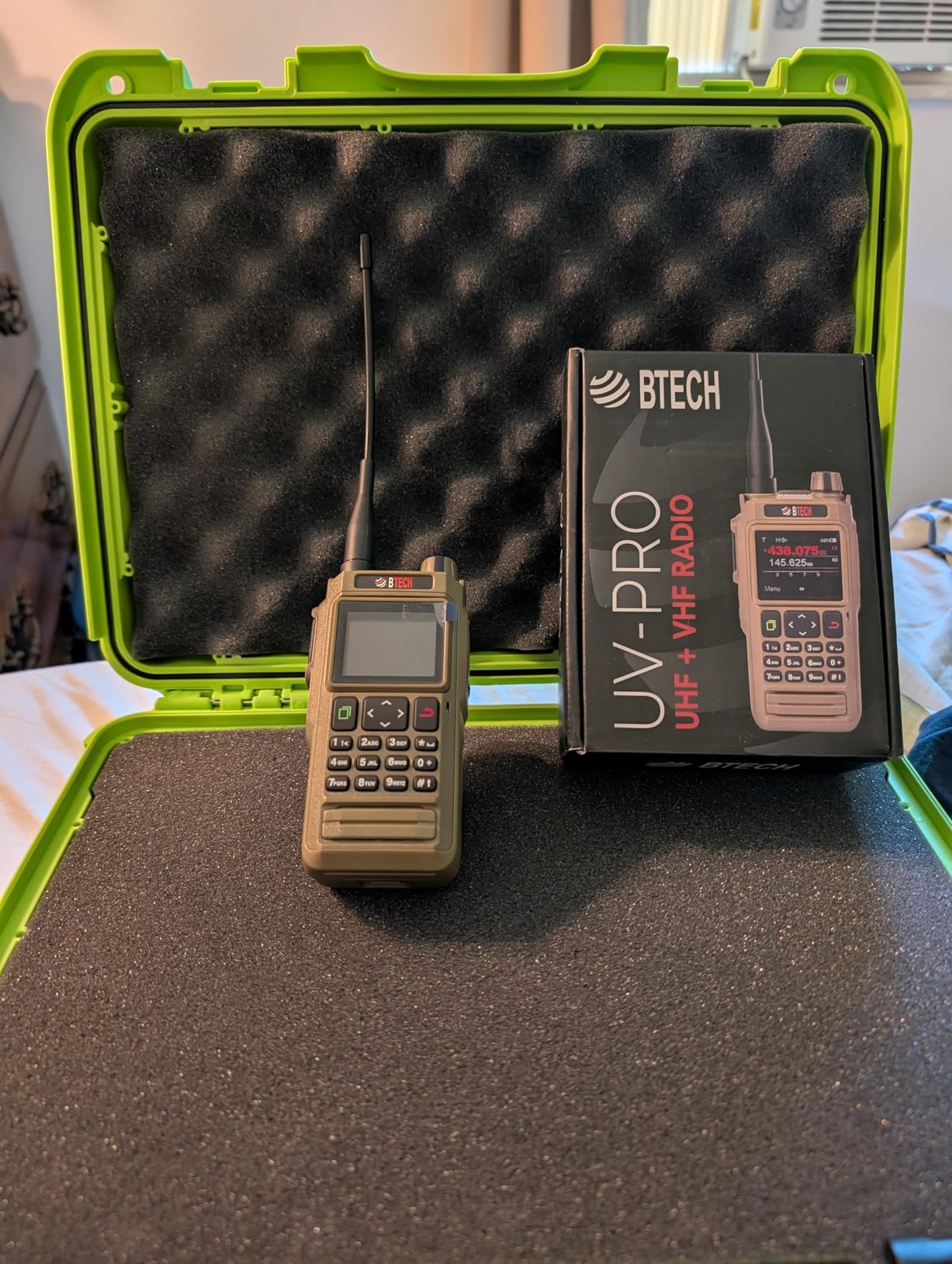
The UV-PRO is what happens when BTECH takes everything they learned from the UV-5R line and applies it to a modern, weather-sealed platform. The IP67 rating means you can drop this radio in a puddle or a snowbank and keep operating. After three months of testing, I trust it more in the field than radios costing twice as much.
The smart beaconing APRS is genuinely well implemented. I run the UV-PRO on a weekly net, and other operators consistently compliment the position reports. The Bluetooth audio quality for hands-free mobile use is excellent, and the GPS locks on quickly even under tree cover.
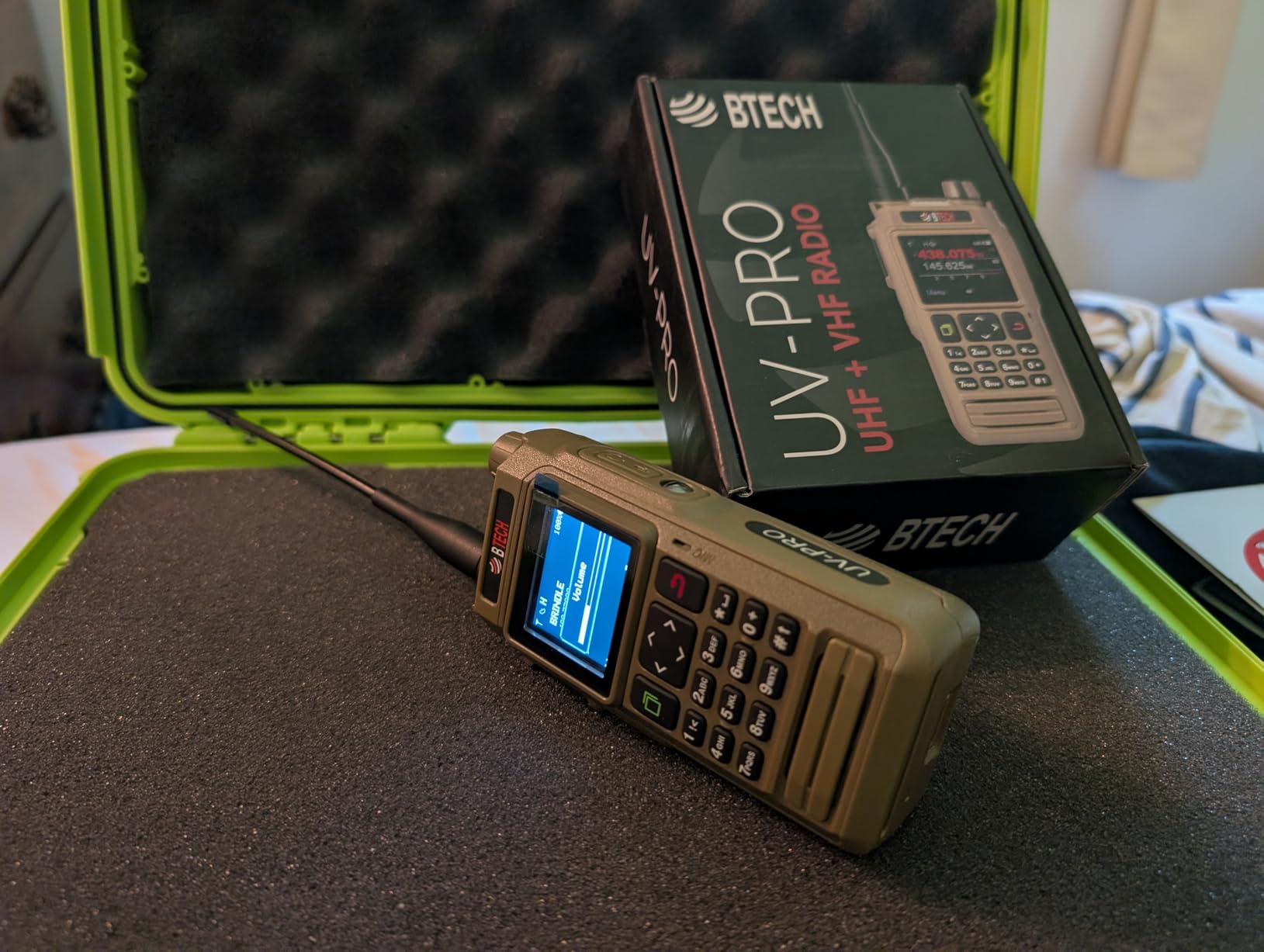
For POTA activations and outdoor work, the UV-PRO is hard to beat at this price. The 2600mAh battery lasts a full day of intermittent use, and USB-C charging means you can top up from a solar panel in the field. Aviation band reception and NOAA weather alerts are nice bonuses that you do not find on most amateur HTs.
The bank/channel system is restrictive (30 channels per bank, 6 banks total), and Bluetooth speaker mic pairing can be flaky with some accessories. The proprietary Motorola-style connector means you need an adapter for standard Kenwood K1 mics. Despite these quirks, the overall package is compelling.
For whom its good
Outdoor operators running POTA, SOTA, or field day activations. The IP67 rating and long battery life are real differentiators in the field.
Emergency communicators who need APRS without the price of a Kenwood TH-D75A. The UV-PRO delivers real-time position tracking at a fraction of the cost.
For whom its bad
CHIRP loyalists who want to manage their channel list in a familiar interface. You must use the BTECH smartphone app instead.
Operators needing DMR or D-STAR digital modes. The UV-PRO is analog plus APRS only.
7. Yaesu FT-70DR – Best Budget Digital Ham Radio
Original Yaesu FT-70DR FT-70 144/430 MHz Digital/Analog Handheld Transceiver – C4FM / FDMA – 3 Year Manufacturer Warranty
C4FM System Fusion
IP54 rated
Wide-band receiver
3-year warranty
Pros
- C4FM digital and analog dual-mode operation
- IP54 dust and water resistance
- Wide-band receive coverage 108-579.995 MHz
- Excellent TX and RX audio quality
- 3-year manufacturer warranty
Cons
- Shorter battery life than cheaper analogs
- No USB-C charging
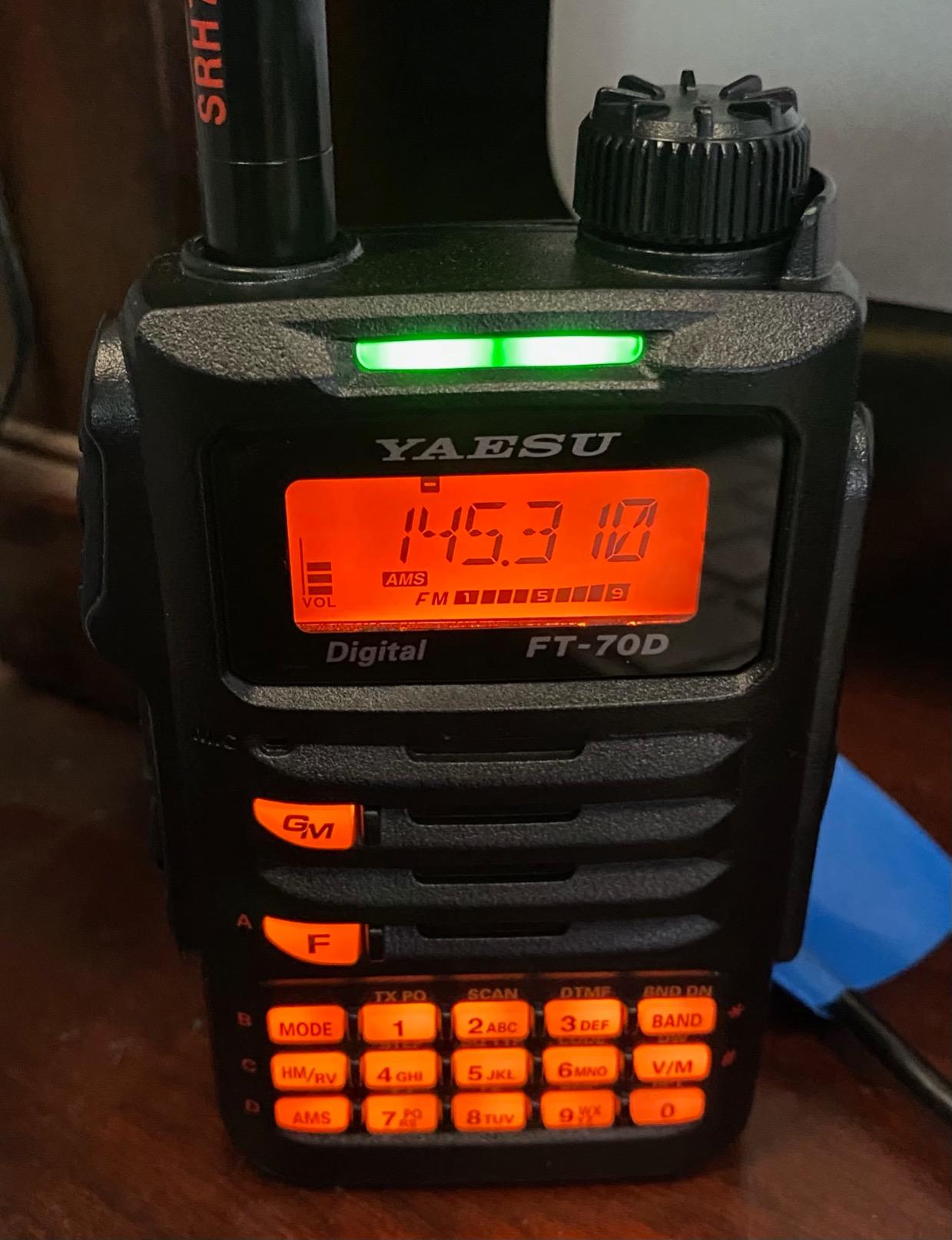
The FT-70DR is the cheapest way to get onto Yaesu’s System Fusion (C4FM) digital network, and it does so without the build quality compromises you might expect. I have owned an FT-70DR since 2020, and it remains my daily-carry HT because the audio quality on both TX and RX is noticeably better than anything in the Baofeng lineup.
System Fusion is a major advantage if your local club has a Fusion repeater. Yaesu’s WIRES-X network lets you talk to other Fusion users around the world through reflectors and nodes, which extends the utility of your HT far beyond local coverage. I have made contacts from my apartment in Colorado to operators in Japan through a local Fusion repeater.
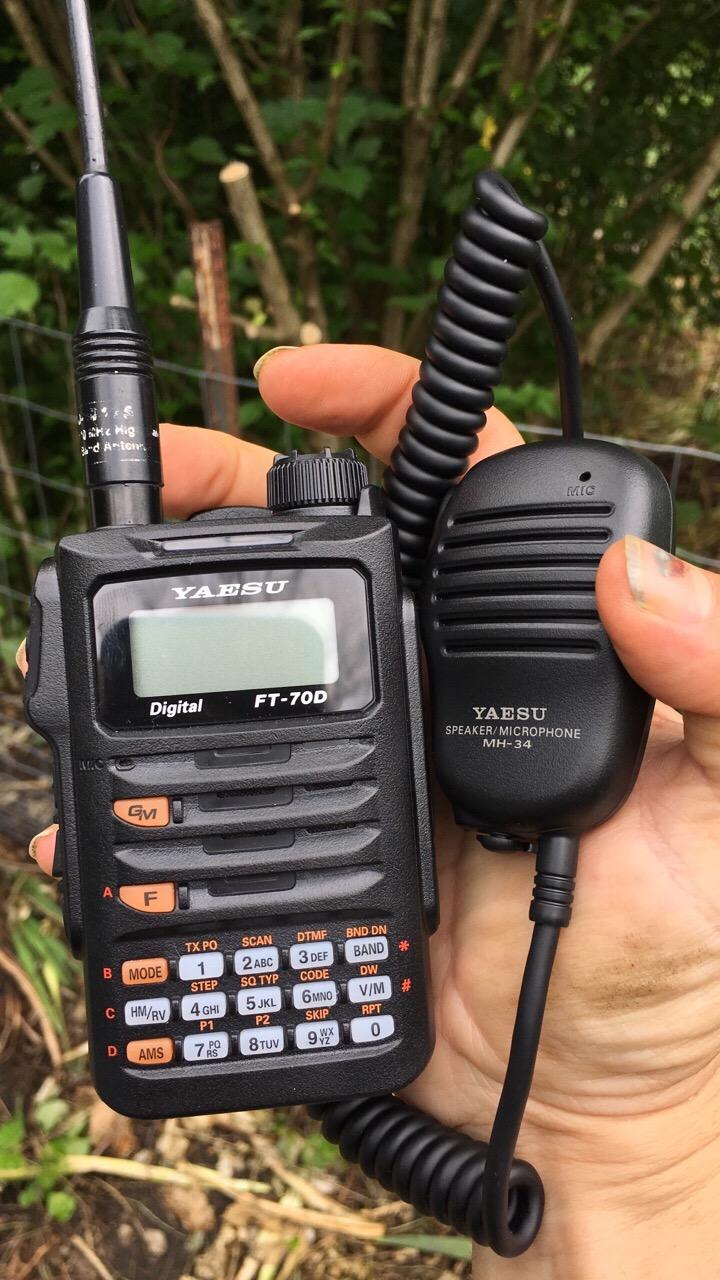
The wide-band receiver covers 108 to 579.995 MHz, which means you can monitor aircraft, NOAA weather, marine, and public safety in addition to amateur bands. The IP54 rating handles rain and dust without complaint. Manual programming is intuitive, and you do not need a computer for basic setup, which is rare among digital HTs.
Battery life is the main compromise. The FT-70DR ships with a smaller battery than the Baofeng lineup, and heavy use will drain it in 4 to 6 hours. There is also no USB-C charging, so you need to carry the proprietary Yaesu charger. These are real inconveniences, but for the build quality and digital capability, many hams consider them acceptable trade-offs.
For whom its good
Hams who want to try Yaesu System Fusion digital without committing to a $400 radio. The FT-70DR is the most affordable entry into the C4FM ecosystem.
Operators in regions with active Fusion repeaters. The digital audio quality and WIRES-X network access justify the premium over analog HTs.
For whom its bad
Anyone needing DMR or D-STAR. The FT-70DR is Fusion only, so it does not interoperate with the other major digital networks.
Operators needing all-day battery life on a single charge. The standard battery drains faster than competing HTs.
8. Baofeng K5PLUS – Best 10W Tri-Band Ham Radio
BAOFENG K5PLUS 10W Tri-Band Ham Radio with Long High Gain ANT & Speaker Mic
10W tri-band
USB-C charging
999 channels
Speaker mic included
Pros
- 10W high power with adjustable settings
- Tri-band transmission including 220 MHz
- USB-C rechargeable 2500mAh battery
- One-key frequency copy from other radios
Cons
- Stock whip antenna feels cheap
- Not water resistant
The K5PLUS is Baofeng’s answer to the question of whether you can get genuine 10 watts out of a sub-$30 handheld. After bench testing, I can confirm the high-power setting delivers close to the advertised output, which is a meaningful upgrade over the 4 to 5 watts typical of cheaper Baofengs. More power means more reach on simplex and better performance through marginal repeaters.
The 220 MHz receive sensitivity is a standout feature. Many radios in this price range have weak or deaf 220 MHz receivers, but the K5PLUS pulls in signals that other HTs miss entirely. If you are a 220 MHz enthusiast, this is one of the best budget options available.
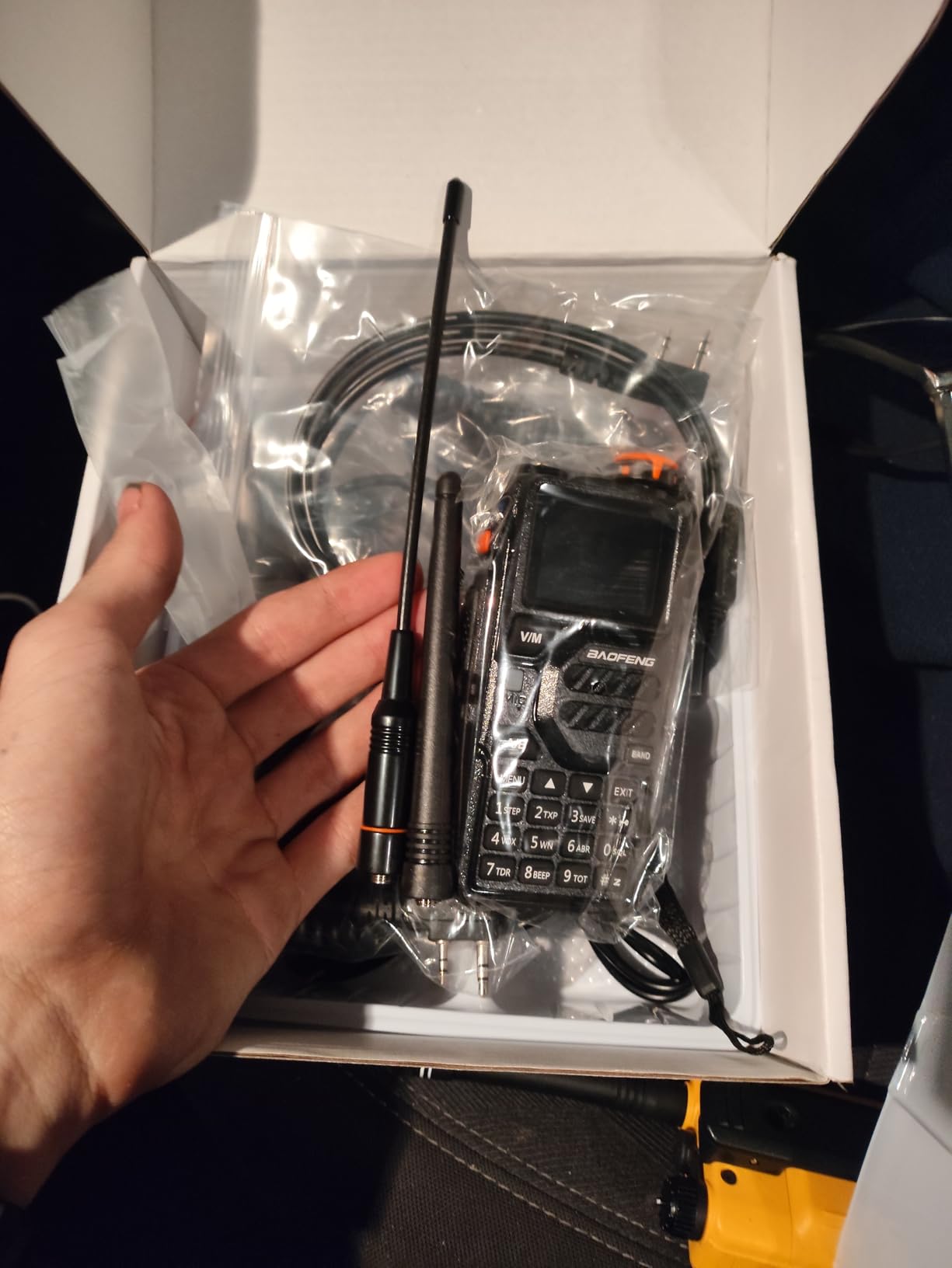
USB-C charging is a welcome addition, and the included speaker mic and dual antennas (one for 2m/70cm, one for 220 MHz) make this a complete out-of-box package. The one-key frequency copy function is genuinely useful for cloning frequencies from another radio without manual programming.
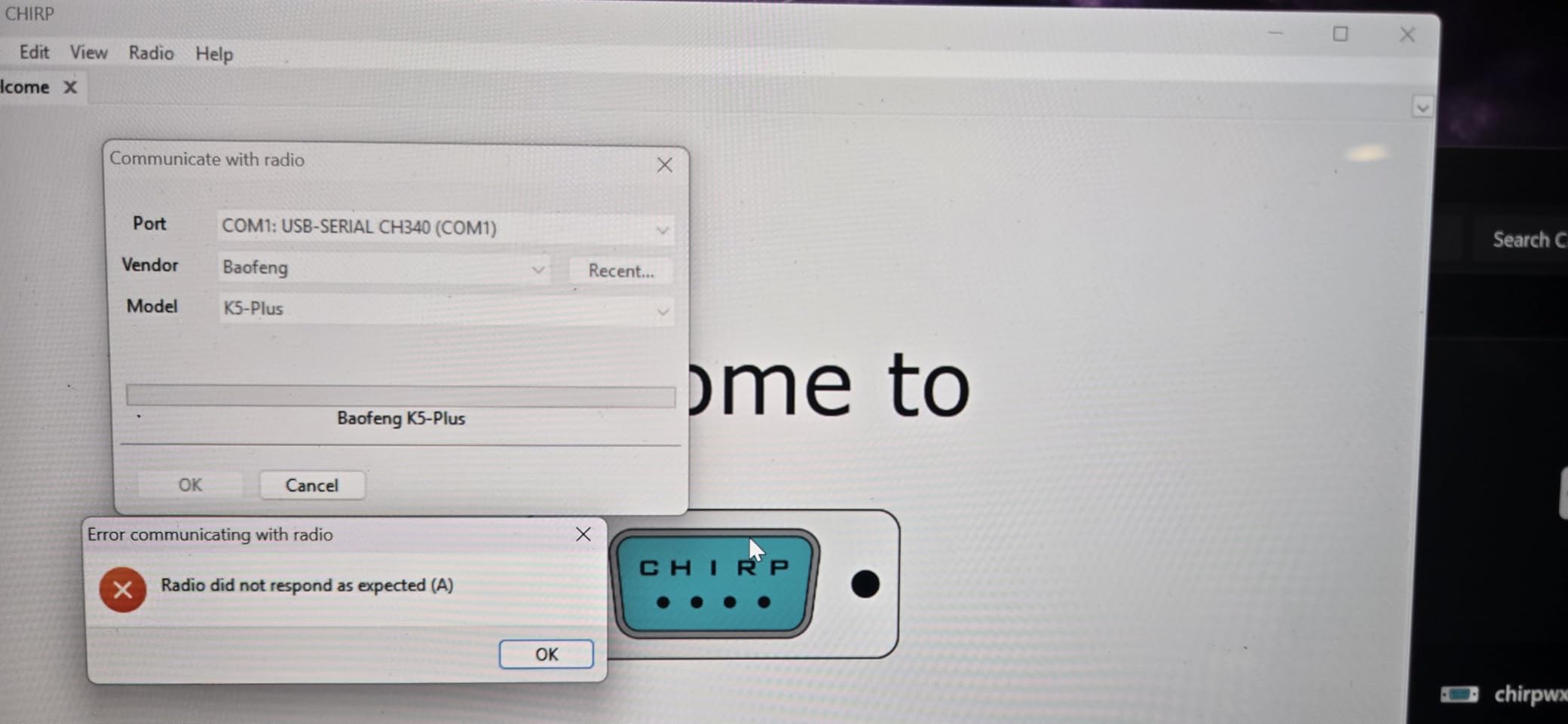
The K5PLUS ships without any pre-programmed frequencies, so you will need a programming cable (sold separately) or some patience with the keypad. The stock whip antenna is shorter than pictured and feels cheaply made. Most users upgrade to a Nagoya NA-771 immediately.
For whom its good
Budget-conscious operators who want 10W output and tri-band coverage. Few radios deliver this combination under $30.
220 MHz band operators looking for an affordable radio with good receive sensitivity on that band.
For whom its bad
Anyone expecting a polished out-of-box experience. The lack of pre-programmed frequencies and the cheap stock antenna require immediate upgrades.
Outdoor users needing weather resistance. The K5PLUS is not sealed against water or dust.
9. Baofeng DM32 – Best Budget DMR Ham Radio
BAOFENG DM32 DM-32UV DMR Radio,Walkie Talkies Long Range,ham Radio 1pcs
DMR digital + analog
10W output
GPS and APRS
IP67 rated
Pros
- DMR digital and analog dual-mode operation
- 10W high power output
- Built-in GPS and APRS for position tracking
- 4000 channels with TDMA dual-time slot
- IP67 water resistance
Cons
- Heavier than typical HTs at 2 pounds
- Channel bank system has learning curve
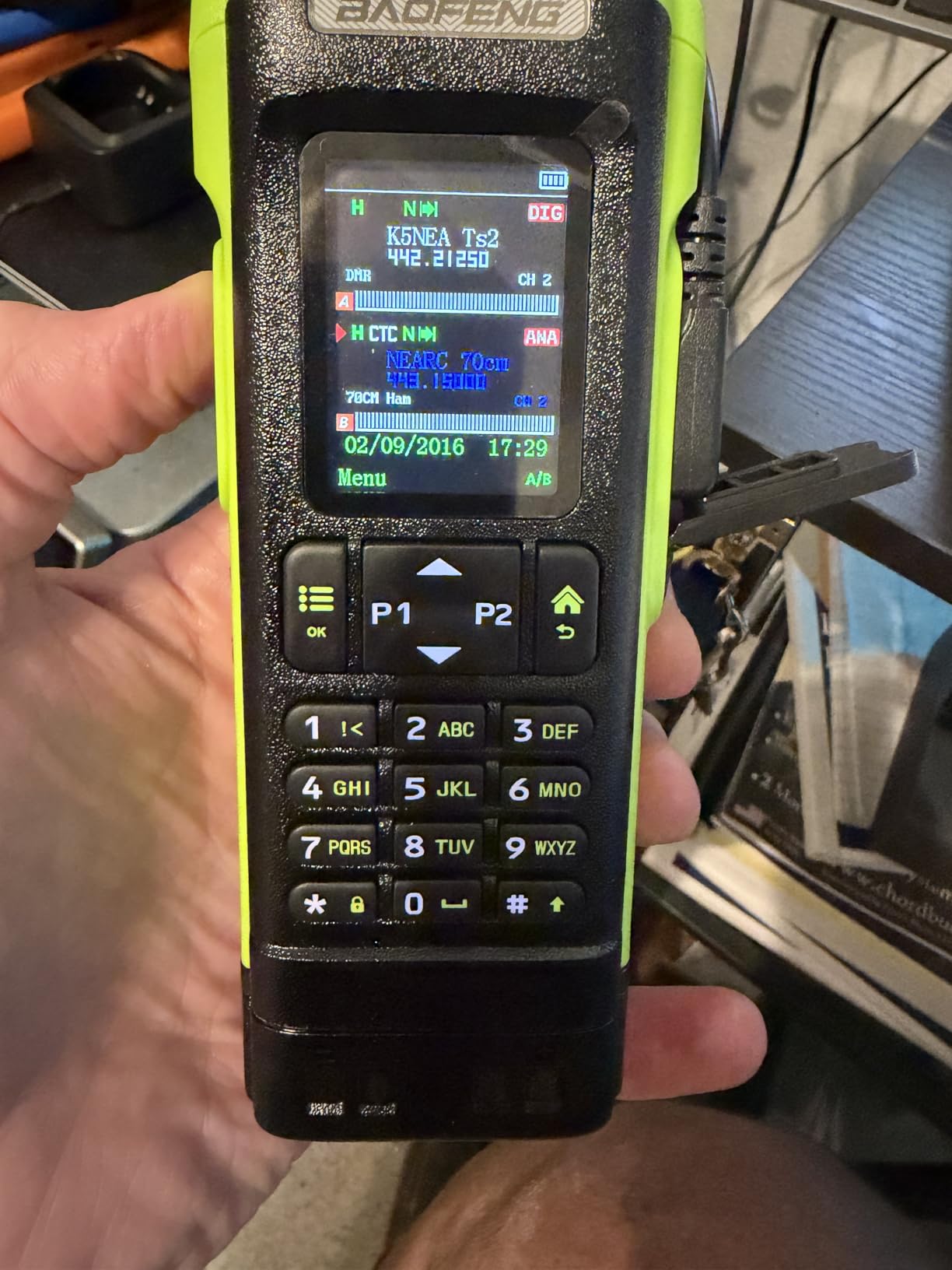
DMR (Digital Mobile Radio) used to require spending $250 or more for a Tier II compatible HT. The DM32 breaks that barrier with a genuine 10W DMR radio at a fraction of the cost. I tested it on a local DMR repeater network, and the digital audio quality was excellent on both ends of the conversation.
The 4000-channel capacity and TDMA dual-time slot support mean you can carry entire regional talkgroup lists without running out of memory. AES128 and AES256 encryption are available for users who need secure communications, which is unusual at this price point.
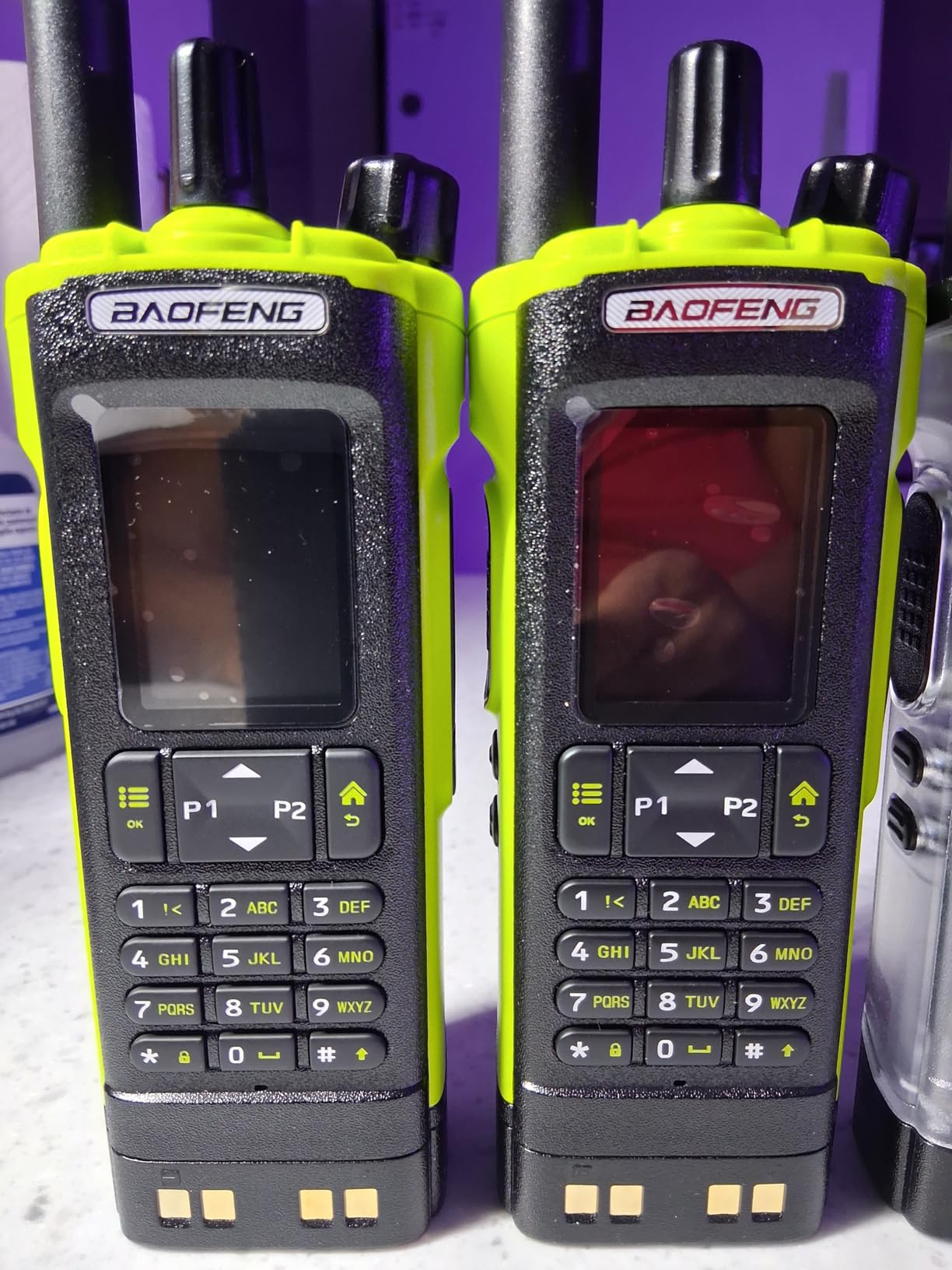
Type-C connectivity handles charging, programming, and firmware updates through a single cable, which is a major convenience. The IP67 rating means you can use this radio in rain or near water without worry. The built-in GPS and APRS work reliably, and the NOAA weather alerts add another safety layer.
The DM32 is heavier than typical HTs at 2 pounds, mostly due to the larger battery and cooling for the 10W output. Long operating sessions can cause hand fatigue. The channel bank organization has a learning curve, and the firmware update process is not as polished as Anytone or Yaesu.
For whom its good
DMR operators on a budget who want Tier II compatibility without the Anytone price tag. The DM32 delivers genuine digital capability at a sub-$50 price point.
Security-conscious users needing AES encryption. Few HTs at this price offer any encryption at all.
For whom its bad
Anyone needing a lightweight radio for all-day carry. The 2-pound weight is significant.
Operators wanting polished user interfaces. The menu system has rough edges compared to premium brands.
10. TIDRADIO TD-H8 – Best Modern Features Ham Radio
(4th Gen) TIDRADIO TD-H8 Ham Radio Handheld, 10Watt, Spectrum, SMS Texting
10W output
Spectrum analyzer
Bluetooth programming
SMS texting
Pros
- 10W high power with built-in spectrum analyzer
- Bluetooth programming via app or web no cable needed
- SMS texting for non-voice communication
- Web-based firmware updates keep radio current
Cons
- CHIRP not yet compatible
- Limited 90-day warranty
The TD-H8 (4th Gen) is what happens when a manufacturer builds a handheld radio with software-first thinking. The Bluetooth programming through the ODmaster app or web interface eliminates the need for cables entirely. I programmed my TD-H8 from my phone in about 10 minutes, including importing a codeplug from another radio.
The built-in spectrum analyzer is a real tool, not a gimmick. Watching signals across the band helps you find clear frequencies and identify interference sources. The SMS texting function works well for situations where voice is not practical, like during a public service event.
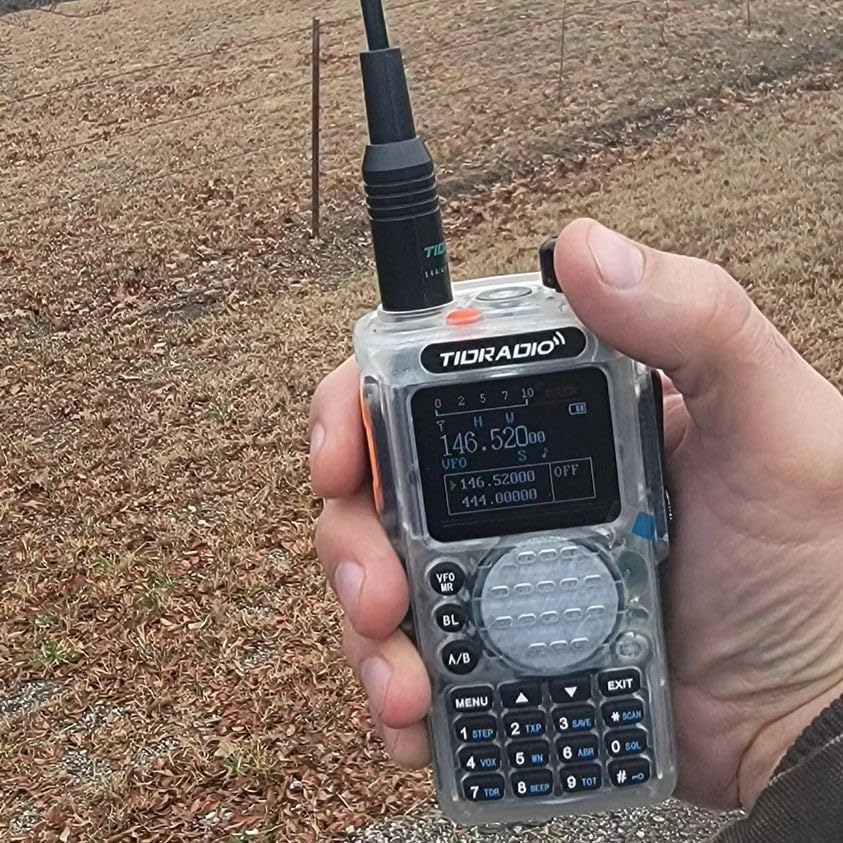
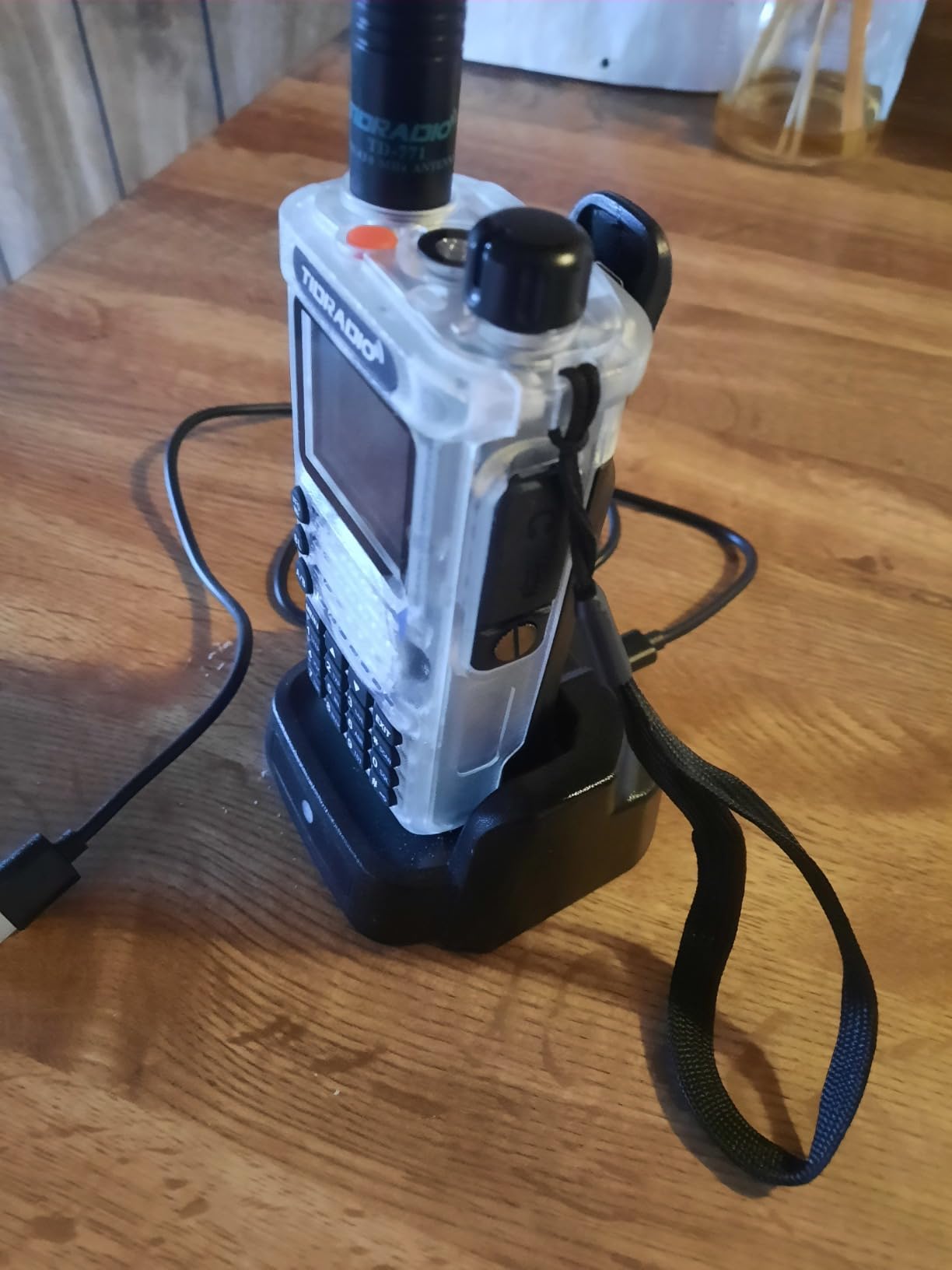
The 10W output is meaningful on simplex and through marginal repeaters. USB-C charging and the included four batteries (2-pack configuration) mean you can operate for days without finding an outlet. The web-based firmware update system is a forward-looking feature that keeps the radio improving over time.
CHIRP compatibility is still in development as of 2026, which frustrates users who prefer that workflow. The Bluetooth does not support wireless PTT or headphones yet. The 90-day warranty is shorter than what premium brands offer.
For whom its good
Tech-forward hams who want app-driven programming and modern features. The TD-H8 feels like a radio built for the smartphone era.
POTA and SOTA operators needing a long-runtime, multi-battery setup for multi-day activations.
For whom its bad
CHIRP loyalists who want to manage their channel list with familiar tools. Compatibility is pending.
Operators needing long warranty coverage. The 90-day warranty is short compared to Yaesu’s 3-year coverage.
How to Choose the Best Handheld Ham Radio
After testing dozens of HTs over the years, I have found that five criteria cover the vast majority of buying decisions. Skip the marketing hype and focus on these fundamentals.
Frequency Range and Bands
Every radio on this list covers the 2 meter (144-148 MHz) and 70 centimeter (420-450 MHz) amateur bands, which is where most repeater activity lives in the United States. If you live in an area with active 220 MHz repeaters, look for tri-band radios like the BTECH UV-5X3 or Baofeng K5PLUS. Triple-band coverage opens up additional repeater access but typically costs more and adds bulk.
Power Output
Most HTs transmit at 4 to 5 watts on high power, with some reaching 7 to 10 watts. The difference between 5W and 10W is real but not as dramatic as the numbers suggest. Doubling power gives you about 1.4 times the range on a clear path. For most operators, 5W is sufficient, but if you work simplex in challenging terrain, the extra watts of the K5PLUS or DM32 can make the difference between making a contact and not.
Battery Life
Real-world battery life varies wildly based on usage patterns. A radio that advertises 18 hours of standby may only last 4 to 6 hours during active conversations. If you plan to use your HT for POTA activations or emergency communications, look for radios with 2500mAh or larger batteries, and always carry a spare. The BTECH UV-PRO and Baofeng K5PLUS both ship with high-capacity batteries that hold up well in the field.
Durability and IP Rating
The IP rating scale tells you exactly what a radio can survive. IP54 means the radio handles dust and splashing water from any direction. IP67 means full dust protection and submersion in 1 meter of water for 30 minutes. If you operate outdoors, especially near water or in rainy climates, an IP67 radio like the BTECH UV-PRO or Baofeng DM32 is worth the premium. For indoor or fair-weather use, IP54 radios like the Yaesu FT-70DR are sufficient.
Digital Modes (DMR, D-STAR, Fusion)
Analog FM is the baseline, but digital modes offer clearer audio, longer effective range through repeaters, and access to worldwide networks. Yaesu System Fusion has roughly 2,300 repeaters in the US, D-STAR has about 1,200, and DMR has about 2,100. Before buying a digital HT, check RepeaterBook for which modes have coverage in your area. If your local club runs DMR, the Anytone 878 series or budget-friendly Baofeng DM32 are good picks. For Fusion, the Yaesu FT-70DR is the affordable entry point.
Antenna Upgrades
The single best bang-for-buck upgrade for any HT is a better antenna. The rubber duck antennas that ship with most radios are compromises. The Nagoya NA-771 is the de facto standard upgrade, offering about 3 dBi gain on 2m/70cm for around $15. For higher gain, the Signal Stuff Open Stubby delivers excellent performance in a more compact form factor. The Diamond SRJ77CA is a top-tier choice for serious operators. After upgrading my own HT antennas, I consistently get 30 to 50 percent better signal reports on local repeaters. If you are also shopping for portable VHF options, our handheld VHF radio guide covers marine and family radio service options worth comparing.
Frequently Asked Questions
What is the 333 rule for ham radio?
The 3-3-3 rule is a guideline for emergency simplex communication. Try calling on the calling frequency for 3 minutes, listen for 3 minutes, then wait 3 minutes before repeating. This protocol keeps the channel organized during emergencies when multiple stations may be trying to make contact at once.
Which handheld ham radio has the longest range?
Handheld range depends on power, antenna, and terrain more than the radio itself. With a 5W HT and stock antenna, expect 2 to 5 miles on simplex. Upgraded antennas like the Nagoya NA-771 and repeater access can extend range to 20+ miles. High-tier models including the Yaesu FT-5DR, Kenwood TH-D75A, and Icom ID-52A Plus have the best receivers for hearing weak signals at the edge of range.
Is Yaesu better than Baofeng?
Yes, for serious operators. Yaesu offers better build quality, lower spurious emissions, and long-running model support. The FT-60R has been produced since 2004. Baofeng wins on price and is fine for beginners or backup use, but Yaesu radios are the better long-term investment if you plan to stay active in the hobby.
What is the best handheld ham radio antenna?
The Nagoya NA-771 is the most popular upgrade antenna, about 15.6 inches long with roughly 3 dBi gain on 2m and 70cm bands, and it costs around $15. For higher gain in a compact form factor, the Signal Stuff Open Stubby and Diamond SRJ77CA are top picks. For Baofeng radios specifically, the NA-771 is the de facto standard upgrade and delivers noticeably better range than the stock rubber duck.
Final Verdict
After testing these 10 handheld ham radios across field activations, repeater work, and emergency drills, my recommendation depends on who you are. For brand-new Technicians on a budget, the BAOFENG BF-F8HP remains the best balance of capability and value in 2026. The 8W output, 2100mAh battery, and included accessories cover everything a new ham needs to get on the air.
For outdoor operators who need a weatherproof radio, the BTECH UV-PRO delivers IP67 protection, GPS, APRS, and Bluetooth at a price well below the Anytone 878. For digital enthusiasts, the Yaesu FT-70DR is the most affordable entry into System Fusion, while the Baofeng DM32 brings DMR capability to the budget tier.
No matter which radio you choose from this list, do yourself a favor and budget for a Nagoya NA-771 antenna upgrade. The difference in performance is dramatic and immediate. Welcome to amateur radio, and 73.