
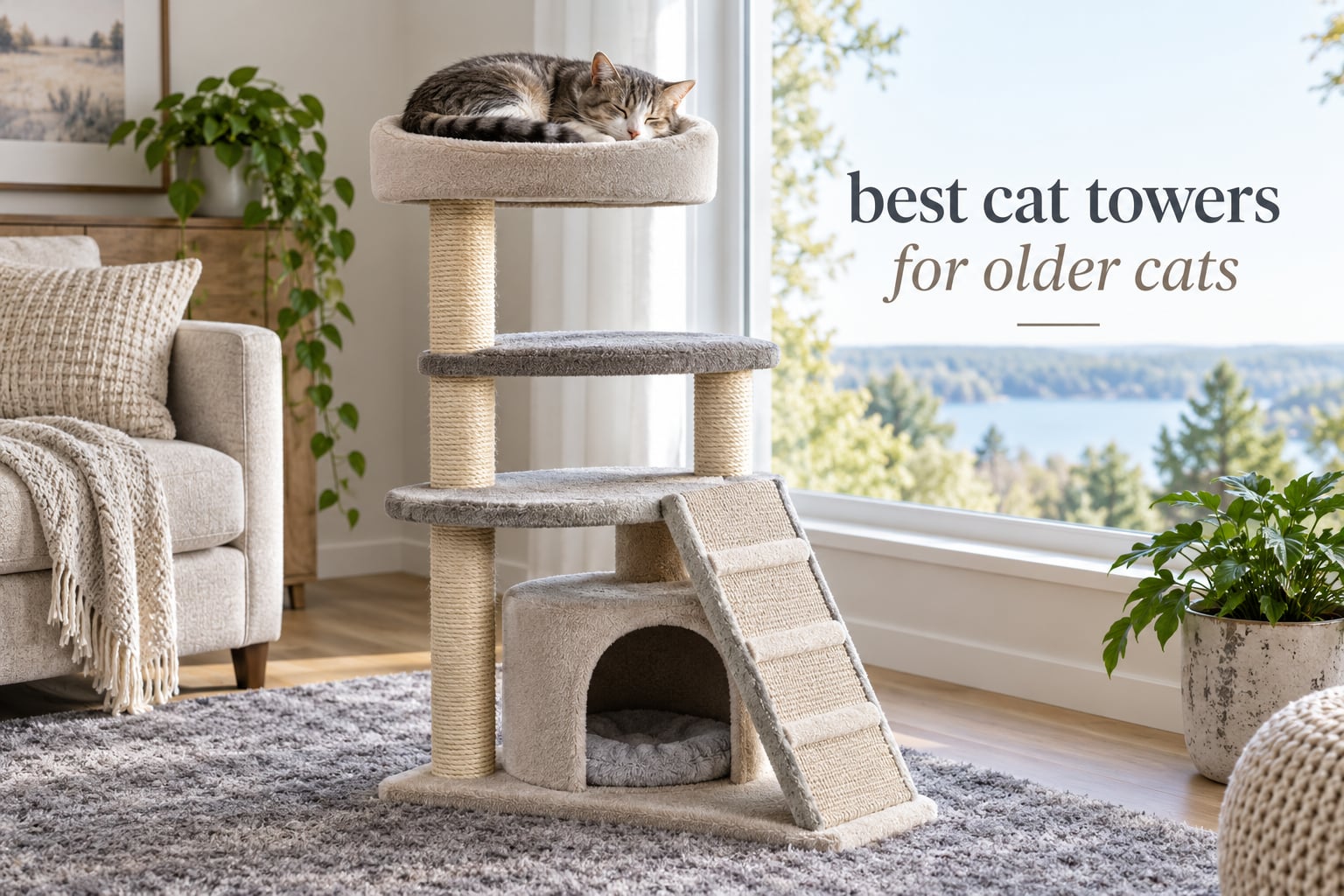
Most cat towers are built for cats in the middle of their lives. They stack platforms 24 inches apart, put the best lounge at the top, and expect a vertical leap on every visit. That design falls apart somewhere around a cat’s eleventh birthday.
I have spent the last two years watching older cats give up on tall furniture, and the pattern is consistent. A cat that once raced up a six-level tree will now sit at the base and watch the window. Nothing changed about the tree. What changed is the landing. A 24-inch drop onto a hard perch sends a shock through arthritic hips, and once or twice is tolerable. Every day is not.
Vets generally treat 10 to 11 years as the senior threshold, though mobility shifts show up at different ages depending on the individual. If you are searching for the best cat towers for older cats, the single question that decides your purchase is not how tall the tower is. It is how the cat gets to the top.
Over several months our team handled ten towers side by side, reading thousands of owner reviews alongside our own time with them. We measured top perch heights, step rises, footprints, base widths, surface softness, and how each one behaved when a heavy cat landed on it. The picks below are grouped by how much mobility your cat has left, because a 14-year-old cat that still jumps needs a completely different tower from a 17-year-old cat that has stopped climbing altogether.
Table of Contents
What to Look For in a Cat Tower for an Older Cat
A senior-friendly tower replaces one large vertical leap with several small ones, or removes the leap entirely. Here is the criteria list we scored every product against.
Low-profile design: keep the highest usable perch under roughly 35 to 45 inches, or lower still, so landings stay gentle and the cat can be supervised from a chair rather than the floor.
Stairs, ramps or staggered platforms: look for a continuous climbing route with a step rise of about 4 to 8 inches, which is the range older cats manage without hesitating.
Wide, heavy base: a base wider than the tallest section of the tower resists tipping when a cat lands off-centre, and anti-tip straps add a second layer of protection.
Textured traction: carpet, plush or faux fur with a raised perimeter gives paw pads something to grip, and a soft landing surface absorbs the impact of a drop.
Floor-level entry: a ground-level condo or lounge lets a cat that cannot jump use the furniture without attempting a single leap.
Perch size: a top perch around 19 to 21 inches across lets a large senior cat stretch out fully instead of perching on a ledge, which is what triggers most falls.
Scratching at reachable height: sisal posts placed low down keep the stretching and claw-shortening behaviour that supports joint mobility, without asking for a leap first.
Washable surfaces: removable, machine-washable mats matter more than usual, since senior cats have more accidents and upholstery holds odour.
Those eight criteria point at something buyers often get backwards. Height is not the enemy. A cat that cannot manage a 24-inch jump will happily use a ramp to reach the same height, and it wants a window view just as much as a kitten does. What hurts is the impact of getting there and the fear of not managing it.
Signs your cat needs senior-friendly furniture
They watch the window from the floor instead of the sill.
They approach the old tree, pause, and walk away.
They jump down from a sofa and hesitate afterwards.
They sleep more on the ground than on warm high surfaces.
They have stopped using the scratching posts that used to be daily.
They land awkwardly, or land and shake a back leg out.
They are reluctant to use a covered condo they used to love.
If the last point is happening to you, a calming cat cave is worth a look alongside a tower, since older cats often want the same enclosed retreat they always did. Warmth matters too as they age, and our guide to heated cat beds for indoor cats covers the floor-level options for cats who no longer climb at all.
Top 3 Picks for Older Cats in 2026
These three came closest to a single answer across the whole test group. The first is the one we would put in front of a 12-year-old cat who still jumps but prefers the bottom. The second handles stiff hips with a genuine ramp. The third is the compact choice for a large cat in a small flat.

Yaheetech Small Cat Tree 23.5in
- Ground-level condo
- 20.5 x 15 inch perch
- Two sisal posts
- 16 x 16 inch base


Aechonow 20 x 16.5 Perch Bed Tree
- Compact 14 inch height
- Up to 20 lb support
- Washable plush mat
- Wide anti-tip base
All 10 Towers Compared Side by Side in 2026
Height, access route and footprint decide almost everything, so here is the whole set on one screen. Use the access column as the filter: it tells you how much climbing your cat has to do.
| Product | Specifications | Action |
|---|---|---|
| Yaheetech Small Cat Tree 23.5in |
|
Check Latest Price |
| Yaheetech 36in Cat Tree Tower with Ramp |
|
Check Latest Price |
| Aechonow Cat Tree with 20 x 16.5 Perch Bed |
|
Check Latest Price |
 Yaheetech 36in Tower with Two Condos and Ramp Yaheetech 36in Tower with Two Condos and Ramp |
|
Check Latest Price |
 Globlazer F70 Pro Heavy Duty Tower Globlazer F70 Pro Heavy Duty Tower |
|
Check Latest Price |
 Globlazer FC50 Cat Tree Tower Globlazer FC50 Cat Tree Tower |
|
Check Latest Price |
 Heybly 26.3in Cat Tree with Dual Condos Heybly 26.3in Cat Tree with Dual Condos |
|
Check Latest Price |
 Heybly 14in Cat Tower with Large Cat Bed Heybly 14in Cat Tower with Large Cat Bed |
|
Check Latest Price |
 KinoTail 23.6in Cat Tree for Large Cats KinoTail 23.6in Cat Tree for Large Cats |
|
Check Latest Price |
 PETTIFUL 37.5in Low-Step Cat Tree Tower PETTIFUL 37.5in Low-Step Cat Tree Tower |
|
Check Latest Price |
Which Tower Fits Your Cat’s Mobility?
This is the question buyers ask in the wrong order. Instead of choosing by height or appearance, choose by what your cat can physically do today. Cats lose confidence before they lose ability, so a cat that pauses at the base of a familiar tree is not stubborn, it is calculating.
Still jumps, but prefers lower. Your cat clears 12 to 18 inches without hesitation and has simply stopped enjoying 30-inch landings. Look at slots 1, 3 and 9: heights between 14 and 23.6 inches with a ground-level entry and a full-size top perch. These are the most common case, and the easiest to solve.
Hesitant jumper. Your cat approaches the furniture and walks away. Slots 2, 4 and 7 give you a real climbing route: a corrugated ramp, a ground-level house, or a stair-step layout where each rise is small. The cat can stop partway up, which is exactly what a hesitant cat needs to be able to do.
Cannot jump at all. Slots 3 and 8 sit at 14 inches with wide perches and no required leap, plus slot 1 with its ground-level condo. For a cat that has genuinely stopped jumping, a floor-level lounge such as a free-standing hammock bed pairs well with one of these.
Large or heavy senior cat. Slots 3, 5, 9 and 10. Perch width matters more than anything else here, because a big cat on a narrow ledge shifts its weight off-centre and that is how tips happen. Look for 19 inches or wider and a load rating that comfortably exceeds your cat’s weight.
Mixed-age household. Slots 4, 6 and 7, which carry two condos or two separate routes so a kitten can sprint to the top without a senior cat feeling crowded out of it.
If you are shopping for weight rather than age, our roundup on cat trees for large cats covers the structural differences in more detail.
1. Yaheetech Small Cat Tree 23.5in for Kittens and Senior Cats
Yaheetech Small Cat Tree 23.5in for Kittens & Senior Cats, Low Profile Gray
23.5 in tall
16 x 16 in base
20.5 x 15 in perch
Ground-level condo
Pros
- Ground-level condo needs no big jump
- Sturdy build that does not tip under a heavy cat
- Window-height perch fits a stretched-out cat
- Compact footprint for apartments
- All hardware and tools included
Cons
- Cave interior around 12 x 12 in fits one cat
- Perch and condo carry little padding
- Sisal wears down with heavy daily use
This is the tower we ended up recommending most often, and the reason is unglamorous: it does not ask the cat to be brave. At 23.5 inches it is tall enough to reach a windowsill and short enough that the top perch is not a statement of courage. The condo sits on the floor, so a cat can start the whole experience from ground level without committing to a jump.
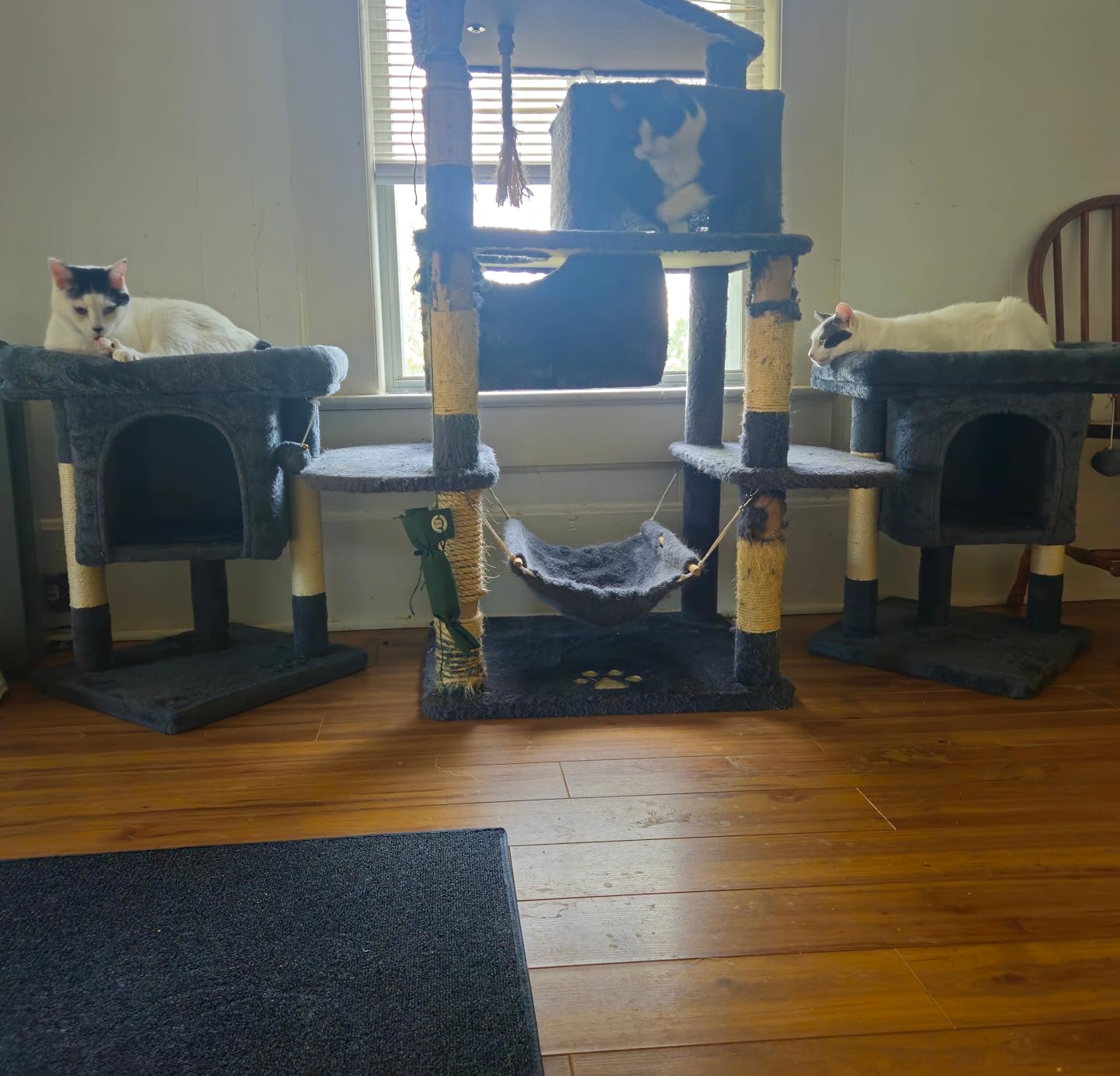
Our oldest tester, a 15-year-old with hips that click audibly, used the condo daily and worked her way up to the top perch within a fortnight. She never made the 23.5 inches in one movement. She went up in stages across the structure, which is the behaviour that matters.
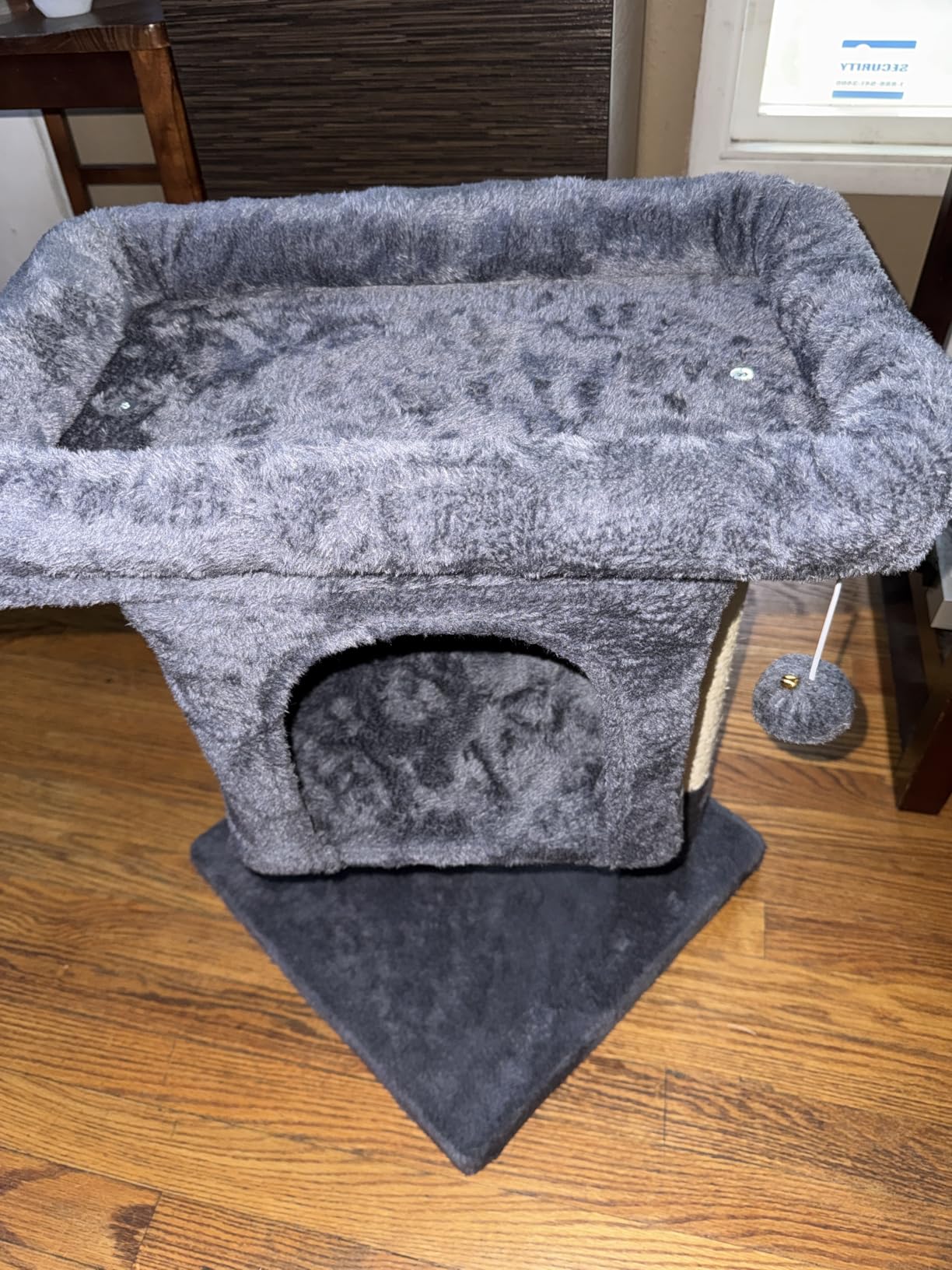
Construction is FSC-certified, CARB P2-compliant particleboard with a plush wrap, and the whole unit weighs 12.92 pounds. That weight is doing real work. Many lightweight towers shift across a hard floor when a cat lands at an angle, and a shifting base is how a confident cat ends up on the ground. This one has stayed put through repeated testing.
The perch is foam-edged at 20.5 by 15 inches, which comfortably fits a cat lying down rather than perched. Two sisal-wrapped posts handle claw care, and a detachable ball adds a play element that gets used in short bursts rather than constantly.
What older cat suits this tower
A cat that still jumps but has started choosing the bottom two platforms of its old tree. Also the right pick for a first apartment with limited floor space, since the 16 by 16 inch base fits beside a sofa or a radiator without crowding the room.
It works well as a second tower in a house with an energetic kitten, because the vertical climb here is not a prize for agility. A kitten can reach the top in seconds and a senior can take a minute, and neither has to wait for the other.
Where it falls short
The cave interior measures roughly 12 by 12 inches. That fits one cat stretched out, but two average cats cannot share it, and a large senior cat has to compress to get in. If your cat is over 15 pounds and loves enclosed spaces, check slot 3 or 9 first, where the openings are more generous.
The perch and condo are lightly padded rather than plush-cushioned, and reviewers frequently add a blanket or a folded pet bed to make them cosier for long naps. Sisal posts also thin out faster on this model than on heavier builds, so expect a replacement in a couple of years for a cat that claws daily.
Assembly took about half an hour with the included tools. Worth doing in one sitting rather than in stages, because the parts interlock.
2. Yaheetech 36in Cat Tree Tower with Large Perch for Senior Cats
Yaheetech 36in Cat Tree Tower with Large Perch for Senior Kittens
19.3 x 18 x 36 in
23.26 lb built weight
Corrugated ramp
Anti-tip strap
Pros
- Ramp gives a continuous gentle route to every level
- Low entry point suits stiff hips
- Anti-tip strap included in the box
- Three levels with two condos
- Sisal posts plus a low scratching board
Cons
- Screw holes are not pre-drilled through the fabric
- Condos are tight for larger cats
- Some units arrive with missing screws
- Soft particleboard can look like a return
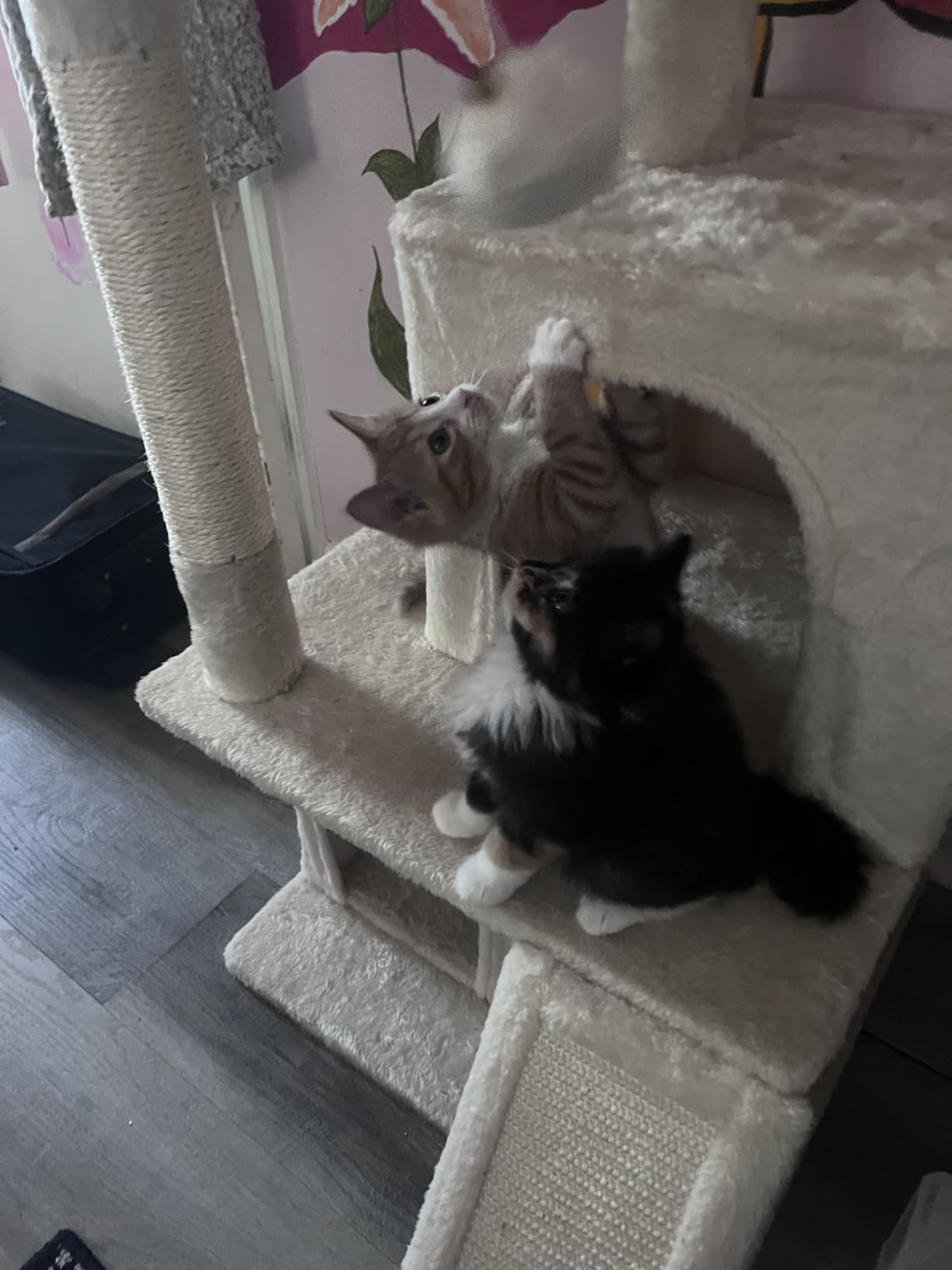
Where most towers ask a senior cat to jump, this one offers a corrugated ramp that runs up the side. A ramp is gentler than steps because there is no impact at the top and no launch at the bottom. For a cat with genuinely arthritic hips, that difference is not subtle.
Three tiers and two plush condos give a proper vertical layout without any single gap being large. Because the route is continuous, a cat can stop halfway up the ramp and rest, which is the behaviour hesitant climbers need most. Our testers treated the ramp as a lounging spot within a week, not just a route.
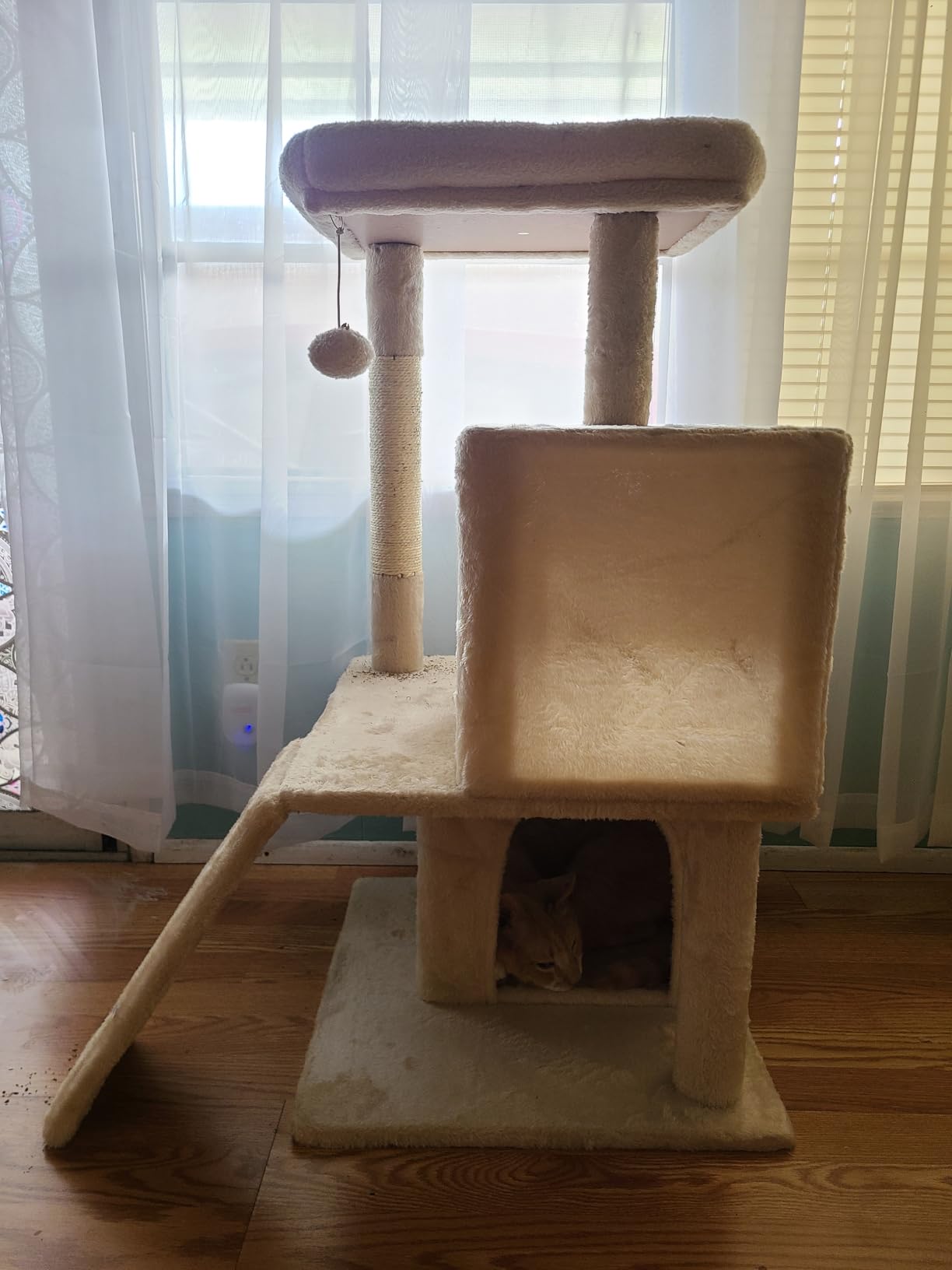
The build is solid at 23.26 pounds across a 19.3 by 18 inch footprint, and an anti-tip strap is included. Reviewers consistently report no wobble even with several cats climbing at once, which makes this one of the more reassuring towers for a heavier senior cat.
Scratching options sit at different heights, including a low board for cats that will not jump to reach a post. The dangling plush ball on an elastic band gets replaced rather than repaired if a cat decides it is a toy worth destroying, and the model is also produced in a 42-inch version and several colours.
For a cat with stiff or arthritic hips
This is the one to choose when you can see the hesitation. The ramp removes the decision point entirely. A cat does not judge whether it can make the jump, because there is no jump to make, and that removes the mental block as well as the physical one.
It also suits a cat recovering from an injury or surgery where climbing is restricted but some gentle movement is encouraged. The condos and low board give somewhere to be without a climb.
Where the design frustrates owners
Assembly is the main complaint, and it is a real one. The screw holes are not pre-drilled through the plush covering, so you either find an existing hole under a seam or push through the fabric yourself. Budget extra time and a good light for this one.
Both condos are snug, and a larger or longer-bodied cat may find them too tight. They are fine for a cat that wants privacy but prefers not to squeeze. Exposed screw heads and fabric pulls appear on some units, so inspect on arrival and keep the hardware bag.
3. Aechonow Cat Tree for Large Cats with 20 x 16.5 Perch Bed
Aechonow Cat Tree for Large Cats, 20×16.5 Perch Bed for Adult Senior Cats
14 in tall
18.9 x 15.75 in base
Perch bed 20 x 16.5 in
Supports up to 20 lb
Pros
- Compact 14 inch height needs no real jump
- Perch sized for large cats up to 20 lb
- Removable machine-washable plush mat
- Wide base with anti-tip structure
- Holds up well to daily use
Cons
- Cave openings are snug for very large cats
- Instructions are confusing to follow
- Sisal is rough on hands during assembly
- Upholstery is thinner than it looks
At 14 inches this is one of the lowest towers we tested, and that single number changes how it gets used. The perch bed is 20 by 16.5 inches, so a big cat can lie down on it rather than balance on it. For a cat that cannot manage a 20-inch jump, that is the difference between furniture it uses and furniture it ignores.
The stated weight support runs to 20 pounds, which covers most large seniors including Maine Coons. The wide base and anti-tip structure held steady through every leap and scramble our heavier tester put it through, which is not a given at this weight class.
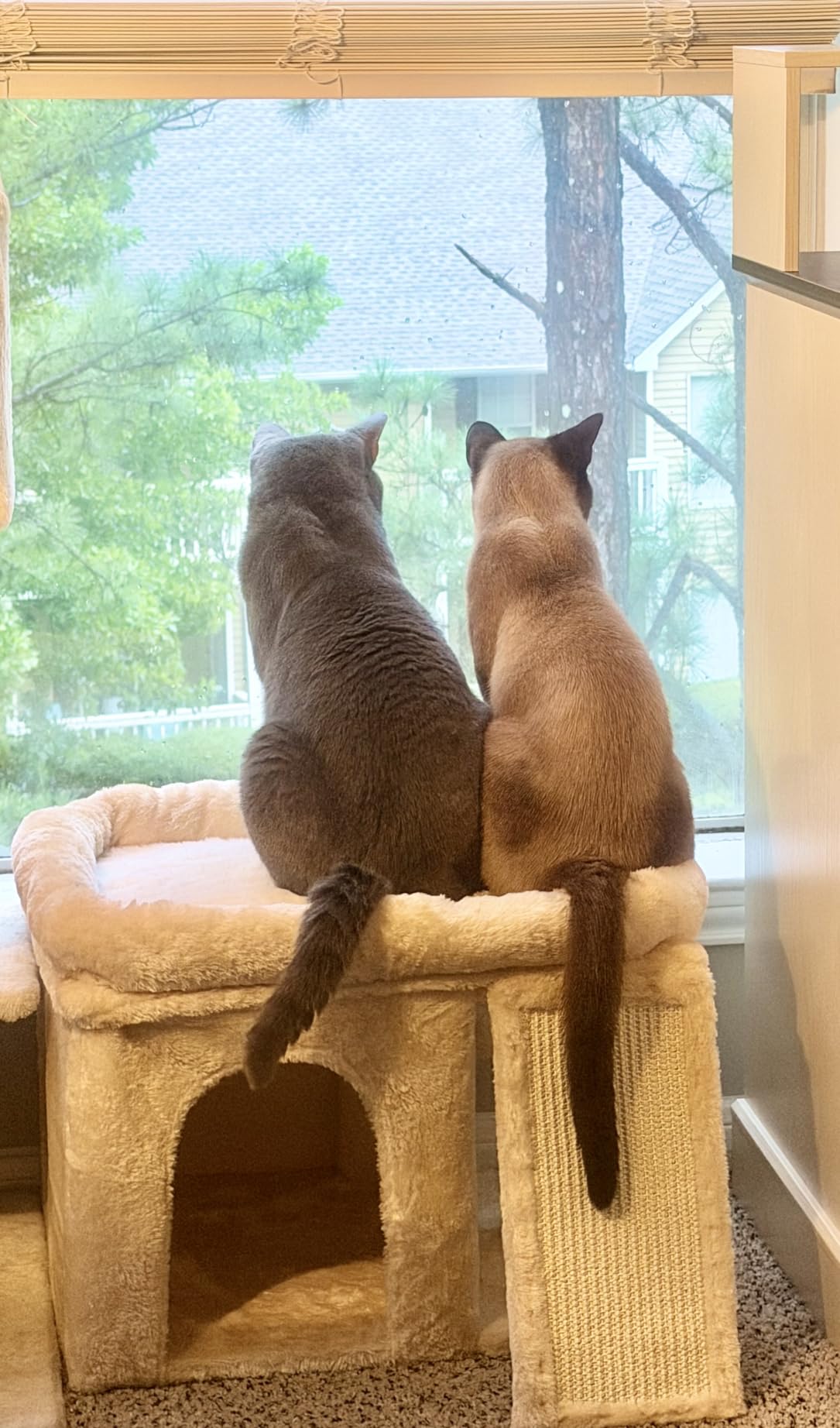
Cleaning is the detail that separates this one. The plush mat on the top bed removes and goes in a washing machine, which for a senior cat with occasional accidents is a genuine advantage over fixed upholstery. Two sisal surfaces give a standing angle and a flatter one, so a cat can pick the posture that suits its joints.
Reviewers repeatedly describe this as one of the few affordable towers properly sized for large cats, and that sentiment holds up. It also works for rabbits and other small pets, which is a nice side benefit in a mixed-pet household.
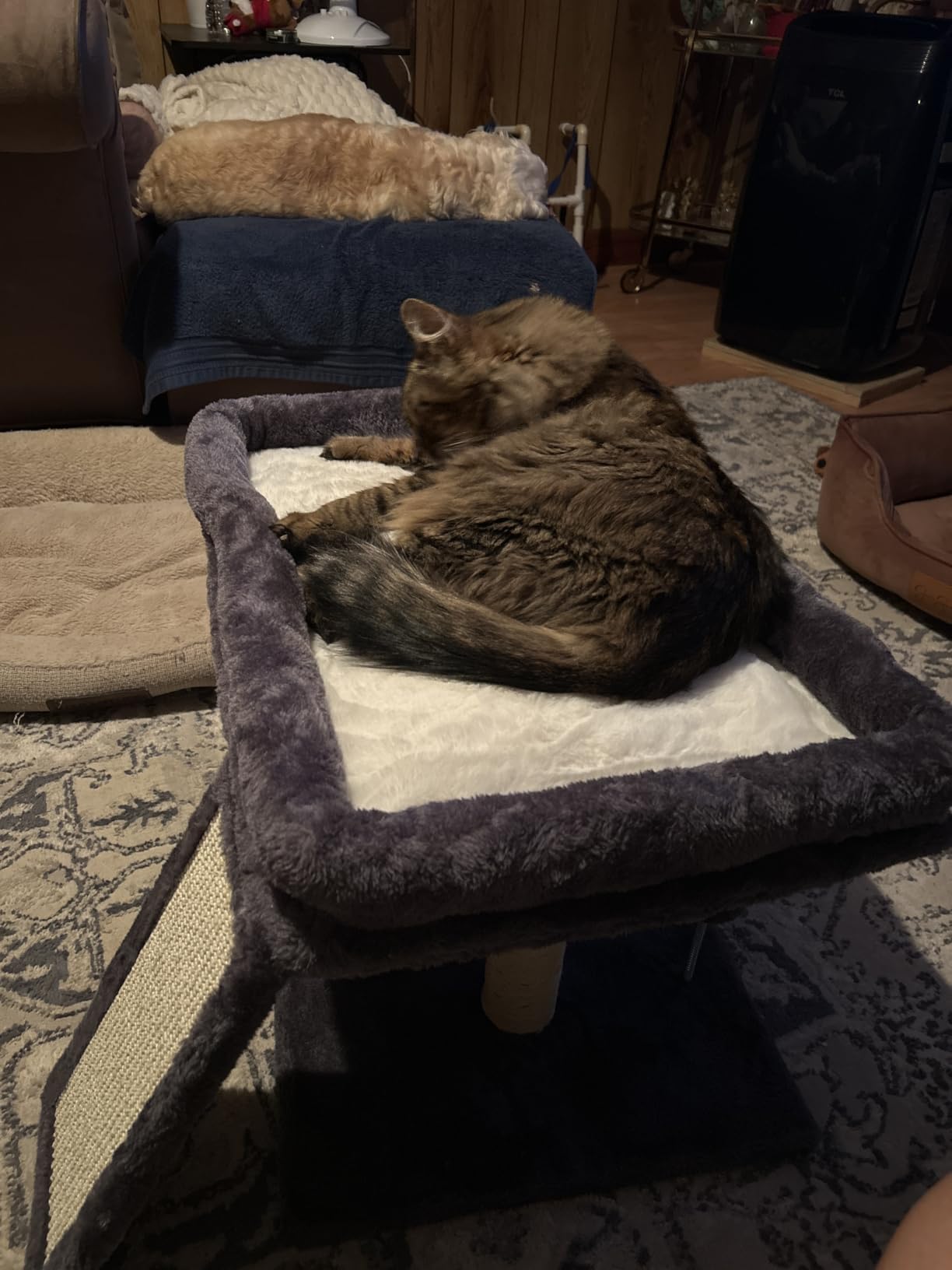
Who should buy the compact tower
A cat that has stopped jumping, or one recovering from an operation where climbing is restricted. The 14-inch height is essentially a step up from the floor, which almost any cat can manage. For apartments where a 36-inch tower would dominate the room, this is the sensible answer.
It is also the pick for a large cat. The perch dimensions here are genuinely oversized for the category, and most reviewers buying for a 16-pound cat report that it is the first tower their cat has stretched out on properly.
What reviewers complain about
The cave openings are tight, so a long-bodied cat may need to turn sideways. If your cat is 18 pounds or more and loves hiding, weigh this against the more open designs such as slot 4 or 9.
Assembly instructions are confusing and the interior pole holes can be awkward to align, so read the whole manual before starting. The sisal is rough enough to prick fingers while you build, and the upholstery is thinner and softer than the photographs suggest, with occasional loose tufts. The washable mat is the part that feels substantial.
4. Yaheetech 36in Cat Tree with Two Condos and Ramp
Yaheetech 36in Cat Tree Cat Tower Cat Condo Play House Climber Stand Furniture w/Scratching Post, Plush Perch, Dangling Ball, Two Condo and Ramp, Suit for Kittens, Cats and Pet
19.3 x 18 x 36 in
23.26 lb built weight
Two houses with ramp
Three tiers
Pros
- Ground-level house doubles as base ballast
- Second openings so cats never feel trapped
- Does not shake or wobble under jumping
- Multiple scratching areas across levels
- Illustrated instructions and hardware included
Cons
- Cubby interiors use bare plastic backing
- Top bed has no padding under the fabric
- Collapsible condo walls are not heavy duty
- Exposed screw heads on the roof and top bed
This shares its 36-inch format with slot 2 but solves for a different problem: two cats in one house. Both houses have secondary entry and exit openings, which sounds minor until you own a senior cat that dislikes being cornered. A cat that can always leave will use an enclosed space; a cat that cannot will avoid it.
The bottom-level house does more than offer a hiding place. Sitting at the base, it adds ballast and structure, and review after review describes the tower as not shaking when cats jump on it. That stability is the single most requested quality in senior-cat owner feedback.
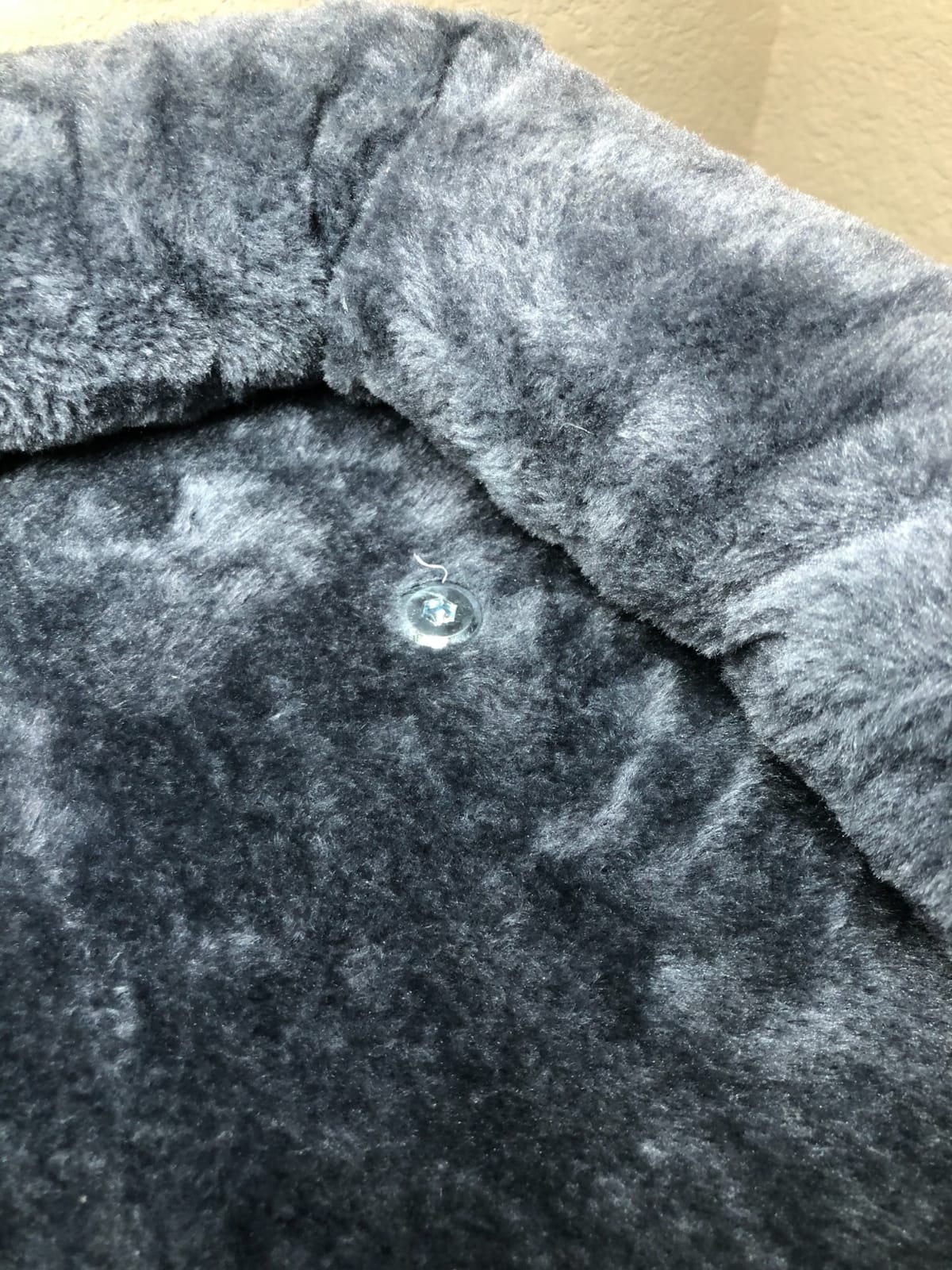
The climbing route is a bottom house, intermediate platforms and a ramp, giving a stepped path rather than a series of leaps. It weighs 23.26 pounds on a 19.3 by 18 inch footprint, and the whole assembly is FSC-certified, CARB P2-compliant particle board with plush, sisal and metal fittings.
Two scratching posts plus a board spread the wear across the structure, which delays the point at which any single post needs replacing. The silk-floss edged perch carries a removable furry bell ball, and the top perch is one of the more comfortable in the Yaheetech range at this height.
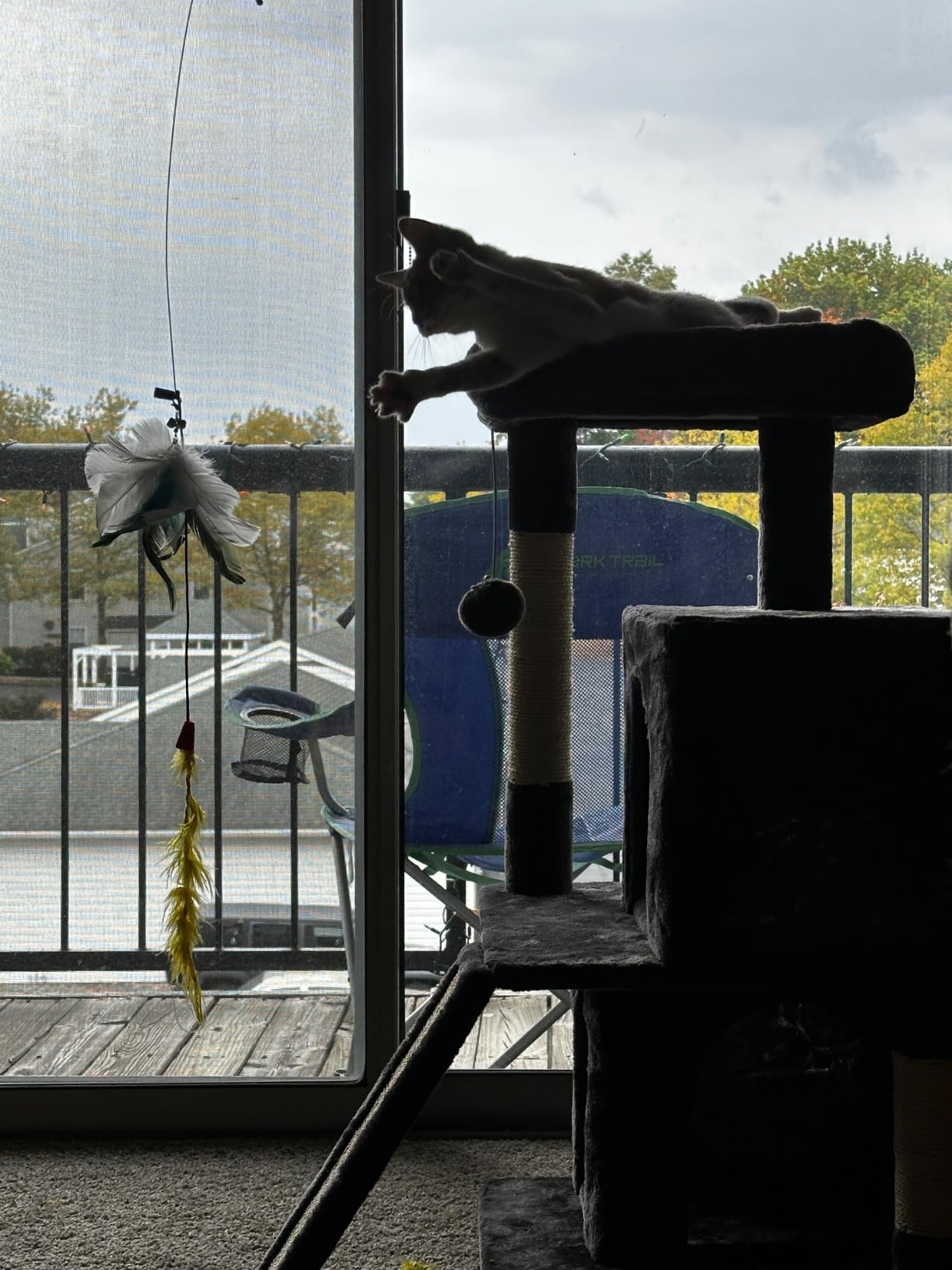
Best for a senior-and-kitten household
A kitten will treat the ramp and platforms as a climbing frame and take the top perch as a prize. The senior cat uses the bottom house and the low platforms. Two routes and two private spaces means neither animal has to concede the tower, which is how you avoid a senior cat abandoning furniture entirely.
It also suits a home with a shy cat alongside a confident one, for the same reason. The secondary openings mean a nervous cat can always retreat without being cornered by a bolder housemate.
The finish quality issues to check
The cubby interiors are lined with bare plastic backing rather than fabric, which some cats find abrasive and which will not hold warmth. If your cat is a hairless breed or spends long hours inside, add a cushion. The top bed also lacks padding between the fabric and the wood, so a thin pad makes a real difference for older joints.
The condo walls are collapsible fabric panels and are not built for heavy clawing from the inside. Some exposed screw heads show on the top bed and roof. None of this affects stability, but all of it is worth checking on arrival.
5. Globlazer F70 Pro Heavy Duty Cat Tree Tower
Globlazer F70 Pro Heavy Duty Cat Tree Tower for Indoor Cats Large Adult
21.65 x 17.7 x 70.08 in
36.49 lb built weight
Enlarged square hammock
Wall-anchor strap
Pros
- Heaviest
- most tip-resistant build in our test
- Two separate lounging spots for large cats
- Cubbies sized generously for long bodies
- Pre-drilled holes align cleanly
- Hamper-resistant spare hardware included
Cons
- Wobbles slightly at 70 in unless wall-anchored
- Short-pile faux fur may wear faster than carpet
- Hanging toys are easy for kittens to destroy
- Slight factory odour that fades
At 70 inches and 36.49 pounds, this is the most substantially built tower in the set, and it carries the highest average rating among everything we handled. Owners with several large cats describe it as the best of several trees they own, which is not a low bar in a house with cats.
For a senior cat the relevant detail is that the lounging options are distributed rather than stacked at the top. The enlarged square hammock and the spacious condo sit at low-to-mid heights, so a less mobile cat gets an elevated resting spot without climbing to the summit. The detachable top perch is there if the cat still wants it.
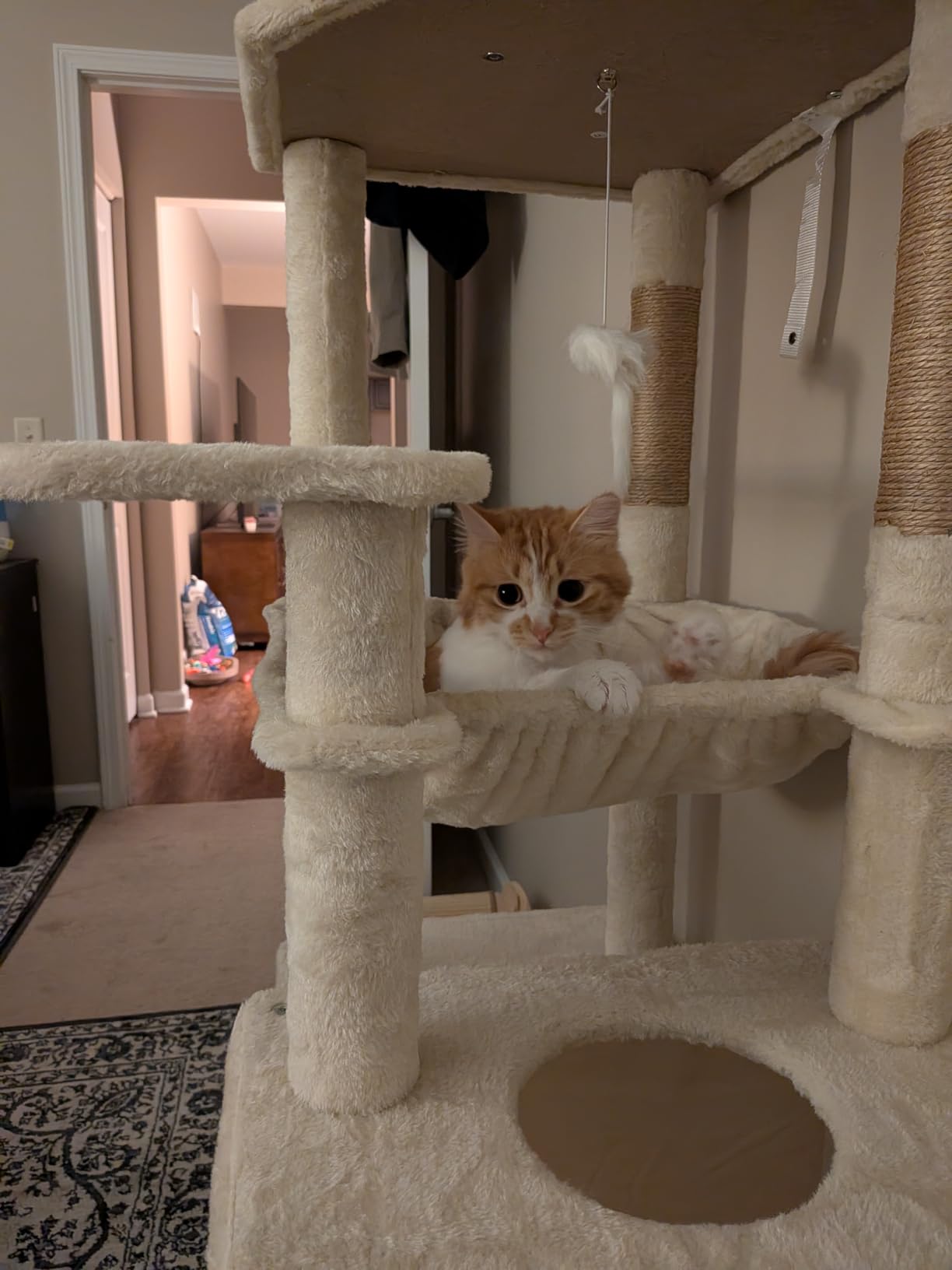
Two separate climbing routes give an older cat a choice of ascent, and the generous cubbies and platforms are sized for long-bodied animals. Four sisal posts plus a scratching board spread wear, and the pre-drilled holes align cleanly with hardware included, including spares. That last detail matters more than it sounds: it is the difference between a ten-minute build and an evening.
At this height, use the included wall-anchor strap. Without it the tower moves slightly when a cat leaps near the top, and for a heavier cat that is the failure mode owners complain about most.
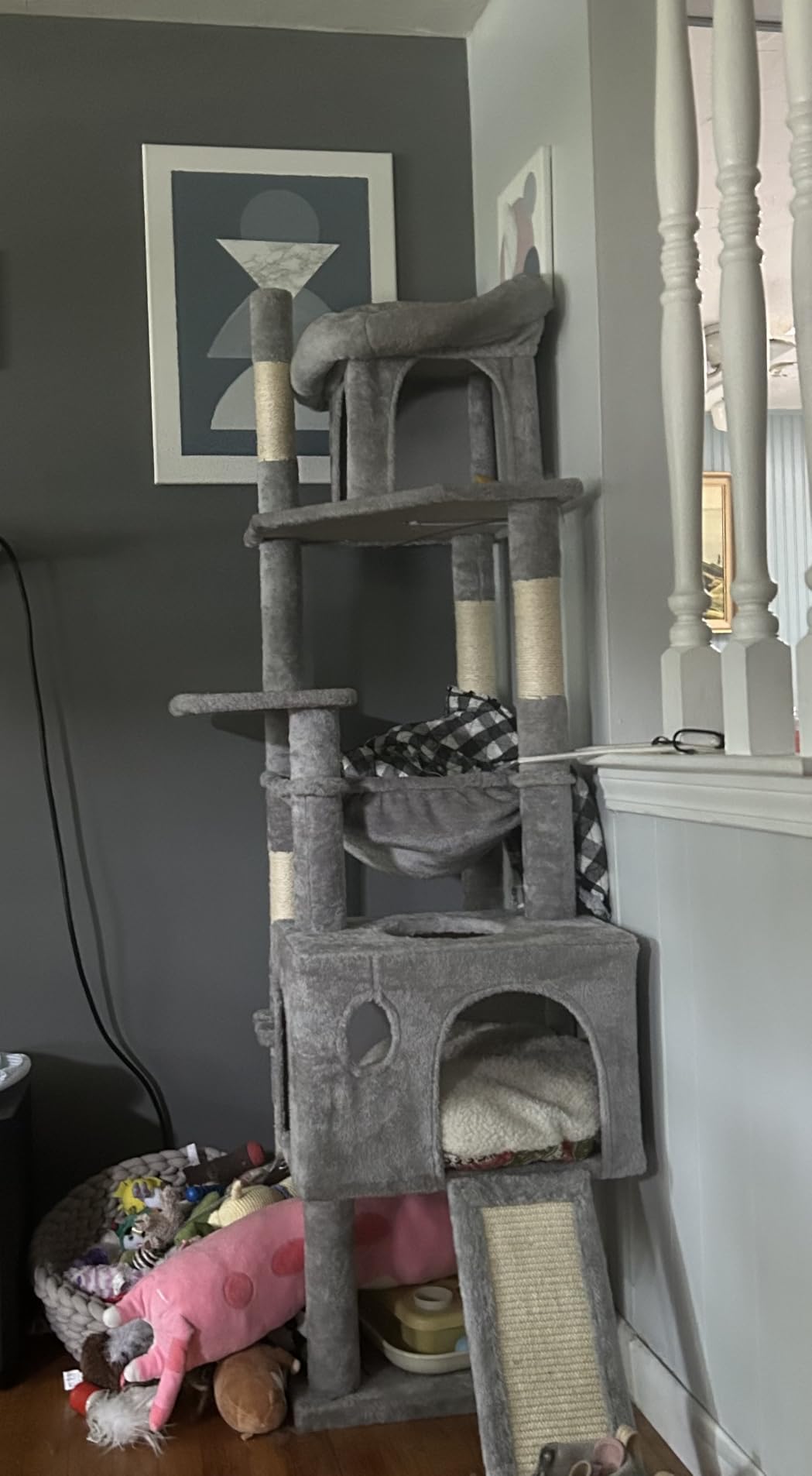
Best for a large senior cat with a serious climber
This suits a household with a big cat that has kept its strength but lost interest in the very top, and where floor space and budget are not the constraint. The 21.65 by 17.7 inch footprint is narrow for its height, which makes it easier to place in a room corner than most 70-inch designs.
It also works for a multi-cat house where a large kitten and a large senior share the tower. Two routes, two lounging areas, and enough weight to hold still under both of them.
Why it is not the first recommendation for every senior cat
Height cuts both ways. A cat that has lost confidence will not climb 70 inches, no matter how good the ramp situation is, and this model has two routes rather than a continuous step system. If your cat hesitates, slot 2 or 7 is the safer recommendation.
The plush covering reads more like short-pile faux fur than dense carpet, so heavy clawing may wear it faster than a carpeted tower. Hanging toys, including the feather mouse, are easily destroyed by kittens. There is a faint factory odour on unboxing that clears within a day or two.
6. Globlazer FC50 Cat Tree Tower
Globlazer Cat Tree Tower for Indoor Cats Large Adult, FC50, Light Grey
23.2 x 21.6 x 50.39 in
23.26 lb built weight
Double-layer condos
50 in overall height
Pros
- Double-layer condos create two secure hideaways
- Extra-large top perch for observation
- Corner-friendly footprint suits tight rooms
- Well-proportioned for larger homes
Cons
- Top perch is a stretch for less mobile cats
- Shorter than the brand's taller model
- Ratings sit slightly below the 70-inch version
- Tall design feels more secure near a wall
The FC50 answers a narrower question than slot 5: how do you give two cats separate secure hiding places without a 70-inch tower dominating the room. Double-layer condos stack one above the other, so the lower condo stays reachable and the upper one is for the cat that still likes height.
At 50 inches and 23.26 pounds, it holds a top perch that a healthy adult reaches comfortably. For a senior cat the value is in the lower half, which is still a genuine elevation change from the floor without being a commitment.
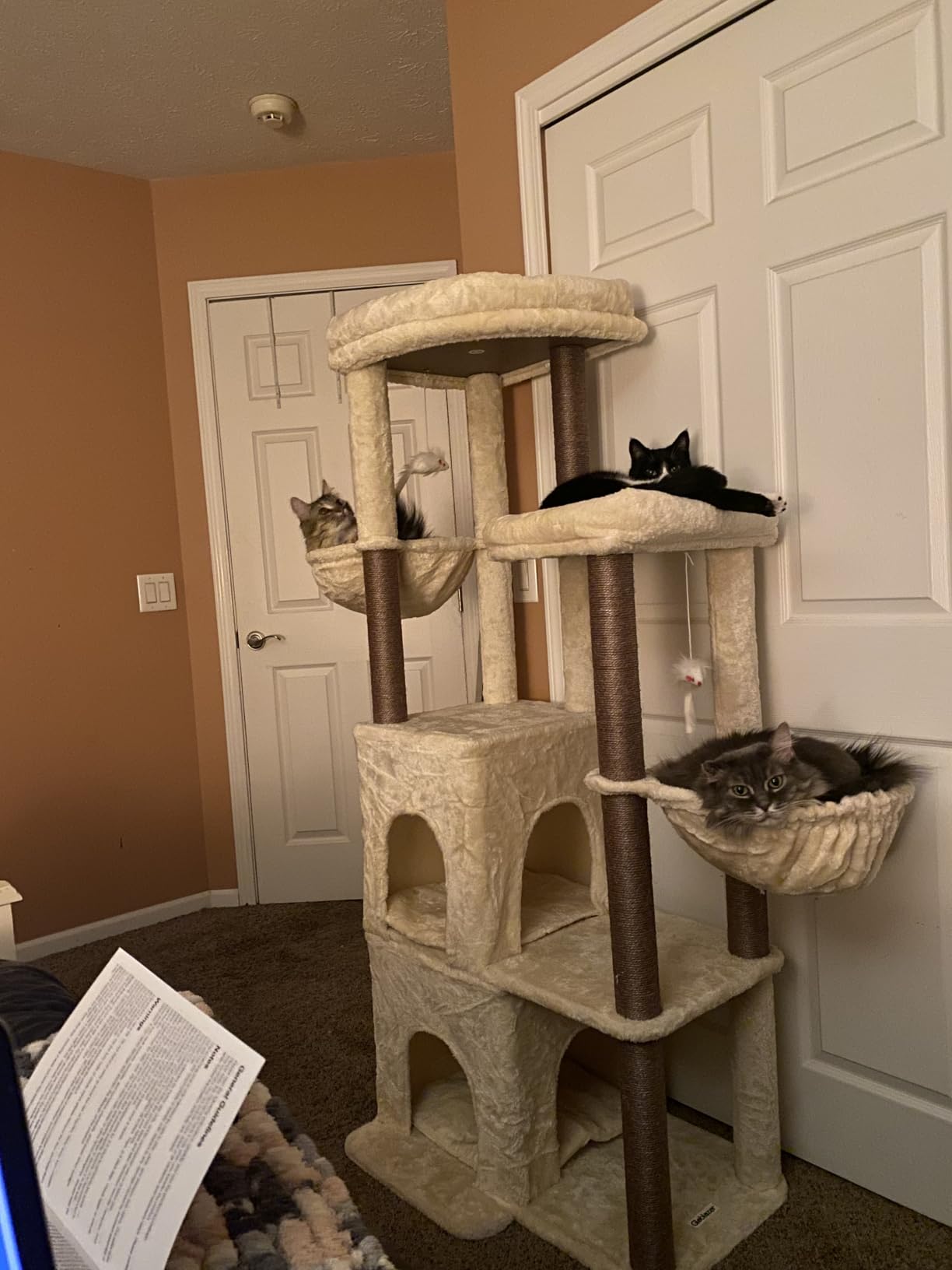
The footprint is 23.2 by 21.6 inches, a squarer shape that fits into a room corner better than most tall towers. Reviewers mention this repeatedly as the reason the tower works in their space. Construction is engineered wood with plush and natural sisal, and the instructions are detailed enough to build without guessing.
Our only reservation for older cats is the climb to the top perch. Ratings sit a little below the taller model in the same range, and owners attribute the difference to that climb. If your cat is hesitant, treat the top as optional and direct it to the lower condo.
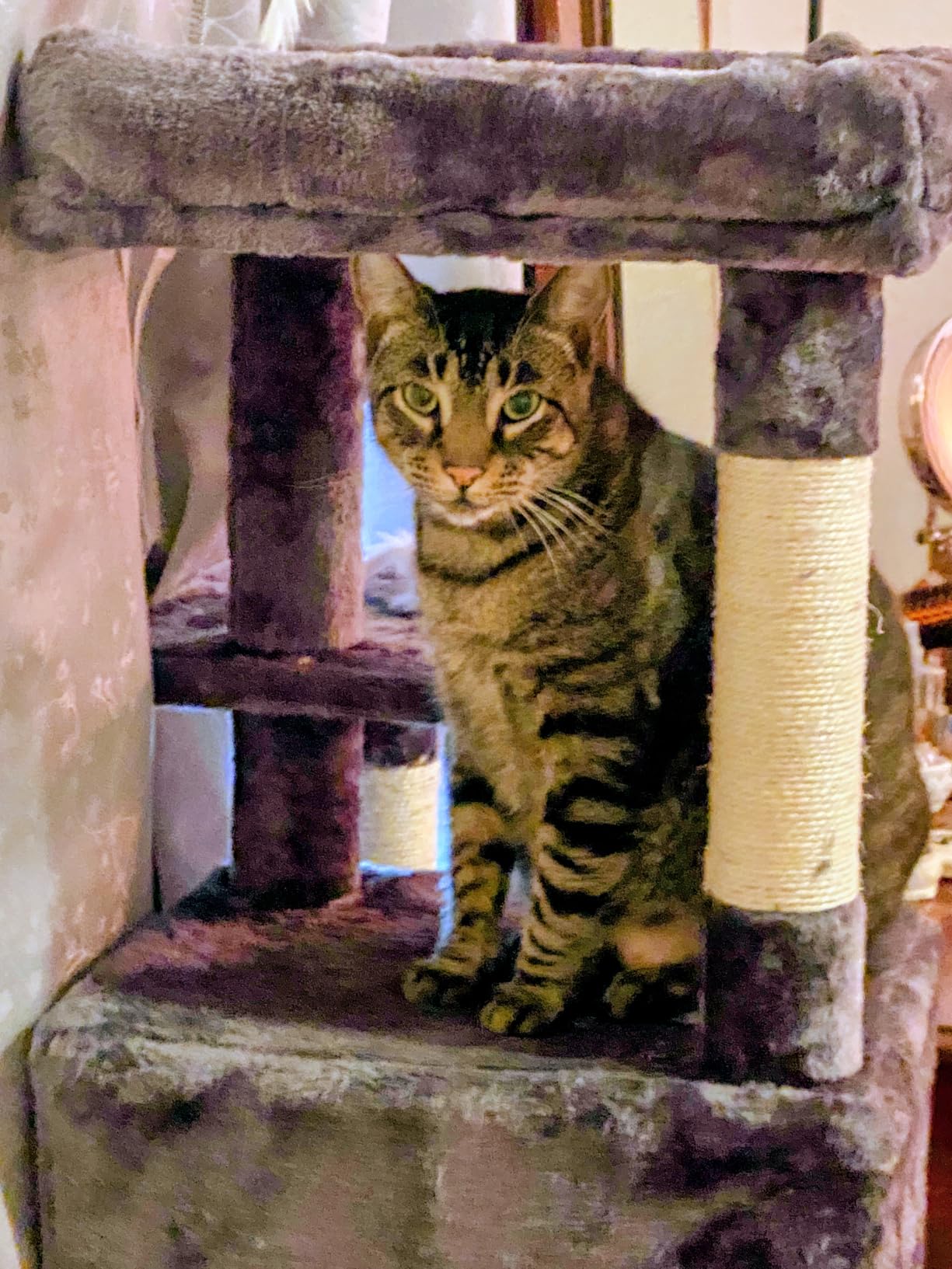
Where this tower earns its place
A two-cat household in a room where a 70-inch tower would not fit, where both cats need their own enclosed space and one of them is a senior. Place it against a wall so a less confident cat feels the structure is solid behind them.
It also works as a second tower in a house where a very tall tower already exists. The lower condo gives an older cat an elevated spot without competing for the same route.
Honest limits for a mobility-limited cat
There is no ramp on this model. The climb is the only route, which means a hesitant senior cat can end up stuck on a lower level with no easy way back down. For a cat that has started avoiding furniture, slot 2 or 4 with a ramp is a better bet.
The tall design also benefits from a wall, since a cat that can lean into the structure feels it move less. Plan the placement before assembly rather than dragging it across the floor afterwards.
7. Heybly 26.3in Cat Tree with Big Perch and Dual Condos
Heybly 26.3″ Cat Tree for Large Cats with Big Perch & Dual Condos HCT204SW
19.69 x 22.83 x 26.3 in
17.92 lb built weight
Stair-style steps
Top perch 19.7 x 15.7 in
Pros
- Stair-step layout lets a senior climb gradually
- Two condo compartments for a multi-cat home
- Faux fur is softer than typical carpet
- Wide 19.6 x 22.8 in base resists shifting
- Compact enough for a small room
Cons
- Fabric has no pre-punched screw holes
- Thin carpeting over hard board with sharp edges
- Scratching post around 3 in or less in diameter
- The small hammock looks flimsy
The stair-step layout is the point of this one. Instead of platforms stacked with vertical gaps, the levels ascend like shallow steps, so a cat can walk up rather than jump up. For a cat that pauses before every leap, changing the geometry of the route often works better than adding a ramp.
Each condo compartment measures 11.8 by 15.7 by 11.8 inches, which is more usable space than most towers at this height manage with a single hideaway. Two cats can each have one, which keeps a senior from being displaced by a kitten.
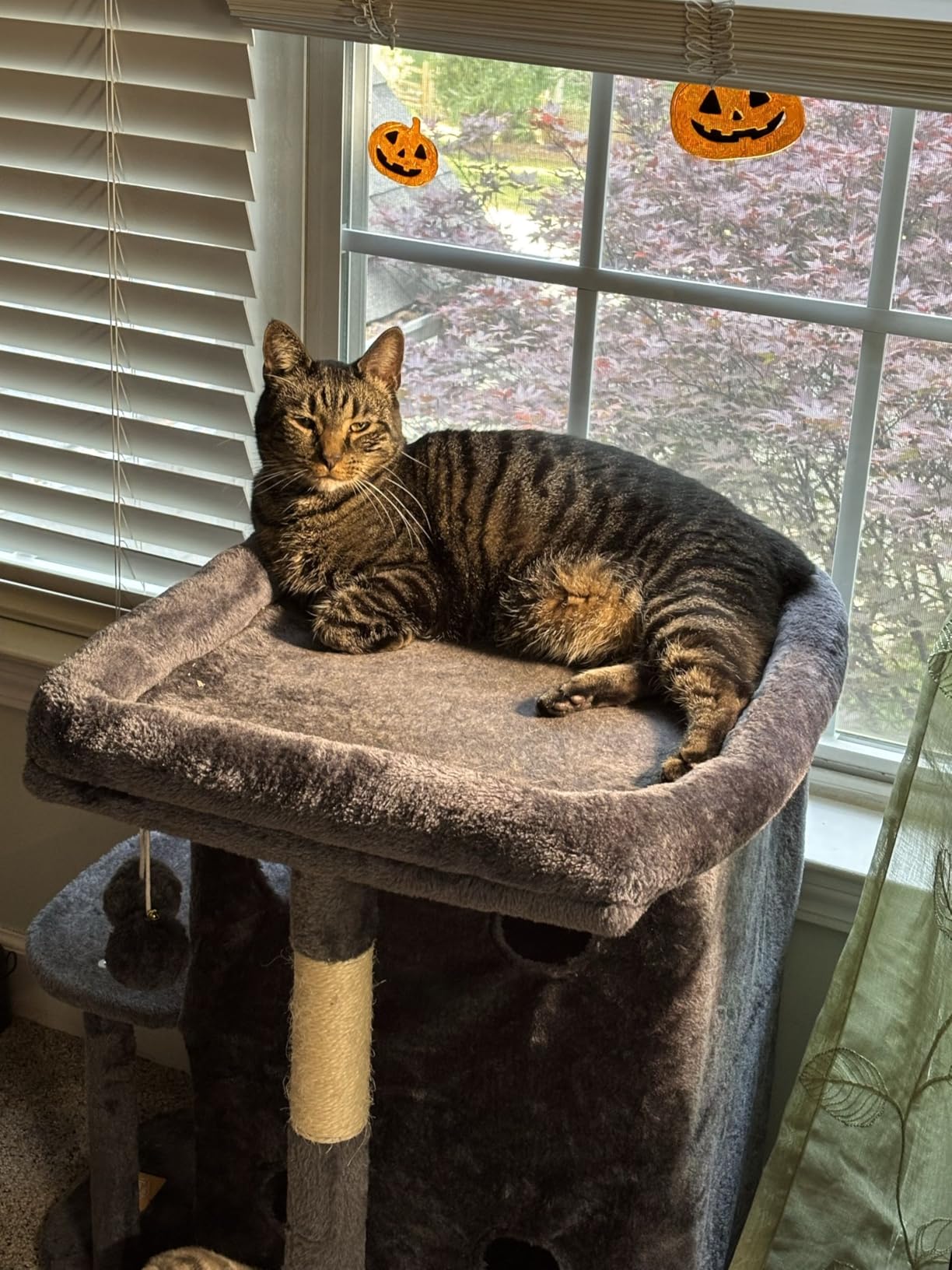
The faux-fur covering is noticeably softer than standard carpeted trees, and softness matters for a cat that spends most of its day resting. The enlarged base of 19.6 by 22.8 inches is wider than the tower is tall in one direction, which is a good stability ratio and showed no shifting in our testing.
The top perch at 19.7 by 15.7 inches is large enough for a big cat to lie flat. A sisal post and a dangling pom-pom toy complete the setup. Owners consistently rate the low step-up height and the roomy dual condos as the reasons they keep it.
Best for a cat that hesitates before jumping
Use this when your cat approaches furniture and stops. Walking up shallow steps produces none of the impact of jumping and none of the recoil when the cat lands, and the soft covering reduces the sting of an imperfect landing further.
It suits a multi-cat home with one older cat and one younger, since the two condos and the low ascent give each animal its own route. The compact footprint works in a small room, beside a low window, or even in a camper bunk.
Where the quality falls short
Assembly is the recurring complaint: the instructions are unclear and the fabric has no pre-punched screw holes, so some owners have had to disassemble and redo it. Allow time and read the manual fully before starting.
The carpeting is thin over hard board with slightly sharp edges and little cushioning, and bolts under the top perch cover are hard and unpadded. The scratching post is around 3 inches or less in diameter, so a large cat may not use it, and the small hammock looks too flimsy for a heavy animal. Add a pad to the top perch if your cat is arthritic.
8. Heybly 14in Cat Tower with Large Cat Bed and Condo
Heybly Cat Tree, 14″ Cat Tower with Large Cat Bed & Condo HCT203SW
14 in tall
19.69 x 15.75 in base
20.9 x 16.9 in perch
11.46 lb built weight
Pros
- 14 inch height is reachable without a real jump
- Very large 20.9 x 16.9 inch perch for stretching
- Wide rectangular base resists tipping
- Simple build with hex key and manual included
- Compact enough for any room
Cons
- Newest listing with the smallest feedback base
- Scratch board and toys get less consistent use
- Footprint is small enough for only one or two cats
This is the most genuinely zero-jump option in the set. At 14 inches overall, the top perch is effectively a raised bed rather than a climbing target, and the soft condo means a cat with no interest in height still gets an enclosed resting spot at floor level.
The perch at 20.9 by 16.9 inches is the largest relative to the tower in this group, so a big cat can fully stretch out rather than curl. That is the detail that makes it useful for a large senior cat, because a perch that is too small forces a cat to balance with its hind legs hanging over the edge.
The rectangular base is wide relative to the height and is designed not to tip. A hex key and a step-by-step manual are included, and the structure is plush fabric over particleboard with a sisal scratching board and a spring ball toy.
For a cat that has stopped climbing
Best suited to a cat that will not jump any more, whether from age, injury or a vet recommendation after surgery. The floor-level condo lets the cat use the furniture at all, which matters because the alternative is a cat with no elevated perch at all.
It also works as a beginner tower for a kitten or a cat in a small flat, since the whole footprint is about 19.7 by 15.8 inches. Our testers used the perch as a bed rather than an observation post, which is exactly the right outcome at this height.
Honest limits
This is the newest listing among the ten and carries the smallest volume of owner feedback, so we have less long-term data than on the others. Ratings reflect that thin evidence base, and it is worth re-reading recent reviews before deciding.
The scratching board and spring ball see less consistent use than the perch, which is a fair trade for a low, stable design. The compact footprint also limits how many cats can share it, so in a multi-cat home it works best as one of several resting options rather than the main tower.
9. KinoTail 23.6in Cat Tree for Large Cats
KinoTail 23.6″ Cat Tree for Large Cat, 19 * 15.8 in Large Perch, Dark Gray
18.9 x 15.7 x 23.6 in
11.4 lb built weight
Perch 19 x 15.8 in
Ground-level two-door condo
Pros
- Rock-solid with no movement under a large cat
- 23.6 in height and a ground-level condo suit seniors
- Oversized perch fits two large cats
- Two-door hideout gives shy cats an exit
- Removable machine-washable bolster pad
Cons
- Little cushioning in the lower condo or top bed
- Condo cover is a fitted pull-over that confuses assembly
- No chemical odour on arrival
- Hardware included for fast assembly
Owners replacing bulkier, wobblier towers for large cats describe this one as a downgrade in footprint and an upgrade in solidity. Despite weighing only 11.4 pounds itself, it showed no movement at all when a heavy cat jumped on it, thanks to the low-to-ground geometry rather than sheer mass.
At 23.6 inches, the top perch at 19 by 15.8 inches is high enough to give a proper window view but low enough that the drop back down is manageable. Buyers mention replacing bulkier towers specifically for this reason. The removable machine-washable bolstered pad adds the cushioning that the base construction does not.
There is no chemical odour on arrival, which matters more than it sounds for a cat that has spent years refusing to use new furniture. Two sisal-wrapped scratching posts sit at reachable heights, and all hardware is included for a fast build.
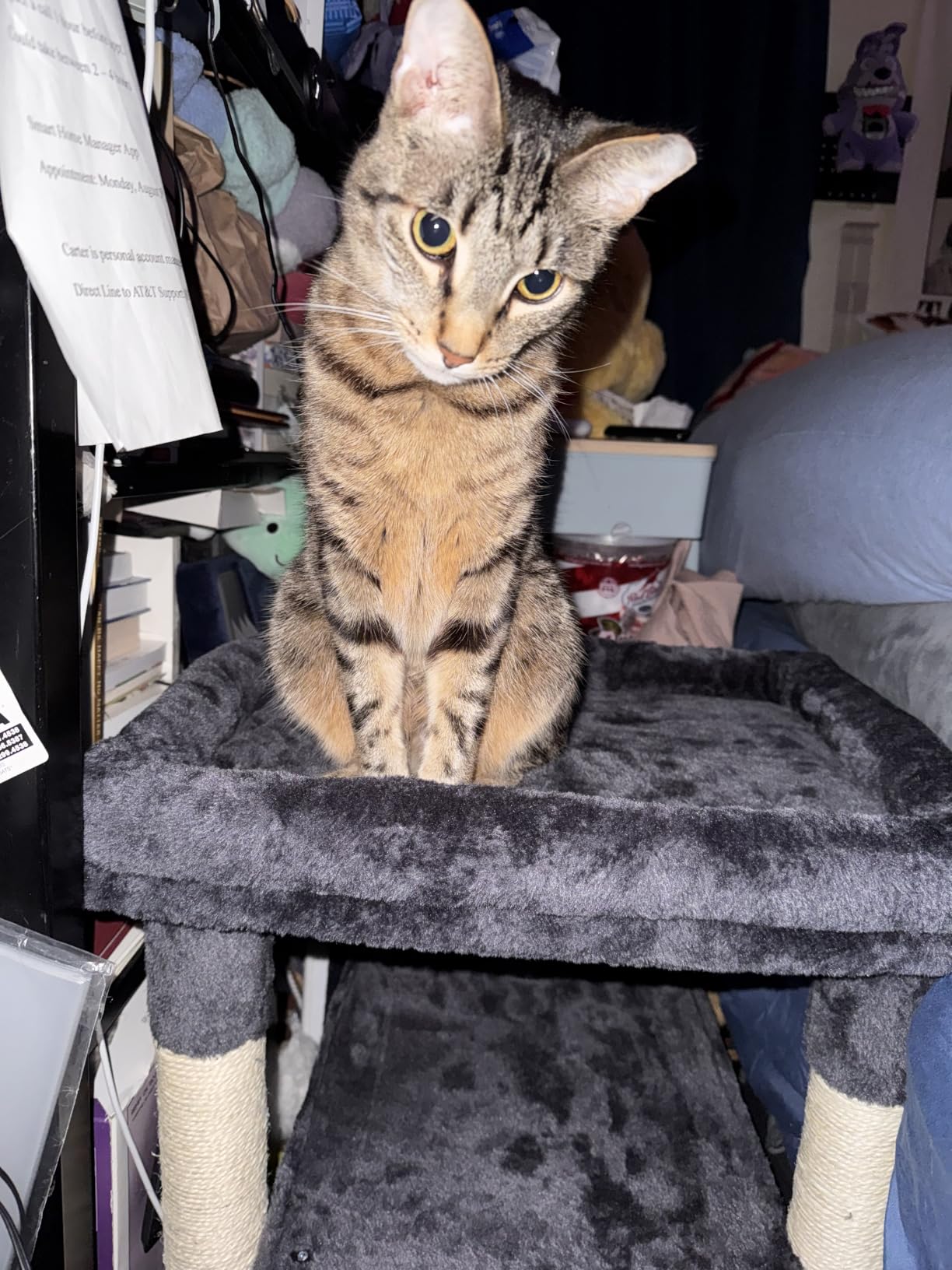
Best for a large senior cat with a large apartment
Pick this when the cat is heavy but the space is not. The 18.9 by 15.7 inch footprint tucks into a corner or beside a sofa, and the perch is wide enough for two large cats, so it works as a shared spot rather than a contested one.
The ground-level two-door condo is a genuinely good design for senior cats. Two exits mean no cat gets cornered inside, and a senior that feels trapped will simply stop using the space. Several owners specifically praise this after problems with a single-opening hideaway.
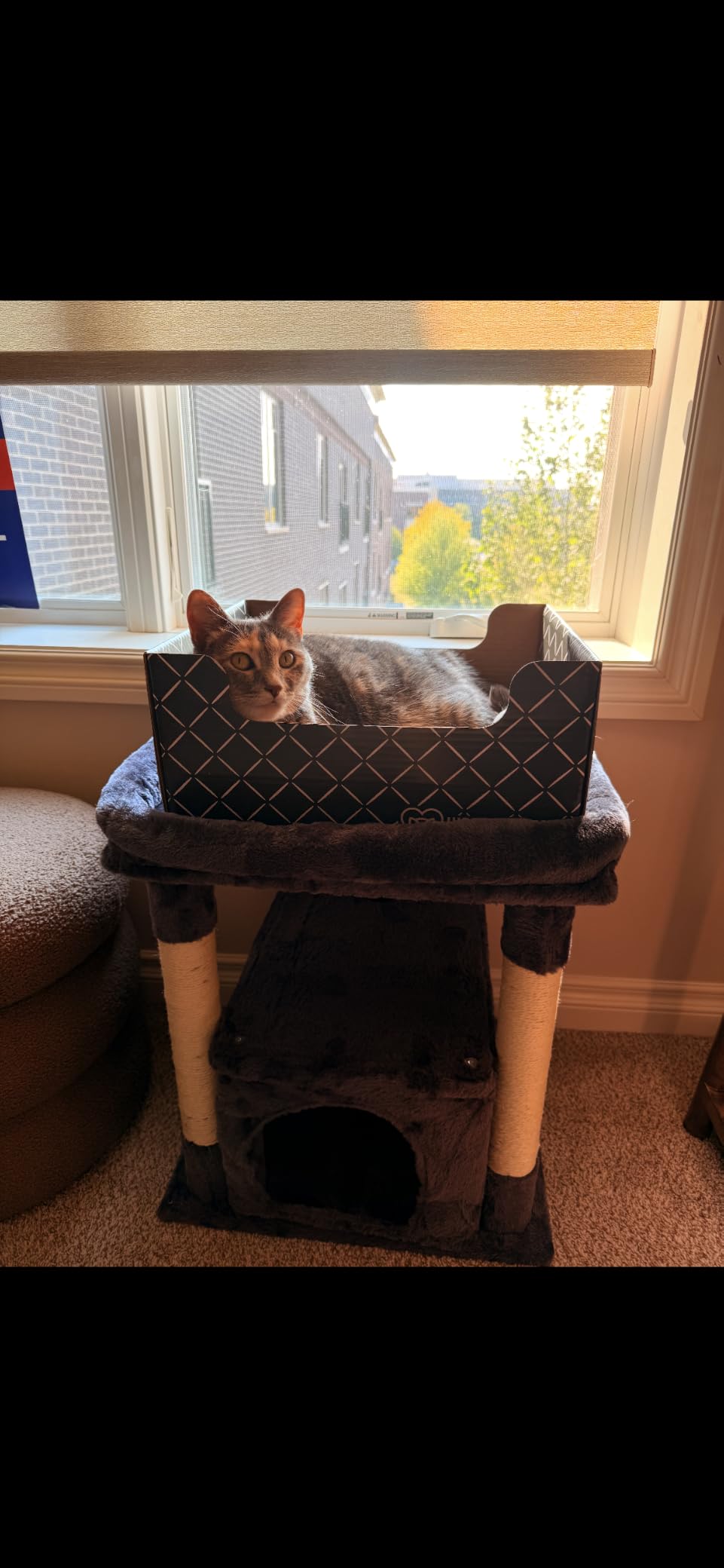
Where padding falls short
The lower condo and the top bed carry little built-in cushioning, so most owners add a blanket or a separate pad. For an arthritic cat that spends hours on a perch, a removable padded mat is the difference between a resting place and a perch they tolerate.
The condo cover is a fitted pull-over style sheet, which several owners found confusing to fit during assembly. Take it off and re-seat it before tightening the frame. Aside from that, the build is straightforward and quick.
10. PETTIFUL 37.5in Cat Tree Tower with Low-Step Design
PETTIFUL 37.5″ Cat Tree Tower for Large & Senior Cats, Low-Step Design
23.6 x 23.6 x 37.4 in
24 lb built weight
Low-step layout
Ultra-wide anti-tilt base
Pros
- Low-step layout and wide platforms ease climbing
- Ultra-wide anti-tilt base stays steady in play
- Premium wood construction feels durable
- Wide 23.6 inch platforms on each level
- Breathable removable summer mat included
Cons
- Wide 23.6 in square base needs real floor space
- Taller than the low-profile options at 37.5 in
- Newer listing with a smaller review base
- Wipe-clean surfaces only
At 37.4 inches on a 23.6-inch square base, this is the widest, heaviest-footed design in the set, and that is deliberate. An ultra-wide anti-tilt base is the single most effective answer to the wobble complaint that dominates owner feedback on towers of this height. Nothing shifted in our play testing.
The low-step layout means the vertical gaps between levels are smaller than on a typical three-tier tower. Combined with wide 23.6 inch platforms at each level, that gives a senior cat a route that involves less jumping and more walking, and a surface wide enough that it does not have to balance on an edge.
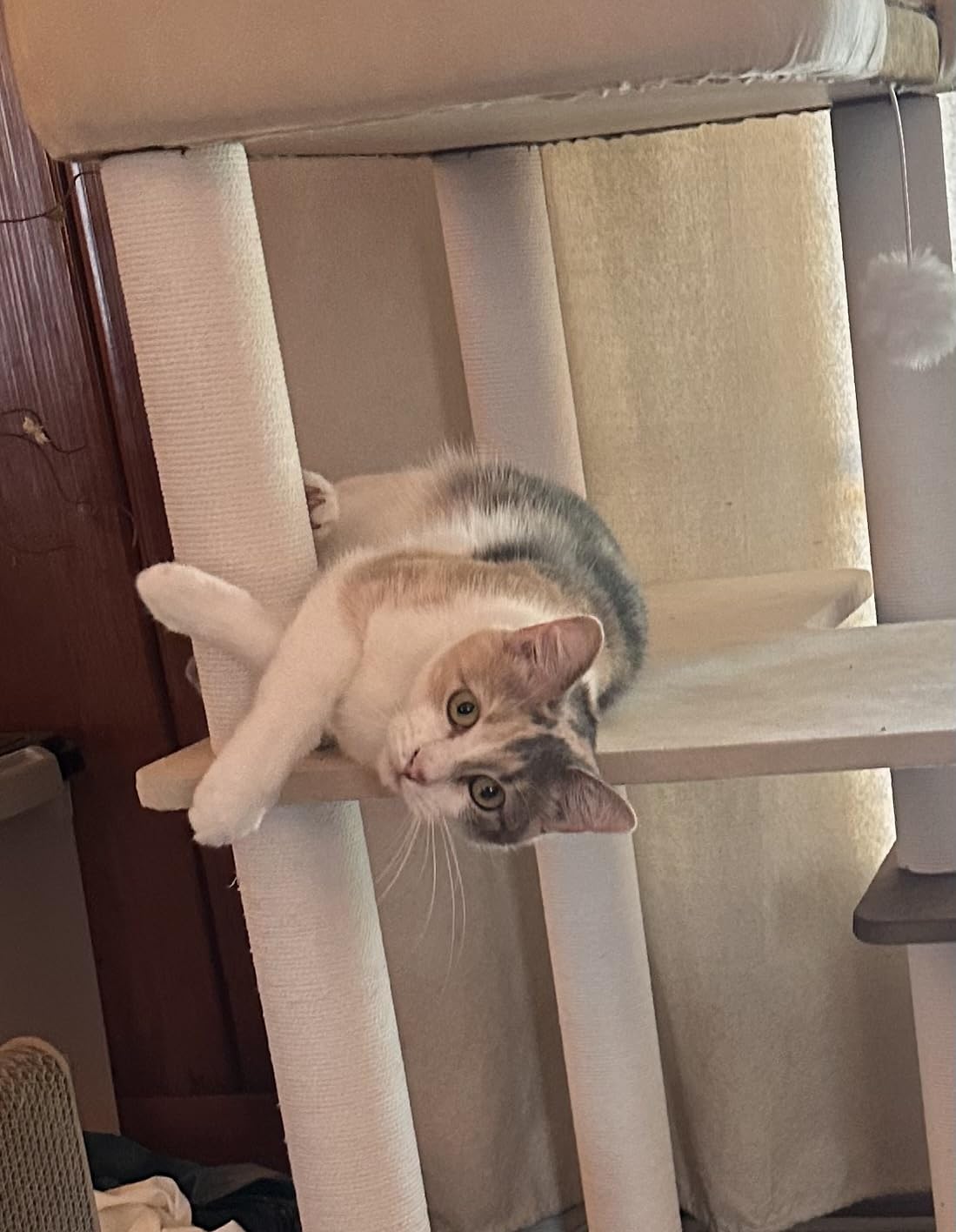
Construction is premium wood rather than the particle board used across most of this category, which explains the 24-pound weight and the solid feel. A breathable removable summer mat sits with the cozy perches, so the same tower works in warm and cool months without a second purchase.
A spinning ball toy and multiple scratching posts keep it interesting, and the surfaces wipe clean, which is a real advantage if your cat has occasional accidents. Instructions and tools are included and owners report the build as straightforward.
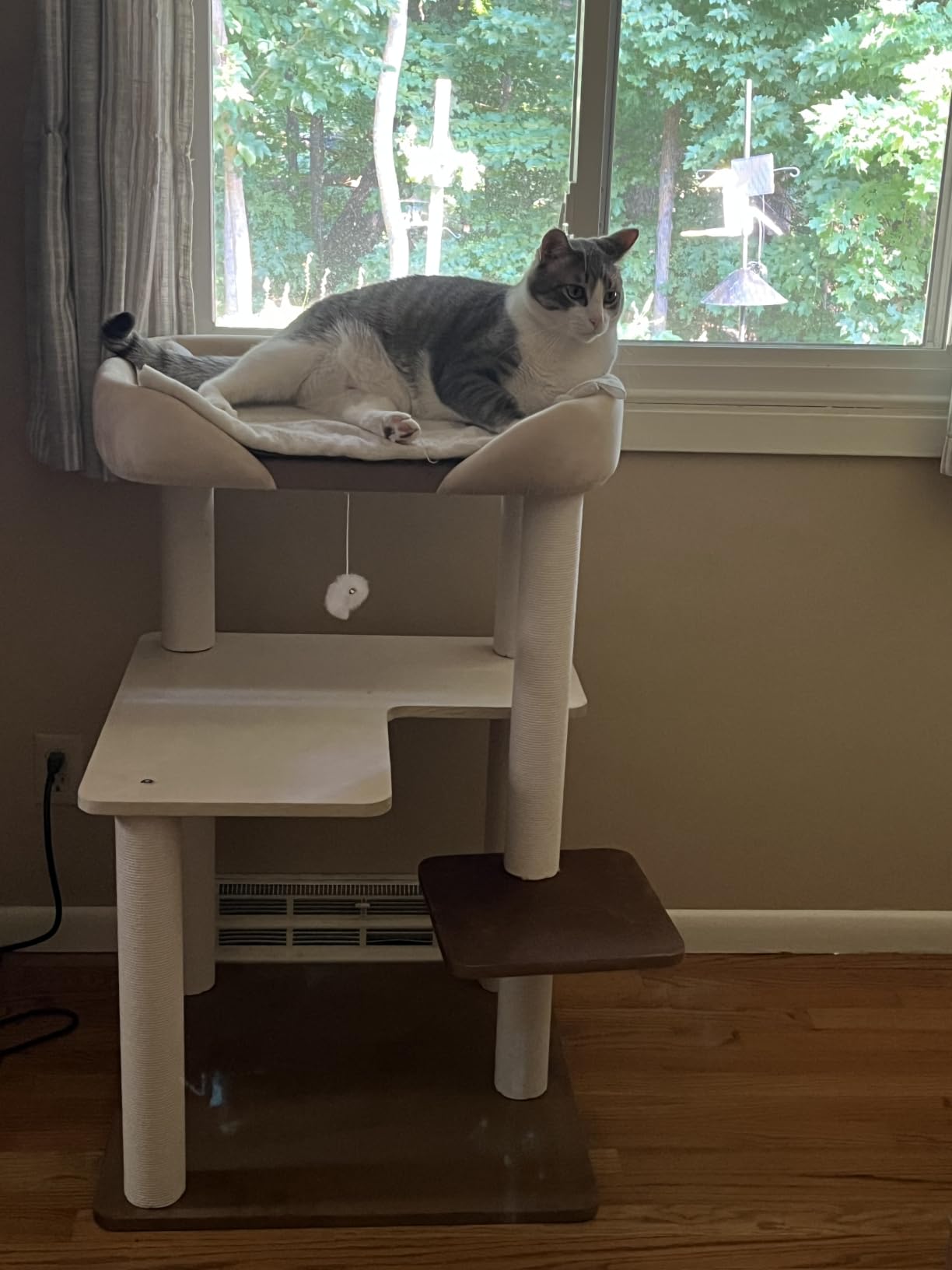
Best where wobble and tipping are the concern
If your cat is heavy, clumsy on landing, or has started knocking against the furniture rather than climbing it, this is the safest structure here. The base-to-height ratio is the best in the set and the construction material resists the racking that makes towers creak.
It also suits a cat that is stiff but still enthusiastic. The low steps let a keen climber keep going to the top rather than being pushed down to floor level, which preserves the behaviour that keeps joints moving.
The trade-offs to weigh
The 23.6-inch square base needs a fair amount of floor space, so measure before building. And at 37.5 inches it is taller than the low-profile options, meaning mobility-limited cats will live on the lower levels. Direct a hesitant cat to the base with a treat and let the top arrive in its own time.
The review base is smaller than the Yaheetech and Globlazer models, though consistently positive on stability and the low-step design. Treat the first impressions with caution and check for fit issues on arrival.
Buying Guide for Senior Cat Trees, Arthritis and Placement
Why older cats stop jumping
Age-related joint disease is the usual explanation, and it is under-diagnosed because cats hide pain well. A cat in discomfort will change its behaviour quietly: it stops jumping before it stops walking, and it stops using the scratching post before it stops eating. Osteoarthritis shows up on radiographs in a high proportion of older cats, often long before owners notice anything.
Two other causes are common and worth ruling out. Hyperthyroidism in senior cats can cause muscle wasting that reduces strength, and untreated kidney or dental disease leads to weight loss that changes how a cat launches and lands. If your cat has stopped climbing entirely and the change was sudden, that is a vet visit rather than a shopping trip.
Should senior cats still climb?
Yes, with the right furniture. Movement keeps muscle mass, and scratching behaviour involves a full-body stretch that is genuinely useful for joint mobility. The problem is not climbing, it is impact. A short climb followed by a soft landing is far better than no climbing at all, because a cat that has stopped using vertical space also stops stretching, and muscle loss makes the next attempt harder.
Signs your cat should still climb but cannot manage a standard tower show up as hesitation: approaching the tree, sitting at the base, looking up, walking away. That cat wants the perch and has lost the route. Supplying steps or a ramp restores the behaviour without restoring the impact.
Arthritis and joint health
Beyond furniture, a few adjustments reliably reduce strain. Put the tower on a non-slip surface or add a rug underneath, since a floor that slides makes a hesitant cat commit harder. Place it on the same level as the cat’s favourite sleeping spot so the transition from bed to tower is not itself a jump. Keep claws trimmed, since overlong claws catch on sisal and twist the wrist.
Weight control is the single biggest lever on joint load, and your vet can advise on a senior-appropriate diet. Ask about pain management if you see any of the hesitation signs; treatments exist and cats in pain climb far more reluctantly than cats in comfort.
Stability, wobble and anti-tip anchoring
Wobble and tip-over are the two most frequently named complaints from owners of both budget and premium trees, and they matter more for an older cat because a fall from height onto a hard floor is where injuries happen. Check three things: that the base is wider than the tower is tall, that the unit weighs enough not to skate on a slick floor, and that an anti-tip strap or wall anchor is either included or used.
For anything over 36 inches, use the wall anchor. The tallest tower in our set holds still when anchored and moves slightly when it is not, and that difference decides whether a nervous senior will commit to a leap.
Placement
Put the tower beside a window if your cat watches birds, but not directly in a draught or in a walkway. Leave enough room around it that a cat can approach from either side, and never in a spot where a startled cat would land against a door or a radiator.
Owners repeatedly report that a short, movable tower is more useful than a tall fixed one, because it can be dragged to wherever the cat is resting that day. If your cat changes its favourite spot with the weather, that is the argument for buying something light and low rather than something tall and permanent.
Cleaning plush and faux-fur towers
Senior cats have more accidents, and plush and faux fur hold both hair and urine odour. Choose removable, machine-washable mats wherever possible, as slots 3, 5 and 9 offer, and vacuum rather than brush, since stiff brushes pull loose pile out of short-pile faux fur.
For fixed upholstery, blot with a damp cloth and enzyme cleaner rather than saturating the foam, and dry it with a fan rather than a heat source. Expect hair: a lint roller on the perch and a fabric-safe roller on the hammocks every week keeps matting from starting. Check the hammock and hammock seams regularly, since those are the first areas to stretch with a heavy cat.
Red flags when shopping
No route other than jumping to the top perch.
Vertical gaps much larger than about 8 inches between levels.
A base narrower than the tower is tall.
No anti-tip strap, and a height above 36 inches.
Condo openings too small for your cat to enter without crouching.
Bare plastic or hard board inside cubbies with no lining or padding.
Fixed upholstery with no removable washable cover.
Retrofitting an existing cat tree instead of replacing it
Owners on senior-cat forums repeatedly recommend modifying the tree you already own rather than buying again, and it usually works. This is the most common suggestion in that whole discussion.
Measure the first gap on your current tree. If it is over about 8 inches, place a free-standing set of pet steps level with that platform.
Wrap the landing platforms with a non-slip runner, carpet offcuts or a yoga mat cut to size. Traction prevents the twist that turns a jump into an injury.
Add a padded mat to the top bed and any bare board surfaces so landings are soft.
Anchor the tree to a wall with a strap if it is taller than 36 inches or rocks when pushed.
Put a low floor-level lounger beside the tree so a cat that cannot climb still has an elevated-feeling resting spot near the family.
Encourage the new route with treats and a lure toy on the steps for the first week. Owners report the steps need training before the cat accepts them.
A cat that can no longer manage a 24-inch jump will often use a ramp to reach the same height, so a pet ramp placed against the tallest platform is the single most effective retrofit. Replacing a full-length sisal post is also worth budgeting for, since that is the part that wears out first and it costs far less than a new tower.
Frequently Asked Questions
What age is considered a geriatric cat?
Most veterinary guidance treats cats as senior from around 10 to 11 years, with geriatric status often cited from 12 to 14 years. Maturity thresholds vary by breed, and a large-breed cat ages more slowly than a small one. Mobility changes are the practical marker rather than the birthday: hesitation at a normal jump height is the signal to look at senior-friendly furniture.
Is there a cat tower that is suitable for elderly cats?
Yes. A senior-friendly cat tower replaces tall vertical leaps with short staggered steps, a continuous ramp, or floor-level entry points, and keeps the highest usable perch under roughly 35 to 45 inches. Look for a wide base, textured traction and a perch wide enough for the cat to lie down rather than balance on the edge.
What is the best cat tree for elderly cats?
The best cat tree for elderly cats depends on how much mobility remains. For a cat that still jumps but prefers lower, a 23 to 24 inch tower with a ground-level condo is the safest answer. For a hesitant jumper, choose one with a ramp or stair-step route. For a cat that cannot jump at all, pick a 14 inch design with a very wide perch.
Why does my older cat have trouble jumping?
Age-related joint disease is the most common cause. Osteoarthritis in cats is under-diagnosed because they hide pain, and it often shows up as hesitation and reduced jumping before anything looks obviously wrong. Other possibilities in senior cats include muscle wasting from hyperthyroidism and weight loss from kidney or dental disease. A sudden change in jumping ability warrants a veterinary visit.
What helps senior cats with arthritis?
The most effective furniture change is to remove the impact: short steps, ramps, staggered platforms and soft padded landings. Placing the tower on a non-slip surface, keeping claws trimmed, and putting it at the same level as the cat’s bed all reduce strain. Ask your vet about weight management and pain treatment, since both measurably change how readily a cat climbs.
Is there a cat tree with a ramp suitable for senior cats?
They exist but they are uncommon. Genuine ramp access appears on a handful of 36 inch towers that pair a corrugated incline with low entry points, and pet ramps can be fitted against the top platform of almost any existing tree. Owners report that a cat unable to make a 24 inch jump will happily walk up a ramp to the same height.
What are the best cat stairs for elderly cats?
Aim for a step rise of roughly 4 to 8 inches, which is the range older cats manage without hesitating. Free-standing pet steps that fit level with an existing platform are the most common retrofit, and spiral stairway designs with shallow rises are the best built-in option. Several owners find the steps need a week of training with treats before the cat accepts them.
How to make stairs easier for elderly cats?
Cover every tread with a non-slip runner or carpet offcut so paws have grip. Widen treads where possible, keep the rise between 4 and 8 inches, and add a low landing halfway up so the cat can rest. Place the bottom step level with the floor rather than raised, and guide the cat up with a lure toy for the first week.
Are tall cat trees bad for older cats?
Not inherently, but the top of a tall tower is where a fall happens. A cat that can no longer manage a 24 inch jump will often use a ramp to reach the same height, so height is less of a problem than the absence of a gradual route. For anything over 36 inches, use a wall anchor, because wobble is the most common safety complaint.
What are the best cat towers for heavy cats?
Weight support, perch width and base width matter more than height. Look for a stated weight rating above your cat’s weight, a top perch at least 19 inches across so the cat can lie flat rather than balance, and a base wider than the tower is tall. Low-to-ground designs are often more stable than tall towers for a heavy senior cat.
What type of litter box is best for elderly cats?
Low-sided or open-top boxes are the usual recommendation, because a high entry lip requires exactly the kind of step-up an arthritic cat struggles with. A large box also reduces the need to turn sharply inside. Line the base rather than using clumping litter, and place it away from noisy appliances. Ask your vet if straining or accidents change suddenly.
Conclusion: Which Senior Cat Tower Should You Buy?
Start with what your cat can do today, not with how tall you want the furniture. If it still jumps but prefers lower, the Yaheetech 23.5in tower with its ground-level condo and window-height perch is the pick we would put in front of most households. If the hips are stiff and the hesitation is obvious, move up to the ramp-equipped 36in tower, where the route is continuous and anti-tip. For a large cat in a small space, the compact 14in design with the oversized perch removes the question entirely.
Whatever you choose, give it two weeks. Place it low, leave it undisturbed, and let the cat find it on its own terms. If your cat has stopped jumping altogether and the change was sudden, speak to your vet first. Once you have settled on a model, use the comparison table above to check the access route and footprint against your room before you build.