
Most garage compressors fail at painting for one reason: they cannot hold steady pressure while a spray gun is open. If you are searching for the best garage air compressors for painting, the single number that decides your purchase is CFM at 90 PSI, not the peak horsepower on the box. For most DIY paint jobs, a compressor that delivers 5 CFM or more at 90 PSI from a tank of 20 gallons or larger is the practical floor.
That is the rule I used to sort this list. I compared the published CFM at 90 PSI, tank capacity, noise rating, duty cycle and voltage for ten of the most-reviewed garage compressors on the market, then lined each one up against real spray work. Four of them deliver enough sustained CFM at 90 PSI to hold a conventional spray gun. Most of the rest are nailer machines that happen to advertise spraying as a use.
A few definitions before the rankings, because these numbers get marketed loosely. CFM is cubic feet per minute, the volume of air a compressor delivers at a given pressure. PSI is pressure. HVLP means high volume, low pressure, and it is the spray gun category that eats the most air. Running HP is what the motor actually delivers continuously; peak HP is a brief surge figure and it means very little for sustained work. If you want the wider picture on airflow and tank sizing, our guide to the best air compressors overall covers the fundamentals in more detail.
Two things drive the rankings in this roundup. First, sustained CFM at 90 PSI, because that is what a spray gun actually pulls. Second, air quality, because water and oil in the line translate directly into orange peel, runs and fish eyes in the finish. Every compressor here is oil-free, which removes one contamination source, and I flag the ones that need a separator and filter added before paint goes anywhere near them.
For setup and accessories rather than the pump itself, our picks for the best quiet air compressors and the best pancake compressors are worth a look, since several compressors here fall into those categories for trim and detail work.
Table of Contents
Top 3 Picks for Garage Painting in 2026

California Air Tools 10020C
- 5.3 CFM at 90 PSI
- 10 gallon steel tank
- 70 dBA
- Oil-free dual piston pump

Quick Overview: Best Garage Air Compressors for Painting in 2026
| Product | Specifications | Action |
|---|---|---|
| California Air Tools 10020C 2.0 HP Ultra Quiet Oil-Free |
|
Check Latest Price |
 Makita MAC210Q Quiet Series 1 HP 2 Gallon Makita MAC210Q Quiet Series 1 HP 2 Gallon |
|
Check Latest Price |
| Limodot 5 Gallon 68 dB Oil-Free |
|
Check Latest Price |
 Klutch 20-Gallon 2 HP 175 PSI Klutch 20-Gallon 2 HP 175 PSI |
|
Check Latest Price |
 VEVOR 6.3 Gallon 2 HP Oil-Free VEVOR 6.3 Gallon 2 HP Oil-Free |
|
Check Latest Price |
 DEWALT D55146 1.6 HP 225 PSI DEWALT D55146 1.6 HP 225 PSI |
|
Check Latest Price |
 Stealth 12 Gallon Ultra Quiet 1.5 HP Stealth 12 Gallon Ultra Quiet 1.5 HP |
|
Check Latest Price |
 ECOMAX 6 Gallon 150 PSI Pancake ECOMAX 6 Gallon 150 PSI Pancake |
|
Check Latest Price |
 CRAFTSMAN 6 Gallon 150 PSI Pancake CRAFTSMAN 6 Gallon 150 PSI Pancake |
|
Check Latest Price |
 VEVOR 13 Gallon 2 HP 66 dB VEVOR 13 Gallon 2 HP 66 dB |
|
Check Latest Price |
1. California Air Tools 10020C – Best Overall Garage Air Compressor for Painting
California Air Tools 10020C 2.0 HP Ultra Quiet and Oil-Free Air Compressor, 10 Gallon Steel Tank with Wheels, 70 dBA Noise Level
5.3 CFM at 90 PSI
10 gallon steel tank
70 dBA
2.0 HP at 1680 RPM
Pros
- Sustained 5.3 CFM at 90 PSI
- Quiet 70 dBA running output
- Oil-free so no oil in the paint line
- Wheels and handle for repositioning
Cons
- Heavy at 82.5 pounds
- Gauge red zone starts at 115 PSI
- Thermal cutoff after long continuous runs
This is the compressor I keep coming back to for garage painting because the number that matters holds up. It delivers 5.3 CFM at 90 PSI and 6.4 CFM at 40 PSI from an oil-free dual piston pump running a 2.0 HP motor at 1680 RPM. That airflow is enough to run a conventional spray gun and a light sander at the same time without the tank pressure collapsing.
The 10 gallon steel tank is smaller than it looks in the spec sheet, but the pump recovers quickly, so in practice you are not waiting on fill cycles during a coat. The Easy Start Valve gets it running without a fuss, and the unit stores and rolls on its wheels. Dimensions are 16 by 15.1 by 35.9 inches, which clears a standard garage wall.

The 70 dBA rating is the number that earns it a place in an attached garage. Owners report running it without needing to shout over it, which matters if the wall to your neighbour is a thin partition. There is no belt noise and no piston slap, which is exactly why the oil-free design sounds this calm.
Air quality is handled well for an oil-free machine. Because the pump is oil-free, the main contamination risk in the line is moisture from cooling, so this unit still wants a moisture separator and a filter before any finish work. Our general home garage compressor guide covers the filter setup in more detail.
Will It Hold Pressure Under a Spray Gun
For a conventional or mid-pressure gun, yes, with room to spare. Sustained CFM is the limiting factor and 5.3 CFM at 90 PSI clears a typical automotive gun. A large HVLP gun pulling closer to 7 CFM will still pull this unit below its rated pressure, so add a larger tank or a second compressor if HVLP is your plan.
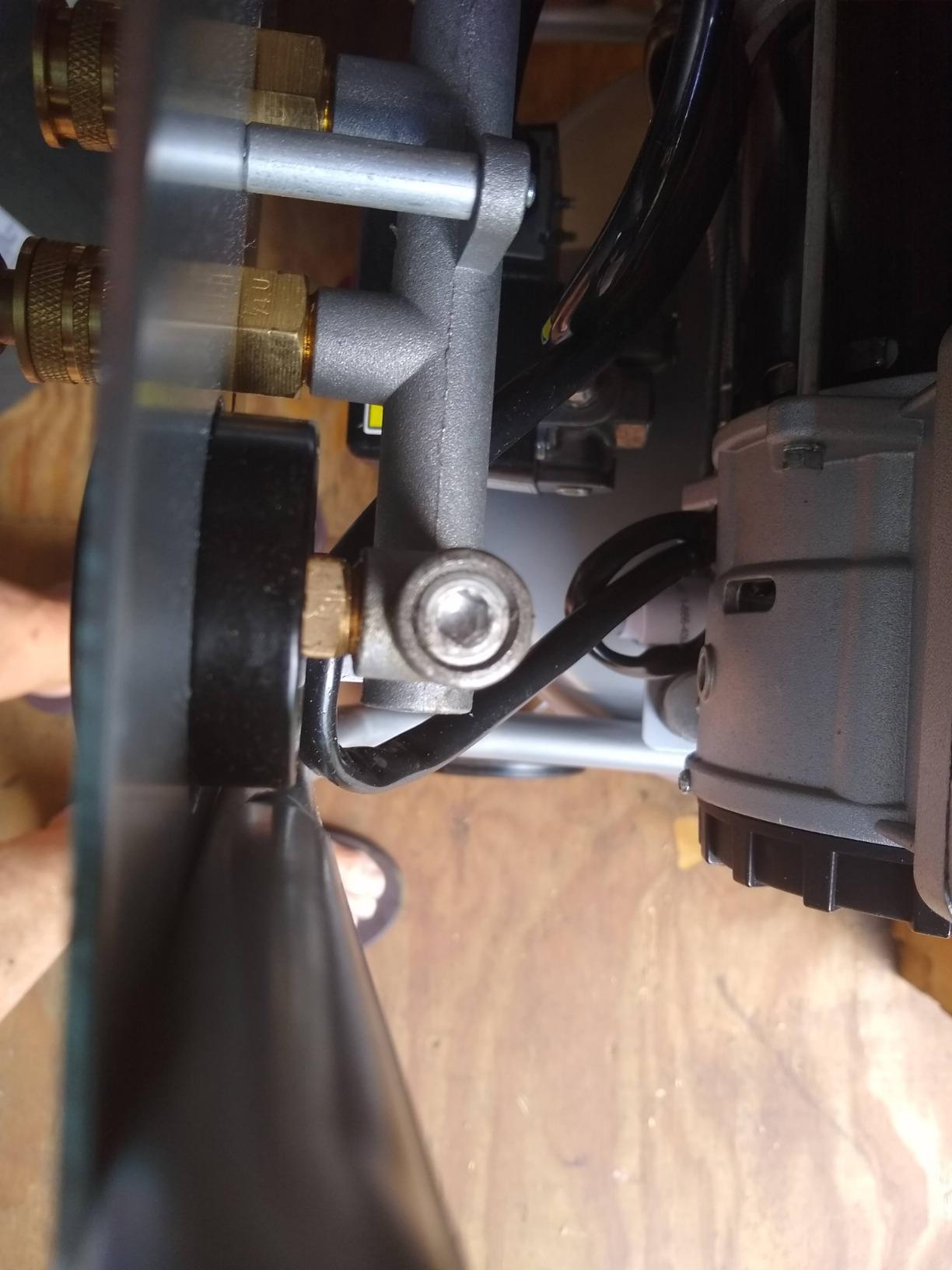
Owners do report that the unit cuts out thermally after extended continuous running, which is normal pump protection on a 10 gallon receiver. Treat it as a shop compressor that recovers between coats, not a unit to leave running all day on one gun.
What To Know Before You Buy
Weight is the practical issue at 82.5 pounds. Moving it to the other side of the garage is a two-person job or a rough dolly ride, so plan your layout before it arrives. If your painting happens in one spot, that does not matter much.
There is also a gauge detail worth knowing: the red zone begins at 115 PSI against a 125 PSI maximum, so the working window is narrower than the headline number suggests. Set your regulator to your gun’s required pressure and leave room below that red line.
2. Makita MAC210Q – Best Quiet Unit for Trim Spraying and Detail Work
Makita MAC210Q Quiet Series, 1 HP, 2 Gallon, Oil-Free, Electric Air Compressor
2.0 CFM at 90 PSI
2 gallon tank
60 dB
135 PSI max
Pros
- Quietest running output in this roundup at 60 dB
- Roll cage frame survives job site handling
- 135 PSI max beats most small units
- Oil-free and maintenance free
Cons
- Only 2.0 CFM at 90 PSI limits gun size
- 2 gallon tank refills constantly
- Not compatible with smart plugs
Makita built this one for finish work, and the 4.8 rating reflects that. It runs at 60 dB, which owners measure in the high 50s to upper 60s in real rooms, quieter than a refrigerator. That makes it the compressor to use inside a house when you are spraying trim, cabinets or touch-up work.
The airflow is the limitation and you need to plan around it. It delivers 2.0 CFM at 90 PSI and 3.0 CFM at 40 PSI from a 1 HP motor at 1750 RPM. A small touch-up gun or a detail HVLP gun works. A full-size automotive gun will drop the pressure and produce exactly the inconsistent atomization you are trying to avoid.
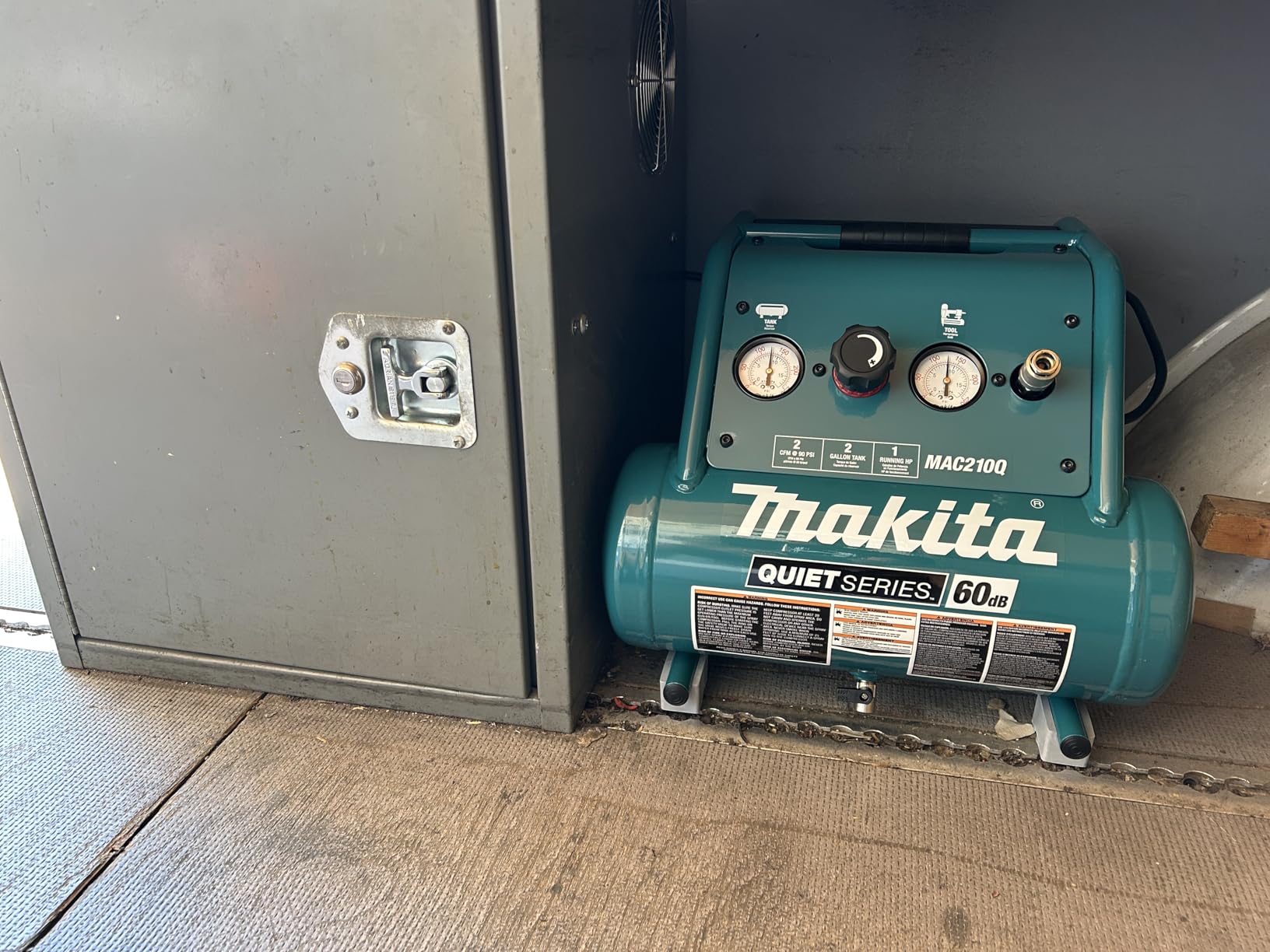
The 2 gallon tank means frequent cycling during any continuous spraying. Owners use it in short bursts between passes rather than for an entire panel, and that pattern suits trim and furniture work. The 135 PSI maximum is genuinely useful for guns that want more working pressure than a small pancake can give.
Build quality is the standout here. The roll cage frame takes knocks that would crack a conventional shell, which is why it shows up on job sites as well as in home shops. The unit measures 12 inches on each side and the oil-free dual piston pump means no oil carryover into a spray finish.
Where This Quiet Unit Fits In A Paint Shop
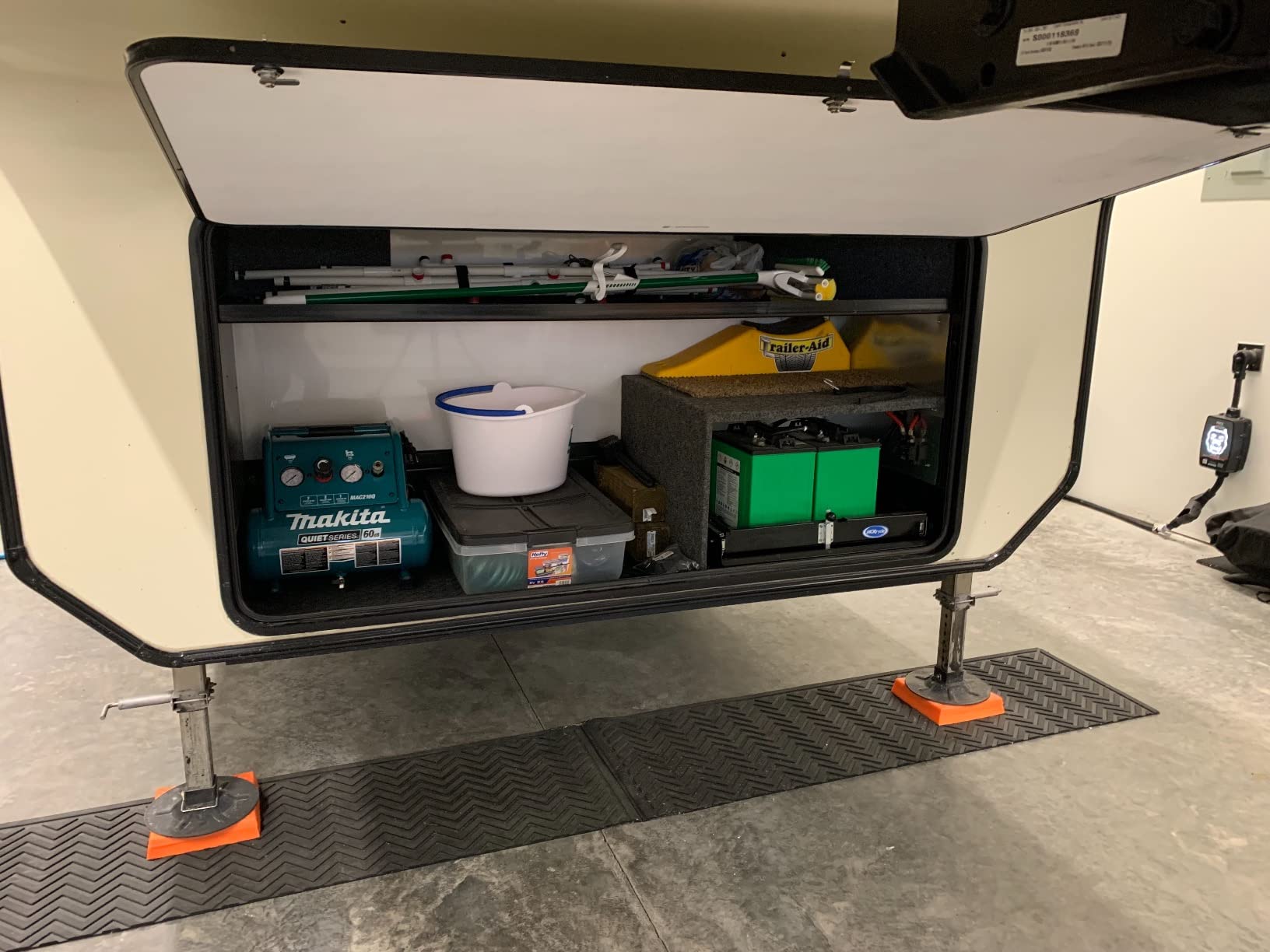
Treat it as the secondary compressor, not the main one. It is ideal for a shop where the main tank handles spray guns and this unit sits nearby for inflate, sand small parts, blow off dust and run a detail gun between coats. Quiet enough to leave running while you keep working inside.
If your work is interior touch-ups, baseboards, cabinets or model painting, this may be the only compressor you need. Buyers who upgraded from a loud small tank report the change in working comfort is the biggest upgrade they notice.
What To Know Before You Buy
It weighs 45 pounds, which is heavy for a 2 gallon portable unit and awkward to carry up stairs or a ladder. Plan on a fixed spot near an outlet rather than hauling it around the job.
Owners also report incompatibility with smart plugs because of the motor capacitor design, so if you run your garage on smart outlets, skip that route. Otherwise this is the most dependable small unit in the group.
3. Limodot LJ5120K – Best Budget Garage Compressor With a Hose Included
Quiet Oil-Free Air Compressor, 68 dB, 2.8 CFM @ 90 PSI, 5 Gallon Air Tank
2.8 CFM at 90 PSI
5 gallon tank
68 dB
120 PSI max
Pros
- 25 ft hose and 13 piece accessory kit in the box
- 68 dB keeps it usable indoors
- 25 second recovery between bursts
- Oil-free with cold weather start
Cons
- 120 PSI ceiling is low for spraying
- Only 2.8 CFM at 90 PSI
- Basic accessory kit quality
Most beginners start by buying a compressor and then discovering they also need a hose, fittings and couplers. This one comes with a 25 foot PVC air hose and a 13 piece accessory kit, which removes that first round of shopping entirely. For a first garage setup, that is genuinely useful.
Output is 2.8 CFM at 90 PSI and 4 CFM at 40 PSI from a 1.2 HP oil-free motor at 3400 RPM. Owners use it for brad and finish nailers, light inflation and small spray jobs. It is not the machine for a full car panel, but it is a capable one-person garage compressor.
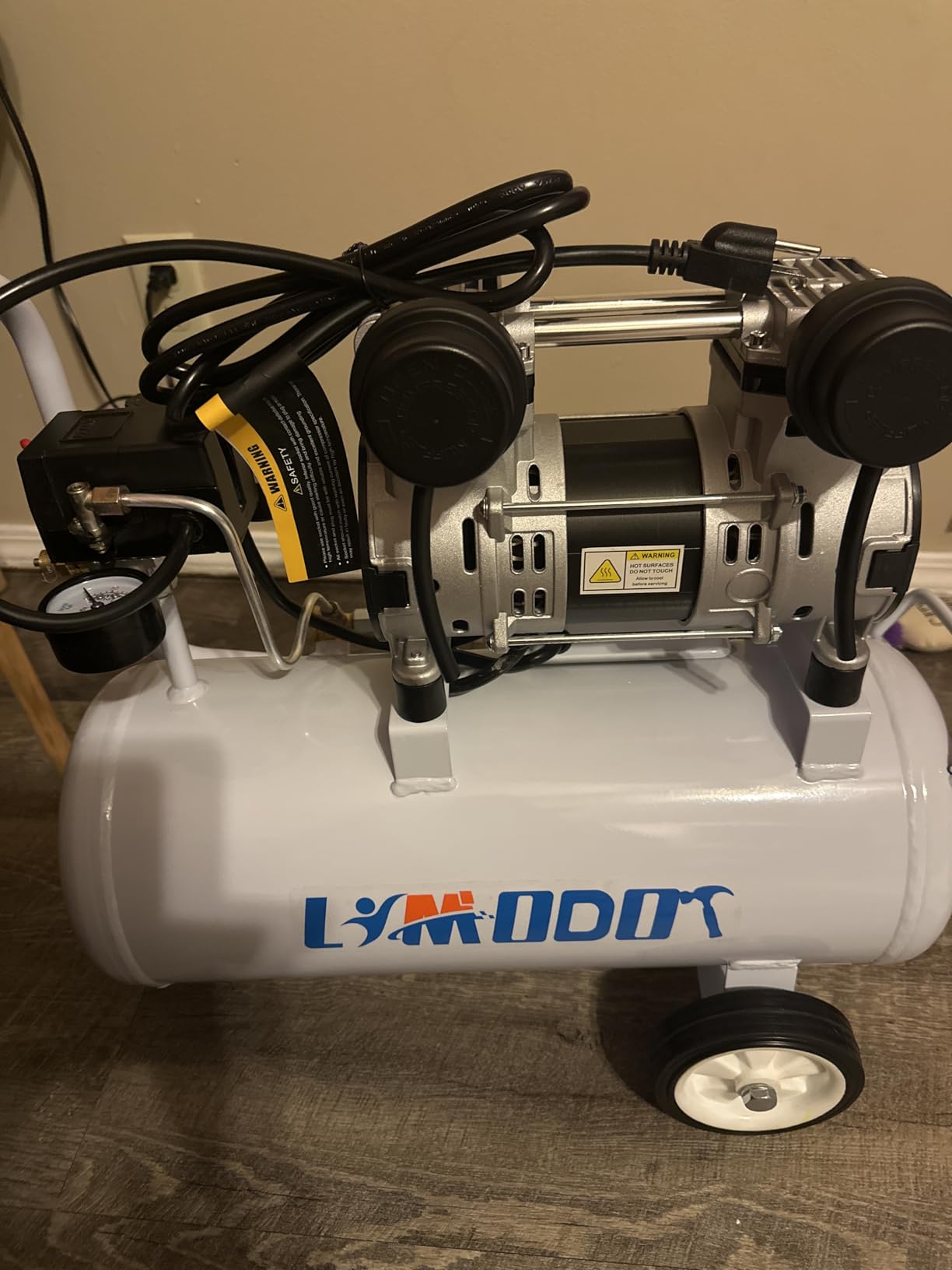
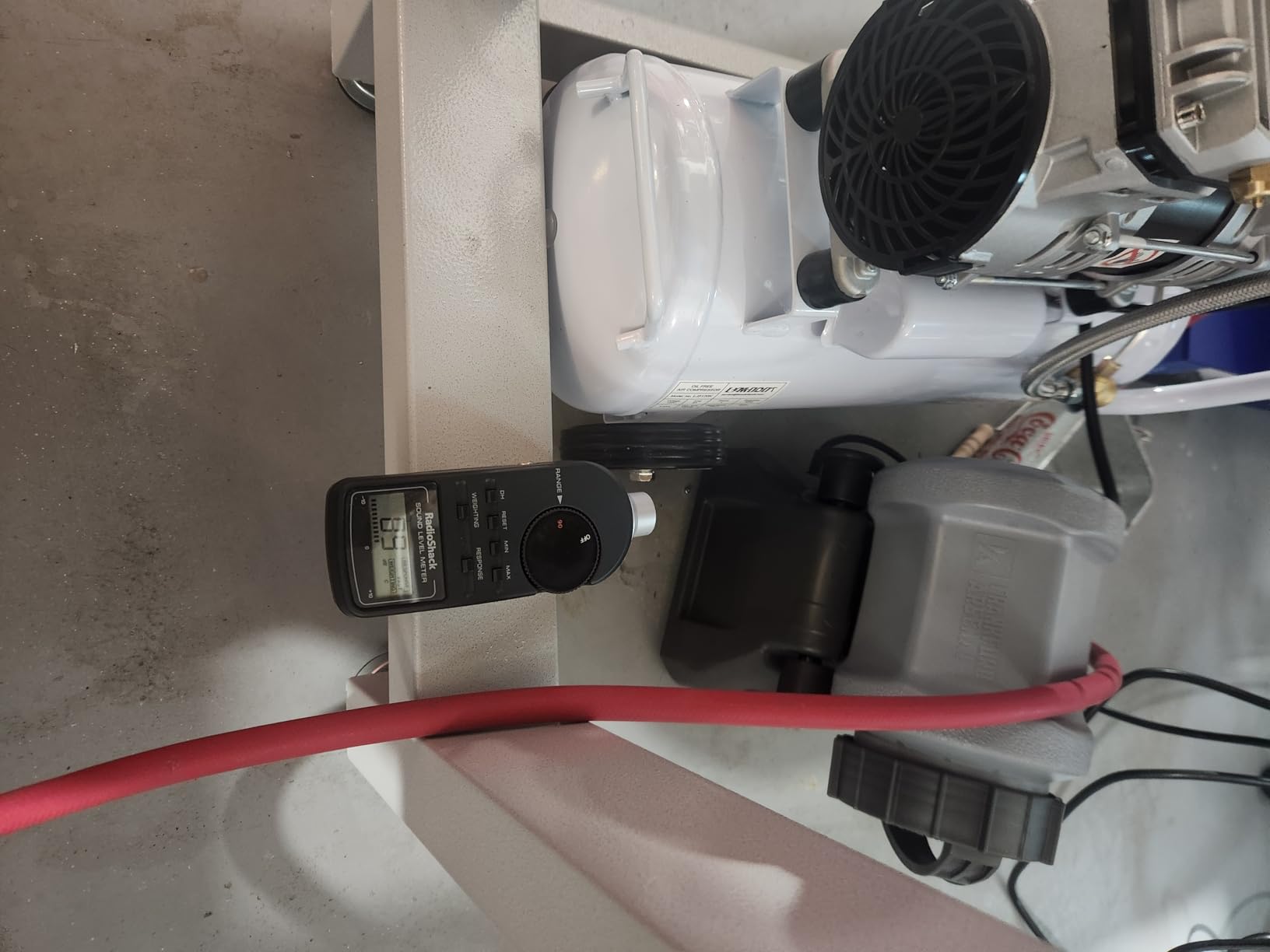
The 68 dB rating puts it close to the California Air Tools unit despite the smaller motor, and users run it in a closed garage without complaint. The 5 gallon tank on wheels fits under a workbench, and the dimensions of 22 by 11 by 19 inches leave plenty of floor space.
Recovery is the number that impressed me most: 80 seconds to fill and about 25 seconds to recover. Short cycles mean less waiting between passes, which matters more in practice than tank size for intermittent work.
When This Budget Unit Is Enough
Choose it if your spray work is small: touch-ups, furniture, shelving, stenciling and trim. At 2.8 CFM at 90 PSI it will hold a small gravity-feed gun and a low-pressure gun without stalling. Add an inline regulator to set the gun pressure properly.
It also works well as a trim compressor in a shop that has a larger unit for panel work. Because it is oil-free and cold weather start capable, it does not need seasonal draining in an unheated garage.
What To Know Before You Buy
The 120 PSI maximum is the spec that will frustrate painters. Many spray guns want 30 to 50 PSI at the tip, which means line pressure above that, and a low ceiling leaves you less headroom for regulator losses and hose drop.
Brand recognition is thin compared with the established names, and parts support is less predictable. Read the manual, keep the model number handy, and expect to rely on the included kit rather than a wide accessory catalog. For an entry compressor, the tradeoff is fair.
4. Klutch 20-Gallon 2 HP – Best Value Compressor for Full Panels
Klutch 20-Gallon Air Compressor, 2 HP, 120V
4.2 SCFM at 90 PSI
20 gallon vertical tank
175 PSI max
75% duty cycle
Pros
- 4.2 SCFM at 90 PSI handles spray guns and sanders
- 20 gallon tank cuts refill stops
- 175 PSI max is well above typical spray needs
- Vertical footprint saves floor space
Cons
- Loudest large-tank unit here at 80 dB
- Heavy at 90 pounds
- Reports of air leaks on some units
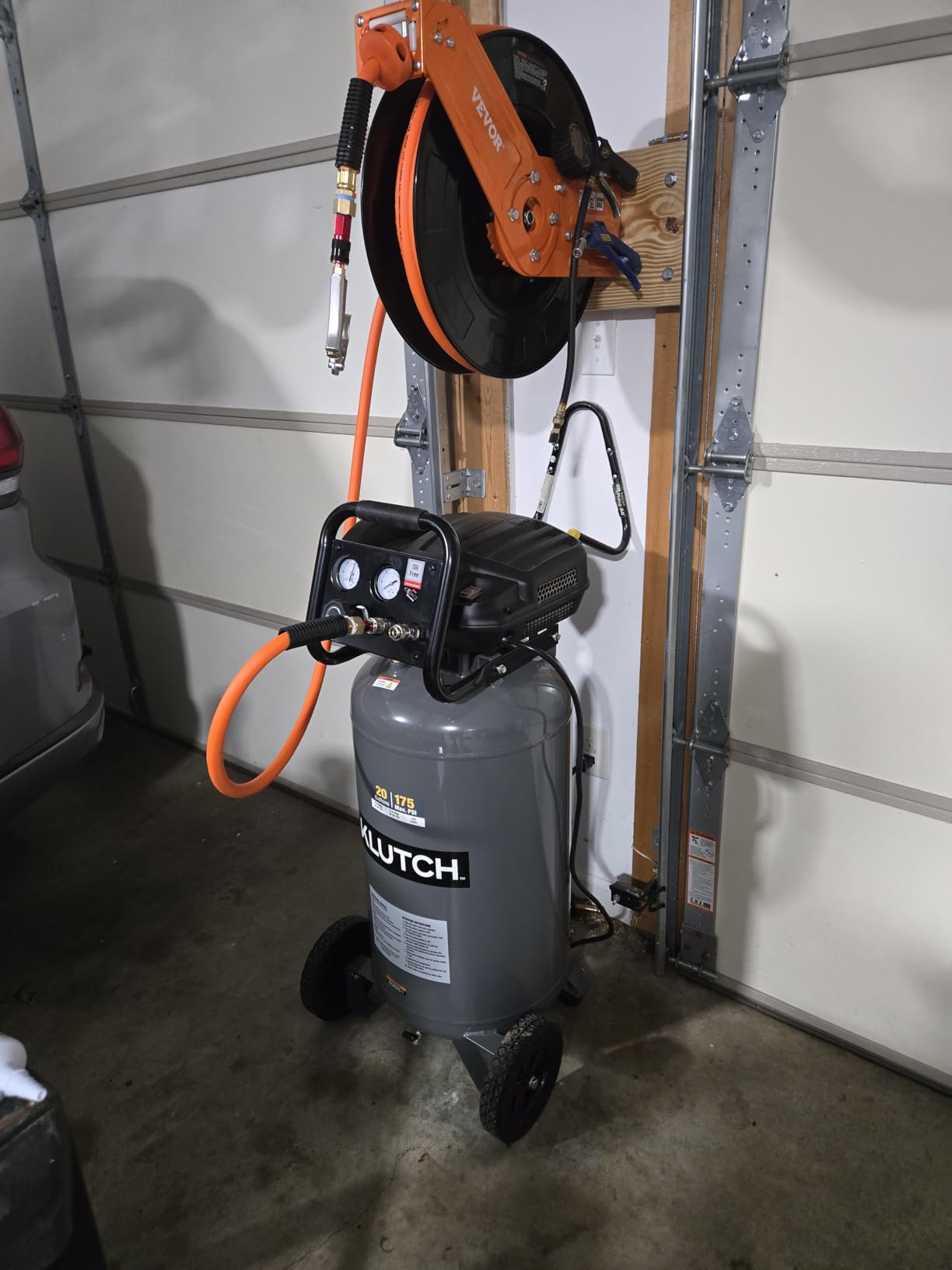
This is the compressor in the group that best matches how people actually paint. A 20 gallon vertical tank with 4.2 SCFM at 90 PSI and 5.2 CFM at 40 PSI means you can run a spray gun for a full panel without the receiver running dry between passes.
Most of the tank is air reserve, not airflow, and that reserve is what stops the pressure drop that causes orange peel. The 175 PSI maximum is well above the working pressure of most paint guns, so you have plenty of room to set a regulator where it works for you.
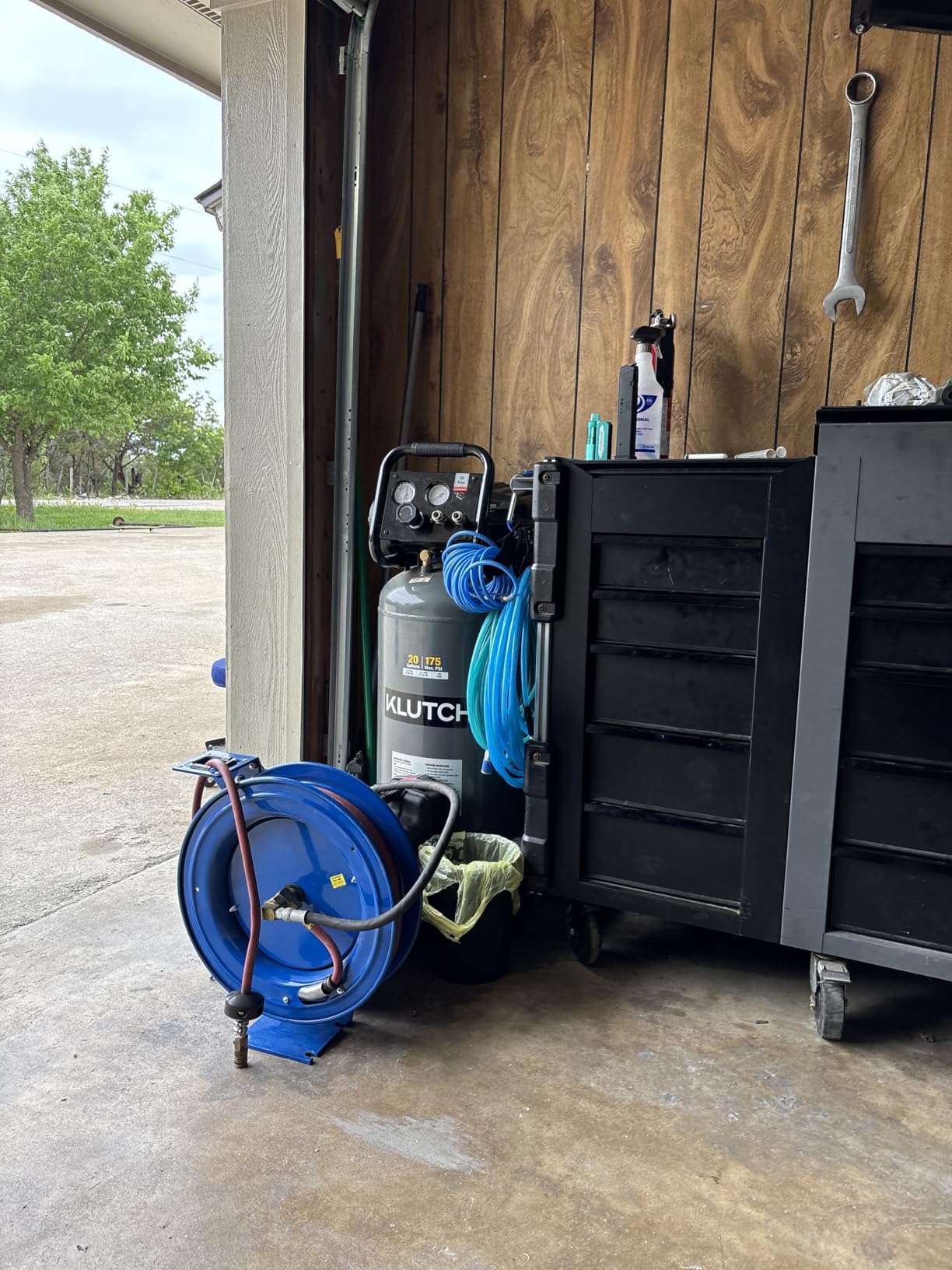
At 2 HP on 120 volts it runs on a standard outlet, which is a real advantage in a garage that does not have 220 volt wiring. The oil-free pump means no oil contamination in the paint line, and the 80 dB rating is the loudest of any large-tank unit in the group.
Owners like that the vertical form factor leaves the floor clear, and the large rubber wheels and handle make it manageable despite the 90 pound weight. Dimensions are 19.1 by 17.5 by 41.5 inches.
How It Handles Real Painting Work
For a conventional gun on a panel, this holds pressure from the first pass to the last. It also handles a DA sander and impact wrench in sequence without long recovery gaps, which makes it useful as the single compressor for a mixed working garage.
Add a moisture separator and a coalescing filter before paint work. With a 20 gallon receiver, condensate accumulates faster than with a small tank, and draining manually is easy to forget. An auto drain valve solves that.
What To Know Before You Buy
Noise is the trade-off at 80 dB. In a detached shop that is fine. In an attached garage with a shared wall, this is the model people complain about, so plan for ear protection and consider scheduling spray work accordingly.
There is also a documented safety report from an electrical engineer describing a unit whose power switch was bypassed internally and would not shut down. That reads as an isolated defect rather than a design pattern, but it is worth testing the shutdown switch yourself after setup, every time.
5. VEVOR 6.3 Gallon 2 HP – Best for Light Spray and Finishing Work
VEVOR 6.3 Gallon 2 HP Air Compressor, Max 116PSI, Oil Free Compressor Tank
3.35 CFM at 90 PSI
6.3 gallon tank
70 dB
116 PSI max
Pros
- 3.35 CFM at 90 PSI covers light spray guns
- Dual silencers keep output at 70 dB
- Fills to 116 PSI in about a minute
- Auto overheat and overpressure protection
Cons
- 116 PSI maximum is the lowest ceiling here
- Short power cord of roughly 40 inches
- Sensitive to extension cords and long cord runs
This one punches above its tank size. The 3.35 CFM at 90 PSI from a 2 HP oil-free motor is enough airflow for a small spray gun, a stapler and a nailer, and the compact 6.3 gallon tank keeps the footprint tight at 25.2 by 13 by 28.7 inches.
Owners highlight the speed. It reaches 116 PSI in roughly a minute, so the waiting that makes small compressors annoying is mostly gone. The dual silencers and high temperature silicone intake hose are the reasons it holds a 70 dB rating at 2 HP.
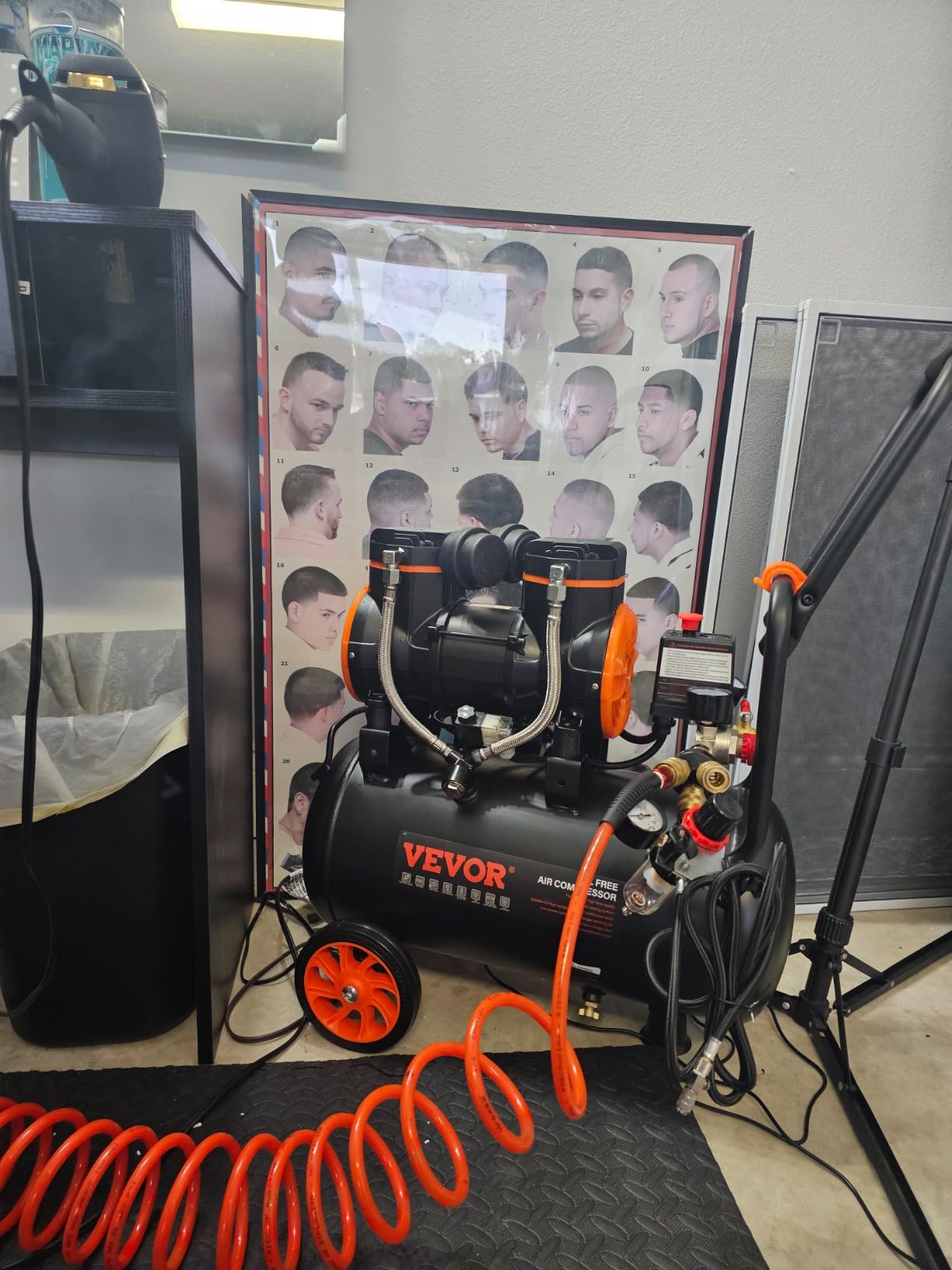
Two cooling fans and automatic overheat and overpressure protection give it a reasonable safety story, and the alloy steel construction with a three layer rust resistant finish suits a damp garage. At 43 pounds it is one of the more manageable large-ish units to move.
For painting, treat it as a finishing compressor rather than a production one. It handles cabinet work, touch-ups and small parts well, and it is quiet enough to run while you work on something else in the garage.
Where Its Output Actually Lands
At 3.35 CFM at 90 PSI you can run a mid-pressure gun or a small HVLP gun, but not a large conventional gun plus a sander at the same time. Match the gun to the number rather than the other way around, and add a moisture separator before any finish coat.
Because the tank is small, plan on shorter spray sessions and let it recover between passes. In practice most owners use it for cabinet and trim spraying rather than whole car panels.
What To Know Before You Buy
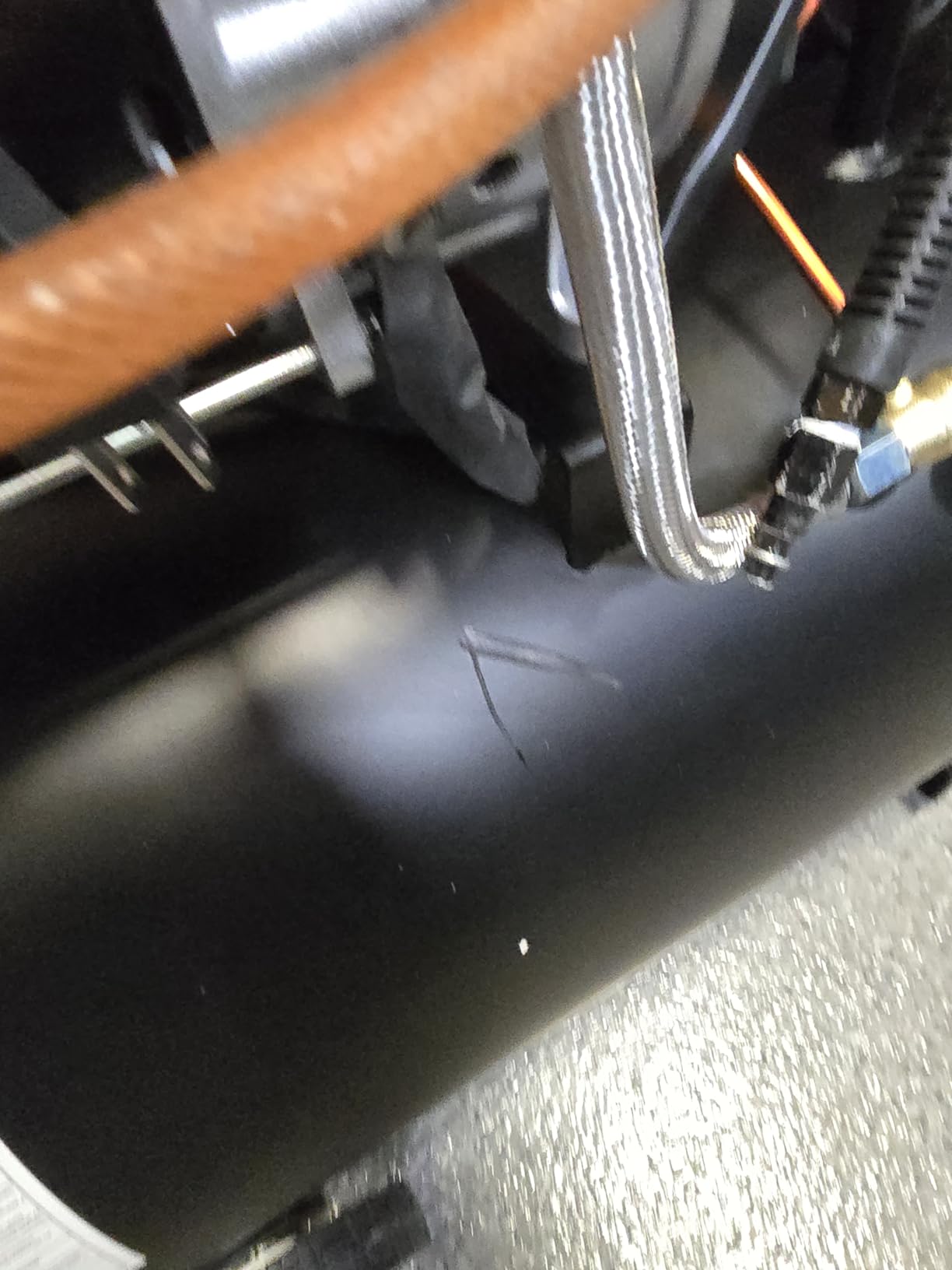
The power cord is the biggest practical complaint, at roughly 40 inches. Do not solve that with a light extension cord. Voltage drops over long runs cause start failures and overheating, so use a properly rated heavy gauge extension or have an outlet moved closer.
Some owners also report overheating under sustained use and mixed quality control between units. The 116 PSI ceiling means you have less regulator headroom than most painting setups assume, so set your gun expectations around the compressor, not the other way round.
6. DEWALT D55146 1.6 HP – Best for Maximum Pressure and Long-Term Durability
DEWALT Air Compressor, 225-PSI Max, Hand Carry with Wheels, 4-1/2 Gallon (D55146)
5.0 CFM at 90 PSI
225 PSI tank pressure
4.5 gallon tank
1.6 HP continuous
Pros
- Highest tank pressure in the group at 225 PSI
- 5.0 CFM at 90 PSI for demanding tools
- Ten year owner reports of reliable service
- Dual output ports and oil-free pump
Cons
- Heavy at 88 pounds
- Loud at 78 dB
- Regulator stops at 150 PSI despite the 225 PSI tank
DEWALT took a different approach here: a small 4.5 gallon tank that stores air at 225 PSI instead of a big tank at low pressure. The result is 5.0 CFM at 90 PSI and 5.2 CFM at 40 PSI, which is the highest real airflow in this roundup after the California Air Tools unit.
That density matters for painting. More air stored per gallon means the pressure holds steadier as the gun pulls, and steadier pressure means more consistent atomization across a long pass. Owners running spray guns and vacuum pressing on this unit report consistent results.
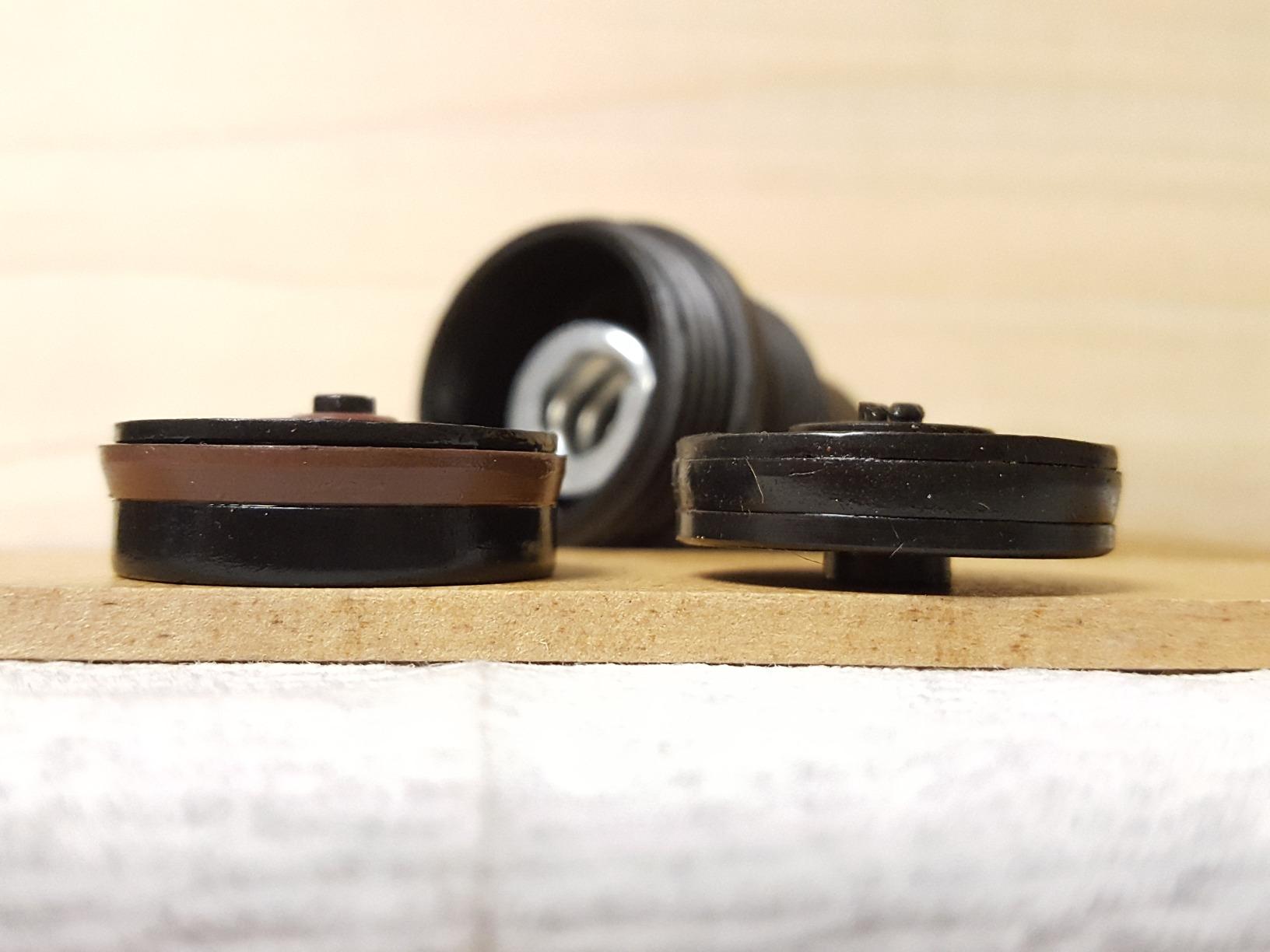
Durability is the standout. A large number of owners report ten years or more of service, which is unusual in this category and the reason it stays on shortlists for a long time. The 1.6 HP continuous motor is a real continuous rating, not a peak figure, and the oil-free pump needs no oil changes.
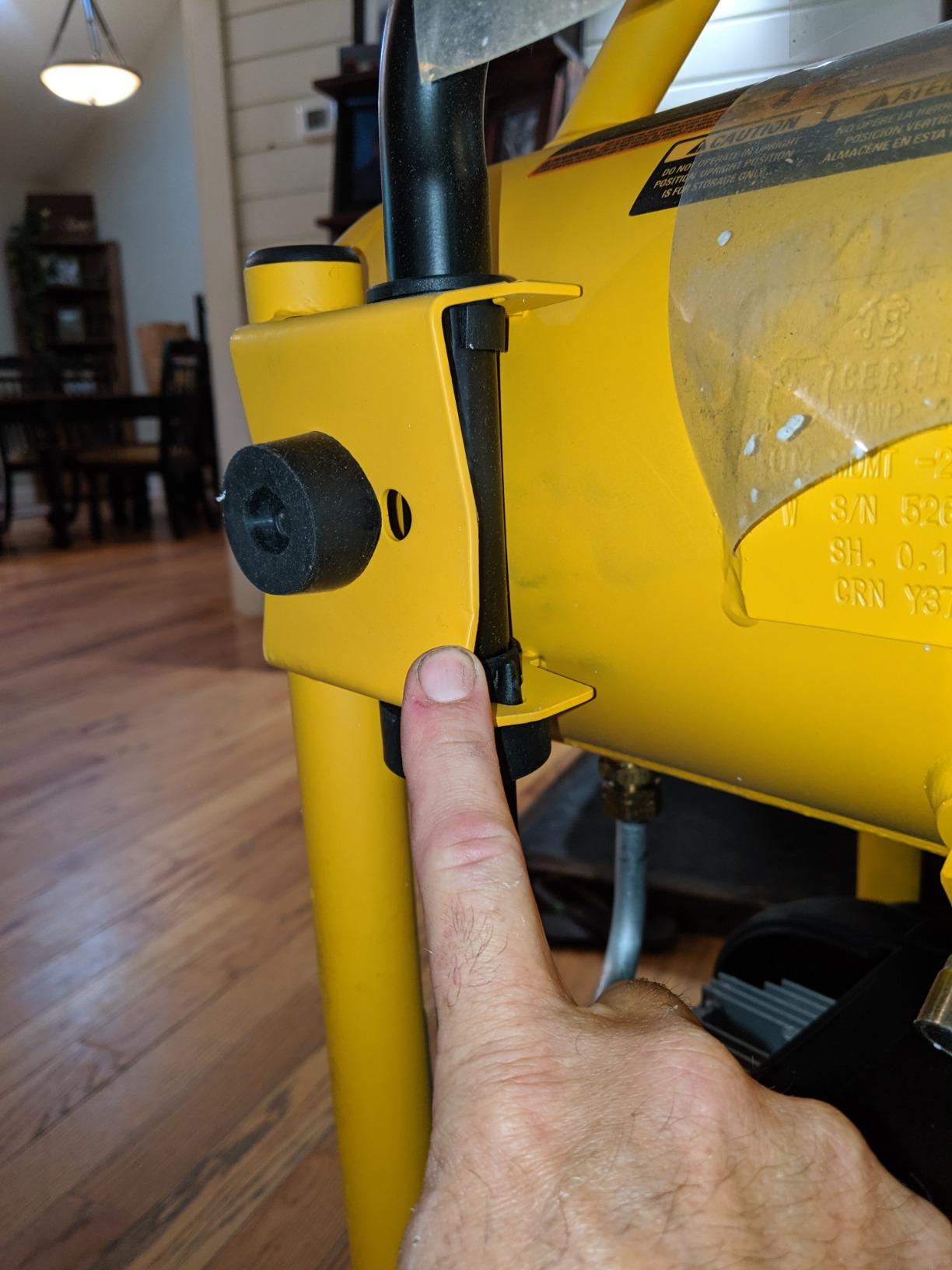
The 10 inch non-flat pneumatic tires roll over rough garage floors, and the unit can be stored upright, which saves floor space in a tight bay. Dimensions are 28 by 24 by 16 inches.
Why High Tank Pressure Helps Paint Jobs
A spray gun is a demand device. It opens, it pulls air, and the receiver pressure drops. A receiver holding 225 PSI gives far more reserve per gallon than one holding 150, so the drop is smaller and the finish stays even across a coat. That is the technical reason this unit performs well with guns.
It also suits spray setups that use inline regulators downstream, since there is more pressure to lose before the gun. For a garage that does nailing, sanding and painting, the airflow and durability combination is hard to argue with.
What To Know Before You Buy
It is 88 pounds, heavy for a handheld unit, and the hand carry design is awkward over distance. Also note the regulator tops out at 150 PSI even though the tank holds 225, so your working pressure ceiling at the gun is the regulator, not the tank.
Two more things: it needs a full 15 amp dedicated circuit, and the three-in-one couplers do not accept high flow fittings even though they are advertised as high flow. Bring your own coupler if you need full flow to a spray gun.
7. Stealth 12 Gallon SAQ-11215 – Best Large Quiet Tank for Attached Garages
Stealth 12 Gallon Ultra Quiet Air Compressor, 1.5 HP Oil-Free Peak 150 PSI 68 Decibel,5 CFM @ 40 PSI 4 CFM @ 90 PSI Silent Portable Long Life Electric Air Compressor W/Wheel for Garage
4 CFM at 90 PSI
12 gallon tank
68 dB
1.5 HP induction motor
Pros
- 68 dB at 12 gallons of capacity
- 4 CFM at 90 PSI runs a spray gun
- Limited lifetime warranty
- 1000 hour life cycle rating
Cons
- Heaviest unit in the roundup at 95 pounds
- Lowest average rating here at 4.2
- Some reliability reports in long term use
Stealth combines a 12 gallon tank with a 68 dB rating, which is an unusual pairing. The air reserve of a 12 gallon receiver is what painting needs, and the noise level is what makes an attached garage workable. Owners doing interior projects mention this balance often.
Output is 4 CFM at 90 PSI and 5 CFM at 40 PSI from a 1.5 HP induction motor, with peak pressure of 150 PSI. That supports a conventional spray gun for panel work, and it will not support a large HVLP gun plus a sander at the same time.
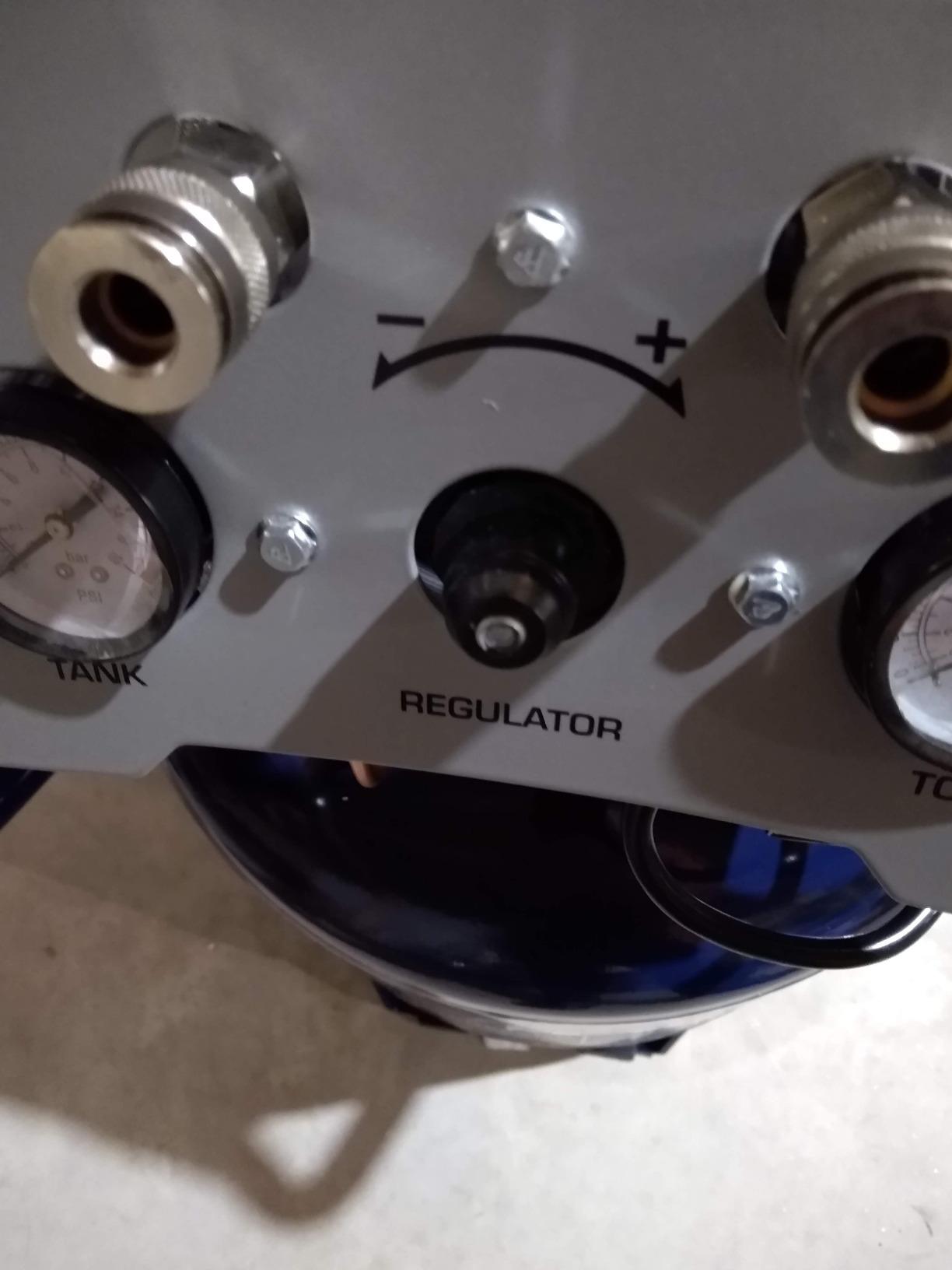
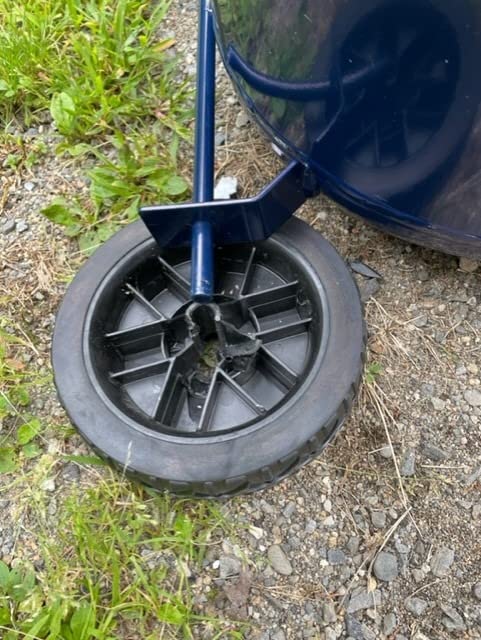
The limited lifetime warranty is a genuine differentiator on paper and the oil-free pump with a 1000 hour life cycle rating keeps maintenance simple. The Q235B steel tank and 7 inch rubber wheels are built for a working shop floor.
Take the spec sheet with a little care. The listing shows a 50 amp maximum current and a 150 bar maximum pressure, both of which are almost certainly data errors rather than real values, so confirm the electrical and pressure details in the manual before you plan a circuit around it.
Is The Quiet Output Real For Painting
At 68 dB it sits alongside the California Air Tools unit, and the difference is tank size rather than noise. If your priority is a full car panel plus the ability to keep working nearby, this is the combination. If noise is your only priority, a smaller quiet unit will do more for less.
Because it is oil-free, add the same moisture management kit you would on any oil-free unit. A 12 gallon receiver produces enough condensate that skipping a separator is the fastest route to a bad finish.
What To Know Before You Buy
It weighs 95 pounds, the heaviest in this roundup, so plan a permanent home for it near the paint area. The average rating of 4.2 is the lowest here, with a meaningful share of one-star reviews, so expect the warranty relationship to matter more than it would with a stronger reviewed model.
It also has the least established service network of the brands in this list. If you want a machine you will not think about for a decade, the DEWALT in this list has the longer track record.
8. ECOMAX 6 Gallon Pancake – Best for Trim, Furniture and Stenciling
ECOMAX Air Compressor 6 Gallon 150 PSI Pancake Portable Oil-free Tank with 10 PCS Accessories Kit
1.5 HP motor
6 gallon pancake tank
150 PSI max
75 dB
Pros
- Excellent 4.7 star average across owners
- Only 34 lbs with a flip-up carry handle
- 25 ft hose and 10 piece kit included
- 150 PSI ceiling suits most detail guns
Cons
- Airflow figure in the listing is unreliable
- 75 dB is louder than the quiet series
- Newer brand with a shorter service history
This is the one to buy if your painting is furniture, trim and craft work rather than car panels. The 6 gallon pancake format with a flip-up carry handle means you can carry it to the work instead of bringing the work to it, and at 34 pounds it is one of the easiest to move here.
The 1.5 HP motor with a 150 PSI maximum gives you more working pressure than most pancake compressors offer, which matters for detail guns that want a steady feed. Dual gauges and dual quick couplers mean you can run two tools and still read tank pressure at a glance.
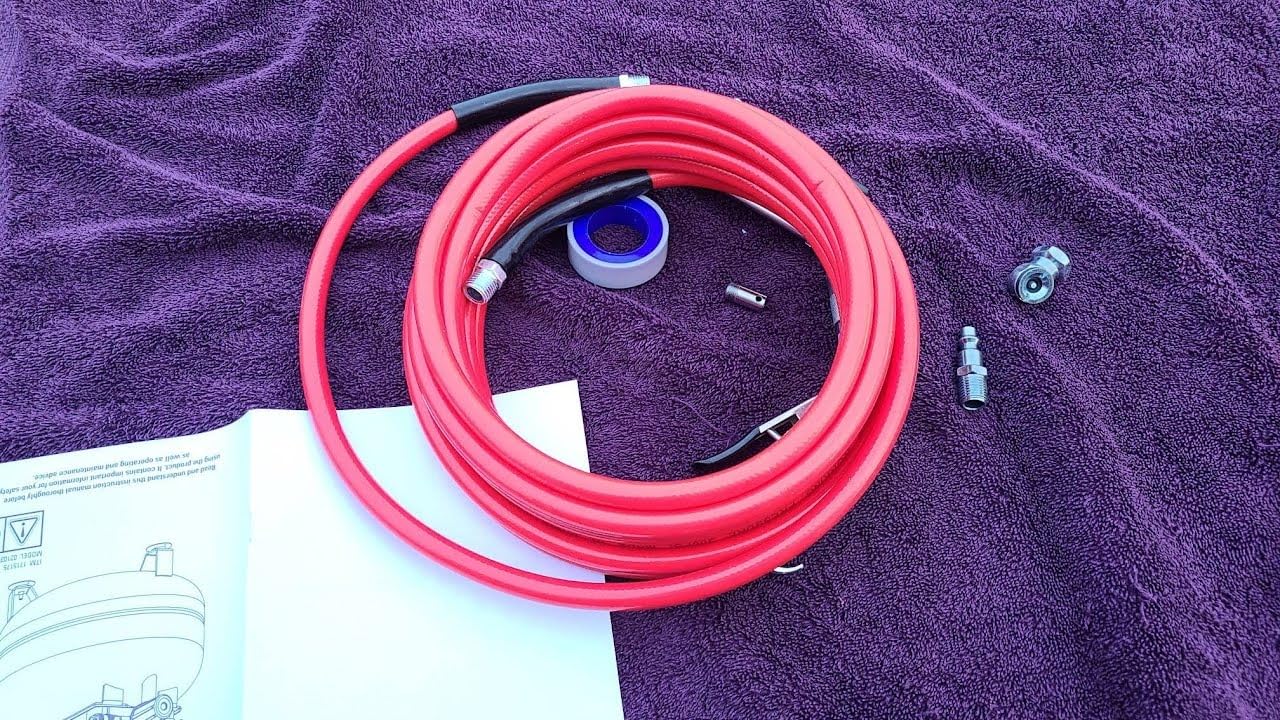
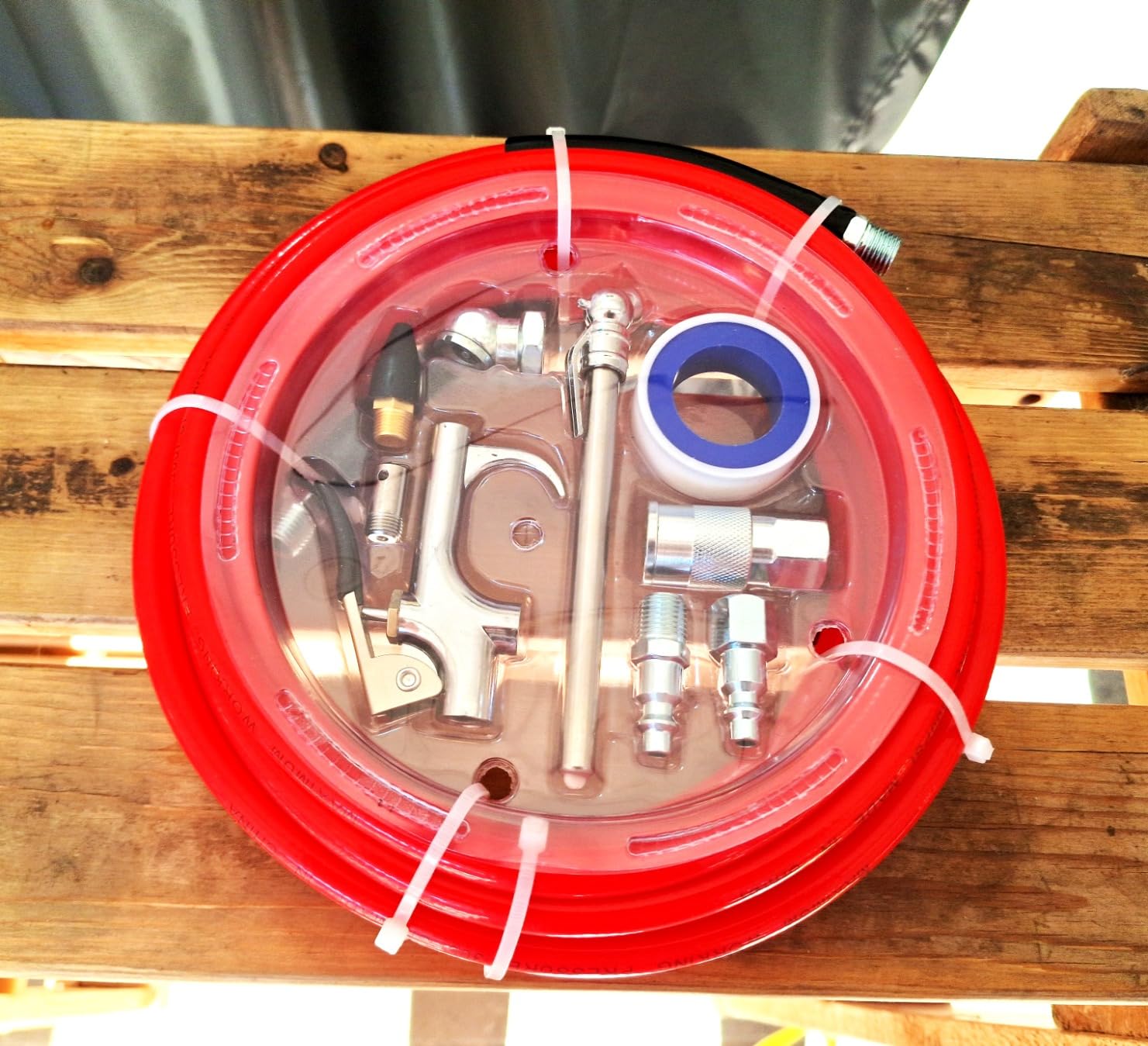
It comes with a 25 foot hose and a 10 piece accessory kit covering couplers, plugs, thread seal tape, a tire gauge, a nozzle and a blow gun, so again the first purchase covers the essentials. The oil-free pump and low voltage start motor make it easy to run in a cold garage.
At 75 dB it is louder than the quiet series units, so it is a shop compressor rather than a living room one. Keep it in the garage or the shop, not next to where you are sleeping.
What Kind Of Painting This Handles Best
Small HVLP guns, touch-up guns and airbrush work are the sweet spot. Cabinets, shelves, picture frames, trim and small furniture projects all run comfortably with a setup like this. It will not carry a full-size automotive gun through a long panel.
For better results, add a moisture separator and a filter. Pancake receivers collect condensate quickly, and a separator costs little compared with a respray caused by water in the finish.
What To Know Before You Buy
The published airflow figure on the listing is listed in cubic inches per minute and is not reliable. Judge this unit on tank size and motor class rather than on that number, and expect a real-world figure in the low to mid CFM range at 90 PSI.
It is also a newer brand with a shorter service history than the established names, and the pancake footprint is less stable than a vertical or hot dog design. Park it on level ground when spraying.
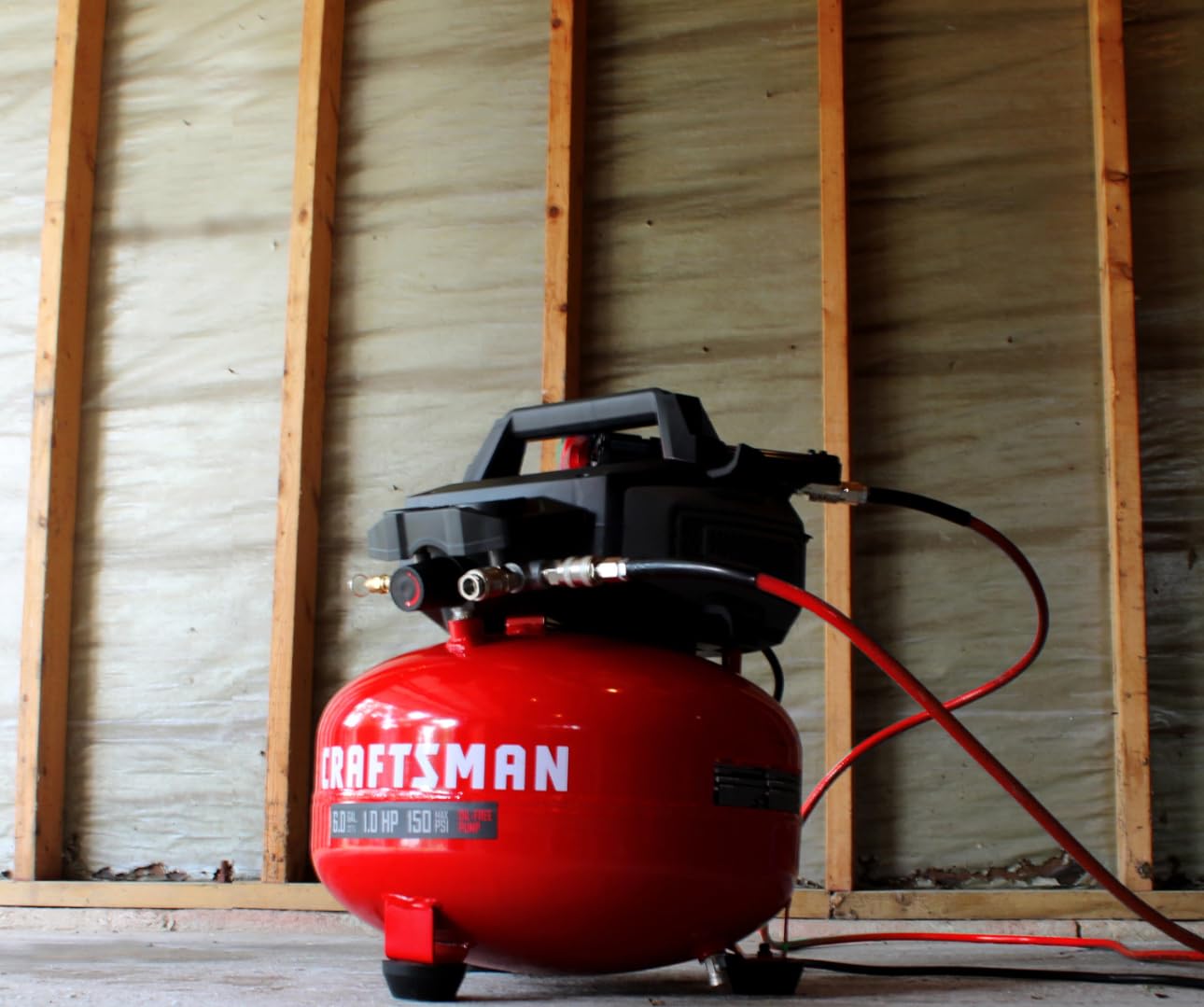
9. CRAFTSMAN 6 Gallon Pancake – Best Lightweight Pick with Established Service
CRAFTSMAN 6 Gallon 150 PSI Oil-Free Pancake Air Compressor CMXECXA02106410
2.6 SCFM at 90 PSI
6 gallon pancake tank
150 PSI max
1.0 HP motor
Pros
- Lightest 6 gallon option at 30.8 lbs
- Established brand with US based service
- Dual quick couplers and oil-free pump
- Low voltage start for cold garages
Cons
- Loudest unit here at 82 dB
- Only 1.0 HP motor and 2.6 SCFM at 90 PSI
- No hose or accessories included
CRAFTSMAN is the name on this list with the deepest retail service network, and that matters when you want parts, advice or a replacement in five years rather than five months. The 1 year limited warranty is short, but the company behind it is one people trust for service.
Specifications: a 1.0 HP oil-free motor, 2.6 SCFM at 90 PSI, a 6 gallon pancake tank and a 150 PSI maximum. The oil-free pump and low voltage start motor keep it simple to run and easy to start on a cold morning.
At 30.8 pounds it is the lightest 6 gallon unit here, and the dual quick couplers let you run a second small tool while the first is still going. Dimensions of 15.8 by 16.4 by 17 inches mean it stores on a shelf rather than a floor.
What it does not do is spray. 2.6 SCFM at 90 PSI will run a brad nailer, a stapler and inflation all day, but a spray gun is at the edge of what the pump can sustain continuously.
Is This The Right Pick For A Painting Setup
Only as a support machine. It is well suited to blowing dust off panels, inflating tires before a car goes up on a lift, running a detail air tool and handling cleanup after spraying. As your primary paint compressor, it is undersized.
If your painting is limited to trim and touch-ups, this works. If you plan to spray a car, pair it with a larger unit and treat this one as the shop compressor that never stops running.
What To Know Before You Buy
It is the loudest unit in this roundup at 82 dB, noticeably above the 60 to 70 dB models here. In an attached garage that is a real consideration for neighbours and for your own comfort over a long session.
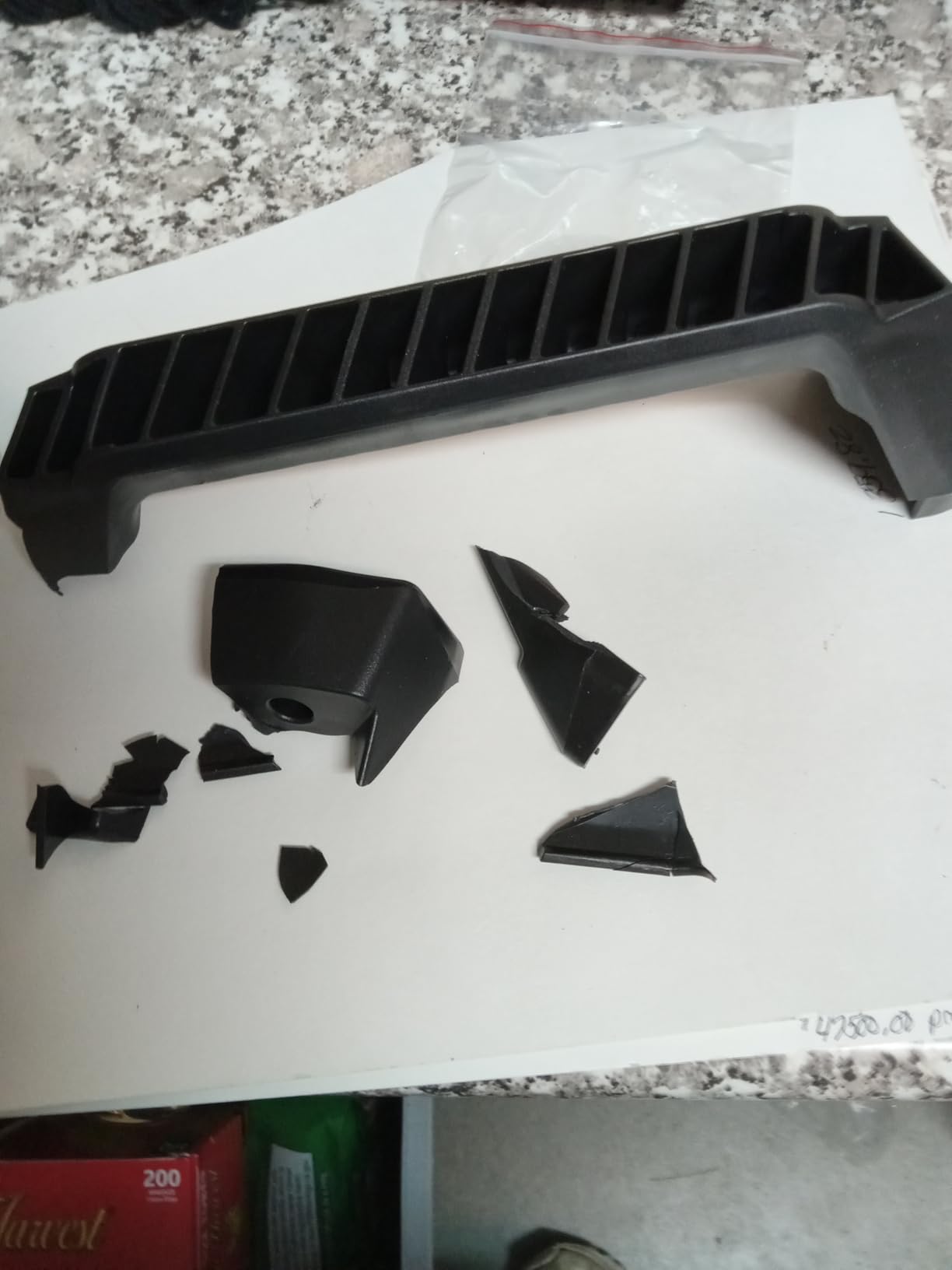
No hose or accessories are included, so budget for a 25 foot hose and fittings. A few owners reported broken handles or damage on arrival, so inspect the unit before the first run and keep the packaging in case a return is needed.
10. VEVOR 13 Gallon 66 dB – Best Large Quiet Tank, With a Caveat Worth Reading
VEVOR 13-Gallon Air Compressor, 2HP, 4.6 SCFM@90PSI, Oil-Free Tank, 66dB Quiet Operation, Ideal for Tire Inflation, Woodworking, Auto Repairs, and Spray Painting (Maximum Pressure 125 PSI)
13 gallon vertical tank
66 dB
125 PSI max
2 HP oil-free motor
Pros
- Quietest rating for a 13 gallon tank at 66 dB
- Large receiver holds a lot of reserve air
- 71 lb weight is manageable for the capacity
- Fast fill in about three minutes
Cons
- Advertised airflow is far above the real figure
- Thermal cutouts reported under sustained use
- No UL or CSA certification reported
The quiet number here is the reason to keep reading. At 66 dB this is a low noise level for a 13 gallon compressor, and a 13 gallon receiver is real reserve air for spray work. If your garage is attached and you want a large tank, that combination is unusual.
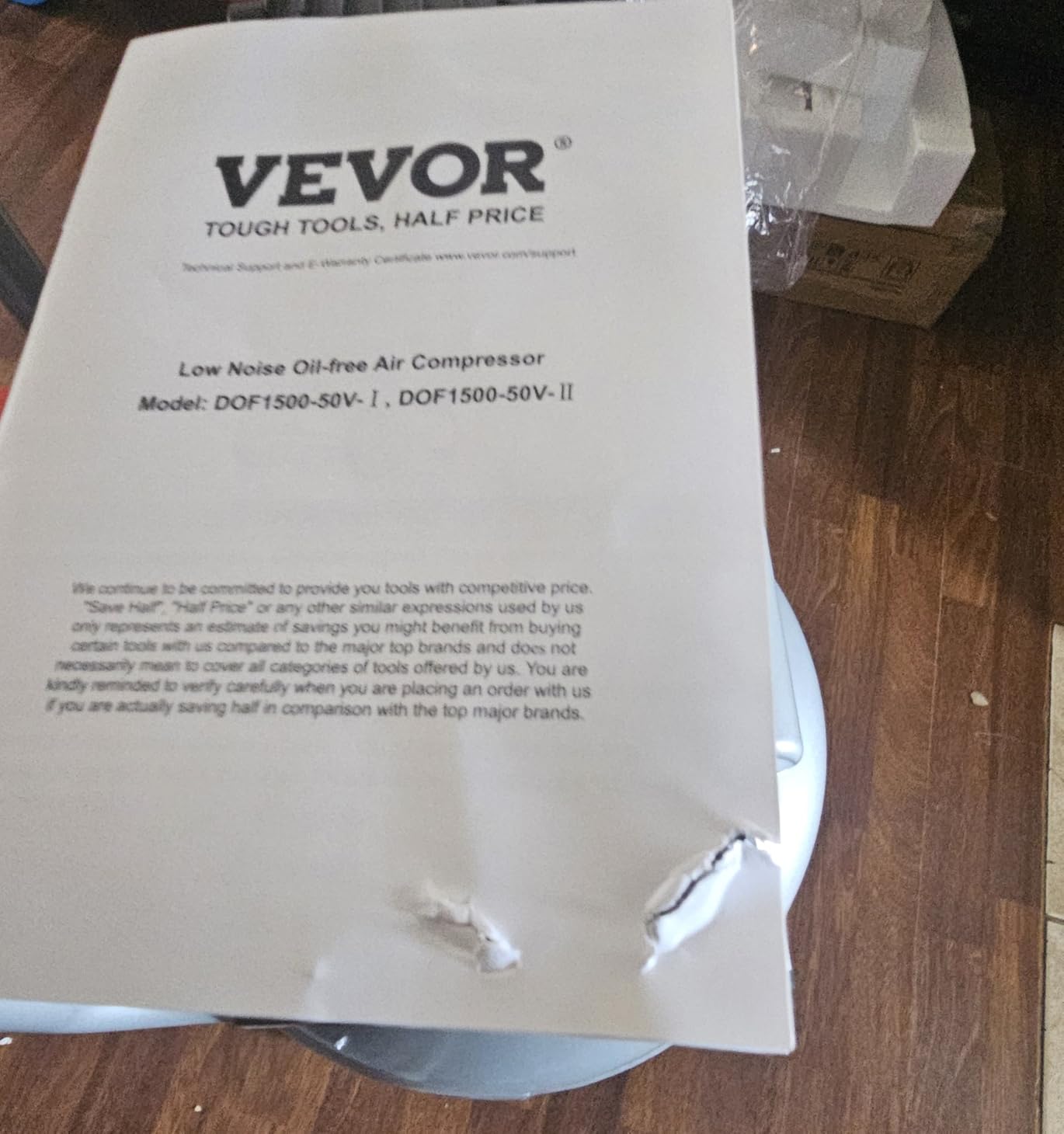
The problem is the airflow claim, and you should know about it before you buy. The listing advertises 4.6 SCFM at 90 PSI, and the manufacturer acknowledged in customer questions that real continuous output is closer to 2.7 CFM, with the 2 HP motor behaving more like a 1 to 1.25 HP continuous unit.
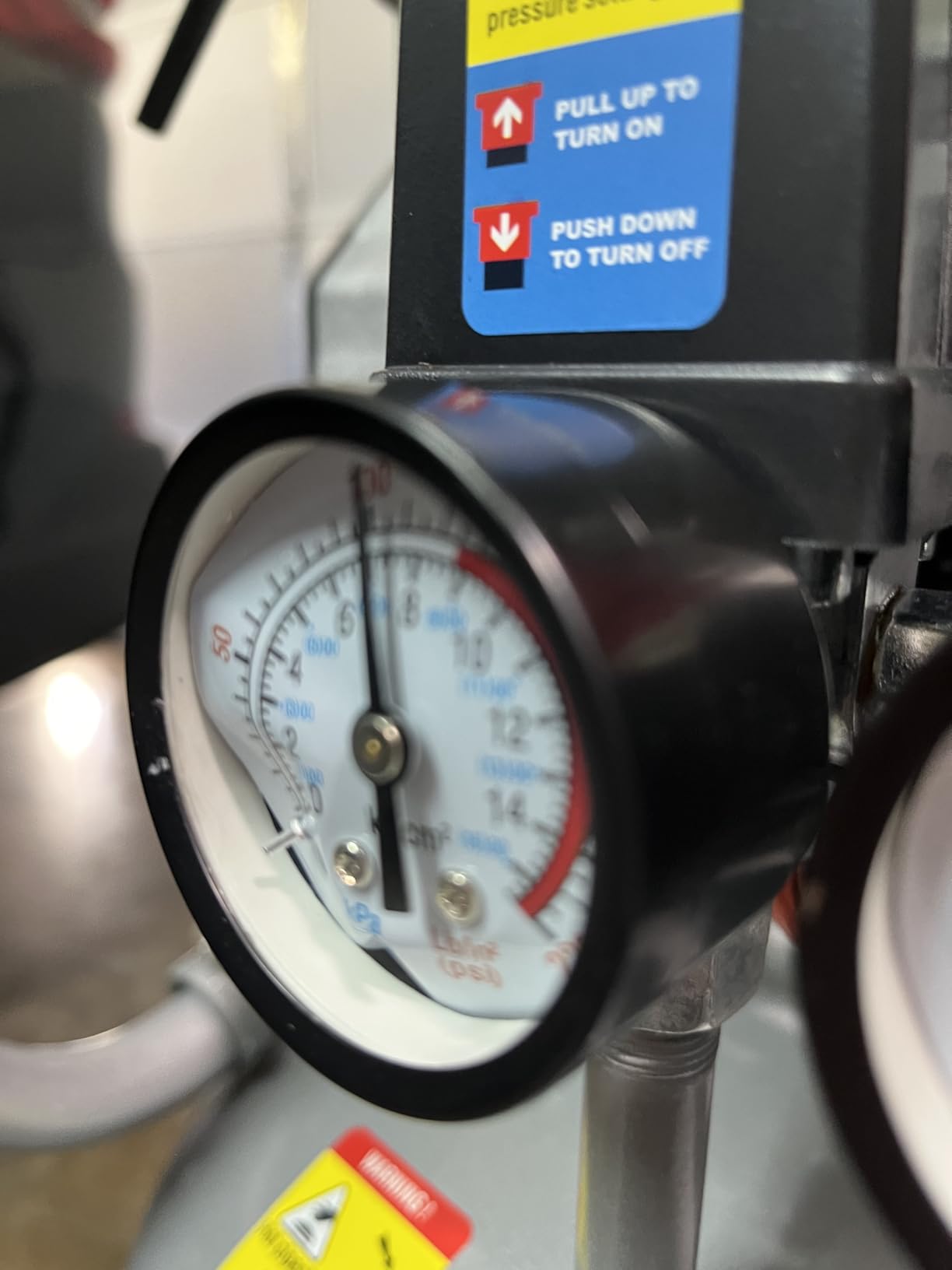
That gap explains the other common complaint: owners report the unit cutting out on thermal overload and needing 20 to 30 minutes to cool before it repressurises. If you plan to hold a spray gun open, you are asking this compressor to do the one thing it struggles with.
The positives are real. A fast fill of roughly three minutes, 7 inch reinforced wheels, dual pressure gauges and an oil-free pump that needs no maintenance. At 71 pounds and 17.5 by 16.5 by 33.3 inches it is easier to move than its capacity suggests.
How To Buy This One Safely
Plan on roughly 2.7 CFM at 90 PSI and size your spray gun to that number, not to the listing. It will run small guns and short bursts well. Long passes with a large conventional gun are where the thermal cutouts appear.
Check the electrical setup carefully on arrival, and be aware that no UL or CSA certification is reported for this unit. If a certified build matters to you, this is not the one.
What To Know Before You Buy
Support is the other issue. Owners describe partial refunds offered instead of replacement units, which is a poor outcome when a heavy vertical compressor has arrived damaged. Shipping damage on this model is reported often enough to plan for it.
Against that, the 13 gallon tank and 66 dB rating are genuinely good numbers for the money. If you buy it, buy it for air reserve and quiet operation rather than for airflow, and keep expectations matched to the real output.
How to Size a Compressor for Painting: The CFM Math
The sizing rule is simple enough to run in your head, and it starts with your spray gun’s rated CFM at the pressure you plan to run. Take that number and multiply by 1.5. That gives you the compressor CFM at 90 PSI you need to run the gun with headroom, plus margin for hose losses and a fluctuating receiver.
Next, check the tank. A tank does not create airflow, it stores air, and storage is what prevents the pressure drop that ruins a finish. For panel work, 20 gallons or more gives you the reserve to keep the pressure steady between passes. Smaller tanks are fine for trim and touch-up work where you are spraying in short bursts.
Then confirm the duty cycle. A compressor rated for continuous duty suits a working shop. A duty-cycle-rated machine is fine for someone who sprays occasionally and spends the rest of the week nailing. Match the machine to how often the pump will actually run, not to the job you do once a year.
Finally, think about the rest of the garage. A DA sander, an impact wrench and a spray gun are all competing for the same pump. If you want to run tools alongside a gun, add the tool CFM to your gun number before you apply the buffer. Our portable compressor guide has more on matching machines to the tools you actually own.
Oil-Free vs Oil-Lubricated Compressors for Paint Jobs
Oil-free wins on air purity, and for painting that is the deciding factor. No pump oil means no risk of oil carryover into the tank, the regulator and the spray gun, where it would show up as fisheyes and adhesion problems on the finish. Every unit in this roundup is oil-free for that reason.
The tradeoff is lifespan and cost. Oil-lubricated cast iron pumps, particularly belt driven units, are the machines that last decades under heavy use. Oil-free piston pumps are lighter, quieter, cheaper to maintain and, forum buyers repeatedly report, shorter lived when run hard every day.
There is a second oil-free issue worth naming. Without oil to lubricate and seal the cylinders, the valves and rings wear faster, and the gap between maximum and rated PSI tends to widen over time. If you paint several cars a week, plan on replacement and budget for it. If you paint a car each month in a home garage, oil-free is the right call.
Moisture Management: Filters, Separators and Drain Valves
Water in a spray line is the most common cause of a ruined paint job, and it costs little to prevent. The setup is a three-part chain: a moisture separator at the tank, a coalescing filter closer to the gun, and an auto drain valve on the tank so you never have to remember to drain.
A separator removes bulk liquid water and oil at the tank outlet. A coalescing filter then catches the fine droplets and aerosol that slip past, which is what actually causes spotting in a finish. Mount the filter as close to the gun as practical, and clear the water from it before every session.
Add a downstream regulator to set gun pressure independently, and check for pressure drop over your hose length. Longer and smaller-bore hoses cost you pressure at the gun, which is another reason a compressor with a pressure ceiling feels weak in practice. Drain the tank manually for the first few weeks with any new compressor, then switch to an auto drain valve once you trust the unit.
110V vs 220V and Garage Noise Planning
Electrical requirements are where a lot of paint-shop plans go wrong. A compressor pulling 2 HP on 110 volts wants a dedicated 15 amp circuit, not a shared outlet with a welder or a space heater. Running two loads on one circuit is the standard cause of nuisance tripping mid-spray.
Anything at 3 HP or above generally belongs on 220 volts with its own breaker. If your garage has 220 volt service available, that opens up larger two-stage and belt driven machines that most homeowners skip. If it does not, 110 volt oil-free compressors like the ones here are the realistic options.
Noise is a separate planning problem, especially in an attached garage. The useful reference points: 60 dB is roughly a refrigerator running, 70 dB is a clothes dryer, and 80 dB is a busy workshop you will raise your voice over. The models in the 60 to 70 dB range, such as the Makita, California Air Tools and Limodot compressors here, are the ones attached-garage owners tend to keep.
Basic mitigation helps more than most people expect. Put the compressor on a vibration pad or rubber feet, avoid running it on the same wall as a bedroom, close the interior door while it runs, and schedule spray work rather than running a gun late at night.
Frequently Asked Questions
What type of air compressor is best for painting?
An oil-free compressor that delivers at least 5 CFM at 90 PSI from a tank of 20 gallons or more is the best type for painting. CFM at 90 PSI is the number that decides whether a spray gun holds pressure; peak horsepower and maximum tank PSI are marketing figures that tell you much less. A moisture separator and a coalescing filter on the outlet are essential regardless of pump type.
What size air compressor do I need for painting a car?
For a car, look for a 20 gallon tank or larger with 5 CFM or more at 90 PSI. Tank size does not create airflow, it stores air, and that stored air is what stops the pressure drop that causes orange peel and runs. Small 6 gallon pancake compressors work for trim and touch-up work but will not carry a spray gun across a full panel.
How much CFM do I need for spray painting?
Take your spray gun’s rated CFM and multiply it by 1.5 to get the compressor CFM at 90 PSI you need. That buffer covers hose losses and receiver pressure fluctuation. A small detail gun might ask for 2 CFM while a conventional automotive gun asks for 4 or more, and a large HVLP gun can ask for 7.
Is an oil-free compressor good for painting?
Yes, and it is the safer choice. An oil-free pump removes the risk of pump oil reaching the tank, regulator and spray gun, where it causes fisheyes and adhesion problems in the finish. The tradeoff is lifespan, because oil-lubricated cast iron pumps generally last longer under heavy daily use, so an oil-free unit is better suited to intermittent home garage work.
Do I need 220V for a garage air compressor?
A compressor around 2 HP runs on 110 volts but needs a dedicated 15 amp circuit rather than a shared outlet. Units at 3 HP and above generally need 220 volts with their own breaker. If your garage has 220 volt service available, you gain access to larger and quieter units that most homeowners skip.
Final Verdict: Best Garage Air Compressors for Painting in 2026
For most garages, the California Air Tools 10020C is the best garage air compressor for painting because it pairs 5.3 CFM at 90 PSI with a 70 dBA noise level, a combination no other unit in this roundup matches. That pairing covers conventional spray work without waking the neighbours, and its review history is the deepest of the group.
Pick the Klutch 20-gallon if tank reserve and a 175 PSI ceiling matter more to you than noise, and pick the Makita MAC210Q if your painting is trim, cabinets and touch-ups and you want to run it indoors. Every one of these needs a moisture separator, a coalescing filter and a properly sized hose before paint touches it.
Whatever you choose, measure your spray gun’s CFM first, then buy a compressor that clears it with the 1.5x buffer. That single habit prevents most of the disappointments people report with these machines.