
A wedding is ten to twelve hours long, you get one pass at most of it, and there is no reshoot button. That single fact drives every recommendation in this guide to the best full frame cameras for wedding photographers. We spent weeks reading owner reviews, spec sheets and working photographer threads on bodies from Canon, Sony, Nikon and Panasonic, then compared them on the things that actually decide whether a ceremony survives: dual card slots, battery endurance past hour nine, autofocus that holds a face in candlelight, and a body you can carry without wrecking your wrists.
Our team has shot enough events to know where cheap gear gives out. A full-frame mirrorless camera handles the reception far better than a crop sensor, but two of the ten bodies here ship with a single card slot, and that is a decision you have to make deliberately rather than discover at hour six. If you want the broader picture on bodies outside this list, our guide to the best full frame mirrorless cameras covers general-purpose use too.
Below you will find ten bodies, ranked by wedding-day suitability rather than by megapixel count. Each one gets a straight verdict on who it suits, what it costs you to live with on a twelve-hour timeline, and where it will let you down. Updated for 2026.
Table of Contents
How We Picked the Best Full Frame Cameras for Wedding Photographers?
We treated dual card slots as close to mandatory. Practitioners describe redundancy as non-negotiable, because a dying card or a body failure mid-ceremony is the scenario that ends a business relationship. Only two bodies in this roundup fail that test, and both say so loudly.
Next came battery endurance, then autofocus in dim rooms, then weight. A body that drains a pack in three hours needs four or five spares in the bag, and nobody wants to change batteries between the first dance and the parent speeches. We also weighed buffer depth for the run-and-gun moments, video capability for shooters who deliver film alongside stills, and how much of a learning curve the menu system hides.
Top 3 Best Full Frame Cameras for Wedding Photographers (October 2026)

Canon EOS R6 Mark II
- 40 fps electronic burst
- Dual UHS-II SD slots
- 24.2MP sensor
- 5-axis IBIS

Quick Overview: Every Body in the Roundup In 2026
| Product | Specifications | Action |
|---|---|---|
| Canon EOS R6 Mark II |
|
Check Latest Price |
 Sony Alpha 7 IV Sony Alpha 7 IV |
|
Check Latest Price |
| Canon EOS R5 |
|
Check Latest Price |
 Sony Alpha a7S III Sony Alpha a7S III |
|
Check Latest Price |
 Nikon Z 8 Nikon Z 8 |
|
Check Latest Price |
 Nikon Z 6 III Nikon Z 6 III |
|
Check Latest Price |
 Sony Alpha a7R V Sony Alpha a7R V |
|
Check Latest Price |
 Nikon Z 7II Nikon Z 7II |
|
Check Latest Price |
 Panasonic LUMIX S5II Panasonic LUMIX S5II |
|
Check Latest Price |
 Canon EOS RP with 24-105mm Canon EOS RP with 24-105mm |
|
Check Latest Price |
1. Canon EOS R6 Mark II – Best Overall for Weddings
Canon EOS R6 Mark II Mirrorless Camera (Body Only)
24.2MP full-frame CMOS
40 fps electronic burst
Dual UHS-II SD slots
5-axis stabilization
Pros
- 40 fps electronic burst catches every ceremony moment
- Class-leading subject detection across people and vehicles
- 6K oversampled uncropped 4K up to 60 fps
- Only 1.3 lb with 5-axis stabilization
- Sharp 3.69 million dot 120 fps viewfinder
Cons
- 24.2MP leaves less cropping latitude than 45MP bodies
- No built-in flash so reception work needs an external strobe
- Dual SD slots rather than CFexpress limit top bitrates
The R6 Mark II is the body we hand to a second shooter who has never touched mirrorless. Everything on the checklist a wedding day demands is present, and nothing on it is a compromise you will notice mid-event. Two UHS-II SD slots mean every frame is written twice, a 40 fps electronic burst catches the processional without cropping to a lower resolution, and the whole package weighs 1.3 lb.
Subject detection is the quiet star here. Owners consistently praise how it picks the right person out of a crowded getting-ready room and holds head, face and eye through a dance-floor scrum. On r/WeddingPhotography the verdict on this body is blunt: for weddings, get the R6 II over the R8 if you can, because dual card slots give you redundancy and in-body stabilization keeps your shots steady.

The 0.5-inch OLED viewfinder refreshes at 120 fps and holds up in bright outdoor ceremonies, which matters more than raw resolution does for most shooters. Video is a bonus rather than the reason to buy: 6K oversampled uncropped 4K at up to 60 fps, and up to six hours of continuous Full HD recording for long events.
Where it gives ground is the sensor. At 24.2MP you have less room for heavy cropping than a 45MP body gives you, and the dual SD slots cap buffer headroom at the highest bitrates. There is no built-in flash either, so budget for a strobe if you are shooting the reception without off-camera lighting.

What you gain on a wedding day
Redundancy, speed and endurance. The dual UHS-II slots are the reason this is the safest pick of the ten. Forty frames per second covers the moments where a single frame would be luck, and the lightweight body means the second shooter in your pair is not the one struggling by the fifth hour.
The whole-body tracking works on people and animals, which sounds like marketing until you watch it reacquire a subject walking out of a doorway. Video runs cool for long stretches, which removes the clipping anxiety that shadows hybrid shoots.
Where it disappoints
The 24.2MP sensor is the trade. If your business is large-format wall pieces, heavy cropping of group shots, or delivering a lot of detail crops to a couple, a 45MP body serves you better. The R5 or the Nikon Z 8 give you that headroom.
High-speed electronic shooting can show rolling shutter on fast lateral motion, so a spinning dance-floor twirl can skew. Battery life is unremarkable next to class leaders, which means three or four spare batteries in the bag regardless of how efficient the marketing claims sound.
2. Sony Alpha 7 IV – Best Value Hybrid
Sony Alpha 7 IV Full-frame Mirrorless Interchangeable Lens Camera
33MP Exmor R sensor
759-point Real-time Eye AF
4K 60p 10-bit 4:2:2
CFexpress Type A plus SD
Pros
- 33MP files give detail and usable high ISO
- Reliable Real-time Eye AF for candid moments
- 7K oversampled 4K 30p with no pixel binning
- 5-axis stabilization steadies handheld work
- S-Cinetone profile is grade-ready out of camera
Cons
- Sony menu system is dense and takes real study
- Dual slots take CFexpress Type A or UHS-II SD
- Battery life is average with the viewfinder at high refresh
The Alpha 7 IV is the safe middle of this list. The 33MP Exmor R sensor produces files with real detail and stay usable when the reception gets dark, and Real-time Eye AF tracks a walking subject without you thinking about it. Slot one takes CFexpress Type A or UHS-II SD, slot two takes UHS-II SD, so redundancy is covered properly.
For hybrid shooters it is hard to argue with. Full pixel readout 4K 60p in 10-bit 4:2:2 across every recording format, plus 7K oversampled 4K 30p that gives you cleaner detail than the standard mode. If your couples ask for a short film as well as photographs, that headroom matters.

Owners frequently note how well the 5-axis SteadyShot system steadies handheld stills at slower shutter speeds, which shows up in dim rooms when you cannot flash. The S-Cinetone picture profile also gets praise because it produces a flatter, cinematic starting point that grades well without a heavy conversion.
The honest complaint about this body is the interface. Sony’s menu system is dense and nested, and the number of custom buttons and function assignments is genuinely confusing for a first-time mirrorless shooter. Budget an evening with the camera before a booking, not the morning of.
What you gain on a wedding day
Balanced everything. This is the body we recommend when a photographer wants one camera that handles a 12-hour day, a second set of ceremony stills, and a short highlight film without switching systems. The lens ecosystem is the deepest of any mount here too.
Sensor performance at ISO 3200 to 6400 in a coloured reception is where this body earns its slot. Files stay colourful and the noise remains workable for a print or a large screen delivery.
Where it disappoints
There is no fully articulating front-facing screen, so solo video work at arm’s length is awkward. Buffer and card write speeds also constrain very long high-bitrate 4K clips, which means a wedding film shot as one continuous take is a poor idea on this body.
Battery life is average rather than good. Reviewers report needing spares sooner than they expected, and there is no second row of trick to stretch it. Carry three minimum.
3. Canon EOS R5 – Most Versatile for High Resolution
Canon EOS R5 Mirrorless Camera (Body Only), Full-Frame Hybrid Camera, 8K Video, 45 Megapixel CMOS Sensor, DIGIC X Image Processor, Up to 12 FPS, RF Mount, Black
45MP stacked backside-illuminated sensor
12 fps mechanical plus 20 fps electronic
CFexpress Type B plus UHS-II SD
8K RAW internal
Pros
- Class-leading eye AF tracks people and animals through clutter
- 45MP stacked sensor with strong recovery latitude
- Full sensor AF coverage for precise framing
- 5-axis IBIS makes adapted non-IS EF glass usable
- 8K RAW and 4K 120p internal recording
Cons
- Battery drain is shorter than comparable DSLRs
- CFexpress Type B cards add real cost per shoot
- 8K runs warm and suits clips with breaks
- Viewfinder is hard to read in very low light
The R5 exists for the photographer whose clients want wall-sized prints and whose couples expect detail crops from every group shot. A 45MP stacked backside-illuminated sensor gives that headroom, and the 1,053-point Dual Pixel CMOS AF system with Eye Control AF is the class leader for tracking people through a busy room.
Owners describe it as effectively replacing their Canon DSLR kit. The 5-axis in-body stabilization makes adapted non-IS EF lenses handholdable, which matters enormously if you have a shelf of older glass. Canon’s colour science gets consistent praise from wedding and event professionals for skin tones.
Video capability is class-leading for a stills body: 8K 4320p RAW internally, 4K up to 120 fps, and a bright 0.76x electronic viewfinder with no lag at 12 fps. Twelve frames per second mechanical and up to twenty electronic covers almost any candid moment.
Two costs deserve a straight mention. CFexpress Type B cards are expensive and you will buy more of them than you expect, and battery life is noticeably shorter than the DSLRs this body replaced. Menus and button relocation also mean a relearning period if you are coming from long-time Canon DSLR work.

What you gain on a wedding day
Resolution you can crop. A 24MP file from the R6 Mark II cannot be pushed the way a 45MP file can, and for detail-oriented delivery this is the difference between usable and not. Dynamic range and recovery latitude also let you rescue a blown window during the reception without a raw edit.
The electronic viewfinder is bright and lag-free, so framing a fast-moving subject at twelve frames per second works the way it does in a DSLR reflex mirror. That familiarity is underrated on a day when you have no time to experiment.
Where it disappoints
Battery life is the practical problem. Reviewers report running shorter than comparable DSLRs, so a full day means at least four spare batteries, and the ones for this body are not shared with older Canon kits.
Eight K runs warm, so long takes clip. Electronic shooting at twenty frames per second fills a card fast with no buffer warning, and the viewfinder gets hard to read in genuinely dark rooms. If your work is mostly low light, look at a smaller, cleaner sensor instead.
4. Sony Alpha a7S III – Best for Low Light and Hybrid Video
Sony Alpha a7S III Full-Frame Mirrorless Camera Body Black
12.1MP sensor tuned for 4K
ISO expandable to 409600
4K 120p 10-bit 4:2:2
15+ stops of dynamic range
Pros
- Exceptionally clean files at very high ISO values
- Video autofocus stays locked through crowded rooms
- 4K 120p full pixel readout in all modes
- Outstanding viewfinder resolution and brightness
- Handles long records without overheating
Cons
- Only 12.1MP limits cropping and large prints
- No internal RAW video recording
- High bitrates need costly V90 or CFexpress A cards
- Bundled software is weak next to free Canon tools
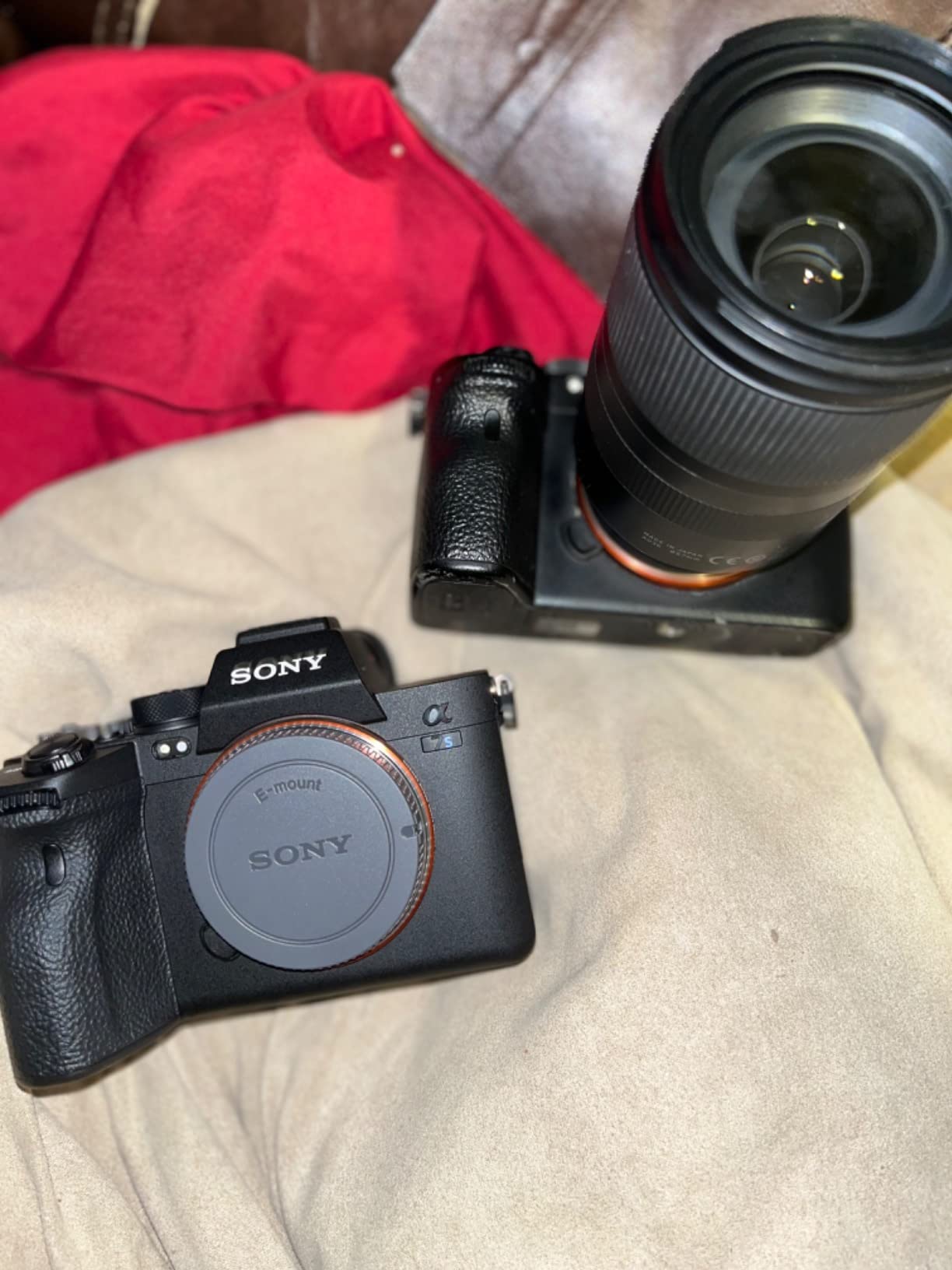
If your weddings are dark, this is the body. A 12.1MP Exmor R sensor optimised for speed and light gathers clean, usable files at ISO values that would leave visible grain on a higher-resolution body. Expandable to ISO 409600 with 15+ stops of dynamic range, it is the most forgiving camera here in a dim reception.
Reviewers rate its video autofocus as the strongest of any body on this list. Real-time Eye AF stays locked on a subject through crowds and movement, which is the difference between usable ceremony footage and unusable footage. Four K 120p in 10-bit 4:2:2 with full pixel readout in every mode sets it apart.
Heat management is another quiet win. Owners report shooting long events, including desert summer weddings, without overheating problems. The 0.9x viewfinder with 1,440,000 dots is bright and sharp enough to pixel-peep in daylight, and direct-access ISO, aperture and shutter dials speed up reception work.
The 12.1MP sensor is the cost of all that speed. Heavy cropping and large print output both suffer, and the S-Log3 and S-Cinetone profiles need real grading skill to look their best. It is a specialised tool rather than a general one.
What you gain on a wedding day
Clean high-ISO files mean you can hold a fast shutter speed in a dark room without flash. That is how you freeze a dance floor instead of blurring it, and it is the single biggest practical difference between this body and the rest of the list.
Hybrid shooters get full-frame 4K with no recording time anxiety, and AF that follows a walking subject through a crowded room. If film delivery is half your business, this is the camera that makes that part of the job comfortable.
Where it disappoints
Twelve megapixels is genuinely low by current standards. Group shots of forty people, cropped tight, will not hold up to a wall print. Plan to deliver this camera’s stills at screen size and keep the high-resolution body as your main frame.
It cannot record RAW internally, so high-quality video relies on XAVC codecs or an external recorder. High bitrates demand V90 SD or CFexpress Type A cards, and video files may need conversion for some editing software.
5. Nikon Z 8 – Best High-Resolution All-Rounder
Nikon Z 8 | Professional Full-Frame mirrorless Stills/Video Hybrid Camera
45.7MP stacked CMOS sensor
20 fps RAW plus 30/60/120 fps options
Internal 8K/60p and N-RAW
CFexpress Type B plus SD
Pros
- Z 9 class autofocus and subject detection in a 1.8 lb body
- 45.7MP stacked sensor with clean high ISO files
- 20 fps RAW with 30/60/120 fps JPEG options
- Shutterless design keeps ceremonies silent
- Skin Softening and Portrait Impression Balance aid event work
Cons
- Smaller body sheds heat faster so 8K clips run shorter
- One CFexpress Type B slot with SD as the second
- High power draw needs multiple batteries for a full day
- Extensive configuration options create a steep learning curve
The Z 8 puts flagship autofocus into a body the size of a D850. Deep learning subject detection with 493 phase-detect points, focus detection down to -9 EV and 3D tracking covers people, dogs, birds, vehicles, bikes, trains and planes. On a wedding that means the camera recognises a face in a doorway rather than hunting for it.
The 45.7MP stacked sensor delivers detail and cropping latitude with clean high ISO files, and twenty frames per second at full resolution RAW gives you real options in the run-and-gun moments. Owners also praise the portrait tools, including Skin Softening and Portrait Impression Balance, for event work.
The shutterless design with adjustable artificial shutter sound is a genuine ceremony feature. You can shoot a quiet aisle walk with no mechanical noise and still get the electronic shutter’s blackout-free view. Skin-tone rendering and Nikon’s colour science are consistently praised in reviews.
Internal 8K/60p and 4K/120p with 12-bit N-RAW and ProRes RAW future-proof the video side. Pre-Release Capture is another quiet asset, buffering frames before you press the shutter during a first dance.

What you gain on a wedding day
High resolution and flagship tracking in one package, at 1.8 lb. For a photographer upgrading from an older DSLR, that combination removes the usual compromise of choosing detail or reliable subject tracking.
Silent shooting matters more than spec sheets suggest. A shutterless body lets you work a ceremony aisle without the mechanical click that makes relatives turn around, and the 20/30/60/120 fps options cover everything from group shots to fast dance-floor bursts.
Where it disappoints
Heat. The smaller body dissipates it less well than a flagship, so long 8K clips run shorter. There is a single CFexpress Type B slot with SD as the second rather than dual CFexpress, which limits top bitrate headroom compared with bodies carrying two fast slots.
The high power draw needs multiple batteries for a full day, and the sheer number of configuration options plus a thin printed manual make for a real learning curve. Some lenses also hunt on close focus before AF locks.
6. Nikon Z 6 III – Best for Hybrid Video Work
Nikon Z6 III, Black | Full-Frame Mirrorless Stills/Video Camera with 6K/60p Internal RAW Recording | USA Model
6K/60p internal N-RAW video
4000 nit 120 fps viewfinder
CFexpress Type B and SD slots
Detection down to -10EV
Pros
- 6K/60p internal N-RAW at this price tier
- Very fast readout with essentially no rolling shutter
- Exceptionally bright 4000 nit viewfinder
- Compact at 1.5 lb yet feels sealed and solid
- Custom Picture Controls loadable from NX Studio
Cons
- Menus and dial placement take weeks to learn
- Autofocus can hesitate in very low light
- Dual slot pairing limits redundancy options
- Body only listing with no lens included
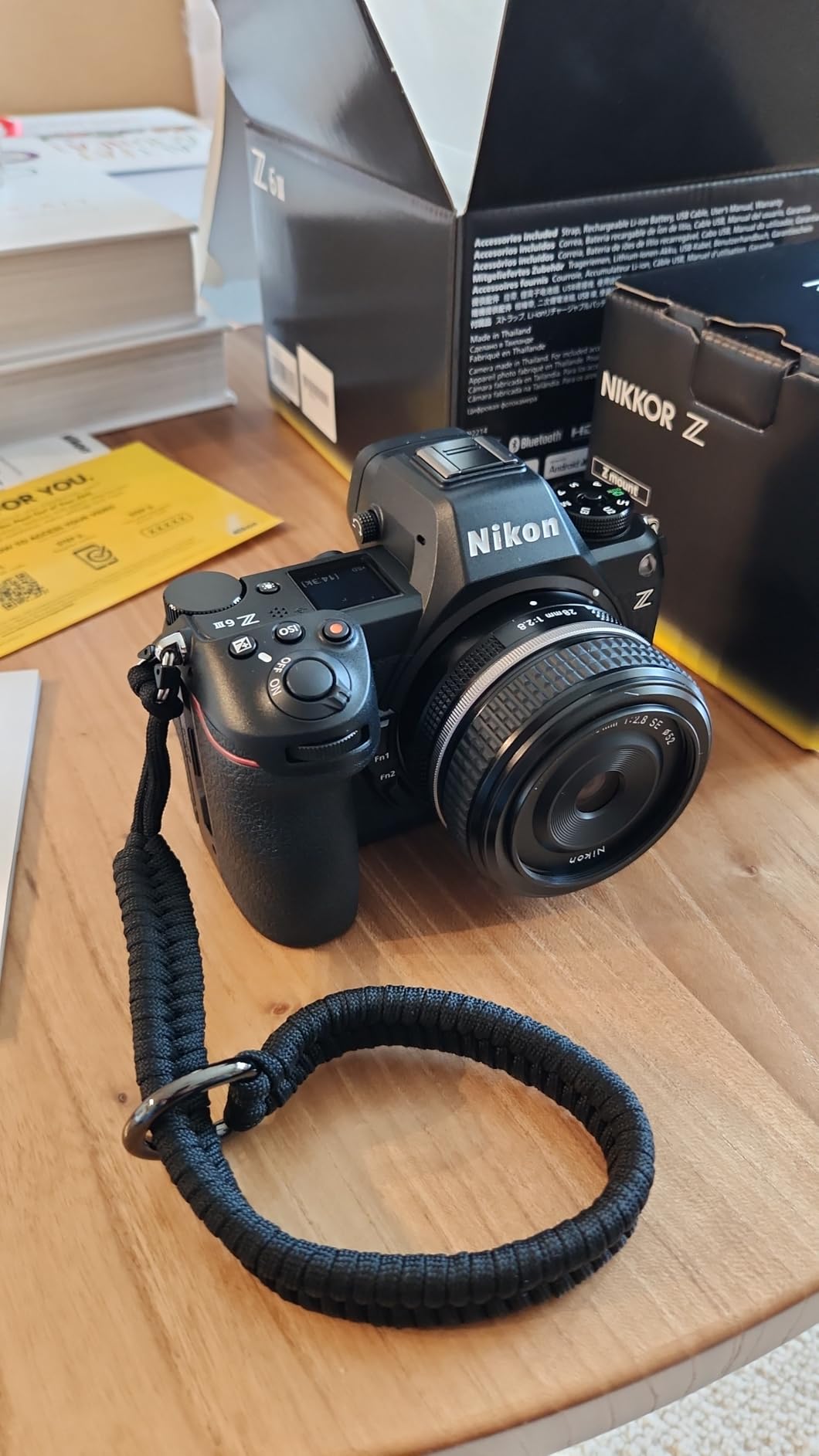
The Z 6 III is the video-first entry in this roundup. Six K at 60 fps internal N-RAW, oversampled 4K UHD, 4K/120p and Full HD/240p put it ahead of bodies costing considerably more. If a meaningful share of your weddings include a delivered film, that resolution ceiling is the reason to look here.
The viewfinder is the sleeper feature. At 4000 nits maximum brightness with a 120 fps refresh and DCI-P3 colour gamut, it stays readable in a sunlit outdoor ceremony, which is where many lesser viewfinders wash out completely.
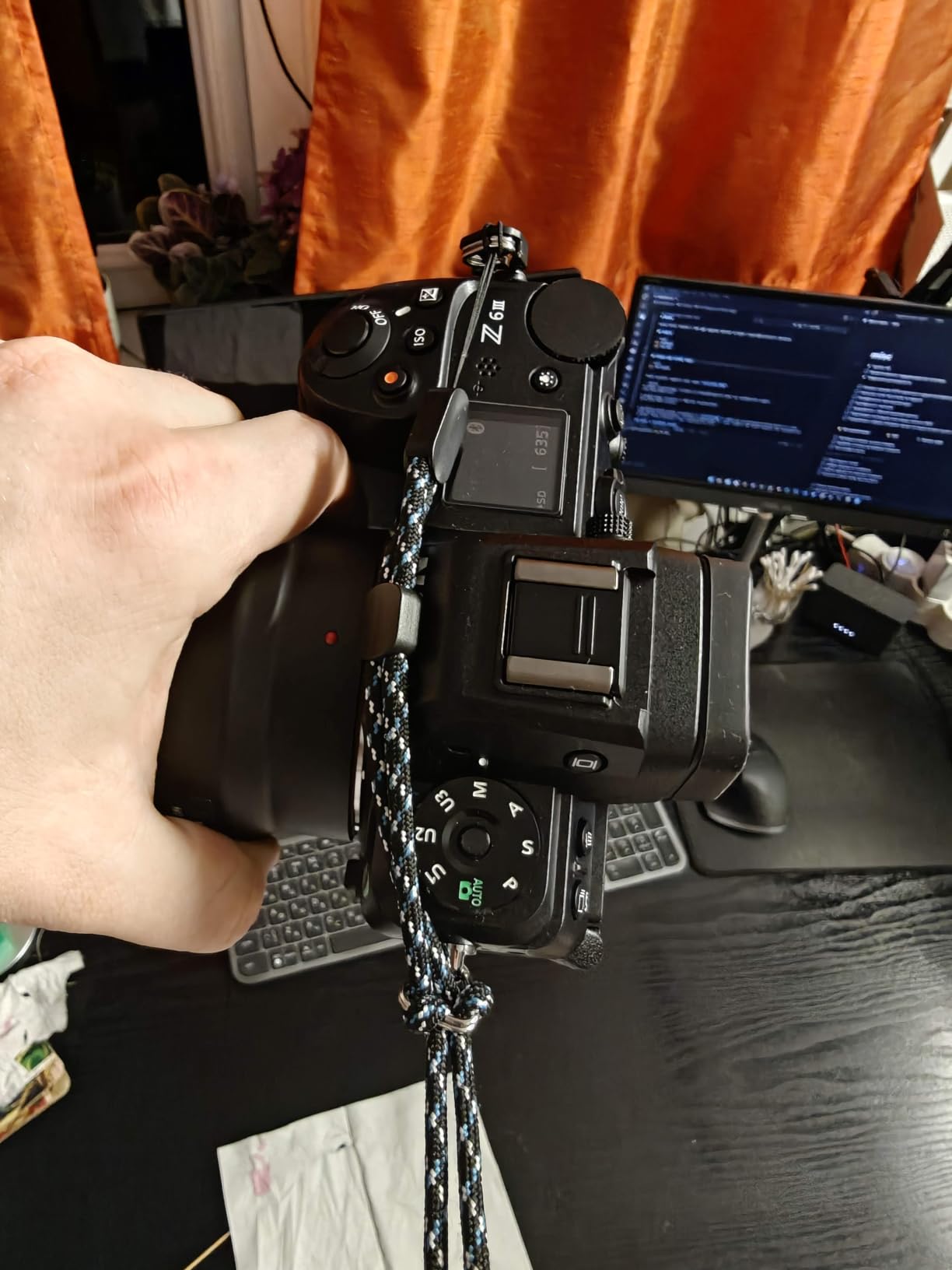
Low light performance is excellent for both stills and video, with ISO 100 to 64000 expandable to 204800 and strong files in the upper range. Multi-subject deep learning recognition picks up faces at roughly three percent of the frame, so a distant guest in a wide shot is still identified.
Continuous shooting options run up to 120 fps with pre-release capture, and the readout speed means essentially no rolling shutter on lateral motion. That solves one of the common objections to high-speed electronic shooting on a moving subject.
What you gain on a wedding day
Video headroom without a flagship budget, plus a genuinely useful high-resolution zoom for delivery. Hi-Res Zoom gives up to 2x in HD and 1.4x in 4K, which lets you reframe a ceremony shot after the fact without losing much.
The body is compact at 1.5 lb and sealed, so it suits destination weddings where luggage space is tight. USB-C constant power helps during long video blocks, and the bright viewfinder reduces squinting in daylight.
Where it disappoints
The interface is the main complaint. Nikon’s menus and control layout are complex, and the front and rear dials are awkward to find and easy to bump accidentally during a fast moment. Reviewers describe it as a weeks-long learning process.
Autofocus can be finicky in very low light, which is the one place we would have wanted more. Pairing a CFexpress Type B slot with a single SD slot also gives you less redundancy flexibility than dual SD or dual fast slots.
7. Sony Alpha a7R V – Best for 61MP Portrait Work
Sony Alpha 7R V Full-Frame Mirrorless Interchangeable Lens Camera Body
61.0MP Exmor R sensor
8-stop 5-axis stabilization
Dual CFexpress Type A and SD slots
583 frame RAW buffer
Pros
- 61MP files give exceptional detail and crop latitude
- Dedicated AI processing unit for subject recognition
- New side-hinged flip-out screen visible at any angle
- Very large buffer of roughly 583 RAW frames
- Over 9.4 million dot viewfinder with 100 percent coverage
Cons
- Only 10 fps for action compared with rivals
- Battery consumption runs roughly 25 percent above the prior generation
- Not a video-first body with rolling shutter and 8-bit limits
- CFexpress Type A cards cost more than UHS-II SD
At 61.0 megapixels the a7R V is the highest-resolution body here, and portrait and wedding photographers rate it as the ideal high-resolution stills camera. A 61MP back-illuminated Exmor R sensor gives detail and cropping latitude that smaller sensors cannot, and a dedicated AI processing unit drives next-generation subject recognition across people, animals, birds, insects, vehicles, trains and planes.
Two physical changes matter on the job. The new side-hinged flip-out screen is visible at almost any angle, which is useful for low table-top detail shots at the reception. The grip is bigger and deeper than the a7R III, and at 16 ounces the body sits well in a full day of handling.
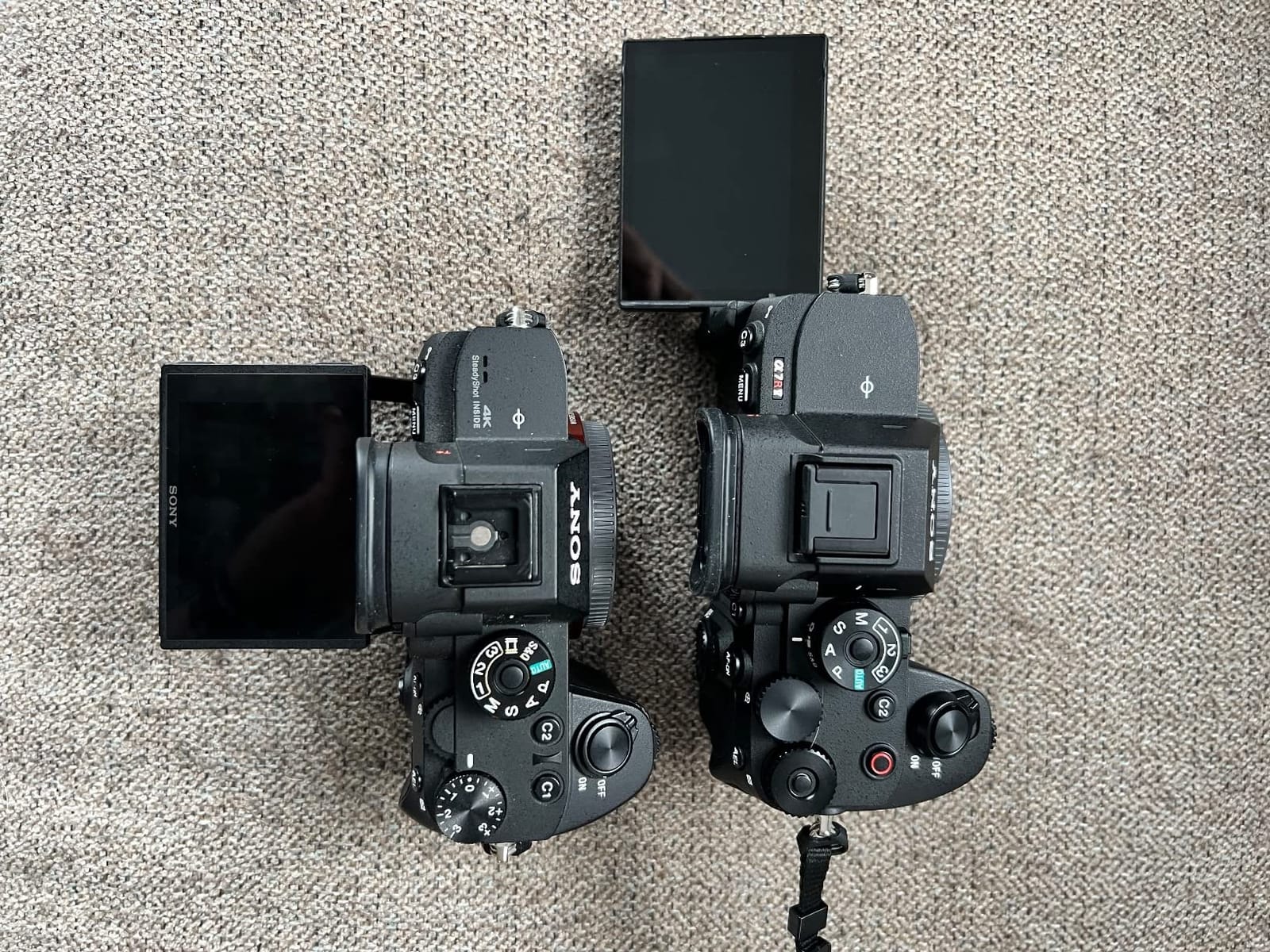
The buffer is the practical surprise. Reviewers cite roughly 583 RAW frames before it stalls, so a run-and-gun sequence at a cocktail hour does not stop the action. The viewfinder, at over 9.4 million dots with 100 percent coverage, is exceptionally sharp for checking focus on distant subjects.
Stabilization is rated at eight stops of 5-axis compensation, the highest figure of any body here, and the removal of the 29-minute clip limitation of earlier models means long ceremony records finish without cutting out.
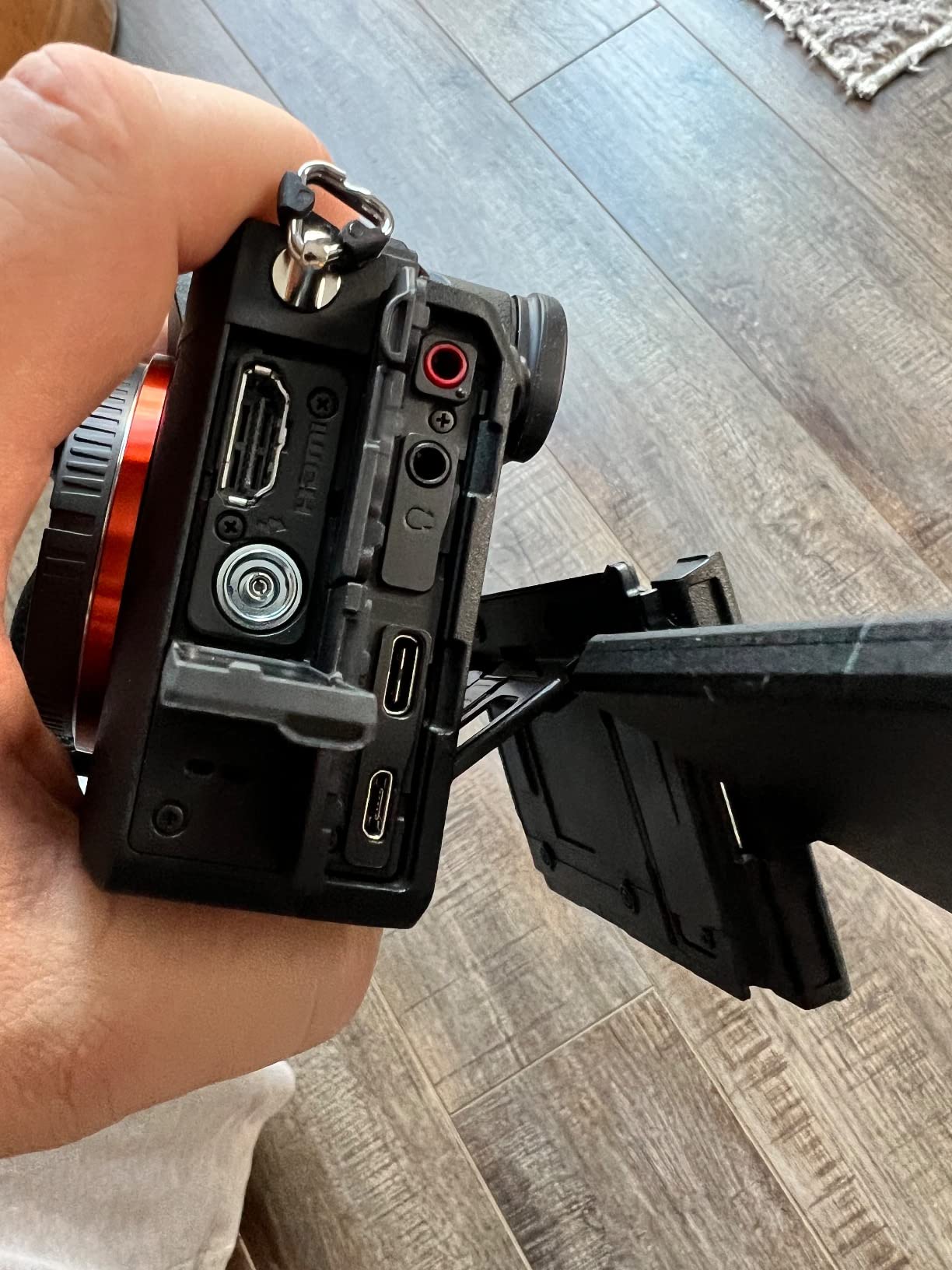
What you gain on a wedding day
Detail and flexibility. You can frame a wide group shot and crop tight to three people afterwards and still have usable resolution, which means fewer missed moments from repositioning yourself constantly.
Eight stops of stabilization also mean far steadier handheld frames at slower shutter speeds in dim rooms, and 8K 24p/25p plus 4K 60p cover a delivered film even though this is not a video-first body.
Where it disappoints
Ten frames per second is modest next to the competition, and seven frames per second if you shoot full 61MP uncompressed RAW. For ceremonies that is usually enough, for a fast dance floor it is a limit worth knowing.
Battery consumption runs roughly 25 percent above the previous generation, which adds spares to the bag. It is also not a video-first body, and CFexpress Type A cards cost more than the UHS-II SD cards that would cover most stills work.
8. Nikon Z 7II – Best for Owners of Legacy F-Mount Glass
Nikon Z 7II | Ultra-high Resolution Full-Frame mirrorless Stills/Video Camera | Nikon USA Model
45.7MP full-frame FX CMOS
493-point phase-detect AF
CFexpress plus UHS-II SD slots
3.3x deeper buffer than Z 7
Pros
- 45.7MP sensor with strong detail and cropping
- Buffer 3.3x deeper than the original Z 7
- Dual CFexpress/XQD plus UHS-II SD slots
- Weather-sealed body comfortable for long days
- Works with around 360 legacy F-mount NIKKOR lenses
Cons
- Previous-generation body with slower burst and older AF
- 4K limited to 60p without the Z 6 III N-RAW options
- Bundled 24-50mm kit lens is not especially fast
- High resolution sensor demands fast cards and deep buffer
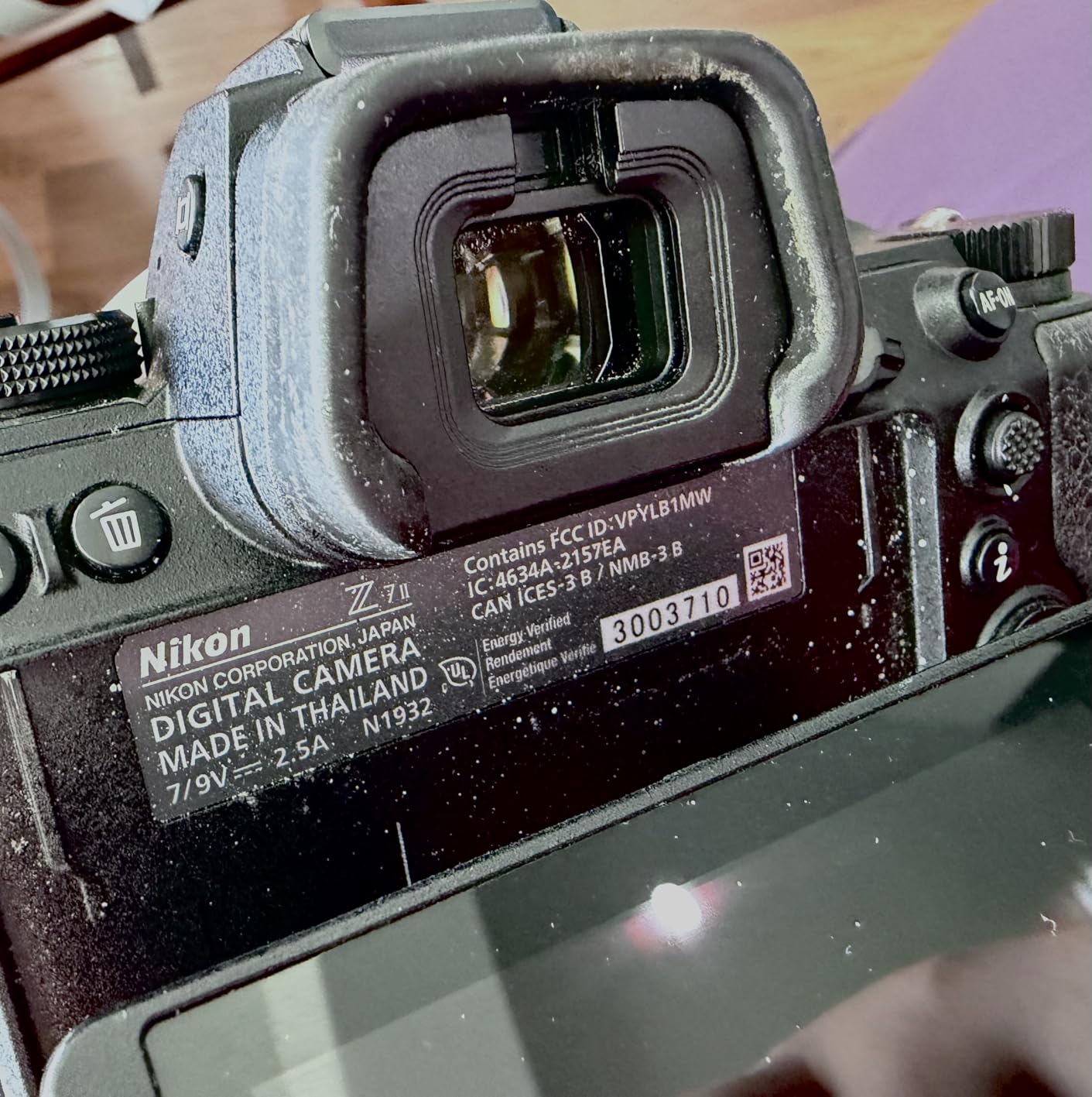
If you already own a shelf of F-mount NIKKOR glass, the Z 7II is the cheapest serious way into the Z system. Through the FTZ adapter the body works with roughly 360 legacy lenses, and owners consistently treat it as a low-cost bridge rather than a compromise. Dual CFexpress/XQD and UHS-II SD slots mean proper redundancy.
The 45.7MP FX sensor gives excellent detail for large prints and cropping, and the headline upgrade over the original Z 7 is a buffer 3.3 times deeper. Weather sealing and an ergonomic body suit long event days, and USB-C constant power helps during long video blocks.

Reviewers also note improved autofocus performance over the first-generation body, which was the main complaint about the original. The 493-point phase-detect system is competent on a well-lit day, and the 0.8x viewfinder with roughly 2.1 million dots reads clearly.
What you are giving up is generational currency. Slower burst rates and older AF performance against the current Z 6 III and Z 8, 4K capped at 60p without the newer internal RAW options, and video record limits that remain in place all tell you where it sits.
What you gain on a wedding day
Lens compatibility and dual slots. If your glass is already Nikon F, the total cost of moving into full-frame mirrorless drops dramatically. A 45.7MP sensor with dual card slots is a genuinely professional combination for a body in this class.
The deeper buffer means longer bursts before stalling during a group photo sequence, and 5-axis in-body vibration reduction helps with non-VR adapted glass, which is most of a legacy F-mount collection.
Where it disappoints
It is a previous-generation body. Autofocus tracking and burst speed trail the newest Nikon bodies noticeably, and 4K is limited to 60p with no newer N-RAW options for hybrid shooters who need them.
The bundled 24-50mm kit lens is not especially fast, so budget for fast primes. A 45.7MP sensor also works the buffer and the cards harder, which means faster media and more of it.
9. Panasonic LUMIX S5II – Best for Unlimited Recording
Panasonic LUMIX S5II Mirrorless Camera, 24.2MP Full Frame with Phase Hybrid AF, New Active I.S. Technology, Unlimited 4:2:2 10-bit Recording – DC-S5M2BODY Black
24.2MP full-frame CMOS
Phase Hybrid AF with 779 points
Unlimited 4:2:2 10-bit recording
14+ stop V-Log and real-time LUT
Pros
- Built-in cooling fan and heat sink allow unlimited recording
- 14+ stop V-Log gives exceptional grading latitude
- Phase Hybrid AF holds on with several people moving
- Real-time LUT grades in camera
- Strong L-mount ecosystem from Panasonic Leica Sigma and DJI
Cons
- Large and heavy body causes wrist fatigue over a full day
- 4K 60p is cropped rather than full width
- 24.2MP is mid-pack for stills cropping
- Designed around video with a low burst rate for action
The LUMIX S5II solves the problem that stops most hybrid shooters: recording limits. An integrated cooling fan and heat sink allow unlimited 4:2:2 10-bit recording, so a long ceremony speech or a multi-course reception speech does not end in an overheating warning. Reviewers call it the best feature set per dollar of any full-frame body here.
Phase Hybrid Autofocus with 779 points and advanced subject detection holds on when several people are moving at once, which is precisely the situation at a wedding. Dual native ISO base gives very clean shadow detail at high ISO, and 6K 30p Open Gate recording captures more of the sensor than most.
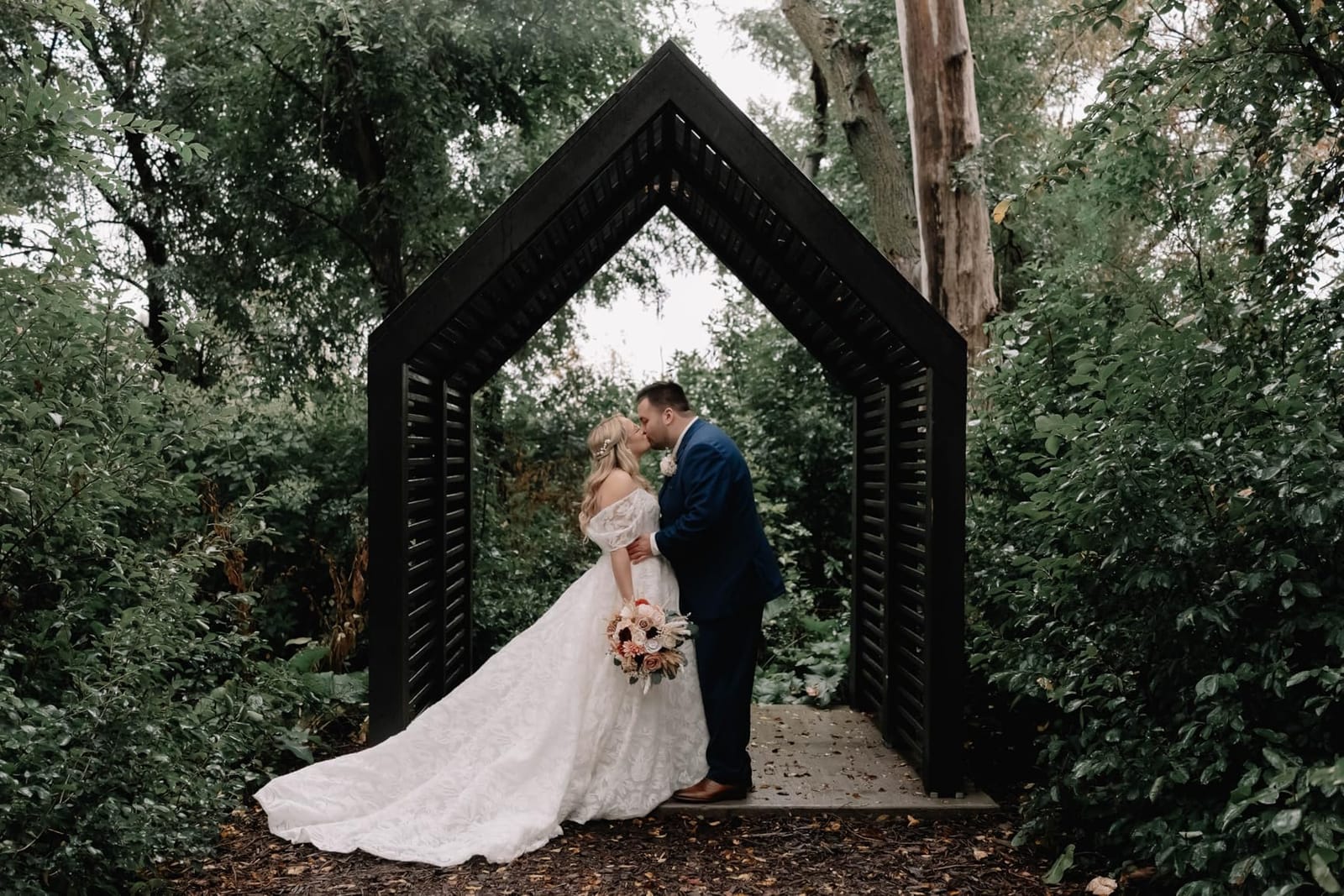
Video colour tools are the standout. A 14+ stop V-Log and V-Gamut recording gives serious grading latitude, and the real-time LUT function applies a look in camera for both photo and video. For a photographer building a hybrid delivery business, that is a real workflow advantage.
Owners also report less wrist fatigue across long wedding days relative to bulkier rivals, and the L-mount ecosystem gives access to Panasonic, Leica, Sigma and DJI glass.
What you gain on a wedding day
Unlimited recording and grading latitude. If you deliver film as well as stills, having no clock on your capture changes how you can work. Record the whole ceremony, pull highlights later, and never think about a heat warning.
Dual UHS-II SD slots give you redundancy at up to 300 MB/s write speed, and the real-time LUT means the colour profile your couple wants can be baked in before you hand over the card.
Where it disappoints
Size and weight. At 740 g the body is noticeably larger and heavier than several full-frame competitors, which adds up over a twelve-hour day. If grip comfort is a problem, our guide to cameras suited to photographers with hand and wrist issues is worth reading before you commit.
It is also designed primarily around video, not stills. Nine frames per second is a low burst rate for ceremony action, 24.2 megapixels is mid-pack for heavy cropping, and 4K 60p is cropped rather than full width.
10. Canon EOS RP with 24-105mm – Budget Pick With One Big Caveat
Canon EOS RP Mirrorless Camera RF24-105mm Lens F4-7.1 is STM Lens Kit
26.2MP full-frame CMOS
4779-point Dual Pixel CMOS AF
RF 24-105mm f/4-7.1 IS STM lens
Single UHS-II SD slot
Pros
- Lightest full-frame body here at 16 ounces
- Included 24-105mm stabilized kit zoom covers most of a wedding
- 4779 AF points with fast reliable face detection
- Articulating touchscreen and EVF handle varied angles
- Low light performance clearly ahead of crop sensor bodies
Cons
- Single card slot only
- no redundancy for a wedding
- No in-body image stabilization in the body
- 5 fps burst with noticeable buffer delay
- Heavily cropped 4K with disabled Dual Pixel AF
The EOS RP is the lightest full-frame body in this roundup at 16 ounces, and the bundled RF 24-105mm f/4-7.1 IS STM lens means you can walk into your first booking with one lens and shoot the entire day. The 26.2MP sensor delivers noticeably better depth and low light performance than an APS-C body, and 4779 AF points with fast face detection handle portraits well.
For an aspiring photographer doing occasional work, it is a genuinely usable camera. The articulating touchscreen and electronic viewfinder both work well for the low and awkward angles of a getting-ready room, and full manual control plus aperture priority with focus aid lets you shoot adapted manual glass.

What stops us recommending it as a primary wedding body is the single card slot. On a ten-hour event, one card means one failure point, and that is exactly the risk practitioners refuse to accept. There is no in-body image stabilization in the body itself either; the five stops of stabilization come from the lens.
Other limits follow from its age and class. The 5 fps burst with noticeable buffer processing delay is thin for the fast moments, there is no mechanical shutter so the sensor is exposed while you change lenses, and 4K capture is heavily restricted with disabled Dual Pixel AF and a 24 fps ceiling.

What you gain on a wedding day
Low weight. At 16 ounces this is the body you can carry for a full day without noticing it, and the stabilized kit zoom covers getting-ready details through a ceremony walk to reception candids on one lens.
Image quality still beats any crop sensor body in this class, and manual control plus focus aid means adapted legacy lenses are usable before you have committed to native glass.
Where it disappoints
One card slot. If you are shooting a paying couple’s wedding as a primary body, this is the deal-breaker, and we say so plainly rather than burying it.
The RF lens selection is narrower than older EF mounts, so many lenses need an adapter. The kit lens lacks an AF/MF switch and softens at the edges wide open, the 5 fps burst feels slow on a dance floor, and 4K is not worth planning a delivery around.
Dual Card Slots: Every Body That Qualifies
This is the question that comes up most often on photography forums, and the answer decides several pairings in our roundup. Nine of the ten bodies write to two cards simultaneously. Here is the full breakdown so you can check any model against the requirement in seconds.
Canon EOS R6 Mark II – dual SD/SDHC/SDXC UHS-II slots. Two matched fast SD cards give full redundancy and relay-free simultaneous backup.
Sony Alpha 7 IV – CFexpress Type A or SD UHS-II in slot one, SD UHS-II in slot two. Flexibility for stills or high-bitrate video.
Canon EOS R5 – CFexpress Type B plus UHS-II SD. The CFexpress slot handles 8K RAW write speed.
Sony Alpha a7S III – dual slot accepting CFexpress Type A or UHS-II SD, so you choose based on your video bitrate.
Nikon Z 8 – CFexpress Type B plus SD/SDHC/SDXC/XQD.
Nikon Z 6 III – CFexpress Type B and SD, a mixed pairing that gives redundancy with less top-end buffer headroom.
Sony Alpha a7R V – dual CFexpress Type A and SD slots.
Nikon Z 7II – CFexpress/XQD plus UHS-II SD.
Panasonic LUMIX S5II – dual UHS-II SD slots supporting up to 300 MB/s write speeds.
Canon EOS RP – single UHS-II SD slot. No redundancy, and the reason this body is a conditional pick rather than a primary wedding body.
One practical note from the forums: match card speeds across both slots. A mismatched pair causes heat build-up and mid-event write failures, which is the last thing you want at hour seven.
Battery and Card Math for a 12-Hour Wedding
Battery math is where most first-year wedding photographers get caught. A full-frame EVF, a bright screen and a stabilized sensor all draw power, and a heavy body drains a pack faster than a light one. Our working number for a single body covering a ten to twelve hour day is three spare batteries minimum, four if the body is heavier than about 1.8 lb.
Across a two-body setup that is six to eight batteries in the bag. One working photographer describes bringing six Sony NP-FZ100 batteries for a two-camera full-day setup of around ten to twelve hours, which matches our own experience closely enough to trust as a starting point. Budget for a vertical grip battery too if you shoot a lot of portrait orientation.
For cards, plan on capacity rather than count. On a two-body dual-slot setup you are writing every frame twice, so a couple’s full ceremony plus reception can fill a single body faster than most people assume. Two 128 GB UHS-II cards per body is a reasonable working minimum, and a third fast card in the bag covers a long day at high bitrates.
If you shoot video as well as stills, add CFexpress Type A or Type B media in proportion to your bitrate. Bodies like the R5 and the Z 6 III need fast cards for 8K and 6K internal RAW, and that media is where the ongoing cost of a hybrid business quietly lives.
Autofocus, Low Light and the Settings That Matter
Autofocus reliability beats autofocus speed on a wedding day. Every body in this roundup offers eye and subject detection, and the practical difference between them is how quickly they reacquire when a subject turns away from the light. The Canon R6 Mark II, Canon R5 and Sony a7S III are the three that hold a subject through a crowd most consistently according to owner reports.
Low light is where megapixel counts mislead buyers. Marketing pushes resolution, but a dim reception at ISO 3200 to 6400 is the moment that decides the day. The Sony a7S III produces the cleanest files there because of its small, fast 12.1MP sensor. Higher resolution bodies like the a7R V and the Nikon Z 8 still perform well but carry more noise at the same settings.
A reliable starting point for ceremony work is aperture priority with auto ISO, eye detection switched on, and a shutter speed the situation demands rather than one the camera imposes. For the reception, most working shooters open up as far as the lens allows, keep eye detection running, and shoot RAW. Stabilization on the bodies that have it buys you two or three extra stops of handholdable shutter speed, which is the difference between sharp and blurred on slow dances.
Buffer depth matters in the two-minute windows where you cannot control the action. The Sony a7R V and Nikon Z 7II hold the longest bursts here, while the Canon EOS R6 Mark II covers the run-and-gun moment through raw frame rate rather than depth.
Mirrorless vs DSLR and the Second Body Decision
The mirrorless versus DSLR question is settled for new purchases. Every body in this roundup offers silent electronic shooting, better subject tracking, in-body stabilization and video that a 5D Mark IV or 6D II cannot approach. The advantages that matter on a wedding are electronic viewfinders with blackout-free shooting, tracking that follows a walking subject, and stabilisation that makes non-IS glass usable.
The cost of moving is real but smaller than it was five years ago. If you own EF or F-mount glass, adapters keep that glass usable, and you can migrate one body at a time. Our advice to working pros still on a 5D or 6D: buy one current body, keep the DSLR as a second slot for a few seasons, and sell only when the lenses you actually use have native equivalents.
The second body decision is where crop sensor gets interesting again. A light APS-C second body saves weight and cost, but it introduces a 1.5x crop on every lens you own, which means your 24-70mm becomes a 36-105mm and your f/1.4 primes lose a stop of light. Practitioners weigh that coverage puzzle against carrying a second full-frame and one fast prime instead.
Our rule of thumb: if the second body will shoot the same prime-heavy work at the same venues, make it full-frame. If it will cover a wide range at a small ceremony, a crop body with a 10-22mm style lens is hard to argue with. Either way, budget for a body that has dual slots for anything you are being paid for.
Frequently Asked Questions
What camera do most professional wedding photographers use?
Most working wedding photographers use a full-frame mirrorless body with dual card slots and reliable subject detection, and the Canon EOS R6 Mark II, Sony Alpha 7 IV and Canon EOS R5 are the most common choices in that group. Shooters who also deliver film tend to add a video-first body such as the Sony Alpha a7S III. Brand preference varies by working photographer, so what matters more is that the body has two card slots, enough battery endurance for twelve hours, and autofocus that holds a face in dim light.
Which mirrorless camera is best for wedding photography?
The Canon EOS R6 Mark II is the safest all-round answer because it combines dual UHS-II SD slots, a 40 fps electronic burst, in-body stabilization and a 1.3 lb body that stays comfortable for a full day. It also records uncropped 4K up to 60 fps for hybrid shooters. If your budget points elsewhere, the Sony Alpha 7 IV covers stills and 4K 60p video with dual slots, while the Canon EOS R5 gives you 45 megapixels for detail-heavy delivery.
Which cameras have dual card slots?
Nine of the ten cameras in this roundup have dual card slots: the Canon EOS R6 Mark II, Sony Alpha 7 IV, Canon EOS R5, Sony Alpha a7S III, Nikon Z 8, Nikon Z 6 III, Sony Alpha a7R V, Nikon Z 7II and the Panasonic LUMIX S5II. The Canon EOS RP has a single UHS-II SD slot, which is why it is a conditional pick rather than a primary wedding body. Match card speeds across both slots to avoid heat build-up.
How many batteries and memory cards do I need for a wedding?
For a single body covering a ten to twelve hour day, carry at least three spare batteries, and four if the body weighs more than about 1.8 lb. A two-body setup needs six to eight spares in total, plus a vertical grip battery if you shoot portrait orientation. On cards, two 128 GB UHS-II cards per body is a working minimum, with a third fast card in the bag for long days or high-bitrate video.
What are the best camera settings for shooting a wedding?
A reliable ceremony starting point is aperture priority with auto ISO, eye detection switched on, and a shutter speed set by the situation rather than by the camera. For the reception, open the aperture as far as the lens allows, keep subject detection running, and shoot RAW. On bodies with in-body stabilization, the extra compensation lets you hold slower shutter speeds on slow dances. Set burst speed to the highest rate your buffer can sustain.
Does SD card affect photo quality?
No. The card in your camera does not change the image your sensor records; RAW files on any fast card contain the same data. What card speed and capacity do affect is whether your camera keeps up during long bursts and high-bitrate video, and whether heat builds up and causes a write failure mid-event. Match the speeds of cards in both slots, and choose the card type your body needs for its highest recording mode.
The Best Full Frame Camera for Your Wedding Career
If you are buying one body and shooting weddings with it for the next few years, the Canon EOS R6 Mark II is where we land. It has dual card slots, a 40 fps burst, dependable subject detection and a weight that stays out of the way across a twelve-hour day. That combination is worth more than any single spec number on this list.
Shoot dark venues and deliver film alongside stills? The Sony Alpha a7S III gives you clean high ISO files and unlimited recording. Need detail for large prints and heavy cropping? The Canon EOS R5 and Nikon Z 8 cover that, and the Sony Alpha a7R V pushes resolution further still. Just starting out with occasional work? The Canon EOS RP kit is honest value, as long as you accept the single card slot.
Whatever you pick, budget for batteries, fast cards and a second body before you upgrade again. Those three items decide more wedding days than the camera does. For a wider look at every full-frame mirrorless option, see our best full frame mirrorless cameras guide. This roundup was updated for 2026.