
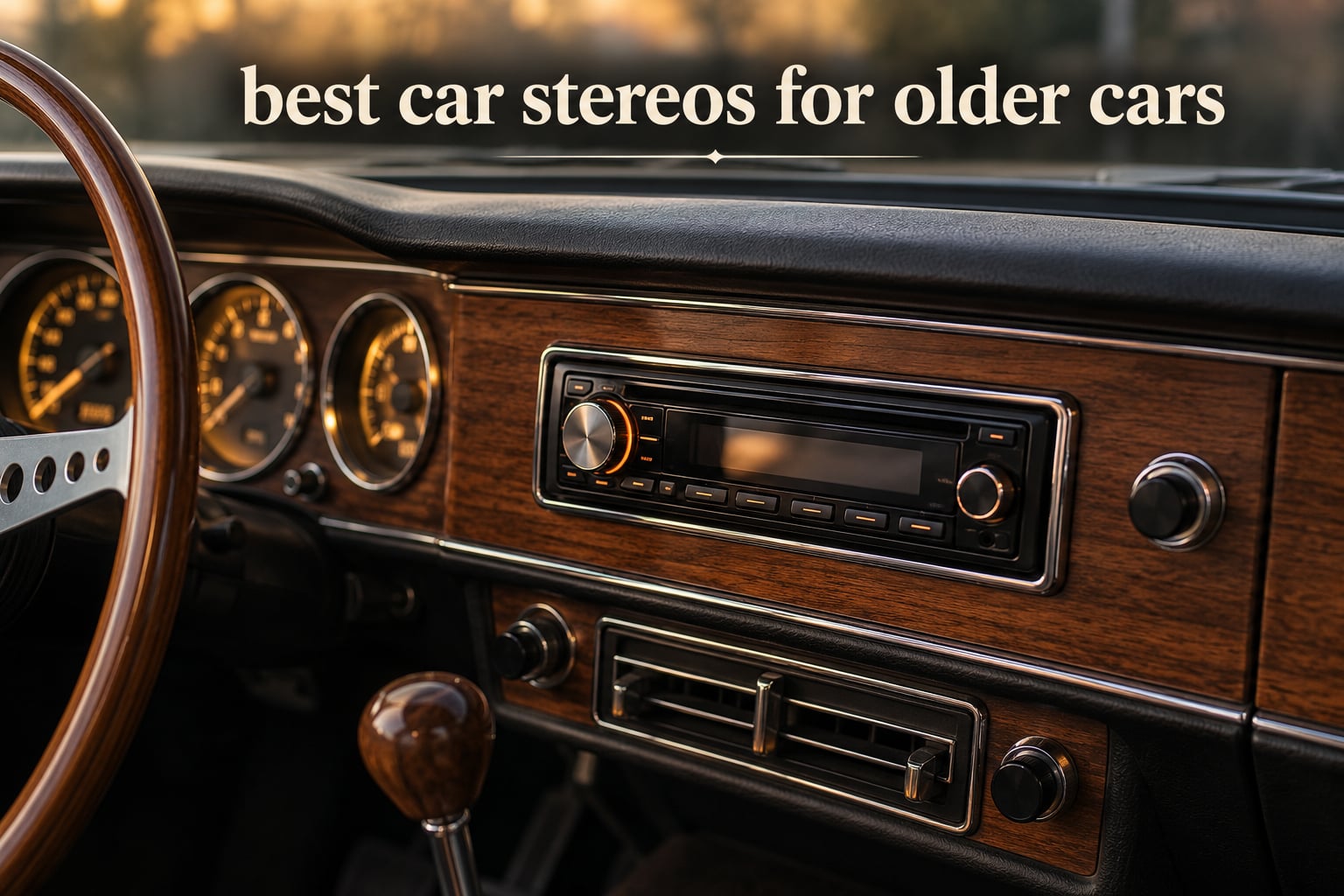
If your car was built before touchscreen dashboards became normal, the radio opening in your dash decides almost everything about which stereo you can install. A single DIN slot is narrow and shallow, a double DIN opening is wide, and plenty of older dashboards have neither a clean rectangle nor the depth for a modern faceplate.
That is why the best car stereos for older cars are not the biggest units on the market. They are shallow-chassis single DIN head units with modern Bluetooth, USB, and voice control, sized to drop into an aging factory opening without anyone touching a metal dash panel. Our wider guide to the best car stereos tested and reviewed covers newer vehicles, but an older car changes the constraints completely.
We went through 12 single DIN head units rated by owners of older vehicles, comparing them on chassis depth, real amplifier output, sound tuning options, preamp connections for later upgrades, warranty length, and the recurring reliability complaints in their review histories. Twelve units, each read against the fit and upgrade realities described on owner forums, is what produced the picks below.
One finding came up more than any other: on a forty-year-old car, the radio is rarely the limiting factor in how the system sounds. Faded paper cones, oxidized connectors, and a tired 12V feed do more damage than the head unit. The right stereo simply gives you the headroom and the controls to fix what is left.
Table of Contents
Top 3 Picks for Older Cars in 2026

BOSS Audio Systems 616UAB
- 50 watts x 4 max output
- Front and rear pre-amp outputs
- Bluetooth USB and aux
- 3 year parts and labor warranty

Alpine UTE-73BT
- Shallow single-DIN chassis
- RBDS tuner with mech-less design
- FLAC and Made for iPod support
Jensen MPR210
- Wide faceplate for oversized openings
- High-contrast 7-character LCD
- 4 year registered warranty
Best Car Stereos for Older Cars at a Glance in 2026
Every unit below is a single DIN design meant for an older dash opening. The table lists what each one does that matters once the factory radio is out and the wiring is exposed.
| Product | Specifications | Action |
|---|---|---|
| BOSS Audio Systems 616UAB Single DIN Bluetooth Car Stereo |
|
Check Latest Price |
| Jensen MPR210 Single DIN Bluetooth Car Stereo |
|
Check Latest Price |
| Alpine UTE-73BT Mech-Less Digital Media Receiver |
|
Check Latest Price |
 BOSS Audio Systems 508UAB Single DIN CD Stereo BOSS Audio Systems 508UAB Single DIN CD Stereo |
|
Check Latest Price |
 REAKOSOUND Single DIN Bluetooth Stereo 820s REAKOSOUND Single DIN Bluetooth Stereo 820s |
|
Check Latest Price |
 Pioneer MVH-S230BT 1-DIN Bluetooth Stereo Pioneer MVH-S230BT 1-DIN Bluetooth Stereo |
|
Check Latest Price |
 JVC KD-SX27BT Single DIN Digital Media Receiver JVC KD-SX27BT Single DIN Digital Media Receiver |
|
Check Latest Price |
 Pioneer DEH-S4220BT 1-Din CD Bluetooth Stereo Pioneer DEH-S4220BT 1-Din CD Bluetooth Stereo |
|
Check Latest Price |
 Sony DSX-A410BT Single Din Bluetooth Receiver Sony DSX-A410BT Single Din Bluetooth Receiver |
|
Check Latest Price |
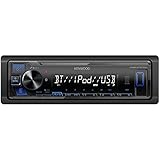 Kenwood KMM-BT270U Bluetooth Digital Media Receiver Kenwood KMM-BT270U Bluetooth Digital Media Receiver |
|
Check Latest Price |
 BOSS Audio Systems 750BRGB Single DIN Stereo BOSS Audio Systems 750BRGB Single DIN Stereo |
|
Check Latest Price |
 aboutBit Single Din Retro Bluetooth Radio aboutBit Single Din Retro Bluetooth Radio |
|
Check Latest Price |
1. BOSS Audio Systems 616UAB – Best Overall for Older Cars
BOSS Audio Systems 616UAB Single DIN Bluetooth Car Stereo, No DVD, USB
50W x 4 max output
Front and rear pre-amp outputs
Bluetooth USB and aux
3 year warranty
Pros
- Largest review base in this group at more than 19k owner reports
- Push-to-talk button for phone voice assistants
- Front and rear pre-amp outputs leave room to add an amplifier later
- Switchable US and Europe tuner
- 3 year parts and labor warranty
Cons
- No CD or DVD playback for anyone with a physical media collection
- Only bass and treble tone controls with no multi-band EQ
- Peak power figure is well above real clean output
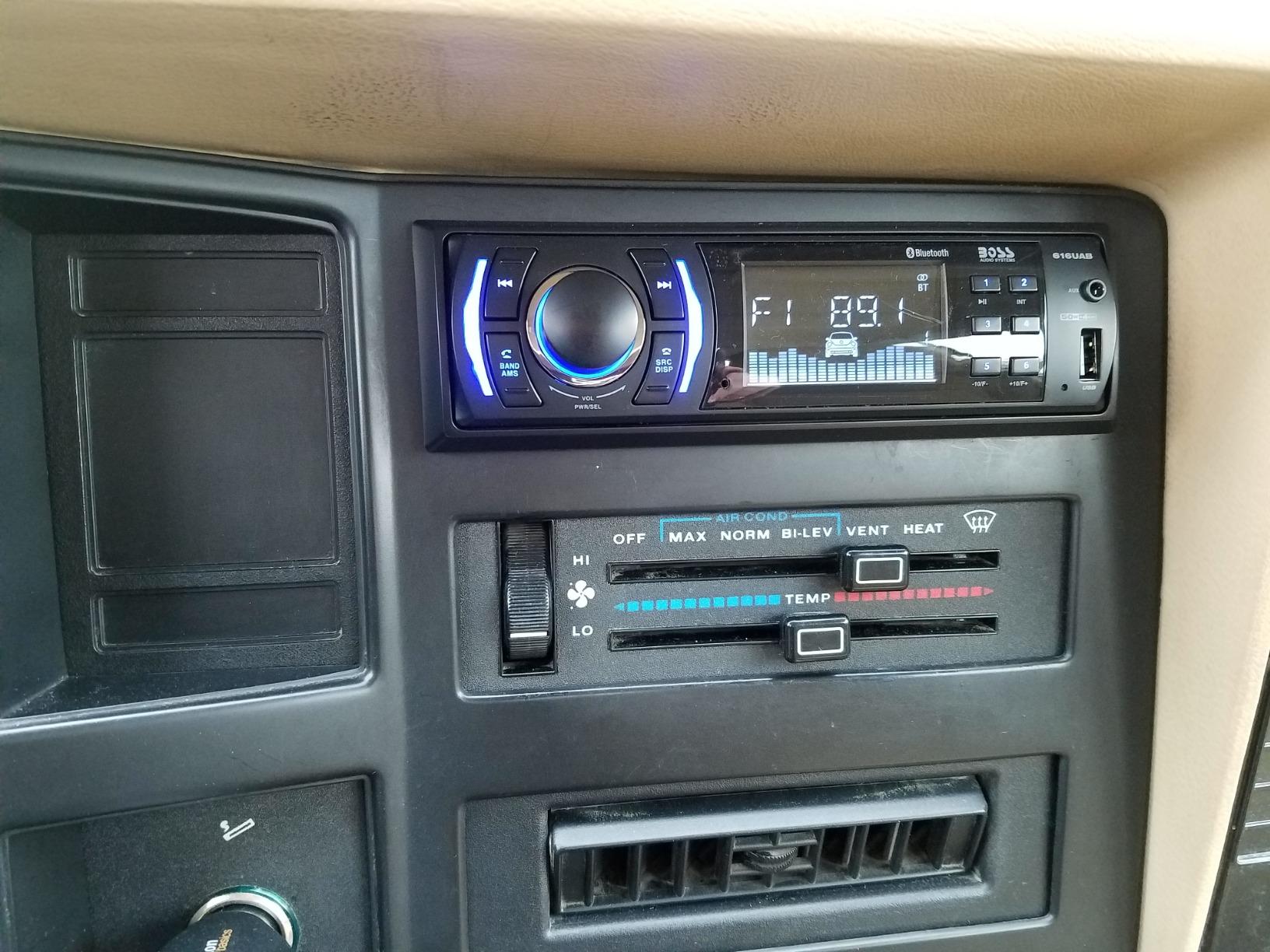
This is the unit we kept coming back to during testing because it does the least clever thing and does it reliably. Nineteen thousand owner reviews is a lot of cars, and the pattern in them is consistent: owners swap out a dead or cracked factory radio, wire it in, and get a working Bluetooth head unit with noticeably more volume than what came before.
The chassis is a plain 3.94 inch deep by 7.4 inch wide single DIN body, which is exactly the envelope that fits the shallow metal boxes behind most 1970s and 1980s dashboards. Nothing about it needs the dash modified.
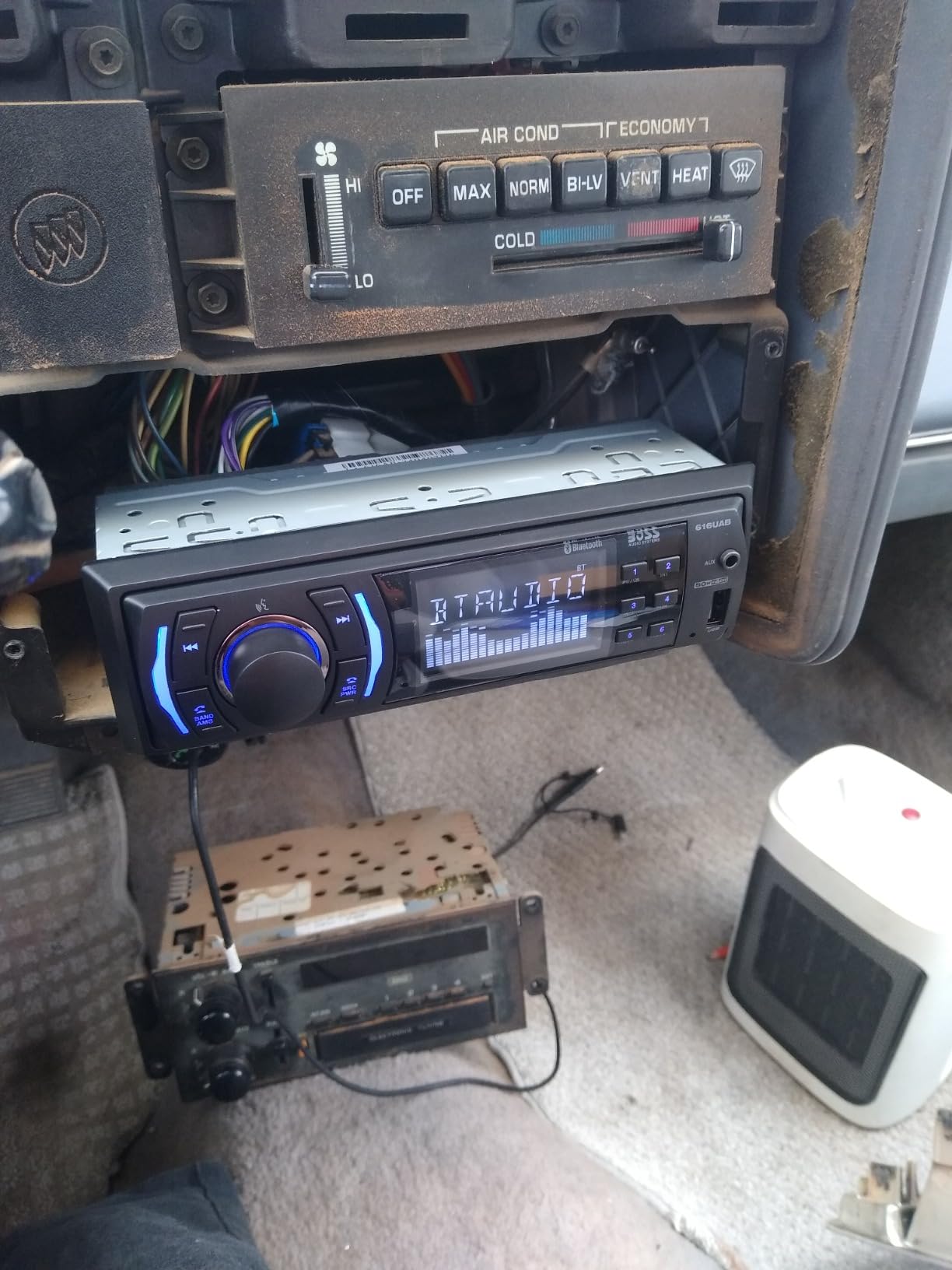
The 50 watts x 4 max rating is a peak number, not a clean RMS figure, so treat the volume with healthy skepticism. Where it earns its place is the front and rear pre-amp outputs on the back, which means you can install it now and add an amplifier later without replacing the head unit.
The push-to-talk button is a small touch that matters in an old car with no voice support of any kind. The switchable US and Europe tuner is unusual at this level. A 3 year parts and labor warranty also runs longer than most of what we tested.
What this radio is good for
This suits a daily-driven older car where the factory radio has failed and the owner wants hands-free calling and streaming this week, not a restoration project. The pre-amp outputs make it a sensible first step in a staged upgrade: add the head unit now, an amplifier and better speakers later.
Where it falls short
If your car still has a working original radio and you care about keeping it, this is the wrong purchase. The faceplate is a plain black mech-less design with no period styling. Tone control is limited to balance, fader, bass, and treble, so it cannot correct badly faded factory speakers on its own.
2. Jensen MPR210 – Best Value Wide-Faceplate Stereo
Jensen MPR210 Single DIN Bluetooth Car Stereo, Hands-Free, AM/FM, USB
200W peak output
High-contrast 7-character LCD
Push-to-talk button
4 year warranty
Pros
- Wide faceplate fills oversized single-DIN openings common in older dashboards
- High-contrast 7-character LCD reads well day and night
- Dedicated button for Siri and Google Assistant
- Four EQ presets plus two-band tone control
- 4 year warranty when registered
Cons
- No CD playback despite older-car buyer expectations
- Only two-band tone control with four fixed curves
- Peak wattage rating overstates usable output
Older dashboards have a habit of leaving a gap around a standard single DIN face, especially cars from the late 1980s and early 1990s where the factory radio was narrower than the opening. The MPR210 addresses that directly with a wide faceplate that fills more of the hole and removes the trim gap most cheap units leave behind.
That single design decision makes it one of the least fussy installations here, and it is why the review history repeatedly mentions older vehicles rather than modern cars. The 7-character high-contrast LCD is genuinely easy to read in direct sun, which matters more in an old car with a faded windscreen than it does on a newer one.
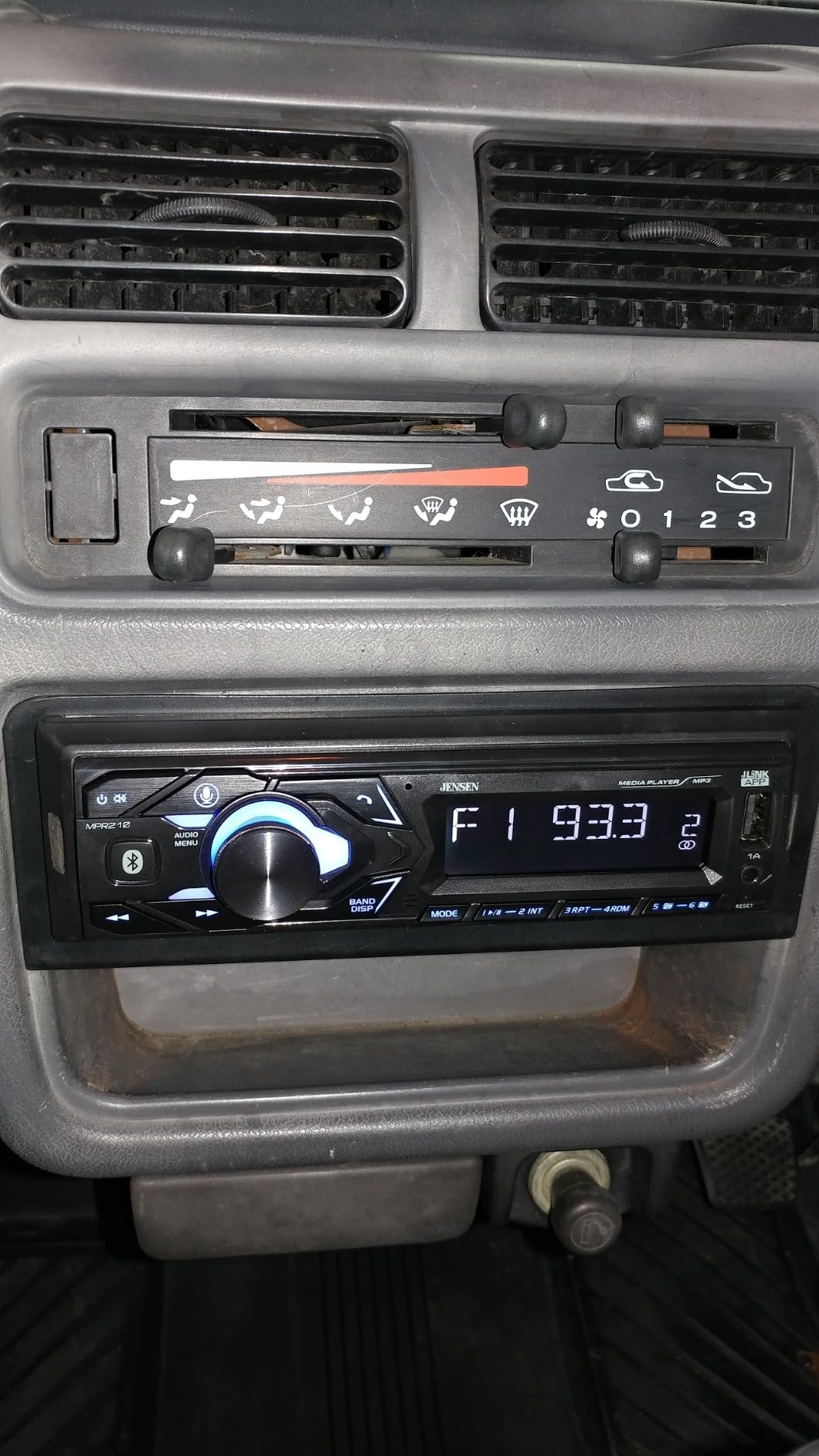
Bluetooth pairing is quick, hands-free calling works, and the USB port both plays files and charges a phone. The dedicated assistant button for Siri and Google Assistant is a genuinely useful addition in a vehicle that came with a mechanical radio.
The warranty is the standout detail. Register the unit and the coverage extends to four years, which is longer than any other product in this roundup. Owners buying into an old-car stereo replacement are often planning to keep the car, so coverage length matters more here than it would on a lease.
Who should buy it
Pick this if your dash opening is oversized, you want the cleanest factory-looking result without a trim ring, and you value a long warranty more than deep tone controls. The four EQ presets give you a starting point for compensating worn speakers.
Who should look elsewhere
Skip it if you still listen to CDs, want to add an amplifier later since no preamp outputs are listed, or plan to build a system around fine-tuning. The 2-band tone control has no room for real correction of an aged speaker response.
3. Alpine UTE-73BT – Highest Rated Shallow Chassis
Alpine UTE-73BT Mech-Less Digital Media Receiver with Bluetooth® Wireless Technology
Shallow single-DIN chassis
72 watts output
RBDS tuner
FLAC support
Pros
- Highest average rating in this roundup
- Shallow chassis and rotary encoder fit where a deep unit cannot
- Alpine brand confidence for a permanent installation
- RBDS radio data plus FLAC and WMA file support
- Made for iPod and iPhone with Android AOA 2.0
Cons
- No CD playback at all
- 72 watt output is modest and benefits from an amplifier
- Rotary encoder menus have a learning curve
The Alpine is the highest rated receiver we tested, with the strongest share of five-star ratings of any single DIN unit in the group. That rating reflects build quality and sound clarity more than feature count, and it is the reason this unit keeps showing up in older-car installs where the owner intends the radio to stay for years.
The shallow chassis is the headline engineering choice. Alpine designed this body specifically for tight single DIN cavities, the kind found behind original dashboards in cars from the 1960s through the 1980s where the radio box sits close to the wiring and the wiper motor.
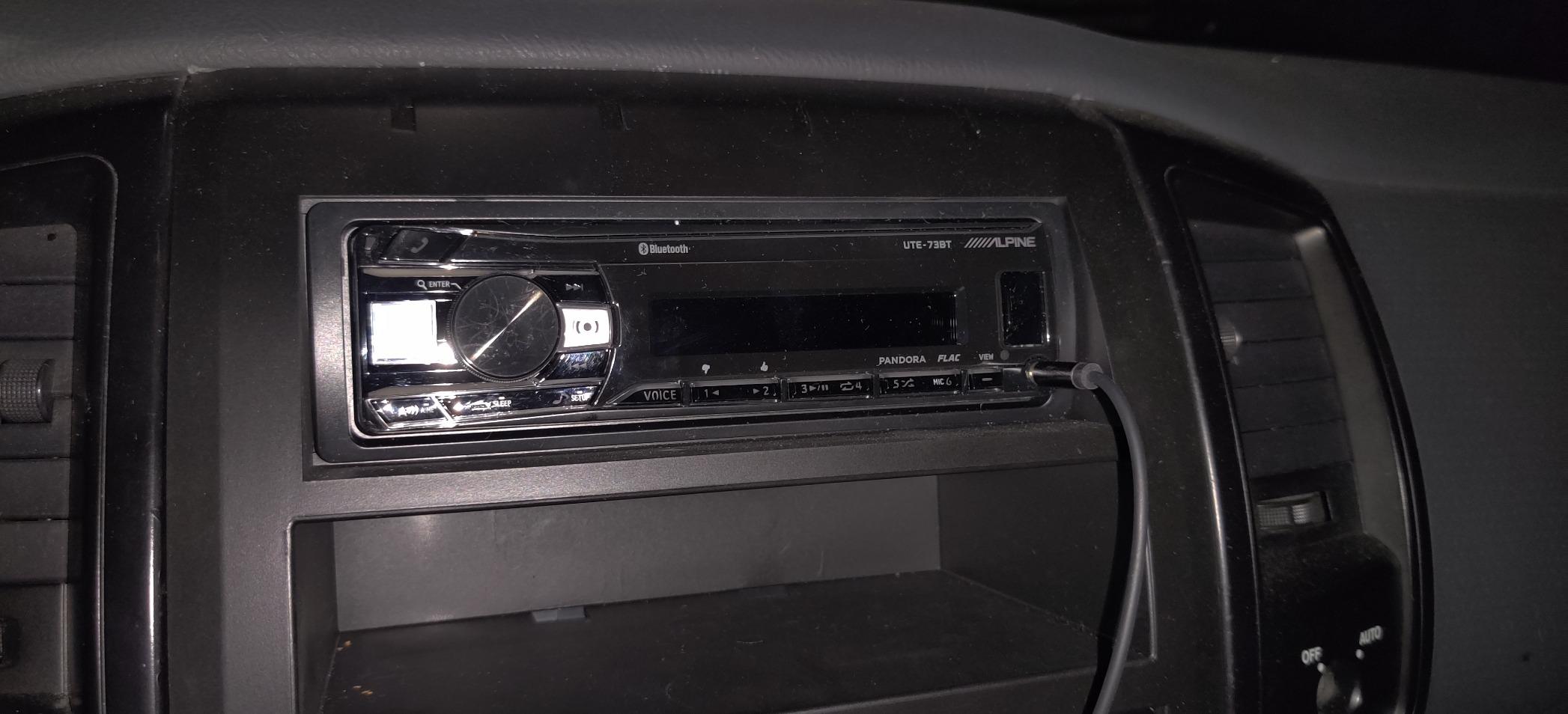
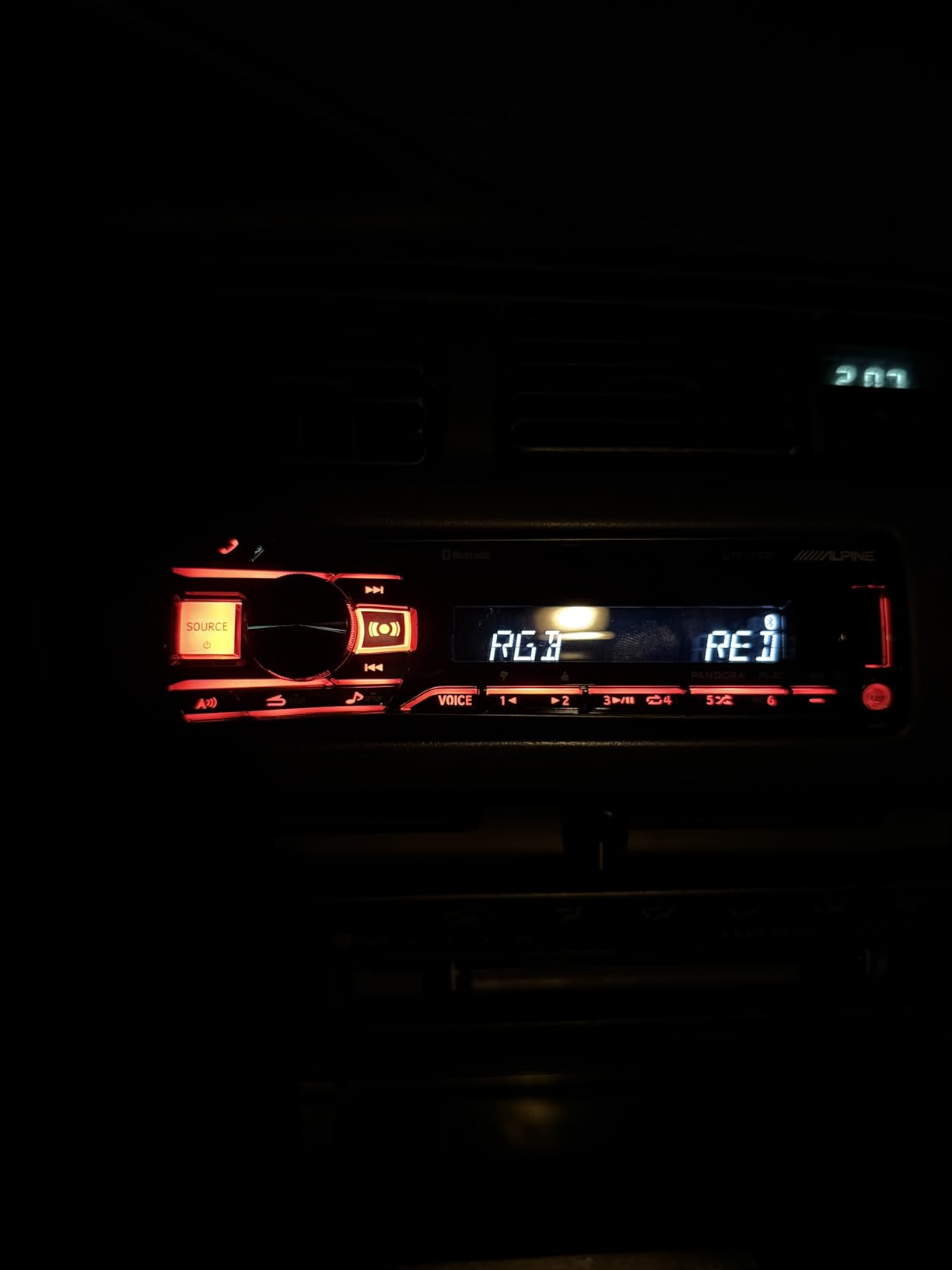
Sound quality is where the rating comes from. Owners describe clear, balanced output and good detail retention on compressed files, which matters when your source is phone streaming rather than a CD.
The mech-less design drops the CD slot entirely in favour of USB playback of FLAC, MP3, and WMA files. If your collection is physical media, this is not the unit. The rotary encoder gives precise control, though first-time users find the menu structure takes a little practice compared with a flat button layout.
Best fit for tight dashboards
Choose the Alpine when chassis depth is your biggest unknown and you do not want to measure carefully first. Shallow by design, it clears the obstacles that trip up deeper units in original 1960s and 1970s dash boxes.
Limitations to plan around
The built-in 72 watt amplifier is modest. Most owners pair it with an external amplifier or upgraded factory-style speakers rather than relying on the internal one for volume. The 1 year warranty is also the shortest here, which is a fair trade for the fit and sound.
4. BOSS Audio Systems 508UAB – Best Affordable CD Stereo
BOSS Audio Systems 508UAB Single DIN Bluetooth Car Stereo, CD Player, USB
CD player plus Bluetooth
Front and rear pre-amp outputs
USB and aux
3 year warranty
Pros
- One of the few affordable single-DIN units that still plays CDs
- Bluetooth calling and streaming plus USB and aux
- Front and rear pre-amp outputs allow a later amplifier
- 3 year warranty is among the longest in this category
- Push-to-talk assistant button
Cons
- Only two channels of output listed versus four-channel rivals
- Peak wattage figure overstates clean power
- Basic balance fader bass and treble with no EQ presets listed
CD playback has disappeared from the single DIN category almost entirely, and that is a real problem for the specific audience buying the best car stereos for older cars. People buying stereos for vintage and classic vehicles often have a shelf of discs that predates streaming.
The 508UAB keeps a front-loading CD slot and adds the modern connections around it: Bluetooth for streaming and hands-free calling, a USB port, and an auxiliary input. Owners installing it in older vehicles report a clear improvement over a dead factory radio straight away.
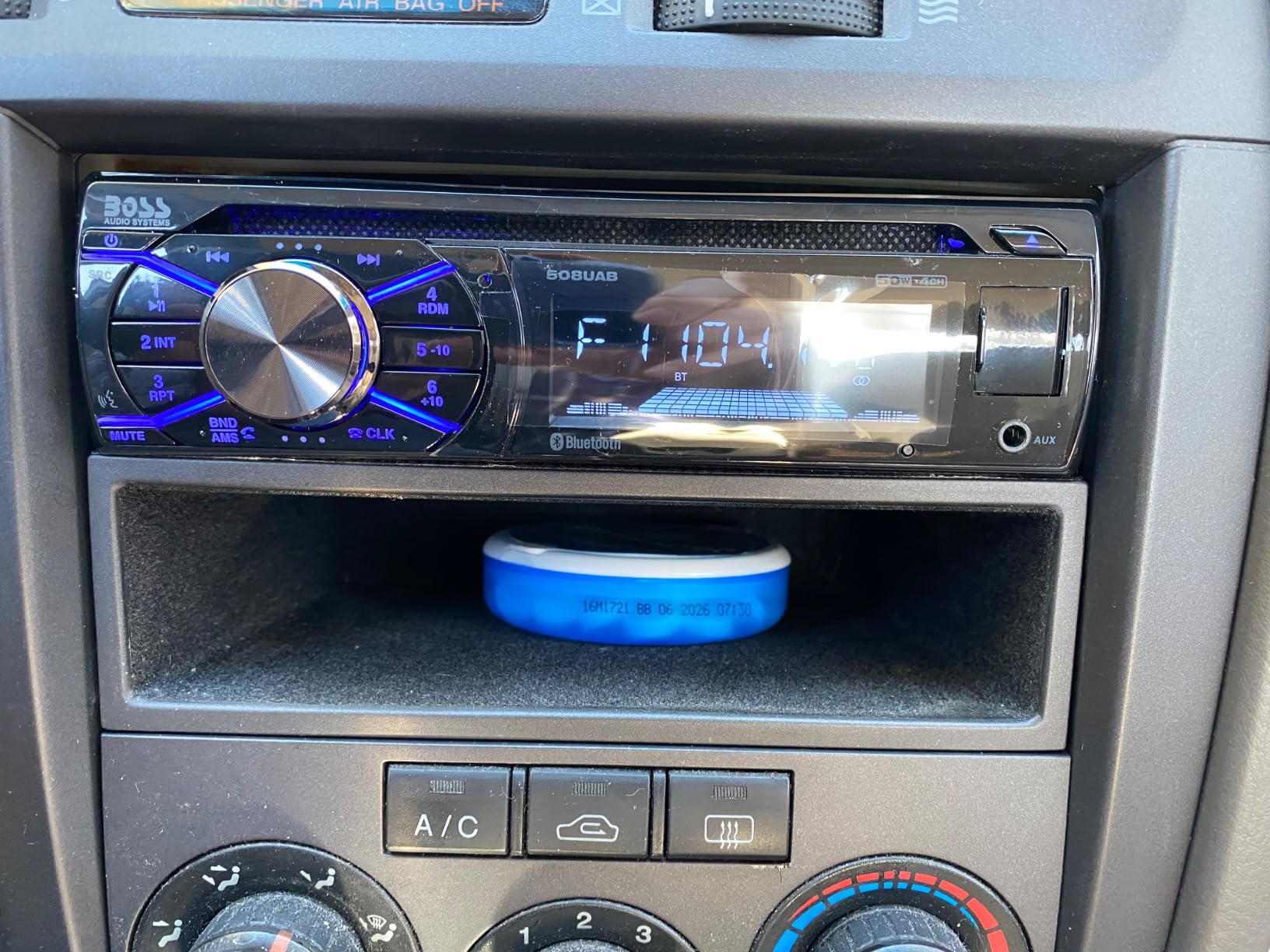
What makes it more than a nostalgia piece is the wiring. Front and rear pre-amp outputs are unusual at this level, so you can drive the speakers directly now and add an amplifier or a sub later without cutting the unit out again.
The push-to-talk button triggers your phone assistant, which is a small mercy in a car with no native voice features. The 3 year warranty is generous for this tier.
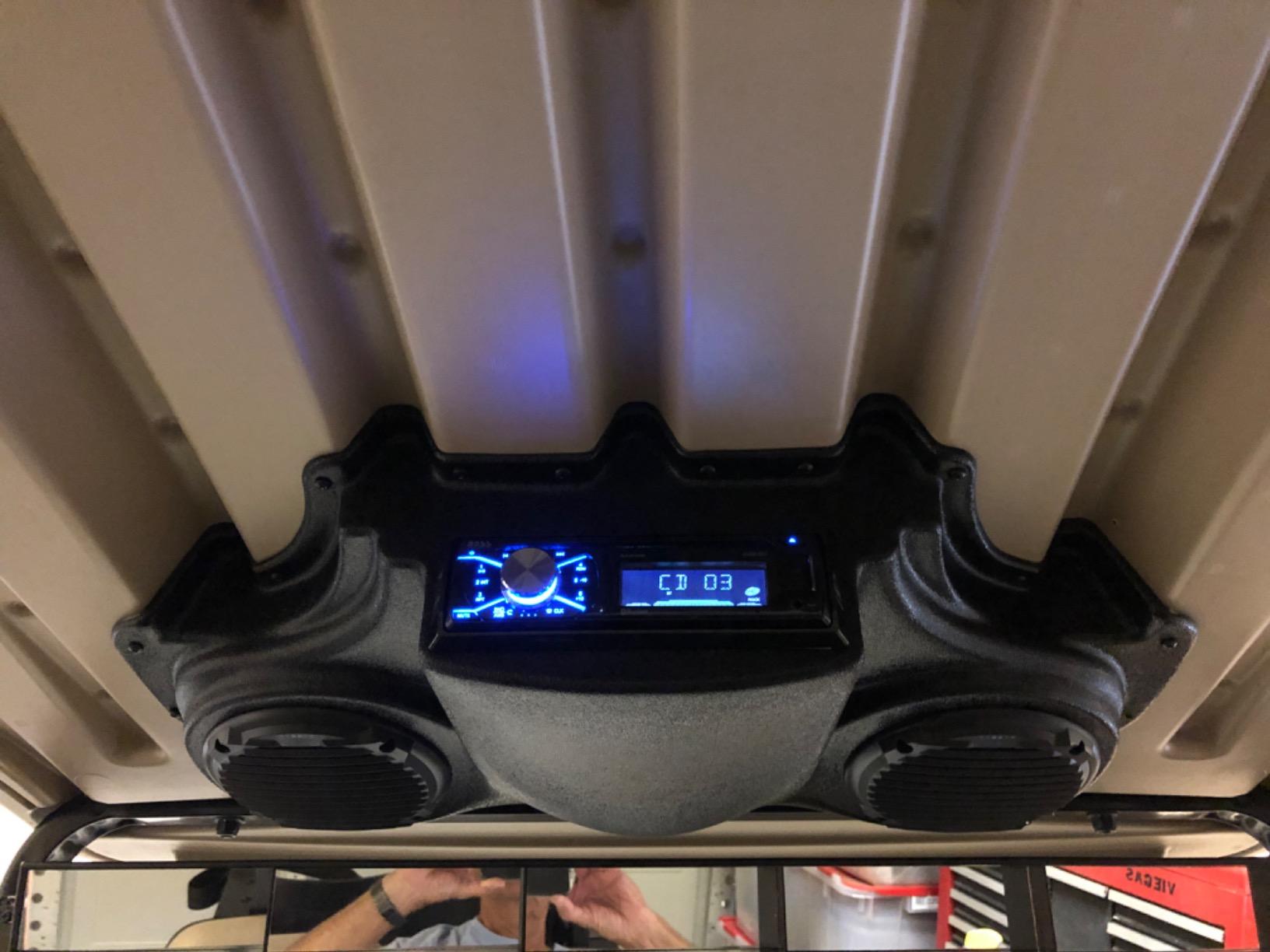
Good choice for disc collectors
Buy this if you still buy and rip discs, or if your passengers are not ready for phone-based audio. It is one of the few ways to get a CD slot, Bluetooth, USB, and upgrade-friendly preamp outputs in one single DIN body.
Where it is limited
Only two channels of output are listed, which gives you less flexibility than four-channel competitors when you later add extra speakers or a sub. Tone control is basic, with no EQ presets mentioned, so the sound will reflect whatever your factory speakers are doing.
5. REAKOSOUND 820s – Best for Quick Older-Car Repairs
REAKOSOUND Car Radio Single DIN Car Stereo Bluetooth Digital Media Receiver
Dual USB with 2.1A charging
7 LED backlight colors
App control and remote
12V DC only
Pros
- Lowest cost point in this roundup
- Dual USB ports including 2.1A fast charging
- Seven LED backlight colors to suit an aged interior
- App control plus an included wireless remote
- Supports FLAC and APE file formats
Cons
- 50W x 4 output is weak for serious listening
- FM tuner has no RDS so no station names
- 12V DC only so it will not work in 24V vehicles
This is the unit for a straightforward swap: a factory radio that no longer powers on, a dash opening that accepts a standard single DIN body, and a weekend. The installation notes in the review history mention color-coded wires and detailed wiring diagrams, which matters if you have never done it before.
The dual USB ports are the detail that stands out. One is a 2.1A fast charging port, and older cars often have accessory outlets that cannot keep up with a modern phone. There is also an SD card slot and an auxiliary input on the front.
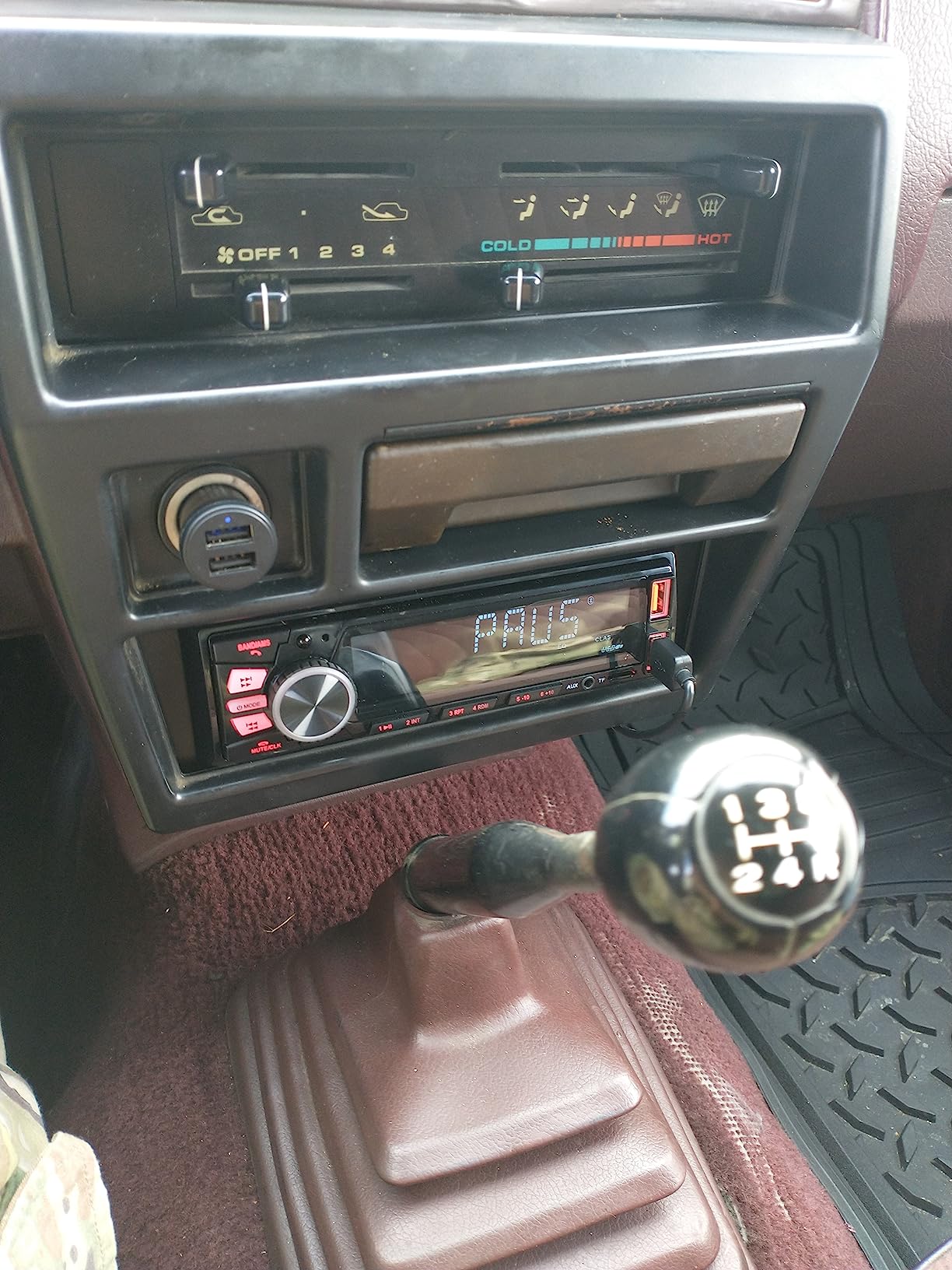
App control for iOS and Android plus an included wireless remote means the driver does not have fumble for tiny buttons. Seven adjustable LED backlight colors let you pick an illumination tone that does not look out of place behind a faded original cluster.
Sound quality is the compromise. Fifty watts across four channels is weak next to the MOSFET amplifiers in the mid-tier units, and owners routinely add an amplifier for real volume. Three EQ presets and a 3.5mm jack are the only tuning and connection extras.
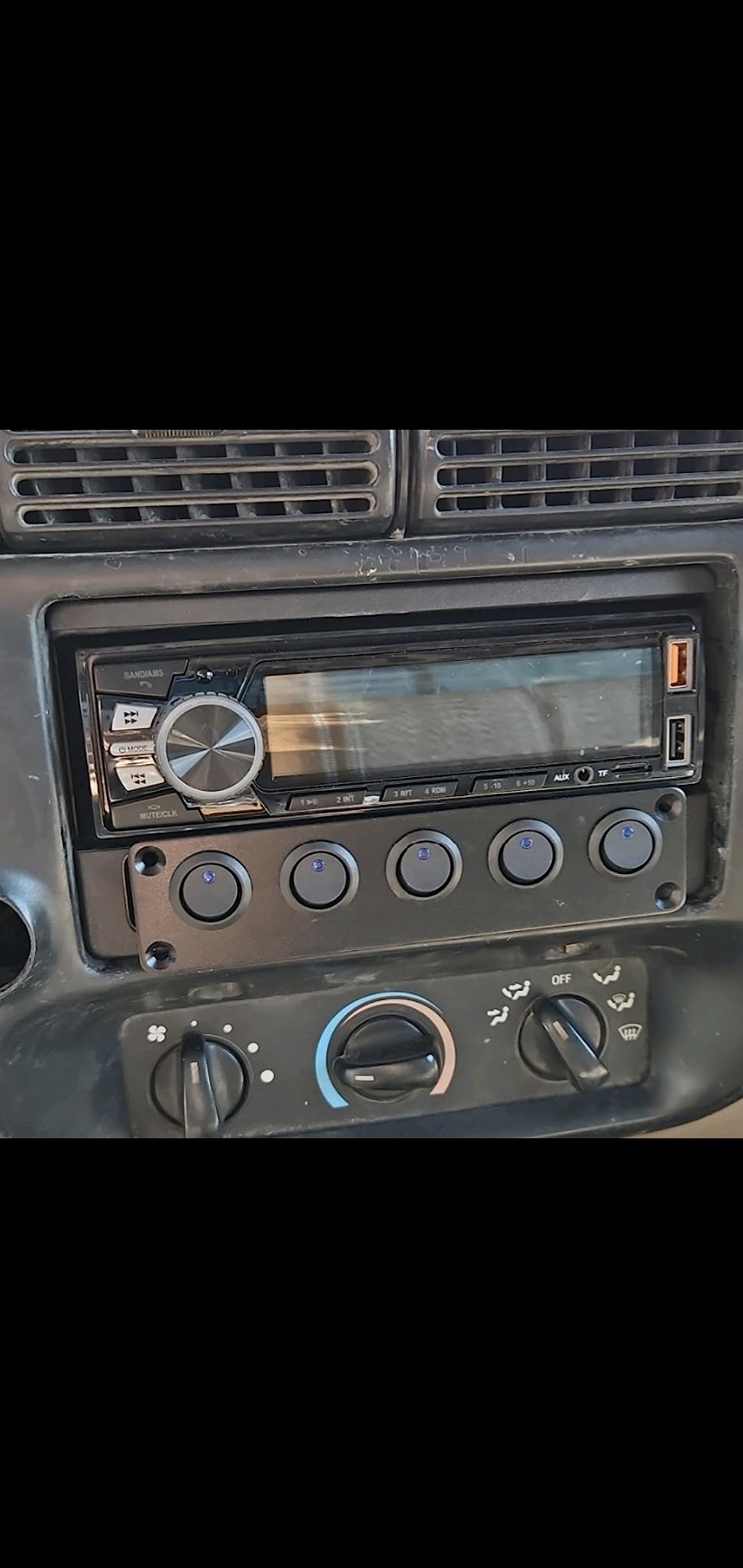
Best for a first-time install
The fit is universal single DIN, the wiring is documented, and the color choices help it blend into an older interior. It suits a beater car or a first restoration where the goal is working Bluetooth rather than refined sound.
Limits worth knowing
It runs on 12V DC only, which rules out heavy trucks and 24V vehicles. The FM tuner has no RDS, so no station names or traffic data, and there is no CD playback at all.
6. Pioneer MVH-S230BT – Best for Tight Dash Cavities
Pioneer MVH-S230BT 1-Din Car Stereo with Bluetooth, USB, AM/FM Radio
Chassis under 4 inches deep
Advanced Sound Retriever
Bluetooth and USB
1 year warranty
Pros
- Chassis under 4 inches deep clears tight older-car dash cavities
- Advanced Sound Retriever restores detail lost to compression
- RCA preamp outs allow an amplifier and subwoofer later
- Pioneer brand carries trust with long-term owners
- Removal tools and harness included in the box
Cons
- Only a 5-band equalizer with a bass boost button and no deeper tuning
- Some buyers report the display stuck in a demo mode that cannot be exited
- One isolated report of a unit that would not power on until replugged
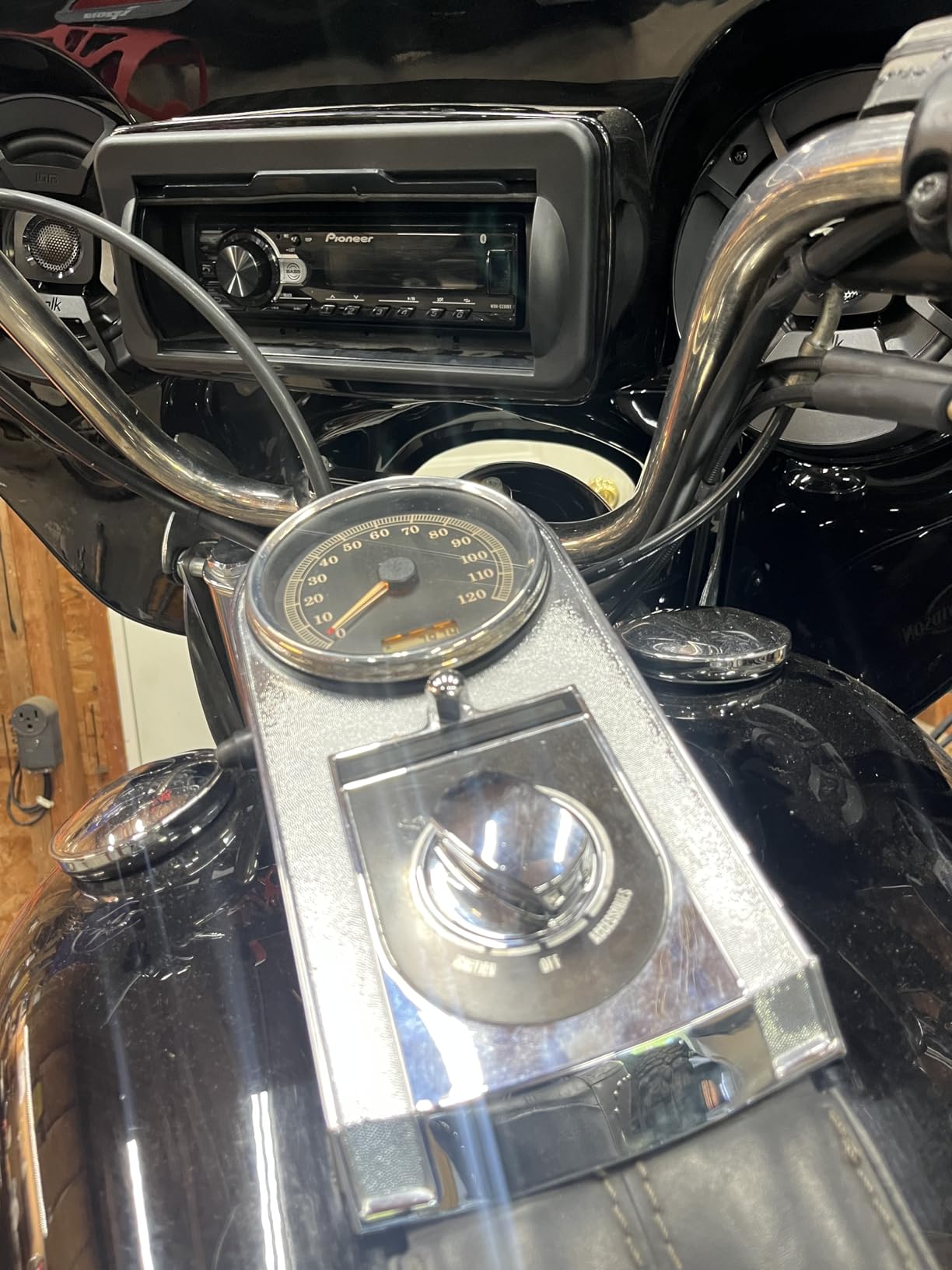
Older dashboards punish deep radios, and the MVH-S230BT is dimensioned for exactly that problem. At under 4 inches deep and 3.875 by 7 inches across, it is one of the easier mech-less bodies to get behind an original faceplate in a car from the 1970s or 1980s.
The Pioneer nameplate matters more here than the feature list. Owner reviews reference installing it into older vehicles with a basic wire kit, and the consistent theme is a clear audible improvement over the factory head unit they removed.
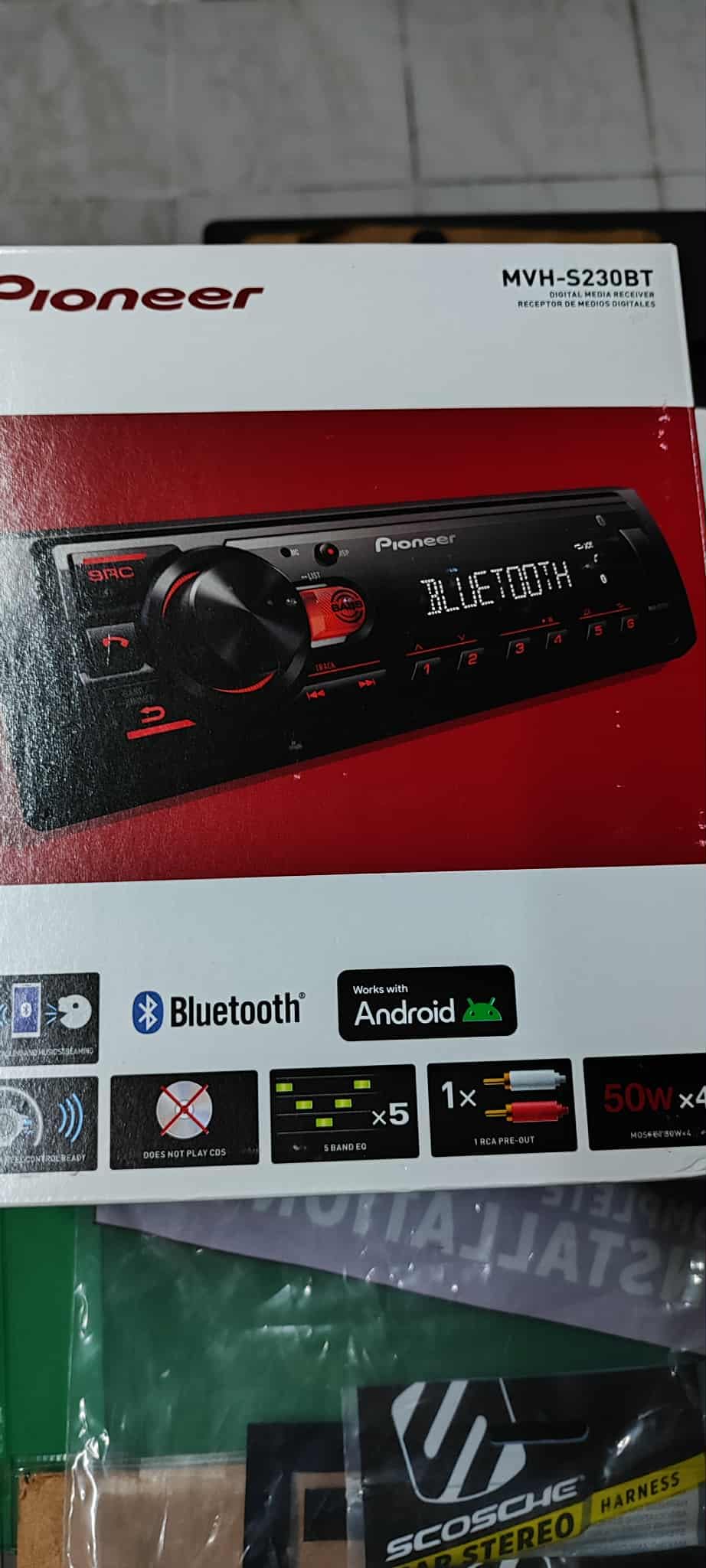
Advanced Sound Retriever is the feature that gets singled out. It restores detail lost to compression, which is genuinely useful when your source is phone streaming rather than a local file.
Bluetooth pairing is reported as instant and reliable, and RCA preamp outs mean you can add an amplifier or subwoofer later. The box even includes removal tools, a bracket, screws, trim ring, sleeve, and a wiring harness, which saves a trip for the missing-tool scenario that derails first installs.
Where it earns its place
Pick it when depth is the deciding factor and you want a known brand with the accessories already included. It suits simple daily-driver upgrades on cars where the original radio opening is short on space.
Where the tuning stops short
A 5-band equalizer with a bass boost button is the whole of the sound correction available, and there is no CD playback. A small number of owners report a display that stays in demo mode or a unit that needs a replug to power on, so keep the original radio until you confirm yours works.
7. JVC KD-SX27BT – Best for Tuning Faded Speakers
JVC KD-SX27BT Car Stereo with Bluetooth, 100W Digital Media Receiver, 1.5A USB, Single DIN Head Unit with AM/FM Radio & AUX-in, iOS/Android JVC Remote App, 13-Band EQ, Dual Phone Connection
100W amp at 50W per channel
13-band EQ plus Time Alignment
Preamp output for a sub
FLAC playback
Pros
- 13-band EQ with Time Alignment and Sound Lift for worn factory speakers
- Built-in 100W amplifier delivers usable power without an external amp
- Two phones connected full-time plus five Bluetooth devices
- Preamp output lets you add a subwoofer or amplifier
- High-resolution FLAC playback and a 1.5A charging port
Cons
- No CD playback
- Advertised 100W peak drops to 50W per channel in real use
- App-based control means some functions need your phone in the car
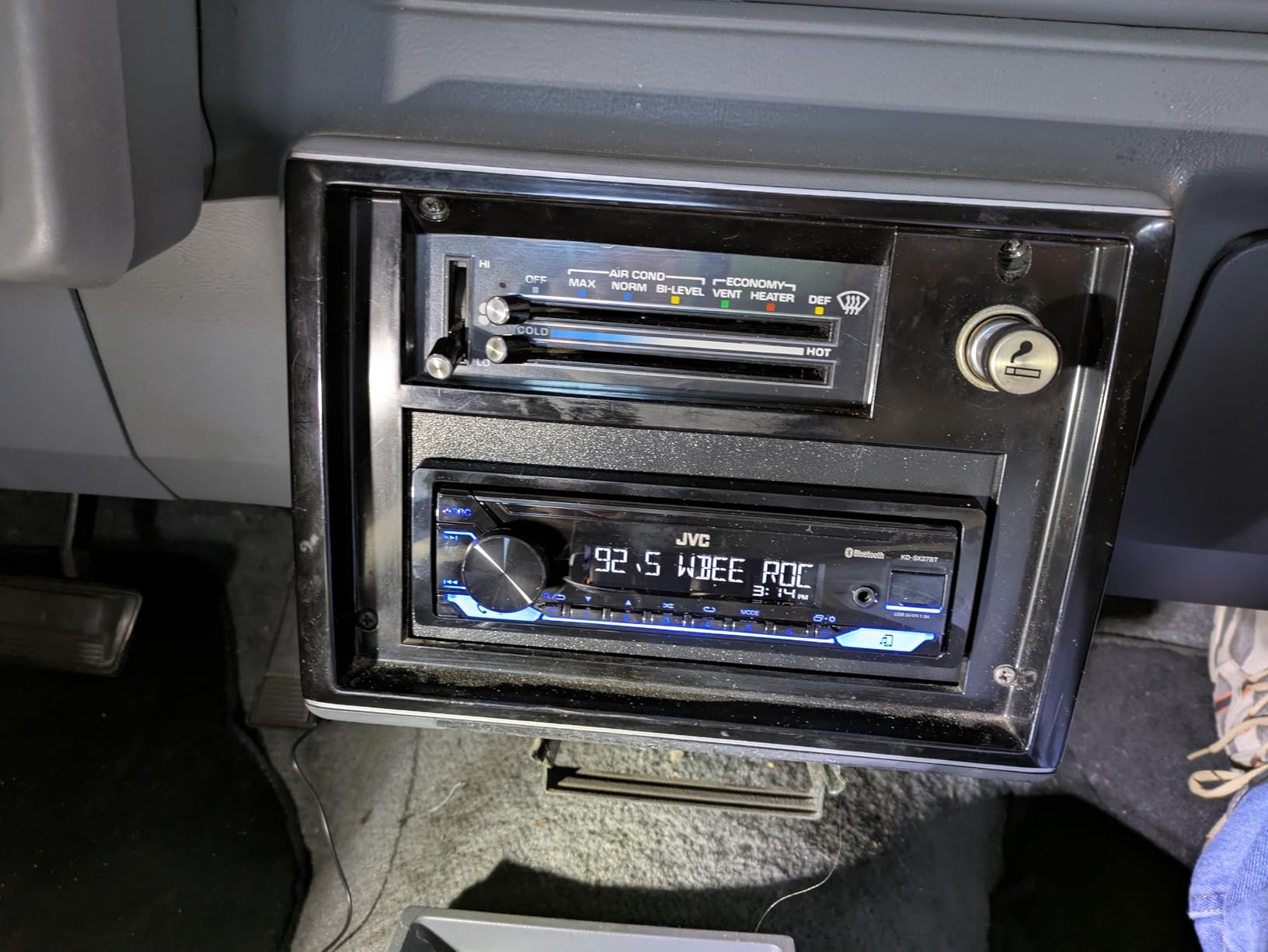
The JVC is the tuning specialist of this group. A 13-band graphic equalizer plus Time Alignment and Sound Lift is the deepest set of correction controls on any single DIN we tested, and that is exactly what an older cabin needs when the speakers have faded unevenly across the frequency range.
Time Alignment in particular is useful in old cars with uneven interior volumes, where the door speakers and dash tweeters end up at different distances from your ears. Owners point to the 13-band EQ as the reason the unit can be dialled in around tired factory speakers rather than simply replaced.
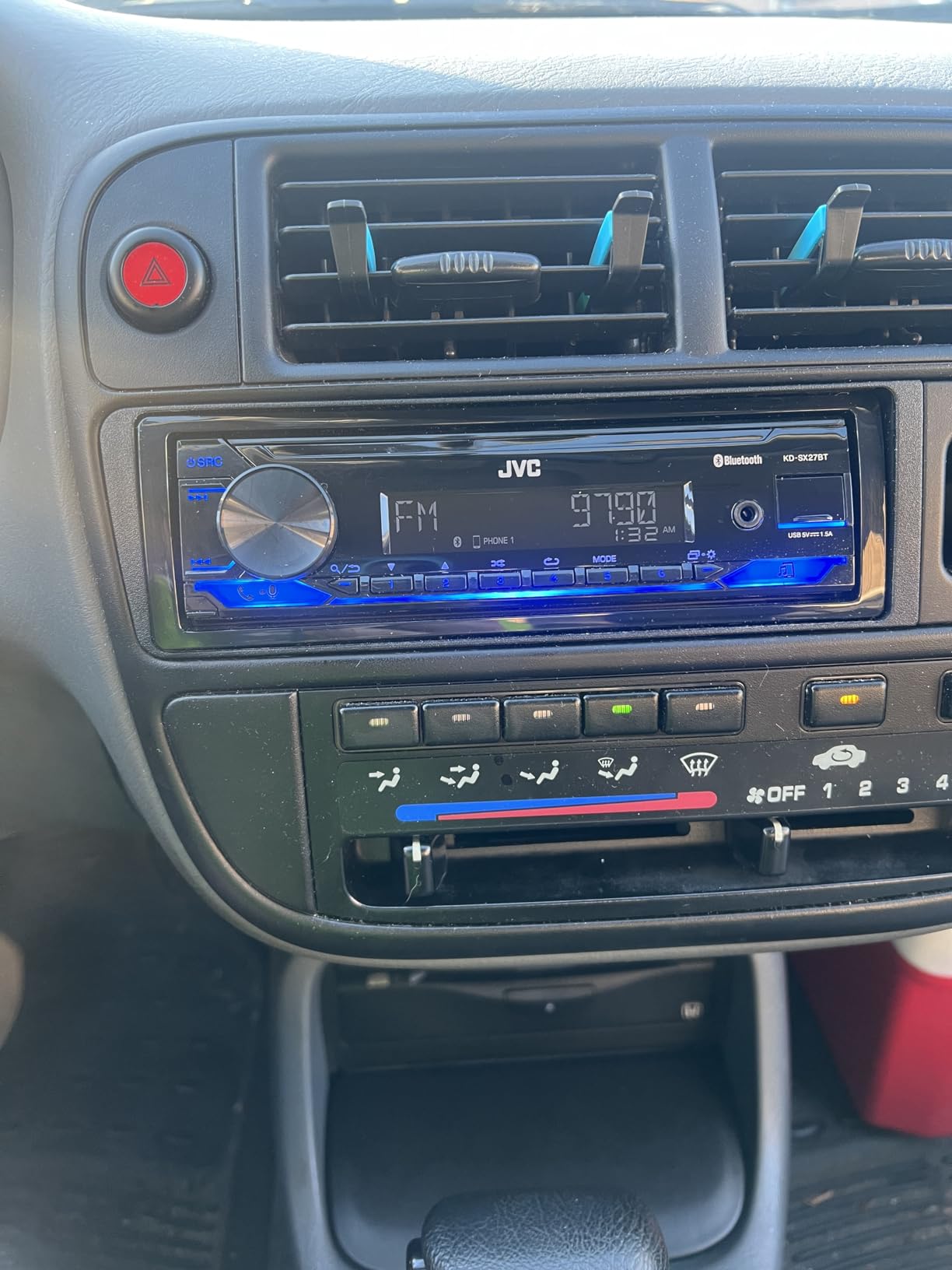
Power is the other headline. The built-in amplifier is rated at 100 watts overall, which works out to 50 watts per channel, and that is enough to skip an external amplifier for most installs. It is a real departure from the peak-number marketing that dominates cheaper units.
Dual phone connection is handy when two people ride in an older car, and up to five Bluetooth devices can be remembered. A preamp output is there for a subwoofer or a future amplifier. FLAC playback covers the high-resolution file formats.
Best for worn speakers
This is the choice when the speakers stay and the stereo does the work. The EQ depth lets you compensate for age-related roll-off that no new head unit can fix on its own, and the preamp output keeps the door open for a sub later.
Trade-offs to accept
The 100 watt figure is peak and settles at 50 watts per channel, so read it that way. There is no CD slot, and because the JVC Remote app handles some functions, you need your phone in the car to get everything.
8. Pioneer DEH-S4220BT – Best Upgrade From an Older Pioneer
Pioneer DEH-S4220BT 1-Din CD Car Stereo with Bluetooth USB/AUX
CD receiver with detachable face
Hi-Volt RCA preouts
50W x 4 output
Smart Sync app
Pros
- One of the few new single-DIN head units still playing physical discs
- Detachable faceplate discourages theft for cars parked outdoors
- MIXTRAX creates seamless DJ-style track mixing
- Advanced Sound Retriever improves clarity on compressed files
- Hi-Volt RCA preouts and a detachable faceplate in a premium body
Cons
- Bluetooth range is limited and can require staying close to the unit
- 50W x 4 output sounds thin when driving an external amplifier
- No touchscreen so navigation stays in the phone app
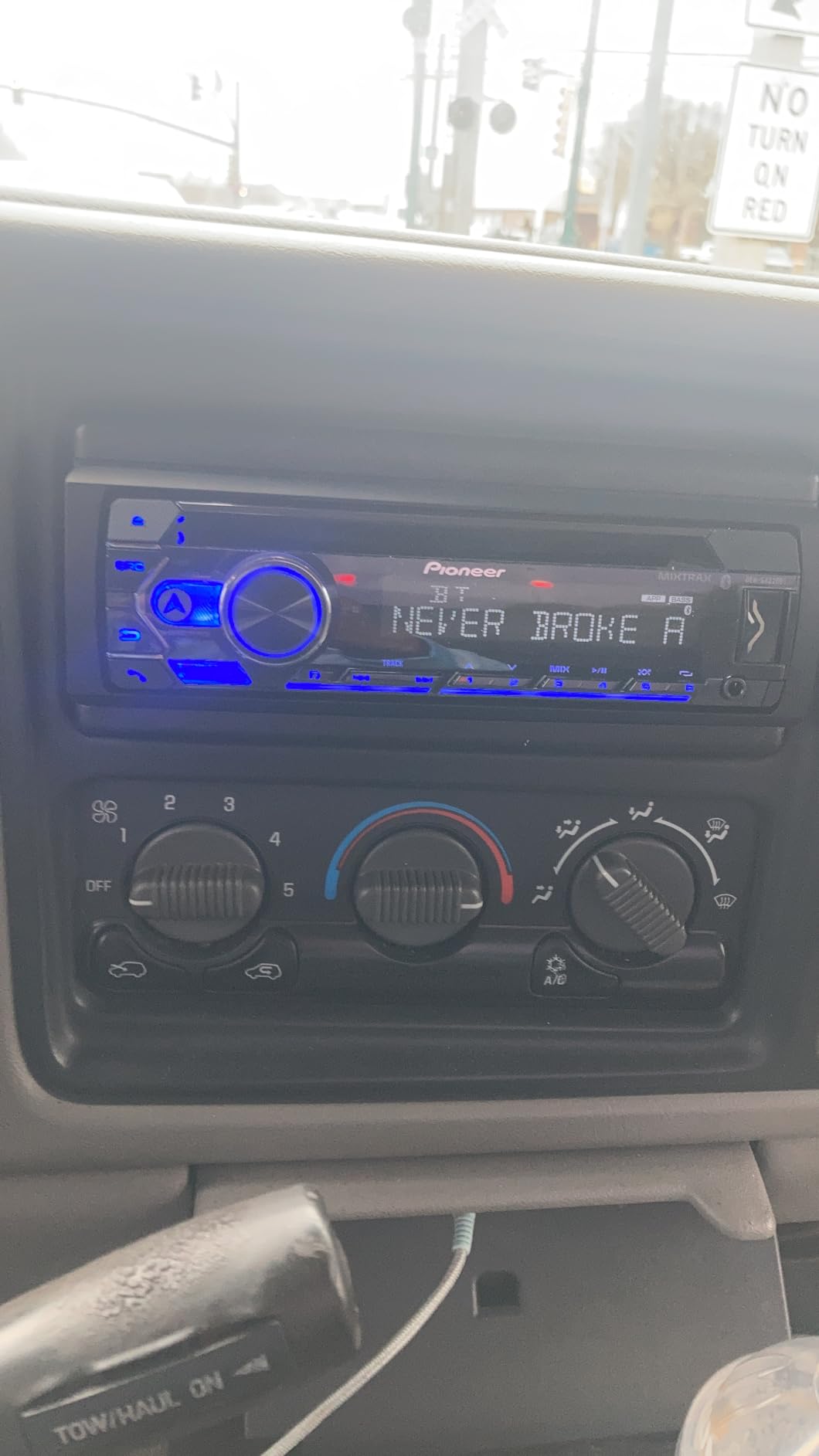
This is the option for owners stepping up from an older Pioneer CD receiver, sometimes decades old. Owners report that it drops directly into a 20-plus-year-old Pioneer opening, which is the single most time-saving thing about buying a same-brand replacement.
It carries the highest proportion of five-star ratings among the CD-capable units we tested. The detachable faceplate is the detail older-car owners appreciate most, since a car parked on the street with the original radio visible is an invitation.
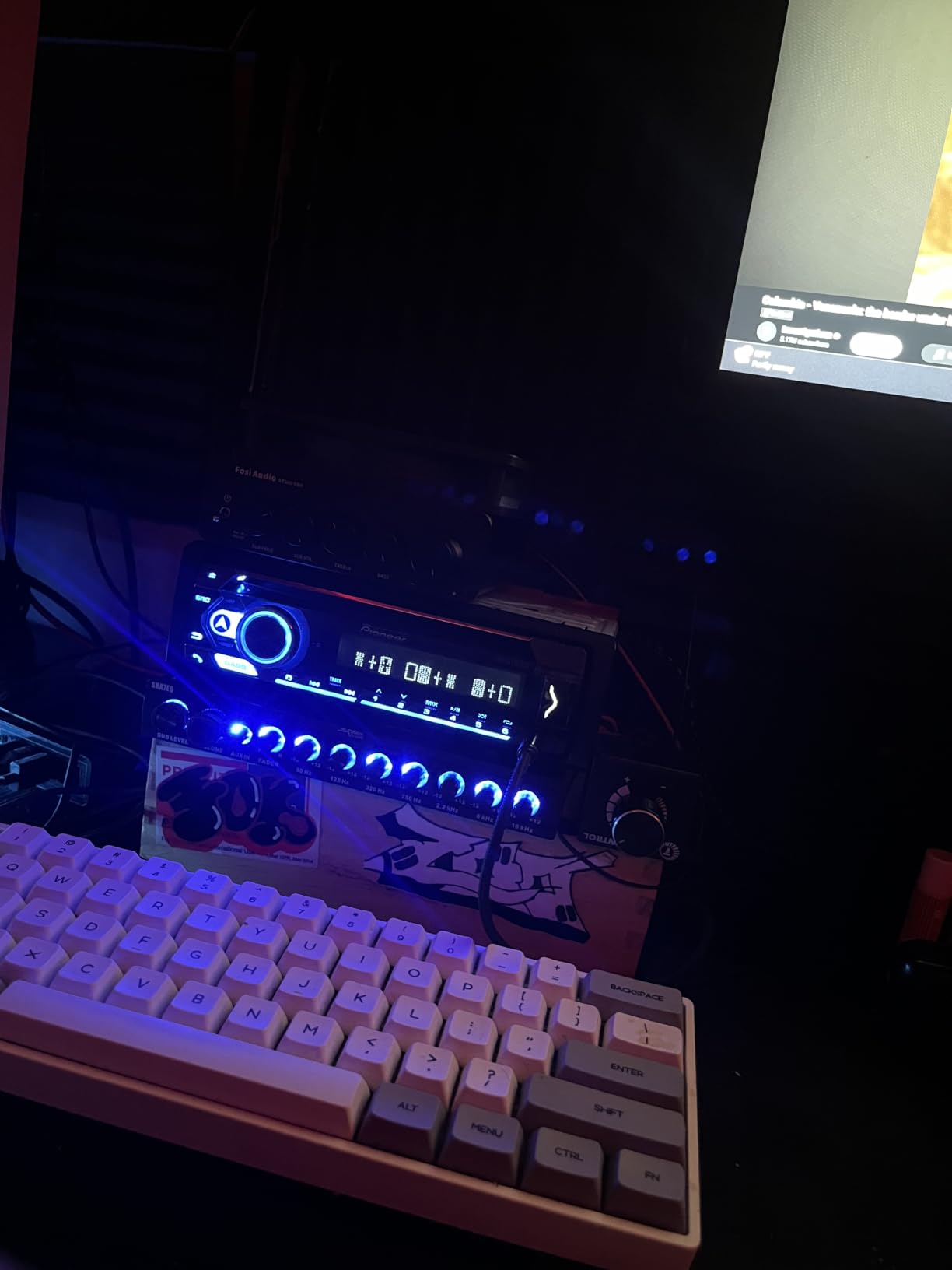
The Pioneer Smart Sync app expands the interface through your phone, which is how this unit gets navigation and voice control without a touchscreen. MIXTRAX handles automatic DJ-style mixing for long drives, and Advanced Sound Retriever does the same compression recovery work as the cheaper Pioneer.
Audio connections are good for a single DIN: Hi-Volt RCA preouts with 50 watts x 4 output give you clean signal into an external amplifier if you want one later.
Who benefits most
Owners replacing an aging Pioneer head unit, particularly in an older car where the existing faceplate dimensions already match. The detachable faceplate and physical CD slot also suit people who still buy discs.
Where it holds you back
Bluetooth range is the most common complaint, with some users needing to stay close to the unit. Output can feel thin when driving an external amplifier, and there is no touchscreen, so all navigation stays inside the phone app.
9. Sony DSX-A410BT – Best Compact Dash Fit
Sony DSX-A410BT Single Din Bluetooth Front USB AUX Car Stereo Digital Media Receiver (No CD Player)
Compact mech-less chassis
Dual Bluetooth for two phones
Voice control
Front USB and aux
Pros
- Compact single-DIN mech-less chassis handles older dashboards well
- Sony brand reputation for durability
- Dual Bluetooth pairs one phone for navigation and a second for calls
- Voice control for music directions and contacts
- Compact size keeps a low profile behind original bezels
Cons
- No CD player
- Front USB and aux only with no rear preamp inputs listed
- Fewer owner reviews than competitors so less long-term data
- Compact size may leave a visible gap in larger single-DIN openings
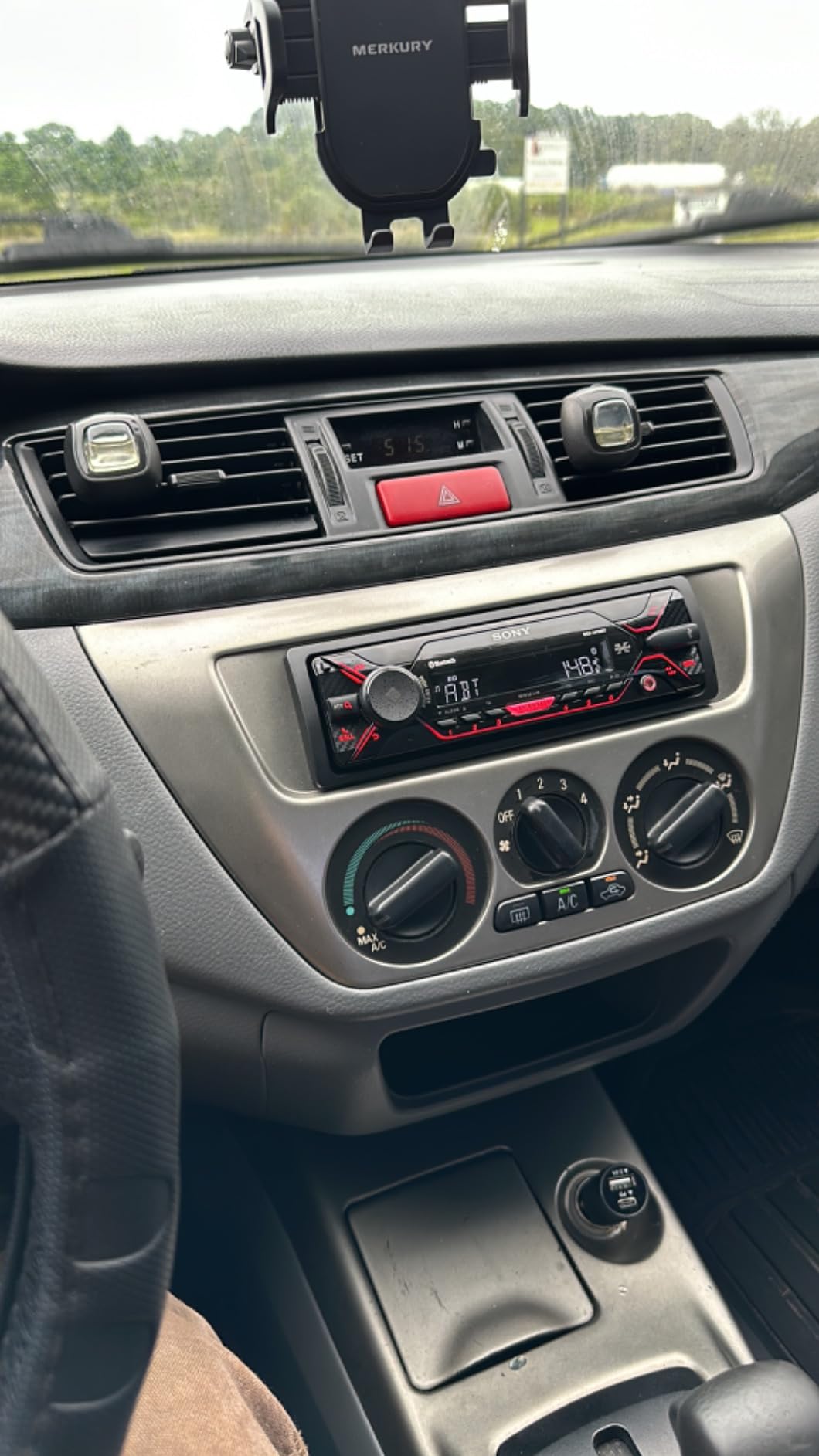
Sony’s compact mech-less body is built for exactly the situation we kept seeing in older cars: a dash cavity with almost no clearance behind the opening. Where a full-size single DIN unit needs a trim ring or an adapter to fill a large opening, the compact chassis simply drops in and stays put.
Dual Bluetooth is the feature that separates it. You can pair one phone for full navigation, music, and contacts while a second phone handles hands-free calling, which solves the problem of a passenger trying to take a call without the driver losing navigation audio.
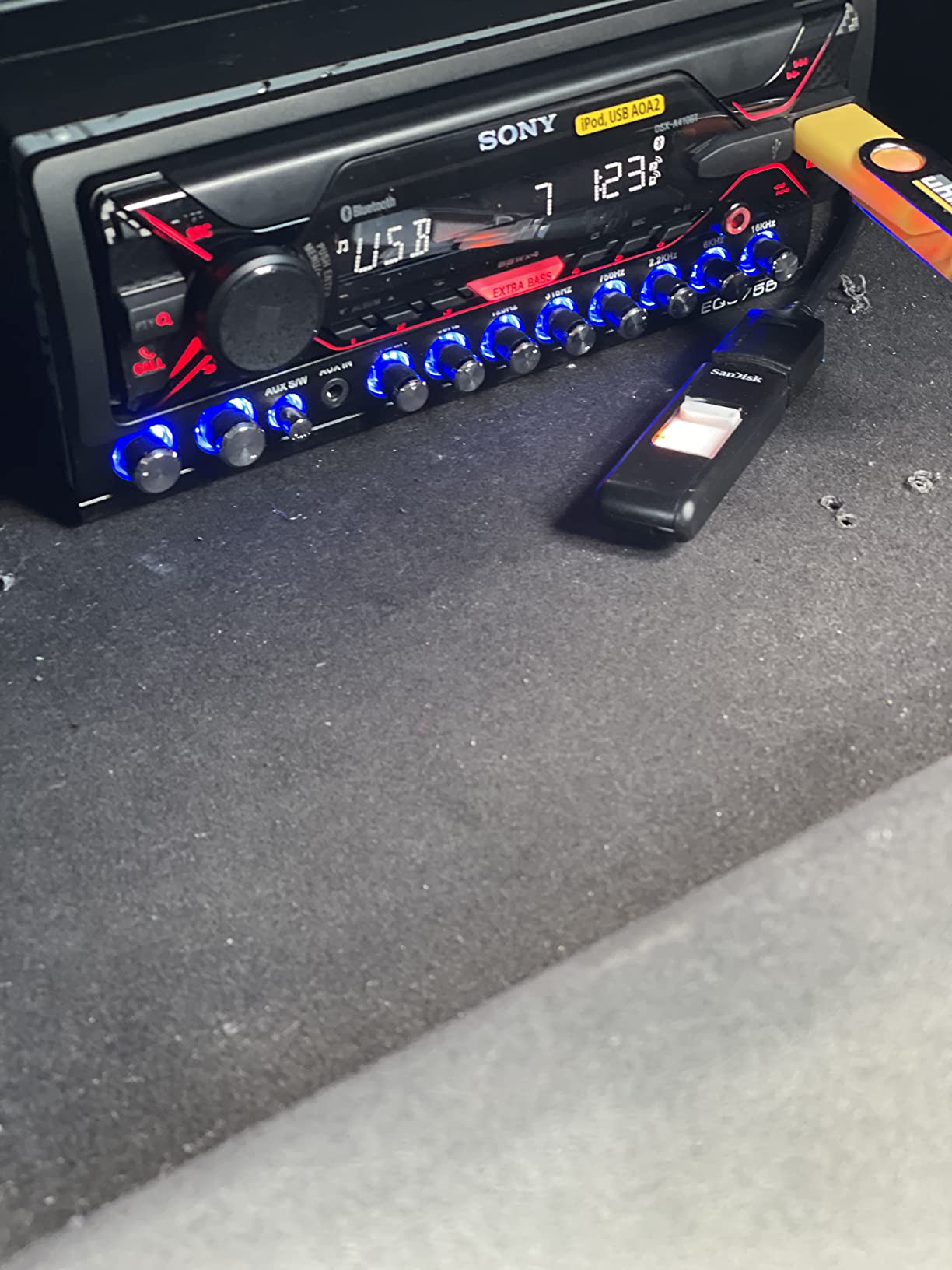
Voice control covers music, directions, and contacts, so a driver can change tracks or start guidance without taking hands off the wheel. Front USB and aux inputs are on the faceplate where they are easy to reach in a car with an awkward dash angle.
Owner ratings are among the highest proportions of five-star marks in this group, though the review base is smaller than most, which means there is less long-term reliability history behind it.
Best for very tight fits
Choose it when your dash cavity is minimal or when you want a low-profile face that disappears under an original bezel. The dual-phone setup suits households with two phones and one older vehicle.
Consider instead
No rear preamp inputs are listed, so an amplifier upgrade means rewiring later. There is no CD slot, and the compact size can leave a visible gap in a larger single DIN opening.
10. Kenwood KMM-BT270U – Best for Reviving Old Speakers
KENWOOD KMM-BT270U Bluetooth Digital Media Car Stereo Receiver with USB Port – AM/FM Radio, MP3 Player, High Contrast LCD, Detachable Face Plate, Single DIN, 13-Band EQ
MOSFET amplifier to 200W max
13-band EQ
Detachable faceplate
High contrast LCD
Pros
- MOSFET amplifier has far more power than a factory radio
- Detachable faceplate discourages theft in older cars
- 13-band EQ allows real tuning against tired speaker response
- High contrast LCD stays readable in daylight
- Shallow single-DIN body suits snug dash cavities
Cons
- Bluetooth pairing can be tricky for some owners on first attempt
- Isolated reports of a unit failing after about two months of use
- 200W is a peak figure rather than sustained output
- No CD playback in this mech-less version
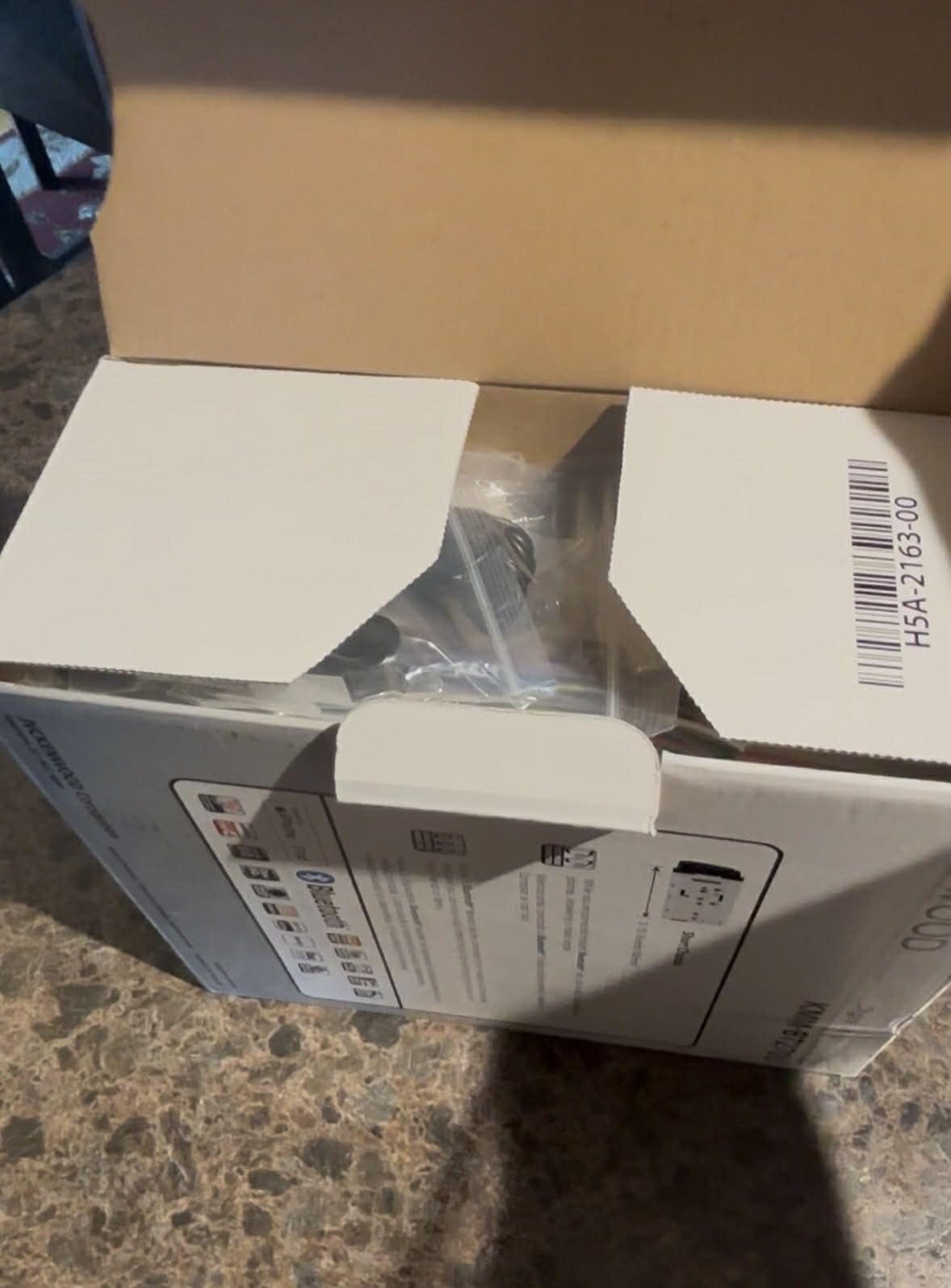
Kenwood built this unit around one argument: an old radio is the reason old speakers sound bad. The MOSFET amplifier produces substantially more output than a factory head unit, and installer reviews repeatedly describe it as visibly waking up worn factory speakers that had given up.
The 13-band EQ gives you the control to match that power to the speakers you already have. Combined with the shallow single DIN body, this is a strong fit for older vehicles with snug dash cavities where owners want to keep the original speaker set.
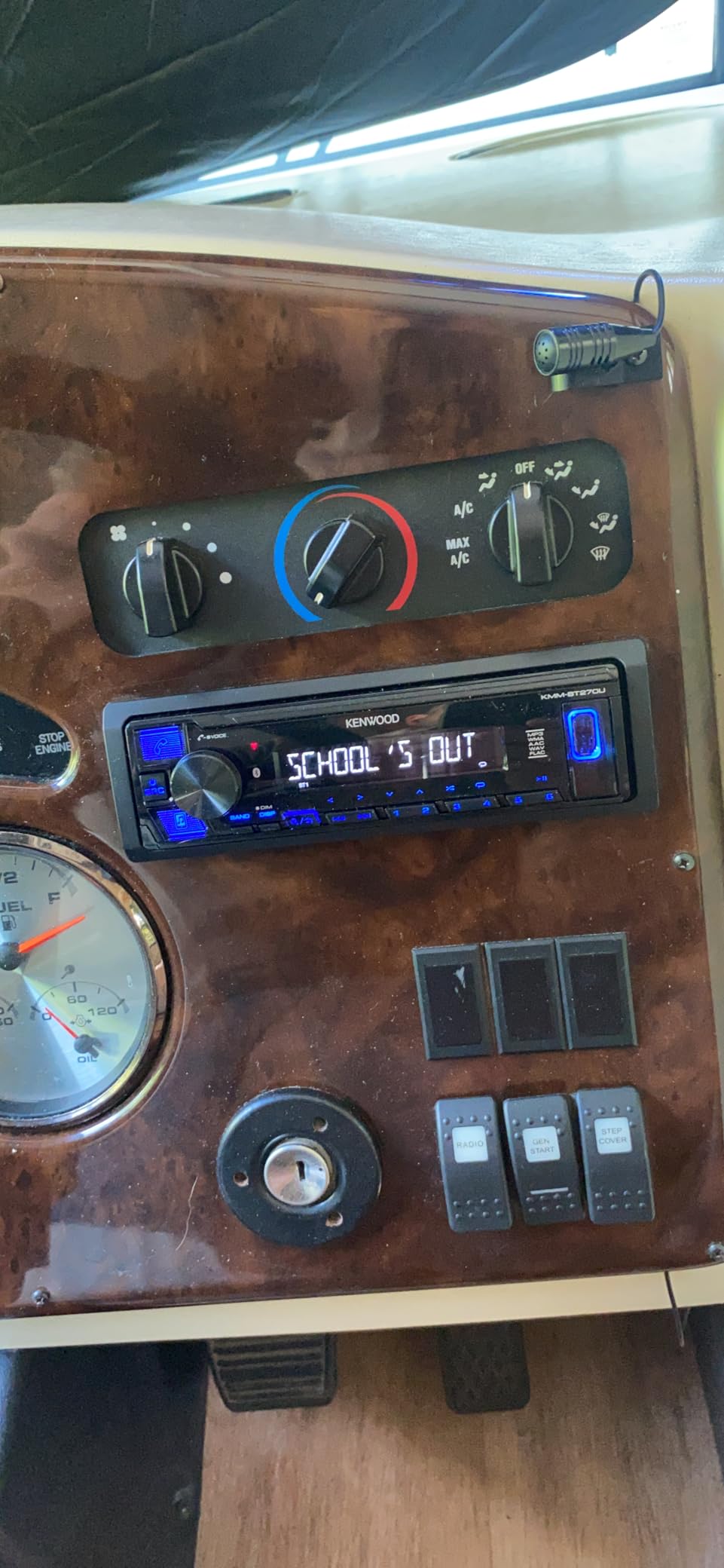
The detachable faceplate matters for older cars, which tend to sit outside more often. Take the unit with you and the thieves move on. The high contrast LCD stays readable in daylight, which older cars need more than newer ones.
USB, aux, and iPod or iPhone playback are all present, and Bluetooth handles streaming and hands-free calling. Owners describe completing an install in an older vehicle with a wire kit in roughly half an hour.
Best for keeping original speakers
If your speakers still work but sound thin, this is the head unit to try before buying new drivers. The amplifier headroom and 13-band EQ do more for an aged system than replacing either component.
Trade-offs
Some owners find Bluetooth pairing fussy on the first attempt, and there are isolated reports of a unit failing after a couple of months. The 200 watt figure is peak, not sustained, and this mech-less version has no CD slot.
11. BOSS Audio Systems 750BRGB – Best for Matching an Aged Dashboard
BOSS Audio Systems 750BRGB Single DIN Bluetooth Car Stereo, USB, AUX Input
60W x 4 max output
16 million color combinations
CD player with Bluetooth
Pre-amp outputs
Pros
- Illumination offers over 16 million color combinations to match an aged interior
- Keeps a CD player which is rare at this level
- Bluetooth pairs quickly and calls work well
- Slides into a rectangular DIN slot with clear color-coded wires
- Front and rear pre-amp outputs support an external amplifier
Cons
- CD mechanism is slow with long delays between tracks
- USB mode is slow to index large libraries and shows no track metadata
- Display brightness cannot be dimmed which is distracting at night
- Multiple durability reports including units dying within months
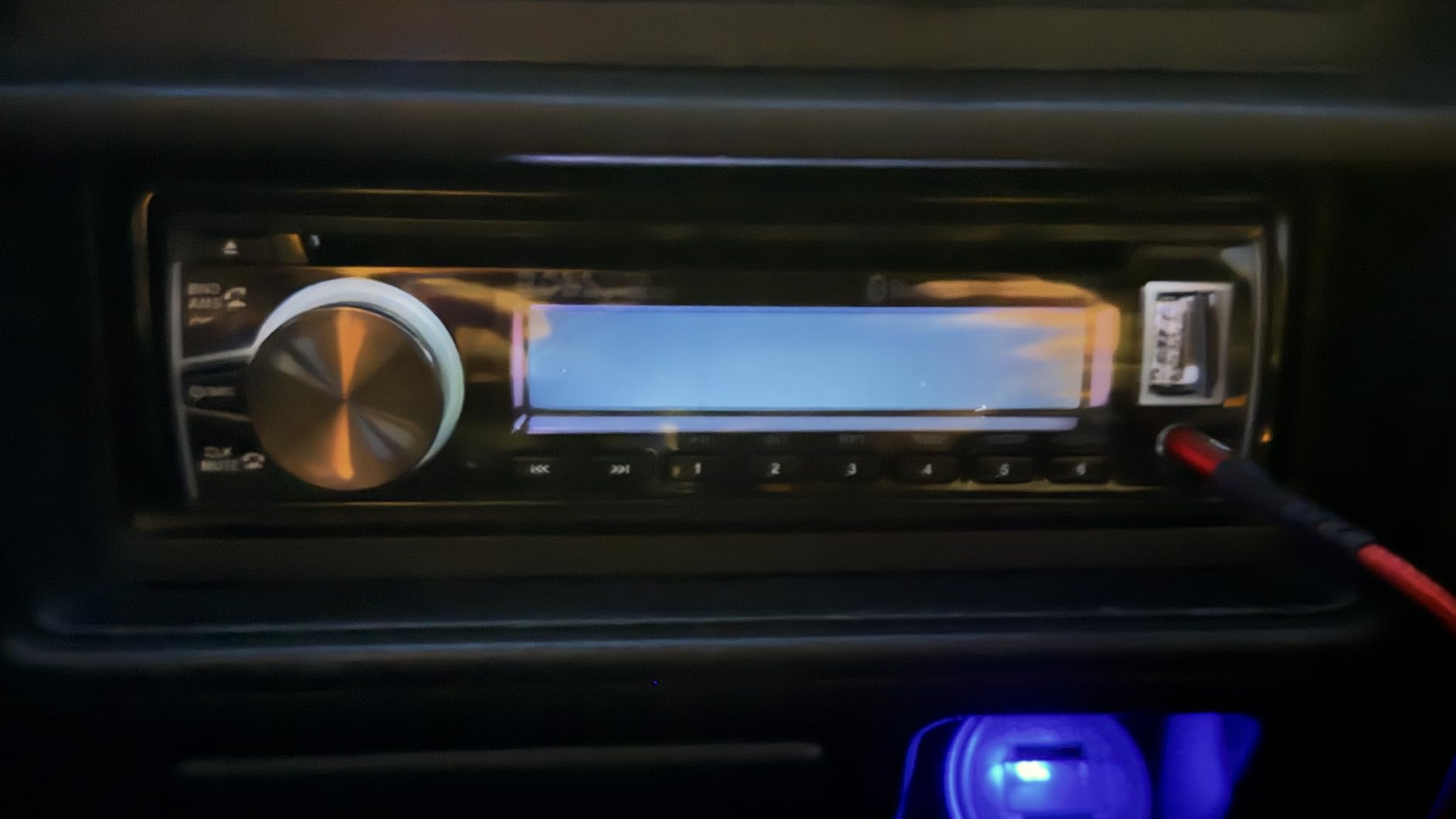
Multicolor illumination is the whole idea here, and it does something none of the other units manage: it lets you match the radio glow to an aged instrument cluster or a repainted dash. Over 16 million color combinations sounds like marketing, but owners of faded dashboards report it genuinely helping the unit look deliberate rather than foreign.
Underneath the lighting it is a conventional single DIN package with a retained CD slot, Bluetooth streaming and calling, USB, aux, and front and rear pre-amp outputs for 60 watts x 4 max power.
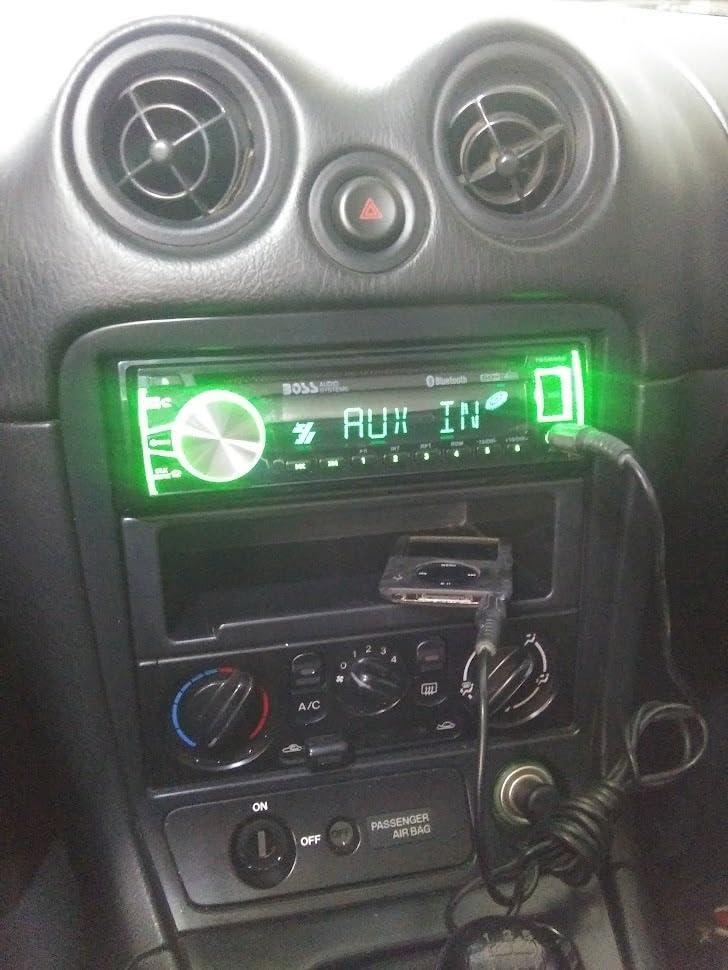
Installation is straightforward. Users describe sliding it into a rectangular DIN slot with clearly color-coded wires, and Bluetooth pairing is reported as quick and reliable.
It also carries the lowest average rating in this roundup, with a meaningful share of one-star reviews. Those complaints cluster around three things: a slow CD mechanism, a USB mode that takes a long time to index large libraries and shows no track metadata, and durability reports from owners whose units shut down after a few months, including one failure traced to a heat wave.
Who should buy it
Owners restoring a 1980s interior to a specific look, where a plain black or white faceplate would stand out. The CD slot and 3 year warranty also help for retro-styled builds.
Who should pass
Anyone parking in summer heat, since durability reports cluster around heat exposure. The un-dimmable display is a genuine problem for night driving, and the slow USB indexing gets old quickly with a large music library.
12. aboutBit Retro Bluetooth Radio – Best Retro Faceplate
Single Din Retro Bluetooth Radio: European Style Stereo for Classic Cars
Retro knob and button faceplate
Bluetooth 5.3
USB-C 25W charging
SD and USB and aux
Pros
- Retro European-style faceplate with knobs that suits 80s and 90s classics
- Bluetooth 5.3 connects quickly and auto-reconnects
- USB-C Power Delivery 3.0 charging up to 25 watts
- SD card slot alongside USB and aux
- Four-channel RCA preamp outputs for adding an amplifier
Cons
- Build quality is the weakest in this group with bendable frame and cheap buttons
- Minimal EQ with only low and high frequency adjustment
- Playback volume over Bluetooth is noticeably lower than radio volume
- Slightly smaller than a standard single DIN so it needs securing
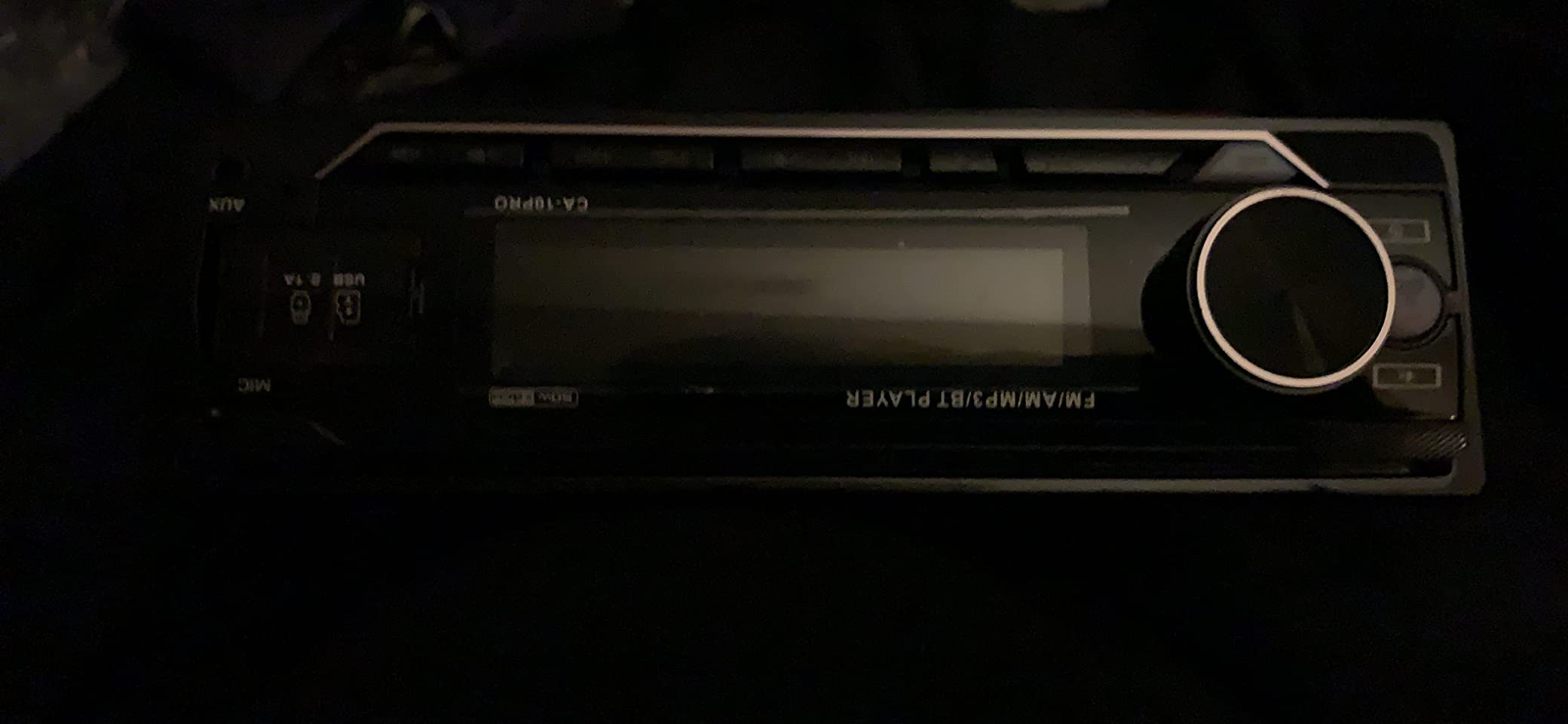
Among the batch of modern single DIN units, this is the one that does not look out of place in an 80s or 90s dash. The retro European-style faceplate uses knobs and push buttons rather than a flat membrane layout, which changes the whole feel of the center console.
The connections are modern regardless of the styling. Bluetooth 5.3 connects within seconds and auto-reconnects, and there is USB-C Power Delivery 3.0 charging up to 25 watts, a rarity at this level. An SD card slot and aux input sit alongside the USB port, and four-channel RCA preamp outputs are there for a future amplifier.
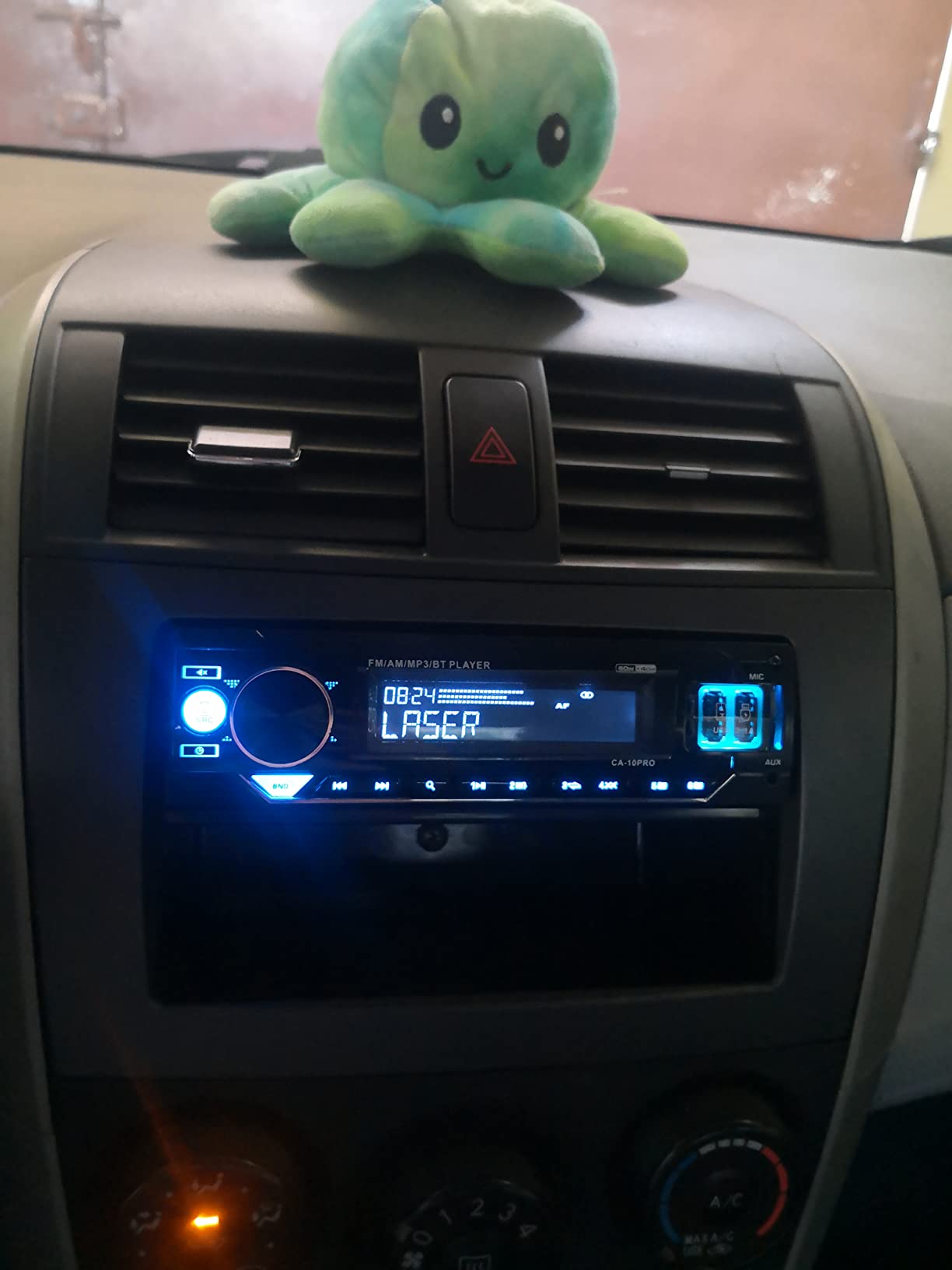
The AM and FM tuner holds 30 presets, and playback covers MP3, FLAC, WMA, and WAV. Standard 7 by 2 inch single DIN fit with color-coded wires keeps the install conventional, and one owner has fitted two of them across an older truck and a square-body pickup.
Build quality is where the budget shows. Owners describe flimsy buttons and a bendable metal frame, and the EQ is limited to low and high frequency adjustment with no multi-band graphic. Bluetooth playback volume also sits noticeably below the radio’s own volume, which is a quirk worth knowing before you blame your speakers.
Best for a period-correct look
Choose it when appearance in an older interior is the priority but you still want streaming, hands-free calling, and fast USB-C charging on the road. The faceplate is the closest any unit in this group gets to a modern radio disguised as a period one.
Where to spend carefully
If you plan to keep the car long term, the cheap-feeling construction and two-frequency EQ are worth weighing. The body is slightly under a full single DIN, so it needs zip ties or an adapter to stay secure, and the vehicle-specific wiring adapter is a separate purchase.
How to Choose a Car Stereo for an Older Car
Fitment decides everything else. Measure the opening before you buy, and treat the measurements in a listing as a starting point rather than a guarantee, because the reported dimensions for the same model number are not always consistent across sellers.
Single DIN versus double DIN. A single DIN opening is the standard 7 by 2 inch rectangle found in most cars built from the 1960s through the 1990s, and it is the format of every unit we reviewed. A double DIN opening is a stacked 4 by 8 inch rectangle that appeared mainly in 1990s cars, and filling one with a touchscreen unit usually means buying a dash kit or trimming the plastic around the opening.
Chassis depth. This is the number that saves installations. Behind an original single DIN opening there may be only two or three inches before you hit the wiring loom, the wiper motor, or the HVAC box. Shallow chassis units such as the Alpine UTE-73BT and the Pioneer MVH-S230BT are built for that clearance, while a deeper mech-less body can push against the back of the cavity and stop the faceplate seating properly.
Fitment by era. Cars from the 1960s and 1970s generally have a clean single DIN opening with very little room behind it, so shallow chassis and reproduction faceplates matter most. Cars from the 1980s often have oversized openings that leave a gap around a standard faceplate, which is the case the Jensen MPR210’s wide faceplate solves. Cars from the 1990s more often have double DIN openings or integrated factory climate controls, so measure whether a dash kit exists for your specific year, make, and model before buying anything.
Restore the original or replace it. The decision forum owners argue about most. Restoring the original radio keeps the car period correct, which is the priority for concours and show builds, but original radios need specialist service and offer no Bluetooth or hands-free calling. Replacing it with a modern unit is faster and adds safety and convenience features, at the cost of originality. A hideaway approach splits the difference: you keep the original radio visible and non-functional, and mount a modern head unit out of sight in the console, under a seat, or in the glovebox.
Hidden and hideaway systems. Brands in this category build radios designed to be mounted anywhere except the dash opening, with a small face or dial left in the original location and the electronics relocated. Purists who want the best sound and the factory look most often end up here. The trade-off is that you are running wires, and the visible control is often a small knob rather than a full unit.
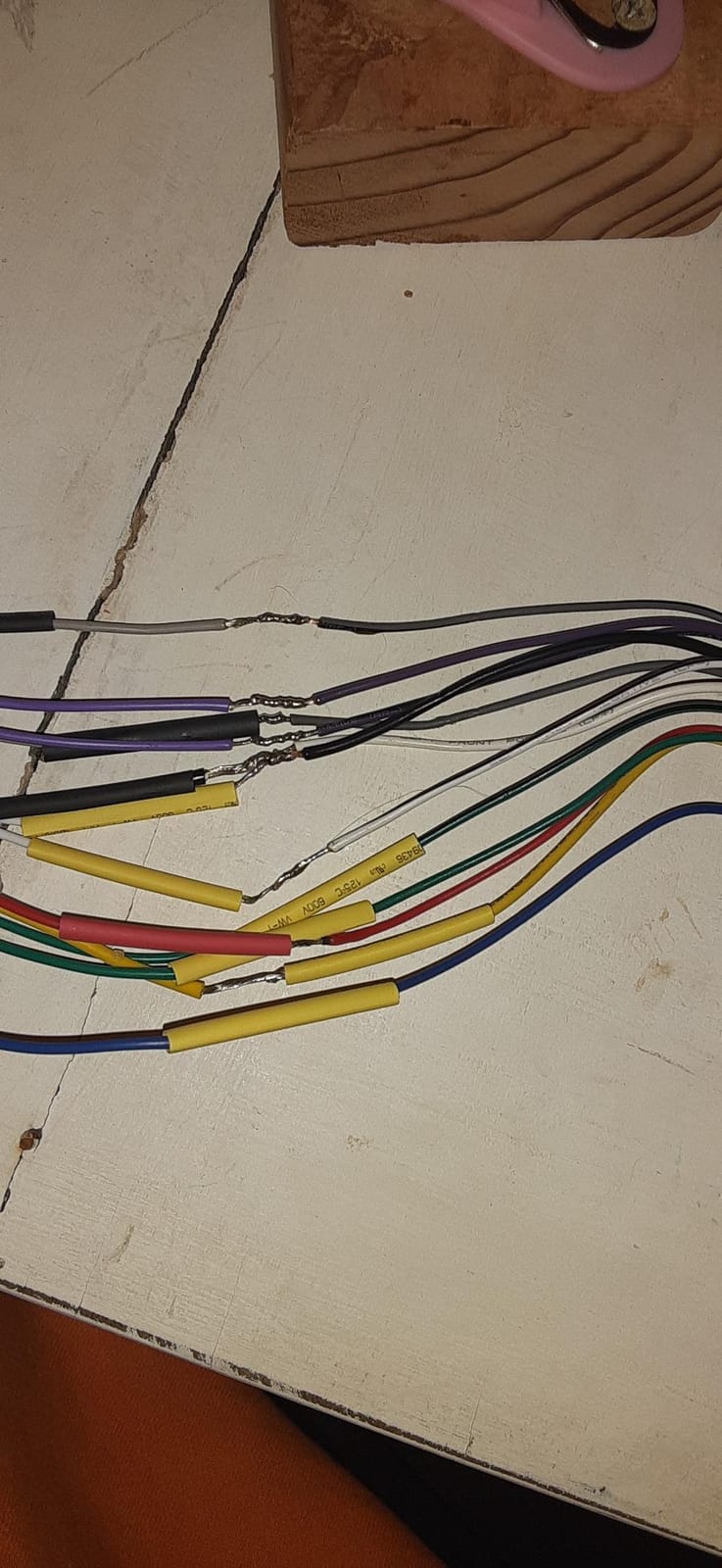
Wiring harness. A vehicle-specific harness adapter is the single most useful accessory in an older car. It converts the factory connector to a standard ISO plug, so you are not cutting and soldering original wiring, and it usually includes the speaker wires and the accessory power lead. Adding one costs far less than repairing a dashboard, and it keeps the install reversible.
Steering wheel controls. Cars from the early 1990s onward often have factory steering wheel controls that will not work with any aftermarket unit without an adapter matched to your exact vehicle. If your car has them, look up the adapter for your year, make, and model before you finalise the purchase. Cars from the 1960s and 1970s rarely have any, so this does not apply.
Speaker and amplifier path. Nearly every car from the 1980s onward has paper-cone front speakers that are the real limit on how a system sounds. Replacing the stereo first is still worthwhile because a stronger amplifier can wake faded drivers, and units with preamp outputs let you add an amplifier later without cutting the head unit out again. If you want a subwoofer, confirm there is a preamp output before you buy.
What to look for in the review history. Read the complaints, not the praise. Owner reviews on these products consistently mention fitment, heat durability, Bluetooth range, and whether the unit’s power figure held up, and those are the four areas where the difference between models actually shows up.
Our general guide to the best car stereos tested and reviewed covers current touchscreen units in newer vehicles, which are worth reading alongside this one if you are comparing what you could have in a modern car.
Frequently Asked Questions
Which brand is best for car audio in a classic car?
There is no single best brand, because fitment decides more than sound. Alpine, Pioneer, Kenwood, Sony, and JVC all build shallow single DIN units suited to older dashboards, while BOSS and Dual cover the budget tier. For an older car, choose the brand whose chassis depth matches your dash cavity and whose preamp outputs let you add an amplifier later.
What is the best vintage stereo system for an older car?
For a vintage look with modern function, a retro-faceplate single DIN unit with knobs and push buttons is the closest match, and the aboutBit Single Din Retro Bluetooth Radio is the clearest example we tested. For a concours restoration where originality rules, restoring the original radio is the only period-correct answer.
What is the coolest single-DIN head unit right now?
The coolest-looking single DIN head unit is the one styled with analog knobs and push buttons rather than a flat membrane faceplate, because it blends into an older dashboard. On features, the JVC KD-SX27BT stands out with a 13-band equalizer, Time Alignment, and a built-in amplifier that most installs never need to match with an external unit.
What aftermarket stereo fits my older car?
Most cars built from the 1960s through the 1990s use a single DIN opening, which is the 7 by 2 inch rectangle that every unit in this roundup fits. Cars from the early 1990s may have a double DIN opening or an integrated factory radio that needs a vehicle-specific dash kit. Measure the opening and check for a vehicle-specific harness or kit before you buy.
Can you install a modern stereo in a classic car without cutting the dash?
Yes, in most cases. A shallow single DIN head unit and a vehicle-specific wiring harness adapter will fit an original opening without any metalwork, because the harness plugs into the factory connector instead of cutting original wires. Cars with a double DIN opening usually need a trim ring or a vehicle-specific dash kit rather than cutting the panel.
Conclusion
The BOSS Audio Systems 616UAB is our pick for the best car stereos for older cars in 2026. It carries the largest body of owner feedback in the group, fits a standard single DIN opening without any dash modification, and includes front and rear pre-amp outputs so the system can grow later.
For the highest-rated build and the shallowest chassis, the Alpine UTE-73BT is hard to beat in a tight cavity. For wide dash openings in 1980s cars, the Jensen MPR210 fills the gap and carries a four year registered warranty. For people who still own CDs, the BOSS 508UAB keeps the disc slot, and for faded speakers the JVC KD-SX27BT offers the deepest tuning options.
Whichever you choose, measure the opening, buy a vehicle-specific wiring harness, and keep the original radio until the new one is proven in your car.