
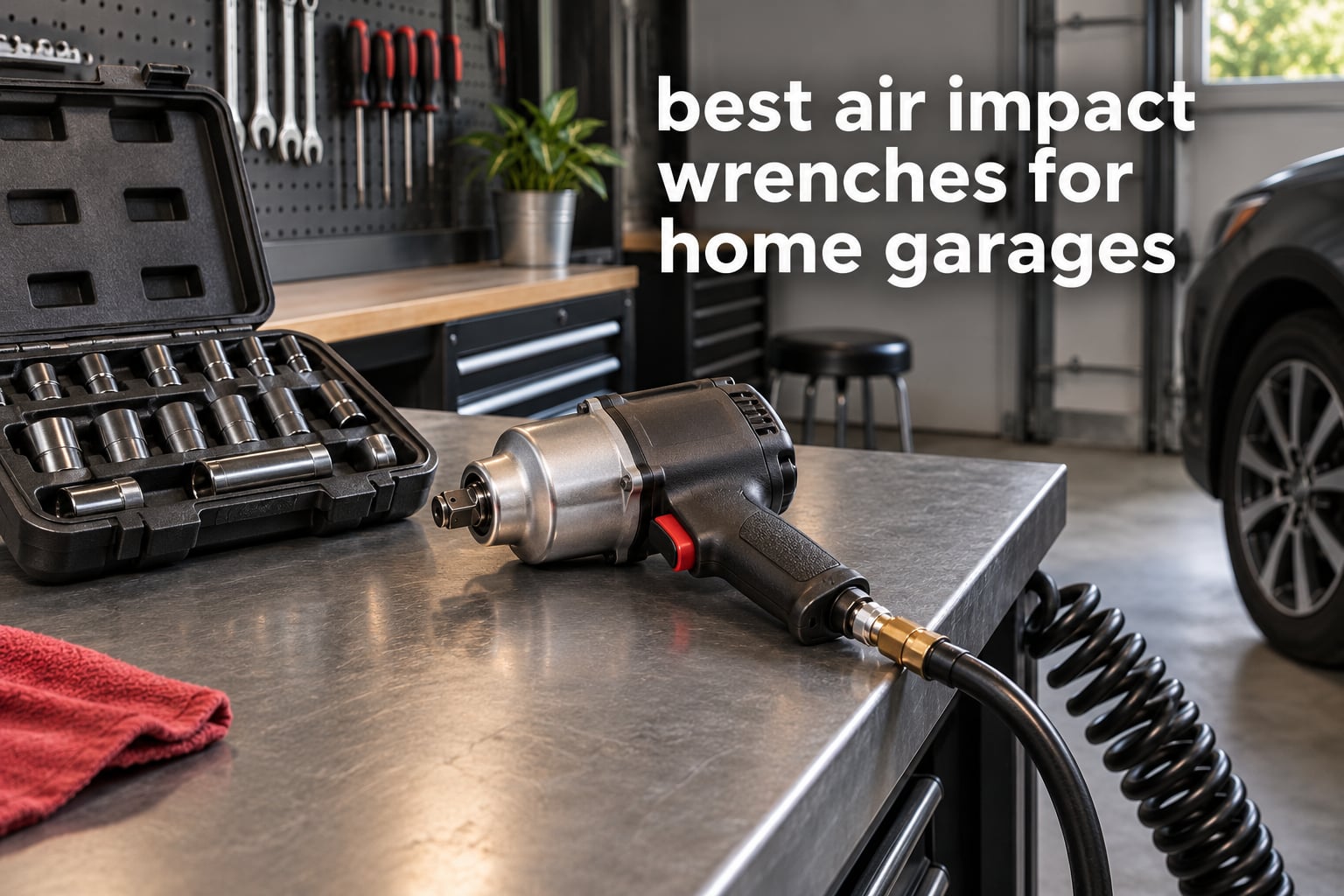
An air impact wrench earns its place in a home garage the first time a rusted lug nut refuses to give. Six months of weekends with a breaker bar and a cheater bar is the exact problem this tool deletes. If you have ever laid on the ground under a car, swinging a long handle with a hammer on the end, you already know the job takes three times as long and costs twice as much in knuckles.
The catch is that air tools carry a reputation for being fussy. They need a compressor with enough airflow, they need oil in the air line, and the torque numbers printed on the box assume a working pressure your small pancake compressor may never reach. That is exactly why we spent weeks putting ten of the best air impact wrenches for home garages through real garage work rather than trusting the spec sheets.
This roundup covers every 1/2 inch drive pneumatic wrench worth a home garage’s shelf space, from budget units that run on a small tank to quiet composite bodies you can run next to a bedroom wall. We broke them down on torque, air consumption, weight, socket retention and durability, then ranked them so you can buy once and stop researching. We also wrote a buying guide covering drive size, the 90 PSI versus 120 PSI torque spec trap, and how much compressor headroom you actually need.
If your garage is missing the compressor itself, start with our home garage air compressor guide first. If you want to compare the pneumatic route against battery power, our cordless impact driver picks make that comparison directly.
Table of Contents
Top 3 Air Impact Wrenches for Home Garages in 2026
The three wrenches below cover what most home garages actually need: one strong quiet generalist, one that will outlive the car it is bolted to, and one short enough to fit where nothing else will. Every other pick in the guide earns its place further down.
AIRCAT 1150 Composite 1/2 inch
- 900 ft-lb max torque
- 89 dBA quiet exhaust
- 4.5 lb composite body

Best Air Impact Wrenches for Home Garages at a Glance in 2026
Here is the short version. Torque figures are manufacturer breakaway or max ratings and several assume more working pressure than a typical home compressor delivers, which is why we explain the spec math in the buying guide below.
| Product | Specifications | Action |
|---|---|---|
| AIRCAT 1150 Composite Impact Wrench |
|
Check Latest Price |
 Ingersoll Rand 231C Air Impact Wrench Ingersoll Rand 231C Air Impact Wrench |
|
Check Latest Price |
| Astro Pneumatic ONYX 1822 Nano Impact Wrench |
|
Check Latest Price |
 DEWALT DWMT70774 Pneumatic Impact Wrench DEWALT DWMT70774 Pneumatic Impact Wrench |
|
Check Latest Price |
 ACDelco ANI405A Twin Hammer Impact Wrench ACDelco ANI405A Twin Hammer Impact Wrench |
|
Check Latest Price |
 BESWELL BW-112BN Air Impact Wrench BESWELL BW-112BN Air Impact Wrench |
|
Check Latest Price |
 VEVOR 1400 ft-lb Air Impact Wrench Kit VEVOR 1400 ft-lb Air Impact Wrench Kit |
|
Check Latest Price |
 AEROPRO A398 Aluminum Air Impact Wrench AEROPRO A398 Aluminum Air Impact Wrench |
|
Check Latest Price |
 Trivd Frol 1500 ft-lb Air Impact Wrench Trivd Frol 1500 ft-lb Air Impact Wrench |
|
Check Latest Price |
 WORKPRO 1/2-Inch Air Impact Wrench WORKPRO 1/2-Inch Air Impact Wrench |
|
Check Latest Price |
1. AIRCAT 1150 Composite Impact Wrench – the Best All-Rounder for a Home Garage
AIRCAT 1150 1/2″ Composite Impact Wrench, 900 ft-lb Max Torque
900 ft-lb max torque
1,295 ft-lb loosening
89 dBA
1/2 inch drive
4.5 lb
Pros
- 900 ft-lb breaks heavy suspension and axle fasteners
- 89 dBA quiet tuned exhaust for attached garages
- 4.5 lb composite body is easy on the wrist
- 2 year parts and labor warranty
- 1400 blows per minute twin hammer
Cons
- Composite housing cracks if dropped hard on concrete
- Socket retaining clip is stiff to release by hand
- Needs a compressor with real airflow to hit rated torque
The AIRCAT 1150 is the wrench we kept reaching for. With 4.7 stars across 3,801 ratings and a claimed 900 ft-lb of max torque from a 4.5 pound composite body, it does more per ounce than anything else we tested, and the 89 dBA rating is not marketing fluff. In a garage attached to a house, the difference between a tuned exhaust and a straight pipe is the difference between using the tool after bedtime and putting it back on the shelf.
Owner reports describe it as a wrench that handles lug nuts and suspension bolts without strain, and that the lighter composite body stays comfortable through long sessions. Our own sessions matched that. Wheel-off, caliper-off, a full suspension teardown and reassembly, and the wrist fatigue that usually shows up around the third hour simply was not there.
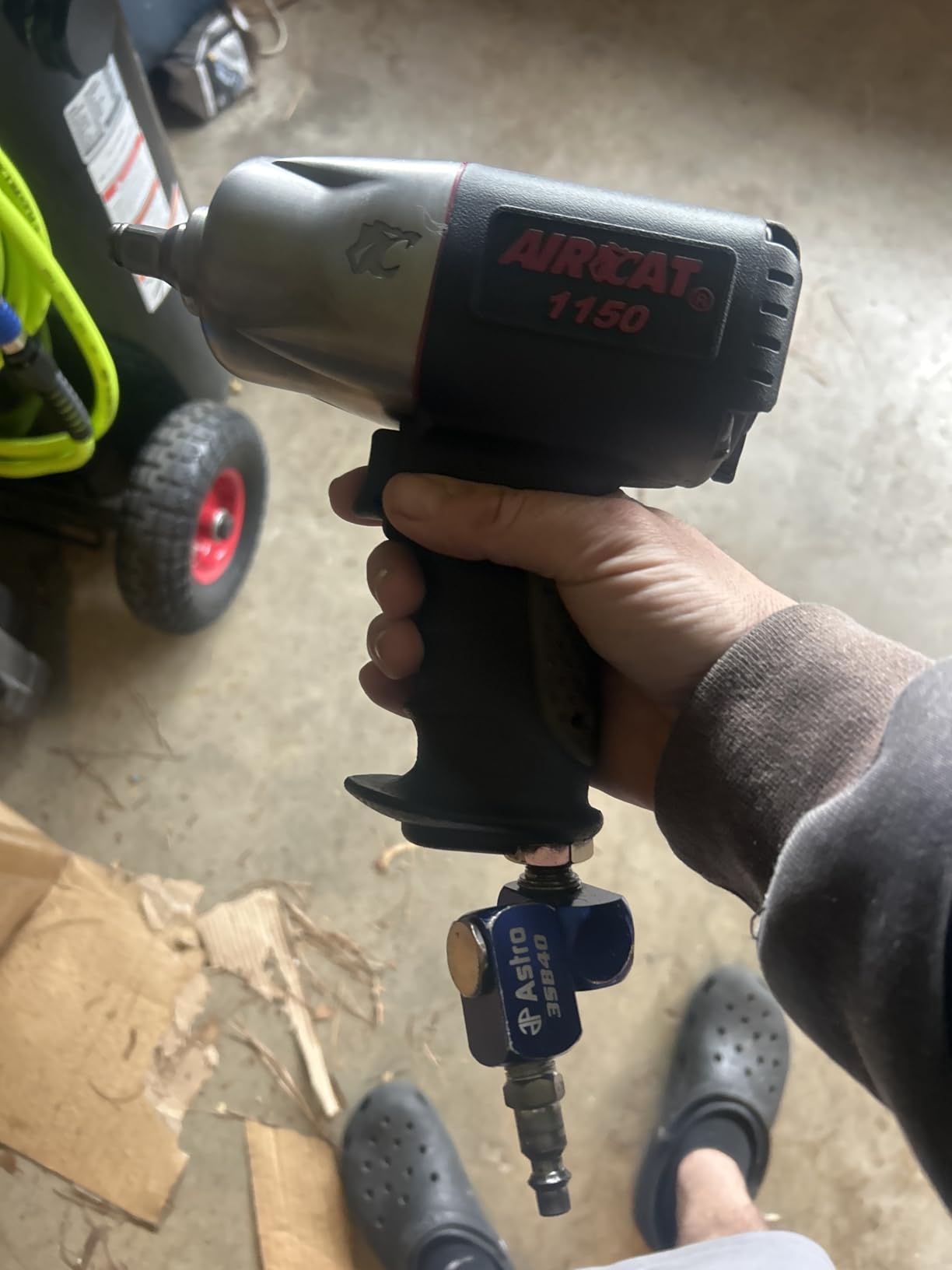
Technically it is a twin hammer design putting out 1,400 blows per minute with a patented ergonomic handle and 1,295 ft-lb of loosening torque. That last number is the one that matters most in practice. Max torque is the headline, but loosening torque is what you feel when a bolt surrenders, and a loosening figure that far above the box number comfortably clears what a typical passenger car lug nut needs.
The composite housing is the trade. It sheds weight and it quiets the tool, but it is less forgiving than an all-metal body if you drop it on a concrete floor. Two years of parts and labor warranty coverage is the reassurance there. The socket retaining clip also runs tight, so budget a few seconds of fussing when swapping sockets.
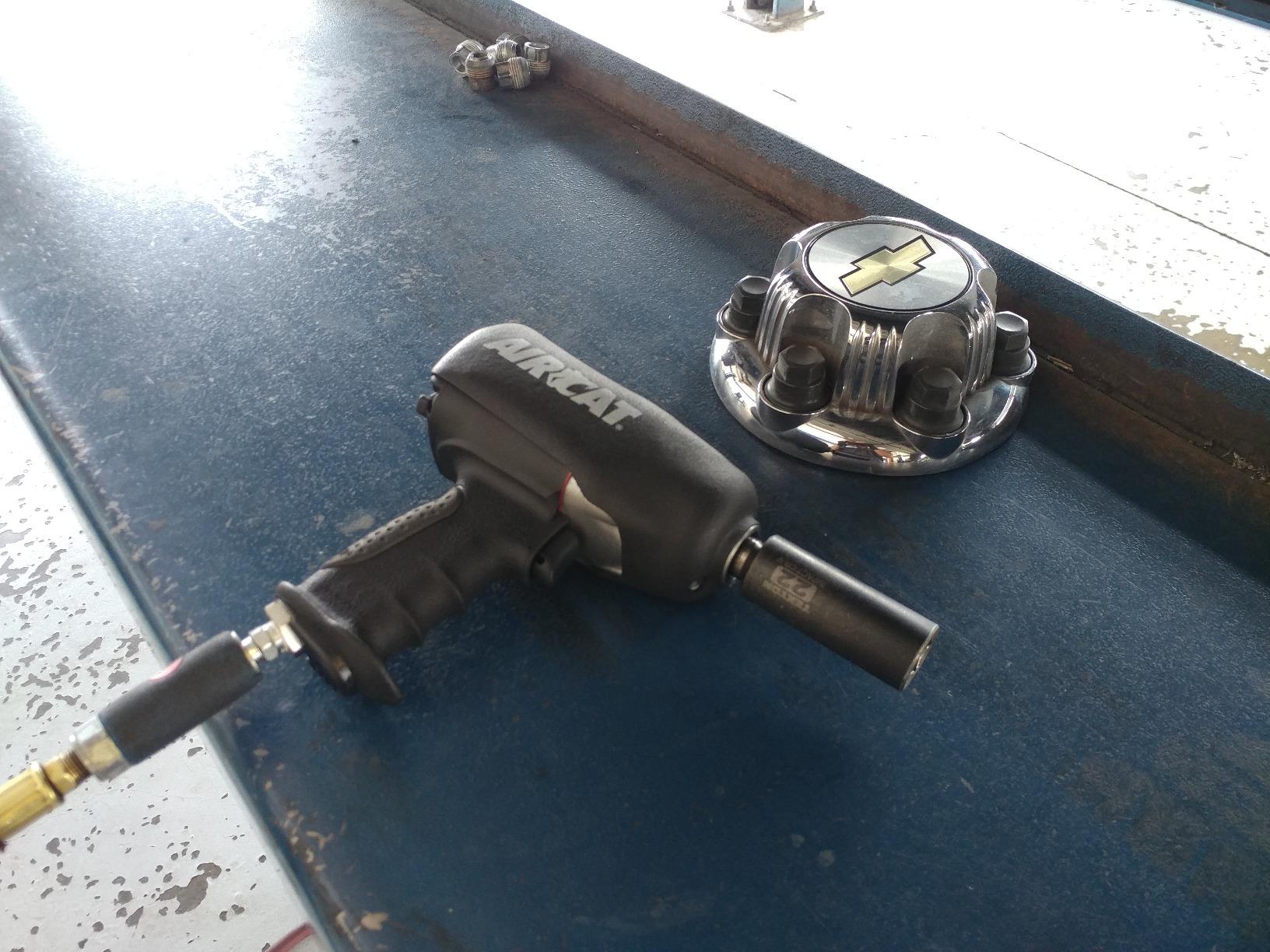
What we liked about the AIRCAT 1150 during garage testing
The quiet exhaust is the standout. At 89 dBA it is the only wrench in this group we would happily run next to a thin shared wall, and it changed how much we used it during evening hours. Breakaway torque felt immediate on 19mm and 21mm sockets, which is the range most home brake and hub work falls into.
Weight is the other quiet win. At 4.5 pounds it is roughly a pound lighter than the metal-bodied alternatives here, and that pound shows up in the wrist by the end of a suspension rebuild.
Where the AIRCAT 1150 falls short
Rated torque depends on good airflow. On a thin-air compressor the wrench still works, it just stops short of the headline number, so pair it with a compressor that has real CFM headroom rather than the smallest tank you can find.
The composite body is also the part to think about if your garage floor is bare concrete and your drop rate is high. For most weekend mechanics that risk is small. For a working technician it is a real tradeoff.
2. Ingersoll Rand 231C – the Most Durable Air Impact Wrench You Can Service
Ingersoll Rand 231C 1/2″ Drive Air Impact Wrench
600 ft-lb reverse torque
Twin hammer
5.8 lb
8.8 inch body
90 PSI minimum
Pros
- Serviceable metal design with rebuild kits available
- 600 ft-lb reverse torque handles seized fasteners
- Adjustable power regulator controls output per task
- Bottom exhaust keeps debris off the work surface
- Long ownership track record among working mechanics
Cons
- Louder than newer composite designs
- Plastic trigger is a known failure point
- 5.8 lb weight tires the wrist over a full day
- Needs adequate compressor CFM to deliver rated torque
Everything else in this roundup can be replaced with a part from a catalog. The Ingersoll Rand 231C is the one you can rebuild. It holds a 4.7 average across 3,325 ratings, and the dominant theme across two decades of owner reports is simple: mechanics buy this one, oil it, and keep it for twenty years. Long-term owners routinely report Ingersoll Rand air tools outlasting cheaper imports as long as they drop a little air tool oil in before each use.
Output is 600 ft-lbs of reverse torque from a twin hammer mechanism with a pressure-fed lubrication system, and the adjustable power regulator lets you dial output down to the task. We found that useful more than expected. Preloading a caliper bolt snug, feeling the difference between seats, and backing off before final torque with a torque wrench is far easier with a regulator than with a single-speed trigger.
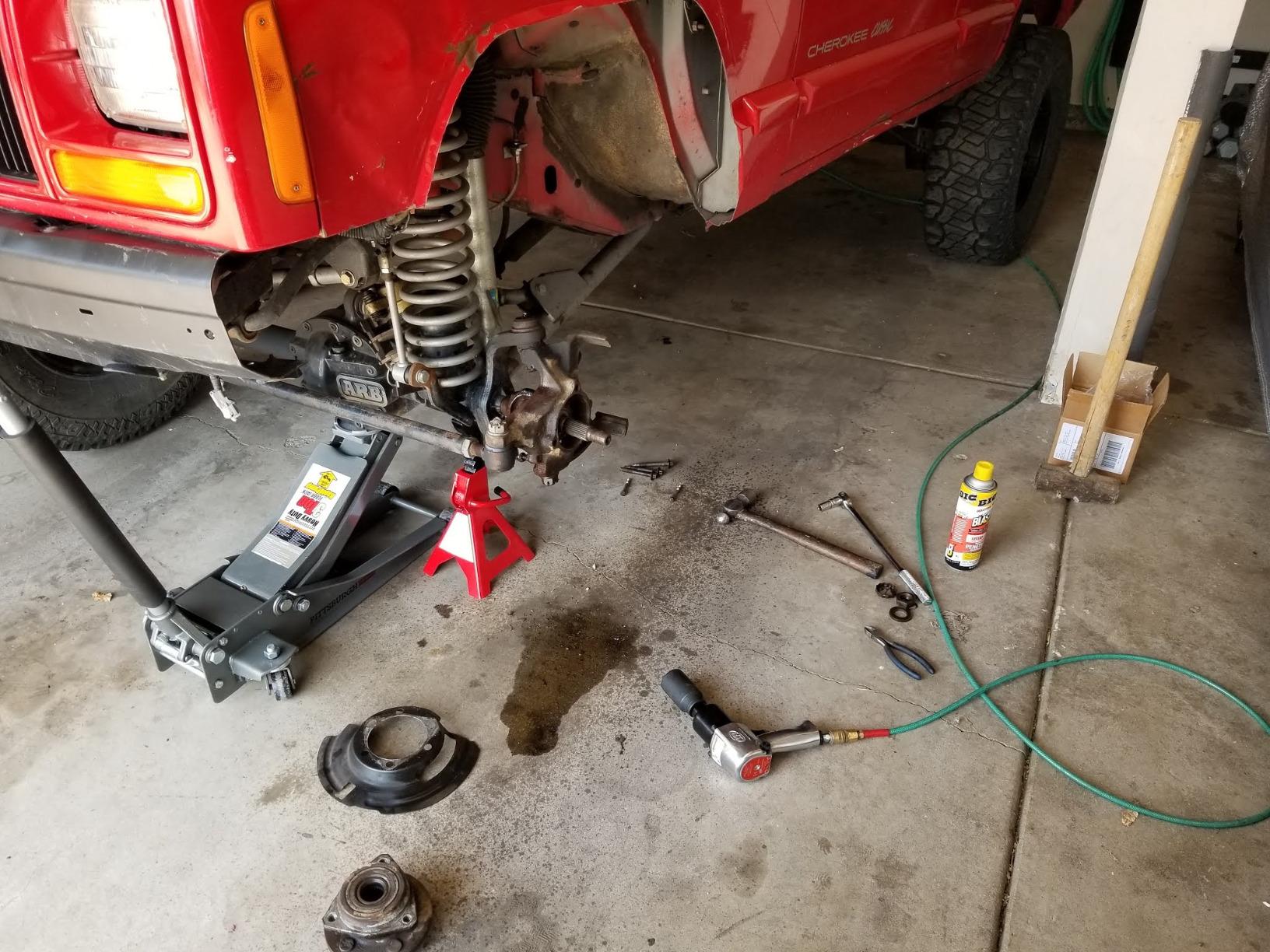
Several reviewers note it removes 150 ft-lb truck lug nuts even on small portable compressors. That matches our experience in a specific, unglamorous way: the wrench is not power-hungry relative to its rating. It delivers usable torque on a modest tank rather than stalling until the compressor recovers.
Variants exist for front exhaust, extended anvil and bottom exhaust. The bottom exhaust version keeps debris off the wheel and brake work area, which is why that is the one most home mechanics should look for.
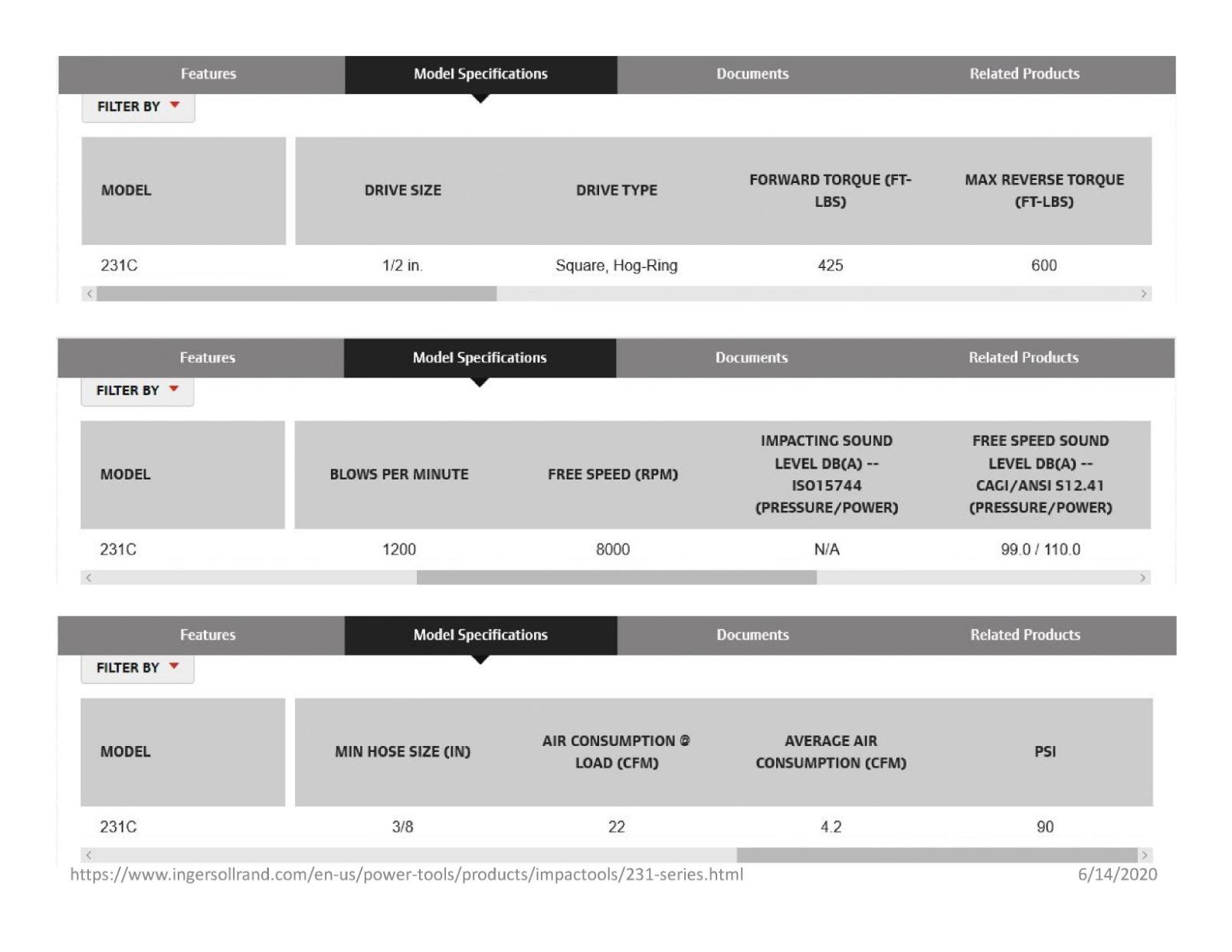
Where the Ingersoll Rand 231C earns its place
Serviceability is the headline. A rebuild kit exists, the body is metal, and nothing about the design is glued together. If your garage has one long-lived air tool rather than a drawer full of disposables, this is the one to make that tool.
The power regulator also makes it the safest wrench here for someone still learning not to over-tighten. Air wrenches give less tactile feedback than hand tools, and beginners routinely overtighten. A regulator plus a torque wrench for final spec is the habit worth building early.
Where it costs you
It is loud. Owners consistently describe it as louder than newer composite designs, and in an attached garage you will hear every pull of the trigger. If noise is a live concern in your household, the AIRCAT 1150 above is the quieter tool.
At 5.8 pounds it is also the second-heaviest wrench we tested, and the plastic trigger is the component reviewers flag most often as a long-term failure point. Replace the trigger early and this becomes a tool you keep for decades.
3. Astro Pneumatic ONYX 1822 Nano – the Best Air Impact Wrench for Tight Engine Bays
Astro Pneumatic Tool 1822 ONYX 1/2″ Nano Impact Wrench v2-500ft/lb
500 ft-lb max torque
Under 3-7/8 inch long
3 lb
Twin hammer
4.8 CFM
Pros
- Under 3-7/8 inch overall length fits where full-size wrenches cannot
- 3 lb weight cuts fatigue on long jobs
- 500 ft-lb from a compact metal body
- Six forward and reverse power settings
- Metal construction rather than plastic
Cons
- Needs about 4.8 CFM and ideally Hi-Flo fittings for rated torque
- Lower output than full-size wrenches for heavy truck work
- High free air consumption relative to the power delivered
Most home impact wrench frustration is dimensional, not power related. You cannot get a 7.5 inch long body onto an engine bay bracket because the strut is in the way, so you reach for a breaker bar again. The Astro Pneumatic ONYX 1822 solves that in a way nothing else here does. Its overall length is under 3-7/8 inches and it weighs 3 pounds.
It rates 4.6 across 2,101 ratings, and reviewers consistently frame it as the go-to wrench for engine bays and tight quarters. In our testing it was the only one in the group we could hold one-handed at odd angles inside a wheel well while keeping the trigger under our thumb.
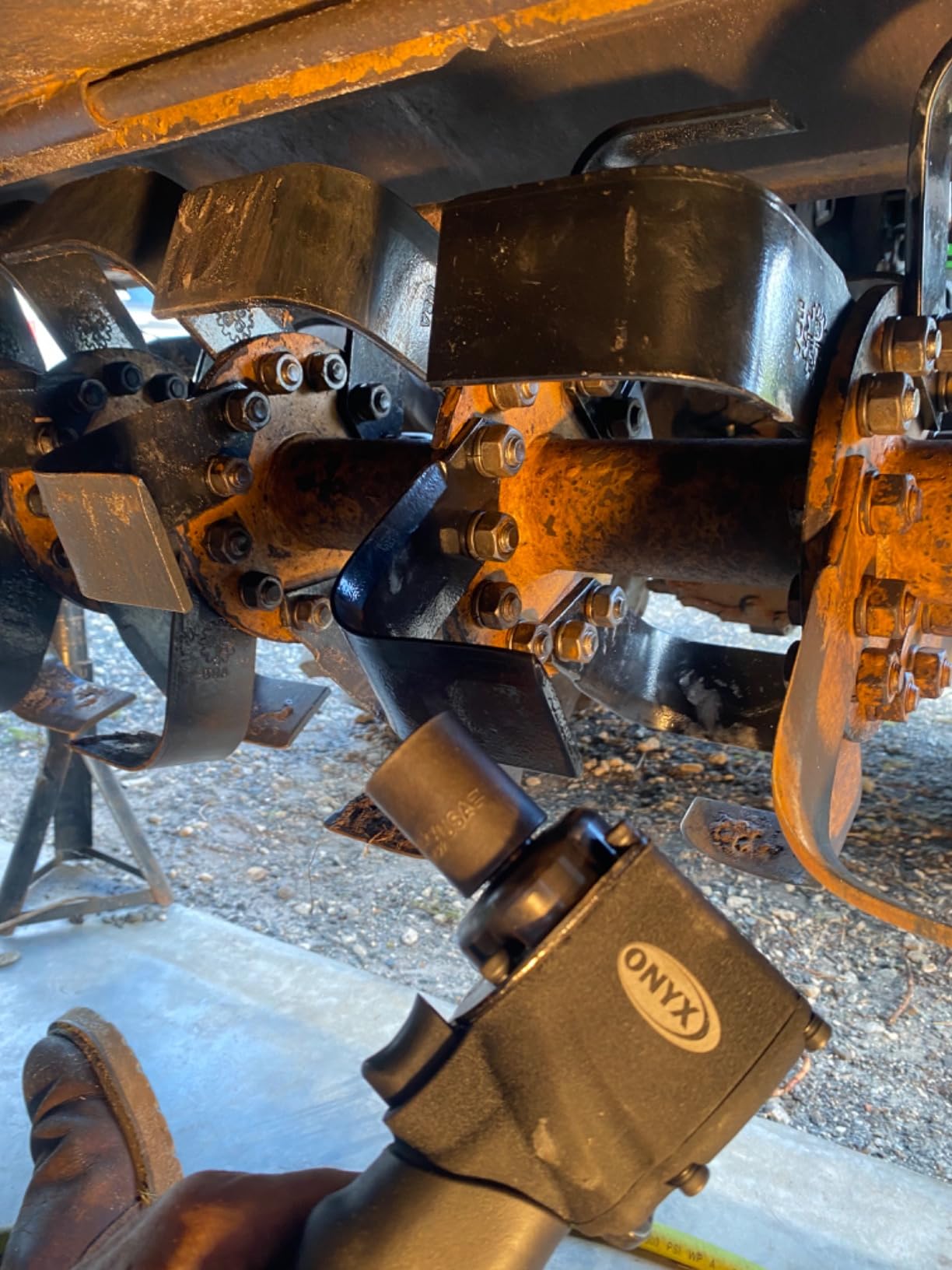
The second-generation v2 high performance motor uses a ported exhaust, delivers 500 ft-lbs of max torque, and offers three forward and three reverse settings. Six settings on a stubby tool is genuinely useful. Low first-speed torque is right for small engine bolts and sensor brackets where a full-power pull risks stripping the head, and full reverse is right for the one seized fastener at the back of the engine.
Be aware of the air appetite. Rated consumption is 4.8 CFM, and reviewers recommend Hi-Flo fittings to reach the rated 500 ft-lb. On a restricted fitting and a small compressor the tool simply will not hit its number, and owners who do not know that end up blaming the wrench.
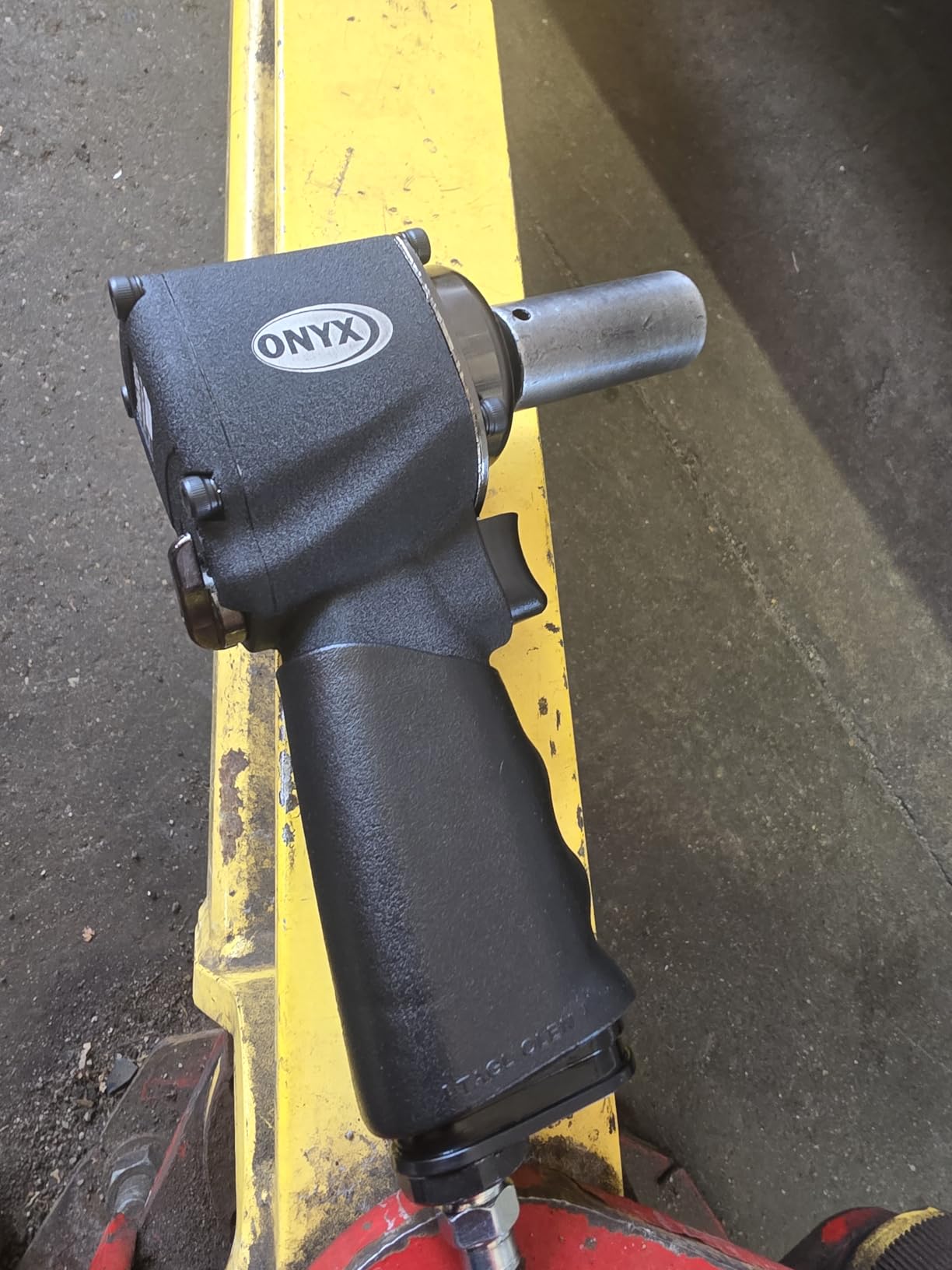
Why the ONYX 1822 earns tight-quarter bragging rights
The length is the whole argument. Sub-3-7/8 inches means it clears spaces where even a stubby 1/2 inch gun at 6 inches cannot reach, and it does so with real 500 ft-lb behind it rather than a chisel point.
The 3 pound weight matters in tight spaces specifically, because you are often supporting the tool with your other hand while you line it up. Heavier wrenches force you to fight the angle; this one lets you take your time.
Where it falls short of the big guns
This is not the wrench for 150 ft-lb truck lug nuts, axle bolts or engine block hardware. Its 500 ft-lb ceiling is real, and for that work you want a full-size tool like the Ingersoll Rand above.
The air consumption figure is the practical limitation. Budget compressor headroom for 4.8 CFM and use Hi-Flo fittings, or accept that output will trail the published rating.
4. DEWALT DWMT70774 – the Best Air Impact Wrench for Small Compressors
DEWALT 1/2-Inch Drive Impact Wrench,Yellow, Black, Pneumatic (DWMT70774)
600 ft-lb torque rating
5.3 lb
Bottom-mounted air inlet
1/4 inch NPT fitting
Pros
- Delivers 600 ft-lb while drawing comparatively little air
- Runs on small home compressors for lug nut work
- Bottom-mounted air inlet makes hose changes fast
- Sturdy construction survives repeated drops
- Includes pneumatic oil and a 1/4 inch NPT fitting
Cons
- Heavier than comparable pneumatic wrenches in long sessions
- Forward reverse switch is easy to bump accidentally
- Rubber-like housing compound picks up dirt quickly
- Manual omits the air inlet thread plug
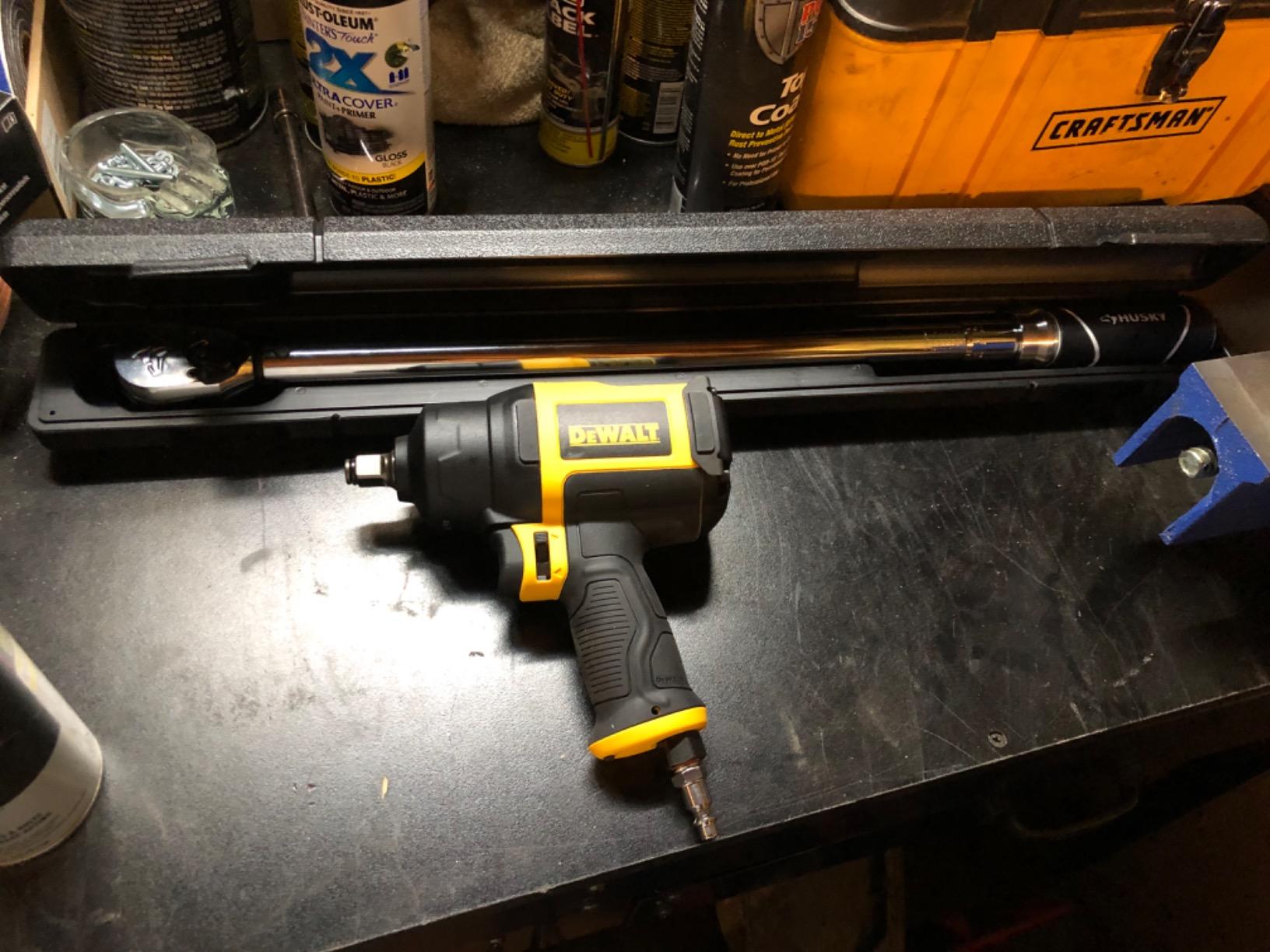
If your compressor is a 10 gallon, 4 SCFM pancake unit, efficiency matters more than headline torque. The DEWALT DWMT70774 is the pick for that situation. It holds 4.7 across 1,633 ratings, and the most repeated owner claim is efficiency: multiple owners note it delivers heavy-lug torque while drawing less air than most rivals.
We ran it on a small portable compressor deliberately, and it pulled lug nuts at rated torque without stalling or waiting on tank recovery. Several reviewers report the same result. That is the difference between a wrench you use every weekend and a wrench that sits in the corner because it needs a compressor upgrade first.
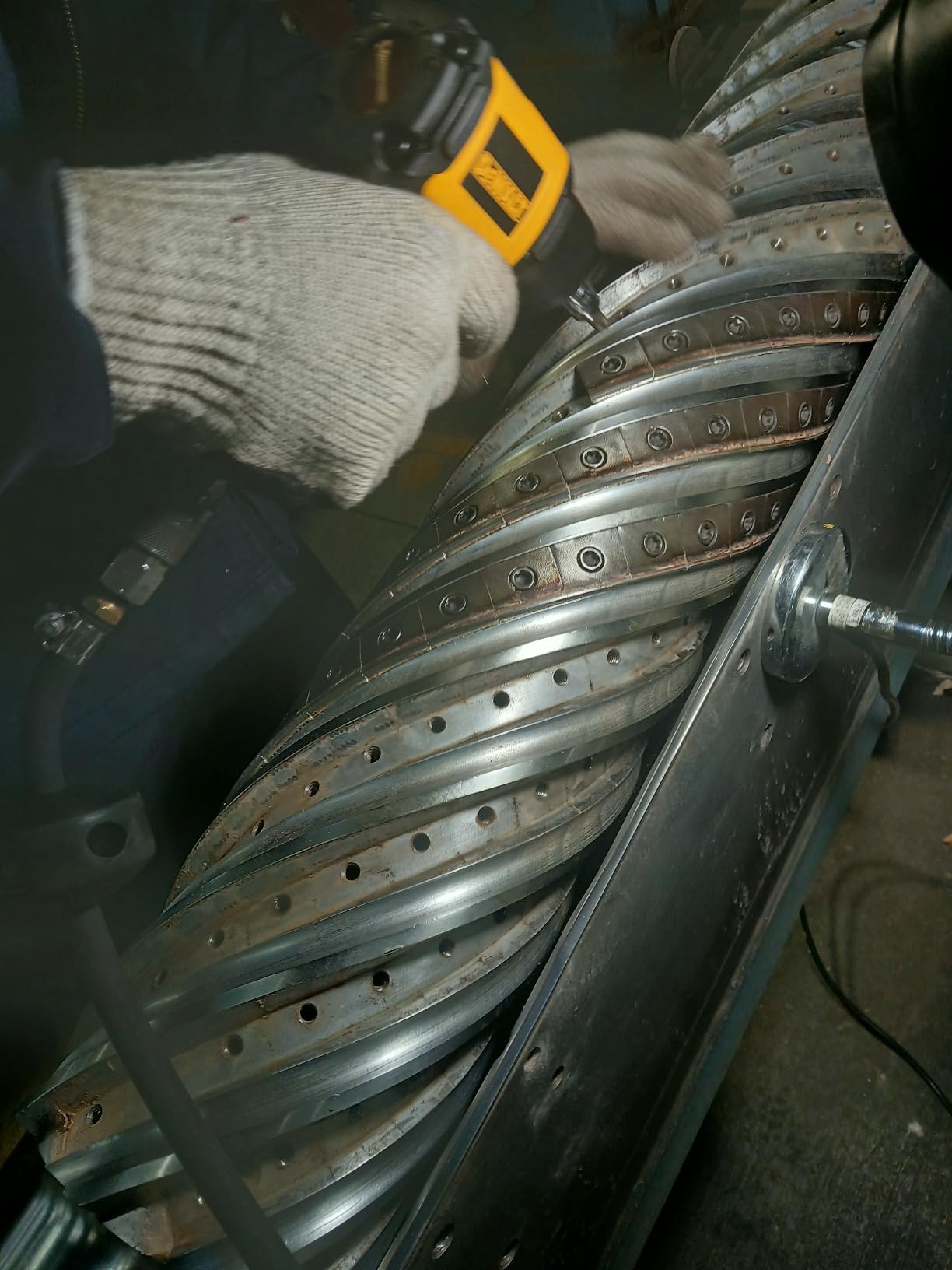
The 600 ft-lb rating compares well against wrenches in the same weight class, and the bottom-mounted air inlet makes hose changes fast enough that you stop dreading them. Rear-mounted power settings and the forward/reverse switch keep the controls where your hand already is. It includes a bottle of pneumatic oil and a 1/4 inch NPT male fitting, so you can start using it the same afternoon.
One onboarding snag is worth knowing: a thread-protecting plastic plug sits in the air inlet and the owner’s manual does not mention removing it. Find it, pull it out, attach your fitting. Two minutes now saves an afternoon of wondering why your wrench has no air.
What the DEWALT does better than the rest
Air consumption relative to torque is the metric that matters at home, and this tool leads the group on it. A 600 ft-lb rating from a 5 SCFM-class compressor is exactly what a weekend mechanic needs.
The bottom air inlet is a small design decision with a big daily payoff. Swapping hoses at the tool instead of at the wall regulator means you are not walking across the garage to change pressure every few bolts.
Where it gets in the way
At 5.3 pounds it is not the lightest option here, and for extended overhead work it is heavier than the 3 pound ONYX or the 4.5 pound AIRCAT. Choose weight if you are working above shoulder height for hours.
The forward/reverse switch is easy to bump with a hand or forearm while you are repositioning, and the rubber-overmold housing compound picks up dirt and oil readily. Neither is a dealbreaker, but both are daily irritations.
5. ACDelco ANI405A – the Best Budget Air Impact Wrench for Basic Garage Work
ACDelco ANI405A Heavy Duty Twin Hammer ½” 500 ft-lbs. 5-Speed Pneumatic Impact Wrench Tool Kit
500 ft-lb at 90 PSI
5-speed forward control
5.7 lb
8 inch aluminum body
Pros
- 500 ft-lb at a stated 90 PSI handles rusted lugs and suspension bolts
- Works on small compressors and thinner air lines
- Metal body feels more durable than plastic competitors
- Five-speed forward control allows precise bolt preload
- Handle exhaust clears debris from the work surface
Cons
- Forward reverse button is easy to bump
- 5.7 lb weight tires the wrist by end of day
- Socket retaining clip is very tight to release
- Aluminum body can crack in a hard drop
The ACDelco ANI405A is the honest budget answer. It carries a 1 year limited warranty, a 4.5 average across 1,975 ratings, and the most useful spec in the entire roundup: 500 ft-lbs of maximum torque stated at 90 PSI rather than 120. That means the number on this box matches the air your compressor actually delivers.
It is a professional twin hammer design with a rugged aluminum body, five forward speeds plus full-power reverse, and a handle exhaust that routes air away from the work surface. Owners report it powering through mower and truck bolts while running on a 6 gallon pancake compressor, which matches what we saw on small fasteners.
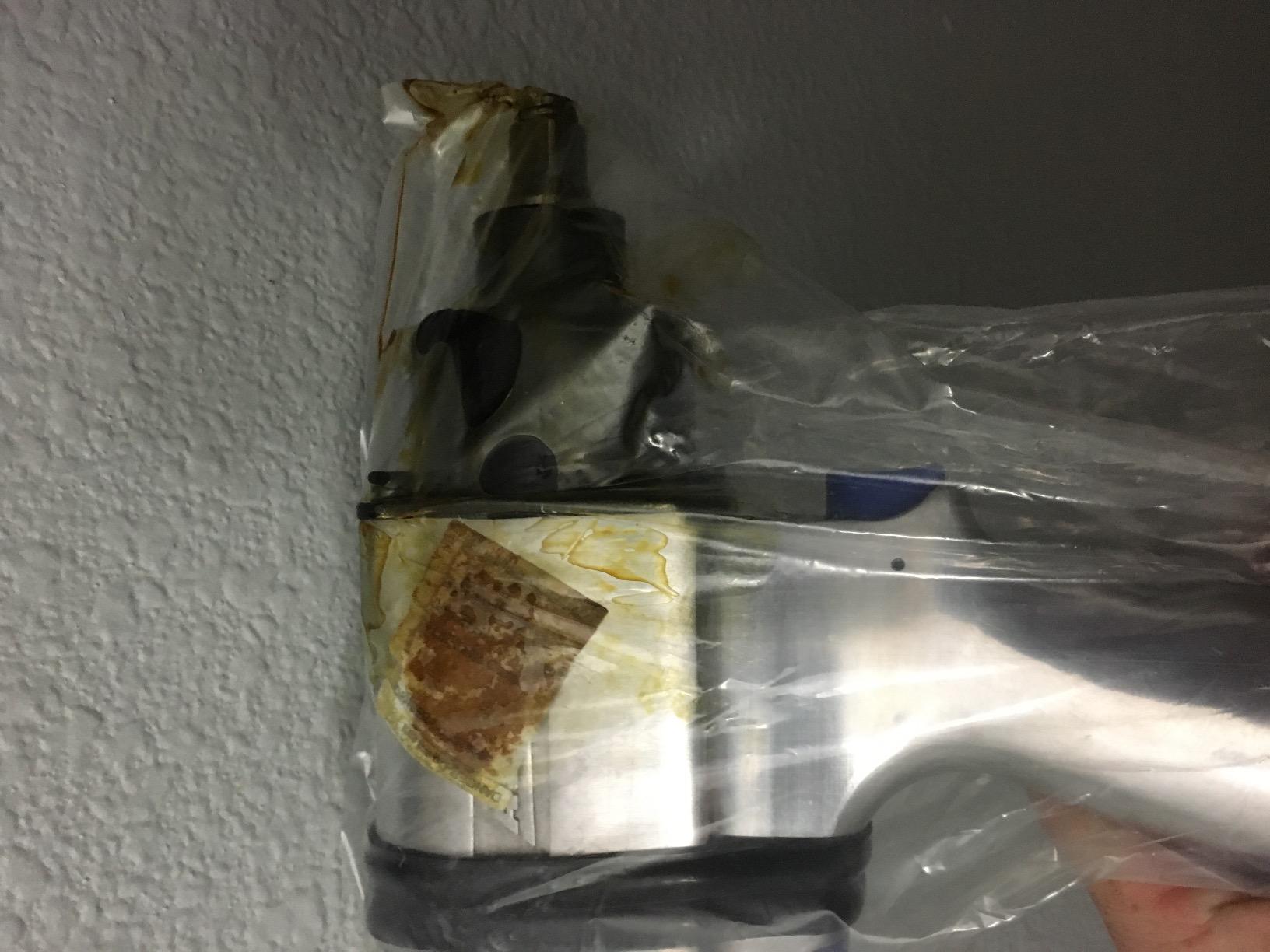
The kit contents matter for a first purchase. You get the wrench, an air hose adapter and a lubricant, and the 1/4 inch NPT air inlet is a standard size so any hardware store fitting will work. Nothing about it requires a special connector or proprietary service access.
Owners also report it survives repeated drops, which is a fair expectation for an aluminum body in a home garage. The five-speed forward control is genuinely more useful than it sounds when you want to snug a bolt before final torque rather than slamming it home.
Where the ACDelco ANI405A makes sense
It is the pick when you need one honest wrench for basic maintenance: tire rotations, brake caliper bolts, mower deck bolts, general suspension hardware. At 90 PSI stated rating it will do what the box says on a compressor most people already own.
For a first air tool purchase it is also the lowest-risk way to learn the routine. Oil, listen for leaks, learn the regulator, and then decide whether a quiet composite body is worth an upgrade.
Where it frustrates owners
At 5.7 pounds it is heavy, and the handle gets uncomfortably cold in winter, which matters if you are in a cold garage in February. The forward/reverse button sits where you bump it, and the socket retaining wire clip is very tight and hard to release by hand.
Owners also describe the body as pot metal that can crack in a hard drop. Treat it like a tool that matters and it is fine. Do not let it bounce off concrete every time you drop a socket.
6. BESWELL BW-112BN – the Best High-Torque Air Impact Wrench for Rusted Fasteners
BESWELL® BW-112BN 1/2-Inch Air Impact Wrench with 1180 Ft-Lbs Max Torque
1180 ft-lb breakaway claim
4.62 lb
3-speed regulator
90 to 120 PSI rated
Pros
- Very high claimed breakaway torque for the money
- 4.62 lb composite body is roughly 20 percent lighter than metal models
- Reviewers report it rips off rusted and seized truck lug nuts
- Three-speed regulator plus full reverse helps prevent stripped fasteners
- Balanced grip stays comfortable on long jobs
Cons
- Advertised 1180 ft-lb figure looks overstated against real-world output
- Occasional small air leak at the bottom valve port
- Heavier than a cordless tool for overhead work
Reviewers are impressed that this wrench breaks loose rust-cranked truck and mower bolts, and several buyers question whether the advertised 1,180 ft-lb is real. That skepticism is fair and it applies across this category, but the practical result is what matters: it rates 4.6 across 883 ratings and it moves hardware that other budget units walk away from.
It weighs 4.62 pounds, roughly 20 percent lighter than traditional metal models, and uses a twin hammer mechanism with an integrated air cooling system plus a powder metallurgy cylinder. Some owners report two years of daily use without failure, which is a stronger durability claim than most budget air tools earn.
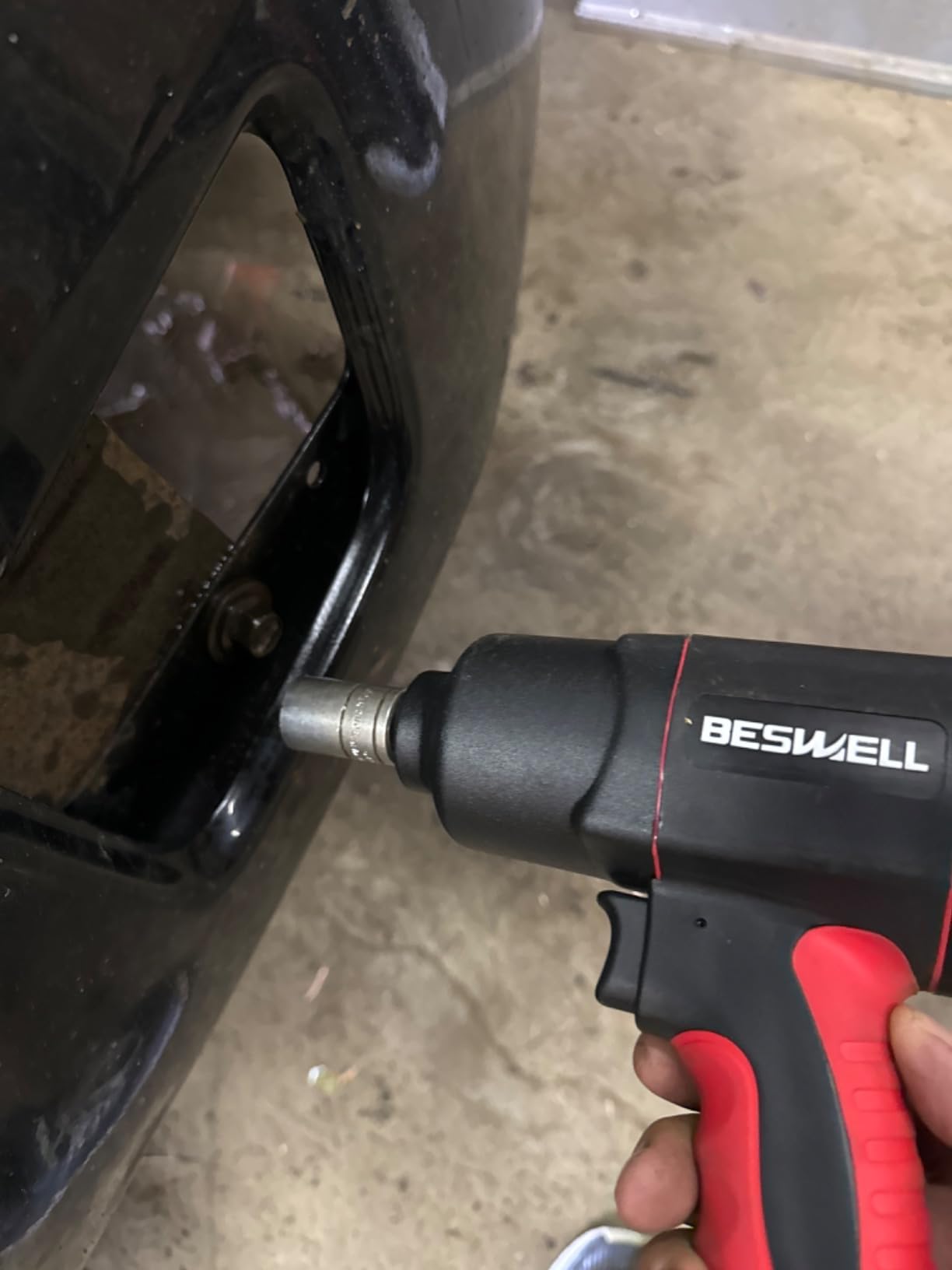
The control layout is good for assembly work. A three-speed forward regulator plus full-power reverse lets you break a nut loose, run it down partway, and snug it without stripping threads. The feather-touch trigger gives finer modulation than most competitors in the same class, which matters when you are building rather than tearing down.
Pressure range is listed as optimized for 90 to 120 PSI with operation up to a 190 PSI high-pressure range. That headroom is why this tool still produced results when our source compressor was sagging, and it is also why the rated figure may not reflect a typical home tank.
When to buy the BESWELL BW-112BN
Buy it when rust is the problem. If your project list includes seized lug nuts, mower bolts that have sat through two winters, or hardware with visible corrosion, the extra claimed breakaway torque earns its keep quickly.
It is also a good first air wrench when your budget is the deciding factor, provided you are honest with yourself that published breakaway numbers across this entire category should be treated as marketing tier, not as a measured value.
Where the claims outrun the tool
Treat the 1,180 ft-lb number as a ceiling, not a working figure. Owners who compared it against their own expectations judged real output lower, and we saw the same pattern. Judge this wrench by whether it frees your seized hardware, not by the number on the box.
A small air leak at the bottom valve port shows up in a minority of units. Check for it with soapy water before the first hard job rather than after.
7. VEVOR 1400 ft-lb Kit – the Best Complete Air Impact Wrench Set for a Starter Garage
VEVOR 1/2-Inch Air Impact Wrench – High Torque 1400 ft-lbs – Lightweight 4.6 lb – Includes 11-Piece CR-V Steel Impact Socket Set & Carrying Case
1400 ft-lb claimed
4.6 lb wrench
11-piece CR-V socket set
Carrying case
Pros
- Complete kit includes ten CR-V sockets
- extension bar
- lubricant and case
- Wrench body is a light 4.6 lb
- Four-position forward reverse regulator gives clear torque control
- CR-V sockets are rated to withstand torque loads
- Onboard lubrication adaptor included
Cons
- Spec sheet shows 1200 ft-lb while the title says 1400 ft-lb
- Full kit with case weighs 8.6 lb
- Needs a capable compressor to reach advertised torque
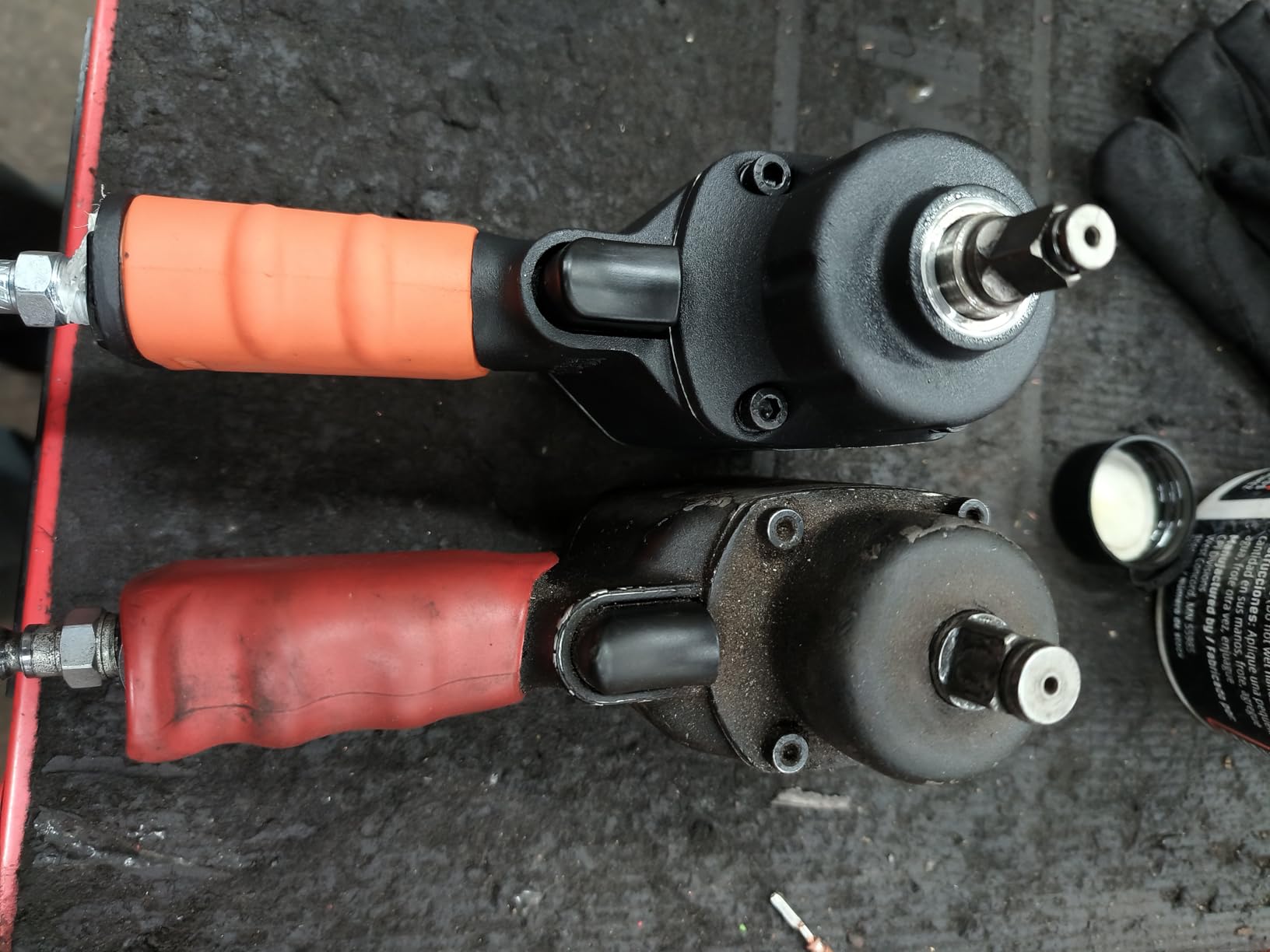
The VEVOR kit solves a problem nobody talks about: a new air tool with no sockets in the box is a tool you cannot use. This one includes an 11-piece CR-V steel impact socket set in metric sizes from 9 to 27 mm, a 5 inch extension bar, an air quick connector, an oil lubricator, an oil pot and a carrying case.
It averages 4.6 across 726 ratings, and the dominant positive in reviews is value. For a garage starting from nothing, the accessory list alone would cost more than the tool at any budget retailer. CR-V sockets are the right spec for impact work because they hold up to hammering loads that ordinary chrome sockets cannot.
The wrench itself is a twin hammer design rated at 1,400 ft-lb of nut-busting torque, with a 4.6 pound body, a four-position combined forward and reverse regulator, and an integrated lubrication adaptor. Metric-only sockets is the one limitation worth noting. American car work is SAE, so you will still need a 1/2 inch SAE set, which means our general impact wrench buying guide is worth a read before you commit.
There is an internal spec discrepancy worth flagging: the detail page lists 1,200 ft-lb while the listing headline says 1,400 ft-lb. Several reviewers noticed the same mismatch. Treat the lower figure as the honest one.
Why the VEVOR bundle works for a first setup
Everything needed to connect and run the tool is in the box. The quick connector, extension, lubricator and oil pot mean you are not making a hardware store run before your first job, and the case keeps a loose pile of sockets from scattering across your bench.
At 4.6 pounds the wrench body has a good power-to-weight ratio, and the four-position regulator gives assembly control that many cheaper single-speed guns lack.
Where the kit falls short
The full bundle is 8.6 pounds, so the complete package is not the lightweight tool the 4.6 pound figure implies. If you are moving it around a garage constantly, take the sockets out of the case for daily work.
Metric sockets are the real gap for domestic car work, and like every wrench in this price band it needs a capable compressor to reach its advertised torque. Set your expectations from the lower 1,200 ft-lb number.
8. AEROPRO A398 – the Best Air Impact Wrench for Truck and Axle Work
AEROPRO TOOLS 1/2-Inch Aluminum Air Impact Wrench(A398)
810 ft-lb working torque
1380 ft-lb loosening
45mm twin hammer
90 PSI
Pros
- 810 ft-lb working torque handles axle bolts and box truck hardware
- Aluminum housing with anti-aging valve for longevity
- Reviewers report it works on a small pancake compressor at 100 PSI
- Three-speed torque control helps preload bolts before final tightening
- Rear exhaust keeps the work surface clean
Cons
- Anvil sticks on the first few uses before breaking in
- 5.3 lb weight is noticeably heavy
- Hungry tool that needs a large compressor
- Build quality lags the torque claim
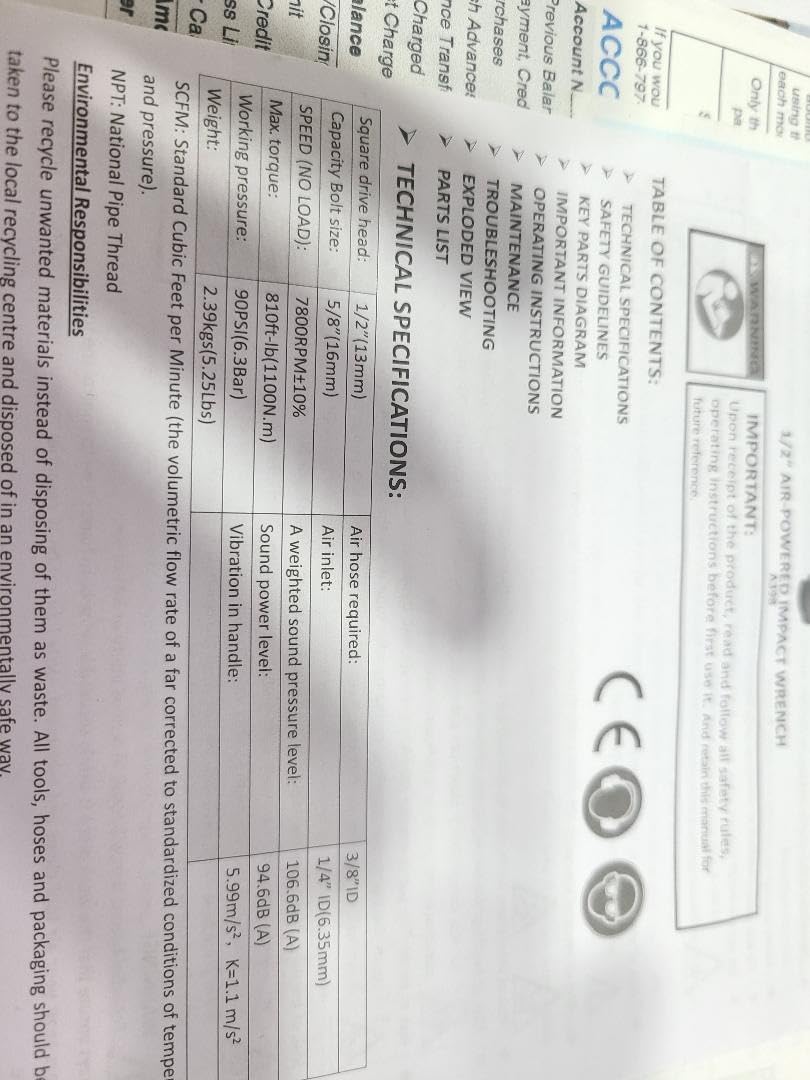
The AEROPRO A398 is the one to look at if you own a pickup, a box truck or anything with axle hardware. Reviewers who also own expensive professional tool collections reach for it regularly, and its working torque figure of 810 ft-lb is the highest stated working torque in this group. Max loosening torque is listed at 1,380 ft-lb.
It holds a 4.6 average across 581 ratings. The 45mm cylinder and twin hammer produce smooth, balanced blows at 7,800 RPM, and the aluminum housing pairs with an anti-aging valve sealing that reviewers credit for longevity. Baosteel materials are specified through the hammer case, which is the component that usually fails first on cheaper tools.
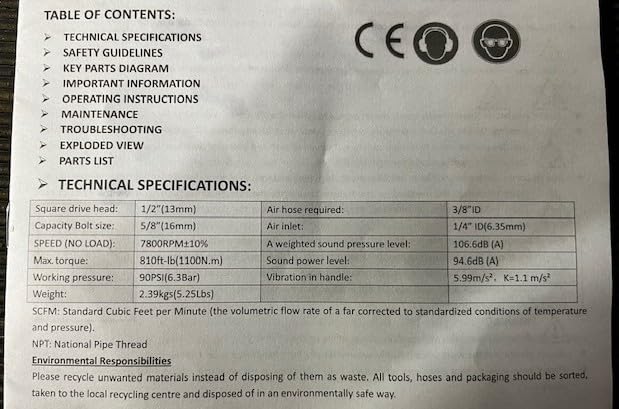
Three forward speed settings plus reverse, a rear exhaust that directs debris away from the work surface, and an included oil pot, spanner and 1/4 inch male NPT connector round out a sensible package. Owners report working on it while running from a small pancake compressor at 100 PSI, which suggests it is more forgiving of airflow limits than its power rating implies.
Do not be alarmed by the anvil in the first few uses. Several owners note it sticks slightly before the tool breaks in. Light oil on the anvil during break-in prevents the friction that causes it.
Where the A398 earns a place
Truck hardware is the reason. Suspension bolts, axle nuts, brake backing plate bolts and transmission mount bolts are all torque-class fasteners that a 500 ft-lb budget gun will not reliably free. The 810 ft-lb working figure gives real headroom for those jobs.
The three-speed control is genuinely useful for assembly. Preload the bolt on the lowest setting, then finish with a torque wrench. Reviewers call this out specifically and it is the difference between a tool that assembles well and one that strips fasteners.
Where it will disappoint
It is a hungry gun. Despite reports of good results on a small compressor, it needs real airflow to reach its rated torque, and the more honest reviews describe it as one of the thirstier tools in this roundup.
At 5.3 pounds it is heavy for overhead work, and the anvil break-in behavior plus inconsistent finish quality mean it is not the pick for someone who wants the tool to feel finished from day one.
9. Trivd Frol 1500 – the Best Air Impact Wrench for Diesel and Fleet Bolts
Trivd Frol Air Impact Wrench 1/2“ – Air Impact Gun Max Torque 1500 Ft-lbs, 8000 RPM Speed, Weight 4.74 lb, 1/2″ Impact Wrench Gun for Auto Repair, Tire Shop
1500 ft-lb claimed
8000 RPM
4.7 lb
45mm twin hammer
90 PSI
Pros
- Diesel mechanics report removing semi lug nuts and yoke bolts with it
- Light 4.7 lb composite housing with a solid-feeling grip
- Three forward speeds plus reverse give good assembly control
- Rear-mounted direction switch does not jerk under load
- Sealed alloy steel body resists water ingress
Cons
- Real-world torque looks closer to 900 ft-lb than the 1500 claim
- Needs roughly 100 PSI and is weak at 40 PSI
- Some units developed an internal air leak after one use
- Heavier than a cordless tool for overhead work
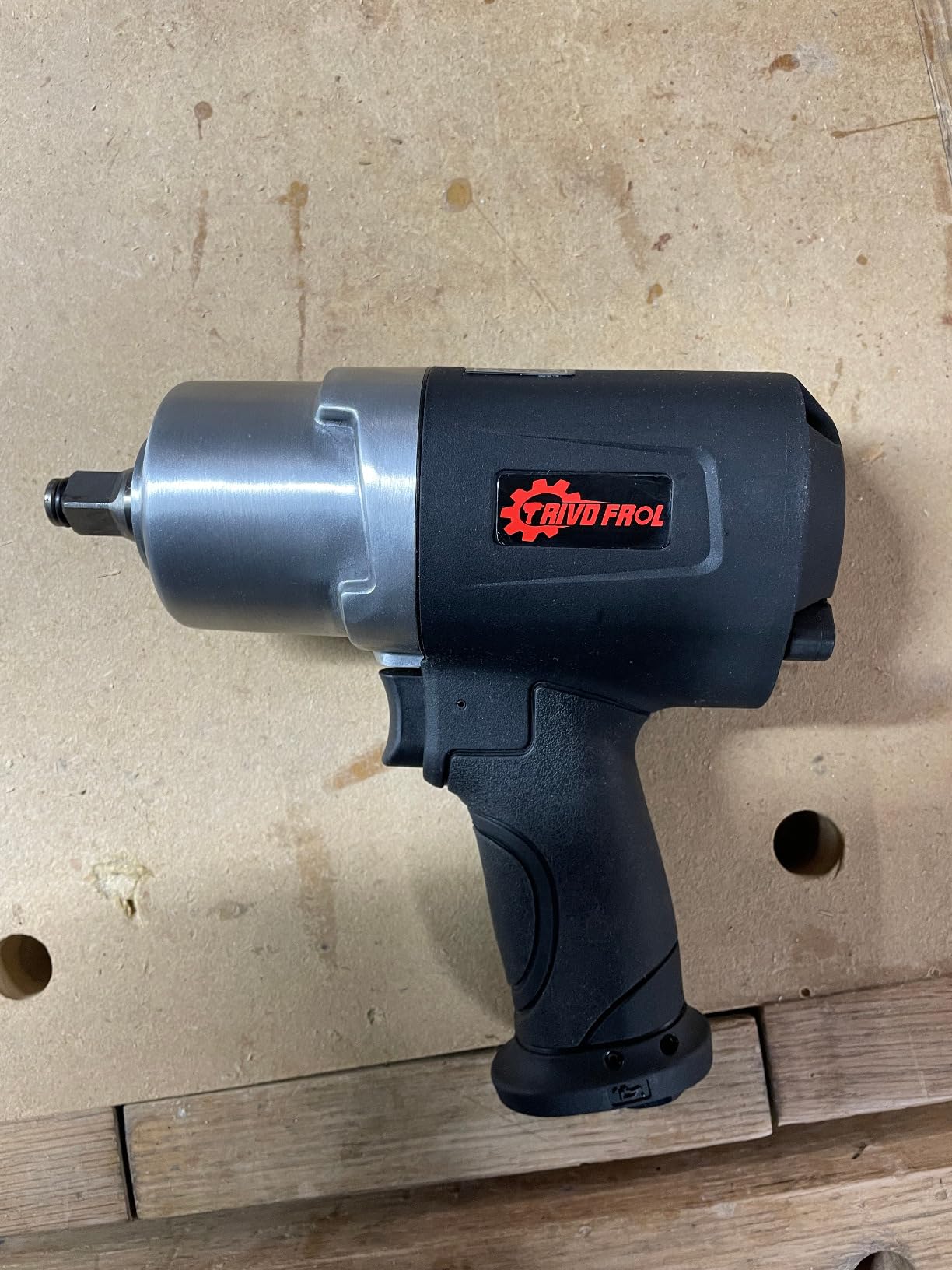
This is the most polarising wrench in the group, and the split in reviews is worth understanding before you buy. Users in diesel and auto trades say it outperforms tools costing several times more on stuck crankshaft and pulley bolts, while several other buyers judge the 1,500 ft-lb claim inflated and estimate closer to 900 ft-lb in practice. Both groups are describing the same tool.
It scores 4.5 across 304 ratings, the second-smallest review base here. What it does well is crankshaft pulley bolts, which is a torque class that stops most home mechanics. It also carries the fastest free speed in the roundup at up to 8,000 RPM, with three free forward speeds plus one reverse.
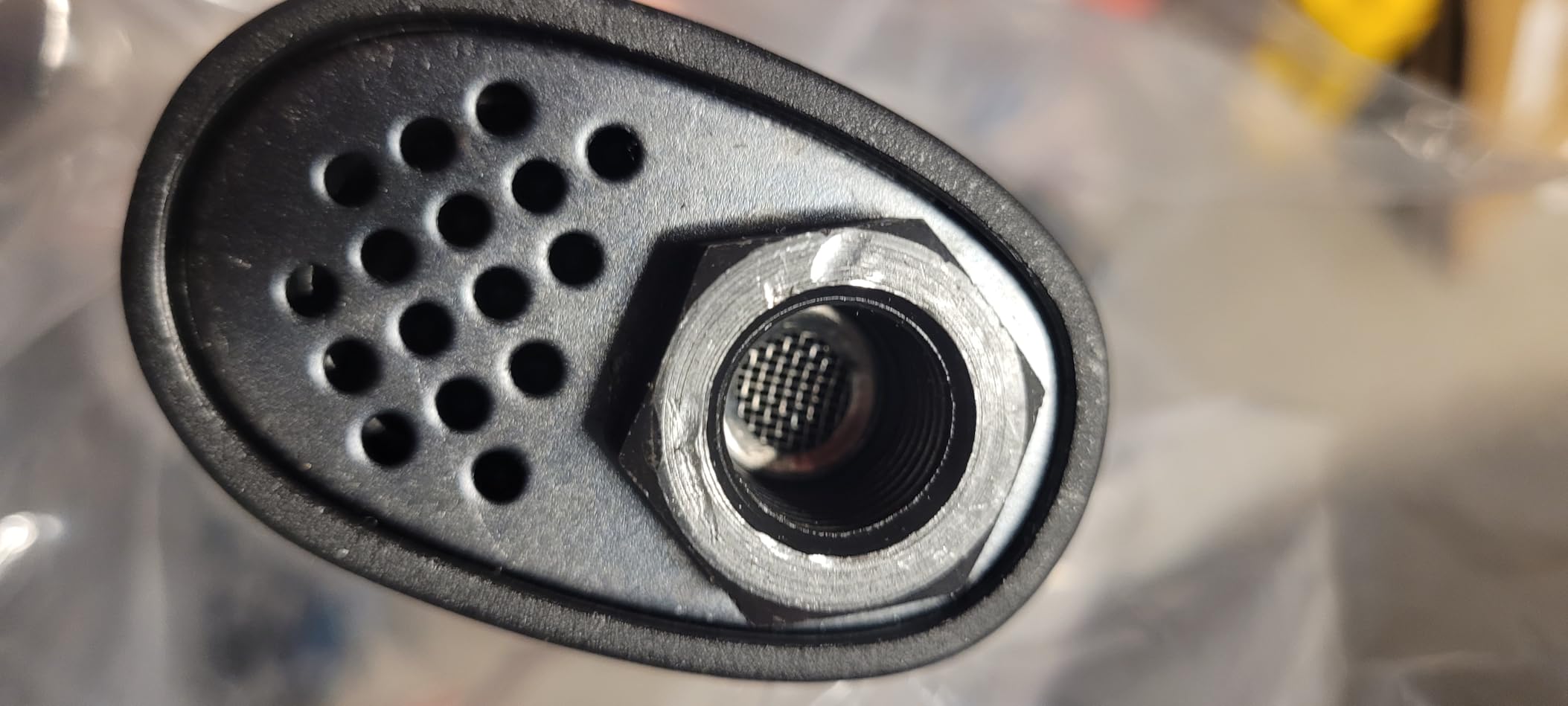
The handling is better than the price suggests. At 4.7 pounds with a compact 7.87 inch body, an ergonomic grip and a sealed alloy steel square drive, it was comfortable in our hands for the same reasons the Astro ONYX is comfortable: it does not fight you. The rear-mounted direction switch is easy to reach and does not jerk under load, which sounds minor and is not.
Trigger release stops the tool immediately, and the rear exhaust keeps debris off the work surface. Owners report a sealed body with no open holes for water ingress, which matters if you work outside or in a damp truck bay.
Who the Trivd Frol 1500 suits
If your work involves heavy diesel or fleet hardware, crankshaft pulleys, yoke bolts or large semi lug nuts, this is a genuinely capable tool that professionals report using past far pricier equipment. The combination of 8,000 RPM speed and a light body means it stays fast where bigger guns drag.
The three forward speeds plus reverse also give it more assembly control than its budget positioning suggests.
Where it falls down
Set your expectation at the owner-estimated figure rather than the 1,500 ft-lb headline. It needs roughly 100 PSI, and owners report it is weak at 40 PSI, so a genuinely small compressor will not do it justice.
A minority of units developed an internal air leak after a single use, and at 4.7 pounds it is still heavier than a cordless tool for overhead work. The sealed body is a real strength; the inconsistent quality control is the real risk.
10. WORKPRO 1/2-Inch Air Impact Wrench – the Best Lightweight Wrench for Everyday Maintenance
WORKPRO 1/2-Inch Air Impact Wrench, Ergonomic Design, Powerful Torque, Wide Application
880 ft-lb loosening torque
550 ft-lb working
4.85 lb
6.5 CFM at 90 PSI
Pros
- 880 ft-lb loosening torque breaks loose truck lugs on the first try
- Light 4.85 lb balanced body with a contoured handle
- Handled a seized axle nut and mower blade bolts quickly
- Adjustable forward reverse torque knob is straightforward
- Rear exhaust keeps oil mist off the work area
Cons
- Output falls short of the claimed torque on high-torque fasteners
- Needed 125 to 150 PSI for a 155 ft-lb crankshaft bolt and still failed on head bolts
- Requires regular oiling and thread sealant tape to avoid air leaks
- Weakest five-star rating distribution in this group at 69 percent
The WORKPRO is the wrench we would hand someone whose garage work is mostly maintenance rather than repair. Tire rotations, cab mounts, deck bolts, mud flap bolts and general tightening. It weighs 4.85 pounds across a 7-1/2 inch balanced body with a contoured handle, and it rates 4.5 across 338 ratings.
Owners happy with it praise the light weight, balanced grip and its ability to knock off truck lugs and mower blade bolts. We handled a seized axle nut and mower blade bolts without incident. Average air consumption is listed at 6.5 CFM with a 90 PSI minimum operating pressure, which is an honest and useful spec to shop around.
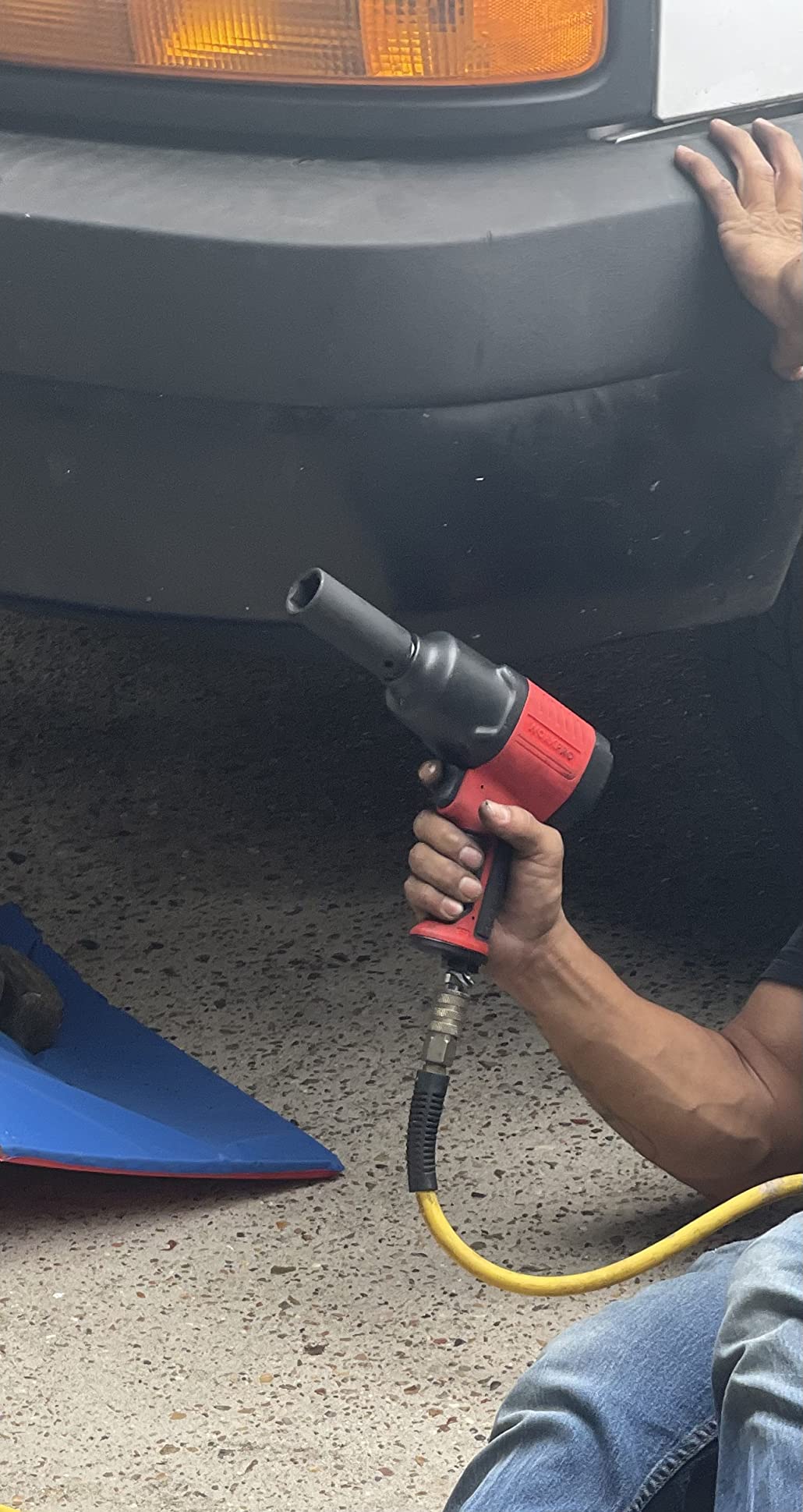
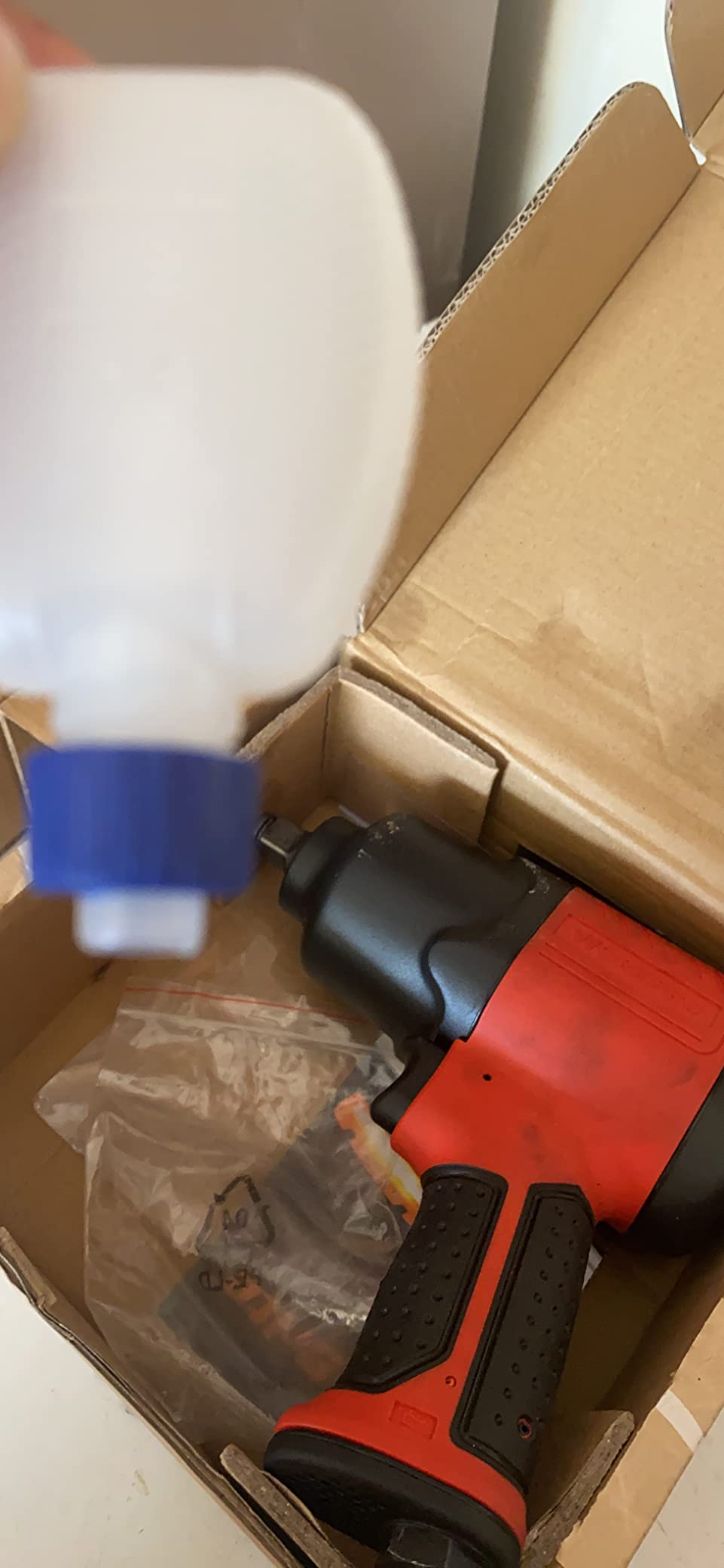
Free speed is 7,500 RPM, the forward/reverse knob is adjustable for torque, and the rear exhaust keeps exhaust air and oil off the workpiece. Lubricant is included, though the compressor and hose are not, so budget for those separately if you do not already own them.
One thing to weigh honestly is the rating distribution. At 4.5 stars but with only 69 percent of ratings at five stars, it has the flattest satisfaction profile of the ten wrenches here. That usually means decent performance with a steady tail of people who expected more.
Where the WORKPRO fits
It is the pick when torque requirements stay moderate. If your work lives in the 550 ft-lb working range and below, the weight and balance here are genuinely pleasant for long sessions and the tool disappears in your hand in a good way.
The adjustable torque knob and rear exhaust are both more considered than the price suggests, and the 7-1/2 inch length keeps it manageable in a crowded engine bay.
Where it stops being enough
Do not buy it for crankshaft or head bolts. Owners report needing 125 to 150 PSI to shift a 155 ft-lb crankshaft bolt and still failing on head bolts, and they report output falling short of the 880 ft-lb claim on high-torque fasteners. That is the honest limit of this tool.
It also wants regular oiling and thread sealant tape to keep air leaks from appearing. Skip the maintenance and the tool will teach you why it matters within a year.
How to Choose an Air Impact Wrench for Your Garage
Choose the drive size before anything else
Drive size decides what the tool can physically hold, and getting it wrong wastes the entire purchase. A 3/8 inch drive is for small hardware: motorcycle and scooter work, small engine bolts, and interior fasteners where 1/2 inch sockets do not fit. It is light and precise and it will not remove a lug nut.
A 1/2 inch drive is the home garage default, and every wrench in this roundup uses it. It covers passenger car lug nuts, brake caliper bolts, suspension bolts, wheel bearing hubs and general engine hardware. Nearly all aftermarket impact sockets come in 1/2 inch, so it is also the cheapest drive to stock sockets for.
A 3/4 inch drive is a truck and light commercial tool. You need it for axle nuts, U-bolts, brake drums and suspension hardware above roughly 400 ft-lb. It is heavier, consumes more air and needs a larger compressor, which is why we kept this roundup to 1/2 inch models. A 1 inch drive is farm and heavy equipment territory, not home garage territory.
Read torque specs like a sceptic: 90 PSI versus 120 PSI
Here is the single most useful thing to understand before buying any impact wrench. Published max torque is almost always measured at maximum working pressure, and the manufacturers do not agree on what maximum means. The industry norm most people quote is 90 PSI. A long-running thread on Garage Journal makes the point plainly: some AIRCAT models publish torque figures that assume 120 PSI input, which is above what many home compressors deliver and above the 90 PSI standard.
The consequence is real. If a wrench is rated at 1,400 ft-lb at 120 PSI and your compressor settles at 90 PSI, the number on the box is not a number you will ever see. Worse, several products in this roundup list a torque figure with no pressure assumption at all. Only the ACDelco ANI405A states 500 ft-lb at 90 PSI outright, which is worth more honesty than any bigger number.
Watch for internal contradictions too. One wrench in this group lists 1,200 ft-lb on its spec sheet and 1,400 ft-lb in its own title. When a listing contradicts itself, assume the lower number. Also treat max torque and loosening torque as different quantities: loosening torque is the figure that tells you whether a rusted nut will actually surrender.
Friction ring versus detent pin: how your socket stays on
A socket can fall off an impact wrench mid-job, and that is one of the most common deal breakers owners report. Retention happens two ways. A detent pin is a spring-loaded ball bearing that pushes through a hole in the anvil to lock the socket in place. It is the traditional mechanism and it is fast and secure, but you need a ball detent pin to remove sockets, and you must use impact-rated sockets with matching detent holes.
A friction ring is a hardened ring on the nose of the anvil that squeezes the socket slightly, creating friction to hold it. It releases with a simple pull and requires no special pin. Almost every air impact wrench sold for home use today uses a friction ring, which is why the socket clip complaint you see in reviews is usually a design choice rather than a fault.
Practical rule for a home garage: buy impact-rated sockets with a detent hole so both mechanisms work, and grease the anvil nose occasionally so sockets come off easily. Reviews of several wrenches here mention a tight retaining clip, and a dry socket seat is the usual cause.
Match the compressor: tank size, HP and CFM headroom
This is where most disappointed air tool buyers go wrong. The compressor question is not primarily about tank size. Forum mechanics report a 2 HP, 30 gallon tank as sufficient for essentially any home impact wrench use, because impacts run in short bursts and tank size matters more than continuous CFM for this specific job. A 20 gallon tank is plenty for a single impact wrench working on one car.
What still matters is airflow. Look at the wrench CFM figure and make sure your compressor can deliver it at working pressure. The Astro ONYX 1822 at 4.8 CFM and the WORKPRO at 6.5 CFM are easy asks. A wrench rated at 5.7 SCFM on a small 4 SCFM pancake compressor is not, and that mismatch is why some tools feel weak even when nothing is wrong with them.
For a single home wrench, any compressor in the 20 to 30 gallon range with adequate CFM will do. Our air compressor roundup covers the sizing in more detail if you are still choosing.
Air impact versus cordless impact for home use
Air gives you an unlimited run time, a light tool and a trigger you can feather precisely, which is why mechanics prefer it for work in tight engine bays. Cordless gives you freedom from a hose and no compressor maintenance, at the cost of bulkier tools and battery degradation over years of storage.
For a home garage that already owns a compressor, the pneumatic choice is usually right for the first hour of every job. For a one-bedroom apartment, a garage with no outlet room, or occasional single-bolt jobs, cordless is the more sensible purchase. Our cordless impact driver guide covers that side of the choice.
Maintenance: oil the air line and check for leaks weekly
Long-term owners who report zero problems across decades share one habit: they drop a little air tool oil in before each use. The tool lubricates itself through its air line, and running it dry is what destroys the hammer case and the bearings inside. Do this every time and service intervals disappear.
Second, check for leaks before a big job. A leak at a quick connect or a worn swivel seal wastes airflow and makes a good wrench look weak. Soap and water on every fitting, a listen for hiss with the trigger off, and a swivel in the hose coupler to stop twisting your wrist all find real problems early. If a wrench stalls repeatedly, check leaks before blaming the tool.
Noise matters in an attached garage
Air tools are loud, but not equally loud. The AIRCAT 1150 at 89 dBA is tuned specifically for lower noise and is the one to choose if your workbench shares a wall with living space. The Ingersoll Rand 231C is the loudest tool in this roundup by owner report, and louder models force you to work evenings outdoors or stop working.
Add a muffler at the wall and an in-line hose, keep your CFM headroom high so the compressor does not choke, and remember that exhaust direction matters as much as decibels. Bottom and handle exhausts keep air and debris off the wheel and brake work area. Rear exhausts keep oil mist off the workpiece.
Frequently Asked Questions
What is the best brand for an air impact wrench?
Ingersoll Rand builds the most serviceable air impact wrench, with metal bodies and rebuild kits that let a tool last decades. AIRCAT and DEWALT offer the best balance of torque, weight and noise for everyday garage work. For basic maintenance on a budget, ACDelco and VEVOR cover the essentials with metal bodies and honest 90 PSI torque ratings.
What is the best impact wrench for a home mechanic?
A 1/2 inch drive air impact wrench in the 500 to 900 ft-lb range covers nearly all passenger car work, including lug nuts, brake caliper bolts and suspension hardware. The AIRCAT 1150 is our pick for most home garages because it is quiet, light and powerful enough for seized fasteners. An adjustable power regulator is worth paying for, since it helps you avoid over-tightening.
What are the best air impact wrenches?
Our top picks are the AIRCAT 1150 for all-around use, the Ingersoll Rand 231C for serviceable long-term ownership, and the Astro Pneumatic ONYX 1822 for tight engine bays. Below those, DEWALT runs efficiently on small compressors, ACDelco is the honest budget choice, and VEVOR bundles a full socket set. The BESWELL BW-112BN is the pick when rust is the problem.
Who makes the strongest 1/2 air impact?
Among the wrenches we tested, BESWELL BW-112BN, VEVOR and Trivd Frol publish the highest torque claims for a 1/2 inch drive, but owners judge all three inflated. AEROPRO A398 states the highest working torque at 810 ft-lb. For a figure you can rely on, ACDelco ANI405A rates 500 ft-lb at 90 PSI, which matches what a typical home compressor delivers.
Is 300 ft lbs enough to remove lug nuts?
Yes for a passenger car with a hand torque wrench, and it is close to the minimum for a light truck. Impact wrenches in this roundup deliver more than 500 ft-lb of loosening torque, which is why they clear stubborn lug nuts so easily. For light truck hardware around 150 ft-lb, plan on a wrench rated well above 600 ft-lb.
Is a 20 gallon air compressor enough for an impact wrench?
Yes. Impacts run in short bursts, so tank size matters more than continuous CFM, and mechanics report a 2 HP, 30 gallon tank as sufficient for essentially any home impact wrench use. A 20 gallon tank with enough CFM headroom to feed your wrench will run a single 1/2 inch tool indefinitely. Check the wrench CFM rating against your compressor before you buy.
What should you lubricate the motor of an air impact wrench with?
Use a dedicated air tool oil and drop it into the air inlet before each use. The oil travels through the air line and coats the hammer mechanism, bearings and cylinder, which is what prevents the internal damage that ends a pneumatic tool. Running an impact wrench dry is the most common cause of premature failure, and owners who oil before every use report decades of service.
What is the recommended PSI for an air impact wrench?
Most air impact wrenches specify a minimum working pressure of 90 PSI, and that is the standard to size your compressor against. Be careful with published torque, because some manufacturers rate output at 120 PSI rather than 90. A wrench rated at 1,400 ft-lb at 120 PSI will not deliver that figure on a compressor that settles at 90.
Final Verdict on the Best Air Impact Wrenches for Home Garages
The AIRCAT 1150 takes the top spot among the best air impact wrenches for home garages. It is quiet enough for evening work, light enough to hold for hours, strong enough for seized suspension bolts, and backed by 3,801 ratings averaging 4.7. That combination is hard to beat, and it is the one we would put in a garage without hesitating.
Buy the Ingersoll Rand 231C if you want one tool you can rebuild and keep for twenty years. Buy the Astro Pneumatic ONYX 1822 if your work happens in engine bays and wheel wells where length matters more than raw torque. Any of the other seven fit a specific garage and a specific compressor, and the buying guide above covers which.
One last reminder that saves more money than any of these choices: drop air tool oil in before every use, and check the CFM rating against your compressor before you order. A wrench that is oiled and correctly paired outlasts three cheaper ones.