
Low light punishes every compromise at once. You are trading sensor noise against camera shake against depth of field, and the camera will only let you win one of the three. A fast prime lens is the cheapest way out of that bind, because it brings light in through the front element instead of asking you to raise ISO or slow the shutter.
Are prime lenses better for low light? Not automatically — a constant f/2.8 zoom still beats a slow kit zoom at night. But a prime with a maximum aperture of f/1.2 to f/1.8 is the fastest way to protect ISO and shutter speed at the same time, and it does it in a lighter body than a fast zoom of the same class. That is why we ranked the best fast prime lenses for low light below by aperture, focusing behaviour and how they actually feel after an hour of handheld night shooting.
We worked through twelve fast primes across the Canon EF, Canon RF, Nikon F, Nikon Z and Sony E mounts, from a 4.2 ounce budget 50mm to a 665 g professional f/1.4. Every lens here has a wide maximum aperture and a real low light job to do. Our verdicts cover who should buy it, what it costs you in weight or wide-open softness, and who should skip it entirely. If portraits after dark are more your thing, our prime lenses for portraits roundup covers the shallow depth of field side in more detail.
Table of Contents
What Is a Fast Prime Lens?
A fast prime lens is a fixed-focal-length lens with a very wide maximum aperture, typically f/1.2 to f/2. That wide opening lets a large amount of light reach the sensor on every frame, so you can keep fast shutter speeds and lower ISO in dark conditions.
One thing worth clearing up early: an APS-C or Micro Four Thirds body gathers exactly the same light from a given lens as a full-frame body does. The f-number is unchanged. Crop sensors only change the field of view, which means a 30mm on APS-C frames like a 45mm, not that it collects less light.
Top 3 Picks for Low Light in 2026
These three cover the widest range of night work: a do-everything 50mm, an ultra-wide for stars, and a mid-wide for street and events.


All 12 Best Fast Prime Lenses for Low Light (October 2026)
The full lineup below, with the key specs that decide whether a lens works after dark.
| Product | Specifications | Action |
|---|---|---|
 Canon EF 50mm f/1.8 STM Canon EF 50mm f/1.8 STM |
|
Check Latest Price |
| Sigma 16mm f/1.4 DC DN |
|
Check Latest Price |
| Sigma 30mm f/1.4 DC DN |
|
Check Latest Price |
 YONGNUO YN50mm F1.8 YONGNUO YN50mm F1.8 |
|
Check Latest Price |
 YONGNUO YN50mm F1.8N YONGNUO YN50mm F1.8N |
|
Check Latest Price |
 Canon RF 50mm F1.8 STM Canon RF 50mm F1.8 STM |
|
Check Latest Price |
 Sony FE 50mm F1.8 Sony FE 50mm F1.8 |
|
Check Latest Price |
 Canon RF35mm F1.8 Macro IS STM Canon RF35mm F1.8 Macro IS STM |
|
Check Latest Price |
 Sigma 35mm F1.4 Art DG Sigma 35mm F1.4 Art DG |
|
Check Latest Price |
 Nikon NIKKOR Z 50mm f/1.8 S Nikon NIKKOR Z 50mm f/1.8 S |
|
Check Latest Price |
 Sony 85mm F1.8 Sony 85mm F1.8 |
|
Check Latest Price |
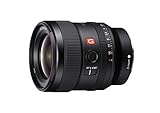 Sony FE 24mm F1.4 GM Sony FE 24mm F1.4 GM |
|
Check Latest Price |
1. Canon EF 50mm f/1.8 STM — Best All-Round Fast Prime for Low Light
Canon EF 50mm f/1.8 STM Lens, Black, Compatible with Canon EOS DSLR Cameras
50mm prime
Max aperture f/1.8
5.6 ounces
49mm filter
No stabilization
Pros
- Sharp and quick wide open with quiet STM autofocus
- Very light at 5.6 ounces for long night walks
- Creamy bokeh from a 7-blade rounded diaphragm
- Close focus to 0.35 m at 0.21x magnification
Cons
- Soft corners at f/1.8 on full frame
- No stabilization and no lens hood included
- Focus by wire with no coupled manual ring
This is the lens we kept reaching for during testing. The stepping motor is quiet and near-silent in continuous autofocus, and it locks onto dim subjects without the hunting you get from budget stepper motors. At 5.6 ounces it disappears on the neck, which matters more at night than any spec on the box.
Owners consistently describe it as the value entry point into fast primes, and the sample files back that up: centre detail holds up at f/1.8 and the 7-blade rounded diaphragm renders background highlights smoothly. Stopping down to f/2.8 fixes the edge softness quickly if you need more depth of field on a group shot.

Two limits show up again and again in owner feedback. Wide open on full frame, the corners are noticeably softer than the centre, and there is no optical stabilization, so stabilization depends entirely on your body. Focus is by wire with no mechanically coupled ring, so manual focus adjustments are electronic rather than direct.
On APS-C bodies the 50mm gives an 80mm equivalent view, which is a short telephoto portrait lens rather than a normal one. Shooters who want a wider view indoors on crop sensors should look at the Sigma options further down instead.

Who the Canon EF 50mm f/1.8 STM suits
It suits anyone who wants one affordable lens that covers indoor events, street work at dusk and candlelit portraits. The f/1.8 aperture is one stop faster than a typical kit zoom, which means either a lower ISO setting or a faster shutter speed in exactly the situations where you need it.
It also suits people who carry a camera on long night walks. At 5.6 ounces with a 49mm filter thread, it is the easiest lens here to keep on the body permanently.
Who should skip the Canon EF 50mm f/1.8 STM
Skip it if your low light work is mostly astro or night scenery, where an f/1.4 wide angle will reach much shorter exposures. A 50mm f/1.8 needs a tripod or very high ISO for star fields, because the focal length works against short shutter speeds.
Skip it if you shoot video with audible autofocus noise as a dealbreaker, or if you need weather sealing for work in the rain. It has neither stabilization nor sealing, and the STM motor, while quiet, is slower than ring-type ultrasonic motors for fast tracking.
2. Sigma 16mm f/1.4 DC DN — Best Fast Prime for Astrophotography
Sigma 16mm f/1.4 DC DN Contemporary Lens for Sony E (402965) Black
16mm ultra-wide prime
Max aperture f/1.4
14.3 ounces
Sony E APS-C
Pros
- f/1.4 reaches short shutter speeds for night and astro
- Compact and portable for an ultra-wide prime
- Quiet stepping motor suits video
- Supports Sony Fast Hybrid AF
Cons
- 4-blade diaphragm gives polygonal bokeh highlights
- Not weather resistant
- Very wide view limits subject isolation
This is the lens that makes star fields practical. A 16mm f/1.4 on an APS-C body gives you roughly a 24mm equivalent field of view, and the f/1.4 opening lets you hold exposures short enough to keep stars from trailing. On a fast sensor that difference is the whole ballgame.
Owners single out the aperture as the reason they bought it, calling it superb for event and astrophotography work, and the build is compact enough to consider as a single carry lens. Stepping motor focus is smooth and quiet enough for video.

The recurring criticism is the rounded 4-blade diaphragm. Point highlights in the background render as hard polygons rather than soft circles, and heavy corner vignetting shows up wide open. Neither issue matters much for stars, but both are obvious in a night street frame.
Be clear about what a 16mm does for portraits: nothing. At that width subject separation is minimal, so this lens complements a normal or short telephoto rather than replacing one.
Who the Sigma 16mm f/1.4 DC DN suits
It suits astrophotographers and anyone shooting lit interiors, night markets or city scenes where a wide view is the point. The wide aperture handles indoor venues with stage lighting better than almost anything else at this weight.
It also suits Sony E APS-C shooters who want maximum light per gram. At 14.3 ounces it is one of the heavier 16mm primes, but still far lighter than most f/1.4 glass on full frame.
Who should skip the Sigma 16mm f/1.4 DC DN
Skip it if bokeh quality matters more than star coverage, since four blades give you polygonal highlights rather than round ones. It is also not weather resistant, so a long night walk in rain or snow is a gamble.
Skip it if you need tight subject isolation. The 83.2 degree field of view is built for context, not for separating a face from a background at night.
3. Sigma 30mm f/1.4 DC DN — Best Value f/1.4 Prime
Sigma 30mm F1.4 Contemporary DC DN Lens for Sony E
30mm prime
Max aperture f/1.4
9.28 ounces
9 rounded blades
Pros
- Art-line sharpness in a compact body
- f/1.4 handles night shooting with strong bokeh
- Nine rounded blades give circular highlights
- Quiet stepping motor in a 9.28 ounce body
Cons
- Not weather resistant
- Stepping motor is slow for fast tracking
This is the pick for a Sony APS-C shooter who wants a real f/1.4 without moving up to full frame. Owners consistently praise the combination of Art-line sharpness and Contemporary-level compactness, with low distortion and clean rendering wide open.
On an APS-C body it frames like a 45mm, which is the sweet spot for street work, half-length environmental portraits and small indoor events. At 9.28 ounces it is one of the lighter f/1.4 primes on the list, which adds up over a full night out.

The nine rounded aperture blades give noticeably smoother bokeh than the four-blade option above, with circular out-of-focus highlights from point sources. Aspherical and high refractive index elements keep the file clean and distortion low for a lens in this class.
The trade-off is the autofocus motor. It is a stepping ring motor, smooth and near-silent but slower than a linear motor when a subject crosses the frame quickly. For posed work that is irrelevant; for club or stage shooting at ISO 6400 it can cost you frames.

Who the Sigma 30mm f/1.4 DC DN suits
It suits Sony E APS-C shooters who want one fast prime to carry everywhere. The f/1.4 opening is a full stop and a half faster than f/2.8, which is real breathing room on noisy high-ISO files.
It also suits portrait shooters who want background separation without a full frame body. The 45mm equivalent view gives working distance and compression that flatters candlelit and window-lit faces.
Who should skip the Sigma 30mm f/1.4 DC DN
Skip it if you need subject tracking in dim rooms, since the stepping motor is not decisive enough for fast dancers or crowded bars. Skippers in wet weather should note the lack of weather sealing.
Skip it if you already own a full frame body and shoot very low light astro. A wide 24mm equivalent reaches shorter exposures and would serve that purpose better.
4. YONGNUO YN50mm F1.8 — Best Budget Fast Prime for Canon EF
YONGNUO YN50mm F1.8 Lens Large Aperture Auto Focus Lens Compatible with Canon EF Mount Camera
50mm prime
Max aperture f/1.8
4.2 ounces
6 elements in 5 groups
Pros
- Genuine f/1.8 autofocus at a low entry cost
- Very light at 4.2 ounces
- Multi-coated glass with decent transmission
- Focus distance indicator aids manual work
Cons
- Autofocus is loud and audible on video
- Focusing is slow and inconsistent
- No stabilization and no weather sealing
This is the cheapest way to get a real wide maximum aperture with autofocus on a Canon EF body. Six elements in five groups with air sphere coating deliver usable sharpness in the centre, and at 4.2 ounces it is the lightest lens in this roundup.
Owners treat it as a low-risk first fast prime rather than a permanent one. The multi-coated glass gets the job done at f/1.8 for casual night work, and the 0.45 m distance indicator helps when you switch to manual focus.
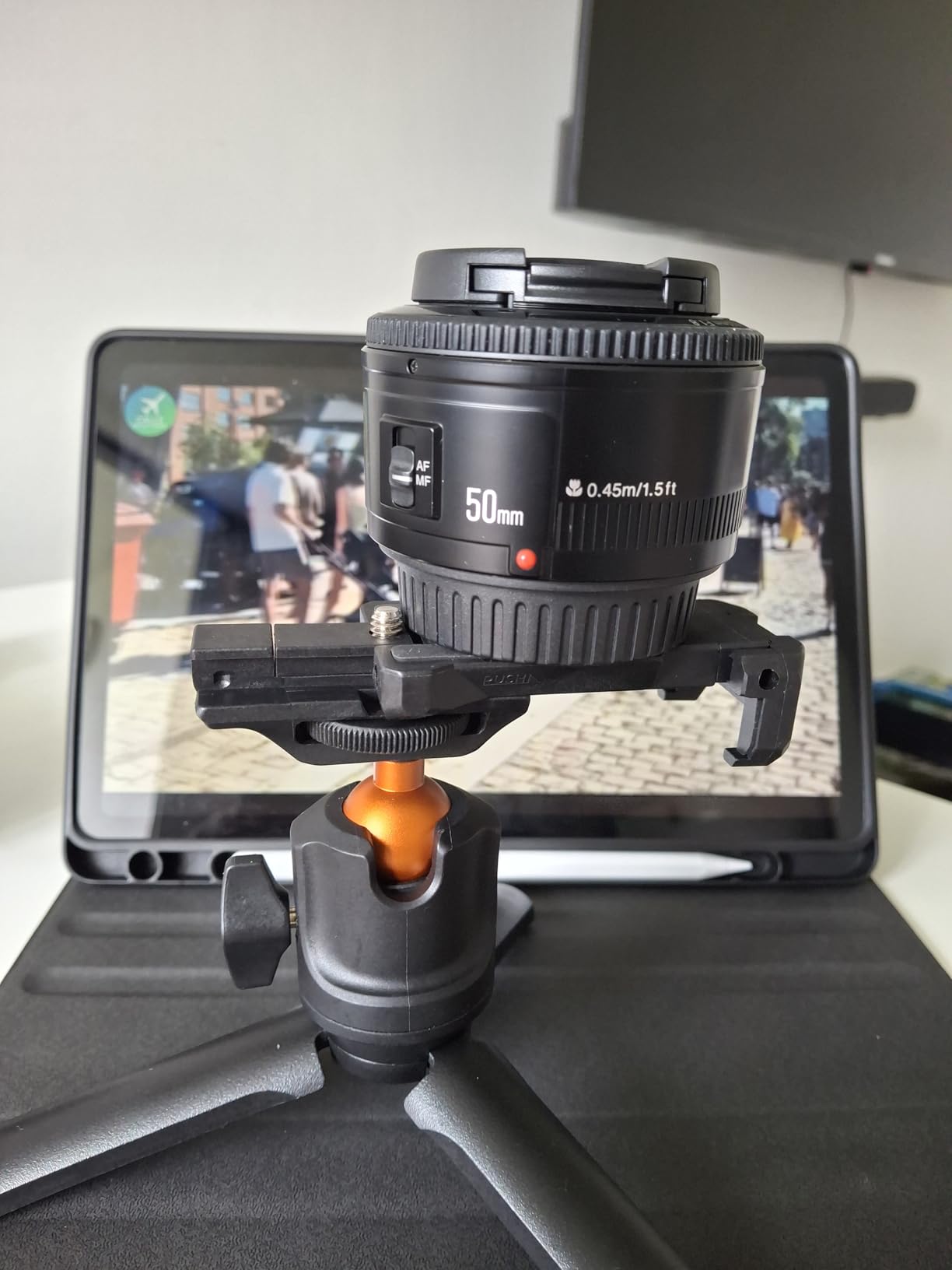
The autofocus is the honest weakness. Owners comparing it directly with Canon glass of the same aperture report a noticeably louder motor, slower focus acquisition and occasional hunting in dim conditions. That is exactly the situation fast primes are bought for.
Image quality also trails first-party glass toward the frame edges when wide open. There is no stabilization and no weather sealing, so this is an indoor and dry-weather lens.

Who the YONGNUO YN50mm F1.8 suits
It suits a beginner who wants a fast prime before committing to expensive glass, or a Canon shooter who wants a second body lens that costs almost nothing. The metal contacts improve signal conductivity and resist corrosion on long-used gear.
It also suits practice and backup duty. Because it is so light, carrying one alongside a serious lens costs you nothing in comfort.
Who should skip the YONGNUO YN50mm F1.8
Skip it if you shoot video, because the motor noise is picked up by a microphone at close range. Skip it if you work in rain, since there is no sealing at all.
Skip it if edge-to-edge sharpness matters to your work. Stopping down to f/4 makes the difference obvious, but that costs light, which is what you came here for.
5. YONGNUO YN50mm F1.8N — Best Budget Fast Prime for Nikon F
YONGNUO YN50mm F1.8N Standard Prime Lens AF for Nikon F-Mount DSLR Cameras
50mm prime
Max aperture f/1.8
7.2 ounces
Nikon F mount
Pros
- Sharp and crisp from around f/4 onward
- f/1.8 gathers plenty of light at night
- Metal mount and smooth focus ring
- Works on bodies without an in-body AF motor
Cons
- Loud autofocus motor
- unusable for video
- Soft from f/1.8 through f/2.5
- No weather sealing and no VR
The Nikon F version of the same idea, and the one we found better behaved optically. Owners report crisp results from around f/4 onward, which is more usable than many lenses in this class, and they call the build quality good for the money.
A useful detail for older bodies: it focuses on Nikon F-mount DSLRs that have no in-body AF motor. That keeps an inexpensive fast prime viable on a long-discontinued body, where first-party glass options get thin.
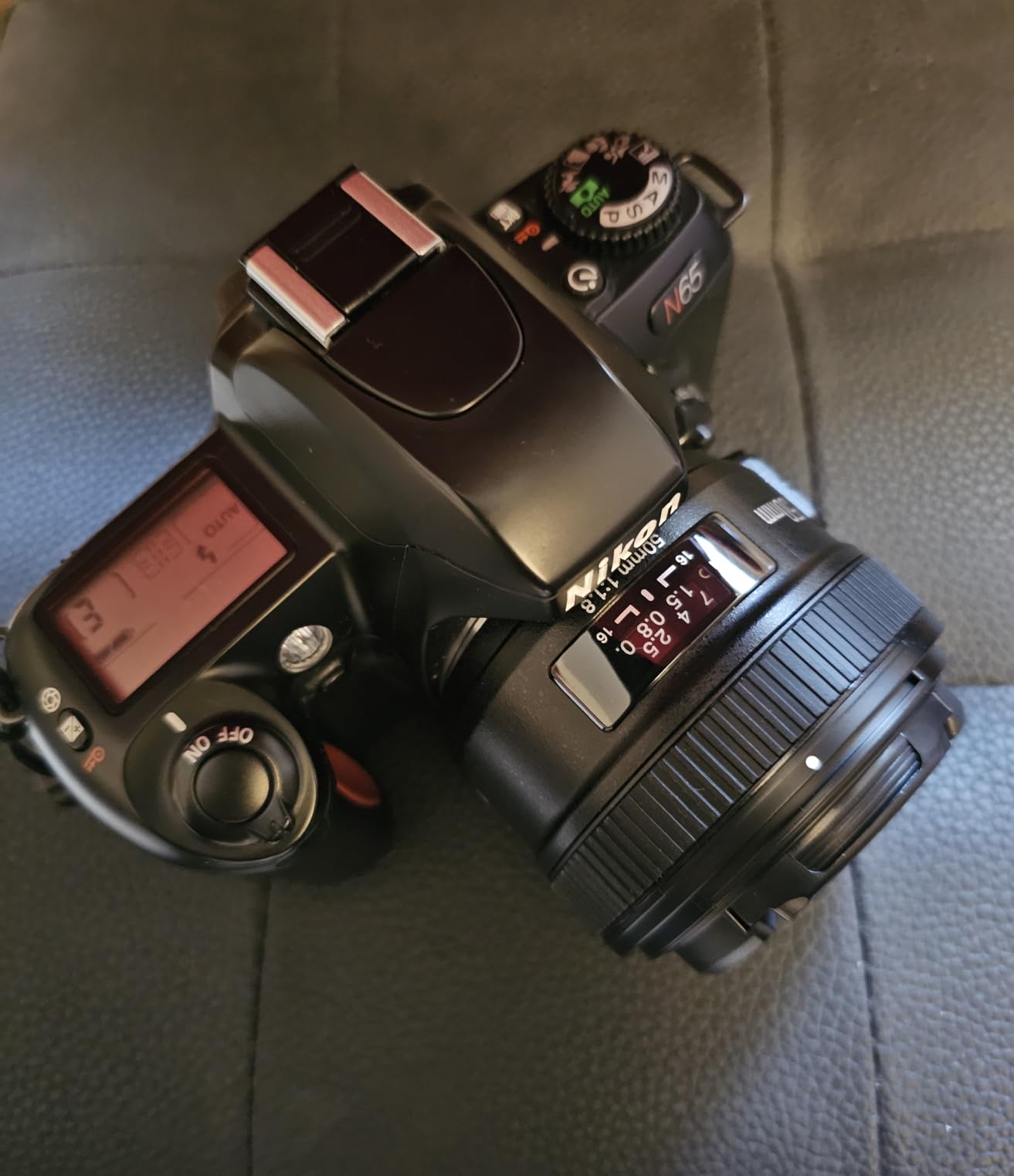
Wide open is where the compromises show. Owners repeatedly describe noticeable softness from f/1.8 through f/2.5, and highlights running slightly hot. For night work this usually means shooting f/2.8 and accepting one and a third fewer stops of light than the f/1.8 label suggests.
The autofocus motor is loud, and several reviewers say that is the single thing holding the lens back. The focus ring also turns opposite to the printed scale, and there is no manual focus override while autofocus is engaged.

Who the YONGNUO YN50mm F1.8N suits
It suits Nikon F-mount shooters on a budget who want a fast normal lens for indoor events and travel. At 7.2 ounces it still disappears into a bag, and the smooth focus ring feels better than the price suggests.
It also suits portrait shooters who want background separation at low cost. The 50mm on full frame, or 75mm equivalent on DX, is a classic event focal length.
Who should skip the YONGNUO YN50mm F1.8N
Skip it for video, because the motor noise is the first thing a viewer would notice. Skippers who need clean files at full aperture should know that f/1.8 is the weakest part of the frame.
Skip it if you need stabilization or sealing. Neither is present, so low light handheld work depends entirely on your body and your bracing.
6. Canon RF 50mm F1.8 STM — Best Fast Prime for Canon RF Mirrorless
Canon RF50mm F1.8 STM Lens
50mm prime
Max aperture f/1.8
5.6 ounces
43mm filter thread
Pros
- Compact and very light at 5.6 ounces
- Low light performance with attractive bokeh
- Quiet gear-type STM focus for video
- 43mm filter thread keeps filters inexpensive
Cons
- Softness and corner astigmatism at f/1.8
- No optical stabilization
- Plastic feel with visible chromatic aberration
This is the RF version of the classic nifty fifty, and owners describe it in exactly those terms: tiny, light, fast and quiet. At 5.6 ounces it is the second-lightest lens here, and the f/1.8 aperture handles evening events without pushing ISO as far as a kit zoom would.
The control ring gives direct setting changes without menu diving, which is genuinely useful at night when you do not want to look away from the scene. Optimized coatings are tuned to hold colour balance while keeping ghosting and flare in check around bright point lights.

Wide open you get focus softening, coma and corner astigmatism, and some chromatic aberration in high-contrast scenes. Firing at f/2.8 largely resolves all three, at a cost of about one stop of light.
Two other notes from owner feedback: the barrel is all plastic and feels less premium than older EF lenses, and there is no optical stabilization on the lens itself. On APS-C RF bodies the 50mm becomes roughly 75mm equivalent, which is tight for indoor work.

Who the Canon RF 50mm F1.8 STM suits
It suits Canon RF shooters who want a first serious prime without carrying weight. The 43mm filter thread is one of the smallest here, which keeps polarizers and ND filters inexpensive.
It also suits video shooters on a budget, since the gear-type stepping motor focuses smoothly and quietly during continuous autofocus. Close focus works well for product and detail shots.
Who should skip the Canon RF 50mm F1.8 STM
Skip it if you work in the rain or dust, because the build carries no weather sealing. Skip it if you rely on lens stabilization for very slow shutter speeds in dim rooms.
Skip it for wide-angle interiors. On APS-C RF bodies the equivalent view is around 75mm, which is a portrait length rather than a room length.
7. Sony FE 50mm F1.8 — Best Everyday Carry Fast Prime
Sony – FE 50mm F1.8 Standard Lens (SEL50F18F/2), Black
50mm prime
Max aperture f/1.8
6.6 ounces
7-blade circular aperture
Pros
- Sharp wide open with pleasing bokeh
- Fast and accurate autofocus
- Light at 6.6 ounces for constant carry
- Aspherical element and double-Gauss design control coma and distortion
Cons
- No weather sealing
- No MF/AF switch on the barrel
- Focus motor is slightly noisy for video
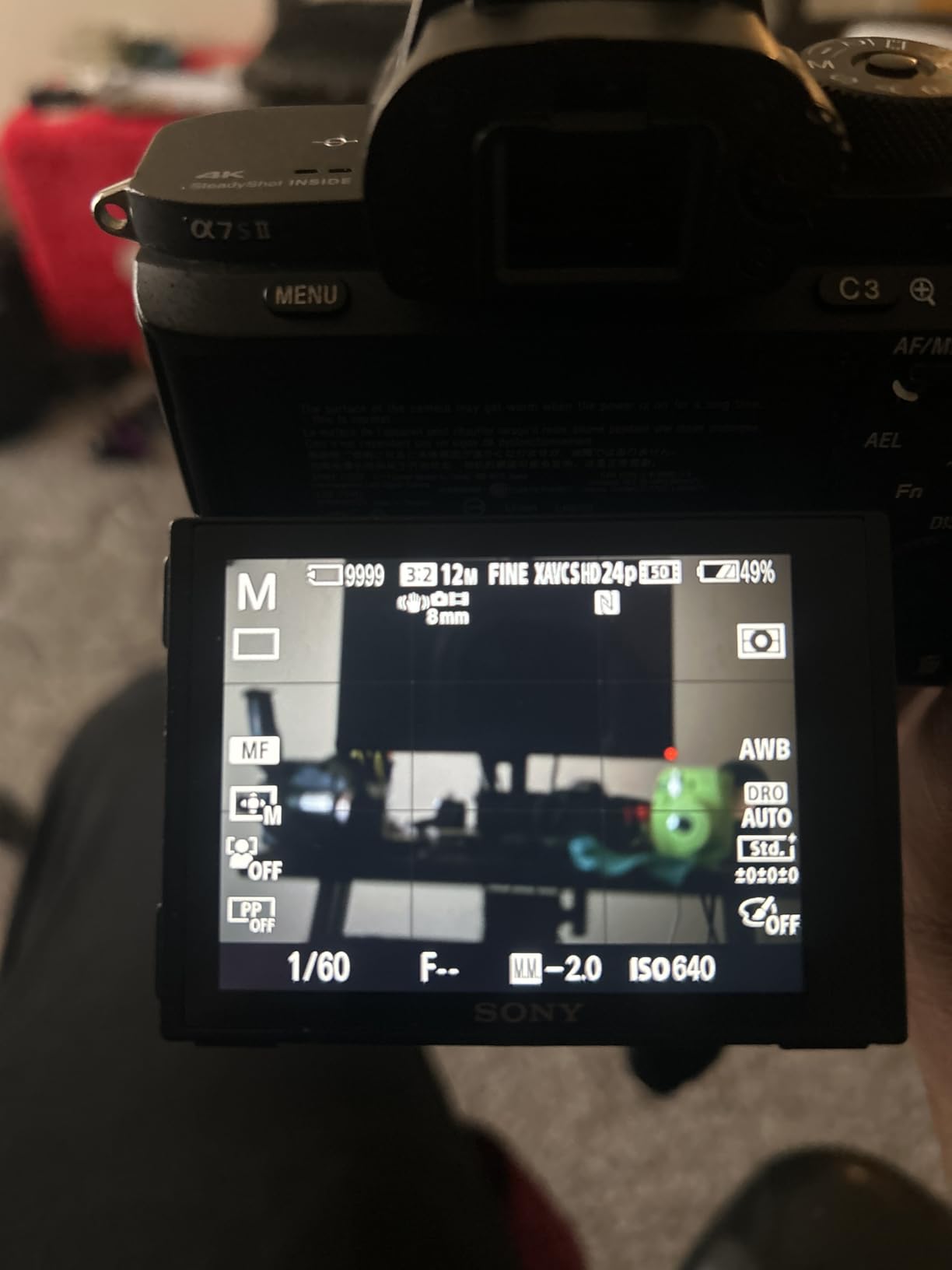
This is the lens most people leave mounted permanently. At 6.6 ounces with a compact barrel, it disappears on a full frame Sony body and its f/1.8 aperture handles most evening situations without ceremony.
Owners often compare the results favourably to the more expensive f/1.4 glass in the same system, which tells you how far optical performance has come at this focal length. The double-Gauss configuration suppresses field curvature and distortion, and the aspherical element handles spherical aberration and coma.

Two practical gaps stand out. There is no weather sealing, so a night walk in rain is off the table, and there is no dedicated MF/AF switch, meaning you need a custom function button to change modes.
The focus motor is slightly noisy for video, though less so than the budget third-party options. There is no stabilization here either, so low light handheld work relies on stabilization in the body.
Who the Sony FE 50mm F1.8 suits
It suits full frame Sony shooters who want one lens that covers street, travel and low light without a second body. The 7-blade circular aperture renders background highlights smoothly for portraits.
It also suits APS-C E-mount users, where the 50mm gives a 75mm equivalent view. That makes it a natural short portrait lens for evening events.
Who should skip the Sony FE 50mm F1.8
Skip it if you work outdoors in bad weather, since the barrel is unsealed. Skip it if you shoot a lot of video and need a silent focus motor.
Skip it if you need the last half stop of light. Against an f/1.4 the difference is roughly two thirds of a stop, which shows up as higher ISO or a slower shutter in very dark rooms.
8. Canon RF35mm F1.8 Macro IS STM — Best Fast Prime for Stabilized Handholding
Canon RF35mm F1.8 is Macro STM Lens
35mm prime
Max aperture f/1.8
Optical IS up to 5 stops
0.5x macro
Pros
- Stabilization of up to 5 stops for handheld night shots
- 0.5x macro at 0.17 m minimum focus
- L-grade rendering with very smooth bokeh
- Compact and light at 10.88 ounces
Cons
- Autofocus precision varies between copies
- Visible purple fringing wide open
- Not ideal for astro or fast subjects
This is the only lens in the roundup with optical image stabilization, and up to 5 stops of shake correction. That is a big deal for low light: it effectively lets you hold shutter speeds several stops slower than you otherwise could, which lowers ISO.
The optical results rival Canon L lenses in the viewfinder, with contrasty rendering and smooth bokeh. At 0.17 m minimum focus and 0.5x magnification it doubles as a capable close-up lens, which is unusual for a fast prime at this price point.

Owners report that autofocus precision varies between copies, with some units showing slight focus shift or hunting. If you buy this, check focus at full aperture on a high-contrast target before you rely on it for a paid shoot.
Wide open there is visible purple fringing at high-contrast edges. And for the darkest work, reviewers specifically flag limits with astrophotography, wide-open night scenes and fast-moving subjects.

Who the Canon RF35mm F1.8 Macro IS STM suits
It suits indoor and event photographers who want stabilizer-assisted low light results without stepping up to a much heavier lens. A 35mm field of view works in rooms where a 50mm leaves you at the door.
It also suits product, food and detail shooters who want close focus and background separation in the same lens. The control ring makes exposure changes quick in dim rooms.
Who should skip the Canon RF35mm F1.8 Macro IS STM
Skip it if star fields or wide night scenes are your goal, since reviewers call it a poor fit for astrophotography. Skip it if you need guaranteed autofocus consistency across multiple bodies.
Skip it for single-subject portraits if a longer lens suits your style better. Many owners end up preferring the RF 50mm for that specific job, and our portrait prime lens guide compares the two in more detail.
9. Sigma 35mm F1.4 Art DG — Best f/1.4 Prime for Canon EF
Sigma 35mm F1.4 Art DG HSM Lens for Canon, Black
35mm prime
Max aperture f/1.4
665 g
9 rounded blades
67mm filter
Pros
- Very sharp wide open with strong low light reach
- Floating inner focus keeps quality across the range
- Nine rounded blades deliver round bokeh
- Hood and case included
Cons
- Heavy at 665 g for a prime
- No stabilization
- 67mm filter thread and no weather sealing
A full stop faster than every f/1.8 lens in this roundup, and the reach of that extra light is what makes it worth carrying. The 35mm field of view on full frame is close to the reporter classic, and at f/1.4 you can hold a shutter speed that keeps a walking subject sharp indoors.
Owners describe Art-series sharpness with excellent detail rendering wide open, and the floating inner focusing system keeps image quality high across the focus range rather than only at infinity. Color aberration compensation is built into the design.

At 665 g this is by far the heaviest prime here, and that changes how you work at night. Held handheld for an hour, it tires the wrist faster than anything else we tested, so most owners end up pairing it with a strap or a support.
There is no stabilization, the 67mm filter thread makes filters expensive, and the manual aperture ring means an adaptor is needed to mount it on a mirrorless body. It is not weather resistant.

Who the Sigma 35mm F1.4 Art DG suits
It suits full frame Canon shooters who work indoors, at weddings or on assignment where one extra stop of light is the difference between usable and noisy files. The ring-type ultrasonic HSM motor is quick and decisive for a moving subject.
It also suits portrait shooters working close to wide open, where nine rounded blades give smooth, round highlights rather than the star shapes a smaller diaphragm produces.
Who should skip the Sigma 35mm F1.4 Art DG
Skip it if you already carry a heavy zoom or a second body. At 665 g it changes your whole kit balance, and forums repeatedly list weight as the deciding factor against lenses like this.
Skip it if you shoot on mirrorless without wanting to buy an aperture-ring adaptor, or if you need weather resistance for outdoor assignments.
10. Nikon NIKKOR Z 50mm f/1.8 S — Best Fast Prime for Nikon Z Owners
Nikon NIKKOR Z 50mm f/1.8 S | Premium Large Aperture Prime Lens (nifty Fifty) for Series mirrorless Cameras | USA Model, Black
50mm prime
Max aperture f/1.8
14.56 ounces
Weather sealed
Pros
- Exceptional sharpness and microcontrast wide open
- Very low distortion and excellent flare control
- Quiet fast autofocus that pairs with eye detection
- Weather-sealed metal construction
Cons
- Premium price for a 50mm f/1.8
- Larger than classic nifty fifty primes
- Stabilization comes from the body
- Cat's-eye bokeh at the edges wide open
This is the optical reference standard in the roundup. Owners report extreme sharpness and microcontrast across most of the frame even wide open at f/1.8, along with very low distortion and excellent flare resistance around bright night lights.
The weather-sealed metal construction matters more than the spec sheet suggests. For outdoor night work or wet weather, having a sealed option removes a limitation that affects nearly every other lens here.

Two practical notes. There is no stabilization in the lens itself; the 5-axis VR is powered by Z bodies, so on a body without it you lose that correction entirely. And wide open at the frame edges you can see slight cat’s-eye bokeh.
It is also the heaviest 50mm on the list at 14.56 ounces and one of the more expensive, which is the reason owners compare it constantly against cheaper 50mm primes. The step in price buys optics and sealing, not extra light.

Who the NIKKOR Z 50mm f/1.8 S suits
It suits Nikon Z shooters who want the best image quality per frame at f/1.8, especially for night portraits where microcontrast separates a subject from a dark background.
It also suits anyone shooting outdoors in bad conditions, because it is one of very few fast primes in this roundup with weather sealing. The ultra-quiet stepping motor keeps focusing silent for video.
Who should skip the NIKKOR Z 50mm f/1.8 S
Skip it if you want the smallest, lightest lens on the body. At 14.56 ounces it is more than double the weight of a classic 50mm f/1.8, which tells you about all-night comfort.
Skip it if budget is the deciding factor. Third-party 50mm primes cover the same f/1.8 aperture for far less, without the sealed build or the microcontrast.
11. Sony 85mm F1.8 — Best Fast Prime for Candlelit Portraits
Sony SEL85F18 85mm F/1.8-22 Medium-Telephoto Fixed Prime Camera Lens, Black
85mm prime
Max aperture f/1.8
10.4 ounces
9-blade aperture
ED glass
Pros
- Bright f/1.8 with round bokeh highlights
- ED glass for corner-to-corner sharpness
- Double linear motor focuses fast and quietly
- Focus hold button and AF/MF switch
Cons
- No image stabilization
- 85mm forces you well back indoors
- Not weather sealed like G Master glass
An 85mm is the classic low light portrait lens because the long working distance lets in dim rooms mirror what you could only achieve outdoors. At f/1.8 you get fast shutter speeds, so subjects stay sharp rather than blurring during exposure.
Owners praise the ED glass element for corner-to-corner sharpness and the 9-blade circular aperture for round, smooth background highlights. The double linear motor focuses fast and quietly, and the customisable focus hold button gives direct control over the focus point.

There is no image stabilization, so handheld work depends on your body. It is also not weather sealed to the standard of Sony’s G Master glass, which limits long night shoots in poor conditions.
The bigger practical constraint is focal length. An 85mm field of view means you need to step well back, and that is not always possible in a crowded room or a small venue.

Who the Sony 85mm F1.8 suits
It suits portrait shooters working in dim interiors, at weddings or in restaurants where a wide lens would distort faces and a normal lens would force too much light onto the subject.
It also suits APS-C Sony shooters looking for a short telephoto: it gives roughly a 127.5mm equivalent view, which compresses features pleasingly at low light.
Who should skip the Sony 85mm F1.8
Skip it if you shoot in tight spaces, because the required distance often does not exist in the venue. Skippers who work outdoors in rain should note the lack of weather sealing.
Skip it if you need stabilisation in the lens for very slow handheld shutter speeds. There is none, so stabilization has to come from the body or from a support.
12. Sony FE 24mm F1.4 GM — Best Ultra-Wide Prime for Night Work
Sony FE 24mm F1.4 GM Full-Frame Wide Prime Lens
24mm wide prime
Max aperture f/1.4
15.68 ounces
11 blades
G Master
Pros
- Exceptional wide-open sharpness with little corner falloff
- f/1.4 reaches short shutter speeds at night
- Smooth creamy bokeh and minimal corner distortion
- Fast accurate autofocus with eye tracking
Cons
- Very costly against third-party 24mm f/1.4 glass
- Heavy at 15.68 ounces
- Corner coma at f/1.4 that clears by f/2
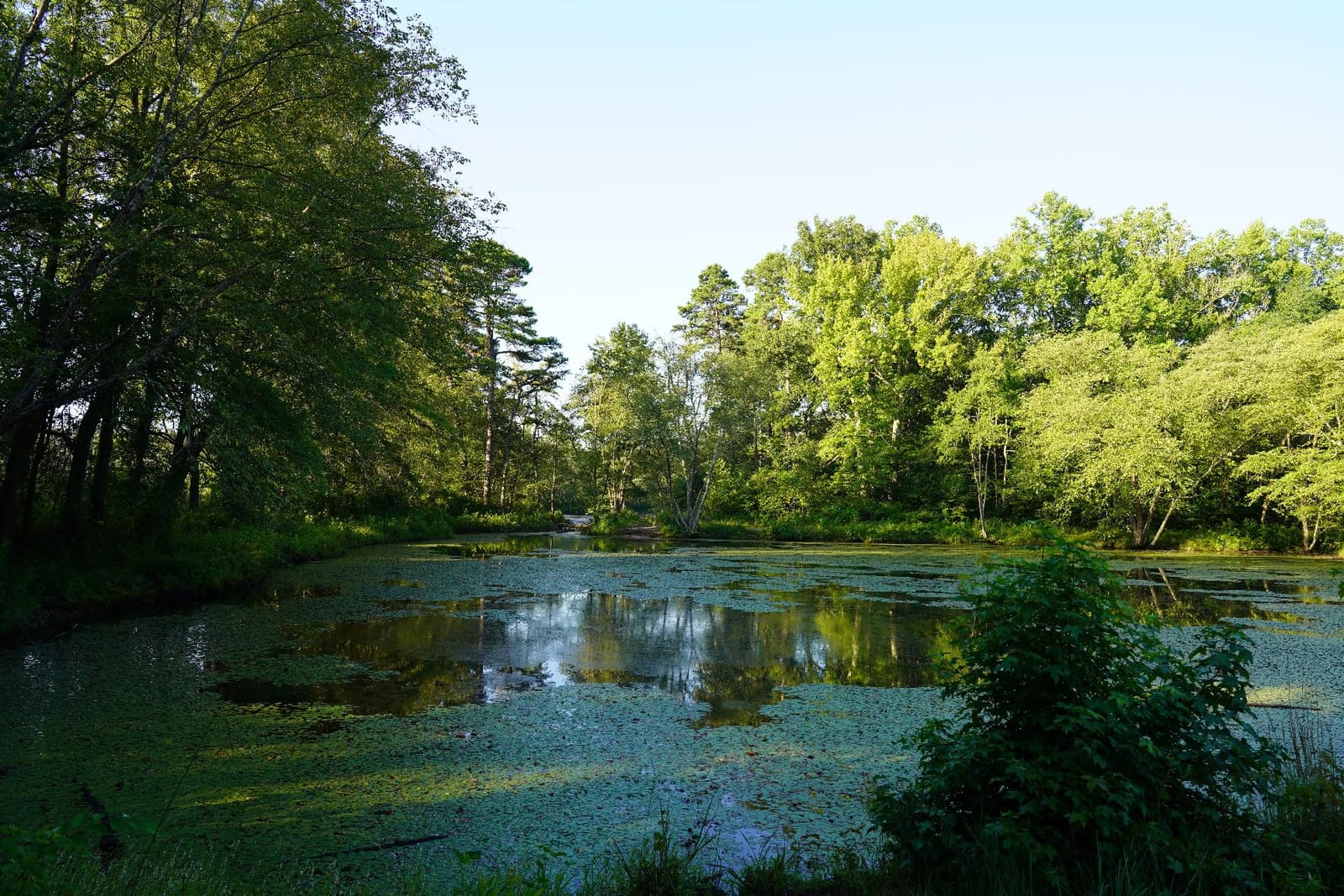
A 24mm f/1.4 on full frame is a special combination: wide enough for city scenes and interiors, bright enough to shoot them at night. Owners praise the f/1.4 aperture for gathering enough light for night shooting and astrophotography at shorter shutter speeds, which reduces the trailing you get at longer focal lengths.
Optically, this is the sharpest lens in the roundup by owner accounts, with little corner falloff and smooth creamy bokeh. The two XA elements handle high-resolution rendering, and 11 aperture blades give nicely rounded highlights.

The trade-offs are weight and cost. At 15.68 ounces it is heavier than every other lens here except the Sigma 35mm Art, and it is priced far above third-party 24mm f/1.4 alternatives that will gather similar light.
There is also some corner coma at f/1.4, which largely disappears by f/2.0, and no built-in stabilization. The included box kit is generous: hood, front cap, rear cap and a case.
Who the Sony FE 24mm F1.4 GM suits
It suits full frame Sony shooters who want one wide lens for night cityscapes, interiors and astro. It is compact and well balanced for a 24mm, smaller than many full frame wide primes at similar apertures.
It also suits hybrid shooters who need fast, quiet, accurate autofocus with reliable eye-detection tracking, which matters when subjects move in low light.
Who should skip the Sony FE 24mm F1.4 GM
Skip it on budget grounds. The light-gathering advantage over a cheaper 24mm f/1.4 is much smaller than the price gap, and most of what you gain is sharpness you may not use.
Skip it if wrist comfort matters for long handheld night walks. It is a heavy lens in the hand, and at 15.68 ounces the weight accumulates quickly over hours.
How to Choose a Fast Prime for Low Light
Aperture first, everything else second. Every step from f/1.8 to f/1.4 is roughly half a stop of light, so the move from a kit zoom at f/2.8 to a fast prime is worth about a stop and a half. Check the minimum aperture too: lenses that close to f/16 or f/22 give you more flexibility indoors than ones limited to f/11.
Focal length sets the job. Wide primes cover star fields, cityscapes and interiors. A 35mm handles street work. A 50mm is the safe all-rounder. An 85mm or longer is a portrait lens that needs room. On APS-C multiply by about 1.5 for the full frame equivalent.
Autofocus motor type decides low light reliability. Ring-type ultrasonic and double linear motors hunt far less than stepping motors in dim conditions. Reviewers repeatedly report focus hunting as the top complaint on budget f/1.8 primes, so if you shoot moving subjects in the dark, pay for the motor.
Stabilization buys you shutter speed, not light. Only the Canon RF35mm in this roundup has optical stabilization. It allows slower shutter speeds, which lowers ISO, but it does not improve the lens’s light-gathering ability.
Weight decides whether you take the lens out. Ranges here run from 4.2 ounces to 665 g. A lens you leave at home because it is too heavy does no work at night, so factor carry comfort into the decision.
Weather sealing is a work decision. Only the NIKKOR Z 50mm f/1.8 S here is listed as weather sealed. The Sigma 30mm f/1.4, Sigma 16mm f/1.4 and Sony 85mm f/1.8 are not, which limits them to fair-weather shooting.
How Many Stops of Light Does Each Aperture Give?
Relative to a constant f/2.8 zoom, here is what each maximum aperture actually delivers, and what it means for the ISO you have to set.
Working from a f/2.8 kit zoom as the baseline: f/2 is one stop brighter, which halves the ISO needed. f/1.8 is one and a third stops brighter, so ISO 3200 at f/2.8 becomes about ISO 1600 at f/1.8. f/1.4 is two stops brighter, taking that same f/2.8 exposure to about ISO 800.
Going further, f/1.2 is two and two-thirds stops brighter than f/2.8, and f/1.0 is three stops brighter. That is the difference Fujifilm-style f/1.0 primes are sold on: about eight times the light of a kit zoom from the same sensitivity setting.
Lowest f-stops in general use go down to f/0.95 in some specialist lenses, with f/1.0 being the fastest widely available maximum aperture for stills photography. Most fast primes here sit at f/1.4 or f/1.8, which covers the majority of low light needs.
Is f/2 enough for low light? For most situations, yes. One stop faster than f/2.8 plus a modern sensor handles indoor events and evening street work without pushing ISO into unreadable territory. Below f/1.4 you gain less light and lose a lot of depth of field, so the returns get thin.
Low-Light Camera Settings That Actually Work
1. Shoot Aperture Priority at your lens’s widest aperture. That is the setting that lets a fast prime do its job. In Av mode the camera picks the shutter speed; in manual you set ISO yourself, which is slower at changing light.
2. Set a firm Auto ISO ceiling. Pick the highest ISO you can accept and let the camera stop there. For a modern full frame body in dark scenes, ISO 3200 to 6400 is a realistic ceiling; for older or crop bodies, keep it lower.
3. Set a minimum shutter speed tied to focal length. As a working rule, keep the shutter speed at least as fast as 1 over the focal length, and faster if the subject moves. At 35mm that means 1/40 s minimum, 1/125 s for walking subjects.
4. Shoot RAW. It keeps more shadow and highlight information than any compressed format, which gives you room to pull a dark night frame back without amplifying noise.
5. Use in-body or lens stabilization where you have it. Turn it on for static subjects and off for people walking, where it can fight the natural movement of the shot.
6. Focus where the light is. Autofocus needs contrast to lock on. Face the subject toward a light source where you can, use a focus point on a bright edge, and switch to manual focus in astro work.
When a Fast Prime Is the Wrong Choice
A constant f/2.8 zoom beats a fast prime when framing changes faster than light does. At a wedding reception or a school event, reframing from wide to tight without swapping glass is worth more than the extra stop. In that situation carry the zoom and add a prime later.
At f/1.0 to f/1.2, depth of field becomes so thin that focus becomes the harder problem, not the exposure. Photographers on forums describe manual focus at these apertures as having almost no usable depth of field in dim light. For most people, f/1.4 to f/1.8 is the practical sweet spot.
Video is the other case where a fast prime can disappoint. Constant f/1.4 apertures breathe on focus pulls unless the lens has good control, and stepping motors on budget primes add audible noise. A designed video prime or a fast zoom is often the better tool.
Frequently Asked Questions
Are prime lenses better for low light?
A prime with a wide maximum aperture beats a slow zoom in low light because it collects more light per frame, letting you use a faster shutter speed or a lower ISO. But a constant f/2.8 zoom still wins when you need to reframe quickly in dim venues, so the lens choice depends on whether light or framing matters more.
Is f/2 enough for low light?
Yes for most situations. f/2 is one stop brighter than a typical f/2.8 kit zoom, which halves the ISO needed for the same exposure. That is usually enough for indoor events and evening street work on a modern sensor. You only need to go wider for astrophotography and very dark venues.
Is a 1.4 or 1.8 lens better?
An f/1.4 lens is about two thirds of a stop brighter than an f/1.8, meaning roughly one and a half times as much light, and it gives shallower depth of field and more rendering. An f/1.8 lens is lighter, smaller, cheaper and easier to focus. Choose f/1.4 when light is the constraint and f/1.8 when weight is.
What camera lens has the lowest f-stop?
The fastest maximum apertures widely available for stills photography run from f/0.95 on specialist lenses to f/1.0 on modern fast primes, with f/1.2 and f/1.4 being common professional standards. Each full stop difference doubles the light, so f/1.0 gathers about eight times the light of a f/2.8 zoom.
Is ISO 800 good for low light?
On a modern full frame camera, ISO 800 with a fast prime is a comfortable low light starting point for most indoor scenes. Crop sensors and older bodies reach their noise ceiling much sooner, so treat ISO 800 as a target rather than a rule and raise it only as far as your files tolerate.
The Verdict: Which Fast Prime Should You Buy in 2026
The Canon EF 50mm f/1.8 STM is our pick for most people. At 5.6 ounces with quiet autofocus and an f/1.8 aperture, it does more for your low light files than its specification sheet suggests, and it holds up well in exactly the dim conditions where cheaper glass struggles.
Sony E APS-C shooters who want maximum light should take the Sigma 30mm f/1.4 DC DN, and anyone shooting stars should add the Sigma 16mm f/1.4 DC DN. Working indoors on Canon RF, the RF35mm F1.8 Macro IS STM is the only pick here with optical stabilization. For the sharpest files at any price, the NIKKOR Z 50mm f/1.8 S and the Sony FE 24mm F1.4 GM set the standard.
Whatever you choose, the best fast prime lenses for low light are the ones you will actually carry out at night. Check the current price and availability for the lens that fits your mount.