
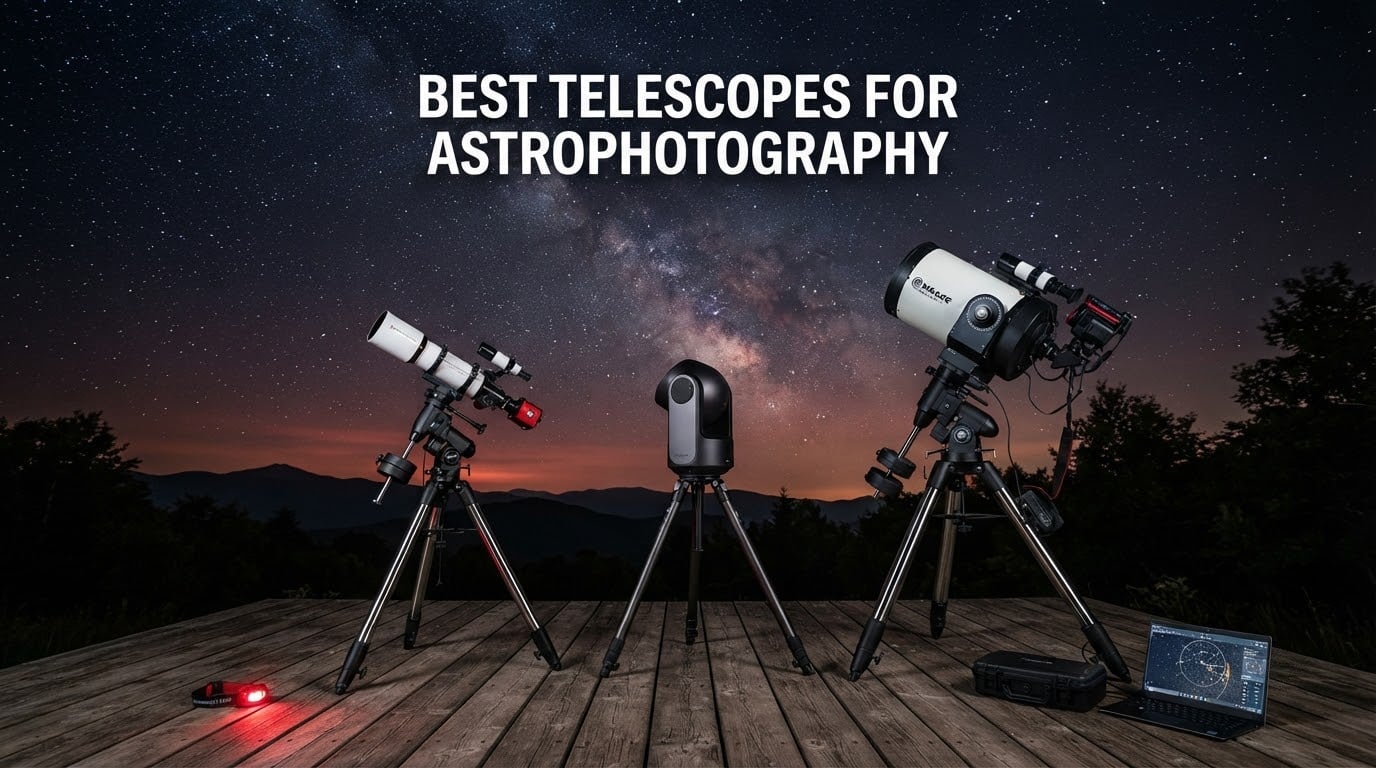
Most people shopping for a telescope picture a long white tube on a tripod. For imaging, that picture is half wrong.
The mount decides whether your stars are points or smears, the glass decides whether their colour holds up at the edge of the frame, and the aperture decides how faint the target can be before you are just collecting noise. The best telescopes for astrophotography are the ones that solve those three problems for the kind of sky you actually have.
We compared eight systems across the full range: pocket-sized smart scopes that stack images in the cloud, lightweight ED refractors built for a star tracker, a 130mm Newtonian kit that doubles as a visual scope, and a fixed home observatory that runs unattended. Along the way we looked at what reviewers actually report after months of use, not just what the spec sheets promise.
One thing worth saying up front: if you are still choosing a first general telescope rather than an imaging rig, start with our honest reviews of the best telescopes and our 12 best astronomy telescopes guide, then come back here for the imaging specifics. Visual and imaging optics are not the same purchase.
Table of Contents
Top 3 Picks for Astrophotography in 2026
How We Picked These Telescopes
Every scope here was judged on the same four questions: does it produce round, colour-accurate stars, can a camera reach focus on it, will a mount track well with it attached, and does the owner have to do anything technical before the first frame lands.
We weighted star quality and field flatness highest, because those two flaws are the hardest to fix later. Aperture came next, then weight, since a heavy tube on a modest mount is the single most common reason beginners produce trailed images.
We also read the negative reviews closely. Owner complaints about wobbly mounts, dust inside the lens, back-focus problems and collimation drift told us more about long-term satisfaction than the star ratings alone, and several of our picks are here precisely because their weaknesses are honest and limited rather than hidden.
Best Telescopes for Astrophotography Compared (October 2026)
Quick answer by category: the DWARF 3 is the best all-round pick, the SVBONY SV503 80mm is the best traditional imaging telescope, the ZWO Seestar S30 Pro is the best for deep sky from a bright suburban sky, the Celestron AstroMaster 130EQ is the best first telescope kit, the Celestron Origin is the best fixed-site wide-field imager, the Celestron NexStar 8SE is best for planets and the Moon, the SVBONY SV555 is the best for full-frame wide field, and the DWARFLAB Dwarf Mini is the best budget entry.
| Product | Specifications | Action |
|---|---|---|
 DWARF 3 Smart Telescope DWARF 3 Smart Telescope |
|
Check Latest Price |
 SVBONY SV503 80mm ED Refractor SVBONY SV503 80mm ED Refractor |
|
Check Latest Price |
 ZWO Seestar S30 Pro ZWO Seestar S30 Pro |
|
Check Latest Price |
 Celestron AstroMaster 130EQ Celestron AstroMaster 130EQ |
|
Check Latest Price |
 Celestron Origin Observatory Celestron Origin Observatory |
|
Check Latest Price |
 Celestron NexStar 8SE Celestron NexStar 8SE |
|
Check Latest Price |
 SVBONY SV555 APO Refractor SVBONY SV555 APO Refractor |
|
Check Latest Price |
 DWARFLAB Dwarf Mini DWARFLAB Dwarf Mini |
|
Check Latest Price |
The table above is the fast version. Below is the reasoning, including who each one is wrong for.
1. DWARF 3 Smart Telescope – Best All-Round Astrophotography Choice
DWARFLAB Dwarf 3 Smart Telescope, App-Controlled Astrophotography Camera
Dual telephoto and wide-angle lenses
4K auto-tracking
Cloud stacking
3 lb body
Pros
- Covers deep space and wide night scenes in one body
- Auto-tracking needs no manual guiding
- Finished image in minutes with no computer
- Backpack-friendly at 3 lb
Cons
- Alt-az mount limits tracked exposure length
- Modest aperture caps faint detail
- App and network needed to process images
We put the DWARF 3 first because it removes the two steps that kill most first imaging projects: learning a stacking program, and building a rig that tracks well enough to keep stars round. Power it on, connect the app, point it at a bright object, and the cloud processor returns a stacked image you can post without opening a desktop program.
What surprised us most was the dual lens system. The telephoto covers deep-space targets and even daytime wildlife, while the wide lens handles the Milky Way and star trails, so the same body works for a nebula and a night-scape without swapping anything.
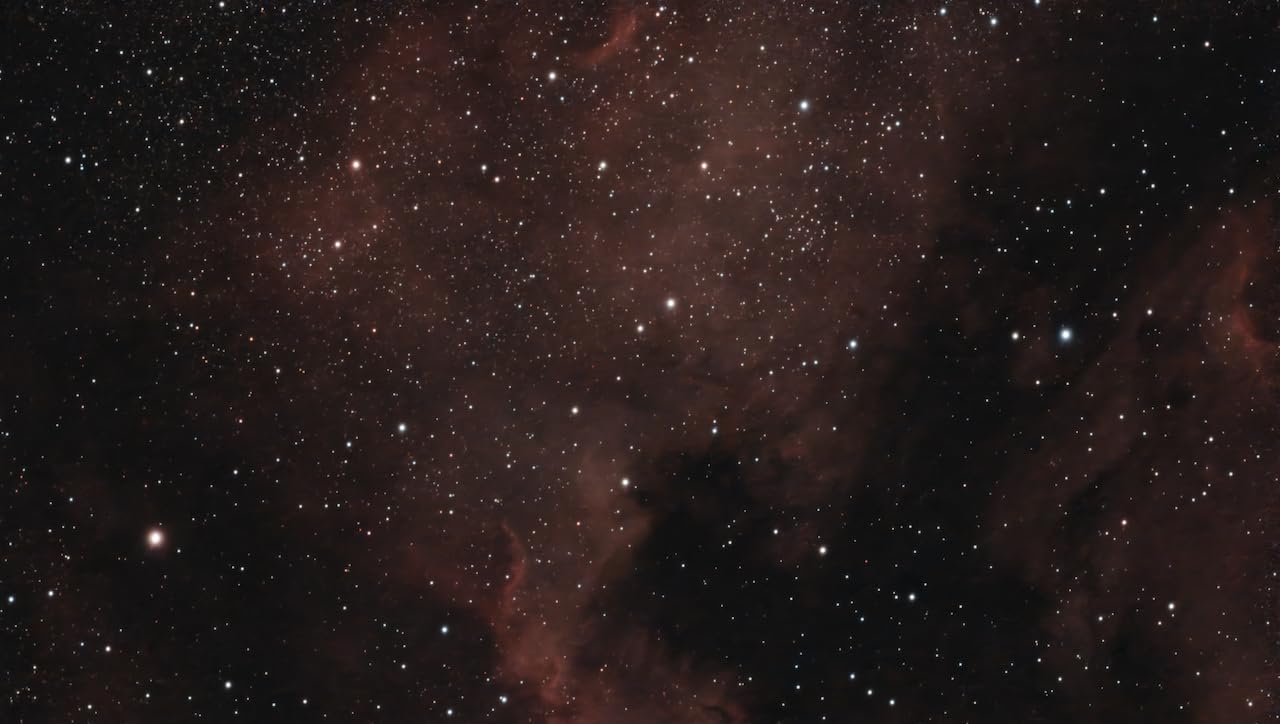
The weight is the other quiet advantage. At 3 lb it packs into a standard backpack, so you can drive to a darker site instead of shooting from a light-polluted garden. Reviewers consistently describe cloud stacking finishing inside a couple of minutes of the session ending.
Owners report strong results specifically from travel use: hotel rooftops, campgrounds and beach clearings. With 4K auto-tracking, the stars stay sharp as the mount follows the target, and no guiding equipment is required.
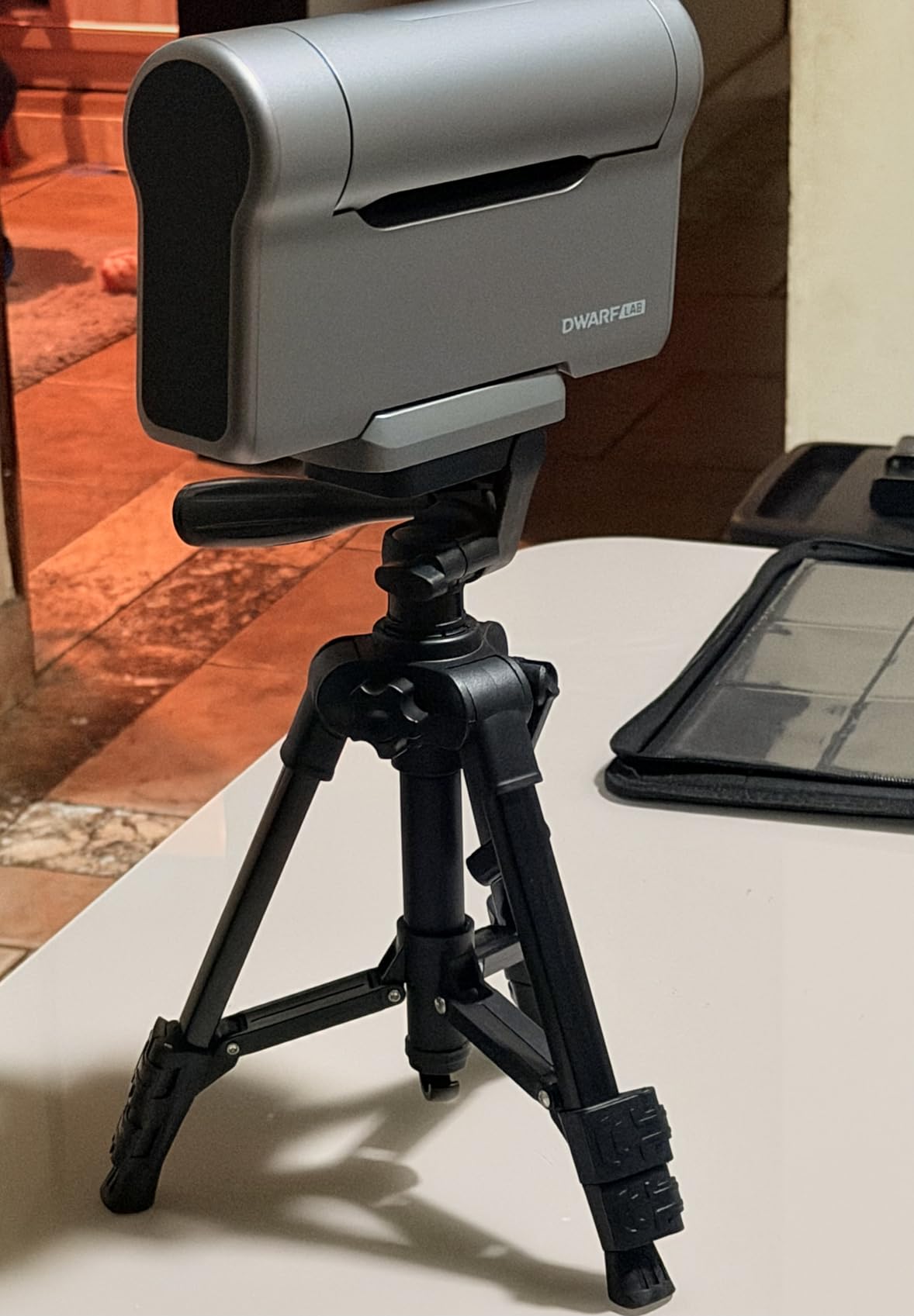
What makes this the easiest first imaging system
The whole point of this scope is that there is nothing between you and a finished frame. There is no guiding scope, no field flattener to reach focus against, no calibration of a focuser. You set it down, choose a target and press go.
That removes the two failure modes forums complain about most with traditional rigs: back-focus frustration and star trailing from an undermount. Both simply cannot happen here, because there is no separate mount and the focuser is fixed internally.
Where it falls short for serious imagers
The mount is alt-azimuth, so tracked exposures are limited compared with a true equatorial rig. Reviewers note this most on longer sessions, where field rotation and shorter usable sub-exposure times start to show.
Aperture is also modest, which puts a ceiling on how much faint, extended detail you can pull out of targets. And processing runs through the app and its cloud service, so you need a smartphone and network access at the end of every session. For learning structure and stacking discipline it is superb; for faint galaxy cores it has a limit.
2. SVBONY SV503 80mm ED Refractor – Best Flat-Field Star Field
SVBONY SV503 Upgraded ED Refractor Telescope, 80mm F7 with Field Flattener
80mm aperture
560mm focal length
0.8X flattener
S-FPL51 ED glass
Pros
- Flattener gives sharp stars to the corners on full frame
- Low chromatic aberration from ED glass
- 2 inch dual-speed focuser for precise focus
- Light 5.51 lb tube is kind to mounts
Cons
- Tube only
- so mount and camera are extra
- 80mm aperture limits faint targets
- No finder scope included
This is the highest-rated product in our group at 4.6 stars across 186 ratings, and the reason is a spec most competitors omit: the SV193 0.8X flattener is included. That single accessory is what turns a decent refractor into a deep-sky instrument.
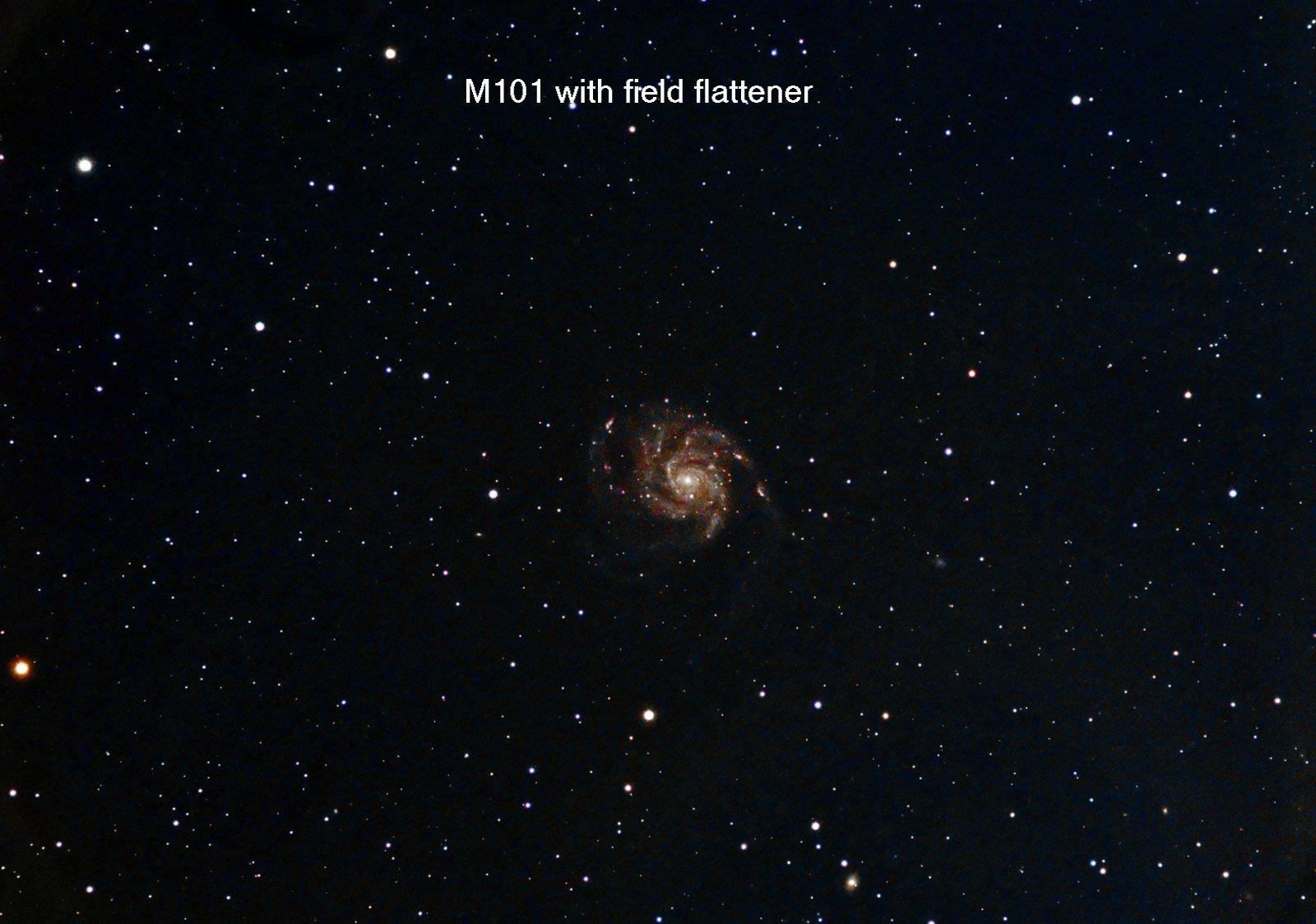
Without a flattener, a refractor gives you sharp stars in the middle of the frame and stretched, oval stars at the edges. With the flattener fitted, reviewers report round stars across a full-frame sensor, which is the difference between a usable wide-field image and one you crop most of.
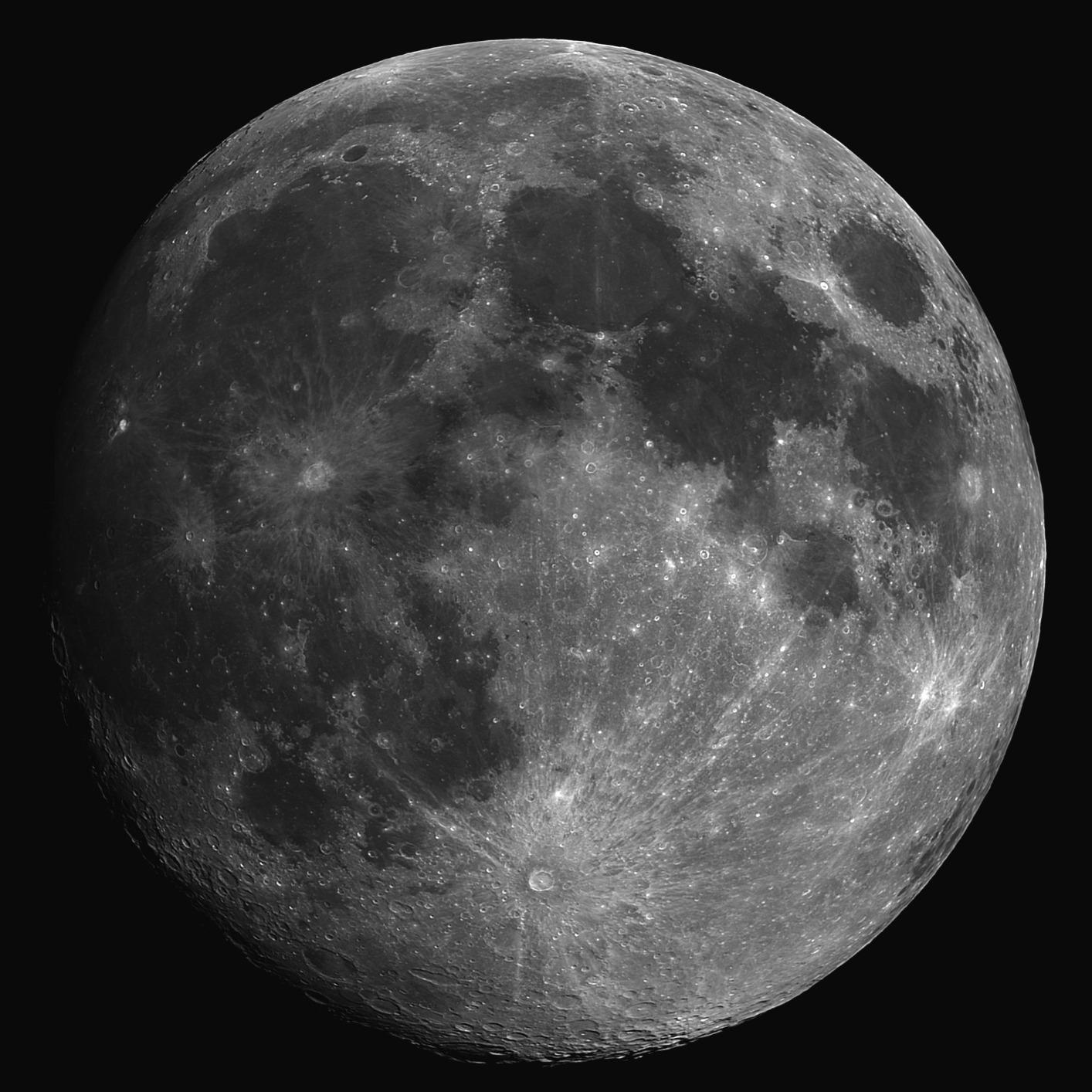
The optics are S-FPL51 ED glass, fully multi-coated. ED glass pulls the violet fringing that makes cheap achromats unusable for colour imaging right down to the point where stars keep their colour and highlights do not turn purple.
The 2 inch dual-speed focuser with 1:10 micro-adjustment matters more than it sounds. At long focal lengths, a single-speed focuser moves stars far too much per turn, and a fine focuser is what lets you land focus without overshooting.
What to check before buying this as your imaging tube
Confirm the back focus suits your camera. Spacing between the flattener and the sensor has to be right or stars soften toward the edge, and different camera bodies need different adapters. Do that arithmetic before you order, not after.
Work out the image scale too. With 560mm of native focal length and a typical APS-C sensor you land around 2 arcsec per pixel, which is a good match for larger nebulae and galaxies. Fitted with the 0.8X reducer, the field widens and stars tighten further. If you want our wider look at refractor options, we cover them in our best refractor telescopes guide.
Who this is wrong for
This is an optical tube assembly only. No mount, no camera, no guiding and no finder scope are included, so the real cost of a complete system is higher than the tube suggests. Buyers who expect a ready-to-use telescope are disappointed.
The 80mm aperture also collects less light than larger astrographs, so very faint targets need longer total integration than a bigger tube would demand. And for visual observing it is not a pleasant scope: the flattener and camera adapters occupy the focuser path, making it awkward with an eyepiece.
3. ZWO Seestar S30 Pro – Best for Deep Sky from the Suburbs
ZWO Seestar S30 Pro Smart Telescope, App-Controlled Astrophotography
30mm aperture
160mm focal length
4.6 degree field
Apochromatic optics
Pros
- Built-in light pollution filters suit bright skies
- Apochromatic optics reduce colour distortion
- Dual-camera 4K capture with mosaic stitching
- Anti-dew protection for long sessions
Cons
- Manufacturer states it is not for planets
- Device must stay put during deep-sky imaging
- Small aperture caps resolution
- App-only workflow with no manual stacking
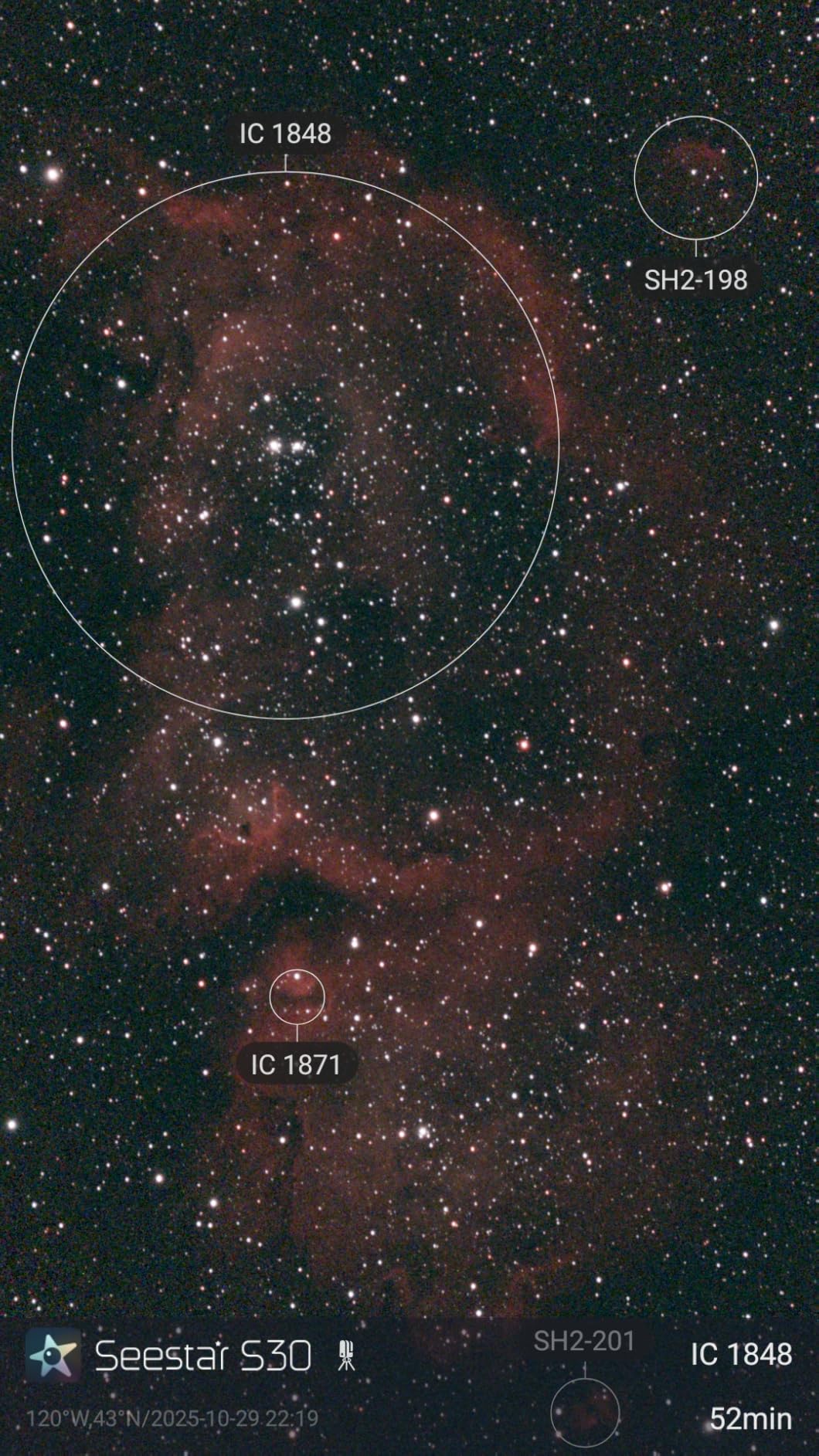
The S30 Pro is the pick for anyone shooting from a suburb rather than a dark site. Its apochromatic optics and built-in light pollution filters are aimed squarely at the worst-case sky, and reviewers report a real difference between filtered suburban frames and unfiltered ones.
At 160mm with a 4.6 degree field of view, it frames large emission nebulae without any mosaic work for many targets. That wide field also means stars stay small, so even the app’s automatic stacking keeps them point-like rather than streaked.
Setup is genuinely near zero. Power on, open the app, and GoTo tracking starts. One-tap processing denoises the image and separates sky from foreground, and mosaic stitching happens automatically for targets wider than the sensor.
Anti-dew protection and long-session imaging support are what separate this from the toy smart scopes. Reviewers mention running it for hours overnight on a single charge, which is when the exposure stacking starts paying off.
Why the filters matter more than the aperture
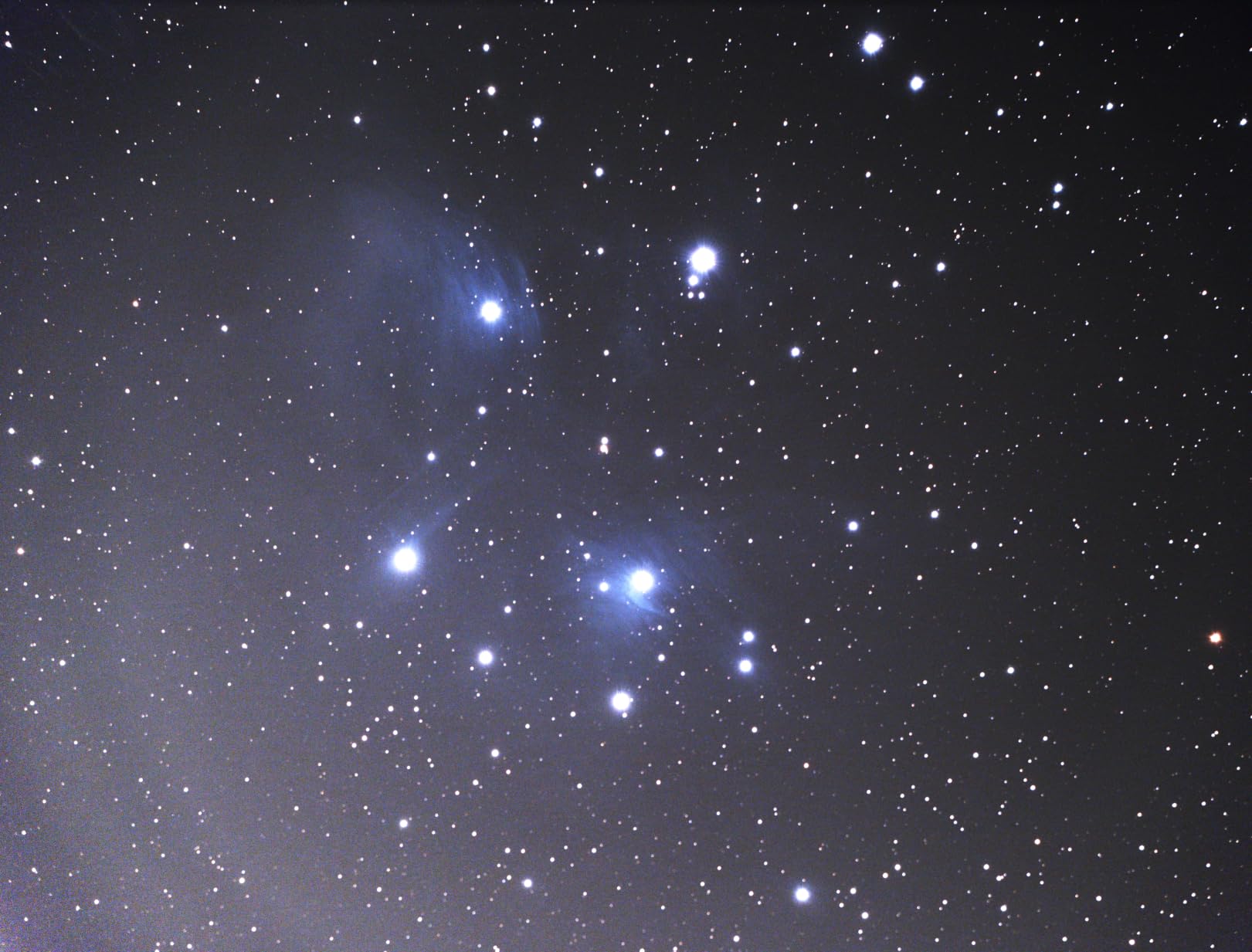
On a bright sky the limiting factor is not how much light the glass gathers but how much of the sky background sits on top of it. Narrowband and light-pollution filters strip the sodium and LED glow that washes out faint nebulosity, so the same 30mm aperture yields a usable target.
This is also the reason to choose an apochromatic design here. Colour fringing ruins the very emission nebulae you want to shoot, and the apochromatic optics here are described by owners as producing noticeably cleaner colour than cheaper alternatives.
Where it will not work
The manufacturer is explicit that this telescope is designed for deep-sky objects and is not intended for planetary observation, so do not buy it expecting Jupiter. Thirty millimetres of aperture also puts a hard ceiling on resolving small targets.
For tracked deep-sky work the device needs to stay stationary; any bump resets the alignment. And the whole workflow runs through the app, so there is no path for manual stacking if you later want more control over your data.
4. Celestron AstroMaster 130EQ – Best First Telescope Kit
Celestron AstroMaster 130EQ Telescope for Deep-Sky Beginners
130mm aperture
650mm focal length
Manual focus
German equatorial mount
Pros
- Most-reviewed scope in this group at 3444 ratings
- 130mm aperture with aluminium and SiO2 coatings
- German equatorial mount with slow-motion knobs
- Tool-free assembly and two eyepieces included
Cons
- Newtonian mirrors need periodic collimation
- Light tripod and plastic fittings flex
- Not imaging-ready without modification
This is the biggest-volume telescope in our group, with 3444 ratings and a 4.3 average. It is not the best astrophotography instrument here, and it is still the one we would put in front of a beginner, because it teaches you what a real equatorial mount feels like.
The German equatorial mount with right ascension and declination slow-motion knobs is the feature that matters. That single design choice keeps a target centred while you observe, which is the difference between a usable telescope and a frustrating one. The 130mm mirror with aluminium and SiO2 coatings gives sharp views of the Moon, planets and brighter deep-sky objects.
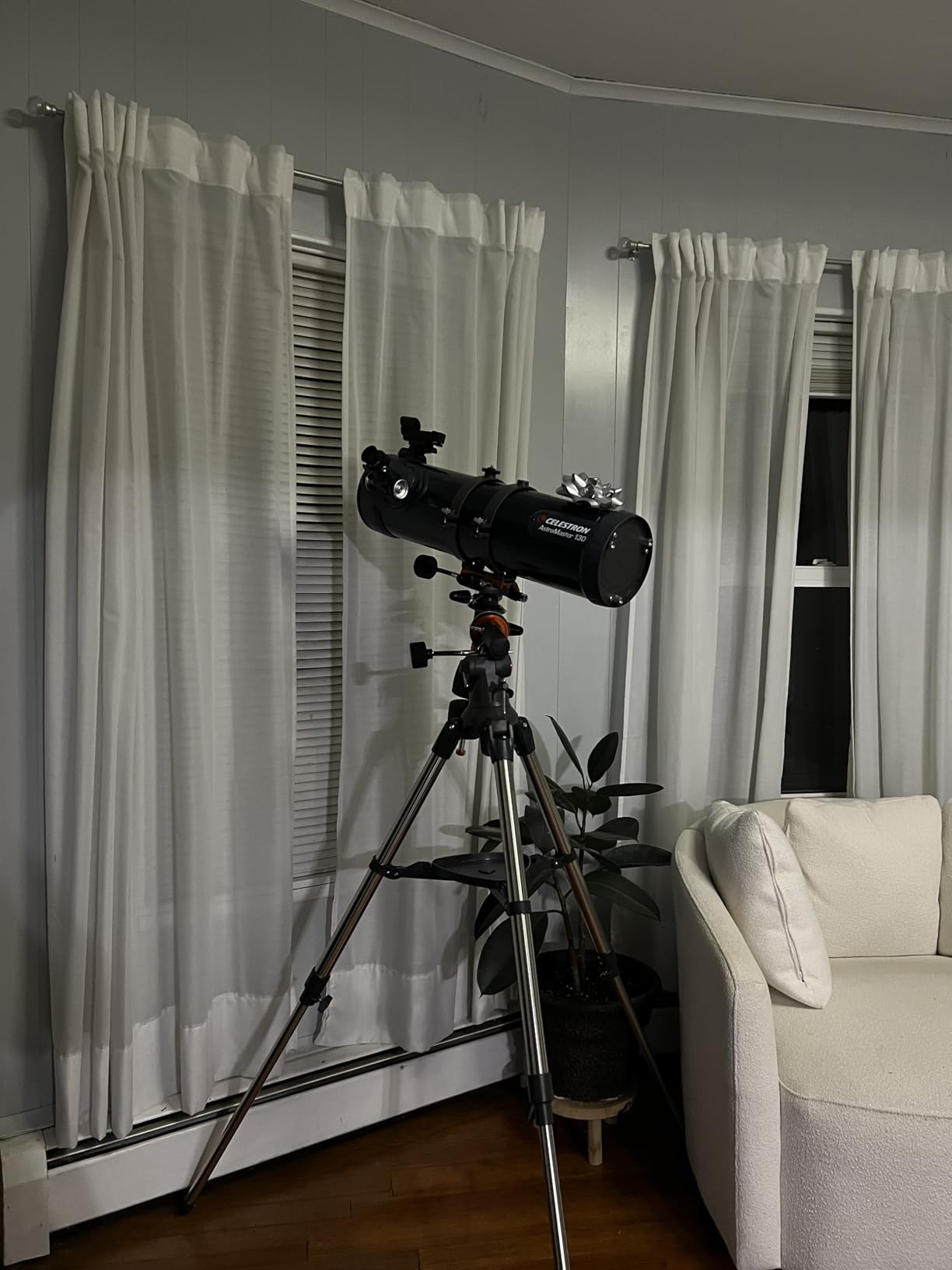
Owners consistently describe crisp optics, quick tool-free assembly and an easy path to adding a motor drive later. Two eyepieces, a StarPointer red-dot finder and astronomy software are all in the box, so there is nothing extra to buy before the first night out.
For learning astrophotography it serves as a reference point. You can see exactly why tracking matters by watching a star drift off the field without the motor, then see it hold steady once tracking is added.
What to buy alongside it if you want to photograph
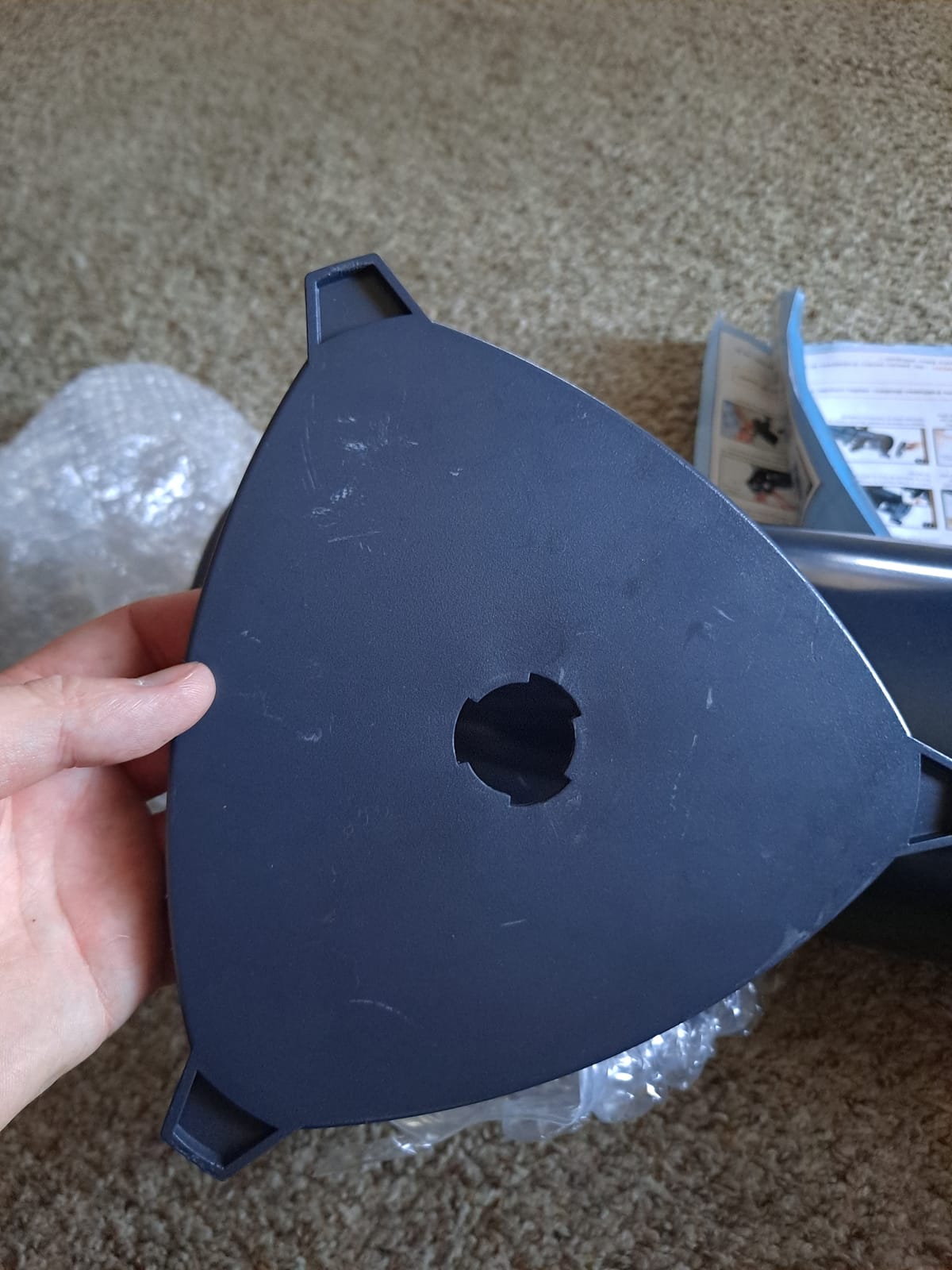
A field flattener and a camera. The focuser supplied is the classic weak point on 130mm Newtonians for imaging, and a DSLR or mirrorless body needs spacing adapters to reach focus. Budget for those before expecting usable frames.
A laser collimator is close to essential. Newtonians need their mirrors re-aligned periodically, and collimation drift is one of the most commonly reported complaints among owners. Adding a dew control system is worth it too, since the large front corrector plate fogs early.
Where it falls short for imaging
The supplied tripod and its plastic fittings flex under a 17 lb tube, which produces vibration and soft stars. That is the deal breaker for imaging, and it is why we would not build an imaging rig on the supplied tripod.
Newtonians also need periodic collimation, and the declination axis plus one of the slow-motion knobs have limited travel. This is a visual instrument first: an excellent first telescope that needs real modification before it photographs well.
5. Celestron Origin – Best Fixed-Site Wide-Field Imager
Celestron – Origin Intelligent Home Observatory – All-in-one Astroimaging and Stargazing Smart Telescope – 6-inch RASA Telescope – Fully-Automated GoTo Mount – User-Friendly – iOS/Android Compatible
6 inch RASA optics
f/2.2 focal ratio
Enclosed observatory
Real-time AI stacking
Pros
- Fast f/2.2 ratio means shorter exposures
- RASA design gives a large flat field
- StarSense self-aligns in about two minutes
- Enclosed body suits unattended sessions
Cons
- 42 lb and bulky
- so effectively a fixed install
- Only 30 ratings so far
- Enclosure means no portability at all
The Origin is a different category of object from anything else on this list. It is not a telescope you carry to a field; it is a 42 lb enclosed observatory you assemble once and keep permanently installed, running on its own schedule.
Optically it is the fastest instrument here. The patented 6 inch RASA design works at f/2.2, which means each sub-exposure gathers far more signal than a slower scope of the same aperture. Shorter exposures are also more forgiving of mount drift and light pollution, so it works in conditions that would defeat a long-focal-length setup.
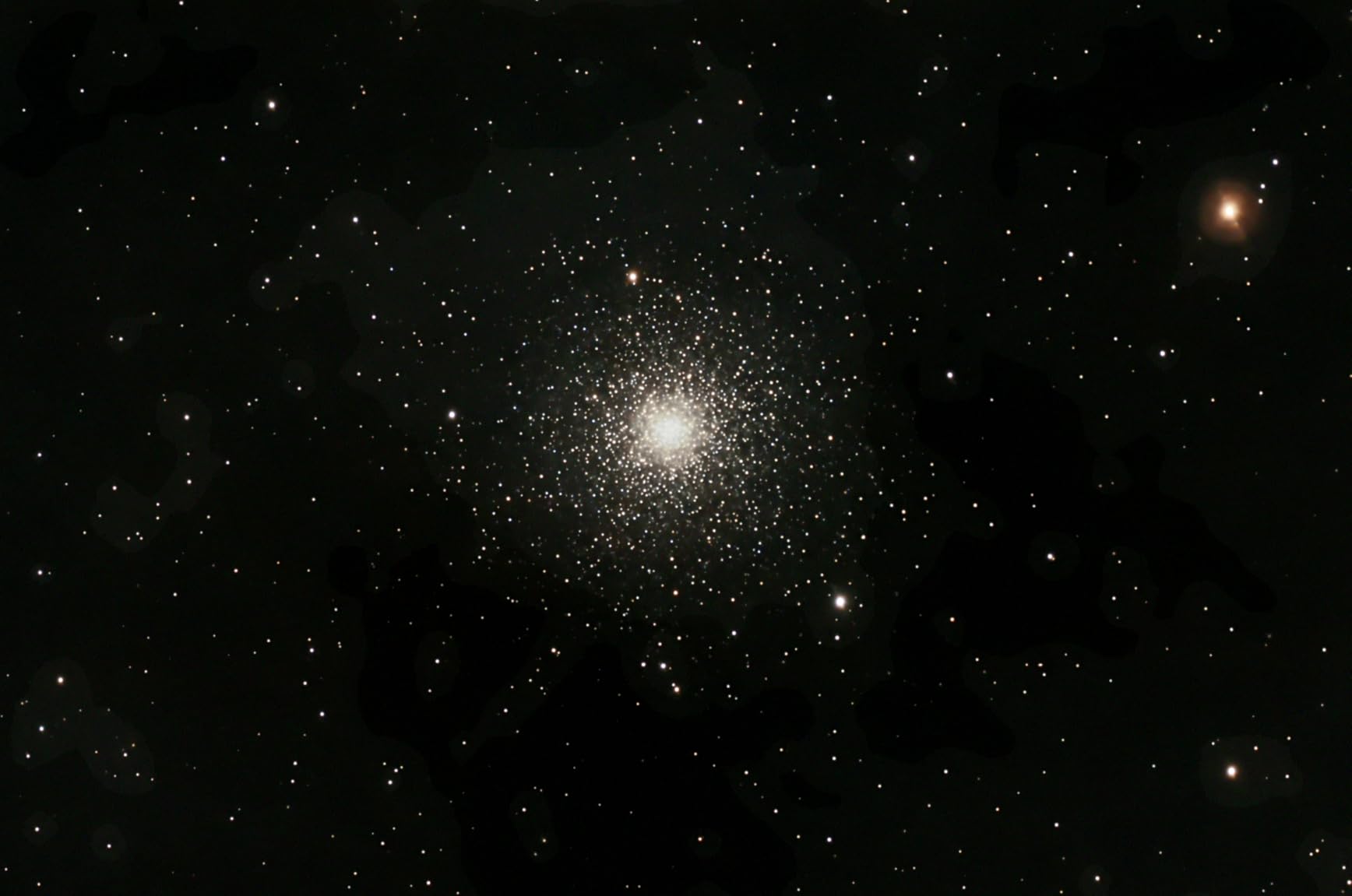
Built-in AI algorithms stack and process every frame in real time with no user intervention, and StarSense scans the sky to focus and align the system on its own after assembly. Reviews describe getting it observing within about two minutes of setup.
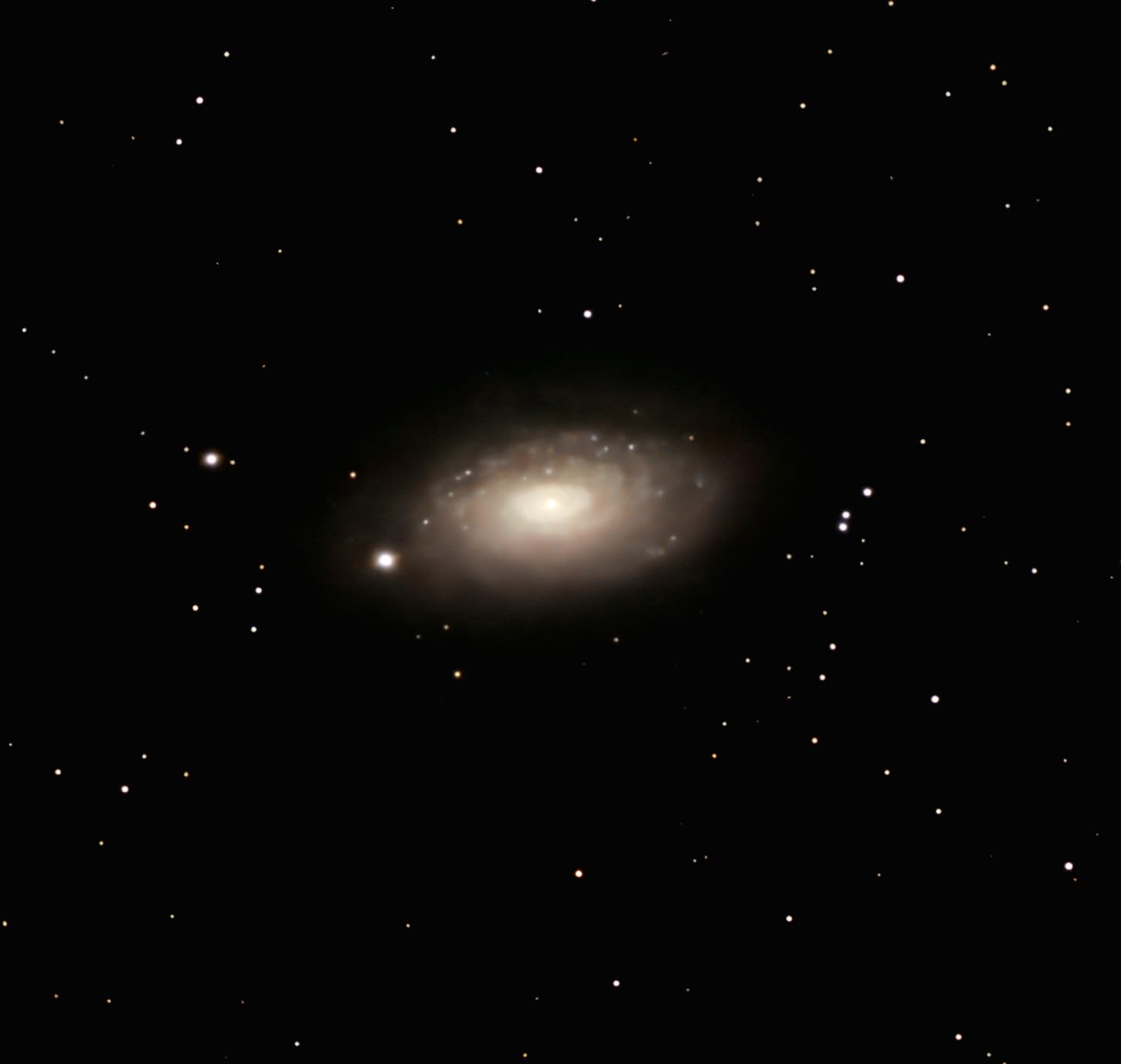
The RASA design produces a large, flat field at 1.02 degrees, so nebulae and galaxy groups sit comfortably in frame. Real-time streaming to a phone or tablet app means you can check progress without going outside.
Why focal ratio matters as much as aperture
Image brightness scales with aperture area divided by focal ratio squared. An f/2.2 instrument gathers dramatically more light per second than an f/8 astrograph of similar size, so on a city sky with 10 second usable exposures, the fast ratio is often the difference between signal and nothing.
This is why smart scopes and fast astrographs suit urban imagers while long focal lengths suit people who can drive somewhere dark. You are trading magnification and reach for brightness and exposure length.
Who should not buy this
Anyone who cannot dedicate a permanent site. At 42 lb and roughly 24 by 26 by 48 inches, moving it is a two-person job, and the enclosure rules out travel entirely.
The evidence base is also thin: 30 ratings at the time of writing, with 83% at five stars. That is an encouraging signal but not a long-term reliability record. Expect the usual expectation friction on a large assembly, and the one-star reviews here reflect setup rather than optics.
6. Celestron NexStar 8SE – Best for Planets and the Moon
Celestron NexStar 8SE Computerized Telescope – Schmidt-Cassegrain
8 inch aperture
2032mm focal length
StarBright XLT coatings
GoTo fork mount
Pros
- Long focal length resolves Jupiter cloud bands
- Automated GoTo with 40000 plus objects
- SkyAlign sets up from three stars
- Compact single-fork design
Cons
- Alt-az fork cannot track long exposures
- 2032mm focal length means narrow field
- 24 lb and bulky to move
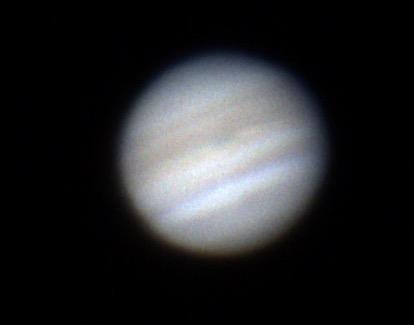
Of everything here, the NexStar 8SE is the scope to buy if your interest is planets. At 2032mm focal length with an 8 inch aperture it reaches the resolution needed for Jupiter cloud bands, Saturn’s ring structure and fine lunar detail, and it does it with almost no fuss.
The GoTo mount with a database of more than 40000 objects means you select a target and the fork slews to it. SkyAlign gets you there by centring three bright stars or planets, which takes minutes rather than the chart-and-knob procedure older mounts demanded.
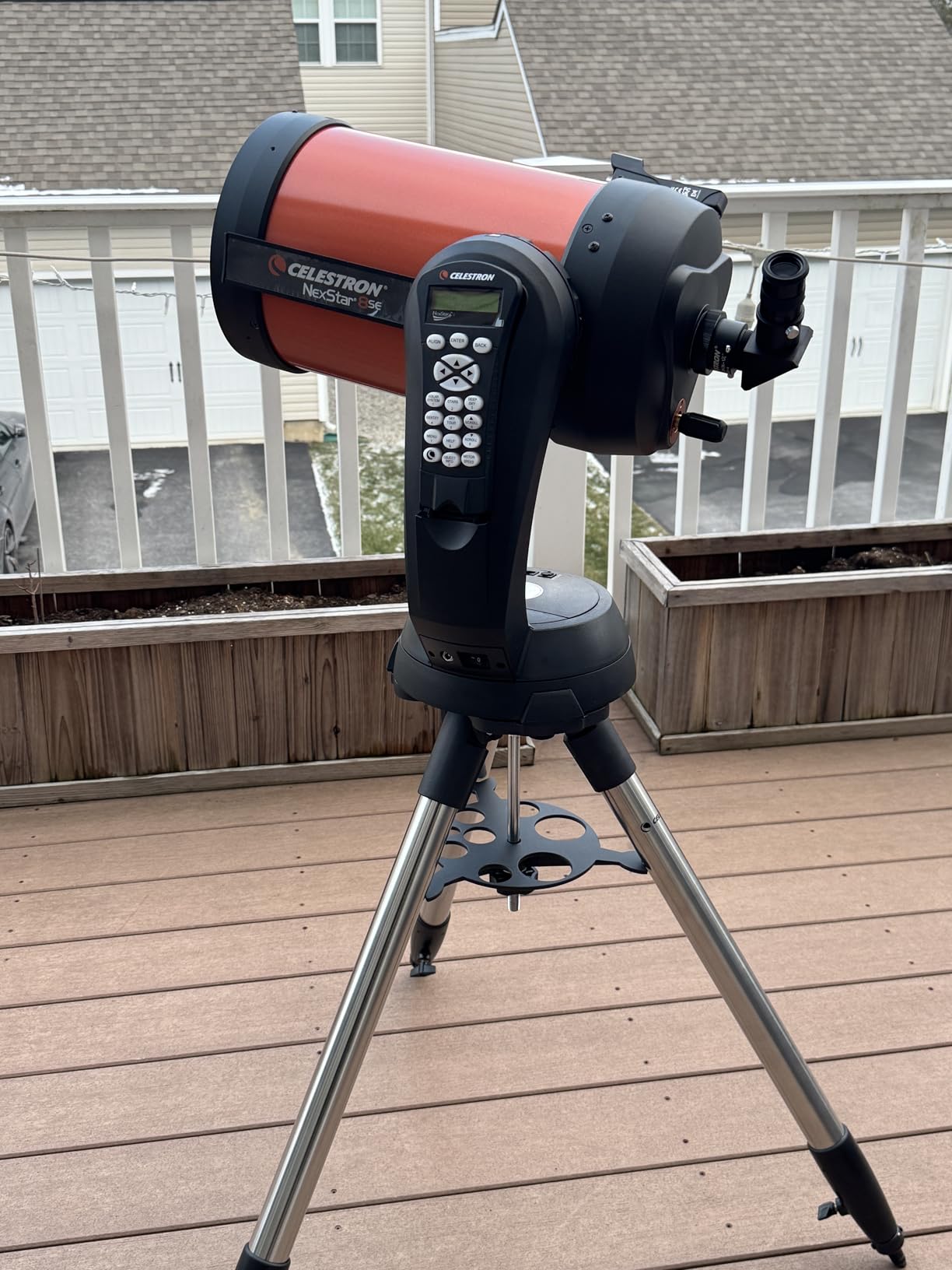
It also holds up as a general deep-sky and lunar visual scope, which is why it has 1579 ratings averaging 4.3. Owners repeatedly praise the alignment speed and the optical performance across targets, and the StarBright XLT coatings on the 8 inch corrector improve transmission noticeably.
For astrophotography specifically, there is one genuine upgrade path. Because the fork accepts standard accessories, an equatorial wedge can convert it for tracked imaging, and a focal reducer widens the field for galaxy work. Budget for both if photography is the main goal.
How to decide if a long focal length suits you
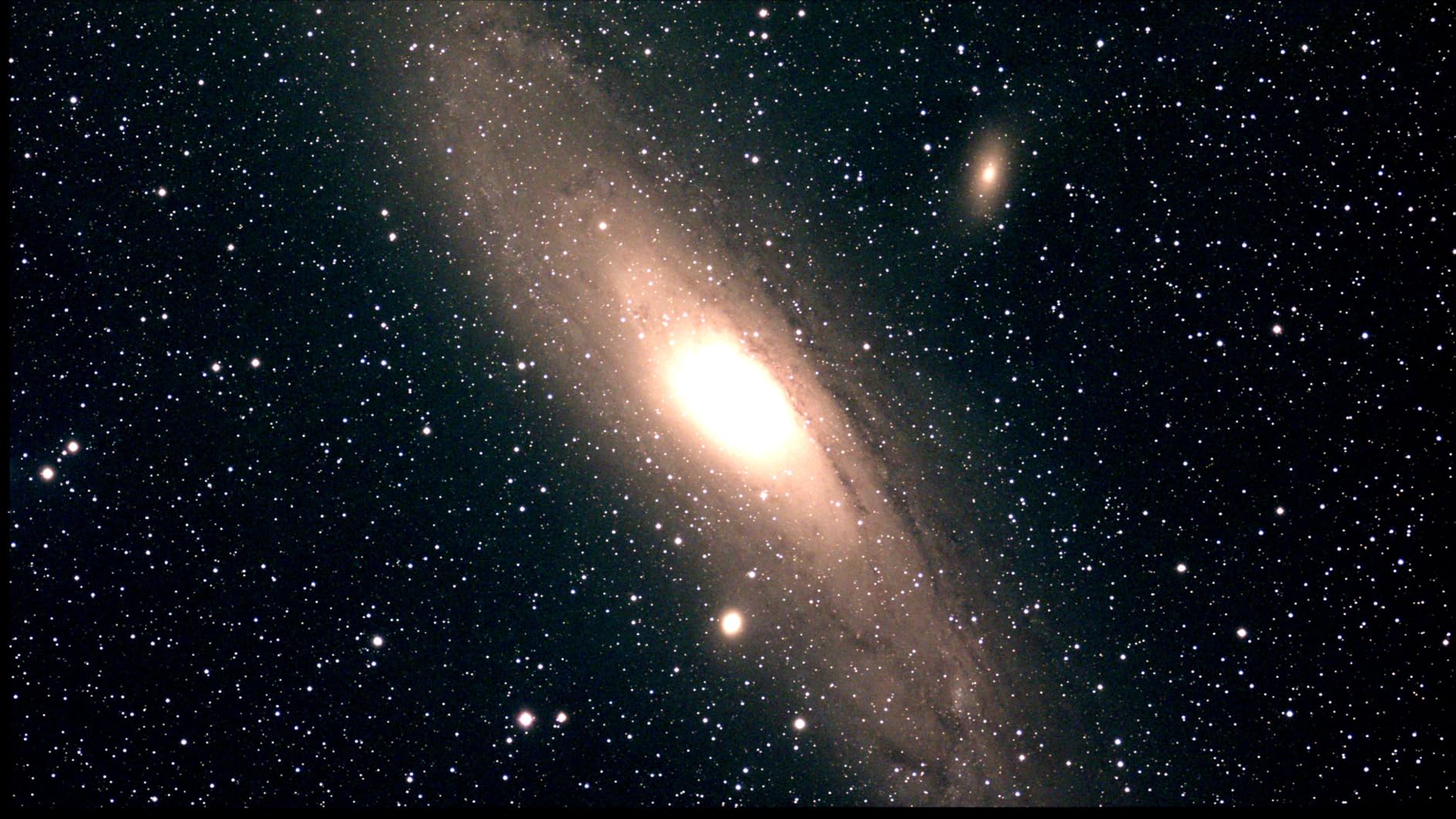
Long focal length means small image scale, which is what separates cloud detail on a planet but makes wide nebulae impossible to frame. At 2032mm, a large emission nebula will not fit without a mosaic, and M31 in particular needs multiple panels.
If your targets are Jupiter, Saturn, Mars and the Moon, this is the right tool. If your targets are the North America Nebula or a galaxy cluster, look at one of the refractors or fast astrographs instead.
What to watch out for
The single-fork alt-azimuth mount cannot track accurately for long deep-sky exposures without an equatorial wedge. Adding one is the single most useful modification for this telescope.
Weight is the other factor: 24 lb complete, and awkward to carry up stairs or load into a car alone. Owners who value portability flag it heavily, so consider whether the scope will live on a patio or travel to dark sites.
7. SVBONY SV555 APO Refractor – Best for Full-Frame Wide Field
SVBONY SV555 APO Astrophotography Telescope, F4.5-F22 Refractor Telescope
54mm aperture
Petzval triplet
F4.5 to F22 variable
44mm image circle
Pros
- Petzval triplet removes coma and colour fringing
- Covers 44mm full-frame without vignetting
- Variable aperture adapts to different targets
- Kit includes dovetail
- filter holder and padded case
Cons
- Small 54mm aperture gathers modest light
- Sold as a tube with mounting hardware only
- No eyepiece included
- Only 33 ratings so far
The SV555 is the most unusual design in this roundup. It is a Petzval triplet whose aperture can be stopped down continuously from f/4.5 to f/22, so the same tube covers both wide-field nebula work and longer focal length targets on planets.
Petzval designs build field flatness into the lens group rather than adding a flattener afterwards. Reviewers report that this eliminates coma and chromatic aberration, which is why stars stay round and colour-true without a separate corrective element.
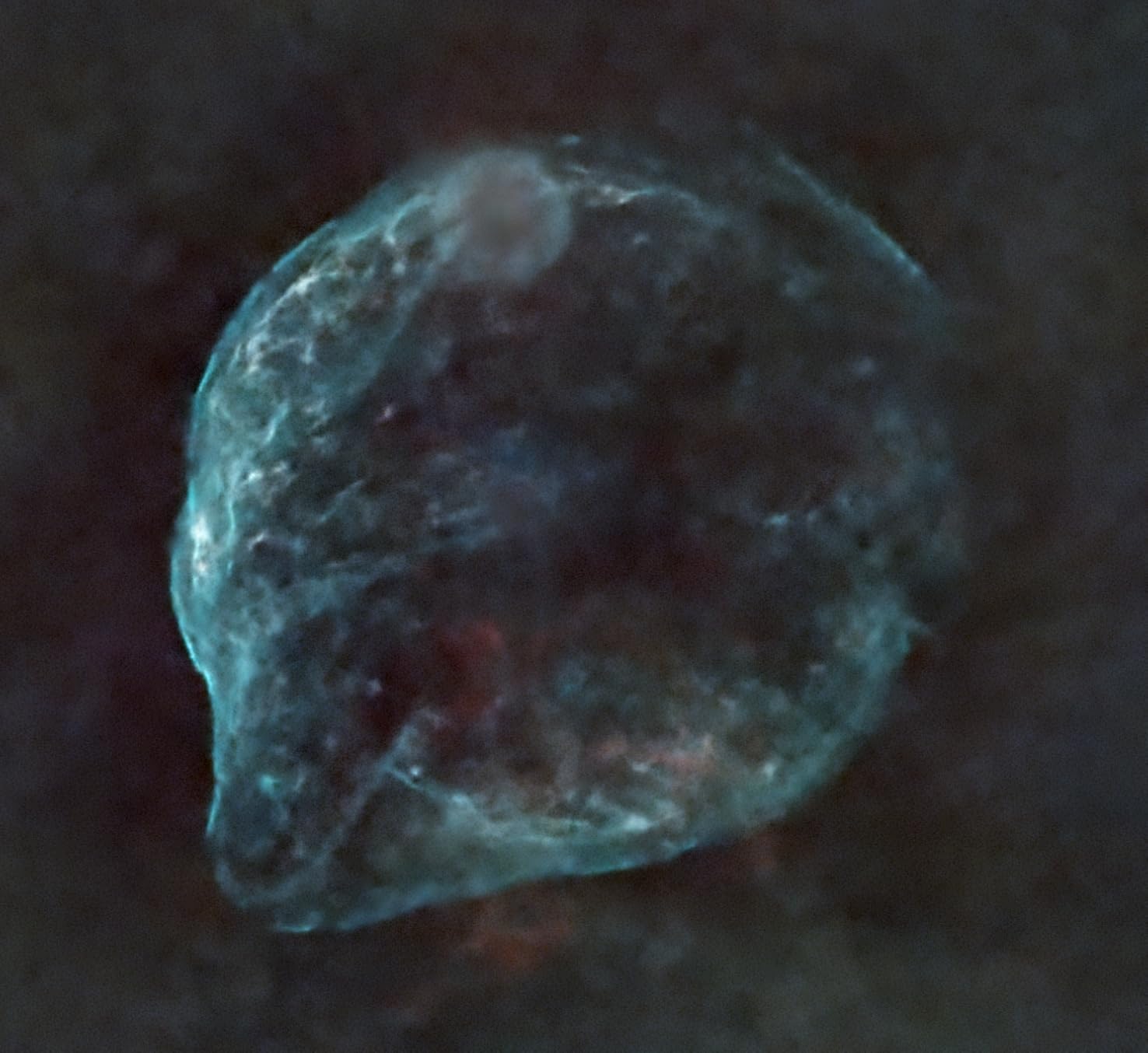
The 44mm image circle is the number that matters most. It covers a full-frame sensor without vignetting, so paired with a modern astronomy camera you are not cropping corners away. The M72 front thread and 2 inch filter holder take standard filters directly.
Focus travel has been upgraded to 2.67mm to 3.22mm specifically to avoid back-focus issues, and pre-installed adapter support fits a ZWO electronic autofocuser. That is a small detail that removes a genuinely common source of frustration.
Why variable aperture is genuinely useful
Stopped down, the f/22 setting lengthens the effective focal length and turns the scope into a planetary and small-target instrument without a separate telescope. Wide open at f/4.5 it is a fast wide-field astrograph for emission nebulae and the Milky Way.
Because the tube is small and light at 3.8 kg including its accessories, it asks very little of a mount. That is where the value sits: owners pair it with modest star trackers and still get clean results, which is precisely the pairing forums ask about most often.
Where the limits are
A 54mm aperture collects less light than the 80mm and 130mm scopes here, so faint targets need longer total integration. That is the trade for the field flatness and the variable aperture.
It is also an optical tube with mounting hardware, not a usable instrument out of the box. No eyepiece is included, so visual observing is not a consideration, and camera, mount and guiding are all separate purchases. With only 33 ratings, treat early impressions as indicative rather than settled.
8. DWARFLAB Dwarf Mini – Best Budget Entry Into Astrophotography
DWARFLAB Dwarf Mini Smart Telescope – 1.85lb Portable Astronomy Telescope
1.85 lb weight
30mm aperture
150mm focal length
Up to 90 second EQ exposures
Pros
- Under two pounds
- fits a large pocket or backpack
- Plate-solved GoTo finds and tracks targets automatically
- EQ mode supports single frames up to 90 seconds
- Light pollution and dual-band filters included
Cons
- Low sensor resolution limits print size
- Weak on planetary detail
- Initial Wi-Fi setup can be fiddly
- Internal battery runs only a few hours
At 1.85 lb, the Dwarf Mini is the lightest imaging instrument on this list by a wide margin. It fits into a backpack or a large pocket, which turns dark-site travel into a realistic option rather than a logistics project.
Despite the size it plate-solves and finds targets automatically from a picnic table, stacks internally, and pushes finished images through DWARFLAB Stellar Studio cloud processing. Reviewers repeatedly describe it as the most capable entry point into astrophotography per unit of effort, with 75% of reviews at five stars.
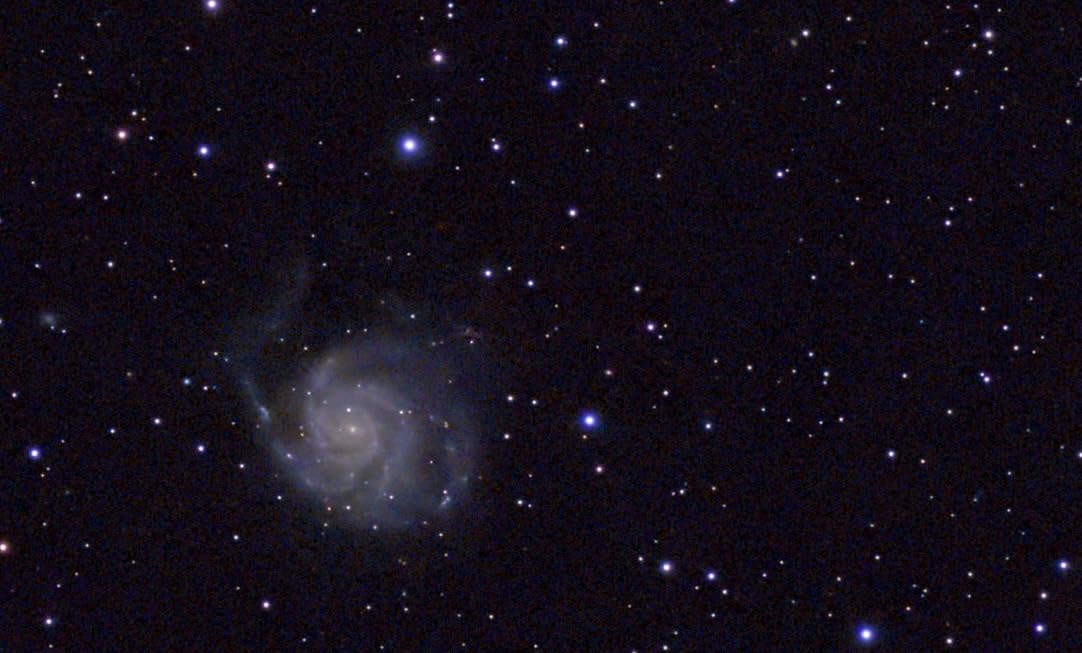
The equinox mode is the part that separates it from a toy. Guided polar alignment plus single-frame exposures up to 90 seconds produce a genuine tracking result rather than a static star field, and the built-in light-pollution and dual-band filters help from brighter locations.
Because tracking works, you can walk away for a stack and come back to a combined image. That workflow of many subs combined into one result is the single most important habit in astrophotography, and this scope teaches it.
What you gain by starting this small
The learning value is that nothing is hidden. You see the whole process, from target selection to alignment to stacking, without spending the time and money that a larger rig costs to learn the same lessons.
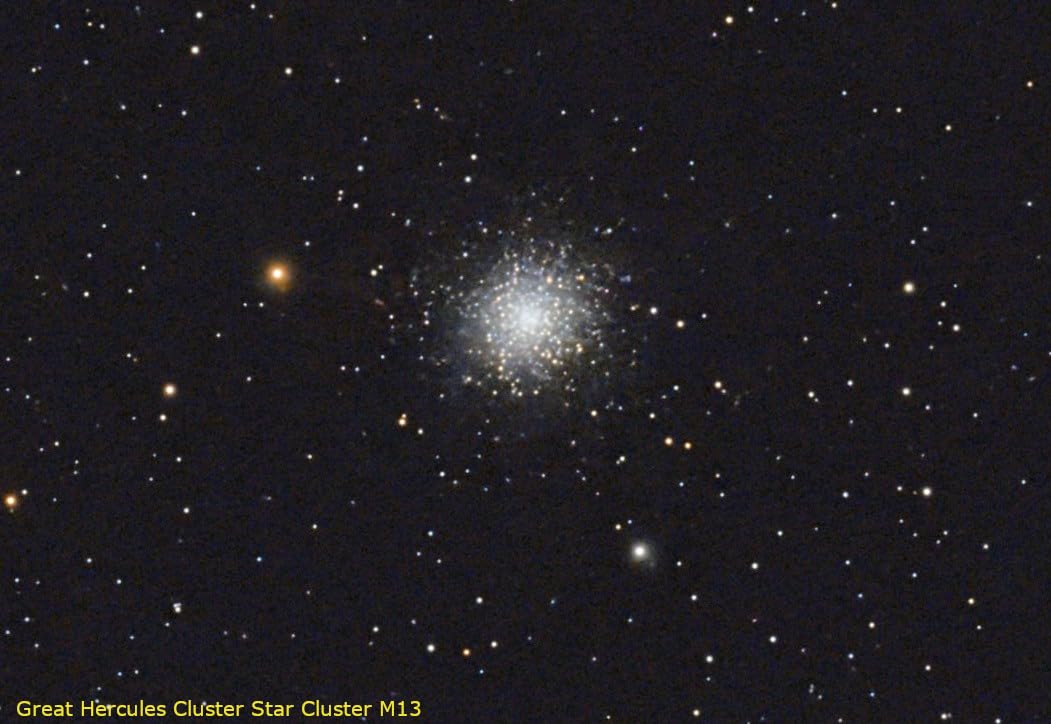
Portability is the real advantage. Owners report shooting on mountain trips and remote campsites, and a 150mm focal length on a Sony IMX662 sensor covers large emission nebulae comfortably. Our best tabletop telescopes guide covers related desk-sized options.
Where it will frustrate you
Sensor resolution is low, so images do not hold up to large prints and small targets occupy very little of the frame. Planetary imaging is a weak point because of the limited focal length and aperture.
The Wi-Fi connection to the scope has to be configured in the app and can be fiddly on first use. The internal battery runs only a few hours, so bring a power bank for all-night sessions, and note that some owners report dust particles inside the lens that cannot be cleaned.
How to Choose a Telescope for Astrophotography
Choose in this order: what you want to photograph, then focal length, then focal ratio, then aperture, then mount, then accessories. Reversing that order, which is what most buyers do, is how people end up with a beautiful telescope that cannot photograph their target.
Aperture, focal length and focal ratio explained
Aperture is the diameter of the light-collecting lens or mirror, and it sets how faint a target you can reach. Focal length is the distance the light travels inside the tube, and it sets how large objects appear. Focal ratio is focal length divided by aperture, written as f/4 or f/7.
Focal ratio matters more than most buyers expect. A fast scope at f/4.5 collects far more light per second than a slow one at f/8, which means shorter exposures for the same signal. Shorter exposures are also easier on your mount and more tolerant of light pollution. Slow focal ratios are fine at a dark site; fast ones forgive a bright sky.
Image scale, measured in arcseconds per pixel, is the number that tells you whether your target fits the frame. Wide-field work at roughly 250 to 600mm suits emission nebulae and the Milky Way. Around 800 to 1400mm suits galaxy clusters and smaller nebulae. Above 2000mm you are in planetary and small-target territory.
Refractor vs reflector vs catadioptric for imaging
Refractors give the cleanest stars and need no maintenance, which is why they dominate this roundup. Two element achromats are cheap but produce colour fringing that is very visible on bright stars; ED glass and apochromatic triplets remove it. A field flattener is essential on most two element designs, while Petzval and triplet designs usually have field flatness built in.
Newtonian reflectors give the most aperture per unit of money. A 130mm Newtonian collects a lot of light, but the mirror needs periodic collimation, the focuser is often a focus point for flexure, and coma at the edge of field needs flattening. Our Dobsonian telescopes guide covers this design in more depth for visual use.
Catadioptrics such as the NexStar 8SE are compact and excellent on planets. Their long focal length works well for small targets and their GoTo mounts make them forgiving for beginners, but a single-arm alt-azimuth fork cannot track long exposures without an equatorial wedge. Our refractor guide is worth reading alongside this one if your targets are deep-sky.
The mount is what actually decides your frames
The 500 rule says divide your focal length in millimetres by 500 to get the longest exposure before stars begin to trail. At 560mm that is about 1 second; at 130mm it is under half a second. Modern tracking far exceeds it, but the rule explains why a heavier telescope with a good mount beats a lighter one with a wobbly tripod.
Field rotation is the other half of the story. On an alt-azimuth mount, the field rotates around the target during a tracked exposure, so stars at the corners smear. On a German equatorial mount the field stays fixed, which is why equatorial tracking is worth the extra cost and weight for deep-sky work.
A star tracker is the cheapest upgrade you can make to any small refractor. Paired with a tube around 5 lb or lighter, it turns a static star field into a usable deep-sky image. Undermounting, by contrast, is the most common cause of trailed frames in beginner setups.
Field flattener, back focus, focuser and rotator
A field flattener corrects the curved focal surface of a lens so stars at the corners are as sharp as those in the middle. If a scope includes one, that is a real saving; if not, budget for it.
Back focus is the distance from the sensor to the lens at the point of sharpest focus, and every accessory you add changes it. Reducers, flatteners, filters and camera adapters all stack, so check that the total spacing reaches focus. This is the most common reason a scope can look fine visually and still produce soft stars.
A dual-speed focuser with roughly a 1:10 ratio makes fine focusing practical at long focal lengths. A field rotator lets you rotate the sensor for composition, which matters for the long thin nebulae in our roundup, such as the North America Nebula, rather than simply compositing them afterwards.
What to buy alongside the telescope
Beyond the tube you will normally need a tracking mount or star tracker, an imaging camera, and either a guide scope with guiding software or a smart scope that guides internally. A DSLR or mirrorless camera works for a first system, while a cooled one-shot colour camera gives cleaner results and monochrome cameras with narrowband filters handle urban skies best.
Then add the unglamorous kit: a field flattener where the scope does not include one, dew control, extra filters, a laser collimator if you own a Newtonian, and the correct spacing adapters. Mount cost and stability dominate a real imaging budget, so allocate there before upgrading glass. Forum consensus is consistent on this point: a good tube on a cheap mount produces trailed, unusable frames.
Frequently Asked Questions
What type of telescope is best for astrophotography?
An ED or apochromatic refractor is the best all-round choice, because it gives flat, colour-accurate star fields with no periodic maintenance. A fast Newtonian gives more aperture for the money but needs collimation and a flattener. A Schmidt-Cassegrain wins for planets, and a smart all-in-one scope wins when simplicity matters more than raw image quality.
What is the 500 rule in astrophotography?
The 500 rule estimates the longest exposure before stars trail: divide your telescope focal length in millimetres by 500. A 560mm refractor gives roughly one second, and a 130mm scope under half a second. It is a conservative starting point only, because most modern tracking systems hold stars far longer, so with a decent mount you can comfortably go much further.
What size telescope is needed to see Saturn’s rings?
Any telescope with roughly 60mm of aperture will show Saturn’s rings as an oval, and around 80mm to 100mm resolves the gap in the rings called the Cassini Division. An 8 inch catadioptric or long-focal-length refractor reveals cloud bands on Saturn and Jupiter, which smaller instruments cannot.
What is the best telescope for beginners who want to learn astrophotography?
Start with a smart all-in-one scope such as the DWARF 3, or the DWARFLAB Dwarf Mini if you want something you can carry. You will produce finished images in the first session without learning stacking software, guiding or back-focus spacing. Move to a refractor and star tracker only once you understand what each part does.
Should I buy a refractor or a reflector for astrophotography?
Buy a refractor if you want colour-accurate stars and zero maintenance, which is most people. Buy a Newtonian reflector if you want the most light-gathering power for the money and are willing to collimate it periodically and add a field flattener. Many beginners do better with a small wide-field refractor and a tracker than with a large slow Newtonian.
Do I need an equatorial mount for astrophotography?
For deep-sky work, yes. An equatorial or star tracker mount keeps the field fixed during an exposure, while an alt-azimuth mount rotates the field around the target and smears stars at the corners. Short exposures on an alt-azimuth mount are fine for the Moon and bright planets, and the smart scopes in our roundup handle the rotation internally.
Conclusion
The best telescopes for astrophotography in 2026 depend far more on your sky and your targets than on any ranking. Shoot from a city and you want speed, filters and automation, which points to the DWARF 3, the Seestar S30 Pro or the fast Celestron Origin. Shoot from a dark site and you want aperture, control and flat field, which points to the SVBONY SV503 80mm or the SV555 triplet. Shoot planets and the Moon and the NexStar 8SE is the right tool.
Whichever you choose, spend your money on tracking before you spend it on glass. A steady mount with a modest refractor will always beat a beautiful telescope on a wobbly one, and that is the piece of advice that recurs most often from people who have actually imaged with these systems.